
The Lean AI Podcast presented by Eric Ries · 2025-05-15 · 47 min
Key moments - from our scoring
Substance score
41 / 100
Five dimensions, 20 points each
Adam Newton, who has led digital and AI transformation across E.On, Danone, and Amazon, argues that successful corporate AI adoption requires a fundamental shift from technology-chasing to problem-focused strategies. Rather than pursuing the "shiniest tools," leaders should start with genuine business pain points - like reducing churn or optimizing supply chains - and evaluate whether AI is actually the right solution. Newton emphasizes that AI transformation is not primarily a technical challenge but a cultural and operational one, requiring alignment across company strategy, data infrastructure, talent development, and governance. He challenges the myth that AI skills gaps are the primary barrier; citing the World Economic Forum's 2025 Future of Jobs report, he notes that while technical expertise matters, the real bottleneck is cross-functional fluency - people who can bridge data science and business. Newton advocates for metered funding tied to measurable milestones rather than large upfront investments, using leading indicators like adoption and engagement as proof points before scaling. He stresses that AI complements rather than replaces human workers, positioning this as Industry 5.0: a rebalancing of technology and human capability that demands adaptability, teamwork, and resilience from organizations willing to experiment systematically.
Being AI-focused means chasing technology for its own sake without ensuring it solves actual business needs - like buying a Lamborghini when you sit in traffic daily. Problem-focused transformation starts with real business pain points (reducing churn, optimizing routes) and only adopts AI if it's the best solution, avoiding expensive solutions searching for problems.
Adam recommends a balanced approach: start with cross-functional AI committees and collaboration to identify company-wide problems holistically, then package those into smaller projects that may recreate some silos but remain bounded (e.g., operations plus sales together rather than operations alone). This avoids both command-and-control centralization and fragmented siloed efforts.
The report found that 60% of organizations cite skills gaps as their major barrier to AI transformation, but the critical skills are not just technical - they're analytical thinking, adaptability, stakeholder engagement, and business development. Cross-functional fluency and "translators" who bridge data science and business are as important as hiring PhDs.
Rather than forcing AI projects to fit traditional one-page business case frameworks (which create pressure to oversell or fudge numbers), establish a dedicated evaluation process with finance, operations, and business experts. Treat AI as a portfolio where you prove smaller business cases, use leading indicators like adoption and engagement, and fund incrementally - letting investment follow demonstrated success.
Metered funding means avoiding large upfront investments and instead matching funding to success milestones - starting with platform investment (lower risk), then smaller business cases, using leading indicators like data accuracy or analysis improvement as proof points before scaling. This avoids creating unnecessary pressure on teams to justify big bets and allows genuine experimentation to happen.
Our reviewer’s read on each dimension, with quotes from the episode.
The episode surfaces a few genuinely useful operational points - metered funding, portfolio-level ROI instead of per-project ROI, and the WEF skills-gap statistic - but the majority of airtime is consumed by mutual validation, lengthy restatements, and well-worn transformation platitudes that offer little new to a seasoned B2B operator.
60% said it's a skill gap. 20% on average said it was about finance and investment. So it's not that there is no money out there
AI is a tool, it's not a strategy. So if you start with the tech, then you risk building solutions in search of problems
The episode is almost entirely composed of recycled takes - fail fast, translators not coders, problem before tech - and the most prominent 'insight' (AI won't take your job but someone who uses AI will) is a ubiquitous LinkedIn cliché with no new angle added.
AI is not here to replace people... people will often say AI is going to take my job. I don't believe it's true. Someone who can use AI, they might take the job.
trash in, trash out, or any other variations of that saying you might know
Adam Newton is a credible multi-industry practitioner with genuine transformation roles at E.On, Danone, and Amazon, giving him real cross-sector grounding, but he operates at a director/lead level rather than C-suite and shares relatively little proprietary depth from those experiences.
I started with E On, which is a large German owned power generation and power retail company... I moved to Danone... I spent just over a year with Amazon
I've worked mainly in large enterprises, but in different industries and at different dangers of change. So I've seen the full spectrum of challenges and opportunities in organizational transformation
The episode's main data anchor is the WEF Future of Jobs statistic and a vague reference to a 2010 HBR paper; the guest mentions company names but shares no concrete project outcomes, dollar figures, timelines, or metrics from his own work at any of those organisations.
around 60%. When asked what is your major barrier or blocker to transformation? 60% said it's a skill gap. 20% on average said it was about finance and investment.
I found a Harvard Business Review paper, I think it's from 2010
The host has a structured agenda and occasionally builds on the guest's points effectively, but routinely over-talks, inserts lengthy personal frameworks that crowd out the guest, and never challenges a single claim or introduces productive disagreement throughout the entire episode.
So just consciously choosing, you know, what's, what's our investment mix at a company or a department, even at the department level. And you don't need a lot of money to go and try some of these things out
what are your top three recommendations for your fellow corporate AI executives?
Computed from the transcript - who did the talking, and the words that came up most.
In this episode of The Lean AI Podcast, host Ben Hafele is joined by Adam Newton, AI transformation leader with experience at EON, Danone, and Amazon. Together, they explore the critical difference between problem-focused and technology-focused AI initiatives, the importance of strategic speed over operational speed, and practical frameworks for securing funding and scaling AI projects. Resources: Adam Newton: Ben Hafele: Lean Startup Co: World Economic Forum - Future of Jobs Report Harvard Business Review - Strategic Speed vs Operational Speed
Transcribed and scored by The B2B Podcast Index.
Welcome to the Lean AI Podcast, where we're flipping the AI conversation on its head by focusing on holistic strategies and tactics that drive AI adoption, rather than focusing solely on overcoming the technical challenges of AI. In every season two episode of the Lean AI Podcast, we talk with corporate AI leaders just like you, who've uncovered the secrets of driving successful adoption with far less wasted time and investment. Our guests challenge established views and offer disruptive perspectives, providing you with new actionable insights.
All right, Adam, welcome to the Lean AI Podcast. Hi. Thanks a lot for having me. So let's dive right in.
Can you give our listeners a brief overview of your experiences, particularly in the space of AI powered products and workflows? Sure. So I'm originally from the south coast of the uk, but I've been living in various places around Europe for the last 13 years and I would say I've spent more than the last decade at the intersection of technology and business. It started by leading capex heavy innovation transformation project and then more recently moving into digital transformation and more recently specifically AI initiatives across various areas of business.
So finance, top line manufacturing. The focus is always helping define digitalization strategy and moving from AI experimentation where we like to play and it's natural where we are right now at the beginning of this gen AI boom, but moving then to tangible impact. So how do we build scalable, ethical, efficient AI powered workflows? And I've worked mainly in large enterprises, but in different industries and at different dangers of change.
So I've seen the full spectrum of challenges and opportunities in organizational transformation, general digital transformation and now AI. And you've done that at some different companies as well. So just could you give the audience a little bit of a flavor for some of the companies that you've worked at? Yeah, so I started with E On, which is a large German owned power generation and power retail company.
I started there in the more conventional coal and gas, moved into offshore wind. At the time was a kind of pioneering area of the change and the energy change which was driven very heavily in Germany. So that was a super interesting place to be. I missed some contact with products and customers.
So I moved to Danone, to an fmcg, to a large French but globally operating fmcg. And that's when I started to play a bit more with top line colleagues, directly with the products with new kind of challenges. So that was really nice. At a time when I decided for, let's say, to change the geography.
I spent just over a year with Amazon. I think it's not necessary to Explain who Amazon is. But it was a time when they were also undergoing huge transformation in terms of centralization of capabilities. Tech backed for sure.
Right. So it was a very interesting time to be there. And then changing the geography again for personal reasons, I came back to Danone in Poland, changed slightly the scope of what I was doing, driving heavily, strategy of transformation. And then today I'm still at Danone, focusing on, on the digital and AI change, which is happening.
So that's a great segue because the last time we spoke you mentioned some kind of really kind of solid pieces of advice for our listeners that would be beneficial to our listeners about driving a successful AI transformation. So let's get right into the meat of that. So the first thing that you mentioned was kind of the difference between being AI focused and problem focused. Maybe unpack that a little bit.
Yeah, for sure. So. So for me, being AI focused means just chasing technology for its own sake, right? It's really cool to have the shiniest technology, the shiniest tools.
But. But do I need it? Right? I've gone and bought myself a Lamborghini, but actually if I'm gonna sit in traffic for 40 minutes a day through the city center, I don't need it, right?
And I think that's the same you can say about technology. So being problem focused starts with a real business pain point and asking, actually you can ask the question, can AI help solve this better than traditional methods? But even you can just ask, how do we solve the problem? And if you have in your toolkit AI solutions, maybe that's where you land.
But actually by just having a wider conversation, and I don't think this is anything totally new, but by starting with what's the problem and then going through either some kind of design thinking with prototypes, mock ups and mvp, this kind of approaches, maybe you land on an AI solution. So I always advise teams to be problem focused, right? AI is a tool, it's not a strategy. So if you start with the tech, then you risk building solutions in search of problems.
It's expensive and it's also frustrating for the organization because often you have a tech team coming and saying to the local business, hey, we designed you something which no one ever asked for, right? So, so again, and with AI in this stage of development, it's very expensive. If you start with a clear business challenge like reducing churn, optimizing supply chain route, you can evaluate whether AI is the right fit. So this mindset shift or this mindset reinforcing this mindset is crucial to avoid wasting Investment.
I like that. So being problem focused, not just focused on technology for technology's sake, let's maybe try go going a little deeper. Do you have any advice or recommendations on to pick the right use cases or the right problems? Yeah, so I think it's, I think taking a holistic approach to AI is, is one of the ways in which you can do it, because something certainly we've done or I've, I've been part of leading is that instead of looking at all the problems in what can be a more traditional siloed approach, it's good to start to look first at the strategy of the company and the problems facing the company as a whole, or you're part of the company in a larger sense and start to combine either by kind of setting up AI committees, cross functional collaboration, this kind of discussion forums.
I think it's always a good way to really gather the problems. We in business like to think that the problem in our function is unique and that no one else would understand and we need a very specific problem. I think when dealing with tech in general, but especially with AI at the moment, it's really good to open up the silo a bit, sit together and have this conversation about what kind of problems we could solve together. And I think there's, there's a continuum between a very siloed approach and then a completely unsiloed approach, completely centralized kind of command and control.
What are your, what are your recommendations on kind of the balance between those two? Because I'm assuming you also don't want to just say, hey, well, there's this central group and you know, all, only they can come up with, you know, AI ideas and, and pursue them. So how do you, how do you get that mix right? Yeah, totally.
So I think it's worth to say that AI is not just a tech initiative, right? It's not something which is born in the, in the IT basement and suddenly is delivered. So it's a cultural and operational shift, in my opinion. And taking a holistic approach in the first step means aligning AI with your company strategy, with data infrastructure, with talent and governance.
So you don't just build the AI models and then see what happens, right? You integrate AI into workflows, you ensure ethical use, create feedback loops. However, you do end up with projects, right? So you have to at some point start to say, how do we take all of these problems, all of these areas and package them into smaller projects?
And at that point you start to diversify. So maybe then you recreate some kind of silo. I'm not going to say it's going to be if you had operations represented in this big discussion, it's not necessarily going to be an operations only project, but it might be operations with sales or some smaller kind of new silo, which indeed is needed to run a project because running a project at company scale is incredibly difficult indeed. Yeah, 125 person team working on an AI project, probably not going to work.
So I think another interesting kind of theme that came up in our, in our conversation before this was the idea of skills. And you, you kind of changed my viewpoint on, you know, the skills that are needed. And I think it would be really beneficial if you shared that with our audience of corporate AI leaders. Yeah, so I think I was referencing the World Economic Forum report, the Future of Jobs and this is a report from earlier in 2025 and it's a very interesting report.
It's 200 and something pages. Luckily you can download the PDF, put it into some AI chat assistant and ask it questions. So I recommend doing this for sure. But what they did is they took the point that of course in the next five years to 2030, AI will play a huge role.
However, when you look at the top skills and the issues or issues and topics and challenges, it's talking about AI literacy. Yes, it's there, but what else is there? Analytical thinking, adaptability, stakeholder engagement, business development. So these skills which are as old as we are and as old as organizations are, they are still the important ones.
Yes. You then insert that you're going to need people that are good in computer engineering, computer science. But it's the fact that what resonated with me is yes, technical skills are important, but this cross functional fluency, these people who can bridge data, science and business. And again I say people because people are going to be important in this transformation.
We need translators, not just coders. So upskilling the workforce in AI literacy and critical thinking is just as important as hiring the top PhDs and having them build your models. So another interesting part around these barriers to transformation in the next kind of five years is when they interviewed these organizations globally, around 60%. When asked what is your major barrier or blocker to transformation?
60% said it's a skill gap. 20% on average said it was about finance and investment. So it's not that there is no money out there because as a kind of consequence you can say 80% of companies are good to go, they've got the money sitting there, they want to invest. But 60% of companies don't feel that the skills in the organization meet the skill requirements of the tools or the capabilities.
So I think that's a clear indication that that's not all going to be about AI. It cannot be. Because another thing which is in these reports and there was also something interesting on LinkedIn at some point that in the next five years there will be jobs which will stop to exist and there will be roles which start to exist. And at least in this report or a similar one, the net number of roles after five years is higher.
There is an increase in the number of roles which are coming. So they cannot all be pure AI focused roles. The challenge for us or the exciting thing for us is we don't know. There is not a list of what all of those roles are.
Right. It's not just this is what's going to be there in five years. Prepare yourself. We don't fully know, but can we upskill our teams in analytical thinking, in working together in ideation?
Yes. And then are they going to be ready for the future? 80 to 90% likelihood? Yes.
Well, we'll have the link in the show notes to the World Economic Forum report that you're referring to so that people can check that out if they'd like. So let's move into one of the things that we really got into in our conversation, which is it's just such a pervasive problem which is, you know, you got an idea, we've got maybe even something that's strategically aligned right back to your holistic approach. It's not just we're, we're building a demo or something on some random use case and then an executive, a senior executive will say, hey, before we do this, we need to know what's the roi, what's the business case?
How do you recommend our listeners handle that? Yeah, those three dreaded letters, ROI. And coming from operations and CapEx, I fully understand the need and I have plenty of experience in long days, long nights, you know, finessing business cases and financial models. In order to make those thresholds and make those requirements, I think for sure we need to focus on outcomes.
Right. It's impossible in large organizations we are ever going to just be given a pot of money to go and play, unless you're really lucky. So we do need to focus on outcomes rather than algorithms. When leadership asks for a business case, we do need to frame it in terms of roi, in terms of risk reduction, in terms of revenue growth.
So don't lead with the model, don't lead with wow I've built an incredibly impressive LLM and give me the money lead with the value, whilst saying that the traditional, or at least in my experience, the traditional one pages the traditional processes and thresholds for qualifying business cases. They might not work in the case of AI because we don't have all the information. I cannot tell you with the similar level of certainty what is going to be the exact value of the investment or all these kind of things because we don't know whether certain things will work.
We think they will, we hope they will, we have good expertise which tells us they probably will. But can we be as certain with the payback period, with the kind of, the level of payback? I don't think so. So there you have a choice to say, okay, well, if you can't fit into the existing framework of how to evaluate an investment, it doesn't happen.
In which case I think you can say goodbye to AI transformation or you can adapt and you can set up some kind of dedicated methodology or framework in order to assess, put the right people there. That means your classical finance people together with your operational people, your business experts, put them in a room, build a dedicated process everyone's happy with, and use that as a kind of way to, to evaluate the value. And yes, you're always going to be looking for scale in the end, but maybe you start by looking at, okay, let's just prove the business case with a potential for scale and start there.
So this is something that so many companies are dealing with right now, which is, hey, we can't use our traditional way of financing, of governing and even implementing these kind of newer AI projects because there is so much uncertainty. And so I love what you said. If you, if you run, you know, each individual project through the existing process, you're not going to do it because you can't tell the C suite or your executive committee with any degree of certainty what the ROI is going to be.
On the other hand, so, so basically nothing, you hit the buzzsaw of, well, you can't show me what the ROI is, so we're not going to do it. The other alternative, and I, I'm going to pick up on the word you used earlier, which is finessing business cases is we just all know how the process works and so we finesse it until the business case, lo and behold, meets the criteria. You know, it's just Excel and we can, we can make the numbers and convince ourselves, right? And so God forbid that happens, because if you are funded, then you have to meet that plan that you're uncertain about.
And so the middle path that you just described, I think is just, it's such, it's, it sounds very subtle and I guess it is, but it's really powerful, which is just set up a really simple dedicated process that says we don't need an ROI in each individual use case or each individual project. We're going to have a portfolio of projects that is going to have an roi because we're going to be systematically evaluating them and kicking out the weaker use cases so that only the stronger ones survive.
Yeah. And I think this is also the benefit of using the, let's say the lean approaches, the mvp, because you are quickly trying to, you're failing fast, you're learning fast, you're avoiding this sunk cost fallacy which in the more traditional approach, you know, way before launch date, that it's not going to deliver, but you've already spent the money. Right. So let's go.
I think this is not the way, not what we want to, to create in this kind of AI scale up. So work in an experimental way. Experimental with some, some sound reasoning behind and see what happened. Yeah.
And I think the, what is relatively certain is that a platform is needed in order to generate, you know, in order to actually experiment with all those types of use cases. So that's a relatively low risk investment or low uncertainty investment. Rather higher uncertainty is each individual use case, you know, we just don't know. And so I would say educating leaders about the difference between those two is really important.
It can be a little dangerous sometimes. Right. Because you're kind of managing up, but it's such an important part of the, kind of, the, dare I say it, the lean AI approach. So let's, let's hop into the funding mechanism you mentioned, you know, not overfunding maybe.
And we, you were kind of describing what in the lean startup world we would call metered funding. Maybe help the audience, you know, understand your point of view on that. Yes, I, I think it's, it's not, at the end of the day, you're, you're trying to avoid putting a, a large amount of money up front and then just kind of seeing what happens. Right.
So I, I think you need to be, maybe, maybe in the beginning you need to invest a bit of money, buy some kind of platform which is going to allow you to develop a suite of tools which you can at least start with where you have a license and you can play. But I think it's avoiding this kind of huge upfront investment which you're then trying to justify because otherwise it creates a lot of stress. And again from the human point of view, it's a bad place to start because you are immediately saying to your teams, hey, I've given you this money.
What are you going to, how are you going to prove its value? And I think this is a. Innovation is not often working in that way. Right.
That you can suddenly just because there is a lot of pressure, you will find some magic recipe. So I think it's, it's important to give people the experimental freedom to define some success criteria up front. Right. But, but a range of success criteria in my opinion.
So what's the adoption goal? What's the accuracy that you're expecting from the tool? Are there cost savings behind, is there revenue improvement, this kind of thing and, and again build a suite of it. Because having one in traditional business where net sales, net sales is the goal or profitability is the goal for conventional business on a kind of very high level, you can have this one goal.
But I think when you are trying to build this kind of innovation area and this, this tech, it's good to have a selection of KPIs in which you can say well this one, it improved data accuracy or it improved analysis by X percent. It didn't improve cost savings, which we thought it might. But, but okay, maybe with some tweaks then we can, we can address that later on. So I think to be flexible to your teams to allow them to experiment, I think this is good.
And by that I'm kind of also saying that the investment should match that. So if you're expecting a solution to deliver a couple of things, one or two things, then invest in that same kind of way. So build smaller business cases. Within this we talked about a program or a kind of portfolio of project, break it down, run one kind of agile run flow, see what happens and then come back and say, okay, now we go further.
There is this very, I think, common example of when you want to build a car, but first you start with the skateboard and then so everything you do can be rolled back. But it's kind of this incremental change where the investment follows the success more or less. So there's a lot of goodness in what you just said because you were talking about various elements of how to set up a system that I guess helps you overcome some of those traditional barriers to investing small and then growing the investment as there's more evidence or more traction that you're on the right track.
The success criteria or the, the, the Milestones or whatever you want to call those. I guess those are leading indicators of some of those more traditional accounting metrics. So when you have an existing line of business, right, you've got roi, you've got sales, you've got. And so you can predict that with some degree of certainty.
But when you're doing something new, you by definition don't have those. So what can you do? You can, you can use leading indicators of a future sale. Like you said, how many people looked at this, how many people engaged with this, how many people signed up to, you know, do whatever with this?
And so that's really solid advice and I appreciate you sharing that with us. So what else have we not talked about that's really important, you know, in terms of driving a successful AI transformation at a big company? Probably a lot. But no, I think, I think one of the things which is worth repeating is that, you know, this, this is a new area and it's technology and that's the exciting part.
And we are reading all the time about AI is. Can, can take the bar exam, AI, can, can qualify as a doctor, et cetera, et cetera. But AI is not here to replace people. And I think that's, that's the, the super important message which our teams need to hear, which organizations need to hear, that there is very often this, and I think again, I probably stole this from LinkedIn or somewhere, but people will often say AI is going to take my job.
I don't believe it's true. Someone who can use AI, they might take the job. Because I think, and this is the important part, like it's not a one for one replacement, but it's more and more this, this cooperation. So Industry 5.
0 is the buzzword at the minute. And Industry 4.0 was heavily focused on robotics and automation and this kind of thing. And Industry 5.
0 is this realization that we need to bring back this human element. We need to bring back the sustainability, the environmental impact of what we're doing, the integration of tech and people. And I think this is clearly what we have to bear in mind, that this is a new dawn. This is the fifth industrial revolution, which we are, which we are seeing by the way, all of those industrial revolutions with different tech still.
What were the important qualities? Teamwork, initiative, adaptability, resilience. So again, through every revolution we've been through so far, we are not creating much new. Yes, the tech changes, you have to adapt some technical capabilities.
But again, I think we just need to, with our people, understand that its adaptability its education, it's working together. And I think this is one of the most important ways that we will make this transformation. Hi, this is Jonathan Burtfield, Senior director at the Lean Startup Company. If you're a corporate executive looking to drive broad adoption of the AI centric products you're developing with far less wasted time and investment, we invite you to join us for a free, free 45 minute one on one consultation where we'll help you understand key tactics for validating use cases early in the development journey, to identify the optimal sequence for rapidly driving to scale and to navigate the potholes that have tripped up other leaders in similar roles.
Head over to leanstarter co Contact AI to reserve your spot. You'll find this link in the show notes, but don't wait. Spaces fill up fast and we don't want you to miss out again. That's LeanStartup Co contact AI.
Let's make successful incubation and scaling of AI centric products a reality for your team today. So I'd like to come back to a point you made earlier about MVPs. One of the common themes that has come up on this podcast several times already, and you know, we just hear from our clients at the Lean Startup company is that people are getting stuck in this like proof of concept and demo phase and it's really hard to then, you know, move into scale. And so what are your recommendations when it comes to moving past PoCs or demos and moving into scale?
Yeah, and I think obviously a super good question and I think one of the things to basically say is sometimes you will not move past mvp. So parking something and stopping is sometimes just as important as moving past mvp. And I think that's maybe one of the things in the early phases is to say this doesn't have to work, this doesn't have to like the success criteria of this is not success, if that makes sense somehow. So this project is not going to be a good project just if it delivers, just if it launches.
So I think one of the things when you're in this early phase of experimentation of proof of concept mvp, it might fail. We might just stop it. And if we stop it, let's stop it, let's move on. I think when you talk about trying to ensure that something will scale later on, that's coming back to the work that's done before.
So that's coming, I think a bit to this end to end approach to putting this kind of what's the company strategy? Okay, so underneath that, what's the people Strategy. What the AI strategy, what's the sales strategy? So building this kind of holistic whole company, end to end view AI strategy is one part.
Okay, I'm in the AI strategy squad. What's my role? I'm having this cross functional brainstorming, these kind of workshops and I'm making sure that I understand the business needs and then I start to build. Is there an education piece which is needed?
People need to be upskilled. Do we need to invest in regulatory or legal capabilities in order to support us here? And I think sometimes, and again, it's quite cliche, but it's something like slowing down to go fast or less haste, more speed, something like that. So taking this time in this early stages of the program or the project, really defining the problems we need to solve and are we ready?
A bit more time here is not going to kill you later on. Going super quickly, sinking money into early great innovations. And by the way, and there are everyone, at some point, every consultancy. And it was interesting watching my mailbox was going from offering me one service to suddenly offering me AI consultancy overnight.
All of them. So they had all read all the information, developed all the capabilities to suddenly provide me AI capabilities. So if you go to the market and you ask someone to solve an AI problem for you, they'll tell you they can do it. Is it the case?
I'm not sure. So for me, again, I look at those same solutions being offered six months ago. They're a fraction of the price they are today. So there is a benefit to just waiting a bit.
Not waiting, just waiting implies doing nothing. But there is a benefit to taking the time to understanding the problem. Are we ready? Bit by bit.
Let's play. And then eventually I think you build something which is scalable versus rushing with this great crazy idea and then finding that you forgot the wheels or you forgot, you know, something fundamental which, which you cannot operate without. So I found a Harvard Business Review paper, I think it's from 2010 and I found it in, I don't know, 2019. So I was embarrassed that I didn't know about it, but for so long, but it's been really powerful and I'll, I'll include it in the show notes.
It's about the difference between operational speed and strategic speed. Operational speed is just moving quickly in any direction. So you can go 400 miles an hour, but strategic speed is reducing the time it takes to deliver value to customers. And I really like that distinction.
I think that's, you know, kind of part of what you're just talking about, which is if you just. And it, it might seem, quote, unquote, slower, but I put slides together before where, you know, operational speed. Hey, we're burning nights and weekends and everybody's building and everybody's excited. And then, you know, we do that for, for 10 weeks and then we have to do, do it over again.
We got the requirements wrong. We didn't listen to the customers. Then we do another 10 weeks, by the way, everybody's burnt out, you know, at this point. And then we got to, we got to do some more rework and then we got to do it.
Rather than spending two or three weeks up front and saying, who's the customer? What problem are we trying to solve? Let's do some MVPs. Let's just.
And those MVPs, not to get into that whole, you know, mess of a conversation. They don't need to work. They just need to test what you're trying to test next. Right?
If you're trying to test. Is anybody even interested in this? Maybe it doesn't even need to work. Maybe it's a marketing mvp.
So just spending that little bit of time up front and then saying, okay, now we understand the landscape, we understand the requirements, we understand the customers. Now let's build something that really meets their needs. It's actually faster because you're not just you that's. And that's operating with strategic speed.
It seems slower in the beginning, but the chance that you're actually going to deliver value is so much higher when you just take a minute to do your homework. Totally. And I think, because what you said resonates and I think it's worth to stay there a second to say that with technology, with newly developing technology, this temptation to go operationally as quickly as possible is much higher. I want to be the first one who's integrating this new, new capability.
I want to say that my company pioneered using AI to do this and that and, and this kind of, you know, this. The sexiness of AI and the temptation to be the first adopter and whatever this can. Sometimes we need to go, hey, it's okay. It's okay to be second or it's okay to be first.
But in, in a couple of months, like you, you know, and I think the by. By having this kind of moment of realization and checking on yourself, you will save yourself money in the long run and you will build something which is more strategically effective or, or, or aligned with what you want to do. For sure. It's interesting because, you know, I Think there's four ways that I'll use the word innovation, although that's a messy word these days.
Right? Happens. Number one is problems. Problem focused.
Hey, there's a problem out there that we think we understand. We're not sure how to solve it, but we should go solve that problem. The second one then is solution based, which is we have a solution, like a complete product, a complete solution idea, and we think it solves the problem, but we're not really sure. So we need to go test that out.
A third one, which actually I think is, is great, which is, hey, our company is trying to do X. We've got this strategy where we need to go and win in a certain market or in some other category, and we've got some ideas, but we're not really sure which one to pick. And then the last one is there's this new technology out, you know, for a while it was radio or whatever back in the early 1900s. What do we do with radio?
I don't know. Then it was the telephone, and then it was drones and 3D printing. Well, now it's AI. And that's the hardest one, which is there's this new technology.
What do we do with it? Because technology is not a product, it's not an offering yet. And so that, that fourth kind of innovation scenario of technology driven innovation is the hardest one. And it's the one that this podcast is about and that a lot of people are dealing with, are dealing with today in the, in the AI space.
Yeah, it's tricky and it's a very, it's exciting to be part of it. And we know that people want to be part of it. It's also about this, this rush for talent. We want to grab the talent.
So we want to be saying that we are the pioneers and that we have these things to offer them. But, but yeah, it, it, it's a trap which, which we can fall into. And I think it's something we need to work very hard on. Right.
Just to say, okay, take a breather. It's the same, you know, always. And it was when I was early in my career and I would receive something which either upset me or excited me in a positive way. And I was immediately responding and I was going back and I was saying, and very rarely it was the right thing to do.
And I had a boss that once said to me, lock the computer screen, get up, go for a walk around the car park, go grab a coffee, come back and then answer the email, then start the call. And that that's true. Right. And in a larger scale.
That's true also here, that, yes, get excited, feel the, feel the buzz and stuff, but just take a moment to think. Okay, but am I going to answer this? Am I going to approach this in the right way? So I wanted to pick up on a thread from your earlier comments about some of those use cases.
Some of those projects aren't going to make it. And when you're managing a portfolio of some of these earlier stage initiatives, that's one of the reasons why you can't attach an ROI to each and every project. Because by definition, some of them are not going to make it through, through the, through the process. And if everything has an roi, you're basically telling the teams working on it, you have to make this work no matter what.
And then that leads to the sunk cost fallacy that you were talking about earlier, which is, hey, we spent all this time and money on it. We can't, we don't think it solves a customer problem, nobody's interested in it, there's no traction with it, but we have to, we have to deliver something because we've spent all this money. Yeah. And I think, and it was actually a conversation I was having not that long ago inside the business, that sometimes there's a pot of money available and it's not that the budget owner is waiting for the perfect business case to come along and that that business case is then going to be followed to the letter.
And if you don't meet it, you know that there's going to be consequences. It's more a kind of risk appetite or an acceptance of the business owner to say, you know what, I'll take this allocation, I'll take this small part of the money and I will take it on my cost line or whatever and I will say it's mine. Okay, so finance, put it on my cost line. And now with my team, I'm going to work.
And I think it's the role of the business leaders to take that kind of risk on them. And I'm not talking about, you know, millions at a time based on something. You don't know what's going to work. But if you work with your team and you believe in what it is that they're selling and you have some kind of investment available to you, I think there is a, there is a part of it that take the risk and if you manage in the right way, in this kind of incremental, step by step approach, and you know that you have the right people, you Know, you've done your research, the risk gets lower and lower and still you might fail.
Right? And it's going to happen. And we can't say it's not going to happen. But I think if the company at the highest level has this kind of approach of if you take the money on yourself, we can give you the money, and then if you as the department head say, I will take it and I will take the risk, because the upside I see in this is, is great, yes, there is a chance.
But if that part fails, I have this portfolio, this program we talked about where I can recover or where I can, where I can have a next avenue of experimentation. So I think this is also a kind of a role of a leader to say, I take it, not, not passing that responsibility or that risk to the, to the team, right? You say team. This is your budget based on the business cases you presented to me.
You made some one pager, you have a good idea of who is your market audience, et cetera. So go play. And as a leader, where, if that fails, you have a difficult conversation to have, maybe with your boss, but knowing that you did it with the right intentions and with the right level of risk, I think that's something that has to happen. And using this wide term of innovation, that again, is nothing new.
I've worked for years in innovation and those things happen. I think with AI, it's just that as a leader, you might have a little bit less of a gut feel because there is less experience to rely on based on investing in some machinery or something. But so it's a bit of a bigger risk, but it's also the upside is potentially higher. That's really interesting because I was talking with a client the other day in the, in the financial industry and we were talking about, you know, when you have a portfolio of investments, you've got some sure bets, right?
You maybe even you've got your money invested in the market in a, in an index fund. But then also in some cases, you've got Some, you know, 5% of your portfolio that's dedicated to some higher risks, maybe higher reward things, right? And so just consciously choosing, you know, what's, what's our investment mix at a company or a department, even at the department level. And you don't need a lot of money to go and try some of these things out, right?
So it doesn't have to be to your point, you know, millions of dollars even. It can be, you know, low six figures to just. We have a fund and I think the Other thing that's really important, especially for the CFO of the department or the company or the whatever, is to your point earlier, here are the criteria, here are the milestones we're going to follow. We're not going to just go out and throw money at things willy nilly.
We've got, you know, a very lightweight but powerful structure for evaluating things. And if something's not going to work, we're going to park it and we're, we only want the strongest initiatives to survive. Yeah, and maybe talking directly to, to those watching who are from an operations background, as am I. This is another benefit of coupling yourself with top line.
Because I don't know about all businesses, but my feeling is normally that level of experimentation, when you're in a profit center and you can link it to sales or something like that, you're going to have a bit more freedom. Ops supporting functions, cost centers where cost of goods sold and profit margin and this bottom line is more sensitive, can be a bit harder to get that kind of the go. So another good benefit of linking between operations and sales or HR and marketing, for example, is departments where you maybe would have had a lower appetite for risk.
You can find someone who might give you a bit more wiggle room. I don't know if that's a trade secret we shouldn't talk about, but I think it's an important thing to bear in mind. No, I think it's, I think it's, I think it's out there. I think more people need to hear it though.
And I would say another thing we found is that CFOs are frequently exasperated by these types of investments where, whether it's, you know, corporate innovation or, or AI or any other thing where, you know, other leaders are saying, hey, we wouldn't invest some money in this, just trust us, it's going to be great. That's very stressful for a CFO who needs to have control over things and rightly so. So back to your point of hey, make sure it's aligned with strategy. Establish some milestones, some metered funding.
Just take, take a little bit of time to define that and put it on paper so Everybody understands it. CFOs love that because now there's order where there was once chaos. Yeah, and, and you know, I, I said this about finessing business cases and I know we're also not going to talk about that, but we, we know it happens and we know it's always going to happen. So even in these very rigorous, very established ways of building business cases and applying for funding.
We know there is this buffer of, you know, this fluff which is built in. So I think it's a good argument to say, okay, but even in the established ways of working, it can be manipulated, it can be finessed. So come back to having proper conversations that everyone understands what's going to happen. Take it a bit away from the process at some point just to have a good discussion about why are we here, how it fits, etc.
And then put it into a process, then tick the boxes, make the excels, make the PowerPoints, etc. But these conversations before this is what with finance, with your major stakeholders, this is what's going to carry this kind of momentum forward. I think I like that and I also like, I think you were insinuating you don't really have to reinvent the wheel and come up with a completely new process. You could even use that existing traditional process and say, hey, here's the, here's the business case, but here are the parts that we need to validate.
So we're only 50% confident that this is true or only 20% confident that that's true. And so let's go, let's go run some experiments, let's go talk to customers, let's go build some MVPs and we can do our homework and come back and say whether that part of the business case is true or not, and if it is, great, you know, maybe we can get some investment and go further. If it's not, we only spent, you know, X dollars to, to find that out. And if those X dollars are small enough, it's not really a failure, it's a learning.
Right? So nobody goes out and, you know, does a, a telephone interview campaign, that's a very old fashioned thing to say. Or runs a survey or whatever, you know, for $30,000. And then, you know, the report says, hey, people aren't interested in your product.
Nobody says that's a failure. They just say, hey, we did some research and now we know what not to do. So it's the other spectrum of the sunk cost fallacy. If you spend such a small amount of money that it's just a learning, it's not really a failure anymore.
Yeah, yeah, no, that's a super, super valid point. So we're getting close to the end of our time together, so we're going to have to start to wrap things up. This has been a fantastic conversation. I always like to ask at the end, what are your top three recommendations for your fellow corporate AI executives?
Or listeners, even if we've already talked about them. But what are your top three recommendations for them to make sure they're actually driving transformation, building AI powered products, workflows with a minimal amount of wasted time and investment. Yeah. So I will, I will try to.
And often when I'm having conversations, I have to really think hard about some of the things I said. Even though that, because we discussed a lot. But I think the top three, three and maybe not super new, but, but worth saying. So number one would be start with the business problem, not with the tech.
Right. So always tie the AI to some kind of measurable outcome, to some kind of problem, to, to a target audience, to, to any kind of tangible or real business which, which you can have or any kind of experiences which you need to fix. Right. I think point two is to invest in data and invest in people.
So clean, accessible data, cross functional teams. That's the foundation. There is a very old expression about trash in, trash out, or any other variations of that saying you might know and using something as complex as certain AI solutions on bad data. AI will give you an answer, it will hallucinate, or whatever is the phrase we are using, you will get an answer.
But if you build it on bad data and you build it in an organization where the people are not ready and the foundations are not there, it's not going to work. So addressing this digital competency gap is essential. Working together, learning from each other is essential. You're always going to have people in your organization who are more naturally interested in what's going on, who are more capable naturally in what's going on, leverage them.
You're going to have people who have 35, 40 years business experience, leverage them together with the person who has three years business experience but was writing their own code at 15. So put those people together, invest in the people. And I think that's, that's one of the key sort of ingredients for success. And then I think this third one is thinking systems, not in silos.
So AI is part of the operating model. It's not a side project, it's not a, it's not a strategy on its own. Right. You are a company, you've been existing a long time before AI came along.
You will invert, you will exist after AI if there is such period. But, but make it part of your, of your DNA, make it part of what you do. Um, and we said that you have to maybe sometimes come back to those project groups, to those smaller working areas, but that should not be the starting point. Start big and then don't start in the silos and then see what kind of problems come out and how you need to address them.
So Adam, that's all the time we have for today. Thank you so much for being on the show and sharing all these amazing insights. And thanks a lot here. The Lean AI Podcast is brought to you by the Lean Startup Company.
To find out more about our Lean AI approach to generating more AI wins with far less weight, wasted time and investment, including our training workshops, pilot programs, and full implementation offerings, Visit us at leanstartup.co Search the Lean AI podcast in Apple Podcasts, Spotify, or wherever you get your podcasts so you don't miss a future episode. On behalf of our entire team here at the Lean Startup Company, thank you for listening and sharing with your colleagues and friends.
If you found this episode insightful.
Other episodes covering the same guests and topics, from across The B2B Podcast Index.
 Eric Ries on Why Good Companies Go BadPodcast Archives · on Lean Startup methodology92 / 100
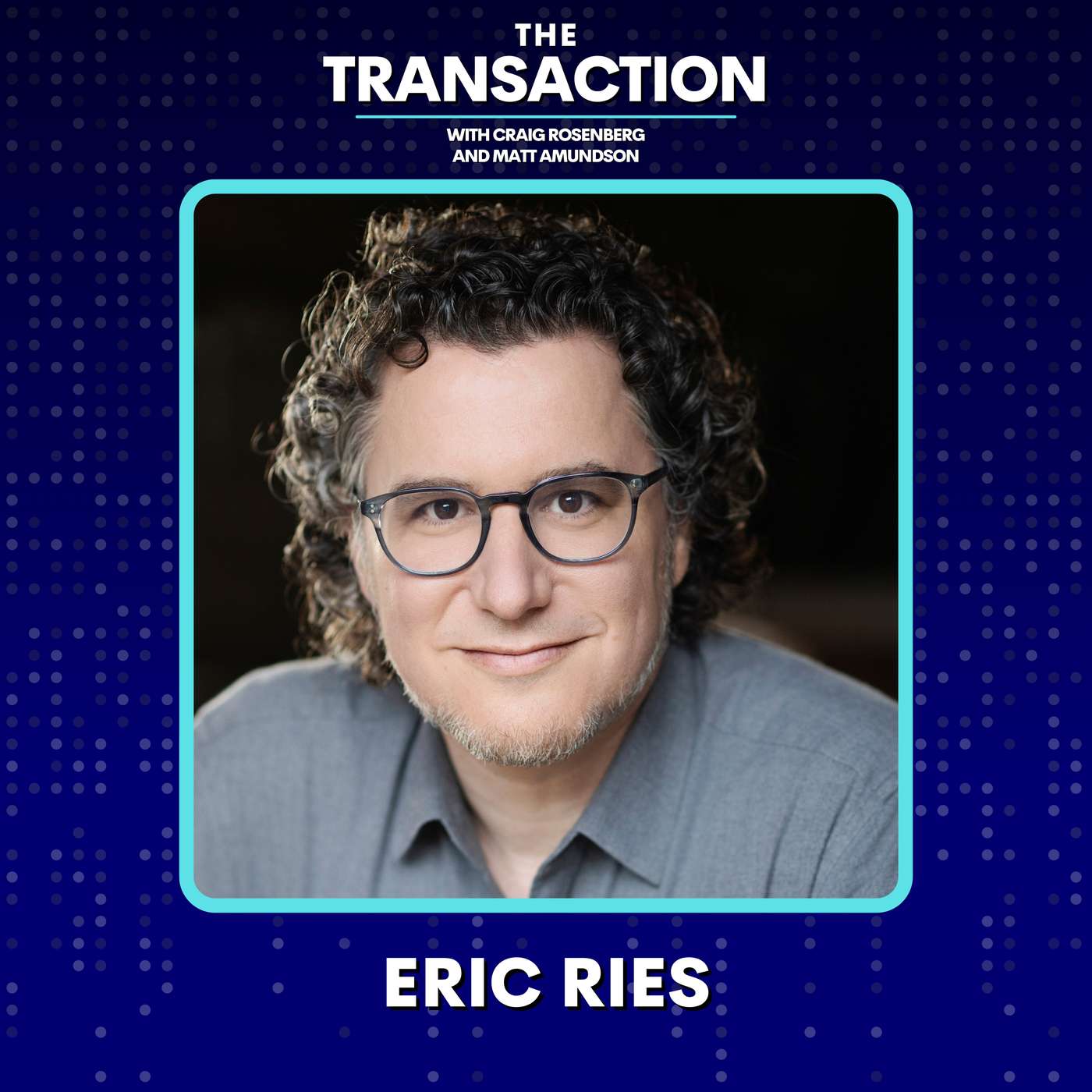 Building an Incorruptible Company that Lasts with Eric Ries, Author of Incorruptible & The Lean Startup - Ep 78The Transaction · on Lean Startup methodology88 / 100
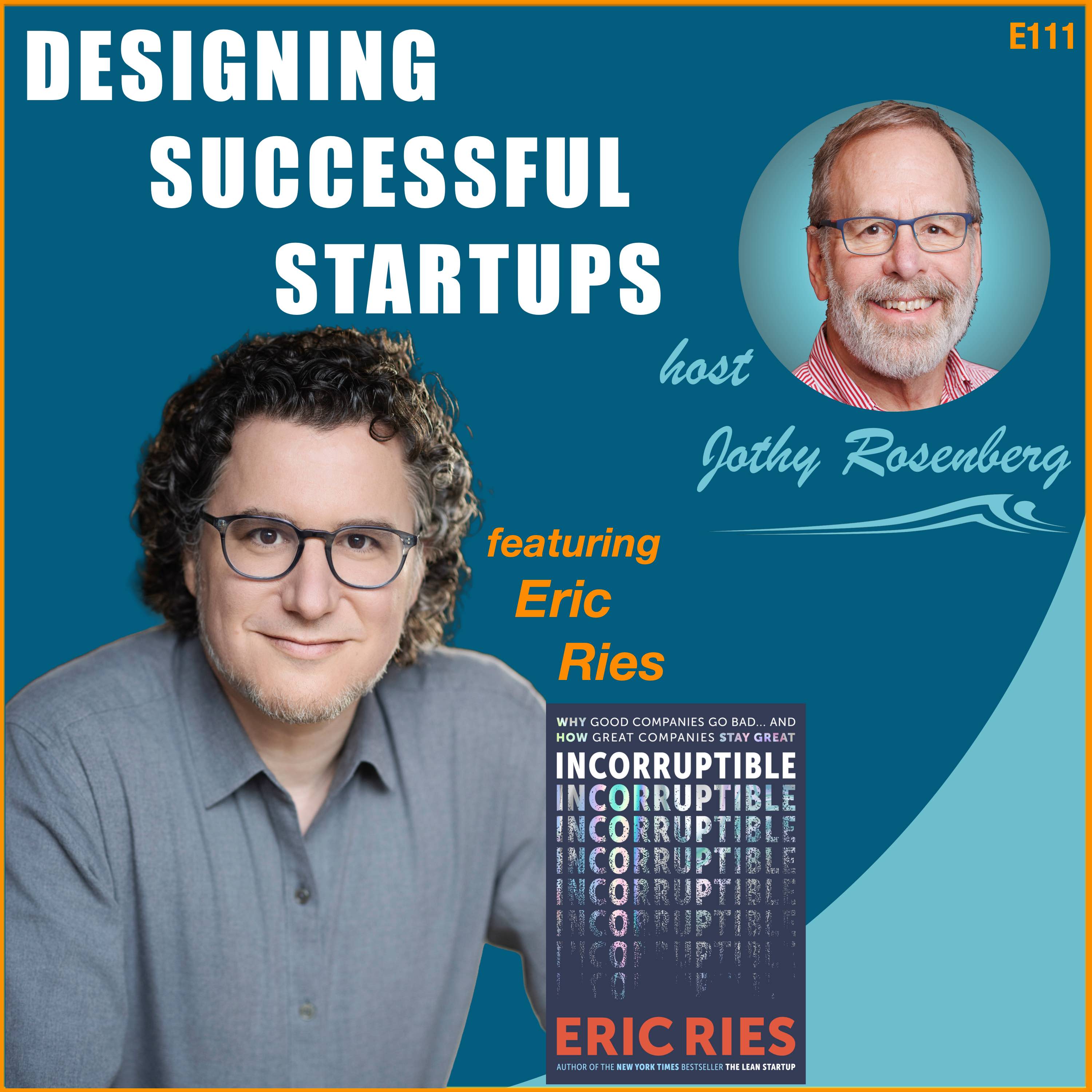 Incorruptible: Eric Ries on Why Most Startups Lose Their Soul - and How Yours Won'tDesigning Successful Startups · on Lean Startup methodology87 / 100
 #2307 Eric Ries: Why Anthropic Won and How To Build Incurruptible companiesStartup Stories - Mixergy · on Lean Startup methodology86 / 100
 #288 Why Great Companies Lose Their Way After Going Public with Eric Ries Author The Lean StartupGrowCFO Show · on Lean Startup methodology84 / 100
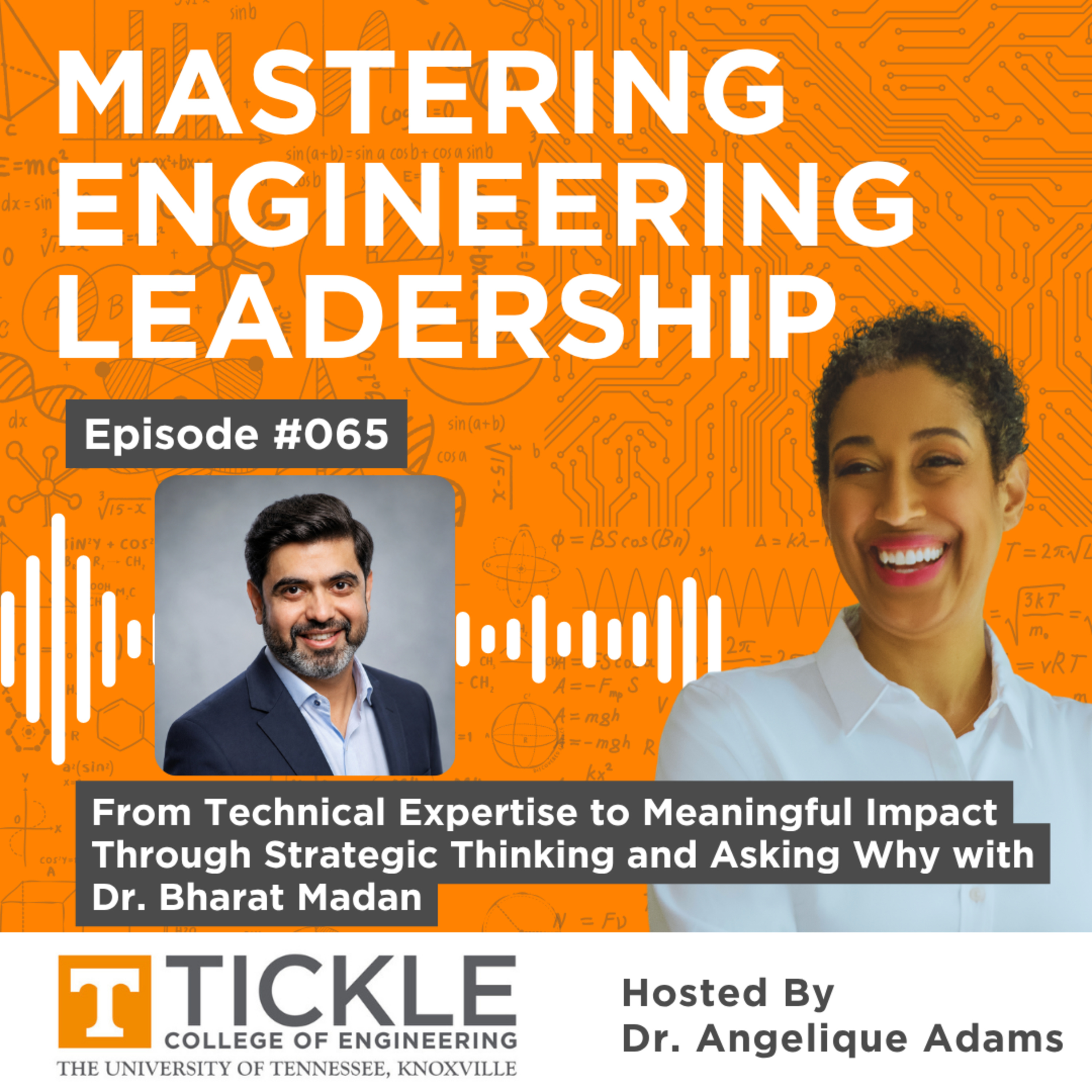 MEL #065 | From Technical Expertise to Meaningful Impact Through Strategic Thinking and Asking Why with Dr. Bharat MadanMastering Engineering Leadership · on Lean Startup methodology83 / 100
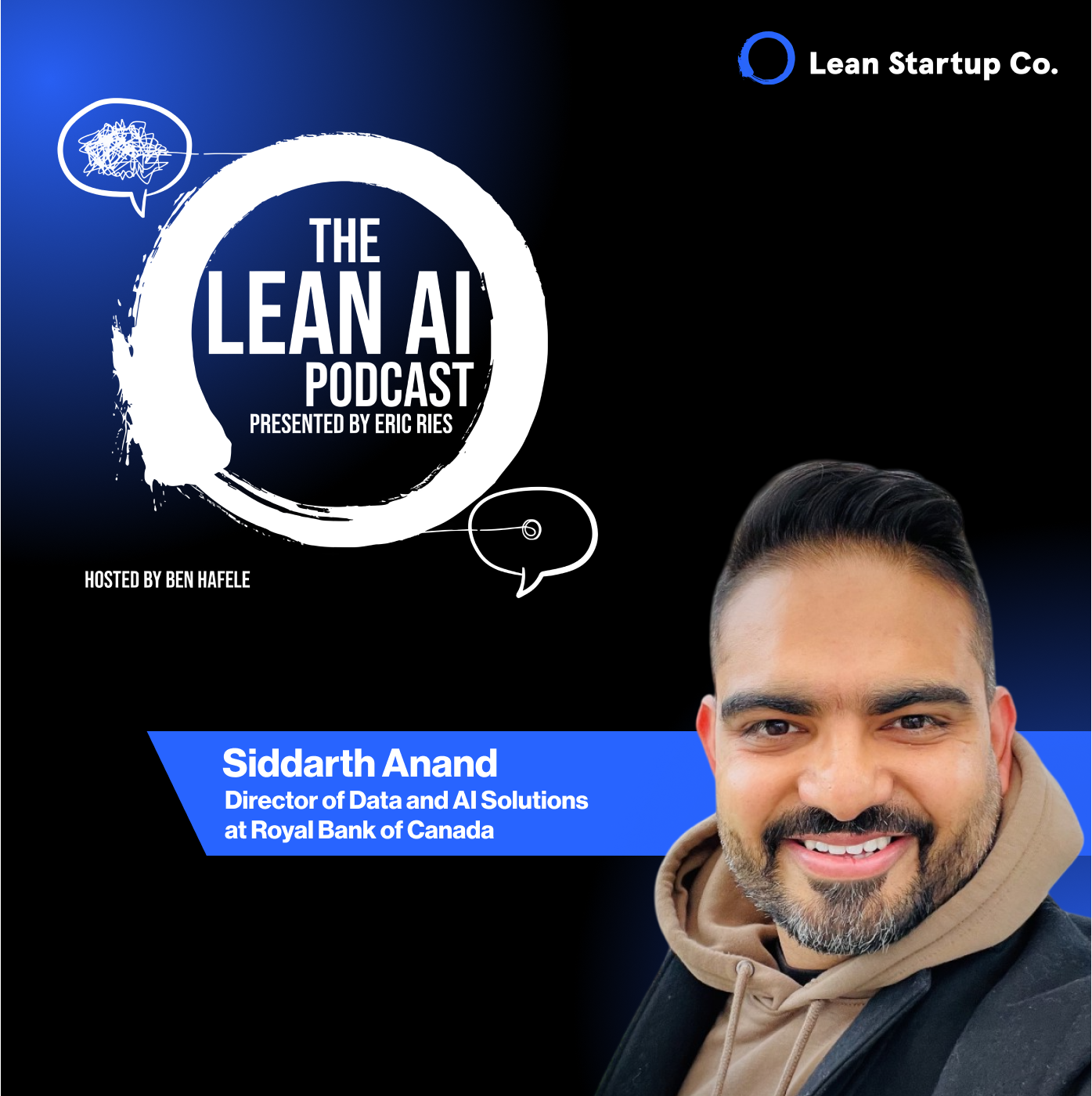 From Data to Dollars: Building Practical AI in Large Organizations52 / 100
 How to Lead in the Wild West of AI with Philip Chew65 / 100
 Avoid "Burning Star Syndrome" using Smart AI Investment Strategies with Kunal Sawarkar81 / 100
 How to Get Senior Leadership Buy-In and Alignment with Supreet Kaur85 / 100
 Cultivating AI Use Cases to Move Beyond 'Magical Thinking' with Chris Reitz85 / 100