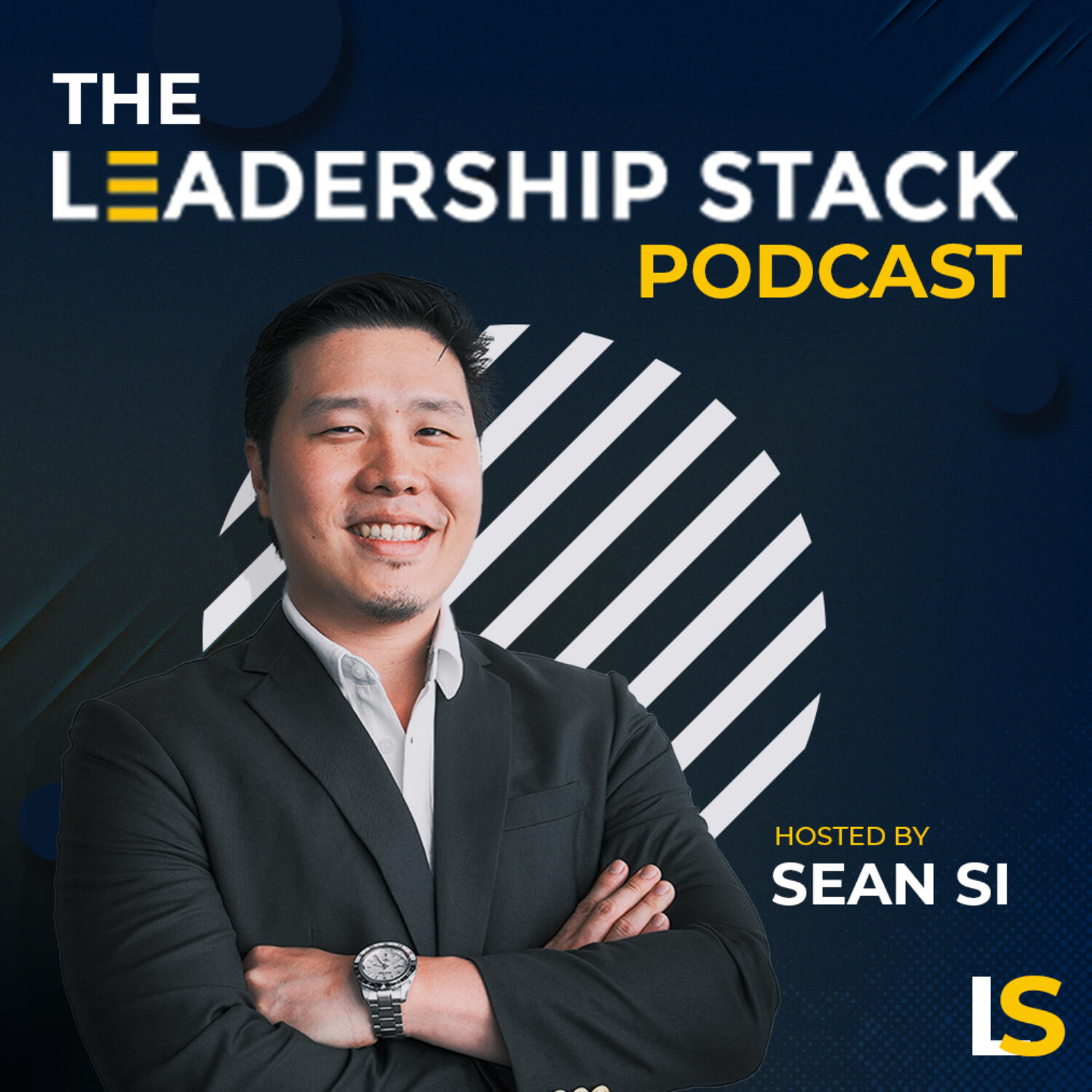
The Leadership Stack Podcast · 2024-12-12 · 16 min
Key moments - from our scoring
Substance score
21 / 100
Five dimensions, 20 points each
After the initial five chaotic years of startup phase, successful entrepreneurs face a critical challenge: remaining trapped in their business through operational dependence. Sean C outlines a systematic approach to building leverage through culture, people, and processes. The framework prioritizes hiring and firing based on values alignment rather than desperation, implementing intentional onboarding and training programs (he uses Waybook for SEO Hacker's process documentation), and scaling operations before pursuing aggressive sales growth. Key emphasis is placed on creating process documents and videos so training becomes scalable regardless of geography, investing in team upskilling through external training companies, and establishing clear career paths. Only after operations are optimized does he recommend scaling sales through marketing engines (SEO Hacker uses their website as a passive lead generator) and brand-building to reduce the founder's personal involvement in closing deals. This progression ensures your business operates independently rather than requiring your daily presence.
By building processes, hiring the right culture-fit people, documenting everything in writing and video, delegating decision-making to trained managers, and creating a passive lead-generation engine so the business operates without your constant involvement.
Scale operations first, then hire and train people, then scale sales; if you scale sales before operations are ready, you'll damage your brand and capacity to deliver quality work.
Because onboarding and training takes time; hiring ahead of demand projections ensures your team is fully equipped and trained before the work arrives, maintaining quality and culture rather than scrambling with desperate hires.
Create written process documents and training videos (using platforms like Waybook or Google Docs) that show step-by-step how work is done, so new hires in any location can train themselves without requiring the founder's personal involvement.
Look for people with their own networks and ability to close deals, but also ensure they have access to a consistent lead engine (like a website generating inbound leads) and exposure to the founder's pitch through shadowing so they can succeed independently.
Our reviewer’s read on each dimension, with quotes from the episode.
The episode is almost entirely composed of generic entrepreneurship platitudes - hire for culture fit, build processes, scale operations before sales, train your people. The advice is surface-level and adds nothing a B2B operator hasn't heard many times before, with almost no novel mechanisms or non-obvious claims per minute.
You have to hire people who have your values at heart. It's just like when you're trying to court someone or you're being courted.
Something that always generates perpetual leads. That's how you grow a company fast.
The content is recycled standard SME advice with no contrarian, first-principles, or counterintuitive arguments. The garden/jungle metaphor is well-worn, and the sequencing advice (operations before sales) is the closest thing to a distinct position, but it is still widely circulated.
You know what we call gardens that allow plants to just grow on its own? We call it the jungle.
The people who you start with are more often than not the people who you're gonna end with.
This is a solo monologue from the host, who self-identifies as running SEO Hacker, a digital marketing agency, but provides no evidence of scale, revenue, headcount, or notable outcomes. The 'Mr. CEO at 22' personal brand framing substitutes for substantive credentialing.
This is your host, Sean C, aka Mr. CEO at 22.
Sa SEO Hacker, we're a high-knowledge services business. We deal in digital marketing.
There are a handful of named specifics - Waybook as a process-doc platform, SEO Hacker as a concrete example, a rough two-week onboarding window - but there are zero metrics, dollar figures, growth data, or named client outcomes to substantiate any of the claims.
In SEO Hacker, we use Waybook. That's our process document platform.
Onboarding usually lasts for two weeks, maybe all the way to a month for some more complicated businesses out there.
This is a solo monologue with no guest, no follow-up questions, and no pushback. The host uses only rhetorical questions directed at an imagined listener, and the episode includes a mid-roll recruitment ad for his own company, further reducing substantive depth.
Hey guys, welcome back to the Leadership Stack Podcast, the podcast for entrepreneurs, by entrepreneurs
I hope this video helps provide value to you. And if it has, please do help us by sharing it with friends and colleagues.
Computed from the transcript - who did the talking, and the words that came up most.
In this episode of the Leadership Stack Podcast, CEO at 22 Sean Si dives into the strategies that free you from the "golden handcuffs" of being tied to your business. Learn how to build scalable systems, cultivate a strong team culture, and create processes that allow your business to thrive even without your constant involvement. Tune in to discover how to turn your business into a passive income machine and achieve the ultimate goal of financial freedom. Perfect for entrepreneurs ready to scale up and take control. Don’t miss out! - Youtube:
Transcribed and scored by The B2B Podcast Index.
Hey guys, welcome back to the Leadership Stack Podcast, the podcast for entrepreneurs, by entrepreneurs, to increase your leadership, teamwork, and profits. This is your host, Sean C, aka Mr. CEO at 22. Hey guys, welcome back to the channel.
This is your host, Sean C, aka Mr. CEO at 22. And today, we're going to be talking about how to make your money work for you. And we're going to be talking about it from a business standpoint.
So this is our business edition episode. So you've started out a business. You've gone through the hassle, the slug, the difficulty of sacrificing yourself, committing to the business, slashing off your pay grade. Kasi sometimes di mo kayang bayaran sarili mo, unahin mo yung employees mo.
So let's just say you're kind of done with the startup phase. It's the first five years. You're done with that. Nasa sixth year onwards ka na.
Ano na meron? Ano na dapat gawin natin? So first five years, this is the chaotic years, right? This is where you're trying to figure out, How can I make my business stable?
You're always kind of fighting for your business life, revival, di ba? Kailangan ng next client, tapos next client, pag hindi ako makaklose ng deal, di ba? Maglaho yung buong negosyo ko. So, you're done with that.
You're now scaling up. And there's many ways to scale up. There's a lot of the traditional way to do business where you're in golden handcuffs, kung tawagin namin. So, you have gold, but it's handcuffing you to the business.
So, hindi ka makapagbakasyon ng tama, kasama mo yung pamilya mo, kasi kailangan may magbantay ng negosyo. How will you grow your business so that you're not tied up to it. Wala hang golden handcuffs. You have systems and processes.
You have people who are professionals who can run the business well without you there. This is what we're going to be discussing because you don't want to keep on working for money as you grow older, as you retire. The goal is to make money work for you. Now, there are several different ways to do that.
We talked about that in a previous episode. So we covered that in a previous episode entitled How to Build Your Passive Income Machine. Now, we're going to be talking about how to make money work for you. So, medyo passive income din, but using your business.
How do you do it using your own business? Now, a lot of entrepreneurs, dito tayo napapadpat. Kasi we started the business, we wanna grow it, we don't wanna keep working for it, we don't wanna keep being there day-to-day na kailangan tayo, nakatali tayo sa business. Here's how.
First, you build processes. You're no longer at a phase where you're building just people. You're also now building processes. That's gonna be your main task.
So, yes, you're still the salesperson because you understand the business inside and out. So, hindi pa mawawala yan. You're the main sales. But you should delegate your many tasks to different people who you trust and who you can rely on, who are accountable to you.
They report you. You can check their work. They're transparent. And you just understand them as a person.
You hand over to them a lot of the day-to-day tasks that you are doing because now your role is going to be different. It's building processes. This involves hiring, firing, culture, process document, process video. So we're going to take that one by one.
So first, let's deal with hiring, firing, and building the right culture. When I say hiring, this is because processes go hand-in-hand with people. And you as the CEO, as the founder, it is your job to make sure that you're letting the right people in your house. If you let the wrong people in your house, what would they do?
They would steal, they would wreck things, they would kill your branding. And your house is going to be a mess. You have to make sure that you're letting the right people in your house. How do you do this?
With the hiring process, design it in such a way that you're going to be able to screen the people who are applying. There are a lot of people who are applying in a business. They just really want a pay grade. They can pay for it.
They have money for it. But building a culture intentionally, it doesn't work like that. You have to get people and hire them. You have to hire people who have your values at heart.
It's just like when you're trying to court someone or you're being courted. You want to make sure that the values are all aligned. Because if not, and you get married, you're gonna have a hard time in your marriage. Kasi iba yung vision mo iba yung vision niya hindi kayo magkakasundo So the tricky thing here is you have enough people na hindi mo talagang kailangan na kailangan na kailangan na ng new hire immediately Kasi pag ganun yung position mo, wala na i-hire mo na kung sino man yung next na mag-apply.
Eh, paano pag hindi kayo aligned ang culture? It will do more damage than help long term. So, be very strict in your hiring process. Design it in such a way where you will be able to screen a lot of people and get the ones that really fit your culture.
who you can trust. And they're also skilled people, meaning they're able to do the work. Hindi yung ituturo mo pa sa kanila lahat. Now, when it comes to firing, it's the same.
There are some people who will grow apart from you. Hindi siya growing with you, mag-grow apart from you. That's why I always say the people who you start with are more often than not the people who you're gonna end with. Now, there are people who will stay with you long term and who will adapt to the growth of your company and business and your leadership and your values.
Amazing. Bibirayang ganon. But for a lot of people, it's not gonna be the same. You see, people who start with you when your company is starting, startup phase, chaotic, gusto nila yun.
Some of them thrive in that. And they're gonna be great for the first five years. But after that, when you're processizing, when you're scaling up, sometimes, they will resist it. So, minsan magkakaroon ng friction, magkakaroon pa kayo ng conflict, and that's fine because the companies grow.
And if the people does not grow with the company, with the processes, they're not able to adapt, they're not able to accept these things, then you will grow apart. So, firing also becomes a very integral part of your culture. How do you fire in such a way where you allow people to keep their dignity. Hindi mo sila papahihin.
Hindi mo sila ibubuli. You do it well. Procesize. Make sure you have your policies and protocols in place so that there are reasons for you to fire them legally.
Hindi yung nagbunot ka lang ng isa or dalawang malinya over the course of two years and then yun na yung ginamit mo pang fire. That's the wrong way to fire. You have to make sure your firing process is correct. It's legal.
And it's respectable. Then, all of these things will culminate. All of these things will help to improve your culture. When you have a very good, strong culture, everything else will follow suit.
Bakit? This is because a lot of companies lose people because of bad culture. Or because of culture na basta na lang nandyan. They weren't intentional about it.
It just happened. It grew on its own. You know what we call gardens that allow plants to just grow on its own? We call it the jungle.
Mahihirap yung navigate. And when it's a jungle, when your team becomes a jungle, it's gonna be very hard for you as well to navigate through it. To look for what you're looking for. To delegate.
So you have to be intentional about the culture talaga. You trim the garden. You're the main gardener when you're the CEO and founder of your own company. And the culture of your team, it's the garden.
You have to take care of it every day. Now, after you've hired them, what happens? Some companies, ganito. Oh, nahirin na natin, sige.
Oh, sige, bigyan mo na ng trabaho. Tapos yun na yun. You expect that that person will just grow on his or her own. And you expect your other managers that they will teach and guide that person all the way.
Papa, may trabaho din yung managers and leaders mo. How can they make sure that this person will succeed in this new role that you hired them for? You cannot. This is why you have to have an onboarding and training program.
Onboarding usually lasts for two weeks, maybe all the way to a month for some more complicated businesses out there. Sa SEO Hacker, we're a high-knowledge services business. We deal in digital marketing. We deal in social media marketing, search engine optimization, websites, programming, a lot of technical stuff.
So when we do this, we have to make sure that we onboard them well, we teach them the company's history, the team's culture, the purpose of the company, why we exist, the mission, the vision, all of these things. We onboard them properly. But a lot of companies, they expect na, oh, paghinare ko yan, okay na yan, isabak nyo na yan. That's not gonna work.
What makes us think, especially tayo na higher level companies pa, na we can get away with no training for our people. So, this is why a lot of companies struggle to scale up and grow. They struggle to let go of their day-to-day. Kasi, lagi nagkakaproblema.
Bakit? Hindi mo trinane eh Sasabog talaga yan Somewhere along the way It bad enough already sometimes na trinane mo na inonboard mo na magkakamali pa That happens Lalo na kung hindi mo triname So you will always imagine yourself na kailangan nandito ako sa negosyo. Kailangan ko bantayan to. Kailangan araw-araw kong tingnan yung mga tao ko.
Because you did not equip them, you did not train them. Hey guys, hope you're enjoying the episode so far. I just want you guys to know before we resume the lessons in this episode that we at SEO Hacker are hiring. We got tons of open positions right now.
And if you know someone who wants a career in digital marketing, please search in Google SEO Hacker Jobs. You will find our jobs portal and you can apply from there. We have tons of benefits such as health medical benefits, life insurance benefits, and salary increase upon regularization, 25 days paid time off, and government benefits to boot. Thank you so much and enjoy the rest of the episode.
Then, to make it scale all of these things, you have to have process documents and process videos. Hindi pwedeng verbal siya lagi. Hindi scalable yun. Every new hire na i-hire mo, i-onboard mo, verbally you're teaching them.
Kailangan warm body kang nandun. Ay, hindi talaga magsa-scale yan. What if you hire from the province? What if you hire from abroad?
Paano may iti-training yun? So you have to have process documents that are uploaded digitally. In SEO Hacker, we use Waybook. That's our process document platform.
You can use Google Docs para libre or whatever platform you prefer. What matters is, you have process documentation. This is how you do things. May written, may mga screenshots, saan ka magkaklik, saan mo ito lalagay.
Nakadocument yan. And then if you can turn some into video, even better. I shoot videos talking about what is the importance of an account manager. What is the importance of an SEO specialist.
What is the importance of a graphic artist, a web designer. How does your work affect the rest of the team? Nakavideo lahat yun. People who apply for that job, they get to watch these videos.
So, they are being trained in a manner that I don't need to personally be there. But I'm the one teaching them. So, we made our training process scalable. After this, you need to scale up your operations.
Now, you have the right people in the right seats in your company. Fantastic. How do you now scale up the operations? And bakit hindi sales yung inuna ko?
Yes, you need to scale up sales. Pero operations muna. Bakit? Kasi kung inuna mo sales, hindi kinain na operations, ang mangyayari sa'yo, masisira ka lang.
So, you scale your operations first. And how do you do that? You have to make sure that you have projections. based on historical data.
Kung ito na yung papasok next year, ilan tao kailangan natin i-hire? Gano'n karaming equipment yung kailangan nila? You have to already project that. And you make sure that you hire them at the right time.
Don't hire them late. Mahirapan ka. Madadamid yung branding mo. You hire them early and then you train them and you onboard them.
Training and onboarding takes time. So you have to hire earlier than your projections so that you're able to make sure that the work that must be done is done well. You equip them with the tools that they need. Could be hardware, could be software.
you have to pay for these things. Because if lagi ka na lang, ah, let's just use free software, kahit na clunky, kahit na it takes a lot of time, then they're gonna find their work more difficult. They're gonna have less joy in their work just because kusomang magtipid, laging free yung kailangan mong gamitin. Now, I'm not saying using free tools is bad.
There are a lot of free tools that are fantastic. But if the work can be done a lot more efficiently by shelling out a bit more money, I suggest you do so. Then you invest in upskilling your people. So you've onboarded them, you've trained them for the hard skills that they're gonna need, sure.
But then you also upskill them with the soft skills. Remember, you're growing your business. When you grow your business, you're gonna need more leaders. How are you gonna have mid-managers and upper management if wala ka namang tinuturong leadership lessons and managerial lessons and skills sa mga tao mo?
So you need to invest in these things. Get a training company. They're gonna be doing workshops, team-building stuff. They're gonna be doing some seminars for your people.
Don't think that walang effect yun, ha? It has impact. It has long-term effects. They're learning, especially if you're hiring younger people.
And we wanna make sure that all of them have the opportunity to go up to mid management or upper management Hindi yun mangyayari basta You cannot expect people to grow themselves just because you have to be intentional as the leader to give them the proper equipping get some training companies to come into your company, consult with you, and create programs for you so that they can train your people. When that happens, your people will take over a lot of the decision-making that used to be on your plate and that will free up a lot of time for you.
And then you create a career path. Now, if your business is growing, money is working more for you, you feel less of that golden handcuff, you make a career path now for them. So, we have to have career levels. And this is because we also discover new skills.
We also discover new things about certain positions. We have designed now the career path intentionally. There has to be something more for your people. And you as the leader are the one in charge to doing that.
Then lastly, you scale up your sales. Okay na yung operations, okay na yung onboarding, okay na yung culture. Now you scale up your sales. Now you're gonna be hiring more salespeople.
Now, when you hire salespeople, maganda sana pag meron na silang sariling network. Malakas na. Kaya na nilang magbenta at mag-close deals. Sadly, that's not always the case.
Some salespeople will still need your support. They need you to generate leads for them. So, kailangan mo rin ng marketing team. Now, how we did it at SEO Hacker, for the longest time, the marketing, buhat-buhat yan yung SEO.
So, we just get inquiries passively. may engine of growth kami na tinatawag. Our engine of growth is a passive lead generating platform and that's our website. So our leads just come in.
We get leads every single day. And this is what our salespeople use to set meetings, to close deals, to send contracts and proposals. So there is that engine of growth and then they have their own network and then they have their own strategies pa. They go to Expos, they check out websites of other companies on their spare time here in the office and then they contact them, they send a proposal, maybe they would send an audit.
So, there are so many several ways that salespeople can set up meetings and close deals. But when you set up your sales team, you have to make sure you have an engine of growth. Something that always generates perpetual leads. That's how you grow a company fast.
Then you have to make sure that you build your brand. It's hard to do sales if the brand is weak. Hindi kakilala ng tao. Hindi nila nakikita yung pangalan mo.
Hindi matunog. It's so much harder to close deals that way. It's so much easier if people already know who you are. So you equip your salespeople by training them, by allowing them to shadow you when you do a pitch, when you do a presentation, and at the same time, strengthen the brand.
Para mas madali sa kanila nakapag-close ng deal. And once that is rolling, you can make sure that your money is gonna be working for you 100% of the time. Kahit wala ka sa office, it's still working because the sales are coming in, your operations team is able to handle it, you're able to scale up your people by hiring them, onboarding them, training them, the culture is fantastic. All of these things will now work for you.
So your worries are a lot, lot less. Minimize na siya. And literally, your business is working for you. Money is working for you.
I hope this video helps provide value to you. And if it has, please do help us by sharing it with friends and colleagues. Hit the like button, the subscribe button, and the bell notification icon. And if you're not following us on Spotify yet, please do help us there by following us there.
Share this episode to other people. Thank you so much for tuning in. Take care. And God bless.
Hey guys, thank you so much for tuning in. I hope you enjoyed this episode and it has provided value for you. And just so you know, we are on YouTube. If you are a visual learner or if you have a YouTube account, please do check out the YouTube channel.
Just search Leadership Stack YouTube and you will be able to find it. And please do hit the subscribe button while you're there. If you think that our episodes bring value to you and your friends and family. And please do help share this episode as well if you enjoyed it and if you learned something new from it.
Take care and keep leading.
Other episodes covering the same guests and topics, from across The B2B Podcast Index.
 The Systems That Set CEOs Free with David JenynsTip Top · on Process Documentation84 / 100
 Living on Purpose: Designing Your Life and Leadership with Kent JulianNo More Mondays · on Golden handcuffs80 / 100
 Great strategy won't save you - execution will - #72The Consulting Pulse by CMap · on Process Documentation75 / 100
 S3 Ep 24 The Kidnap Test: Is Your Business Actually Sellable?Managed Chaos Podcast · on Golden handcuffs71 / 100
 Risk Management: Identifying and Insuring Key Employees Ft. Mark GageExitReadiness®️ PODCAST · on Golden handcuffs71 / 100
 Episode 4 - Why your next great enabler might already be sitting on your sales floor. With Varun DesaiThe Enablement Optimization Podcast · on onboarding programs66 / 100
 How Do You Retain Top Talent and Minimize Attrition | Sean Speaks
 How to Avoid Burnout When You're Working on a Business | Sean Speaks
 Why Remote Work Culture Won't Work | Sean Speaks
 How Do You Manage Stress As a Business Owner | Sean Speaks
 How to Build Your Passive Income Machine | Sean Speaks