
The Growth Strategy Podcast with Steve Pugh · 2023-10-19 · 54 min
Key moments - from our scoring
Substance score
26 / 100
Five dimensions, 20 points each
Andrew Douglass built a 27-year events business (Innovision) with his wife Claudia before founding Parallel in 2013 - a social enterprise dedicated to disability inclusion and supporting deaf, disabled, and neurodiverse communities. His motivation stemmed from work with Red Bull on Wings for Life, a spinal cord research charity, combined with his father's experience with Parkinson's disease. Rather than focusing on charity's negative narratives, Parallel creates inclusive festivals and mass-participation events like their signature Parallel London festival, which features multiple race distances (100m to 10k), a unique sensory 1k for neurodivergent participants, and has raised over £1.5 million for partner charities across four events. The conversation touches on education reform via Ken Robinson's TED talks, the power of live events for emotional connection, and how disabled individuals like Robinson have shaped society. Purple Sock Day represents an evolution of this mission - a visible, celebratory campaign to normalize disability and promote mainstream inclusion. Steve Pugh, the host, shares his parallel journey building The Roadmap, another social impact business, creating a resonance between two purpose-driven entrepreneurs.
Parallel is a social enterprise founded in 2013 by Andrew Douglass to support deaf, disabled, and neurodiverse communities to live freely in mainstream society, launching its first major event, Parallel London 2016, in the Olympic Park.
Parallel runs an inclusive festival with multiple race distances (100m, 1k sensory, 5k, 10k) designed for all abilities, has staged four events, partnered with over 100 charities, and raised approximately £1.5 million for those charities.
The super sensory 1k is a unique race format where every 100 meters includes a sensory activity, specifically designed for neurodivergent, autistic, and profoundly disabled participants to participate in a tailored athletic experience.
Andrew was inspired after working with Red Bull on Wings for Life (a spinal cord research charity), having firsthand experience of his father's Parkinson's disease and resulting disability, and conversations with International Paralympic Committee president Phil Craven about inclusive design.
Parallel's motto is 'start together, finish whenever,' emphasizing participation and joy over competition, and events are designed with disability inclusion at their heart but for absolutely everybody, avoiding negative charity stereotypes.
Our reviewer’s read on each dimension, with quotes from the episode.
This is almost entirely biographical storytelling and charity promotion with minimal actionable insight for a B2B operator. The one substantive observation - that state benefits create a structural trap preventing disabled people from pursuing side hustles - is genuinely interesting but is not developed with any depth or data.
if they had a little side hustle, um, and they were found, you know, to be generating income from that side hustle, it would jeopardize their, you know, their state benefits and their state payments
too much debate, too much talking, not enough action
The framing is almost entirely derivative - Purple Sock Day is explicitly positioned as a Red Nose Day copy, Ken Robinson's TED talk is well-worn territory, and the 'ask for advice not money' tip is one of the most recycled pieces of networking wisdom in existence. The 'culture over campaign' phrase is the only moment of even mildly original framing.
I am unashamedly, you know, a lofty ambition. Steve, I want Purple Sock Day to be the red Nose day for disability.
something I call you know, sort of culture, uh, over campaign
Andrew Douglass is a genuine operator - 27+ years running an events business, real client relationships with Red Bull, and a functioning social enterprise - but this episode functions as a charity promotional vehicle rather than a deep professional debrief, which mutes the value of his experience for a B2B audience.
we've been running our events business now called Innovision for. My goodness, getting on for about 27, 28 years
one of our. I suppose our biggest clients at the time was Red Bull
There are scattered concrete details - sock price point, fund split, charity count, fundraising total, event dates - but these are all promotional or organizational facts rather than evidence-backed business insights. No unit economics, market data, or performance benchmarks are discussed.
BAM essentially uh, make um, all of our socks at cost. They don't make any, any profit or anything, um, which enables us to retail our socks, um, you know, at an affordable price for most people. So this year it's at six pounds. And then what we do Steve, is that we ring fence 50% of the proceeds
worked with well over 100 charities and helped, uh, raise, um, you know, in the region of about 1 1/2 million pounds
The host repeatedly hijacks the conversation with lengthy personal monologues about his own childhood, Liverpool, Ken Robinson, and his MBA business, leaving the guest little room. Questions are uniformly soft and promotional ('How's your Monday been?', 'Would you be happy to give a quick intro?'), with zero pushback or substantive follow-up on any claim.
So, Andrew, how are you? How's your Monday been?
I grew up in the Northwest, as you know, so in Liverpool. And I was raised by a single parent. And the first 30, 35 years of my life were largely about getting to myself to a point where, you know, you kind of had a good job
Computed from the transcript - who did the talking, and the words that came up most.
Interview with Andrew Douglass, #PurpleSockDay - Buy socks here : In this episode of the podcast I'm speaking to Andrew Douglass, Co-Founder & CEO at innovision, Founder & CEO at Parallel Lifestyle ... and much more! The reason we're speaking is to help raise awareness of #PurpleSockDay raising positive awareness of the importance of disability inclusion, whilst also doing good. #PurpleSockDay takes place on 3rd December on The International Day of Disabled People. Buying & wearing our socks helps to raise positive awareness of the importance of disability inclusion, whilst also doing good. 50% of our proceeds go into our Purple Sock Fund to support budding D/deaf, disabled & neurodiverse entrepreneurs. Sustainable Style with Social Impact Socks are just £6 : #PurpleSockDay #IDPD #IDPD23 #DisabilityInclusion #Disability #DisabledEntrepreneur #Entrepreneurship #Business #SocialImpact
Transcribed and scored by The B2B Podcast Index.
Speaker A: Thanks, Steve.
Speaker B: So, hello and welcome to a slightly different version of the podcast that I normally do. Uh, we are on a shameless promotional plug for something called Purple Socks Day, which we're going to promote heavily over the next few weeks, which is a fantastic organization and charity and cause, which I'm going to let Andrew talk about. And we thought, well, actually, who better before we introduce you to lots of really cool guests with their own brilliant business story and everything else to tell than the. The founder of it all. And I'll almost share his story, story and everything else as well. So if you join us for the next kind of 30, 40 minutes, if you drop a message, it should pop up on my screen. I'd love to say hello. And hopefully if you come with us and just discover more about Andrew and Pebble Sock Day and what it's all about and what we're trying to achieve, uh, hopefully it'll be a really interesting conversation. So, Andrew, how are you? How's your Monday been?
Speaker A: Yeah, hi, Steve. Well, thank you for inviting me on. Uh, yeah, good Monday so far. Uh, as ever, the day goes far too quickly. But, uh, yeah, it's been a good start to the week.
Speaker B: So I love, for me, it's all about transparency and honesty, and I love that that's my personal take on things. So we've been planning this for about a month, month and a half, and I've been involved in one way or another with Purple Sock Day and yourself for about a year or so. Uh, but for people that might not have discovered you so far, would you be happy to give a quick kind of 60, uh, second intro on who you are, where you're from, the kind of stuff that you do, just to kind of set the scene.
Speaker A: Yeah, of course. So, um, my goodness. So I, uh, grew up, um, uh, in the East Midlands, a little tiny county called Rutland. So for all of you that are very keen on Trivial Pursuits, it's the smallest county in England. So there you go. Um, uh, and actually the county motto is Multum in Parvo Much in Little, which I think is, um, you know, probably defined actually much of my journey, you know, really. You know, I've always been on the side of the underdog, always looking for something there and a real belief that there's a potential, uh, and an adventure in. In almost anything. Um, I had a really happy childhood. Um, I grew up in a little tiny village called Edith Weston, uh, in, uh, in. In this county of Rutland. And, uh, so the nearest big metropolis would be somewhere like Peterborough or Leicester, just to put that into context. But happy childhood. Um, you know, my mum, a farmer's daughter, very working class. Uh, you know, she was a cleaning lady. Uh, my dad was from the northeast, from Sunderland and he uh, was a cook. Um, so. And he was posted to Rutland, uh, RAF North Luffnam. So he was a cook on the, on the air base and he fell in love with the countryside and decided to make a life there. So, um, I grew up on the. I'm an only child. So, um, you know, I'm very, very comfortable, uh, in my own company. Um, but I love, love uh, socializing and company as well. Um, I was blessed with a, ah, great ability to be good at sport. Um, and despite my sort of fairly modest and working class background, I was lucky enough to get a sports scholarship, uh, at a, At a local private uh, school called Oakham School. Um, and um, yeah, which is great. So I spent uh, you know, some happy years there taking my. What was then O and A levels and um. Yeah, and uh, and was able to continue my love of sport. Uh, and then, uh. Yeah, and then that uh, took me off into my next adventure. Um, into, uh, into adulthood basically.
Speaker B: I was gonna say I thought the whole interview was gonna. It would have been the easiest gig ever. You just talk for half an hour, be brilliant. But so you have, you wear lots of different hats for lots of different organizations. Would you be happy to just give a quick summary on what those are?
Speaker A: Yeah. Uh, so my, um, you know, I talked about going off into adulthood. You know, I was uh, you know, and I think there was probably part of the reason I grew up in a really tiny environment, you know, very, very small, very tiny. And I just had this real wonderlust at a very early age and I wanted to see the world. Um, so, uh, and that's what really took me off in my uh, you know, sort of first, uh, first sort of entry into the, into the world of work really. So I did, uh, I did pretty well my exams, um, you know, got a place at. But I took a year out, um, and that was in France. I went to work for a company called Canvas Holidays, who are one of the pioneers, I think hopefully we might talk about entrepreneurship a little bit later, Steve. But this was a great entrepreneur, Scottish entrepreneur who created the first, I suppose, posh camping. Um, you know, so, uh, I went to work for them over in France and I loved it. So um, I deferred my year for another year and stayed in France for another year and eventually just didn't Go back, uh, at all or enter into further education. And that's where I kind of forge my path. So I lived in France for. My goodness, getting on for about four. Four years or so. Um, my French isn't too bad or wasn't too bad then. Anyway, uh, then I got a job for Qantas Airways, continuing my love of travel, um, and sort of worked my way into sales and marketing. Um, and that really satisfied my wanderlust. And I saw a lot of the world, very fortunately, as a result of being an employee for an airline. Um, and, uh. Yeah, and then briefly that took me into the world of, uh, entertainment travel. Um, and I left Qantas to join an agency that specialized in, um, travel for bands on the road and film crews and that kind of thing. Um, and that's. Yeah, that was pretty cool. M. And that's where I met my wife now, Claudia. Um, and, um. Yeah. And so, um, we very. In very quick succession, really, we kind of. Uh, we got married. We then decided we'd set up a business together, which was an events business called Innovision. Um, and we did that in very, very, very quick succession. And we've been running our events business now called Innovision for. My goodness, getting on for about 27, 28 years. Um, but then a few years ago, which I think is probably the main thrust of our conversation today, um, you know, we created parallel, um, as well. Um, which, uh. Um. Yeah, which we've been running now for. For many, many years.
Speaker B: Um, so on parallel then, and M. We'll come back to the other stuff because I don't want to gloss over some of the. You will have learned so much in 27 years of business, especially also working with your wife. I'm not sure, I mean, Lisa would be able to do that. So that's a talent in itself. Ah. But would you be happy to both, before we go into these, um, go on a bit more about the organization, what you do, who you work with and what. Why you exist.
Speaker A: Yeah. So, um, I set up parallel, um, really off the back of a couple of things, really. Um, one was our business, um, which I mentioned earlier, called Innovision. And one of our. I suppose our biggest clients at the time was Red Bull. Um, and we did all of the, you know, lots of brilliant things for Red Bull. You know, I talked about Underdogs earlier, and it was. It was so exciting working for Red Bull many years ago because they were, you know, a really exciting company. You know, created a whole new category and doing some really exciting Things and pushing the envelope out there and it was really uh, really exciting and exhilarating. Um, but actually um, you know, possibly a more um, little known fact about Red Bull is that they actually underwrite a spinal cord research charity called Wings for Life. Um, and that was really driven by their owner who sadly passed away just. I don't. A half ago, Dietrich Mateschitz, um, one of his good friends, his son had a road accident and spinal injury. So he was driven to set up a spinal cord research charity called Wings for Life. And um, um, Red Bull of course being Austrian and they wanted to set up their charity in the UK and so um, I guess I was asked to see whether I could help them uh, with their event strategy and their fundraising. And I guess Steve, if I'm honest, when one of your biggest clients asks you for a little bit of a favor, it's quite difficult to say so, but actually I went into that eyes wide open and I learned an awful lot. Not only of course learned an awful lot about spinal cord research, but I, you know, came across some individuals, a community, a whole world which I had previously not really known or uh, really knew about. And it really opened my eyes and ears and um, and it really made me stop and think about the world of disability and the disabled community. Um, and then you know, kind of on the back of that as well, um, you know, not at the same time, but maybe a couple of years later my dad who sadly um, you know, passed away as a result of that, um, had Parkinson's. And you know, and it's uh, that's a really cruel progressive disease. And uh, you know, and uh, obviously as his uh, as he physically declined, he became more and more disabled and more and m. More reliant on wheelchair mobility aid. And uh, of course, you know, um, that really uh, had a mark on me. And I have to say, you know, um, you know, first hand experience of you know, that social model of disability. So many barriers in society that uh, you know, that kind of prevent you. So it really drove me to um, you know, to try and create um, uh, a movement, a uh, brand, um, that could tackle some of our uh, societal problems around disability. Um, but, but importantly for me to do this in a way that was really positive, you know, so I didn't really want to focus on, you know, on, on the uh, on the negative side because there are lots of really great organizations already doing that in terms of the world of activism and charity and lobbying. Uh, but I really wanted to, you know, have a really good creative Outlet to really focus on the positive aspects of disability and disabled people. Um, and to create events and campaigns that can really help, help to tackle some of our societal issues. And it also allowed me, Stephen, I wish social enterprise was more of a thing when I was a lot younger. Uh, and I'm a huge fan of social enterprise, you know, that balance of profit and purpose, uh, creating businesses that are sustainable but actually are really driven by purpose and doing good in society. And uh, so that was my driver for how I set up Parallel as a social enterprise with a social mission to support deaf, disabled and neurodiverse communities to be free, to live life to the full in mainstream society. So that's broadly, um, you know, what was my sort of motivation and driving force for setting up Parallel.
Speaker B: Cool. And hello to Apicorn in Thailand as well. She always tunes in. So I've got to ask, how long has that been since you first set up?
Speaker A: Um, so actually Parallel was a twinkle in my eye. Um, would you believe that would, would have been back in 2011, 12 years. So, uh, yeah, so quite, quite a while ago. And um, uh, and at that time it was a busy time actually in London uk, it was the Olympics. Um, and uh, you know, so, um, and with our event business, we were actually really busy. Um, so it's just having the headspace and the bandwidth and importantly for lots of other stakeholders to have the bandwidth. Um, so, um, so I had the idea, um, I remember vividly, um, uh, you know, having a half an hour coffee, uh, with the, then president of the ipc, the International Paralympic Committee, a great guy called Phil Crave. So Phil Crazan, good, good northern lad, you know, who became the president of the ipc. Um, wonderful man. And I managed to get a half an hour cup of coffee with him, uh, you know, and uh, uh, ran the idea of Parallel, um, uh, you know, by him. And uh, and he gave me some salutary, some brilliant advice actually, because at that point I wanted to create a really major flagship event which perhaps I can chat about a little bit more. Um, and um, but he gave me some great advice. He said, whatever you do, you know, don't make it exclusively about disability. You've got to make it about everybody. And he was absolutely, um, spot on as well. So anyway, off that advice, I formed, um, Parallel. And that would have been in 2013, um, Steve. And then it took us, uh, another, my goodness, three years to plan and launch our first major event, um, which was parallel London 2016, um, in the uh, in the Olympic Park.
Speaker B: Wow. And just thank you to Rob. A guy called Robert Farrell I know pretty well has shared the link to the website on the main feed there's the link to buy socks as well. But he makes the point, which I agree with, is that the. You're a little bit older than I am, but, you know, we've both met a lot of people, um, in careers and life and whichever. And I think it's. It's either that you choose to gravitate to people that you align with, values wise, which I know I do. I think some of it's conscious, some of it's subconscious, but actually it's funny, I do genuinely feel that more people now have a social bent on what they do and they actually care more about um, society and having a wider good on stuff than maybe, you know, they did in the past. That could be a personal thing. But also for me personally it was that element of uh, where. So I grew up in the Northwest, as you know, so in Liverpool. And I was raised by a single parent. And the first 30, 35 years of my life were largely about getting to myself to a point where, you know, you kind of had a good job and you had a house and getting all the stuff that you want to do and absolutely, for anyone that should be your, Your goal. And I think it was a certain point when, uh, when I was content and we had everything we needed that, you know, people always say that you should put your own oxygen mask on first. But almost it's then that point where for me, I was. So I started the roadmap. And again, we're a social impact business ourselves, but it's, it's now my life. Fulfillment has nothing to do with me like it does because I run it, but almost. But it's about the social good and that kind of thing. So I. I'm not even sure how. Do you remember how we first met or what the first introduction was? I kind of genuinely can't remember.
Speaker A: I can't. I think we were we. I think. Were we introduced? I think we might have been introduced.
Speaker B: Um, it could have been seated sewing, but I can't.
Speaker A: I think. I think it might have been Cat from seated sewing who made that kind introduction. And um. Yeah, and I remember that we had a, A brilliant, um. And I still remember it vividly. We had a brilliant conversation, didn't we? And we talked a lot about, you know, the state of the education system. And then we uh. Yeah, we talked uh, then about Ken Robins.
Speaker B: That's. You beat me. M. I was going to bring Ken back up, who sadly died a few years ago. But also I did some digging, so on, on Ken. So do you want to explain to the audience, if not, I can do it. About who Ken Robinson is and what he looked to do. I'm happy to do the honors if you don't want to or.
Speaker A: Uh, well, I, I, I will. Yeah, I'll, I'll have a go. Uh, see, but I think I know, you know, your propensity for, for research and everything. So I think. But Ken Robinson, uh, I had, I had the greatest, um, joy. So, so basically, Ken Robinson to this day, uh, is the most watched TED Talk of all time. Um, and, yeah, and exactly. And uh, so if anybody listening or, or listen, if you've got 15, 20 minutes, you know, does creativity kill schools? Um, uh, you know, it is absolutely brilliant. Um, it's, it's quite old, but still stands the test of time. And Ken, um, was a great, um, pioneer in the education system. Um, he had a real strong belief that the education system was just not fit for purpose. And he's quite right in my view, that we are all sort of learning by rote. Um, but actually importantly, it's a one size fits all system and it's not designed to make the most or to benefit or support us as individuals. And so when we're talking of course about disability or learning disability, um, you know, that's uh, you know, that's very, very, um, important. So, uh, Ken was a great, a great thinker, um, about the education system. He was an absolute passionate advocate for creativity and uh, the power of creativity, um, you know, and its importance, um, in society. Um, and actually I think I'm right. But, um, you know, which sadly never saw the light of day. But I think in the time of Tony Blair's government, I think, um, you know, he, they commissioned Ken to write a white paper on the future of the education, which he did, but uh, uh, sadly was never adopted. Um, but um, yeah, but I had the great fortune and pleasure because of my, uh, you know, um, working in the world of events, of working with Ken. Um, and it still makes the hairs on the back of my neck stand on actually. And I think he was basically, it was probably about a couple of years before his seminal talk at that TED talk where he was road testing that talk at an event that we, um, were producing at the time for an advertising agency called Mechanics Erickson. And there are very few times when you know, a speaker just makes an entire production crew just stop and just, you Know, just look, listen and, and that was a moment he was, he was a brilliant man. Hopefully I've done him justice. Steve, you, you, you know um, you
Speaker B: have but the thing that got me was that with. So I'd never met you and you were introduced from a friend but then you were telling me about this guy Ken Robertson. I did my homework, I read his book and did all of the usual stuff. Looked at the press cuttings, watched his TED talks. So this is a guy that became world famous to try and revolutionize education. You know he had an idea, he had a mission he wanted to do. But he also grew up about four miles from where I did and recently I was with my mum driving through Liverpool and my mum's first ever night out was at the end of his street and it's near Goodison park near the Everton Stadium. But what kind of blew my mind was that Ken sadly died in about four years ago now. It was kind of mid covered. Um, and actually unbeknownst to him or me, one of the big things that we'd start at the same time to the roadmap was trying to revolutionize education. And it was just, it was just incredible that someone that guy could have been from anywhere in the world. He could have been from America or India or anywhere. But he wasn't. But it was someone from a relatively poor part of Liverpool just had passion as you say, you know from small things, great things happen. And um, it was just, it really kind of inspired me to really try to take that forward and then just to fast forward that story for a long time I looked into how could we also take his mission on to create customizable education. And I did a whole MVP of a new product and what we were looking to do so that you could give his dream to help customize for his business education. But just as I was about to launch uh, AI and ChatGPT launched and that's just a lot better. So because that will take off massively over the next few years, Ken's dream will still happen. But the point was I'm a big fan of talking to people that you're recommended to but also just going down different rabbit holes for inspiration because it's incredible what's out there and it just, I really love the fact that this guy was from my hometown like a, like you know, crazy. And uh, although he sadly died it was, you know we're trying to fulfill his mission to make business education accessible as well. But anyway, so would you like to talk more about parallel the Events you do, um, socks, Purple sock day, that kind of thing.
Speaker A: No, absolutely. And, and just a final point as well, on. Sorry, Steve, On. On. On Ken as well, which, uh, again, which is, you know, Ken was also had a disability. You know, he contracted polio at a young age. And uh, you know, so again, you know, perhaps I'll touch on later, you know, is that, uh, you know, there is so much talent out there, um, you know, disabled talent, um, that, uh, you know, that are really helping. That has helped to shape our world and our thinking and uh, you know, and uh, you know, we need to support, uh, more of that, which is part of the work we do at parallel. But yes. Um, so the. The first thing I wanted to do with, ah, our work at parallel, you know, to serve our. Our social mission, I guess, was to start what I know best. And, and uh, that's how a really big event, um, uh, uh, you know, because I'm also a real passionate advocate of the power of live communication. Live events, you know, that sort of visceral emotional connection. Um, you know, there's nothing, Nothing quite like it's done in the right way.
Speaker B: Whatever. You hear drums, it's the reverberation. You just don't get through speakers.
Speaker A: Yeah, with. Without question, you know, it's, you know, there is something, you're quite right, something quite tribal and visceral, um, you know, about it that, you know, is unfair, unforgettable. Um, so I wanted to create a real event at scale, um, but putting disability inclusion, um, at the heart of that experience. Um, but instead of making that experience, you know, sort of charitable or worthy or pitiful, you know, often, you know, the very lazy tropes, I suppose, in the world of disability. I wanted to make the experience, you know, really surprising and cool and innovative and uplifting, um, you know, and, uh, you know, and really, really spotlight, uh, you the joyful aspect and the joyful nature of the disabled community. But again, in, you know, remembering, echoing my ears, the world of Phil. The words of Phil Craven. Just to make this event for everybody, you know. So it's an event with disability inclusion at its heart, but it's for absolutely everybody. So, um, so created the event. The format was a festival, uh, call it our festival of Inclusivity. So lots of different themed environments, you know, music and storytelling and active lifestyle and you know, um, you know, just as you would expect in any festival, um, and then running alongside of that, um, uh, we have a series of challenge events or mass participation. Um, so we have a 5 and a 10k. We have a 1k. We have, um, um, 100 meters. And we also created something quite unique to us, uh, which is a super sensory 1k. So, uh, if you imagine a 1k in every hundred meters, there's a sensory activity. And that's very much designed for, um, neurodiversity or autism or profound multiple learning disabilities. And, uh, you know, so, so. And the reason for doing that and so many distances is that hopefully there's something there for everybody. Um, you know, uh, our motto is start together, finish whenever. So the emphasis is very much on having a go. It's not about winning. Um, it's just about, you know, just getting out there, getting active, getting social. Um, and also we also wanted to support lots of different charities. So many charities, uh, come into our event and use our event as a platform for charitable fundraising as well. So I'm really proud of the m. You know, we've run. My goodness, what, four parallels now. Um, you know, and, uh, you know, worked with well over 100 charities and helped, uh, raise, um, you know, in the region of about 1 1/2 million pounds as well for those charities. So, uh, which is really great. So, um, so that's. That's our event. Um, very, uh, you know, obviously we. We've had a bit of a hiatus because of, um, uh, you know, Covid and all of that, but we have a new home now, um, which is in the Windsor Great Park. Um, and so we staged our first event in, uh, the Windsor Great park. Just, uh, just, um, a, uh, you know, a few weeks ago. Really, uh, successful.
Speaker B: It was July, just so you know, it's now October.
Speaker A: Yeah, well, sorry. Gosh, I thought it was flying. Yeah, I know. My goodness. My goodness, you're right, Steve. Um, so. But it was our first event in the Windsor Great Park. I've got huge amounts of gratitude to the Crown estate, who have really warmly embraced, um, you know, and I'm still pinching myself. We have such a beautiful location. We're on the long walk, the backdrop of the Windsor Castle. Uh, and it's a really, you know, and again, it really lends itself for a really sort of memorable occasion. Um, so, um, yeah, so that's where we stage, uh, stage event and. And, uh, again, my hope, uh, there is to get more and more brands involved. Um, you know, I'm a great believer that if we can get more and more really cool brands, standing shoulder to shoulder with disability is really powerful. And that. That is, um, you view, much more powerful than a government campaign or A lobbying, whatever. If you can get, really get the cool guys standing shoulder to shoulder with disability, then you know that's going to, going to change some attitudes and behaviors.
Speaker B: So as long as it's done the right way, not just for the photo opportunity. Yeah, it, you know, it's that element of just uh, I, I think people now understand it in a way that, but it's that it, I, I call it my meter, but it's almost where you do get people that greenwash things, things that say they've done something for the sake of it, but they're not actually doing, you know, the hard yards. If that makes sense.
Speaker A: Um, it makes complete. Yeah, it, Sorry to interrupt you. I mean it makes complete sense and I, something I call you know, sort of culture, uh, over campaign, you know, and, and you know, uh, and you want to be working with brands where, you know, there are certain values embedded into their culture rather than it just being a one off campaign, which is, you know, an advertising campaign or whatever where you know, they portray a certain message or a story or a narrative. But it's really very, very short sighted and, and broadly very much focused on, you know, sales or whatever. So. I couldn't agree more. And we're really lucky to be working with, you know, a number of brands, uh, with parallel who, you know, who are authentic, they really care, um, make us as well be as good as we possibly can be as well. You know, it's very much a two way thing and um, you know, but um, but you're absolutely right. Uh, there is still far too much in know, greenwashing or you know, or whatever, you know, in whatever campaign or brands, uh, just associating just for a, for a moment rather than uh, for a lifetime really.
Speaker B: And then. Would you like to tell people about these?
Speaker A: Yes, some purple socks. So, um, so the whole point with parallel is to create a whole series of um, events and campaigns, you know. So the last thing I wanted to do was to create another event business. You know, as you can see by my uh, hair, you know, I' uh, I've done enough events, Steve, but uh, so, but I wanted to create some more campaigns that could tackle um, other aspects, um, you know, within the disabled community. So um, I was looking at the International Day of Disabled People which is on the 3rd of December. Um, it's one of the, you know, many un Observance days. Uh, so it's an international, it's a global observance days. It's been running since 1992. Um, and it's Been getting um, more and more pick up here in the uk, um, um, and not too bad, but mainly the main focus has been very corporately driven, um, which is no bad thing of course, but I wanted to try and create something that wouldn't necessarily cannibalize that campaign or campaigns, that corporate engagement, but to create something that was really simple, a simple act of mass participation that could get more public engagement with um, with that day.
Speaker B: Well, there's a few if we throw that one out there.
Speaker A: Well, uh, I have to say and, and I've got a whole gratitude. I did actually chat to a number of people who had worked on Red Nose Day, um, as part of my business planning and my ideas for Purple Sock, uh, day. And I, I am unashamedly, you know, a lofty ambition. Steve, I want Purple Sock Day to be the red Nose day for disability.
Speaker B: Well, it's more sustainable because you can wear them all year round and I have several pairs of these. But, but the point is, and also no plastic is the other benefit.
Speaker A: Exactly. Not to bash, it's uh, it, you, you, you, you, you're quite right. Um, so, uh, so I did do my due diligence and I did chat to a number of people who had worked or you know, part of the early part of that campaign. And I thought, well, you know, what's a simple act of mass participation that most people do every day and if you ask them to do it, it's not going of their daily routines. So of course most of us put on a pair of socks every day. Purple um, being the color most associated with disability certainly here in the uk. So the idea of Purple Sock Day was born. Um, you know, so the idea of asking people to buy and wear ah, a pair of our purple socks, um, and then uh, obviously share pictures of themselves on social media, media, um, you know, to amplify that message. But part of that, um, thinking was that uh, that's all well and good, but why, why would people wear purple socks? There has to be a reason, you know, there has to be a bit of social impact and there are many things um, I want to tackle and one of them is to see how we can further support entrepreneurship for disabled talent. And I thought that this could be a really good beneficiary for this campaign. Um, so um, I thought to myself, okay, the next thing I need is a really, really great sock partner who make great socks, who make their socks in a really ethical and sustainable way. And I'm very, very lucky that I, a good friend of mine, uh, Is uh, Dave Gordon, who um, is the founder of bam and uh, they are a fantastic activewear company. Make, uh, and, and Dave was, has been a real pioneer for sustainable clothing and actually one of the early adopters for making clothes from bamboo.
Speaker B: And he's a guest in the last two weeks.
Speaker A: He is indeed. And he's got a great story. He's got a great story and a great man. And um, so, and Dave, in a heartbeat, really wanted to support the campaign, um, he really wanted to support um, disabled um, entrepreneurs. So there was our soc partner. So basically the piece of the puzzle is that BAM essentially uh, make um, all of our socks at cost. They don't make any, any profit or anything, um, which enables us to retail our socks, um, you know, at an affordable price for most people. So this year it's at six pounds. And then what we do Steve, is that we ring fence 50% of the proceeds to go into a fund that can then support um, the journeys for budding disabled entrepreneurs, uh, in terms of their business and their business education, um, as well. And then we reinvest everything else, uh, to buy more socks, uh, for the following year.
Speaker B: And that's also where we come in because it's one of the big things that I, when we had our first conversation, I instantly got it and I could instantly see the link that I'm going to ask you in a second about how and why do you think it's important to nurture that talent but mine, from a selfish point of view, I know firsthand what it's like to grow up and you can't access things. I know a lot of people with the cost of living and everything else, they have kids to feed, they have uh, energy bills, whatever. But actually, you know, business education in many ways changed my life and opened up so many doors that it's allowed me to do stuff. But I was able to do that because I'd managed to escape a lot of the things holding me back. But also because, for instance, we don't have kids. I had time to do it the old fashioned way and just read hundreds of books and go out and practice and do things. But the truth is a lot of people have barriers which hold them back and prevent their talents. And these are really good, talented people. So the whole reason why Roadmap MBA exists is to help people have the roadmap to grow their business or career. But importantly that people, anyone, anywhere in the world can learn completely for free, um, in a way that just to help them achieve their own kind of goals. And I know from some of our mutual friends and past conversations to do with a lot of discussions, disabled entrepreneurs, there's a whole extra tier of challenge there because often their energy bills are even higher for support of different kit. They have, you know, sometimes harder, uh, challenges to get around or maybe that they don't want to leave the house or whichever. But the point is, it's that uh, I'm with you. It was almost how can we create a universal support system which is commercially sustainable, it's not just asking for hand outs but actually that wants to do social good. So when I heard about Purple Sock Day, I just instantly wanted to support and then the plug to anyone that gets involved. I think our code's PST23, which is purple sock day 23. And basically anyone who watches this can get free access to all the Roadmap MBA stuff or just drop me a message on social. But it was just, I instantly understood what it was and what you were trying to do and I think it's awesome. Um, so can you tell people foremost where can they find socks? Buy socks? What's the plan for the rollout this year?
Speaker A: The plan for the rollout, um, this year. And I also, I should say as well too just before I uh, ah, blatantly plug that and thank you. But um, I think as well I have a great deal of thanks to you as well because um, it really also expanded my thinking in terms of how we can, can benefit more across Purple Sock Day, you know, to extend to business education as well as obviously support in terms of, you know, setting up a business and, and all of that. And you're right, it's so important and you uh, know and often you know, inaccessible or not taught and you know, and it is so important and I think the work that you're doing at Roadmap MBA is just phenomenal and I'm just delighted to have the opportunity, you know, to work with you and that Purple SOP Day can also, you know, work in tandem with the great work that you're doing as and uh, hopefully this is something we can really grow. Um, we uh, just uh, recently launched um, Purple Sock Day on the BAM website. Um, so uh, our socks can be uh, purchased. I think I mentioned they're six pounds a pair. Um, you can go onto the BAM website. Uh, there's a landing page which is bamboo clothing.co.uk I'm pointing to the link
Speaker B: in case you wondered what I was doing.
Speaker A: And then it's forward slash, purple, purple hyphen, sock, uh, Doc. Hi.
Speaker B: People can see it. We have a link on the field. They can click it. People know what to do.
Speaker A: Yeah, they can see it. So it's all there. Um, and we'll be running this, uh, throughout, up until, um, uh, the 3rd of December, which is the international day of people, um, um, of disabled people. Um, so the socks will be on sale between now and then. We've got three beautiful designs, uh, you know, a couple of stripy numbers and our new retro design. Um, and uh, yeah, so the more pairs you buy then, you know, again, the more that we can raise into the fund and the more that we can then obviously support, uh, budding disabled entrepreneurs. I would also say, Stephen, you're right. Um, just a final point as well, which is quite unique, I think, to um, disabled community. You know. So, you know, you know, there are many, many barriers holding back, um, you know, you know, budding disabled entrepreneurs. Um, but there is something qu. Unique in the sense of, you know, that if you have a disability, um, you have to jump through many, many hoops, uh, to receive some benefits, you know, some state benefits, you know, to help you, um, you know, and many of those state benefits, you know, are sort of grounded in the fact that, you know, that you're perhaps not employed, um, or it restricts you to a certain number of hours of employment. So. And for many of us who are not disabled, board, you know, and perhaps we are, we do have an idea or we have a little side hustle, whatever, you know, there's no inhibitors for us to sort of follow that dream or follow that idea, you know, without any form of, you know, sort of retribution if that, you know, if that flies or it doesn't. But I think something that's really, really, um, terrifying and off putting for many disabled people is that there's no shortage of ideas. But I think the system, them, um, would go against them that if they had a little side hustle, um, and they were found, you know, to be generating income from that side hustle, it would jeopardize their, you know, their state benefits and their state benefits and their state payments. Um, and that's a huge risk and that's a huge life risk, if you can imagine, you know, that, uh, why, why would you do that if you're going to lose something that you could no longer afford, you know, um, you're heating or, you know, on your day to day. So, So I think there are some real systemic, um, barriers, um, that is probably more from policymaking, um, that can really help and support Budding disabled entrepreneurs to allow them to have a side hustle, to create some ideas without fear of retribution. Um, and I think um, that in addition to all the other things that you described earlier, Steve, um, I think will go a long way, you know, to uh, you know, enable more and more uh, brilliant disabled entrepreneurs to bring their businesses uh, to life, you know. And um, you know, and that will solve you know, a number of other uh, issues, you know, such as the, you know, the discipline, the disability employment gap. You know, my view is that if we have more disabled owned businesses, we're more, they're more likely to employ disabled people. You know, it's um, so there are so many um, benefits, you know, to, you know, to really support and galvanize um, you know, our disabled talent.
Speaker B: No. Cool. Have you ever had any traction with the supermarkets? Because I think that's one of the big things both um, on Red Nose Day, but also with the poppy appeal. And I'm just trying to, the entrepreneur in me always, you know, once think how could we do this bigger, better? Because I, it's such an incredible cause and I think the price point's right and it's just, it's, it's how just to get huge traction is the dream.
Speaker A: I think so. And, and that's our next challenge, um, for Purple Sock Day is to really, you know, sort of, I uh, suppose, you know, go from the margins to the mainstream, you know, and we had a little bit of um, um, luck and well, not luck but you know, a little bit of help in our campaign last year. Um, you know, famous celebrities. Yeah, thanks to the wonderful folks at News uk. Um, you know, so we managed to um, you know, our sort on to Chris uh, Evans and Graham Norton and my goodness, the power of celebrity is incred. Incredible, isn't it? It's amazing. So we want to try and do more of that. Um, I think in terms of wider distribution for retail, including supermarkets. I think you're absolutely right. Um, Steve, there are some other sort of considerations there in terms of pricing and trying to keep it affordable and also still having a degree of liberation, creative license, all of those things. So there are kind of pros and cons there. But I think broadly what you've suggest. You're absolutely right. I think for us now is the amplification, um, is to get it out there to a wider audience. Um, because you know, with Purple Sock Day, you know, we're serving, we're trying to, we're trying to serve two aims really. One of course is to generate Proceeds to support, you know, budding disabled entrepreneurs. But on the other side is raising awareness for disability inclusion on the International Day of Disabled People. So as many people as we can, you know, to wear socks and be aware of the day. And what follows is to be aware of disability and be more cognizant of everything, you know, then, you know, that's what we want to try and achieve as well. And I think you made a very good point earlier. You know, wearing our socks, you can do that for more than one day as well. So it's a good reminder, uh, throughout the course of the rest of the year as well, about uh, you know, why you're wearing those socks and why you bought those socks.
Speaker B: No, I love it, I love it. And I just think it's one of those great causes that for me it ticks all the boxes and I like how it's done. And you mentioned at the start about how with the say, uh, the Windsor event and the different live events, it's about the partnerships and the amplification with the charities to really help just take it to that next level. And I know you've done really great stuff with sports teams and some ideas there. And I won't steal your thunder or show your thunder on some of the other stuff, but I just, for me personally, it's nice to work with good people that want to do good stuff, if that makes sense. And I think it's almost the likewise how we both raise money but also raise awareness. So we have a few more interviews lined up. Would you like to almost share for the ones that we've got confirmed and booked in a bit about who you are or who they are, what we're looking to kind of achieve with the interviews.
Speaker A: Yeah, absolutely. So I think next up, I think I'm right in saying I think I've mentioned him already is, uh, Dave Gordon. Uh, Dave is the founder of BAM Clothing, Bamboo Clothing. Um, he is a really remarkable guy and uh, yeah, and hopefully you'll uh, you can also get to talk to him about his pole vaulting as well. Steve, you should definitely talk to him about that. He's an incredible pole vaulter, would you believe, but a great entrepreneur. Um, we also then have Mark Esho, who is, ah, another phenomenal entrepreneur, really successful, based in the, uh, based in the East Midlands in, in Leicester. Um, he has a remarkable story and doing brilliant work and also another Steve who has basically done super well in his own business but now giving back, uh, and creating an incredible uh, organization to again support, uh, Budding disabled entrepreneurs as well. He's absolutely brilliant. Um, and then we have, uh, my goodness, the one and only, ah, Dr. Now, Dr. Shani Dander, um, who I've had the great pleasure of knowing for many, many years. And it's just been, you know, um, how Shani has uh, some sort of lit. Her career has just really ignited recently, you know, across many things. You know, she's a campaigner, she's an actress, uh, she's on uh, she's a tv, ah, presenter. Um, but she's also um, she's a consultant but uh, she's also a brilliant, brilliant entrepreneur as well. Um, and again, um, she is omnipresent. She is a real force of nature. Such a lovely, lovely person. And um, you know, and uh, she is, uh. I'm so pleased that she's able to join you as well, Steve, to uh, to chat about her, um, her journey. She's amazing.
Speaker B: Me too. Just funnily enough. So Apicorn, who's in Thailand, who I mentioned before, she said that the socks have a beautiful design, but unfortunately in Thailand they don't wear socks. So we can come up with a, uh, maybe purple flip flops or something for the tropical climates. But it's still, it's an interesting point and thank you for getting in touch. But on the, the guests, you know, blatantly it's a, it's a blatant promotion for Purple Sock Day between them and 3rd of December. But also just on a visibility point of view, I like to talk to interesting people and learn more about you and them and their story and how they got there. But I think especially now with the Internet, because you definitely. But me also, there was a point when it didn't exist. You know, it was almost. I remember the first time I ever went on the Internet, it was in like 1997 I think. But it's almost now people can discover people that look like them, sound like them, that have done things that they want to do. And it's just. For me, that's a major part of why we do this, is that I've interviewed BBC Radio 1 presenters and fashion designers and you name it, just different people because it's, it's cool. I love sharing people's stories. So, yeah, over the next kind of few weeks we've got a few guests lined up, maybe some more, uh, if we can squeeze them in. And I just, you know, it'll be really nice to share their story and almost help promote their businesses and stuff as well. So before I go on to the last, uh, few questions, part of the kind of interview you. For you yourself, you've had a very varied career. You started in Qantas, you've obviously worked in France and you did lots of different stuff. You've involved with several charities that we haven't mentioned yet in different organizations. But almost for you and yourself and your lovely wife, what's the dream for the future? What do you, what gets you out of bed every day and almost what do you want to achieve moving forward?
Speaker A: I think, uh, you know, the, the motor, the motivating force now you know, as um, you know, and I gu. Steve, you know, and I think you mentioned earlier, you know, I'm a little older than you, um, you know, um, so, you know, and I think as, as one advances in years, should I say, you know, you of course you do become a lot more purposeful. But actually, you know, you then are very um, very much aware I guess of your, of your own timeline. And so my, the focus is, is very much more. More has become much, much more action orientated. And I think that was one of the, the motivating forces for, for creating parallel. Um, you know, I personally find it really liberating to be able to create campaigns and events that you, you believe in and can run and you can create, you know, some actionable points. And I think for me, you know, that's, that is a common frustration. You know, um, you know, there is um, you know, you know, too much debate, too much talking, not enough action. So I think what, what certainly gets, gets us up, you know, in the morning is to, you know, kind of create activities, events, campaigns, you know, thinking that can drive some actionable, um, change, you know, that's really tangible, you know, and that was, you know, again the, you know, some of the reasoning behind you know, the campaigns and everything that we're doing for, you know, for parallel, you know, that there is a tangible outcome, um, and also ways in which we can tackle um, the system as well systemic changes. So trying to tackle the causes rather than the symptoms. And so often I think we have a propensity to tinker around the symptoms rather than the causes. Um, so that's what kind of motivates me is to create activities, events, campaigns that are actionable, you know, that have an outcome. Um, and you know, and I think for me as well, I hope you know that for example some of our work, you know, for example with um, you know, with Parallel Windsor, um, you know, it has a legacy and I very much hope that Parallel Windsor, you Know, Steve, you know, uh, not to be too maudlin about things, but, you know, I hope it outlives me, you know, that Parallel Windsor will become, you know, an annual national event that will run and run and run and live on. Um, and that's um, you know, that that's a good thought for me as well, you know, to create something that has a legacy, that's something that's tangible. Tangible, um, you know, and, uh, you know, and of course I think for all of us as well, you know, something that we can all kind of feel proud about, um, as well.
Speaker B: Like I am conscious of time and I could talk to you all day because I wanted to almost dig in more because over your 27 years in business doing events and everything that you've done, like I mentioned before the call, but I spoke to someone earlier today that been through times of challenge and I imagine, you know, in your journey, both business wise, but also with Parallel, I imagine there's been so many ups and downs and setbacks and do we keep going? Do we give up? What do we do? But like, I know personally now quite a few of your team that sit behind the scenes, we jump on calls together and I think realistically, people always say that there's nothing more enduring than a idea and it's that element of where it's planting the seed that you don't know and I don't know people that could be inspired from things they see that things, you know, they do that you never, um, funnily enough nowadays, nobody ever tells you that they appreciate what you're doing. So I'm going to take this opportunity to say that I appreciate what you're doing, but also I think it definitely will last. And if it doesn't, the socks are really cool as well. So I'm going to keep buying them. So as part of every interview, I have some questions that I like to, to ask. For me, it's the most kind of my favorite part of the interview. And it's completely selfish. Selfish. And I get to learn from your kind of past experience. But if you were to give advice to your younger self and you can pick the guy that didn't go to university and probably chasing, you know, people around France and having fun as a teenager and whichever or all around way through, if you were to give advice to your younger self, what would it be?
Speaker A: Wow. My goodness. What would that be? Um, well, actually, um, the, the best advice I've ever received is actually about advice. And uh, and that was something along the line as hardly Anybody, in fact, I don't know anybody that will ever refuse you if you ask for advice. So never be shy of asking for advice. Now, many people know if you ask for help or for money or for everything, but actually, if you ask for somebody for their advice, they are, in my experience, always very willing to give you their advice. So I think my advice to my younger self and, and indeed to anybody who might be listening is, you know, if, you know, don't be afraid to ask for advice and, um, you'll be surprised that pretty much everybody, in fact everybody, I'm going to bet my granny's gold teeth on this, um, will be happy to give you their advice. Advice.
Speaker B: I think it's good and it's true. You know, genuinely, the amount of I make a special point, unless I think it's AI. Even if people do like a sales pitch, I had one to do with, uh, travel support and assistance earlier on. I always go back to them, but I explain why it's not right for me. Just, you know, it's that kind of. And even ironically, do you ever get cold, uh, phone calls? I decided to answer one the other day and it was a guy trying to sell me something. So I heard him out, but then I explained why it wasn't fit for me. But he was a very nice guy and we connected on LinkedIn because I still appreciated his hustle, that he worked for sales outsourcing company and that's a really tough gig. But as a person behind the phone call, he was a really good guy. And that for me is just, you know, we often all work in our busy lives and our networks and we all do the stuff that we do. But often it's my belief that people are still inherently good. Not everyone, but, you know, most people. And you never know. There might not be an immediate link today, but it might be in two years, it could be in 10 years. And then you're the perfect person to solve a problem that they have, or vice versa. Another thing is that is the value in building relationships with people. That I think that's part of the reason I love to do this is just to kind of speak to people. So you actually took my second question of the. As well, for the. For the last bit. But I think, again, it's a really good answer, so I can't fault it. Um, so where can people find you? How can they, uh, buy socks? Is there anything you would like to talk about? Our plug before we go,
Speaker A: I think for now, is the socks, of course, is the main campaign um, you know, Purple Sock day. Hashtag Purple sock day. So um, you know, you can tag us there. If anybody would like to get, get in touch, uh, you can find me on LinkedIn. Um, I'm there. So my main things is LinkedIn and Twitter, my main sort of social, social outlets as well. So anybody would like to get in touch, uh, I'd love to hear from you and uh, that would be great. Um, and uh, well I think I can mention now we're going to as well our event Parallel Windsor. Um, we are going to launch our public um, um, registration on Thursday, I'm happy to say. So, uh, so Parallel Windsor will be on the 7th of July in the Windsor Great park, uh, next year as well. So I'd uh, love um, yeah, for, for as many people to come or if there's anybody looking who might want to get involved in the festival or uh, anything really. Um, yeah, please, uh, please get in touch.
Speaker B: Cool. Well I appreciate your time. It's been lovely to chat today and hopefully it hasn't taken too much time out of your Monday. So between now and 3rd of December we're probably going to do lots more of this and you'll see me promote lots more stuff and probably lots of photos doing holding things like these. Um, but again for me it's a really good cause there's a really good team behind it. It's ran really well, the mission's good. But also I fundamentally understand the challenges that people face that you're looking to help. And I think it's a really important thing to actually put focus into because it's that element of where it's also sustainable giving in a way that if you can help. It's the classic adage of if you can teach a m. Man to fish. You know, if it's rather than handing people a fish, if you can teach them to fish or teach them to run their business, that is a long term, uh, life changing, community changing impact that I know is what you want to achieve as well. So Andrew, thank you for your time today. Uh, if you stay on the call, we'll have a quick chat afterwards and thank you to anyone that kind of tuned in. Uh, hopefully see you soon. All right, cheers guys. Bye bye.
Other episodes covering the same guests and topics, from across The B2B Podcast Index.
 AI Won’t Replace Strategy. It Will Expose Weak Thinkers. George Nimeh | Ep. 009Hospitality x Disruption: HXD212 · on Red Bull76 / 100
 Why We're The Agency Netflix, Amazon & Spotify All Hired | David Ogiste | #34Agency Giants · on Red Bull67 / 100
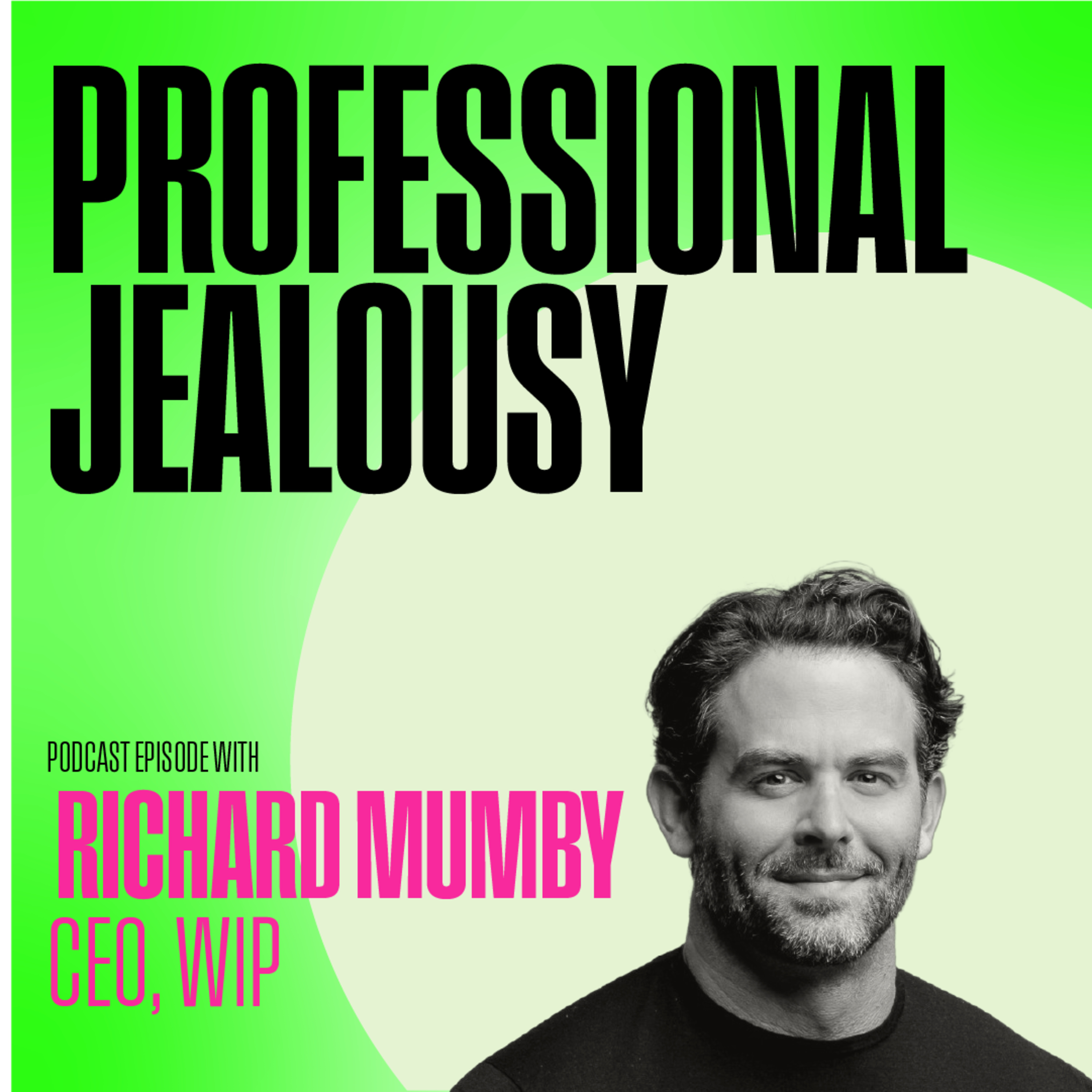 Redefining Energy: How WIP is Building the "Zyn of Caffeine" with Richard MumbyProfessional Jealousy Podcast · on Red Bull66 / 100
 The Breakdancer Who Built a People-First Agency - MilliAn Agency Story · on Red Bull66 / 100
 Melissa Chapman (Jungle Creations) - Spanish road trips, Yorkshire pudding lasagna, leading a social media powerhouseA Little Bit Radical · on Red BullFull interview with Basak Erten, Radio Presenter, Content Producer Sony Music, BBC R1, 1Xtra, 6MusicInterview with Tech Expert and Entrepreneur Patrycja MaksymowiczInterview with Claire Goodliff and Deb de Luen from Amazing Jane ActivewearInterview with Sophie Milliken MBEInterview highlights with Entrepreneur and Trend Forecasting Expert Joanna Feeley from TrendBible