The Game Changer Network · 2025-02-24 · 49 min
This final installment brings together the three primary contributors to discuss their chapter development process and the transformative journeys behind their work. Dr. Sonja Jahn, a transformational specialist based in South Africa, shares her spiritual awakening and framework of removing mental and emotional blocks - comparing the soul to a diamond covered in mud that must be cleaned to reveal one's true self and align with values of compassion and kindness. Vera Firman, a digital marketing expert running businesses across Dubai, the United States, and Portugal, emphasizes how dreams transcend societal limitations and conditioning, particularly for women from post-Soviet backgrounds who are told entrepreneurship isn't possible. Angela Fowler, who is totally blind and works on accessibility initiatives for Sacramento County while launching her own business, speaks to how limitations are imposed by society's expectations rather than actual capability. Host Chickie Fitzgerald ties these narratives together, highlighting how the collaborative book process served as a springboard for deeper work on leadership presence and impact, while emphasizing the importance of finding community that believes in you when self-doubt emerges.
She uses this metaphor to describe how everyone is born with an authentic, loving soul (the diamond), but it becomes obscured by layers of mental and emotional patterns accumulated through conditioning and trauma. Removing these layers through transformational work allows your true nature to shine through and influence your personality, relationships, and actions.
Growing up in the former Soviet Union where entrepreneurship was discouraged and no family members were business owners, Vera chose to pursue her dreams despite others' skepticism. She built systems and processes that allow her to run marketing and consulting businesses in Dubai and the US while living in Portugal, proving that geography and societal constraints don't have to limit your business.
Angela distinguishes between actual limitations and those imposed by society's expectations; blindness itself doesn't prevent most activities when made accessible with proper training. She emphasizes that many blind people unnecessarily adopt society's low expectations and become dependent, when their actual capability far exceeds what people assume they can do.
She felt so much passion for sharing her message about transformation, spiritual awakening, and overcoming despair that she exceeded the limit significantly. She shortened it for the book but plans to eventually write a full personal memoir exploring her entire life story in greater depth.
The collaborative book helps authors clarify their core message and establish expertise in a specific area, which can attract clients, investors, and speaking opportunities. Authors then often expand their chapters into full individual books, use their contributor status for marketing, and leverage the platform to grow their consulting or business ventures.
Computed from the transcript - who did the talking, and the words that came up most.
Interview with authors of this anthology about leadership, Angela Fowler, Sonja Jahn, Vera Firman Leadership is evolving, and women are at the forefront of this transformation. LeadHERship Unveiled: Women Leading with Impact is a powerful collection of stories from trailblazing women who have redefined success, broken barriers, and led with purpose, resilience, and authenticity. Inside these pages, you’ll discover inspiring journeys of female leaders who overcame adversity, shattered glass ceilings, and navigated the complexities of leadership in their own unique ways. From corporate boardrooms to entrepreneurial ventures, from overcoming societal biases to balancing personal and professional aspirations - these stories showcase the grit, grace, and determination of extraordinary women who are making an impact. Whether you are an aspiring leader, an established executive, or someone seeking inspiration to embrace your power, this book offers: Real-world leadership lessons from women who have triumphed against challenges. Practical strategies for success in business, entrepreneurship, and personal growth. Insights on resilience, confidence, and purpose-driven leadership.
Transcribed and scored by The B2B Podcast Index.
Speaker A: Ideas, inspiration, innovation. This is the game changer. And now, here's your host, Chickie Fitzgerald.
Speaker B: Good afternoon. This is Chicky Fitzgerald, and this is the fourth and final podcast in a four podcast series with the authors of LeadHership Unveiled. And no, I did not stutter. Lead Hership is a part of a group called Lead Hership Global, and it is all about leadership. And this particular book is a collaborative book and it is about women leading with impact. And I would like to actually ask our authors to introduce themselves. I will, uh, be asking them various questions as we go through, and it is my goal for you to get to know them. Uh, each one has been asked to contribute a chapter to this book. And the book is coming out on the 7th of February, and so some of you may be listening to this, uh, before that date, and some of you may be listening to it afterward. But the book is available for sale on Amazon.com both in Kindle format and in paperback. So you, uh, will want to run, not walk, after this podcast to go and buy your book. So I'm going to start with, uh, Dr. Sonia. John. And am I pronouncing that right? Is it Jan or John?
Speaker C: John.
Speaker B: Jan. Jan. Oh, okay. Well, I'm glad I asked.
Speaker C: It's Jim. And that's why.
Speaker D: Ah.
Speaker B: Ah, well, that is good to know. So, uh, Dr. Sonia, I would love for you to just give us a thumbnail of who you are.
Speaker E: Wonderful.
Speaker C: Thank you, Chiqui. And hello to everyone listening and watching. My name is Dr. Sanjaya Yan, and I live currently in Johannesburg, South Africa. I am, um, going to be immigrating to Canada sometime this year. And in my work life, what I do is I'm a transformational specialist that helps people remove the root cause of the challenges, the mental and emotional blocks that they're facing very easily and effectively. So they are completely gone, and they experience a lasting result as a consequence.
Speaker B: Fabulous. And, uh, are you a solopreneur or do you have a team?
Speaker C: I'm a solopreneur with consultants. As a team, yes.
Speaker B: Okay, wonderful. Uh, we talked a little bit about that in some of our other interviews because we've got people across the spectrum, uh, who have contributed to this, this book, who are corporate employees, who are solopreneurs, who have small entrepreneurial companies. And it's just good to know that. All right, perfect. Angela, how about if you go next?
Speaker C: Well, absolutely.
Speaker E: Hello, everybody. My name is Angela Fowler, and Sonia and I are practically neighbors. I live in California. I'm not sure we can get much further away from each other.
Speaker C: Exactly, Angela, you said it.
Speaker E: Um, but that's, you know, that's one of the cool things about this is you, you just never know where you're going to meet people from. Um, I live like I said, in Northern California with my 18 year old son and our fur children. Um, and the fun fact about me is that I'm totally blind, which has given me a passion for accessibility, which is to say building a world that everybody can use regardless of disabilities. So in my day job I work for Sacramento county helping them to make their website and things accessible. And I'm also starting a small business, um, basically teaching businesses to do the same.
Speaker B: Love it. Love it. And uh, I have fur babies as well and I do have a son. One of my fur babies is actually totally deaf. And the fun fact about that is he's 16 years old and he has the sharpest nose I have ever seen. He can be upstairs and if I open any food, he is there in heartbeat. Can't hear a word I say. But it I will be really, really interested to hear. And I can already tell Angela, from your personality that you have made up for the lack of sight in so many ways in your life. So I can't wait to hear about your story. And Vera, how about you go next?
Speaker F: Hello everyone. My name is Vera Firman. I am currently tuning in from Portugal. However, I operate my businesses in two different continents. I um, am digital marketing expert with 15 years of experience. And while I'm enjoying my life in Portugal with my husband, two daughters, two dogs, I run businesses in Dubai and United States. I have a consulting company in Dubai. I uh, am a co founder and I also have a uh, company based in Dubai. It's a marketing agency and it's also the platform. So we help business owners to streamline their sales and marketing operations. And my goal while I'm living in Portugal, but I don't, I run businesses in different countries. My goal is to um, to show to other women that there's nothing impossible that you can run a business while living uh, any way you want and if you have systems and processes in place, uh, you can make it happen. You don't have to be living in a, you know, in the countries where you operate your business.
Speaker B: Well that's fabulous and I can't wait to talk more about that. And fun fact, my parents uh, lived in Portugal from 1950 to 1955 and both of my older sisters were born there. So uh, that is my connection. And my husband thinks he wants to retire to either the south of Portugal or the south of Spain, which has the weather most like Florida, where I live.
Speaker F: That's where I am.
Speaker B: Uh, so just to round things out, uh, I am a tech CEO, uh, podcaster by night, uh, or just as one of my passion projects. I love helping authors. So for the last 15 years I've been interviewing authors and experts about their work and helping them to promote that. And, uh, again, I am, uh, very dear friends with the, uh, folks who run Leadership Global, and it was my pleasure to make this opportunity available to all of the authors of what is a, ah, collaborative book effort. Uh, there are a lot of different names for these types of books. Um, I wrote my first one, it was called Bootstrap Business. And while, uh, the book may not have sold, ah, tremendously, I use that to let investors know that I was an expert at that topic. And so I would love to hear about each of your experiences with this process. And Vera, I'm going to start with you. Uh, so talk to me a little bit about the collaborative book process and how, how you, uh, made the decision to do this.
Speaker F: Uh, the decision was very easy for me. A, uh, few years ago I actually saw a dream that I wrote a book. And when I woke up, I had like, no idea I wrote a book. You know what, you know, there's no way. I don't even know what to write about. And then a, uh, few years later I, you know, started collaborating with Leadership Global and the opportunity just literally dropped and, you know, dropped on me. And I think when something coming your way, just take it.
Speaker B: Oh, I love it. I love it. And uh, I will also tell you that when I wrote my first real book, uh, where I contributed 100% of the content, uh, when I started I was charging $800 a day for my service, and by the end I was charging 7,000 a day because I realized I knew something very specific that nobody else knew. So the, the author process can be the springboard to that. And you never know when you might write your own. Angela, how about you?
Speaker D: Yeah.
Speaker E: So, uh, you know, it's interesting that the people you meet, I mean, I'm the introvert of the group. Um, so you're not going to see me posting a lot on LinkedIn or, you know, most of the meetings, unfortunately are on days that I can't make it. But, um, I have enjoyed this process. I've enjoyed getting to know, uh, my, my fellow authors. And I actually, I have a passion. My, my other passion, other than accessibility, is leadership and how to lead an organization, how to lead people, um, how
Speaker C: to,
Speaker E: how to empower people to succeed, to put people in the best positions to succeed. And this has really given me the opportunity to take some of the lessons that I've learned, um, and really share them with the outer world. So it's, it's, it's been, it's been an interesting project. Great.
Speaker B: And Dr. Sonia, how about you?
Speaker C: Well, when I was asked if I would like to contribute a chapter, I was very eager. And then I decided, well, you're going to have to come up with something very quickly because I came into the game pretty late. The deadline for the submission of the chapter was two weeks prior or two weeks after. Sorry, I came on board. I just thought, well, how are you going to get this done in two weeks time? And then I thought, okay, well, let's just do the step by step. What is it that I want to give the world? What message do I want to impart to the world? And then I decided, I'll start writing the book. And I just looked at, ah, what is it that my clients have been challenged by or have had difficulties within the last five years? And then I also looked at it from an intuitive space and went, okay, where is the world going the next five years? What is going to be the biggest challenge? And obviously most, for most people is AI and so on and so forth. But essentially, if we nutshell it, it's massive change. So then I thought to myself, okay, what's the message that you can take from your life, which is a book in and of itself, and take a chapter out of that and impart that to the world. And then I found what I wanted to impart to the world. And I did. And the actual writing process was fantastic. I actually wrote double the word count that was allowed. So the curator of the book, Cathy, was going, okay, you're going to have to shorten that. I'm thinking, okay, that was my biggest challenge, shortening.
Speaker B: Oh, I bet.
Speaker C: And I went to my. And I thought to myself, what a pity, because there's so much in this chapter. And then I realized as I was writing it, you know what, I had this feeling, very much like Vera, at some point that I need to write about my life. So I decided, you know what, shorten this chapter and then at some point in the coming years, you'll just put your entire book into a physical book.
Speaker B: Well, I'll tell you, I had a, uh, very similar experience. Although I started, uh, the book. There we go, uh, the Game Changer, which is also the name of my podcast was, uh, a book that I actually wrote the entire book in a weekend. Uh, but I didn't want to write about myself, so I chose the allegorical novel style. And so I wrote myself into every single character in the book. So it was fascinating to write. But that was done after I had already had the collaborative book, uh, process. So I feel like this, for all of the authors, can be a springboard to the next thing, uh, that is down the road for you. And we're going to talk about that, uh, a little bit with each one of you. But, Dr. Sonia, I'm going to let you be, uh, the first one kind, uh, of to step up to the stage. And we're going to really take a deep dive into your life and into, uh, what ended up making it in the chapter after you had to pare, uh, it down so much. So why don't you start out by just giving us just a little bit of a deep dive. And I like to call it a backstory because we can read about your professional history on LinkedIn, and so we don't really need that. But I think our listeners, what they love to hear is whatever challenges you faced and how you've gotten on the other side of it or at least have a plan. And I love your chapter because it's all about going from despair and feeling like the challenges are overwhelming and getting to boundless bliss, and who doesn't want that? So tell us a little bit more about you.
Speaker C: Thank you, Tiki. So when I was six years old, I had this, let's call it a spiritual experience. I was standing in my school playground and I looked up at the sky and I had this moment of absolute clarity and realized, you're in a physical body, but you're actually not the physical body. And then that left me. And I couldn't understand what that actually meant until 20 years later when I started doing this transformational work. And then when I was 12 years old, I had another similar, uh, experience where I was sitting in my room and I was playing and I just went inside and I was almost, I don't want to say external, but I was inside of my body, looking at my body and going, this is a strange body. It's got five digits on the hand and five on the foot. And what are you doing in this body? I couldn't understand it. So there was a part of me that knew, I'm not human. There's another aspect to me. And that only became something that I really gave time to and I explored further when I was that varsity, I would say, when I moved into depression. And, you know, standard process is, here's some medication I was put on, I won't name the brand. And after three months, you know, nothing changed, and I felt worse. And I thought to myself, you know what? This is not working. I need to find another way. And I share that entire journey in the book. But what I'm wanting to do, get listeners to know, is that I've always kind of commiserated with people who've either suffered emotionally or they've asked questions like, who am I? What am I here to do? What's the purpose of life? And through my journey, which you'll find in the book, I found the answers to those questions. And I've realized that we come into this world thinking we're one thing, but knowing that there's another aspect. Let's call it a spiritual aspect to ourselves, the aspect of the soul, which is the true self. Whereas the part of us, the mind, or also known as the ego, is the false self. And through our conditioning in life, we identify with that ego. And we think, I'm going to share this with you because I've said this to so many of my clients, and I might be a bit to the pointer, and that's just who I am. But everything that we taught and conditioned and socialized to give importance to, which is status, accomplishments, money, what you own, who you know, what you have, means absolutely nothing when we leave the physical body. And through these spiritual experiences I had, which I share in the chapter, it became very clear to me that for us to really and truly connect with being happy and experiencing consistent fulfillment, joy, good relationships, becoming successful, we need to get to know ourselves, and we need to go and deal with the issues that we all have to deal with. The example I give to most of my clients is the soul is like a shining bright diamond, and it's covered by layers of mud. And all of us have to at some point, and we have a choice when we do this, decide I'm going to remove those layers of mud, which are mental and emotional patterns, you know, of all sorts. And as we do more of the, uh, light that we are, that soul starts shining out and that emits. And it moves into our personality, it moves into, uh, our interactions with other people. It moves into the actions that we take. Because when we connect with that aspect of ourselves, we are more in alignment with who we really are, which is essentially love and compassion and kindness. So when we look at the world at this point, and this is part of the motivator for the message that I have in the chapter is what does the world need? We need to learn to live together. Yes, but how? From the inside out, from who you truly are. And when there is peace within you, there will be peace in the world. When you are connected with that part of you that is loving and kind and compassionate, you will share that with others, and it'll have a ripple effect in terms of everyone that's in your space will be uplifted as a result of that. So when I look at my life in hindsight, I've come in not understanding, going through immense challenges and having this called it grit, because perseverance is not enough, but it's grit of just keep going because it will be worth it.
Speaker B: Right? Absolutely. And, uh, I can so relate to that on the difference between perseverance and grit, because one grit is actually making peace with the journey. Right. And so many people believe that peace is, is simply a result of the absence of conflict, when it's actually the entire opposite of that. Again, uh, finding a place where you can be peaceful in the midst of chaos. And that's what I, I tell people I pray for every day, is peace and clarity about the journey. Now, that clarity might just be seeing where to put the next foot in front of the other one, or it might be years out of knowing. Uh, but I'll tell you, when you've got the, uh, the end game of Ballast Bliss, it's absolutely worth every step of the journey. I just want to ask, uh, Angela and Vera if you have anything to add to, uh, what Dr. Sonia has shared.
Speaker F: Um, I totally agree with Dr. Sonia because I am totally into spiritual world and I am still uncovering myself. And, um, part of the uncovering, which was very new to me because the majority of my CL clients, like 90% are men. And I always work. I don't know why it's happened, because maybe I used to work a lot in financial services and it just happened. And once I started to uncovering myself, I realized that, oh, actually I have to be talking to women and helping other women. And, um, I'm also very, like, introvert. I was too shy to speak or, you know, I just started, like, uncovering myself. And all of this just because of the spiritual world, I start learning. And, um, there's another awesome book. I know it's not the topic, but Journey of Souls. I'm sure everybody knows after I read that book. It was an eye opener for me.
Speaker B: Thank you for sharing that Vera, Angela. Anything else?
Speaker E: You know, I'm a lot more pragmatic, some would say to a fault. Um, but I can certainly appreciate, um, peace, uh, in the midst of chaos and, and actually being okay with, with conflict. Um, and when I say conflict, I don't. I mean, I mean, I mean healthy conflict. Some people's needs conflict with the needs of others. Um, it's a balancing act, ironically, in accessibility. It's a, it's a. It's a balancing act you have to perform all the time. Right, right. So.
Speaker B: So it's okay. Well, I want to move on, uh, to Vera. So Vera, how about if you share a little bit. And again, you, uh, also have a very interesting focus, uh, of your chapter that you contributed, uh, dreams beyond, uh, boundaries. Talk to me a little bit about your background and then let's talk about, about the role that dreams have in helping you, uh, reach your end game.
Speaker F: Yeah. Um, growing up, originally I am from ex Soviet Union, uh, formerly used to be Ukraine, now it's Russia. So it's like a totally different world compared to us or Europe. Um, so growing up, um, we had so many limits, uh, by society, but what we've been told to. But what we supposed to believe in. And unfortunately so many people, they fall under. Under this trap. Um, and I think it's stopping them from moving forward. Um, for example, um, I have. No one in my family was ever entrepreneur. Nobody had any business, you know. And my grandma used to say to me, oh, Vera, you must be like a businesswoman when you grow up. And that happened when I was selling reselling my like old books or old smaller clothes to like neighbors and, and stuff, you know. And I had this always dream like, to get out and to do more, you know. It was very small city where I grew up. Only hundred thousand people population, and there's not much going on. And um, when I was talking to people that I dream to leave, I dream to do this. And that people were literally doing this to me. Like, you know, I think they didn't believe. And with my chapter, um, I would like to, you know, show and represent. There is nothing really impossible, no matter where you are, no matter where you grow up, um, or what society is telling you, or all these limited beliefs we had since we were kids. Just, you know, if you really want something, just go and do it. And, you know, don't listen to all the, you know, crowd around you.
Speaker B: Well, I. That is kind uh, of the story of, of my life. My, My hero was Dumbo right out of the Cartoons. Because Dumbo didn't know he couldn't fly, and so he flew. And I'm a college dropout. I was a college dropout before it was popular. Um, you and I have a bunch of different connections, so we've got to talk offline. My, My son, uh, Seroja, was born in, In Russia, and, uh, he now lives in Poland and is. Has just been selected to go on a mission team into the Ukraine. So. And then my business partner, I've got a couple of different businesses and, uh, she is in Dubai. So you and I need, need to connect. Um, so, uh, Angela, I know, uh, Vera has talked about limiting, uh, beliefs and, you know, the limits that are put on you and pushing past those boundaries with your dreams. And of course, Angela, you have been sharing about the physical limitation of not having sight and dealing with, uh, other, uh, types of limits, uh, that are placed on people, again, typically by the physical limitations that you're fighting in your, uh, uh, uh, quest toward accessibility. So what did you think about when Vera was sharing the other side of limitations that she's been battling?
Speaker E: Well, I, I was struck by the comment about, um, you know, whatever society's limitations are, it's your own belief that counts. And again, you know, the things that a blind person can't do, I mean, you know, nobody will let me drive a semi truck, but those things are really the minor. A significant minority of things. Right.
Speaker C: The.
Speaker E: Of things, if made accessible, can be done by a blind person with proper training. We're limited not so much by blindness, but by people's expectations of us. Um, so, you know, it's. I see people with this. Blind people, people with disabilities, buckling down to society's beliefs and really adopting society's beliefs and, and becoming dependent. And it's really sad because it's not. It doesn't have to be that way. You know, maybe you can't. You know, maybe there are some things that we can't do, but our, Our ability is far greater than people thinking it. And if we don't believe in ourselves, how are we going to realize that?
Speaker B: Right, Right. Well, I think all of your chapters, uh, have really honed in on that. And again, whether it's a physical limitation or for me, in my early years, it was that I didn't have a degree, and thank God we didn't have the HR systems that are in place now because I didn't have to deal with being filtered out because I only had a high school education. And so again, the limitations. You're absolutely right, Angela. They are imposed by society on us of what they believe we're capable of. And, you know, I. I know for my own life, my parents raised me that I could do anything and I could be anything. And so when you do have people around you, uh, that is so, so important. And I know that's one of, uh, the things that Linda has on her heart for Leadership Global is that you guys will follow, find a tribe, right? A group of people that can provide you that strength and support and believe in you on the day when you don't believe in yourself, which we all have those. Dr. Sonia, I know you are dealing a lot with people who have put boundaries on themselves. Again, some from their past, some, uh, from current circumstance. Uh, what would you have to add to what Vera shared?
Speaker C: I really relate to what Vera said in terms of not listening to what others are saying to you, in terms of squashing your dreams and going with what you feel you want to do. Anyway, so many years ago, this is going back to 1993, I started meditating. And in those days, that was not done. I was born into our own Catholic family, you know, so I closed my bedroom door, and my parents were probably thinking, what the hell is she doing behind that door? Just literally sitting and meditating. And I thought, I can't tell anyone because they're going to think the devil's going to come into me. And all those kind of beliefs were around at that time. And then six years later, I saw in mainstream magazines and health magazines, esoteric magazines, how to meditate. And it helps you decrease stress, have more energy, all those things. I thought, how weird is that? It's become. And moved into the mainstream.
Speaker B: So you're a trailblazer, Dr. Sonia.
Speaker C: Thank you. So I would say to people, you know, uh, just whatever you feel you want to do, do it. And even if it means not necessarily telling people, because I'll be very honest with you, what I've shared in that chapter, I have never shared publicly before. And it'll probably. The feedback I've received from some people who've read it have gone, wow, I didn't know that was possible. So I would say to people, just do what you feel like doing, irrespective of what anyone else has to say.
Speaker B: Right. Well, then it's perfect to wrap up with Angela and, And your story, because again, you're. You're in a very different situation than everyone else where you had your own physical limitations that you chose to rise above. And I love your story, Angela. And, uh, can you share just A little bit about your backstory. Are you blind from birth or did it happen after? Were you cited and then lost your sight?
Speaker E: Right, so I was blind from birth. Um, can't see a darn thing. Never could. Um, easier to explain that way. But I was raised really, with. With mixed expectations. You know, I. I tell people, you know, I, um. It's. It's the. You can do anything you want, but, oh, my God, don't touch the stove. You know, so, you know, I think my parents did the best they could, but they. They had their own beliefs about what a blind person could and couldn't do. And it was. It was different for. For, you know, my mom, my dad, my stepdad all had different, um, different constructs of what a blind person could do. So I went through my. My, you know, childhood and young adulthood really confused. I mean, I didn't know myself. You know, it's important, Important for everybody to have that knowledge of, um, what they can do easily, what they can do with effort and what they can't do, barring a miracle, and what they have the aptitude to learn. And the only way to gain that knowledge is to push the boundaries of what we think we can do. Um, you know, we have to. We have to keep. We have to keep trying. We have to keep trying new things. And if it turns out we can't do something, we can't do it. You know, whether it's because of blindness or because of just. Just, you know, the act that we all have. Um, you know, all of us have things that we just. We're just not good at. Um, but we need. We need to keep. We need to keep pushing the envelope. Well, and.
Speaker B: And that is how you became the hero of your own story. So, uh, how, you know, I. I love you sharing, uh, about the mixed messages from growing up because again, you had to rise above that and you had to believe that you could be the hero in your own story before you could step into that role.
Speaker E: It took a while. It really did. And it took being, you know, drowning in debt and really feeling like going through a period of feeling just super inadequate in terms of, can I. Can I support myself? Can I support my son? You know, because so many blind people just. Just live on, you know, government assistance and, and don't really, you know, don't really go out and take and in. Into the world. And. And it's. It's a combination of a lot of things, um, society's misunderstanding. But I. I think a lot of it boils down to just Lack of belief in themselves. They don't they that they can. Excuse me. Rise above.
Speaker B: Right.
Speaker E: So, you know, when I got the job into my job in 2021, working with web designers and developers, teaching them how to make the. Their websites accessible, you know, it doubled my income. I was able to get out of debt. And I really, at that point, I, I took control of my own life and said, you know what I don't need. You know, we all need assistance from time to time, but I am the one that determines whether I succeed or whether I fail. And that's a mindset that I wish more of us could adopt.
Speaker B: Absolutely. Well, it sounds like that is the message of your contribution to this book. Again, belief in self. Uh, I love the picture that you painted of the four different things. And again, the aptitude and the willingness to learn, uh, also the willingness to recognize those things that you're not good at. And I spend a lot of time talking to my teachers team about this. I am brilliant at spreadsheets, but it absolutely drains my soul to work on them. And so I shouldn't have spreadsheets as any main part of my job. I can do it occasionally. So, you know, getting to know yourself is, is really an important part of this journey. All right, well, in, in the last few minutes together, I want to shift, uh, back a little bit, uh, to talking as a group. And, and what I would like to have you guys focus on is, uh, there are a lot of people who are going to be listening, uh, to these podcasts and who have already made the decision to buy the book. And maybe it's already, uh, in the mail, or maybe it's on their Kindle and they're waiting to read it. So when they read your chapter, I'd like for you guys to articulate what is the one thing that you really hope they take away. Vera, can I start with you?
Speaker F: Yeah, sure. Um, I wrote few advices inside of my chapter and, um, I just hope whoever read that chapter and whoever read the book just follow my advices. I don't know if I should disclose it now or.
Speaker B: Ah, you know. Well, do you, do you want to leave us hanging so that we go and buy the book? Yeah, that was totally fine.
Speaker F: I would.
Speaker B: Okay, good. Uh, Dr. Sonia,
Speaker C: four words. Do your inner work and do it as soon as possible. Do not wait. The norm is we all have issues that we need to deal with. Unfortunately, so much of the coaching industry, and even with regard to traditional therapy is to deal with issues 30 to 50%, that is the norm, unfortunately, and I'm, um, basing this on, um, having worked with people across the world from different countries, walks of life over the last 25 years. When you decide that you really want to move forward, find yourself someone who can help you deal with it 100%. Because when you get rid of those layers that I mentioned earlier on, your life completely changes. And you will see that and read that in my chapter. You will not believe what boundless bliss actually refers to when you start reading the chapter. Right. So when you do, you will not be able to imagine how far are you can take your personal and spiritual development when you start this wonderful journey. And it's important to do your inner work. Why? Because so much depends on it. A, uh, fulfilling relationship, enhanced business success, increase prosperity, and how you feel about yourself, you know, and being in a happy, calm and peaceful state on a consistent basis. So those are my four words, my mantra to your inner work.
Speaker B: You're. Yeah. And now we know why you had to cut your chapter down from this.
Speaker C: Exactly.
Speaker B: I love it. I love it. And by the way, thank you for sharing the visual of the diamond covered in mud, because, uh, that is. Is really easy to hold on to in your head and to say, okay, what's. What's my mud today? And how. How am I going to get rid of that? Angela, you've already shared a, uh, bit about what you wanted people to take away. But, you know, when they read your chapter, what is. What is the one thing that if they miss everything else, what's the one thing that you want them to get?
Speaker E: John Wayne is not coming through that door. He's already in the building.
Speaker B: He. You. I love it. I love it. Uh, John Wayne is a hero in our household. But you're right. We wait for the prince to show up. I mean, in so many different parts of our life, there's. We're waiting for that external, uh, person to come in and make things all better.
Speaker E: Prince Charming's not coming. We're Princess Charming.
Speaker B: There we go.
Speaker E: We need to be Princess Charming and save ourselves. That's. That's. Nobody else is going to do it if they. But. And if they do, you're going to have to play by their rules, which probably aren't the best for you.
Speaker B: Right?
Speaker D: Right.
Speaker B: So I'm gonna. I'm, uh, gonna start with you, Angela, on this last question, which is you have lived a, uh, lot of. A lot of life in, in the years that you have put on this planet. If you had to speak to your younger self, the self that was confused when, when you were getting mixed messages from the people in your household. Um, what would you tell that young Angela?
Speaker E: Keep pushing yourself, but be okay with not being perfect. You know, I think one of the things that I would teach myself to do, to tell myself, and it's, it's hard, it's still hard, is to put criticism into perspective. Um, you know, when people say things, it's not necessarily. It may or may not be true, and it may or may not be applicable. So you got to make your own decision about that and, and react, respond accordingly, accordingly.
Speaker B: Okay, great. Vera, how about you?
Speaker F: Um, I would say it's better to regret about something you are done rather than something you are not. And there are some things I wish I'd done sooner and not waited till I'm almost 40, you know?
Speaker B: Okay. And Dr. Sonia, I'm. I'm now picturing you sitting, you know, in your room as a young girl and having these amazing, uh, spiritual experiences. What would you tell that young girl?
Speaker C: I would say to her, huh, it's not always going to be easy, but keep going. Get to know yourself, get to deal with your issues. Persist, persevere and be patient. It'll pay off in ways you cannot imagine.
Speaker B: I love it. Well, I have to tell you, having now interviewed, uh, gosh, close to 20 authors in two days, in four sessions, uh, the way that these were crafted, and perhaps, uh, Kathy did this on purpose of how she grouped you, but this group could not have been more perfect to all be on this call because you, you all, uh, play off of each other in such a beautiful way. And again, I encourage everyone who's been listening, uh, to run, not walk to Amazon and order lead hership unveiled. Women leading with impact. Thank you guys so much, uh, for participating and I can't wait to read the whole book, start to finish.
Speaker A: You've been listening to the Game Changer Ideas, Inspiration, Innovation with Chickie Fitzgerald.
Speaker D: Mhm. Mhm. Mhm. Mhm. Mhm. Mhm. Mhm. Mhm. Mhm. Mhm. Mhm. Mhm. Mhm. Mhm. Mhm. Mhm. Mhm. Mhm. Sam,
Speaker A: uh, you've been listening to the Game Changer Ideas Inspiration, Innovation with Chickie Fitzgerald.
 Erik Brine - WINGLORE SPIRITS CSO and Co-Founder46 / 100
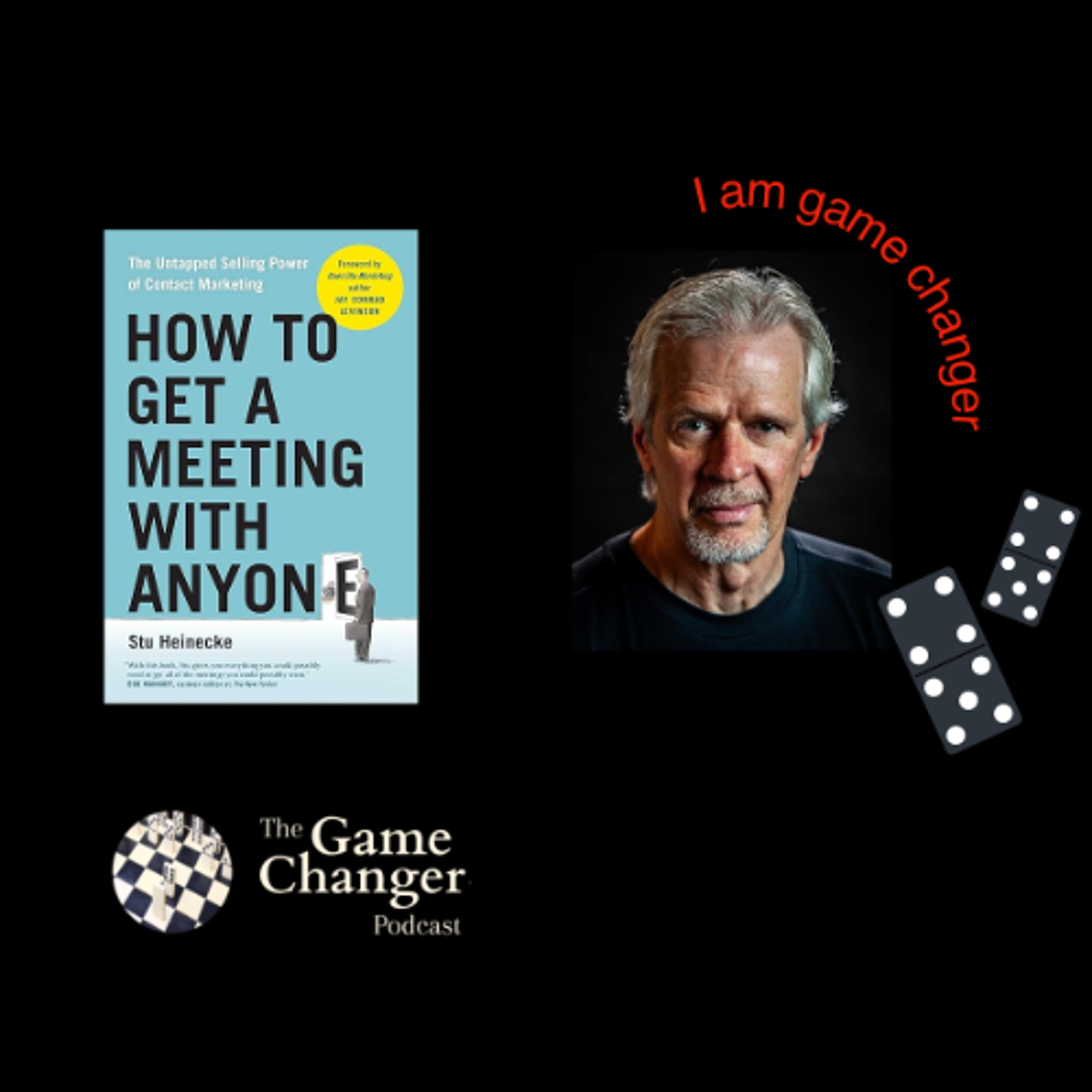 Stu Heinecke - How to Get a Meeting with Anyone
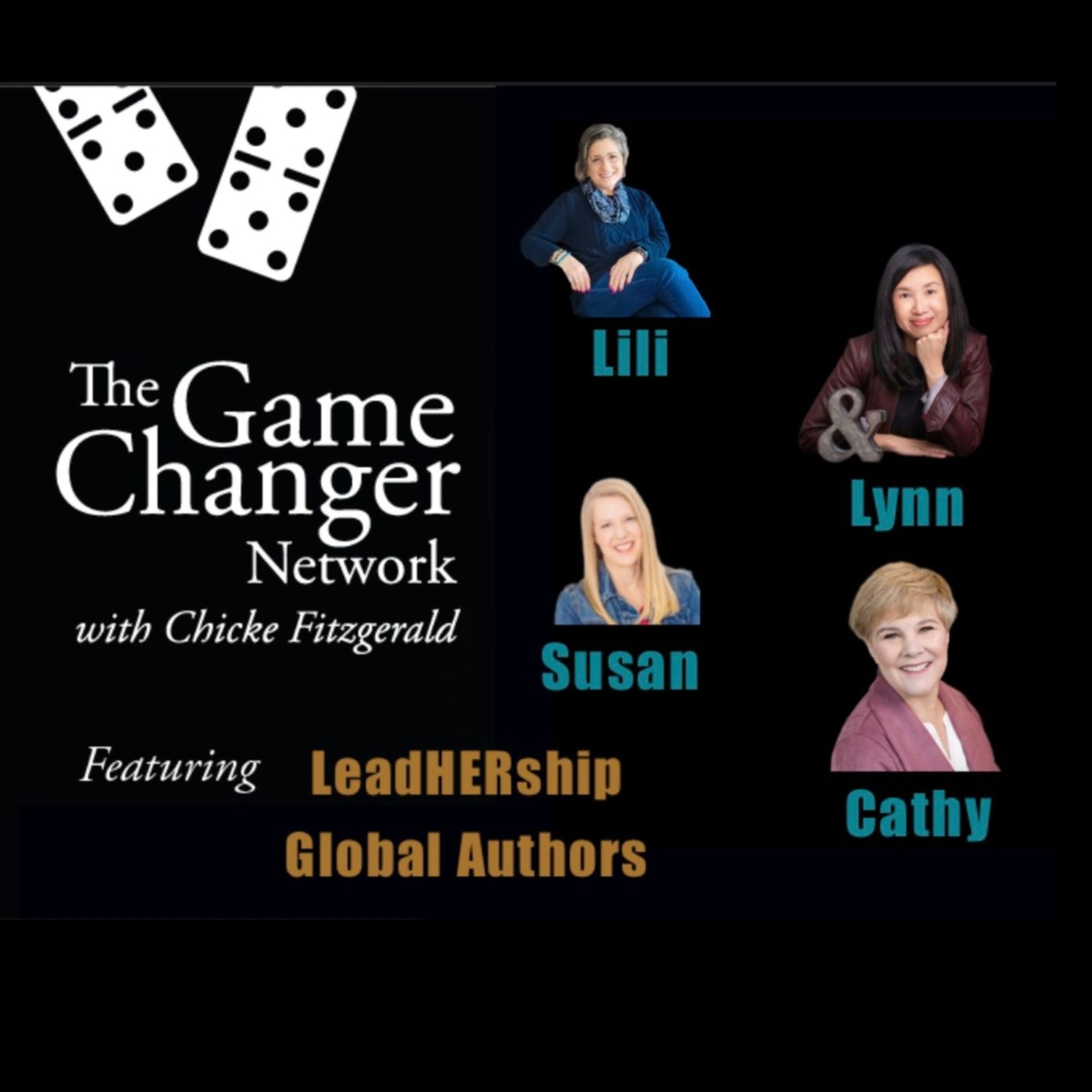 LeadHERship Unveiled - 3 of 4 Lili Udell Fiore, Lynn Wong, Susan Smalley, Cathy Derksen