
The Finance Seat · 2026-04-29 · 28 min
Key moments - from our scoring
Substance score
31 / 100
Five dimensions, 20 points each
Claire Tisch, Director at Unity Advisory, discusses her unconventional path from traditional management accounting roles at companies like BAU finance to becoming an interim transformation specialist and Finance Interim of the Year. Rather than pursuing a linear CFO career, she's embraced project-based and interim work that lets her apply experience across multiple organizations while staying energized by pace and challenge. At Unity Advisory, she's now embedded in a scaled practice that flips the traditional consulting pyramid by pairing experienced senior talent with AI-enabled tooling - not to replace people, but to accelerate delivery. The conversation covers her pragmatic approach to scoping interim engagements (stress-testing client assumptions upfront, building stakeholder relationships through curiosity and listening), and her observations on AI adoption in finance. She emphasizes that AI is a strategy, not a tool shopping exercise, and warns against treating it as a silver bullet for organizations lacking data quality or clear requirements. For CFOs seeking to future-proof finance teams, Tisch advocates a diagnostic assessment to map where finance spends time (transactional, FP&A, strategic), prioritize AI applications where they create the biggest immediate wins (reconciliations, control workflows, report generation), and build a pragmatic, sequenced execution plan rather than attempting everything simultaneously.
Unity offered her the challenge and communication opportunities she craves, combined with experienced colleagues, AI-enabled everyday work (not retrofitted), and a flipped pyramid model where senior talent delivers directly to clients with AI accelerating execution - allowing finance to focus on advice and outcomes rather than tool commoditization.
She prioritizes curiosity and listening over long hours in isolation, asking simple questions about the problems people face, reviewing systems and data, and translating what she hears back to stakeholders so they feel heard - this foundation of psychological safety matters more than heroic early wins.
Transactional and operational finance tasks - reconciliations, purchase order matching, control workflows, and report generation - that free finance staff from day-to-day admin to focus on cash flow forecasting, investment decisions, and strategic business partnering.
Just as companies shouldn't let people loose with tools without requirements and governance (ERP example), AI adoption must start by diagnosing organizational needs, prioritizing use cases, and ensuring data quality - otherwise buying tools without clear purpose leads to poor outcomes.
Curiosity, confidence, and communication - curiosity to understand problems, confidence to challenge assumptions, and communication to listen and translate insights so stakeholders feel heard and engaged in change.
Our reviewer’s read on each dimension, with quotes from the episode.
There are occasional useful structural ideas - PE lifecycle framing for interim engagements, the three-pillar split of finance (transactional, FP&A, strategic partnering), and the observation that cash flow forecasting is poorly served by traditional ERP/EPM - but most of the runtime is generic relationship-building and AI-as-tool-vs-strategy commentary that any finance professional would already know.
Where are they if they're private equity owned in their life cycle? So are they coming up to a deal, are they looking at a refinancing?
cash flow forecasting is something that traditionally ERP systems, EPM systems have never done particularly well. So it tends to be people working with an Excel spreadsheet
The framing of AI as strategy rather than tools is a reasonable point but is now extremely commonplace in finance circles; the 'three Cs' closing framework (curiosity, confidence, communication) is generic career advice recycled everywhere, and there is no contrarian or first-principles argument made across the entire episode.
AI really, particularly the way Unity is using it and really how I think most companies should be looking at it at the moment is really, it's a strategy, it's not specific tools
curiosity, I'm going to chuck in a couple more Cs. Confidence and communication
Claire Tisch has genuine practitioner credentials - Cambridge economics, Finance Interim of the Year recognition, real transformation delivery across people/process/systems - but she is a director at a boutique advisory firm and all client work is unnamed and unscaled, limiting the sense of verified, large-scale impact.
we delivered across people, process systems and data within a very short time period
they thought they were going to replace their ERP in house. Actually when we costed that out, when we pulled the business case together, it probably wasn't the best longer term option for them
Almost no concrete evidence appears in the transcript: no named client companies, no revenue or cost figures, no adoption metrics, no project timelines beyond a vague '18 months, could be two years,' and the only named technology is Microsoft Copilot used as a passing illustration.
So we're using some AI and technology to help us deliver quicker so that we can give clients the benefit
A lot of companies have Microsoft, so Microsoft Copilot, just in terms of transcripts of meetings, notes, helping people get on top of admin
The host asks broadly sensible scene-setting questions and occasionally pursues a thread (on AI opportunities short vs. long term), but regularly leads the witness with statements like 'Must be long hours at the start' and 'Yeah, keep it balanced, pragmatic,' never challenges a claim, and closes with soft affirmation rather than probing follow-up.
Must be long hours at the start
Was it a bit of a shock when you first went in, when you were learning all these new tools?
Computed from the transcript - who did the talking, and the words that came up most.
Interim roles don’t give you time to ease in - you’re expected to deliver almost immediately. In this episode of The Finance Seat , Headstar Managing Director, James Roach, speaks with Claire Tisch, Director at Unity Advisory , about how to deliver change at pace while bringing people with you. They explore what it takes to step into a business and quickly understand its dynamics, how interim roles allow leaders to challenge thinking without internal politics, and why shaping the brief is often just as important as delivering it. The conversation also looks at the role of AI in finance,and how leaders should be thinking about it as part of a wider strategy rather than a standalone solution. Claire Tisch is an award-winning director, with a background in finance transformation and interim leadership across a range of organisations. She has led large-scale transformation programmes and was recognised as Finance Interim of the Year for her delivery and impact.
Transcribed and scored by The B2B Podcast Index.
Claire Tisch: Foreign.
James Roach: Welcome to the Finance Seat practical podcast for finance leaders who want to know what actually works. I'm your host, James Roach, Managing Director of the specialist finance recruitment consultancy Head Start, and a former finance director myself. Each episode I'll be sitting down with a different CFO or fd, to discuss how they build strong M teams, manage uncertainty, uh, and deliver change so that you can do the same. Welcome to the Finance Sea, where today I'm joined by Clare Tisch. Claire, thanks for coming on.
Claire Tisch: It's my pleasure.
James Roach: Um, would you give us a quick intro who you are, what you do?
Claire Tisch: Yes. Uh, Claire Tisch worked for Unity Advisory as a director in the finance and commercial team. But my background really is management accountant, having studied economics at Cambridge. Um, worked in BAU finance functions from FP&A finance control, and then over the last sort of 10 to 15 years in the finance transformation space and moving into interim work as well, delivering for clients.
James Roach: And I was looking at your cv, it's impressive to say the least. Um, and as you mentioned, you've done a long stint in interim transformation projects, delivery, that kind of world. Um, latterly recognized as Finance Interim of the Year. And I've already said to you before, haven't I, you've got to park your humility on this one. Um, what was it, do you think, that got you that recognition? Brilliant achievement.
Claire Tisch: Thank you ever so much. It was quite humbling. Um, as you say, sort of the humility piece. I don't really like talking about my, um, achievements. I think it's about what you can deliver for the client, working with them. But I think, uh, that award was really recognising the achievements in terms of the scale of transformation, the pace of transformation, but also the experience that I brought to it and the energy transformation's really hard for finance functions on the ground. People are doing bau, actually being able to cut through that to deliver at pace. We delivered across people, process systems and data within a very short time period. And also really the recognition, um, comes from the fact that the company, after I delivered that project, asked me to stay on in a different role, looking at FP and A, and looking at their cash flow, forecasting and really helping them deliver, um, ongoing.
James Roach: So a bit of versatility there as well. That was spotted. Brilliant. Um, what was it that appealed to you, going more down the interim and project route rather than a more, if you like, vanilla CFO career?
Claire Tisch: Well, firstly, I don't think there's a vanilla CFO career. I think the role of the CFO these days is broadening, um, and there's a lot more pressure. But for me personally I really enjoyed the challenge of projects. An interim. It allows you to build on that experience that you've gained from lots of different companies. It allows you to have that delivery focus and really allows you to meet lots of different people and to really work at pace. I really like that uh, challenge and that fast paced environment. It's also given me the opportunity across my career to go and work all over the world as well. So it's opened up a huge amount of opportunities.
James Roach: Did you rule out permanent roles? Did you say no, this is the route I'm going or has it just been serendipitous?
Claire Tisch: No, it's really just I look at the opportunity, I look at um, what that gives me and what I can deliver against that opportunity. I for me personally think that actually it's just a different mechanism of being paid and whether you're a permanent, whether you are interim, whether you're a day rate sort of contractor, actually the success of you delivering is probably you don't have a role at the end. So it's whatever mechanism works best for the company for you being able to achieve that.
James Roach: And you know, right at the outset, right, I can do that and it's going to take me this long or that long. Or does it change as it goes along?
Claire Tisch: It changes because when you get brought in by a company they, they often think they know what they need to deliver. One of the first things I always try and set out to do is just stress test that because sometimes what they think they want to do is not necessarily the best option for them. That was one of the things that I worked with at the client where I was recognised for the interim award. Um, they thought they were going to replace their ERP in house. Actually when we costed that out, when we pulled the business case together, it probably wasn't the best longer term option for them. So we sort of reset the expectations, expectations there. But generally uh, you shape it as you go along and it depends on the dynamics of the company as well.
James Roach: And does that occur a lot? Does it happen a lot every time you go in where actually the remit changes?
Claire Tisch: Not every time, but there is definitely some flex. And it depends on you as an individual. It depends on the decision makers in the company. You need to be checking if you've got the support of the elt, how the people on the ground are operating. You bring in your experience and what you've seen from other companies. A lot of people may not have seen what other companies have been doing. You've got the, uh, expertise to bring that in and the opportunity to challenge without the politics that exist in day to day organisations.
James Roach: That's part of the appeal, is it?
Claire Tisch: Yes.
James Roach: Steer away from the politics.
Claire Tisch: Steer away from the politics, but actually be able to be balanced and be able to challenge people and get them to think about things in a different way.
James Roach: And I expect the, um, the expectations of the client are probably quite chunky. Are they? When they're looking at day rates and things like, wow, this is going to cost a lot of money and you probably need to make an impact early on. How do you do that when you first go in?
Claire Tisch: Yeah, definitely. You need to be making an impact. You need to be making impact quickly. Um, what you really need to understand very quickly for me is the dynamics of the organization. So who are your key stakeholders? Where is the company at the moment? Who are your key players that you're going to be engaging with? What also, I mean this is in finance, sort of the financial, um, situation of the company, is it private equity owned that has a steer on how quickly they want to be delivering? Where are they if they're private equity owned in their life cycle? So are they coming up to a deal, are they looking at a refinancing? So all of these things you need to very quickly understand so you can frame the delivery or whatever piece of work or role you've been brought in to do against those key baselines.
James Roach: Must be long hours at the start.
Claire Tisch: Um, it can be, but actually a lot of it is around that communication, understanding and building those relationships really quickly because obviously you are new into the organisation, you are that outsider, so you really have to focus on those. So actually it's not about you spending time and long hours on your own, it's about building that network and those people that you can work with to deliver. Because you are never going to be able to deliver in isolation. If you're looking at transformation, you have to bring the people with you, you have to engage with the people who understand the business and have been there. You have to leverage that. If you're going into more of a BAU role, which was my second role for the, um, client. So FP and a focused, you need to be working with the people who are delivering the work on the ground as well. So building those relationships is key. So you can't do it in isolation. It's not about hours.
James Roach: It's probably not a quick answer for this, but how do you do that then? In the early days, because obviously you've got no relationship where you go in and then, um, you're obviously mindful of. Right, I've got to build relationships. Relationships. Um, is it through curiosity? Is it through doing stuff? Is it a mixture of those? Have you got like a secret hack, people listening where they can go? Right, great, I'll do that.
Claire Tisch: It's definitely curiosity. But, uh, actually I find just asking simple questions. So I try and break it down into having a conversation much like we're having at the moment, just asking people what are the problems they face. If it's a finance transformation, um, type of activity, even if it's more of an fpa, if it's cash flow, talking to people and listening to them is really important, actually. Looking at the systems, the data, and it's about listening and translating that and playing it back to people so that they feel heard. That's what builds the relationships most quickly.
James Roach: And then do you give them comfort? Uh, don't worry, I'm here, I can solve all of those problems. Or is it more just, okay, I hear you, I'm going to do something about it. Where do you go with it next?
Claire Tisch: In the first stages, it's, I hear you, I'm going to put a, uh, plan together, we'll play that back and then we'll get sign off. So you feel like you're doing it in a structured way. The worst thing you can do for people on the ground who are already pretty much stressed with their BAU activity is, oh, no, it's another person coming in thinking that they can solve everything. Actually, you want to get a plan that's coherent, that addresses the key priority area that's going to be the biggest win for the company. Some people, it may change their roles slightly, there may be a bit more work in the short term as you have to implement that change. But ultimately your goal is to share with them that you can leave the company in a better place than when you started.
James Roach: Great. So you've joined UNITI Advisory now. Yes. It's a fascinating story actually, isn't it? And I'd encourage anyone to have a quick look on the website and see what you're going. Huge amounts of investment going in, scaling at, uh, pace, I think it's fair to say. What, what was it that's attracted you to go there?
Claire Tisch: I think for me as an individual, I've talked about what motivates me in my career. It's that challenge. It's the ability to communicate. Unity brings those things together. But is Also supplemented by some fabulously clever people, um, on the ground. But also one of the things as an individual is that we talk about being AI enabled and, uh, that is in place sort of in our everyday roles. So we're not trying to retrofit, we're using new technology. So it's helping my development. But also the model that Unity is looking to deliver is really something that allows us to be advisors where we can deliver. We are not. Um, and, um, I guess one of the challenges that I've seen on a client side is that you don't necessarily get the experienced people delivering in because of the more traditional pyramid model, we've sort of flipped that on its head. So we're using some AI and technology to help us deliver quicker so that we can give clients the benefit. And very much that execution and delivery focused, um, approach. So it really is about that end result for the client, which is what I love doing.
James Roach: Okay, and the AI piece then, moving on to that, um, how au fait were you with AI when you joined Unity? Was it brand new to you or were you already pretty good?
Claire Tisch: It wasn't brand new. I mean, AI really, particularly the way, um, Unity is using it and really how I think most companies should be looking at it at the moment is really, it's a strategy, it's not specific tools. Um, I was aware of it, um, but not using it necessarily in anger. That's one of the great things of joining Unity, where you've got people who have been much more embedded with the use of AI in their careers, so they can bring us all up to speed, help us develop and use the correct tooling to deliver for the clients. It's definitely one of the things that attracted me because it helps my development. It's something where probably if you're an interim sort of on your own, you struggle a bit with those development opportunities. So it's a fabulous balance of being able to learn whilst using the rest of the experience to deliver for clients.
James Roach: Was it a bit of a shock when you first went in, when you were learning all these new tools?
Claire Tisch: Um, no, because actually a lot of the tools that we use are fairly easy to get on with. Uh, and actually the openness of Unity and the people on the ground make it very easy to have the conversations and to learn. So because we're embedding AI, we're doing lots of consistent training and actually some of the ways that we use AI is actually to have a bit of a conversation, um, with some of the tooling to help you Frame your thoughts. Um, so it becomes very easy if you're given the right parameters and we've got the strength, making sure that we've got the right licenses in place from a data protection, um, perspective as well.
James Roach: And so when you're going into support finance teams, um, and you're talking about AI, what are you finding out there? Are you getting glazed looks or are you getting people that, uh, yeah, we're here on the journey or are they further ahead? What have your observations?
Claire Tisch: Yeah, companies are obviously at very different, um, phases of the journey with using AI. And for me I believe that AI is a strategy. It's not just about one particular tool. And AI works best actually, where you've still got the basics in place so you still need good quality of data. Um, AI supplements, it changes people's roles slightly. But where AI is looking at, ah, being used is really helping free up particularly finance to make more judgments and to be much more involved in the business. So it should be used to help eliminate some of the, the tasks that take quite a lot of work but aren't necessarily seen as the most value add. So reconciliations, matching purchase orders. We see some of that in some standard tooling already. So some companies are more advanced than others, some are embracing it, um, but it's difficult. It has to be delivered and used by companies in the right way for them, within their context, against their purpose. So it shouldn't just be tools that are bought that they let people loose on. You wouldn't sort of give everybody their own choice of ERP system, for example. So it should really be considered in the right way. But because it's moving at such a fast pace, it can be difficult for companies to keep up. We aren't a company that sort of delivers AI, we are using it ourselves. But we help businesses understand the use cases. We help um, businesses with their, uh, automation opportunities, using their data, using their current system. So we're using it as a bit of a tool, not the only tool.
James Roach: And I guess that's probably a trap that you might fall into. Or certainly organizations where they're looking at the tools and getting all excited about it. But are you coming at it more from a, uh, let's get the strategy right and then we'll talk about tools.
Claire Tisch: Yes, yeah, absolutely. It's the same as, uh, I say it's the same as any traditional sort of ERP system. So if a company is at the stage where they maybe don't have the right controls in place around their transactions, they don't start with going, I want this tool, you start with understanding what your requirements are and then you select a tool against those requirements. So for me it's exactly the same messaging. There are absolutely, uh, standard tools. A lot of companies have Microsoft, so Microsoft Copilot, just in terms of transcripts of meetings, notes, helping people get on top of admin and their diaries, people are getting a lot more used to that. Um, and that's embedded within, within organizations. Some of the other tools take that a bit further and it's definitely going to be a journey. But anybody you speak to who's much more knowledgeable on AI than I am will tell you just how fast the market and the tools are evolving.
James Roach: Yeah, the pace of change is relentless really, isn't it? And I suppose then, um, I guess your answer to this might be different today and tomorrow, but where do you think the biggest opportunities are, specifically within finance teams to use AI? Uh, because you mentioned there's daily admin tools and things like that that we might be using right across the business and actually they impact, of course, don't they, on finance teams? Where do you think the biggest opportunities lie? Where they can make really immediate impact short term and long term.
Claire Tisch: Yeah. So today the most immediate impacts are in that, uh, transactional stroke operational finance space, I believe. So it's, it is the reconciliations, it's your control elements around purchase orders, matching, be that using sort of established tools, it's helping some of your workflows, it's coming up with the quicker generation of reports and data. Because what that then does is it frees your finance people up for the roles that a, they probably really want to be doing and that the business needs, which is working with the business to support investment decisions, to give them the cost control, to help them manage their cash. Particularly in an economy that's evolving so quickly and rapidly. And you know, day to day, week to week, we don't know what's happening with interest rates, inflations, fuel costs. Um, you know, if you can take people away from the day to day tasks, it allows them to support the business in sort of wider, more strategic
James Roach: decisions and longer term. So short term, you mentioned about transactional time, things out of control.
Claire Tisch: What about longer term, longer term, I mean, who knows where AI will go. But again, a lot of this is predicated on data sets. So we're probably looking at moving more into the sort of forecast, scenario, modeling space, cash, um, cash flow forecasting is something that traditionally ERP systems, EPM systems have never done particularly well. So it tends to be people working with an Excel spreadsheet. If you can start to get something that's produced quicker, you start to have the right conversations about cash flow rather than somebody spending their time in Excel. Um, it helps you produce reports a lot quicker for the board, for the CEO, the cfo to make those critical decisions and really drive the business forward. It should be helping people understand and analyse their revenue streams, what's happening with their customer churn, um, how they can maximize their returns and really grow the business. Um, that has to be where, where AI comes into play for the purer, uh, sort of financial control elements and sort of tax elements. It actually gives you that control, it gives you that repeatability. So again, you've got that consistency of delivery.
James Roach: I guess there's a fear factor here then as well though, isn't there? Certainly we hear that with people, how is it going to kill people's jobs and things like that? Um, how do you, when businesses are looking at that and one of those factors being fear, how do you help them get started on the journey at least?
Claire Tisch: Yeah, well one of the things for any company really that they need to understand is what is their biggest problem at the moment. So generally, um, some issues within finance are as a consequence of where the bigger organization is. So actually working on sort of some, I guess some rapid diagnostic assessments of the finance function. So where are people spending a lot of their time? You can generally split finance into probably three key pillars. So there's uh, the transactional finance, there's the FP and a, the sort of strategic commercial partnering. Actually looking at uh, where the finance is split across those allows you to prioritize where you can focus and where you need to change. So AI, particularly at the moment, and as I was just saying, probably most immediately has the biggest impact in the transactional finance space. So if you've got a lot of your finance function focus on that finance transaction and effectively that's sort of looking back, it's making sure you've got the controls in place. That is where you can say, right, AI can help get you those decisions and understand where your business is quicker. You can then actually move some of your people into the other spaces which if you're going to very simple language, it's moving in them into the why space of why are these numbers important? Because at the end of the day it's the story behind numbers that is, is really where finance becomes really, really important. So that, that fear factor of, of AI is actually a, it shouldn't be a fear, it's it's helping move you and get your focus to become a much more integral part of the business rather than just, just producing numbers.
James Roach: Yeah. Okay. So, um, CFO's watching or listening to this that want to know what should I be doing to keep the finance function relevant over the next decade? What would your top advice be to them?
Claire Tisch: It would be that rapid diagnostic. Now some CFOs might have a burning platform so they might know that actually they need to replace their ERP because it's potentially going end of life. That is a specific trigger. There's normally a trigger that the CFO is aware of, but where you need to come in is actually just help them um, understand where their finance function is against the wider organization, help them prioritise because at the end of the day the CFO has multiple hats. They've got the strategic hat, but they've also got the BAU hat. Um, and then they do have that middle piece of sort of helping the more short term investment type business growth decisions. So trying to get that balance of how can you identify what is going to be able to be delivered that will turn the dial in your finances organisation. But whilst balancing you being able to achieve BAU is that critical piece. You are never going to be able to do everything um, at the same time. But helping them build that pragmatic plan of how we attack this, how we move your finance function from where you are now to an end state, helping them frame that end state which could be be 18 months, could be two years, could be a shorter term, um, um, time frame. But building out those steps so they can see a clear execution plan is the critical thing. Because if you embark on any sort of change without that end goal being very clear, it probably won't work.
James Roach: Yeah, okay. So keep it balanced, pragmatic. Yeah, don't be afraid.
Claire Tisch: And as, um, I say finance change transformation is really scary for everybody. It can be really complex. Yes, it takes a bit more effort. Um, but at the end of the day people can't do it on the side of the desks. Generally people are already busy. I've never gone into a finance function where people aren't busy. So it's about helping the CFO and actually more importantly their leadership team who will be the people who are delivering this, actually make the space to be able to quickly deliver the change to free up some of that time and effort for them so that everybody feels that they are helping shape the business and helping take finance on that journey.
James Roach: Great closing question for you Clare. That we ask everyone here, you work with loads of brilliant people over an amazing career, um, being one yourself as well. Um, what have you seen in really great finance people that you wish more people knew about?
Claire Tisch: Well, you mentioned, um, one of the words ah earlier. So curiosity, um, I'm going to chuck in a couple more Cs. Confidence and communication. So, uh, that curiosity is about finance being a key part of the business. You are never going to build those relationships. You are never going to be that key partner unless you're curious about how the business is operating. Uh, you know, what are your salespeople doing, how are your engineers Delivering that confidence in terms of yourself. So understanding you, what your skills are, but also that you can have those, you can ask those curious questions. That's, that's critically important. And then communication, actually, it's no good being good at numbers, um, if you can't communicate with the business what those numbers mean. So those three are the perfect component of actually what makes a really good finance person. And as with any other person, just understanding yourself, understanding your skill set, understanding what motivates you, is what will make you the best finance person you can be.
James Roach: The three Cs, we love a framework. Thanks Claire. That's brilliant. Thanks for joining us.
Claire Tisch: Thank you.
James Roach: See you next time. Thanks for listening to the finance seat before you go. Please do take a minute to rate and review. It makes a huge difference. And make sure you give us a follow up so you know when the next episode is out. See you there.
Other episodes covering the same guests and topics, from across The B2B Podcast Index.
 #188 - Enterprise Agility and Scaling Effectiveness with Carol Carpenter, CMO at CohesityFinite By Clarity · on Microsoft Copilot90 / 100
 50% of your job needs to be finance transformation: Anders Liu-LindbergFP&A Today · on Finance transformation84 / 100
 Stop Asking What AI Can Do. Ask What Your Staff Hates to Do.Small Business Big AI · on Microsoft Copilot84 / 100
 The One Thing That Makes Your Content Stand Out in 2026 | Govind Balakrishnan, SVP at Adobe ExpressSilicon Valley Girl · on Microsoft Copilot82 / 100
 EP 117: 70% of Teams Are Using AI With Zero Oversight. Here’s What HappenedEmbracing Marketing Mistakes · on Microsoft Copilot80 / 100
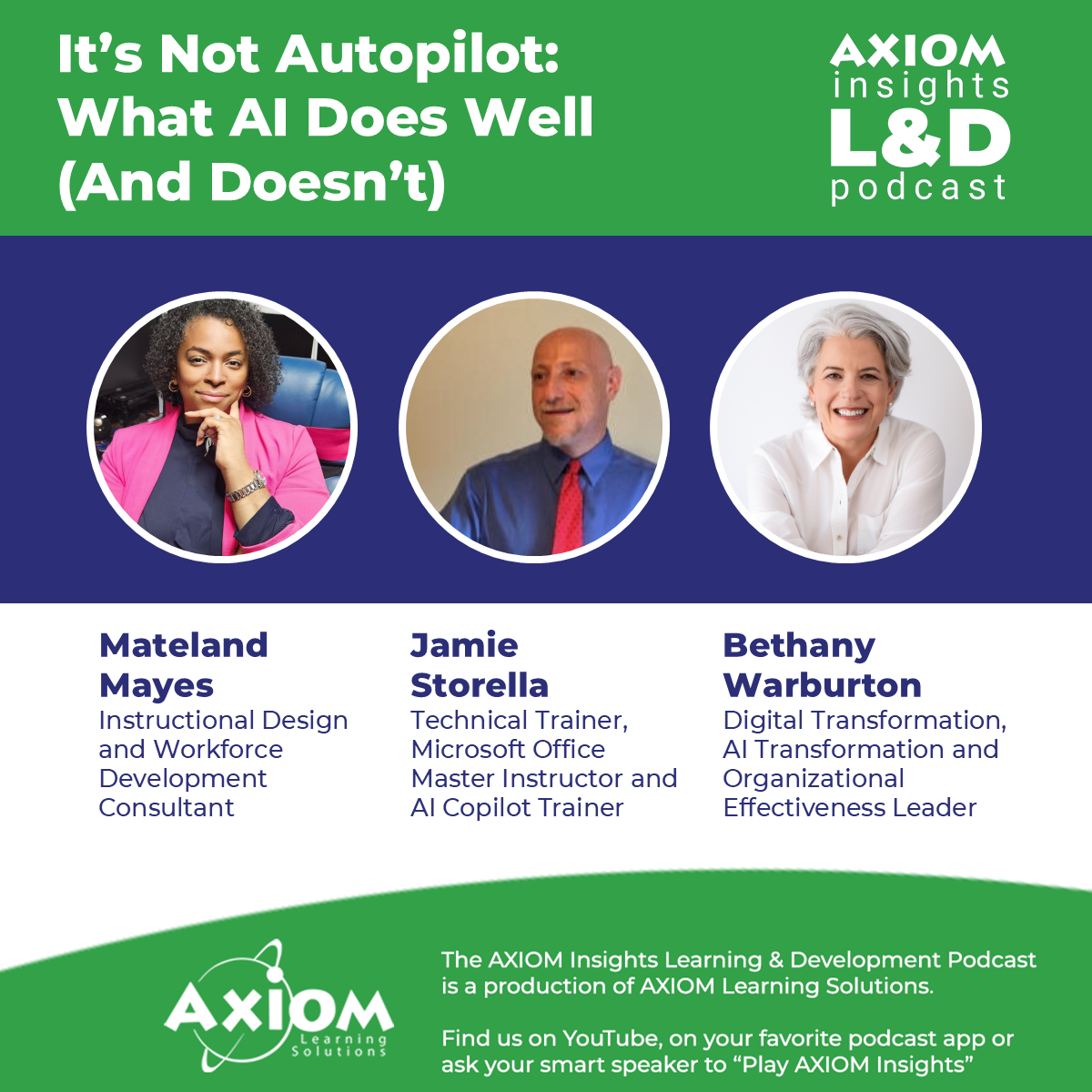 It's Not Autopilot: What AI Does Well (And Doesn't) - AXIOM Insights Learning & Development Podcast #46AXIOM Insights Learning and Development Podcast · on Microsoft Copilot79 / 100
 From Finance to Frontier Tech: Inside the CFO Role at a VC-Backed Engineering Business with Adam Uttley, CFO at Wayland Additive68 / 100Beyond Finance: The CFO’s Role in Leadership, Ethics, and Governance with Kate Cooper, CFO at the Institute of Directors60 / 100Inside a Fractional CFO Career: Flexibility, Reality, and Impact with Rachel Smith, CFO at RLS Finance64 / 100Finance in a High-Growth Consulting Environment with Ross MacGregor, CFO at Axiologik77 / 100Driving Growth and Integration in a PE-backed Agency Group with Mike Sprot, CFO at IDHL64 / 100