
The Education of a Value Investor · 2025-01-23 · 53 min
This conversation between Guy Spier and Howard Marks, co-founder of Oaktree Capital Management, centers on the strategic and philosophical decisions required to build a durable investment firm. Marks reflects on Oaktree's founding in 1995 and its growth to $200 billion in assets, attributing expansion not to deliberate grand plans but to superior performance in a market that embraced alternatives following the tech bubble burst. The core tension Marks articulates is between becoming an "artisan" - focused on excellence and client outcomes - versus a "factory" - prioritizing growth, fees, and profit margins. Oaktree deliberately limited its strategies to approximately 20 (averaging $10 billion each) and sized flagship funds based on market conditions rather than capital availability. Marks and Spier discuss how values like honesty and integrity shape business decisions, noting that Marks has written content that could cost clients money rather than marketing it. Marks emphasizes that telling the truth, even when self-interested, matters more than maximizing revenue. The conversation also addresses motivation beyond wealth accumulation, with Marks noting that at 78, he continues working because investing remains an endlessly evolving puzzle where reflexivity - investors' efforts changing the problem itself - requires constant intellectual engagement. Spier introduces an alternative perspective: whether chasing transient investment knowledge, which constantly shifts, represents the best use of remaining intellectual energy compared to pursuits offering non-transient knowledge in science or engineering.
That depends on your primary goal: if you want maximum wealth, pursue all available capital sources including institutions; if you prioritize investment excellence and client alignment, you may deliberately limit to individuals or select segments, as Marks did starting in the institutional world at Citibank.
Size should match your strategy's optimal capacity - Oaktree averaged $10 billion across 20 strategies and deliberately raised smaller follow-on funds after strong performance because market rises indicate worse entry conditions, prioritizing performance over asset gathering.
Yes, if your goal is truth-telling rather than making more money; both Marks and Buffett have written content that could cost them money, and this willingness to publish unprofitable truths builds deeper client trust than entertainment-focused material.
Values typically come from early environmental inputs like family and teachers, but they can also be acquired through reading, exposure to role models, or events that demonstrate the consequences of dishonesty, and it's never too late to adopt them.
Investing remains an endlessly evolving puzzle where investor reflexivity constantly changes market dynamics, providing intellectual engagement impossible to find in retirement; additionally, staying engaged keeps one integrated with world events rather than dropping off.
Computed from the transcript - who did the talking, and the words that came up most.
In this engaging podcast, Howard Marks, co-founder of Oaktree Capital, and Guy Spier, founder of Aquamarine Capital, share invaluable investment wisdom with Roi Lipovetzky, a former MBA student and current investment professional at Oakmount Capital. The conversation explores key principles of successful investing, such as mastering market cycles, second-level thinking, risk management, and the importance of long-term, contrarian positions. Howard reflects on his experience through major market events, while Guy emphasizes the need for emotional discipline and unconventional thinking. A key theme in their discussion is the importance of being true to oneself, especially in a world that often values conformity. Both Howard and Guy highlight the value of making independent decisions and staying grounded in one’s own principles, rather than trying to please others or follow popular trends. With years of collective experience, Howard and Guy provide deep insights into the mindset needed for lasting success in investing and life.
Transcribed and scored by The B2B Podcast Index.
Speaker A: I'm Royli Povecki and I have had the unique opportunity over the past few years to write, research and collaborate on various projects with Guy Spier. It was also about one and a half years ago that as an MBA student at INSEAD in France I had the privilege to have a conversation with Howard Marks in front of the Investment Management Club members. And uh, since then I've joined the Oakmont Capital in uh London. Howard Marks, the co founder of Oaktree Capital Management, also known for his widely read memos and his books the Most Important Thing and Mastering the Market Cycle was very generous with us. Uh his ability to make order through writing is just incredibly inspiring. In his memos he discusses many lessons and uh insights gathered over decades of very successful investment career. I'll uh give an example of the concept of second level thinking that he discusses on his memo. It's not easy. And uh, in the Most Important Thing through this concept he teaches us not to take effect. One reads as is, but to think once more about its meaning itself. Effects on other areas, how others may uh, react based on a piece of information and whether there is anything different in one's uh, opinion. Uh Warren Buffett himself used to say that he spent uh most of his days reading and thinking. Howard's idea emphasizes the importance of the uh latter in gaining an edge. He encourages us uh to be readers so especially of history books but never to underestimate real reflection after reading. And it was in Williams Green's book Richer, Wiser, Happier where there is a whole chapter about Howard Marx and uh, an example of how uh Howard's principles were translated to actions during the 2008 crisis by himself, his long term partner Bruce Karsh and uh, Oak Tree. Now I cannot even say how much I owe Guy Spier and how generous he was with me. And I uh, will never forget the day I received an email saying that he uh was willing to meet. Uh this email came after reading his book the Education of a Value Investor where he describes his um meeting with uh, Warren Buffett, Value Investing founding Aquamarine, building the right investment environment in Zurich Switzerland and more. And uh, since then we have developed a beautiful relationship that has changed my life. And I've learned so much from him over the years. Not only about investing but uh, also about uh, other aspects of uh, business and life. And uh, I hope that you are as excited as I am to see where a conversation of those two uh great thinkers uh can go. And uh, I'm sure we will learn many lessons about psychology, risk management, and much more, uh, so enjoy, uh, listening.
Speaker B: So, hi everyone. It's uh, Howard Marks, of course, needs no introduction. I'm deeply grateful to, I think our mutual friend Roy Lipovetsky for making this connection. And I'm excited and delighted to be able to spend an hour with you, Mr. M. Marx, Howard, for all the good reasons that you can imagine. And I'm just going to let you give the opportunity to say hi to my audience before I dive into a bunch of questions that I've prepared for everybody's interest. Howard didn't receive these ahead of time, so he's going to be what you see is what you get. But I'll just pause and allow you to say hello.
Speaker C: Well, thank you, Guy. It's a pleasure to be with you. And uh, your name is known to me and uh, your role in the value community. So I'm eager to answer your questions and uh, uh, be surprised by them.
Speaker B: Thank you so much. And so I have a community of friends and investors called Valuex. And the people who come there are often either, there are some self directed investors, but a lot of people are building an investment business of one kind or another. And you've done such an incredible job of sharing wisdom on investing. I thought I would sort of try and focus on wisdom on how to build an investment business where you've also been extremely successful. And I'm going to dive in with my first question is a reference to somebody that I'm sure you know. Max Heiney had a investment, uh, firm called Mutual Series. And I was attending an event in New York City where I used to live with Michael Price, who was one of his mentees, where Michael Price said to the group of us there, all you guys who are building hedge funds, you should think about building a mutual fund. Because a mutual fund can be sold, whereas a hedge fund is far more difficult. And I wanted to take you back to the days when you were founding your own business to see how you thought of that question.
Speaker C: Well, of course, uh, I joined the business in 69. Ancient history. Uh, we started Oaktree in 95, coming up on 30 years. So I dare say that, um, in 95 it never crossed our mind that it could be sold. You should note that it wasn't until 07 that an alternative investment manager, um, was sold. And that was Fortress here in New York, uh, early 07. And then Fortress was joined by, I don't know, I think Blackstone and uh, I think that Apollo, uh, took a run at it. But uh, it's precluded by the global financial crisis anyway. So the point is, it never entered our mind to sell it at the time we started. And by the way, at TCW, where the founders all worked, uh, we were managing $7 billion. So the question we never asked ourselves was, do you think we'll ever get back to $7 billion? And uh, so we never expected to be 200 billion, certainly. And that was down to the fact that, uh, after the global financial crisis. No, after the bursting of the tech bubble, um, the S and p was down three years in a row, 2001 and two. And everybody lost interest in stocks. And the Fed cut interest rates to fight recession and everybody lost interest in bonds. So if they weren't going to do stocks and bonds, what did they have to do? Alternatives. So they turned to hedge funds and private, uh, equity and some of the things we do. And so somebody mentioned to me this morning that in 05 we were uh, 50 billion. So the big jump came after that and it was due to the fact that, uh, there was great interest in alternative investments. That term didn't even exist when we started Oaktree. So that's a long answer to your question. It wasn't to sell it, it was to do a good job for the clients and hopefully have a successful business.
Speaker B: Yeah. And so I, I think that where you started this might not have been an issue for you, but I'm sure you've come across the question. There are people starting out who have to decide which direction to point themselves in. For example, in my case, I figured out during the financial crisis that I was far better off accepting only money from individual entrepreneurs. I felt like I could sync up with their interests and understand where they were coming from far better than, um, gear up to provide the kind of platform that an institutional investor was going to give me. And uh, I had great difficulty. I was a guy who started with a mat, you know, what did they call it? Two men and a Bloomberg. And suddenly institutions are showing up and interested to invest with me, but they're asking for performance attribution and all sorts of things where if I was doing that, then I didn't have my eye on the portfolio. So there are other places where uh, somebody who's starting out can point their interests in receiving funds. One is in addition to sort of like wealthy, high net worth individuals, you have the institutional world. And then there's the question of whether you do it as a series of managed accounts or whether you do it as one fund. And I'm just curious to hear how you would think of that if you were starting out today?
Speaker C: Well, look, I started in 69 at Citibank, so I was in the institutional world from day one. I was never confronted with the question of whether I should do that. I started off with pension funds for the most part. I mean the bank had wealthy individuals too, but the pension funds were the bulk of the money. And so I've always been in the institutional world and that's how you get to 200 billion. But you know, our niches have grown and so we've been able to grow with them and uh, you know, hopefully on the basis of superior, uh, risk adjusted performance. And I think that, you know, you can't start with the question of what form should we take? Should we do separate accounts or hedge fund or mutual fund or institutional or individual? Have to start with what do I want to accomplish? So you have to say, and a lot of people don't necessarily do this explicitly, but, but you have to say, what do I want to do? Make the most money possible or h, have intellectual satisfaction or uh, you know, something like that. And you know, if that, that would shape what you do if you want to make the most money possible. I don't think you say, uh, oh, I'm going to work for wealthy individuals. So it's clearly a pivotal decision. And if you want to make the most money possible, you take all the money you can get, all the time, under any circumstances. If not, sometimes you say, well you know what, I can't take any more money, I'm full. I can't do a good job with more money, or it's not a good time to do what I'm doing, so you shouldn't invest in it right now. That, that's to me, that's the key question and you must answer that question. And I believe that in the investment management business there's a spectrum. And the spectrum runs from artisans to factories. Now if you think about the artisan, all the artisan cares about is doing a great job and producing a great product for the end buyer and the factory. All they care about is size, growth rate, fees, cost control, profit margin and performance. Investment performance, to the extent that it enters into the equation is only a necessary condition for accomplishing those things, but it's not the goal in itself. And infinite size, taking all the money you can get and preserving excellence in performance, in my opinion are counter indicated. You have to make a choice. Now we've chosen to be more on the artisanal side. Now you might say, well, 200 billion how can you claim that? But the truth is we've limited our assets, uh, over time. We have about 20 strategies, so it averages 10 billion strategy. And some of our niches are quite big, so size is, you know, but I think we stick to the appropriate size. And if you look at, you know, one of our flagship groups is called the Opportunities Funds, uh, it's distressed debt and opportunistic lending. Started that in October 88. So it's 36 years, uh, this, this month, maybe today, who knows? Um, and if you look at the record, which I think is really, uh, exceptional, uh, it's run by my partner, Bruce Karsh, who's a fabulous value investor. The biggest funds, these are closed end funds, so they're serial. The biggest funds were the best performers. But typically, if we had a big fund and it did really well, the next fund was smaller because the fact that the first fund did well indicates the fact that the market rose, which means it's a less good time. So in the next fund, we went out for less money. Now, most people, if they have a really good fund, they take that as a way to raise much more money. We did the opposite because we want performance over bigness. But it is a fundamental choice that every person who wants to run an investment firm has to make. That's the key question. The rest all fall out from that.
Speaker B: Yes, but I'd like to take you into that decision. So my experience is that those are not easy decisions to take. They're decisions that, uh, are part of the reason why I return to the Berkshire Hathaway meeting every year because it prevents me from drifting. But the lure of, uh, achieving greatness through asset gathering, so to speak. Right, great. And I'm curious to understand if you're able to share how you took those decisions and, uh, where you placed yourself, what you thought about. And what's very interesting, I think, for me is that, you know, this generation, my generation, had these people to look up to who'd already done that road. We knew the story of Warren Buffett giving up his partnerships when he could have continued to run it as a business. Whereas you may not have been aware at the time you made those decisions independently of that. And so where does that DNA come from? And if that makes sense. So you've taken decisions in Oak Tree which are very different to what, say, blackrock did. You could have been a blackrock.
Speaker C: Right, right. Well, look, Guy, um, I say it's an important decision, and at the same time, I admit that we never confronted it frontally we just, we never said, well, let's see, should we go for the most money or the best performance? We, we just always went for the best performance. So, you know, it wasn't a conscious decision. But, uh, you know, the five of us who started Oak Tree, or the, the two of us, Bruce and I, who, who mostly ran it, were of a, were of the same mind. And I say that the keys to a successful, uh, partnership are shared values and complementary skills. And our values always led us to better performance and respectability and reputation and standing in the eyes of the clients. And people say to me, you were a great help to our fund. You advised us to do the right thing at the right time and, and made us a success. That's, to me, that's more important than having more money. And, you know, you know, in our crazy world, you, you have, if assuming you're skillful and, and good, talented, you have two choices. You can be an artisan and make and get rich, or you can be a factory and get filthy rich. So it's not like if you're really skillful, by the way, if you're not skillful, you probably won't make any money at all. But if you're skillful, it's not like becoming an artisan means, uh, uh, a life of penury. So we didn't make a conscious decision. We just always wanted to do a great job. And I would direct, uh, you and your viewers to the oaktree website, oaktreecapital.com where we show our investment philosophy, which is our guiding principles. Very important to us. Wrote them out just before we started oak tree in 95. Never changed a word. But also, and, and, and a few people are aware of that philosophy. And then also our business principles, which most people aren't aware of, which says how we're going to do business. Um, and it talks about, Take a look at it. It talks about excellence in investing. That is our goal. Um, and we've always stuck to that, and it gives us a common set of guideposts, and it's very helpful. But it's what it is. It's a matter of our values.
Speaker B: So thank you so much. I'm going to move on to another, uh, question. I really enjoyed your podcast with David Perel. I think that he's been an inspiration for me in terms of writing. I think that the majority of people who are investors who turn their heads to writing take a huge risk, and many of them end up falling into the trap of thinking that good investing can flow from writing. Material that is in some way entertaining to the audience. You and Warren Buffett have not fallen into that trap. You very clearly, uh, and I don't know why, in one of the comments, uh, you made, you talked about visiting an investor in Saudi Arabia. So I'm now imagining Howard Marks writing for one of his investors in Saudi Arabia. And it's so clear to every reader that you're kind of addressing us personally. It's like you're taking us to a place by the fire and the person is in doubt as to what decisions they should make and you're kind of helping them. But my experience and what I've observed in other investors who are also writers is that they can't help but, uh, be aware of the implication or the marketing implication, for example, of what they're writing. And uh, I'm curious how you avoided that trap and what words you might have for people who plan to write, are writing and are maybe falling into that trap.
Speaker C: Well, look, I think you put your finger on it right there. If your goal in writing is to make more money, then everything you write has to be, um, marketing and uh, I would say, uh, tendentious. And to be a great writer to write great stuff, you have to sometimes be willing to write about something that is against interest. That is, have you ever written something which, if taken to the logical extreme, would cost you money? Now if the answer is no, then either you've been lucky because everything you had a chance to write fit with money making, or you're cutting your cloth to fit the job of making money. But I think Warren is clever than I am, but I think that he and I have lots of times said written stuff that wasn't going to make us more money and in fact might cost us money. But that's okay, because telling the truth, telling it like it is, you know, like you say, sitting down with the client at the fire is much more important to us than making one more sale.
Speaker B: I would actually say from my perspective that, uh, I almost feel like it's a nine clad rule that pretty much anything that I've written or said that turned out that it landed really well with the audience involved, me taking a risk of telling the truth versus, uh, and I could cite multiple, uh, examples of that. I think that. You know, it's funny, I'm not sure where I feel like you're seated in New York City right now, and I'm reminded of a meeting that was set up for me, one meeting with Ken Langone, the founder of Home, uh, Depot, and I approached the meeting, uh, wanting to understand where these values of honesty and truthfulness came from. And he kind of gave a non answer answer, which so far I've received from you, but I'm going to try and push you. He kind of said, well, these are my values. I learned them on my mother's knee.
Speaker C: Right. I think it's true. Your mother's knee, your religious upbringing, the principles you were taught, maybe some early
Speaker B: teachers for the viewer's interest. I think that's true. I think that there are many people who were not born into the right environment, didn't have the right parents, didn't have the right morals around them. And the message I want to give those people. I think there's also, even though Howard Marks and Ken Langone kind of like drank it with their mother's milk, uh, there is a path for those people who didn't receive those values, actually.
Speaker C: Yeah, well, well, you know, but I mean, well, the question is, I mean, look, this is. Now you're getting into really deep questions and I hope you have a few hours. But, but I mean, in the absence of environmental inputs, starting with your mother, how do we achieve values? And I don't think we're born with values or with even a, born with a genetic propensity to values. I would think that it's all a matter of, of our early environment. And so something triggers it. It might be something you read and, or you know, if it wasn't parents or preachers or teachers, it, uh, might be something you read. It might be something you read in the newspaper. And you read a story and you, you draw an inference from the story. I better not do XYZ because that person ended up in dishonor or something like that, or isn't, or that person was a crook. And I never want to be go close to the line, um, but there's a guy in, in California named John. Well, he's not in California anymore, but when he grew up in, in Watts, you know, the bad part of Los Angeles, he, He uh, he, he had a visit from an entrepreneur who gave him some values about having a successful business, but also helping the community. And so I, I just think that it can be mysterious and it can be different for all of us, but I think it has to be inculcated in some way.
Speaker B: So, uh, yeah, and what I would give to the audience because it was curious, I was interested to hear it from you, is that, um, you know, I went, ah. And, and my. One of the first acts of radical honesty that I Gave to the world was the first chapter of my book where I basically did a confession about accepting a job as an investment banker and a place where I wish I hadn't gone to work. And in my case, really getting around the Berkshire crowd made a huge, huge difference for me. And so that is an act that one can do. I mean, I was 27 or maybe 30 years old when I started down that road. So those of you who. Those of us who are not born in the Ken Langone, Howard Marks environment, there are alternatives for us, just to be clear.
Speaker C: Yes, absolutely. Absolutely. Maybe it's never too late. Maybe there's hope for redemption.
Speaker B: It's absolutely never too late. No question about that. So the place where I want to go now is. What is remarkable to me is even a small amount of outperformance, a modicum of success goes an extraordinarily long way. Anybody who's half decent at this will end up becoming fabulously wealthy beyond their immediate financial needs.
Speaker C: Right.
Speaker B: Which then raises the question, at least in my mind, of what am I doing this for? Because it's no longer about putting, uh, food on the table. That is not the immediate concern. And I'm curious to understand how you've thought about that challenge balancing out all the other interests that one might have.
Speaker C: Yeah, well, you know, look, guy, I'm 78. Uh, I'm a kid relative to Warren. But if I retired tomorrow, nobody would say, oh, he took the easy way out, you know, or he's a lazy bones, as my mother would say. But number one, I enjoy it. And every time I write a memo, I try not to write memos that just say the same thing over and over again. I try to have incremental content, which means I figured something out to my satisfaction. And if I'm figuring out new stuff every day, what else is, what's better? And investing as you know, uh, first of all, it's a puzzle. Secondly, it's a puzzle that changes every day. Thirdly, as Soros said about reflexivity, the efforts of investors to solve the puzzle change the puzzle, requiring new solutions. So, uh, what could be more interesting and provocative than that? I don't get paid to work. I don't get a salary. I don't get a bonus. I don't get any participation in the profits from the funds at all. I only participate in Oaktree's overall profits. And I hope my stake in Oaktree will become more valuable over time. But that's a kind of indirect benefit. But what would I do if I didn't do this, how would I stay integrated into what's going on in the world? The last thing I want to do is retire and drop off the face of the earth. Um, so to me it's an obvious choice. And the fact that I don't get a paycheck doesn't deter me.
Speaker B: Well, I'll give you an alternative and, uh, I'll build it into, not an extreme version, but just something that I think is hard to say no to. So, um, and this comes to me from a friend who's an engineer, a very celebrated engineer here in Zurich at the Etihad. And uh, his name is Raf d' Andrea and he built a business that he sold to Amazon and he now he does robotics here at Etihad. What he would say is, you're investing a lot of your mental energy to chase transient knowledge. Because as you just said, the world is constantly changing. In fact, I think you said it so elegantly. The very efforts that investors put into understanding the world changes the world. And there is a whole class of people out there who are actually trying to get non transient knowledge, whether it's in science or engineering. I had lunch with, uh, a, uh, professor at Yale, Nicholas Christakis, who's doing incredible work trying to improve the world. Or you have somebody up at Harvard who's trying to find signs of extraterrestrial life. So me personally, I do find myself asking how much time I want to spend even if I find an incredible business that's too small for Oaktree and that I can own for the next 30 years because it's got some kind of wave that it's surfing down, even that is likely to prove more transient, that competitive moat will prove more transient than some of the knowledge that is being uncovered at universities around the world. Why would I not devote my mind to that? Why would you not devote your mind to that?
Speaker C: Well, first of all, I don't know anything about the physical sciences or the things that are likely to be forever. You know, if I want to glorify my say, I, uh, say I'm a social scientist. I study the world and people as they are, which subjects me to having to deal with change, with things that are not permanent. But I like to think, guy, that my way of thinking about problems is permanent. You see, the solutions change, but the way of reaching the solution doesn't change. Yeah, that's what, that's what being a value investor is, you know. And uh, uh, you can't say, oh, well, a value investor is low PE or value investors. Low price to book or value. You know, stuff, stuff like that you have to say today, meaning this year and for the next few years, what's going to be the best way to extract value for the market? So look, I don't delude myself into thinking that oak tree and I are doing the Lord's work. You know, this is not altruistic, but maybe in the first 55 years I was able to figure out some stuff that other people didn't know that helped them and maybe I'll do it again in the next 55 years. That's my goal right there. And I don't know anything about those other things, uh, science and so forth. But in the last memo, in uh, the memo I published last week on asset allocation, remember I show my graphical way of thinking about risk. And I said, I have to admit that when I'm gone I hope somebody will say, well, you know, uh, this is what is the way Howard Marks described risk. And I think it's helpful. So that's leaving something that can last in my books and memos. I try not to tell people what to think, but I try to tell them how to think. And uh, look, I probably teach 20, 30 classes in university a year and 2030 educational conferences, CFA conferences and so forth. And I'm trying to, I'm trying to share a discussion of how to think. And that's the best, that's the best I can do.
Speaker B: Yeah. And so, um, there are, you know, there are some extracurricular activities that, and I think that they're kind of, it's a meme that they would make you into a better investor. Robert Hagstrom wrote a book called called Investing the Last Liberal Art. I think that I, even though I've not played that much bridge, I actually think I'd probably be a better investor if I'd played more bridge. And I've just come back from a five day trip to India where I met with a number of investors who almost. To be a respected member of that group, you need to have the intention, if not have already been on a number of vipassana meditation courses. And I'm curious how you approach your own hobbies, your own spare time, suggestions or people who ask, should I play bridge? Uh, I don't think that chess helps you as an investor, even though it's a fun pastime and how you kind of see those things.
Speaker C: Well, look, um, I'm trying to make it clear to you that I'm not a man of the cloth. I'm not a do Gooder, I'm not, I don't, I don't have, pretend to be doing the Lord's work. So as for non working time, my main goal is to enjoy myself. We don't have that much, that many years on earth and when you get to my age, you, you don't have that many at all. And I think you want to be good for your family, you want to be good for your community, you want to be good for your profession, et cetera in the world. But I think the main goal should be to enjoy yourself. Not in a hedonistic sense, but that's just a value judgment on my part. But so like you're talking about, should you play British? My, my answer to you is you should play bridge if you think you'd enjoy it. You shouldn't play bridge to become better investor. And, and you know, like I, I love to play back and I play a lot of backgammon. And backgammon is, uh, a great exercise in, in decision making under uncertainty, you have certain rules that you should follow which will probably help you win, but the outcome will be hugely influenced by it, randomness at the same time. And what do you do about that? So to me, that's a great analogy to, to investing. But you know, I have a friend, my best friend in California, much better, uh, backgammon player than I am. He studied, he knows all the tactics and probabilities and all that stuff, and he tries to teach me all the time. I said, look, if, if I'm, if I want to work, I'm going to go to the office. I play backgammon just to have fun. And uh, that's the way I view those decisions. And again, my mother, like all mothers maybe used a lot of axioms, one of which was all work and no play make Jack a dull boy. And this business of making all these life decisions in order to be a better investor, I don't have any sympathy with that. It seems terribly dull and not what it's about. I want to have fun. I like to have good, uh, times. I like to make people laugh and my kids and my grandchildren laugh and wear funny hats and you know, that kind of stuff. And you know, I have no interest in, in only doing things that make me a better investor.
Speaker B: You know, just to take you back to, uh, you said you're not a man of the cloth. And I learned something recently that I just think helped me a lot. It's actually, he's on a lot of podcasts and has a number of books out Jordan Peterson, who talks about the commandment not to take the Lord's name in vain and he interprets it in the following way that the people who um, are pretending to do good, but actually there's some benefit to them from sort of like virtue signaling would be the idea. And actually they're actually doing something that benefits them while pretending to be good for the world. What you actually just did is you disabused uh, yourself of that very thoroughly. You just said, look, I'm not trying to save the planet. I'm just trying to live a decent life on my own within my own limited confines, which I think is beautiful and worth saying.
Speaker C: Thank you. I think that's very well put. You know, I, I have no interest in people who are self important or self aggrandizing and I always use the expression, Churchill's expression. He was a humble man and he had a lot to be humble about. And you know, I, I consider myself just another person who puts his as, as my mother used to say, puts his pants on one leg at a time. And uh, you know, I'm trying to do the best I can for me, my family and the community, my company, my colleagues and my clients within the limitations of what I'm capable of.
Speaker B: Yeah. There's this fascinating paradox in the world of investing that it's the people who actually, you know, in a certain way on multiple levels are, ah, taking decisions away from making the most money and making it successful on that level that end up doing the best. There's some kind of rule of the universe and of human nature that's embedded in that, which is quite fascinating.
Speaker C: Well, the only thing I would. I think it's very important to recognize that. I think it's a good way to live your life, but I think you have to recognize that it's not a sure thing. Because some people who put money over everything else will make the most money.
Speaker B: Yes.
Speaker C: And some people who don't put money over everything else will do very well. Uh, so, you know, it's, it's, it the, the success equation guy is so multivariate that you can't, nobody can say this is the path to success, however it's defined, whether it's m, whether it's financial or not and, and, and uh, and luck and timing. Accidents of timing play such a big part, uh, that you, that we can't, uh, we can't get away from that now.
Speaker B: Are you able to go back to any point? So, you know, every, every successful life has moments where the individual living that Successful life feels like an utter failure and have to find a way through those moments and learn from those moments, because it is never just plain sailing. There would have been investments that you made that were extraordinarily difficult before they went even worse, some of which turned around. And I'm sure that now you have people who look to you for mentorship, who come to you in those moments. And I'm curious what you did with yourself and how you try and impart wisdom to those people who are going through those difficult periods.
Speaker C: I never made individual. And again, I come from the institutional world. I never made investments, individual investments that were so large that their success and failure, uh, affected my performance or changed my view of myself. So, uh, I never had the. I mean, my moments of trial were the global, uh, financial crisis happens. The world is going to hell. There's some chance it might end tomorrow. The world. And we've been investing aggressively and we have to ask whether we're doing the right thing. Uh, when the market is telling you you do the wrong thing, that's as close as I've come to those, uh, days of reckoning that you described. But when people come to me for advice because life is difficult or investing life is, I try to tell them that nobody gets it right all the time. You have to look at your track record over a long period of time, over a large number of decisions. No one decision fundamentally changes that. You have to look. Be kind of a statistician and think of your experiences. Is a sample, and it's a sample. When a statistician does a sample, like a pollster, they're trying to take a small number of observations from which they can generalize to what's true about the universe. So you have to convince people that, you know, you're suffering with this today, but one bad decision doesn't mean you're a failure. It doesn't really change the question of whether you're a good investor. And then you have to keep. And then I try to. I spend a lot of time trying to keep people, uh, emotionally centered because, you know, uh, responding emotionally to what goes on in the world and in your life is a big part of being a human. But in investing, it's highly counterproductive and you have to try to get people to resist that. And, uh, you know, I remember, uh, a young PM came to me in 98. Uh, he. Today he's an old PM and he's actually retiring 26 years later. But he came to me in 98. You know, long, uh, term Capital had melted down. We had the ruble devaluation, the South Sea, uh, Southeast Asia crisis. This guy comes to me, I think mainly because of long term, he says to me, I. And he's a, he's a, he's a really like intellectual kind of guy. Very funny. He says to me, I think this is it. I think the world is going to melt down. I think it's going to all end. I said, well, tell me why. He goes through his recitation. I said, okay, I got it. Now go back to your desk and do your job. Uh, a battlefield hero. And again, not only do I not pretend to, uh, be a man with a cloth, but I don't pretend to be a battlefield hero. A battlefield hero is not someone who's unafraid. It's somebody who's afraid, but does it anyway. Mhm. That's what we have to do in our business. Dave Swenson, in his book Pioneering Portfolio Management, uses a great two word, uh, expression. The greatest two word expression I've ever come across. He says that investment management requires the adoption of uncomfortably idiosyncratic positions. What could be better than uncomfortably idiosyncratic? But you know what? It's uncomfortable Guy. And it has to be if you're doing something. If everybody else says, uh, buy Nvidia because it's the future of the world and you say, you know, it's overpriced, I'm going to sell it. If you're not uncomfortable, there's something wrong with you. But you have to be uncomfortable. But do what you intellectually believe is right. Anyway, that's how I try to help people level out.
Speaker B: I'll tell a couple of stories. On the day of 9 11, I, uh, had a meeting downtown at Moody's actually. And of course that meeting was cancelled late in the afternoon. People living on the Upper west side went out onto. There's a, uh, pier where you could walk out and kind of see the dust. And I ran into, uh, somebody called Jonathan Brandt, whom you probably know. He was, uh, at Ruane Coniff. And, um, he works closely with somebody called Greg Alexander. And he tells the story of Greg Alexander who found out what had happened, talked about it for five minutes at the coffee machine in Midtown, and then went back to reading annual reports, which is kind of amazing, uh, to me and certainly in my case, uh, yeah, no, the successful investments that I've had. It's a beautiful phrase that you used, uh, uh, unconventionally uncomfortable.
Speaker C: Uncomfortably idiosyncratic.
Speaker B: Uncomfortably idiosyncratic. And, um, yeah, that is what we're supposed to be doing. Uh, so I want to take you to. We're talking now, and by the time this comes out, the election will have been over. And in a way, it's just interesting to hear how you think about it. What I tell people on investing is I say I'm super interested in politics. I take positions, I care a lot about the world. I have my views about the world. And then when I come into investing, I leave them at the door. I make an assumption that none of those things are going to affect my investing. And I've seen you get these newsletters into your email inbox that say, XYZ just happened. Sell all your shares. There's a report called the Doom Boom and Gloom Report.
Speaker C: Mark Farber from Hong Kong.
Speaker B: Yes. I mean, there. It's a whole, uh, you know, it's a whole style of doing things that I think that, um, you know, again, I leave them at the door. But it does feel to me that we're at a turning point in the world. I, um, don't think anybody who's studied any kind of personal or public finance can be happy about the levels of, uh, public debt as they rise. And we know that the United States is the global policeman. Um, the more public debt there is. What is it? Debt servicing costs are now greater than defense spending in the United States. And I leave you with one last thought. Before you can riff on this. There's a claim that was made by a friend, uh, Milo Jones, that Warren Buffett did what he did, has done what he's done, in part because he's lived in the very, very middle of the vast content, vast and rich continent that is the United States. But the world is turning in ways that are hard to understand and are quite distressing. And yes, I leave it at the door and then I go and I try and think, what is a durable business that will last for 50 years? But how do you think of that?
Speaker C: Well, look, again, you have a few hours, but, uh, you say, riff on it. So I'll tell you a few things. First of all, let's go back eight years ago today, October, uh, 29th, uh, 2016. There were only two things that everybody else in the world, everybody in the world was sure of. Number one, Hillary Clinton would win. And number two, if by some fluke she lost, the market would collapse. So instead, she did lose, and the market went straight up. So if that's not enough to convince you that, A, nobody knows what's going to happen, and B, nobody knows how what happens will affect the market. Then I don't know what could be enough. So that's data point one, data point two. You could have said in 2019, if you were the smartest person in the world with perfect prescience, you could have said in next year there's going to be a pandemic that shuts down the world economy. In 2021, you could have said Putin will invade Ukraine. In 22, you could have said next year Hamas will attack Israel and bring the Middle east to the brink of a, of a regional war. You would have been right every time. If you would have sold a share, you'd be poorer for it. All those things sound like terrible things, but market has marched upward anyway. So, um, you know, your moment was 9, uh, 11. My moment was Lehman Brothers. Lehman Brothers. You know, we had the global financial crisis, uh, unfolding. We didn't, I don't know if we called it that yet. It usually the names are assigned in retrospect, but we lost Bear Stearns, Merrill Lynch, Arkovia bank, Washington Mutual, AIG. And finally September 15th, Friday after the close, Lehman files for bankruptcy. We walk in on, uh, Monday morning, September 18th. We have raised an $11 billion fund for distress debt investing and opportunistic lending. The largest fund in history, which was our fund, uh, prior to 07, was a $2 billion fund in zero, uh one. So now we've raised $11 billion. Very little of it has been invested. We're sitting on the shelf. Should we invest it or is the financial world going to end? Is the financial sector going to melt down? Well, so what you might say is, well, uh, let's do an analysis. Let's get 10 PhDs and let them run their computers and figure out if the world's going to end. Guess what? There's no such thing as analyzing the future for a one off event which is in the, you know, way, way, way, way, way out in the tail. There's no such thing as coming to an analytical conclusion on that subject. When, when the pandemic broke out, I started to quote a epidemiologist from Harvard named, uh, Lipsich who said that when we make decisions, we, we do it on the basis of A, data, B, analogies to prior events and C, uh, what did he call it? Supposition. And I observed that in this case there's no data, there's no analogous prior events. It's all supposition. And that's what we had on September 18 of 08, supposition. Will the world end? So I wrote a memo, I think it's called what now or maybe now what? And I said, it's hard to say the world will end. It's hard to put a high probability on its ending. It's hard to know what to do if the world is going to end. Most of the time the world doesn't end. All you can do. So that's, that's how I view these macro phenomena, including the terrible, uh, uh, financial management of the United States and the high debt level and uh, debt service cost which you referred to. Yeah, nothing you can do about it. What are you going to do? You're going to not invest in the United States? What's better? What's better? Every country has problems. Some are economically, um, non dynamic, some of them are autocracies. Uh, you know, what's better than the United States? And so I just think we have to do what you say. Check your feelings about these things at the door, uh, go in and do the best financial analysis, uh, you can and try to figure out how to turn $2 into 3.
Speaker B: And you know, uh, I think that the memo of yours that was most helpful to me and influenced me the most and I'm just remembering it now on this call, it's not like I printed it out in preparation. Is the memo tit nobody knows. I think you referenced it and what I realized and I think that we should bring this to a close to make sure that we're all respectful of each other's time is uh, what comes across for me in the 50 minutes or so of speaking to you is the fearless approach to telling the truth, despite what might one fears, other consequences. Now if I stop and say to myself, and for anybody, all of you who are listening in, Howard Marks at a certain point writes to his investors, nobody knows, least of all me. Don't pay attention to all the people who think they know or trying to sell you that they know they don't know. And uh, uh, and actually I think that that's the wisdom I take away from this conversation. And I leave you with one last thought. And then, and then you can, and you can close and say goodbye to the listeners. There's something about, even though we're speaking across, uh, many miles in a zoom call, there's something about spending time in a room with somebody. The air vibrates. I've learned something in talking to you that I could not have learned by just reading your memos or even watching another podcast with you, which I deeply appreciate. It's your fearless willingness to put out the truth before you take care of some kind of perception of your self interest. And for that I am deeply grateful. Over to you for the last word, Howard.
Speaker C: Well, uh, Guy, you're very kind to say that if, if that's the message you take away, I'm very happy because that's the message that I hope the world will take away and that other people will try to live their lives that way. Um, I reached the conclusion it wasn't an epiphany at a certain point in time, but over the last X years, I've reached the point where I now conclude that I have nothing to fear. And so, as you say, I feel I can tell the truth, even if it ostensibly is against interest. And, uh, you know, one of my great heroes is, uh, John Kenneth Galbraith, who 30 years ago wrote a book called the Short History of Financial Euphoria. And, uh, he says, uh, we have two kinds of forecasters. The ones who don't know and the ones who don't know. They don't know. I know I don't know. And that frees me to say nobody knows, including me. Uh, so this has been a great conversation for me. I think you recorded it, and I'm going to ask you for a recording of it because there may actually be something in here for me. Uh, and, uh, thank you for the opportunity, and good luck in everything you do.
Speaker B: Yes, thank you so much. Last thought that comes up to my mind. Why not leave this call with a thought from Charlie Munger? I love this. When he said it at one of the Berkshire meetings, um, tell the truth. You don't have to remember what you said. To whom, you know, life is.
Speaker C: Well, if you think about the cheating spouse, uh, you'll conclude that the faithful one has life much easier.
Speaker B: Exactly. So, Howard, it's been a great privilege. I'm wishing you a very good rest of the day. Thank you for sharing your wisdom. Thank you for making the effort to show up for so many people, which is, again, an act of generosity to the world. And you've helped an enormous number of people, and you should take that to bed with you every night. Um, your grandchildren know that, you know.
Speaker C: Thank, uh, you.
Speaker B: Thank you. Have a good rest of the day.
Speaker C: You too. Bye. Bye.
Other episodes covering the same guests and topics, from across The B2B Podcast Index.
 A Look Under the HoodThe Memo by Howard Marks · features Howard Marks86 / 100
 12 Leadership Lessons from a Fortune 500 CEO - Bill Foote, former Chairman and CEO of USG CorporationThe TechEd Podcast · on Berkshire Hathaway87 / 100
 Build, Grow & Transact: Americana’s $12B Path from Breakaway to EnterpriseThe Diamond Podcast for Financial Advisors · on Alternative investments76 / 100
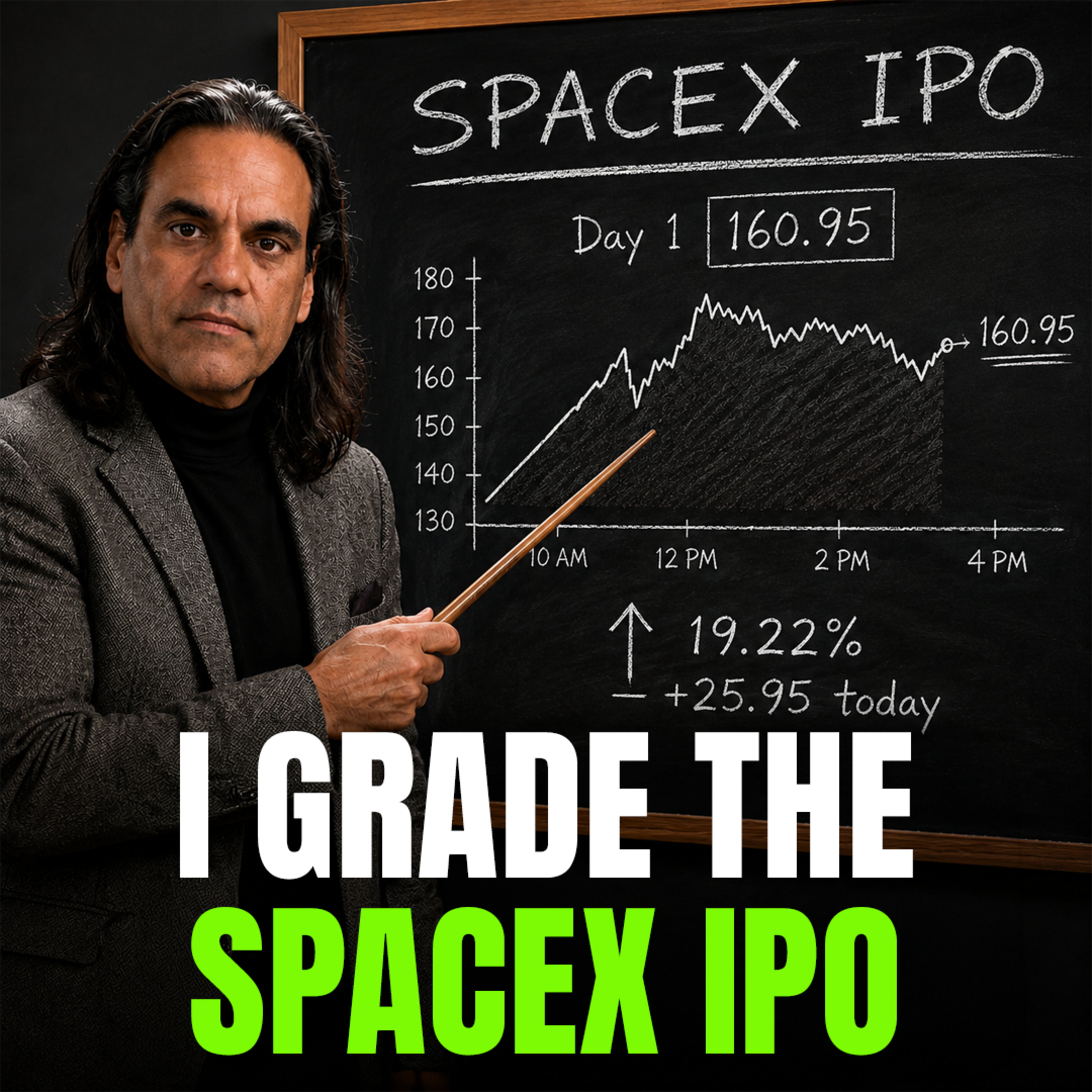 The SpaceX IPO Report Card, OpenAI vs. Anthropic, and the Private Market No One Talks About | CJ Gustafson w/ Guest CJ Gustafsontrading places · on Berkshire Hathaway76 / 100
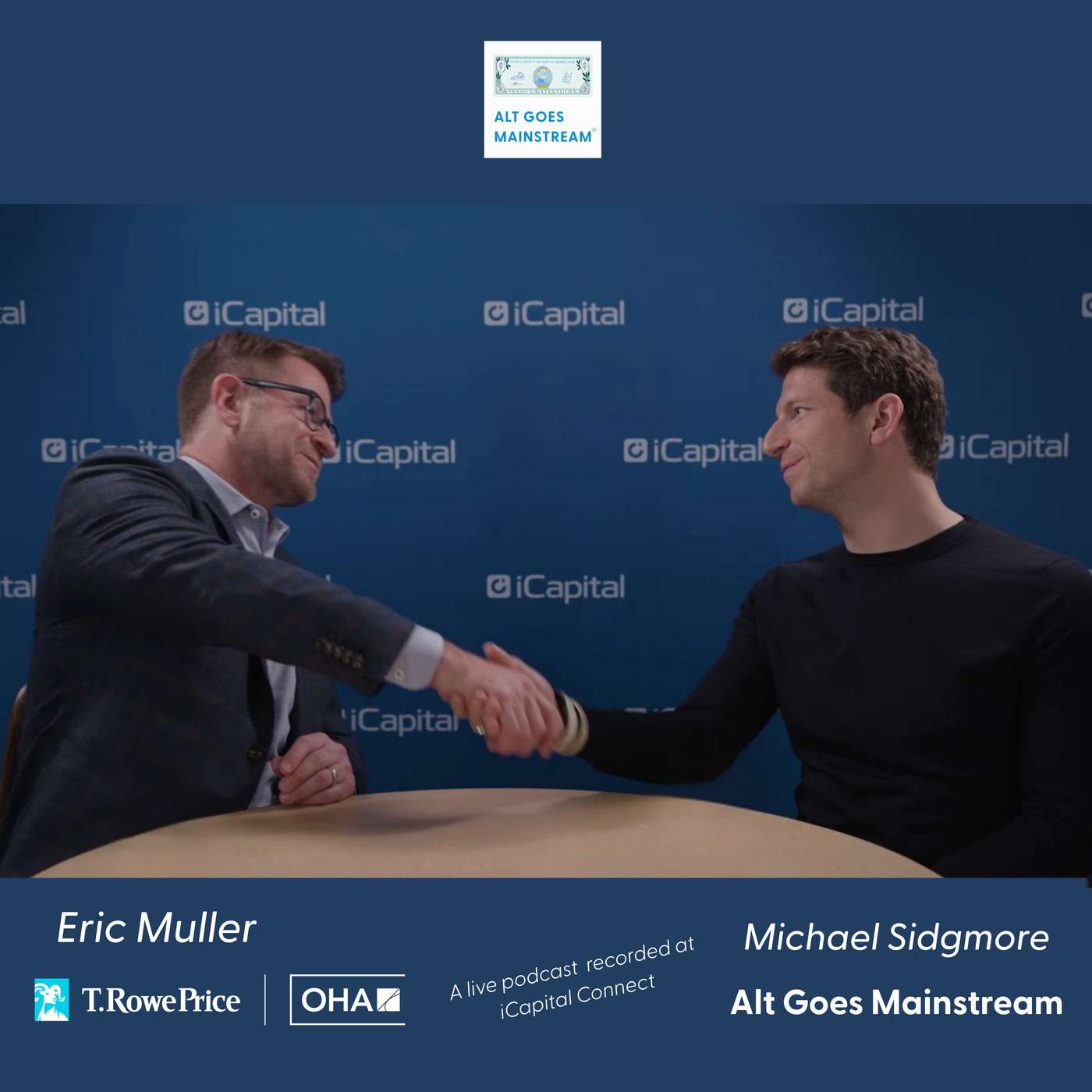 Oak Hill Advisors' Eric Muller - operating at the intersection of public and private credit: live from iCapital ConnectAlt Goes Mainstream · on Distressed debt74 / 100
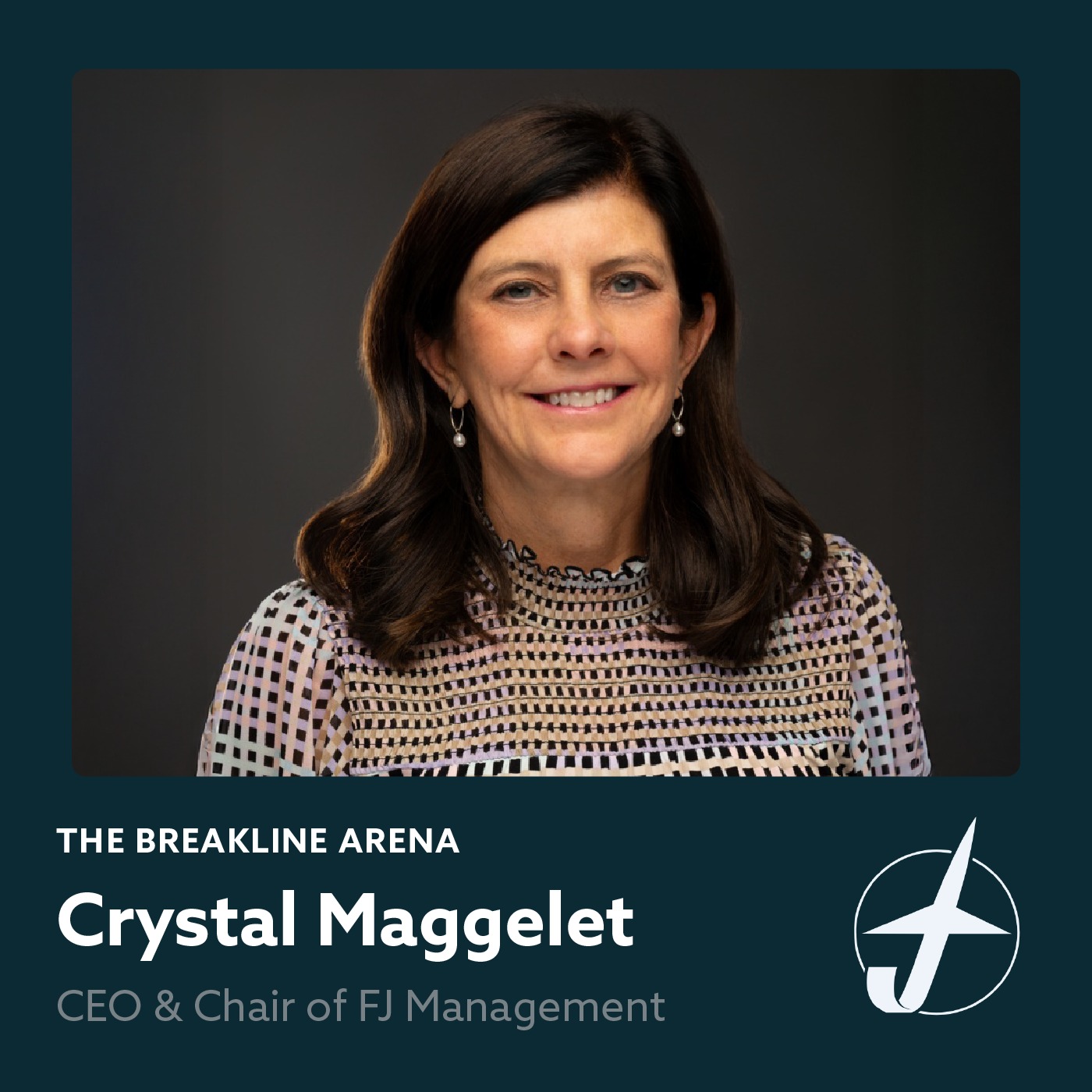 Crystal Maggelet, CEO & Chair of FJ Management | Legacy BusinessThe BreakLine Arena · on Berkshire Hathaway72 / 100
 My first clinical Trial: 5-ALA & Glioblastoma re-irradiation60 / 100
 From Data Overload to Data Impact with Ritavan
 Uncertainty and Enterprise: A conversation with Amar Bhidé
 Asset Liability Management & Interest Rate Risk in the Banking Book - Part 4 of 4
 Asset Liability Management & Interest Rate Risk in the Banking Book - Part 3 of 4