The Cyber Security Recruiter Podcast · 2026-07-01 · 49 min
Key moments - from our scoring
Substance score
47 / 100
Five dimensions, 20 points each
Manal Iskander, founder of PCtronics Managed IT, Security and Automation, discusses how AI is reshaping the MSP and cybersecurity landscape while maintaining human-centered design. With three decades running PCtronics, Iskander has built a vertically stacked, AI-native tech stack using SuperOps, NinjaOne, Sentinel One, and Huntress Guard to automate routine security tasks while keeping humans accountable for critical decisions. Rather than replacing technicians, this approach lets him hire less specialized staff and train them faster - Level 1 techs now advance quickly to Level 2 by managing AI-driven tools instead of performing manual work. His double-diamond methodology (Discover, Define, Design, Deliver) maps existing workflows, identifies inefficiencies, and automates low-hanging fruit while preserving human judgment where it matters: incident response, client communication, and governance. A custom reporting system built with Claude consolidates data from multiple security tools into client-specific dashboards that surface risk by user, flag training needs, and generate upsell opportunities. Iskander is also set to keynote California's SISOA conference for CISOs and college CTOs on AI and cybersecurity in July. Operations leaders at MSPs, managed security providers, and IT departments will benefit from his framework for embedding AI without losing the relationship and context layers that clients demand.
The double diamond has four stages: Discover (map how the organization actually works with humans, identify bottlenecks like tribal knowledge in one person's head), Define (categorize workflows and spot inefficiencies like duplicate information), Design (determine which steps can be automated versus which need human oversight, then establish governance and accountability), and Deliver (test and deploy the new workflow). It prioritizes human-centered design before proposing AI solutions.
PCtronics loads customers onto SuperOps (an AI-native platform for operations, invoicing, and help desk), NinjaOne (for patching and remote management), and security tools like Sentinel One and Huntress Guard. This vertical stack reduced client onboarding from 4 hours to 30 minutes and enabled ticket triage automation that dispatches help desk requests by importance and priority without manual sorting.
AI cannot apply business context that overrides security rules. In his example, a CEO losing a laptop in Paris at an airport would be blocked by AI from logging into a non-managed device - correct security policy - but a human supervisor can override it knowing the CEO must close a deal in an hour. AI doesn't have this judgment; humans must own the decision and its liability.
Built with Claude, the system aggregates data from SuperOps, NinjaOne, Sentinel One, Huntress Guard, and others into per-client SharePoint folders showing help desk reports, quarantine data, hardware/software changes, and user-level risk patterns. It compares month-to-month trends, identifies users needing training, flags users driving up IT costs, and auto-generates proposals for hardware refresh and remediation - turning this analysis into project work beyond monthly recurring revenue.
Rather than hiring experienced cybersecurity experts, PCtronics now hires trainable people and teaches them the tools. Level 1 technicians who once did manual security work now manage agentic AI tools and handle communication; they advance faster to Level 2 roles because they gain environment understanding quickly. AI handles routine detection and quarantine; humans focus on customer communication, context, and escalation.
Our reviewer’s read on each dimension, with quotes from the episode.
There are genuinely useful operational nuggets - the six-tool AI-native MSP stack, the double diamond workflow methodology, the automated cross-tool reporting system, and the PE/VC valuation dynamics - but they are consistently diluted by long personal backstory tangents (TV show, restaurants), high-altitude philosophical musings about the industrial revolution, and content-free agreement between host and guest. The signal-to-noise ratio is mediocre.
we built in a, uh, very specialized reporting system... takes all of the data from each of these tools and then it puts it into a SharePoint folder under each client
most of these VC companies, private equity, if you have a million dollars of monthly recurring revenue a year, then they'll buy you out for pretty much ten or nine and a half million
The framing of AI dominance as a replacement for the petrodollar and the geopolitical sanctions angle is a genuinely interesting if underdeveloped take. However, the bulk of the episode recycles standard AI-optimism narratives - industrial revolution comparisons, the coming human divide, universal basic income speculation - without adding novel analytical frameworks or contrarian arguments.
if we hold the key to AI, that's going to be like another petrodollar for us. So if we hold the keys and then the whole world relies on the United States models to be the most advanced models in the world, then that will be the way that the US remains and has clout
those of us who are going to use the tools and those of us who are going to watch and be recipients of the things that are produced by the tools, then there's going to be a great divide
Manal Iskander is a legitimate 28-year MSP practitioner who has genuinely built and operated her own tech stack, implemented AI-native workflows, and earned a state-level keynote invitation - real practitioner credentials. However, she spreads across too many domains (IT, restaurants, TV production, marketing) to demonstrate deep mastery in any single one, and the MSP she operates appears to be a small business, not an enterprise-scale operation.
I made myself customer zero. And then I started implementing AI solutions
I'm going to travel to Sacramento, and I'm going to do the CISO, uh, conference, the SISOA conference for the CTOs of the colleges and universities in California
The episode has a meaningful layer of specificity: named tools (Super Ops, Ninja One, Sentinel One, Huntress Guard, Claude Code), a concrete valuation formula (9.5x MRR), a before/after efficiency claim (onboarding 4 hours to 30 minutes), and specific threat detail (Cali365 MFA bypass on Telegram for $250). These are real anchors. But many broader claims - hacker speed of 27 seconds, 1000% projected growth, Mythos capabilities - are asserted without sourcing or context.
onboarding is like 30 minutes compared to 4 hours
you could buy it on Telegram for 250 bucks, and it could be an MFA authenticator
The host asks one opening question and then largely follows wherever the guest wanders, offering affirmations ('Yeah, um, yeah. Cool.') rather than probing follow-ups. No claims are challenged - the 27-second hacker speed stat, the $100M valuation ambition, and the Mythos zero-day assertions all pass without scrutiny. The episode ends with the guest complimenting the host's smile, and the host accepts it warmly, which is emblematic of the dynamic throughout.
Yeah, um, yeah. Cool.
Yeah, that's why something scary could happen because everyone's just moving so fast. You're so right about the money
Computed from the transcript - who did the talking, and the words that came up most.
AI-Native Cybersecurity, MSP Automation, and What Education Must Change Next - with Manal Iskander On the Cybersecurity Recruiter podcast, the host speaks with Manal Iskander, founder of PCtronics , co-owner of Green Shack Marketplace, and Marketing Lead at Fugazi about how AI and cybersecurity are now inseparable and how she’s using an AI-native, agentic software stack (including SuperOps, NinjaOne, SentinelOne, Huntress, and SharePoint-based automation) to speed onboarding, triage tickets, and generate monthly security and operations reporting that drives recurring revenue plus project work. She describes using a human-centered “double diamond” approach (discover, define, design, deliver) with governance and accountability to decide what to automate vs. keep human-in-the-loop, giving examples like overriding blocked logins for a traveling CEO. She discusses private equity buying MSPs based on MRR, her goal to build toward a much larger exit, and her July 30 keynote in Sacramento for California higher-education CTOs on standardized AI adoption, governance, curriculum shifts toward critical thinking, and risks like Anthropic’s “Mythos” zero-day tool.
Transcribed and scored by The B2B Podcast Index.
Speaker A: Hello, everyone. Welcome to the Cyber Security Recruiter, uh, podcast. There I'm joined by Mano Manil. How you doing?
Speaker B: I'm great. How are you doing, Thomas?
Speaker A: Good. Yeah. Merle is Kander. Am I pronouncing that correctly?
Speaker B: Whoa. Manel, which rhymes with Chanel. That helps a little bit.
Speaker A: So, Manel, cool to see you again. It sounds like you've been busy. For everyone listening, we were just talking about restaurants, of all things, so, yeah, it sounds like a busy week.
Speaker B: On a cybersecurity note, I will say that I got asked to give the keynote speech for the state for the Department of Education for cybersecurity in AI.
Speaker A: Oh, very good. Oh, cool. So you've just been asked to do that.
Speaker B: Did you say Yes? I accepted. July 30th, I'm going to travel to Sacramento, and I'm going to do the CISO, uh, conference, the SISOA conference for the CTOs of the colleges and universities in California.
Speaker A: Yeah. First thing is I feel like security is more exciting than it's ever been. My security almost feels boring four years ago compared to what it is now. And I feel like AI and security are, like, fully getting intertwined.
Speaker B: Yeah. I think AI and cybersecurity are now two words you can't separate. So now it's past that bridge, and now they're completely and fully intertwined. Without it, you're in trouble. Yeah.
Speaker A: It'd be good to hear without giving too much away, because I know you've not done the talk yet, but it'd be nice to hear a bit more about that. I'm just going to do you an input for the listeners that don't know you. As an executive producer many years ago, you're currently the co owner of Green Shack Marketplace. You are also marketing alchemist at, uh, Fungazam. Um, marketing. And you've been the founder of McTronics manage IT and security automation for almost three decades. So, yeah, welcome to the show.
Speaker B: It's Fugazi and PC Tronics.
Speaker A: Okay, thank you. Yeah, welcome to the show. I'll start where I always start, which is, who are you? What do you get up to? What's a day in the life like?
Speaker B: I can give you some little history. So I basically started off in the world of finance and saw money moving into capital, or capital moving into tech Internet building in the 90s, decided to jump ship from the financial world and try the tech world. Jumped into the tech world and thought I could start doing some IT operations. So basic hardware, connections, network emails, et cetera. It Was trending at the time, businesses were adapting computers. So that started in 1997, my first computer company and started building it like breakfast fix. The way it was old days, early days computer or IT services were all break fix models. And then after the dot com era, I started building and adding software licensing to our company and started providing software. And then after that I got into as a side gig producing television. So then I started doing the in. So I produced a show for three years in the background of, uh, owning PC Tronics. And then Pandemic killed it. And then when the pandemic killed it, I started moving towards AI. And then I started learning more and more about enterprise AI. And then by the end of 2022, ChatGPT was released. So then I started looking into how to use that intelligence layer within our organization. So I made myself customer zero. And then I started implementing AI solutions, Learning about AI solutions, got into security and AI, all that in the background. I always had a restaurant and now I'm opening up a second because food's like an outlet. So for me, all this tech is always about the future and what's happening tomorrow, where food is right now. So it always keeps me grounded. It's like a way for me to be in the present moment and not my head's in the cloud. Always talking about what's about to happen or what could happen. So it keeps me connected to the real world where all of my tech and AI work keeps me connected to the future.
Speaker A: Yeah, okay. I was going to say running a restaurant's maybe more simplistic, but it's probably not when it's busy and it's mayhem. Um, I bet it's just as complicated as anything.
Speaker B: So it makes you like a, uh, customer is eating this very second. Or when I'm building something or creating reports, I'm behind a desk by myself. I have time to work through my mistakes, iron out things, but in food you don't. You're on public stage all the time. So it's a little bit different kind of feeling. And I think they're good balance for me because it allows me to have a part of, uh, my personality that is more creative. Food allows that little outlet.
Speaker A: Yeah, cool. Sweet. Sounds like there's a lot going on. Did you have to get presume you did, but I don't know, maybe you didn't. Did you have to get a lot of leaders in place to be able to because of the TV producing, the IT security businesses, the restaurant, There's a
Speaker B: lot going on there The IT company I started just with one other person. And then as the industry changes, we learn, we adapt, we bring on people. So that really was a big deal like in the it since you're mostly about it. In 2020 with the pandemic hitting and everything starting to become very digital, like everyone was moving towards digital with zoom and everything, everyone was moving towards a digital footprint. So during that time we started changing like how we operate our tech stack, we call it, so we call it a tech stack and basically how we load customers on. So we started having a uh, designated like platform to where we load every customer onto an operating system that allows them to see and it's an AI native one, it's called Super Ops. And basically we load in our invoicing, we load in like any parameters, all of our help desk, everything about that customer gets loaded in there. And then we have another piece of software we use directly underneath that called remote management software. And then we use Ninja one and then it does all of our patching and remote software. Then we have security software. So we basically built a set of software tools that were all AI native and there's six of them and they are in a vertical stack and then we load customers on that vertical stack. And general we have a lot of software that does a lot of the things that IT professionals used to do. So we became very AI native, uh, very agentic. So a lot of our tools are agentic based and now we just hire people to manage those tools. So if something gets quarantined and caught, how do they communicate to that to the customer that it was resolved or how do they get all that information into a report to tell the customers what's been happening every single month in their security environment or so. Now our staff is more trainable because we give them the tools and I don't need you to be a cybersecurity expert anymore. I just need to be able to teach you the tools, what you're looking for and how to communicate. A lot of the Level 1 security tools are built in now. You don't even need a level one that right. So my level one techs are being like hands on training to level two techs because they're going to have to understand the environment and what's happening. So they're getting very quick advancement in the career. So I think that is how that developed over time. And like right now there's the PAX8 Beyond 2026 conference in Salt Lake City and it is probably the largest tech conference. And I'm sending two members from my team. So, so they're going to be there for the next three days. I think today's the last day. And so that's a big one. And then everything else is just as I build it. Like pirate PBS television show was basically. I had somebody come to me wanting me to do a show, uh, on the food, like a little like food series. Because they came to the restaurant and that person that was asking me to do that used to be like a Hollywood producer, then became a drug addict and then lost his whole career and then started at the bottom and started producing little shows for PBS and to do this food thing for my restaurant. And then told me about this dream he had. And the dream was to take a music show like Austin City Limits and just take like raw musicians who have to produce music, cannot live without producing music. And then give them an environment to talk about what drives them, show them how they survive on a day to day basis and then interview them with like their hopes and dreams of the future. So I was like, oh, that sounds like a wonderful idea. Why don't you do it? And he said, I'm a one man show. So I said, why don't we try to do it together? So I was like, I don't know anything about television, but I love your idea and I'd be willing to help business plan around it. So he was like, okay. So we did, we put a business plan around it. We pitched it in vbs. They took within the time I met him to. Two months later the show got picked up.
Speaker A: Oh, okay. Wow. Okay, cool. What a cool story.
Speaker B: Uh, and he was the television guy, so he knew people. He brought in four producers, like all these different ones. And I had our tech company do all the audio and record all the shows and list them. So I had like our restaurant, uh, provide all the food for the cast and stuff. I have all these different jobs, but they all like somehow find a place in each other. So every job I have helps another one of my companies. Like instead of hiring somebody, I'm like, I could build that. And that's how fugazi too. I was like, I'm gonna pay this marketing company $2,000 a month. Like I'm sure I can figure this out. And then once I out I was like, I could sell that service and then started doing.
Speaker A: Yeah, and I suppose the licensing model's nice as well because I'm imagining it provides a recurring revenue stream so it becomes easier to scale and get people in and then it probably allows you to do more with other businesses as opposed to if you're starting from zero every, um, month.
Speaker B: Exactly. Yeah. And tech company right now, even though the food is fun, is my favorite because the whole world is being redesigned around what's happening in tech. Right. So there's us that are going to operate the same ever again. Like, you even doing this with me now is a example of what's happened in tech over the last decade. Yeah, right. All of us are going to operate so tremendously different because of the tech advancements. And I'm sure even when you edit and do anything with your podcast, you have tools now that you couldn't have ever imagined having three years ago or four years ago. And to me, it's like an insight or like a looking glass of what the world could possibly look like. So that's why I'm so fascinated with future tech, because it's a little bit of a glimpse of how humans are going to interact, how we communicate, how we run our businesses, how we run our old. I don't know if you use DoorDash or any delivery app, but I promise you, you didn't use it five or six years ago.
Speaker A: No. And they are just ridiculously convenient. And I've got them here. I got one of these microphones that you can put on your collar here or your cap for when you do content. And it's like literally three or four clicks. They're not even expensive. And I've resisted all that stuff for a while. But then when you're on amaz or throat that you're on and you can see what they do. Well, put it that way.
Speaker B: Once I started realizing that tech is really the way we are going to communicate as human beings with each other. So it's like another. It's on our bodies. If you think about the iPhone, when it came out and it became the smart device that we could carry in our hand. Tell me, who doesn't leave the house without their phone right now? It's. It's like part of you. It's like your keys or your glasses or your wallet. Right. You don't leave the house without it. So I feel it has become like part. An extended part of our bodies now. You don't leave without a part of tech with you. And so I just think that's going to be really important, especially going into the future. And with this AI development, you're going to see, like, personal AI tools. I think. I think Apple this year, I think all of them this year are releasing personal devices that will not share your data. So it'll be on your personal device, it will start to learn you your behaviors, it will start to advise you, teach you what you're doing and it won't be shareable data. And I think that's going to be massive. But I also think we're going to be reliant on these companies that store the data for us. It's just like a little bit of everything. Right. We just don't know what's going to happen. So it's uh, really important. And then I think in my industry, specifically cybersecurity, small businesses are going to source out cybersecurity outside of msps if they don't move along and if they can't source cyber security using agentic tools or AI, they won't be fast enough. Right. So you can't just plug in something now you need agentic tools because a hacker can break a code in 27 seconds and it takes maybe like a human to do it in 50 or 60 seconds. Even someone really good. Yeah. So not using AI. So you're going to have to have now a really good engineer being able to deploy AI in order to beat AI hackers.
Speaker A: Yeah. I think even the most old school hackers, Red Team is pen testers. I think they're even realizing that they have to embrace AI because I think at first like especially in that kind of hoodie up hacking community, there was a bit of resistance. But those days are gone. I've seen what it's done in the bug bounty space. It's just like everything is just so findable, so, so quick now. But yeah, you're right and I like we said as well about the, you know, what you talked about with the tools and still having the human there because having human in the loop and context is a big thing in the minute with some of these AI tools. But also the relationship piece as well. If you can combine like the ultimate AI efficiencies on the tool side with everything you've described with that nice human touch, I think that is optimal because where I see some people go too far is that there's no humans anywhere and it just kills the vibe on the client relationship side.
Speaker B: I agree. I think there always has to be a human in the loop because even if AI does its job, it doesn't necessarily mean it's accurate. Let's say you have a CEO, they're traveling to Paris and they lose their laptop or in the airport and now they're at the airport, they need to uh, buy a device really quick. And they go to put in their credentials to log on because they need to close this deal. Okay, Anything AI is going to say, this device is not under management. This is a device that's not in our network. So now it's a foreign device in a foreign country. So we're going to block that login, right? That's what an AI security tool would do. It would block that login. But this is the CEO, uh, you know, the CEO, you know, he lost his laptop. An AI can't override that because it doesn't know any better. But have a human in the loop. The human in the loop can say no. Manelle's in Paris, she dropped her laptop. She needs to close this deal in an hour. So now we need to make sure that we override this security detail. AI is not going to do that.
Speaker A: When I think as well about certain aspects of things like incident response and stuff like that, I'm thinking not only does that need a human in the loop, it probably needs like a bloody good experience one. Because when clients are going through that, like they really want the right person there. And there's loads of scenarios like that across the IT and security space where you just need that human. I definitely not going anywhere for the foreseeable, really.
Speaker B: We do a lot of AI in our organization. We definitely say we are human centered. Design is what we call ourselves. What we do first is what we don't talk about AI and how IT can help you. What we do first is we take the company and how it works now with the human. So we center it how it works now. We do something called the double diamond theory, and it's called Discover. Define design and deliver. So Discover, we go in and we figure out how you work with humans. So Johnny's got tribal knowledge. So every time we want this information, we have to go ask Johnny. So then we know, okay, that's not digital. It's in Johnny's head. So Johnny's like a bottleneck. For example, or we send this email or this information to our, uh, Google Drive, to the CEO. So now we know, okay, there's duplicate information being sent to three different sources instead of one Hard truth. So what we do is we discover everything first. So we get everything. These are the five tools, software tools that are already existing and they like it or they don't like it or it's complicated. So we for whole operation and we divided into categories. So whether it be operations, sales, whatever it is, their categories with inside HR or whatever they have, and then we go through and we discover how they do it, who's doing what, do they send it through spreadsheets, do they use Microsoft Teams, how do they communicate? And we just map that all out. And then we go through a define stage. Then we define each one of these tools, are they important to their organization, are any of, um, them siloed or any of them duplicated? And then we try to figure out are there inefficiencies here? Okay, there's duplicate information. So then we try to look at all the inefficiencies of how it is hurting their organization. And then we call this the innovation stage. And then we put together something, then we go back to the client and then we say, okay, we think in this workflow, these 10 steps you do to get to this end result, five of them can be automated, but five of them need to stay a human in the loop. This should be developed by AI, but then overseen by a human, corrected by a human. So then build the new workflow that has some human interaction, some AI help, et cetera, et cetera. And then they look at it and now we put barriers. So when we design it, then we start saying, let's say it's a task that, that they now need to execute. We need to decide who's accountable for it. So now we have to put guidelines and provisions in there. So if AI makes a mistake in this workflow, who is liable for that mistake? So now there's humans in the loop. Now those humans have to take ownership. I'm not going to let you point to the AI. Ooh, bad AI. No, not bad AI. And you, because you are a supervisor. So now I have governance built into the new design and I tell them who's going to be accountable, who's there to check that it doesn't break. There's not been any prompt injections, that it's robust, that it needs adjustment. This doesn't work anymore. There's a bottleneck. Now we have a new piece of information that gets added that's complicating the workflow. All of that now gets ownership for, uh, the people that are involved in it. Then we deploy it. Uh, we do a test environment, we deploy it, we make sure that it's working for them. And so it's just low hanging fruit. So we don't go into companies and say, oh my gosh, you need to have AI in your life. No, we just say, let's just do this little double diamond and find out what low hanging fruit you could create some direct efficiency that direct takes time off your balance sheet, affects your P and L right away. And then we just do that. And then as we see the organizations say, hey, would you like us to sit with you and do another discovery session? And then we can see if we can find an area that we can improve. And then that's how we do it. And then how we use it internally is the same way. We made ourselves customer zero and we basically started mapping all our workflows. So basically, so before we had all the tools as an engineer and loads a client into one of our tools like Super Ops, what does that look like? So then, okay, they need to send this questionnaire to the client and they fill it out. Then it gets reviewed by a technician, then it automatically goes into Super Ops. So now onboarding is like 30 minutes compared to 4 hours. So little things like that we started doing internally. First we built a, uh, ticket triage automation. So like, when help desk tickets come in, it can tell importance, client priority, and then it dispatches them to the right engineer. This is my biggest and most proud moment here, which is we built in a, uh, very specialized reporting system. And how we did that was I started realizing that we carry a lot of data for our clients. Like a lot of data. Every MSB sits on so much data. The help desk ticket that comes in, you get to know what it's about, who put it in, every hardware replacement, every software replacement, every email addition, every new employee that gets put on and taken off, every quarantined email, every licensing. I have so much data on you, you have no idea. You have all these programs like Super Ops gives us data, Ninja 1 gives us data, Sentinel 1, Huntress Guard, all these tools give us each individual data, but they don't talk to each other. So then we developed a security tool that now takes all of the data from each of these tools and then it puts it into a SharePoint folder under each client. So I have a client, let's just say ABC Company. So now I'm going to get ABC Companies, help desk reports, ABC Companies, quarantine reports, ABC Companies hardware report, software report, all of that stuff. And it's going to all go into this one SharePoint folder created using Claude code, uh, reporting system that analyzes all that data, compares it to the prior month and, and then gives them an actual picture of their vulnerabilities, where their, uh, risk is, where not just a risk, but like what users are putting them at risk. So you have these two users that are constantly putting at risk. They need specialized training. Or you have these two users that constantly put in help desk tickets and they're adding 14% to your IT bill every month. Or you have this one person that does a password reset three times a week and they could have an RID reader or constant and it analyzes all the data and then it helps them to be more robust, helps them reduce their bills in the future. Like all of that. Like, it gives them even a plan. Like you have hardware renewal, you have seven machines that are going to come out of date in the next three months. Let's put together a plan that you can replace all seven within these six months on this plan. And it does it all for you. And then all they do is they approve. Then it goes back into Super Ops and puts together a proposal. So it's all automated. So now they get a review at the end of the month. They look at it and they're like, oh yeah, we should do this, we should do that. Then they hit it. It automatically goes in and creates a ticket. And now I have work, project work. And that add to my income because my income is based mostly on monthly recurring revenue, right? So I get a contract, I put them on my stack, and I get a set fee, 2,500, 5,000, whatever it is. And then they get help desk, they get all these tools, right? And they get to be secure. And they get a report from the report is how I get my project work. So then they get the report, they see all these things, they hit, oh, yes, I want to improve this, I want to do this, I want to do that. And they start hitting the buttons and it turns it into a proposal, sends it. Now I have project work and now I have additional work above my monthly recurring revenue. So to me, that's been massive. I do all of that. I'm a little selfish because I really have been noticing that private equity and VCs have been coming into our space and buying us out. And at record store, like I, um, have any conference, I go to 10% of the people there are private equity, trying to figure out who's ready to get bought. And what they're doing is exactly what I'm saying. They're building a stack, they're automating the stack, and then they're going to automate how to load clients on the stack so they can buy out all these IT companies, get their set of clients and then automate this easy maintenance that I'm trying to do nine and a half times. Mrr. Uh, most of these VC companies, private equity, if you have a million dollars of monthly recurring revenue a year, then they'll buy you out for pretty much ten or nine and a half million. So, um, a lot of these companies like mine are trying to make sure their MRR is really high and then they're trying to add project work because they know they're going to get bought out by private equity and they're trying to exit while they can. So in all reality, I have been approached with private equity, like every month. They get approached. No one. But I want to build this so robust that it will sell for a hundred million dollars, not 10 million.
Speaker A: Yeah, um, yeah. Cool.
Speaker B: So now I decided I'm not going to do that anymore. So I'm no longer on these reporting teams for these big organizations to help them create security reporting. I've done it internally. Ours is super robust, super great. It's better every month. And I just want to show that once I implemented it, what it did to the growth. I want to show first month, like 15, 30, 100, 400, 500, and then I want to just show the growth and I'm hoping a thousand percent growth in one year.
Speaker A: Oh, it's so exciting. You sound like you know what you're doing. I think you're on the right track.
Speaker B: I'm not sure. I have so many balls in the air sometimes. I'm like, I hope I don't fall underneath them all. But I tell myself if anyone can do it now, to be like humans should be able to do this now because we have so many tools that make us advanced, like opening a restaurant. I could not have done that second location without the tools that I've had now. I literally have used AI to build my new menu, my operating manual, my prep manuals, my slicing manuals, my applications, my everything. AI builds everything, uniformed it, everything.
Speaker A: Yeah. Do you know what it is like listening to you speak there? I think it in German as well. People get scared about the what's going on now. But I think a really exciting time and I think even for. I worry a little bit about juniors and stuff coming through to a certain extent. But I think for like mid to senior level ease and anyone above that and business owners, I think it's like a really exciting time because I see that all the time in the merger and acquisition space, the PE space, the VC space. Like I get it a lot where I'm dealing with a client and then they get acquired or purchased and then that causes us problems as a recruitment agency because then we often lose that client because they've been acquired and it's oh no, they were a great client. So what you're talking about I see all the time. But yeah, on the whole the point I'm making is it is an exciting time. I see us as an agency being able to do with probably 12 elite people. We could probably do what a 50, 60 person agency was doing four or five years ago. And let's say it's the same for you and then you using the data, uh, to increase the valuation, increase the multiple, but also the end clients are getting more simultaneously.
Speaker B: So I think that's one big move. I think another big move that's happening is obviously the Department of Education and especially here in California. Uh, we're very AI native. I think obviously most AI comes out of California. So uh, you know, I think here on the west coast we are very advanced compared to most places around the world. So with that being said, in our education systems we are also very bureaucratic. So, so it's very difficult to get curriculum passed. Here in California or a blue state, it's very difficult to get curriculum passed. And so right now inside universities, cybersecurity, it as they're teaching it, and the universities and colleges in general are having a really hard time deciding what tools to adapt, where the security should lie. If each university adapts a different tool, is there risk there? So they're trying to find some standardized way these CTOs can adapt AI safely and implement it inside the educational systems within the state of California. That has been really huge, not that as well as curriculum. So what do we teach our children today if they're not going to go into entry level jobs because they're being replaced by AI. So if they're going to need to know, judgment, discernment, critical thinking, because right now you get a junior level whatever law firm, it, it doesn't really matter what it is. A junior level AI assistant is going to be way better than someone right out of school. So where do they get their ability to learn these skills in the workforce? We're losing that ability. When people enter the workforce to grow skills and enter upper management, that's being eliminated. So with that, the only way that will work is if our education systems change and what's being taught and high schools and universities are changing. So basically what I think is happening now is curriculums are changing. So we need process mapping, workflow mapping, we need agent development, product injections. So if you go to a programming class, let's say here in Los Angeles and you're taking a programming class, by a professor. They may not have you program everything from scratch. They may say, I'm going to give you this task to program something in Claude or to get Claude to program this in Claude code or X or whatever. And then I'm going to interject a bad prompt and then I need you to look at the code and tell me where it went wrong. So now instead of, uh, building it, since now everyone can build it, we want you to recognize and analyze it so that you can understand is it accurate, is it not? Is AI giving you information? Can you understand where it's faulty? Can you understand the mistakes are. Now that's what needs to be taught in universities, not to do the work, not to code, but to understand how to check the judgment, the discernment, how to have critical thinking. So all that process mapping and that's what small businesses are going to need. They don't have AI in place, they don't know what to do. Companies like mine, but there's not enough of us. So you're going to need these young people to come in and learn to map workflows, learn to process, map, learn to figure out where the things that should be automated are automated and ones that should remain human and be able to recognize where things like that can falter and agent managers, things like that are going to be really important. I think that the curriculums are going to change, job descriptions are going to change. So on July 30, as I said, I'm going to be giving the keynote at the Security Information Systems for the universities to be able to let them know that not only is it really important that all universities now have some sort of AI implemented at their ground level, they're going to need, um, governance around it, rules around it, so that they can monitor what information is coming in and out of the university, who's using it, their shadow AI, um, are they leaking information? All that's going to have to start to be covered. It's really important now because they deal with really sensitive data. And so I think the cross section between AI, cybersecurity is not only going to affect small medium businesses and MSPs, but it is heavily going to affect the education systems, all of our educational institutions. And I think it's going to start there first because the next set of graduating students, cybersecurity, how are they going to be placed? Where are they going to.
Speaker A: I think the critical thinking skills, you mentioned such a big point because that is, especially as an organization scales and especially when they're remote, those critical skills become paramount. And even at a fairly senior level, not everyone has them enough. And they largely tend to come with experience and actually think as well. I hope it's not too bad, but I actually think something pretty bad's going to happen with the way AI is going. And I think it's going to be good for security and I think some regulation and stuff will be coming because everything's moving quickly.
Speaker B: Have you heard of Mythos yet? Yeah. Okay, so that's the zero day vulnerability that got released by Anthropic. Not really, but we don't want that out there. They're taking 50 organizations, I believe, and putting them under project Gold Wing or something like that and test this. Basically this piece of software, this, if you want to call it this agentic tool, can find any zero day vulnerability. It can basically infiltrate any security. So I feel like those days are extremely dangerous and I feel like we're not ready for that. No organization ready for that. It would be devastating if something like that happened in our world right now. I don't know actually what the answer to that would be. To me, that would be like our doomsday. And I really hope that doesn't happen. I'm really glad that Anthropic, even though I heard that OpenAI and said they have the same tool and also haven't released it, I don't know if that's all true, but it's raced to the top without any sort of grills and everyone's afraid not to develop because they're afraid the next guy's going to develop anyway. How I see the AI race, even though US as humans living here or living in the UK see it as just change, but how I see the big players in the world, the powers at be using AI, I feel like it's a little bit different for them. I think AI for the governments that are really using it as a tool, is going to replace like the petrodollar, if you want to say that so prominent. Because everybody uses the US dollar as like a way to hold equity, right? Because that's how it hold and that's way now as global trade things are happening, oil trade, all these other things are happening in the world. And I think the US needs to hold on to that. And so what they're doing is they're trying to do it with these AI models. And if we hold the key to AI, that's going to be like another petrodollar for us. So if we hold the keys and then the whole world relies on the United States models to be the most advanced models in the world, then that will be the way that the US remains and has clout overall. Like that's what everyone's trying to do. Europe and Canada are trying to get away from those models because they are sovereign to some extent. They're like middle countries if you want to say that. And so they want to have their own models because they're afraid to have then sanctions like what happened to Russia. So let's say you run your whole entire country on these AI models and then you do something that the US finds not okay and then they sanction you and don't give you access to those tools. That'd be the same thing what happened to Russia when we sanctioned them with financial markets. So if the US then can sanction countries with the AI tools, it will be the same type of monetary punishment that we would have using the dollar. Um, that is a really massive thing. So that is the fight. That is why China, all these countries are trying to develop so that they can be independent from the US dollar. And that is just to me there's going to be no pause coming from the financial world originally. I can promise you. If you want to know anything about the world, anything, don't look at what's happening at the world, don't look at the headlines, don't look at the news, don't look at anything that's being developed. Look at capital, cash flow. That's all you have to do. Where is money going? Where is it flowing from worldwide you will know what's happened. That's it. And I'm telling you, all money is flowing in the same direction to the same thing from every country, from every stock market. So I think it's a race and I don't think anyone is going to let go regardless of the risks involved.
Speaker A: Yeah, that's why something scary could happen because everyone's just moving so fast. You're so right about the money by the way, because there's some VCs that I know that have been basically pretty much within reason, pretty much any product security company, they're just giving 5 million to every single one. And they know that obviously loads are going to fall by the wayside and all they'll go into is AI and they'll just give money to every single. You look at some of these product security startups and you're like, are you even going to be around into? Some of them look great and the founders got a track record and stuff like that. There's some of them you're just like, have you raised all that money? I'm not even convinced you're going to be here in two or three years. But it's. That's how crazy it is.
Speaker B: The money is there. You see it. That's what made me jump ship from the financial markets to the tech world. Like in the night I was in the financial markets and I was like, man, there's like millions. Obviously it wasn't like today where I can say trillions and billions and trillions, but. But it was just all flowing into tech startups and hardware startups and then Internet startups. And I was like, okay, I am m definitely needing to jump ship. So I did and wanted to take like, I started working in it like 94, 95 as an employee, trying to figure it out. And then 97 opened up my app.
Speaker A: Yeah, cool. It's nice you speak about everything. Let's say with you. I did a video about this on LinkedIn yesterday. I think it's all really positive. This obviously stuff going out there. The market works in cycles, the job market works in cycles. Tech even goes boom and bust in cycles, but it always comes back around. And on the whole, I do think it's a good time and I know there's people on the job market specifically suffering, but it just needs to level out and correct. And I think the people that are on it and learning and adapting and implementing, I think like it. It's a really good time.
Speaker B: Have you ever heard of a guy named Peter Diamandis?
Speaker A: I don't think I have. What does he do?
Speaker B: He wrote a few books, Abundance and a couple big times. He wrote something called the Human Fork Encoded and it was really interesting. It was just about AI and it's exactly what you said. He said right now, 2026, there's a fork that's happening, a human fork, genetically for us. And that is those of us who are going to use the tools and those of us who are going to watch and be recipients of the things that are produced by the tools, then there's going to be a great divide. And the great divide is exactly what you're talking about. You're talking about job loss, all of that. Uh, those who are adapting the tools are going to go on one end of the job market world, everything else. Those who aren't are going to be the ones that suffer, are going to struggle. And he's saying that this is a great divide that's happening in 2026. 2027 should be complete by 2028. And you'll see the users and on users of the world kind of thing. And I thought that was really interesting, mainly for the fact that I'm a, uh, pro or positive optimist, whatever you want to say, more than I'm negative about it. I definitely think with every major advancement in the world, good things have happened. And I do think there's a chaotic period first. I think we're in a chaotic period. And I think that chaotic period, they say, lasts between 10 and 15 years. If we started chaotic period in 2020, that means by 2030 we should see stabilization. Between 2030 and 2035, we build all our new systems, which actually makes a lot of sense. It's from a really good book too, called the 80 year theory. You should read it as well. And it's every 80 years, we pretty much cycle into new systems and it goes back 2000 years and shows you every 80 years how that's accurate. And it's really fascinating. And so in 2020, we ended 180 year.
Speaker A: Okay. And, uh, by 2030, like, we're going to have a real stable, clear run at things.
Speaker B: Exactly. And then we'll be implementing them. Um, and that makes sense because if you can imagine now in 2030, a lot of our infrastructure is going to be starting to be rebuilt. You can see it happening now, how we operate, organizations, they're going to start to have new systems. Right. So I think the future of the job market, it's going to be better. If you can imagine industrial revolution and people who used to have to pick things by farms and all the crazy labor market that went away through the industrial revolution eventually created more jobs. So it's, do we now have jobs that are repetitive? Think about the amount of medical things that we have from repetitive jobs. Carpal tunnel, typing, sitting in front of the computer. All of these repetitive measurement jobs can be replaced by AI. It's going to help our minds because now our minds will be free to do more. You don't teach a bird to fly. You don't teach a fish, uh, to swim. It's built into their DNA. If you told a fish it had to climb a tree, or if you told a bird it had to swim, it couldn't do those things. It would be out of its element. So I think as humans, we're not learning something we don't know. I think elevate some of these AI tools and the things that we need to survive are taken out of our hands and survival becomes abundant. We have to find out what we're tuned for. And I think it's going to give humans ability to understand their craft, their evolution, their legacy, like from M generations, what they came from, what they were built from, how they can develop them. And they'll have time to do that. And as far as income is concerned, right, obviously, if things really become automated, like if you listen to the CEO of Nvidia and he's going to tell you 90% of jobs are going to be gone, or some of these companies that tell you 90% or higher, 95, 99% of these jobs will be gone, but the income is going to 10x, 100x or whatever. These companies are going to make an absorbent amount of money because AIs are going to be able to buy from AI. They're going to generate their own income without humans, right? So then can there be a universal basic income? And everyone's like, that sounds crazy, but I want you to think about when pensions were created. What is that? And saying, we're going to create a certain amount of wealth for this employee, or hey, you're going to create a certain amount. So all of these, Social Security, all of these are the same concept. We had government for unemployment or welfare or any of these things are all the same. Onset of universal basic, uh, the only thing is they were taxed by our income, but they can't be taxed by our income because we are not employees. But now we are giving up our jobs and training these robots and agents to do our jobs. Because now they're taking these people, bringing them into organizations to train the agents, training them to take your job. Right? So what is that compensation for us humans training the next generation of workers. So I think as long as these organizations make money and governments stay involved with tech, they can force these regulations because they're going to give the tech companies. So I do think I'm like you. I'm an optimist. I think that a lot of great innovations happen. I think in the next 10 years we're going to see more innovations than we have in history. It's going to be not, uh, like one every 10 years. And we're amazed. It's going to be like one every month. I definitely think by 2035 we're going to see a very new level of, um, optimism. Word. Like what happened in the US in the 50s, like five years after World War II, we started to thrive and good things happened. I think that's going to happen again.
Speaker A: You can feel the pace. I used to find it so easy to keep up with Because I'm obviously. You sound like you're really immersed in this space as well. But same for me, like, I'm talking to CISO senior security engineers, like, pretty much all day, every day. Maybe not on Sundays, but, like, pretty much. And it used to be a doddle to keep up, and now you can actually feel the pace of things speeding up. And it is exciting, but you have to be interested. You have to be on the ball. You have to be pretty deliberate about what you're doing. Uh, moving quick, isn't it?
Speaker B: And like. Like every day there's something new. And I also think you can't keep up with it. And if you try, you're gonna have a little bit of head spin. So I think what I tried to do is I try to get the latest, just developments every day, and if they're over my head or I don't think they're in full bloom, I sit and wait on them. I don't do a deep dive yet, but, like you, I like to write a lot on LinkedIn, and I like to find little things, like, I know we don't have much time, but, like, Cali365. Like, you could buy it on Telegram for 250 bucks, and it could be an MFA authenticator. Things like that I like, write about because I think they're important to, uh, tell people because they're out there. But otherwise, so many things out there, you just can't keep it up with them all.
Speaker A: Yeah, no, it is hot. Yeah, it's good. By the way, one of my questions was going to be, can you recommend some books for the listeners? But you've already given us two great ones anyway, so thank you. Can you give us any sneak peeks into the talk into July? AI Security talk in July, or are you still planning it?
Speaker B: You know what's so interesting? I did the summary for my keynote and submitted it already, and then there were so many developments in the last two weeks that I withdrew it, and I told them instead, maybe give them the summary of July 15, because I definitely think things are changing quite a bit. And I haven't even had the mythos built into my keynote, which I think is extremely important in AI and cybersecurity at today's date. But in all seriousness, I think with education and cybersecurity and AI, the bigger thing is the institutions themselves, before they worry about curriculum, have to adopt a platform of how they're going to do this. Every institution has to have. And in the state, what I'm going to recommend is on the state level, has a uniformed one that goes to all the colleges and universities within the state. So there's some uniformity within our state and that's really hard to do because you get these districts that kind of fight each other. So that's what I'm hoping. Since everyone is going to be at this seminar in July, all the different districts and colleges, I'm really going to push that message. A uniformed platform to be able to introduce AI to the universities first and then produce it to the students. Usage, et cetera, that should be secondary. I really honestly think any usage outside should be secondary. They need to know with inside their walls of the institution how it's authorized, what are the governance rules, and who's going to be held accountable for any AI that gets brought in or taken out of the university. So that's the number one thing I want to talk about.
Speaker A: Yeah, that's a good real life example of how fast things moving. The fact that you can't submit your talk notes for the talk as you normally would because it is moving too quick to do so.
Speaker B: Yeah, exactly. You have an email if you do podcasts or not podcasts, LinkedIn. I can email you what I'm going to write about.
Speaker A: Yeah, definitely. Yeah, no, send it over. About the universal credit thing, I think that's such a good point because when you hear someone like Elon Musk go, yeah, global universal credit. It sounds so crazy, but when do you put it the way you put it? And is there like a subsidized approach, a blended approach? Like I say, it's not too dissimilar from certain parts of Europe. And in the uk, like people get paid when they are looking for a job. If people can't get a job for a long time, they literally get put on a wage in the UK and their health care is paid for. So there's a lot of that, uh,
Speaker B: um, going to be more money than there was before. So it's not like now where do we find the money? No, billions were dealing with trillion. So now the capital outflow is ridiculous. The, these organizations are making our like funny money. It's not even real.
Speaker A: It's like when we look back on stuff that was happening a long time ago, we think, oh God, it was tough back then in the old. But then people will probably look back on us now in a hundred years and go dark. You remember when they didn't get paid all the time and they weren't. When it's like, yeah, it'll just be
Speaker B: not lost they actually had to go out and if they didn't earn the work, they didn't have any money. So, yeah, I think everything's scary because it's unknown and that's it. Like, why is the world in fear? Because everything's unknown and we can't see it and anything that's uncertain is scary.
Speaker A: It is. And look like you're in it all day, every day doing talks. It's part of your business. You're there and you're on it. And like, I saw a stat the other day of how many people have never actually used Claude or GPT. And it's like people outside of tech or security, like, a lot of them have never even used it. If you look at the population globally, like, overall, most people probably will miss the people in tech won't. But yeah, overall it will be a big old divide because so many people will just be oblivious to what's.
Speaker B: I mean, to get my text to use AI was like pulling teeth because texts are open. Let me just summarize this for you. Let me just show you this. And they're often like, no, this is how I do it. And texts are just creatures of habit. They hate to hold things. Let me tell you, like, to get my text into the next century, it's been a, uh, battle. So I definitely think that, like you said, there's a handful of people, it's the innovators of the world that are really looking into tech and the people who are curious. So I always say if you're curious, you probably have touched AI. If you're not a curious person, you probably don't even know that.
Speaker A: Yeah, like, no, it's true. That'll be the biggest thing, won't be the technology. I don't think it'll be the technology that slows it down. If it does it, it will be the humans. Like, I'm thinking about how many big companies can't implement SharePoint, profit and stuff like that. And it's like, what? And it's like, that will be the same with, with AI, I think, especially in the big companies, but I don't know. We'll see. Cool. Listen, we could have just gone on and on, but it's been good. There's been some interesting stuff. You'll have to keep me updated with business and how it all's going, because it sounds like you're online. Literally the sky is the limit. With where you're at now, I think you've probably got a really interesting 2, 3 for like the next years are going to be pretty interesting for you.
Speaker B: Uh, but interesting and hopefully lead to my retirement.
Speaker A: Thank you. And it's been good to chat.
Speaker B: It was so wonderful and I really enjoyed you. And I want to tell you, from the first video that you'd sent over on LinkedIn, you're so delightful. And if the audience could see your face, they would know you are so delightful. You have the most welcoming, warm smile. I really do appreciate that.
Speaker A: Thank you. Very nice of you to say so. Thanks, Manila.
Other episodes covering the same guests and topics, from across The B2B Podcast Index.
 Why Your Enterprise AI Pilot Won't Scale (with Nate B. Jones)CXOTalk · on Claude Code87 / 100
 The Terminal as an Agentic InterfacePodcast Archives · on Claude Code87 / 100
 Episode 018: Season 2, the $75 Consult and the Frankenstein StackAI Tools for Practicing Lawyers · on Claude Code84 / 100
 AI for Engineering Is Leaving the Demo PhaseAI Across The Product Lifecycle Podcast · on Claude Code83 / 100
 477. The Nitty Gritty of AI From an Attorney and AI Expert with Mike BrownThe Game Changing Attorney Podcast with Michael Mogill · on Claude Code81 / 100
 How Finance Teams Are Actually Using AI | Opendoor, Datadog, PwCRun the Numbers · on Claude Code78 / 100
 The Cybersecurity Recruiter talks to Gary Piper, Marketing Director, Black Talon Security
 The Cybersecurity Recruiter talks to Craig Adams, Chief Product Officer, Rapid7
 The Cybersecurity Recruiter talks to Dave Cronin, Founder & Managing Partner, Mission Security
 The Cybersecurity Recruiter talks to Dale Hoak, Chief Information Security Officer, RegScale
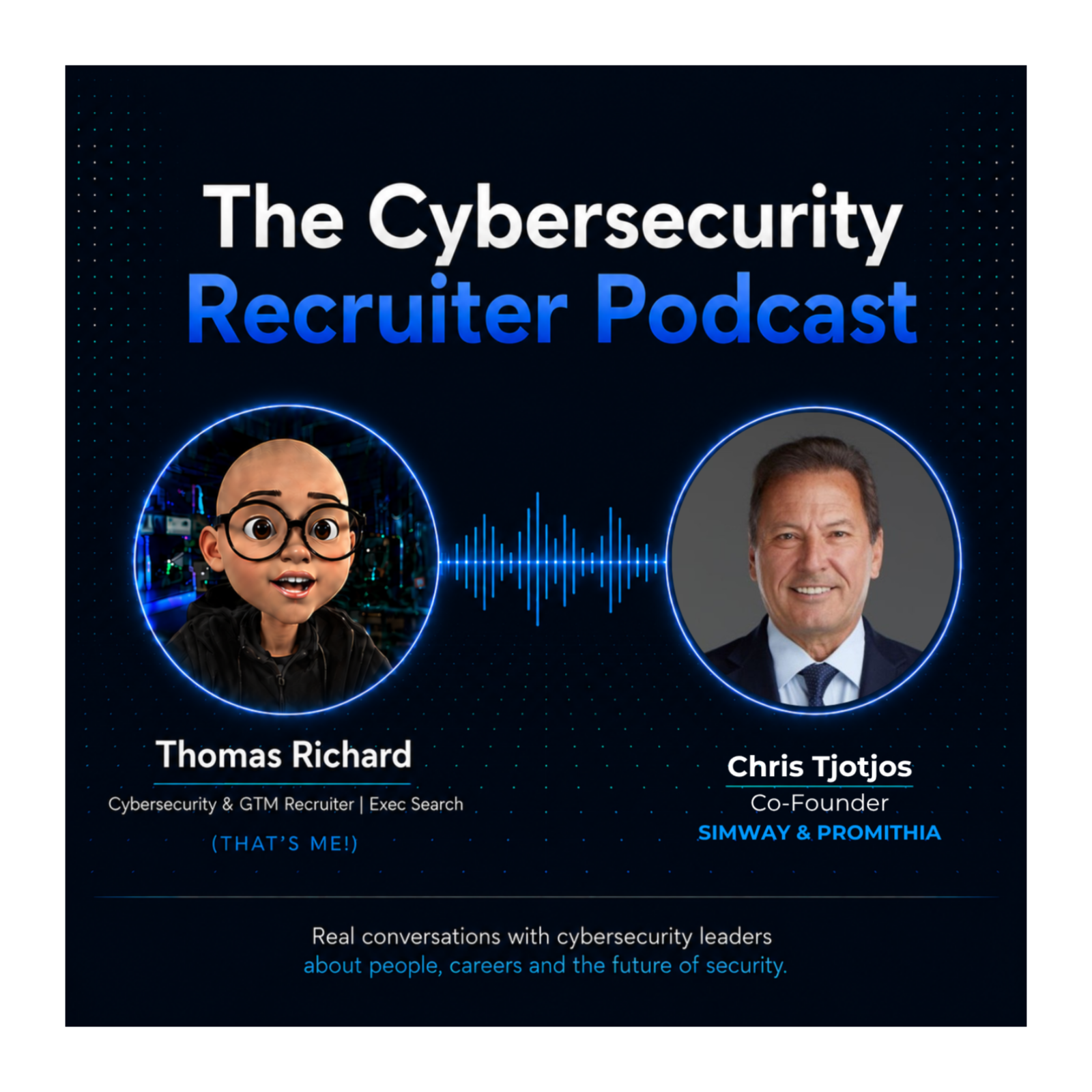 The Cybersecurity Recruiter talks to Chris Tjotjos, Co-Founder, Simvay & Promithia