
The Carey Nieuwhof Leadership Podcast · 2026-06-30 · 1h 23m
Key moments - from our scoring
Substance score
50 / 100
Five dimensions, 20 points each
Michael Bungay Stanier returns to discuss the mechanics of building networks without the transactional awkwardness that often accompanies professional relationship-building. Rather than pursuing high-status targets opportunistically, he advocates for hosting intimate gatherings - like Nick Gray's two-hour cocktail parties or small dinners - that mix weak and strong connections while establishing clear boundaries and shared values. Stanier emphasizes that effective networking requires persistence (asking 3-4 times before accepting rejection), willingness to lower your own status to elevate others, and authentic vulnerability. He references his own journey with The Coaching Habit (1.5M+ copies sold), his Great Work Interviews podcast predecessor, and Mike Michalowicz's strategy of hosting annual gatherings of million-copy authors. Key to his approach is the paradox of being both humble and confident - acknowledging your humanity and imperfections while believing in your value. For leaders building unconventional career paths, he emphasizes that community requires inconvenience and rejection, and that strategic networking isn't about collecting names but deepening relationships with people who genuinely elevate your thinking.
Use personal introductions from mutual connections, ask 3-4 times before accepting rejection, and don't assume silence means no. When direct access isn't available, host your own gathering of accessible people doing meaningful work - become the convener rather than the supplicant.
Set clear expectations (like a two-hour time limit), model generosity by giving more than you take, and create an environment where people feel elevated rather than extracted from. Vulnerability and authenticity also matter - showing your humanity reduces the perceived stakes.
He hosted Great Work Interviews (a podcast-predecessor) about meaningful work, actively knocked on doors with persistence, and genuinely lifted others up early in their careers - he even introduced Brené to Seth and blurbed her early books when she was less established.
Authentic community requires inconvenience, ongoing effort, and willingness to invest in people without guaranteed returns. Networking often feels transactional; community is about showing up repeatedly and genuinely elevating others, not collecting names or status.
When you display vulnerability and let people laugh at you (sharing awkward stories, admitting failures), you signal safety and reduce the power distance. This makes others feel their status is higher and they're more likely to engage authentically rather than perform for you.
Our reviewer’s read on each dimension, with quotes from the episode.
The episode contains a handful of genuinely useful ideas - the 'price of community is inconvenience' framing, Nick Gray's Two Hour Cocktail Party model, the AI-as-harsh-skeptical-editor tactic, and the 'colluded to create the system' coaching question - but they are buried under an 83-minute runtime packed with karaoke anecdotes, mutual book-promotion tangents, and the host narrating his own publishing journey at length. Insight-per-minute ratio is low.
how have you colluded to create the very system that you are currently complaining about
the price you pay for community is inconvenience
The bulk of the episode recycles content from a ten-year-old book (The Coaching Habit's seven questions) and standard frameworks (Jim Collins' bullets and cannonballs, word-of-mouth marketing 101). The AI-as-harsh-editor angle and the audiobook interstitials idea are fresh wrinkles, but they are minor compared to the volume of well-trodden material.
Jim Collins as really helpful metaphor that the way you figure out strategy is you fire bullets and then you fire a cannonball
he targeted communities that yap to each other. And you know, so the example I've heard him talk about is like, he targeted the CrossFit community
MBS is a legitimate practitioner - he self-published a 1.5-million-copy book, built a real company (Box of Crayons), and has genuine scar tissue from failed coaching practices and repeated publisher rejection. The episode leans heavily toward book promotion for the 10th anniversary edition, which dulls the practitioner signal, but his on-the-ground experience is real.
it's going to cost me 30 to $40,000 and I can generate that money. This is the best idea I've got
I built a coaching practice and I really didn't like it. And it was so surprising
There are concrete numbers scattered throughout - $30 - 40k self-publishing budget, 1.5M copies sold, 80k for the prior book, 'top 1,000 on Amazon' - and named third parties (Nick Gray, Mike Michalowicz, James Clear, CrossFit community targeting) add texture. However, many claims remain anecdotal and unverified, and the host's extended self-disclosures about his own book dilute the evidentiary density.
this book is going to cost me 30 to $40,000
it is typically always in the top 1,000 books on Amazon, which means that the algorithm supports it
Nieuwhof asks a few sharp questions - 'How do you measure a billion?' and 'Any advice for me as a question asker?' - and occasionally surfaces good follow-ups, but he consistently redirects conversation toward his own book, publishing deal, parenting experience, and AI grading anecdotes, consuming substantial airtime. There is no meaningful pushback on any claim the guest makes, and the opening singing segment is pure dead air.
How do you measure a billion? Is that just like, metaphorical ambitious, or do you actually have metrics behind it?
I said we were going to start the interview and a lot of the time here on the podcast, I'll say, oh, before we hit record, we talked about, well, you're going to hear some of the. Before we hit record. I just thought it was quirky
Computed from the transcript - who did the talking, and the words that came up most.
Networking feels fake because most people do it wrong. Michael Bungay Stanier has a better way. In this conversation, MBS breaks down how to connect without the cringe, the seven questions you need to ask to run 1:1s that actually matter, and build a career path nobody handed you. Plus: a deep dive into self-publishing and viral marketing. Show Notes AI and the Future Church - NEW BOOK! ️ Preaching Cheat Sheet The Art of Leadership Academy Watch on YouTube Follow @careynieuwhof ️
Transcribed and scored by The B2B Podcast Index.
Speaker A: The Art of Leadership Network. You know, it's one of those powerful coaching questions, which is how have you colluded to create the very system that you are currently complaining about.
Speaker B: Welcome to the Carrie Newhoff Leadership Podcast. I'm so glad you joined us today. I hope our time together helps you thrive in life and leadership. I hope you're enjoying the glory of summer wherever you are. And also, of course, you're in the southern hemisphere. Shout out. Australia, New Zealand. We're really glad that you're tuning in. And today I've got Michael Bungay. Stand your back. If you've ever wondered how to build a great network without the awkward. We go into a really interesting model about how to expand your network, get around the people who can help you grow as a leader, maybe even some influencers you admire, how to invite them into the room, how to have better one on one meetings. The seven questions you need to be asking, really, this goes to why you don't develop a team, why you don't develop, develop better leaders. And then building a path nobody else is walking in terms of career. So Michael and I go all over the place. In fact, this podcast has a very unusual, um, beginning. I said we were going to start the interview and a lot of the time here on the podcast, I'll say, oh, before we hit record, we talked about, well, you're going to hear some of the. Before we hit record. I just thought it was quirky and interesting and so, yeah, it starts with me singing. Anyway, uh, so we're just going to bring you behind the scenes. Michael and I have met in person a few times. We have a really good time and uh, I wanted to bring you a little bit behind the scenes as well. You're going to enjoy this conversation. Michael Bungay Stanier is best known for the Coaching Habit, his bestselling coaching book. It is the bestselling coaching book of this century, recognized as a classic. Sold 1.5 million copies and he self published it. We're going to get into that story. And he, um, is the founder of the Box of crayons company. And I'll tell you, uh, he's a really interesting, eclectic guy. It's his third time on the podcast. Think you're really gonna enjoy it. And now my conversation with Michael Bungay Stanier. Okay, here we go. Uh, um, there we are.
Speaker A: Wait, we're starting with singing?
Speaker B: I mean, yeah, yeah, we're gonna start singing.
Speaker A: It goes ugly fast.
Speaker B: Cause like, I, maybe we should leave that in.
Speaker A: I'm an enthusiasm I realize I did my M notes. I'm an enthusiastically char. Terrible singer. So I'm like,
Speaker B: I. I sing horribly and I sing a lot around the house, which is just, you know, pray for my wife.
Speaker A: It's so good. Yeah. Uh, our wives can probably commiserate about that together.
Speaker B: But I would never do karaoke. Would you do karaoke?
Speaker A: Oh, I've done karaoke, yeah. Oh, yeah, I've done karaoke. That's what you'd be good at. No, I was so bad. I was singing Ring of Fire. Johnny Cash, the karaoke guy, looked at me with kind of horror in his eyes and stepped up and started singing it with me in an attempt to get me approximately near the note that I was supposed to be hitting. Cause it was like, end of an evening, I'd been singing lustily and enthusiastically with all the things. So you kind of like lost my voice and couldn't quite hear myself. So I was all over the place. Yeah. I have scarred experienced karaoke goers.
Speaker B: Uh, that's an impressive start. I think we've started the podcast. I think we're just going to start with singing poorly because I always say, hey, before we started recording. Well, now we're just going to share, uh, the whole B roll, all B
Speaker A: roll, all the time, with Carrie and Michael.
Speaker B: Well, I am glad you're back. I am too. You've hit a milestone. Ten years since you released the Coaching Habit, and it's been quite the viral sensation. I mean, you sold a lot of copies. How many copies to date? And it was self published. That's incredible.
Speaker A: Yeah. I'm not entirely sure. Cause I've slightly lost track and I'm not. And at a certain point it's like I don't even need to keep counting, but it's probably around 10. More than 10. Um, good. Probably about a million and a half copies.
Speaker B: Um, it's incredible.
Speaker A: It is incredible. I mean, honestly, Carrie, I wish I knew how I did it because I've written books since then that have not sold not even close to 10% of that number. So it really was a combination of a good book at the right time with a little sprinkling of fairy dust to make it, um, turn into a bit of a phenomenon.
Speaker B: Yeah, yeah. And it opened up a lot of doors for you too. You met a lot of people. Had you met Brene before that? Or Seth Godin or Ramit or any of that? Had you met those folks before?
Speaker A: I had, yeah. All three of those people. I had because, um, one of the, um, assets or kind of ways of showing up in the world I have is I'm quite good at knocking on doors and inviting people into something. There's a saying I've heard recently that kind of fits with a lot of things I've been doing, which is nobody likes to be the first person to say hello, but everybody loves to be greeted. Um, and, um, before the books, I ran something that these days would be called a podcast. But it was happening before the term podcast had been invented. It was called the Great Work Interviews. And I was just talking to people about work that had impact and meaning. So, um, you know Brene, I kind of knew Brene before she was, uh, you know, canonized.
Speaker B: Canonized. That's what happened. She is canonized.
Speaker A: I actually introduced Brene to Seth. I mean, just to give you a sense of how things have shifted, I actually blurbed one of Brene's early books because she thought I was significant enough and she was not significant enough. These days she can kind of get popes and kings and prime ministers to blur her books. But in the good old days, she was, uh, scraping the barrel with me.
Speaker B: So that's interesting. How do you do that? How do you knock on doors? That is an FAQ from my audience who would love to meet some of the guests on this podcast. And obviously you've done that really well. You're very easy to talk to. I think that's one of the reasons I wanted to leave that weird intro in was I'm like, you and I have had, uh, we've met at least once, twice in person, I think had a really good time doing it. Your third time on the podcast, you're just a very relatable, easy to connect with person.
Speaker A: Well, there's a couple of questions there. In terms of connecting with people, um, uh, honestly, a key part of it is persistence and, um, a willingness to not assume that the first time you don't hear anything back from them, that they're actually saying no. Um, I tend to go, look, I'm going to ask, I'm going to ask three times, maybe four times at a certain point, I will bow out. Now, I've been doing it for 25 or 30 years. It feels slightly different now when, you know, AI can generate spam outreach and we've all had those emails from somebody pitching something going, hey, would it be you? I prepared a five minute video for you. Would it be worth 15 minutes? Kind of that sort of spiel and help how that drives you nuts. So the root in always shifts, but a degree of just kind of a, ah, willingness to not take it personally when nothing happens, um, is a key part of it. Um, then in terms of being, uh, easy to talk to. Thank you for saying that. I suspect a good deal of it is. Well, here's how I think about it. Here's the neuroscience of it. I know people are more engaged if I have a way of lifting them up. Edgar Schein and his son Peter Schein, we call them, kind of, uh, one upping them. And often the best way to make people feel more important, give them more status, give them more rank. For me, a good way of doing that is to lower my own rank because I come with a lot of status kind of built in. Like I'm a, uh, straight white guy. I'm now old. I'm, um, a best selling author. I'm a Rhodes scholar, I'm a blah, blah, blah, blah, blah. I've got a lot of status and rank to give away and I'm very happy to do that. Which means that I'm happy for people to laugh at me early on. In fact, I like it when people introduce me on a keynote speech. Um, I've got a little blurb that people read out and it will almost always include. Michael left high school being sued by. No, he was banned from his high school graduation for the balloon incident. He left law school being sued by one of his professors for defamation and on stage in law school appeared in something called synchronized nude male modeling. And like, I want people to go, huh? Because I want them to laugh and see me as human, not as a collection of accolades. And I won the bronze medal in the under 12 backstroke swimming competition, which is sometimes what speaker introductions can feel like. So it's a real. The paradox is I am humble and confident. I'm humble in that I've really got my feet on the ground and I really know just what a complicated, messed up the good, the bad and the ugliness I've got inside of me, all of that. And I've got a fundamental belief that the phrase I use is I'm awesome and I'm doing great and both of those.
Speaker B: That's how you sign off every email. I love it.
Speaker A: Yeah. And these things coexist in a kind of delightful tension that allows me to be playful and show up and be delighted to be talking to you.
Speaker B: I should clarify that your email signature is not I am awesome and I'm doing great. It's you are awesome and you're doing great. Yeah, that's a very different vibe.
Speaker A: Although it's like, it's interesting. Maybe I'll switch it around. I'm awesome. I'm doing great. I'm probably better than you are. Yeah, yeah.
Speaker B: Leaders want to be.
Speaker A: Yeah, I think that's right. I think that's right. They're like, let me prove that I'm better and more important than you, because you would like that. And I'm like, no. People want to be seen and heard and encouraged. That's just a foundational truth. And one of the most powerful ways of doing that is by raising them up. And one of the ways you raise them up is you play with your own status, because if your status is lower, their status is higher.
Speaker B: So I'm sure that there are still people you want to meet today that you haven't met. Kings, prime ministers, authors, that kind of thing. When you're in the age of AI, which is a really good point, because you can learn a lot. And that also means the PR firms and the assistants are being bombarded with 5x the stuff, um, they used to be bombarded by. What's your current approach? How do you try to open a door that might be closed to you?
Speaker A: Well, it is often, um, via, uh, people. It's, uh, one of the benefits of just getting older and being around for a while is I know people, and I can actually ask them, hey, would you mind making an introduction, too? But that often doesn't work. I mean, there's a podcast, I would
Speaker B: love to know you've done that for me. And it didn't work out, but they were very gracious.
Speaker A: Right. Like, I tried to introduce you to Brene, and, uh, see if we could make something happen there. And, um, you know, they got back to you, so that's lovely. Um, I've been trying to get on Rich Roll's podcast for, like, three years, and I've had at least four people kind of go, hey, can I introduce you to. And nothing's happened of it. And so some of it is just, um, you know, you just kind of suck it up.
Speaker B: Yeah, no. And, you know, I've had more people do that lately. Texts from friends. Hey, have you seen so and so's book? Have you seen so and so's book? And, yeah, I mean, I have to say I'm a bit guilty of not always opening. Well, you can't open the store. I mean, I don't know how many requests we get. My team handles most of it. But, uh, yeah, um, maybe one in a hundred make it through. Maybe.
Speaker A: And I'm similar like, you Know, uh,
Speaker B: uh,
Speaker A: there's this way that there's a bunch of people who look at me and go, I'd love to have Michael blurb my book. So I get a pretty consistent flow of inquiries around that. And to a lot of them, I'm like, I'm sorry, I just can't, because I'm full. Some of them, I'm like, send it to me, and if it's a hell yes, I will write a blurb. But it's often not a hell yes. So I'll look at it, but I may not write it. Um, and of course, I'm now looking at other people who are like, kings and queens and prime ministers and whatever else going, maybe they could blurb my book. Um, so we're all after that. There's a higher level. There's an inner circle that I'm not yet part of. Um, and, uh, I feel the tug of that a little bit, but I'm trying to realize that, uh, well, this is a different topic, really. But actually, the thing I'm trying to do now is really give time and love and attention to, uh, the people who I really love, um, rather than seeking to add another name to my collection of people I've talked to.
Speaker B: Isn't that interesting? Yeah, I would say. It's funny. I was just lining up endorsers for my new book, um, today, and I thought, wow. I remember a couple of books ago, it was like, Reaching for the Stars. And now there's a couple of asks that might take, uh, an introduction or, um, hey, do you have the email of. Most of them are just good friends at this point where you've spent enough time with them, you got enough reps with them, that it doesn't feel like a heavy lift or an ask.
Speaker A: I'll tell you something that I admire from my friend Mike Michalowicz. Do you know Mike at all? Have you come across.
Speaker B: I know. Um, what's his book? I know the name. It's on Profit First.
Speaker A: Yeah. Prophet First. The, uh, Tarot Principle. He's just got a new one out called, I think, the Money Habit. He is a lovely man.
Speaker B: I should have him on at some point. That'd be great.
Speaker A: Well, he specializes in people running small teams, uh, you know, and on the private side, it's kind of like up to about a million doll and really trying to systematize that so that you pay yourself first and that your business thrives. He, for many years, has hosted. He's like, I want to get in the room with big name Authors. That's what I want. And so he worked his network and for the last probably five years, um, he has hosted an annual gathering of people who have sold more than a million books. Um, and I've been to the last two or three of them and it is fantastic. You know, you show up and there's Don Miller and there's James Clear, and then there's all these people who I'm like, oh, these are all impressive people who've all sold books. Turns out most of them don't know how they sold their books either. We're all like, delighted and surprised and
Speaker B: we're like, uh, I had that conversation with James Clear on this podcast. He doesn't know how he sold 25 million books or whatever it is now.
Speaker A: Yeah, yeah. I mean, probably of all the people who know how he sold books, James is probably the person who actually knows how he did it because he's very disciplined and strategic. But most of us are just got lucky.
Speaker B: Um, well, he says he can explain the first. I forget what the number was. Million. He cannot explain 25 or 30 million.
Speaker A: I think that is true. I feel the same scaled down about my book, which is like, I can explain probably the first 50,000, but after that it all is nuts. Um, but what Mike does is he's like, I'm going to be the host that brings the people I want to be hanging out with. Um, and he's very good at it and he made friends and he kind of connected with the right people around that. So for the folks listening, they're like, I'd love to get these people in. It's like, how could you host, um, a gathering of 10 people who would be extraordinary for you? Um, you know, and sometimes it's, uh, oh, here's a resource that might be useful. Nick Gray wrote a book called the Two Hour Cocktail Party. Have you come across this, Kerry?
Speaker B: No, no, that's new to me.
Speaker A: Yeah, I love it. So Nick Gray lives in Brooklyn or New York, I think, and he's like, this is a great way to get to know people fast. Host, um, a cocktail party. Now most people are, if you're hosting it, feel pretty intimidated by that. Um, and most people, if they're like, getting invited to a cocktail party, they're like, ah, I kind of want to go, but man, that could be terrible. So the promise is it's only two hours. You host it on a Tuesday or a Wednesday when most people have nothing on you guarantee that you will kick them out at 9 o'. Clock, start at 7 done at 9. So everyone's like, oh, that's great, because I don't want to stay up late on a weeknight. I need to go to bed. Um, it involves some light facilitation. You get a way of introducing each other and two or three times where you bring a group together and kind of mix them around a bit so you don't get stuck with the same person. You got lots of water and maybe a bottle of wine or two and some grapes. It's low key and it is a fantastic way to go. I'm going to host, I'm going to gather. I'm going to start making relationships with people I don't quite know yet. Um, I've done it two or three times and it's been a ton of fun.
Speaker B: This episode is brought to you by Ministry Brands. So if you lead a church, one of the biggest questions right now is, how is giving changing? And what should we be paying attention to heading into the second part of 2026? And that's why I want to tell you about the new 2026 annual church giving Report from Ministry Brands. It's a free report and it breaks down the latest trends in church generosity, digital giving, donor behavior, and financial engagement, all designed to help church leaders make smarter decisions in a changing ministry landscape. So whether you're a lead pastor, executive pastor, finance leader, or part of a ministry team, this report offers real practical insights backed by actual church data. You can download your free copy today@ MinistryBrands.com Carrie. That's MinistryBrands.com Carrie. And there must be something. I mean, you just got back. I think I saw you post about that from Michael's, uh, gathering of authors. What does he do? Well, what are the qualities and characteristics that make you and James Clear and Donald Miller, who have no shortage of invitations in front of them. Say yes to that one. What do you think is the magnet there?
Speaker A: Well, I think, uh, to a degree. It's like, oh, my goodness, look at these other people. So almost everybody there has a slight imposter syndrome of, like, I'm not entirely sure how I got invited here, but I will take it. Um, but one of the things that, um, is really clear is this is a generous group where we are attempting to give more than we take. Um, and Mike, role models that. And sets that expectation really early on. Um, Don Miller, who wrote Storybrand 2.0 and some other, um, books, he is a fantastic host and he and his wife are very committed to being great hosts. So we also get the kind of the bonus of hanging out in his fancy Nashville pad state. So it's a combination of these things, I think.
Speaker B: Now those are good notes. And we had, uh, Bill Gurley on recently. Uh, I don't know that you know Bill or know us.
Speaker A: I think I do. No.
Speaker B: Yeah. Silicon Valley investor. He said, the other thing you can do is if those doors are closed to you, just convene the brightest people that you actually have access to. If you can't get Don Miller, you probably know someone who sold a thousand books or 100,000 books or whatever, leads a church that's a little bit bigger than your church, invite them around. And he talks about peer groups. And then what happens, particularly if you're young, is often those circles, people do incredible things, and all of a sudden you've been meeting for 15 years, but now they're leading something much more significant than when you started. And I thought that was really good advice.
Speaker A: That is great. I mean, I'm amazed that I'm now of the age where all my spotty, awkward, terrible teenage friends from high school are all CEOs and venture capitalists and kind of doing these things. And I'm like, I have photos of you from high school that would destroy your very impressive corporate career if I chose to use them.
Speaker B: Um, it's so true.
Speaker A: I mean, just to. I think there's something really interesting about inviting, um, weak, uh, connections into your life. Not just strong connections. So, like, I'm hosting a dinner tonight. Um, my friend Dan Pontefract is in town, and Dan is a good friend of mine, and he's got a new book out. He's speaking it locally about it, uh, at the moment. The other three people are coming. I don't know. I've never met them before, but I've been introduced to them and I've kind of known of them. And, um, um, I said, come and have dinner with me, my friend Dan, and we'll find a way of connecting. And so I don't yet know whether this will be a successful dinner party, um, or a, ah, gathering. But it's part of me mixing it up and continuing trying to bring new threads into the, um. Whatever my metaphor is. Bringing new kind of energy into the group to kind of go, how does this shake things up? Maybe I'll find somebody who is more than just a good occasional dinner person, but could be much more than that.
Speaker B: Yeah, so some of that is exposure and reps. It's like you didn't bank it all on this one retreat. It's like you're hosting a, uh, two hour cocktail party, a dinner for someone you do know. You do that 10 or 12, well, let's say half a dozen times in the next 12 months, you're going to have a very different relational circle than you have right now.
Speaker A: And I'll leave this by just saying a quote that I heard from somebody and it said, the price, the price you pay for community is inconvenience. And I love that because it actually says, this takes some work. Everybody wants to be part of a community. Not everybody's willing to do the work to be part of a community. If you want to build community and connection, it does take some work. And it takes some rejection and it takes some awkward moments where you're like, I wish I wasn't trapped in a conversation with this person because this is not my person. Um, but, uh, you're playing for the bigger we.
Speaker B: Yeah, um, most of the people listening to this are not in a conventional job, even if they're in ministry, working at a church. They're either launching something, reinventing a church. Um, you always feel like you're making it up as you go along. And that's why I love, uh, connecting with people like you, Michael, because you, you didn't really have a mold, you create a box of crayons. You carved out a unique career, uh, path for yourself. When you look back on it and you can't reinvent the last 20 or 25 years. It's not 1998 anymore, it's not 2012 anymore. But there were probably inflection points for you along the way where stuff really started to click and it became a living rather than an experiment, and, uh, successful and thriving rather than struggling along and probably going to have to shut the doors. Looking back on it now from where you sit, what were some of those inflection points for you and what contributed to those inflection points that made it a viable career for you?
Speaker A: It's a great question. It's immediately bringing up Jim Collins as really helpful metaphor that the way you figure out strategy is you fire bullets and then you fire a cannonball. Yes. And what that's meant to teach is, um, firing bullets is the small experiments that you run to try and figure stuff out. You might have some approximate idea of what you're going for, but you need to then kind of test your ideas with reality and see what works and what doesn't work. And then when you figure out what the target is, you kind of fire the cannonball. Uh, you commit. And Jim Collins would say that most of us don't fire enough bullets and most of us don't fire the cannonball when we've found the target.
Speaker B: True.
Speaker A: Um, and so, uh, I wish I could tell you the story that I thoughtfully and deliberately fired bullets and then fired cannonballs. It's more accidentally fired than fired cannonballs, but I've done some of that. One of the inflection points was, um. Uh. Well, the inflection point I had no control over was, um, having a job lined up, um, and I was flying from Boston to Toronto, uh, to start this new job. Never been to Toronto before, but I'd lined up a job. My wife and I decided to go there. Our flight out of Boston was on 9 11, um, which meant that by the time we did finally get to Toronto some days later, the job I had lined up had vanished. Which kind of kick started me becoming an entrepreneur. So that was an inflection point, which was just lucky in some ways. I mean, terrible in the bigger picture thing. But for me, uh, it shifted the universe. That forced me to go out on my own. One of the surprises, um, was I was absolutely clear that the work I would do as an independent, freelancing sort of person would be coaching people because I'd actually been, you know, I trained as a crisis counselor when I was 18. I'd been in this world. I was pretty good at it. I was like, it was such a natural next step. But in some ways I felt I'd been training for it my whole life. And I was like, this is great. Finally I get to do this. And I built a coaching practice and I really didn't like it. And it was so surprising. Um, and, and I think one of the tipping points, Kerry was realizing quickly that this wasn't what I was, um, this is not the thing I was looking for. This wasn't the Cannonball. This is a bullet. And actually needing to shut down my coaching practice. So there's something about, um, setting things up so that you can try stuff out and then move on from it again, it's about firing that bullet, um, even when it is deeply disappointing, as it was for me because I was like, I was so sure I was going to be a great coach.
Speaker B: Um, well, this is ironic because I didn't realize that you were at first a, ah, coach. Shut it down. Because the thing you are best known for is your book, the Coaching Habit.
Speaker A: Yeah.
Speaker B: So it was a bit of a pivot then, to move from I am a coach to I'm going to teach People how to coach or how did that come. Come about?
Speaker A: Yeah, it's like, um, uh, I am above and beyond all else, a facilitator and a teacher. And it turns out that writing books is one of the places that I teach well in because I know how. I'm a decent writer and I've got strong opinions on how to write books that resonate. That's slightly misguided at times because there's some books I've written that hasn't resonated with anybody, apparently. Um, but some of them have, um. But I'm much better as a teacher. But the other pivoting thing for me, Kerry, as you say, this is very early on. Once I started doing this work, um, I found a kind of a north star, a mission, a vision for me to direct my work. And I still hold that today. And it is to infect a billion people with the possibility virus. Now, possibly virus as a metaphor was far better pre Covid rather than post Covid. It is a complicated thing.
Speaker B: Far enough on the other side, we get it.
Speaker A: I don't know. There's a lot of virus, uh, uh, whatever. Um, but what that holds for me is, uh, the shift I'm trying to make in the world is to give people the courage, the awareness to see that they have choices and the courage to make the braver choice. M. That's this kind of foundational piece of work that I'm doing because for me, that's enabling people to claim agency and their humanity. Um, and the billion people means that I have to find projects that have scale. And so the virus means I need to put stuff out in the world that spreads without me. And so this is a really powerful tool for me because it keeps making me ask what's the biggest, boldest thing I can do? And how do I not make myself the hero of that necessarily? And one of the things about coaching is it doesn't scale very well. At my best, I can coach 20 people, and maybe they're influencing the 10 people around them, but that's not a lot of people. That's not going to get me to a billion people anytime fast. So coming up with that as my kind of north, uh, star was a really significant moment. It continues to be for me.
Speaker B: How do you measure a billion? Is that just like, metaphorical ambitious, or do you actually have metrics behind it?
Speaker A: No, it's classic Michael jazz hands metaphor thing. Uh, and I actually think if you're setting a mission, it shouldn't be. It's typically not measurable. Like you want stuff to be measurable lower down on that kind of scale. But for, uh, a mission, you want something that just feels big enough to go, man, I'm called forth on this. I'm never going to touch a billion people, but I'm going to work really hard to try and touch a billion people. Those are both true.
Speaker B: So I want to pick up on coaching and I want to pick up on the coaching Habit. So self publishing is a lot easier today and a lot more options today than 10 years ago, 2016, when you released the first edition of the Coaching Habit. Why did you decide to go self publishing and what did you learn in the process?
Speaker A: Yeah, when you said I decided to go self publishing.
Speaker B: Okay. I was being generous.
Speaker A: It seems like it was more decided for me. Um, I published with a New York publisher called Workman, uh, an earlier book of mine called Do More Great Work, I remember. And, uh, I came to them with my next idea or book, which is something around coaching. And they're like, great, go away and write it. So I wrote it, I went, ta da, here it is, here's the idea. And they're like, ah, we don't like that. Why don't you go away and give it another shot? I'm like, oh, okay. So I went away and we went through this cycle six or seven times where I would come up with a new version of the book and a new way of writing it and I'd write a chunk of it. Um, and they kept turning me down. And finally I said, look, I'm going to. I'm really clear. It actually was helpful because I got really clear on what I thought this book would be. And I'm like, all right, this is it. No more faffing about here. It's like, it's either this or I go somewhere else. Um, it's either a yes or a no at this stage. Not go away and give it another shot. And they went, no.
Speaker C: Wow.
Speaker A: And I was gutted. I was so surprised because my previous book had sold, I think 80,000 copies with them.
Speaker B: Um, yeah, that's decent. That's like, you get another book deal level.
Speaker A: That's more than decent. That's a solid B list book. So I was like. And I'd been teaching this for five years, so I knew there was an audience for it, but they.
Speaker B: Yeah, you'd workshopped it. Yeah.
Speaker A: Um, anyway, so I was, you know, I went away and licked my wounds for a while and then went, look, I really think there's something in this book. And so I decided to self publish it. Um, but I made a really clear commitment that if I was going to self publish it, I was going to do it as a professional. Like, I needed this book to be indistinguishable from a book that, uh, a traditional publisher had published because there's all sorts of ways that you can sell yourself a bit short in the self publishing process.
Speaker B: Oh, you used to be able and still sometimes can tell clearly. You just look at it, it's like, okay, person did it themselves.
Speaker A: Um, so I mean the way it worked is I, you know, I found an editor, I found a development editor, I found a designer, I found a copy editor and we're doing all of that work. The designer Peter, then introduced me to the company I work with now, which is Page two, who are a, uh, Vancouver based hybrid publisher. And I published, um, the last five or six books with them. And I'm a big fan of the way that they work. But it was another one of those moments where I'm like, I am willing to make a bet on this. And part of it, Kerry, is I am m pretty good at looking at the risks involved and understanding what would happen if it failed utterly.
Speaker B: Yeah, it goes to zero.
Speaker A: Uh-huh. Yeah. And it's like, okay, so what's at risk? What's at risk is time and money, uh, and opportunity cost and physical health. These are all the kind of things that you're weighing up when you're thinking about what's at risk. And with this book, I'm like, okay, this book is going to cost me 30 to $40,000 and I can generate that money. I've got that money to spend. This is the best idea I've got for, um, uh, creating something in the world. Uh, uh, I think this is the best use of my time. Um, I'm not at physical danger by doing this. I don't have anything that I would put before this in terms of opportunity cost. So even if I end up with 10,000 books that I'll be giving to my parents for Christmas presents for the rest of their lives, I'm up for this adventure because I can also see the upside, which is it might help me sell a course or two, um, it might help raise my profile as a speaker. Uh, I mean, I never dreamed it would become a million and a half copy selling book. Uh, but I was like, I can see the upside and downside and I'm willing to commit to that. Whereas I would notice that a lot of people feel, um, intuitively risk averse. And I think it's really worth sitting with the question, what's truly at risk here? Ah. Um, and am I able to tolerate that risk and that ambiguity to commit to a project that is big and a bit scary, but perhaps, um, worth doing?
Speaker B: This episode is brought to you by Church Salary. So no surprise. Costs are rising. And as a church leader, you're under pressure. So how do you ensure you're actually paying your team fairly? That's why I've invited Aaron Hill, the director of Church Salary, to tell us about how their new platform can help. Aaron?
Speaker C: Thanks, Kerry. Uh, we've built a suite of analysis tools to help churches understand how much their employees should be paid. Built on the largest and by extension the most accurate church specific database in the world.
Speaker B: So I'm excited about that because I spent too many years guessing when I was a lead pastor, um, why can't leaders rely on some of the free guides you can find online? Because there's a lot of them these days.
Speaker C: Yeah, I get that question a lot. And the short answer is you get what you pay for. So at Church Salary, we don't cut corners. We're not interested in delivering some of these catch all averages because every church is different. And most of the free guides that you can get online don't really account for all the key variables that make your church unique. The most important one being your church budget. And so at Church Salary, because we understand how pay works, our platform can turn trusted church compensation data into personalized recommendations so leaders can make fair, informed decisions for their teams.
Speaker B: Well, Aaron, thanks so much for that. I, uh, appreciate it. And if you as a leader need practical tools and trusted data built for, for actual real churches, head to churchsalary.com. carrie, I'd love you to use the particular link to the show. And so that is churchsalary.com C A R E Y Looking back on it, it's interesting because we were chatting before we hit record, my book, before we started singing, um, about my new book. And it was interesting. My publisher, who I've loved working with, had a writer first refusal. I pitched it to them and they're like, do you have any other ideas? I'm like, no, I'm going to write this book on AI like anything, Anything. Do you have anything else? Like any other. I'm like, no, I'm going to do this book. I have other ideas, but I got to get this out. This is a mission. And they're like, AI books don't sell. I'm like, okay, that's Fine. And I wanted to experiment with self publishing, so, uh, I immediately signed with somebody I'd been talking to on the side. And we're working with Forefront right now, and it's a hybrid publisher, like Page Two, and they work with Simon and Schuster. So another major New York house. And I could not be more excited about this, went through all the calculations you did. Here's how much we're investing, here's what we could lose, et cetera, et cetera. But, um, you're right, it is a bit of a bet on yourself.
Speaker A: It's also you going, I know my audience and you don't. Also, I know my business and my mission and my purpose, and you don't.
Speaker B: I think I know what my audience needs or will need very soon. And this book has got to get in their hands. I just. I'm committed to it.
Speaker A: And the, uh, challenge with a traditional publisher is when you pitch them a book, what they see is a book.
Speaker B: That's right.
Speaker A: That's as far as their imagination goes. They're like, is it a book? Can we sell copies of your book? Ah. Whereas if you're Carrie, you're going, this is a piece of thought leadership that will support the pastors and the people I serve in my community. Um, this is a book that I can use to give away for free. There's other ways I can monetize around that. So I don't need to necessarily sell every book. What I'm doing is, um, in this, using my best skills as an act of service for the people who I've really committed to, to say, these are the people who I serve in this world. Um, and it just becomes an easy decision, which is like, it's all right. I don't mind. Say yes, say no. This book is getting published. I'm just giving you a choice to get it published with you if you'd like.
Speaker B: Um, no, that was basically it. And you're exactly right. It's funny because I ran into that, particularly with at yout Best, my last book. We saw it as my team grew and this company became. You know, it's still a hobby. I love it, but, like, less of a hobby and more of a thing. And I had a team around me. We see the book as a piece of a much bigger ecosystem in which we can serve leaders. The book is kind of the business card. And then we can give some free resources. We have some paid resources, um, if you will.
Speaker A: Speaking.
Speaker B: It does. So, like, I just gave the at yout Best talk, um, Monday again. And I will probably be giving versions of that talk for the next 10, 15 years of my life. And I hope to be talking about AI for years and years and years to come. Obviously, it's going to change. I don't think the human and existential issues are going to change much, which is what the book is about. But you're right, if you're a publisher, all you see is the book. You don't see the ecosystem. Yeah. So looking back on it now, why do you think workmen said no? What do you think they were thinking? Or do you know? Are you still a bit mystified?
Speaker A: Um, I don't know. I haven't thought about it too much. I'm just like. The most generous way of saying is that this probably doesn't fit with the direction we're taking the publishing company. Maybe we're moving away from a more business focus to a more general focus because they were never really expert at the more business focus, which is where the Coaching Habit originally got, uh, pitched. So, um, and the history is full of people who have done things like turn down the Beatles because guitar music is on its way out. That's the famous quote. So I just think if you're a publisher, you spend a bunch of time taking your best guess on stuff. And some you get right and some you get wrong. Um, same as if you're a venture capitalist. You're like, yeah, ah, I make 10 bets on one of them comes good in a really big way. Two of them break even. Seven of them are deeply disappointing. I'm just trying to play the odds. So they just, they just took a, um, they just played the odds and they made a poor decision. But yeah.
Speaker B: So back to the James Clear question. Can probably figure out the first million? Not sure about the next 25 million. You could probably figure out the first 50,000. This is the new 10th anniversary edition to the Coaching Habit, which is beautiful, by the way. Really, really beautiful. But you could probably figure out the first 50,000 because you had sold 80,000 books prior to that you'd done it. But you can't explain the 1.5 million. Do you want to walk us through that a little bit? I mean, there are so many stories like that where books were self published and then they just took off.
Speaker A: Look, most books arrive in some sort of ta da moment. Um, and, uh, then they pretty much quickly disappear down the charts and vanish without trace. It's like, ah, um, and so in some ways you're trying to escape gravity. Um, and we all know that metaphor around How Artemis II uses up 90% of its fuel load in the first mile because it's just trying to get outside gravity. But once it's up in orbit, um, it's a much more efficient thing. And with a book, your goal is to try and get up into orbit, um, because it just takes much less effort to stay there once you get there. Because my Coaching Habit book is typically always in the top 1,000 books on Amazon, which means that the algorithm supports it and encourages it. And the recommendations.
Speaker B: And so many people have read it, they're like, what? You haven't read the Coaching Habit?
Speaker A: Yeah, exactly. And that's a slightly different thing. That's the power of word of mouth. And um, if I was to give you one piece of thought around your new book, Kerry, it's how do you build word of mouth into this book? Because actually what James Clear did that was brilliant is he looked at communities and he said, which communities would number one, perhaps be interested in this book? Number two, talk a lot. And he targeted communities that yap to each other. And you know, so the example I've heard him talk about is like, he targeted the CrossFit community because the CrossFit community are really connected and if they find something that they love, they tell everybody about it.
Speaker B: And they're into habits. My goodness.
Speaker A: Exactly. But they're also into energy bars. So they're like, here's the energy bar we're all loving at the moment. And they're also into kind of like, I don't know, Reebok shoes. Here's the Reebok shoes at the moment. So there is a way of. And what's true about the Coaching habit and what keeps it alive is that it is recommended by people to people. Uh, it's recommended by managers to the people that they lead and it's recommended by coaches to the people that uh, they coach. And it just generates a lot of buzz around that. And for this 10 year ah, edition, one of the things we're trying to do is to find a new audience. And um, the audience we're trying to become more interested in this book is parents of young people. So people 10 to 25 or thereabouts. Because anecdotally I know this book is really helpful because I get emails from parents all the time going, I just had a really great conversation with my teenager for the first time ever because actually I stayed curious a little bit longer and I rushed to action and advice, giving a little bit more slowly, which is a kind of foundational behavior change that's part of the book. And so I'm sitting with my team at the moment and makes it sound more grandiose than it is. My niece is interning with me at the moment and so she is working on the strategy to go. How does this book become a word of mouth sensation amongst parents of young people.
Speaker C: People.
Speaker A: And, um, that's our goal. It's not to sell a certain number of copies, it's not to be a bestseller, but it is to become a word of mouth sensation. And so we're working to kind of think about who do we target and how do we make this mentionable and how do we make it pass honorable, uh, in that world. And so as you think about your book, I'd be really curious to know above and beyond all the usual stuff you might do for marketing, how will this be a book that one pastor calls up another pastor and goes, you gotta read this book. This is actually, this is a book you need to understand because this will change the way that you lead your church forever.
Speaker B: So, uh, I don't want to say too much right now because it's very much in the works and the ink is not dry, but I'm convening something very similar to what Mike, how do you pronounce his last name?
Speaker A: Michaelwicz.
Speaker B: Michaelowitz.
Speaker A: Yeah.
Speaker B: I'm going to call him John Malkovich. Mike Michelowicz. I'm literally in the process of convening something very similar to that. Not to sell books, but to get the issues on the radar. Um, some key influencers and we're going to have, uh, some time together, I'm hoping, and we're just going to discuss it. And I'm like, I'm here to serve you. I'm here to serve your church. I'm here to serve your organization. And I know if I get them thinking about it, talking about it, that's going to get into all kinds of different tribes. Also in the people endorsing the book. This morning I put the endorser list together, uh, and we could get. We're so blessed. I could get a lot of really great people to endorse the book. But I'm thinking about the communities that they have access to that their name has access to that. I don't. That's not my tribe. But they are connected with the tribe and they are connected with me. And so I'm thinking about that. It's sort of like with Tim Ferriss on the four hour work week when he launched that. He's famously said very much like James Clear. And I think James might have learned that off Tim was it was Silicon Valley males who are really into time management and wanted to do a side hustle so they could escape, uh, the drudgery of the texting because he was living in Silicon Valley at the time. And then they told their co workers and then women picked up on it and then it spread into other tech communities and then it became multiple million. Bestselling book for Tim Ferriss and really a life changer for him.
Speaker A: Here's a thought for you. Um, and I've done this with the audiobook for the Coaching habit, the ten year anniversary. Um, who are these influencers that you're gathering or who kind of access to different tribes that you might like to be banging on their doors and how can you make them interstitials in your audiobook? M. So you know, you read the chapter and then you have a two to three minute interview. Ask of somebody who is picking up one of the questions that you're raising and having them reflect. Hey, for my people in this community, this is how we're thinking about this. This is the wisdom that I've got at the moment. So make them heroes of your audiobook. Um, because you know, there might be. Because a. You'll be able to clip it and use it on social media and all of that, but there's something you know, delightful to be able to say, look, it's featuring these different people and these different communities, um, and they may be more inclined to kind of pass the word along.
Speaker B: Oh, that's. Those are really good ideas. I am taking notes. Michael. Thank you. Thank you.
Speaker A: Of course.
Speaker B: So I hope this gives people encouragement. What I heard there was rejection, you know, nos. We've talked about no's, we've talked about closed doors, about making yourself, you know, I'll knock three or four times and then I will go away eventually. I will rewrite this seven or eight times and then I will go away eventually. Um, but you know, the other thing I would say too to people who are thinking of self publishing, often if I get a first book or a self published book, it's like, oh, this could have used five more drafts. And the thing about the Coaching Habit is that process of rejection ultimately made I would assume a much better product. You knew much more of what it wasn't going to be by round eight than you would have if they just said yes to draft one. And away you went. You might have sold 30,000 copies. Right?
Speaker A: Like all the water is squeezed out of this book. It is A really, the structure of it is crystal clear just because it just went through so many iterations to get it right. So part of it's longevity is the fact that it's really lean. There's no kind of excess weight on it at all.
Speaker B: And I think when you're used to producing messages that are in a seven day timeframe, you don't have time for that kind of work. And moving from primarily preacher to author, I couldn't believe how much I enjoyed the editing process this time. That, uh, the third draft was way more fun than the first draft.
Speaker A: Yeah, first draft. I mean, this is a great insight for anybody thinking of writing is. Writing is often, even if you're half decent at it, like Carrie and I are, it can be a bit of a slog. Um, your first draft is generally a realization about how far away your manuscript is from what you thought your book would be. You're like, huh, it's a chasm. I mean, I knew it was going to be, um, um, uh, what they call it, a miserable first draft. But, um, I didn't know it was going to be this miserable. Um, but by the time you get to the third draft or the fifth draft, you start to realizing that great writing is great editing. And so if you embrace the editing and the kind of the compression of it and the working of it. Um, oh, and this is, ah, an aside. Have you read Annie lamotte's latest book?
Speaker B: Not her latest, no.
Speaker A: She wrote it with her husband, as she would say, her current husband. Um, and it's called something like how to Write well. And his essence is how do you write a good sentence? Because they're like the unit of elegance and beauty in a book or a sermon is actually a great sentence. And it's 36 rules on how to write a great sentence. It is a terrific read.
Speaker B: Putting it on my summer list out
Speaker A: in the last, uh, month or so, so it should be easy to find.
Speaker B: She's a treasure. Bird by bird.
Speaker A: Yeah, exactly. We all love Bird by bird.
Speaker B: Well, that's good. You know the other thing I was gonna say, do you have early readers? I am, uh, um, mean to my friends. Like, if you know me well, you're gonna get an early copy of my book and I'm, uh, gonna burden you with, will you please read this and give me feedback? I got so much valuable feedback in drafts one, two before I got to the third draft just from friends. There was one in particular who said, you know, gave me a long, long voice text. And it was like, I'm not sure this really works. It sounds like what you're trying to say is totally restructured the book.
Speaker A: Yeah, I have used early readers. I mean, I wrote a book called how to Work with Almost Anyone. Mhm. And I sent the first draft of that out to my friend Misha, who wrote back going, this is ludicrous. I don't even know what this book is about. It's terrible. And literally I blew up whatever I'd written for him and I saved one sentence of it and it turned into the seed for what the book would become.
Speaker B: Um, but that's a true friend.
Speaker A: Oh, yeah, it was fantastic. You need to hear that in a heartbreaking way. It was exactly what I was hoping to think. So, yeah, Finding trusted readers. Um, but I also am using AI as a harsh editor. I'm like, read this as a skeptical person who doesn't enjoy business books and self help books. Um, and tell me where this gets boring. Tell me where you want to give up. Tell me where the cliches are. Tell me where it's lazy. Um, and I don't have to believe everything it's saying. Um, but it is really useful to set up AI as my most daunting, most skeptical reader. Um, who will like, I'm looking to stop reading your book just as soon as I can. And it's like, tell me when you're going to give up so I can make it easier for you to keep going.
Speaker B: By the way, that is a great question. And I put that out to my early readers. When did you get bored? When did you lose interest? And I mean, I rewrote those first four or five chapters, uh, half a dozen times because if you've lost them by chapter three, you've lost the book and lost the plot. So that was really helpful. And AI super helpful. I didn't. Because it was a book on AI I didn't pull AI until the later drafts. I really wanted to go solo on this one at the beginning. Uh, but it was great. I pretended that, uh, and I taught it to. There's no grade inflation in this school. Um, I want you to give me a letter grade like it was a report card. And they're like, well, you're getting an 87. 88.
Speaker A: Okay.
Speaker B: Like, not bad. I'm like, I want in the 90s. And so we worked phrase by phrase, bit by bit to get it. I think my final grade was 93. Now when I was in university, I was real happy with a 93. It wasn't like grade inflation. Uh, my school Bell curve to a B. So I was like, okay, if I get a 93, that's great. I'll save 100 for heaven. But, uh, I was pretty pleased with that. So you can program AI not to be sycophantic.
Speaker A: Yeah. It's really helpful to understand, talking about books. As hard as it is to write a book. And it is hard. It's harder still, I think, to get people to buy a book, even though they're like, honestly, this is a year's worth of work. And my best thinking. And it's like $19.99. Um, but even if they buy a book, it's hard to get them to read the book. And it's really hard to get them to read to the end of a book. If you can get somebody to finish a book, that is a triumph. But to do that, you've really got to keep going. Where will they exit? Cause actually, they're just looking for an excuse to get into TikTok or Netflix or anything but read your book. So that discipline to say, I'm just gonna make this irresistible. So I've been thinking a lot about when I read popular fiction and the books that make me go, okay, it's 4:00am uh, and I really should have gone to sleep six hours ago. But I'm just gonna read one more chapter. Cause I can't wait to find out. I'm like, what do they do to make their books page turners? And how do I bring some of that discipline into the books that I write?
Speaker B: What are you learning on that front?
Speaker A: Short chapters, shorter chapters than you think. Um. Uh, and often, as you guess, ending in some version of a cliffhanger. Um, so it keeps me going, but the pace of reading is really determined by the length of chapters.
Speaker B: Yeah, I started with very short chapters and then ended up with slightly longer. They're not as long as they used to be, but Interesting. What makes people buy a book?
Speaker A: Well, I suspect it is, um, a key thing. And this comes back to what we were already talking about is, like, word of mouth. It's like, somebody says, you should buy this book, or let me buy this book for you.
Speaker B: Like you just did with Anna lamotte. I hadn't heard about her latest book.
Speaker A: Exactly.
Speaker B: Which I will know by.
Speaker A: Here we go. We're living the dream here, Kerry. Uh, so I think that's what we preach. That is it. Um, yeah, I'm sure.
Speaker B: Remarkable.
Speaker A: Yeah. I do think what makes people buy a book. And this is just marketing. Difficult marketing, but also marketing 101. Is going, does this book feel like it answers a problem for me? Particularly if you're writing kind of descriptive nonfiction like you and I do, which is like we're here to solve a problem in three seconds. You need a title that sort of says, I get what you're up against and this can help you with it.
Speaker B: Mhm.
Speaker A: So when you read the Coaching Habit, people go, oh yeah, coaching's good. And I need to make that into something every day. So there's an instant kind of aha with it. Uh, when you read my book how to Work with Almost Anyone, you know what the problem is. And this book says I can help you work with almost anyone. Um, so a really good title can make all the difference. That said, Atomic Habits, 25 million copies. I still don't really understand what the atomic means in that.
Speaker B: I did read that once because I didn't either. It's small and powerful, I think is James's ah, image in that? I don't know. Um, more and more I'm into plain language. Like the Coaching Habit. Yeah, what does that say? The Coaching Habit. Or I was showing you Ryan Leake's book earlier, who's been on how to Work with Complicated People. Wonder what that book's about.
Speaker A: Yeah, exactly. Oh, it's about how to work with complicated people. Everybody goes, I have complicated people and they're a nightmare to work with. I'd love to know how to work with those people, you know, and so that's a, that is a great.
Speaker B: I'm a stickler on chapter titles too. I want, uh, to make sure I'm not. What have you got here in the Coaching Habit? But for my book, you know, I pick up tables of content and it's like, you know, getting through. Oh yeah, you've done it. The awe question, the focus question, the foundation question, the lazy question, the strategic question. Here's what I love about the way you've done that.
Speaker A: Yeah.
Speaker B: What was Michael's lazy question? Oh yeah, right, right, right. It's not like you have like the fog, the metaphor, you know, the sun breaks through. It's like, I don't know what that means. So when I was looking at my table of contents today, I'm like, first of all, you're going to know exactly what you're going to get. There's going to be like, it's so clear what the chapter is about, the coming disruption, um, best Case Scenario, Worst case scenario, literally. What's your chapter called? Worst Case Scenario. What's the next chapter called? Best Case Scenario.
Speaker A: I already know what they're trying to call.
Speaker B: Do you know what that is about?
Speaker A: Yeah, yeah, there's, ah, no doubt.
Speaker B: But that way when somebody skimming or they want to come back to it, they're like, where were those worst case scenarios again? Oh yeah, it's chapter four. Okay, I got it, I got it. So that way it's very descriptive. We all have our little theories. Okay. This is not where I was planning on going because I want to get into the coaching habit. But it's so helpful, Michael, because, um, we have so many aspiring writers and authors listening and then people who communicate for a living. So I think all of this is really helpful. But I was surprised when I went back and revisited the book how much stuck with me. Stay curious longer and my team, when they listen to this, will start laughing because they're tired of me asking this question. What's on your mind? And what else? I, um, mean the coaching habit. You want to just walk us briefly through the meta framework and then we'll get into some particular phrasing because we have a lot of leaders. Yeah, well, let's start here. Actually, let's start with this. When you get to the top of an organization, most people who listen to this are in a senior leadership role. I think there's an unspoken assumption that you are the answer giver, the advice dispenser, the advice monster, as you call it. First of all, is that true? And then what's wrong with that?
Speaker A: Yeah, I mean, I think as you become more senior, you're like, look, I'm collecting wisdom and I'm collecting experience. I've got scars and it'd be foolish for me not to, to share those. But the truth is, I think your advice has never been less useful than it is today. Because, um, for a number of reasons, um, the first is, most of the time you're not solving the right problem. You're just solving the first problem. Secondly, even if, let's just say even if you've actually figured out what the real challenges that people are bringing to you, your advice just isn't as good as you think it is. I mean, you want it to feel good, but it just isn't as good as you think it is. And in the world of AI, which is like just only ever getting better at, uh, coming up with quite brilliant solutions most of the time, even if your advice was really excellent, AI can probably trumpet and provide footnotes as well as that. But then even more profoundly, let's say that you're actually tackling the Real challenge, not just the first challenge. And you've actually got a really wonderful solution to it. And it's better than anybody else has thought of. Often your role in the senior part of a company is to bring out the best in the people that you are leading. You are trying to build their capacity, their ability to think, their courage, their sense of autonomy and self sufficiency. And when you give people the answers, you are training them that actually you're a bit better, you're a bit smarter, you're a bit wiser, you're a bit faster, you're a bit more nimble, you're a bit more agile than they are, you're better than them, them. And actually so often them figuring out the challenge by themselves, they're coming up with their own ideas and their own solutions is an act that creates more capacity and more courage and more autonomy. And this is not to say that there's not a place for your advice and your opinions and suggestions. Not at all. There absolutely is. But the fundamental behavior, and we talked about this a little earlier in the pod, but I'll say it again, the fundamental behavior you're doing is can you slow down the rush to giving advice and can you stay curious a little bit longer? Because most of us are advice giving maniac. It is our default behavior and it doesn't serve us well and it doesn't serve the people we're leading well. And that means it doesn't serve the organization well.
Speaker B: So stay curious longer. Play that out in real time. What does it actually look like?
Speaker A: Yeah, I mean, I'm not saying stay curious for a week or a day. I'm like, can you stretch it to two and a half minutes in your conversation? Because if you can do that, we will all celebrate that. So typically what will come is somebody will start a conversation with you and whatever it's about, after about 10 seconds, your advice monster will loom up out of the dark and go, all right, you're about to add some value to this conversation because you've got ideas, opinions, thoughts, suggestions, nuggets of gold, pearls of wisdom. You got, you got it all. And you're like convinced that the way you add value is by having the answer and m. Actually, if you can just have a few good questions in your back pocket, if you can just stay curious a little bit longer, um, it's going to take the conversation to a more interesting place. It's going to get it more targeted on what really matters. It's going to help the person that you're Leading and honestly it's going to help you as well because you're going to work less hard but have more impact in the work that you do. And so in the coaching habit, um, I offer up these seven questions that I think if you can take on board, 3, 4, 5. Some of those, um, that's going to help you in the work that you do.
Speaker B: I love the first one. What's on your mind?
Speaker A: Yeah, it's an accelerant into uh, let's talk about the thing that you want to talk about. What are you anxious about? What are you worried about? What are you kind of of wound up about? What are you excited about?
Speaker B: Um, so do you start a meeting that way or how do you do that? Like I do a one on ones with my direct reports every week. How would I start the meeting?
Speaker A: Um, well you can often do a keck in how you doing? Mhm. It's nice to remember that you're both humans and you can kind of go
Speaker B: do that, ask how they're doing before you ask them what they're doing.
Speaker A: Yeah, it's like what's the temperature, what's the weather? You know, kind of what's kind of moving around. Um, but I mean honestly Kerry, most one to ones are terrible. Like they're this performative drain on both parties. The person who's more junior is like I'm trying to prove to you that I'm working hard and that I'm a valuable member of the team and that um, you should keep paying me for my work. And the manager is trying to prove that she's interested or they're interested in this conversation. Um, and it becomes a bit of a kind of weekly performance. Everybody is finds a bit tedious but if you're thinking to yourself I want our one to one to be of service to you. I'm here to help you as best I can and so I need you to take me to the place where I can be of best service to you. So that question, so what's on your mind? Gives them a chance to go, oh great, I've got permission to talk about this. It's this thing and then you get to kind of be curious about that.
Speaker C: That.
Speaker A: Mhm.
Speaker B: The second question is and what else? Which is actually deceptively brilliant.
Speaker A: Oh it's such a, I mean I often talk about it as the best coaching question in the world and I love that. And what else? The acronym of that is A W E so it's literally an awesome question. Um, look, if I've got A script. And m. Even though I'm very experienced at this, I'm often just kind of running through a script. I'll start with what's on your mind? And they'll tell me, okay, great. So I'll actually go to question number three, which is, so, what's the real challenge here for you? Which is the focus question. And it acknowledges that the thing they're telling me about, that's not the challenge yet. That's just what's on their mind. And my job is to figure out what the real challenge is. And in fact, there's a profound truth here, Kerry, which is if you can shift your identity to being from. From the person who has the answers to the person who helps figure out what the challenge is, that is an immense and valuable way of reimagining what your role is. So I'll often go, so, what's on your mind? Okay, so what's the challenge here for you? What's the real challenge here for you? And they'll tell me something, and my advice monster will come in and go, hey, that's great. You know some stuff about this. You should tell them about the thing. But I've got a good relationship with my advice monster now. So what I do instead is I go, great, so what else? What else is a challenge here for you? Right. What else? What else is a challenge? Uh, what else is hard here for you? What else is difficult? God. Uh, anything else? Okay, and now they've actually figured out some stuff about this situation that they didn't even know that they knew. And then you can go, okay, so a lot going on there. What's the real challenge here for you? And suddenly we have shifted to a deeper, uh, more focused, more real, more personal question and an insight about what's going on. And there's something in the design of that question that's really helpful. It's not just, what's the challenge? It's not just, what's the real challenge? Which is already, uh, an improvement. It's what's the real challenge here for you? So it keeps focusing on the person in front of you to say, what's hard about this for you? Don't give me a executive summary about what's hard about this. In theory, for the organization, it's like, what's hard about this challenge for you? And it keeps them in the moment. It allows them to grow themselves. It's like, how am I part of the mess here? Um, but it helps them solve the challenge as well.
Speaker B: And then walk us through the Rest of the framework.
Speaker A: Yeah. So, ah, there are seven questions we've covered. The first three, um, uh, the fourth question, uh, the foundation question, um, is what do you want? Now, I ask this question less often than I do the other ones because it's a pretty powerful question. It's actually quite a difficult question to answer a lot of the time. But if I am circling a little bit, um, or I can't quite might get traction, I might ask what you want. Then there's the strategy. Um, question number five, which is, if you're going to say yes to this, what must you say no to? Um, I mean, in some ways that's what strategy is, which is like declaring your yeses and therefore declaring the nos that have to be in place for that yes to have any real meaning to it. The sixth question is the lazy question. And that'll sound paradoxical, but the lazy question is actually, how can I help? Or more bluntly, what do you want from me? And in fact, it's designed to slow down your rush to jump in and be helpful. And those of you who aren't watching the video, I'm making inverted air quotes with my fingers. I'm trying to be helpful here by rescuing, by solving, by fixing. And it's actually disrupting that behavior. And then the seventh and final question is the learning question really powerful. Um, it comes with this realization that if you are a leader, you're a teacher. And if you're a teacher, it's helpful to know how people learn. And they don't learn when you tell them stuff. They learn when they have a chance to reflect on what might have happened. So the learning question is what was most useful or most valuable here for you? And we can do it now. Kerry and I have been talking for ages. It's been fantastic. But, uh, as you think about all the stuff we've covered so far, what's been most useful or most valuable here for you? What I'm doing is I'm making you replay the conversation, figure out which bits you want to remember. It rewires in your brain so you've got a better chance of recalling it. And I'm, um, making your takeaway from this conversation a bit more tangible.
Speaker B: No, it's really good. And you know what's interesting? In all the different. The tens of thousands of listeners who are hearing this, watching this right now, the answer is different for all of them.
Speaker A: That's right.
Speaker B: Someone's like, oh, that whole bit about the edits and the drafts. Somebody else is like, I'm Going to convene a little circle of people that I have access to or I'm going to do a two hour cocktail party. And someone else is like, oh, self publishing isn't what it used to be. It's actually a really cool viable option. And someone else is like, I gotta start asking more questions in our one on ones. And I love that. I'll open it up with, uh, what's on your mind? You know, like, it's so interesting. So I think I've embraced because I read this four or five years ago when we first talked and I've embraced more of that. My one on ones are mostly me asking a couple of questions and sitting back and listening.
Speaker A: Yeah, brilliant.
Speaker B: And it's gone so well. And what I realized, I only have three direct reports. They're all different. Uh, one of them is done in about 20 minutes. Another book's 45, but needs an hour and then a third, which is great. And then a third sometimes needs 20 minutes and sometimes needs two hours. And I give them what they need because I only have three. And I'm realizing that often in me being quiet and taming the advice monster, they talk themselves into the solution without me intervening.
Speaker A: It's brilliant, isn't it?
Speaker B: They figure it out.
Speaker A: Yeah. My favorite coaching experience almost ever, uh, was when I was coaching a friend of mine. He called me up and he knew this framework. In fact, we taught it together. He's like, but I need you to help me think this stuff through. And then he said, so I mean, I know you always start with what's on your mind, so here's the thing. But then you go, what's the real challenge here for me? And so actually here's the real challenge for me. And he literally just coached himself through this entire process and at the end came up with this brilliant insight. And he was like, michael, you're amazing. And I was like, I literally did nothing this whole conversation. Um, and one of the anxieties people have and people listening to this may feel this is like, it can't be this easy, can it? I mean, it can't just be these seven questions. Won't they feel that I am cheating if I just use the same questions? But it turns out people really appreciate the structure. And actually people aren't even that aware of it. They're just aware that you're holding space for them to figure some stuff out.
Speaker B: Well, the other thing it does is I've noticed that it really develops their capacity quickly if you do this consistently. They're figuring it out. It is. You mentioned the parenting angle. I want to touch on that before we wrap up. But I've raised two boys. You're happily childless, you say, but you really want to go into this. But I've raised two boys and I realized that once I got to middle school to high school, I really had to stop being the answer man and start going, well, what do you think? Well, what would be the implications of this? And a lot of my parenting in that decade before they left home was me as the chief question asker, not the chief answer giver.
Speaker A: Right.
Speaker B: And they still knew. I mean, they knew my opinions.
Speaker A: I mean, they're like, exactly.
Speaker B: We have no doubt where you. I remember my oldest, he just said to me, I have no doubt about where you stand on every single issue in the world. So you don't have to tell me again.
Speaker A: Yeah. Kerry Wishy Washy Newhoff, as he has never been called ever.
Speaker B: Strong opinions on everything. Uh, but really compares them for adulthood.
Speaker A: Yeah, yeah. And it prepares them for adulthood. You're building capacity and agency and confidence. But let's face it, I mean, adolescents are, uh, biologically designed to resist all advice coming at them. I mean, that's just their stance, which is like, whatever your advice is, the answer is not that you're wrong. And parents are biologically designed to say, I'm here to protect my kid. And so far I've been trained that giving them answers is the way I help and protect my kids. So it's a real relearning, a, uh, reshifting to say, how do I best support my kid? And it requires, as it does, if you're coaching somebody in a work situation or any situation, it requires a giving up of control. It requires empowerment. I mean, there aren't many people who are explicitly against empowerment, but empowerment typically is giving up some of your power to them. And that is actually quite hard. That's why people, I think, at a deeper level find this being more coach like a challenge, which is like, oh, I'm giving up some of my control and my authority and my status and my power.
Speaker B: Well, the other thing I think it does, Michael, is, you know, I hear from leaders every day who feel like an alternative of problems. One problem is I just told Michael what to do. He didn't go and do it. Now I'm m in my office again. I might have to put on a performance improvement plan. What am I going to have to do? I don't know what to do. Another is I just don't have great leaders. Um, why are they not able to solve the problems? Why do I always have to get involved? Why am I in on every meeting? I think the answer is, if you haven't tamed your advice monster, it's because they're are looking to you as the leader, because they don't feel empowered or equipped to do it.
Speaker A: Right. They've kind of trained you to say you're going to take control of this, you're going to be responsible for this. You've made me, you've set it up so that I'm not going to behave like that. It's one of those powerful coaching questions, which is how have you colluded to create the very system that you are currently complaining about?
Speaker B: Oh.
Speaker A: Ow. I know, exactly.
Speaker B: You say that one more time. I mean, this is dangerous.
Speaker A: Yeah. I mean, I got this from somebody else, uh, whose name has temporarily escaped me, so I can't take the credit for it. But, um, how have you colluded to create the very system that you are currently complaining about? It's powerful, isn't it? It's by Gary Colonna, author of the Boot Pop Back In. That's where that comes from. Yeah.
Speaker B: That explains so much of leadership. It really does, right there. How have you conspired to create the very system that you are currently complaining about?
Speaker A: Yeah, yeah.
Speaker B: And I have found, like, we had a. I don't want to go into details, uh, but we had a problem that we needed to solve last year and I just took one of my staff members and it was four or five meetings of, of, uh, basically the coaching habit, walking that person through a series of questions. And that's like, what do you need from me?
Speaker A: How can I help? That's great.
Speaker B: And it was, okay, here's the money, here's the resources, here's the permission. What else do you need?
Speaker A: Yeah, solved.
Speaker B: Yeah, it was great. But that's very counterintuitive.
Speaker A: But it's worth underlining that. Coaching, uh, and being more coach like doesn't mean giving up all the other ways of leading. It doesn't go, um, I'm, um, giving up all control. They can do anything they want. I'm not allowed to offer advice at all. Sometimes that's an anxiety people have. For most people, coaching and being more coach like is, um, an underutilized leadership, um, way of behaving. And it's often a really powerful way to lead, to begin. And then you may need to set up parameters or give direction or offer advice or whatever it might be.
Speaker C: Yeah.
Speaker B: And I guess your job is really what you're doing, I think if I understand it right, Michael, is you're empowering them to accomplish the mission.
Speaker A: That's it.
Speaker B: You're still the guardrails. You gotta make sure. No, we're not on that mission. We're on this mission.
Speaker A: That's right.
Speaker B: Does this work with younger team leaders? If you've got a 23 year old who just started with you, how does it work with, uh, younger team leaders?
Speaker A: Yeah, I think, um, My rule of thumb is how much and how far can they figure all of this out by themselves? And if I've got a younger team leader. So my 23 year old niece Tilly is interning with me at the moment. She's never had a businessy job before like this. So the work I'm getting her to do, I need to check in more regularly, I need to do more teaching, I need to give more guidance. But I am absolutely saying you've never written a strategic plan before. Here's a framework, here's um, some teaching. Here's my expectations. Go away and take a crack at it and she'll come back. And I'm like, this feels like it's written by a smart, naive 23 year old. So I've got more teaching to do and more work to deliver around this. Um, but I am making her, she's like, my brain is hurting. I'm like, precisely. I am making you work hard because I'm growing your capacity here. Ah. Um, and I'm setting up guardrails. So this doesn't damage our relationship and it doesn't damage the business and it actually adds value to me. But I know it's going to take a bit longer as we kind of build into this.
Speaker B: If you have a staff member that is constantly asking you questions, they might say, well, what do you think? What would you do in this situation? Do you answer that or do you deflect back to, to them?
Speaker A: Um, well, it depends a bit on the context. But, um, one of the core principles I have in coaching, but also generally being a leader, my three principles are be lazy, be curious, be often. So being lazy is I am not going to do your work for you. I'm going to make sure that the accountability, the responsibility, the work stays where it best sits. I'm not going to let you keep bumping your work up to me to do. Being curious means taming your advice monster. Being often just a recognition that actually you can do this. Being curious longer in almost every intervention, every interaction, whether it's in conversation or By Slack or by email. It works in all places.
Speaker B: Any advice for me as a question asker? This is our third conversation. I'm just curious, do you have any advice for me?
Speaker A: I, um. Uh, in terms of how you've facilitated and led this.
Speaker B: Yeah, yeah.
Speaker A: So much advice. It's just been so disappointing. I'm just. I honestly don't know even where to start. I mean, it's like remedial. Um, m. Uh, I mean, honestly, this is a great conversation. So I've loved it. So I don't have any real advice at all. Carry. But. But one possibility is, um, uh, a little signposting helps people understand where they are and where they're going. Helpful for me, but also helpful for the people listening in. So things like this is great. Let me shift the focus for a bit. This is great. I just want to wrap this up before I move on to the next piece that I'm doing here. So as a facilitator, I'm constantly going, we're here now. We've done this so far. Now we're going to move into this. And what that does is creates a little more certainty for the audience because if they've got certainty, they're less worried and they're more able to be present. Um, if they're like, I've kind of lost track of where we are in this conversation. Um, uh, there's some part of their brain going, oh, we better figure this out.
Speaker B: No, that's a really good point. I do. I mean, as you know, I've sort of stuck to the questions I sent you, which have a logical flow, but I also love to. Yeah, and it probably feels like being a passenger in a car that just did a hard right or a hard left. It's like, where are we?
Speaker A: Yeah, I mean, I love it, but to serve an audience, it can be
Speaker B: a lot around that. Think you're right. Michael, that was really great advice. I appreciate you for it. And I love the coaching habit.
Speaker A: Thank you.
Speaker B: Say less, ask more, and change the way you lead forever. This is the 10th anniversary. You made some additions and some changes. Obviously it's available wherever books are sold. But is there a particular place you want to direct people to if they want to get it?
Speaker A: Um, look, you can find the book wherever you want to get the book. Um, if you want additions to that or you want to kind of buy some bonus stuff from us directly, if you go to the coachinghabit.com um, there's additional videos and downloads you can get that will supplement your book experience. And you can also buy the book directly from us if you'd like to do that as well.
Speaker B: Well, Michael, thank you so much. It's been always a delight. And it was again this time, Gary.
Speaker A: It really was a delight. Thanks for having me.
Speaker B: Well, we covered a lot of really fascinating topics in that conversation. Uh, and maybe I should put more mile markers in for you. I do that sometimes, but I really didn't in this. Sometimes I get so engrossed in the conversation, it just kind of goes like we're at coffee or dinner or that kind of thing. So, anyway, anyway, really good advice from Michael. And if you want more, check out the show notes. You can find everything at the Art of Leadership Academy. Just go to theartofleadershipacademy.com you'll find it there. And, uh, you can join over 21,000 other leaders who are in the academy. You can join absolutely free. We have some great discussions there. And you can leave your comments there as well as on the social media channels. If this episode was helpful, please share it with a friend. Maybe just hit the share button, let them know. Because when you let people know, we get the best guests for this podcast. Speaking of which, we have Al Gordon, M. Matt Chandler, John Ortberg, Kyle Idleman, Tyler Staton, and a whole lot more coming up. If you hit follow wherever you're watching, wherever you're listening, you're never going to miss an episode. And the algorithm kind of rewards it. It just pushes it up in your feed. And that way you're always up to date other people that discover the podcast. And guess what? We can get the best guests that way. So I really enjoy doing this. If this conversation was helpful, leave a review or comment wherever you're listening. And I hope our time together today helped you identify and break a growth barrier you're facing.
Other episodes covering the same guests and topics, from across The B2B Podcast Index.
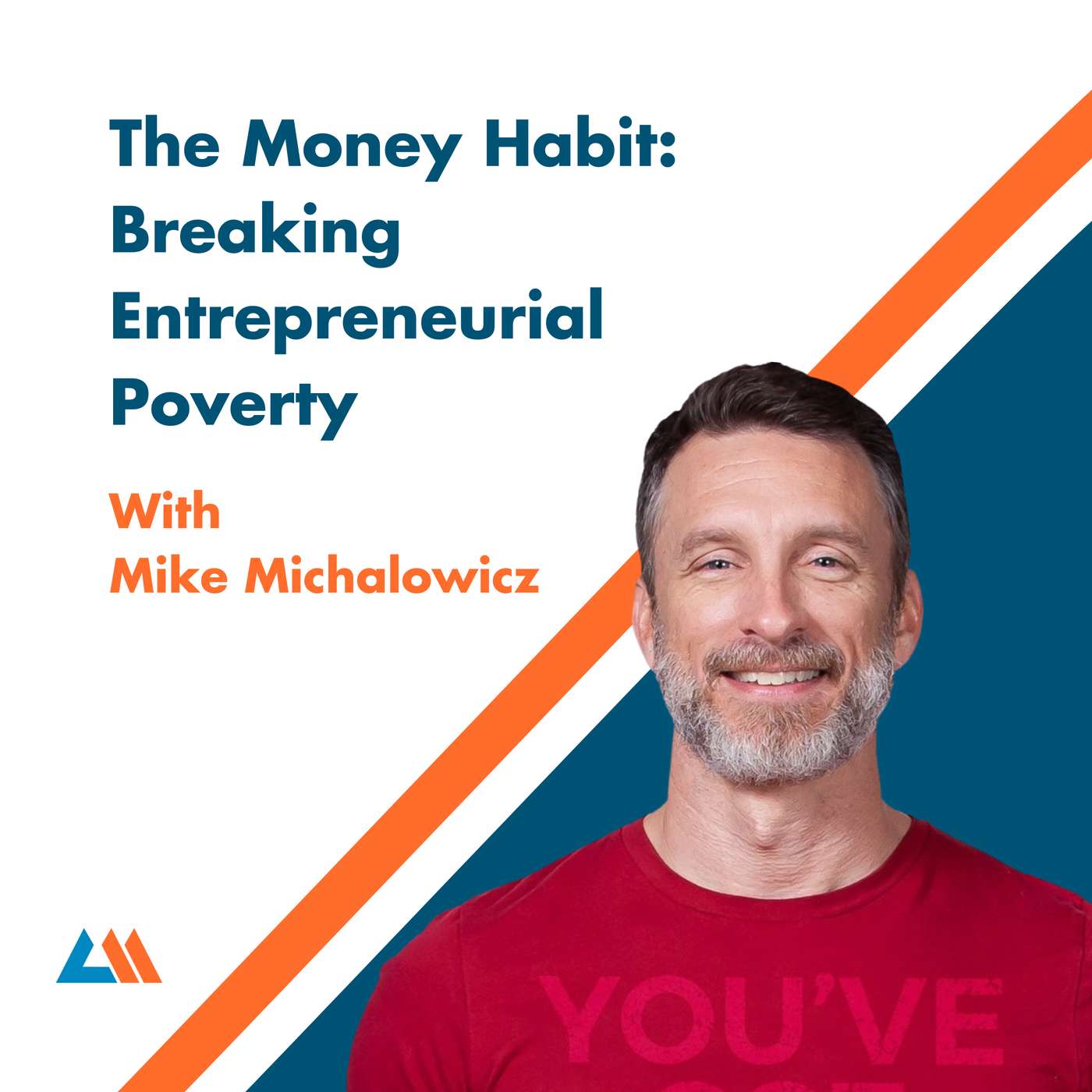 The Money Habit: Breaking Entrepreneurial Poverty with Mike MichalowiczLean Marketing · on Profit First88 / 100
 Scaling Advisory Service through Content ft. Nikole MackenzieThe New F*Word · on Profit First72 / 100
 The AI Accountant | Peter McCarroll | S1E17Alt-Consulting · on Profit First69 / 100
 60 What Business Owners Should Know About Financial ManagementEmpowering Healthy Business · on Profit First57 / 100
 Ep. 166- Profit First Journey with Laura Magu: The System That Gives You Peace of MindProfit First Nation · on Profit First52 / 100
 558. Your Top 10 Profit First Questions AnsweredFinancial and Lifestyle Freedom for UK Business Owners · on Profit First49 / 100
 CNLP 813 | Church Trends Update: Your Congregation Is Being Discipled 49 Hours a Week (And Not By You), The Wrong Convo About AI, Women Leaving, and the Anti-Celebrity Pastor
 CNLP 812 | Creativity Is the Church's Lost Superpower: Al Gordon on How Stress and Algorithms Are Killing Your Imagination and How to Unlock Creativity in Your Team
 CNLP 811 | The Myth of 10,000 Hours: David Epstein on How Creativity Actually Works and Why Constraints Set You Free
 CNLP 810 | The End of Anxiety? Joshua Becker on Spiritual Minimalism and When Enough is Enough
 CNLP 809 | Get Past Broke Thinking In Your Church: The Lean Startup's Eric Reis on When To Take A Risk and Why Harder is Easier