The Building Sustainably Podcast · 2024-10-23 · 21 min
Key moments - from our scoring
Substance score
67 / 100
Five dimensions, 20 points each
Whole life carbon assessments provide a comprehensive view of a building's carbon footprint from design through demolition, spanning upfront embodied carbon (materials, transportation, construction), operational carbon (energy, water, maintenance), and end-of-life carbon (deconstruction, disposal). John Clayton and Rachel Thompson discuss how the RICS standard - mandatory from July 2024 in its second edition - uses a modular approach (Modules A through D) to systematically measure these impacts. For industrial and logistics facilities, typical carbon footprints reach 750 kg CO2 per square meter over 60 years, with concrete (30%), steel (20%), and cladding (16%) as primary contributors. The speakers emphasize conducting WLCAs iteratively at concept, technical design, and construction stages to identify hotspots early and tailor designs accordingly. While Greater London now mandates WLCAs for certain building types, broader UK adoption remains voluntary. They highlight the critical role of collaboration between engineers, contractors, and material suppliers - noting that sustainable design alone has limits without industry-wide changes to how concrete and steel are manufactured and sourced.
The RICS standard, issued by the Royal Institute of Chartered Surveyors, is the industry standard for measuring building carbon throughout its 60-year lifecycle. The second edition was released in late 2023, and as of July 1, 2024, any new whole life carbon assessment must use this edition. Without RICS compliance, an assessment is not considered a true whole life assessment.
Module A measures upfront embodied carbon (materials, manufacturing, transportation to site, and installation); Module B measures operational carbon (energy, water, maintenance, and material replacements during the 60-year lifecycle); Module C measures end-of-life carbon (disposal, recycling, and deconstruction); Module D covers beneficial outputs beyond system boundaries (such as excess solar export) and is declared but not included in the overall calculation.
WLCAs should be conducted four times: at concept stage (baseline), technical design stage, construction stage (using contractor procurement data), and post-construction evaluation within one year of handover. Each iteration recalculates all modules to track carbon reduction and verify actual performance.
In typical UK industrial facilities, concrete contributes 30% of embodied carbon, steel accounts for 20%, and cladding systems contribute 16% of embodied carbon. Across a 60-year lifecycle, upfront embodied carbon represents approximately 55% of total footprint, while operational carbon accounts for 40-45%.
No. Currently, only Greater London requires WLCAs for certain building types as a planning permission requirement. Other local authorities have not mandated assessments, making them optional elsewhere. Speakers hope for UK-wide government mandate, but this has not yet been implemented.
Our reviewer’s read on each dimension, with quotes from the episode.
The episode delivers solid technical content on WLCAs with concrete breakdowns of the RICS modular framework and specific carbon contribution percentages (55% upfront, 45% operational; concrete at 30%, steel at 20%, cladding at 16%). However, there is notable padding - repetitive explanations of modules, soft transitions between speakers, and the host's questions often simply prompt the guests to repeat earlier points rather than push into new territory. The substantive density is good but inconsistent.
Typical breakdown for an industrial facility, we're seeing, you know, carbon footprints of around about 750 kg of CO2 per square meter... typically 55% of that figure is associated with the upfront embodied carbon... and just over 40, 45% associated with in use or operational carbon.
Concrete contributes about 30% of the foot run embodied carbon in module A... The steel frame typically accounts for around about uh, 20%.
The content is accurate and well-structured but follows standard industry frameworks (RICS modular approach, the 60-year reference period) without meaningful contrarian thinking or counterintuitive insights. The discussion of material alternatives (e.g., glulam vs. steel) acknowledges supply chain constraints but doesn't propose novel solutions. The episode largely reinforces existing best practices rather than challenging or reframing the conversation.
RICS is the standard to follow and it is a modular approach standard. So module breakdown, you have module A...Module B looks at operational values...Module C...Module D.
The three key things, concrete, steel and cladding, which are all things we know we can look at and start to look at alternative materials.
Both guests are substantively credentialed: John Clayton is a Senior Director with 30+ years in distribution and logistics design, and Rachel Thompson brings 20 years on-site experience plus 5 years as a Sustainability Coordinator specializing in carbon calculation. They are practitioners, not pure thought-leaders, and their expertise is directly relevant to the topic. However, neither is a marquee figure at the absolute apex of the industry, limiting the caliber score to solid-but-not-exceptional.
My name's John Clayton, I'm senior Director at RPS and I oversee the building engineering teams in the design division. I have over 30 years experience of working in the distribution and um, logistics sector.
I am the Sustainability Coordinator, been with RPS just coming up to five years now and prior to that I was working for a main contractor. So I was working on site for about 20 years. Always been fascinated and interested in sustainable materials.
The episode includes concrete data points: 28% of UK carbon from logistics/transport; 750 kg CO2/m² for typical industrial facilities over 60 years; 55% upfront embodied vs. 45% operational split; and specific material contributions (concrete 30%, steel 20%, cladding 16%). The RICS standard is named and versioned (2017, second edition late 2023, mandatory from 1 July). However, the examples lack granular detail - no named projects, client case studies, or iterative reduction numbers are provided. The discussion remains somewhat abstract despite the metrics.
The logistics and transport industry is responsible for a significant part, approximately 28% of the UK's total carbon emissions.
Carbon footprints of around about 750 kg of CO2 per square meter...typically 55% of that figure is associated with the upfront embodied carbon...and just over 40, 45% associated with in use or operational carbon.
The host, Emily McGee, asks clear but generally soft questions that elicit standard answers rather than probing or challenging. She does ask a few multi-part questions (e.g., on mandates and regional spread) but rarely follows up with pointed follow-ups or pushback. The guests are cordial and articulate, but there are no moments of productive tension, disagreement, or deeper drilling into constraints and trade-offs. The conversation feels safe and staged rather than genuinely investigative.
So with the importance that you've highlighted with the WLCAs, are there any industry standards or sort of regional requirements that can be followed with them?
So I suppose with the repetition as well, collaboration is key then, especially with your stakeholders and the other consultants on the job with that.
Computed from the transcript - who did the talking, and the words that came up most.
In this episode of The Building Sustainably Podcast , host Emily McGee welcomes John Clayton, Senior Director at RPS, and Rachel Thompson, Sustainability Coordinator at RPS, to explore the critical role of whole life cycle carbon assessments (WLCAs) in industrial buildings. They discuss how WLCAs provide a comprehensive view of both embodied and operational carbon over a building’s lifespan and emphasize their importance in achieving the UK's 2050 net zero target. John and Rachel share insights into the carbon footprint of logistics and industrial facilities, key carbon contributors like concrete and steel, and the impact of industry standards like RICS on assessing and reporting carbon emissions. They highlight how early assessment, collaboration among stakeholders, and advancements in materials can significantly reduce carbon emissions across the building lifecycle. Don’t miss out on this vital investigation into how WLCAs can bring about a greener future and tune in now! The Building Sustainably Podcast is handcrafted by our friends over at: fame.so If you are interested in joining The Building Sustainably Podcast, please complete this form fame.so/rps-guest
Transcribed and scored by The B2B Podcast Index.
Speaker A: Foreign.
Speaker B: Welcome to the Building Sustainably podcast by rps. Sustainable, resilient development demands a new approach to how we plan, design and build. We invite you to join us as we explore real life case studies and offer practical guidance. Here's your host, Emily McGee.
Speaker A: Thank you both for joining to sharing your knowledge and experience. On today's topic of whole life cycle carbon assessments for industrial buildings. I suppose we can start off with introductions. John, do you want to start us off? Thanks.
Speaker C: Um, Emily. So my name's John Clayton, I'm senior Director at RPS and I oversee the building engineering teams in the design division. I have over 30 years experience of working in the distribution and um, logistics sector in our drive for sustainable construction. Recently we've shifted our focus on um, reducing front carbon. We've been investigating how we can reuse existing buildings and also reducing carbon in new buildings by, uh, looking at how we can reduce material use, specify lower carbon materials and Rachel.
Speaker D: Hi. I am the Sustainability Coordinator, been with RPS just coming up to five years now and prior to that I was working for a main contractor. So I was working on site for about 20 years. Always been fascinated and interested in sustainable materials, sustainable building and my mainstay with RPS is carbon calculation.
Speaker A: So exciting stuff definitely and very well suited for today's conversation then. Um, so I guess to start off with this episode is the initial question of what is whole life carbon assessments?
Speaker C: So I guess the first point is to make the statement that the logistics and transport industry is responsible for a significant part, approximately 28% of the UK's total carbon emissions. So to fulfil the UK's 2050 net zero target, we've all got to take action to decarbonise the built environment. So every stage of construction impacts on the project's carbon emissions. So by undertaking uh, an assessment of the entire carbon footprint of a built asset throughout a 60 year uh, life cycle, we can get a comprehensive and um, very accurate understanding of its carbon reduction potential. So a whole life cycle assessment provides a holistic view of embodied and operational carbon from design, construction to demolition. So looking at upfront carbon, which includes materials transportation to site and construction activities, that's important as well as in use carbon, which is associated with maintaining and running the building assets for its entire 60 year uh, life cycle and also end of life carbon, which is associated with deconstruction, demolition and um, the disposal of the building at the end of its life cycle.
Speaker D: To add to that, because everything Jon has said is absolutely spot on with a whole life carbon assessment. We actually do it multiple times. So one of the benefits, the big benefits of undertaking it or agreeing to have your building go through that process is that it allows us to identify hotspots really early on, so we can then tailor the design going forward to try and get an ongoing reduction right the way through to, you know, hand over to the client. You're not going to know that unless you do the assessment. So you don't discount it once. You count it a fair few times for it. So it's good.
Speaker C: Yeah, totally agree, Rachel. And by taking this sort of iterative approach to these assessments, as the building design evolves, you can get insight into carbon cost of design choices, pinpoint opportunities as the design progresses. So really, a whole life cycle assessment really lays the foundation for making informed decisions and then implementing measures across the various aspects of the building design in terms of how it's operated, how we can enhance energy efficiency not only of the building systems, but all of the materials handling equipment in their logistics facilities, and how we can integrate renewable energy systems and also consider lower carbon material specifications.
Speaker A: So with the importance that you've highlighted with the WLCAs, are there any industry standards or sort of regional requirements that can be followed with them?
Speaker D: The industry standard is rics, so Royal Institute Chartered Surveyors. That is the standard that everybody in the industry, regardless of their discipline, should be using to measure accurately the carbon of that building throughout its entire life cycle. RICS as a standard has actually been around since 2017. They recently reissued their second edition, which came late 2023. As of 1 July this year, any building now doing a whole, uh, life apartment assessment should use the second edition. A tremendous amount of work has gone into the second edition. I mean, it's a good couple of hundred pages long and it has actually been written by industry professionals. So everybody has had a say on what should be measured and how it should be measured and what is the best way of reporting it. So it's an incredibly robust standard to use. And basically, if it's not rics, it's not a whole life assessment.
Speaker A: So with the RIC standards, and also there was the discussion of, uh, WLCAs also becoming mandatory. Mandatory in the sort of perspective with that, would you see that? So with WLCA having mandates within the uk, I know that you touched within your report that there were sort of regional requirements that are shown in Greater London that would you see that mandate becoming more UK spread or keeping more to regional requirements, as we're seeing.
Speaker D: I would sincerely hope that it would become UK Spread. I sincerely hope that the government basically says that yes, every building, regardless of what building it is, should undergo this type of assessment, but we are not there yet. Uh, that has not happened yet. So Greater London has said yes, certain building types have to undergo a whole life assessment, um, for planning permission, which is great, I'm thrilled to hear that. But that isn't the case for other local authorities. So unless they turn around and say yes, we want this, it's still optional. So yes, we need government to uh, kind of say please do this, give the green light. Yeah, yeah.
Speaker A: So with the standards in mind as well, how would you guys suggest the approach should be when you're reporting the wlcis? So in terms of taking a modular approach.
Speaker D: So RICS is the standard to follow and it is a modular approach standard. So you, as long as you follow rix, you're not going to go wrong. Like I said, standard is very prescriptive. So module breakdown, you have module A. This covers things like pre construction activities, the embodied carbon and materials, the manufacturing processes, energy or water that is used to make your product. It also covers products being taken to site and the energy required to actually install. Then you have mod E. Module B looks at operational values. So once you've handed the building over to the owner, how much carbon does it actually take to run um, that ah, building. So it looks at water use, it looks at energy use, it incorporates renewables, it looks at maintenance strategies and it looks at replacement materials. So the robustness of materials is quite key because obviously the less replacements you have, the less carbon you are going to create. Then you have module C and module C is all about waste and waste. So what happens to all of those materials at the end of 60 years? How are uh, they disposed of? It takes into account the transportation, um, recycling, sorting or landfill or incineration disposals. Then there is module D. So module D we declare, but we don't actually make it part of the overall calculation because module D is things that go beyond the system boundary. So say for example you have a nice warehouse with lots of PV on the roof. It's actually more than the building needs. They could then export that back out. That would be a county fall under module D for example.
Speaker A: So I suppose with the modular approach to it, and there'll be different stages within the building lifecycle itself as you've explained, like going from your modules tops. Obviously waste management is usually quite key and the main hitter in quite a lot of building and construction. With that would you say the sort of uh, Guide with decisions then within those modules.
Speaker D: First off, you do a whole life carbon assessment four times. Every time you do one you do all the modules. So do one assessment, you do all four modules, do the second assessment, you redo all the four modules over and over again. And it's during those first stages, so concept stage, that we would do a baseline assessment. We then know what we're dealing with then that informs the design decisions to reduce the carbon in the hotspots. At uh, technical stage design and a technical stage, we redo the whole thing again. So module A, B, C and D construction stage, that's down to the contractor. There's a lot that can happen um, between it going from design to contractor. So when the contractor is sort of halfway through their procurement cycle, we would then start to look at the construction stage impacts based on their actual data. So then that gives us another baseline for comparison and then there's a post evaluation um, that is done usually within one year of the building being handed over. And that's a great opportunity to firstly check how robust some of the materials are and also get some real life data from like the building management systems for electricity use and so on and so forth. So it is quite important that we highlight what it is at the beginning. And then like I said, we would tailor a uh, design to try and reduce that from the baseline as much as possible.
Speaker A: Yeah, so I suppose with the repetition as well, collaboration is key then, especially with your stakeholders and the other consultants on the job with that. Uh, so in terms of, with collaboration between stakeholders, what would you see that the impact is of the WLCA is with the design and construction and having that discussion with them?
Speaker D: I was going to say John, do you want to have an opinion on that or do you want me to
Speaker C: just carry on an engineer's perspective in terms of a whole lifecycle assessment hour? I guess the biggest impact we can make is a carbon A1. So really focusing on material specifications, reducing material usage and um, if possible reusing existing buildings and generally for elements of structure, you know, we normally Design with circa 50 year design life in mind. If we're looking at a 60 year reference study period then we just need to challenge that. Uh, I would suggest most steel and concrete structures would last the full 60 years, would have minimal maintenance. However there are exceptions to that. And industrial and logistics buildings, for example, the external pavements aren't always designed with a uh, 60 year design life in mind. Typically we might design for 30 years. So when we're considering module B in terms of maintenance replacement, we may need to allow for the fact that part of all of the external yards may need to be replaced. So obviously that could have a major impact on the lifecycle assessment and the carbon footprint of the building. So it's important to think about the 60 year reference study period and how that might impact on design lives and the materials that we choose. And I think engineers need to carefully consider that when we're designing elements of structure and particular elements that are subject to uh, things like fatigue loading, traffic loading for example.
Speaker A: Okay, so with those sort of elements in mind, obviously from an engineer's perspective as well, what are the key carbon contributors that you have been seeing within industrial buildings or within industrial and logistics as well that go towards this?
Speaker C: So we've looked at a number of different types of logistics facilities and obviously as we know now in industrial and logistics there's all shapes and sizes of types of buildings and they have become quite common, complex. So we have, as Rachel's mentioned, using sort of RIPS guidance, assessed a typical UK developer based build specifications. So you know, a typical 18 meter clear height facility with the usual external yards. So by taking that 60 year reference study period and looking at the modules that Rachel's discussed, typical breakdown for an industrial facility, we're seeing, you know, carbon footprints of around about 750 kg of CO2 per square meter. So that's assuming a 60 year reference study period and typically 55% of that figure is associated with the upfront embodied carbon. So module A and just over 40, 45% associated with in use or operational carbon. So both uh, upfront and operational in use are big contributors when considering a 60 year reference study period. If we look at the embodied carbon upfront and module A, it's I guess no surprise that concrete is the biggest contributor to that. If you think raw industrial logistics, there's a vast amount of concrete associated with what can be fairly thick ground floor, concrete floors. There's the external yards and then there's obviously the concrete associated with foundations and upper floors. Particularly there's mezzanine floors. So concrete contributes about 30% of the foot run embodied carbon in module A. So really the focus has to be on um, looking at how we either reduce and, or specify lower carbon concretes if we're to make any impact on industrial and logistics facilities. So that's the first key thing. The steel frame typically accounts for around about uh, 20%. So again looking at how we can reduce steel in terms of its material quantities or look at different ways of manufacturing, we Know, most of steel that we get at the moment is through the basic Portuguese furnace process. And if we looked at electric art furnace processes, for example, that would play a significant reduction in the carbon footprint of steel. So I think steel and concrete will still have a big part to play in industrial and logistics facilities. It's how we reduce the use and make the, um, body carbon less in moving forwards. So the modular approach that Rachel's talked about is really important in, uh, identifying hotspots within the buildings and how we can target and reduce and prioritize what materials we look at. So I've talked about the concrete and steel. I guess it's no surprise that the cladding systems, so the walls and the roof curtain, uh, walls, et cetera, they contribute around about 16%. So the three key things, concrete, steel and cladding, which are all things we know we can look at and start to look at alternative materials.
Speaker D: It's worth mentioning with the collaboration and the materials kind of aspect, you know, what one discipline does, another discipline has to account for. So you have to talk an awful lot with each other when you're making changes. Sustainable design will, in some respects, only take you so far. A lot of it, as John said, is tied up with the big carbon hitters, concrete and steel. And we are of course at, uh, mercy on, um, the availability of those materials. So unless our industry actually makes some significant changes to how they produce these materials, you are not going to get a lower embodied carbon figure.
Speaker C: Yeah, it's a good point, Rach. I think we need to consider where we get our materials from because obviously transportation plays a huge part in terms of carbon footprint. So we've talked about steel and concrete. You and I have discussed glulam before and how this might make steel. I think it's an option to look at, but we know, as you've mentioned, that, you know, there's no local UK mass production of Glulam, which could serve the logistics industry. So there are examples of industrial buildings with glulam. Um, they're supplied generally by Nordic or Austrian companies. So we need to consider the impact of how those materials are manufactured and transported to the uk, as well as obviously their front embodied car.
Speaker A: So I suppose with what we've discussed then already, and as a way of rounding off the discussion on WLCAs, what would you suggest is the way forward in regards of implementing WLCAS as a standard practice? I know we've touched on it, there's some limitations in there. But how would you see going forward on how developers can adopt them within their implementation.
Speaker C: I would encourage developers to adopt whole life carbon assessments on all of their ah, projects and as Rachel's mentioned, we now have a robust format in which to do those through the RICS guidance. I think stakeholders across the industry, investors, end users, are increasingly looking for transparency and accountability in carbon management, uh, across the supply chain. So starting to use whole life carbon assessments starts to address that in terms of how we bring some transparency to carbon footprints of built assets. So it's really important and as Rachel's mentioned, you know, starting and implementing whole life carbon assessment at the outset of the project is really important because that really helps you focus on how you can make design decisions and um, the whole team are involved in that. We know the generally logistics, distribution, proof and construction is normally through design and build and contractors have a great part to play in looking at and adopting new materials and how they can be realistically sourced from the supply chain. I think that's really important. So yeah, and then ongoing assessment of the assets life cycle, um, footprint through post construction and making sure that we've recorded all the information will start to give us a really accurate set of data that we know is realistic and that next time we can say look, how can we do that better? How can we improve what we did last time? So the thing I would, you know, really encourage all, um, certainly developers, all stakeholders to use whole life carbon assessments on the journey towards net zero.
Speaker A: Nice, that's great. Thank you both for your time and sharing your experience and your knowledge with us on wlca.
Speaker C: As for the industrial building pleasure, thanks Emily.
Speaker B: The Building Sustainably Podcast is brought to you by rps. To find out more about RPS and how we can help you deliver future ready development, visit rpsgroup.org and then search for the Building Sustainably Podcast in Apple Podcasts, Spotify and wherever else you get your podcasts, make sure to click subscribe so you don't miss any future episodes. On behalf of the team here at rps, thanks for listening.
Other episodes covering the same guests and topics, from across The B2B Podcast Index.
 The Building Sustainably Podcast: Best of Series 267 / 100
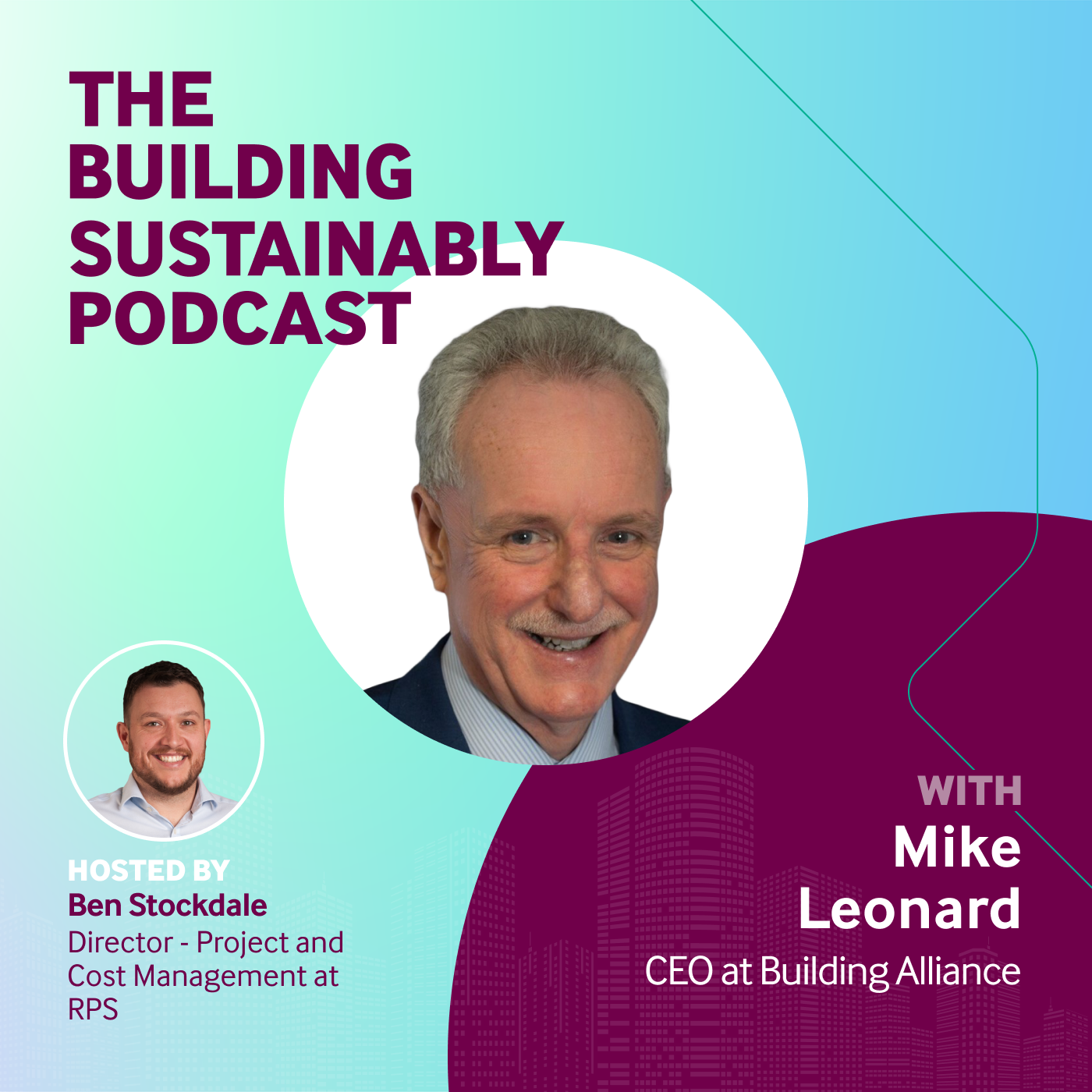 How the Construction Industry Is Adapting to Net Zero with Mike Leonard of Building Alliance, Visiting Lecturer at BCU70 / 100
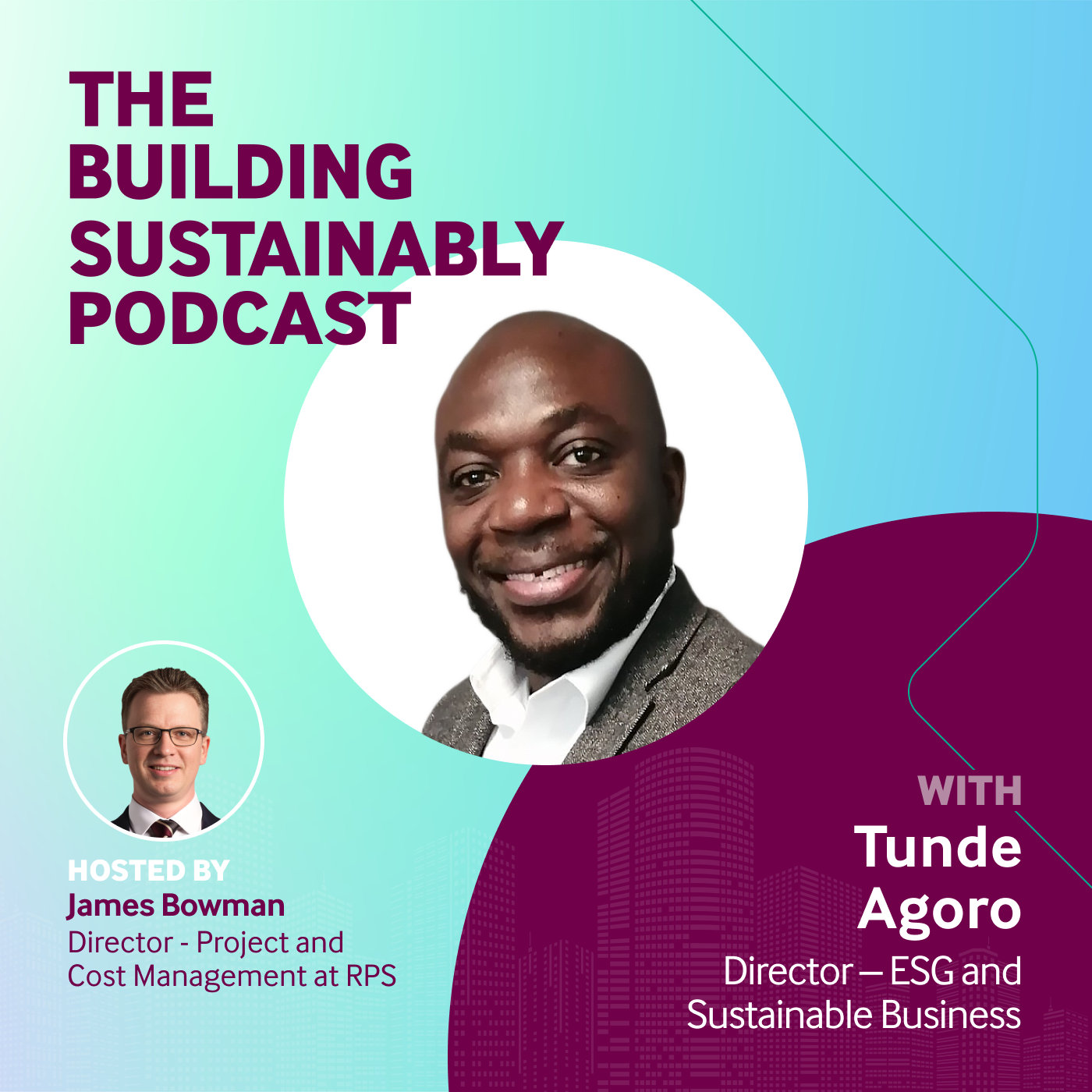 How ESG Can Transform Your Business with Tunde Agoro of RPS57 / 100
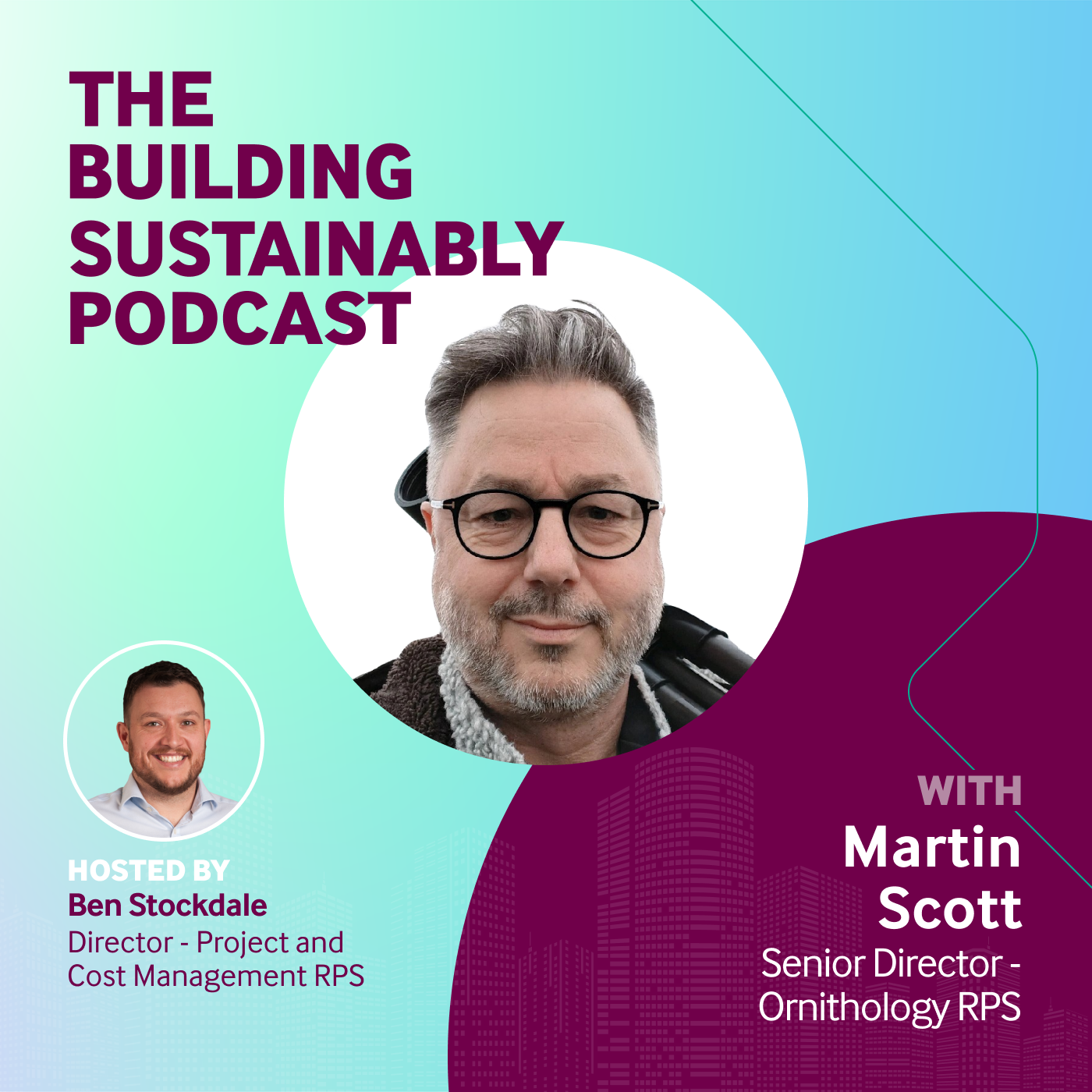 Can Wind Power and Wildlife Thrive Together? With Martin Scott of RPS83 / 100
 What You Need to Know About the Flood Risk Sequential Test With Chris Patmore and Jonathan Morley78 / 100