The Automotive Leaders Podcast · 2026-06-11 · 22 min
Key moments - from our scoring
Substance score
61 / 100
Five dimensions, 20 points each
Jim Voss arrived at Tenneco after 30 years in industrial and chemical sectors, bringing a private equity mindset from Apollo Global Management rather than deep automotive pedigree. He inherited a company with strong legacy assets - two great companies in Tenneco and Federal-Mogul - but crippled by a toxic, top-down command-and-control culture that prevented execution. Rather than pursue aggressive cost-cutting, Voss deliberately inverted the organizational pyramid, positioning manufacturing plants and distribution centers at the apex and reframing his role as a blocker for frontline workers. His approach centers on three pillars: solid strategy, organizational structure enabling velocity, and competencies in leaders who can make decisions with incomplete information. Voss draws from his psychology and organizational development background to focus on human behavior and culture as the driver of performance, explicitly rejecting the notion that private equity means slash-and-burn economics. He emphasizes the advantage of his outsider perspective, unencumbered by automotive's legacy playbook, to help Tenneco compete against agile Chinese OEMs operating from a clean sheet. The company has already doubled EBITDA and margins in under three years through purposeful leadership changes and hundreds of millions in manufacturing investment.
Tenneco had a very toxic, top-down command-and-control culture that struggled with execution despite having great legacy companies, great people, and strong global technology and distribution. Voss immediately recognized that changing the culture would require replacing many senior leaders whose behavior formed and perpetuated that toxic system.
Rather than aggressive cost-cutting, Voss's strategy involves bringing in world-class talent, creating a great culture, and investing hundreds of millions into manufacturing to strengthen the company's capabilities and competitive position, aligned with Apollo's core values of creating value the traditional way.
Organizational velocity requires three simultaneous elements: solid strategy, organizational structure enabling decentralized decision-making and field-level autonomy, and competencies in leaders who can move fast and make decisions without 100% information - a skillset different from what won in legacy auto 20 years ago.
Coming from industrial and chemicals, Voss lacks the automotive industry blinders and legacy playbook assumptions, allowing him to see clearly that what worked over 50 years will not work in the next few years given powertrain transformation, electrification, and competition from Chinese OEMs operating from a clean sheet.
Tenneco flipped the pyramid to place manufacturing plants and distribution centers at the pinnacle; the CEO and leadership exist to support and enable frontline workers, not the reverse, with every decision and dollar spent focused on making field operations more successful.
Our reviewer’s read on each dimension, with quotes from the episode.
The episode contains several substantive ideas about organizational culture, leadership structure, and velocity-driven decision-making, particularly Jim Voss's framework of strategy-structure-competency for organizational agility. However, much of the content consists of soft leadership platitudes ("care about people," "be consistent"), repetitive affirmations of philosophy without new operational detail, and extensive setup material that doesn't advance concrete understanding. The second half devolves into vaguer motivational language rather than specific operational insight.
You have to have a structure in your organization that is able to move with velocity. We're all aircraft. A lot of us are aircraft carriers. Some of our aircraft carriers are bigger than other aircraft carriers, but we have to be able to pivot like a speedboat.
You have to, I always say it's strategy, structure, competency. Number one, you have to have a strategy that is solid for winning going forward... You have to have a structure in your organization that is able to move with velocity.
Voss offers some fresh perspective as an outsider to automotive bringing a 30-year chemical/industrial background, and the strategy-structure-competency framework for organizational velocity is reasonably coherent. However, the core ideas - culture-driven transformation, inverting the pyramid to put field employees first, the need for speed and decisiveness - are well-worn in modern leadership discourse. The basketball-vs-relay-race metaphor comparing legacy auto to Chinese OEMs is apt but not novel, and much of the language mirrors standard change-management playbooks.
I don't have those blinders... it's in such transformation. What's worked over the last 10, 20, 30, maybe even 50 years, and worked well for a lot of companies is not gonna work well over the next few years even.
Legacy auto, think of it as a relay race, where as you'd run your bit and then you hand it off to the next person or the next silo... they operate more in a basketball court type of environment.
Jim Voss is the CEO of a major $10+ billion tier-one automotive supplier managing 60,000+ employees and 158 manufacturing sites, with demonstrated operating responsibility at scale. His background spanning chemical, industrial, and private equity sectors adds credibility. However, the episode is a soft-launch interview designed partly as promotional material for his leadership narrative; he is not being pressure-tested by a peer operator or cross-examined on specific results, which limits the rigor of the guest interaction.
CEO of Tenneco
158 manufacturing sites... 28 countries, over 60,000 employees
The episode provides very few concrete metrics, timelines, or named examples. The claim that Tenneco doubled EBITDA and margins is stated but not detailed (no baseline, no current numbers, no timeline specifics). Voss makes abstract references to cultural and structural changes but offers minimal evidence: no specific plant examples, no detailed cost-cutting decisions, no named leaders hired or removed, no customer wins, no manufacturing innovation specifics. The discussion of Federal-Mogul integration is mentioned but not explained.
this company has doubled its EBITDA and EBITDA margins
158 manufacturing sites, a number of tech centers and distribution centers. They cover global complexity, 28 countries, over 60,000 employees, and an added complexity of managing over 30 brands.
Jan Griffiths asks clarifying follow-up questions and draws out Voss's thinking on industry transformation and organizational structure with moderate depth. However, the host rarely pushes back or challenge claims (e.g., accepting the culture-transformation narrative at face value without testing specifics), avoids asking for concrete operational examples, and allows Voss to deliver extended monologues without interruption or skeptical probing. The interview reads more like a sympathetic portrait than investigative dialogue.
So, you didn't come in here with what many think is the aggressive cost-cutting slash-and-burn mentality, did you?
How do you do that? [regarding breaking down silos]
Computed from the transcript - who did the talking, and the words that came up most.
How do you take a 100-plus-year-old automotive company with 158 manufacturing sites, operations in 28 countries, more than 60,000 employees, and over 30 brands and transform it into a top-performing company? That’s the question at the heart of Tenneco’s remarkable turnaround story. In less than three years, under the leadership of CEO Jim Voss and his team, Tenneco doubled its EBITDA margins, becoming a leader within its peer group. But before the performance came the hard part: confronting a deeply entrenched command-and-control culture and reimagining how leadership works inside a legacy automotive company. In Part 1 of this two-part series, Jim shares his unconventional path to the automotive industry, his private equity background with Apollo, what he discovered when he arrived at Tenneco in 2022, and why culture became the foundation of the company's transformation. This is a conversation about leadership, trust, organizational velocity, and the courage required to challenge decades of legacy thinking. Themes Discussed in this Episode Why Tenneco's turnaround began with culture.
Transcribed and scored by The B2B Podcast Index.
[Transcript] Jan Griffiths: This is the Automotive Leaders Podcast. Straight talk from the CEOs and innovators who cut through the noise, create clarity, and drive transformation across this industry. The old command and control playbook is dead. Culture is the operating system.
Authentic leadership is the edge. We're rewiring it, starting now. I'm your host, Jan Griffiths, that passionate, rebellious farmer's daughter from Wales and the champion for culture change. Let's dive in.
This episode is brought to you by Lockton. Rising benefit costs aren't inevitable for you or your employees when you break through the status quo. Independence matters, it means Lockton can bring you creative, tailored solutions that truly serve your business and your people. At Lockton, clients, associates, and communities come first, not margins and not mediocrity.
Meet the moment with Lockton. How do you take a legacy auto company from survival mode to leading industry performance levels and anchor that in culture and operational execution? Well, that is the Tenneco story. Quite possibly the greatest leadership and turnaround story this industry has seen.
In under three years, under the leadership of Jim Voss and his team, this company has doubled its EBITDA and EBITDA margins to become a leader in its peer group. Now, the question we're all asking is how? How is this even possible with the level of complexity that Tenneco has? 158 manufacturing sites, a number of tech centers and distribution centers.
They cover global complexity, 28 countries, over 60,000 employees, and an added complexity of managing over 30 brands. If that doesn't define complexity, I don't know what does. This interview is so important that we've split it into two sections. The first section will talk about the man, the mess he walked into, and the moment.
In the second episode, we'll go deep into the how. And it gives me great pleasure to bring onto the show the CEO of Tenneco, Jim Voss. Jim, welcome to the show. Jim Voss: Thank you very much, Jan.
It's fantastic to be here. Seems like yesterday we had you over to the office and spent the day and the evening with you and shared our story, and so we're super excited, I'm super excited, and I say on behalf of the team, we're excited to share our story. Jan Griffiths: And what a story that is. I mean, who are you, Jim Voss?
You came out of nowhere. You haven't been in this auto industry for decades. We're used to CEOs of large tier ones like Tenneco coming from within the industry, but you came out of nowhere. So, tell us a bit about your story.
Jim Voss: I've been in the industrial and chemical sector for almost 30 years now. And it's certainly accurate, I've never been in tier one auto. But I'll tell you, when I took the job, and I started thinking about being directly in the throes of automotive, if I go back over the last 20, 25 years, almost every product I've been a part of making, if you will, chemicals or industrial, goes into auto. I mean, the auto ecosystem is huge.
The installed base of auto is huge. So, going back to my chemical days, Nylon 66 under the hood, PVB, in the windscreen, rubber chemicals of course, all in the tires. So, I've kind of just been one step away from right in the middle of the auto, so I've always followed auto. So, maybe it's a bit fortuitous that I find myself living now here in Detroit and working in a tier one and absolutely love it.
Jan Griffiths: Now, you have a PE background. Jim Voss: I do. Jan Griffiths: In fact, if I ask people in the industry about the Tenneco CEO, you know what they say? They say, "Oh, the Apollo guy."
Jim Voss: The Apollo guy. Jan Griffiths: So, tell us about that. Jim Voss: I'm incredibly proud to be a part of the Apollo team. It's coming up on 15 years now.
And if you go way back, actually for about four or five years, I've worked in a Blackstone company. That was my first introduction to private equity back in the day. So, I think I've worked in every ownership structure there is. I've worked in certainly private, public, family-owned, bankruptcy.
I was part of the team that got Monsanto Chemical, Solutia at the time, out of bankruptcy. Jan, I didn't put it in bankruptcy. I was the team to get it out of bankruptcy. So, I think what I've learned is there's no best ownership structure.
I think there's the right ownership structure for the right company at the right time. Jan Griffiths: Yes. Jim Voss: And so, that's what I like. Being a part of Apollo, the core values of Apollo are very similar to my own, very similar to Tenneco, and I think we create value the old-fashioned way, right?
We just, we bring in world-class talent, we create great cultures. We make the company stronger, the corpus of the company better, and then we find that new owner. Jan Griffiths: Now, you walked into Tenneco in November of 2022. Jim Voss: 17th.
Jan Griffiths: November 17th. Jim Voss: November 17th. Jan Griffiths: Who's counting, right? Jim Voss: Yeah.
Who's counting? Who's counting? Jan Griffiths: This episode is powered by Seraph. When manufacturing leaders need to launch scale, relocate production, or navigate supply chain disruption, they call Seraph.
Hands-on operators. Measurable results. Learn more @seraph.com.
So, you walk in November 17th, 2022. What did you find? Tell us about your first impressions and the challenges the first 90 days. Jim Voss: It was very challenging.
And it was actually before then because we signed the deal about six months before we closed it, and the sign to close this is always four to six months. So, I did have access, certainly not to run the company in any way, shape, or form, but I had access to the management team a little bit, the upper management team, so I got to know some people and we were working with a great consultant. Srikant and McKinsey were helping us dissect the company behind the scenes, due diligence, if you will.
So, I saw two things incredibly dichotomous: Number one, a great company. Two great legacy companies, Tenneco, Federal-Mogul. Great people, great technologies, breadth, strength in terms of a global perspective, but really struggling from a cultural perspective and its ability to execute. And so, from where I sit, and I don't speak for Apollo, but from Apollo, it's a perfect time not just private equity, Apollo, because all private equity is not remotely the same.
It's a perfect time for Apollo to partner with a great management team and really do something special with Tenneco. Jan Griffiths: Yeah. Not every private equity is the same. Jim Voss: No.
Jan Griffiths: I've worked for Platinum Equity for two of their different portfolio companies in the past, and people often think that private equity is this awful, nasty, aggressive, brutal environment. And I went into the Platinum environment, and honestly, I have never felt more empowered and freer in my entire life. The creativity flowed. I wasn't told to put a damper on my personality and not to be so direct.
In fact, I would say Platinum encouraged it. Jim Voss: Absolutely. Jan Griffiths: And so, I think that we have to sort of understand that myth behind private equity. So, you didn't come in here with what many think is the aggressive cost-cutting slash-and-burn mentality, did you?
Jim Voss: No, not even close. Number one, that's never, ever the right strategy, in my opinion. Did we have to reset the cost basis in some areas? Absolutely, yes.
You can't have an inflated cost basis to your peers. Did we have to make some tough calls? Of course, the answer is yes. But the strategy here was, like you said, the good old-fashioned way.
You come in, the culture that I and we inherited was a very, very top-down command and control, very toxic culture. And so, we had to change that culture quickly, and I knew that right out of the gate. And what forms a culture? Leaders.
Leaders' behavior forms the culture of the company. So, I knew I was going to have to make a lot of changes right out of the gate in terms of leadership, if we were going to get the culture right, and ultimately then the performance that we needed right. So, I will tell you, it was not easy, but it was by far a slash and burn. This was a very, very, purposeful, thought-out strategy to bring in world-class leaders, create a world-class culture, invest, invest hundreds of millions if not millions of dollars into the organization, into the manufacturing of the organization, and really make this company stronger and better, and that's what the team did.
Jan Griffiths: As I'm listening to you talk and I'm thinking about maybe a plant manager in an old legacy plant who's used to command and control. There's a ton of them out there, right? They know how to operate in that system. In fact, many of them don't know how to operate any other way, and here comes Jim Voss with a different idea that is completely the other side of the spectrum from command and control.
How do you start to get people to see your way of leadership as the way? Jim Voss: It's difficult, but I will tell you this, you start by just stating the obvious. Number one, the most important part of our company is the manufacturing plant, is that distribution center, where the people do the real work. And you have to take that pyramid of supporting the top, if you will, the top one or two people in the organization, turn it upside down and say, "Listen, we exist, I exist to make sure that the men and women out in the field, if you will, have what they need to be successful."
And I said day one, it's gonna start with safety, and it's gonna start with us putting the pinnacle of this organization on the manufacturing and distribution centers. Everything we do is about making them successful. Everything I do, I say, "My job isn't to score touchdowns for Tenneco. I'm a blocker and a tackler for the folks out there doing the work."
And I don't just say that because it sounds like something a CEO should say. That's what we do. And every single decision we make, every dollar we spend is about how we're going to make them more successful, how we're going to have that sustainable competitive advantage, which is our culture and the Tenneco Way. And at first, it's words, like everything else, but like culture, it's not what leaders say, it's what they do.
And so, you just need to be consistent, you need to be articulate, and the field, the people out on those plants, the plant managers, that man or woman out there running the plant need to catch you doing it right consistently, all the time. And that's what we do, and I think they're excited about it. It's like, yes, this is the way it should be. And I think there's a tremendous amount of excitement.
Jan Griffiths: This episode is sponsored by UHY. Did you know suppliers now spend 157 hours on an average RFQ and still face the same roadblocks as 20 years ago? UHY and the Center for Automotive Research, break it all down in their new white paper. Download your copy.
There's a link in the show notes. Tariffs, disruption, uncertainty. Your supply chain has answers. Tradeverifyd helps you ask why and what to do about it.
Visit Tradeverifyd, that's verifyd with a yd.com. Yeah. Now, when you walk into auto, I know that you've been sort of auto-adjacent, but when you walk into what I would call a hardcore legacy tier one, like Tenneco, what were some of your observations?
And about the industry in general, there are unwritten rules, so there's a playbook that we have in auto. Jim Voss: Yes. Jan Griffiths: And some of the things we do, we've just done forever, and we do it. And somebody coming in from the outside might go, "Wait, wait a minute.
That's crazy." Share some of those observations with us. Jim Voss: It's not just auto. I think every industry you've been in a long time, whether it's chemicals or other part of industrial have their own status quo.
And I think, the auto industry is amazing, but right now is, to me, the most exciting time to be in auto. Jan Griffiths: Yeah. Jim Voss: I haven't been in it the last 10 or 20 years. People in this, in town, we're in Detroit today, have forgotten more than I'll probably learn about the industry.
I think it might be to my advantage though, Jan. I don't have some of those, I don't know some of those things. I don't have those blinders. Why I think it's helpful now is it's in such transformation.
What's worked over the last 10, 20, 30, maybe even 50 years, and worked well for a lot of companies is not gonna work well over the next few years even. So, bringing in a different perspective, I think, is maybe an advantage. But I certainly see, I think it's unfortunately, the auto industry has been part of creating some of the best practices in manufacturing industry, if you go back a long time. But with every, with the change, not just the powertrain transformation, the drivetrain, not just electrification versus ICE, but just the global competition.
And then, I would argue the speed at which this auto industry now is moving in China and moving it to where our way. Organizations just have to change their approach, and one of our bedrocks is velocity. So, I think not having some of those pieces from my past being in auto has been helpful, but you really, really have to be very specific and deliberate in helping people understand what needs to change for us to win in the future. Jan Griffiths: Yes.
And I agree with you. I think that legacy auto, it's really hard to change because we're so entrenched in our playbook and the ways of doing business, and we're very much focused on incremental steps of improvement within our silos, because we love our silos. We've been operating like that for, I don't know, over 100 years, and we like that, and we feel safe, and a lot of the CEOs out there and leaders out there came up through that system. Jim Voss: Right.
Jan Griffiths: So, it's very hard to say, look, let's go back and with a clean sheet of paper, which is what the Chinese OEMs did. Jim Voss: Absolutely. Jan Griffiths: They had a clean sheet of paper. They didn't have all that legacy baggage, and they were able to create an organization that moves fast.
Jim Voss: Absolutely. Jan Griffiths: And I think that a lot of the leaders that I talk to really struggle with that. When I talk about breaking down silos, it's very difficult to get their minds around it, and explain it to them this way. Legacy auto, think of it as a relay race, where as you'd run your bit and then you hand it off to the next person or the next silo.
The classic is your early supplier involvement, supplier development early on in the process, right? It's very linear. You do your bit and you hand it off to the next person. Jim Voss: Right.
Jan Griffiths: That is not the way the Chinese OEMs operate. They operate more in a basketball court type of environment, where you've got all the players on the court all at the same time. Jim Voss: Correct. Jan Griffiths: Each have different skills, but they're able to grab the ball, move over here, pivot over here, know where to move, trust each other, and be able to drive a lot faster, and that's so hard to get that mindset change through.
How do you do that? Jim Voss: Well, they have an advantage. There's an advantage of having a 50 or 100-year legacy and all the great things that come with that. There's a disadvantage that you have to, unfortunately, moving forward, undo some of those things.
Jan Griffiths: Yes. Jim Voss: The companies that have been formed over the last 5, 10, or 15 years, don't have the disadvantage part that they have to undo. They can only start from that clean sheet. Jan Griffiths: Yes.
Jim Voss: And so, it's a little bit easier. How you do it is you have to understand how to create a culture of organizational velocity. I don't think most people understand it, and if they do understand it, it's very difficult because in simplest of terms, you need three things. You have to, I always say it's strategy, structure, competency.
Number one, you have to have a strategy that is solid for winning going forward. Check. Let's move that aside. You have to have a structure in your organization that is able to move with velocity.
We're all aircraft. A lot of us are aircraft carriers. Some of our aircraft carriers are bigger than other aircraft carriers, but we have to be able to pivot like a speedboat. And you can do both, but you have to think about the structure you put in place that allows it to do that.
Decision-making out in the field, competencies out in the field. And the last one is competency, and I say competency and not people, 'cause of course, the competency is about the people, but I say that internally because I want them to think about the competencies it needs, a leader needs, to be able to move with velocity. Back in the days where it's incremental thinking, it doesn't work that way anymore. You have to have leaders that are fearless, and you have to have leaders that have the ability to make decisions without 100% of the information.
Jan Griffiths: Yes. Jim Voss: Their skillset's specific to what's gonna win going forward that is not consistent with what you have in the past. So, you have to look at that team, if I made that basketball team that was able to win 20 years ago is not gonna win today in the NBA. Three-point line, taller people, faster game.
So, it's not a bad or, good or bad, it's just different competencies, and you have to make those tough calls. So listen, I think it's very controllable, but what people don't understand is you gotta get it all right. It all has to happen. If you just get 90% of it right, it still doesn't move with velocity.
Just think about a car's engine. One little thing goes wrong, and the whole thing shuts down. That's org velocity. That's what makes it so difficult.
It's not complicated, if you will, but it's difficult to put all those pieces in place. We take tremendous time analyzing each of those pieces, especially the competencies. We've had to make tough decisions around leaders who are incredibly smart, incredibly gifted folks who don't possess the competency to play the game the way the game needs to be played going forward to win. And that's a very tough decision for some of the legacy companies like ours, quite frankly, to make.
Jan Griffiths: Yeah. Jim Voss: But you have to make those tough calls. Jan Griffiths: How did you learn how to do this, Jim? This idea of organizational velocity and speed of decision-making, where did that come from within you?
Jim Voss: I have a very untraditional, you know, upbringing. I'm not an engineer. I am married to an engineer. I'm not an engineer.
I'm a Psych, Soc, OD master's major. I did get my MBA, so at least the engineers will respect one of my degrees, but I think I've always been a student of human behavior. So often, we're so focused on the numbers, we're so focused on the performance, and believe me, I have to perform. Jan Griffiths: Yes.
Jim Voss: I have to perform at a high level. My job is to create shareholder value, and Apollo feels the same way on my behalf, but how do you do that? You don't do it by talking about the numbers on the scoreboard. You do it by analyzing what's going on in the industry, what is it gonna take to win, how do you differentiate yourself, what do your customers really want?
Our purpose statement is to be the most trusted partner, first and foremost, because as we go through all these changes, our customer base needs to know where our head is, and we're in it for the long haul, and they can trust us. They can trust us to be good stewards. They can trust us to continue to invest. They can trust us to not be perfect, but when we stumble, we make it right with them.
And so, I think that's super important, especially when you're in a transformation time in an industry. And then, it's simply to be the best in the world at what we do. And I don't say that as a tagline. We invited you in.
You saw some of our standards, some of the way we're driving the business operationally, and our intention is to be the world's best manufacturer, and that starts with the highest standards. So, we do set high goals, but I think we have a very, very clear path to get there. Am I saying that we're the best in the world right now? Maybe not, but we're certainly getting there.
Jan Griffiths: Yeah. I interviewed Doug Conant, and he's the former CEO of the Campbell Soup company and he's a great guy. And he has a tagline which I absolutely love, and he says, "You have to be tough on standards and tender-hearted with people." Jim Voss: Right.
Jan Griffiths: And he said, "Not one or the other, both." Jim Voss: Absolutely. Jan Griffiths: You have to have accountability. You have to have ownership, but it's how you drive to that.
That's where the secret sauce is. Jim Voss: There's no question. We say high care, high accountability. The first most important aspect of a leader, number one, is you have to care.
Jan Griffiths: Yes. Jim Voss: You have to care about people. You cannot be a leader if you don't. But you have to have tough standards and a high accountability, and the best people in the world want that.
And so, if you have the audacity to say you wanna be the best in the world at anything, you better have both of those things. Otherwise, it will not happen. Jan Griffiths: Yeah. I completely agree.
So, that gives us a pretty good understanding of the man, the mess, and the moment. Stay tuned because in our next episode, we're gonna dive deep into the Tenneco Way and exactly what that is. Thank you for listening. You can watch the full conversation on our YouTube channel.
Search for Jan Griffiths Automotive Leaders, and download the 21 Traits of Authentic Leadership. It's a free PDF and the link is in the show notes. And remember, stay true to yourself, be you, and lead with Gravitas, the hallmark of authentic leadership.
Other episodes covering the same guests and topics, from across The B2B Podcast Index.
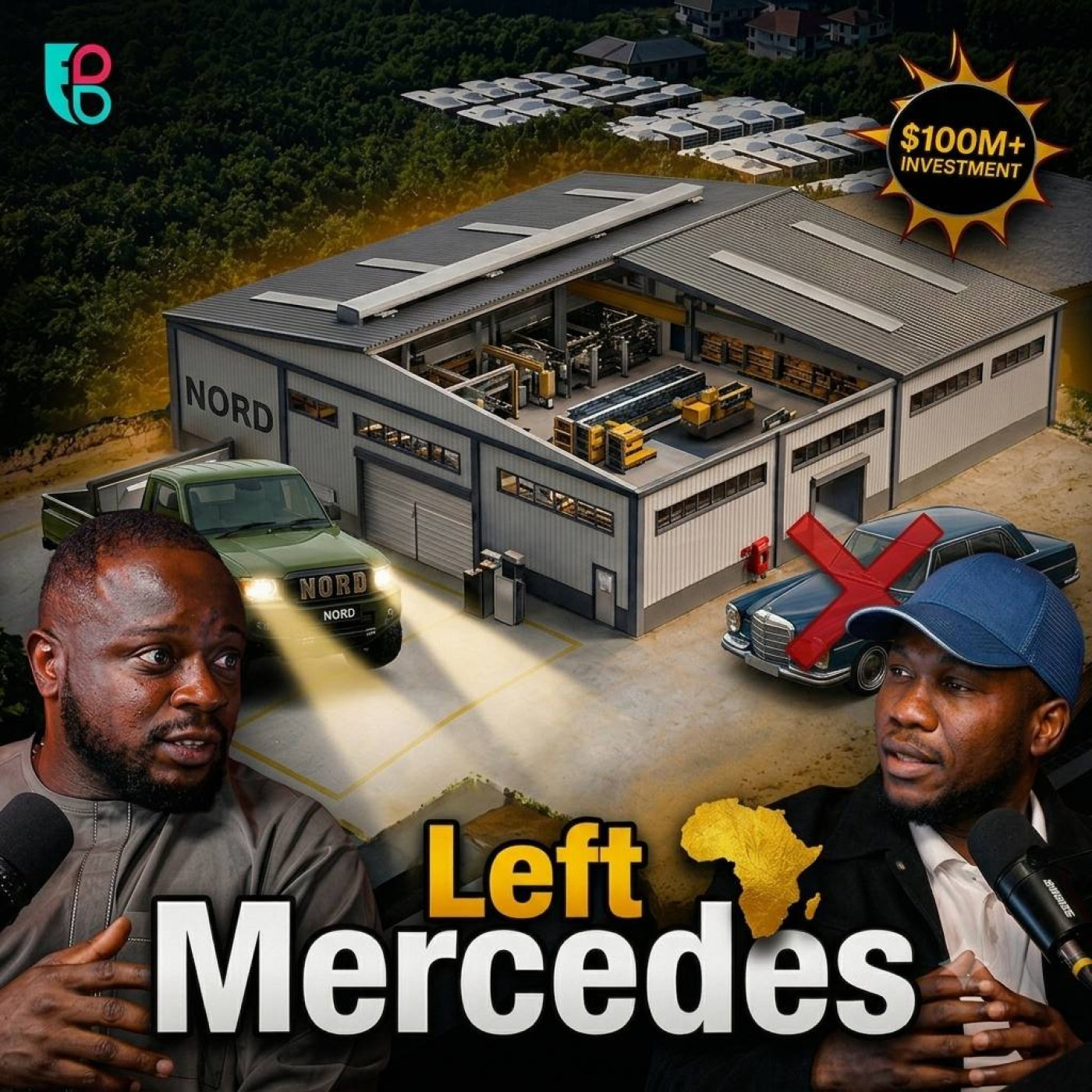 He Left Mercedes-Benz to Prove Africa Can Build Cars | Tobi Ajayi (Nord Automobiles)Frankly Business Podcast · on Chinese OEMs86 / 100
 How Operating Partners Win: Inside Apollo's Playbook with Aaron MillerExecutive Edge Podcast · on Apollo Global Management83 / 100
 The Future of Auto Financing - With Robert GwerengweNo Free Lunch With Greg Stewart · on Chinese OEMs82 / 100
 The $500 Billion AI Debt Machine & The Great CapEx TestMarket Maker · on Apollo Global Management80 / 100
 How Private Equity Is Rolling Up Emergency Room StaffingPrivate Equity Conversations with Fexingo · on Apollo Global Management78 / 100
 Peer-to-Peer... with Jenny ShiersFuture of Work Hub Podcast Series · on Organizational velocity75 / 100
 Jim Voss on Building a Culture That Wins (The Tenneco Way, Part 2)69 / 100Closing Season 7 and Preparing for What’s Next30 / 100
 2026 Working Relations Index - The First Time in 26 Years All Six OEMs Moved Up86 / 100
 The CEO Whisperer: What Automotive Leaders Need Most Right Now65 / 100
 Lincoln’s Reinvention: Joaquin Nuño-Whelan on Leadership, Luxury, and Legacy Transformation67 / 100