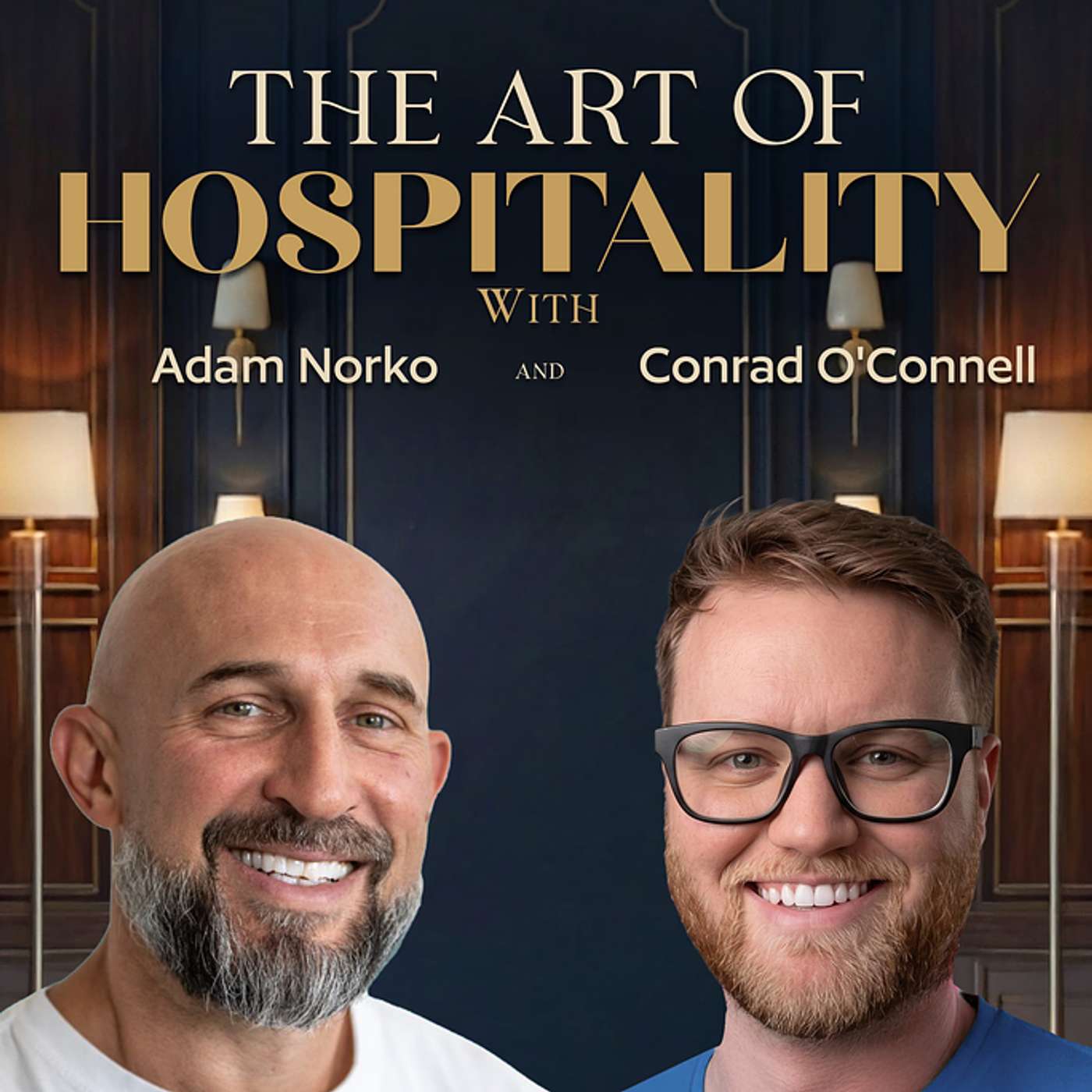
The Art Of Hospitality · 2026-07-01 · 50 min
Key moments - from our scoring
Substance score
50 / 100
Five dimensions, 20 points each
Ashley Ching, founder of Inhaven, joins Adam and Conrad to discuss why the vacation rental industry lacks standardized quality tiers - a critical problem as operators scale. Inhaven helps property managers establish and maintain hospitality-grade standards across portfolios by sourcing linens, bath and kitchen supplies, and cleaning products at wholesale pricing, then providing inventory management tools to ensure consistency. The core insight: guests don't expect unique experiences; they expect *consistent* ones - clean sheets, quality beds, reliable amenities - delivered at a price point that matches expectations. Unlike hotels, airlines, and rental car companies that operate within defined chain scales (economy to luxury), vacation rentals lack this framework, creating misaligned expectations that damage the entire industry when a guest has a bad experience. Adam emphasizes the K-shaped split emerging: upper-tier managers investing in professionalization and standards will thrive, while budget operators relying solely on OTA bookings will struggle and inadvertently harm the industry's reputation. Ashley argues that service levels, not price or location, ultimately define quality tiers - economy properties need fewer people but better systems, while luxury properties invest heavily in staffing. The conversation reveals that scaling vacation rentals requires intentional standards, team support, and honest positioning within a chain scale framework.
A chain scale defines quality and service standards across hospitality properties - economy (Motel 6), mid-scale (Courtyard), upscale (Westin), and luxury (Four Seasons). Vacation rentals lack this framework, so guests booking at $150/night may expect luxury service, creating misaligned expectations. Hotels, airlines, and rental car companies use chain scales to set transparent expectations; vacation rentals need the same structure to scale effectively.
Managers typically reach the scaling pain point around 10-20 properties. At that point, managing inconsistent sheets, kitchen supplies, and cleaning products across different properties becomes unsustainable for teams, making wholesale standardization through tools like Inhaven necessary.
Service levels - specifically staffing. Economy hotels employ one front-desk person and invest in AI and kiosks to reduce costs, while luxury hotels employ 10+ staff per shift (valets, bellhops, door staff) and invest in people rather than technology to maximize guest experience.
Without a defined chain scale, guests cannot determine what quality tier they're booking and often pay $150/night expecting luxury service. When expectations don't match reality, the negative experience reflects on the entire vacation rental industry rather than just the individual operator, threatening industry reputation.
Standardizing supplies through wholesale pricing is significantly cheaper than retail, and these items naturally need replacement every 18-24 months anyway (sheets, towels, pillows, mattresses). The savings accumulate across a portfolio while improving guest consistency.
Our reviewer’s read on each dimension, with quotes from the episode.
There are maybe five or six operationally useful ideas in the full episode - people-to-property ratios, OTA supply-maximisation logic, the external accreditation argument - but they are buried under extended sports chat, car-rental anecdotes, domain registrar tangents, and repeated circling of the same chain-scale point without adding new depth.
We find that at the luxury end of things, typically a property manager has one person for every five properties. They're able to provide high touch services.
Does Hotels.com define brand standards? Booking.com define hotel standards? These are distribution sites, right? Their whole goal is to maximize supply, not create any barriers to entry.
The central move is transplanting the hotel chain-scale framework into vacation rentals, which is a genuinely useful reframe for the industry but not original thinking - it is an explicit analogy to an existing structure. The OTA incentive insight and the external-accreditor argument are sharper, but most of the episode restates rather than challenges.
The misnomer with the vacation rental industry is, you know, what determines a quality tier. And some people would say, well, it's price. Well, you know, price is compression nights like Taylor Swift or the super bowl. And so suddenly a, uh, extended stay America is going for $1,000 a night. Does that make it luxury?
We have credit card companies, hotel companies coming to us saying we want to be in the vacation rental space. We don't trust the inventory.
Ashley Ching is a genuine practitioner - sourcing background at Home Depot, operating a real product company solving a concrete industry problem, and actively working with credit card and hotel partners - which gives her credibility above a pure thought-leader. However she is a startup founder in an adjacent services role rather than a large-scale operator who has personally run hundreds of properties.
Most recently I was at the Home Depot and so knew, um, how to get access to hospitality grade goods that are available typically to hotels and restaurants.
We look at it on a, um, number of people per property ratio. So we find that at the luxury end of things, typically a property manager has one person for every five properties.
The episode earns credit for named operators (Abode Luxury Rentals, Moving Mountains, Vacasa at ~60,000 properties, Sonder, Beverly Sorrell, JZ Rentals), concrete ratios (1:5 luxury, 1:12 lifestyle, 1:20 failing model), and a couple of statistics (3% US hotel supply is luxury, ~50% mid-to-upper-upscale). It falls short of a high score because there are no client outcome metrics, revenue data, or before/after results from Inhaven's own work.
only 3% of US hotel supply is in the luxury hotel. Most of the supply is in the Mid scale to upper upscale, about 50%.
we profiled a noodle restaurant in Singapore. It's a Michelin star noodle restaurant, but it charges $7,50 cents for a bowl. And you get plastic silverware, you know, plastic spoons, and you're sitting on a stool outside
Conrad does generate some productive questions - pressing on why OTAs haven't built standards, looping back to tie threads - but the hosts frequently consume large chunks of airtime with unrelated tangents (Knicks game, car rentals, domain registrars, web-hosting uptime), and there is no meaningful pushback or challenge to any of Ashley's claims throughout the episode.
Does that surprise you that there's not. And pick whatever major OTA you want. Airbnb, vrbo, whatever the case may be, we really only have star ratings and Airbnb is kind of flailed around and tried with Lux
I love the way you describe things, Ashley.
Computed from the transcript - who did the talking, and the words that came up most.
In this episode, we interview Ashley Ching (again!) with Inhaven to talk all things scale, AI, human vs AI, brand standards, why Vacation Rental brands keep failing to grow and a LOT more... Enjoy! ⭐️ Links & Show Notes Adam Norko Conrad O'Connell Ashley Ching Inhaven
Transcribed and scored by The B2B Podcast Index.
Speaker A: I charge you guys to continue this thing. Honestly, I think it's a gift to the industry. I mean, just if we could all do one thing per week, we could really change the way some of us are running our companies now.
Speaker B: All right, Adam, good morning. What's happened? What's going on?
Speaker A: Morning, sir. Well, we are, uh, fully in summer mode. The kids are out of school and at home, so. So if we hear some screaming in the background, that's why. But, uh, it's great to see the beaches busy again. The roads are busy, the stores are busy. So from my, uh, vantage point on the Outer Banks, uh, it's a pretty good summer already, and we're still pretty early. Um, but looking forward to this discussion. I'll give a really quick sports analogy. I think it's one that we can all relate to. Uh, World cup starts this week, and we are, in my family, anyway, exceptionally excited for that. Love soccer. Uh, but World cup just sort of holds this special place for everybody that roots for soccer. So looking forward to that starting on Thursday. But as part of that, and I think this is where we'll dive into it with Ashley, is one of the biggest challenges in this industry is standards and best practices. It's really hard to figure out, uh, who defines those, how do you know what those definitions are? And then how do you discern that from a guest side, from a homeowner side, or even from a competitive side, what it is that those standards and best practices are? And if we think about that from a sports perspective, World cup teams are at a completely different level from best practices and standards than your rec park team for your kids. And then there's all standards and gradients of that. As you think about as you go through sports, whether that's, uh, middle school, high school, up to the college level, semi pro, all of them have their own standards. Those standards can be set at the league level. Those standards could be set at the team level. Sometimes those standards could be set within those teams. And it's really hard to decide what it is that those standards are from the outside, but you know them from the inside. So I think that's one of the challenges with this industry is what are those standards? Are there different classes of those standards? And then how do we know what those standards are when we look at it from the outside? And, uh, it's really difficult for, uh, I think everyone across the industry because we lack these standards from an operations perspective, from a homeowner perspective, from a guest perspective, and ultimately, at the end of the day, what that leads to is misaligned expectations. You go on one trip and you expect something, but it's totally not that. And when you come away from that and this, especially from a guest perspective, how do we feel about that? How does that guest feel about that experience that they just had positive or negative and then if it's negative, what do they do about that? Are they coming back to the industry? So it's not just a ding necessarily on that operator or that house. It, it's actually a ding across the entire industry and I think that's a threat for us as an industry. So Ashley is probably, uh, one of the best people to speak on this topic. So looking forward to it. We haven't chatted with Ashley for, gosh, I don't know, probably almost two years. Um, so excited to hear what they've got going on in Haven.
Speaker B: Yeah, yeah. It has been way too long, Ashley. Well, welcome back. We're excited to kind uh, of bring you back and uh, um, bring you back in the fold here on the show. It's been uh, like Adam said, it's been too long. Um, maybe a little bit of context, Ashley. Maybe some people listening don't know as much about you or Inhaven, if you wouldn't mind. Maybe the elevator pitch about kind of what you do day to day and, and then we'll dive in. All these awesome follow ups from Adam.
Speaker C: Yeah, thanks so much for having me on. So, um, I am the founder of Inhaven. Um, at Inhaven we help professional property managers set standards for their properties and we really focus on the comfort of the stay. So the bed, bath, kitchen and cleaning supplies, um, we help them develop what are those standards across their portfolio of properties. They can shop on Enhaven, get access to wholesale pricing and then we have uh, several different inventory management owner quoting tools to help them maintain those standards, um, so that each guest has the same experience turn after turn.
Speaker B: I love it. Ashley, to get to know you a little better, maybe listener, if you wouldn't mind a song that best describes you. And then we'll come at this, some of those follow ups from that.
Speaker C: Well, I don't know if this best describes me, but um, I am in Haven and I am based in New York and so I picked New York, New York by Frank Sinatra because man, we are having Nick's fever here. I know last night's game was not, did not turn out the way that we wanted it to, but um, I've always said that New York, um, um, has an incredible amount of energy to it As a city, um, um, as a place to be. And it is insane right now. Full of Knicks fever. So let's go, Knicks.
Speaker B: Yeah, the. The listener already knows the outcome of the, uh, of the series, Ashley. But as of this recording, to be clear, we're recording this on, uh, June 9th. They're going to hear a little bit later. Uh, uh, it's two one, you know, in favor of the Knicks, but they did lose last night's game, so. Yeah, we don't know. All good. My Celtics and Adams and I. Celtics were knocked out a long time ago, and we're not psyched about that at all. So we won't bring that up in any. In any future discussion. So I love it.
Speaker A: And by default, that means we have to root against the Knicks. So. Sorry.
Speaker B: Yeah, yeah, it's okay.
Speaker C: I'm actually from Chicago, so I'm a true Bulls fan. But, yeah, we have not had a
Speaker B: good year, so for the last, uh, decades. Yeah, yeah, no, it's all good since, uh, since Rose was there. But, um, yeah, uh, pivoting. Pivoting out of that. I don't know how to do it gently. I'll do it hardly. Um, this idea of standards. Well, Michael Jordan out of standards. Right. When he was, you know, um, winning all the championships of the Bulls. I imagine when someone comes to you for the first time, Ashley, they're probably just like, they figured it out along the way. I feel like everyone has the story in our industry of, like, I got into this accidentally. And then maybe once they start to scale their business, they're like, wow, it's really hard to put sheets on 97 different beds, which is what they might have at some point when their business isn't even that big. And imagine how many sheets they have when their business gets really big, you know, Hundreds and hundreds and hundreds, I would imagine. So walk me through maybe someone coming to you who's like, maybe, let's say in that 10 to 20 property zone, or tell me if I'm wrong on that. Is that kind of when someone might reach out to you and be like, oh, boy, I need help. I need to get a better system than what I have right now with these. With these core, uh, um, amenities like you've talked about a little bit in the home.
Speaker C: Yeah. I mean, we started. Or I started New Haven. Really, from a guest perspective. I've got four young kids, and so when we travel, we stay in vacation rentals, and the experience is so inconsistent. I was getting so frustrated, and I've spent my year, my My whole career sourcing products. Most recently I was at the Home Depot and so knew, um, how to get access to hospitality grade goods that are available typically to hotels and restaurants. And so, um, we've been working with our property managers to set those standards. And we really see. Conrad, to your point, um, when you hit 10, 20 properties, you no longer can have these sets of sheets in this property, this set of kitchenware in another property. It becomes too hard to manage and scale. Um, and so they come to us to really set those standards to say, okay, this is the type of experience I want to deliver to the guest. You know, and we, we introduce them to a chain scale, um, that every other hospitality industry has and we'll get into that. Um, so we introduce them to chain scale, understand what type of guest they're trying to achieve for their portfolio properties, and then help them standardize from there around the comfort of the say the things that guests aren't looking for unique experiences around. They're not looking for a unique sleep experience or bathing experience or eating. They just want a, a good one and a consistent one. So that's where we, we focus our efforts.
Speaker B: Yeah. And I imagine the problem, many problems that we have in our industry and a lot that Adam alluded to in the intro there are the fact that our industry is so fragmented. So they might have 10 homes. Let's just say they have 10 homes, very common that there'd be 10 different owners of those homes. And what I always say to people outside of our little bubble that we're in sometimes is like there's really 20 owners most of the time, because it's often a husband and wife duo. And we all know of situations where it's like the trust and there's like nine different siblings involved in the ownership of this property. So it wouldn't be absurd at all to say that if you had 10 different homes and there's five bedrooms per home, let's say you have larger homes, there's 50 different beds, you might have 50 different sheets. Right. Like, that would not be crazy to say, because they could be, oh, I got this at this place. This one I got at Costco. This one I got here. This one I got here. So when someone comes in and then gets kind of on board with the program that you're helping them install into their actual properties, they're getting rid of a lot of stuff. Is it, um, is it more straightforward once they have everything in place, just to keep it that way. But is it like, what, what causes someone to not want to do it in the first place or once they reach out, is it usually pretty straightforward for them to be like, okay, this is what we need to be doing going forward? Do they get with it or do they find themselves like falling off the path that they set out? Because that's what I imagine might happen a little bit.
Speaker C: I think most, most of our, um, property managers get with it. Um, they realize that there's the, they can no longer sustain a team. Right? The team is, is, is exhausted from having to run out to all these different places to fulfill, to, to replenish these homes. Um, and they, we help them, give them the tools to educate the owners on why standards are important, why, um, the guest is looking for these types of standards or you know, the guest is becoming more and more discerning. Um, and so they are able to, um, to get their owners there for them to understand sort of the benefits that far outweigh the costs. I mean, especially, you know, when you go to replenish sheets or whatnot. If you're buying at wholesale, it's significantly less than what you would buy at retail. Um, so they're getting a savings and these are things that eventually always need to be replaced. Right? Sheets have a life, a lifespan, so they eventually need to be replaced. Mattresses, pillows, towels, shampoo, conditioner. Um, this isn't like we're asking them to replace their 30 year old dining table that will continue to exist. It's really the things that do experience the most wear and tear and that naturally will need to be replaced within 18 to 24 months.
Speaker B: Adam, I guess I think about to a lot of our topics that we've talked about recently. This idea of like, where are the actual choke points in our, in operating a vacational business. And everyone seems to think AI is going to make us so much better or more efficient or whatever the case may be. And I think we're generally aligned with that. Like we see the, the future of these AI tools coming into place, but it's like AI can't change a sheet. There's a lot of things that the AI can't do in the operations side that matter so much the guest experience. So maybe blend these two ideas together if you can. Adam, um, I'm giving you a hard one here. This idea of like, we're trying to get more efficient, we're trying to scale, but we have to go back to the basics. I feel like that's what Ashley's talking about a little bit, to be honest here, and do that really, really well. Because if you go and had a bad night's sleep at the property, it kind of doesn't matter how nice the property manager is, you're probably not going to want to come back and stay in that property again. Right?
Speaker A: Well, it's a, it's a really interesting time and we've talked about this a lot and I'll make a couple of points that I've made on previous episodes. But I think that, um, it's getting more and more challenging in the industry for a lot of reasons. Um, getting bookings is harder, night stays are lower, ADR is lower, competition's up, supply's up. So there's just a lot of challenges in the industry. And I think, as I've mentioned before, uh, I've sort of compared it to the K shaped economy where we're starting to get this K shaped, uh, industry where you've got the upper end of the industry that really, uh, understands the value of all the pieces that we're talking about here. Standards being one of those clear values. Now that's not property count, that's really just focus. The upper end of the industry is focus. Like we've got this professional mindset. We need to professionalize. We want to do all of the right things, standards being one of those. And then I think we've got this bottom end that, uh, is going to have a real difficult time, probably because a lack of resources, whether that's money, team time, whatever it is, where they're not going to put the effort in to do the things that we're talking about that we believe professional managers should do. Again, standards being one of those pieces. And I think that there's this large decision point, this chasm that people have to think about. There are multiple points of this. So Conrad, to your point, very complicated industry. And when I, uh, always say this to people who are outside our bubble, to use your term, that, uh, it's hard to understand this industry unless you live it day to day. There are so many moving pieces. Everything needs to be checked on. I'll give you one small example from this weekend. My wife's managing a home. A cleaner went there. We, we also had a landscaper go there. Well, the cleaner left the top door open and now the home feels humid. The landscaper left his gloves and clippers for the weeds in the driveway. Those are two simple things that no one should have to touch on yet. Somebody has to go behind every step of the way to do these things. So I think the biggest challenge in this industry is all of Those moving pieces. And the decision point becomes, do I try to manage all of these by myself or do I try to manage all of these within systems and teams and processes? And ultimately I think that could apply to marketing, it could apply to operations, it could apply to cleaning, it could apply to standards. But I think that's the decision point that a lot of these smaller managers that we've mentioned, sort of that 10 to 20 range are starting to face. Is there value in me going in and putting all of this extra effort in now as an industry? I think that that's going to be the only way forward for anybody who really wants to become, become a professional manager that wants to drive revenue, wants to drive great experiences. I think you have to do all of those things. The bottom half is probably just going to be on OTAs and going to get. Take whatever the OTAs give. However, it goes back to my earlier point in my introduction that that bottom half is still going to have an impact overall on the industry because any sort of negative experience that happens there then is automatically transcribed against the rest of the industry. So I think that's where to Ashley's point, this, uh, a chain of. What did you call it Ashley? A chain of um, what's the term for quality?
Speaker C: Chain scale.
Speaker A: That's where this change scale makes so much sense to me. I think the challenge that I see with that change scale is people self adopting. I think the idea that a lot of these managers are going to say oh yeah, I'm in this bottom portion of this scale I think is going to be really difficult. And then obviously the pricing and everything that comes along with that has to align. So that to me is, feels like the hardest thing for people to get their. But it seems clear that we are at this point where people have to start to define what the expectations are that they're giving back to the industry. Otherwise we'll be out of line for a long time.
Speaker C: Yeah, I mean in every hospitality industry, whether it's vacation rentals or sorry, in hotels, in uh, rental cars, in airlines, there is a chain scale that exists. Right. And the chain scale has two main factors to it. It's quality and it's um. And so for example, and not every guest stays in a luxury hotel always, right? You kind of travel up and down that chain scale. So you have economy hotels like your best Westerns, Motel 6, um, your mid scale hotels like your Courtyards, Fairfields, your upscale Westons, and then you've got your Four Seasons at your luxury and you might travel up and down that chain scale. But what that chain scale brings is the guest knows what they're paying for. Because those chain scales assign, um, these standards from a quality and per service perspective. And so when you walk into a Motel 6, you're not expecting Four Seasons service or quality. And you can't, a Motel 6 can't invest in the Weston Weston Heavenly Bed and call it a Westin, right? Like, it's still a Motel 6. So it's like, I love the name of your show Art of Hospitality, because it's like a mosaic of all these pieces that come together that make it a brand within that chain scale. Um, now I think the one thing I would say, um, Adam, to your point earlier, is we find the largest differentiator between an economy level hotel and a luxury hotel is service. And service is sort of like that equilibrium that, that really is sort of rigid. Um, in an economy level hotel, you'll find one person front of desk. When you check in, in a luxury level hotel, to contrast, you find about 10 people. There's two people to open the door for you, a bellhop, a valet to park your car. There's maybe even someone to push the elevator button for you. There's just people there to, in the lobby. And so what we find is that a lot of the economy level hotels are valued on their profit margins. And so they are really investing a lot in AI and technology, right? They're bringing kiosks in. Same with fast food restaurants like McDonald's. Right. They're investing in those to have less people because that saves and that makes them more profitable versus on the, you know, on the luxury set end of things. They are investing more and more in people. They're investing in wellness centers and dietitians to be there. Um, they're investing in stronger fmb. Like they're just put throwing more and more people at that. So I think as we think about the change scale, you're going to see more technology introduced to the guest experience at the more of economy level stays, and then you'll see more people introduced at the, at the luxury level end of things.
Speaker B: It's kind of like all the things that we might complain about though, right? As a customer. I guess the analogy that I've done for a long time, Ashley, is, uh, you go to the car rental service counter and there's a sign on the wall that says, like, we value great customer service. And then you're sitting in a line because you just got off a plane, right, of like 95 people. And it seems like for Some reason like all their information that I entered in the computer online to reserve the car has to be re entered by this employee sitting here who's nice and doing what he or she can do. Yeah, but it's like uh, it just like never matches like what the experience is. I will say my experience with car rentals on a total sidebar here doesn't seem to change. Uh, you know I booked from like the so called nice ones and the so called budget ones and it seems like it's always there's kind of the same level of like this is slightly annoying and I wish this was faster but maybe I just don't rent enough cars to get a higher level of service. But another, another thing that comes to mind honestly is like reaching out to customer service. Like we all have experience with customer service type of phone, uh, experiences where it's like a robot tree and you're trying to get through the robot tree and talk to a person. The robot doesn't solve the answer that well. And then there's like services where you know, if you call customer service it's going to be like very easy. Like I register all my domains through a service called Hover and they have like a two, I think it's like a two ring rule or something like that. Like you call them and they pick up on the second ring. I think about to call them like twice in 10 years.
Speaker C: Right.
Speaker B: For some kind of weird domain. So it's not that often but like compare that with like a GoDaddy or some of these so called value registrars and it's like oh that's really annoying to deal with an automated bot customer service. So that's a really interesting point that you made about this idea of you reach out to this type of brand and you're going to get a personal response to you very quickly or help you whether it's in the stay or whether it's like maybe some kind of customer service scenario and we're going to be stuck dealing with the bots, you know, and there's going to be no people I imagine right in the future of some of these more budget motels because it's like oh, that's going to be cheaper to pay an AI solution than the goal.
Speaker C: I mean and that's really. But you know, because you're booking on that chain scale that you're not going to get people, right. You're okay. It's sort of like when you choose to go with a low cost airline carrier, you know, you're not going to get delta level service. And so that's exactly, you know, that's, that's why the chain scale exists. You know, what you're paying for. It's these misaligned expectations that you guys talked about earlier where a customer is paying $150 a night and expecting, you know, five, you know, luxury level service. Because the vacation rental industry has no, no chain scale in place. And so when a customer books, it's total roll of the dice and what they're going to get and what they expect. And so, you know, we really feel that through introducing this, um, you know, product level, um, standards combined with service level standards, that we just are bringing so much more transparency, not only from a guest perspective, from an owner, from a team. Um, and so this is how, how the vacation rental industry can scale. Because, you know, I think the misnomer with the vacation rental industry is, you know, we talk a lot about is, you know, what determines a quality tier. And some people would say, well, it's price. Well, you know, you know, price is, is, um, you know, there's, there's compression nights like Taylor Swift or the super bowl. And so suddenly, you know, a, a, a, uh, extended say America is going for $1,000 a night. Does that make it luxury? No, you know, another way people think is, oh, well, maybe it's location that determines the quality tier. Well, if you look at Miami beach, you've got a, you know, Ritz Carlton just down the street from Best Western. And so those are two vastly different hotels. And then another person would say, oh, well, it's ratings that determine the quality tier. Right. But if you look at our original case study, um, that we did on hospitality management, we profiled a noodle restaurant in Singapore. It's a Michelin star noodle restaurant, but it charges $7,50 cents for a bowl. And you get plastic silverware, you know, plastic spoons, and you're sitting on a stool outside to eat it. Still Michelin star, it's still got a rating, but that doesn't make, make it luxury or whatnot. So I think, you know, it's really through these transparent quality tiers when it comes to the comfort of, say, the bed, bath and kitchen. And then combined with service levels, that will really determine, um, you know, where, where your vacation rentals sit on that chain scale.
Speaker B: I want to do some follows to that, actually. One question. This wasn't in our outline, nor do I think it's in your slides, as far as I could tell when I reviewed them. I'm curious. Uh, this uh, is surprising to me. I'm surprised that when you go on Airbnb, there's not. And pick whatever major OTA you want. Airbnb, vrbo, whatever the case may be, we really only have star ratings and Airbnb is kind of flailed around and tried with Lux to sort of have this concept of this is a high end property. I think back all the way to one of the best brands that I think has ever been built in the vacational industry. Luxury retreats. Before Airbnb acquired them many years ago. That was like a clear standard, right? To get on luxury retreats, there was like a very high bar that you had to clear in order to get on that platform. That was sort of folded into Airbnb Lux. And then I feel like Airbnb Lux, it just sort of folded away. So if you go on the Airbnb property detail page, you might be looking at a $2,000 a night high end home that might have some of the standards we're going to talk about here in a few minutes. Or you could have a shared room for 25 bucks a night and you know, the side of someone's trailer.
Speaker A: Right.
Speaker B: And those are going to be merchandised almost in a similar way on the Airbnb site. Does that surprise you that there's not like, when you're on Airbnb?
Speaker C: Not at all.
Speaker B: Better categories. Walk me through that.
Speaker C: No. Um, does Hotels.com define brand standards? This. Booking.com define hotel standards? These are distribution sites, right? They are. This is. Their whole goal is to maximize supply, not create any barriers to entry. That is why in the hotel space, in the restaurant space and the airline space, there are, uh, there's the quality framework and there's defined brands that determine sort of what those, you know, that are playing to that quality tier. Um, and so do I think that Airbnb will ever be successful at launching standards? No, they are. That's just, that's not their goal. Right? They're. They are a distribution site to maximize supply.
Speaker B: It's kind of like up to the guest, right? To be like, this is. Either you feel like this is a good value for money or not. And in theory, the rating system is supposed to capture that, right? In theory, no.
Speaker C: But the ratings don't. They don't. Because you can have, you can have. I can have a five star Best Western experience. Does it make it luxury? No. Um, and I can have a three star Four Seasons experience. Right. Ratings do not determine the quality. Um, that's just, you know, it's really this missing, uh, chain scale framework that will determine the quality and then the ratings will support that.
Speaker B: I think. Adam, um, we've gone through this concept before about my idea for it. If I was going to revamp, it would be actually that scale of like it met my expectations, it exceeded a far exceeded or it was below or way below my expectations. Because then depending on what you paid, like, you would then fill out that survey based on those criteria. And if someone's consistently offering a room for 150 bucks a night and they're meeting or exceeding slightly expectations, that's one would argue a good host or a good manager. Right.
Speaker C: That's very subjective because that's your expectations. Right. Like it's no defined. What is that $150 room? What am I paying for?
Speaker B: Right.
Speaker C: And you need to define that from a quality and service perspective so that they know, so that you, you, Conrad, can have the same expectations that Adam has walking into that to that stay.
Speaker B: Uh, well then maybe that, that brings up a good question that I, I see what you're saying. Actually it makes sense to me. Adam, if you, as, as a host on your side, as someone, you and your family have hosted, you know, properties in the past for a long time, what do you do when you have that inevitable misaligned expectation? So the person booked thinking it was going to be abc, then they got there and it wasn't abc and you sort of got an upset guest on your hands. How do you kind of get out of that to a point where you can either a get them happy enough to not hopefully leave a super bad review and ding your ratings or make them happy in a way that you're going to close that gap. But like, I'm just curious on that side because as someone that's never really hosted or been a property manager, it's good to hear that perspective, I think, from your side.
Speaker A: So, um, I'll go back one quick second to what? Well, really your first question that I think Ashley started to answer it. So I think AI going back to your original question, like how does all these pieces come together? AI if we, uh, use it to its best of ability within this industry, it should free up more manpower to go out and provide the services that Ashley mentioned. So if you are a manager that wants to have a higher chain scale, that wants to have better product, then you should put more manpower into the guest experience, into the operations, into the homeowner experience, and hopefully AI uh, frees up some of that time because it's doing automations or Whatever else you're doing with AI in the background. So I think that that is the goal, at least currently. The way things are structured, that should be the goal of the industry is to provide more uh, in person touch, more uh, relationship building, better experience through more people. Now with that said, I think that still goes back to uh, the chain scale and the areas of focus, because not everybody is necessarily going to use that. We're hearing more and more. In fact we've had some on this show more and more, uh, managers who are looking at AI as the opportunity to really reduce that headcount, reduce that human touch, all, uh, the way down to the point where we've had multiple managers who say, uh, we leverage AI this particular tool to run my entire 100, 200 property account with one person in the back office. That's the exact opposite uh, of what I think we're headed towards. And with that said, that could still be a model. I think that we're going to have a wide variety of differing models that start to evolve here. That could be a model. But it also goes back to the guest side as, as you've mentioned Conrad, there's going to be plenty of people who push against that. Oh well, I don't want to be with someone who I know is only going to be leveraging bots and AI throughout my entire process. But ultimately I think this goes back to where, where Ashley is going here. We needed to define this, uh, and how do you define that? I think that becomes really interesting. And is it uh, someone who defines it? Is it like a trade organization who defines this? Or do we define this internally? And I think that's probably the place to start if I'm the manager. To go back to your question, Conan, how do I get this misalignment? So first of all, there could be a misalignment on both sides. The manager could have a misalignment of what the expectations are for the guest. The guest can have a misalignment with what the expectations are for the property or the manager. And unfortunately the current rating scale does nothing to align those, uh, try to align those expectations. In fact, it probably works against that because uh, it's almost as if the host or the managers are held at hostage to some degree, especially with Airbnb in particular, because it's like, oh my gosh, please don't give me that bad review. I'll give you whatever you need. You want a refund, you want an extra night, Whatever it is, please don't give me that bad Review. It's such a bad process from a review standpoint that we're at a point where you almost can't believe the reviews that are on Airbnb. It's more or less just an algorithm point that Airbnb is using to determine what comes up in search results. So my thinking, at least in this discussion, as far as we've gotten, is if I'm in that role, and my wife and I haven't thought through this yet, but we've got some properties that we could probably consider this for. I think you want to define what your quality is, and you want to define what your service level is. So, in essence, us as the managers should start to define what our chain scale is. We don't have a brand, we don't have chains to measure ourselves against, but we can say what our quality is. You're going to expect X, Y and Z quality. From a service perspective, you can expect X, Y and Z service. And that way, when you look at pricing and it's similar, and maybe there are two similar units, similar pricing, but one starts to explain what the quality is and what the standard of service is. The other one doesn't mention any of that, then I'm probably going to lean on, um, the one that's telling me what my expectations are versus the one that doesn't tell me any of that.
Speaker B: Well, maybe that lets me loop back then, Ashley, to kind of where I think you were heading there before. I took us on a small sidebar, which is, all right, let's say someone comes to you and they say, and, uh, they do have those 10 properties as 20 properties, and they worked within Haven. They kind of start to build things out. How would you recommend that they communicate that? I guess, both on OTA platforms and their website, to say, I am this, and then help me define what this is. You mentioned kind of four levels earlier in the hotel space, so I'd love to maybe hear if you've thought about the same four in the. In the VR space as well.
Speaker C: Yeah, so we have the same four at Inhaven. Um, and we defined sort of what does the quality look like from a product perspective. And so from a product perspective, we feel that, um, where you can set consistency across all your properties are very much where the hotels have headed, where it's the bed, the bath, um, the kitchen and amenities. Um, and there's a chain scale along those. So if you think about the hotel space right in the bedroom, um, the economy level hotels don't have as nice of sheets as the Luxury level hotels, um, in the bathroom you might not have, you know, all the different amenities from like shampoos and conditioners. You'll have something, but just not, you know, the full gamut. Um, and then in some of the, the hot that do offer kitchens, the kitchenware varies from like a basic meal to a fancier meal. Um, and then, you know, the amenities also vary from the gyms to spas and whatnot. And so we've defined, we've worked with a group of, um, property managers to define what are those standards at each quality tier from economy to luxury. Um, we've then worked with them to also introduce service level standards. And it's really, I mean we've spoken to hundreds of property managers and they always net out to these certain. So we find that in the, in the, in the. And we look at it on a, um, number of people per property ratio. So we find that at the luxury end of things, typically a property manager has one person for every five properties. They're able to provide high touch services. So concierge services, they welcome their guests to the home, give them tours, um, of that home. They're, you know, super responsive. And so that's really kind of our luxury. And we're looking at, you know, people like abode luxury rentals or moving mountains that are really at that high touch. Um, we, um, go down to lifestyle. So we don't. And our service level tiers, we don't work primarily with economy level managers. We work more of a lifestyle which is more of like a 1 to 12 ratio. Um, where you're responsive, you're there, but you're maybe not as high touch. Um, where we see property managers fail, um, were models like Vacasa or Sander, where they were operating more of like a 1 to 20, but they were telling their, you know, and they had tons of different types of properties within their portfolio. So they had luxury properties, economy level properties. And so the luxury customers or guests were frustrated because they weren't getting that high touch of service. And then they had too many people on the economy level side to be profitable. And so what we do is we work with our property managers to really say, okay, let's go after one tier, um, and then help them define those, those product level standards and make sure that they're aligned from a people perspective.
Speaker B: Again, makes a ton of sense to me. I like the way you describe things, Ashley. So then that brings up, I guess the next question that Adam and I have wrestled with now for, you know, several episodes. And we're not doing A.I. uh, we're talking about the rollups, right? Often how does a rollup fit into that? Because a rollup is essentially. All right, I've convinced 97 different property managers all throughout the U.S. let's say 1 in 17 in Florida and 24 in Texas and 4 in the Carolinas or whatever the case may be to join this rollup. And we're going to make this company super big and we're going to have the centralized back office, et cetera, et cetera, et cetera. But within those companies, there's going to be such a strong level of variability, not only from. I mean, like you just mentioned, you could have two companies side by side in the same market and they could operate at totally different chain scales, right? In the concept of hotels, the same thing would apply to vacation rentals. And then how do we also get 97 different managers in 97 different markets to agree on what those standards could be? Or does that even make any sense? As I say it out loud, it doesn't make any sense. Right? Because within that set of inventory, let's say someone manages 50 homes, homes, they might have a 10 bedroom luxury home that they should provide a higher level of service for in a higher level of amenities and quality of, um, those, those interior finishings that you talked about a second ago in the property. And then they're also, they might also have a one bedroom condo right now down the street from it, which maybe doesn't make sense to have that. So do you see a puzzle where those puzzle pieces are going to be able to fit together for the roll up? Should they be able to figure that out or are they scaling a mountain that's going to lead to the same path that we've seen before of a Costa and Sonder, in your opinion?
Speaker C: Well, I think it, I'm just thinking from a guest perspective, right? Brands have meaning. Um, brands give that guest experience meeting. Like when I think about, um, you know, traveling through Pennsylvania and soccer tournaments with my kids, I'm fine staying in Best Western Hotel. You know, I know I'm gonna get a good night's sleep. There's gonna be a breakfast in the morning. I am not okay staying with Bob's Motel across the street. Like I might get murdered there. But I'm fine with the Best Western. When I travel for work, maybe I stay at, uh, a Marriott or a Westin because I need strong WI fi, FMB in the building. And then when I and traveling like with my family for Christmas, maybe we stay at a Walt Disney Resort. Right. I'm looking for kid friendly um, restaurants, transportation, all that kind of stuff. And so each of those brands have meaning and value. And so as these roll ups occur I think they need to think about if this is a goal of theirs, what is the value to the guest. And so do you need to start to set standards so that as a guest travels from one property manager to another they're getting a very consistent experience. Experience. So when m. I think about you know our um, our property managers within our inhaven stay portfolio, you know um, they could have in a summer vacation they could go ah, on a golfing trip to Hilton Head Island. Well they should definitely stay with Beverly Sorrell if they're looking for a luxury experience. Right. And then they're maybe looking for a luxury ski experience. They want to stay with a boat in Park City and they'll have a very similar experience from a product and service perspective. Now maybe then the fall they're looking to do a fishing trip and they're looking for more premium. They don't need as much high level service. Well you need to say with arrived with Jennifer and Bend Oregon or in the sun river area. And so but they, but these property managers are on these standards and so as they travel through the chain scale they have transparent um, quality and service standards that the guests can understand and, and know what they're paying for as they, as they travel throughout our inhabitants day.
Speaker B: Um, platform that makes again makes sense. Adam, I'd love to hear your reaction to it because I guess I personally feel skeptical that someone will be able to pull that off. Right. That we're going to have these roll ups achieve this kind of efficiency across all these different companies on the back office side of things. Right. But then does the front end brand even matter in that scenario? Or maybe it makes sense what some of these roll ups are doing which is leaving the front door sort of painted a different color if you will. Oh this is called whatever, you know, Bob's Cabin rentals and this one is in this location and offers this service standard then sure. It's also the same roll up as this other stand company over here which offers something totally different. But if the guest's not seeing the brand maybe it doesn't matter. So I guess Adam, talk me through how you feel like maybe these roll ups might accomplish what they're trying to accomplish in context of what Ashley's saying about guest consistency in the brand. Meaning something because it's kind of like those ideas are at odds a little bit. So I'M curious how you square that.
Speaker A: Well, I'm still not a huge believer that we're going to get this national brand that everybody knows. Uh, oh, we're going to Vacasa for vacation rentals like that didn't take off. It was 60,000 properties or so, largest that we've seen to date. And the average consumer didn't know who Vacassa was. So I'm not this believer that we're going to have this national brand that everybody knows. However, to Ashley's point, what her initial case study pointed out, which I think we're all believers in, is that, uh, local attention, boots on the ground, people who understand that market, there is a lot of value in that. And I think that local brands do actually matter quite a bit. I think that if you get uh, consumers, guests that are coming to the same market year after year, you can definitely have a local brand to your radius of drive to market where it does have a huge impact. And everyone within your drive to radius should know your brand. You should be doing a lot of marketing to help everybody within that drive to radius understand what your brand is. And then as part of that, you should help them understand what the expectations are around that brand. Now from, uh, the perspective of rollups, I think it's exceptionally challenged. Now to your point, yes, they have learned, uh, from the Vacasa episode that we want to keep local brands. So they are keeping most of those local brands in place. But uh, keeping the sign and keeping the, the brand colors in place doesn't necessarily change the end result of what that experience is going to be. So if they do take too much control away and bring it back to the mothership, just like we saw within Vacasa, regardless of what the logo says, the guest and the homeowners start to get the feel that, hey, I think it's local, but I can start to get the feel that this actually isn't local. And I think that is a challenge. But I think ultimately when I start to think through this and listen to what Ashley's saying, I think that this is much more about self definition at this point in the industry, which I'm comfortable with. I think that that's actually the place where this needs to start. It takes the abodes and the arrives, uh, to get to a place where they're defining what those standards are so that the guests can start to recognize that. And then as Ashley saying, move across those chain scale to people that will be comparable. The, the rollups I think are going to have a really difficult uh time defining what that means to them in a way that is meaningful at multiple different locations and inventories that are mixed across all of these different scales at the pace that they actually need to do it. Because they're focused on scaling and rolling up and continuing to do this. They're not necessarily focused on how can I define what my brand means to my homeowners or how can I define what my brand or this particular piece of inventory or unit means to that particular guest. I think getting to that granularity at scale, uh, with the pace that they want to do it is going to be really difficult. But if I was to pull myself back and just look at it from like one operator, one market who wants to be the best that they can be, this feels like the way that you start to pull away from the rest of the pack because you define what those expectations are. And to Ashley's point she's working with the chain skill at the, at sort of the first, the upper two levels, the bottom two levels, they're almost going to have to figure themselves out or they're going to fall out of their own or we're just going to get okay with the fact that hey, we have AI in the process. But I'm willing to take that because it's going to be a little bit less. The pricing will be interesting to see how that all shakes out. But I think that this self definition is probably where the upper end of the market, the managers that believe that they want to have high quality they should start to define that and we should really listen to the best practices that Ashley and Inhaven are talking about. And headcount is one of those. If you want to be at that upper level, don't give it a 1 to 50 uh count where you've got 1, 1 person to 50 units you really have to get down to that 1 to 5, 1 to 10. You've got to get a place where there's manpower that supports the servicing quality that you're telling the rest of the industry that you're offering.
Speaker C: Yeah and we do work with um, you know like the beachside VRs of the world that are very happy being at the economy mid scale level. So we've got the standards for them as well. And um, and I think they are super transparent to their guests on um, the type of stay that they're delivering and have an excellent business model. Um, and you know only um, I would say only 3% of US hotel supply is in the luxury hotel. Most of the supply is in the Mid scale to upper upscale, about 50%. And that's really where we're playing because that's where most of the guests want to be. And so we've really worked to define those standards, you know, from the economy all the way to the luxury, but focused a lot in that mid scale to upscale range. Um, but I think, yeah, so I think, you know, you can do it at the local level. I think there. Adam M. I do believe that, um, there needs to be a national focus when it comes to standards around the bed, bath and kitchen. Um, this, this is very hard to do at a local level and then be able to communicate, you know, I'm mid scale. So I think that's where inhaven comes in to really say, okay, these are the defined standards at each tier. Um, and that's really how, you know, every other industry does it is the. There's, uh, the standards are defined separately from property management, separate from the distribution centers, separate from the owners. And so that's where we're really coming in to help the industry. And we do believe that once these local property managers get on, um, these quality, uh, tours, that's where it can scale.
Speaker B: The analogy I was going to do actually a moment ago was this idea of it's like car shopping. I don't know if you ever heard of these three things, but it's reliable, fast, fast, cheap. You can pick two. So you can pick two of those different options, right? So if you want it reliable and fast, it won't be cheap. If you want cheap and reliable, it won't be only very fast, right? There's all these different, you know, kind of trade offs when you're buying a car. And I was like, that's exactly. I think both what you said there and what Adam was alluding to, right? This idea of, okay, we either can offer like a great price, a great value in a way, right? We can offer this high level of service. Um, but then within that we have to figure out, like, what are my trade offs? When I add this, I take this away. And I do think communicating it is the hard part. I agree 100%. And I've seen people throw out different ideas over the years. Like I've seen people who have. And I have one client that actually does this, they essentially have like grades in their properties. So they say, like, this is a platinum property. They use like platinum, gold, silver or something like that. You know, sort of indicate within their own inventory what's what. Um, but that's tricky, right? Are people actually reading that and Consuming that. Do they understand it? Well, probably a lot of gaps there. I'm sure you've thought about a lot over the years and, and um, I don't know if they really do or not. Like some of their so called platinum properties seem to get bad reviews, some of their so called silvers get great reviews. So it's, so it's hard to know exactly within that how they're thinking about um, the actual stay itself. But I do wonder if it's um, you know, I think back to when you're signing a contract with you know, a service provider like for let's say website hosting, which I imagine many people listening don't do that but I've done that recently and they actually provide an up level guarantee. There's like our servers will be up this amount of time, you know, over the course of X amount of days. So yes, downtime will occur, you know, but we keep it to X number of nines is how they think about it. So like it's going to be up 99.9% of the time. That's like the cheapest hosting. Then you've got 99.99, that's like even more expensive. Then you've got 99.999 and that's even more expensive. So it's kind of like they describe to you in a very measurable way like this is what my standard is for uptime and if we miss that standard, by the way, we'll give you your money back. And that way it's like if we don't keep up our end of the bargain, we'll get it up on the other side. If you were to try to help someone communicate their standards actually, what would you suggest they do? Is it like in the property description? Is it somewhere on their website? Obviously the way that they handle OTAs might be different. How would you try to help someone do the best job they can with the current tools they have today? Advise the guest what their brand standard actually is from both service and the other pieces you've talked about.
Speaker C: Yeah, definitely on the property, the website, um, and through their OTA listings as well. You know, defining kind of this is the standards that they have in place. We're working on, you know, the um, accreditation where they can get you know, an inhaven stay, um, stamp of approval certificate, you know, because I think everyone in the industry or at least when I came in was calling themselves luxury and luxury means something different from everyone. And again you know, only 3% of the quality uh, of the hotels in the US are luxury. Not every, hardly anyone's looking for a luxury stay when they're, when they're shopping for hotels. And so I think defining it at your individual level is very difficult because it's super subjective. You need some, some sort of national perspective on. These are the, these are the standards that you know you would find in a economy levels say mid scale premium and luxury. Um, and so that's where you know we, we come in and we're stay tuned because we're working on a bunch of stuff to help these property managers commute, better communicate to their owners, better communicate to the guests and the team these standards.
Speaker B: Yeah. And would you make tweaks to maybe your own listings based on some of the conversations today? Like do you think that would maybe help align better the expectations of the guest and you know, you on the hosting side of the properties that you manage in terms of like when you book with me, this is what you're getting. Abc, X, Y, Z. Like what are kind of your thoughts as you know, sitting on that side of the coin of you know, with your own investment properties? How do you think about it?
Speaker A: 1 Ah, hundred percent. I think that's, that's the takeaway that I'm, I'm bringing but I also want to think maybe bigger scale in just a second. But my takeaway from this discussion is that uh, if you believe that you are providing a higher quality service or product then you need to define that, you need to tell your guests because the, the person next to you, the competitor down the road is not doing that. And you're going to stand out because you're setting those expectations and if they're high enough then you're really going to stand out because you're saying hey, look at the value you get when you stay with me. Or it's priced a little bit higher, but you get that value, it's priced higher because you get X, Y and Z. So I think self defining makes a lot of sense and more companies, more individual properties and uh, that's ultimately kind of where this gets really messy is inventories are mixed. But to take a step back, Ashley, you mentioned the idea of industry wide definitions. That would be amazing. It'd be fantastic. We've struggled with this forever. My perspective up to this point has been um, I could see this happening, I think individual, individual companies and properties should do it. But in addition to that I could see it happening within communities and groups. So I'll use the examples that you've given. Moving mountains, abode, luxury like those could be great examples of uh, an ota, sort of like a niche OTA that's focused specifically on uh, that luxury brand. And these are the standards and qualities that you're going to expect because to your point, the guests are going to want to go from one location to another. And how do I move within that same uh, chain of scale if I don't understand what those definitions are? So I do feel like we could get these individual communities that could be self selecting right abode could go out and find the other ones that they believe are uh, within that chain scale. Everybody can comes together, we decide on a standard and we have this within a community or group that we form ourselves. I see value in that. I think that cross marketing, setting standards, all those pieces can come with that. And the technology is getting to a place where I think that's now feasible. And you can do that in a way. Um, but without that, if we're thinking about it from an industry level, what are your thoughts? And maybe this is what you alluded to. Maybe you've got some pieces that are moving in the right direction. How does the industry define this? And to your point about the outside industries have already sort of walked down this path. How have other, other industries defined that so that people get behind it?
Speaker C: So I don't, I don't believe that you can self select. Um, that's where I feel like you need a, someone from the outside to validate. Because again when we talk to property managers, we talk to property managers that claim that they are luxury buying $2 pillows, right? Like that's there, there is no luxury pillow. That's $2 the cost. I've sourced pillows the last 10 years.
Speaker B: Um, woman knows her pillows. They're not $2.
Speaker C: Yeah, they're not. There's, there's, there's luxury pillows that you can get for $15 but not $2. So um, um, so I think you need someone so like an inhaven that understands, okay, what are you purchasing and how are you allocating that to your properties. And I can validate that abode luxury rentals is putting luxury kitchenware, bedding, bath in their homes. Um, and I can validate that our economy level stays are putting economy level sheets and towels and whatnot in our stays. So I'm outside accreditor and I know what's going into that. And then I can, through our, through our, through our, um, you know, working with these customers, um, through our visits, we can validate their service levels as well. And that's a really simple people to property ratio. And we can see what they're doing out there and having local teams and it's really important that you have that local team with boots on the ground that are able to service that gas. That means that the local team, even the executives are within 30 minutes from, from most of the homes. Um, that is super important from a service perspective. And so we're validating that as well. Um, how we get this out there in a bigger way is through a bunch of partnerships we're working on that I can't really talk about right now that we'll kind of stay tuned for. But you know, we have people, we have credit card companies, hotel companies coming to us saying we want to be in the vacation rental space. We don't trust the inventory. Our guests don't trust the inventory. We don't trust the inventory. So in Haven, let's work together and you tell us, you validate what is truly luxury, what is truly mid scale, what's truly economy. And that's how you get through these really strong partnerships with these partners that have billions in marketing budget to be able to market these homes. Um, that's what eventually will get us. It will help the guests recognize the chain scale and get the, um, you know, and get, and our owners and property managers will get credit for their.
Speaker A: That's super interesting. I want to, I want to jump in real quick. I know we're coming to the end, but that's super interesting. I want to tie to a past episode Richard Boughton was on recently and he was talking about new channels that are going to come that are coming with a lot of money that are going to help define what the future of this industry is. And a lot of them are, uh, closed user groups. So to your point, Ashley, you've got these closed user groups. Credit card company is a great example. They've got a lot of points in there. They have a lot of people behind those points that are ready to stay. But if they don't have trust within the industry and what that inventory is, then they're not going to do that. So as a result, the third party is going to step in and decide, hey, if you want to be in our group, you're going to meet X, Y and Z. So I think it's similar to what I was saying, like the communities can do it. I was sort of self selecting those groups. But you're right, big money is going to start to define what those groups are and it's going to be these closed user groups. So that's exciting to hear because I think that's what is needed to drive those standards.
Speaker C: Yep.
Speaker B: And my thought process too actually would be that that would be a win win. Right. Like if there's a standard and let's say you're a click or two below that in some of these areas that we've talked about today, service, you know, things in the home, etc. Then you're. It's sort of aspirational in a way.
Speaker C: Right.
Speaker B: You're like, oh, well, I'm going to get access to this new audience. If I go and upgrade these, these X things that I'm missing, those seven things that I'm missing, whatever the case may be, they go through that process. They get sort of the screen check mark of approval. Now they have this new audience that it had before. And by the way, all their other guests are going to benefit too and there's probably going to help them in their repeat, guess what rates, you know, reviews, ratings, et cetera. Other things that were, we all admit are imperfect but they are the current tools that we have today. So makes a lot of sense. Ashley. Anyway, it gets a time wise. I promise you. We could have gone for 30 minutes more but want to be respectful of your time and I'm sure you have a lot of things in your do list. Um, any parting thoughts on your side before we put a bow on it? If so, we also need a guest referral before we close it out here for today. But anything else on your mind that we didn't get to.
Speaker C: No, I think, I think we, I mean we could do another 30 minutes. I think this is an exciting topic of conversation. It's absolutely the missing link that's needed in this industry to again make it more scalable and profitable. So we're, we're excited to be a part of it and kind of leading the way on here.
Speaker B: Yeah. Anyone in your travels that you think would be a good chat for us here on the show as well as a future guest referral?
Speaker C: So I have, I have two people that I think that you should. Um, and this comes out of this. I just ran the Executive Summit, the Vermont Executive Summit. Um, and there were two people that got a ton of press and people were just dying to talk to them. One is Rochelle Hobbs. Um, I think, you know, in terms of local property manager, she's her business, um, has, she's got just a great example of what local hospitality looks like, how to retain talent. Um, so I think she could be great on leadership, culture, perspective, um, talking to her about what she's doing, um, at Hobbs Realty down in Holden Beach. Um, and then another person is Alex Z from JZ Rentals. Um, he is doing a lot of exciting stuff when it comes to AI. And again at Inhaven, we believe there is AI. There is a place for AI in the guest experience. More on the economy mid scale stays. Um, and so, you know, I think he's doing some really exciting stuff with AI and, um, people were vying to talk to him, so would be a good guest.
Speaker B: I love it. Two awesome recommendations, Adam. So, uh, as always, we'll put the number one podcast booking agent in the world on it. Adam Norco. He's got a pretty high success rate. We appreciate it. Um, we're gonna, we got a presentation from Ashley that we're gonna drop in the show notes. So, uh, if you. Some of the things we talked about today, Ashley has expanded upon in further detail. If you want to see more of those visuals, things that she's gone through before, all the research that she's done, it's really, really interesting. Click the link in the show notes. You can check out ashley on, uh, LinkedIn. You can check out Haven and you can check out the presentation. I'll link that down there so people can review that, uh, on their own time. Thank you so much. One more thing before you depart. Dear listener, leave us a review. It's the best system that we've got. I don't know what kind of listening experience we gave you. Hopefully a luxury one top 3%. Leave us five stars. We appreciate that on the podcast apps, itunes, Spotify, and we'll catch you on the next episode. Have an awesome day.
Other episodes covering the same guests and topics, from across The B2B Podcast Index.
 The Real Reason You Can't Build a Vacation Rental Brand (It's Not What You Think) - And How to Fix ItBehind the Stays · features Ashley Ching90 / 100
 Skift Editor-in-Chief on Why Hotels Are Going IndependentHotel Tech Insider · on Airbnb80 / 100
 How AI splits startups into winners and losers | E2322This Week in Startups · on Airbnb77 / 100
 The Great AI Debate: Direct Bookings, Websites, and the Future of Search with Richard Vaughton and Mark SimpsonAlex and Annie · on Airbnb77 / 100
 S3E3 Retail Transformers - Jeffrey P. McNulty - New Retail EthosThe Retail Razor Show · on Home Depot76 / 100
 Scaling Short Term Rentals With AI Automation and Operations with Tim HubbardRadical Hospitality Show · on Airbnb75 / 100Are Experiences Changing the Way Guests Book Travel? (With Seth Borko)80 / 100From 6 Units to 430: The Unexpected Journey of Building Sojourn (With Dunniela Kaufman)Why Niche Brands Are the Future of Vacation Rentals (With Bob Milne)The Biggest AI Shift Coming to Hospitality (With Christian Hyland)An Industry Veteran Tells Us What's Going On In The Vacation Rental Space Today (With Annie Holcombe)