
Teach Your Way with BenQ · 2026-01-28 · 22 min
Key moments - from our scoring
Substance score
53 / 100
Five dimensions, 20 points each
Technology rollouts often fail not because the hardware is inadequate, but because adoption hinges on people, not products. Elaine Stiefel shares hard-won lessons from West Ottawa Public Schools' large-scale implementation of 500 BenQ interactive boards across 14 buildings. Rather than relying on top-down training or IT mandates, she built a distributed leadership model by identifying and activating "WO Tech Team" members - one peer leader per campus who became the trusted voice for their colleagues. These superstars weren't necessarily the most tech-savvy; they were teachers with growth mindsets, credibility with their peers, and willingness to be vulnerable learners. Stiefel emphasizes that removing teacher fear requires understanding its source, creating psychological safety, and positioning technology as a layer on top of solid instructional practice, not a replacement. Her district saw measurable success through peer-to-peer learning (not formal PD), collaborative "BenQ Petting Zoo" sessions, and instructional resource libraries. The conversation reveals that long-term tech adoption sticks when classrooms shift to student-centered, collaborative learning - students leading at stations, solving problems hands-on, and collaborating with peers, not sitting in rows.
Look for teachers with a growth mindset who are willing to learn and be vulnerable, get principal feedback on who influences their peers, involve IT early, and don't overlook resistant veteran teachers - they often have the credibility and curriculum knowledge that makes them powerful champions once they understand the instructional benefit.
Teachers trust and learn more readily from colleagues down the hallway than from outside experts or IT departments; peer learning also acknowledges that every grade level and content area uses technology differently, requiring customized support.
Create a clear 'why' explaining how the technology supports teaching and learning, identify all stakeholders (teachers, IT, principals, superintendent) and involve them in the decision before selecting resources, and plan for long-term financial sustainability since removing technology once teachers adopt it is very difficult.
Walk through buildings and observe shifts in instructional practice - look for less teacher-led stage performance and more student-centered collaboration, stations with hands-on learning, students leading peers in problem-solving, and teachers organically sharing success stories about engagement and student outcomes.
Focusing on hardware and cost before involving the people who will use it; technology fails when teachers don't understand the purpose or have clear vision, or when IT and teachers are brought in after purchasing decisions are already made.
Our reviewer’s read on each dimension, with quotes from the episode.
The episode contains a few actionable frameworks (growth mindset for selecting leaders, peer-to-peer learning, multi-stakeholder involvement) but relies heavily on abstract concepts like 'creating the why' and 'meeting teachers where they're at' without much concrete unpacking. The insights are industry-standard EdTech adoption wisdom rather than novel or surprising observations.
The first thing is creating the why. Why do you want that new technology and how is that going to come in and support teaching and learning in your district?
meeting teachers where they're at. So finding out where their skill sets are, doing an assessment on that, and then creating a plan that meets them where they're at
The core idea of using 'super users' or peer influencers to drive adoption is well-established in change management and EdTech. The emphasis on growth mindset, principal feedback, and peer-to-peer learning are standard best practices circulating in K-12 leadership circles. Few if any claims challenge conventional wisdom or offer counterintuitive angles.
The influencers, the teacher's, a hundred percent. And so that goes into the other part when you're choosing your teachers
receiving support from your teacher down the hallway. So how are we creating opportunities for that
Elaine Stiefel is a legitimate practitioner with real credentials (Ed Specialist in Educational Leadership, Director of Instructional Technology at a multi-building district) and has executed a substantive 500-board rollout. She brings ground-level experience, though she is being interviewed by a vendor (BenQ) representative, which creates some credibility tension. She is not a celebrity podcast guest but has direct operational responsibility.
director of Instructional Technology at West po. Uh, west Ottawa Public Schools up in Michigan
her district did a large scale rollout with 500 boards across the district
While Elaine references concrete actions (500 boards, 14 buildings, 20 people sent to ISTE, 'BenQ Petting Zoo' events), she provides minimal quantitative outcomes or hard metrics. There are no adoption rates, usage percentages, student achievement data, or comparative benchmarks. Examples are mostly anecdotal (one veteran teacher quote, one student story) rather than systematic data.
her district did a large scale rollout with 500 boards across the district
for us, we have 14 different buildings
The host (Carly) asks reasonable open-ended questions but rarely probes deeper or challenges claims. Questions are mostly confirmatory ('That's great, right?') rather than exploratory. There is no productive disagreement, no pressure-testing of assumptions, and the conversation stays in comfort zone. The host frequently affirms and agrees rather than interrogate.
Those are really great points. Elaine, thank you for, uh, your thoughts on that. Yeah.
I would agree completely.
Computed from the transcript - who did the talking, and the words that came up most.
How do schools make new technology actually stick? Discover how teachers drive successful EdTech adoption and long-term instructional change. Rolling out new technology is easy - making it stick is the real challenge. In this episode of Teach Your Way with BenQ, host Carly Burton-Sallay sits down with Elaine Stiefel, Director of Instructional Technology at West Ottawa Public Schools, to unpack what truly determines EdTech success. Drawing from a district-wide rollout of 500 interactive displays, Elaine explains why people - not products - drive long-term adoption. From building teacher buy-in and addressing fear of change to activating influential “super users” on every campus, this conversation explores how peer-to-peer learning transforms confidence, engagement, and instructional practice. Elaine shares practical strategies for identifying teacher influencers, supporting growth mindsets, and scaling adoption without overwhelming central IT teams. If your district is planning a major technology investment - or struggling to get teachers fully on board - this episode delivers actionable insights on creating a culture where technology enhances learning, not complicates it.
Transcribed and scored by The B2B Podcast Index.
Narrator: This is Teach Your Way with BenQ, where educators find ideas that work. Let's get started. Carly Burton-Sallay: Good afternoon and welcome to the Teach Your Way with BenQ Podcast. Today I'm Carly with BenQ uh, Marcom team.
I'm gonna be your host. We are excited to bring to you today an episode about making new Tech Stick, the power of super users. We have talked to so many teachers. We were recently at FETC and we talked to a ton of different teachers and IT directors, and the biggest thing we heard was how do we help the teachers get activated, like almost from day one of getting their board.
And today we're gonna be talking about. How people, not just the products that are beginning gonna be in your classroom, determine whether new technology succeeds on a campus or in a district. And joining us today is gonna be our friend Elaine Stifle, director of Instructional Technology at West po. Uh, west Ottawa Public Schools up in Michigan.
Elaine, welcome to the podcast. Thanks for joining us and for chatting with me today. Elaine Stiefel: Carly, thank you for having me. It's a pleasure to be here today.
Carly Burton-Sallay: For those of you that don't know, Elaine, from our two years almost now, history together, we went up and we shot a video podcast up in West Ottawa, um, May, 2024, I guess it was. And Elaine is one of the most organized people that I know. She is wonderful at her job. And, um, her district did a large scale rollout with 500 boards across the district.
And, um, she was really instrumental in helping us and helping her campus. Figure out how to best make use of their new ben keyboards. But any technology, I'm sure that they roll out, um, almost immediately with the teachers. So today we're gonna talk about, you know, the pains that come with that.
So when you think about new technology rollouts, what usually determines whether they succeed or fail? Elaine Stiefel: I think there are two things, Carly, that really are key, um, key elements in a successful project implementation with EdTech. The first one is getting teacher buy-in, and the easiest way to do that is involving teachers in the process from the get go. So have them help identify the resources and, uh, determine what, how effective they are by collecting data with it.
So doing a pilot and bringing those teachers on board. And I think the other key. Element to having a successful project is making sure you have a solid project management plan. Um, and I know educators, we traditionally do not receive project management training.
That's not part of earning our certificate or our credential, but it really is important, defining those milestones, creating that vision and the path that, um, you're going to go through to get there. Carly Burton-Sallay: Those are really great points. Elaine, thank you for, uh, your thoughts on that. Yeah.
I think the thing that we've heard, we heard over and over at FETC last week. Was really around, um, the fact that like teachers are scared of new technology. They're always a little hesitant, especially if they're legacy teachers. You know, they've done their job the right way for the last however many years.
They're really hesitant to like jump into new Tech. So trying to get them to buy into new tech is sometimes very hard. But I know that, like for me personally, when I'm looking at like a new phone or a new piece of technology. I often look to my peers.
So as we talk about like how that can happen on a campus, let's talk about why your superstars or superstars on any campus matter. So why do you think strong technology can struggle after it's implemented? Elaine Stiefel: I think there are a few things for that. Carly.
I think the first one, a lot of times they hear a lack of a clear vision, and so we bring the technology in because it looks amazing. Um, we can see potential purposes for it within the district, but there's never been a clear vision expressed to staff on that, on where you would like them to go on that. And I think, uh, the other thing is not, um, bringing in teachers. So strategically placing teachers in that, uh, early part of the process.
So, um, we always do a pilot and we collect pre and post data. Um, but those people that are on the pilot, those teachers should come from different content areas and different years of experience. And you mentioned, um, that teachers can be scared about new technology and that is a very real thing. And so.
How do you, as a leader in your organization, who wants to bring in the technology, how do we remove that fear? And that goes really into asking our teachers the question, what is the foundation of that fear? Is it the unknown? Is it they've tried technology and it's gone poorly in the past?
Um, but really allowing a safe space for our teachers to come in and say, I'm worried about this, or I'm concerned about this, and being able to say that. Without feeling judged. And then the leadership can come in and say, okay, I hear you saying this. How might we be able to address that if we don't, um, as leaders in our organization, address the fears that our staff have.
When changes come, it will be very, very hard to, uh, move and progress your district forward. Carly Burton-Sallay: Definitely. And in your experience, who actually drives adoption once the tech is in the classroom? Elaine Stiefel: The influencers, the teacher's, a hundred percent.
And so that goes into the other part when you're choosing your teachers that will be on that pilot or the first round for implementation. Think of those, um, influencers that you have in your building. I know that we talk about social media influencers. It's not the same thing.
We don't need teachers who are on social media. We need teachers who are in your buildings that influence their peers. So that could be a department chair, or it might be that 26 year veteran teacher. Um, we had one teacher, she's, she asked me, Elaine, why do you even want me on this team?
An old dog can't learn new tricks. And my response was. You're perfect for this team. You understand your curriculum, you understand, uh, solid research-based instructional practices.
Um, you understand how to deliver instruction. So now bringing this in is just one another, another layer that you can use in your classroom to move. Towards more student-centered learning practices. When you honor veteran teachers with their knowledge that they have, it really does go a long way, especially with technology.
Carly Burton-Sallay: Absolutely. And if you can make it understandable for those that are the most resistant, it's gonna be more approachable and acceptable to everyone in your district. A hundred percent. They're the ones that can kick and scream the loudest.
Mm-hmm. But they're also the ones that if they understand it, that they will thrive in that new piece of technology. Absolutely. Whether it be a absolutely new app that you're appli, uh, that you're implementing based on specific curriculum or a piece of hardware, I would, I would agree with that.
A hundred percent. And, Elaine Stiefel: and, and seek out that one who is a loud voice. I know that's really hard sometimes because leaders will be like, Ooh, that's gonna be rough. If that teacher's in there, they're not usually on board with things, definitely that person should be on the team, so, um, that they can help project a different voice, hopefully when you're in that adoption process.
And um, also the last thing I would say, our motto when I am doing instructional technology implementation is meeting teachers where they're at. So finding out where their skill sets are, doing an assessment on that, and then creating a plan that meets them where they're at and not expecting them to meet me where I'm at. Carly Burton-Sallay: Abso frequently, I'm right there with you. And so when did you realize that certain users had more influence than formal training sessions?
Because I know you. You activated, activated at West Ottawa, you act activated. Some teachers, um, asked them to join a team, as you said, kind of your, uh. You've created a team called the WO Tech team, which is basically like on every campus you have one, I wanna call 'em a super user, but maybe they weren't a super user before you activated them.
Like you said, some of them were a little hesitant to jump into the role, but you've activated one of them on every campus so that there is a peer on that campus that they can go to that they can stop by and say, Hey, how are you using the board differently? Or, oh, I wanna try this. Can you help me so that it expands your reach as the director of technology and everything else? Um, instructional technology, I apologize, the director of instructional technology, but it expands your reach.
It doesn't mean that you have to have a team of, let's say you have 30 campuses. You don't have to have 31 people on your team. You can have a smaller, a smaller team of. Those that are helping to, to guide the teachers with how they should be teaching moving forward to meet the needs of the students of today or the students of the next five years, but without having to be physically on every campus.
So how, how did you realize that was the case, or what made you come to that realization as you were trying to figure out how to roll out the implementation of 500 pieces of new hardware across your district? Elaine Stiefel: So I do have leadership training in my background. I earned my ed specialist in educational leadership and they talk about effective leadership strategies for, um, systemic and strategic change. And one of those things is starting at the ground roots, which are your teachers who are in the classroom.
They understand the students, they understand the community and the organization, um, and they also understand what good teaching does and doesn't look like. And, and sometimes they're well, and they're always still learning, right? That changes as time goes on. And, um, so choosing those teachers who are open, the growth mindset is huge.
You don't need to know all the skills that are in there, but you need to be willing to learn and open to trying new things. And also being with that growth mindset, not afraid of failure. It's okay if it doesn't go well. How do we, um, as your leadership team and as your support system, uh, help you reflect on what went well and what didn't go well, and then moving forward?
Then being able to share out and celebrate those, uh, successes and the good instructional practices with that technology. So we were really intentional around sending, um, updates around BenQ on instructional strategies with it, um, M-T-S-S-P-B-I-S strategies for different groups and tailoring towards that. And, um, we also have those technology leaders leading a 10 to 15 minute. Here a show and tell, you could call it at our half day PDs, and then allowing teachers to take that back and try it in their own classroom.
So doing multimedia. Um, tips and tricks and sharing that. And then lastly, how do you get that cohort of teachers together, your early adopters, and so finding a local place within your district for after school, um, we would do, uh, the, we called it the BenQ Petting Zoo, so we would have teachers come in, anyone could come. Uh, we had pizza, we had snacks, and it was just a a two hour open house format to come in.
You share a strategy and take a strategy and bring that back. So finding ways outside of the box to create collaborative environments for your staff. Um, since you are, you may be working with, for us, we have 14 different buildings, so how can you bring all that knowledge into one place? Carly Burton-Sallay: Exactly.
So let's, let's move on to our next part of the conversation here. How do you identify superstars in your district? I know your WO tech team. I have to tell you ladies and gentlemen on the podcast here, um, these people that she's activated, they really are the rock stars in her district.
Like Elaine is amazing, but she has found the rock stars in her district. We've worked with multiple of these teachers at conferences and events and things to that effect, and they honestly could work for BenQ. They're amazing. So how did you pick the people that you chose as your superstars on the district?
Elaine Stiefel: So, uh, the first category is a growth mindset. So we ask that and willing to learn and be vulnerable. Um, the second we get, uh, principal feedback on that, so principals also know their staff. They know who is influential in their buildings, and so getting a list from them and collaborating with them on who would be a good leader in their building to represent our BenQ crew.
Then, um, allowing them opportunities to really work with their, with the staff within their building. We know that one of the most effective ways for professional development is receiving support from your teacher down the hallway. So how are we creating opportunities for that, for our team? And then for my role as the, um, in, uh, director of instructional technology.
I am mentoring and coaching those, uh, 30 some teachers who are our ed tech leaders. And I'm pushing their thinking, um, on how they're bringing it into the classroom. So I really need to have very good rapport and relationships with those leaders as well. Otherwise, they're not going to trust me when I try to nudge them and, and continue to grow.
Carly Burton-Sallay: Um, so I think you kind of already answered my next question, which was gonna be, which is more important technical skill or mindset. I think it's very much so. Kind of both, but mindset really does at the end of the day. Yep.
Uh, kind of, kind of win out on a lot of this. Yep. So, uh, how has peer-to-peer learning changed teacher confidence on your district? Elaine Stiefel: It's increased it drastically, and it's created, it's created an environment and a culture where we all learn together, where we don't expect everyone to, or a single person to know everything.
But how do we leverage our cohort and our group of teachers who are the experts in this to work together and, um, share their learning and their resources? Every content area and grade level uses BenQA little bit differently. Some of them use it similarly. Um, but how do we support each other when there are hiccups along the way to make sure that we're removing those barriers for the teachers as they continue their implementation process.
Carly Burton-Sallay: That's great. So what are the signs of making this long-term tech stick? How can you tell that it's actually sticking? What are you seeing?
Um, tell me what that looked like on your dis in your district's campuses. Elaine Stiefel: So when you walk into our buildings, you'll see our change in instructional practices. They're more student centered in how we are teaching and learning with our students in the classroom. So there'll be a less, um, less stage on the stage and more guide on the side when you're walking through our buildings.
And we don't focus on necessarily that tech tool. We focus on what is the instructional. Objective, you're trying to meet with your students. How will you get them there?
What resources might you use? And then where does EdTech come in and fit with that? Can it enhance it? Can it engage them more in the learning, or can it give them more extended learning opportunities?
So hearing staff, um, talking about this when I'm walking through buildings, getting pulled to the side being like, I just tried this on BenQ Oh my gosh, the engagement with my students was through the roof and it was amazing. Or I'm working with this, with this student. They didn't, they haven't really interacted a lot in the past, but I did stations and BenQ was at one of the stations. And this student is leading, leading his peers through learning how to, to solve a problem on the board because they can be more hands on.
And so, um, finding those where students necessarily, uh, are not sitting in, in rows and desks quiet, but they're actually having conversations. They're collaborating with their peers and they're problem solving. So looking at how our instructional practices are changing and shifting within our district is really a key indicator of how well the implementation is going with our ed tech resources. Carly Burton-Sallay: I would agree completely.
I know that your team. Has a YouTube channel where, yeah, you make your own resources. I know that you guys have leveraged some of our resources in the past, but you guys make really good resources. Thank you.
And you put 'em out there for your team. But I also think those resources are found quite often by other people outside of your district look that, that are checking them out. Um, because you wanna make sure that people that in your district have a clear understanding of how to utilize. The technology, whether it's our boards or if it's a new app or something.
I think I saw something recently on your platform for Canva. 'cause I think your school is now one-to-one with Canva. Yeah, I I think that's wonderful. 'cause you're making sure that it's accessible for all, whether they come to one of your half day trainings or whatever.
I think that's a wonderful way to make sure that there's continued education for those, when they have time on their own schedule. Things to that effect. So. As we wrap things up here, if a district is thinking about a new tech rollout, what is the one thing that you think should be the very first bullet on their to-do list?
Elaine Stiefel: I think the first thing is creating the why. Why do you want that new technology and how is that going to come in and support teaching and learning in your district? Then identify stakeholders from all areas, teachers, um, your IT department, administration, your superintendent. Being a part of that conversation is extremely important because the vision starts with your superintendent and trickles down into the district.
So, um, making sure essential stakeholders are involved from the get go before you start determining which resources you want to bring in. Carly Burton-Sallay: I would agree with that because I would ask the other question of. What do you say to leaders who focus on the hardware and the cost before the people who are actually utilizing it? Elaine Stiefel: You know, I don't think that's a bad thing.
I think. You know, you have to figure out if this is going to be sustainable. Unlike with textbooks that we had in the past, um, you know, technology has a shelf life and you can have a book around for a very, very long time. So if you're bringing technology in, what is that plan to make sure that you can sustain?
Upgrades with that technology. 'cause once you bring it in, taking it out is very hard to do. Exactly. So what is, what is that plan, especially if teachers are loving it, that you will make sure there are resources, specifically financial resources, um, to continue to afford the upgrades and the replacements down the road?
Carly Burton-Sallay: Absolutely. All right. Well, um, any final advice for districts that are trying to, uh, scale a large adoption? Elaine Stiefel: I would say, um, make sure to bring the teachers in at the start in your IT department.
I know a lot of times our IT department get not in West Ottawa, but in other districts I hear IT departments saying They brought us in after we already bought the resources. I wish I was here at the start so we could have talked about it. So definitely bring them in there and then teachers should be a part of it from the very beginning. They understand what our students' needs are better than anyone.
Um, and giving them opportunities to learn what the new technology is that is out there is a really good first step to take. We did that with our team. We took 20 people down to ISTE just to see what is all the technology. That's when I met you, Carly and Dave.
Mm-hmm. Um, and so we were able to bring the latest technology back to our district, analyze that before we determined, um, how we were going to move forward with our pilot. Carly Burton-Sallay: Wonderful. Thanks again everybody for, uh, joining us today on Teach Your Way with BenQ.
It's been really great having Elaine join us today to talk about like, making new tech stick basically and the power of super users, um, on your campus, um, or super Stars as we like to call them, or rock stars. I personally call 'em rock stars because everyone that I've met that's been one of like a. A district learning champion or a district learning coach, which is kind of what we call people that are activated into like the WO tech team at West Ottawa. Yeah.
Um, they absolutely bring the spirit behind what every teacher has normally why they're in a classroom, but they also help to figure out how to do it moving forward. Because, you know, with our BIQ boards and what we see with most of the schools that are adopting them, they're not thinking about how you teach today. They're looking at how you teach five years from now, 10 years from now. I don't know that with the way, as fast as technology is changing, as far as with AI and things like that, I don't think any of us know what learning is gonna look like five years from now.
But we do, we're doing our best. Right? Trying to make sure we're keeping up with what the cute, the cool kids wanna talk about. Right.
So, um, I, I just wanna say thank you, Elaine, for joining us. We believe here that when technology sticks, uh, and users are empowered. You just have a much better success rate with new hardware or new software, um, especially when you activate, like Elaine said, teachers at the beginning, um, making sure that they understand the purpose and have a clear vision of your plan. Those are all very, very important.
I wanna thank Elaine for joining us again. Um, she's an amazing client partner for us here at BenQ Education North America, and a resource for any school looking to ensure that new technology sticks. If you want more insights from Elaine, you can find her consulting services at um elevated learning solutions.org.
This is Elaine's side thing that she does. She's wonderful. Like I said, never worked with a more organized person in my whole life. I love it.
Uh, it makes everyone's job so much easier when people know what they're doing and have the training and stuff that they need. Again, thank you everybody for joining us, for listening, for watching. Uh, please like, share, subscribe to our channels and, uh, if you have any questions or things that you think would make for a really good podcast. Please make sure you're including them in the, uh, comment section on our YouTube channel or on our, uh, podcast links on all the streaming platforms.
Again, this is Carly Sole with BenQ and Elaine Stifle with West Ottawa, thanking you for your time and hope you have a great day, and uh, we'll talk to you soon on our next podcast. Narrator: Thanks for joining us on Teach Your Way with BenQ. For more resources and teaching inspiration, visit us online@benqboard.com.
Don't forget to follow the show so you never miss an episode.
Other episodes covering the same guests and topics, from across The B2B Podcast Index.
 Building an AI-Ready Finance Team Without Losing the Human Side, with Tariq MunirThe Diary of a CFO · on Growth mindset78 / 100
 Practical advice for scaling start-up marketingConversations with MarTech · on Growth mindset71 / 100
 The Science and Secrets of Superteams with Dr. Ron FriedmanThe Mindset Advantage · on Growth mindset69 / 100
 E194 - Lessons from Cindy Van Eeckhout: Are You Rich on Paper but Poor Inside?Surviving the Side Hustle · on Growth mindset65 / 100
 From Paralympic World Record to Daily Growth: The 1% Method with Mikael Avatar StjernvallThe Talent Forge · on Growth mindset64 / 100
 123: Establishing the Leadership Distinction That Separates Good from Great w/Danny BowersNo Limit Leadership · on Growth mindset55 / 100
 EZWrite: Lessons That Move With You29 / 100
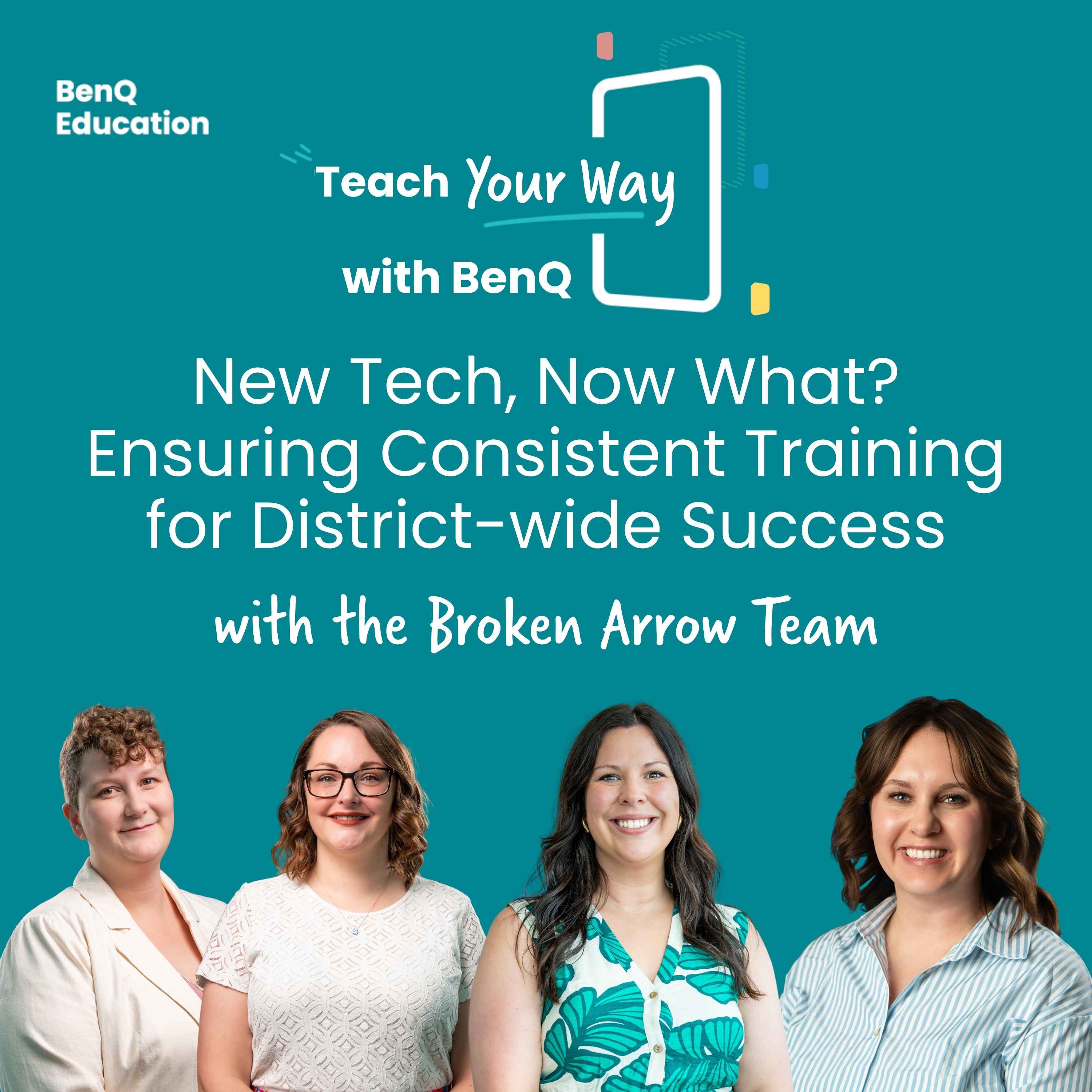 New Tech, Now What? Ensuring Consistent Training for District-wide Success53 / 100
 Onboarding to Ongoing Support: How BenQ Sets Schools Up for Success34 / 100
 Inclusive Design: BenQ Board Tools for the Neurodiverse Classroom47 / 100
 Built for How You Teach: Google Integration Done Right40 / 100