
Teach Your Way with BenQ · 2026-04-15 · 18 min
Key moments - from our scoring
Substance score
20 / 100
Five dimensions, 20 points each
This episode walks through BenQ Board's Google EDLA certification and native integration with Google Workspace, addressing a core pain point: teachers juggling multiple devices and logins during instruction. Carly and Crystal (a former technology specialist) demonstrate how the AMS system securely links teacher Google Drive accounts using single sign-on, eliminating repeated login steps across any board in a district. The workflow eliminates context-switching - teachers can pull PDFs, Google Slides, and Google Docs directly into the board without connecting to a laptop or casting devices. EasyWrite, BenQ's native annotation software, preserves interactivity when importing Google Slides, supports split-screen collaboration with Google Docs, and includes a built-in recorder that exports directly to Google Drive for easy posting to Google Classroom. The recording feature with narration, QR code sharing, and PDF export all integrate natively with Google Classroom, reducing teacher prep time and enabling students to access lesson notes asynchronously. This benefits K-12 educators managing 70% of classrooms already running Google Classroom, IT directors deploying one-time hardware without subscriptions, and schools seeking platform-agnostic flexibility.
Teachers link their Google Drive account in AMS (Account Management Systems) at ams.thankq.com using single sign-on, so when they log into any BenQ Board, Google Drive files appear in AMS Files without needing to open Chrome or re-authenticate.
Yes; when using the import tool in EasyWrite, select 'objects' instead of 'image' and the slide's interactive pieces remain functional, allowing you to drag, edit, and convert them to infinite-copy pieces for classroom activities.
After annotating in EasyWrite, use the share button to export as a PDF (which can be saved directly to Google Drive or AMS files), then post that file to Google Classroom, or generate a QR code for students to scan and access notes on their devices.
YouTube videos play without ads and without the 'related videos' recommendations that normally appear after the video ends, keeping the classroom focus intact.
No; all Google integration features (Drive access, Classroom sharing, Chrome, recording, Maps) are built natively into the board and require no external hardware, subscriptions, or additional apps.
Our reviewer’s read on each dimension, with quotes from the episode.
The episode is almost entirely a product walkthrough with minimal novel insights for educators or operators. It recites basic features (linking Google Drive, importing slides, multi-window mode) that are either intuitive or standard functionality. No fresh thinking about pedagogy, classroom management, or how to actually maximize these tools emerges; instead, it's shallow cheerleading for BenQ's native Google integration.
linking their Google Drive account. And so anytime they log into a BenQ Board, it doesn't matter which board. If they used it a million times or they use it zero times, they can automatically get into their Google Drive.
our boards make it really easy to pull those slides up. And so if I, um, so I just tapped on the Google Slides icon with the import tool, and now I wanna pull in these slides.
This is entirely derivative product marketing disguised as content. It repackages existing functionality (Google Drive access, PDF annotation, screen recording) as innovation. No contrarian takes, no first-principles examination of how classrooms actually work, and no challenge to conventional ed-tech narratives. The framing - 'teachers are busy, this saves time' - is the oldest ed-tech claim in the playbook.
You can never have enough time. That's usually the thing that you run out of the most.
being able to just pull things directly from your Google Drive without having to connect
Crystal is a customer success employee with background as a district tech specialist - relevant domain experience, but no evidence of operating at significant scale or having built anything substantial. She functions primarily as a product demo script-reader rather than a practitioner bringing hard-won insights. The co-host Carly is a BenQ marketer, not an educator or operator. Neither guest has credibility as an independent authority.
Crystal from our customer success team
I was a teacher for eight years.
The episode contains almost no concrete data, metrics, timelines, or named examples beyond trivial product stats. The single 'statistic' ('about 70% of classrooms now have Google') is vague and unsourced. All specificity is limited to UI features ('tap this icon,' 'hit the save button'). No evidence on actual classroom impact, adoption rates, student outcomes, time saved in real scenarios, or comparison to alternatives.
We know about 70% of classrooms now have Google and are using the Google classroom platform
This is a Google EDLA certified board, which means everything Google comes on the board.
The 'interview' is a thinly-veiled product demo script with zero substantive pushback or genuine inquiry. Carly asks only softball questions that invite feature explanation ('Can you show me what that looks like?', 'What other integration can we find?'). No follow-ups probe challenges, tradeoffs, limitations, or real classroom pain points. The banter is scripted and performative - Crystal even fumbles mid-demo ('my cats, not my cats') suggesting minimal rehearsal.
Can you show me what that looks like?
What other integration can we find with Google within our easy right platform that you can show us?
Computed from the transcript - who did the talking, and the words that came up most.
In this episode of Teach Your Way with BenQ, Carly is joined by Crystal from the customer success team to explore how Google integration works seamlessly within the BenQ Board. With most classrooms already relying on Google Classroom and Google Drive, this episode highlights how teachers can access, present, and share lessons directly from the board without needing additional devices or logins. Crystal demonstrates in real time how features like AMS, EZWrite, and built-in Google apps streamline lesson delivery, reduce disruptions, and save valuable classroom time. From annotating PDFs to importing Google Slides and sharing notes instantly with students, this episode provides practical, real-world strategies to simplify workflows and enhance student engagement through connected technology.
Transcribed and scored by The B2B Podcast Index.
Narrator: This is Teach Your Way with BenQ, where educators find ideas that work. Let's get started. Carly: Hi, I'm Carly with the BenQ Marcom team and with me today as our co-host and demonstrator is Crystal from our customer success team. Today we're gonna be talking about how the BenQ Board is used with Google integration.
We know about 70% of classrooms now have. Google and are using the Google classroom platform to be able to have the lessons built and shared to their students and to be able to collect data, um, in the backend on after lessons and after testing and stuff is done. So today we're gonna talk about the Google integration into the boards that comes natively with the product. This is a Google EDLA certified board, which means everything Google comes on the board.
Which is gonna be really helpful in what we're about to demo for you with Crystal. But first, let's talk about like how easy is it to be in a classroom right now and Teach Crystal used to be a technology specialist or a technology leader at her school district before she came to join us here at BenQ. So Crystal, tell us how, what pain points are the teachers going through? At your campus or that you're seeing now that you're with us in different schools?
Crystal: Yeah, so usually with teachers, whenever they're trying to get into their lessons, like they have to dig through their computer and find something, and then they'll have to maybe cast it to the board. Um, but our boards make it really easy for them to access all of their materials that they need directly from the board without even having to connect. So I'm just really excited to show you what that looks like today. Carly: Yeah, I think the biggest thing that I think a lot of teachers would complain about would be.
Um, logging in, having to keep track. I know personally I'm not in front of students, which would make me super nervous if I couldn't remember my login and password. So we're gonna talk about how Ben keyboards actually make that a little bit easier for everyone, and we're gonna talk about how having everything seamlessly tied to your. Uh, classroom presentation tool, whether it's a BenQ Board or another device, makes it easier for teachers so that there's no lesson break in the momentum.
So every time you have to step away and go like change a slide or go log into a different platform, your students lose focus. And that's what we're gonna talk about today, how that is alleviated or at least relieved a little bit with the BenQ Board. So, uh, you wanna give us a little bit of a walkthrough on, you know, why or how the Ben Keyboard Board is really built for teachers and how we help them succeed in their classroom. Crystal: Yeah, so a lot of our teachers have a lot of, most of their resources within Google Drive.
And so when, uh, with the BenQ Boards, we have something called a MS, which we tell teachers is all my stuff, but it's also called account management Systems on the admin side. But teachers are able to go into a MS and link their Google Drive account. And so anytime they log into a BenQ Board, it doesn't matter which board. If they used it a million times or they use it zero times, they can automatically get into their Google Drive.
And access all their files directly. Um, and so that just alleviates a lot of extra work and a lot extra, a lot of extra time that the teachers have to waste to, you know, log in and do all those things. Carly: Right. And all of that information from your user persona is housed where?
Crystal: Uh, that's gonna be in your a MS? Carly: Yeah, well, it's in your a MS, which is tied to your school district's backend solution. So we don't actually have you put any of that information on any sort of BenQ server that all lives within the secure backend of your school district. And we use single sign-on to be able to access it with Google or with Microsoft Azure or whatever security platform the districts are using.
So we make it so that. Everything that your teachers and your district has built is secure a hundred percent of the time, and you only get access to the things that you actually need to be able to teach in the classroom during that time. So what does it look like if I'm a teacher and I wanna come in and start a lesson and I have everything already built in my Google Drive? Can you show me what that looks like?
Crystal: Yeah. So first things first. We always recommend to teachers that the first thing that you do is link your Google Drive in ams, and that's ams.thankq.
com. So if you haven't done that yet, please make sure that you've done that first, but that will allow me or you, once you get to your board, to log in to the board and then you can just like without having to log into drive or to Google Chrome, you can go straight to your a MS files and you can actually access your Google Drive here. So you can see on my AMS a MS files, Google Drive is an option. And so now I can go through and I can find something that I want to work on.
I know right now is testing season. So we can pull up a, let's see, a star passage. And so here again, I'm in my drive and I'm just pulling up a PDF right here, so I can tap that and I can hit preview. And now I can open up my PDF in the native PDF viewer.
Let me go ahead and move this down. Okay. And so now I've got my star passage here and I can easily go through and annotate. So if I tap on this, I really have two options.
I can use the floating tool that our, uh, boards make available, so I can annotate here if I want to, but whenever I close this floating tool, those annotations go away. Another option is to use the native annotating tool within the PDF. So if I tap on that, I can actually get all these annotation tools. Sorry, Carly.
That's okay. And so I can, uh, make my annotations on here. I can also highlight whatever I need to. And what's really great about this is I can easily save it.
If you hit the save button, then you can, it'll overwrite what you had originally, but you can also save a copy if you'd like. And this is, goes back to saving our teachers a lot of time. You can save it directly in your Google Drive and now you can save it directly in Google Classroom to your students. So it's gonna be really helpful for getting that information to your students and letting them review those notes.
But one thing I do wanna point out is within your a MS files, um, right here, you do have access to your Google Drive and anything else. If you have network drives you, you can get to that as well. But. Um, what's great about the a MS files is you can actually access them from any board.
Once you have it linked in a MS, every single board that you log into will allow you to access your Google Drive. Carly: This is great Crystal. So if I wanna access my Google drive outside of a MS, how do I do that? Is that a way to do that?
Crystal: Yeah, so that's a really great question Carly. So like you mentioned earlier, our boards are EDLA certified. So we have our boards come with all the Google apps. You can see here we've got Chrome, we've got classroom maps, all of those things.
But we also have Google Drive. So you can actually go into the Google Drive app. Now the first time you log into a board, you'll have to log into Google Drive and, and once you log into one, it'll log you into all the other apps. So that's gonna be separate from a MS though.
But I can actually access my Google Drive, um, from here and I can get to all my resources and whenever I open one up, um, it will open in that app as long as it's installed on the board. So again, saving your teachers a lot of time by, um, having Google integration on our boards. Carly: Well, this is great Crystal 'cause it means that this, the way you just showed us how to do it is very similar to what they're already doing when it comes to the laptops they have, that they've been issued that are probably Google based and the ecosystem that they're very familiar with.
So that makes things a lot faster and it means that teachers don't have to change the way they teach, which is wonderful. Well, good. Well, um, so let's talk about how this would equate for us into like a seamless lesson flow. Talking about those distractions that we're trying to remove from classrooms.
Uh, how does this help teachers in the classroom to be able to have like a seamless, a seamless flow and a continuous lesson time instead of having the stops and starts that come with? Popping in and out of different platforms. Crystal: Yeah, great question Carly. So something that might be really helpful if teachers wanna utilize all their Google resources, um, and have that seamless integr or lesson integration or lesson flow, um, I highly recommend that you use Easy, right?
Because Easy right. Has some really great Google integration. Um, in it. So for example, we have our import tool right here.
We're able to, like, if I wanna pull a PDF in, I can tap on this icon right here. And you can see here I can access my drive and pull in anything that I want to. But one thing that I really love is a lot of our teachers already have so many lessons built in Google Slides. And so our, um, easy right software makes it really easy to pull those slides up.
And so if I, um, so I just tapped on the Google Slides icon with the import tool, and now I wanna pull in these slides. I'm gonna hit import. Now, if your slides have, um, interactive pieces already, then you can actually pull those pieces. You can pull those slides in and keep those pieces interactive.
So you've got the option of pulling it in as an image or with objects. So I'm gonna tap, tap objects and you can also choose which pages you want. So let's say that I just want the first two I can hit okay. And then it's gonna, uh, spend a tiny bit of time pulling those in.
Um, now before I actually get into those interactive pieces, I do wanna point out, since this is a Google integration or YouTube isn't, uh, is a Google integration, um, whenever you play YouTube videos through Easy Write, you will not get any ads and you won't get any related videos. So, or you won't get those related videos that play after the video. So, um, so just, uh, keep that in mind. Um, it's gonna be really helpful whenever you actually get into your lesson.
You don't have to worry about whatever your kids might randomly see. So, n Easy, right? Remember I pulled this? Uh, in as objects so I can tap on things that were, um, objects on the original slides and those can actually move.
So now I can move these pieces around, but something else that I could do is I can tap on it, it, um, easy write, recognizes it as an object. I can hit those three dots and I can turn this into an easy copy piece. So if I tap on that, now I have. Infinite pieces here, so it's gonna save you a lot of time if you're used to multiplying or copying and pasting multiple um, items on a Google slide.
Now you can just do that in easy write. Carly: That's great. And I love all the little alligators coming to help you figure out the math equations. That's wonderful.
So Crystal, what other integration can we find with Google within our easy right platform that you can show us? Crystal: Yeah, there's actually quite a few. So in your toolbox here, so this, um, rightmost icon, we've got some Google integration right here. So we have Google Maps, um, we also have Google Drive and we have Google Chrome.
Now Google Drive. When you tap on that, it'll split your screen automatically. So this is really great for if you want to, let me actually add a template here. Let's say that I want my students debating something, so I'm gonna pull up a template here.
Let's go ahead and get the fact and opinion one. And I'm gonna go ahead and I want my cat, my kids, not my cats, um, to debate. About cats and dogs, which ones make better pets? And so I can have cats here, dogs here, and then I can have them share out about their claims.
Like what do they, why do they think cats make better pets? Why do dogs make better pets? And then over here I can open up a. Um, a Google doc that I've already shared with my students, and so I've made this collaborative, so now they can all type on there and we can see everyone's, um, claim or their evidence, um, or their data as they're working on it.
And so, um, it makes it really seamless and being able to share that lesson with my students and to actually see what they're doing live as well. Carly: That's great. And that gets the kids more activated, whether they're at the board up here writing on it or from their seats, putting the information into their laptops and sharing it on the, on the display as well. I think that's wonderful.
As we get ready to wrap up, I just wanna ask a couple other questions. So like, what benefits do you see for teachers? Do you think they're the, the top callouts for teachers? Crystal: So number one time it's gonna save you so much time.
Like as a teacher, I was a teacher for eight years. You can never have enough time. That's usually the thing that you run out of the most. And so being able to just pull things directly from your Google Drive without having to connect this whole time, I have not been connected to a laptop or anything.
I'm using the board independently. Um, again, that's gonna save so much time. Um, the second thing is convenience. Like if I could be, um, on the other side of the campus, drop something in my Google Drive, and then by the time that I get to my classroom.
I can easily pull it into my board and then I'm set, I'm ready to do my lesson. Carly: Okay. So, uh, is there anything else you wanna show us really quickly before we talk about how this affects students? Crystal: Yeah, of course.
So one question that we get a lot from teachers is how can they have multiple slide decks open at the same time? And so we can actually do that on the board using multi window mode. So the workflow is this, you're gonna start by opening up Google Drive, and then with your floating sidebar, you're gonna hit that and hit multi window. And then now I can go into this and I can pull up like multiple Google Slides.
So here I have some Google Slides. I'm gonna tap on one and so I can pull this over here. And now I'm gonna open another one. And you can see each time I tap on one, it opens it in another multi window mode and I can easily move this over here.
Have this one showing on this half of the screen. Whoop, excuse Carly: me, I got, Crystal: oh, sorry. You got it, Carly, and then Carly: I don't, Crystal: oh, that was my fault. And then this side, I can tap on this and now I have two slide decks going and I can even put them both in present mode if I need to.
So now you can maybe have directions on one side and on the other side you have the, um, activity or you have an anchor chart. Um, whatever you need. So. Carly: Well, this has been great.
I think that you've done a really great job of showing us all the different ways that teachers can save time, teach the way that they're already teaching, and not have to learn something new. Um, so for students, how is this gonna affect students? I know I have kids that are in classrooms right now and they're learning very differently than I did forever and ever ago. So are there ways with the Google, um, platform and within, within Google Classroom that some of the assets that are being created here in classroom can also be sent home to my students so that we can use them as refreshers?
When we're teaching or anything like that. Crystal: Yes. So our board makes it really easy to share information to students like, um, especially in Easy Write. So let me go back to Easy Write really quickly, and let's say that I just did a full lesson on something, but I want my students to have the notes and I wanna be able to either, I want them to either have it, just have it on their laptop or be able to access it through Google Classroom.
So over here I've got three pages that we worked on already. Now on the bottom left, right here. You've got this little, uh, hamburger menu, and then you have a share button. It's the second icon from the top.
So you've got several options here. You can share all the notes if your students have iPads or they can easily scan QR codes. You can tap share by, share with QR code, and then you can actually choose which pages you want hit okay, and it'll generate a QR code for you. Your kids scan that and then they can easily, uh, view the notes, um, on their computers.
Another option, of course, here is also to save it as a PDF. So when you choose to save it as a PDF, we showed this kind of a little bit earlier, but when you do that, you're able to first name it, but then it's gonna ask you if you wanna save it to your a MS files or to Google Drive. So when I save it to Google Drive, this is gonna make it so much easier for me to post it to Google Classroom and have that available for my students. Um, now the last thing I wanted to show in regards to helping students.
Is our record button. So this record button I can record, I can start a recording in easy, right? Or you also have the option with the floating tool right here. Um, so I can take that and if I hit the little camera, actually let me clear this so I can hit the little record button.
And now. I can record everything that I do on the screen. I can go to any, um, app that I need to, and then this is also going to record my voice. So every little thing that I do and my voice is gonna be recorded with this, so, um, I can also pause it if I need to, if I need to stop for anything.
But when I am done, I can hit that, uh, that stop button, name the file. And then again, this is where that Google integration really comes to play. I can tap on that and I can save the recording directly to my drive, making it much easier to share with my students in Google Classroom. Carly: Well, crystal, this has been really, really informative today.
I hope some of our listeners, or our viewers, I should say. Um, we're able to gather a little bit more information about how to be able to more natively use Google with their bin keyboard. Again, everything you're seeing today with the demonstrations, with the board is done natively from the board. There are no apps, there's no subscriptions.
Oh, and there's no additional pieces of hardware. There's no. Slot in computers or Chromebox or anything else attached. This is all natively being done through the board.
So it is a, you know, one time drop and go sort of a situation so that you can immediately get your teachers up and running in a classroom, uh, with little to no lag time between how they're doing work now, whether it's with a projector or with another display, and being able to do it, um, on our Ben keyboards. Um, so final thoughts? Um, I would just say. Regardless of what your current classroom situation is, um, there's a lot of capabilities and as you're thinking about what, what is gonna be teaching in the next three to five years, um, I think that looking at something like this that allows you the flexibility and the capability to be able to.
Teach your way. Uh, stay up with whatever apps and platforms that are best suited for the what you're teaching and how you're teaching, um, is a really good option. We wanna thank all of our listeners for joining us, and again, thank Crystal for joining us, um, to show how Ben keyboards and the Google integrations seamlessly work together. For anyone who wants to go back and hear or learn more about how, um, the BenQ Boards can support teaching in the classroom, you can go find us anywhere that podcasts are available and listen to previous episodes, or you can find us on our YouTube channel, which is linked in the show note.
Our new episode will be out in a couple of weeks and just remember to like and subscribe. And again, thank you Crystal for your time. And thank you everyone for joining us on Teach Your Way with BenQ. We'll see you next time.
Bye. Narrator: Thanks for joining us on Teach Your Way with BenQ. For more resources and teaching inspiration, visit us online@benq.com.
Don't forget to follow the show so you never miss an episode.
Other episodes covering the same guests and topics, from across The B2B Podcast Index.
 Refocusing Docker on developer-first and growthFounders Talk · on Single Sign-On (SSO)70 / 100
 Debunking Cybersecurity Misconceptions, with Michael IrwinIT Matters · on Single Sign-On (SSO)69 / 100
 How Schools Can Stay SafeTech & Learning Conversations Podcast · on Single Sign-On (SSO)63 / 100
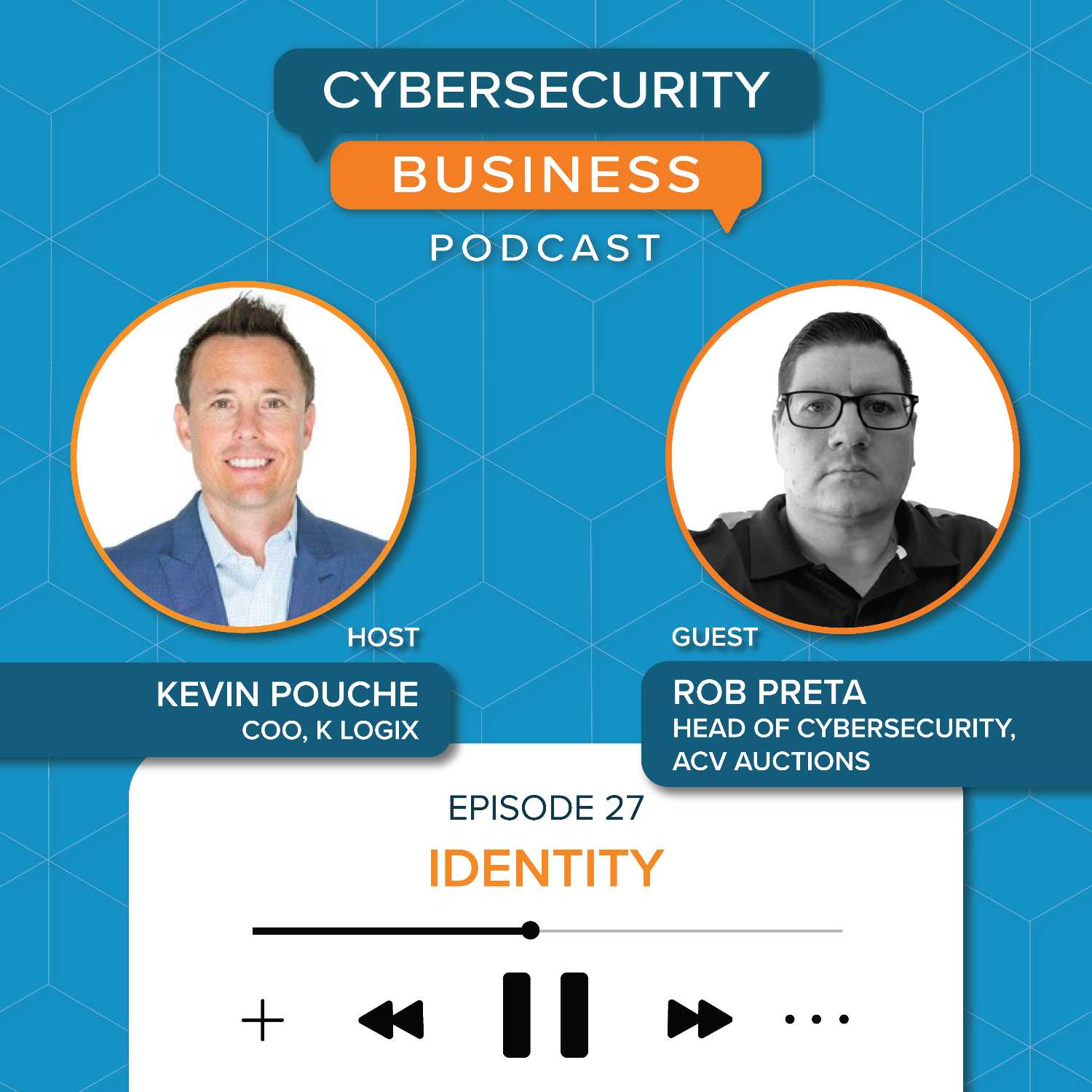 IdentityCyber Security Business · on Single Sign-On (SSO)58 / 100
 Episode 16 - Jon Hyman, Co-founder and CTO at BrazeSaaSOps Leaders With David Politis · on Single Sign-On (SSO)55 / 100
 Ep 810: ChatGPT Tasks: What’s New, How They Work and 5 Secret Shortcuts to Use TodayEveryday AI Podcast · on Google Drive integration54 / 100
 EZWrite: Lessons That Move With You29 / 100
 New Tech, Now What? Ensuring Consistent Training for District-wide Success53 / 100
 Onboarding to Ongoing Support: How BenQ Sets Schools Up for Success34 / 100
 Inclusive Design: BenQ Board Tools for the Neurodiverse Classroom47 / 100
 The Long Game in EdTech: Choosing Hardware That Grows With Your Needs54 / 100