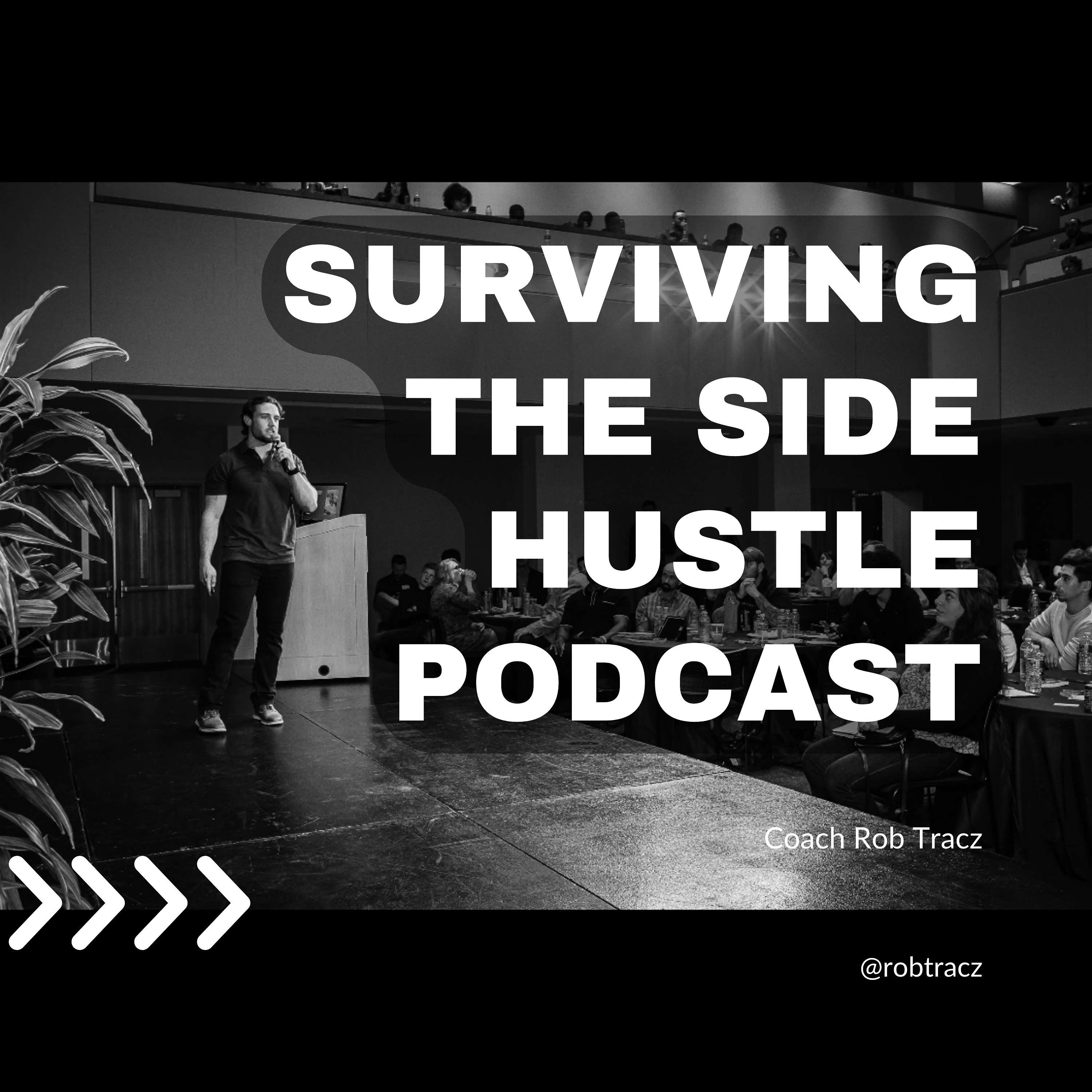
Surviving the Side Hustle · 2026-06-02 · 31 min
Key moments - from our scoring
Substance score
52 / 100
Five dimensions, 20 points each
Michael LeBeau brings a unique perspective to entrepreneurship: he never set out to be one, but discovered the electronics recycling and data destruction space by accident. Working as a high school teacher in Massachusetts - teaching science to newcomer students - he got connected through a student to someone working in electronics recycling, took a job in the field, and after being laid off, built Tech Cycle Solutions from scratch with family support and ChatGPT guidance. The company handles demanufacturing (disassembly and sorting) of old laptops, servers, and network equipment, then ships components to specialized processors for rare metal recovery. What makes this particularly relevant to B2B operators: the massive blind spot in corporate data security. Michael shares real stories of businesses unknowingly disposing of hard drives in dumpsters, IT departments unaware that network switches contain data storage, and individuals attempting DIY destruction (drilling through SSDs without hitting actual storage). Tech Cycle Solutions is NIST-compliant and HIPAA-compliant, offering secure destruction certificates for $4 per hard drive. The growing e-waste problem - accelerated by AI adoption forcing faster device replacement cycles - creates both the opportunity and urgency for his business. Michael discusses scaling with new hires, the overlap between teaching and business skill requirements, and how the schedule actually works: school until 3pm, then work until 8pm, with a strategic 20-minute power nap in between to reset mentally.
Tech Cycle Solutions performs demanufacturing - disassembling devices and sorting components (screens, lithium batteries, RAM, etc.) into categories - then ships sorted materials to specialized processors who melt down and refine rare metals and other materials. Different materials go to different locations depending on type.
Most people don't know how to securely destroy data; drilling or hammering hard drives doesn't always work (especially SSDs where you might hit only plastic), and many corporate devices get thrown away without any data destruction. Network switches and other non-obvious devices also contain hard drives, creating massive liability for breaches.
Tech Cycle Solutions charges $4 per hard drive for secure shredding and provides certificates of destruction to back up compliance, making it a negligible cost compared to the risk of a data breach.
He works from 6:30am through 8pm most days - school until 3pm, then the business until 8pm - and uses a strategic 20-minute power nap between the two to reset mentally and split his day into two productive halves.
A high school student introduced him to a relative who ran an electronics recycling operation; Michael took a job there, and after being laid off during a slow season, he saw the potential and started Tech Cycle Solutions with family support and ChatGPT guidance.
Our reviewer’s read on each dimension, with quotes from the episode.
The episode provides some useful operational insights about the electronics recycling industry (demanufacturing vs. processing, data security risks, corporate vs. residential economics), but much of the conversation dwells on motivational narratives, personal anecdotes about 20-minute naps, and meditation rather than substantive business lessons. The specific details about the business itself - cost per drive ($4), truck capacity, hiring decisions - are sparse and scattered.
we basically do demanufacturing, which is the of the materials... We're not actually chopping up lithium and breaking down like the components to like the rare metals. What we're doing is we're sorting them into categories that can be later refined.
when you go to like one business pickup, like regardless what industry they work in, you're quarter truck, half truck... we fill entire trucks... to the ceiling.
While the electronics recycling space itself is under-covered in mainstream podcasts, the framing and insights here are fairly conventional - the guest leans heavily on motivational clichés (follow your passion, get support, take care of yourself) rather than original thinking about the business model or industry dynamics. No contrarian positions or first-principles analysis.
you have to enjoy it. Like, very fortunate that I stumbled this. I think if you're just starting the business just to make the money, then it's hard stay motivated.
I don't think I require separation because you know, like the skills overlap.
Michael is a genuine operator who has built a working business from zero while maintaining full-time employment, providing real credibility. However, he is still early-stage (4 years in, just hired first employee, still teaching full-time), lacks venture-scale experience, and hasn't deployed sophisticated business strategy. He's a legitimate practitioner but not a seasoned operator at significant scale.
I'm a sole owner of this company, but we had a business partner from the beginning and she got us started like right off the bat. Like she has an MBA
I was laid off, which, you know, is part time, you know, I was just trying to like, get my feet wet, make some extra income. But like after getting laid off, I saw what was there like there's so much potential.
The episode contains a few concrete data points ($4 per hard drive, 20-minute naps, hiring one driver, Japan vacation), but lacks the depth of specificity expected from a business-focused conversation. No revenue figures, growth metrics, customer counts, processing volumes, pricing models beyond the $4 example, or timeline details. Many claims remain vague or anecdotal.
we only charge $4 for a hard drive to be shredded, like $4 and like all the data is secure. And then we'll produce certificates to back that up.
email is support techcyclesolution.com... call our office, which is 617-302-6306
Rob asks reasonable opening questions about time management and motivation, but rarely pushes back, probes for numbers, or challenges claims. He follows a soft interview template (tell your story, how do you balance, final advice) without pressing on unit economics, scaling challenges, competitive differentiation, or contradictions. The conversation stays surface-level and affirming rather than investigative.
And he's like, he had no idea that he gave away like six or seven years of information. [Rob simply affirms with] Yeah, yeah, and I know you had mentioned about the data security.
how did you juggle both of those? Cause I feel like a lot of people get into teaching because of the security... [Generic setup, no follow-up on actual trade-offs]
Computed from the transcript - who did the talking, and the words that came up most.
In this episode, Rob Tracz chats with Michael LeBeau, a high school computer science teacher and founder of Tech Cycle Solutions, who is making waves in the electronics recycling industry. They explore balancing a full-time teaching job with launching a side hustle focused on sustainability and data security, offering insights into starting, growing, and maintaining a purpose-driven business.
Transcribed and scored by The B2B Podcast Index.
Rob Tracz: What's going on everybody and welcome back to another episode of surviving the side hustle. guest ⁓ Michael Laboe ⁓ he's something pretty cool. ⁓ And he's still working a full time job as a high school teacher, Michael teaches science to newcomer students in Massachusetts, ⁓ many of are learning English for the first time, but outside of the classroom, he's also the founder of tech cycle solutions. which is a company focused on electronics recycling and secure data destruction.
business helps corporations responsibly dispose of laptops, servers, and other electronic devices ⁓ ensuring sensitive information is completely destroyed. It's growing problem that most people don't think about. What happens to all the technology that we throw away every year? So in today's conversation, we're gonna talk about different things like starting a business while working full time, the realities of building a side hustle, and how Michael is scaling a company focused on sustainability and data security.
to the show, man. How are you doing? Michael LeBeau: Thanks for having me. I'm doing alright.
Rob Tracz: Good. well, I'd to just dive right in if you're cool with that. And ⁓ want to ask you like right off the bat here, like your full-time teacher and a business owner, can explain to us a little bit how you kind juggled both of those? Cause I feel like a lot of people get into teaching because of the security and the predictability and being a business owner is not like that at all.
So how did you, ⁓ how did fall into this position? Michael LeBeau: Yeah, sir. I mean, that's fair. That's like a pretty big claim.
Like it's not easy. I mean, teaching still is a full time job. You know, like in a way though, teaching is kind of like the best job to get into to start a business. You know, like if I had to get out at 5pm every single day, then I wouldn't have that extra time or even to be available during business hours to provide, you know, the services my company does.
So being a teacher has been a tool to me because, you know, ⁓ after o'clock students leave. At that point, I can go right into my business, whatever we're doing that day. So it's been an asset for sure. Rob Tracz: That's awesome.
Yeah, and I never really considered that because I just assumed like yeah, I forget because I haven't been in school in forever So I forget that like school gets out before most of the time like workday is over But but I'm curious so obviously you didn't go You didn't study to become a teacher so that you could also become an entrepreneur So did you ever consider yourself? Entrepreneurial or see yourself kind of starting a business when you were younger? Michael LeBeau: No, ironically, I was in Future Business Leaders of America, which is like a club my high school had.
But I did that because I like the teacher and my friends are in it. I never once thought I was going to be a business person. I didn't know I was going be teacher either. I just took the path that was given to me.
yeah, I kind of just like I fell into it. Rob Tracz: Mm-hmm. I like it. like it.
so falling into it and then like, there's a lot of different ways you could have gone to, right? Cause you can visit, you can have any kind of business out there. So what made you start tech cycle solutions? Michael LeBeau: Yeah, yeah.
I mean, also going back real quick is like, weird to say entrepreneur, like, you know, like, I think entrepreneurs like corporate, like an office, all these kinds of things. Like, like when I say like my employees are all or like my, my business or entrepreneur, it's weird. Like I'm not used to it yet. You know, like, I don't know there'll be a time where I am, but like, yes, by definition, I am a start of the business, but I don't see it that way.
I see it as just like, I have job to do and I'm going to accomplish that job one step at a time. And whatever comes at me comes at me. Rob Tracz: you Michael LeBeau: I don't see it as like a large image that I am like pursuing. Like there's obviously goals, but like a entrepreneur, ⁓ always affiliated with, you know, the corporate world.
And then, sorry, could you repeat the ⁓ recent question? ⁓ Rob Tracz: Mm. Yeah, like what made you start TechCycle Solutions if you could have started anything in the world? Michael LeBeau: Right.
I mean, I have a pretty long tech background. Like my first job was a staples easy tech. I was like a system admin for a long time. So I just have like a relatively tech background and I've, you know, I'm always interested in it, especially at consumer products.
Now more towards business products, but I got into it because of like one of my students, I got really close to them and they introduced me to one of their relatives and the relatives ran a job that was almost like very similar to mine. And then After talking to that person, they ended up offering me employment. So I was my first exposure to electronics recycling was working for this relative that I've met through school. And from there it was, you know, insane.
Like, like you don't realize, like, I didn't know this field existed, nevermind like the need for it. Like, I don't know, like I never once thought electronic recycling until I stepped in to that first day of work. They gave me a little tour. I'm like, it's insane.
Like laptops, like from the ground to the ceiling. Rob Tracz: Yeah. Michael LeBeau: everywhere you look. Like it was clear that this was not like some, you know, small business.
This is like a like, something big is happening here. I mean, I can keep going from here. Like, after working there for quite a while, you know, like, there's definitely slow seasons and busy seasons. And during the slow season, I was laid off, which, you know, is part time, you know, I was just trying to like, get my feet wet, make some extra income.
But like after getting laid off, I saw what was there like there's so much potential. So After talking to my family, I a lot of support, which I'm very fortunate to have. After laid off, basically just, one step at a time, one challenge at a time, built that I had no idea what I was doing. With the help of ChatGPT and my ⁓ family members who run businesses, they helped me get on my feet.
That was the start of the tech cycle. Rob Tracz: Oh yeah, I love that. And yeah, having support systems in place is like so incredibly important because even, even for ourselves, like I know there are plenty of times when I've been building and growing and then like growth kind of slows down because there's different seasons and waves of business. And then there'll be certain times when I'm sitting there and I'm like, geez, am I, am I doing the right thing?
Like, am I in the, did I make a mistake by kind of doing what I'm doing? And then that second, like second thought or that like internal dialogue kind of starts to happen and imposter syndrome or imposter phenomenon starts to happen and it could be it could be lonely and isolating and Without support system. It can be it can kind of you alive. So that's so important Michael LeBeau: Yeah, no, definitely.
you know, like, like I was never alone, like I am the sole owner of this company, but we, had a business partner from the beginning and, she got us started like right off the bat. Like she has an MBA and, you know, like she really did the to get our word out there. And, ⁓ you know, from there, like, yeah, like there's some things you do when you're on your own, like when a problem arises, you know, like no one's there to like bail you out, but, yeah, I've always had someone rely on.
Rob Tracz: Yeah. And that's awesome. I want to, I want to kind of ask you ⁓ tell you here that like, as I've told you on a previous conversation, like, I don't even know what you're supposed to be doing with electronics. Like my old laptop, have my old laptops and I just kind of have them because I didn't know, am I allowed to just throw this out or like, I don't know what, and I'm apparently there's a whole world to this.
So what like actually happens in the whole process of ⁓ disposing of the material and information correctly. Michael LeBeau: Right. mean, that's such a big answer. That's like the entire industry.
If you have a laptop, you should not toss it in the trash. At the very least, it has a lithium battery, which is hazardous. what you do is you reach out to people like me. There's actually not that many people that do what we do, which is ⁓ fortunate for me getting into this.
But what we do is we basically ⁓ we do demanufacturing, which is the of the materials. We're not actually chopping up lithium and breaking down like the components to like the rare metals. What we're doing is we're sorting them into categories that can be later refined. So demanufacturing is the taking apart and the sorting.
So, you know, we can take the screen out, we can take the lithium out, we can take the RAM out, like all these components, and then they get sorted into different categories. And once they're, you know, once you have like a good quantity, then we can ship them off to processors, which is the next step. And those, the people who actually, you know, chop up and melt down and like recreate the... the actual metals.
But there's no one answer for everything. Like every type of metal, every type of product can go to a different location. Like there's batteries in Arizona, there's ⁓ batteries here in New Jersey. And then, you can say local with a lot of the common metals like copper, aluminum, and steel.
But there's just no one answer for everything. Rob Tracz: Mmm. Wow. Yeah.
Go ahead. Hmm. Yeah, and I know you had mentioned about the data security. Why is it such a big issue when disposing of electronics?
Why is it such a big issue when disposing of electronics? Michael LeBeau: ⁓ yeah. mean, people just don't know. I have so many stories of people who, like, worried about it, or they just thought it was safe based on what they did.
Now you take a hammer and you chop up you bash up the hard drive. That's not it. ⁓ I'm not saying you can't, but you have to know what you're doing. Like, I've residential customers who like take a drill and put it right through the hard drive.
But it was a solid state drive, which is shaped differently. I have so many stories of people ⁓ weren't worried about it, or they just thought was safe based on what they did. Now you take a hammer and you chop up bash up the hard drive. That's not it.
I'm not saying you can't, but you have to know you're doing. I've had residential customers who like take a drill and put it right the hard drive. it was a solid state drive, So when they put the drill through, they actually didn't hit anything. They just hit the plastic.
So the entire data, that whole computer was there. I him if he was sure and everything. I ended up like turning that computer on and sending him an email with all that stuff that's in there. And he was like, you he had idea that he just gave away like six or seven years of information.
But really on the, what we deal with is like the corporate and the business side of ⁓ data security. Like we're NIST compliant. ⁓ when they put the drill through, they actually didn't hit anything. They just hit the plastic.
So the entire ⁓ that whole computer was there. And I him if he was sure I ended up turning that computer on and sending him an email with all that stuff that's in there. And he was like, he had no idea that he gave away like six or seven years of ⁓ information. hospitals, so we're HIPAA compliant.
you know, like all that stuff matters, you know, because, like, if a leak gets out within a business, the repercussions can be massive. And sometimes that job is left up to the lowest person on the totem pole. You know, they're like, it's like, hey, get rid of these. And it's like, okay, but like, sometimes they just toss them the dumpster.
People don't know that this exists. And rather, they have an IT department that is competent, but they might not be aware of, know, say that their network switch has a hard drive. You wouldn't think of networking equipment to have a hard drive. You only think of laptops and servers or PCs.
So the biggest thing is awareness. But the other side of it is like the consequence if something gets out is just not worth the risk. You know, like we only charge $4 for a hard drive to be shredded, like $4 and like all the data is secure. And then we'll produce certificates to back that up.
And it's, I think it's like a no brainer option when we offer it to our customers. Rob Tracz: Yeah, yeah, and mean, obviously don't know much about tech and my whole world of tech is very rudimentary, but my girlfriend is in information security and I hear her talking about how important it is with. like data getting leaked out or people hacking in and stealing people's information because she works for a big name hospital and that's super important. So for $4 to make sure that your information is saved sounds like a pretty decent like option there.
So that's awesome. Michael LeBeau: next. Yeah, and you'd be surprised to like, even without the table when everything's clearly stated, like you see it almost every week, like that was left behind and they didn't know about it. I have so many stories I can share, but I cannot share.
yeah, I think there's no like universal knowledge for this. Like people had to like learn us on the spot and based on their position at their company that they work at, they might just not be exposed to that. You know, like who knows the internal of parts of a laptop at heart. Like who knows what, especially with the innovation that's happening.
Like, you know, every couple of years is a new like style. Like we went from like, like 2.5 inch hard drives. Now we're at like, sorry, 2.
5 inch hard drives. And now we're in these little like chipsets, which is like, how you found me, but now hard drives are like this big. They're, they're literally like tiny little squares and hold two terabytes. You would never see it.
So yeah, it's really cool. You know, we've come so far, but at same time it's Rob Tracz: Cheers. Michael LeBeau: I would not expect the common person to know it looks like or how to securely remove it. And that's why we don't say, like, give us your hard drive.
So we go into the device, we inspect every device we receive, and then we'll remove them and provide the counts. yeah, there's a lack of awareness in a lot of fields or lot of areas of this field. Rob Tracz: You know, it's crazy too because I took a computer application class in college and part of my final was to record myself removing a hard drive from a laptop ⁓ Michael LeBeau: Mm-hmm. Rob Tracz: I don't even know how I did it now.
Like I, like, I still don't know how to do it. And I even had university education around somewhat of the awareness. like that's just shows low that is. then, with like AI and everything else with everyone's data moving at such a rapid pace, I like it's crucial to sure that you're protecting stuff and disposing of your equipment appropriately, and then forward and creating a better, safe environment for later.
Michael LeBeau: Yeah, mean, AI has been a big component. the last couple of years, let's say 15 years or so, companies replace their devices every two to three years. So the turnaround is so high. So when you have that many devices going in and out, and you hire people leaving, there is a high chance that devices are forgotten about.
AI is creating a new wave of technology. we see that people are starting to replace their technology more frequently now. like amount of e-waste, like every it goes way up. Like I'm not the numbers guy.
don't know like how many pounds of e-waste is being sent down to the world each year. But you know, it's our goal to prevent that. But ⁓ every single year total amount increases. It's insane.
Rob Tracz: Yeah, that's gotta be crazy. I want to shift gears and kind of get back into kind of talking about you as the business owner. And I know for myself, I have to of role switch a lot. going coaching to teaching to podcasting to marketing, like thing, I got to like juggle a lot of different hats and sales and things that.
So I want ask you, how do you juggle all the different hats and find time for teaching and doing the requirements that you need to fulfill for to be a teacher? Michael LeBeau: Sure. There's different ways to find motivation. Like I'm lucky that I like my job.
Like I like teaching. if I got my business is like basically half of who I am at this point. But you know if I if I am teaching like for the next like 34 years I'm happy there. So the fact that like I like like my coworkers and you know like I get to meet students and interact with all these people.
I just want to be social and in that environment. So it makes like you know doing not my personal job that I own a lot easier just because of like it. And what was the other part of the question? I mean, it's not easy.
it I work a lot. I work you know, I up at like 630. I ⁓ make my way to school. I get out of school and I'm working until like rather 8pm like physically, you know, like in the shop or, you know, taking things apart when are shredding all that fun stuff.
But like it doesn't stop like I still have like websites to run like I need to get like my CEO up. got to do scheduling and emails and like you know, we're still four years in. So there's so many little things we can do to like improve our image. And that goes back to like the passion like I love doing this, like the hardware side of things and the management side of things like I look to it like nothing is like better than just putting on headphones and then just ⁓ hanging out the shop and going through like 50 PCs and you can just see like the waist like like all the cool stuff that's in there.
When it comes to separating the two, I think we talked about this a little before but like, I don't think I require separation because you know, like the skills overlap. But like, when I'm like really struggling, I always do it like I take a 20 minute nap right in between school and work or tech cycle. So as soon as I get home, I close my eyes 20 minutes to the alarm and I get up no matter what no matter how tired I am. you get up and it's like the perfect amount of sleep.
You don't feel groggy, you feel like refreshed and then it's a whole new day. Like your brain will like split the day into two whole parts ⁓ and feel like you get so much more done. And when you feel productive, it makes you feel good and then that keeps you going. Rob Tracz: Yeah.
And you could just kind of like knock right out for 20 minutes like on command. Michael LeBeau: I mean, my eyes closed like full sleep for that full 20 minutes and though but like eyes closed and you know, like relaxation, no phone, no music just like clock out for 20 minutes. I can yeah like some of my friends make fun of me for it. But like there have been times where I'm like Ubering somewhere and that Uber is 25 minutes long.
I'll take a 20 minute Uber in that drive in that 20 minute nap in that Uber. I'd say that it's like a little bit of a skill but I mean like Rob Tracz: You Michael LeBeau: I feel like I don't really have a choice because I am so tired. So like, when I close my eyes, it does just happen. It's if you like, just start doing it randomly, like a 20 minute nap in the middle of the day with like no purpose, then it's probably more difficult.
Especially if you're really stressed, like, you know, if I'm really stressed, then I'll probably just like, try to go right through. But in a perfect scenario, I would always be able to have a 20 minute break in between. Rob Tracz: Mm. Yeah.
so there was a time period where I was really super consistent with meditation and I was using the headspace app and I was like ⁓ listening that. And as I was getting a little bit better with it, I kind of increased my time and I think it was like going like 18 or maybe 20 minutes and I never successfully complete that. I'd fall asleep somewhere and then I'd wake up cause it would stop. And then I'd be like, and then I would get upset because I'd fallen asleep.
And then eventually I realized like, you know what, maybe that's just what my body needs more of it. Maybe it just needs that little tiny like power nap. And then yeah, the same thing as you're saying, like I'd wake up feeling so much better once I kind of got past that, like being sad that I was like wasting my meditation, but then realizing that how benefit it is for me to take that little nap. So I love that you share that.
Michael LeBeau: Yeah. Yeah. And like, I definitely feel that, you know, as we get bigger, like my responsibilities are growing. And the teaching stays the same, but tech cycle was constantly growing, growing, growing.
So like my responsibilities are increasing. So like, I definitely feel the, it's like my mind's racing all the time. So ⁓ I like, more now than ever, I can clearly see the need for meditation. Like when I was younger, I'm like, who meditates?
Like, what's the purpose of that? Now I very Rob Tracz: Yeah. Michael LeBeau: I can see in my head like what it would do. like, yeah, like taking a break, taking a nap, meditating, all those things probably serve the similar purpose.
And I should probably put more time into that. ⁓ think meditating would be really good. Rob Tracz: Yeah, I love it because it allows me to kind of slow things down because when I am role switching between the different things that I need to be doing, I feel like I can't get as much into, I, I, I sacrifice some of the effort that I can kind of get into ⁓ I'm still kind of processing in different like hat basically. ⁓ and then if I meditate, it slows it down, allows me to kind of like reset, turn my brain off for a second and then dive back into it harder.
⁓ you said something, interesting a second ago, as you kind of grow, you considering meditation and some of these other practices. maybe. I know that we talked on a previous call that you were in this state of maybe like considering to hire and grow your team. What does that kind of look like for yourself as ⁓ like to bring more people on?
Michael LeBeau: Right. like, you know, like teaching, you I could leave, I'd like to stay there as long as I can. I always had the option to go in part time to free up, you know, more my time towards the business. But like realistically, at this point, we're scaling quickly.
So we need more hands. And we hired a new driver this this past winter. And it's been incredible. You know, before this, was like part time or remote, like doing marketing stuff.
So having like who was on the ground doing the full job, when I'm at school has been incredible. we would not be able to keep up what we're doing without all hands on deck. Like we really need ⁓ this kind of And I don't see we can't just keep expanding at this point. You know, as long as we have the demand and we're getting the intake of the electronics and you know, our marketing is good and people are happy with us and we continue to good reviews.
then I don't see why we can't have two, three, four, five drivers or laborers getting this done. you know, it's interesting being responsible for somebody. yeah, like, I know, like, if I don't pay him, then like, like, that's his income. Like, I've never been in this situation.
Like, I don't think myself as an entrepreneur. I just think myself as I'm trying to get this job done. So definitely like some weight to it. But overall, it's been ⁓ Rob Tracz: you Michael LeBeau: such an improvement.
I think maybe this summer once we hit the busy season, could probably add another guy on. Rob Tracz: Hmm. I know you were telling me previously there's typically two ways, right? Like the residential and then the corporate and corporate to be kind of like where you're bringing more of your focus.
And I guess it's because there's a bigger opportunity for impact in and reducing waste. And that's better for you in terms of financial work with bigger organizations. There's more stuff to recycle and ⁓ replenish, but obviously that's going to require a lot more hands on as you're saying, Like as you grow up or grow in size, you're going to need to continue to go up with ⁓ numbers. Yeah.
Michael LeBeau: Yeah. Yeah, mean, corporate corporate is always the goal. mean, like it's concentrated. You know, you go to five residential houses, you get like four laptops, two TVs and maybe a desktop.
But when you go to like one business pickup, like regardless what industry they work in, ⁓ you're quarter truck, half truck. You know, so ⁓ sometimes I we've done we fill entire trucks. We have like 12 foot truck and they have a 10 foot truck and Yeah, I don't know what the cubic it is, but we you fill it like to the ceiling. It's full.
That's how much people stockpile because they don't know that we exist or frequency that they need those pickups. Yeah. And you can also in like residential versus commercial if you want. But commercial is always to the goal.
Like residential, like we love to offer it. It's difficult because of it's way less lucrative ⁓ it's much more time per item. But we do. We do lot of markets.
⁓ sustainability days. We do private events like partnering with like real estate agencies other businesses just advertise to their, ⁓ you know, their building. And then we like farmers markets and that kind of stuff. all of those is all geared towards residential, but it's like one day show up at four hours.
We'll have our team out there with like a tent and tables and our trucks and we'll take everything for free. You know, that's the big thing. It's like we do this for free. We do, but we never charge for recycling.
unless it's like special items or something that's like really heavy. I think the goal is to keep residential going, I don't think it's possible to survive as like residential or geared towards residential. Rob Tracz: Hmm. you about the, power in apps and how that kind of helps you ⁓ keep, rolling on the busy days.
But, how do you avoid the burnout? Like, what do you do when you're not busy growing the business? Like, how do you keep yourself sane? because like the business still has to run.
like, ⁓ how do you turn the brain for like, maybe, maybe going out to celebrate a birthday or something like that. How do you keep yourself disassociated? Michael LeBeau: That's been my hardest challenge, without a doubt. At least emotionally, that's been the hardest challenge I've had.
much of my time is spent here that I found myself when I'm out in social situations. I don't really have too much ⁓ things, new to talk about that aren't business related, so it's definitely a struggle. I've noticed with my friends, used to be more willing to initiate the conversations, but I've been finding ⁓ gaps in my skills. It's very clear why.
not a bad thing. But it's definitely challenging. think being aware of it, like explaining what I'm going through to some of my friends who I can share with has been helpful. they me that it's yeah, it's natural, which I hope it is.
I think it is. But my strategy to overcome it. I don't know, I think overall like a value of mine is like ⁓ friends know, just staying social and experiences. I try not to say no to any experience that's offered.
You know, I still go on vacations with my friends, I still do family trips. If there's a even if I'm exhausted, I'm gonna go for this little bit. And that kind of just checks the box even if I am wiped out and that kind of me through. But I don't know, I mean, overall like I'm still...
fulfilling my social needs well as my business and emotional needs. Rob Tracz: Yeah. and sometimes it's interesting because my girlfriend doesn't seem to understand because she's not in this kind of a world, but we'll go away on vacation or something. And after three or four days at the pool drinking margaritas, I'm all right, I want to get back and see what clients are doing and see what's going on.
And, she looks at it like I can't breathe and sitting down, but I'm like, I can. And I'm pretty good at it. It's just that like, I also get bored and I want to get back to something that I'm growing because I really care about it. And I'm motivated to see this continue to grow.
Michael LeBeau: I'm I'm a freak. North. Yeah. Rob Tracz: So.
Michael LeBeau: agree. That's, that's well said. mean, luckily, when I go on vacation, I do have my business partner who's willing cover for me for that time I'm away. Like that me to go to Japan last summer for what 10 days.
And, you know, I'm checking my email, but like, but I'm not stressing about it. And that's huge to be able to have that asset. Rob Tracz: going back to that. Well, dude, so if someone's listening and they're like working at a company and they know that they're they have electronics that needs recycling or disposed of, how could they reach out to you?
Michael LeBeau: Yeah, I mean the best way for me because I am teaching most days if you want to get hold of me personally, I just send me an email. You know, like I can get back to you always within a day. email is support ⁓ techcyclesolution.com.
But can always call our office, which is 617-302-6306. We also like a website if you want more information, but in reality, you can just ⁓ email us get whatever information you need. But we have a contact form as well on techcyclesolution.com.
Rob Tracz: Awesome. There you go guys. If you know that your business is kind of stockpiling some make sure you reach out and get that stuff taken care of in a safe and secure way too. Well, man, I appreciate you coming on today.
I, I love that you carved it out a little bit of time for me to kind of dive into your story a little bit here about what you're growing, what you're building and why it's making a big impact on the world. So I appreciate you taking the time, dude. Michael LeBeau: Yeah, no, thanks for having me, Rob. It's a good experience.
Rob Tracz: Of course, but before I let you go, got one final question I got to ask you like this is surviving the side hustle. So there are a lot of people listening this who ⁓ are a side hustle while still continuing to work a full, full job, nine to five or whatever that may be. So ⁓ if were to boil everything that you know, that has helped you be successful up to this point, what would be your number one piece of advice to help them survive the side hustle? Michael LeBeau: I mean, you have to enjoy it.
Like, very fortunate that I stumbled this. I think if you're just starting the business just to make the money, then it's hard stay motivated. finding love for your product, your project that you're has been the only way I've made through this. Rob Tracz: I love it.
And I feel like that's so true. Having conviction in what you're doing, being passionate about it and the reason why behind it is also super important. ⁓ man, I appreciate it so much. Thank you.
And again, this has been awesome. I really appreciate it, man. Michael LeBeau: Exactly. Yeah, thanks Rob.
Other episodes covering the same guests and topics, from across The B2B Podcast Index.
 How Enterprise Software Buyers Now Demand a Vendor AI Training Data AuditB2B SaaS Talks with Fexingo · on HIPAA compliance90 / 100
 Why Your Engineering Team's Size Doesn't Matter Anymore w/ Michael Kopko | Episode 207The Software Leaders Uncensored Podcast · on HIPAA compliance84 / 100
 Episode 015: The Last Flintstones LawyerAI Tools for Practicing Lawyers · on HIPAA compliance82 / 100
 Insider Threats: How to Properly Conduct a Cyber Investigation from a Threat WithinLowenstein Sandler's Executive Compensation and Employee Benefits Podcast · on HIPAA compliance75 / 100
 Why Most AI Projects Fail Before They Start with Ghazenfer MansoorScaling With People · on HIPAA compliance73 / 100
 Healthcare AI Is Failing And the Fix Isn't More DataSaaS That App · on HIPAA compliance73 / 100E199 - Why Financial Planning Should Help You Live Now with Ohan Kayikchyan61 / 100E198 - Lessons from Anthony Cutno: Building on Faith When Everything Falls Apart
55 / 100E197 - From Homelessness to Leadership: How Faith and Authenticity Drive Success w/ Anthony Cutno55 / 100E196 - Lessons from Eric Dingler: The Ultimate System Change That Frees Entrepreneurs Doing It All72 / 100E195 - How Leadership Transformed a Side Hustle into a Full Business with Eric Dingler81 / 100
Healthcare AI Is Failing And the Fix Isn't More DataSaaS That App · on HIPAA compliance73 / 100E199 - Why Financial Planning Should Help You Live Now with Ohan Kayikchyan61 / 100E198 - Lessons from Anthony Cutno: Building on Faith When Everything Falls Apart
55 / 100E197 - From Homelessness to Leadership: How Faith and Authenticity Drive Success w/ Anthony Cutno55 / 100E196 - Lessons from Eric Dingler: The Ultimate System Change That Frees Entrepreneurs Doing It All72 / 100E195 - How Leadership Transformed a Side Hustle into a Full Business with Eric Dingler81 / 100