Straight To The Source · 2026-06-24 · 29 min
Key moments - from our scoring
Substance score
33 / 100
Five dimensions, 20 points each
Chef Remy Davis brings three passports and a globe-trotting career to discuss how curiosity and mentorship shaped his path from Sydney oyster shucking to fire cooking at Elcano, Spain's legendary fish restaurant. Davis unpacks his journey through London's Michelin kitchens, his transformative year in Spain's Basque Country working alongside Asia on iconic turbot dishes, and his recent launch of Bessie's in Surry Hills with Bar Kapan owners Nathan and Morgan. Beyond the resume, he explores supply chain awareness gained in European markets, the importance of ingredient-led cooking inspired by Nieves Barham's Sabor, and his commitment to building healthier kitchen culture. For hospitality operators and chefs seeking mentorship models and global inspiration, Davis offers practical insights on hiring for attitude over raw talent, the discipline required at institutional establishments, and how Mediterranean influences - from the Adriatic to southern France - inform contemporary Australian cooking without generic fusion.
Surprisingly, there were no written recipes in the kitchen - Davis learned that skills developed through hands-on experience, especially standing at the fire cooking turbot after earning the privilege through floor scrubbing and fish cleaning, working alongside the experienced cook Asia.
Davis packed a bag with his girlfriend and moved to Spain after working at Sabor in London under Nieves Barham, inspired by the ingredient-led Spanish cooking style; he then pursued work at Elcano, which he considered one of the world's best fish restaurants.
European fish like turbot have higher fat content and can withstand longer cooking times while absorbing flavors more intensely, whereas Australian fish from warmer waters have lower fat content and are leaner.
Bessie's is a restaurant in Surry Hills that opened in January 2025, created through a collaboration between Davis and Nathan and Morgan, the owners of Bar Kapan and Vincenzo's.
Davis prioritizes attitude and respect for produce over raw talent, believing all cooking skills are teachable through repetition, and he values being inquisitive and working well with others.
Our reviewer’s read on each dimension, with quotes from the episode.
The episode is primarily a biographical travel narrative with only occasional flashes of practical substance - a brief observation about fish fat content, a vague comment on rising costs and margins, and a general hiring philosophy. The vast majority of the runtime is filler, social reminiscing, and a bee-pollen taste test that goes nowhere useful.
In Australia we had a lot warmer waters. So the fish has a lesser fat content, so it's a lot leaner. In Europe, the fish has a higher fat content, so you can really cook it.
margins getting smaller. People want more value for what they get, and I think that is the constant pressure that restaurateurs and chefs are facing.
The thinking on display - attitude beats skill in hiring, travel broadens horizons, tall poppy syndrome, 'why not you?' - is entirely recycled self-help and culinary career cliché. There is no contrarian argument or first-principles reasoning anywhere in the episode.
all skills are teachable. I mean, look, you don't have to be the most talented person in the world to be a cook.
Why not me? Or, you know, why can't. Why can't I do this? Because at some point, every person or mentor or successful person in their life asks themselves the same question.
Remy Davis is a legitimate working chef with verified time at high-calibre kitchens - Sabor under Nieves Barragán Mohacho and Elcano in the Basque Country - giving him genuine practitioner credibility. However he is a relatively junior figure without wide industry influence, and the conversation doesn't extract the depth his experience could warrant.
I was working at a restaurant called Sabor in London with the Nieves Barhan.
I really, really wanted to work at this restaurant called Elcano. At the time, I think it was like 16 or 22 in the world and as a one stop, but highly regarded as one of the best fish restaurants in the world.
The episode does contain some genuinely concrete details - turbot pricing, weight, cook time, and the restaurant's world ranking - that lift it above pure abstraction. But these are isolated islands in a largely vague conversation, and the guest's current project, the most forward-looking topic, is deliberately kept secret.
on the menu it's, you know, for 99.99 pound, 99 Euro a kilo. So it's a 600 Euro kilo. And you don't just have another one spare lying in, you know. Yeah, it takes about 40 minutes to cook.
that was about two years. I managed to get my Lithuanian passports.
The host asks pleasant but persistently soft questions - 'Are you close to your family?', 'Is she a good cook?' - and rarely follows a thread to a substantive conclusion. The one attempt at a sharper follow-up ('What kind of skills? Are there some tangible skills?') yields a vague answer that goes unchallenged.
Are you close to your family?
Is she a good cook?
Computed from the transcript - who did the talking, and the words that came up most.
What does it take to quit the comfort of Sydney's eastern suburbs, pack a single bag, and talk your way into one of the world's best restaurants, without speaking the language? For Remy Davis, it just takes curiosity, the right contacts, and a willingness to scrub stairs with a metal scourer until you've earned your spot at the fire. In this wide-ranging conversation with Tawnya, Remy traces his journey from shucking oysters at Otto in Woolloomooloo to grilling 600-a-kilo turbot at Elkano in Spain's Basque Country, to cooking for a fully booked Bessie's in Surry Hills, with stints across London, Italy, and a full year in San Sebasti n along the way. Three passports. Countless kitchens. Zero recipes (more on that later). He's back in Australia now, buzzing with optimism about Sydney's evolving dining scene, and sitting on something exciting he's just not ready to reveal yet. This is a chef who backs himself and has the passport stamps to prove it. Key Takeaways On backing yourself: "Why not me?" Remy's answer to imposter syndrome is simple: back yourself and take the leap.
Transcribed and scored by The B2B Podcast Index.
Speaker A: Hello and welcome to the Straight to the Source podcast. I'm Tonya Barr.
Speaker B: And I'm Lucy Allen. And we're looking forward to taking you straight to the source of the people driving our food and hospitality industry forward.
Speaker A: From shucking oysters in Woolloma Loo to grilling turbot at the legendary Elcano in Spain's Basque country, chef Remy Davis has built a career on curiosity, hard work, and knowing when to say yes. Free passports, kitchens across the globe, and a passion for cooking with fire that shows absolutely no signs of burning out. Have a listen. Hello, Remy. Glad you could come in today. Thank you.
Speaker C: Hello, Tanya. Glad to be here.
Speaker A: Well, you are a chef. You've traveled the world, you've, um, been cooking all over the world. But you're from Sydney, you grew up in Sydney.
Speaker C: I grew up in Sydney. I was born in Boston in the United States, but I'm from. I grew up in Sydney, yeah, in eastern suburbs.
Speaker A: And at what age did you move to Australia?
Speaker C: I was one. I can't really. I got the passport, but I can't really claim it.
Speaker A: Well, are your parents Australian or.
Speaker C: They're Australian. My mum was studying over there. My dad was working, so I just happened to be born over there. And they moved back when I was one, so it's nice.
Speaker A: So you still have dual citizenship?
Speaker C: I have three passports, actually.
Speaker A: What's the third one?
Speaker C: I have Australian, United States and Lithuanian. Uh, and that's through birthright. So. My parents on my father's side were from Europe, were from Lithuania, and during the Second World War, she was forced to renege her passport when she came over to Australia. And through a lot of paperwork, a lot of apoche deals, it took about two years. I managed to get my Lithuanian passports. It was incredibly lucky, but it's supposed to allow me to work all over Europe with ease.
Speaker A: Ah. Uh, okay. Yes, it's. I mean, to have three passports is quite handy, isn't it, when you're traveling the world?
Speaker C: It's not bad.
Speaker A: No. So where did you do your culinary training?
Speaker C: I did it at TAFE in Ultimo. No, Ultimo. Tafe. Um, but I did a sort of a fast track version because I'd already working in a kitchen at the time. So I guess when I left high school, I didn't know what I wanted to do. I was working in bars and my best friend at the time was working in a restaurant. He said, hey, just come for a trial. And I went for a trial and I just immediately fell in love with it. And it was sort of this cliche moment in Kitchen, uh, Confidential where Anthony Bourdain goes into a kitchen and is the hissing and the clanging and the banging in the pots. And I was like, oh, my God, I can get paid to do this. And so I really liked it. And then after that, I started working straight away, shucking oysters, making salads. And then I needed to get my certificate three. So in order to do that, I went to tafe. But instead of doing a formal apprenticeship, you can pay into a fast track version. They do a, like, accredited learning where if you pass the, uh, you know, exams, they give you the certificate. So I did it all in about a year.
Speaker A: But.
Speaker C: But because I was working five days a week, going to TAFE two days a week, I ended up not really going to TAFE because they were my weekends. But. Yeah.
Speaker A: Did you complete it?
Speaker C: I completed it. No, I'm certified.
Speaker A: Okay.
Speaker C: I got my food safety certificate.
Speaker A: So how many years ago was that?
Speaker C: That's, uh, going on? I think that was in 2015.
Speaker A: And have you ever looked back?
Speaker C: I didn't look back, but last week was a bit of a blast from the past. I was doing an Oz Harvest dinner, and my teacher, the TAFE teacher who was there, he actually was working with Ozhavis now as a teacher for the nourished kids. So he's helping impoverished children in the communities. And he was there, and he actually came to the event. And the executive from Oz Harvest, Demir, was also taught by him. So a guy called Kevin. So it was a bit of a full circle moment for all three of us, which was lucky.
Speaker A: Isn't that neat, though? Doesn't that make you feel good to just.
Speaker C: I had no idea. And I just walked into Ozhava's kitchen. I saw him then. I said, I know you. I recognize you, you know, and he didn't recognize me because he's taught so many kids. But then we established a connection and it was, uh, it was really special.
Speaker A: Ah. So when you. When you finished and you got certified and you're working full time shocking oysters, where were you working?
Speaker C: Making sales down, uh, down the road in Woolumloo at Otto.
Speaker A: Okay.
Speaker C: So I did my sort of apprenticeship with Richie down the wharf, which was a lot of fun. He's a fantastic cook, amazing palate. He really inspired me to sort of take it to the next level.
Speaker A: And you still keep in contact today?
Speaker C: We still keep in contact, yeah. He's a good friend and mentor of mine. Yeah.
Speaker A: And how important was mentorship? Do you have other mentors?
Speaker C: I got a lot of other mentors. Yeah. One of the biggest mentors in my life is my Uncle Tim. Uh, he used to have a restaurant on Oxford street called Claudes back in the 90s. Um, probably know it.
Speaker A: I know it. And also Christopher Tay, who now has Hearth, that was formerly with Blackstar Pastry. He started out his career at Claude's.
Speaker C: Yeah. So it's a small m world. Tim's been an absolute, uh, you know, icon in my. In my life and my career. Always go to him for mentorship. Ask him questions about flavors and everything. He's a phenomenal cook.
Speaker A: It's funny, we're in the truffle season. We're just coming into truffle season here in Australia, and I think Claude's was one of the first restaurants to have paragould truffles Australian grown on the menu.
Speaker C: Just may have been. Yeah, this is a good sounding board. If I have a bad idea or a good idea, I'll ask him about it.
Speaker A: What's he doing now?
Speaker C: He's cooking. Cooking at home. Um, he lives in Brunty. Just, you know, spends a lot of time cooking and recipe testing and just hanging out with his son, who's a very keen serve, and my cousin, well,
Speaker A: having that opportunity to travel. Where was the first? When you left Australia, where did you go and why?
Speaker C: I went to London via Italy. So, uh, Odda's an Italian restaurant, and I started a lot of Italian friends, so my immediate plan was to go to London and stop off in Italy on the way. So I spent a bit of time in Trieste, uh, so in the northeast, the, uh, most northeastern part of Italy, um, close to the border of Croatia, which was fantastic. And then I went to London, and I guess London was an easy connection. I mean, for most Australian chefs, you know, it's just without the language barrier. And they have some really, really incredible kitchens over there. Michelin style was sort of always alluring, so I sort of jumped over there and started working. It was fantastic. You know, it's just completely different to anything else I'd experienced in Australia at the time. Just sort of working my way up through the kitchens, which was really fun. And so London sort of nightlife was just completely different to anything I've experienced in Sydney.
Speaker A: Well, how did you get the job? Did you just pound the payment, or did you know someone or.
Speaker C: Yeah, well, funnily enough, John, uh, Rally, who I did Fire Kitchen with last week, we had a mutual friend in common. And back In, I think, 2018, I didn't know him at the time, but I hit him up and said, hey, uh, I'm going over to London. Can you get me a trial organ? So he reached out to some contacts. He'd worked in London probably 10 years prior for about six years. So he hooked me up with a couple of trials and there I made my way.
Speaker A: You mentioned John Rally. Yeah, he's a good friend of ours too. How was the fire kitchen? This is part of Vivid.
Speaker C: Yeah, it was fantastic. It was a really fun experience. It was really well organized. The whole thing was great. Um, I think the crowd was really receptive. It was a super fun experience and the guys doing it were incredible. I didn't have to do much work, honestly. I just rocked up and it was done.
Speaker A: It was a great setup.
Speaker C: It was a great setup.
Speaker A: A shout out to Alex Herbert, actually. She did a great job.
Speaker C: Big shout out to Alex. She did a fantastic job organizing all of it. Yeah, like an orchestra.
Speaker A: So from Europe, traveling around Europe and just cooking and enjoying the nightlife and all that Europe offers. Why did you come back to Australia?
Speaker C: Well, I, uh, I was in London at the time and I'd done about five London winters and I thought, I cannot do another London winter. And so before I came back to Australia, I decided to go to Spain. And so because of the surfing culture and the, you know, the affinity for food they have, I was working at a restaurant called Sabor in London with the Nieves Barhan.
Speaker A: Mhm.
Speaker C: So she's been an incredible influence on my career. I was working there for about a year and I just thought, I really, really like this style of food, you know, it's so ingredient led and everything was, I mean, Sabor means flavor in Spanish and it really was, everything was so delicious. And so she sort of inspired me a little bit to go to Spain. So I, um, decided to go to Spain. It's always been a little bit of a dream of mine. I didn't speak any Spanish at the time, but I really wanted to work in Spain.
Speaker A: And so, I mean, did you have any friends there? Did you just like get a hotel, get an Airbnb? What did you do?
Speaker C: I just packed up my bag and caught a flight over there with my girlfriend. At the time we just moved there, um, and I just wanted to work in. I really, really wanted to work at this restaurant called Elcano. At the time, I think it was like 16 or 22 in the world and as a one stop, but highly regarded as one of the best fish restaurants in the world. And I really, really Wanted to work there. And I just had this sort of idea in my head if I go work there, you know, sort of springboard my career or whatever, and it's just such an amazing place to work. So everything in my power to get a job there.
Speaker A: So what are some of the things you learned while working there?
Speaker C: First and foremost, there's no recipes in the entire kitchen, which was a massive shock to me because I thought I'm going to learn all these secret recipes and gain all these amazing skills. And the skills I did gain, of course, but, uh, just. It's an institution really. The whole sort of everything, the way the entire business is built from the way they're family mill, they've got white tablecloths, cutlery, everyone sits down from itor to his wife to his mother to the, uh, kp, all at the same time. It's just. It's really like a sort of great example of hospitality.
Speaker A: Well, you mentioned skills. What kind of skills? Are there some tangible skills that you can think of that you learned while on the job there?
Speaker C: I mean, it's funny because it's quite ironic because I just had this. I built it up so much in my head about the things I was going to learn, but I think it was everything in my career that had done, you know, prior to that that I just thought, um, what brought me there. And so when I was just cooking and it was just, that was for me was the best office in the whole world. Standing outside on that fire. I was so fortunate enough to do it. I'd only get that chance if I had cleaned all the fish in the morning, scrubbed the floors, literally scrubbed the stairs with a metal scourer and made it up in time to do that. I'd work alongside the patio called Asia. So this old guy, and it was just such a fun experience.
Speaker A: You talk about fish species. What are some of the species that you weren't familiar with? I mean, were there quite a few or.
Speaker C: Well, having worked in London before, we're sort of familiar with all the, uh, species in that part of the world because in Australia we had a lot warmer waters. So the fish has a lesser fat content, so it's a lot leaner. In Europe, the fish has a higher fat content, so you can really cook it. So the most classic example would be turbot or rodebayo in Spanish. And that just really withstands up to cooking it, uh, not aggressively, but it can withstand heat for a longer time. It really takes on flavours a lot meatier than say, some Australian fish.
Speaker A: What Were some of your favorite dishes to cook while you were there?
Speaker C: Oh, the turbot, I guess because it's so iconic. But you cannot imagine the amount of stress you have when you are trying to flip, you know, a six kilo turbot. Because on the menu it's, you know, for 99.99 pound, 99 Euro a kilo. So it's a 600 Euro kilo. And you don't just have another one spare lying in, you know. Yeah, it takes about 40 minutes to cook. So flipping that is so incredibly nerve wracking. Um, ah, I think I got Tanner's elbow from doing it, but Asia, ah, just used to flip it with one hand, just over and over again. It was just like, it was, you know, it was magical to watch.
Speaker A: And how long were you there?
Speaker C: About, uh, a year all up. I, uh, wanted to stay there longer, but because of Brexit, the time my partner had, she had to go back to London. It was a whole sort of debacle and I ended up going back to the UK because of that. By the time I spent Elkana, it was like absolutely unforgettable. I mean, I was lucky enough to be there about a month ago for my birthday and I had the most incredible meal, uh, you know, to date.
Speaker A: Do you think you'd ever go back to Spain and live?
Speaker C: I'd love to go back to Spain and live. I think I've been quite vocal about that to everyone in my inner circle, uh, and people I've worked with. I love it. It's a beautiful part of the world. And you know, northern Spain, especially San Sebastian, that proximity to France. I think you're just in the Bay of Biscay. It's this beautiful place. You're close to the land, the sea, you've got the mountains, uh, all the produce there is fantastic. You know, you can drive to biriche there in 20 minutes. You can drive to Pyrenees. You go surfing, skiing in the same day in winter. It's a pretty special place. I implore people to go, I think sort of gaining a lot in popularity now so they don't need any more tourists. But it's just so much fun.
Speaker A: Well, how long have you been back in Australia?
Speaker C: I've been back most recently. I've been back for about two weeks. I've been in Europe for the past two and a half months. But before that I came back in October of 2024 and to work on this amazing project in Surry Hills. Bessie's.
Speaker A: Mhm. Which, let's talk about Bessie's. Uh, and Alma.
Speaker C: Bessie's and Alma's. Yeah.
Speaker A: So how did that come about? What's the food like?
Speaker C: The food is phenomenal. So that came through Nathan, uh, and Morgan. So the owners of Bar Kapan and Vincenzo's. Uh, the whole thing came about, like, really, um, not coincidentally, but I had originally come back to Sydney for a friend's wedding, and I'd stayed on a bit, and I'd taken Richard from the wharf. We caught up. Cause we're friends. And I said, hey, where's Hot in Sydney? Where should we go for lunch? He said, let's go check out the boys at Bar Kapan. They're doing really cool stuff. Um, so I said, yeah, so we went. We went for lunch. Um, the lunch was absolutely incredible. It just so happened that Nathan and Morgan were both on the pass that day, which is really rare. Um, and so after we thanked them for the meal and, you know, had a bit of a chat, and that was it. But about a week later, Richard texted me, said, hey, can I pass in your number? To Nathan. And he gave me a call and said, hey, what are you doing? I said, at the moment, I just stepped away from Elkana. I was doing consultancy and private events. But he said, you know, he floated this idea by me, and I said, yeah, for the right space, the right project. Sounds really exciting. So that's sort of where the idea sort of came from. And it was about a whole over a year in the works. I went back to Europe, back to Spain. Nathan and Morgan and Nathan's wife Sally came over to London and we ate around some incredible restaurants. And then we came back and did Bessie's, which was a phenomenal experience. It's a really, really cool space.
Speaker A: And that opened. What was the date of that?
Speaker C: January 2025, I believe. Yeah.
Speaker A: So the menu, you basically, obviously, were involved from inception, but with designing the menu, you were heavily involved in that.
Speaker C: Yeah, no, of course. But the benefit with that is, you know, Nathan and Morgan are both fantastic chefs, so to. Having them to mentor me through that process was, you know, I, um. Guess what I'm looking for is.
Speaker A: So what are you looking for now? Cause you've stepped away now.
Speaker C: Stepped away now. Recently. Yeah. So I just came back from what's
Speaker A: Next for Remy Davis.
Speaker C: That's a question on everyone's, uh, mind, including mine. Um, there's something exciting in the works. I can't say too much about it until.
Speaker A: We won't say anything, I promise.
Speaker C: But, yeah, working on something exciting, something creative in the space of food, art.
Speaker A: Uh, you know, it's in Australia or overseas?
Speaker C: In Australia. I'm doing a few events overseas still, but I'm working on something, uh, in Australia as well.
Speaker A: Has traveling made you look at Australian produce a bit differently or appreciate it more?
Speaker C: It's definitely made me appreciate it, um, not more. What it's given me is a greater appreciation for produce all over the world. I think working in London, before I worked in London, I had always thought, you know, they get such a bad rap for their produce. But the produce in the UK is fantastic, and you get really, really incredible produce, incredible fish. And so just on a global scale, it's made me, um, given me a great insight into the produce all over the world. I think Australia, we're incredibly lucky to have fantastic produce, but it's just about who you use, your suppliers, you know, and sort of going straight to the source, you know, actually going to supplies, speaking to who you get it from, seeing where things come from, seeing how they're grown, you know, what goes into it. Um, that, for me, is important.
Speaker A: Well, did you have that appreciation of the whole supply chain before you left?
Speaker C: I've, uh.
Speaker A: Or did it open your eyes?
Speaker C: It opened my eyes a lot to it. And I think going to Spain was. That was a sort of turning point for me, because you go to the markets and the fishmongers, the butchers, the, you know, the fruitologists, they. They're all, you know, people in their 60s and it's been their career, and they have so much passion, you know, and it's so beautiful. And I don't. There's not many. There are some people in Sydney doing it, definitely. Um, but you don't see it on that sort of a smaller scale. Just the guy on the corner butcher store have so much passion into what they're doing. You know, it's phenomenal to say. It's really, um. It's a really special place.
Speaker A: So is there a country in particular that's really influenced the way you cook today? Or have you kind of melded it all together and that's kind of come up with your own style?
Speaker C: I think, on a broader sense, Mediterranean. I mean, that's sort of taking the easier way out. I think, as Australians, we don't really, you know, it's just. We can't really pinpoint what that is. But that's, you know, the Adriatic, you know, southern France, Spain, Italy. I think that whole area just is this beautiful melting pot is what I lean into.
Speaker A: What about kitchen culture, you know, your teams? What kind of culture do you enjoy in the kitchen?
Speaker C: All of it. I mean, being in the kitchen is like, you know, you're working with your best friends. It's fun. You've really got to get in there and graft. It's not easy. I think, on a whole, Australia, when there's sort of a forefront, uh, of promoting this healthy work, life balance, and there's guys that are definitely doing it, but I think there needs to be, you know, more work to be part of that systemic change, you know, really actively doing it. I think as a whole, we are, but definitely in Europe, you know, it's, um, kitchen culture, it's. It can be so toxic. And I want to sort of, you know, harp on about that, but it's just true. I mean, everybody knows and it happens in sort of all different, you know, workplaces, but it's just, I guess it's very political environment you're in, and you're high pressure all the time. So I think if you're in the, you know, have the opportunity to be an industry leader or be in that position as a head chef or manager, and you're managing your team, it's so important to promote such a health, you know, a healthy culture. And if there's any issues, you know, address them immediately.
Speaker A: What do you look for when you're hiring? What qualities in a person or a chef?
Speaker C: Good attitude. Yeah, all skills are teachable. I mean, look, you don't have to be the most talented person in the world to be a cook. I mean, and I truly believe that. I mean, you can learn. It's a teachable skill. Right. And repetition, uh, I think attitude is the most important thing. Just working well with people, you know,
Speaker A: do you feel that you've.
Speaker C: Respecting the produce? You know, it's just, uh, an important part of being a chef. Being inquisitive, you know.
Speaker A: Do you feel you've had to make any sacrifices, you know, to get to where you are today in your career?
Speaker C: Probably my social life.
Speaker A: On your social life?
Speaker C: No, I mean, it's not a bad thing. I think that being in the kitchen, um, really, it gave me a really good sense of, um. The duty's not the right word. Um, I think I didn't really enjoy school very much, you know, and I was always late to school. I was, you know, but as soon as I got a job working kitchen, I was always there on time. I was there early, you know, there setting up my station, making sure I was ready. I just enjoyed the, um.
Speaker A: Discipline.
Speaker C: The discipline. That's exactly right.
Speaker A: And almost like self discipline.
Speaker C: Yeah, I enjoyed the discipline of it. Yeah. Sort of ironed me out a bit.
Speaker A: Well, um, have you had many, like, self doubts along the way? You mentioned you've got quite a few mentors, which is fantastic. In fact, in the studio today, um, I've got my mentee here from, uh, Tasting Success program through tafe and. Yeah. What does mentorship mean to you?
Speaker C: I think everyone sort of deals with self doubt at some point in their life. Or imposter syndrome. Um, I think in Australia as well, there's a lot of Tall Poppy syndrome, the opposite. And I think part of that is you just gotta ask yourself, you know, why not, you know, um, why not me? Or, you know, why can't. Why can't I do this? Because at some point, every person or mentor or successful person in their life asks themselves the same question. And it's just about actually doing it, you know, um, it's as simple as that, really. Why not you?
Speaker A: So do you think that that's something travel has really, um, educated you or at least allowed you maybe more confidence
Speaker C: to back yourself 100%? It's definitely broadened my horizons. Um, so I implore any young chef to go and do it. And I think if you forget about the three passports, that was never the defining factor for me, which is I want to get out and learn as much as possible. And, uh, you know, cooking allowed me to do that. You know, it's a work in different kitchens. It's a, you know, I hopefully won't replace me anytime soon. So I'm not scared about that. You know, I can just go and if I want to get a job in London, I can get a job in London. If want to get a job in Italy, I can get a job in Italy. If I want to get a job in Spain, I can get a job in Spain. Just working in kitchens.
Speaker A: Well, are you close to your family?
Speaker C: Yeah, I'm very close to my family. Um, yeah.
Speaker A: So what happens when you're traveling overseas? Have you had any, like, dark times or even in Australia being a chef and choosing that career path?
Speaker C: No. I mean, I think I spoke to my mum more when I was overseas because of WhatsApp, and it made me feel old, you know, because this is not, uh, ten years ago, but this is, you know, I would be like, calling and say, this is incredible. I can just FaceTime you on WhatsApp. And we spoke more when I was overseas than we do now, you know, because I'd be finished because of the time zone difference. I'd be finished work, and I'd cycle home, and I'd FaceTime. I'd say, hey, just, you know, catch up. Just five minutes. But it was good. Modern technology.
Speaker A: And she's very supportive of your travels and.
Speaker C: Yeah, very supportive. She's very well traveled herself, so traveling has been a big part of my family.
Speaker A: Is she a good cook?
Speaker C: No. No. My parents aren't good cooks, and I can say that on air. I don't mind.
Speaker A: We can edit it if we need to.
Speaker C: No, that's fine. You don't need to edit it. I think it's been part of the inspiration for me cooking. I just thought I wanted to cook. My parents, uh, they're like. They appreciate good food, but I think my dad eats to survive. It's more of a sustenance thing for him.
Speaker A: I think he's never understood that. I never understood that.
Speaker C: But you're fine with that?
Speaker A: Yeah. I used to date a guy a long, long time ago when I lived in San Francisco, and he told me he ate for survival.
Speaker C: And I'm like, I didn't get it.
Speaker A: I don't get it either.
Speaker C: Yeah.
Speaker A: What do you think the next challenge is that excites you? Is it this project that you can't talk about?
Speaker C: That's. Yeah, that's definitely. That's definitely exciting me.
Speaker A: Uh, I'm so intrigued.
Speaker C: I'll tell you more, um, at a later date, but once it's inked, it's, uh. Yeah, I'm excited to be back in Sydney. Um, I grew up here. You know, I enjoy it. I think that the sort of the dining scene is in Sydney and Melbourne, Australia, is ever evolving. Um, yeah, I'm excited to be here. I think that what's interesting now, coming back and seeing it, compared to, like, London or Paris, um, Sydney side. I think we're looking for a more immersive dining experience, you know, not just a traditional restaurant. I think that's what. When you talk about these sort of multifaceted venues, et cetera, you know, getting more bang for your buck. Accessibility, because, you know, the cost of everything's going up these days. You know, it's, um, margins getting smaller. People want more value for what they get, and I think that is the constant pressure that restaurateurs and chefs are facing. So I think when you have this different experience or a little bit outside the box, people are more receptive to it.
Speaker A: Uh-huh, uh-huh. And the diners, I mean. Yeah. Their expectations. That whole landscape's changing.
Speaker C: Yeah. The whole landscape's changing, I think. Um, yeah.
Speaker A: Yeah. That's exciting.
Speaker C: I'm excited. Uh, I'm an optimist though, and that's often been my downfall.
Speaker A: How so? Why has that been your downfall?
Speaker C: Because I just always, uh, you know,
Speaker A: assume and glasses half full.
Speaker C: I'm always a glasses half full. I think it's the rose tinted glasses, you know?
Speaker A: Yeah, well, there's nothing wrong with that.
Speaker C: I can't help it.
Speaker A: No, I think it's wonderful. Um, would you be up for doing a quick fire?
Speaker C: Yeah.
Speaker A: Okay. Best food city in the world.
Speaker C: Oh, that's not a quick fire. I don't know. San Sebastian.
Speaker A: One ingredient you'll never get tired of.
Speaker C: Really good quality olive oil.
Speaker A: Uh, most memorable staff meal.
Speaker C: Uh, it's always Elcano. Always. And look, I've been fortunate enough to work in some incredible places with incredible people and, you know, all of the ethos around. Staff meal is always an integral part of the day. Everyone eating together. But at Elcano, we literally sat. White tablecloths, two sets of cutlery. And even on Saturdays, we put cider down on the table. And I just remember it, you know. Such a beautiful memory. Everyone eating together was really the true sense of the world. Uh, family meal.
Speaker A: Well, name three condiments in your fridge.
Speaker C: Mustard and hot sauce. Uh, that's aioli, I guess. I usually make my own aioli.
Speaker A: Still a condiment.
Speaker C: Still a condiment. I usually make my own.
Speaker A: If you make it, you pop it in the fridge. That'll count.
Speaker C: That's what counts.
Speaker A: I've got an ingredient that I brought in the studio. Can I share it with you? Maybe you know it, maybe you cook with it. I'd love to know if you do. Um, do you mind? It's a bit of a surprise. So as this is audio as well, I'll explain what it is. It's bee pollen. Australian bee pollen. This is from the North Shore. Um, have you ever had bee pollen?
Speaker C: Yeah, I have.
Speaker A: Yeah. Yeah. We need to go back to the mic. I've learned my lesson.
Speaker C: It's very floral.
Speaker A: So this is bee pollen. It is very floral. So what would you do with bee pollen?
Speaker C: I put it over some vanilla ice cream with some good quality olive oil.
Speaker A: Mhm.
Speaker C: Or maybe do a honey, uh, tart and have this crushed up on top with a bit of maybe fennel seed. Be nice.
Speaker A: I love it. I think it's just, it's got that depth of flavor. It actually has protein in it. Did you know that?
Speaker C: I didn't know that.
Speaker A: Yeah. Interesting little ingredient.
Speaker C: I think I did bee pollen, um, on a dish not too long ago, I think it did. With a chocolate dish with some bee pollen and some coffee, uh, and orange oil. Yeah.
Speaker A: Oh, that sounds good.
Speaker C: It was good.
Speaker A: All right, well, if you need to source some, um, just let us know, because we know a few beekeepers out there that have bee pollen, um, and we're big fans of it. In closing, is there anything you'd like to leave us thinking about?
Speaker C: Yeah. What's coming next? What's coming next? Tbc. Just a little bit.
Speaker A: Well, you leave us on a cliffhanger.
Speaker B: Yeah.
Speaker C: On a cliffhanger.
Speaker A: Cliffhanger, Remy. Well, that's okay. We're happy to do that, and we look forward to following your journey. And thank you very much for coming on the Straight to the Source podcast. It's been wonderful having you.
Speaker C: Thank you.
Speaker A: And learning about you.
Speaker C: It's a pleasure to be here. It's a beautiful studio.
Speaker A: Oh, thank you.
Speaker C: It's really lovely.
Speaker A: And, uh, yeah, we'll be in touch.
Speaker C: I like the green couch.
Speaker A: Oh, I know. I told you. It's becoming famous.
Speaker C: Very comfy.
Speaker A: Yeah. Good. Alrighty. Have a great day. Day. Thank you.
Speaker C: Thanks.
Speaker B: Thanks for listening in. We really hope you enjoyed the conversation.
Speaker A: We would be keen to hear from you. If you have a story to share or a topic that we should dive
Speaker B: into, drop us a line. We always love hearing from you.
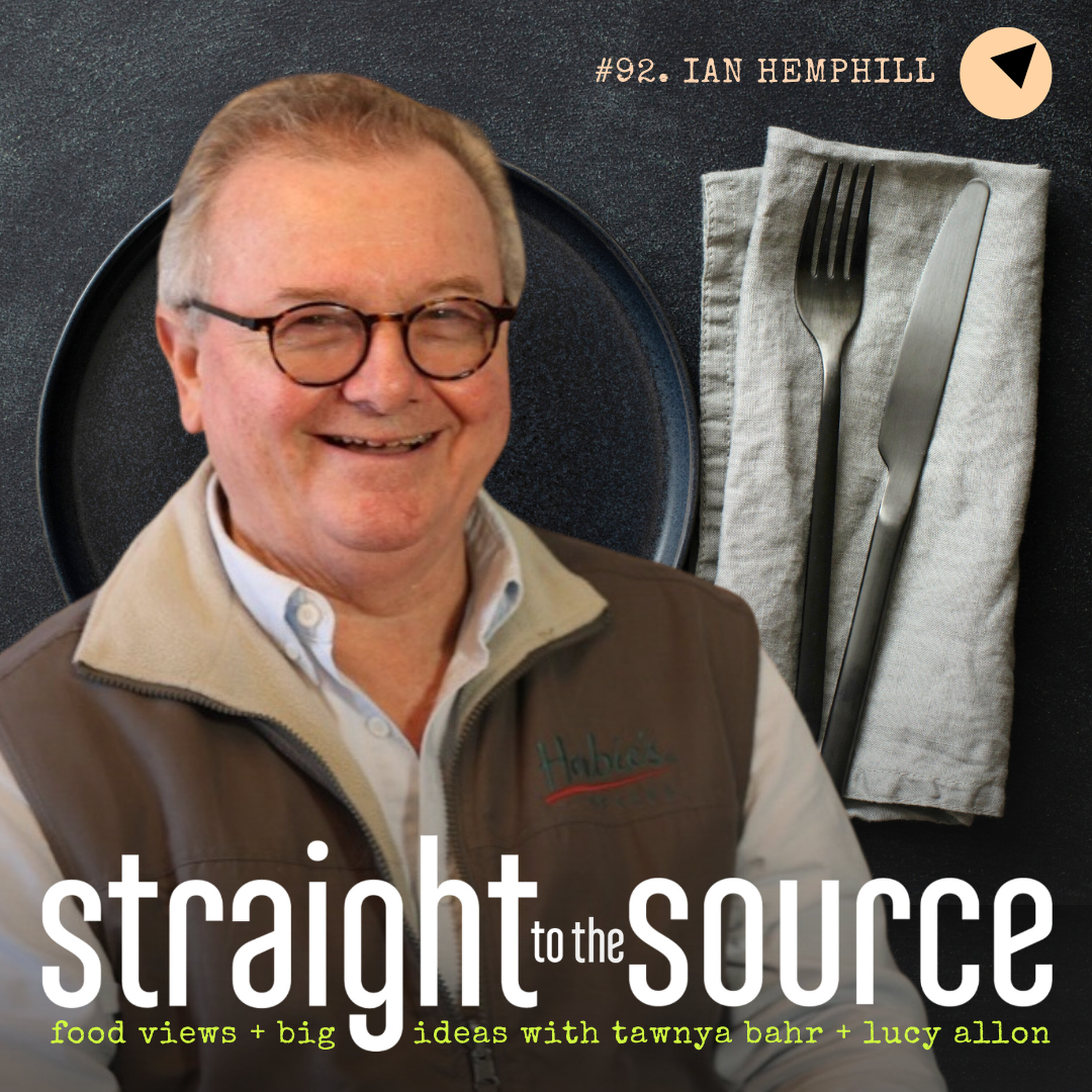 The Spice King of Australia: Ian Hemphill on Herbs, Spices & Flavour79 / 100
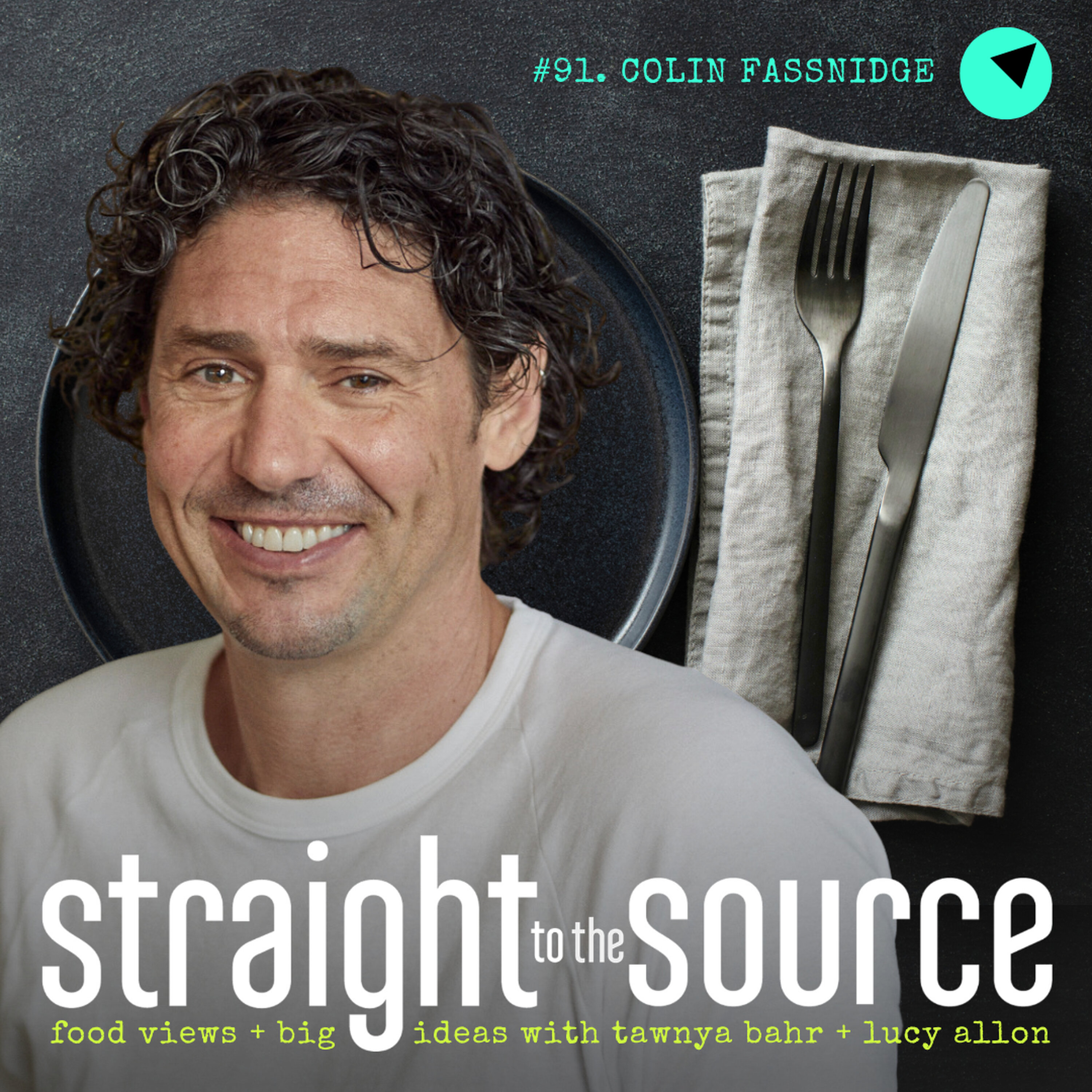 Colin Fassnidge: Michelin Kitchens, MKR Fame, Mental Health & Finding His Way
 Amelia Birch: Building Famelia, Championing Women Winemakers & Leading with Purpose
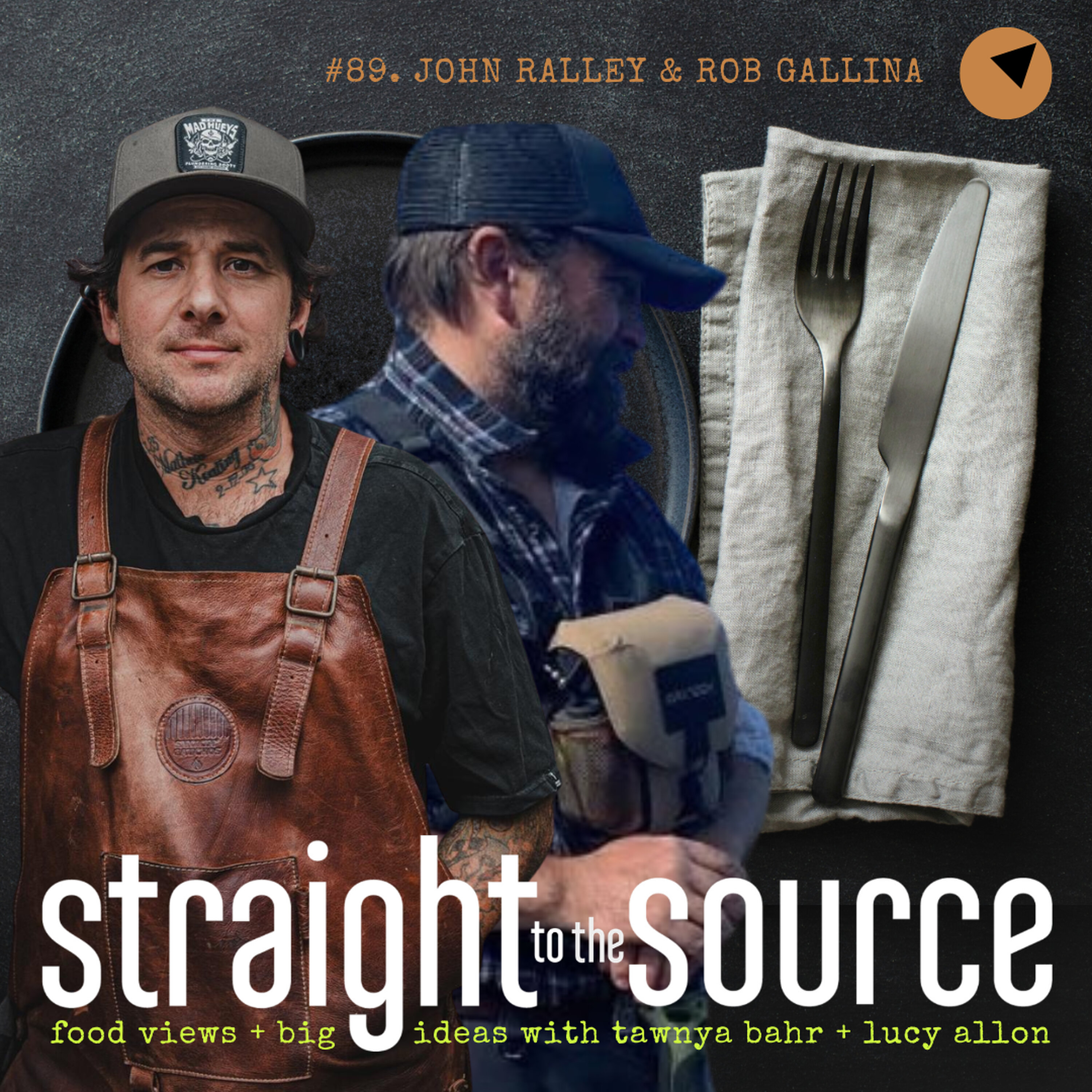 Hunter Rob Gallina & Chef John Ralley on Venison, Ethical Hunting and Australia's First Mobile Game Meat Processing Facility
 Anna Polyviou: The World Champion Pastry Chef on Creating a Mess