
Stepping Into your Leadership · 2026-04-29 · 40 min
Key moments - from our scoring
Substance score
53 / 100
Five dimensions, 20 points each
Great presentations aren't built in PowerPoint - they're built in the speaker's body, voice, and relationship with the audience. Greg Shammy, a communications expert with a background as a professional actor and master's in educational theater from NYU, joins Christine Courtney to break down why most presentations fail despite solid content. The episode dissects the critical first 10-15 seconds when audiences judge whether a speaker is prepared and worth their attention. Shammy emphasizes three core pillars: commitment (to your preparation and energy), authenticity (bringing your genuine self, not a persona), and connection (prioritizing the audience over your slides). He and Courtney tackle the physical mechanics speakers overlook - breathing deeply, warming up your voice and body like an athlete, releasing nervous tension through vocal exercises, and using silence and vulnerability as surprising hooks. They address the cardinal sin of modern presenting: reading slides. Instead, Shammy advocates for 'improv preparation' - knowing your 1-2 key talking points per slide deeply enough to speak conversationally, leaving room to live in the moment with your audience. The discussion includes practical warm-up techniques (lip flutters, vocal scales), how to use self-deprecating humor and vulnerability, and why great speakers like Marcus Buckingham string together 'pearls' - carefully chosen powerful statements that anchor their narrative.
Audiences assess three things: Is this person prepared? Can they actually do this? And will this be engaging or boring? That quick judgment heavily influences whether they'll stay engaged throughout.
Nervous tension rises high and chokes off the voice, making you sound tight and look stiff. Warm-ups (breathing, lip flutters, vocal scales) physically release that tension so you feel free and your instrument works effectively in the spotlight.
Great speakers identify 1-2 key talking points per slide and know them deeply, then speak conversationally to the audience while living in the moment - like improvisation. Reading slides is the opposite: it removes human connection and could be replaced by an AI voice.
You want 'relaxation activation' - not a limp spaghetti noodle but spaghetti that sticks to the wall. This means breathing, grounding yourself, and letting energy activate automatically when the moment requires it, like an athlete responding to pressure.
Commitment (to your preparation and bringing focused energy), authenticity (being your genuine self, not a persona), and connection (prioritizing the audience and their experience over your content).
Our reviewer’s read on each dimension, with quotes from the episode.
The episode delivers solid, actionable frameworks (the 'committed, connected, authentic' triptych; energy management through breathing and warmups) that are genuinely useful for presenters, but repeats these core ideas throughout 40 minutes rather than densely packing novel insight. The advice is sound but not particularly surprising to anyone who has read a presentation skills book or taken a speaking course.
you have to have tools to release the tension
It's tension that is, it's shutting me down when I get into that spotlight
The core frameworks - warm-ups, breathing, presence, vulnerability as a hook - are well-established in speaking coaching circles. The guest's theatre background provides some texture, but the ideas themselves (silence as surprise, self-deprecation as an opener, treating the audience as wanting you to succeed) circulate widely in presentation training. The episode offers competent synthesis rather than novel thinking.
They're free up there. There's something that happens. They're free
It's not just... this way, I'm going to talk to you the whole time like this. lot of people just talk on one level and have to explore different cadences
Greg Shammy is a legitimate practitioner with 20+ years of experience, a theatre background from NYU, and real client work (PWC, Mount Sinai, etc.), making him credible and relevant. However, he operates as a speaking coach and facilitator rather than as a leader who scaled a business, built a function, or faced the specific operational pressures that B2B operators encounter daily. He is qualified but not a practitioner of B2B operations at scale.
Senior Director of People Development here at Leadership Development Partners, than 20 years, helping leaders and teams connect performance to purpose
He, I am so proud to have worked with him for decades
The episode relies heavily on generic principles and anecdotes (the flip chart moment, the microphone-drop story) but provides almost no named case studies, metrics, or concrete data. The speaker mentions clients (PWC, Mount Sinai) in passing but never explores specific outcomes, timelines, or measurable impact. Claims like 'first 10 seconds' and 'breathing helps' lack supporting evidence.
He has worked with companies like PWC, Naveen, TradeWeb, Brooklyn Brewery, New York City Department of Education, Mount Sinai, and the list goes on and on and on
In the age of AI, human connection is becoming even more important
Christine asks follow-up questions and attempts to ground abstract advice in examples, but rarely pushes back or challenges Greg's assertions. The dialogue is warm and collaborative rather than probing; there is limited tension or productive disagreement. A stronger host would press on the limits of 'authenticity' or question whether everyone needs the same warmup approach, but instead the interview validates and extends rather than interrogate.
Yeah, agree. think it's interesting. I the reason authenticity becomes difficult is because of sometimes can feel in direct with the committed energy you need
Yeah. And it became a bit!
Computed from the transcript - who did the talking, and the words that came up most.
Most leaders spend hours perfecting their slides… and almost no time practicing how they show up. In this episode, Christine sits down with Greg Shamie, communications expert and Senior Director of People Development at Leadership Development Partners, to unpack what actually makes someone compelling in front of a room. Because here’s the truth: You can have the best content in the world and still lose your audience in the first 15 seconds. Together, they explore what separates forgettable presentations from ones that truly move people, from energy and presence to connection and authenticity. You’ll learn: Why the first 10 - 15 seconds determine everything The real reason nerves derail even experienced leaders How to shift from “delivering content” to creating an experience Simple techniques to build connection before you even start speaking The three qualities every great speaker embodies: commitment, connection, and authenticity Christine and Greg also share real, unfiltered moments, from presentation mishaps to powerful recoveries, that prove you don’t need to be perfect to be impactful.
Transcribed and scored by The B2B Podcast Index.
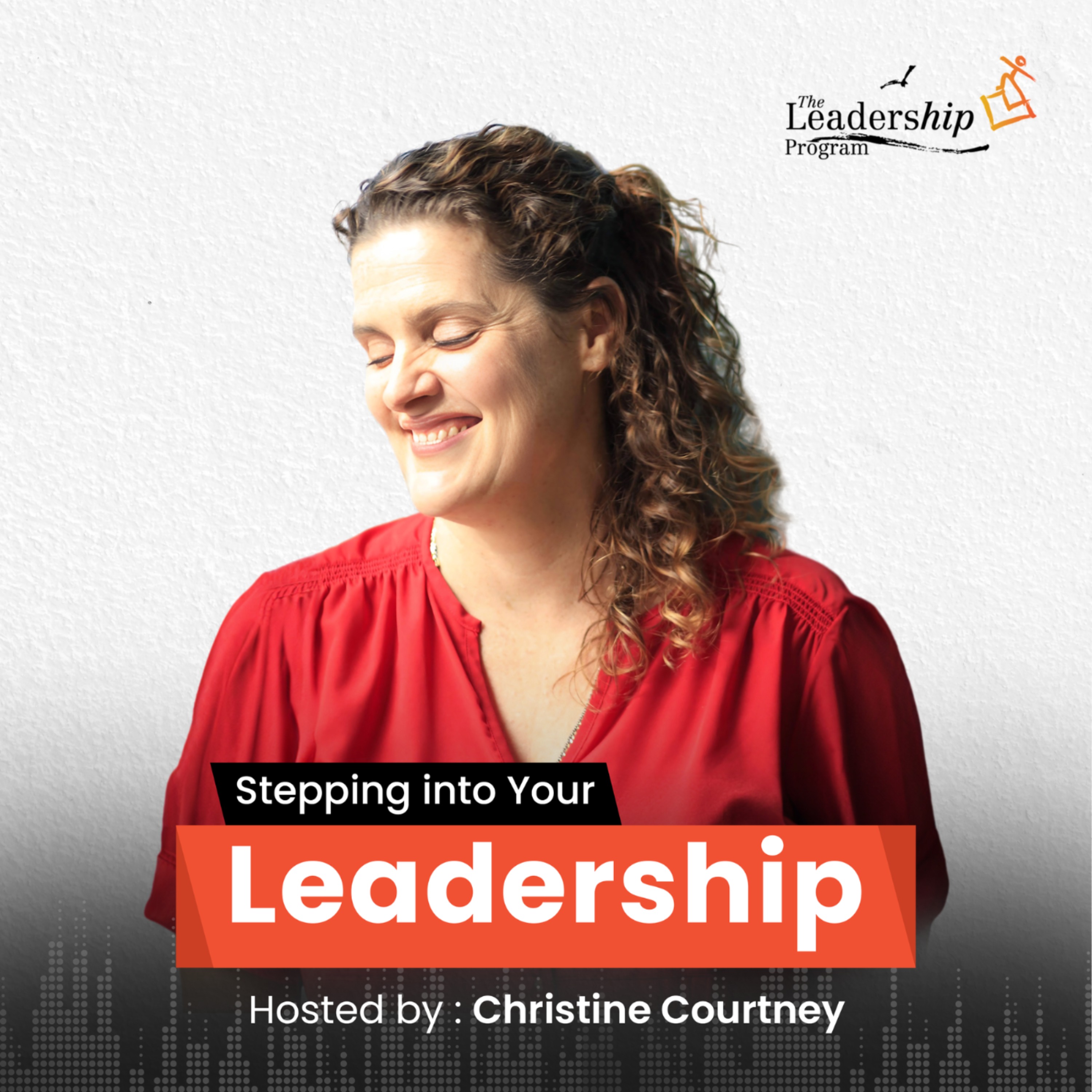
Christine Courtney: Welcome back to stepping into your leadership. I'm your host, Christine Courtney, and I'm excited to have my pal here in the studio with me today. Hey, Greg, it's Greg Shammy. I'm having Greg back because not only did he have the most listened to episode ever in their first 100 episodes, Greg Shamie: Greg Shammy, Courtney, nice to see you!
Christine Courtney: when we looked back and we're like, what is that episode about? Why are so many people listening? ⁓ it really, there were two of them. ⁓ ⁓ way back in the very beginning.
I mean, I think it was in the very beginning of 2024, maybe the end of 2023. It was our ninth episode ever. It was called Mastering Presentation Skills. ⁓ then we did a follow-up to that because that was so popular.
⁓ in late November, like around Thanksgiving time, it came out of 2024, which was Mastering Dynamic Presentation Action Tips for Any Setting. And again, it is a topic that comes back and back and back because people need more of it. And we're seeing that, right? In the age of AI, human connection is becoming even more important and more important for folks to master.
So let me give you a proper little introduction. Mr. Shammy. in the past, when we've talked about building engagement presentations, right?
We talked ⁓ the last one about your hook, your story, your visual vitality. ⁓ you did not listen to those and you're listening to this for the first time, it is worth going back to those two episodes. number we'll put a, maybe Tatiana in the ⁓ show can put a little playlist for you in there, ⁓ but, that episode really resonated, but today we're talking about something different, right? But here's the truth.
You can have the best content in the world. Most you can see today is AI driven, but you're going to lose the room, right? Because at some point it's not about what you built or what the content is. It's about how you bring it to life.
so we're going to be talking about delivery today, ⁓ energy, connection, and what it takes to really move a room. whether that's move a sale, whether that's move to tears, whether that's move to action, how do you move? And you're always, by the way, trying to influence or move somebody. So I'm joined today with Greg Shammy.
Greg is a communications and presentation expert who works with leaders, teams, and organizations to elevate how they show up, speak up, and connect with impact. known. for helping people move beyond just delivering information to actually commanding a room with clarity, confidence, and presence. Greg's work focuses on the practical side of communication, how you use your voice, your body, your energy to create real connection and influence.
He, I am so proud to have worked with him for decades. What? Decades now? We look so young and youthful, but we've worked together a long, we were babies.
He is the Senior Director of People Development here at Leadership Development Partners, than 20 years, helping leaders and teams connect performance to purpose. ⁓ is an internationally recognized facilitator and keynote speaker, ⁓ leading hundreds, thousands of workshops over time ⁓ topics like emotional intelligence, perseverance, ⁓ leadership, for this today, most importantly, delivering dynamic presentations. He has worked with companies like PWC, Naveen, TradeWeb, Brooklyn Brewery, New York City Department of Education, Mount Sinai, and the list goes on and on and on.
What makes Greg's work approach especially unique is his background as a professional actor combined with his masters in educational theater from NYU. He brings a powerful blend of performance, presence, and practical leadership into every room he works in. And everybody knows the shamster, the sham wow, the shammy. My friend, Greg, welcome to the show.
Greg Shamie: a big introduction, my goodness. I was not expecting that. Please email it to me after. I'd like to have that bio.
Thank you. ⁓ Christine Courtney: It is a pleasure. I owed you that little piece of love today, for sure. ⁓ So let's just jump in right here because you are, think, a master at this.
You're also really warm and friendly, so people that are very nervous, I mean, what, it's the number one thing, people are more nervous than death. is public speaking. And so if you're going to be nervous like that, you want Greg Shammy in there. If I'm nervous about a speech, I want to run it by Greg because by the end, I always feel better and very supported.
And so that's another thing that he brings to a team. Greg, I want to start here because I think this is where everything begins. When you watch someone present, right? ⁓ quickly do you know if they're going to really hold the room?
Greg Shamie: first 10 seconds. Christine Courtney: Yeah. Yeah. Greg Shamie: Really they say you know it's the first like 8 to 15 seconds is so important.
I think we probably mentioned this in one of the past episodes, but it really is that opening ⁓ energy opening moment is so important and ⁓ you ⁓ What we actually thinking as audience members is this person prepared? Are they are they going to be able to do this and is it going to be? ⁓ Engaging and or am I going to just be completely bored And so the judge is out. The judge is out strong and the judge is looking to see what is happening to you.
Which, you know, it's already high intensity to be in the spotlight and now people are basically judging your first 15 seconds to see whether you're gonna win or lose. So it's even more pressure. Christine Courtney: Thanks for spending time here on stepping into your leadership. I'd like to give a special shout out ⁓ to our podcast producer, Richard Francisco.
⁓ Check out our notes for any and if you wanna get anything out of this, go to our YouTube channel and please subscribe to Leadership Lab TV. If you heard something today, of course, that resonated with you, do something with it. Yeah. And what do you think when you break it down, what are you actually seeing or feeling in those first few moments?
Like what makes you know, okay, I can relax. This person's going to be worth my time or worth my energy of sitting here, or they've got this. Like, what do you think you're actually seeing? Cause I think those are intangible things that we say, but people don't really know how to translate that.
It's all about the choices that you make. It's what you say in conversations, how you show up in a moment. Share this episode with someone who's maybe starting a new job or stepping into a new level of leadership try one idea because it just might create some pretty powerful leadership ripple effects. Until time, keep stepping in.
⁓ Greg Shamie: Yeah, I mean it's fascinating when you think about getting up into that spotlight and what happens to us. You mentioned nervousness, right? ⁓ how nervous we get. ⁓ gets nervous.
I nervous. I do this every day. I ⁓ coach I need a coach if I'm going to be making a presentation. That's like such an important piece because nerves are part of the equation and I have to figure out how to use and invest that energy into Christine Courtney: because the room changes when you do.
Greg Shamie: not just what I've prepared, but into my connection with the audience. And so that becomes huge. So I'm looking for is the person what's actually happening ⁓ dealing with it in an effective way. And kind of hard to teach and but there's something that happens when a speaker gets up there and has committed to what they've prepared and then puts themselves out there.
They take the risk to really be on the edge of that cliff with the audience because it is exhilaratingly intense, right? And ⁓ you can see a speaker who's like, hi everybody, I'm really excited to be here today and feeling some really intense energies and I'm excited to be able to share what I have prepared. with you and and see what that what that strike you know like even just getting that acknowledgement of the moment can be a really ⁓ really strong ⁓ beginning Christine Courtney: Yeah, I think one of the things that I notice right off the bat is there is how they walk, how they walk up to the center of the stage, how they stand up, if they stand up, if they're in a if they're in a room around a table.
Wow, is it powerful to stand up sometimes, you know, ⁓ to talk about command, like confidence that that says, even if you're feeling nervous inside. ⁓ that walk ⁓ from your chair to the. ⁓ I saw some folks recently present at their team had it offsite, right? So they were challenges about.
⁓ challenges with that they had within the company, like how do we break down silos or things like that, right? And then they each had to work in teams and then somebody had to present. We see this all the time, versions of this, right? We've all had this.
And then somebody says, ⁓ I'll present. And then that person gets up there with their chart paper and goes through the things, right? And what is everybody looking at? The chart paper with scribbled versions of things.
And it was so fascinating to see the people that walk up there. ⁓ that really feel like are looking at the audience, looking at their teammates going, hey, like, or I'm nervous. God, this is nerve wracking or whatever. Just acknowledging the moment, being more relaxed themselves.
And I guarantee you, none of those folks did what you, Greg Shammy, always make people do, which is warm up their bodies and their voices so that they get some of those jitters physically out of their body. And it is incredible to me that we know this over and over and over again, that that is a huge differentiator in terms of getting nerves out, yet nobody will do it. And I know it can be embarrassing to do, you know, flutter your lips and jump up and down in front of everyone, but go to the bathroom in a stall and do it, or just somehow shake your shoulders out or shake it out or something, because I can tell.
Right away, if they're real nervous, they tense up, you look terrible, your voice sounds tight. It's really, we've all done it, but it's really hard. Greg Shamie: It's very, very, it happens to most of us. It happens to everybody, actually.
And so you have to have tools to release the tension. That's what it is. It's tension that is, it's shutting me down when I get into that spotlight. And so I have to have tools to, like you said, breathe.
Breathing is the centerpiece of my whole physical being, my whole being, right? So I have to be able to breathe deep. Because what happens when we get nervous is it comes up high, and then, like you said, it chokes off the voice. So being able to communicate our ideas, have an instrument that can communicate the ideas clearly, is absolutely essential.
And we have to have those tools. And just thinking of them, I'm thinking of breathing. I'm thinking, like you said, fluttering the lips, just going, pfft, You know, just even that, ma, ma, ma, ma, just getting the vibrations of the sound going and practicing that can warm up the instrument so that when I step out into a more intense situation, that spotlight, I feel free. feel free.
I need to be able to feel free in that spotlight and be, I wrote down three words, committed, authentic, and connected. Those are the three words that I'm going for. The commitment is to my preparation. Then the authenticity is being able to be me up there.
And that doesn't mean you being Greg Shammy because you can't match my energy. Right? I can't match your energy. You need to bring your authentic best self to the spotlight.
right and then connection is what most people forget because they're so connected to their content ⁓ forget the audience and the audience is the most important piece so that connection is absolutely essential i have to connect with you as an audience ⁓ i'm really just doing the presentation in my room ⁓ Christine Courtney: You know, I love those three things, committed, connected, and authentic. So if I think about that, right. If you can do those three things, like what are some actual behaviors that look like?
So I love the committed to me sounds like, you know, you're committed, you're bringing energy, you're bringing a focus to how you're saying for you. Um, you know, fluttering of the lips, getting some of that tension out or some good examples. I'll tell you for me, I have. a lazy, I have lazy lips.
So I, I grew up in, in, the great state of Texas and I have, can be very garbled and kind of, ⁓ you know, my lips, ⁓ D's and T's are the same, ⁓ know, whatever it happens, my consonants get really rounded. ⁓ so I can, I can be sometimes hard to understand or not as crisp as I would like to be. ⁓ I have to still, before I do any presentation. I work a lot on like consonant sounds and being very crisp because I know when I get up there that I can relax and not think about it.
But if I don't do that, be like, don't know, blah, blah, blah, blah, blah. ⁓ very like garbled. Greg Shamie: Yeah, we have to know what are the barriers to our clarity. What's stopping our ideas from being shared in dynamic and engaging ways?
And if we can highlight that and figure that out, then we can do what you do there and warm that up in a way that's going to strengthen those areas so that when you get out there, you're still free and you're not thinking about it because you're not going to be able to hit the golf ball if you're thinking about hitting the golf ball. You just have to get up there and allow the preparation that you've done in the practice range to just happen, boom, and hit it. And it's going to be so much more effective than trying to do it well.
Christine Courtney: think people hesitate in public speaking. I think people hesitate your every day when you're going to speak to warm up. think that they feel that then they will become fake when that is the opposite is what is the truth. You would never ever, ever expect an athlete to go on that court or that field without a warmup.
You just wouldn't. Greg Shamie: So we spend so much time really ⁓ working ⁓ awakening the instrument, the voice, the body, ⁓ the mind. It's those three things that need to be in alignment as we come into these tense situations ⁓ our whole being wants to shut down. Christine Courtney: So what do you think, what do you think great speakers do?
So let's think about the great speakers that we've seen, whether ones or ones that you've worked with, like the great speakers, what do they do ⁓ in say the first 60 seconds that most people miss? ⁓ Greg Shamie: It's amazing. Think about it, right? When you see somebody speaking well, again, ⁓ think it comes back to what we're talking about.
They're connected to ⁓ ⁓ They're alive up there. And they're connected to us, the audience. They're breathing. They're really, again, this idea of freedom, ⁓ being They're free up there.
There's something that happens. They're free. And then there's also this vulnerability piece, too, that can really connect. So when you see a speaker share something, a challenge, or something that was very difficult for them in such a high, intense environment, a spotlight, ⁓ can really connect the audience ⁓ them.
So, mean, it's fascinating. freedom of physicality, allowing your voice to move the way it wants to move. If you notice the way I speak, it's not just... this way, I'm going to talk to you the whole time like this.
lot of people just talk on one level and have to explore different cadences in the way you communicate and that isn't fake. You're just allowing yourself to express words in a way that are meaningful to you. Christine Courtney: Yeah. I think also, I think also, great speakers, really speakers do not what said, cause I do agree.
⁓ Those things are think they also surprise us ⁓ out the gate that surprise might be to your point a moment of vulnerability. So it might be like a moment. Greg Shamie: That's an art form. Christine Courtney: of silence, which first of all is a surprise.
If someone can hold a room without saying anything, everybody's brains wake up and go, wait, what's happening here? And they look up from their page, mo a quick moment, not, too long. Cause then it gets indulgent, but a moment of silence. ⁓ then to say something.
And if it's a vulnerability moment of like, I got to share something that happened to me ⁓ And people are like, what's she going to say? Right? Now you got to follow it up with a good story that somehow relates. So it could be a moment of vulnerability.
It might be an often is humor. Right? And I would say if you don't know how to don't do a joke, you know, do a deprecation is always a great way to start. You know what I mean?
People just tend to like somebody who has a nice humor of self deprecation or something. Greg Shamie: Yes. Christine Courtney: Or it might be acknowledging the elephant in the room that no one's acknowledging, right? ⁓ be that.
Whatever it is, some sort of surprise or something immediately will get, I think great speakers do. They also tend to have, and it's related to that, they tend to have a good hook. ⁓ So they to hook you with something very interesting. And if you to watch some great speakers, one of my...
⁓ favorites is Marcus Buckingham. And he always talks about how he puts together a And he talks about it from his mentor, how he creates what he little pearls. ⁓ And if has these pearls that he's collecting over time, and you can imagine it if it's even within your team and you're trying to talk and stand and do a say this is what our group worked on. Think of what are the pearls that I wanna string together and have on this necklace and really start to them with one of those stronger sentences.
I saw a woman get up ⁓ in a team ⁓ ⁓ everybody else was ⁓ that interesting and she gets up and she goes, let me just step back for a minute and give this some context. And I was like, ⁓ and you just saw everybody relax and she told a little story and you could tell that it really showed her experience level and her history and her way to be able to communicate tough, ideas in a simple, clear way. And I thought, I think they do that really well. ⁓ Greg Shamie: awesome.
I love that the parole piece and ⁓ know that connects to having really clear kind of talking points not kind of clear talking points ⁓ You are hitting and it doesn't have to be a lot It's like one or two per per slide and they're just points that give you the freedom to then tell The story or whatever it is about that point, but I'm gonna tell it in my face Christine Courtney: Yeah. Greg Shamie: in my completely open and connected way with the audience. So I'm not reading the slide.
I think the thing that turns me off the most and that I see happen the most is that people just, they prepare, but then they're just there reading what they've prepared. And there's no, the word that comes to mind is that improv, because. is Mark Twain also says it takes me two weeks to prepare a great impromptu speech or something right like You're but then you're letting it all go and living on the edge as if you've never said it before Right because you're with the audience Speakers who do that they they they they stand out ⁓ as Christine Courtney: Yeah, that's a great point, Greg, because otherwise why not just put on a PowerPoint deck with an AI voice to read every slide?
But if you want to command a room, then you need to go, you need to have something that's not up there on that slide that surprises people a little bit or makes it go a little bit deeper or question, puts a question out to them to make the audience think. I love that when you talk about, let's go back, because I want to use your three things to, to. Greg Shamie: Yes. Christine Courtney: focus this conversation.
Greg was saying that it's important you're committed, you're connected, and you're authentic, right? If you could just think, how I make sure I'm doing that every time I get up there and speak? ⁓ And might be that you're speaking for a minute. You still should be able to think, am I committed, am I connected, and am I authentic?
So let's, ⁓ when talk about commitment, because that's where you were talking about energy, how should people think about energy? ⁓ Especially if it doesn't feel natural to them. Like, is there anything that you can help them think? Like, how do I self assess my energy?
How do I? Cause most of the time, let's face it, it's about turning the volume up. It's not, I mean, and I don't mean really how loud they speak. I just mean, we're not usually telling people's energy to go lower.
Greg Shamie: Right, right, like bring it back. We're not really saying bring it back. We're trying to bring them out more. Right, when we're coaching, we're definitely trying to, most of the time, we're trying to bring people out.
So it is about stretching. It is about stretching beyond what feels ⁓ So we'll do activities or exercises that will get you to step out of your comfort zone because you have to be uncomfortable up there. Like it's so important. Christine Courtney: Yeah.
Yeah. Greg Shamie: step out of that comfort zone because it is uncomfortable to get up and speak in front of people. So you have to be able to stretch the muscles that allow you to feel confident in that zone. So that's why we do weird things like, mwah, mwah, mwah, la la la la, me me me me me, na na na na, just to warm up the voice, but it feels silly.
It feels silly, but then that feeling... When I get back up into the thing, I'm like, hey everybody, I'm Greg Shami and I'm very excited to be here today. Why am I excited? I don't know.
Do you know? Right? So right away, even just saying that, I'm doing it in hopefully a way that's gonna be a little bit engaging to you and authentic to me. Right?
So energy is about awareness, in my opinion. It's about realizing where I'm holding the tensions in my body. and releasing that it's about breathing deep it's about opening up that physicality to the audience and being an audience member with them even though i'm speaking in front of them Christine Courtney: Yeah, I love that. is, you know, doing those silly warm-ups so you can find millions of them, right, ⁓ to try.
But Greg just gave you a perfect example. If you go through that version, ⁓ will help you. I think also, you know, you have to think with energy of like, where is my energy when I am me on my best day? ⁓ ⁓ of the tips that you can use to figure that out is to ask the people that are closest to you in your life, meaning if you have a...
If you have a partner or spouse or best friend or kid, whatever it is that's around you all the day, plus the people that you work with the most to tell you, listen, do me a favor and tell me when you see my energy at its best. Just point it out to me so I can start to observe what's happening with me. What am I doing in those moments that you notice that, right? Greg Shamie: And I'll make a connection to that because it has to do with relaxation activation.
are the two words which are in contrast to each other, right? A lot of times we say relax, ⁓ but we feel like a spaghetti noodle, right? But we want the spaghetti noodle that's going to stick to a wall, which means it has energy. So you want to be relaxed and free, just like, again, an athlete feels once they've warmed up.
Christine Courtney: Yeah. Mmm. Greg Shamie: they've practiced, they've practiced and now it's game time and the pressure rises. What do they do?
They breathe, they ground themselves, they get laser focused, they relax their hands and they know they're going to activate as that 98 mile an hour fastball is coming down the pipe. just, boom, it automatically happens and you know, they fail seven out of ten times and they're still in the Hall of Fame. Christine Courtney: I love that. All right.
So now we talked about energy. Let's go to connected. What are some tips for people who, so that they can quickly connect with their audience? What would be some tips that you would say people could try?
Greg Shamie: Well, I'm always curious. I'm always curious about who the audience is. And I want to know as much about them as possible and what's interesting to them. So audience awareness in terms of who they are, why are they here, and what do they want to get very interesting to me.
That's number one that goes through my head. Number two is I want to ⁓ some kind of connectivity as I enter the space. As I'm approaching my talk, right? I want to be talking to people, listening to the speaker before me, because I'm going to connect what they say I go up, even though that hasn't been part of my preparation, I want to connect the dots.
And so that's huge, meeting people, being open, actually practicing before I get into the spotlight. Being grounded, present, ⁓ and is absolutely for me. ⁓ And then when I get into the spotlight, I've done my visualization. I've seen the audience see me as something they want to support and love and uplift.
I bumble or make mistakes or drop the ball or what have you, feel like they're there for me and they want me to succeed. Like that visualization for me is huge and helps me ground myself. And then ⁓ at them as I walk out, right? ⁓ smiling.
Christine Courtney: Yes. Greg Shamie: There's something about smiling like authentically, like just allowing that smile to come up on me. ⁓ my God, I'm nervous. I can't believe I'm about to start to talk for 2,000 people.
my God. And then it's like, hello, it's snowing outside. I believe it. Right?
And then ⁓ somehow in it. Right? And I've begun. Right?
The hardest thing sometimes is to begin because our brains are trying to be perfect. do what we've practiced out in front of exactly how we've practiced it. But it's actually letting go of that, being with the audience and trusting the work I've done is going to flow nicely. And that's what builds that piece.
Christine Courtney: Yeah, I love that. You know, a couple of tips that I can say that I've seen great speakers do in this area of staying connected is that one you mentioned, but I just want to add like if you're and I'll say like if you're somebody who's going to speak on a stage, that's one thing. If you're going to speak on a stage, I would tell you and if you're going to a crowd that you do not know one of the best things you can do and I've seen you do it, Greg, I've seen the best speakers do it is they never just come in cold.
Greg Shamie: you Christine Courtney: They warm themselves up and relax themselves by connecting with their audience before they get on that stage. So whether it's them into the room. ⁓ as people are coming in, I've seen you give people high fives ⁓ they come into the space so that before you go up on stage, they go, ⁓ that's the guy who gave me the high five. So immediately they like you.
So it's very clever, right, to have that connection. ⁓ Or it might be that you're having breakfast and it's a smaller, more intimate group. Then maybe you're just asking them like how their commute here was or like, who are they and introducing them first so that you have a friend in that audience before you get up there. It also allows you to physically like to not physically, it also allows you to connect back to something that you heard from the group because you will find out information of what's going on.
What's the, what's the hot topic here right now? You know, and then you will be able to bring it back to that. saw somebody very, very famous person do this recently. They came into the room and there are a little bit of a controversial figure politically.
OK, they came into the room. was a small group. They were speaking for like 40 people, but very CCO, senior leaders, you know, so forth. guy came in the room.
People have a glass of wine. They're walking around. They immediately beeline to him ⁓ it then to get upset with him about something politically. And I saw him a masterful thing where he saw their name tag and went, saw her come in, saw first thing like, Hey, ⁓ I to ask you about this.
So immediately, you know, this is going to be maybe a little bit of conflict, right? ⁓ So looks at her name tag goes, are you, you wouldn't happen be related to Jeremy blah, blah, blah, blah. Let's say. And she went, Jeremy, my brother?
And ⁓ he like, yeah. And she's like, yeah. And then they go down this whole other path. ⁓ Now, if he, she said, no, I don't know any about, but why she, he, it's like Jiu-Jitsu, ⁓ right?
is like speaker Jiu-Jitsu because now she is off the game of fighting with you ⁓ and like, you, you're interested in me and you notice my name. ⁓ And then when he got up there on that panel. he was able to bring back those conversations of like people that grew up like me in neighborhoods like so and so did and so and so did. And now you feel connected to that person, right?
So I thought that was very clever. And I think the more you can figure out if you're in a room, how to make the connection. The other piece I would say, if you're in a very small room or it's with your team that you already know, the way you do is everybody's gonna, let's say it's often the format that everybody is gonna or a few people are gonna present. If you're presenting.
and you're not first, you are the most active listener to everybody else. are nodding your head, you are laughing along with them if it's a joke, ⁓ are there for them because trust me, they notice that and when you're up there, they're there for you. ⁓ you're working on your speech and not paying any attention to them, ⁓ are not gonna have your back when you're up there. Greg Shamie: Yeah, I mean that's huge.
the arena prepared and ready and you've done your warmups and just be with the people and don't hide. Like a lot of times I find myself like, ⁓ I don't want to ruin the presentation because, you know, it's going to be a reveal, exciting, revealing thing. But no, hey, look, we're all here. Let's build connectivity and then let's have an experience with my talk, which is going to hopefully be our talk.
Christine Courtney: Yeah. Let's go to authentic last one for today's session. ⁓ you said again, he said that to a great speaker, you need to be committed, connected and be authentic. ⁓ So are some tips for creating authenticity, tapping into your own authenticity, ⁓ whatever it like what are some tips for kind of settling into authenticity before you give a speech or when you're giving a speech?
Greg Shamie: does authentic mean really? It just means to be me. so again, what happens to me when I get nervous and becoming very aware of what impact the nerves have on my system. So a lot of times they'll make me speak quickly and I'll be really nervous and tell you all about it.
And so if that's something that happens to me, my mouth can get dry, my shoulders, like you said, come up, all these things that can happen to my instrument, I to start to really become aware of because I then need to work against that ⁓ and sure that I am not being pushed underwater. Again, it back to energy. It connects back to me being my best self in these intense And so ⁓ gives me the opportunity to go, OK, I feel like I'm underwater now. It's going well.
So what do I have to get myself out of that? And I guess what comes to mind there is my breath, my connectivity with the audience. ⁓ It's same elements. Right?
Because that is going to help me be free, be authentic, be my best self, knowing that they want me to do well. Like these things are ⁓ tips that really help me to step in front of any audience and a great experience. Christine Courtney: Yeah, agree. think it's interesting.
I the reason authenticity becomes difficult is because of ⁓ sometimes can feel ⁓ in direct with the ⁓ committed energy you need. ⁓ So when have felt myself not ⁓ settle my self as much, it's usually of the nerves, like you said. And I'm so those nerves come out as a lot of energy. And so I'm not, maybe I'm authentic to that.
I mean, I'm authentic to obviously we're all authentic, but it's, it's coming across as either to just reading the words or pushing through an idea that is not where everybody is right now. think one of the things ⁓ can help with ⁓ that took a lot of time for me anyway, is to acknowledge the truth of how you're feeling. So this isn't always appropriate, but sometimes it's appropriate to say, I'm a little bit nervous up here. Like y'all are intimidating.
Like, you know, sometimes that's appropriate. Sometimes it's not. So you have to feel that out. ⁓ for me, ⁓ of the ways that I've been able to do it is if I've have everybody's had like a high energizer in the room and there's a lot of energy and I can tend to like rush through things.
⁓ need to take a moment to breathe. And so the only way I've been able to do that in some and again, this isn't appropriate for every room ⁓ is have everybody do that with me. Like, hey guys, we're coming out. Can we all just take a couple of breaths together?
⁓ This help me. But hopefully it'll help you too. Let's just take it. Let's close our eyes if you can, or if you feel comfortable.
Let's just take three minutes to take it some deep breaths so I can just, you know, settle down. And I've done that before. And that has really helped me to ground myself before I talk. And then I think the other thing is a tip for people would be is that things are going to happen that are mistakes.
And we often think that these mistakes are the worst thing that happened to us or, my God, I've really blown it or. I forgot this whole section or I, ⁓ I tripped on the way up here or, and you think it's the worst thing. And then it ultimately ends up being the thing that makes you a star ⁓ people think it was so fun how you handled that or whatever. had a guy ⁓ in a, in an offsite ⁓ up there and they were, you know, they had the, the flip chart paper up there with his things and he went and every other person had done this.
read the things that were on the flip chart and then tear the flip chart paper off to get to the that was underneath, right? But for some reason, ⁓ he went to pull the flip chart paper, it wouldn't pull off. And it took him like five pulls ⁓ it was so funny that eventually he, cause we're all like, ⁓ God, like this is so ⁓ ⁓ Greg Shamie: Mm-hmm. Christine Courtney: And then eventually he was like, he's like, ⁓ my God, I'm dying up here.
Somebody help me. And then somebody jumped up and helped him pull off the paper and it made it obviously look like he was so weak that he couldn't even pull a piece of paper. But he was like, I could tell that this is going to like, you know, dominate how I'm known in this company. But people were laughing and it just released that energy so much that I said to him, said, this is the best moment of the day so far was that moment.
And you will not be forgotten. But he. Greg Shamie: Yes. Christine Courtney: Of course, at the time, all he wanted to do was be forgotten.
Like this is, I feel like I ruined it all. And I'm like, ⁓ no, what you'll find out later is that was the best moment. Greg Shamie: ⁓ my gosh. Yeah.
You have to let go of your perfectionist because if you've done the preparation and then you commit to stepping out there and living with the audience in that improv type of way, even though you have your content prepared, it's going to be an experience and mistakes are going to happen and that's what's exciting. It's live. And so the show must go on. I'll never forget my wife, Stacey, who's a very, very good performer, Broadway performer.
Christine Courtney: Yeah. Greg Shamie: but she had just learned how to play the guitar. this is like in the later part of our ⁓ right? ⁓ so she learned the guitar and she had to play the guitar on stage and she was really nervous about playing the guitar and singing this song just the guitar was a new skill.
And so the spotlight, tension rises, she's out there and she's playing it. And as she's playing it, ⁓ she's singing, playing, ⁓ the microphone to sink. and I'm watching the microphone go from being perfect right there all the way down and she's still playing but she can't grab the microphone she's out there by herself she can't grab the microphone so she's just she goes down with it so she starts going down with it continuing to play and sing until she's on her knees still doing it and then someone comes out and fit like a tech person comes out and lifts the mic up she gets up still playing still playing and when she finishes the tech person finishes that standing ovation Everyone goes nuts because she embraced what was happening and kept going right which is fascinating then back to you it became something that ⁓ won't forget you know audience members are remember that time that performed like the mic like it's unbelievable and those are all the moments that people remember because it's not about what I'm telling you it's about ⁓ you're feeling and the experience you have ⁓ if you're speaking to someone Christine Courtney: Amazing.
Mm-hmm. Yeah, and became a bit! Yeah. Yeah.
Greg Shamie: Give them some kind of experience. Give them some kind of feeling because that's going to impact them more than any content you're going to talk about. And that's hard to do. But the other thing is you need to have, ⁓ need to have someone to run it by.
And I'm a professional who does this all the time and helps people and coaches people. Christine Courtney: Mmm. Greg Shamie: If I'm doing something, I need to run it for Christine and get her feedback because I'm friggin' nervous and it's not good enough to just do it in my room. I need ⁓ else's feedback, always.
I need a coach, I need someone pushing me saying, this was great, this needs to be better, what happened to you there, why isn't that beginning ⁓ what to you here, right? Like, it really transforms a speaking engagement. So if you're gonna take one real kernel from this is, Obviously practice, practice, practice. Get some feedback.
Do it for someone that you trust that can give you some good feedback. Get that instrument ready and warmed up. And then get out there, commit, connect, and bring your best self. Christine Courtney: I love it.
Thanks, Greg. This is such an important conversation, guys, because every leader presents, you know, whether it's in a boardroom, a client call, a team meeting. difference is not what you say, right? We hardly, we didn't talk about content at all.
That, know, it's important to get that good too, but it's mostly the difference we see is how you show up. ⁓ So something to think about. What are you spending your time on? Are you spending the time on your slides or are you spending the time also on your presence?
We see most leaders spend a ton of time getting their slides perfect. They look beautiful, but hardly any time practicing or like Greg said, running it by someone. But you know, the best leaders, the ones who really stand out, they aren't just building presentations. They're creating experiences.
So you can do that too. Remember Greg's three tips about ⁓ at Emma. How am I doing in terms of commitment, connection and authenticity? Greg Shammy, thank you so much for being here today and bringing some of your kernels of wisdom to folks.
Greg Shamie: Yeah, what a pleasure. Thanks for having me, Christine.
 Four Careers, One Through-Line: Joy Brown Kirst on Reinvention and the Skills That Travel59 / 100The Leadership Alignment Problem No One Wants to Fix47 / 100Stop Faking it: Authentic Branding, Burnout Recovery, and Intuitive Leadership 53 / 100Right People, Right Moment: How Beth Ward Studios Uses Working Genius to Lead Better47 / 100Meetings Are Broken. Let’s Fix Them.70 / 100