
StateScoop Radio · 2025-12-11 · 26 min
Key moments - from our scoring
Substance score
49 / 100
Five dimensions, 20 points each
North Carolina's next-generation 911 system proved its resilience during Hurricane Helene by automatically rerouting emergency calls when 19 of the state's 124 call centers lost connectivity due to infrastructure damage. Executive Director Pokey Harris of the North Carolina 911 Board explains how the state's ESINet - a closed, private IP network managed by AT&T - enabled call abandonment and alternate routing to functioning PSAPs (public safety answering points) across the state. The critical innovation was the "four friends" initiative launched in August 2024, which required each 911 center to establish backup agreements with partners both within and outside their region. During the hurricane, calls from affected areas were successfully routed 220 miles away to centers like Chatham County, with caller information shared via radio, spreadsheets, and other methods. Harris also discusses the state's broader resiliency initiatives including new 911 call data interoperability platforms, push-to-talk radio systems for PSAPs, and low-Earth orbital satellite backup connectivity to handle future disasters.
The statewide ESINet automatically rerouted calls to other functioning 911 centers through predetermined abandonment and alternate routing agreements. Calls were answered by the remaining 23 centers, which then transferred caller information back to the affected centers so resources could be dispatched appropriately.
Launched in August 2024, the "four friends" program requires each 911 center (PSAP) to establish backup agreements with one partner in their region and three partners in other regions, ensuring call coverage if local infrastructure is damaged or overwhelmed.
Madison County's 911 calls were routed to Chatham County - 220 miles away - for one full month after Hurricane Helene, until connectivity was restored through a FirstNet wireless redundant solution.
The state is deploying a 911 call data interoperability platform for real-time call tracking between centers, push-to-talk radios for PSAP-to-PSAP communication, and low-Earth orbital satellite capability for backup email and Wi-Fi connectivity when commercial internet is down.
The disaster unfolded so rapidly and critically that callers preferred immediate voice contact with a live telecommunicator rather than texting, and multimedia content offered little tactical value since 911 centers already knew about the widespread devastation.
Our reviewer’s read on each dimension, with quotes from the episode.
The episode contains a handful of genuinely operational details - abandonment vs. alternate routing logic, the four-friends PSAP framework, and three specific resiliency initiatives - but these are embedded in heavy emotional framing, repetition, and institutional throat-clearing that substantially dilutes density for a 26-minute runtime.
So it's called either abandonment routing or alternate routing. Abandonment routing means that your 911 center cannot receive a 911 call for some reason. So automatically through predetermined plans and provisioning, your calls will go to another 911 center.
being able to get that caller information back to the 911 centers from the uh, 911 board perspective we have implemented a resiliency compendium that we are beginning to work with the states for. Three focus areas
The 'four friends' framing is a mildly memorable operational concept, and the reframing of 'lessons learned' as validation rather than failure analysis is a subtle twist, but otherwise the episode recycles standard emergency-management talking points with no contrarian or first-principles arguments.
we coined the term friend find your friends
I'm going to flip this a little bit, lessons learned is it worked. It worked as it was designed and as it was intended
Pokey Harris is the actual Executive Director of the NC 911 Board and directly managed this infrastructure through a major disaster - a genuine practitioner, not a thought-leader or PR spokesperson - though the role is niche enough that the relevance ceiling for a broad B2B operator audience is limited.
The North Carolina 911 board, uh, is established in law, general statute in North Carolina, uh, to oversee the funding that is received the 911 service fee
one month after Madison county was sending their calls to Chatham county, we did uh, fast track with AT&T and FirstNet to have that connection restored
The episode includes concrete figures - 19 of 124 centers lost connectivity, Madison County routed to Chatham County (220 miles away) for one solid month, 3-5% national text rate - plus named vendors (AT&T, FirstNet) and a specific August 2024 meeting, though future plans are described vaguely without timelines, budgets, or vendor commitments.
we had 19 911 centers at the highest of the impact that could not take their 911 calls
For one month after the Hurricane Madison, um, county's 911 calls were routed to Chatham County, North Carolina for a solid month. One month.
The host asks chronologically logical questions but never challenges a claim, probes a failure, or pushes for quantification of outcomes; the interview functions as a soft institutional showcase with no productive tension and several leading, supportive questions.
Well, uh, North Carolina, I feel like it's proved, is very resilient, especially during emergencies.
I'm sure, um, that offered at least a little bit of solace that someone knew that there was a record
Computed from the transcript - who did the talking, and the words that came up most.
Pokey Harris, executive director of the North Carolina 911 Board, says the redundancy built into the state's next-generation 911 system helped the state withstand outages during a major hurricane last year.
Transcribed and scored by The B2B Podcast Index.
Sophia Foxoell: Hello and welcome to State Scoop's Priorities podcast. I'm Sophia Foxoell, a reporter for State Scoop. This week we're talking about North Carolina's next generation 911 system and how it supported the state during Hurricane Helene. But first, here are the biggest state IT stories of the week. On Sunday, federal lawmakers shared the bill text of the National Defense Authorization act of 2026, which did not feature the contentious state artificial intelligence law moratorium it had been rumored to include. However, federal efforts to rein in state and local authority over the technology aren't dead just yet. The nonprofit center for Civic Futures on Tuesday announced it will award $8.5 million to accelerate the development of artificial intelligence projects designed to improve public benefits programs over the next two years. The group has named eight projects it will support, including a multi state cohort to improve AI tools that can verify work requirements for SNAP and Medicaid benefits, and a project with Maryland's Labor Department and the Harvard Kennedy School to improve the state's unemployment insurance system. New Jersey officials have announced the creation of the New Jersey Civilian Cyber Resilience Corps, a volunteer group of cybersecurity experts who will assist with not only incident response, but hardening the security postures of those organizations throughout the state that need him most. It's easier to keep Humpty Dumpty on the wall than to put him back together again, said Michael Garrity, New Jersey's chief information security officer. Last year, during Hurricane Helene, one of the strongest hurricanes to ever hit North Carolina, the State's next generation 911 network played a pivotal role in emergency telecommunications as it rerouted calls away from compromised emergency call centers. During the hurricane, 19 of the state's 124911 centers lost connectivity, but calls were still answered by other centers. Pokey Harris, executive director of the North Carolina 911 board, shares how the state's next generation 911 system ensured emergency calls were routed even when local infrastructure was damaged. She says the system's success highlights the importance of backup plans and inter center agreements throughout the state.
Co-host: Today we're going to be talking about how North Carolina's Next Generation 911 system, uh, helped the state really power through. Hurricane Helene last September, which hit the state, caused catastrophic damage with flooding, storm surge, uh, debris, um, and I want to know before we dive into how it helped the state manage uh, that emergency and recover, uh, I'd love to hear a little bit more about how the state implemented its next generation 911 system um, the timeline and where it stands today.
Pokey Harris: Uh, Sophia. Ah. Uh, let me go ahead and say, uh, anytime we've been asked to speak about, uh, North Carolina, the NG911 project, the response to Hurricane Helene, we always state that we talk about success as validation because there's nothing celebratory about what happened. And it's hard to talk about being successful with a network, with a program when there was such devastation, obstruction and obliteration across western North Carolina. Lives were lost, um, generational businesses were lost, generational farms were lost, homes, cars. So much loss, so much devastation. Um, the rebuild for western North Carolina continues. So let me go ahead and preface with nothing celebratory, nothing stating success, but we're only going to validate. So The North Carolina 911 board, uh, is established in law, general statute in North Carolina, uh, to oversee the funding that is received the 911 service fee that each of us in North Carolina pay every month on any device that can dial 911. As we begin to look at next generation 911, the ecosystem of next generation 911 deployment, uh, implementation. Many years ago, um, The North Carolina 911 board, uh, in its infinite wisdom, did establish in legislation a set aside of funding, if you will, to build out a next generation 911 network. And what that is is an emergency services Internet protocol network, an esinet. Esinet. Some, some states call it esinet. We call it an esinet. And that is simply a closed private secure network for 911 traffic only. Uh, nothing will traverse that other than the data or the voice for a 911 call. Any caller in North Carolina. Now let me sidebar just a moment to say that North Carolina cannot own. The North Carolina911 board cannot own an emergency communications network. So they, uh, through procurement have, uh, partnered with AT&T to, uh, manage service contract to provide the ESINET and the core services for that. So this closed private network is for the traffic for all 911 calls in North Carolina. But AT&T also has networks that have evolved and matured in other states across the country. So now that we can actually say AT&T has a national network for 911 calls. And that'll come into play momentarily when I talk just a little bit about some of the plans for the future. So that sets the stage for the North Carolina 911 Board for the Implementation of our Statewide ESINet, or what we refer to as NG911.
Co-host: Wonderful. Thank you so much for that. That history, um, now take us up to the point where Hurricane Helene hit, uh, in September of last year. What advantages did North Carolina's Next Generation 911 system provide during Hurricane Helene compared to, let's say, hurricanes that hit the state when it was still operating from a legacy infrastructure.
Pokey Harris: So it's called either abandonment routing or alternate routing. Abandonment routing means that your 911 center cannot receive a 911 call for some reason. So automatically through predetermined plans and provisioning, your calls will go to another 911 center. Alternate routing means that uh, all of your uh, telecommunicators are busy with something else. And after a certain amount of time, generally 30 seconds, if a caller's um, call is not answered, a 911 caller's call is not picked up, then through, uh, predetermined agreements and provisioning, their 911 call would go to another 911 center for to be answered. These backup plans or continuity plans, uh, the PSAPs have a, uh, PSAP public safety answering point. So that's your 911 center. So the PSAPs have these agreements to answer calls for each other and they also have agreements for how that they will transfer, um, call related information between their 911 centers. Some will use the statewide radio system. Some will use um, uh, telephones, cell phones or administrative lines if possible. Some have used Google sheets or Excel spreadsheets, emails, teams, uh, to get that information back and forth. But the whole intent is to be able to share 911 calls. And as we begin to build out the esinet we did have, and in legislation for North Carolina, all of the 911 centers must have a backup plan, meaning they have to have established a partnership with another911 center to take their calls. Um, and we were working toward that and we had really began to talk with the 911 centers about not only having one 911 center in your region, we have four regions designated in North Carolina through our 911 board operations. But we begin to encourage them have a partner outside of your region. And so that way if you can't, for some reason something happens in your region, you can have uh, another 911 center answer your calls. We always, Sophia, we always use the coast, the coastal part of North Carolina because of the hurricanes. If you're in that part of the state, have someone in the central part of the state, um, prepared, uh, have that agreement for them to answer your 911 calls. So we began to work through that with the backup Planning, encouraging those, um, to do that. Uh, interestingly, In August of 2024, at our annual PSAP managers meeting, that was one of our focuses and themes of find your partner 911 centers. And we coined the term friend find your friends. So we did. So what we were encouraging and now is required is each 911 center must have a friend PSAP in their region. Even if they have a bricks and mortar backup center that they could physically relocate to, they have to identify, uh, a friend in their own region and then they have to identify a friend PSAP in one of the other three regions. So they really have four friends. So the theme was four friends, four friends. Find your four friends. That was August of 2024, almost a month to the day that Hurricane Helene hit the state. Um, so as we were listening to the weather, seeing the weather, anticipating who may be impacted in western North Carolina with some of the rain and some of the mudslides, uh, we began making sure those PSAPs had their partners or their friends lined up. As the weather forecasts began to become, um, more intense, uh, intensify, we began encouraging the 911 centers to, uh, have a broader outreach. And they did. We all know what happened on that eventful day in September of 2024. Um, again, as we started our call today, our conversation today, the, the devastation in western North Car, what ultimately transpired, Sofia, is we had 19911 centers that for whatever reason, with their infrastructure, whether it was mangled in debris, uh, whether it was just torn from, um, the poles and the infrastructure holding their cabling, holding their telecom infrastructure, uh, there was no, no connectivity to the 911 centers. And again, that was part of a total infrastructure that was obliterated. Power, water, uh, Internet, all of these services that we all depend on every day, it was gone. So we had 19911 centers at the highest of the impact that could not take their 911 calls because the infrastructure was mangled. It was gone. However, as designed and intended, the statewide ezzy net, if a caller, whether on their home phone or wireline phone or a wireless phone, could get a dial tone, their 911 call traversed the Ezzy net and was answered elsewhere by one of those other 23911 centers.
Co-host: By one of the friends of these pizzas?
Pokey Harris: Yes, absolutely by a friend, through their own agreements, they had a mechanism, process to get that caller information back to, uh, the home or the local 911 center so that resources could, um, be dispatched. And I guess another disclaimer here that we have to talk about is because the roads were gone, because, um, fire apparatus and ambulances were gone, because people were missing, because people could not get to fire departments and ambulances or fire departments and rescue squad buildings. Not every response could have the attention that it needed. The roads were gone. There was no way to give apparatus to them. Um, fire trucks had floated down the river and ambulances had floated down the river. Um, in some calls there was no way to get the help to the people calling. That was no fault of anyone. Um, it was just, um, the nature, um, the sad nature, um, in response and outcome, uh, of Hurricane Helene.
Co-host: Yeah.
Pokey Harris: For any caller that could get a dial tone, they, they can speak with a trained professional telecommunicator.
Co-host: Well, I'm, I'm sure, um, that offered at least a little bit of solace that someone knew that there was a record that they could get through. Even if someone couldn't get to them, they. There was a record. And I hope that also helped with um, uh, rescue missions, with finding loved ones, with keeping track of residents. Um, did the ezzy net and during Hurricane Helene, did it um, did it receive a lot of um, alternate media, um, uh, calls or messages like um, text location updates, photos from residents calling in?
Pokey Harris: There were some PSAPs that did receive the text messaging. Um, we did not see, um, a significant increase in text messaging, uh, on a day, blue sky day. Um, the average is about 3% nationally of calls, 3 to 5% nationally of calls that receive text. Text messages, messaging. But that, that message that we put out, call if you can, text if you can't. There really were not a lot of increase in those multimedia calls, folks. The, the good old fashioned way of let's try to call, um, and speak with someone if we can.
Co-host: M. Do you think because more people were trying to call as opposed to, to text. Um, do you think that is a, I mean just a product of the environment and the climate and what we know of, you know, calls and trying to get, get through and people. It's still so new to be able to send photos, to send text messages to 911 emergency centers.
Pokey Harris: Yes, I think so. And particularly in this case, it was so fast moving and it was so, um, critical that folks wanted to speak with someone. They needed that voice to voice, person to person. This is who I am. This is where I am. And, and, and not being dismissive, Sophia, but for the most part when people would call, those at the, at the 911 centers were. They had already learned about some of the devastation and what was transpiring. So uh, in this instance the videos uh, or that multimedia uh, record really did not help the situation. A lot of times we ask for that additional um, footage or video to help describe what's going on. So you can assist based on your protocol at your 911 center, you can assist with the appropriate uh, resources to send. The devastation was such that um, could have been a tool in the toolbox, but for this it really was not necessarily a tool in the toolbox. We do know that some folks uh, provided information, tried to provide some information about the surrounding area. Um, but at this point in time you received a call and you could get the best help to them that you could at the time.
Co-host: That makes a lot of sense. And emergencies like that, where uh, things are happening as you mentioned really really fast, there isn't time. And of course because it hit such a large region of the state, of course emergency management officials, of course public safety answering points already knew of the wide ranging that the people were experiencing who were calling. Um, I'm curious, you mentioned you know multimedia wasn't a uh, factor. There was one lesson learned. Is there any other lessons that you gleaned that the state gleaned from Hurricane uh, Helene and the response of next generation 911 that you're taking into uh, this upcoming winter storm season?
Pokey Harris: So I think that lessons learned is, and I'm going to flip this a little bit, lessons learned is it worked. It worked as it was designed and as it was intended and for any other state across the country that is looking at the deployment, the implementation of um, an IP network, uh, 4911 call, um, uh processing, um, we have validated that. So that's the, you know, generally when we talk about lessons learned it's oh, what was bad that happened that you won't do again or that you will improve. The lesson learned here is that next generation 91 1, the implementation, the deployment in North Carolina, we validated that um, as we go into um, the other uh seasons and coming just outside of hurricane season now we're looking at the winter and what will happen uh, in the mountains now with the winter. And it seems that our weather, our weather patterns, they dictate to us now much more than they ever did. But as we prepare for going into uh, what might be the next event, um, or the next reason that we want to think about um, the statewide esinet and the transferring of calls across the state is that being able to get that caller information back to the 911 centers from the uh, 911 board perspective we have implemented a resiliency compendium that we are beginning to work with the states for. Three focus areas that we're looking at um, a platform for 911 call data interoperability sharing. Uh, it's an over the top application if you will that we're looking at that a 911 center will know immediately if the other 911 center picked up their call uh, and they will be able to transfer information back, um, bi directional information um across this platform, very pertinent information. Caller Mrs. Jones, 122 Maple street um indicates um, uh, uh, in duress, um respiratory duress or respiratory distress, um something that simple that you can just get that information back and you're not picking up the phone or calling or you're not necessarily having to key up a radio. But as we talk about keying up radios, um, another initiative that we're looking at are push to talk radios that we will put a certain number in each911 center. And if you, if the statewide ah, radio um system is saturated like it was during Hurricane Helene, which you can imagine all of the responders using a statewide system in a um, uh biblically unprecedented incident, you can imagine the strain that that would have on any radio system. But this will be a tool in the toolbox that PSAP can talk to psap. It's not for field responders but it's PSAP can talk to psap. Uh if for some reason they're not using the um, 911 call data interoperability sharing platform, a telecommunicator can talk to another telecommunicator. For instance, one telecommunicator in let's say Madison county could talk to a telecommunicator in their county if necessary to say uh yes, we've received your 911 call. Um, I have sent information just confirming that you, that you've received that. Also part of our resiliency compendium that we are looking at in navigating the procurement process is to provide um, um low Earth orbital or LEO satellite capability to each of the 911 centers so that when they lose commercial capability for Internet they can have um, email capability PSAP to PSAP if they so choose to use that as a communication tool between the PSAPs between their friend PSAPs or they could utilize that for cell um, phone Wi Fi for cell phone if they choose to have that capability from PSAP to psap. Um so we're looking at navigating um, procurement Processes and implementation processes and hope. Hopefully, um, the first quarter of the fiscal year will be able, I'm sorry, calendar year will be able to roll that out. But those are some of the lessons learned that we're um, NG 911 funds for here in North Carolina to help the PSAP for the processing of that 911 call.
Co-host: Wonderful. Well thank you so much for that very thorough overview. Um, I'll be curious to see what the procurement process looks like and implementation of the satellites, which I'm sure will come in handy during the winter storm season. Because winter I feel like brings some very unique weather challenges. Black, uh, ice, widespread power outages, stranded motorists if people are snowed, um, is the next generation 911 infrastructure. Uh, I mean it was very successful during Hurricane Helene. Uh, do you think it will be able to withstand and um, I don't know, be a good foundation to support emergency management officers?
Pokey Harris: I do, I do. As we talk about, um, I did mention Madison County. Madison county, uh, did lose a lot of infrastructure. There's still in the rebuild phase or the restoration phase there. For one month after the Hurricane Madison, um, county's 911 calls were routed to Chatham County, North Carolina for a solid month. One month. And they had the agreements in place. They had the process in place. So when the chatham county telecommunicator, 220 miles away from Madison was taking their calls, they could communicate and share that information. Uh, what we already had in place, um, and we do have in place for all 911 centers here in North Carolina is aside from the connectivity to the statewide ESINet, is we offer connectivity through a FirstNet UM solution. It's another connectivity option, uh, designed to complement the statewide esinet and because of us fast tracking to implement the um, FirstNet wireless redundant solution as we dubbed it, um, that uh, one month after Madison county was sending their calls to Chatham county, we did uh, fast track with AT&T and FirstNet to have that connection restored. And they were able to start taking their 911 calls again because they had connectivity to that commercial last mile carrier.
Co-host: That's wonderful. And what a relief to everyone in that county, both emergency dispatchers and residents
Pokey Harris: and you say relief and the uh, regional coordinator out of my office who works with Madison county, she was in their PSAP on the day that calls got turned back to them. Um, and she said it was jubilation that they were cheering that they were able to answer the calls for their citizens. Now when you say oh, jubilation and answering a 91 1, call. No jubilation that they were there for their citizens. Even though they had a friend psap taking their calls, they were able to return to answering their 911 calls. Um, and again, we considered the FirstNet wireless redundant solution part of our resiliency compendium that we did fast track, uh, right after the impact of Hurricane Helene.
Co-host: Well, uh, North Carolina, I feel like it's proved, is very resilient, especially during emergencies. And its next generation 911 system has proven multiple times, not just with Hurricane Elaine, but in many instances afterwards, that it can withstand, uh, not only storms, but the surge of callers. And there's a lot of friends to rely on there.
Pokey Harris: Yeah. Yes, Sophia, you said it right. A lot of friends.
Sophia Foxoell: Thank you to Pokey Harris for participating in that conversation. You can subscribe to the priorities podcast@priorities podcast.com and wherever you get your podcast. While you're there, be sure to leave a review or a, uh, rating on the podcast page. That small extra step helps more people like you find the show. This podcast is a production of Scoop News Group in Washington, D.C. adam Butler and Carlin Fisher help put it together. Until then, I'm Sophia Foxwell. Thanks for listening.
Other episodes covering the same guests and topics, from across The B2B Podcast Index.
 The Social Shift, with Katie BrinkleyFunnel Reboot · on AT&T79 / 100
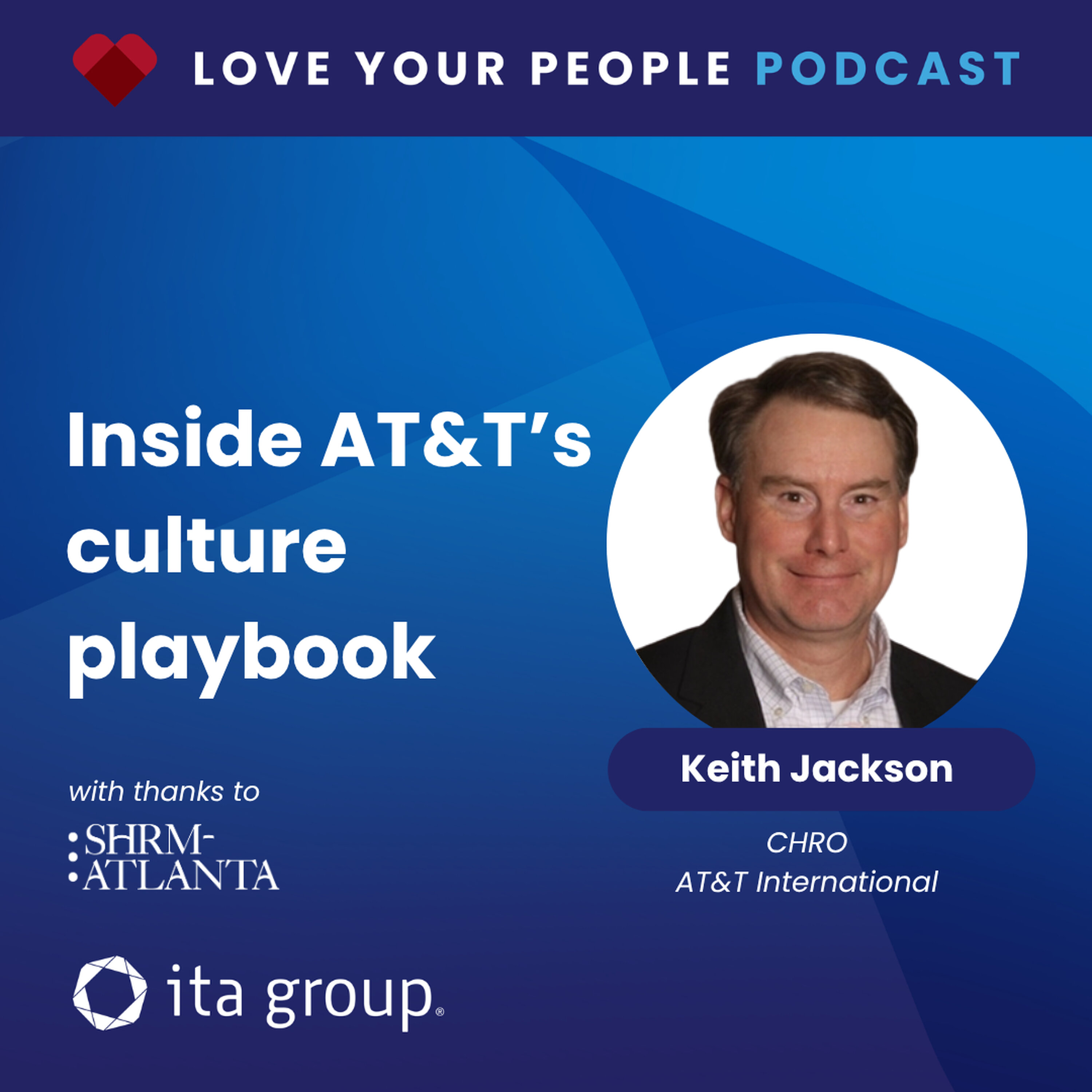 Inside AT&T's culture playbook with Keith JacksonLove Your People Podcast · on AT&T69 / 100
 Ep 115: The Non-Technical Side of Cyber with Susan KlementLevelUp Cyber · on AT&T66 / 100
 Building a Skills-First Workforce at Enterprise Scale with Astad Dhunjisha of AT&TTalent Acquisition Leaders Podcast · on AT&T65 / 100
 Cyber Security Expert | "A 15 Year Old Stole $26M" | Your Bank Account Is At RiskThe Passionate Few · on AT&T64 / 100
 Episode 120: Carlene Hempel and Sydney WoogerdWhat Works: The Future of Local News · on Hurricane Helene62 / 100
 Centralized identity management: Okta's Christine Halvorsen and Pam Van Meter54 / 100
 UC Riverside's Matt Gunkel at Next '2461 / 100Covered CA's Karen Johnson at Next '2472 / 100
 NJ CISO Michael Geraghty at Google Cloud Next '2472 / 100
 Rich Lavers at Google Cloud Next '2474 / 100