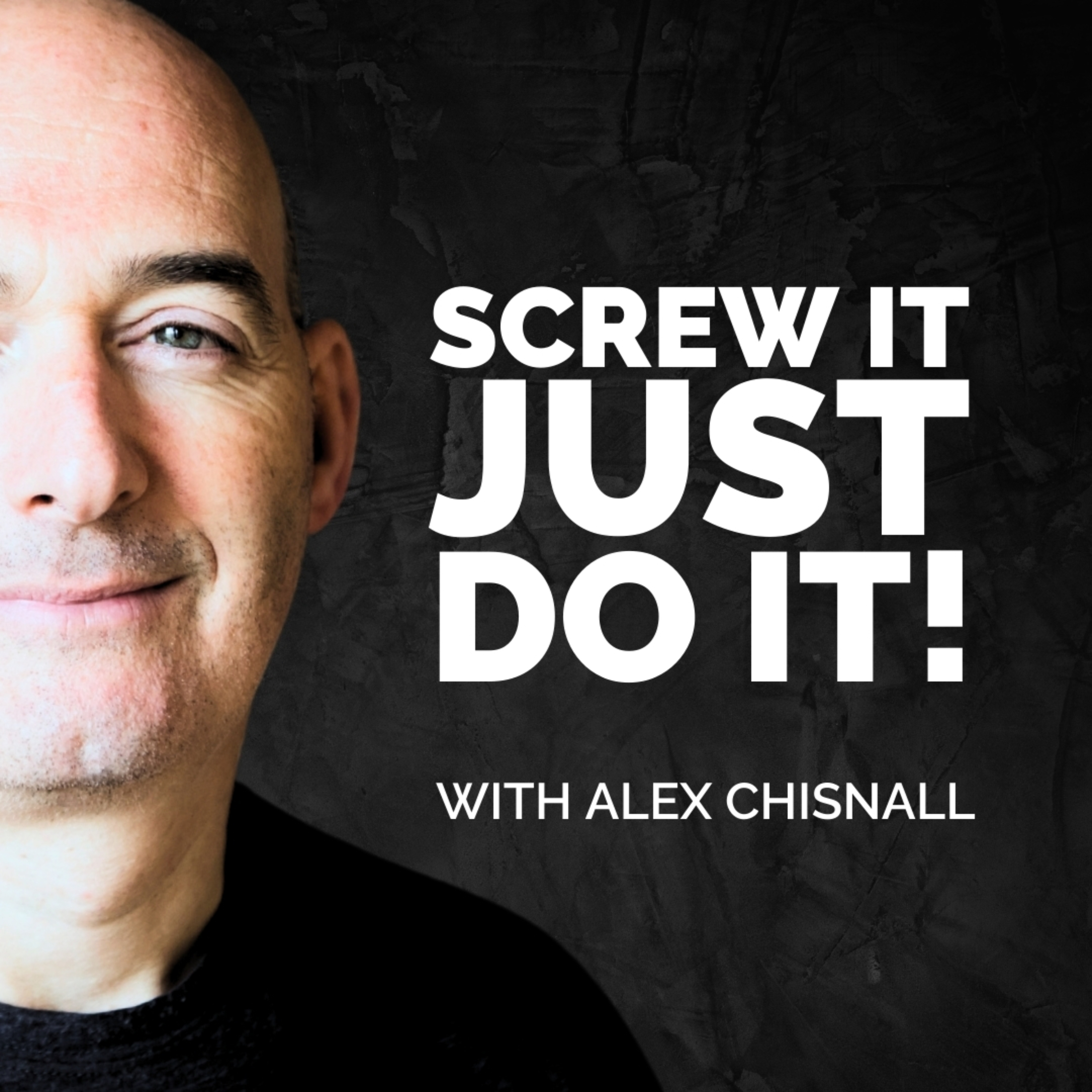
Screw It Just DO It with Alex Chisnall · 2026-07-02 · 16 min
Key moments - from our scoring
Substance score
35 / 100
Five dimensions, 20 points each
Jim Cregan's path to Jimmy's Iced Coffee began not with a grand plan but with necessity - escaping the literal and metaphorical hole of digging holes on construction sites. Growing up in Dubai and later reconnecting with his sister Susie in the UK, they discovered complementary strengths: his creative vision in branding and marketing, her relentless execution in sales and operations. The spark came during a hungover petrol station stop in Australia while road-tripping in a converted Holden Jackaroo, where he discovered Farmers Union iced coffee and became obsessed with its packaging and product experience. He even wrote to the Australian company asking to license the brand in the UK - they declined, but years later acknowledged their mistake when Jimmy's became successful. Rather than chasing exit strategies, Jim and Susie focused on making the journey "fat and juicy and fun," driven by the genuine buzz of seeing strangers choose their product among 80+ competitors in a Tesco Express fixture. The business grew organically to £10 million turnover before attracting acquisition interest. Jim's story emphasizes how small, authentic moments - a customer's unsolicited sip, a competitor's recognition - matter more than tactical pivots or marketing machinery.
During a five-month road trip through Australia in a converted Holden Jackaroo, Jim stopped at a petrol station hungover and discovered Farmers Union iced coffee in a carton. He became obsessed with the product's packaging and taste, emailed the Australian company requesting to license it in the UK (they declined), and later launched Jimmy's Iced Coffee with his sister Susie when he returned to the UK.
Jim focused on branding and marketing strategy while Susie initially handled operations and finance, later transitioning into a driving sales role. Their dynamic worked because Susie excelled at execution and "getting shit done," while Jim provided creative vision but could overthink decisions.
No - Jim and Susie didn't map out an exit strategy upfront. They focused on making the journey enjoyable and meaningful, driven by seeing customers spontaneously drink their product. They organically grew to £10 million turnover, which made the business attractive to potential buyers, but acquisition wasn't the initial goal.
After years of working as a laborer on building sites and in festivals, Jim needed to escape that life and prove he could build something meaningful. The discovery of Farmers Union iced coffee in Australia crystallised a new purpose and direction for his life.
His parents were the primary investors in the business, investing most of their savings with little left after funding the venture. His mother helped with deliveries in the early days, driving sandwiches to the office, while his father remained supportive despite not fully understanding the business details.
Our reviewer’s read on each dimension, with quotes from the episode.
The episode is almost entirely an origin story and personal backstory with very little that a B2B operator could act on. The few business observations offered - like needing £10M turnover to attract a buyer - are isolated and undeveloped, surrounded by lengthy anecdote and motivational filler.
you had to get to a like a turnover of about 10 million quid before a big business looks at you
we didn't change any tact or change our marketing or just go for sales or anything just to win that
The founding story follows a completely conventional arc (dissatisfied labourer, holiday epiphany, scrappy launch, family support) with no contrarian frameworks or first-principles thinking. Philosophical moments offered are recycled platitudes rather than fresh ideas.
the moment you think it isn't going to work is a moment you're not thinking that it is going to work
What stops founders from building something meaningful isn't the lack of ideas, it's the fear of getting started
Jim Cregan is a legitimate founder-operator who built and exited a real consumer brand, giving him genuine practitioner credibility. However, within this episode he functions more as a raconteur than a business thinker, sharing little that reflects operational depth or lessons transferable at scale.
we made sure the journey was fat and juicy and fun and then if it turned out that they liked us and we'd reach that milestone of that turnover, then that would be great
she moved more into sales a little bit later on
There is a decent layer of concrete detail - named retailers, specific locations, times, and a revenue threshold - but it is almost entirely anecdotal colour rather than business data. No unit economics, growth rates, margin structures, or campaign metrics appear anywhere.
we were getting up at like three o'clock in the morning in Christchurch, we'd be driving to Shepton Mallard to go and pick up product in a van
their drinks fixture will have, I don't know how many maybe 80, 120 products in there and they've chosen arse over someone else's
The host asks warm, chronological, largely leading questions and never challenges a claim or presses for operational depth. Follow-ups are mostly affirmations or restatements rather than probes, and potentially rich threads - exit mechanics, co-founder tension, sales strategy - are left completely unexplored.
Was there any point you and Susie got together and said, is it working anymore?
And when you saw Mush, did you then think, my work here is done?
Computed from the transcript - who did the talking, and the words that came up most.
Jim Cregan was a labourer. He was hosting festival stages dressed as a mermaid. He had no idea what he was doing or where he was going. Then he went to Australia, walked into a petrol station hungover, and found a ready-to-drink iced coffee. That was the moment. In this Founder Classic episode of Screw It Just DO It, Jim tells the complete story of how a single product in a petrol station in Australia changed everything. From writing a delusional email to Farmers Union from his hotmail account, to returning to the UK with Suze and launching Jimmy’s Iced Coffee, to the moment he nearly crashed his car watching a stranger choose Jimmy’s off a supermarket shelf. This is the real SIJDI moment. Not a strategy, not a business plan. Just a feeling that grabbed him by the horns and would not let go. Key Takeaways • How a hangover in Australia became the seed of a £10M+ business • Why Jim and Suze started without a plan and built it anyway • What kept them going when nothing was working • The power of seeing someone choose your product over everyone else’s Don’t miss a moment of entrepreneurial insight.
Transcribed and scored by The B2B Podcast Index.
What stops founders from building something meaningful isn't the lack of ideas, it's the fear of getting started. I'm Alex Chisnell and this is Screw It Just Do It, the podcast for people who are ready to stop waiting, take action and make things happen. The first thing was just to get out of the hole of digging holes and giving myself a new purpose that I knew was going to take me into a new place. Whatever that looked like from a value perspective or how big it would be or how many employees you'd have, it doesn't really matter.
It was more a case of like let's go and do something and let's prove to ourselves that we can do something amazing. What that looks like I have no idea but we want to be proud of something that we're going to make. Seeing someone drink your product and if they liked it that was all you needed to go to the next day. And what's so nuts is they would have gone to that Tesco Express and their like drinks fixture will have 80, 120 products in there and they've chosen ours.
Was there any point you and Susie got together and said, is it working anymore? We've had like ups and downs, we've never got to the point where this isn't working anymore. There's something that we've always said which is like the moment you think it isn't going to work is a moment you're not thinking that it is going to work. So you always have to think it's going to work.
Okay so early days you ultimately founded Jimmy's O's Coffee with your sister Suze. We were just talking about that earlier. Yeah. What was childhood like for you guys?
Have you always been close? Yeah, we grew up in Dubai, so we were both born and raised there. We were both there for about 18, when we both left. Sousa's three years older than me, I really like telling people that.
But we actually lived in an emirate called Sharjah, which is just outside of Dubai. It's kind of like the poor man's Dubai, basically, because my dad had an okay job, but wasn't a massive high-flyer. So that meant we didn't have many kind of expat neighbours and we didn't get to mingle with a great deal of people So it was just really just me and my sisters tearing around the house We used to climb over the neighbours walls and jump into the gardens and run around and all that kind of stuff So we were really really close as kids and if we went anywhere we'd be as a family together So we were very much like very very tight But I think when we came back to the UK, Suze and I both went on very separate paths part.
Suze was very... she kind of seemed to be quite into like really materialistic things, like what I thought at the time. And she would just call me a hippie freak because I was just at uni just basically just getting drunk and doing other things. So we had kind of like separate visions but there was kind of what led to us kind of working together was the fact that she's always been very determined and I thought I don't have that...
I mean I'm determined but I'm not like not necessarily ruthless but there's like something that Suze has this quality that I don't have and And that's when I was like, I really need you in this company because I know that you can, and I did say to her, you can just get shit done. Yeah. Better than I can. Because I can beat around the bush, like waiting for something.
And Suze's like, why are you waiting? Just go and get it. And that kind of led us to working together. And that naturally enabled you to both fall into the roles that you fell into and you focused on the branding and more of the marketing and she was more sales driven.
Yeah, she moved more into sales a little bit later on because I remember actually when we first created our first ever iced coffees we had to go and sell it into places and we got it into Selfridges which was fantastic but we actually even just going to, remember there's it's called Avonmouth Bakery just off Mudderford Quay. I said, Susie, it's your turn. And she was just like, I can't, I can't, I just can't do it. So what can't you do?
Which bit can't you do? And she said, I can't go and give this box to someone and say, it costs this much and I really, really like the product. She was really, really kind of scared of it, but then she got really, really good at it. So she was really in the driving seat for sales in the last five years.
So yeah, that dynamic kind of really helped us kind of set our paths in different ways. So I definitely ran the kind of marketing and sales to begin with but she was very very much ops and finance and then when she really really got to grips with it that when she moved properly into more of a sales role And I remember your parents actually going to Waitrose and buying all the food and drink and hosting, about 30 of us, I think it was, for the first one. Yeah. How supportive have they been over the years for you and Sue's?
Yeah, they've been amazing. Like my mum is just such a hero. She'd be the one, like back in the day when we first launched, we were getting up at like three o'clock in the morning in Christchurch, we'd be driving to Shepton Mallard to go and pick up product in a van, and then we'd drive to London to go and deliver into like Primrose Hill and some top delis around there, and then Selfridges, and then we'd come home. We'd be home by like 10 in the morning, and then we'd sit in the office and we'd work all day, and then mum would be the sandwich deliverer.
So you'd just hear this tinfoil creaking as they come up the stairs, and like, fuck you, sorry, I've got like, ah, you're Coronation Chicken on the way, this is gonna be great. So mum was like really, really good in that respect. And obviously mum and dad were our primary investors in the company. I remember, yeah.
I mean, they pretty much had no money after they gave us that money. I mean, if it was my kid saying, Dad, will you invest in the company? I'd be like, no. I'm not just...
I'll help you get... I'll help you, like a little leg up. Not everything. But not nearly everything.
But I mean, it turned out to be their best thing that they've ever done. Dad... Dad has always been phenomenally supportive, but he was also a massive boot hound, so he never really knew what was going on. So that was genuinely quite challenging, but he would always be like, you'd say, I've got Waitrose, and he'd go, ah laddie, amazing.
And then he'd be like, Jim, I really, really, really must come to one of your talks one day. And I was like, okay, well, why don't you come to The Guardian and come to one of my masterclasses? Because I used to do these three-hour, it was called Stop Procrastinating and Start Your Own Food and Drink Business. and I'd drive up on a Sunday night, I'd leave at like 4 in the afternoon, get to York Way in Kings Cross, ferry a massive cool box over to the garden and do this talk for three hours.
And Dad was like, I'm going to come up to one. I was like, okay, let's see how this goes. I brought him up and he sat in the back corner and I went, good evening. And I looked at the back and my dad's like this.
No, no. I completely KO'd. And he woke up literally at the end and I like kind of carried him back to the car. but you know, the meaning was there.
And yeah, I mean, God bless him. He passed away and yeah, like, good dude. I remember him, I remember him. I always just thought that was a real personal touch, you know.
One, very generous of you to host us, but for them to go out and do that, you know. Dad would always actually turn up to the office, always at the wrong time, when you're about to maybe like fire someone or something. And not that we did that regularly, but it's just like, oh God, here he is again. would always be on the phone like, oh, Maurice, will you just fucking leave him alone?
He'd always be there like, oh, what's going on? Just like, just as annoying parents should be. Yeah, he did a very good job of that, he was great. And what do they think, you know, post uni, when you were working as a labourer on a building site, what were they thinking with your plans then?
I guess I always hid my kind of turmoil around the work that I was doing. I've always been this like, you know how like, Robin Williams just seemed like the happiest guy the entire time and then ends up committing suicide. It's funny how you see the happiest people can sometimes be the ones that are in the most amount of pain. And I was really not enjoying life at the peak of time, but if mum saw me, I'd be like, Mum, how are you doing?
Yeah, let's go have a coffee. How's life? Yeah, it's great. It's actually fucking shit.
So yeah, I found that really, really hard. But I think mum kind of knew sometimes. She would just think that, you know, Jim's just, he's finding his way and he'll kind of get there. I think I had Soph, my wife, with me to support me.
She was just mega and still has been. I've always really enjoyed the most simple things and I always got pleasure from the basics of existence really I really glad that that the way panned out for me So I think they always thought I was going to be okay and I actually thought I was always going to be okay at some point. It just took quite a long time to get there. And for those who are new to the story and they might have seen the stories back in July when you exited the business, tell us briefly what happened in Australia and what inspired you to come back to the UK and literally start Jimmy's Ice Coffee?
It was just, it was one of those like hungover, we bought a Holden Jackaroo, which is a, what would it be called over here? An Isuzu Trooper, it's like an old school, like land cruiser-y style thing. It's a bit bogan, as they call it over there. But it was rad, we ripped the back seats out and put a bed in the back and roof rack and water tank logs and stuff.
It's the kind of thing you see on Instagram and go, I wish I did that, and we did that and we did it for like five months, and it was so sick. And we basically just met really cool people. We worked in surf shops and surf schools. I remember working in surf schools as an assistant, and there was an English lady, and she was just like, and I was like, hello, and she was like, oh God, I was kind of hoping for some like, Aussie hunk to push me out in the water and I'm getting you from Bournemouth.
And I was like, sorry love, look at the drawer. And she's like. So, but yeah, no, so we just had like a really properly, properly cool time. and this is without kids, which was just the best.
I love my kids, but my God, it was so much fun. Yeah, so we really hung over, and we just went into a petrol station, and I was like, I want something cold, I need some energy, I don't want Red Bull, I don't want water, I don't want tea, that's boring. And then just stumbled across, ready to drink, and this product called Farmers Union, it comes in a carton, and it's the best thing to open, because it's like cardboard, and you can feel it on your lips, and it's just aesthetically just this most amazing thing.
And I was just like hooked on it, like immediately. And then wrote to the company while I was in Oz, not knowing that we were even gonna go back to the UK. And I was like, I'm a laborer from the UK, I've just found your product, and I need to basically, when I do go back to the UK in 100 years, I wanna license or franchise your business. And they were like, mate, you're mental.
And I was like, please? And they said, no, it's still not happening. And then after doing about four or five years of business at Jimmy's, the Adelaide Times, or Herald or something got in touch with us because they'd been speaking to Farmers Union, which is the company I fell in love with, and they said, did you realize the guy who emailed you has now started off on this coffee company and is actually doing okay? So the brand manager sent me an email saying, mate, I'm so sorry we didn't listen to you.
That's great. I'm like, mate, you're too late. You're too late. But it was really cool to have that chat with him.
So yeah, it's been such a wild, amazing, yeah, insanely fun journey. That's definitely one of those screw-to-just-do-it moments then. A hundred percent, yeah. If you've got that email framed somewhere.
I have it on, I think I've still got my Hotmail, because it was jimbocriegan.hotmail.com, and it should have been like, I'm great at importing brands into the UK at Gmail. And yeah, it's there somewhere.
There's actually the reply, so you can actually see the thread, and it's literally like, oh, go on. In the second email, come on, mate. And it's just like, well, if I was restructuring that email, I'd be like, do not write an email like that. In fact, don't write an email.
Do something else to get that attention because that's just ridiculous. Yeah, loads of fun. And when you did launch Jimmy's O's Coffee, between you and Sue's, did you map out a specific vision? Or when you look back now, is it just a pipe dream that you might get there one day?
I think the first thing was just to get out of the hole of literally the hole of digging holes. and doing festival work and giving myself a new purpose that I knew was gonna grab me by the horns and take me into a new place Whatever that looked like from a value perspective or how big it would be or how many employees you have or how many gun shows you can do in your company with it doesn really matter It was more a case of let's go and do something and actually prove to ourselves that we can do something amazing.
What that looks like, I have no idea, but we're gonna be proud of something that we're gonna make. And then I remember by year one and two, people were like, well, where do you want it? This is quite exciting, where do you want it to go? And I'd be like, I wanna hand it down to my kids.
I hadn't even had a kid by then. I've handed it down to my kids and then after year three I'd be like if I had kids and handed it down to them they would have me killed because it's the worst business in the entire world and then you see you read in the grocer and you're like oh this tiny brand has sold to this big company and we're like that sounds quite cool this is a big this is a scalable business that you know that's it um it's something we could do and then come year five six seven you kind of try and understand what you need to look like as a company that becomes attractive to a potential buyer and it never really we didn't change anything apart from we just knew that you had to get to a like a turnover of about 10 million quid before a big business looks at you and goes okay you've been in the game for long enough you're large enough to make you know an investment into but we didn't change any tact or change our marketing or or just go for sales or anything just to win that in the end we we made sure the journey was fat and juicy and fun and then if it turned out that they liked us and we'd reach that milestone of that turnover, then that would be great.
And that's essentially what happened. So I remember interviewing Richard Reid from Innocent Smoothies and someone like Al Barrett from Grenadine, both of them were like, never thought of an exit strategy when we were starting. I'm assuming you were more cunning than they were, but you were the same. It just threw out that journey.
It was just the buzz didn't wear off for literally just seeing someone drink your product. Initially you had to give someone the product for them to try and if they liked it, that was all you needed to go to the next day. And then you find out or you see people in the wild drinking your product and that's still honestly I froth when I see people drinking your product. I remember seeing this dude at Pokes Down Hill, there's a Tesco Express.
and this mush came out and he cracked open a mokka and he must have had it before because there was no hesitation it was just like a full gunshot and I was like, I nearly crashed the car because I was like, hands up and steering like, what? like out the window, and I got it! It's just so cool to see that you've done all this work and what's so nuts is they would have gone into that Tesco Express and their drinks fixture will have, I don't know how many maybe 80, 120 products in there and they've chosen arse over someone else's.
And you're like, what have I done to persuade them? Is it the branding, the packaging, the ingredients, it's all funky marketing. Is it all this kind of shit that you have no idea, and you're not gonna go and ask them, because they'll probably call the police. And it's just really cool to see that people have gone, I like that product, and that's all of your blood, sweat, and tears.
It's not all of the other stuff, it's actually seeing people enjoy your thing that you've made, and you're like, this means something to someone, and it's so cool. And when you saw Mush, did you then think, my work here is done? Yeah, essentially. And it's rare that I do see people drink our stuff, but when you do, it does make you really kind of stoked about you've done something proper.
And it's not like, it's the only kind of scenario where you haven't asked them to drink it or anything, they've just gone and done it off their own back. And to catch someone at that particular moment, ting, see it happen is really cool. If this conversation resonated with you, don't just sit there, act on it. Make sure you follow or subscribe for more game-changing conversations.
And remember, the only thing standing between you and your business breakthrough is the decision to screw it and just do it.
Other episodes covering the same guests and topics, from across The B2B Podcast Index.
 S2 Ep23: From One Room To A £10M, Hear Her Refugee Story Of SurvivalENTREPRENEURS WORLDWIDE PODCAST HOSTS RICHARD WARD & ROSAMOND STENHOUSE · on Waitrose68 / 100
 #140 Niamh Martin | Managing Director, UK @ Convene Hospitality GroupWIN/WIN: Women in Innovation · on Selfridges61 / 100
 The Brand ROI for Startup Founders to Replace Sales Silos and Lead with Confidence - Bianca BassThe Engine · on Selfridges59 / 100
 Lisa Clunie - Branding with Purpose, Psychology & PersonalityWired for Success Podcast · on Innocent Smoothies59 / 100
 The Power of Place: Why Physical Stores MatterPayments Beats · on Selfridges52 / 100
 Everyone Said No. She Built A Brand That Sold 20 Years Later.
 Comfort Is Slowly Killing You
 He Risked Everything At 47 To Build Yo! Sushi | Simon Woodroffe OBE
 Before The Billion-Euro Exit: Julian Hearn on Building Huel
 The Idea I Couldn't Ignore