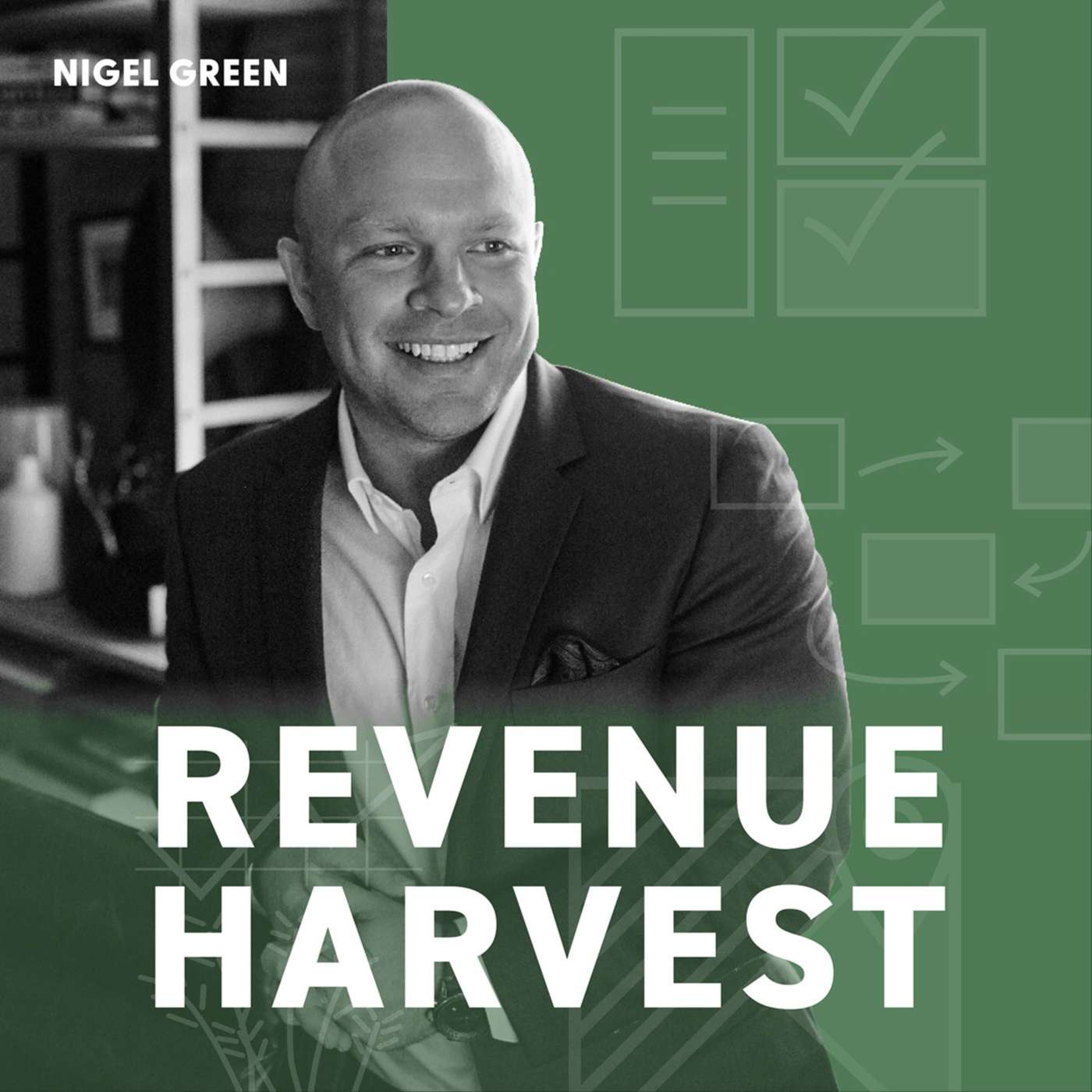
Revenue Harvest · 2022-09-08 · 13 min
Key moments - from our scoring
Substance score
20 / 100
Five dimensions, 20 points each
Sales leadership tenure averages less than 18 months, and Nigel Green argues that poor hiring practices are a primary culprit. Most sales leaders overestimate their hiring ability, confusing sales skill with talent identification. Green outlines three systematic failures: first, skipping job analysis and jumping directly to candidate interviews without understanding daily activities and weekly expectations required for success; second, relying on gut-feel interviews instead of a defined, repeatable process that lets you observe candidates performing key tasks like writing sales copy or delivering presentations; and third, hiring based on personal biases - such as favoring ex-athletes or Ivy League graduates - without data validation. He references Salesforce research showing college athletes in individual sports (golf, track, tennis) outperform team-sport athletes in sales roles, contradicting common assumptions. Green emphasizes that a structured hiring process helps identify and counteract these biases. Each bad hire costs $115,000 to $300,000 in recruitment, training, and lost revenue, directly threatening a leader's career sustainability.
Bad hires cost between $115,000 to $300,000 minimum in recruitment, training, and lost revenue, making them one of the most expensive mistakes a sales leader can make.
They confuse being a successful salesperson with the ability to identify and screen good sales talent - selling skill and hiring ability are two different competencies.
Conduct a job analysis by documenting the day-to-day activities, weekly expectations, and monthly targets required for a salesperson to succeed in the role.
A structured process forces you to observe candidates performing actual job tasks and helps you identify and counteract personal biases that lead to hiring mistakes.
According to Salesforce research, individual sport athletes (golf, track, tennis) outperform team sport athletes in sales, but being a college athlete alone doesn't predict sales success.
Our reviewer’s read on each dimension, with quotes from the episode.
The three 'mistakes' (skip job analysis, lack process, hire on bias) are generic hiring 101 that any experienced operator already knows; the only mildly novel data point - individual-sport athletes outperforming team-sport athletes - is mentioned in one sentence and left undeveloped. The majority of runtime is course promotion and repetition of the $115k - $300k figure.
A job analysis means looking at the day-to-day role, looking at the day-to-day expectations, interviewing existing sellers if you have them to try to determine what needs to happen day in and day out
the data does show that college athletes of individual sports, golf, track, boxing, cross country, gymnastics, swimming, tennis, those individuals actually do make better salespeople versus someone that didn't play an individual sport
Everything presented is standard, widely circulated hiring advice; there is no contrarian or first-principles argument. The individual-sport-athlete finding is the only moment that departs from conventional wisdom, but it is cited without methodology or any deeper analysis.
the data does show that college athletes of individual sports, golf, track, boxing, cross country, gymnastics, swimming, tennis, those individuals actually do make better salespeople
knowing how to sell and knowing how to lead a team doesn't necessarily mean you're good at identifying and screening the right person for the role
There is no guest; this is a solo monologue by the host who is primarily promoting a $250 course. His only stated credential is a self-reported interview count, and the episode functions more as a marketing asset than a demonstration of deep practitioner expertise.
I've interviewed in my career about 5,000 different salespeople in various roles
if you take this course, I unpack all the common biases that sales managers hire based on
The $115k - $300k bad-hire cost figure is repeated multiple times but never sourced, the Salesforce study on athletes is cited with no link or methodology, and the '18-month tenure' statistic has no attribution. The six-step process is mentioned but never described.
there was a study done by Salesforce.com that demonstrates because you played a college sport, just a college sport doesn't mean that you're going to be more successful in selling
A bad hire can cost you minimum $115,000... On average, what I see in the roles that I recruit and work on is it actually costs you about $300,000
This is an uninterrupted solo monologue with no questions, no follow-ups, and no tension; the structure is essentially a framing statement, three generic points, and repeated course-sale pitches that interrupt the content flow.
And oh, by the way, I'm going to pitch my course here at the end.
Don't cheat yourself. Go take the course, get better at hiring people, get better at hiring salespeople today.
Computed from the transcript - who did the talking, and the words that came up most.
This episode of the Revenue Harvest Podcast features your host, Nigel Green. He discusses the top 3 biggest mistakes that sales leaders make when hiring salespeople. A mistake in hiring produces not only lackluster results for the company but also drains resources that could eventually cost you your job. Nigel introduces his 6-step process for hiring that he is excited to share with sales leaders today! QUOTES 04:32 Mistake number 1: Hiring without doing a job analysis: "You go post it and you immediately start interviewing candidates. Well, the problem with that is you don't really know at this point what you need. And so, most sales leaders get this wrong because they jump to interviewing without doing a job analysis." 05:49 Mistake number 2: Interviewing based on intuition and a lack of process : "You need a defined set of steps in the interview process. You ever heard a candidate say to you, well, mister hiring manager, what's the next step?
Transcribed and scored by The B2B Podcast Index.
Are you tasked with hiring salespeople in your role? If you are, you might want to consider taking my new course, Hiring Sales People. Why? Because the average bad hire can cost you anywhere between $115,000 to $300,000.
What goes into that expense? Time, wasted time, wasted money, and lost revenue because you made a decision to hire someone you never should have hired. I've interviewed over 5,000 salespeople in various roles, and throughout my career I've learned that if you don't follow the steps that I've outlined in my new course, hiring salespeople, you are bound to have a bad relationship with the hiring process. Sales managers that aren't good at hiring aren't sales managers for very long.
Being a good hirer of salespeople will allow you to consistently hit your number month in, month out, year in, year out, and build a career that you're going to enjoy. If you go to nigelgreen.co, you can see my course, Hiring Salespeople. that cost you $250, maybe the best investment you'll make in your career this year and a lot of years.
Don't cheat yourself. Go take the course, get better at hiring people, get better at hiring salespeople today. Welcome back or welcome to the Revenue Harvest podcast. Today, I'm bringing you a special bonus episode with me, the host, Nigel Green.
No guest, Just Me riffing on one of my favorite topics for sales leaders and really founders and just leaders in general. It's my favorite because I think it's probably the most important. And in my work of helping leaders build best in class sales teams, it seems to be if there was one thing that I could point to or identify that cost more sales leaders their job. It's this subject.
And the reason it's so important for sales leaders is because you're only as good as your team. So your ability to hit your number, not just in a month, but consistently year in, year out is predicated on the quality of the sales team that you have, the sales managers that you have, the sales analysts that you have, the customer success team that you have, the people that you lead are going to determine your fate. And if you've listened to me and listened to this show or read anything that I write long enough, you know, or if you just pay attention to the selling world, it doesn't take long of listening and studying this subject to know that the average tenure of a sales leader is less than 18 months.
And the reason why it's that short is, well, because they're not delivering. And part of the reason why they're not delivering is they don't know how to hire. And that's what I'm going to riff on a little bit with you today is the importance of hiring. So I'll start by saying hiring is something that whether you have an open position or not, it's something that should be on the front of every sales leader's mind.
The challenge from my perspective on hiring is that most sales leaders think they're good at it. But actually most are really bad And the reason why most of them think they good at it is because they think that they know how to sell And it may be true that they do know how to sell but knowing how to sell and knowing how to lead a team doesn necessarily mean you good at identifying and screening the right person for the role. So I've interviewed in my career about 5,000 different salespeople in various roles from a full cycle account executive to SDRs, market response reps, strategic account reps, customer success people, specialists, implementators, all the titles, all the different roles.
And what I found to be true, actually three things that I found to be true, and we're going to talk about those three mistakes that most sales leaders make today in this short bonus episode. The first one is they jump right into interviewing. So the first mistake is a lack of preparation. They jump right into identifying and interviewing candidates.
So how that plays out is a CEO or founder comes to you and says, hey, Nigel, we need to hire some salespeople. You immediately pull up LinkedIn or you go post a job description on Indeed or one of these, you know, maybe it's in Rev Genius or one of these platforms. you go post it and you immediately start interviewing candidates. Well, the problem with that is you don't really know at this point what you need.
And so most sales leaders get this wrong because they jump to interviewing without doing a job analysis. And a job analysis means looking at the day-to-day role, looking at the day-to-day expectations, interviewing existing sellers if you have them to try to determine what needs to happen day in and day out in order for this salesperson that I'm trying to hire to be successful. So there are activities and then there are behaviors that need to be done at some cadence, daily, weekly, monthly.
We skip all of that. So what you'll find when you do a proper job analysis is that what you think success in the role looks like might be quite different from what a successful salesperson does or what actually needs to be done. So the first mistake is not doing a proper job analysis and just jumping right into identifying candidates and interviewing them. Second mistake that I see with sales leaders is interviewing based on intuition and gut feel and a lack of process.
What I mean by that is you need a defined set of steps in the interview process. You ever heard a candidate say to you, well, Mr. Hiring Manager, what's the next step? And if you can't clearly articulate not only the next step, but the rest of the steps to the candidate, you run the risk of one, not running a very good process, but two, losing a candidate because it doesn't appear to the candidate as if you know what you're looking for during the hiring process.
So the pushback I hear oftentimes is that, well, I already know who I want. I know the person. Why do I need to go run a process They used to work with me or they in an internal candidate in a different role and I go all the more reason why you need a process And I going to get to this in the third point but stick with me for a second. I don't care how much time exists between the steps of your process.
All I care about is that you have a process. The process needs to be built to give you an opportunity to inspect what you expect from a candidate, meaning that we've done this job analysis and we've identified things that need to be done daily, weekly, monthly for the salesperson to be successful. Your interview process should give you an opportunity to observe them doing those things. So if writing really compelling sales copy is important, whether it be an email or a LinkedIn post through social selling, well, you need to have a step in your interviewing process that allows you to see how they write, see how they structure an outbound communication.
If it's delivering a presentation to a customer, well, your interview process needs to give you an opportunity to observe them doing that so that you can make a more informed decision. Oftentimes the process doesn't align with what you want them to do during the sales role. And so what's the point of having a process? Some of the pushback I get to a more rigorously defined process is that now all of a sudden it takes too long to hire.
Well, like I said a minute ago, I don't care how much time lapses between steps. It can be days. It can be weeks. All I care is that you have a process.
So if you have a defined interviewing and screening process, and by the way, I have a six step process that I talk about in my new course, hiring salespeople. If you have a defined process, it's going to help you with this third mistake that all sales managers make, including me. And that is that you hire based on biases. All right.
So let's talk a little bit about about biases. A bias is some belief that you hold closely based on the way you've experienced success in the role. OK, so I played college football. I was a successful salesperson.
I have worked with other ex-athletes that are successful salespeople. Therefore, I have a bias to hire ex-athletes. the process, the six step hiring process allows me to check my bias and make sure that I'm not hiring someone solely because they were a college football player. In fact, there was a study done by Salesforce.
com that demonstrates because you played a college sport, just a college sport doesn't mean that you're going to be more successful in selling or less successful in selling. And except for this one distinction, the data does show that college athletes of individual sports, golf, track, boxing, cross country, gymnastics, swimming, tennis, those individuals actually do make better salespeople versus someone that didn play an individual sport So my bias ex football players ex players ex supporters it false Let me give you another example of a bias.
Well, they went to an Ivy League school or they went to this school, so surely they're going to be better at selling. Or they went to a school and studied business or sales or marketing. Well, if you take this course, I unpack all the common biases that sales managers hire based on. And I tell you why they're not real, whether the data supports it or not.
But really, those are the three biases that I see that a number of sales makers, myself included, have made in our career. And it costs us. It costs us in making a bad hire. A bad hire is expensive.
A bad hire can cost you minimum $115,000. That's in sunk resources to recruit, sunk resources to train, and oh, by the way, opportunity costs of lost revenue to the business because you hired someone that shouldn't have been in the role to begin with. That's the minimum $115,000. On average, what I see in the roles that I recruit and work on is it actually costs you about $300,000.
Why is this important? Well, if you're a sales leader and you keep making these mistakes, these $115,000 to $300,000 mistakes, it's going to cost you your job. And that, friends, is the most expensive mistake you can make. So just to give you a summary, three mistakes that I see sales leaders make when hiring salespeople.
First, they jump right into interviewing too quickly without clear direction on what they're trying to recruit for, what they're trying to hire. They got to do the job analysis. So step one, do the job analysis. Step two is have a process.
Stick to the process. Don't skip steps. The only thing that matters about your process is that it's defined and it's built to show you what you need to see in order to make a more informed decision about how this person is going to sell the way your customers want to buy. Third is check your biases at the door.
When we hire based on gut feel, when we hire based on biases, especially when we know the candidate, whether they're internal or they worked for us previously, we are more likely to make a hiring mistake. Do these three things well, my friends, you will have a better relationship with hiring. And oh, by the way, I'm going to pitch my course here at the end. You need to take this course.
You're going to spend tens of thousands of dollars, hundreds of thousands of dollars hiring people over your career, whether that's in your own internal HR teams, resources, hiring recruiters, posting jobs, pointing traffic to those job postings. I built this course for $250 that you're going to go out on a steak dinner this weekend. It's going to cost more than that. So invest in yourself, spend a couple hundred bucks and get better at hiring people.
And it might just be the one thing that saves you from making bad hires and ultimately losing your job. All right. Thank you for tuning into this episode and I will see you next season. Music from this episode is from my good buddy, Justin Adams.
You can listen to Justin's music and Spotify or Apple music. Thank you, Justin, for the music. And thank you for checking out another episode of the Revenue Harvest.
Other episodes covering the same guests and topics, from across The B2B Podcast Index.
 How to Hire Salespeople in 2025The Revenue Formula · on Interview process design87 / 100
 Ep 726: How AI Is Finally Killing The ResumeHR Interviews Playlist · on Job Analysis75 / 100
 214: Managing and Hiring 100% Remote Teams w/ Mark BlissB2B Made Simple: A B2B Marketing Podcast · on Interview process design70 / 100
 The Falsifiable Framework: What Real Scientific Hiring Looks LikeSolving the People Puzzle · on Job Analysis67 / 100
 185 - Stop Drowning In Applicants with Matthew StewartProduct Led Growth Leaders · on Candidate screening65 / 100
 Episode 339 | The Hiring Mistake That Costs Six-Figure Firms a Year of GrowthWealthy Woman Lawyer Podcast, Helping you create a profitable, sustainable law firm you love · on Interview process design62 / 100Corporate Bro: Using Satire in Sales Leadership with Ross PomerantzClean Up Your Dashboard and Create Executive Presence with Tom CritchlowAdapt How You Sell With How Buyers Want to Buy with Maria BouldenCelebrate Sales Autonomy and Grow Leaders from Within with Alex GriffinA Noble Purpose Is Your North Star with Lisa Earle Mcleod