Product Chats Podcast · 2025-10-24 · 37 min
Key moments - from our scoring
Substance score
45 / 100
Five dimensions, 20 points each
Ana Laskey, founder of Ground Control Research, addresses the persistent gap between product leaders' desire to conduct market research and their ability to execute it effectively. She identifies that organizational pace expectations, misaligned stakeholder standards, and unclear processes - not genuine resource constraints - create the biggest barriers. Rather than lengthy ethnographic studies, Laskey advocates for scrappy, risk-calibrated research: define the specific problem, determine required rigor thresholds, then apply available tools creatively. She emphasizes upfront stakeholder alignment conversations to prevent later defensiveness, and highlights practical B2B solutions like Bridger, GLG, and Alpha for accessing hard-to-reach personas (CFOs, niche professionals) within days. The core insight is that research methodology should match decision-making risk, not default to past approaches, and that storytelling - connecting findings to organizational context - matters as much as data collection itself.
Ana recommends executive search platforms like Bridger, GLG, and Alpha, which can match you with vetted participants by demographic or ICP and typically schedule calls within a few days of request, costing a few hundred to a few thousand dollars per interview.
Base rigor on the specific problem and decision risk involved, not on past approaches. Define what data or insight you need to solve the problem, then assess the risk if you don't have it - this determines how much time and depth is actually required.
Align on research scope and trade-offs upfront with stakeholders, explicitly discuss sample size constraints and methodology choices before gathering data, so they cannot later undermine results by claiming incomplete rigor.
Organizational pace expectations, lack of agreed-upon standards for what research should happen before launches or feature updates, and internal misalignment about audience and success criteria - not budget or access - create the biggest barriers.
Define the audience for the insight; if you cannot clearly define who you're researching for, begin with a separate research project to identify hypothesized audiences and validate them against internal data.
Our reviewer’s read on each dimension, with quotes from the episode.
The episode contains a few genuinely useful tactical nuggets - specific vendor names for B2B research recruitment, a concrete AI prompting tip, and the stakeholder pre-alignment framing - but these are buried under lengthy origin-story padding, circular restating of the same point about 'having a process,' and generic platitudes about curiosity.
I use, um, they're called executive search firms, um, not executive research, like job search, but they're like, exactly like GLG is one of them. Alpha, um, sites is another. The one I use the most is called Bridger
use quotes and cite your sources from the transcript for each quote. So that's a, that's a prompt, uh, that I have memorized because that's what I do every time because it will make up quotes
The 'podcast of interviews' homework assignment for stakeholders is a genuine fresh tactic, and reframing internal misalignment as the real research barrier is useful, but the bulk of the conversation recycles familiar startup-scrappy and 'have a process' tropes without a contrarian or first-principles argument in sight.
clients often get a homework assignment from me, which is called the Podcast of interviews, where I have put together, you know, I basically treat like a, uh, 40, you know, interviews or something as a podcast
I'm not saying or thinking that me producing a report is the mark of success or usage of the research
Ana Laskey is a credible working practitioner who has clearly done B2B research at meaningful scale and speaks from direct experience, but she is a boutique consultant rather than an operator who has run research inside a large enterprise at scale, and nothing in the transcript indicates exceptional scope or proven outsized outcomes.
I have personally spoken to, you know, CFOs of Global 2000 organizations, which, if you want to talk about competing for time and all that, you know, those are really hard, uh, audiences to get in front of
I come from the startup world
Named tools (GLG, Alpha Sites, Bridger), a rough cost range, and a turnaround timeline are genuinely concrete; however, there are no named client case studies, no outcome metrics, no before/after data, and dollar figures given are vague ranges rather than evidence from real engagements.
it costs a few hundred to a few thousand dollars per call. But in the scale of B2B, if you look at driving, you know, the next 20, 100 million, billion whatever dollars in growth
GLG is one of them. Alpha, um, sites is another. The one I use the most is called Bridger
The host frequently talks as much as the guest, restates points rather than probing deeper, and never challenges a claim; useful follow-ups like the turnaround-time question are the exception, and the closing is a self-congratulatory summary rather than a push for sharper specifics.
That's fabulous.
I'm going to add a third one here because I really thought that your discussion about aligning ahead of time with stakeholders on the research was really, really important.
Computed from the transcript - who did the talking, and the words that came up most.
“Nothing important happens in the office.” In this episode, we sit down with Anastassia (Ana) Laskey, founder of Ground Control Research and creator of the Brand and Market Telemetry Method, to discuss how to make market research faster, more practical, and more impactful. Ana shares how even the most curious organizations often lack the structure and process to turn that curiosity into usable insights. She explains how to design “just-right” research: work that’s rigorous enough to reduce risk but scrappy enough to keep pace with business demands. Ana shares strategies on how to align stakeholders, choose the right research scope, and tell stories that make insights impossible to ignore. Listeners will learn how to improve B2B recruiting, communicate insights more effectively, and leverage AI responsibly to speed up analysis without sacrificing quality. For show notes and more resources, visit: Pragmatic Institute is the global leader in Product, Data, and Design training and certification programs for working professionals. Learn more at
Transcribed and scored by The B2B Podcast Index.
Ana Laskey: Want to take your product management career to the next level on your schedule? Now you can. With Pragmatic Institute's product manager certification in a new on demand format. Learn proven frameworks, market driven strategies and real world best practices. Now available in a fully flexible, self paced format with interactive activities, case studies and flexible learning, you'll gain the skills and certification to drive real impact for your team and organization. Get the world's most sought after product certification. Now available anytime, anywhere, foreign.
Rebecca Calogeris: Hello and welcome to the Pragmatic Product Chat series where we tackle the biggest challenges facing today's product management, product marketing and other market and data driven professionals with some of the best minds in the industry. I'm, um, Rebecca Calogeris for Pragmatic Institute and your host for this episode. If you have been listening to this show for any amount of time and if you've gone to any of the Pragmatic training, you know that the number one thing we teach you is the importance of understanding market problems, right? You must understand the problems your market faces and you use this to answer all the other questions. How you should price it, how you should communicate it, what you should build, how you should market, where you should market, the language you use. Everything is based on really, really understanding your audience. And you also know that we talk a lot about a concept called nihito. Nothing, uh, important happens in the office, which means again, that you need to research. Also means getting out of the office, meeting with people, meeting with the market, seeing where they are, seeing like they're seeing them in their live habitats. So I know you all know this. Uh, I also know that many of you struggle not because you don't believe in this, but just in making it a reality. And I know that because you guys tell us this. And I also know it because it's true for me, it's true for all of us. Right? We always are like, you get out there, you do some Nahida visits and it's the most inspiring thing and then life gets in the way. Uh, so today we're going to have someone on who's going to help us with this and I'm super, super excited. So we have Anna Lasky. She's the founder of Ground Control Research and the creator of the brand and market telemetry method, uh, which is, as she says, a fast, affordable way to base big bets on real human audience instead of vibes, assumptions or partial data. So she is going to help us both, like on how we gather the insights, how we align around them and then how we execute them. So welcome Ana.
Ana Laskey: Thank you, Rebecca. I am delighted to be here with you.
Rebecca Calogeris: All right, so you can tell from that intro, like, this is both a fundamental thing that we believe in and a problem that we have, all of us, in actually making it a reality. So before we dive into that though, I always like to start with everyone's origin stories, right? Like, how did you get where you are today? And why are you so passionate about making sure we're all not just guessing and making stuff up?
Ana Laskey: Absolutely. Um, what a great question. You know, if I were to describe sort of myself in my DNA, in my core, I'm a very curious person. Like, I have always, like, you know, in three year olds, um, ask why, why, why, why? I never stopped doing that, um, much to the probably chagrin of my parents or my life. Um, and so for me, uh, ending up in a profession through a long series of events, whatever that, that, that I arrived in a profession where curiosity is sort of the requirements or like my level of curiosity is a huge asset, it seems very natural for me that I've ended up here. Um, you know, I, I went through, you know, high school and college like many people do. Actually I switched my major eight times because I was just so curious about all these other majors and all these other things you can do. I'm like the TV show how stuff works. I'm like, how does everything work? Um, and so for me, landing in a profession in market research or innovation originally, um, and then market research and then marketing and then back to market research and now hybrid of market research and growth strategy. Um, it's all about how do I help clients explore what's possible for them or where they want to go and how to go there in a way that's very powered by curiosity and curiosity driven. So that's sort of my origin story.
Rebecca Calogeris: I love that. So I think, uh, I love that. So we're very aligned right on the, on the need for this sort of firsthand information. And we talk a lot about like really interviewing people and getting past their initial answers. Like surveys are great for validation, but they are not necessarily great for discovery. We talk about, I mean, we all know AI and some of the tools there, but there, as much as we all cherish that sort of firsthand knowledge, like this stuff gets in the way, time, budget, travel, all of that. So tell me a little bit about sort of the common pitfalls you guys see, the approaches you take that maybe some of us can leverage in our day to day lives for sure.
Ana Laskey: And, and I'll rely On you too, to kind of bring forward barriers here. Um, because I think it's a really worthwhile discussion because like you said at the beginning, and like you just said, I think everyone who is in, you know, a product function, a PMM role, they, uh, all want the insight. There's no lack of want and desire and, and the same curiosity, spirit that I have is, is within all of, uh, all of those folks. Right. Like, we all have that sort of shared interest and inquisitiveness that we want to bring. You know, in an organizational setting, oftentimes the, maybe the pace and the tone of the organization does not match up with that curiosity or inquisitiveness. So there can be a disconnect there, which I'm, I'm happy to dive into that. Um, and then there's a few other things, I think, that are more practical, tactical. But if we were to zoom in on the organizational pace and, and tone, I think oftentimes there's an expectation, especially nowadays that teams move really, really fast, and they move very fast through the phases that I would consider to be the most important, um, which are what is it that we're doing and why are we doing that and how are we going to do that in order to be successful? I think there's been a shift, especially with AI, where there's an expectation, even where it's like, oh, you just take all these things and you put them in AI and then you have a strategic plan, you know. And I'm not saying that moving fast is wrong. I am in my nature a very fast mover. But I think what's lacking organizationally and a lot of, you know, product folks are just getting kind of. I don't want to say it, it's like a victim way, but, like, subjected to this. Like, again, they didn't ask for this to be true, but it is, is they're, um, they are not having the organizational support for the proper structure and process that, that they need to have to be successful in using, uh, curiosity and insight to kind of drive the planning of things that are going to be executed later.
Rebecca Calogeris: I think that's, that's very, very true.
Ana Laskey: Right.
Rebecca Calogeris: I mean, I think part of it is, you know, this sort of need for speed. Like we don't have time for research. Right. That'd be great, but we need to make a decision now. Right. Is a, is a big pace piece of it, um, that it feels like. I think the organization sometimes thinks like, we're going to go take a research that's a Left turn versus a continuation and eventual speed of the process. That's something that I think, uh, when push comes to shove, it is hard for the organizations to make the space for it both in the times and the resources to make it happen. And I also think they think of it as it has to be a six month, go to the jungle and watch the apes forever kind of research project.
Ana Laskey: Right? Yeah, absolutely. And so I think what folks can do if they're finding themselves in that organizational structure or where they don't feel like they have the time, um, or the sort of availability to actually do this work properly, or what they would consider to be proper. And we'll talk about how I can, how we would say to simplify that. But I think what folks need to think about is zooming out and really setting better expectations and setting the tone with their leadership, with their peers, with whomever they're working with. On what is the process that we as a team agree has to happen every time we're going to do X or Y, X being launch a new product, launch a new feature, um, update our messaging. What is the process that we agree on as a team that is going to result in a really strong end product that we all can stand behind. And oftentimes each individual may be involved in that process will have their own view on what that process is and should be and what, what is considered, you know, good or bad in that process or a standard or not a standard in that process. And oftentimes, um, when I get involved with organizations, they're, they're already partway down the path and the issue that I'm coming in to solve is actually more that they don't have a process for how they are going to solve whatever the problem is before them. And they're just operating and there's friction and there's gaps and there's issues that are coming from that. So you know, when I come into an organization, I'm looking at, ah, how do we set everyone on the same standard for if we're going to launch a new product, what needs to be true for each of us, all of us to sign off on that? And then how much time do we have? Because realistically, like you said, you could make this into an eight month long, you know, planning exercise or you could truly do this in two days with everyone in the right room and focused on the right solving.
Rebecca Calogeris: Right.
Ana Laskey: Um, so taking the amount of time we have, that then shapes sort of the rigor of what you do in that process. But again, you're standardizing the process. Like, the process is going to be the same. The rigorous, um, or depth of the process might be different, uh, depending on the organizational constraint.
Rebecca Calogeris: No, and I think that's another piece like, um, we always say in a perfect world. There is no perfect world. Uh, and there will never be in any product world like the perfect world. But I can hear what you're talking about too, is every bit of research we can get is a helpful validation. And that there are ways that you zoom, you change the level of fidelity and the scope of the project. Talk to me a little bit about that. Cause everyone here is like, ooh, how do I do this quickly?
Ana Laskey: Yeah, exactly. So, you know, I come from the startup world and, um, one of my favorite bosses slash mentors ever, uh, was a CMO back in my career a long time ago. He always said to me, he's like, ana, you gotta be scrappy. Like startup means scrappy, but it doesn't mean, like, wrong or skipping, you know, I guess skipping the exercise. Um, and so I really think that folks need to embody this sort of scrappy ethos. If you're clear on what data or insight you need actually to solve the problem at hand. Again, there, there could be many different problems you're trying to solve or questions you're trying to answer. Then it's a, uh, then it's a creativity exercise and a curiosity exercise of how quickly and sort of lightweight could I, could I do that and get something that moves me forward and what is the risk that's created if I spend less time on this or, uh, you know, or what risk needs to be mitigated? Therefore, I need to spend more time on this. So I think it's a mindset, oftentimes in the moment, because we're in our job and we're like going through the motions, whatever. We often default to just saying, well, like I did this last time with a survey or with 10 interviews. So therefore I'm going to do this again with that same method or that same approach, because it worked for me. There's nothing wrong with that. But I think the more effective way of thinking is to say for this particular problem, what is the right level of research or insight that I need to gather to just, just solve? Just, just meet the threshold. Don't exceed the threshold of rigor, um, in, in your solutioning and then looking at your toolkit and your comfort and your skill set as almost like what you have available to fill in the gap. But don't just fill it in with what you did before.
Rebecca Calogeris: Okay. So really base it on the problem or question and answer to somewhat uh, the amount of risk involved if you don't have the answer and what's available, time, resources, skill sets to come up with sort of the best plan that feels very agile and responsive. Right, right. And, and I think also gives us all permission that we need to understand that's, that's the reality we're in. Right. We can, nobody does it on textbook pieces, but what we did was identify the biggest areas of risk and lower that risk as much as possible.
Ana Laskey: Yeah. And I think oftentimes some of the reason, at least what I see in my own, you know, career and, and working with clients, the reason we're making it more rigorous or making it more deep uh, than it absolutely has to be is because we have in the past encountered questions, friction, pushback from stakeholders later down in the process. I think you could solve that by just being really deep and rigorous all the time or you could solve that by saying hm, what conversation could I have now to align with that stakeholder that tends to provide a lot of pushback where I again collaborate with them to define what the minimum standard would be where they're not going to push back, things like that. So I think there's a lot of internal conversation that can be had that actually simplifies your research needs. Um, it's just looking at it that way of like, how do I move this forward fast enough or at the lowest level possible while bringing everyone along that's really smart.
Rebecca Calogeris: And it's kind of having those conversations overtly and advanced because everybody knows that we had to make trade offs. But in the moment somebody's statistical mind comes into play and they're like, well, you only talk to 38 people and really is that a big enough. And you're just like, yeah, uh, okay. Right. It doesn't matter if it's 38 or 5, someone's going to find fault in the number of people that you have spoken with. Right. But having that up front both in how it's going to look like how big it is, but on the specific areas we're going to focus on, keeps them later on from coming in and not necessarily intentionally. But why didn't you ask? This undermines the value that you did get. Right. Everyone then just sees that it was not a full perfect. Right. And they couldn't they send to then discount the information that was gathered. So I think it's a really smart idea to have that alignment conversation ahead of time versus when the results are in. And by, by raising that flag, they've sort of.
Ana Laskey: Yeah.
Rebecca Calogeris: Taken away the power of what you did do.
Ana Laskey: Yeah. And it's really nice to be able to say in the moment when someone does push back to say, you know, I hear you and I understand what you're saying. When we spoke three weeks ago, we walked through the trade off between spending an extra six weeks getting to a level of rigor, um, versus, you know, just spending the next two weeks doing this. And at the time that was something that you seemed okay with. Can you tell me what's changed or tell me what's coming up for you? Right. Again, using curiosity in that situation because ultimately you're going to find out what the real issue is, which is not with your work.
Rebecca Calogeris: Yes.
Ana Laskey: That, you know, someone's having, uh, you know, they're thinking about it in a certain way or they have an opinion or a belief that it affects their, the results, affect their job or their team or whatever in a certain way. And so that's the conversation you ultimately really want to have. And that's the power of insights, is it brings fact to emotion in an organization. And so you can actually meet that with, if you meet it with defensiveness of like, I need to be more rigorous, I need to be whatever. You don't actually solve the problem, which is meeting it with curiosity. You want to meet it with curiosity and say, hey, like, let me dig into why that is and, and I can help you solve your problem. That's more an emotional or team or whatever problem.
Rebecca Calogeris: Um, that alignment cost also is important because I think often from product, we feel like we did market research on our stuff and really the research is for the whole team.
Ana Laskey: Right.
Rebecca Calogeris: That needs to do it and needs to understand the path forward for the most part. And again it brings that, that wider scope view. So you don't come in with, you know, information on just one perspective. You've already seen where they are going to be curious. Um, and you can, where you can hook those things in. I like that a lot. One of the other things that we see a lot, um, we see a lot of people talk about being customer focused, which is wonderful. But from a product perspective and really from a brand perspective too, like, I have those customers and I love them and I would like to keep them, but I'm wanting to get new customers. Right. People who are not current my customers. And because so many of our clients are B2B. Right. There's a real struggle, real and imagined, both right on. Uh, how do I Get access to the people who aren't. Like, I can talk to my customers all the time. They gave me great information, but they just give me one perspective and I need many. Um, and this is something that I'm confident that the clients you work with also bring up as the. I don't know how you're going to access the people talk to. So help us there, give us hints there.
Ana Laskey: Yeah, absolutely. I mean, B2B research is definitely a field that has changed, uh, for the better for the researcher in the last just few years even. Um, I honestly used to sometimes struggle with getting outside the four walls of the organization, outside of current customers with B2B. But now it's. It's really a lot easier. Um, you know, I would say interviews are generally the methodology that you want to pursue with, with B2B. Uh, and there are a lot of services that can help you get interviews with any kind of professional. I mean, I have personally spoken to, you know, CFOs of Global 2000 organizations, which, if you want to talk about competing for time and all that, you know, those are really hard, uh, audiences to get in front of. And so I would look at. I use, um, they're called executive search firms, um, not executive research, like job search, but they're like, exactly like GLG is one of them. Alpha, um, sites is another. The one I use the most is called Bridger, um, because Bridger is a little more like, focused on. I think that market researchers work with them a little more. Um, but basically what you do is say, hey, this is the demographic, you know, this is the icp, the buyer, uh, Persona that I'm looking to talk to. And they have relationships and ways of kind of getting those people on a call with you. Um, and you can vet them on like a person by person basis, which I think is also really, really helpful. So, yeah, I mean it costs a few hundred to a few thousand dollars per call. But in the scale of B2B, if you look at driving, you know, the next 20, 100 million, billion whatever dollars in growth in a new market or with a new offer that you're expanding in the current market, something like that, it's not a big investment. Um, and so that's how I would go about that.
Rebecca Calogeris: What's kind of like the speed turnaround on those? Right when you're like, I need to talk to some CFOs.
Ana Laskey: Yeah. I mean, if you contact them on a Monday, you'll probably have calls on your calendar by Friday.
Rebecca Calogeris: That's fabulous.
Ana Laskey: Right? I Think the biggest thing that slows it up is honestly the organization internally not agreeing on who we should talk to. And so that's where like, you know, I want people to look at when they feel barriers or like insights or research is so difficult. I want them to look at what's actually practically difficult versus what is a, um, organizational misalignment that no one has yet confronted. Because that's typically where I see the biggest.
Rebecca Calogeris: Ah. So we think it's like a process thing, but really it's just because there's this lack of alignment. People are throwing up little, like little walls come up that are really just symptoms of a different problem.
Ana Laskey: Correct. That's. So I. I think the biggest thing that folks can develop and, and what I've worked to develop both in my time as an employee and now having ground control and doing this within organizations or with, with stakeholders is really having a clear process and set of standards for every step. Like, my first step is to define who is the audience for this insight. And if we can't define the audience, I am not going to put together a research plan or questions or anything like that. It truly starts with defining the audience. If we don't know the audience, great. Now we have a research project called Figure out the Audience and we're going to go do that and we're going to look at what are our hypothesized audiences and what internal data can we look at. You know, we're going to look at that. And so again, this is just an example of my process, but, um, I think everyone who's doing this kind of work needs to have a very clear process so that they can ensure there's alignment and that's what speeds it up.
Rebecca Calogeris: M. And then, um, I mean, I think one of the other things that's always difficult that again, the alignment up front certainly does help is. Interviews. But not just interviews, but particularly interviews and research. The it is hard for the research from the interviews does not have the same impact on the recipient of the research as the person who held it. Right. So as product managers, when we do the research, uh, we get all this nuance, right? We're doing the interview and you're getting all this nuance and you're pulling all these threads and inevitably I need to summarize this research to give it to someone else. And there is pieces of that that are just definitely lost in translation of no fault of anything else. That's just how the world works. Right? And how do we help it have that? Um, it's Part of it's an emotional impact. Part of it is like a degree of it. How do I help bring those insights forward so that they have the type of impacts that, you know, it would have been if everybody could have come along on the calls with me?
Ana Laskey: Absolutely. And so you just said it in the last part there. Everyone come, come along with me on the calls. How? My point of view is that our job as the person who did the research is not to just summarize the findings. It is to truly tell the story. And that story has to start with where our stakeholders, our organization, was prior to that research being conducted. What I see a lot of times is because we're in a time pressure, because we're just going through the motions. We don't actually know really. We haven't done the market research on our own team and our own peers to understand where they are in this journey and where they're starting from. So we don't know exactly where to start our story. And we're not drawing a through line that's connected to present day for them, the organization. Right. And what motivates and matters to everyone else involved. And I know this is sounding like more work because I'm like telling you all to go and kind of do some market research on your peers, but that should be kind of a natural position of curiosity for you. And it might be, uh, interesting to kind of look at it that way and say, when I kick off my next project, how could I have a better understanding for everyone's not just goals, but what their concerns are, what they think could go wrong, what they understand to be the gap. Even if I might not agree with where they see the gap as being, how can I understand all of that and document all of that? Because that's the story I'm going to tell. When I get the results and I do the interviews, I'm going to tell the story starting there. And then I think the other thing is, uh, an AI tools make this easier and easier every single day. How do I, how do I communicate that story of what I learn in a way that is really, really rich? Like, my clients often get a homework assignment from me, which is called the Podcast of interviews, where I have put together, you know, I basically treat like a, uh, 40, you know, interviews or something as a podcast. And I'm like, you're going to be listening to this podcast every morning while you're at the gym for the next, you know, however many weeks of this engagement because I need you to hear what people are saying. And I need you to hear it. And I'm going to put together, and I am putting together, you know, this, this report that's going to tell you the story, but I need you to hear the words and the language and really get invested in that. And I don't think that that's necessarily the prescription for every single stakeholder, but I do think it's important to consider what standard of involvement you want to have from your stakeholders and how you can, um, kind of bring them all along in that way.
Rebecca Calogeris: But it's interesting, too, because sometimes when I do market research readouts, I really, I agree with you. Tools have gotten way better here. So I love clips and videos and, like, I'll put it on the skip and then we're just going to listen to this person say the same thing because it'll matter to you. But it's also, you make an interesting point. Certain stakeholders not only need that more, but respond to it more. Right. So if I've got marketers in the room, they're like them, hearing the language is really important and very comfortable for them. The developer in the room may be less so. Right. Like, that's not right. But it is interesting to think about. How do you do a report that also gives each of those Personas internally the ability to get the information they need and in the way that they need? Uh, that is an interesting piece.
Ana Laskey: Yeah. And I tend to think about, how could we as an organization get the most mileage out of the research? How could this particular research be used the most in our organization? And when I think about it that way, I'm not saying or thinking that me producing a report is the mark of success or usage of the research. Right. The, the, or communicating a report. The, the best use of the research is to try to figure out for your specific stakeholders for your specific problem that you're trying to solve. How could I almost package this again and again and again into things that work within other people's job, flow function, the way their brain is structured, all of that. I love when I do, um, positioning work with clients. So I'll do all these interviews to really understand a market and an ecosystem and all this stuff. And I'll assign the marketers to listen to some of the podcasts, but oftentimes I'll pull, you know, the best five interviews that I think are really the most representative of the situation. Um, and I will say to the marketers, hey, why don't we do a session where you guys listen to these five, you know, before and Then we're going to come together and we're going to pull out all the language and I'll start that, you know, I'll start that process with some sort of, uh, you know, get, get my AI to help me pull some quotes or whatever. But let's make the most out of this. How could we use this as like the, you know, the seeding of content for the next however many quarters and, and thinking about it that way, or even having a partner if you're a PM and you have a PMM that you work with, you, uh, know, handing off your research to them to do something like that with their team. These are great ways to use research beyond just a report. And that's how I think research actually, you know, is the most useful, um, and comes to life and then the organization starts to see it as more valuable, which then leads to more resources for it and more time for it and all that good stuff.
Rebecca Calogeris: Now again, a great point because, uh, only slightly worse than not being able to do the research is dusty research where like you got it and you know, you used it for your decision. But there's so much richness in there that could feed so many things. Like you, like you said, from, from content calendars to advisory board pieces, like there is so much goodness there. Um, and finding ways to make sure it gets leveraged, uh, I think is really important. Um, one of the other things you've talked about a few times is AI and sort of how that has affected market research. Uh, and we see this many, many ways, right? We see the positives of it because market research in and of itself is often unstructured data that you want to use to like, it's like, oh, you're made for this. Uh, and you see the bad ways where we just ask AI to pretend that they are a CFO of a 2000 person, you know, a global 2000 company, and answering my questions for me, tell us like, don't do this with it, but here's some amazing tricks.
Ana Laskey: Yeah, for sure. Uh, so I think, I think that AI, like you said, is a hugely powerful tool. I tend to think about using AI for insights work to be about how can I use AI to speed up my workflows, not compromise the integrity or the rigor of what I'm doing. So you still have to know what your methodology is. You still have to be doing the right methodology for the problem or the questions you're trying to answer. And um, you have to vet your market research or, sorry, your AI based tools, again, a Chatbot is a tool. Vet your tools. Just like you would vet a, um, survey sample or you would vet a user interview platform or whatever, you have to vet it for the quality that you need for your situation.
Rebecca Calogeris: Right?
Ana Laskey: If I'm just trying to like, you know, I had a CMO or CPO come to my desk and say, hey, by the way, we had our exec meeting and everyone was talking about, you know, could we expand to this weird market. My next best thing that I'm going to do with my time is to go to, you know, chatgpt and ask it about that. But if I'm way further down the path of problem refinement, um, I'm trying to uncover a lot of nuance. I want to focus on human insight and how do I gather human insight the fastest and interpret human insight the fastest while still maintaining that level of rigor. So um, that's just how I think about it now when it comes to what, what AI tools, I think LLMs are great at helping you to again, take unstructured data like interview, um, responses and then structure that and kind of analyze it and spot patterns. Um, the problem is it does hallucinate a lot.
Rebecca Calogeris: Yes it does.
Ana Laskey: Um, especially if you don't say something very important, which is use quotes and cite your sources from the transcript for each quote. So that's a, that's a prompt, uh, that I have memorized because that's what I do every time because it will make up quotes.
Rebecca Calogeris: You're like, where is this quote? And they're like, oh, you're right for questioning me. I'm like, am I, are you great?
Ana Laskey: It's based on the vibe I got. And I'm like, I'm putting it in my report, right? And I'm like, wait a minute, that doesn't exist. So, um, doing that, I think, you know, it can be helpful. Um, I think that where businesses, especially ones that are a little bit larger and have first party data, like solid first party data, um, where it's going to, where it's going and where it's going to kind of go is I think you can use a lot of your first party data to build, um, build sort of like, like a database, again, not in the traditional sense that we've all been accustomed to, but build more of like an LLM based kind of data, like an AI based kind of database of information about your customers and then be able to kind of query that in a more natural language sort of a format and use that insight and have access to that insight at a deeper level than what we've had before. And then when you have something like that, you're able to maybe speed up the pace at which you can confidently develop more research materials, um, for the future, if that makes sense.
Rebecca Calogeris: Yeah. Um, almost creating like a digital twin.
Ana Laskey: Yes.
Rebecca Calogeris: That you can then use. But to your point, this requires an enormous amount of first person data to make it reliable and it requires consistent flow of new data. Right. Which would be the additional research. So it's not.
Ana Laskey: Requires. Yeah. That the only data that's in this database like thing is data that's consistent to a particular target market which many businesses maybe are not, you know, as focused.
Rebecca Calogeris: Right.
Ana Laskey: Yeah, as focused or they've grown over the years.
Rebecca Calogeris: Yeah, uh, that's a really good point. So your segment has to be big enough, clear enough, and also in itself big enough to teach it.
Ana Laskey: Yeah, yeah, yeah, for sure. So I mean, m. My thing is, is like, I don't believe that with AI tools we're ever going to get around having to talk to human beings. And I don't think we should. I think we should. I think humans buy things and humans have needs and it's our job in business to figure out how to meet those needs and talk about those needs in a way that makes sense to those buyers. And so, um, for as long as that is the nature of business in this world, um, that's what we need to focus on, focus on doing. And frankly, uh, I've found myself for a while they're getting almost like distracted by AI where I'm trying to. For me, it's experimenting too and just seeing what can't work. But I would say to folks, make sure your thinking is your thinking, make sure your method is your method, and then see how you can bring AI into that work. Don't try to use AI to drive your thinking and your approach. And there are a lot of, you know, tools that are sort of like AI native market research tools that are speeding up the process of recruiting people and doing qualitative interviewing and doing qualitative analysis and all that stuff. And so I'm exploring using those and have been using them intermittently on just specific client projects. I think those things are great. But again, a tool is just a tool. How many of us have looked at templated study designs or whatever?
Rebecca Calogeris: Yeah, well.
Ana Laskey: And you're like, is this good? I don't know, it doesn't feel right. Like you still have to know what you're doing and why you're doing it and know how to customize all of that.
Rebecca Calogeris: Right. We remember PowerPoint has had design templates for decades and we all know that they're not nearly as good as the work that a designer does for them. Right? Yes. Uh, and it just continues. The pieces get different, but it's still requires the expertise to really bring it to that next level. Okay, this has been amazing. We've talked a lot about a ton of different things. If you were going to have our listeners do two things differently tomorrow based on what we talked about today, what would it be?
Ana Laskey: I would have listeners write down their way of doing insights. Like, what is your process? Because you already have a process. So do some self reflection and write that down so that you can communicate it, so that you can leverage it so that you can, if you need to improve it, um, and reflect on it and say, what could be better about this? So that's one thing I would definitely do. And then the next thing I would definitely do is look at, you know, for the next insights work that you're trying to do, how could I make this just the right fit? You know, how. How could I look at my own again, look at my own process, look at the problem that's being solved, get off of autopilot and really critically reason out what is it that I need to know from whom and what is the fastest, best way to achieve just that? Uh, and not anything more and not anything less.
Rebecca Calogeris: Yeah. And I'm going to add a third one here because I really thought that your discussion about aligning ahead of time with stakeholders on the research was really, really important. Uh, and, uh, yeah, so I'm going to echo that one too. Okay. If people wanted to learn more about you, Ana, and your team, and you're thinking, where should I send them? Where should they find you?
Ana Laskey: Yeah. So if you're wanting to learn how to bring more of this kind of thinking and structure into the way you work, uh, or you're wanting to do some really cool research projects with GroundControl. Uh, we both teach it and we do it. You can go to Ana Bio A n A Bio, and on that site you'll find all sorts of links to connect with me, connect with, um, my company, the team, and just, um, more info about what we're up to.
Rebecca Calogeris: Awesome. Thank you so much for coming on today. This was amazing.
Ana Laskey: You're welcome. Thank you, Rebecca.
Rebecca Calogeris: All right, that does it. Today's episode. Thank you everyone, for listening. And don't forget to join us next week when we tackle, ah, another great topic designed to help you elevate your product, your company and your career.
Other episodes covering the same guests and topics, from across The B2B Podcast Index.
 Stop Buying Trucking Tech Emotionally: The Better Way to Choose Software with Nate JohnsonBehind The Freight · on Process standardization86 / 100
 BILL.COM - Janani Venkataraman. When Fifty Surveys Beat Three Hundred? Synthetic data, the challenge for agencies & getting to better decisions in B2B research.Insights, Marketing & Data · on B2B market research82 / 100
 The First 90 Days: How to Take Over a Purchasing Organization and WinAuto Supply Chain Champions · on Stakeholder alignment78 / 100
 Events Lessons from a Chaos Navigator | Epic Events by vFairs | Norman LeachEpic Events by vFairs · on Stakeholder alignment77 / 100
 The Untold Reality of Running a Defense Company | Ep. 84 [Pablo Ahumada]Industry Ignited Podcast · on Stakeholder alignment76 / 100
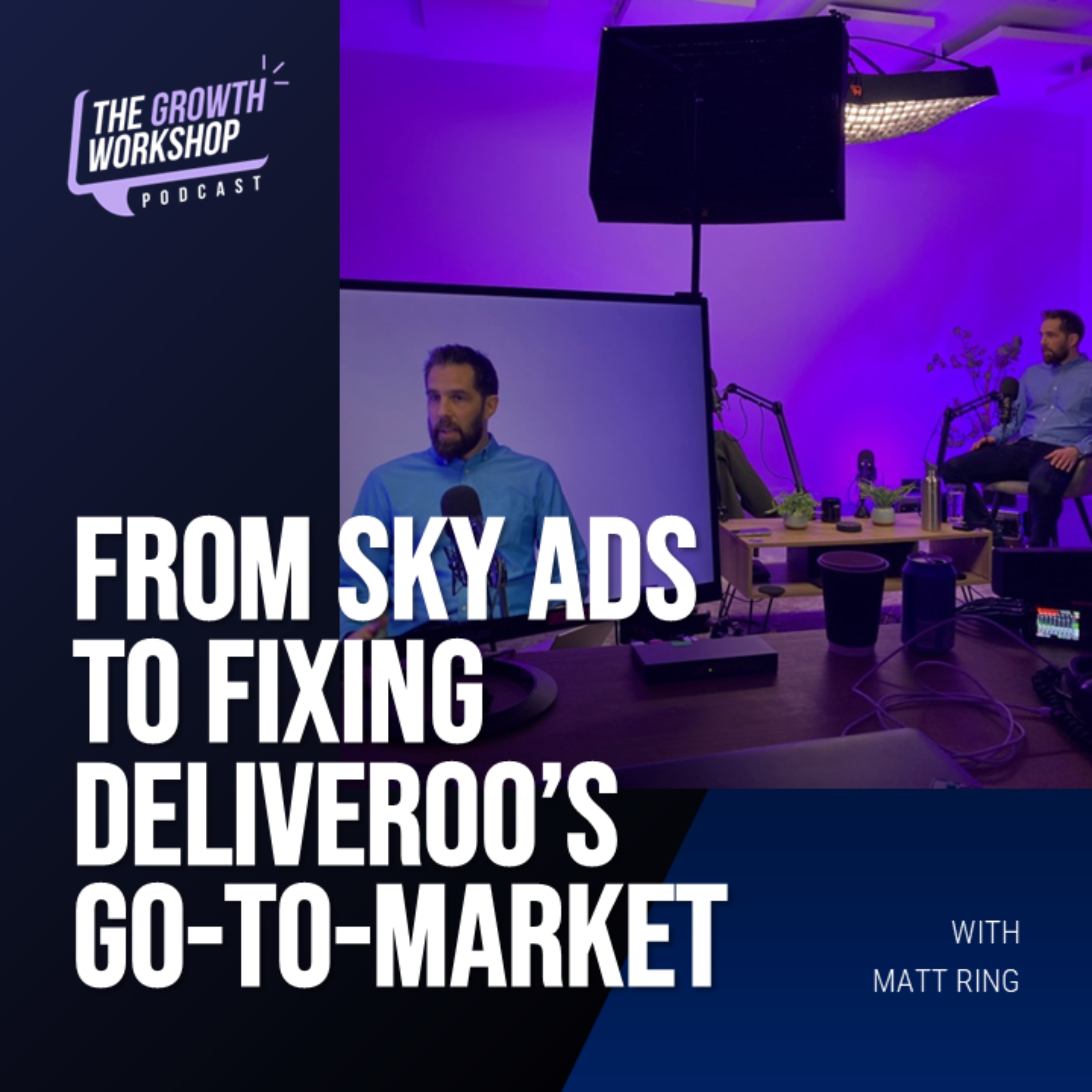 Episode 27, Part 1 - From Sky Ads to Fixing Deliveroo’s Go-To-MarketThe Growth Workshop Podcast · on Stakeholder alignment76 / 100
 Building AI-Powered Products at Scale with Mario Rodriguez, CPO of GitHub66 / 100
 The Real Power of Pricing with Ajit Ghuman, co-founder of Monetizely69 / 100
 Maxine Anderson on Transforming Training through Text-Based Solutions77 / 100The Future of Product Management Summit: AI, Alignment & ImpactNavigating the Shift from Project Management to Product Management