
Private Equity Talks · 2025-07-23 · 24 min
Key moments - from our scoring
Substance score
58 / 100
Five dimensions, 20 points each
The episode explores why mid-market PE firms are beginning to establish dedicated technology leadership roles despite the non-revenue-generating nature of these functions. Josko Karlcevic, CTO at Mayfair Equity, explains that AI disruption over the past two years has prompted firms to move beyond a decade-long focus on tech and data adoption by hiring specialized talent and building in-house platforms. He articulates a nuanced approach to technology strategy: buy commoditized solutions, build where competitive advantage exists (like their CRM platform List Alpha), and rent emerging technologies rather than lock into expensive multi-year agreements. The discussion addresses LP demands for faster insights and data-driven decision-making, and challenges the notion that data teams should generate revenue - instead positioning them as critical enablers of investment maximization. Hosts also contextualize timing and adoption risks, noting that firms jumping into AI platforms may face obsolescence, while those thoughtfully building data foundations over years may be better positioned. The conversation underscores the ongoing gap between LP expectations for AI adoption and most managers' actual implementation speeds.
Mayfair recognized AI as a disruptive force that will reshape every vertical and business, and decided to hire dedicated technology leadership to get ahead of the curve and leverage AI to accelerate the tech and data initiatives they've pursued for over a decade.
According to Josko Karlcevic, it's a false binary - firms should buy commoditized tools, build where there's competitive advantage (like Mayfair's List Alpha CRM), and rent emerging technologies flexibly to avoid long-term lock-in to depreciating assets.
LPs still want the same types of data but delivered much faster with actionable insights generated in near-real-time rather than monthly reports delivered after events have occurred.
Data and tech teams maximize investment returns by enabling the investment team with insights, identifying process optimizations, generating product ideas, and ensuring business efficiency - not by directly generating revenue.
Secure data storage, compliance, and safety are baseline requirements; the real differentiation comes from the ability to generate novel insights and actionable intelligence from that data quickly.
Our reviewer’s read on each dimension, with quotes from the episode.
The episode contains some substantive discussion about the build-vs-buy-vs-rent framework for tech stacks and the emerging CTO/CDO trend in mid-market PE, but it is diluted by extensive filler including lengthy introductions, sponsor reads, and meandering tangents about timing and market dynamics without concrete analytical depth. The guest does articulate a few novel framings (e.g., 'rent as much as possible' rather than lock-in), but these are offset by repetitive commentary from hosts about 'time will tell' and general observations that lack novelty.
Why would you want to go and buy something which becomes a depreciating asset, which sits on the shelf, which locks you into a technology you should be renting as much as possible, right?
I don't think our job or job of tech and data people is to generate revenue. Our job is to maximize investments.
The buy-build-rent framework is somewhat novel in how it's articulated by the guest, and the idea that firms should be 'promiscuous' with technology rather than locked in is genuinely fresh. However, much of the broader commentary - AI will disrupt everything, LPs want faster insights, data governance is important - is recycled industry thinking. The host's observation about 'a race where everyone is looking behind them' is a decent metaphor but not deeply original.
We should be as promiscuous as possible when it comes to technology choices like low cost, low risk.
it's like a race where everyone is looking behind them. Right? So, um, everyone is really worried that they're being overtaken, but no one's moving very fast
Josko Karlcevic is a newly appointed CTO at Mayfair Equity with direct PE operating experience (previously CTO of a Mayfair portfolio company), which is strong. However, he has not built a major business or scaled a significant operation to scale as an executive - he's a relatively new CTO in role (~7 months). He is a practitioner rather than a pure thought-leader, which is a plus, but his tenure and track record in the PE CTO role itself is still nascent. The hosts are industry journalists rather than operators.
I've always worked on the other side of the fence so it's great to have a perspective on how things get done on this side of private equity
Coming up to seven months. Yeah.
The episode lacks concrete numbers, named metrics, or detailed case studies. The guest mentions List Alpha (a Mayfair internal platform spun out), a CDO named Thomas Nielsen from Deutsche Bank and Tesco, and references to 'a decade' of work at Mayfair, but provides no specific data on ROI, timelines for AI implementation, LP reporting cadences, cost of hires, or measurable outcomes. Most claims are abstract ('turn data into insights', 'generate clues and triggers').
We built our uh, own CRM platform which is optimized for the PE space List Alpha. Uh, we built it in house because we didn't believe there was a good enough platform out there.
my colleague Thomas Nielsen, who was the CDO at Deutsche bank and Tesco, has been with the company for the last five years
The hosts ask reasonable opening questions but rarely push back or probe deeper. When Josko makes a claim (e.g., that tech teams' job is to 'maximize investments' not revenue), there is no challenging follow-up to test the logic or explore counterarguments. The conversation meanders into host commentary about timing and market races that derails the substantive thread. There are no sharp clarifying questions about how Mayfair measures ROI on the CTO hire or what specific failures preceded the decision to hire.
But that means you're having fun?
Um, and there will be plenty of firms in the industry who've invested in platforms, uh, that have not stood the test of time.
Computed from the transcript - who did the talking, and the words that came up most.
In this episode of TOTO, we look at how private markets managers are investing in their tech and data teams to meet future challenges. We interview Josko Grljevic, the chief technology officer at Mayfair Equity Partners and hear his views on ROI for in-house tech spend and how GPs should move to a 'rent' rather than 'buy' model for software. Grljevic is Mayfair's first ever CTO and it is a role that remains rare in the midmarket, so we also ask him about the drivers for this strategic hire.
Transcribed and scored by The B2B Podcast Index.
Speaker A: Foreign.
Speaker B: Welcome back everyone to another episode of Top of the Ops, a uh, podcast brought to you by the Drawdown. In each episode we explore a topic or theme impacting operations and finance professionals in private markets, giving you a perspective on the challenges faced by operational leaders and um, the solutions available to them. Once again we are proud to say that this podcast is sponsored by our friends at uh, HSBC Innovation Banking. From mid market private equity to venture capital innovation needs different. Our episode partner, HSBC Innovation Banking offers tailored financing, foreign exchange and M banking solutions to match evolving needs. Backed by deep sector expertise and global reach. Its strategic fund solutions team are uh, here to help UK clients achieve their financial goals. Discover more at hsbcinnovationbanking.com I am joined today by Tanya Kushal and Matthias Plotz, a duo as wise, considerate and hard working as Bandit and Chilli. Welcome guys.
Speaker C: Once again we don't understand the references, but I will say my foreign hello as that all Korean people say.
Speaker B: Very nice.
Speaker D: Uh, yeah, with Tanya on the reference there, I can only say gesundheit to that one. Um, thanks for having me. Good to be back in Brussels. Slightly less chuffed about not being in the studio with you both.
Speaker B: Okay, yeah, we need to uh, rectify that for next time around. Okay. So for today's episode we are looking at the potential future of digital operations and data governance. Tanya, how about you give us a rundown on the topic?
Speaker C: Yes, so I have been working on this topic for a while. So this topic comes from a recent piece I wrote called Summit 2030, an analogy of how firms are climbing the five year long mountain of digitization and data governance. There are a lot of interesting aspects I found like there's a lack of consolidation of providers in the market, firms are slowly building more and more in house and even hiring data stewards or creating new roles such as Chief Data Officer who works along with the cto. But whilst there is a shift happening, there are a lot of challenges firms are facing that are preventing them from unleashing their full operational potential in five years time. Those challenges are a whole spectrum. It can be over reliance on excel, poor data quality with little standardization of tools, nervousness around AI, lack of investment, or a lack of solid foundation of data governance. Now that I have given you this context for today's episode, we will take a look into how this non revenue generating function can not only meet LP demands, but also generate return on investments.
Speaker B: Yeah, so that's a really interesting point. I looked at this issue as well myself, um, recently but in the context of a wider article I was writing on talent, um, with firms clearly in recent years trying to tool up with personnel as well as systems and processes. Um, and as you say Tanya, a key um, feature of that talent accumulation of course has been a growing trend we've seen across kind of uh, PE firms and increasingly mid market firms of hiring chief technology officers and specialists to oversee those efforts. And I guess as you highlight the interesting fact there is, this is a, ah, significant internal investment that they're making um, in a non, you know, non revenue generating role and it just kind of underlines the importance that firms are seeing in this area.
Speaker C: So one such firm that joined the trend of appointing a CTO was Mayfair Equity. We have with us in the studio the firm's recently appointed CTO Josko Karlcevic to chat more about the prospects of data governance and digitization. Welcome Josko, welcome to the studio and welcome to the Drawdown podcast.
Speaker A: Thank you for having me.
Speaker C: Firstly, congratulations on the appointment. How are you finding it?
Speaker A: Um, thank you very much. Um, great position. I've always worked on the other side of the fence so it's great to have a perspective on how things get done on this side of private equity. So um, one, it's a great learning experience and two, just you get to fill in the blanks.
Speaker C: Yeah, that's quite nice. And it's been a couple of months now, right?
Speaker A: Coming up to seven months. Yeah.
Speaker C: Oh wow. Half a year. How does it feel?
Speaker A: It feels like I started yesterday and the time just flew past.
Speaker C: But that means you're having fun?
Speaker A: I'm having a blast, yeah.
Speaker C: So Mayfair created the position with your appointment. Um, but I've been seeing this trend of CTOs and CDOs roles at mid market private equity firms and still relatively uncommon. Why do you think firms are increasingly hiring for this position?
Speaker A: Let, uh, me try and answer that a couple of ways. So I'm still not seeing a lot of firms in our space in the mid market going down the route of acquiring their own in house CDO or cto. So I think we still very much the exception rather than that being the norm in terms of why Mayfair did it. Um, a couple of reasons to that. So they've always, or we've always had a great um, push on tech and data. Tech and data have been a brilliant catalyst for business transformation for over a decade. Um, the pity is not a lot of businesses have taken the opportunity to implement it or they have and it just hasn't been a great outcome. Um, so even as during my time as a CTO in a Mayfair uh, portfolio company. Mayfair has always been about can you do more with data, can we invest more? If we give you more to implement tech and data, can you transform the business, can you transform the industry? And they've been doing that for a decade now. And even my colleague Thomas Nielsen, who was the CDO at Deutsche bank and Tesco, has been with the company for the last five years, years and he's been working very closely with portfolio companies to get them to implement tech and data across their um, business for all sorts of obvious reasons. Um, the reason why we actually looked at bringing an in house CTO was predominantly a direct response to AI. In the last two years we've seen uh, the rise and the dominance of AI. Mayfair has um, understood from almost two years ago just how disruptive AI and data are going to be to every vertical, every business, every market in the way we do things, in the cadence we do things. So this is a great opportunity to turbocharge uh everything that tech and data was supposed to have done in the last decade through the use of AI. And you can either say it's not coming and ignore it and you're going to bear the repercussions of that, or you can lean in as Mayfair has done and said, right, this is coming, let's actually get ahead of the curve and let's do something with it, let's use it to our advantage. And they kind of did two things. First of all they brought in the capability in terms of resources that is hiring a cto which is probably not the norm in the space. And secondly they're actually backing the development of an in house platform around data and AI to help us leverage the opportunities that exist around that space and the capabilities that it brings in house and ultimately it's to give us uh, uh, an advantage in the mid market space.
Speaker C: Yeah, that's very interesting especially because you mentioned the uh, in house building. Of course GPs have varying approaches to buy versus build when it comes to their tech stack. Some like to keep the competition just with it service provider versus service provider. Whilst others are like it's better for the market if GPS are innovating. What is Mayfair's approach and how do
Speaker A: you see this evolving over time with the build? The buy versus build makes it seem like it's one or the other. It's binary. It's not. It should be buy and build. Right. For obvious reasons, why would I want to go and spend the capex and the resource to build something that's really commoditized in the market that I can buy for a fraction of the cost. There's no advantage to doing that. So where it makes sense, buy.
Speaker D: Right.
Speaker A: And we'll come back to the buy things in a bit because buy is not the right term either. But where you see a competitive advantage in building a capability or building a platform, building software like we've done, we've built our uh, own CRM platform which is optimized for the PE space List Alpha. Uh, we built it in house because we didn't believe there was a good enough platform out there. We actually then spun it out of Mayfair and it's now a business that's doing wonderfully well as an independent business. So where there's an opportunity to create advantage or opportunity to create a differentiation in the space, you should absolutely look at building. But ultimately what everyone should be doing is looking at how do you take the commodity stuff which makes no sense for us to build and stitch it together with the things that should be built to create an advantage and actually generate a platform or a product in a much, much quicker, uh, amount of time. Now back to the buy bit like uh, we just talked about AI it's going to transform everything that we do and it's going to change. Things are changing so quickly. Why would you want to go and buy something which becomes a depreciating asset, which sits on the shelf, which locks you into a technology you should be renting as much as possible, right? We should be as promiscuous as possible when it comes to technology choices like low cost, low risk. If you go and use one or two or three, four, they become completely disposable because ultimately something else is going to come into the market in a month or two or three months time that you should be able to context switch and use it as it becomes appropriate. So I mean, uh, the long winded summary is build and buy and if you can afford not to buy, then rent and rent as much as possible and be as promiscuous as possible when it comes to technology choice.
Speaker C: That's interesting. I've not heard the word rent being thrown around that much in the market.
Speaker A: I'll use it for as long as I need to and then I'll quite happily stop using it. So why sign up for the three year deal uh, when it's only going to serve a purpose for a couple of months and I don't have to worry about the cost?
Speaker C: Right, very interesting. But of course we can't forget the LPs in this conversation. How are you seeing investor demands for data changing? What do you think will represent I guess the minimum standards in terms of data management and reporting by the end of the decade, by 2030.
Speaker A: So I don't think there's been a change in the type of data that they are asking for. Um, the big change has been in we want quicker insights, right? We want it turned around quicker. Everything is changing around us quickly. It's kind of pointless producing report a month after an event has happened. So the quests that are coming in is we still want the same data but we want it on this template, we want it tomorrow. Generate the insights and show me something that I'm not aware of. So it's the capability of being able to do something with that data to turn it into some sort of insight which somebody needs or, or values. That's become the real challenge. And you're seeing a whole bunch of tools coming into the market and capabilities which is allowing um, us and other people who need to report on data to turn that around very quickly generate insights in the way that an LP wants to see it in terms of minimum governance. Look, your data should be secure, you should be able to generate data, you should be able to store it, safety, it should be compliant. That's all the basic stuff. That's what everyone should be doing. The key thing is how do you then generate the insights? How do you find the pearls, the nuggets of wisdom that's sitting in that data that somebody will then take an action in the back or they find valuable.
Speaker C: It's of course a non revenue generating function. A lot of data operations and digitization is how can internal data and tech teams demonstrate that return on investment to LPs?
Speaker A: Well, I'm going to be slightly um, controversial here.
Speaker C: Go ahead.
Speaker A: I don't think our job or job of tech and data people is to generate revenue. Our job is to maximize investments. Right. So not really fussed about the revenue side of things because that's not our world. It's about investments. Um, if you want to see how valuable support and data people are, wait until somebody can't actually access something or a system goes down. That's when the value comes into effect. But I've always had the opinion that really good data scientists, really good analysts are worth their weight in gold because those are the people that want to understand the business intimately and intensely understand the data and are the ones can drill down and double click into the data to generate views on what's happening in the business. Generate insights. Um, look at process optimizations where things are not optimal and they should be, or even generate great product ideas. I mean the amount of product ideas I've come, have had come out of uh, uh, a data science team is just immense. The problem is to push them back and say, we haven't got time for this, stop it, just give me the stuff that I want to. So back to the fact is they're not there to generate revenue, other than the fact they might be able to generate a product idea. But what we really want them to do is enable the investment team who maximizes the value of the investment, make sure that they actually as efficient as possible and have all the things that they need to do their job and then generate the insights, generate the clues and the triggers and the signals that the business finds valuable. That'll actually give us a much better return on our investment, our investment, and obviously our LPs as well.
Speaker C: Amazing. Well, fortunately that's all the time we have today. But of course, as a data nerd myself, I can talk about it all day. Thank you so much, Joszko, for joining us.
Speaker A: Thank you very much and thank you for having me.
Speaker B: A very interesting conversation with Yosuke there. Um, uh, he gave me permission before he left to try and to not pronounce his surname. Uh, so I'm not going to try. Um, investing in a dedicated tech or data function and hiring someone to oversee that is a considerable outlay given the current climate of fee compression, slow X and stifle fundraising. And everything we're hearing from the market is that that shows no sign of uh, easing anytime soon. So, um, it kind of occurred to me when he was speaking there, Tania, that um, whether that type of investment will prove to be a success or not is going to be a lot down to timing. Right? So we hosted a breakfast briefing on um, um, applications for AI in private markets at the beginning of 2024, right when that was a very kind of hot topic. And I remember people saying at that time that um, those who hadn't even thought about this topic yet, let alone had got round to actually investing in uh, personnel or platforms, was probably best placed. Right? Um, and there will be plenty of firms in the industry who've invested in platforms, uh, that have not stood the test of time. You often hear that phrase of kind of platform graveyard, um, or technologies or approaches which are proving to be made, uh, redundant now because of um, the introduction of uh, more AI application, uh, within their businesses. Um, so in that context, I think it's Interesting that he said that Mayfair has been thinking, uh, around data, uh, for a decade now, uh, but it's only just got round to hiring its first cto. So again, is that timing going to prove to be, um, you know, very well thought out and ah, very fortuitous, or, you know, potentially is there going to be something else that happens in the market in the next couple of years that um, makes um, that look, uh, cavalier or not so smart? I don't know.
Speaker C: Um.
Speaker B: Thoughts guys?
Speaker D: Uh, I find the piece on the timing quite interesting because I remember when I first joined the Drawdown almost three years ago, the first cover feature that I contributed to was our September issue at the time. And I had sort of, you know, entered the data conversation as I entered, uh, the private equity industry at a point in time where gps had gotten very good at collecting a lot of data. And then we wrote that issue, specifically that September issue, around what they can start doing with that data because they have all of it, but it's not really clear, um, what sort of additional benefits you can get out of it. And I feel like for the last three years since that issue, not too much has happened in sort of the data conversation. There have been so parts around insourcing, outsourcing here and there, kind of on the edges of the overall topic there have been some developments. But this sort of conversation around AI, when it blew up and became mainstream, that to me feels like the next step of that data conversation. Because when sort of this AI explosion happened, everyone was obviously very keen on, okay, how can we use this? But then the next step after that was everyone realizing that their data household needs to be clean and up in order to layer the AI on top of that. I find it quite interesting to follow the data conversation in that point and um, see how it's been developing over time.
Speaker B: Yeah. And I think just adding onto that is, um, you see a real variety of approaches, um, from the types of managers that we speak to on a daily basis and going back to that AI breakfast briefing, um, the thing I often say is someone said to me, it's like a race where everyone is looking behind them. Right? So, um, everyone is really worried that they're being overtaken, but no one's moving very fast because you can't run very fast when you're looking backwards. Right. And um, the amount of surveys we get through, uh, across the news desk, which show that LPs really want, uh, GPS to be, um, uh, utilizing AI as much as possible. But there's a real gap between that Desire and I guess particularly away from the largest managers in the market, how much people are actually embracing that. And conversations that I've had recently are uh, a lot of it comes down to institutionally. Do you have a CFO who wants to worry about this stuff, who sees this as vitally important, you know, is in that point in their career where they're thinking over the next 10, 20 years rather than maybe the next five years and, and uh, and their exit from the industry. So you see a variety of approaches to this and so um, yeah, we're going to find out whether you know, as, as Yosko said, Mayfair um, is kind of a bit of an anomaly for firms their size of uh, deciding to go down this route of having someone specifically uh, manage dysfunction. Is this going to become a trend? Are they going to remain an outlier? Um, you know it's a cliche thing to say but time will tell. But um, what's interesting I think is the variety approaches and maybe kind of the slow speed of adoption of a lot of these practices and ah, approaches across the industry.
Speaker C: Yeah, that's very interesting. And carrying on from uh, what happens after you get the CTO and after you get the data team and the actual aspect of getting to the tech stack. Yoshko mentioned the aspect about renting really caught my attention and the idea that you can buy, build and rent altogether rather than keeping them as a singular entity. And I love saying this phrase a lot but it's all about you know, creating a balance. It doesn't have to be singular. You can have them all kind of function to get different aspects with different service providers. Buy, build and rent. It kind of reminds me of the concept of blockbuster and I've never been to one but the idea is the same here. You buy or rent depending on how important the tech stack is for you or you create your own if you're a genius. But I wonder what the market could look like if everyone does more tech renting because it's still very uncommon or just overall has the idea of a much shorter license agreement and starting from a negotiating point.
Speaker B: Yeah, uh, successfully making me feel old as always Tanya, by saying that you've never been in the blockbusters. Um, uh, but yes, I think that is really interesting and I think it's interesting because um, uh, something that I've been picking up on recently is the number of service providers from a tech perspective who are trying to provide a kind of um, a ah, uni platform. Right. Which um, the idea of ah, end to end seems to be coming popular again among certain service providers and uh, bespoke businesses being launched that are trying to say you don't need lots of point to point solutions or you can have them for a time being we'll plug them into our system but ultimately all you need is us. And you know that goes counter what Yosko's saying there, right? Which is that now I want as much variety and choice and play people off against each other as much as possible. So anyway, I'm looking into that for uh, an article that's uh, coming up shortly. Um, guys, what else are you working on at the moment?
Speaker C: Well I'm working on two stories. Uh, one is the recent rise of secondaries and why the market could be should be looking at the normalization of secondaries and the second one is finding an alternative to US Carry. A lot of listeners might note that the Republicans, um, shut down the thought of getting rid of the US carry loophole. But what could be the potential alternative to that loophole or the whole structure of US carried interest?
Speaker B: Yeah and that's going to be part of uh, a wider look that we're going to be doing over the summer months. Uh, uh, the US market more generally. Matthias, how about you? What are you working on at the moment?
Speaker D: Uh, definitely equally interesting topics. Mainly uh, one of them is we've seen an uptick in WI insurance, uh, particularly in the mid M market. So I'm speaking to a couple of brokers and lawyers to find out what that is more about and kind of you know, the points around W and I insurance that get claims. Um, so watch out for that piece. Going to the drawdown soon. And then the other one is uh, of the couple of conversations I've had last week I'm looking into the challenges of winding down private funds because uh, I'm sure our listenership is aware that they have zombie funds have a negative impact on your irr. But they're also quite complicated actually to wind down. So I'm hoping that I can go out there and fetch a couple of solutions and then what is still going on in the background is my currently seemingly never ending research into fund structures, um, in the mid M market and what they're up to. And you can read more about that in the next cover feature.
Speaker B: Very much looking forward to it. Yeah, great topics as always. Uh, you can read about all of those and much more on the drawdown. But that's it from us today. So just uh, leaves me to say thank you to Tanja and Matthias and uh, thank you as well, to, uh, HSBC Innovation Banking for sponsoring the podcast. But most importantly, thank you to everyone listening. We'll meet you all back here next time.
Other episodes covering the same guests and topics, from across The B2B Podcast Index.
 Episode 31: Why Data Governance In Your Org is Broken (And How to Fix It)High Signal · on Data governance frameworks87 / 100
 Modern Data Governance 101 - The Elephant in the RoomGreat Data Minds · on Data quality and standardization81 / 100
 Inside Applied Data Governance: Expert Perspectives from the ADGP Program Episode 2: Designing Governance That Works with John LadleyDATAVERSITY Talks · on Data governance frameworks71 / 100
 Zuzana Manhart: Break Workflows, Build FoundationsAI Pathfinder for Private Equity Podcast · on Data governance frameworks67 / 100
 The AI Guide Everyone Needs in 2026 ft. Gaurav PathakBringing Data and AI to Life · on Data governance frameworks47 / 100
 The Compliance Reality Nobody Tells You About AIPrivate Equity Data Guy · on Data governance frameworks
 TOTO: Succession battlescars60 / 100
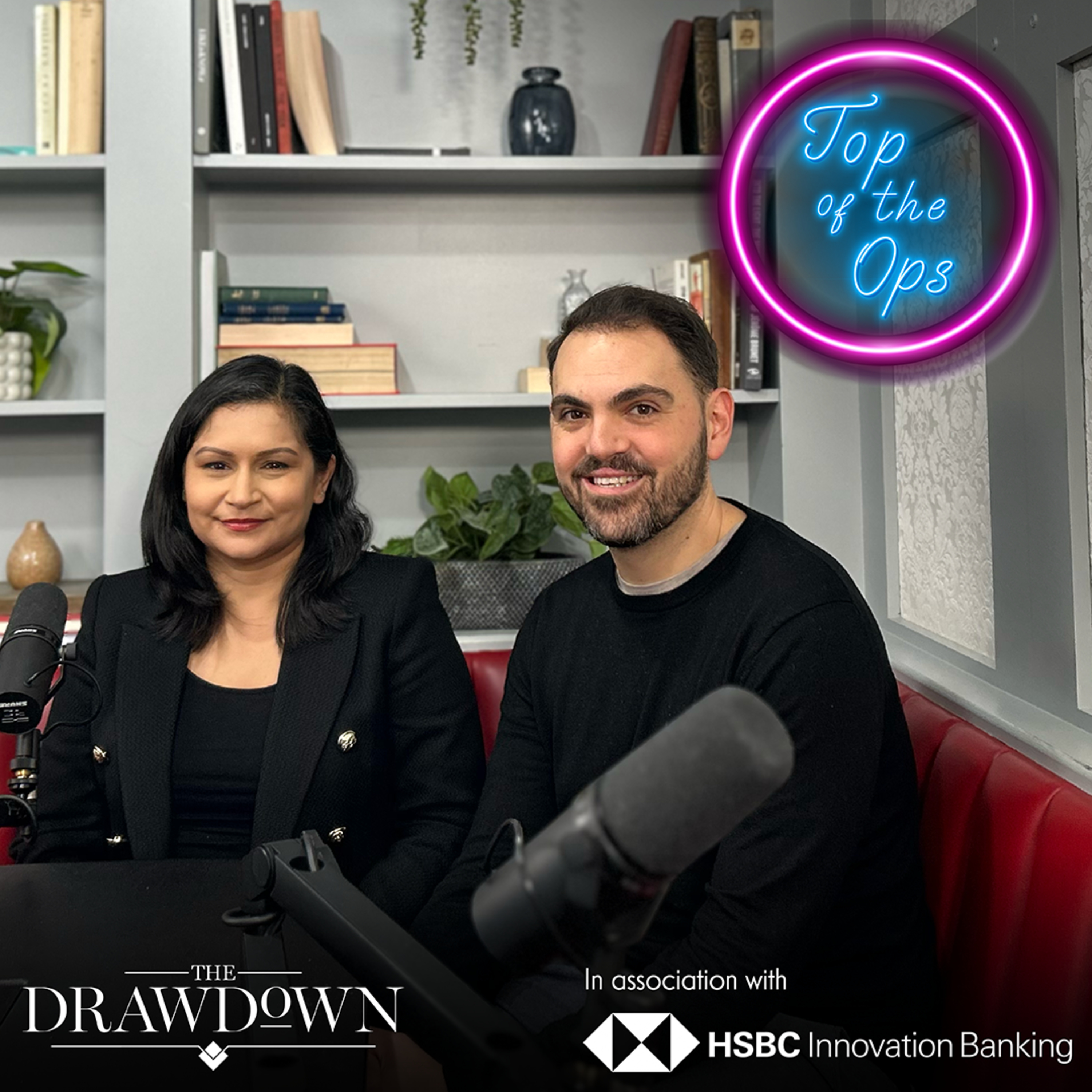 TOTO: Levelling up60 / 100
 TOTO: The transfer window76 / 100
 TOTO: Day of the debt75 / 100
 Top of the Ops: Retail therapy76 / 100