
Next Level Influence · 2023-08-21 · 43 min
Key moments - from our scoring
Substance score
41 / 100
Five dimensions, 20 points each
Adam Urbanski, who has spent 23 years building and coaching expertise-based businesses, explains how to leverage social media platforms - particularly Facebook and LinkedIn - for rapid revenue acceleration through organic marketing. Rather than treating social media as a broadcast channel, Urbanski positions it as a giant party where relationship-building and value creation happen before any pitch. The hosts address the frustration many experts face with low-quality DM pitches by establishing that the problem stems from poor congruency (inconsistent messaging across profile, banner, and content) and a flawed outreach strategy. Urbanski proposes a 70-20-10 content framework: 70% positioning content (teaching, insights, client wins), 20-25% personality content (showing the human behind the business), and 5-10% direct marketing calls-to-action. He also reveals that permission-based outreach - interrupting hidden buyers with a respectful ask to continue conversation - is the missing piece most people overlook, separating effective social selling from the slick, invasive tactics that repel prospects.
They skip the permission step and try to sell immediately without first interrupting the prospect respectfully and securing permission to have a deeper conversation, which creates the slimy, invasive feeling prospects hate.
Only 5-10% should be direct calls-to-action and pitches; 70% should be positioning content (teaching and insights), and 20-25% should be personality content that shows who you are as a person.
Facebook has resurgence potential and functions like a giant party with hundreds of thousands of ideal prospects in groups; LinkedIn is experiencing similar momentum to where Facebook was five years ago, making both ideal for organic outreach.
Post the same core message repeatedly with slight variations - even posting the same thing the next day with a different picture works - because only about 5% of your audience sees any given post, so repetition ensures full visibility.
No; Facebook prohibits using a personal profile as a business account (you need a business page for that), but there is nothing preventing individuals from discussing their work, posting links to offers, or selling on a personal profile.
Our reviewer’s read on each dimension, with quotes from the episode.
A handful of genuinely useful frameworks emerge - the interrupt-then-permission DM sequence, the observation that lurkers/hidden buyers don't surface in post engagement, and the 70/20/10 content ratio - but they are heavily diluted by host banter, season-wrap announcements, review solicitations, and lengthy anecdotes. Net insight-per-minute is low.
the likerts or hidden buyers aren't necessarily those who are going to respond to your posts. That's a catch 22, because now you're getting into conversations with people that only really wanted this info
7% of your content should be positioning content... 20% to 25% should be personality... 5 to 10%. That's your marketing content
The interrupt-plus-explicit-permission framing for cold DMs is a serviceable repackaging of Seth Godin-era permission marketing and is the episode's freshest idea, but everything else - 'serve more to sell more,' the party metaphor, content mix ratios, profile congruency - recycles widely circulated social-media-marketing doctrine without meaningful first-principles development.
interruption is critical because if you don't do this, there's nothing else that starts now
permission is a two way street. So permission is asking for permission to continue the conversation on that subject. And permission is giving that person, the recipient, permission to simply say no
Urbanski is a genuine long-tenure practitioner - 23 years in the market, built and sold a business, coached recognisable names in the consulting/coaching space, and ran a real experiment abandoning a 35,000-person email list - but his domain is solopreneur/expertpreneur coaching rather than scaled B2B, limiting direct relevance for operators running larger commercial organisations.
I literally stopped emailing my list of 35,000 subscribers and said, let me just go all in on organic
Fast forward 23 years now since then and have been extremely blessed... have worked and coached with a lot of who is who in the consulting, coaching, kind of expertpreneur market
There are scattered concrete figures (35k list, 70/20/10 ratio, '5% reach' claim, the $200/month outsourcing reference) but no client case studies with named companies, no sourced data behind the reach percentage, and the headline claim of '$100K - $1M in hidden buyers in your following' is entirely unsubstantiated hand-waving.
I don't know, maybe 5% of our audience that actually sees that stuff. So you have to post it 20 times
in their following they have anywhere between 100,000 to a million dollars in clients and cash that could be collected in anywhere from a month to a year
The hosts do steer the conversation toward practical specifics - pushing on the 'bridge' from content to DMs and distinguishing cold from warm outreach - but they consistently reward every answer with uncritical affirmations ('Love that. So much.') and insert personal anecdotes and housekeeping that interrupt momentum; no claim is ever challenged or pressure-tested.
What is the bridge that gets us from there to actually being able to sell in the DMs in an effective way?
Are you doing that because through your content, you're asking people if they would like you to connect essentially through a piece of content or... is that interruption just a cold dm?
Computed from the transcript - who did the talking, and the words that came up most.
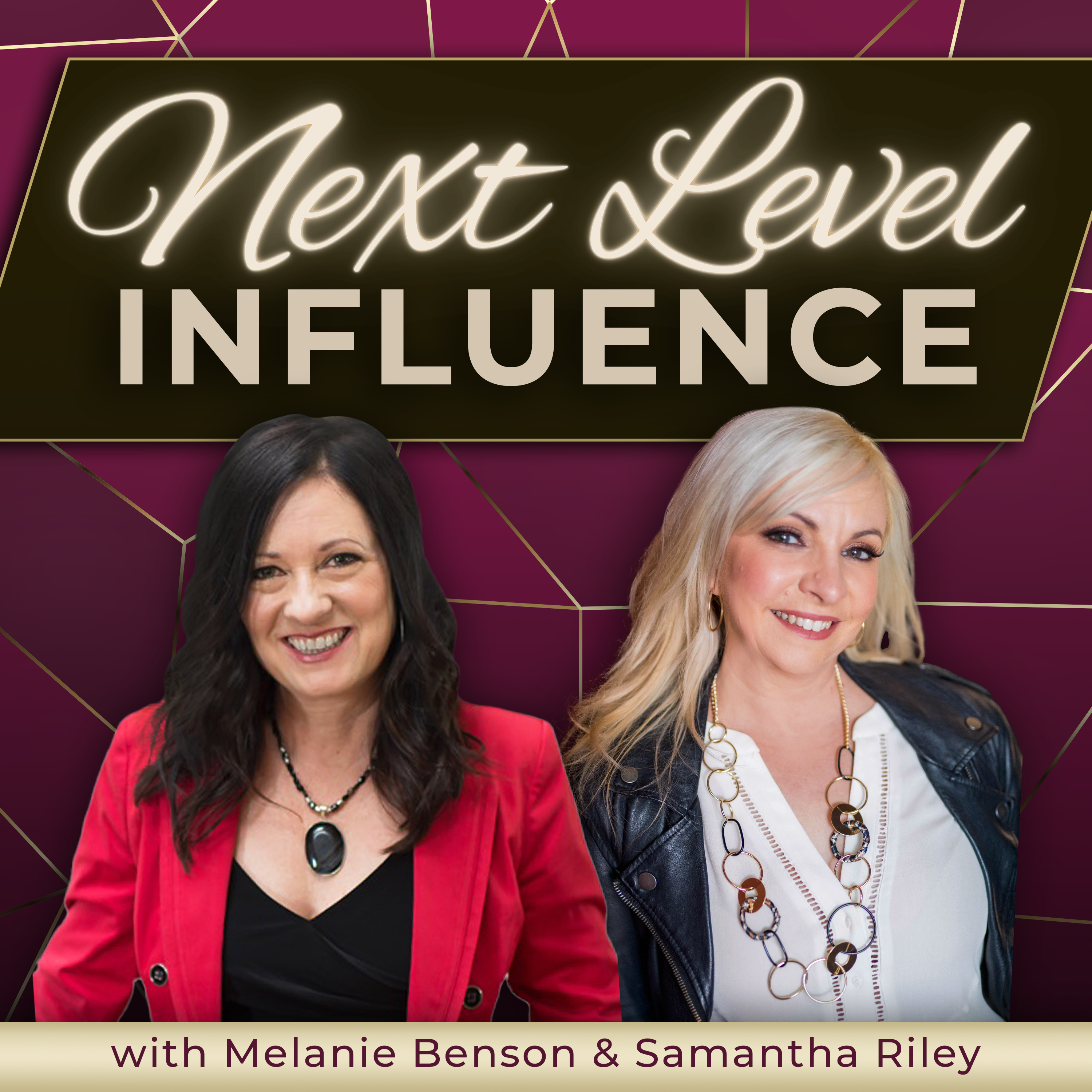
Have you observed an increase in people sending poorly crafted cold pitches via Direct Messages lately? This not only discourages potential clients but also casts a negative light on your business and branding. In this episode of Next Level Influence, Samantha Riley and Melanie Benson speak with Adam Urbanski and delve into the art of elevating your social selling strategies. Drawing on his proficiency in developing Strategic Marketing Plans and nurturing the expansion of service-based selling enterprises, Adam provides insights so you can enhance your approach. Adam shares his insights on how to effectively leverage social platforms to organically market your business. He steers clear of excessive self-promotion and instead concentrates on consistent enhancements in key areas: your profile, messaging, content creation, and the demonstration of your expertise. Join us for this valuable and high energy conversation where we explore ways to constantly provide value to clients and excel in the art of social selling.
Transcribed and scored by The B2B Podcast Index.
Speaker A: So if someone's marketing isn't working, typically one of the first things to look at is congruency, which is the opposite of confusion. Confusion is all over the place. Congruency is like you pick a thread somewhere, you follow the thread, and every little benchmark on that thread confirms that you heading in the right direction.
Speaker B: What got you here won't get you there. It's time to uncover the micro shifts required to take your income, influence and impact to the next level. I'm Melanie Benson.
Speaker C: And I'm Samantha Riley. And this is our weekly show for experts and business leaders who are influencing people's decisions to make a greater impact and shatter their revenue goals in the process. Welcome to the next level influence show. Now let's get started.
Speaker B: I'm very excited about today's episode because two things. One, we are ending season one on a high note with a fantastic guest with some powerful information. Sam, the season has been chock full of so many amazing insights, so many powerful guests, so awesome panel conversations. Uh, but it's time.
Speaker C: It is. It's time for us to take a breath because we've had so many amazing conversations and get our thoughts together so that we can come back in season two with some fresh ideas and some renewed energy. But in the meantime, we would love you to head over to Apple Podcasts us and give us a rate and review and let us know how you've loved season one and any of your takeaways. If you want to share a favorite episode, we would be really appreciative.
Speaker B: Absolutely. And hopefully we can link that up in the show notes for you as well. Just to make that super easy. We'll be on a short hiatus. We'll be back real soon with the next season because we love these conversations and we love hearing your feedback. But for now, get ready, get a pen and paper. You are going to love today's episode.
Speaker C: Absolutely. This episode is full of energy. It's full of amazing information. Adam absolutely brings the goods. So you know what, Melanie? Let's just dive straight in.
Speaker B: Sam, I'm excited for today's conversation and this is really inspired by something I think you and I have both been experiencing. I personally have had a huge, huge uptick in the number of people that have been sliding into my social media DMS with a pitch.
Speaker C: Mhm. I not have not only noticed a large uptick of people sliding in, but I've noticed a large uptick of people who are doing it really badly. There's a lot of m really bad information being bandied around there's people, I think, copying some really bad strategies. So I think we need to, uh, bring in someone to help us fix this.
Speaker B: Yeah, I agree. And you know, I was very put off by a lot of it. But then I had a conversation with our guest today last year, and I continued to have a conversation ongoing for a while. And I got to tell you, like, our guests today really shifted m not just my perspective, but my success with the strategy we're going to talk about today and really helped illuminate why so many people are put off by it and how to do it in a way that's not only feels a lot better, but it's super effective.
Speaker C: The m reason I love this topic so much is I think that we need to start to move from the idea of selling to the idea of serving. And I think that that's what this. I'm pretty sure this is where this conversation is going. So we have got Adam Urbansky joining us today to show us how we can sell in the DMs the right way so that it's not slick and slimy, but so that it's super effective.
Speaker B: Yeah, love it. So, Adam, welcome.
Speaker A: Thanks for having me. M. Ian, I love this switch from selling to serving. Serve more to sell more. I'm all about that.
Speaker C: Uh, I just got the vibes. I just knew that that's where we were going. Adam, I'd love you to do a quick intro with who you are and what you do.
Speaker A: Well, as we discussed before we go live for my quick intro, I need about three hours. So I don't know if I can do a really digest, you know, when, where do I start? I had so many such a. What's the word I'm looking for? Very rich entrepreneurial journey. My first claim to fame by building, buying, selling restaurant business from uh, absolutely zero money and not speaking English language to a million dollar company which I sold off and then I switched off to being a consultant and a coach. And this was right around 2000 when the Internet was just sort of coming into its own. Um, and I noticed an opportunity to teach people how to market online. We had a great niche in a service professionals market. Fast forward 23 years now since then and have been extremely blessed too because mostly just longevity more than anything else. Have, ah, worked and coached with a lot of who is who in the consulting, coaching, kind of expertpreneur market and helping them get their businesses sentenced from just an idea to multiple six and seven figures. And today even the last, I would say last 78 years. I made my focus to be rapid revenue acceleration, primarily through organic marketing via social media platforms. It's such a powerful media and I notice it's the fastest way to cash for most people. It's the way to sustain long term. And Labrador hated social media isn't going anywhere anyway anytime soon, so we might as well embrace it and do it well.
Speaker C: Couldn't agree more.
Speaker B: Yeah. And before we jump into that next question, Sam, I just want to add one thing and that, you know, many people are really kind of battling with email deliverability these days. So it's almost like embracing this gives you another way to serve your clients and to really make sure you're connected with them, especially if your email's not performing or maybe that's just not your thing. You don't do that well in general.
Speaker C: M. Good point, because I think we need to do it all, you know. Well, Adam's going to share more about why we need to do that.
Speaker A: Agree. But no, we will review that. That it's not either or. So I'll tell you, um, this is just to share with your audience how brilliant, um, your guest is today. Right. This is my, my head on a pedestal. So when I switched to organic marketing in 2017, I kind of went full throttle. And to make the long story short, I was trying to convince clients to abandon the technology, which was absolutely overwhelming and confusing them. Right. They were trying to like, which membership platform, which email software, which webinar system, like, okay, just digital and use the one platform that has it all. M. Right. Which at the time, Facebook was ideal for that. And I had such a hard time convincing clients, and that's a good way to go. I said, you know, let me just show you. And I literally stopped emailing my list of 35,000 subscribers and said, let me just go all in on organic. So the brilliant move was abandoning the email list, which now again, seven years later, I'm thinking this probably wasn't so smart because I need to go back and rebuild that channel. But to your point, there is no one strategy over other. I think it's doing them all. But it's also realizing what do you have time for and where is your unique personality better suited for? So I know I'm monopolizing the topic here, but look, a lot of us are very conversational. A lot of us, uh, especially if you kind of over the age, probably 35, 40, and you in business, you have, uh, experienced networking in real life, and you have the experience of connecting with people and having conversations that's natural to us. We're natural having conversations. And social media is really built for that one to one conversations. And more than that, it allows us to actually scale the conversation from one to one to one to many and still maintain some sort of relationship building in the process. It's absolutely brilliant. And it avoids all the complexity of technology and kind of many, uh, other things that trips people up when they try to build a business. So.
Speaker C: M. Totally. So you just mentioned that social media was a great place to connect with potential clients because it's conversational. You did mention Facebook just then. Is Facebook still your favorite platform? Because there are so many platforms out there.
Speaker A: You know, I don't know if it's. I don't know if it's my favorite. It's the one that I sort of paid the most attention to over the years and it stayed this way. So I'll tell you this many, many moons ago, I can't place it in the timeline, but there was a time where I've heard Mark Zuckerberg make a statement that he wasn't looking to create another Fed. This was kind of in the early days of social media platforms. And he said he wants to make Facebook like electricity. And I just had all sorts of whistles and bells go up in my head and I went, all right, if this is where this is going to, I mean, think about electricity. You don't imagine living without it, right? So I thought, you know, if this is where it's going, there will be a day where we will just consider Facebook kind of a normal activity during the day. So I don't know if it's my favorite platform. It's my go to platform and I'm most familiar with it. I think LinkedIn is my recently kind of new favorite. And I think LinkedIn today feels like Facebook fell probably five years ago. It's kind of weird to see the shift happening. I used to be really active on the Twitter. Not anymore. Not so. But it's still a good platform. And I think LinkedIn. I'm not a visual creator. I'm not LinkedIn, Instagram, I'm not a visual creator. So Instagram is a bit challenging for me and I'm probably least active there. Long winded answer to your question. Probably Facebook would be my favorite if I were to use that word. I see Melanie's face and goes like, can you. Can you just answer your question in three words, please?
Speaker B: Well, I was actually just thinking about what you were describing about each of the platforms and I'm like, is exactly my experience. I'm still pretty active on Twitter, AKA x. Mhm. But I agree. I think so Facebook to me has had this resurgence. You know, I think we've kind of moved from this very polarizing platform to something that's kind of finding a new groove. And so I think Facebook has an opportunity to kind of bring a new energetic connection opportunity. So I, I'm actually, I avoided Facebook for like three years and I'm. I'm kind of moving back into it. So it'll be. I'll be curious. As you're listening in, wherever you're listening to today's episode, give us a little shout out. Are you listening to it through one of the platforms that is your favorite platform? Tell us what that is. We want to hear from you.
Speaker C: Totally.
Speaker B: So Adam, let's just kind of set up this context a little bit because I know how your process works, but let's give our listeners a little bit of a, kind of an overview of what organic marketing through social media platforms kind of works. Like, how do we connect the dots?
Speaker A: Yeah. E distinction that you just mentioned that's very important to highlight organic marketing through social media because organic marketing is more than just social media. Uh, essential. Organic means unpaid. But on social media specifically. And I will use, since we started with Facebook, I kind of admitted that is my quote unquote favorite one. I'll use that as an example. You know, it's so amazing. I was talking to a client yesterday and m he's kind of in a very niche market and I wasn't quite sure where we're going to go with this. So I started looking up on both Facebook and LinkedIn. Ah. And I looked at groups actually. And we found groups from thousands to tens of thousands members that were grouping his ideal target market. And I could see his eyes lit up and just go, wow, there's a gold mine there. Right. But then how do we use it? Well, so for me, here's the thing. Just like if you went to Facebook, it's a giant party to me, it's a giant party. You go in there and you participate in a giant party. Now here's the thing. Imagine going to a party and meeting one of those people that accosts everyone with your offer, right? It's like, hey, you know, I'm m a real estate agent or whatever. Whatever is your thing, right? Most people would avoid you. Imagine going to a party and being one of those folks that just can't shut up, doesn't ask any questions, just talks about themselves or anything. Is always the smartest person in the room. Again, most people try to stay away from that person. Sooner or later, no one wants to talk to that particular person. So that's what happens in social media, right? It's a giant party. You go to that party, and then eventually, um, you have conversations, you ask questions. You're being a good party participant. You're fun to interact with. You show interest in other people, and people start showing interest in you. And that's where you have an opportunity to, to bring them to kind of your corner of the party. Or you create that, uh, your little room, party room. And that's your profile, right? And that's on your profile. This is kind of like your micro party. This is where rules that you play by, your own rules, you abide by the overall community rules. But this is where you can bring in your topic. This is where you bring your. Create your own culture, how people are allowed and not allowed to interact with you. And I think that's sort of the structure and, uh, people can understand that to begin with, that it's a giant party. And you go in there because everybody wants a break from their mundane, everyday life. They want to escape, they want to connect with other people, see something different, distract themselves from whatever busy work they were doing that they don't want to do. And if you are able to do that and then spark the interest to something specific that you can be more focused on, that's a giant part of winning the social media marketing bottle. I don't know if I answered your question. Mel probably went somewhere else with it.
Speaker B: No, I think that's. I love this, uh, metaphor of going to a party and, and that you're creating your own mini party on your. On your platform. And I guess I just want to go one step deeper with that for a minute, because what you create on that, on your own profile is, I think, how all of these pieces start to come together. Because, let's just face it, I, uh, can't tell you how many experts that either pitch me to be on my own podcast, or they're interested in collaborating in some way, or I might be even vetting them as a vendor for something. And I go to their profile, and I'm confused. I'm like, okay, so they're a cookie artist in their banner. They've got posts about being an integrator, and there's a lot of pictures of their kids and their puppies, right? It's like, what kind of, uh, expert are we dealing with here? Right? And I think this is where what you teach just, it's magnificent. So maybe you could share a little bit about what kind of parties should we be creating on our profile.
Speaker A: So you know the confusion part, actually we can make that an even bigger point because it doesn't apply only to social media, it applies to everything we're doing. So if someone's marketing isn't working, typically one of the first things to look at is congruency, which is the opposite of confusion. Right. Confusion is it's all over the place. Congruency is like you pick a thread somewhere, you follow the thread, and every little benchmark on the thread confirms that you heading in the right direction. So in social media, it starts with your profile, right? What's the banner? What's your picture like? Most platforms give you an opportunity to do a quick intro of some sorts. What does that intro say? You know, if you go to someone else's party, as in some sort of group, or you make a comment on someone else's profile and you showcase your expertise, that's on whatever topic I mentioned real estate agents. So let's just stick with that. You talk about here's their housing market or here's how to increase the value of your property, here's how to get it listed for more, sell it for more, faster, whatever. And then people go, wow, that person really knows a lot. And they click through to your profile, which is your social media business card. And uh, they immediately see your profile picture is a picture of a cat. And then your first few posts are some sort of memes that really either either political or religious or all about animals, have nothing to do with your business. Yeah, they get confused. There is no congruent. There's no congruence. So again, banner picture intro and then your post. So let's talk about the content really quick. There is no hard and fast rule for this, but I would encourage everyone to follow kind of like this 70, 2010. That's 100%, right?
Speaker B: All right, it is the math.
Speaker A: 110% of the content should look like this. But look, 7% of your content should be positioning content. So that's really showcasing your expertise. And there's a lot that goes under that umbrella that is teaching, like how to points those insight points. Insights are different than information. Insights are helping people have an aha, uh, seeing a different point of view, celebrating your client wins, showcasing your own continued education and commitment to your craft, et cetera, et cetera. Right. So that's majority of your content should be focused on this. And yes, even on your personal profile, especially at first. At some point when you grow big enough and you shift more to paid ads or you want to shift it to your business page. Phenomenal. But your personal profile is one of the easiest things to build a huge audience on. And you should not shy away from posting business content. Which, by the way, while we are at it, we might as well dismiss this huge myth that's been propagated and repeated over and over and over that you cannot market your business on a personal profile. M Nowhere in Facebook's rules of conduct in terms of use or service, it says anything like this. Where this started is because Facebook says you cannot have a profile as a business. A business needs a business page. But nowhere it says as an individual, you cannot talk about what do you do or post links to your offers or sell. There's no such a thing. Right? So again, that's majority of your content. There are 20% to 25% should be personality. People love to see who you are. Like, we do business with other human beings. Frankly, this is my. I struggle with this. I'm a rather private person.
Speaker C: So, uh.
Speaker A: And I live a rather boring life. I do the same hike or bike ride every day. I go and swim the same lapse every day. And you know, I tend to be at the same place every day. Social, interesting. Social media pictures are hard for me. And then when I travel, I have probably. I should probably use one of you guys as my coaches. I have mental blocks and don't want to show off. So when I go to places where it's like showcase lifestyle, I'm like, yeah, I don't want to brag, but that's to my detriment, right? Be willing to brag. Be willing to show the good, the ugly, and everything in between. Because people love this. And my best clients and some of the best people that we likely follow on social media are very personable to follow. This is the old show your fly a freak flag high. That's the only thing no one else can copy. That's your personality. That's your flavor. All right, Many other marketing traders, many other podcast hosts or whatever, people will tune into you or me because of the personalities long term. And then finally, the 5 to 10%. That's your marketing content. That's your calls to action. That's your straightforward pitches. Hey, sign up and be my client. That's your descriptions of what your business is all about. And you need to do it on a regular because, you know, people don't. One last comment on content We Imagine that everybody that follows us sees it. But in reality there is a small percentage, I don't know, maybe 5% of our audience that actually sees that stuff. So you have to post it 20 times and you posted it 20 times and each time 5 different percent of your audience would see it, 100% of your audience would see it. So don't be afraid of repetition. And if you posted something today and you go like, well, I can't post it three weeks from now. Wrong, post it again. In fact, if you post something today, it's not a bad idea to post about it tomorrow. Maybe slightly different, maybe change the picture, maybe change the content just a little bit. But post the same message and you'll be surprised that it might actually get more response than your original one.
Speaker C: I love that. Such good advice. So you've talked there a little bit about the creating the party and the authority positioning piece around your profile. You've talked about the content. What is the bridge that gets us from there to actually being able to sell in the DMs in an effective way? Because it's not just we do this thing and this thing and then this thing separate. Like, what's the bridge that integrates it together?
Speaker A: Yeah, I'll probably give you a three step answer here. The first one is an actual decision. So a lot of people just simply somehow decided that it's not okay to do that. Whether they were told or their experience, they had a bad experience themselves, uh, of not having it. That approach being done the wrong way that turned them off. They just decided, you know, I'm not going to be that kind of marketer and I'm not going to use my platform to do that. And I use all sorts of derogatory language to describe what that is. And that isn't anything else than essentially having a tray of amazing baked goodies and, and going around and saying, hey, I've got some amazing baked goodies, I got muffins, cookies, you know, whatever. Would you like a piece? Right. That's all there is. So the decision is number one, number two is actually I probably just narrow it down to do so. The second one is strategy, right? Once you make a decision, the second one is a strategy. And I'll give you kind of a two piece approach framework that I believe most people are missing. And that's the reason why outreach or being in people's inboxes with DMs get such negative backlash so often. And a strategy says, number one, be willing to interrupt people. Right? The fastest way to get someone's attention, you have to interrupt them. And what's what most people don't realize is that in their following they have anywhere between 100,000 to a million dollars in clients and cash that could be collected in anywhere from a month to a year. But they're not going after that. And these are often, I call them lurkers or hidden buyers. They're not people that are going to most actively engage with your posts. They're not people that going to overtly give you all a thumbs up and hearts and comment all the time. They really are hidden. But you may know who they are because they friended you at some point or uh, you friended them. They know they kind of fit your client Persona. So you need to interrupt them. And you interrupt them by tapping them on the shoulder, go like, hey, would it be okay to have a convo? So that interruption is critical because if you don't do this, there's nothing else that starts now. A software interruption could be a lead generation post where you make an offer. People raise their hand. But again, many great potential clients will not do that. They just refuse for some reason. Don't ask me why, they just don't. But here's a critical shift. Once you interact someone, the critical step that most people miss is permission. And permission is a two way street. So permission is asking for permission to continue the conversation on that subject. And permission is giving that person, the recipient, permission to simply say no, I'm not interested and making it perfectly okay. And that's so different from sliding into someone's DM and saying hey, I see your social media profile sucks. I can fix it for you because I'm the best and you are horrible at it. Yeah, well, who went out and made you decide and who asked you for your opinion or whatever, I don't care. It instantly turns people off. But if you say, hey, you know, I notice you, you seem to make an effort to use social media for business. I happen to know a thing or two about it. I see some things that you could potentially do better. Not sure if it's of interest to you or not, but I would love to share it. If you're open to it, let me know. By the way, it's okay. So again, interruption, but it's immediately asking and getting permission. Asking for permission. If you want to see more, let me know. If not perfectly fine. Maybe it's working for you and I'm seeing the wrong things. I don't know. Makes all the difference.
Speaker C: Love that. So much.
Speaker B: Love that.
Speaker C: So Much. Yeah.
Speaker B: Did we cover all three of your pieces there, Adam?
Speaker A: I shrank it to two. So the first one was during decision.
Speaker B: Okay. You did shrink to two. Okay.
Speaker A: It wasn't me counting the decision. I think you can look later the mindset into this. Right. So it's really shifting the mindset. It's okay to do that.
Speaker C: Yeah.
Speaker B: And let's talk about that mindset. Sam, were you going to bring something into the conversation?
Speaker C: I was just. I knew that we both had had latched onto that one M thing, and I. That it's a really important conversation because whilst there are a lot of people that are doing it in a slimy way, I know, Melannie, that the people in our world are actually holding back because they don't want to be that slimy person. And so I'm really glad that we've got that distinction. And, like, let's just get that out the way and say it's okay. It's okay to do this.
Speaker B: Yeah. And Adam talks a lot about that mindset, and I think the mindset of, like, if I don't do this, then I may miss out on an opportunity to serve this client. I may miss out on an opportunity to really help somebody with something I'm good at. And it's like knowing that we have to meet people where we can connect with them. And email isn't always that. And we're not always going to see somebody in a room. You know, like, not everybody's going to live events. Not everybody's going to a virtual transformational intensive. So, Adam, you covered content. You've covered all of this great stuff about, like, the permission. Is there anything else that. That Sam was unpacking this bridge idea, like, that is part of, like, how do we then start to create that conversation in the DMs so that it is effective and it's not repelling. Yeah.
Speaker A: Uh, so now I'll look back to this, but I want to come back to what you just shared about. We started with the service. Right. And you just mentioned that again. And this mindset piece is so important. Look, when again, many of us remember networking in person, Some people still do that in real life. And networking is a weird situation because everybody goes in there to get clients. Think about it. No one goes in there to actually go, like, hey, I brought my wallet, lots of cash. Who is selling? I'm buying. Like, everyone goes in there to create connections that eventually lead to business development. We all try to hide it under some umbrella. Oh, let's do lunch. Oh, we have such strategic alignment, blah, blah, blah. Oh my gosh, it's nauseating. Just be straightforward. I'm here because I'm, uh, open for business. I'm looking for people that have such issues and looking for such solutions. Who is into it? Right, let's talk. It's the same thing. So being of service, networking and the results I was getting from networking shifted for me many, many years ago when I made a decision that I'm not going to networking meetings for clients. I go in there to create value. So much value that certain people will identify themselves and say, hey, I want to introduce you to more people because you bring in so much value and so translate that to social media. It's the same thing on my, in my party, on my platform. Whether it's profile or group, I create enough value by sharing content that some people show up and go like, hey, I want to introduce you further. And then some people show up because they just going to watch, is this for real or not for real? And then all I do, and this is the beginning of the bridge again, I interrupt some of them and say, look, you know, I am for real. This is what I do. I m make zero assumptions that you need any of this. But if these kinds of topics or strategies or ideas interest you, let's take it further. Let's have a conversation and explore whether or not I could be of value to you. And I think that's the key. Whether or not I could be of value to you. And if I can, great. If I cannot, perhaps I can connect you with some other resources that could deliver value. So I think another key part of that strategy is I make zero assumptions that I am needed or in order for them to progress, I need to be a part of it. I have no idea. I think that's a huge mistake that most people make. They make this assumption, don't assume, ask and explore. Exploration is okay. Pushing something on someone without that exploration is not.
Speaker B: I think that is exactly why I was so put off by so many of the DMs selling that I had up until I learned more about how you're doing this. Because people assume that there's something that I should need or want and I'm just like, really? Like, ew.
Speaker C: Yeah, I agree.
Speaker A: Or.
Speaker B: Or they're. They're pitching something. They're like, hey, would you like to have a successful podcast where, where you're reaching your ideal clients? I'm like, hello, did you read my profile? Because I already have that.
Speaker C: I was gonna say research people research and I.
Speaker B: This is really what you're saying is don't assume, ask explorer, you know, and do your research. Like find an opening that makes sense, not just like go with your standard lines. Mhm.
Speaker A: So let me continue with that bridge. Right? And you, you ladies both open so much that is often overlooked. One resistance to selling. This isn't just unique to social media. Most entrepreneurs still, you know, I used to joke in my presentations that I have yet to met a mother or a father that had just a little baby. And they raised that baby kind of like a, you know, the Lion King mob. And they'll go like, oh my God, look at this beautiful child. He or she will be the most powerful salesman in the world. Like no one does. No parent wishes get to be in sales, uh, because there is some sort of outspoken stigma like sales, oh, bad used car salesman. Like, what can I do you for today? Right? That's like instant social imagery. Stop that. Right. And so when people have an aversion and allergic reaction to sales messages and the entrepreneurs, I often wonder like, are you really in. But do you understand what it means to be in business? It means you have to sell something to someone. That's how it works. If you are unwilling to do that, then perhaps you should reconsider being in business for yourself now. So that's number one, make a decision that it's okay and then make a decision to get better at it. And it starts with so connecting. That bridge starts with research. Before you go into delegation and automation on social media, which is what everybody wants, like what's the tool? Or let me hire this cheap, pardon their maybe, you know, racial stereotypical thing, you know, Pakistani for 200 bucks a month and they're going to do layout, which, oh my God, with what? You have no idea what you're doing. You have no messaging, you have no system. If you think they're gonna save you for 200 bucks from failure in your business because you don't want to sell, you are sorely mistaken. Right, so do it yourself. Research, you know, who could be potentially your client. Explore those folks. So when you message them, you can say something specific to them rather than messaging them out and you go like, hey, I can help you build a successful podcast. Really? No kidding. You know what I do, right? They have you even looked at my profile or you just blankly or target, you know, messaging people or using software to do that. So research is critical. And then again those, those, uh, two strategies I mentioned earlier. Interrupt. Don't be afraid to interrupt. It's okay. All right. It's totally permittable to do this, but immediate. Do it with permission. Do it by asking for permission and giving permission.
Speaker C: I have a question around that interrupting when you're sliding into the dms. And I know, I know, Melanie, that you know a little bit about Adam's process, but I don't like when you're sliding into the dms. Are you doing that because through your content, you're asking people if they would like you to connect essentially through a piece of content or, you know, is it something that they want or is that interruption just, you know, a cold dm?
Speaker B: Both.
Speaker C: Both.
Speaker A: So that's a great question because it depends on, I mean there's so many variables that goes into this. Depends on the word, someone else in the business, how fast they want to grow, how assertive they want to be with the marketing. So obviously a much softer approach, the approach that most people would prefer, is to create content with calls to auction where people identify themselves and then you follow up with those folks. All right, now pros and cons of that method. The negative part of it is that if someone has not consciously curated their audience, they may not have the right audience. So their content itself isn't generating enough interest of the right people. Right. So it takes time to do this. If you want to go faster, you start with sometimes called direct messages. I'll come back to that. Second negative of content is that people that ask for free resources, all right. Aren't often action takers, they're often information seekers.
Speaker C: Mhm.
Speaker A: So hence my comment earlier that the likerts or hidden buyers aren't necessarily those who are going to respond to your posts. That's a catch 22, because now you're getting into conversations with people that only really wanted this info. Now are, uh, some of them buyers? Yes, but not all of them. So keep that in mind. All right. But again, the positive of that approach is that people do raise hand and give you permission to engage. Right. So for most that are starting with a strategy mindset wise, it's a little bit easier because they've got the permission to start with, to interrupt and as it's being called, slide into the DMs. Right. With cold outreach, I'm not necessarily a big fan. I mean sometimes you do this where you on purpose connect with people that fit your perfect client profile or Persona and then immediately engaging in conversation with them, saying, hey, again, I see you did one of these kinds of things. I happen to have a way to create value in this way. Is that something that you would want to explore. Yes is great. No is equally great. Let me know either way. Right. It's fast. So the negative is that some people get put off, oh, we just met, or whatever. I find ways to overcome it. I would even tell people, like, look, I know you don't know me from Adam. I know I just friended you. I. I know it's weird. Would it be okay if I shared with you that. Right Again. I interrupt and I ask for permission and once somebody says yes, I'm like, all right, let me tell you what that is. No assumptions. The positive of that aspect or, ah, the process of that, of that approach is that it's fast. I mean, you can literally meet people today and turn them into high, uh, value, high end clients in the day or two or three. That's how fast it goes. When you have some other pieces in place, as in set up your party there at the right way, have some content that showcases your credibility and have your messaging dialed in without pissing people off.
Speaker C: I love that you don't mince your words there.
Speaker A: I was like, can I say that word on this show?
Speaker B: I don't know.
Speaker C: Totally.
Speaker B: We're all for.
Speaker C: Let's just get to the point. All right.
Speaker B: Yeah, we don't need an X rating on itunes for that one. So we're good.
Speaker C: Yeah.
Speaker B: Adam, this is brilliant. And I. And I can say I. I've actually been working with this process that Adam teaches and it. And it is working. Like, I've moved people who have never interacted with me. We've had some kind of connection in the past and worked this process and turned them into a consult call quickly, like in 24 hours. They're like, absolutely, let's talk. Uh, and this whole, like, using, creating content that. That demonstrates your value proposition and, you know, establishes authority, whether you're selling in the DMS or you want to get booked on podcasts or you want to attract clients. Like, this is something everyone should be doing anyway. So, like, you, you definitely want to do this no matter what. M. So, Sam, before I wrap Adam up, is there anything else you want to ask him?
Speaker C: Um, no. I. I've just absolutely loved everything that you've talked about. I've made so many notes, lots of takeaways. So thanks so much, Adam.
Speaker A: Questioning what kind of Shalini wants to wrap me up. I'm, uh, like, what's going on? What's going on here?
Speaker C: We've both got sales calls to make. We're busy.
Speaker B: People start sliding into some DMs over here, come on. Like, I'm, I'm in a process here. So, Adam, before we wrap up, is there anything else you feel like is important to share about this process and you want people to know?
Speaker A: You know, I think social media is here to stay. It isn't going anywhere. It's amazing to watch how even large companies have embraced social media and have actively. I mean, social selling is now subject being taught in marketing courses. This isn't something that would never exist, you know, even just a short few years ago. There are more and more ways to find metrics on this and good education. So really what stops most people is they've decided not to do this. They somehow develop a mindset that it's not okay to talk about the business and how they serve other people. Because your business is if you're only in it for dollars and you out to screw everybody else and then, yeah, I guess, you know, everything we talked about today does not work. Just don't do it. Don't even waste your time. But if you're out there to create value, impact others, you know, I don't want to get into this, you know, preachy. You have moral obligation, but in a way you do. This is how you create value. The way you make money is by or more money by being of m. More service through your unique genius to more of the humanity. Right. And how do you do that? You just interrupt everybody you possibly can and go like, hey, would you find value in this? So make it okay and then find good strategies to do that. One thing. If I can, uh, pitch myself and share a quick resource and hook your audience with something cool, would I be okay to do that?
Speaker C: Absolutely.
Speaker B: Please. I was going to ask you anyway, so dive right in.
Speaker A: I sin first and ask for forgiveness later. Look, I want to hook your audience up with, uh, four ways to generate leads out of social media. It's something I've not shared before. It's a nifty little guide that goes through both using your platform, using posts, using content, using groups that you so choose and kind of walks you through what's involved with each strategy. We didn't have a chance to go into maybe some of the languaging of the post, et cetera, et cetera. So it gives you some examples of that. I could probably easily sell it for a hundred bucks and people would be happy with that. I'll give it to you for free. Just go to themarketingmentors.com four ways. Four as the number four four ways. And you can download that for yourself. No cost. My gift to you.
Speaker C: Love that.
Speaker B: Thanks, Adam. And I highly recommend that you follow this man on Facebook. And honestly, like being in the DMs with Adam and having him like create this experience with you, it's like a sales mastery class in itself. It is so brilliant and I had to give you a little kudos. You know, Adam and I have known each other since about 2000, maybe 2001 somewhere in there. And Adam has taught me everything I know about sales and marketing. Like, he is an extraordinary mentor and a mat and just such a great human being. So thank you for again sharing your wisdom and being of service in our community. And look, we all have to sell, so let's find ways to do it so that it is of service.
Speaker C: So well done. Thank you for tuning in today and we'd love to hear from you what you took away from this episode. How are you going to leverage what Adam's talked about today in selling or social? Selling, Essentially selling in the DMs, setting up your profiles, setting up your content in this way. We'd love to hear from you. Thanks so much for tuning in today to Next Level Influence. We'll catch you next season. Ciao for now.
Speaker B: Thanks for joining us for another episode of Next Level Influence. Before you go, would you subscribe, rate and review the show on, uh, your favorite podcast player?
Speaker C: We'd love to know what your greatest takeaway was from today's episode. Take a screenshot of the show and share with us on social and be sure to tag us too so we can connect. Tune in next week for another Next Level Influence episode.
Other episodes covering the same guests and topics, from across The B2B Podcast Index.
 Ignite Startups: How Adam Nash Built Daffy Into a $1B Donor-Advised Fund Platform | Ep281Ignite · on LinkedIn87 / 100
 Ep. 280: Mid-Year Marketing Check In - Same Tactics, New SteroidsOut of the Hourglass · on Lead generation80 / 100
 He Was the Only Marketer at a Startup Fighting Service Titan - Here's What WonStacking Growth · on LinkedIn78 / 100
 Bonus Episode, with Clint FioreBusiness Broker Growth Show · on LinkedIn76 / 100
 Getting Eyes on Your Small Business without a PublicistDear FoundHer...Real Founder Stories for Women Small Business Owners · on LinkedIn69 / 100
 Generational Marketing: Episode 21Almost Productive: A podcast mostly about marketing · on LinkedIn66 / 100
 051: Your 7-Figure Mindset
 050: Is Playing Safe in Business Keeping You Small?
 049: Removing vs. Adding for Growth
 048: AI Ethics and Thought Leadership: Empowering Entrepreneurs in the Digital Era with Heather Pearce Campbell
 047: AI Solutions To Boost Business Success