
Nashville Restaurant Radio · 2026-06-14 · 1h 23m
Key moments - from our scoring
Substance score
40 / 100
Five dimensions, 20 points each
One Tap addresses a persistent pain point for independent restaurants: the unpredictable cost and coordination burden of equipment maintenance and repairs. Eric Schell, who brings experience from running a 20-person construction company called Your Pros, and Drew Strohm explain how their platform works through NFC tags (4-inch adhesive stickers with embedded chips) placed in kitchen and bar areas. Any employee can tap their phone to the tag to initiate a chat-based repair request; an AI assistant named Alex asks diagnostic questions, and the general manager receives a market-specific estimate with no contractor markup. Critically, One Tap sources materials directly from Home Depot and WebstaurantStore at retail price, eliminating the industry practice of 2x markups on commercial jobs. This solves the bottleneck of repair requests funneling to a single owner or operations manager, while also preventing unexpected $5,000 bills that derail monthly profitability. The discussion emphasizes how slim margins, high overhead, and equipment failures disproportionately hurt small operators who lack the access to contractor networks that corporate chains enjoy.
An NFC tag is a 4-inch adhesive sticker with an embedded chip that opens a chat conversation when tapped with a smartphone, allowing employees to submit maintenance requests without downloading an app.
The general manager or decision-maker reviews the entire chat history, photos, and market-specific estimate, then approves or denies the request; employees only see that their issue was reported.
One Tap pulls exact SKUs and pricing directly from Home Depot and WebstaurantStore at retail rates, so contractors cannot charge inflated prices for bulk purchases (e.g., charging full spool price for one foot of material).
On thin 10% margins, a $700 repair requires $7,000 in additional sales to offset, and unexpected downtime forces operators to cut staff or cancel services, which degrades the customer experience.
Instead of one manager fielding all repair calls and contractor contacts, the platform centralizes requests, automates diagnostics, and only requires manager approval - freeing them to focus on operations and payroll.
Our reviewer’s read on each dimension, with quotes from the episode.
A handful of genuinely useful operational insights emerge - contractor upsell tactics, AI-driven self-service diagnostics, and escrow-based cash-flow protection - but the episode is saturated with long host monologues, sponsor reads, AI-poster anecdotes, and Jason's Deli tangents that bury the substance. The useful-ideas-per-minute ratio is low.
There's companies that, literally the first thing they're trained to do, the technicians, is no matter what the issue is, is go to the electrical box. Why? Because they want to sell them on a complete, uh, box upgrade
payments are managed in a way through a system where me as a technician, I know that when I finish a job and it's done correctly, that I'm going to get paid for that job seven days from when I finish it every single time
Applying the Uber/DoorDash marketplace model to commercial restaurant maintenance is a moderately fresh framing, and the escrow-payment angle addresses a real, under-discussed cash-flow pain. However, the episode leans heavily on the most ubiquitous tech analogies and produces no contrarian or first-principles arguments beyond product explanation.
we have four different operating tiers. So we have standard, it's seven to 14 days. Um, immediate or urgent is three to six, and then immediates one to two, and then we have emergency under 24 hours
it pulls the exact materials and the SKUs from Home Depot, Websterrant Store, etc. And there's no markup on these materials
Eric Schell has genuine practitioner credibility - over a decade in the trades, running a 20-person W2 construction business - and the product clearly stems from lived experience rather than armchair thinking. However, this is an early-stage founder pitching a nascent platform with no disclosed customer scale or revenue, and the marketing director adds little substantive depth.
I, um, grew up in the restaurant space. I was a busboy, a host, a server. Um, also grew up in the construction space swinging the hammer for 10 plus years. So I, uh, had the luxury of running my own construction business. We had boots on the ground in house, technicians, 20 W2 employees
I was the guy having panic attacks of how am I going to make payroll because these customers aren't paying me on time
Product mechanics are usefully specific - named tiers with day ranges, named payment partners (Increase, Corbank), background-check vendor (Checkr), COI threshold ($1M+), geographic expansion targets, and SKU-level pricing logic. What's entirely absent is any outcome data: number of technicians on the platform, number of restaurants onboarded, average cost savings, or actual response-time performance.
we background check every single technician through something called checker. It's the same thing that DoorDash uses for background checks. We also ensure that each one carries a COI certificate of insurance of a million dollars plus
we partnered with a company called Increase. And with Increase, we work with a FDIC insured, uh, bank, uh, called Corbank, uh, based out of Omaha, Nebraska
The host asks a few functional questions ('How do you win?', 'How does payment work?', 'How do you find technicians?') that surface useful information, but the episode is essentially a promotional conversation between aligned partners - no claims are challenged, no failure modes are probed, and the host's own anecdotes frequently consume more airtime than the guests' answers.
I love it. I'm going to, I have to do a quick fix on my camera here.
I honestly didn't know that. Yeah, I thought this was like 2999amonth to be a member of this things
Computed from the transcript - who did the talking, and the words that came up most.
Every restaurant operator knows the feeling: something breaks, a vendor doesn't show up, an invoice looks wrong, and suddenly you're spending hours managing maintenance instead of managing your business. In this episode of Nashville Restaurant Radio, we sit down with Eric Schell and Drew Strohm from OneTap to discuss how they're working to simplify one of the most frustrating parts of restaurant operations. Eric and Drew share the story behind OneTap, how the platform was built, and why they believe the maintenance industry is overdue for innovation. We dive into the challenges restaurant owners face when coordinating repairs, managing service providers, controlling costs, and maintaining accountability across multiple locations. The conversation goes beyond technology and into entrepreneurship, scaling a business, and what it takes to build solutions that genuinely solve problems for operators. Whether you oversee one location or a multi-unit brand, this episode offers valuable insight into how smarter systems and better processes can free up time, reduce headaches, and allow hospitality professionals to focus on what matters most: serving guests.
Transcribed and scored by The B2B Podcast Index.
Speaker A: M Are you one of those people who's always on the hunt for the next restaurant location? You open any sweet deals on retail space that may come your way, why not be proactive and have the market experts out there working for you? The retail team at Lee and Associates, led by Miller Chandler and Megan Glazier, is your go to for all things commercial real estate in middle Tennessee. They're located downtown in the Heart of it all in the Batman building. Miller is a Tennessee native, so you know he knows the neighborhoods and demographics. And Megan is a California transplant who brings fresh perspective as she fully embraces the music City culture. They use the best prop tech like Placer AI and ESRI to analyze the data while also leveraging their own industry knowledge and relationships to find and negotiate a killer deal for you. If you're one of those people and you'd like to get a hold of them, their office number is 615-775-1-2340. Or better yet, you can call them directly to get your conversation started on your next restaurant location. You can reach Miller Chandler at 615-473-2452 or Megan Glazier at 760-846-6193. That is the retail team at Lee and Associates. Give them a call today. You can also visit them@the retailteam.com. Gone away hey Coming m back home Lost into a silver song and lost to your eyes Blue eyed lie on a blue ridge morn the sun will rise Coming down into your eyes Glad love Then I'm gone Or I'm leaving for to come back home again Then I'll hold you in my arms my love. Till I'm lost in your eyes oh I'm lost in your eyes Blind love Hello Music City and welcome to Nashville Restaurant Radio. My name is Brandon still and I am your host. We have been listening to the Downriver Collective. This song is called Blue Eyed Love and this is the band that we playing at the NARA Connect independent restaurant show. It's going to be held on September 1st from 3 to 6. We're going to be playing a new song by this band every single time now. They're going to play some covers, they'll play some other things. But, uh, this will be a reason you're going to be at the show. Like I want to go watch the band. There's going to be so much to do. It's going to be great. Giveaways, raffles, custom dunks, the whole thing. Love to have you there. If you're an Independent restaurant owner. You're a leadership of any kind or you just work in independent restaurant? You want to come hang out? Love to have you there. Uh, 9-1-3 to 6 at Fat Bottom Brewery and the nations is going to be in the reserve and in their beer garden. It's going to be a great time. Happy to have you there. This episode today is going to be with Eric Schell and, uh, Drew Stroan. And this episode is with One Tap. And I'm going to tell you all about One Tap during the episode. You're going to absolutely love these guys. You're going to be thanking me for introducing you to them. Uh, I do want to ask you, have. Have you guys all signed up for Shared Spirits yet? Because Shared Spirits is unbelievable with what they are doing, how you can send drinks to people. I hear a lot of people say they want to increase sales. They want, you know, alcohol sales are tough to get right now. Uh, and Shared Spirits has brands that send people in. Other people can send people in. It's 100% free to sign up for it. All you have to do is go to Shared Spirits dot com. The most amazing product. Uh, Justin Meistus is the guy that runs it. It's his brainchild. Uh, we all know Justin. Uh, he's an amazing guy. And if you love Justin, sign up for Shared Spirits. Uh, that is what we've got going on here. Um, so many things. Uh, thank you to all the new NARA members, all of the people that have been reaching out. We are just about full for the time being. I think that we have had so many people come in and, um, I don't know how much more we can take for the next little bit until we get some more help. We are really. If you're one of the people that we've contacted or we've met with, we're following up on everything. Uh, it's. It's an absolute blessing to have this much opportunity to help people. And, um, you know, I think a lot of people, uh, just. We ask for help. Hey, if you need help, raise your hand. And my goodness, you, uh, guys are out there and we are just working our tails off. So give us a second. If you're one of our people that we're working with right now, give a second. We're getting caught up. We're getting everything done. If you're somebody who still needs help, uh, and there's a lot of you out there, please feel free. Go to nara Nashville. Send us a request. It may take us a minute to get there. But if there's an immediate, if there's some low hanging fruit we can help you with, we're happy to do that. Uh, but we are just really, we're overwhelmed with the response. Honestly. It's been absolutely amazing. So, so thank you, thank you to the community. Uh, I'm glad to see people raising their hand and saying, hey, we need some help over here. Which is awesome. No, uh, blame, no shame, let's get after it. That's what we're here to do. Uh, we will be. Um, we've got some other cool episodes coming up right now. We're going to have Margo McCorbent come in and tell us kind of her Gordon Food service. Uh, final thought, what is her thoughts on Nashville community? What? She's going to do a full interview, a full hour with Margo. It's going to be great. So, uh, stay tuned for that. We also have another episode with Bill Miller. We told you about Bill Miller. That one's going to be coming up too. Just stay tuned. If you're not subscribed to the podcast or you be subscribed to it, uh, please do. We love feedback. Uh, I do want to say we made a poster for our September, the first event. And, um, I had a couple different people make me posters. And I have this crazy vision for kind of what I wanted it to be be. And I'm still working on it, but I wanted to get something out there immediately. So I went to chat GPT and I said, hey, make me a poster. These are all the things that I want. And it did. It made me a poster. And so I posted that poster online and I said, hey, we've got this September, the first event, let's go. And I got a bunch of pushback of people saying, dude, this AI looks like everything else. What are you doing? This is stupid. Um, your ugly poster is this like, how come you're using AI? And I was like, what the hell, man? And so I initially thought, like, this is crazy. Look, I mean, I, I needed to get something out there. I wanted to get registrations, we're bringing vendors in. I wanted to know what was going on. And so I posted on, uh, LinkedIn, I said, Hey, I made this poster. What's wrong with it? And I had somebody come up and say, here's the problem with it. You're supporting local, you're out there supporting local, advocating for local people, yet you went to ChatGPT to make a poster when you could have had a local person do that and support Local. It's kind of hypocritical. And. And you're right. Um, I got to raise my hand on this one. I learned a lesson. Um, I was just trying to be convenient for me and get something out there that had all the information on it, and I blew it. I did the wrong thing. And, um, this is a lesson learned. You know, this is one of those things that I. It's me and Vince out here. We're trying to help. I guess that we're overwhelmed. Uh, I worked too fast. I didn't think. I didn't have a picture of Fat Bottom. The real Fat Bottom Brewery. It's just like a fake picture, and I should have recognized. You know what? We make mistakes. Everybody make mistakes out there. And this was one on me. I want to raise my hand and say, uh, you won't see that from us again. Um, we will. Uh, we're. We're working with Pliny Crane right now. They're going to make us an awesome, um, event poster. I can't wait to share it. I can't wait to show what they do. We've got some proofs back. I'm going to send them to you. I can send out the first proofs that I got. But, um, I just. I wanted to say thank you for the feedback. I appreciate people calling me out on that because sometimes, uh, you just don't know. And so, uh, yeah, there it is. Me raising my hand. Sorry about that, guys. We're, uh, excited about this episode One Tap fix. You're gonna love it. Um, I don't know what else to say except for. You are listening to Nashville Restaurant Radio. Super excited today. We are so excited to welcome in our guests. From One Tap. We have Eric Schell. He is the co. Founder and CEO. We have Drew Strom. He is the marketing director. Director of. Is it director of marketing or marketing director or VP of marketing?
Speaker B: Marketing director is the official, official term marketing director.
Speaker A: Welcome in, guys. So happy to have you.
Speaker C: Yes. Excited to be here. Thank, um, you for the opportunity and, uh, yeah, excited.
Speaker A: There's your applause. I'm like, where's your applause, man?
Speaker C: Love it.
Speaker A: Okay, so I'm going to let the audience know I was introduced to you from Vivek Serti. Right. Vivek said. He texted me and said, hey, man, you gotta meet these guys. This guy's got something really cool going on. And we at NARA are constantly looking for new vendors who are going to provide solutions for restaurants. Um, we've got a great linen company. You can look behind me on the wall. We've got some really great partners. Robins Insurance, uh, supersource. But one thing that people ask me all the time and had, um, a woman call me the other day. Um, Andre at Rose Pepper, and she said, I need my. I have a steam table that's broken, and I really need some help. And I said, okay. She goes, do you know anybody? And I said, this is actually like, two months ago. It's a little while ago. And I said, uh, I got a guy. But it's kind of like he's kind of like our guy. And we don't want anybody to know about him, because if anybody finds out about him, then they're going to be like, oh, this guy. Does steam table work? We got to get on that, because
Speaker C: this is not your go to guy.
Speaker A: You don't want to. I don't. It's kind of like a little. I want to keep this guy close to the vest because I, uh. When my steam table, I need him to come fix my thing. He can't be out at some other restaurant. I. I'm. He's my guy. He's not your guy. He's my guy. And then Vivek messages me and says, you got to meet Eric Schell. So we had lunch, and during this lunch, I found out what one tap does, and it fixes every time. Somebody asked me, do you know a guy that does this? This thing's broken. I need a service issue. My plumber can't be here for three days. I need an electrician. H Vac is down. Electrical issue, whatever it might be. Appliance. My cooler is down. All of these things that pop up all the time, and you got to call somebody that you don't know. You got to wait. You got to Google somebody. Then you got to call them, and they come out and they go, yeah, looks like, uh, quadric coil suspensions, down capacitor, the flux capacitor. And, uh, you need 1.21 gigawatts. And, uh, do you have banana peels? It becomes a situation. You're like, God, that sounds expensive. Oh, it's, uh. I'm telling you right now, before I get into it, you're looking at two grand. You're like, what? After you get into it? Well, if the thermal coupler's down, then we got problems. And you're like, oh, and your good week that you've been having, your good month that you've been having is like, all right, we just spent $5,000.
Speaker B: Yep. Uh, just like that.
Speaker A: Uh, gone in smoke. So I will let you. Eric, how. What is the solution you have for the problems I just described?
Speaker B: Yeah.
Speaker C: Before we get started, I just want to clear the air real quick. Thank you. Seriously, thank you for what you're doing with nara. I, um, grew up in the restaurant space. I was a busboy, a host, a server. Um, also grew up in the construction space swinging the hammer for 10 plus years. So I, uh, had the luxury of running my own construction business. We had boots on the ground in house, technicians, 20 W2 employees. That was called your pros. We worked with a lot of businesses, um, and residential as well. And what I realized through that experience is that restaurants and construction companies are pretty similar. We have equipment we have to maintain and manage, we have employees. And there's typically high turnover in both industries. Uh, margins are slim, overhead's high. And you have relationships with your customers one on one relationships where the quality of the service matters most and that experience and every single review matters. So I, um, was thinking about it this morning when I woke up. I was like, what makes Nashville so great? And it's people like you, Brandon, where you're genuine. You are genuine. No, you really are. About what you're doing for small businesses in Nashville. And that's what makes the local community here such a beautiful thing. When you're starting a business and there's people out there that support you. Because it's not easy running a restaurant, it's not easy running a construction business. And to have people that are champions for those that are out there trying to manage all those things. They're a one man show. Everything's on their shoulders. Trying to balance family life as well, uh, that's an awesome thing. So I just want to say thank you.
Speaker A: Well, thank you.
Speaker C: What you're doing in nara, it means
Speaker A: a lot to me. Uh, I think that you guys get what I'm doing and you see it and you. We've spent time talking about this as a, as a NARA approved vendor. Uh, we've done a lot of conversations and I think that there is a real passion that I have for the, the people, the city and the, the people who grind it out every single day in these restaurants. And if there's a rare, unique talent that I have that can help them, I want to do it. And I do care. And I think a lot of people look at it and they go, what's his angle? What's he trying to do? And it's like, help, trying to help. How do I do that? And so you guys get that. Thank you for those kind words.
Speaker C: Yeah, absolutely. And, um, you know, I've been in those shoes and I understand how difficult it is when you're, you know, fighting these overhead issues or maintenance issues that pop up. And I think that's one of the most frustrating things for me when I was in the trades and being that guy that comes in to help fix places and seeing some of these quotes come through. And it's a known thing that in the construction space, if you walk into a commercial, ah. Or a business, um, you2x the price, there's no rhyme or reason to that. It's literally just, oh, it's a business. So they can, they have extra money. Yeah, they have extra money.
Speaker A: It's not like a guy who's paying for his house, who is. It's like, right, it's a manager somewhere. They have a budget for this. Let's get our money.
Speaker C: Yeah.
Speaker B: Which, which works, um, you know, with your big chains, your big corporate money coming in. But for the small business owners, you're just like a random homeowner, um, with a source of some funding, depending on how that month goes, that week goes, but you don't have that access.
Speaker A: Each, each month, I would always tell my managers, I would go, when you call a plumber, imagine if it was your house, if this was your money and you were spending it to call a plumber, would you call a plumber? And I go, would you reach your hand in there and try and pull the linen out of the drain first? Or would you just call a plumber? If it was your money, you had to go call your wife and say, hey, we spent $700 on a plumber today. And what would she say? Would she go, did you try and did you plunge it? Like, what did you do? And you have to think about it that way because it is real money. It's not just this fairytale money that just comes from nowhere.
Speaker C: Absolutely.
Speaker A: I always used a scale of 10%.
Speaker B: Mhm.
Speaker A: Right.
Speaker C: Yeah.
Speaker A: And so I would say if, if you're making 10%, which, that's a variable number.
Speaker C: Mhm.
Speaker A: But the way that I would quantify everything is I would go, how much money, how many, how much sales do we have to have to make? 10%. So if you go, I'll just call a plumber, it's $700, that's $7,000 in sales we have to do to make up for that.
Speaker B: Yeah. And on the flip side, I mean, we, uh, had great conversations with Kelly Moyer at Live Oak. She said, hey, if there's something that breaks. Maybe we only have one bouncer this weekend. Maybe we can only have this service or this band come in. And so then you're trying to just constantly move puzzle pieces that affects the whole customer experience that they're going through. And maybe that gives up security, maybe that gives up quality of food, whatever it may be. But the money doesn't just appear that you can have everyone on site.
Speaker A: These uh, are the things I think people, when people say restaurant business is hard. Yeah. Like this is the stuff that's hard is you don't plan on your walk in. Cool. Or dying on Friday at 4 o' clock in the afternoon and you have, you have a plan to execute great guest service and then shit happens. Uh, that's the heart, that's the hard part. Because you have to be real good at taking hits in all directions and still going. And you got, you can't let it bring you down. Anyhow. You were telling a story.
Speaker C: Yes. So, you know, really the, the root issue that I see across restaurants and any other multi chain location businesses is the cost and the, the pain of having to go through the Rolodex and find a plumber, an electrician, and searching and hunting. And what we did is we said, hey, we need to create a solution to where these requests or these issues don't just all boil up to that one person. Whether it's usually the owner that's dealing with, hey, there's a toilet clogged, or it's the ops manager that is just getting all these different issues that boil up. And we talked to someone in the past and they said, I feel like I'm the bottleneck because I have all these things that are piling up on my plate, these repairs that everyone's asking for. And at the same time I'm trying to, you know, manage and run the payroll. And we're also opening a new location over here. So I'm, you know, constantly over there on the build out dealing with these contractors. And what we're doing is automating that whole process to where it's not just a weight on one person's shoulder. So how it works, how one tap works, is we have something called request tags. So there are NFC in a, uh, tag that goes in the back of house or behind the bar. And when there's an issue, when you
Speaker A: say an nfc, that is a tag.
Speaker C: Yep.
Speaker A: You might as well spoke Chinese. I have no idea what an NFC with a tag is. I'm thinking of like a literal like tag, like you have on a fire extinguisher that.
Speaker B: Yeah.
Speaker A: And an nfc like, touches your phone. What is it? Like, tell me what we're talking about.
Speaker C: Like a 4 inch adhesive sticker. And there is a chip inside of it that when you tap it with your phone, it instantly opens up a chat conversation. So, okay, almost like you're talking to your contractor neighbor down the road of like, hey, here's my issue.
Speaker A: So I'm putting a 4 inch square, like a 4 inch thing. I'm in my camera here. You're putting on the wall in the kitchen. And if I'm a kitchen manager and somebody says, hey, the lowboy is broken, it's not temping. And I go, I don't know how to fix that. We can try to troubleshoot a couple things. Then I go over to this little thing with my phone, I touch my phone to it and it pops up. A chat.
Speaker C: Yep.
Speaker A: All right, now we're tracking. Got it.
Speaker C: And anyone can go up and tap this. Now you can have internal SOPs where you're like, hey, I just want my managers to go and tap this. Or it could be, hey, when there's an emergency, like there's a pipe that's broken and water's pouring out of it, anyone, any employee can go up, tap this and submit something through. But that's the request kind of magic right there.
Speaker A: So anybody in the building, from kitchen manager, dishwasher, anybody can go tap that thing and they can say, hey, this is what's broken. They can put it. That doesn't mean that now somebody's going to come fix it. That just means it's been documented that this thing is going on.
Speaker B: Yeah.
Speaker A: What happens when somebody goes over and taps it and says, hey, the lowboy is, is not temping.
Speaker B: Yeah. So if employee does it, which I think something important to note is that that employee doesn't need to download the app. And so there isn't an app where every single employee needs. Just a general manager has that app. But the request tag allows people the decision maker. Yeah, decision maker, whoever it may be. Um, the employee just has to tap and it'll get that chat. They just explain what's going on. And it is casual language. They don't need to be a repair specialist, a, you know, know a ton about maintenance. They explain what's going on. Our AI, Alex asks certain questions just like a technician would to kind of diagnose, you know, what may be going on. And then that immediately gets sent to that managers, the decision makers. Uh, inbox and so they see it, they see the entire chat history. Photos see photos, they see the estimate, everything like that. And they just have to approve or deny. And so the employee, on the employee side, they don't see how much it costs. They don't see, um, you know, what kind of time thing, all that. They just report what's going on, say, hey, I see an issue, I'm going to report it. Now it's in your hands. And that general manager is all they need to approve or deny.
Speaker A: So now I'm a general manager, I'm a director of operations. I get a little, I get a little, you know, notification and go in there and it says, oh, well, Johnny said that this isn't working. And I can, I'll get an estimate there. I'll be able to know that this is what it costs and everything.
Speaker C: True rate estimate based on your market location. So if we're here in Nashville, the pricing is based on Nashville location. It also pulls the exact materials and the SKUs from Home Depot, Websterrant Store, etc. And there's no markup on these materials. You go on to Home Depot, you're going to see the same price for that same exact part embedded.
Speaker B: Right.
Speaker A: That's great. Because if you imagine you're a contractor and you're going to go fix the flux capacitor and you need that 1.21 gigawatts and I need to buy a piece of PVC valve or I'm making up words, guys. This is a world I don't live in. I don't know your thermocoupler.
Speaker B: That was right.
Speaker A: That was right. Uh, that actually happened to me recently. The thermal company. My wife was like, like an elf. And I'm like. Like an elf? Yes, like an elf. The thermal coupler on my water heater was not working and I was like, that's pretty cool. That's a real thing. Uh, so we need a new thermocoupler. Well, hey, if I go to the Home Depot, I could buy 10ft of that. I only need one foot, but I have to buy 10ft of it and I can have nine more feet for any other jobs I have in the future. And now I know that it costs 29.99 for 10ft. Well, that's just now going to be my fee for one foot. Well, I have nine more feet. Every time somebody needs that, I'm charging them 29.99. As to where you guys are looking to go. Oh, you only need one foot of that? One foot of that cost 425.
Speaker B: Yep.
Speaker A: That's the price you're going to get charged. So it's not up to the contractor to decide how much extra stuff at Home Depot they want.
Speaker C: Exactly. We set the price.
Speaker A: You're setting that price?
Speaker B: Mhm.
Speaker C: Yep. Using AI ah, using real market data, real SKU numbers through different store locations. It's a fair price for both sides.
Speaker A: How do you build that out? Like, do you just. Are you on chatgpt one day and you're like, hey, can you tell me the price of everything at home? Did you like go, water heater, break this down? If I need to fix this, how much would it cost and can you create? How do you, how do you do that?
Speaker C: Well, it certainly helps having a background in so, you know, I've been swinging the hammer for 10 plus years. I know exactly, you know, every single piece in a water heater that makes it work. And when you really, you know, take down, let's say refrigerator, right? There's typically five core elements of any kind of refrigerator that are going to go bad. You have your compressor, evaporator, fan, et cetera, et cetera. So when you break it down that hey, these are the core parts that are likely to break. Now I can say, okay, I'm going to go look across every single model, true fridge, advant co, etc. And source the OEM parts for that. The exact SKU numbers, the exact price. So we know that, hey, that compressor is $600. It's not on an estimate for 1300 bucks with markup on it. That's essentially 2xing the price, right? So we have that control within there that says, hey, here's a fair market rate price that it takes the guesswork out of price, right? I don't have to go onto Google and say, hey, is this a fair price? I don't have to call my neighbor who's uh, electrician, say, hey, I got this quote, does this seem fair, etc. You know how many calls I'd get like that from, you know, my friends? I'd love handling them. But most of the time I was like, no, this is outrageous. Does not cost as much.
Speaker A: It's like having a truck. You're like, no, you, I will not come help you move. I have a cousin who's a, um, a contractor. And like other f family members are the worst. Like, hey, we want to redo our bathroom. It's like, I can tell you somebody to call y. I'm not just going to come do it. Well, you Know how to do it? Like, yeah, but I have people that pay full prices anyway. I get that.
Speaker B: Yeah.
Speaker A: So you know, so you built this thing out, it gives you a fair price. I get this notification as a director of operations. This is what's going on. I look at it and I go, okay, low boy, I, I want to do some investigating because I'm not just going to take Johnny's word for it.
Speaker C: Exactly.
Speaker A: And so I go back there and I go, hey, Fred, uh, what's going on with the lowboy? Oh man, it hasn't temp. The health department's coming tomorrow and it's at 42 degrees. We're losing food. We've tried everything. We can't fix it.
Speaker B: Yeah.
Speaker A: Okay, uh, let's look at this estimate. You look down, you go, will it tell me when somebody could be there? How does it choose who comes to do the job? How do you pick your vendors?
Speaker C: Something I want to touch on in the, you know, kind of ensuring, hey, where the right steps done. So one thing is if you're the, you know, decision maker and you get that ping, you see the whole chat conversation. So if someone sends in something like, hey, there's a light bulb that's not, you know, it's not on, something's wrong with it and they put that request in, you think it's dirty. Yeah, you see that chat conversation, you're like, hey, you texted back, hey, there's light bulbs in the storage closet. Go grab a light bulb, screw it in. You can do it. I believe in you, you know, and
Speaker A: that'll go to that person's phone.
Speaker B: Mhm.
Speaker A: Oh, that's really cool. So the communication piece on this also
Speaker C: is just really, it's centralized. And then also too is we have something we uh, just implemented which is self service. So when they're smaller items, for example, here's a great one with, with the data right there is. I want to say it's Avantco. Um, but there's quite a few models out there that will have a self coil cleaning capability built into it. So we know that data. So if I have one of those, uh, let's say it's a prep fridge, right? I have one of those. I tap it, I say, hey, this prep fridge is down. Says, hey, likely this sounds like it's a coil issue that's dirty. By the way, did you know that your model has this feature where it can self clean, clean. Would you like to try this and I can walk you through how to do it. So now you can save the 350 bucks it's going to cost to call someone out there to just simply clean
Speaker A: the coils, push a button and self clean it.
Speaker C: Right.
Speaker A: 30 minutes out there, smoked four cigarettes,
Speaker C: they're calling out, they're like, this is the fourth time I've had someone clean the coils. It's like, well, this has a self, you know, coil cleaning capability on it. You know that, right?
Speaker A: Oh, and so that'll tell them that.
Speaker B: Yeah. And so it's those things that it's a waste of the technician's time, it's the waste of the restaurant's money to have someone come out, do small things like that. Um, and so we're not interested in those jobs. We don't want to have unnecessary technicians have to show up. If you can fix it on your own and save the money. Um, but then there's also that backend feature where, say you try and do that and struggle. Can't get it, can't get it. Okay, then we'll send out a technician and help. Um, and maybe it may be a bigger issue.
Speaker A: How do you find the technicians?
Speaker C: Yep. So again, having experience, we had your pros for, uh, quite a few years. Um, we've built up a team through that. People I've worked personally with, um, for five plus years. Um, people that I've had in my own home. Um, but we have a process. They're called qualified one tap technicians. So this is where it gets really nice, is that when we bring on a technician, there is an onboarding process that's an application type deal. Number one, we background check every single technician through something called checker. It's the same thing that DoorDash uses for background checks. We also ensure that each one carries a COI certificate of insurance of a million dollars plus. And then the third one is, we verify licenses, we scrub the state website and ensure that all their licenses are up to date. So that way, when someone says, I'm a plumber, I can come out and fix this. And they come out and they look at your water heater for the thermocoupler and they go, man, I think this one's a little bit above my pay grade. I think you're gonna need to call an actual plumber. Like, wait, I thought you said you were a plumber. Yeah, you know, I dabble with it, but, you know, I'm not technically licensed to do it, et cetera, et cetera. Then you're back to the drawing board. Now you're another two weeks going through the Rolodex trying to find a plumber and get a plumber comes out, has to do an estimate and then it's another two weeks before they can come out and actually fix it get the part. So we want to eliminate that right from the get go. When you say I need a plumber, you know that every single time that person that's at your front door of your restaurant or your business is qualified to do the job.
Speaker A: Charpier's Bakery is a locally owned and family operated wholesale bakery providing bread to Nashville's best eateries. They have operated in Nashville since 1986. Yes. Next year will be 40 years. They providing high quality fresh bread daily for restaurants, catering companies, hospitals and universities. Their bread is also free from any preservatives and artificial flavors. They're right off of Whitebridge Road. Erin Mosso and her team been doing this for a long time. And you know what I love about them is that they're local and they care. They care about your business. That's like the number one thing you're going to hear me talk about is do they care about your business? And I 100% believe that they do. If you would like to be working with the bakery that cares about your business, give them a call. 615-356-0872. That's 615-356-0872. Now you can always visit them at sharpie a.com that's c h a r p I e r s dot com and they have pictures of all of the bread that they can have for you and contact information. Go check them out. Sharpie's Bakery. Running a restaurant is tough. Staff turnover, rising cost and the endless tasks that bog you down and take you away from what you love. Let Adams Keegan lighten that load. They're a privately held, Tennessee based restaurant and hospitality focused outsourced hr, payroll and benefits firm. The team at Adams Keegan removes the administrative burdens of HR administration, payroll, benefits management, garnishments, unemployment, claims compliance, 401k and so much more. From their proprietary HRIS platform to seamless payroll and competitive benefits that keep your team smiling. They've got you covered. Adams Keegan lets you focus on what you do best, creating unforgettable dining experiences while they handle the rest. Essentially think of Adams Keegan as your back office HR department right here in Music City. One of the many things I love about uh, Adams Keegan is that unlike big publicly traded companies out there, they have an incredibly high standard of customer service. And that that's what we all need is really good customer service in these areas. They don't give you a 1-800-number and make you fill out an IT ticket submission. They surround every client with a team of experts, all based right here in Tennessee. You can call them today at 615-627-0821 or visit adamskegan.com that's a dash a m m s k e e g a n dot com for your free HR consultation and see how they can create a customized solution to help your restaurant thrive. If your leadership team is not on the same page and you are constantly having these long meetings and you're not getting traction, this is your opportunity today. I'm talking about the Entrepreneurial Operating System, eos. Yes. It is based around the book by Gino Wickman and Tract. We use it at our restaurants. They use it at Frothy Monkey. They use it at Edley's Barbecue. They use it at Carrington Row, Germantown Cafe, Park Cafe. Lots of restaurants are using it because it helps. And let me tell you, today, Justin Cook is a great facilitator. Justin helps business owners and their leadership teams implement the Entrepreneurial Operating system, which is a set of simple, practical tools, disciplines to help you get better at three things. Vision, traction, and to be healthy. Vision is getting you and your leadership team 100% on the same page with who you are, where you're going, and how you're going to get there. Traction is helping your leaders become more disciplined and accountable to execute on the right things that will make your vision become reality. Because a lot of times you're doing a lot of stuff, but not the right stuff. Healthy is helping your leaders become a healthy, functional, cohesive leadership team. Because unfortunately, leaders don't function well as a team. If you start with the leaders, the rest of the organization will follow and you'll get to a point to where your entire team is crystal clear on vision. Everywhere you look, people are executing the things that make your vision come true. And it's a great, healthy, fun place to work. If that resonates with you, you can email Justin right now at, uh, justin cookosworldwide.com or you can call him 615-336-7133 to see if EOS is a right fit for you. He will come down and do an initial kind of introduction and ask you a bunch of questions. It is totally free. Definitely call Justin today. Okay, so I'm in here. I'm in the. I start the chat. I'm the. I'm the decision Maker. I get the thing and I go verify for myself and I go, yeah, this needs to get done. I need to get done. It, uh, will it tell me then who's going to come get it? Or is it like an Uber where it says, this is your ride, it's going to cost $12 and they'll be there in 12 minutes. And you click the button and it's like, searching for driver, searching for drivers. And then it's like, oh, Jerry will be there in 40 minutes. And you're like, I thought it said four minutes. Well, that's, that was 30 seconds ago when you requested it. That guy Jerry got picked, uh, up. Another guy picked that ball fast. Like, how does that process work? Like in. Is that, Is it like Uber? Is it like that where you click the button and then it finds the service provider? And how long until they say, yes, we'll be there at this time? And then how often does the price change? Can they change the price? If I'm a plumber and I come in, can I go, well, I don't know where you got that pricing. If I was to pay that, I wouldn't be able to do this job. Or do they commit on the front end that whatever this estimate is is what they're going to charge?
Speaker B: Yeah. So the first thing they, they do commit, um, to that price. They, they see the price up front and they either accept or deny. Um, just like an Uber driver sees how much they would make on that.
Speaker A: Like, oh, it's a trip. That's a 200 yard trip. I'm making a 150. I'm not doing it.
Speaker B: Exactly.
Speaker A: Or it's, I'm going to Chattanooga and it's going to, I won't be home for six hours.
Speaker B: Yeah. And, uh, we even went a step further. M. Very similar to the Uber model where we have four different speeds. And so again, giving the owner or the decision maker full control, we have four different operating tiers. So we have standard, it's seven to 14 days. Um, immediate or urgent is three to six, and then immediates one to two, and then we have emergency under 24 hours. And so right away, you see, if I want emergency, it's going to cost this. If I want standard, and I can wait if it's, you know, a lower
Speaker A: level, less than something you know you're going to need. Um, but it's not that had to be done right now.
Speaker B: Yeah, it's kind of like, you know, Uber, where if you want a premium experience, you get Uber black. If you, um, Have a big group. You do Uber Excel, just giving that option where it's in there, I want my food now.
Speaker C: Priority, bring it to me. I want it warm.
Speaker B: And so, yeah, and so then that way, once that happens, uh, uh, sends to the proper technician, um, and then they accept or deny, um, depending on their schedule. Um, the operator also gets the opportunity to mark kind of which days they're available. Um, and then that way that technician can kind of talk through, okay, I can make this, I can, I can't do this time. I can do this. And you know, really speeds up that
Speaker C: we have an internal score, um, for each technician. It's an internal AI score. So think of this example. I'm great with garbage disposals. I can get in and out in, you know, five, ten minutes.
Speaker A: You can. I'm personally.
Speaker C: Personally, yep.
Speaker B: Very good with hell.
Speaker A: Hell yeah, man. That's what I'm talking about. Now you all know if everybody needs a guy, we know Eric is here.
Speaker C: So, uh, you know, I'm a technician on the app, let's say, and I get a request called garbage disposals. So I go out there, I knock it out in super speed. I get a review from the customer, says, fantastic job. I blinked, he was in and out and everything's perfect. I love it. This guy's amazing. And we also see that I click all the time and accept garbage disposal jobs. I am the garbage disposal master. So what happens is now we have an internal score, a profile built out with this technician. So when another customer down the road says, hey, I have a garbage disposal issue, we know that we can match the best person for the job that likes to do that kind of work, that is great at that work, and put them at that front doorstep every single time.
Speaker A: Do you do this for residential?
Speaker C: We do not.
Speaker A: Okay. I'm like. Because this sounds great. I have a. I, I've, I've owned a home for over 20 years now, and I think the most important thing you got to do is find the guy. I got a guy who does H Vac, electrical and plumbing.
Speaker C: Yep.
Speaker A: I'm not going to say his name. Yeah, I'm not going to talk about him. I'm not going to whisper who he is.
Speaker C: Maybe down the road we'll do residential, our big thing. But this could be that. Yeah, it could, absolutely. But our big thing is we want to perfect one space. And that being the restaurant space, multi chain location. And the reason being is there's such a massive need right now. It is difficult to find people to come out, find qualified People to come out. And then also for you know, your employees, your staff to comprehend and understand what's being done. Because at the end of the day a lot of times we just want what, whatever is broken to be fixed so that it's operational again. But in this world we have all this upsell now where if I have someone who maybe doesn't know a ton about, you know, plumbing, all of a sudden it's getting upsold from a $300, you know, simple clean out snake job to a full on $2,200 flush out. And they have, they don't know the.
Speaker A: And they're really doing the snake job and calling it a flush out.
Speaker B: Yeah, yeah, like uh, getting your oil changed. And they always say, oh, you're air filter is messed up. This is going to happen. Your car is going to blow up in two days if you don't give us this money. And you pull up and you're like, uh, I have no idea. So you know, I just don't want to get upsold. And so that was a big piece, um, that we incorporated where the price is up front. You know, there is no haggle that the, the technician uh, gets to do. And um, so it doesn't add that pressure of do I really need this or not? Um, it's all through statistics, through stats data. What you really need to get this back up operating.
Speaker A: I love it. I'm going to, I have to do a quick fix on my camera here.
Speaker B: You're good.
Speaker A: I don't know why our camera is having a problem. Check in for technical difficulties. Um, guys, you know what let's do, let's take a quick break and let's hear a word from our sponsors and we'll come back because I want to learn way more about this.
Speaker B: Absolutely.
Speaker C: Let's do it. All. Mhm.
Speaker A: Right. I think that, that it's fixed now. So we'll.
Speaker C: Awesome.
Speaker A: We'll jump right back in. You ready?
Speaker C: We should touch on at some point is the increase in the payment. That's a big one for that. We're the increase in the escrow for payments and stuff. So you're not getting, you know, $40,000 of invoices three months from now all at once. That hits uh, your cash flow.
Speaker A: All right, we are back. We are joined with uh, Eric and Drew there with one tap. We were talking about oil changes and is the fear. Look, one of the reasons why we started NARA was because people who own restaurants, people who work in restaurants are great at hospitality. We love people. We love to make other people happy. You know what else we are? We're creative people. We love to make people happy through creativity. So does Brie go with a date on arugula with spiced walnuts? I don't know. Let's try it. Oh my God, that's delicious. How do I make this look amazing? I want to share what I just found with other people that will make them happy. This is amazing. And we're good at those things. This is what us restaurant people do.
Speaker B: Mhm.
Speaker A: We're creative people who are full of love and empathy. And that's one of the reasons why I love this industry so much. We are not electricians.
Speaker C: Mhm.
Speaker A: We are not plumbers. We're not H Vac experts. Now a lot of us have had to become to some degree, um, you probably take a stab at it. Homeowners for a long time, you figure stuff out. But I don't touch electricity.
Speaker B: Mhm.
Speaker A: I don't want to die. It's just not one of those things. I want to do electricity. I leave that to the pros. And so when somebody does, when you do call somebody, there's a real risk. It's almost like buying a car. Anything you're not super educated in, somebody's going to take advantage of you. So what you guys have figured out is a way to not only streamline this entire process, but ensure that you're not getting taken advantage of.
Speaker B: Right.
Speaker A: And that is almost as important as the ease of finding the person to get it done.
Speaker C: Exactly.
Speaker A: So what we've covered so far today, I started the podcast today and I said, this is a question that I get all the time at nara. Do you have a guy for this? And I go, no, I don't have a guy for that yet. But now when I get that question, the answer for me as a person who's vetting the same vendors, I'm finding people that I can trust that are committed to helping. They're not going to create that situation. And when Vivek said, you need to call Eric and we had that lunch, I was like, oh my gosh, I don't have to find a plumber and H Vac guy. And then, because one guy for a hundred restaurants isn't doable, but one system where anybody in the restaurant could touch their phone to it, you're gonna guarantee you're not being overpaid. You're gonna choose when the person comes by. Anybody in the restaurant can do it. You don't have to download an app. And then there's Gonna ultimately be an approver. Can have multiple approvers. Yep. So if the chef or general manager or owner want to be approvers, and that's people that they've authorized to do that, any three of those could do it. I heard this, and I went, oh, my. This is an absolute home run. Like, this is exactly what I want to bring to local restaurants. I got to get you on a podcast. I got to share all because I've been so excited to do this show. Because, look, I can do an ad. And I don't think people realize when I do ads that it's not just somebody calls me and says, hey, we want to give you money. And I'm like, great, I'll endorse you. Like, I go through a lot of conversations with people to see, and I experience products. I try stuff. We got this great company that does these things, this cooler control, uh, solutions. And they said, we can help take your, uh, your cooler debt, reduce it 3 degrees, and we'll reduce humidity. Your food lasts longer. And I was like, where's the data? They go, let's pick a couple. So we picked Puckets in Franklin.
Speaker B: Uh-huh.
Speaker A: We've been doing this now for a month. A month of working with them. And they gave me a couple of these from my refrigerator. Huh. I put them in my fridge, and I was like, we'll see if I need to tell my wife. I was like, let's see what's going on. See if she can notice a difference in our refrigerator. Well, she eats spinach every day.
Speaker C: Yeah.
Speaker A: Uh, and so literally, it's been in there for two weeks, but one in there and one in the freezer. And I asked her, I said, you notice anything different with your lettuce? She goes, that's weird. You're asking. And I go, why? She goes, because I have. And I go, what do you mean? She goes, well, every week, I have to throw away, like, the bottom because I, uh, make the salad. She goes, and this week, it was perfect. I went, there you go. At Puckets, their cooler is outside. We know what it feels in 95 degrees outside. You open the door, and all of a sudden, all this heat. You just, um. The recover time. Now we have data their recover time for when their cooler gets burned back to that 34 degrees is 60% faster than. Because they did data for two weeks. They tested for two weeks when it was a little cooler outside. I mean, it was.
Speaker C: Yeah.
Speaker A: End of spring. Now we're summer with the stuff in there, and it's 50% faster. It gets there and the overall temperature is down 3 degrees.
Speaker C: That's fantastic.
Speaker A: You've worked in this sort of thing. How much does. You probably don't like this guy. You probably don't like this service because they won't have to fix. They won't have to fix their refrigerator as often. They won't need one touch as much with this. But we go through all this stuff. Yeah. And I just can't wait to show when I do ads, I'm like, when, uh, I sound like I'm genuinely enthusiastic because I get to go out and find this stuff. And I've been so excited to share everything that you guys are doing with everybody. I wish this was like a live show. Like, anybody have questions for them? What do you want to know? Let me know from one tap.
Speaker C: I'm a huge advocate for anything that can, you know, help small businesses. Um, it's to the point, like, you know, when we're looking at our AI and the self service feature, I mean, we are literally turning down business. We're saying, hey, here's how you can fix this, uh, for free. You don't have to call out a technician. Um, and, you know, thought about that when we're going through that process, and I was like, you know, there's so many times when I'm running my business where it's like, there seems like there's these silly costs that I'm paying. And, you know, I would often come out to homes back when I was swinging the hammer, um, and it'd be a simple breaker switch that needs to be flipped. And you know, me running a business, I have to charge for that. But it was like, you know, it's so difficult when it's something that easy. And a lot of times people would call me, I'd be like to drive out an hour to flip a breaker switch. Hey, it's your breaker switch. I can tell you right now, go try flipping it.
Speaker B: Oh, yeah, it worked.
Speaker C: Oh, my gosh.
Speaker A: Great. Now I don't have to drive out there and. Oh, it saves your time, right?
Speaker C: It does. But it's like that value is everything for people, especially when you're in running a business where, you know, margins are slim. Um, we have to fight for every single inch, um, to make sure there's profit left over at the end of the day. Um, and I think the restaurant space is one where, you know, you have a month where you have zero issues. Great. And then you have that month where you have a $30,000 h vac bill and that's hard to take on, um, when your business. Hard to run the cash flow. Cash flow is everything. It was same with the construction business.
Speaker A: Do you guys do financing?
Speaker C: Uh, we do not do financing.
Speaker A: I mean, so if it's a $30,000 bill, can I do, like.
Speaker B: Can you.
Speaker A: Is there a thing on this, like, with a firm you could pay this for on, uh, the next six months?
Speaker C: Product roadmap. That's definitely something we'd love to offer.
Speaker A: How does payment work? Because, you know, sometimes you'll have a guy that won't charge you for a few months, and then you all of a sudden get four different bills from a company. You're like, what is this, you know, repair bill? It's like when we came out three months ago, and you're like, well, we thought we would give you time to catch. It's like, how does it work?
Speaker B: Yeah.
Speaker C: Um, so that's actually a very unique part of our business. Um, so we partnered with a company called Increase. And with Increase, we work with a FDIC insured, uh, bank, uh, called Corbank, uh, based out of Omaha, Nebraska.
Speaker A: So somebody is a financial company called Increase. Increase a payment. Like, how about Decrease? We're a payment company. We're called Increase. Like what? It's called high margin. We're called high margins. Is that what we want to be doing?
Speaker C: It's very hard to Google too.
Speaker A: Yeah, that's a good point.
Speaker C: But what's really unique about it is it gives us the ability. So think about like Venmo, right? You're transferring money back and forth. It allows us and gives the ability to become essentially like an escrow for a restaurant and a service provider. So payments are managed in a way through a system where me as a technician, I know that when I finish a job and it's done correctly, that I'm going to get paid for that job seven days from when I finish it every single time. And as a restaurant owner, I know that when I give that person that 50% deposit, they're not going to run off with my money. I also know that when I make that payment to them and they go out and they do the job and maybe it's not up to my standards and I leave a review, you know, one through five stars at the end. Kind of think of doordash, right? Hey, they forgot my soda or something. Three stars. If that happens, we have the ability to put the money on hold and then have that technician give them opportunity, come back, make it right, or find someone else ASAP to come in and fix the issue. So that means that if I'm a restaurant owner and I just paid for a, you know, twelve hundred dollar hot, uh, water heater repair, and then two days later it stops working again. And then I go to call that person, all of a sudden they disappear off the face of the earth and it's impossible to get them back to come fix the issue or they want to charge you more money, et cetera. It solves that issue. It manages, it's an escrow to where, hey, I'm not having to get invoices on a napkin from the technician that came out to do the work. And what it also solves to is cash flow management. I've been guilty of this when I was running my you pros business and we have a lot of jobs going on, we have a lot of invoices, and there's those times where you have a technician, maybe it's your go to guy who comes over, does all these jobs and you have a close relationship with them. So you start to realize these invoices, where are these invoices for these jobs that they're doing? So then maybe you reach out and it's three months later and they're like, oh yeah, yeah, I have them here. Haven't had a chance to get them over to you. Uh, I'll send them over to you. Now all of a sudden you get hit with $30,000 of invoices in one month. Or they just send it right over. It hits your email inbox of, hey, here's all the invoices for the past three months. Uh, can you get them paid to me by Friday? And you're sitting there running a business saying, how the hell am I going to pay $30,000 and manage my cash flow with this going on? And it's a huge bottleneck, it disrupts your business. And what we want to do is we want to avoid that, organize that money flow payment to where, hey, now I have a smooth system that I can run and manage my business on and know that, you know, no one's running off with my money. My money's protected and safe. And if the job's not done correctly, I'm going to make sure that I'm not paying someone to do the improper job and then never hear from them again.
Speaker B: Yeah, and that's an important point that, you know, really creates us in a different category than your, you know, uh, thumbtack marketing agencies where they may help connect you with that technician. And they're hands off. And so we don't want that at all. We want to be involved from the moment that you type into Alex, hey, this is going on to complete a job and the technician's paid. And so very similar to, you know, I know NARA has that, um, guiding principle of win, win, win. We want that exact same thing. We want the customer to win, we want the technician to win, you know, making what they deserve, you know, not missing baseball games and recitals of their kids. And then, you know, we want to win on giving a great experience for both sides so that then both level up, both, um, get better margins, both aren't wasting money on things that they don't need.
Speaker A: So I understand how the restaurants win. I understand how the vendors would win.
Speaker C: How do we win?
Speaker A: I mean, it's. Well, it's a, it's a streamlining the sales thing. You know, for me, even with nara, how do your vendors win? Like, we're bringing people to them that they would have to hire somebody to go find and tell their story.
Speaker C: Absolutely.
Speaker A: We're learning the story of many different companies that are saying we're gonna do all these things, then we're sharing it. Yeah. How do you win?
Speaker C: Yeah.
Speaker A: How does one tap win? And, and does. How much does it cost?
Speaker C: Yeah.
Speaker A: Pliny Crane. Pliny Crane. They are the marketing company you need. I get so many people when I'm sitting down with an owner through NARA who say, what do you do for social media? We have a hostess who does our social media. Our website needs help. We just can't come up with new ideas. That is why you need to work with a full service marketing company just like Pliny Crane. All you have to do is give them a call. 865-8850-7809 and schedule a free 30 minute consultation where they sit down, ask you a bunch of questions about your business. You, they will learn what you're doing and they will create a strategy for you. All of that is free. You can sit down with them and learn what they do, but you got to call. You can also email them info planning crane.com or just go visit them at www.planecrane.com. that's P L I N Y C R A N E Cooler control solution ccs. Let me tell you. It helps restaurants improve food quality, extends your shelf life and reduces waste by controlling humidity and ethylene gas inside your walk in coolers. It lowers your energy costs by stabilizing the cooler environment so refrigeration systems run more efficiently. It reduces maintenance and repair issues by limiting moisture buildup that leads to frost, corrosion and equipment strain. It eliminates odor transfer and cross contamination, keeping food fresher and more consistent. It supports food safety and a cleaner workspace, including reducing excess moisture that can create slip hazards. Simple no disruption solution. Installs in minutes, no staff training required, and works in the background. It delivers fast, measurable roi. And operators are seeing improvements in quality, efficiency and operating costs. Guys, this is a no brainer. You need to call Cooler control Solutions today. 615-456-73014. If not, just a call and talk to them about what they do. It is inexpensive and will save you a ton of money. Every single restaurant in the city needs this product. Guys, if there's some area in your restaurant that you can do things at a less expensive way, you want to be kind of cheaper because you're cutting costs. I understand there are many opportunities for that. One of the areas you do not want to do that is when you have your hoods and exhaust cleaned. A subpar job in that regard could cause a kitchen fire and then you're out of business for a long time. Not to mention people could get hurt. That is why we recommend Kitchen Guard. They've been operating since 2009 are the trusted experts in the kitchen exhaust industry. They service Nashville and middle Tennessee and they will come in and do a free consultation and they will check out your entire system and make sure that you have everything. Clean your kitchen hoods, your filters, your exhaust cleaning from hood to fan. They can exchange the filters, they can clean the filters, they can do repair and maintenance services, and they have clear and consistent communication with every single service. Guys, you got to get the best when it comes to kitchen hood cleaning. And that is Kitchen Guard. You need to call Kurt Kowalski. His number is 734-344-2010. Or email him. Kurt.kowalski. that's K O W A L S K I@kitchenguard.com. yeah. How do you win? Yeah, how does one tap win? And, and does. How much does it cost?
Speaker C: Yeah. Um, so when we first started, uh, we originally launched One Tap and we're gonna do this enterprise thing with the, uh, contract and yada, yada yada, because we're kind of looking at a lot of how other businesses ran things. And you know, thinking about it further, I was like, you know, a lot of those companies and we have it on the construction side. There's all software's galore, um, that costs $10,000 a quarter for. Right? And there's these contracts that lock you in and then if you cancel, well, you got to pay the whole year out. And I feel like with a lot of those places, there's a reason why they have contracts, and there's a reason why they have these long terms. And we firmly believe that our product is so valuable and so good that we don't need to have a contract there to keep you on. Um, so it's free. Uh, it's free to, you know, have the app, get the request tax and everything.
Speaker A: I honestly didn't know that. Yeah, I thought this was like 2999amonth to be a member of this things. I'm like, that's a very reasonable price. 29 per our F and s. Yep. For the tags, the tags, the little 4 by 4 inch tags, you got two tags or $29 a month. We have that. There's technology in there we have to pay for, and it costs us money, so we got to pass it on. You 29 a. 70, 60. $60 a month. That's not bad to have that capability.
Speaker B: We scrapped it.
Speaker A: I do that.
Speaker C: Because what we realized was that people use it, they love it, they enjoy using it, they send multiple requests through it. And it's like once they go through that first time of using it and realizing that, oh, my gosh, I just got someone called out, um, to do this, and that whole process took me less than six minutes from start to finish, you know, before it take me forever. And I have all this back and forth phone call. I call it the telephone and anxiety. Yeah. Yep. And after that first experience, it's just. We see it happen like real time. It just like, they start unloading. They're like, I have all these things and issues, and it's just like that relief to get these things off the plate. So we made it free. The. So next question someone asked is, okay, you made it free. So you, uh, guys just run the worst business ever. How do you make money?
Speaker A: I, uh, assume you bake in some margin. When you send that estimate in, that pays you guys a little bit for the technology.
Speaker C: Doordash, Airbnb, I mean, Uber. There's a platform fee. So, um, we charge a platform fee on the, uh, restaurant, uh, side and then on the, uh, technician or service provider side. But you only pay when you use it. Right. So it's the same thing. Like, if I'm ordering, is that included in the estimate? Uh, yep, it's included.
Speaker A: It's not on top of. So when you see that estimate, you're like, hey, this is a great price. That includes those Fees.
Speaker C: Yep. Yeah, I'll show it right on the line. Items exactly. Like if you're getting food from doordash. Think of it like that. So I'm door dash is free to get on. I'm only paying when I'm actually need something delivered to me. And then when I go to check out, I see, hey, here's all the food costs. And then at the bottom it'll show you, you know, the delivery fee and everything else.
Speaker A: So it's clearly broken out.
Speaker C: Yep.
Speaker A: Mhm.
Speaker B: Yeah. Full transparency. I mean that's what we're built on. No overhead, no mystery of why is this bill this much? You know, are you just trying to hit a quota? What, what's going on? We want it very up front so that you can see, so that you know, you can look up, like Eric said earlier, look up on Home Depot of how much a, you know, tube of filler, uh, will be or you know, what that part may be. Because you know, we, we want that to be transparent, to show this is why we're charging this. There's no markup.
Speaker A: We feel like you're not watching. So we're gonna two exit like you said. Now here's my next question. If we uh, let's just say I've got, let's say, let's go back to Puckets, right? So Puckett's is an amazing local concept. Their first location was right over here in Leapers Fork. And then they have Franklin, which is like their main location. They're downtown. They're Murfreesboro, they're Chattanooga. They are Pigeon Forge in Coleman, Alabama. They've got Deakins New south little, Little Pub for Puckets. I love a great NARA member. Um, but they're kind of a local concept. This would work really well for them, but they're kind of all over if they got a store in Coleman, Alabama. Are you guys just in Nashville? Because you live here, Drew, you live here.
Speaker B: Our whole team is here.
Speaker A: Your whole team is here. This is a Nashville based company. This isn't like you're, you guys flew in from Detroit and you're doing this over like you live here. This is a local company. Are you now, are you nationwide?
Speaker C: Uh, not yet.
Speaker A: Okay.
Speaker C: And yet. So right now our goal is, you know, basically the greater Nashville, uh, area. So you draw a, um, circle around Nashville and it's an hour in each direction. That's kind of our coverage area right now.
Speaker A: Um, so Coleman, Alabama is probably a little too far.
Speaker C: Yeah.
Speaker A: Okay.
Speaker C: Not yet.
Speaker A: Well, no, m. That's fine. I Just, I think people hear this as your brain naturally goes to, oh, this is some tech company. They're just, they're preying on Nashville right now because Nashville's the city and they're just focusing their marketing efforts on Nashville. And you go, no, no, this is. If I lived in Louisville, this is not an option for me. And also if I'm a restaurant owner and I have locations in other cities, I'd want to know, is this available for other cities? But also, this is a local company. Yeah, that is, you're leveraging your actual relationships with people in this area area to create this now.
Speaker C: And we want to learn too, that that's the big thing is making sure that we're getting the feedback from these local businesses, local hospitality groups of how can we make it that much better? Um, so we've, we've taken plenty of things. Like, I feel like every time we have conversations with restaurant owners and hospitality groups, they're like, how did you guys think of all this stuff? They're like, this is insane. Like, every question I have, you have an answer for. You built something within the app. And I'm like, we've been talking to restaurant owners for years getting this feedback of like, what do you want? Oh, I want a little GPS thing so I can see when that person's coming. Because I'll sit at the store all day and then they tell me right when we're about to close, oh, yeah, I'll see you tomorrow. Sorry, I got busy today. Or hey, what about if I have my go to person? Who's my guy? A preferred tech. We're like, yeah, that's a great concept. Let's put in the app Prefer Technician. Now you can add your own, you know, go to person right within the app and have them automated to come out if it's H Vac. Anytime you have H Vac issue goes to them first. So I think having a great thing, having the local presence and being able to work directly, you know, have in person meetings with these restaurant owners, hospitality groups and get that feedback and make it that much better is a ton of value. Now, expansion wise, late summer, uh, early fall is we're planning to expand to Atlanta, Charlotte, Tampa and Austin, Texas. So we want to scale out into the southeast, uh, region and, um, just, you know, perfect it from there.
Speaker B: Yeah, we're in a very, uh, unique spot where because of how our model is, we're getting that feedback. And rather than investing it in newer, nicer trucks that your traditional companies are getting locked in, we are Getting those ideas and, you know, throwing it in the app because you better experience. Yeah, we want that app to be more valuable. And so these early adopters who are, um, signing up with us, they're getting to almost build their own app of what they want, what they've been missing, uh, because they're able to give us that feedback. And then we have an incredible engineering team that just works absolute magic to pump through, like the preferred tech idea that came from, um, a barbecue place here in Nashville. Who said, I have this one guy, I really love using him, um, for the smokers. Yeah, I just want to keep using him. And so we said, he's like, you know, if there was a way, yeah, if there is a way to, you know, almost guarantee that he shows up every time or get first dibs at least on that job, um, that'd be great for your app. And we said, okay, boom, let's do it.
Speaker A: It's amazing how business works because when you get personal recommendations from people like that, like, and we're flexible, we're like, literally Vivek said, call these guys. And I was like, yeah, let's call them. And here we are. I mean, it's these little recommendations. People are really good at this stuff. I am so excited. If you're out there listening to this right now, you're probably going to. Okay, I know what he was talking about. The beginning of the show. This is pretty damn cool. This is way cooler than anything. Um, let's. We got about 10 minutes left, right? So let's walk through. One of the things restaurant owners don't have is extra time.
Speaker C: Mhm.
Speaker A: You know, we're doing these RFPs. Hey, need to get your purchase history together. And it's like three weeks later, I'm like, hey, can you get your purchase history together? I'm busy. So my brain as an ADHD guy goes, okay, one tap. Cool. Does it just magic. Do I wave a wand? And then it works. What does the setup look like for this? And what, how much time does it take? Where you need to go to naranashville.com, find the One Tap Fix. You need to click the link on there because then it. Then, then they know you found it through us. Um, so you go in that link. Let's say I click that link, right? I'm gonna go to naranaashville.com I click the link and it says what?
Speaker B: Yeah, so if you, um, go to. It pushes to our website. And so from there you can either sign up on your own or contact our sales Team. And so um, we're really about, you know, making sure this works for you and it's as easy as possible because everyone hates getting into an app. You think you're, you know, you think you're making progress, you think you're getting through it and then you're like, I have no clue how to use this at all. That's not valuable for you. That's not valuable for us because there's a, a middle block. And so we want to help, you know, work through that knowledge, work through that um, workflow with you.
Speaker A: So I can call and talk to somebody.
Speaker C: Yes. We want that personal touch. Just like the restaurant space, right. We want to um, be there, understand your stores, your locations, understand um, how you do business. Um, because everyone handles things differently. Uh, you could have multiple locations where you have a manager at each locations, that each of them have a credit card. Right? We have the ability to have that credit card on each location. So you can manage the spend through that. Um, some people will be hospitality groups. You know, there's different structures for different kinds of businesses. So being able to have that hands on experience, you know, set up, we'll go and set up the tags uh, for you in your locations. We also understand that and I definitely understand that. SOPs right? Standard operating procedures. Well, I gotta tell all my team now, so I gotta set up this meeting, get in front of all them, explain how this new system is going to work. We take that pain out of it. Um, our sales guys will go out and they'll say, hey, you know, we'll
Speaker A: show up a lineup and explain to everybody what this is.
Speaker C: We'll install the tags, we'll, you know, integrate the, show them how 4 inch
Speaker A: tag is like double stick tape. How do you, what do you have to install?
Speaker C: I mean, yeah, so it's just um, the request tag. So like typically we'll see them go like next to the fire suppression in the back of house because everyone knows where that is. It's kind of standard spot. Hey, there's something broken. Anyone in the back of house can hit it and then on the bars could um, be bar cooler. Um, could be next to the POS system. But yeah, we just install, do the tags there and then have a celebration. We tell everyone, hey, this is how it works. This is a new way of doing things. It's so crazy too when you see the look and the reactions to the staff when they're like, oh my gosh, so you mean all these things I've been complaining about for so long. Like, I could just go, now, tap this thing. And it's that simple.
Speaker A: Well, I'm a little bit of relief. I saw a video today. It says, normal people on a vacation. It showed, like, couples walking down the beach. And then it showed restaurant owner on vacation. It's like, hey, boss, where's this? Hey, boss, this is. Have. This is happening. It's like you're just constantly texting back and forth, which there's a lot of things we can talk about that. Oh, yeah, I'm just delegate. It's okay. Let people do the thing. But if you're somebody who's the jack of all trades, and every restaurant has that guy that is like, oh, and our old restaurant was Christopher. Christopher was the guy. Christopher's phone rang. He said, I'm going on vacation. I don't want anything this week except for nobody to call me. Because he kind of built all the restaurants. He's the chief technology officer. He's the corporate chef. He's the owner's brother, buys all the equipment. He knows where all the bodies are buried and everything. And it's like, anytime you have a question, you could call him. He knows the answer. But now, if something isn't working, I could go over to this thing, tap it and go, hey, this isn't working. And it would say, did you try?
Speaker C: Like, yeah, yeah.
Speaker A: It could eliminate so many phone calls that are unnecessary because they're just going in and using this agent to, uh, walk through how to identify things. And if they can't fix it, then it's going to. Then he'll get a notification that says, oh, the grill's not working, or whatever. And then he can read the chat and he'll know, make an educated phone call versus just constantly answering the phone for stupid phone calls.
Speaker C: We had that one come through the other day where, uh, it was diagnosing it. Um, someone was in the chat. It was a cooler, I think, that was down. And they're like, there's no power to it, blah, blah. And it diagnosed it to basically say, hey, it's likely a breaker issue. So what happened was they went back there. I think it was the decision maker, you know, saw it come and saw the chat and was like, oh, I know where this breaker is. Goes back, flips the breaker. We get a chat that they're, hey, we actually were able to fix it. Like, thanks so much. And it's like, that's the power of that diagnosis of, like, walking through, where it's like, you would have called someone out for, you know, A kind of inspection thing. Traditionally, they'd look at and go, oh, yeah, it's your flux capacitor on this, this and that. Your breaker is bad, too. And I can, uh, you know, flip that. But, uh, you know, total bill, 1200 bucks.
Speaker A: Well, I need to replace the breaker. The breaker is not only, but I have to replace the breaker box.
Speaker C: It's an older box, so we got to do a whole, you know.
Speaker A: Really, you're an electrical. This box might explode.
Speaker C: And there's companies that, literally the first thing they're trained to do, the technicians, is no matter what the issue is, is go to the electrical box. Why? Because they want to sell them on a complete, uh, box upgrade, which is going to be 24, you know, 500. So they go there first and start, you know, drawing up the whole sheet of all these upgrades and everything.
Speaker A: It's like, could we do a whole nother episode where you just tell me all the tips and tricks of how people overcharge people and what they do?
Speaker C: I'll tell you all the inner secrets.
Speaker A: Yeah, I kind of feel like I know it. When we do these RFPs with some of the broadline vendors, and I'm talking to restaurants about how they purchase and how what we do. I feel like a magician. That's like telling the sale like, we're not really sawing her in half. What she's doing is this. That, like, oh, it's like we have the same kind of reaction, same sort of thing like, tell me what they do. Tell me what they do. You can just tell me off air because I want to know for my own purposes in my own home, because this is all really good stuff. Um, okay, so this is free. How long does the overall setup take? If I'm looking at a time commitment from I click that link@narashnashville.com or I go to NARA Nashville, and I click the link that's in our profile or whatever it is. I click that link. I'm there from that time until I have that chip that I can start using. What is the time frame on that? How much work is put in?
Speaker B: Yeah, so immediately, whenever you reach out, you're going to get contacted probably within, you know, a day or two by our sales team saying, hey, you know, when's a. We're going to need this, this, and this information? Um, sometimes it's owner information, bank information, stuff like that. Have that ready. And then, you know, when's your schedule available? We're going to show up on site, set everything up, you know, hopefully within the week, maybe next week. But a lot of that just determines or is determined by the restaurant when they're available. Yeah, our guys are incredible about being flexible, always, you know, finding that time, um, to be able to show up. And so from there, I mean, we've built a system where they can get set up in one day.
Speaker A: So you literally walk in and just hold their hand through it.
Speaker B: Yeah.
Speaker A: I'm not saying, you know, send me these 40 things. Well, I mean, I mean that's that
Speaker C: thing when you're trying to set up new software and stuff and you got to do all these different things and that's change that pain away and forth.
Speaker B: Yeah.
Speaker A: Mhm. Okay, so it's pretty quick. Then you just go there, you click the request and then somebody's going to contact you, they're going to come out, they're going to hold your hand through it, you're going to have these things attached and then, hey, well, I need support teaching everybody. They'll come to my lineup, they'll come to talk to the kitchen staff, they'll come to my manager meeting. They'll explain what it is, how it works, what to do. They can just link this podcast.
Speaker C: Mhm.
Speaker A: Say here, listen to this podcast. You'll understand everything.
Speaker C: Exactly.
Speaker B: Might even bring a cookie, cake or coffee with you. Just, uh, just to sweeten up the meal for your employees.
Speaker A: Cookie. Don't. Hey, don't tempt me with a good time. You tell me you're bringing donut Den Donuts. I meant that's my weak spot. You say donut dent donuts, I'm like, okay, let's go. Well guys, um, what else you got? You got. We're at that hour. Mark, tell me anything that we missed, anything that you want people to know. I think we've established you guys are a great local company. You want to help people, you want to create value, you want the win, win, win, uh, just like us. And that's that. I think that the partnership with Nara and one Tap is so perfect and it's so synergistic, if that's a word, just because we both have a very similar mission. And if you're a local restaurant right now and you need this solution, go right now to naranashville.com, click the one tap, get somebody out there, it's free. Get it done. It could be the thing that saves you. Yeah, I mean literally this could be. And, and your time and energy and stress. Do it. What else you got?
Speaker C: I would say, uh, I think we covered most of Everything. I mean, the biggest thing is my goal is, you know, helping small businesses. Being, you know, a small business owner and going through all that is time is a very precious and valuable thing. I, um, was a guy on the technician side up till 3am doing estimates. I was the guy having panic attacks of how am I going to make payroll because these customers aren't paying me on time. Um, so I understand it. And that's my biggest purpose behind, uh, one tap. And what we're doing is to help people succeed in an area that it's tough, right? It's tough to run a business. It's tough when you're the solo entrepreneur and you're managing a 20 person team and you're trying to handle all the documents and paperwork and licenses and you name it. So any way that we can provide value, um, we want to do that. And I'm excited to, you know, be a part of NARA and, you know, excited to see where things go.
Speaker A: I love it.
Speaker C: Drew.
Speaker B: Yeah, I'll be completely selfish. Um, I just want people to sign up so that if I show up to puckets and I want, you know, uh, pulled pork sandwich, their smoker isn't down. And so that's my entire mission, to make sure all these restaurants stay open just so when I show up, I know. Okay, you know, things are running good. I can get my pulled pork sandwich and enjoy it.
Speaker A: Heard, oh, yeah, no, that's a real thing, man. Uh, we went somewhere the other day and it was like, uh, we don't have these things. Something was broken. And I was like, hey, I'm Matthew
Speaker D: Clements with Robins Insurance Agency. You know, before I got into insurance, I worked in the hospitality space. So I do understand firsthand how tough it can be to keep things running smoothly. Now. I love to help business owners like you protect what you've built, whether it's a restaurant, bar, hotel, catering operation. I know the risk you're up against and how to cover them proper, properly. This isn't a one size fits all coverage. I'm going to help you find a policy that actually fits your operation, your staff and your budget so you can focus on serving guests, not stressing about what ifs. It's an ever changing market. Anything could go wrong. If you want to work with someone who knows hospitality from the insides and out, reach out to me, call my cell phone, 863-409-9372 or go to robinsins.com.
Speaker A: well, damn, that's what I really wanted.
Speaker C: We're gonna fix the ice cream machine at McDonald's.
Speaker A: Oh, dude, I think that's where it was. I think I was McDonald's, like, can I get a caramel sundae? I'm like, our, uh, ice machine's broken. And I audibly laughed. I was like, that's.
Speaker C: No more excuses.
Speaker B: Now we got it.
Speaker A: Par for the course, man.
Speaker B: Uh, our mission statement is Fix McDonald's ice cream machine.
Speaker A: That's it for everybody.
Speaker B: We're done.
Speaker A: You'll be. You'll be celebrated across the world that you fix their McDonald's ice cream machines. It's hard. Just go to one tap. Fix our ice cream's. Like, no kidding. I want to find out who makes those. Like, if I was really smart, I'd be the ice cream machine makers who like ours. Never break McDonald's.
Speaker B: There you go.
Speaker A: Let's go. You won't be the butt of every joke when it comes to frosty desserts.
Speaker C: Yep.
Speaker A: Jason's delis is never broken. Yeah. Uh, we're talking about chains here. Again. I don't. Not that I go to any of these places. I'm just saying I was. I really wanted a salad. The other day was really funny. We had these new Eat Local shirts.
Speaker C: Oh, nice.
Speaker A: They're really awesome. I'll give you guys one. Um, and, uh, we've collaborated with Twine Graphics to make these Eat Local. Just celebrate eating local. I was wearing this shirt, and I was like, I just want, like, a salad, and I don't want to go sit down and eat. I just mean I don't want, like, have a server or do that. Yeah, Just want to go get it. And they have a salad bar. Jason Deli. I was like, I'll swing at Jason's Deli. And I got out of my car, walked up, and I was like, I'm wearing an Eat Local shirt. I cannot walk into Jason's Deli and order food and sit there and eat it. Wearing an Eat Local shirt. I would feel like the biggest tool. And I turned around, got back in my car, and left.
Speaker C: Yeah.
Speaker A: And I was like, I'm not gonna do it. So these Eat Local shirts, which you can buy at Twine Graphics retail downtown Franklin, um, will help you not spend money at chains.
Speaker C: I love it.
Speaker A: Just so you know, if you ever, like, have that urge you want to support local, wear the shirt. You won't walk into one of these places. It's great options.
Speaker B: Yeah. You have two options. Either walk in shirtless or go pick
Speaker A: another place, or you just walk in with, like, a little bell that's like, Shame.
Speaker C: Shame.
Speaker A: Hypocrite. You're bad. All right, guys, uh, go to Nara Nashville name telling them your website. Go to naranashville.com. click on our vendors. Find one tap. Look at all the vendors. These are all people like One Tap that are here to help you. Click on the one Tap. Let's get it going. And, uh, let's show them what Nara Nation can do. You're a local restaurant. Thank you, guys for joining us today. This has been a lot of fun, and I. I know if you're a restaurant out there, you're going, hell, yeah, this has been a lot of fun. You just saved a major issue I have in my restauran, so.
Speaker C: Cool.
Speaker A: Well, guys, have a wonderful rest of the day. Stay cool. And, um, we're gonna talk all the time.
Speaker C: We'll do. Thank you, Brandon.
Speaker B: Thank you, Brandon.
Speaker A: Thanks, guys. Big thanks to Drew, uh, and Eric for joining us in studio One Tap. Okay, so I told you before the, uh, interview that you guys were going to absolutely love this. What are your thoughts? I mean, this is so incredibly cool. Now let me tell you a little about why I kept saying go to our website. We have a unique link that is set up so where they know when they, uh, get people who contact them through Nashville Restaurant Radio or through nara, and that is how they can track roi. They want to know how we're doing. So we would love to show them a big return. We'll love to show them that, um, people are listening, they're responding, and the only way to do that is if you go to NARA Nashville, you click that special unique link that tracks it back to us. So if you are curious about One Tap and you want to get the thing set up, and I think that you should, if you don't have a guy already, or if you do have a guy and you want to get him on the app, you should do it. But it should be fairly easy. They'll come, train your team, do the whole thing. Uh, just absolutely love that, but wanted to give some clarity that that is how we, um, We. We partner with them. That's how we. That's how they track that we are sending them people, which is important to us in the continued future of the Nashville area restaurant Alliance. And, uh, yeah, Gordon Food Service. Final thought time. Um, final thought today. Getting back to a couple things. One is that initially that poster that I talked about doing AI and then the others are eat local shirt. I mean, that story at the end about me walking into Jason's deli. Um, there are times in life where you just do what you do, it's okay. We're all human beings. Um, you can go eat at a Jason's Deli. It's fine. Ah, that's not the end of the world. You don't have to feel guilty about that. We just want you to support local whenever you possibly can, if that is an option. Um, sometimes you're somewhere and you're just starving and you see a, ah, Wendy's, and you're like, dude, I really want that. Go for it. You want McDonald's ice cream? Go for it. I don't. I'm not. I'm not. I don't want you to feel any blame or shame for this. Uh, but knowing that if you have a choice to choose the local restaurant, we would recommend that you do that. These are the people that we work with. We use the people that we support. And if you want a good list of local restaurants and it's kind of categorized by the area that you live in, Nara Nashville is a great place to do that. We want you to tell people to go to Nara Nashville. We want to have all of our members promoted on there, and we want to make it easy for you to be able to find a good place that we've, uh, vetted, that we've met with, that is here to help support the local community. And all these restaurants are. So thank you for listening today. We will talk, uh, to you again soon. We hope that you guys are being safe out there. Love you guys. Bye.
Other episodes covering the same guests and topics, from across The B2B Podcast Index.
 Retail Through a Nomadic Lens: Nick Harbaugh on Global Perspectives and ExecutionRetail Relates · on Home Depot82 / 100
 S3E3 Retail Transformers - Jeffrey P. McNulty - New Retail EthosThe Retail Razor Show · on Home Depot76 / 100
 Supply Chain on the Edge with Josh Middlebrooks: Last 100 Feet of LogisticsSupply Chain Careers Podcast · on Home Depot76 / 100
 EP 125: Less Traffic, More Sales: Wyze's Counterintuitive Paid Media Playbook | Logan DunnAlways Be Testing · on Home Depot74 / 100
 How Finance Teams Should Be Using AI Right Now, with Chad Gold, CFO of FullstoryThe Diary of a CFO · on Home Depot74 / 100
 172 Rejections Later: How Stuart Lombard Built ecobee Into a Smart Home LeaderBuilt Not Born: The Startup Go-To-Market Podcast · on Home Depot74 / 100
 Jessica Hazard-Owner- NY PIE76 / 100
 Pepsi, Gordon Food Service, and a Full Preview of the Independent Restaurant Show
 Sarah Beth Shulte- @thetipjarnash
 Margo McCormack
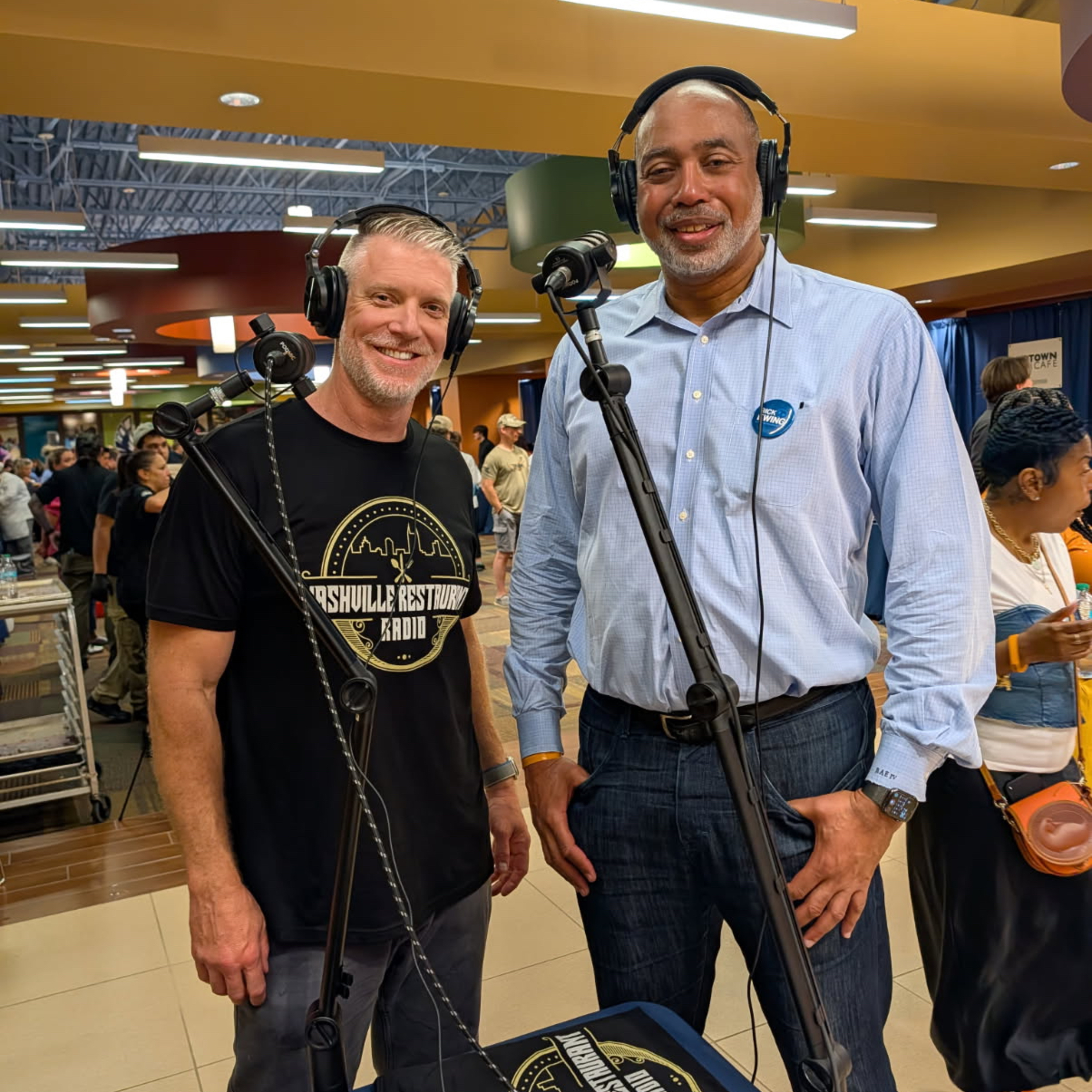 LIVE at Tennessee Flavors