Moving to Value Unscripted · 2026-06-23 · 42 min
Key moments - from our scoring
Substance score
65 / 100
Five dimensions, 20 points each
Dr. William Besterman argues that America's healthcare system is structurally incentivized to treat expensive crises rather than prevent them - a choice he calls 'pure madness' that costs trillions and destroys lives. A cardiologist and internist who spent decades studying molecular biology and chronic disease prevention, Besterman makes a compelling case that proven optimal medical therapy combining six generic drugs (losartan, spironolactone, amlodipine, statins, metformin, and SGLT2 inhibitors) costs under $60 monthly yet prevents 70% of heart failure hospitalizations and reduces cardiovascular death by orders of magnitude - evidence from landmark trials like Steno 2 that sits ignored while GLP-1 drugs like Ozempic cost $1,300 monthly without delivering promised savings. He explains how abdominal fat dysregulates hormones like angiotensin II and aldosterone, triggering inflammatory cascades and DNA damage that drive heart disease, kidney disease, and diabetes. Besterman challenges self-insured employers (like GM, which spends more on healthcare than steel), insurance companies, and hospital systems to demand epigenetic prevention protocols already deployed successfully in Denmark, Germany, and Singapore - where healthcare costs 5-10% of GDP versus America's 20%. The conversation explores why systemic change remains paralyzed despite known solutions, with board members from Southern New England Healthcare Organization, Upswing Health, Metis Health Technologies, and the Validation Institute discussing the revenue hole hospitals face and employers' shocking lack of data access under current contracts.
The six drugs are losartan (angiotensin II blocker), spironolactone (aldosterone blocker), amlodipine (calcium channel blocker), statins, metformin, and SGLT2 inhibitors like empagliflozin (Jardiance). Together they cost under $60 monthly and address oxidant stress and inflammation rather than just managing symptoms.
The Steno 2 trial (1995-2008) in Copenhagen compared optimal medical therapy to usual care in type 2 diabetes patients. By year 13, the intervention group had one-fourth as many heart attacks, one-fifth as many strokes, one-sixth as many dialysis starts, and one-third the blindness and amputations. The findings were so significant that researchers deemed it unethical to continue denying the intervention to the control group by 2008.
Ozempic's retail price is $1,300 monthly, versus approximately $60 monthly for all six generic drugs in optimal medical therapy. Despite GLP-1's high cost, studies show it doubled overall diabetic care costs while other expenses increased 11%, contradicting claims that GLP-1 would mitigate other healthcare expenses.
Abdominal fat is the body's largest gland and when accumulated, produces excess aldosterone, angiotensin II, and inflammatory mediators. These activate genes normally dormant after fetal development, triggering oxidant buildup and inflammation that cascade into heart failure, kidney disease, and diabetes - a process called dysregulation of the signal environment.
In Germany, insurance companies are governed by elected boards representing both employers and employees, giving those receiving care decision-making power over care priorities. In America, priorities are determined by Wall Street insurance companies and hospital systems, creating misalignment between patient needs and financial incentives.
Our reviewer’s read on each dimension, with quotes from the episode.
The episode is meaningfully dense by podcast standards, with specific mechanisms (angiotensin 2, AMPK switch, epigenetic memory), named trials, and concrete cost figures delivered at speed. The B2B-relevant content (employer self-insurance, worksite clinic ROI, the 'lipstick on a pig' VBC critique) is real and non-obvious, though a substantial portion is medical lecture that only partially translates to operator-level insight.
if you have had a heart attack after five years, compared with the care that most people get, you're 12 times as likely to still be alive. That's nuts. Crazy. I mean, 12 times. Every American should be very concerned that that information's been in the literature for 20 years and not a thing's being done about it
they reduce costs by half. Uh, hospitalizations were 1/5, ER visits were 1 third
The reframing of specific drugs as cell/organ protectors rather than risk-factor lowerers (citing Milton Packer) and the epigenetic memory explanation for why the Steno 2 Kaplan-Meier curves kept diverging after switching all patients to optimal therapy are genuinely fresh clinical arguments. The employer/system critique and Singapore/Germany comparisons, however, are well-worn in value-based care circles.
we should start thinking about Jardiance and these other six drugs not as risk factor lowering drugs, but as drugs that protect cells and organs
The curve didn't change at all... Half the usual care people were dead at age 68... the answer there, I think, is there's a point of no return when you start making angiotensin 2 and aldosterone
Bestermann is a genuine 50-year practitioner who has implemented these protocols in the field, worked as senior clinical advisor at a major payer, and has real worksite-clinic outcome data - not a conference-circuit thought leader. His depth is earned, though he is relatively unknown outside niche preventive cardiology circles and the episode does not fully exploit his payer-side experience.
When I was working with a big insurance company, you saw that kind of performance, I mean 14%, 20%, 22%, but then we had people get up to 65% percent by the time we were done
I've actually worked with a worksite clinic in southwest Louisiana. These doctors were great. They worked with us to produce what we're talking about. They reduce costs by half
The episode is unusually specific: named studies (Steno 2, ACCORD, Framingham), named drugs with mechanisms (losartan, eplerenone, metformin, empagliflozin), named researchers (Peter Libby, Milton Packer, Fuster), concrete dollar figures ($60/month vs. $1,300, $720/year vs. $26,000/year), and measurable worksite outcomes - this is well above average for a healthcare podcast.
the modern medical uh, treatment is approximately $26,000 a year. The optimal medical uh, therapy that you promote is roughly $720
By 2008, the study had been in play for 13 years. There were one fourth as many heart attacks, a fifth as many strokes, the sixth as many people went on dialysis, a third as many people went blind, uh, third as many people had amputations
Several hosts ask substantive questions - Kim Lynch's direct challenge about the revenue hole hospitals would face and her 'lipstick on a pig' diagnostic test question are genuinely sharp; Donovan Pyle grounds the conversation in published cost figures from Bestermann's own article. However, major claims (the 12x survival figure, the GLP-1 cost doubling assertion) go unchallenged, and the tone is predominantly reverential rather than interrogative.
Do you have a sense of what kind of hole that creates? What percentage of a hole does that create in their revenue? Right. Is this they're going from, you know, whatever last year was. If you do this, you're going to see a 50% hole
how if you are a clinician listening to this or even an administrator who gets approached with a program, do you have a couple of tells of uh, this is the real, real... or. Nope, this is just another lipstick on a pig
Computed from the transcript - who did the talking, and the words that came up most.
The American healthcare system is financially engineered to wait for expensive medical disasters rather than preventing them. Perhaps no one has a clearer view of how to dismantle this "rescue medicine" trap than Dr. Bill Bestermann. A preventive cardiologist and former President of the South Carolina affiliate of the American Heart Association, Bestermann has spent decades fighting the "medical-industrial complex" from the inside - as an ICU director, health plan advisor, and chief medical officer. As the author of the Slow Aging and Delayed Chronic Disease Development newsletter, Bestermann exposes how Wall Street insurance companies and obsolete, 50-year-old billing models actively protect highly profitable specialty silos at the expense of patient health. He is a fierce champion of optimal medical therapy, a low-cost, protocol-driven approach that arrests chronic disease at the root cellular level. He joins us to unpack the staggering economic disparity between standard procedure-driven care and molecular prevention, explaining how self-insured employers and communities can bypass bloated hospital networks to buy actual, measurable value.
Transcribed and scored by The B2B Podcast Index.
Speaker A: If we got serious about this problem and really did something about it, it would make Medicare solvent overnight. That's going to be a real shock to the hospital system and we need to work out how to mitigate. Any community in America can save themselves. Any company in America can save itself. The answer's been out there a long time. None of this is magic and we can do it. We've just chosen not to do it. I mean, what, what we're doing, it's pure madness.
Speaker B: Thanks for joining us for another episode of Moving to Value Unscripted. My name is Dr. John Rodas and I'm a recovering ex hospital president and president of the Moving to Value Alliance. Our mission is to advocate for a value based healthcare ecosystem with the highest quality outcomes at a reasonable cost for our communities. I want to thank our members whose support makes this podcast possible. We'd like to give special recognition today to our trade member, Quantum Health. I'm joined by my fellow board members, Dr. Steve Schutzer, Lisa Trumbull, Kim lynch and Donovan pyle.
Speaker C: Hi, I'm Dr. Steve Schutzer, orthopedic surgeon, co founder of the Moving to Value Alliance. I'm also co founder and Chief medical Officer of Upswing Health, a national virtual orthopedic company focused on improving patient access, clinical outcomes and value in musculoskeletal care.
Speaker D: And I'm Lisa Trumbull. I'm the President and CEO of Southern New England Healthcare Organization, UH based here in Windsor, Connecticut. We're a clinically integrated network, uh led by physicians but focused on on population health and value based care in Connecticut and Massachusetts.
Speaker E: I'm Kim Lynch, Founder and CEO of Metis Health Technologies, where we help clinicians and healthcare organizations streamline operations, increase revenue and deliver better patient care. I'm originally from Michigan, now based in
Speaker F: D.C. and I'm Donovan Pyle, CEO and founder of Health uh Compass Consulting, based in Orlando, Florida, author of Fixing Healthcare and senior advisor at the Validation Institute.
Speaker B: Our guest today is Dr. Bill Besterman, an internist who practiced preventive cardiology and writer of the Slow Aging and Delayed Chronic disease development newsletter. Dr. Bestelman has seen the inner workings of what he calls the medical industrial complex from many angles. His career included serving as a Senior Clinical advisor at Blue Cross Blue Shield of Louisiana and as President of South Carolina affiliate of the American Heart Association. He's now the Chief Medical Officer of Epigenics Health and Chief Medical Advisor for congruity health. Dr. Besterman is also a prolific writer on health in our healthcare system. He frequently urges employers to stop being passive payers and demand solutions to improve health outcomes that are held up by corporate interests. He also argues that messaging around value based care is often just marketing fluff to protect profitable hospital silos and 50 year old billing models. He's here to talk about why our current system is structurally incentivized to wait for expensive disasters rather than preventing them. And how we could begin to bypass the rescue medicine trap to find actual measurable value. Welcome to Moving to Value Unscripted.
Speaker A: Bill, Glad to be here. Uh, MTVA is a, uh, fantastic organization. In my mind it's the leading organization in the country promoting moving to Value.
Speaker B: Well, thank you, thank you Bill for that, that plug. We appreciate it. So Bill, we like to tell our listeners how you kind of got here because you know, I'm thinking you finished medical school a long time ago when we didn't really have a lot of concepts of the molecular basis for disease and epigenetics wasn't even a thing and frankly preventive cardiology wasn't a thing. So take us back to you finish medical school, you end m up in Beaufort, South Carolina. Not to be confused with Beaufort, North Carolina. I have a daughter, Charleston, so I know she'd get mad if I got that wrong. Tell me, tell us how you got here.
Speaker A: I graduated from Medical School in 1973, which is a very long time ago. And honestly we didn't know anything. And uh, I knew less because nobody in my family was in medicine. I really had no idea what I was getting into. Uh, I've always loved what I did, but a lot of it was a big surprise. I grew up in South Carolina, came to Beaufort in the navy. Beaufort has the Parris Island Marine Recruit Depot and an air station. And so I was in the naval hospital there. Got to like the people in the place and just stayed. And I really didn't know what I was getting into. Beaufort was a tiny town then. It was just a fishing village. You know, shrimp trawling and uh, the military was all the economy there was. Half the people were dying of heart attacks and stroke. When I showed up, it was really a poor country county. Uh, Pat Conroy writes about it. He grew up there. And the Prince of Tides and the Great Santini, those, those books. If you want to know about Beaufort, that's a pretty good window. Those movies and those books are a good wind of people were poor. Half of them were dying of heart attacks and strokes. And I walked in that hospital. It was a 62 bed hospital left over from World War II. The closest ICU was an hour over two lane country roads. I was the first full time internist. I realized if half people are dying of heart attacks and strokes, we got to have an ICU just to stabilize them so they can make the ride. So we stood up a six bedroom icu. I became medical director and de facto, I just ended up, uh, very interested in heart attacks and strokes because that's what I faced in the ICU. And then my career was totally changed in 1995 when I read an article from Dr. Peter Libby, who's one of the giants at the Harvard Medical School in cardiology, saying that opening arteries in a stable patient doesn't keep you from dying or having a heart attack. Well, I was really bummed out by that in a way because I had sent hundreds of patients to have bypasses and stents and some of them hadn't done well. And I recognized in that moment I had sent them, um, to have a procedure that probably hurt them. Dr. Libby said the answer is best practice medical therapy, statins, et cetera. And so I made it my business beginning that day to try to figure out what best practice medical therapy was.
Speaker B: God bless you.
Speaker C: That's great. It's funny, Bill. Almost every one of our guests on the podcast have had some sort of personal story like that that has got, been their beacon, uh, over the course of their career. I'm going to jump into it, Bill, because I'm a, obviously a big fan of yours and I read your piece every day. I don't, still don't know how you can do it. It's just absolutely amazing. But, you know, I'm a lower extremity surgeon. I'm not operating at the moment, but I did for 36 years. And I always emphasized diet and exercise. That was my thing, dieting. I'm not a, I'm not an internist. But you've wr a lot about, while that's important, it's not enough that, you know, just eating better and moving more is not going to solve the problem. You, you bring up the concept of dysregulating the signal environment, insulin resistance, so forth. Can you, for our listeners, can you just expand on that just a little bit?
Speaker A: That's part of what I learned. You know, the promise of medicine, of scientific medicine has never been greater. It's never been greater. We didn't know anything when I started, but now we know, and projects like the Human Gen Project, we thought that we would learn everything there was to know about chronic disease and how to deal with it. With the human genome project, that didn't work out. There are not definitive genes for most chronic diseases. There are for just a few, like hemophilia, uh, and sickle cell disease. But most chronic diseases are due to genes that were normal and required for fetal development. And they, they were part of helping you grow in a perfectly coordinate way to be a healthy young human being. And then later in life, maybe 35, as you're exposed to our diet and cigarettes and smokes of various kinds, that begins to turn those genes on. There's this gene for angiotensin 2 that is absolutely essential to form the fetal kidney. And if you give somebody losartan when they're pregnant, uh, they'll have a fetal malformation. But that same gene causes of kidney disease in adults when it's inappropriately activated. And all you have to do is gain abdominal fat. So if you gain abdominal fat, abdominal fat is the biggest gland in the body. And just by having abdominal fat, you begin to make excess aldosterone M and excess angiotensin 2 and all kinds of inflammatory mediators. And so when you first gain that abdominal fat related to our industrialized, high processed carb, high sugar diet, fructose is and everything, and you get some abdominal fat, you start producing those hormones and enzymes and inflammatory mediators, and you've begun the path to heart failure and chronic kidney disease. And to your question about preserving health, you're a pretty fit guy, your diet's undoubtedly pretty good, you do some exercise. But nevertheless, ultimately, uh, we get sick and die, all of us. And something else that has fascinated me me is basically, if you look at mammals, the genetic workings are all pretty much the same. Some mammals only live a year, some mammals live 250 years. The bowhead whale lives 250 years. It's not because the bowhead whale has a special diet and exercise. Uh, oh, and by the way, there are no assisted living facilities for bowhead whales. They have to be totally independent and able to fend for themselves for all those 250 years. But the bowhead whales are different. Different biochemically, they have much better ability to repair DNA strand breaks. No matter what you do. If you're eating a very healthy diet, even you're creating oxidants. And those oxidants damage proteins and they attach, uh, to hemoglobin and they attach to DNA and they cause DNA strand breaks. That's what it's all about. Oxidant buildup, uh, oxidants cause increased inflammation. And the more that percolates along the greater it builds up and it becomes a vicious cycle. Well, remember that hormone we talked about, Angiotensin ii, that you've just got to have when you're a fetus? Well, if your angiotensin 2 level is up, uh, you are making excess oxidants and that's creating excess inflammation. And so if your blood pressure is over 130, over 80, and you block angiotensin tension 2 with losartan and you block aldosterone with a planone, which is almost never used, you are protecting yourself in ways that you never could before. And diet and exercise won't do it. So all the medicines in our protocol do that. Losartan, Clarinone, amlodipine, and our hypertension protocol are all antioxidant and anti inflammatory. Statins are antioxidant and anti inflammatory. Metformin is antioxidant and anti inflammatory. And when you take those things together, if you have had a heart attack after five years, compared with the care that most people get, you're 12 times as likely to still be alive. That's nuts. Crazy. I mean, 12 times. Every American should be very concerned that that information's been in the literature for 20 years and not a thing's being done about it. We have this really unique healthcare system where the priorities of the system are determined by the big insurance companies on Wall street, uh, other big companies on Wall street, uh, that's why Marty Makary got fired. No other developed country in the world has that. And their health care in Europe is half the cost of ours. And in Singapore, nation of 5 million people, about the size of South Carolina, but they have 21 stop sh top primary care clinics. And within those clinics, they have hypertension, diabetes and lipid clinics that are focused on the problem that I talked about. And so if you go to one of those teams like they have at Kaiser Permanente, you're much more likely to get those interventions that I talked about. They pay a lot of attention to best practices. The people in Singapore live longer for a fourth of the money. So the answer's been out there a long time, but healthcare is 20% of our entire economy. 20% of GDP. In other countries it's 10%. In Singapore, it's 5%. And just imagine if we got serious about this problem and really did something about it, that would solve a lot of our problems. It would make Medicare solvent overnight. And Medicare is the place where this impacts the system most. If you look at Medicare spending, if you have the diagnosis of heart failure, you Usually don't just have heart failure. You've got a lot of other stuff. But if you have the diagnosis of heart failure, those people account for a third of Medicare spending. The Steno 2 trial that I talk about all the time, the people that entered that trial didn't have heart failure. That wasn't what the trial was about. But by addressing this, uh, signaling and biochemical environment that I'm talking about, they reduced heart failure hospitalizations by 70%. 70%. Nothing does that.
Speaker C: Hey, Bill, you know, you often refer to the Steno 2. It's such a landmark study. It's like the Framingham Heart Study here in the United States. Could you just tell our listeners a little bit about the Steno 2?
Speaker A: Absolutely. The Steno 2 trial started in the about the mid-90s, and the first report on it was in 2003, published in the New England Journal of Medicine. And what they found was such a striking reduction in death and cardiovascular events. No American study has ever shown that. The ACCORD study, where they intensively manage glucose, the most important study in diabetes, sponsored by the nih, they had to stop the study early because more people died. I think that was because they used a lot of insulin and sulfonylureas. And sulfonylureas increase the insulin level. Insulin is a growth factor. Anytime you activate growth factor signaling, you're deactivating the AMPK survival switch and activating the MTOR death switch. And insulin does that. So you got to have enough insulin, but not too much. And in that Steno 2 trial, if you had type 2 diabetes and you were overweight, everybody got metformin, Everybody. That was one of their key interventions. So they did that step in 2003 of analyzing the data. And by 2008, the study had been in play for 13 years. There were one fourth as many heart attacks, a fifth as many strokes, the sixth as many people went on dialysis, a third as many people went blind, uh, third as many people had amputations, on and on and on. And so this Steno 2 trial in Denmark, Steno Clinic in Copenhagen, that was published in the New England Journal as well. It doesn't get any better than that. You know, if you get your stuff published in the New England Journal, that's a really good study. And so they looked at what they were doing. It was a comparison of, uh, optimal medical therapy, best practice care, making sure everybody gets those six medicine versus the care that most people get. That usual care is what they called it. And the differences were so striking that the Steno two people made the decision, well, we can't continue this. We're going to continue to observe everybody, but we're going to put everybody on optimal medical therapy. It's unethical to continue usual care. That was the conclusion they arrived at in 2008, and they acted on it. They put everybody on optimal medical therapy, and something really unexpected happened. If you put everybody on optimal medical therapy, you would think those Kaplan Meier curves would come together, right? You would think they would converge. They did not. They kept pulling apart. The curve didn't change at all. And so the people entered the trial at age 55. By this time, they were 68. Half the usual care people were dead at age 68. But the people who were left, their cardiovascular event profile, they kept pulling apart. The curve didn't change a bit. And the answer there, I, uh, think, is there's a point of no return when you start making angiotensin 2 and aldosterone and belly fat. You start changing the epigenetic expression of genesis genes. It's a matter of gene regulation. And then those gene regulation things persist. So by the time you've got chronic kidney disease and diabetes, you have dozens, maybe even hundreds of, they call them EPI mutations, changes in gene regulation. That's what causes metabolic memory. And by the time you've had chronic kidney disease for eight years after age 55, the best interpretation I can come up with is you have so many EPI mutations that the dye is cast and blocking the oxidants no longer matters as much. And I know that's incredibly complicated and some of you've never heard it before. But, you know, I've been beaten on this for 30 years, and it just keeps getting more and more fascinating to me. And the conclusion I've drawn is it's not just cardiometabolic disease that those drugs impact. In fact, there's a guy named Milton Packer. Some, uh, of you may have heard of him. He's one of the most famous, uh, heart failure guys in the country. In the world, probably. And Milton Packer wrote an article in Diabetes Care. So you got a heart failure guy writing in a diabetes journal. He was writing about Jardian empagliflozin SGLT2 inhibitors. And he said the impact of Jardiance has almost nothing to do with blood sugar. What it has to do with is Jardiance. It activates the AMPK switch, uh, directly. And that AMPK switch is the survival switch. And it has this benefit of reducing heart failure hospitalizations by a third and progression of chronic kidney disease by a third. What he said at the end of that article in Diabetes Care is about fasting mimicry, how SGLT2 inhibitors produce a state of, uh, fasting mimicry. And what he said was, that's what it's all about. In fact, if you have a patient who is not diabetic and they have heart failure or chronic kidney disease, and you give them jardiance, they'll have the same benefit. There's a, uh, sentence at the end of the article that really, really got my attention. He said, we should start thinking about Jardiance and these other six drugs not as risk factor lowering drugs, but as drugs that protect cells and organs.
Speaker F: Dr. Bessman, that's fantastic context. Thank you for that. You wrote about the differences between optimal medical therapy and the modern treatment path, path for heart disease recently. For our audience, that's not, maybe not so technical. Could you just, bottom line, uh, the difference in cost between the two treatment paths and the difference in outcomes between the two treatment paths. I think that would be super helpful.
Speaker A: Well, we've been talking a lot about type 2 diabetes. I just saw a slide yesterday, and it was from one of the big insurance companies. So these people are not especially interested in my topic, but they actually showed the cost of care for a diabetic before the GLP1s came on board. And after the GLP1s came on Board, I don't know the. I can't remember the exact figure, but it doubled the cost. And the way they tout the GLP1 drugs is that, oh, by taking the GLP1 drugs, you're going to mitigate the other expenses. And that didn't happen. And the other expenses increased 11% after the introduction. I mean, just on that, if you look at the. All the drugs in optimal medical therapy that I discussed that were used in the steno trial are generic drugs now. And if you use all six drugs, you can get them for around $60 a month. It's less than $100 ozempic alone. The retail price is $1,300. I mean, what we're doing, I can hardly contain. It's pure madness.
Speaker E: It's. It's robbery, right? And it's by design. I mean, it's robbery of our health, robbery of our, of our wealth. And, and by design, Bill, I'm, I'm really curious, you know, thinking about a, a, uh, typical hospital operating today in the status quo and what you are highlighting as the clearly, you know, known better alternative. I guess what I'm Curious is if a system actually did what you are recommending and what other countries have done, right. That we know, all making their diabetic and cardiac populations healthier. Do you have a sense of what kind of hole that creates? What percentage of a hole does that create in their revenue? Right. Is this they're going from, you know, whatever last year was. If you do this, you're going to see a 50% hole that you've got to make up. Because I think, I think a huge part of what I think is holding folks back is this is the status quo. And the year after year of how are we going to keep our doors open if we try anything other than maintaining the status quo?
Speaker A: Well, from our conversation you can hear that I haven't just worried about the molecular biology, I've worried about why we're in the pickle we're in. You know, if you start talking about the kinds of things I'm um, talking about, everybody runs around with their hair on fire and starts talking about socialized medicine. Socialized medicine scare the hell out of everybody. And then people vote for the status quo. But you know, I've been fascinated, I pay attention to what they're doing in Denmark and what they're doing in Singapore and what they're doing in Germany is fascinating. The Germans have a system a lot like ours in that if you're a working age person, your company, uh, provides your health insurance. But there's a major, major difference. And I think this is a clue and I think any, any community in America saving yourself is not illegal yet, right? So any community in America can save themselves. Any company in America can save itself. The way the Germans do it is the insurance companies. They have insurance companies, but the insurance companies are governed by an elected board from the employer force and from the employee force. And so the people who are receiving the care determine what the priorities of care are.
Speaker B: Shocking, shocking concept.
Speaker A: Uh, everybody on this call knows that our employers, even after the Consolidated Appropriations act, they still can't get their data. They can't see what's happening. We worked with a company that had a health and wellness program that they were paying for through their insurance and they didn't even know they had it. We found it when we did an analysis of their contract, but they didn't even know they had it. So self insured employers should be massive allies because they're really being hurt by this. Gm, um, you all know gm, um, spends more on health care than it does on steel. Toyota doesn't do that.
Speaker E: I worked with GM back in the aughts on their payments payments and their healthcare design and the terror of the big three autos. I'm um, from Michigan of doing anything outside of the status quo was palpable. And they're the auto companies. Right? If you. Then who. But the idea, I mean I remember sitting in rooms with, with them and saying, you know, if you said to your workforce, here's where we would prefer you to go for great cardiac care. Here is where we'd prefer you to go for great maternity care care. Your populations want that information from you. And they looked at me like I had lobsters crawling out of my ears. Like it was the craziest moment of like, why would we ever do that? And I'm like, you are paying for every one of those that goes poorly. This to me is the, is the flip of the switch bill. And I, I love that you're going right at it.
Speaker F: Well, yeah, they ch. They chose bankruptcy instead of, uh, taking your advice, Kim. So do Dr. Bessman. I, I pulled up your, your article from the other day and uh, addressed assessing heart disease and mitigating uh, the incidence of heart disease. And so yeah, the stats are the modern medical, uh, treatment is approximately $26,000 a year. The optimal medical uh, therapy that you promote is roughly $720. So pretty significant difference there. Um, what is holding back? You know, if we looked at independent primary care physician versus uh, employee, meaning hospital primary care physicians that are employed by hospitals, is there any evidence showing that they're suggesting different treatment paths, that they're providing more value on the independent side? What is driving the decision making, the care paths here?
Speaker A: Well, that's a fantastic question. In my view, what we need, if any community wants to better their situation. Just think about it. If, if you're flying over the west, uh, western half of the United States, there are vast places where you don't see a light. You know, these people are 200 miles, a lot of them from an ICU. Well, you're not going to get to a cath lab in time to have a stent open the clot in your heart or, you know, if you're having a heart attack. Opening the artery is a life saving thing. It's not that all stents are bad, it's just using them in the appropriate place. So the only defense you have out in the wild is not to have a heart attack. And that's where optimal medical therapy comes into play. And you can cover that just by having a nurse practitioner that has the central support Providing her with the IT infrastructure to provide care and measure it, uh, the protocols and those kind of things, but independent advanced primary care. If any community sponsors an operation like that and one of their priorities is implementing optimal medical therapy for chronic diseases, I think they will make considerable progress.
Speaker B: We're big fans of a community based health system, Bill, and we've had people on the show actually talking about it. I think what you've just said is very interesting but then quite get to Donovan's question if I could. I think and I want to be respectful to other physicians and I know we have a few of us here on the call but the reality is Bill, you, me and Steve did not learn in m medical school about prevention of chronic disease. We learned diagnosis and treatment. I say gout, you say colchicine. We didn't learn about chronic inflammation prevention, chronic disease, it just wasn't in our DNA. DNA. I'm not sure people training today truthfully and I teach medical students know anything different still. So your point is, is well taken. It's all about prevention. And I don't think doctors in an ah, employed model, which is kind of the implication. Right? Well if I work for a health system and I used to run one, the doctors there are biased towards let people get sick because that's how the health system makes money. I think truthfully they're not, not trained and even knowledgeable enough about prevention of chronic disease, despite the fact that the evidence has been overwhelming. Nurse practitioners to your point are a little bit different actually. And I'm not sure internal medicine, physicians are really the solution to the problem, not the standard ones, let's put it that way. Now I think if you're into preventative health, preventive cardiology, preventive medicine, lifestyle medicine, I think you could start to see that side. So don't you think that that's fundamentally going back to medical education and especially graduate medical education? We need to change the paradigm a little bit. Or, and, or, and or let me be clear, the direct primary care model seems to work with employers if the incentives are aligned to keep the employees healthy. Which is kind of what we talked about with you know, the German model, which is very similar to America from a uh, economics point of view.
Speaker A: I think you're absolutely right that this is not a focus at all in American medical training. I don't know that it's a focus in medical training anywhere. You know, the pharmaceutical industry isn't just very powerful in the United States. It's also really powerful in Europe. Europe pushes back against them a little more successfully. But I think you've hit onto something that's, that's really important. I've heard giant in preventive cardiology. I think it was a guy named Fuster. F U S T E R Said said in a meeting. Um, I think this generation of doctors is going to have to die before we change because scientific paradigms are taught like um, fundamental religion. You know, this is the way it is, this is the way we operate. And that's just how it is. Thomas Kuhn said, if the old system develops enough anomalies in any science, that's when you change. And I can just tell you that the whole science is absolutely riddled with anomalies. And if you're not thinking in terms of molecular genetics and molecular biology and epigenetics, you simply can't have the impact that we're talking about. The Institute of Medicine in 2001, now the National Academy of Medicine Congress founded them in 1863 to advise the government on science, science that rapport crossing the quality chasm from 2001. It lays out what needs to happen. You need to bring the stakeholders together. Moving to Value alliance is doing that right here on this call. Bring the stakeholders together, identify the 15 priority conditions, half of them are cardiometabolic and then to execute what needs to happen. And this is on page 10 of the paper book. All right. What you need to do to make this happen happen is develop evidence based care processes consistent with best practices. Develop education programs. That's the second step for patients that help them understand their disease, what can be done about it, why it's worth their time and how they can help. Then the information infrastructure to support care provision and measurement. And finally payment model that pays for the first three steps and probably in diabetes that needs to be, you know, you pay so much a year while analyzing what percentage of your patients met the goals for blood pressure, cholesterol, sugar, not smoking and taking an aspirin if they're high risk and were they on the six medications for those conditions. And so it's not like capitated care care 30 or 40 years ago which just resulted in less care. What you're doing here is saying, okay, we're going to pay you this capitated amount, but we're also going to monitor how you perform in providing optimal medical therapy. And then we're going to monitor your cost of care and all that can be done. Great, now we can absolutely do that.
Speaker E: You're talking about discernment is really what I'm hearing is we've had the iom, the Academy of the Health standard. We're not putting it into practice. And so I guess my quick question, because you have been such a wise critic of putting lipstick on a pig is what I call it, right? Calling old crappy pay for performance programs now value based, new and improved. No, they're not. It's the same crappy economics, crappy priorities. How if you are a clinician listening to this or even an administrator who gets approached with a program, do you have a couple of tells of uh, this is the real, real, this is moving us closer to, towards the actual iom, crossing the chasm goals or. Nope, this is just another lipstick on a pig.
Speaker A: Well, I think data is critical. You know, if you look at the national data on what I've been talking about and achieving less aggressive goals for diabetes care. So if you're looking at achieving a pressure of 140 over 90, an A1C of 8 and an LDL cholesterol of 100 while on a statin, only 26% of Americans achieve those things concurrently. Now, when we were in Louisiana, we coached doctors on what we've been talking about and some doctors achieved 65%. All you have to do. I've been working with a guy on developing the IT infrastructure to collect that data and analyze it at scale for six years. And it can be done now very easily. Any medical organization can export a report to that medical system. We can tell how well you're doing on optimal medical therapy and we can coach you on how to improve it. Uh, so all that stuff exists now. That's how you tell. And if, when we analyze that data, when I was working with a big insurance company, you saw that kind of performance, I mean 14%, 20%, 22%, but then we had people get up to 65% percent by the time we were done. Uh, Minnesota monitors this on most of the health groups, health organizations in their state. They do that optimal medical therapy analysis and it's reported back to all the participating groups. It used to be reported publicly. I can't get at it anymore for some reason. But you know, it's done at a statewide basis that optimal medical therapy, those five measures, and being on those drugs, that's what drives clinical and financial outcomes. Now what I can tell you is every doctor thinks they're doing as well as they can and they are very well trained and they're very conscientious. But like Dr. Rodas said earlier, most people with chronic kidney disease don't know they have it. Why is that? Well, they don't. Even though they're diabetic, they don't get a urinalysis and a, a kidney, uh, function test in their blood once a year, which is what the guidelines say should be done. What these teams do, if you had a team like they have at Kaiser Permanente, there's a team of people that, that's their job. Just make sure that that diabetic patient knows they need to have a blood test and a urine test once a year. If they don't get it, nag them, um, and try to make them get it. Once you get that information, then you tell them, oh, oh, you have chronic kidney disease. That's a tool for patient engagement. You already have damage to your kidneys and that dramatically increases your risk of vascular events. We got to get serious. And if you get serious, we have these studies that prove how this is different. And I've actually worked with a worksite clinic in southwest Louisiana. These doctors were great. They worked with us to produce what we're talking about, about. They reduce costs by half. Uh, hospitalizations were 1/5, ER visits were 1 third. But if it's not just optimal medical therapy, if you call that clinic and you're having a little trouble with swelling and you have congestive heart failure, you're not going to get a message. If this is an emergency, dial 911. You're going to get, uh, somebody talking to you on the phone, giving you advice about taking extra doses diuretic and weigh yourself in three hours. None of this is magic. There's a mountain of evidence supporting everything I've said. If anybody questions it, I, ah, welcome them m to dive in and we can do it. We've just chosen not to do it.
Speaker D: It's been a great conversation and a number of times you've kind of threaded the needle with optimal medical therapy and an approach, um, a medical approach with a population health approach or a community kind of based approach. When we talked about Germany and different employers, I'm kind of wondering from your viewpoint, what do you see the solution as? Is it more community oriented? Is it a broader approach to population health? When you look at the type of medical um, approach that you have, what's the right answer?
Speaker A: Well, the only organization with the power to push back enough are non medical self insured entities. That's the only group. And that includes funny things like counties, um, school districts. If any county or school district or municipality or company wants to really improve what they're doing, all they got to do is hire a nurse practitioner. And we'll work with them to be sure that nurse practitioner has the support they need. That, that's, that's really all they need to do. Now, somebody was talking about hospital systems. If we really got serious about this and moved on it, we could cut medical costs very quickly. But what we have to realize is, you know, like we talked about earlier, everybody gets sick and dies. We need hospitals. Some people aren't going to get the message, and they're not going to do optimal medical therapy and they're going to need a stent when they're having a heart attack. We need all that. But. But if we do what we're talking about, remember in that clinic in southwest Louisiana, they were generating a fifth as many hospitalizations. Well, if only a fifth of your beds are full, that's going to be a real shock to the hospital system. And we need to work out how to mitigate that impact and preserve good hospitals like yours. But doing nothing is ridiculous. It's again, every human being in our country the interest of all of us. And if we don't develop the system that brings this best science, the promise of science has never been better. If we don't address that, even the people that are rigging the system in their financial favor are vulnerable because they're not getting the care either.
Speaker B: Yeah, Bill, well said. And, um, Bill, we could talk you for many more hours, um, but unfortunately we do have time restraints. But thank you so much for joining us today. I really can't thank you enough, not just for today, but for the work you continue to do to get the message out to consumers, patients, employers, and frankly, policymakers should pay attention because there is an opportunity here for them as well. But like you said right now, the incentives, unfortunately, uh, and the influences of very powerful lives, these unfortunately affect a lot of what we do. But thank you so much for joining us today, Bill. It's really been a pleasure.
Speaker A: Thank you.
Speaker B: To learn more about MTVA and how to join our community, Visit our website, movingtovalue.org if you enjoyed this conversation, please follow us and leave a review on Spotify or Apple Podcasts. Thanks again for listening and for being part of this important movement.
Other episodes covering the same guests and topics, from across The B2B Podcast Index.
 Ben Bluml’s Case for the Connected Pharmacist There’s a Better Way · on Kaiser Permanente89 / 100
 [S2E16] Dr. Ralph Snyderman: Fixing Healthcare While the Plane Is Flying - What Comes NextCLEARly Beneficial Podcast · on Kaiser Permanente86 / 100
 Building the Allied Health Workforce of the Future with Van Ton-QuinlivanBecker’s Healthcare Podcast · on Kaiser Permanente81 / 100
 Transforming Access and Equity in Healthcare Workforce Development with Van Ton-Quinlivan, Founder & CEO of Futuro Health Episode 169The Future Of Work · on Kaiser Permanente73 / 100
 Episode 334: When Success No Longer Feels SuccessfulGrow Your Business and Grow Your Wealth · on Kaiser Permanente64 / 100
 Scaling Value-Based Care Through Strategic Partnerships with Shelby DecostaBecker’s Women’s Leadership · on Kaiser Permanente62 / 100
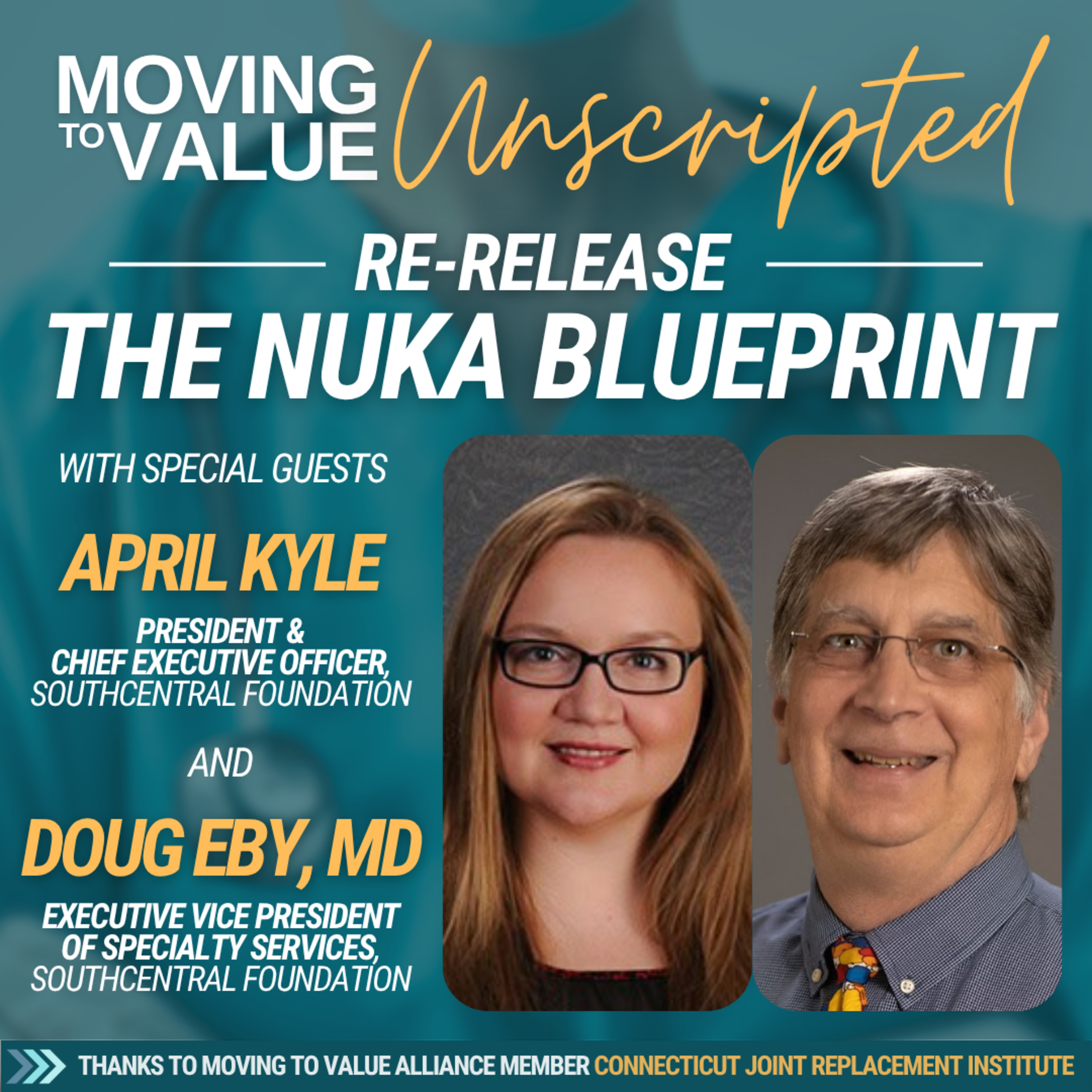 Re-Release: The Nuka Blueprint (feat. April Kyle & Dr. Doug Eby)96 / 100
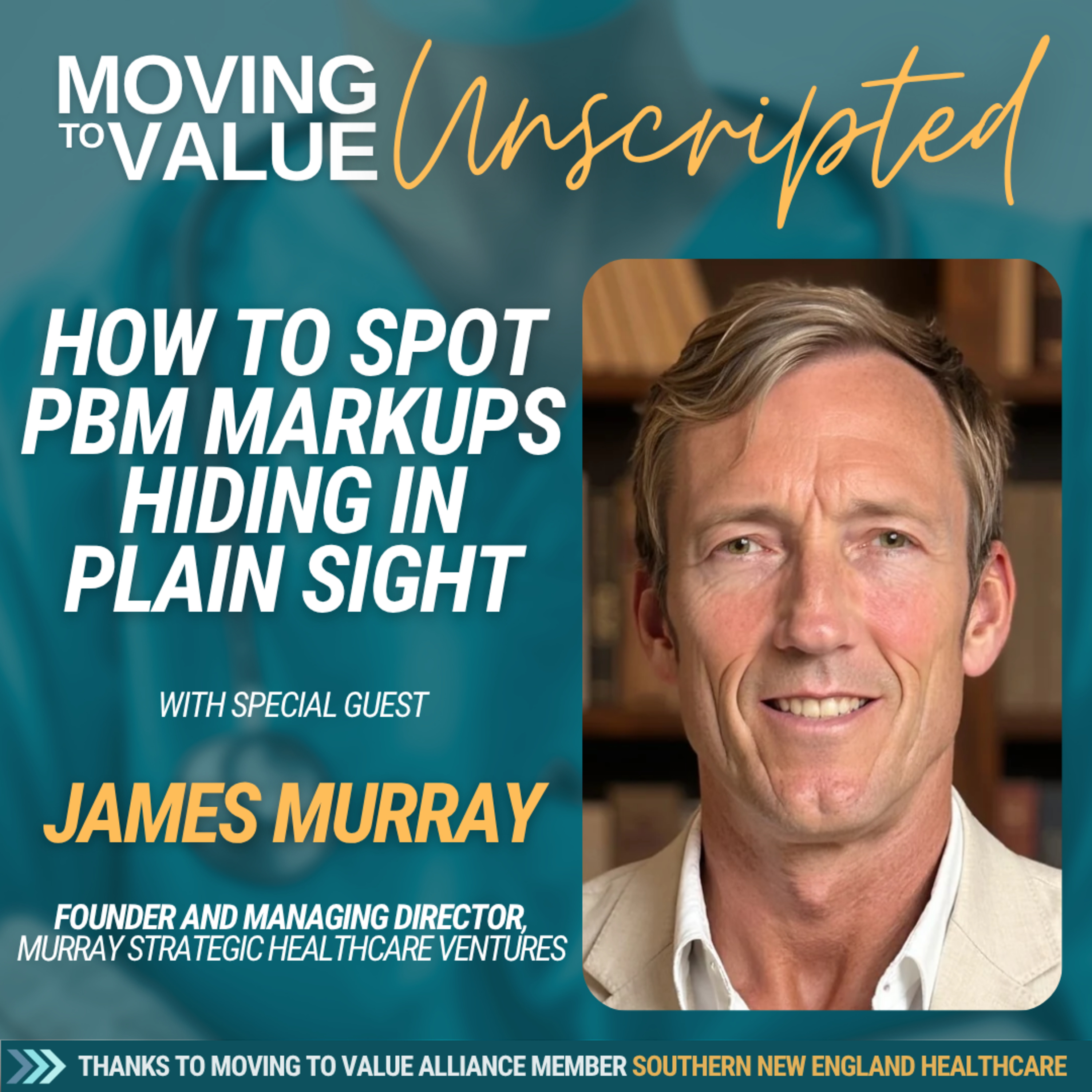 How to Spot PBM Markups Hiding in Plain Sight (feat. James Murray)
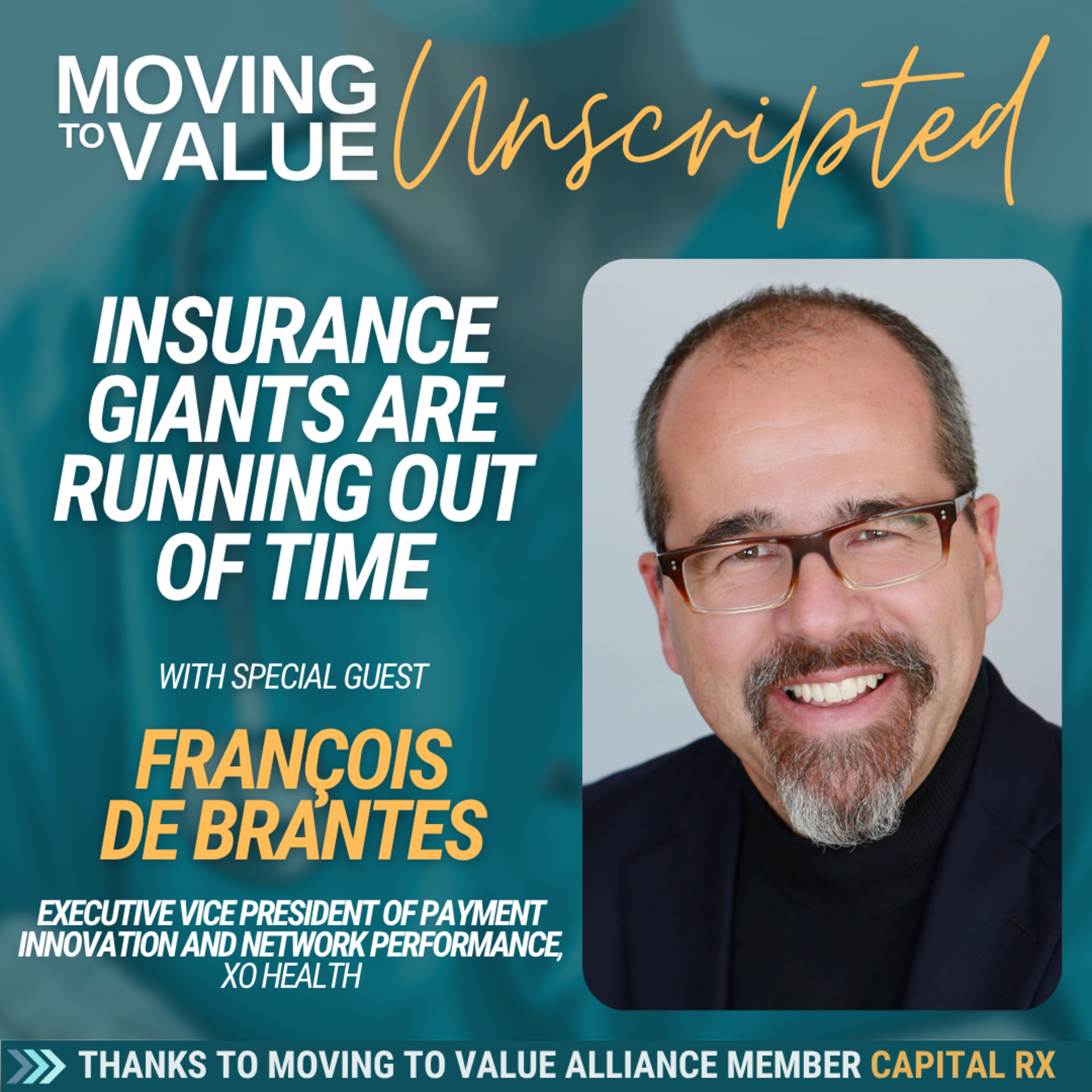 Insurance Giants are Running Out of Time (feat. François de Brantes)
 Scaling Up Self-Funded Employer-Led Healthcare (feat. Ashley Bacot)
 How to Build Community Owned Health Plans (feat. Bryce Heinbaugh)