
Motley Fool Hidden Gems Investing · 2026-06-25 · 24 min
Key moments - from our scoring
Substance score
43 / 100
Five dimensions, 20 points each
Nuclear energy is experiencing renewed government momentum, with the Trump administration announcing a $17 billion low-cost loan program targeting 10 large reactors (specifically Westinghouse AP1000 designs) by 2030 - a shift from the micro-reactor focus of venture-backed startups. While Cameco (co-owner of Westinghouse), Constellation Energy, and GE Vernova dominate headlines, the hosts argue that established nuclear operators and 'picks and shovels' infrastructure companies like Quanta Services (grid and transmission work) are likelier to see meaningful revenue impact than the named beneficiaries, given that major players like GE Vernova are already backlogged until 2031. The episode contextualizes nuclear within an urgent data center power crisis - Goldman Sachs projects 160% growth in data center power demand by 2030 with $1.3 trillion capex on generation and infrastructure - making efficiency breakthroughs like IBM's new 0.7nm chip technology (70% more efficient) potentially as valuable as new generation capacity. For young investors tempted by pre-revenue nuclear startups like Oklo and NuScale, the hosts caution that energy utilities prioritize cheap, reliable power over innovation, making novel technologies speculative rather than investable despite genuine long-term potential.
The Trump administration wants to fund construction of 10 large nuclear reactors (specifically Westinghouse AP1000 designs) across five different projects by 2030, using low-cost federal loans to accelerate development amid geopolitical competition with China's nuclear expansion.
Major operators like Constellation Energy and suppliers like GE Vernova are already capacity-constrained or named in the program, limiting their marginal growth; companies like Quanta Services handling grid and transmission infrastructure work may see more meaningful needle-moving revenue increases from the broader buildout.
Goldman Sachs projects data centers will spend $1.3 trillion on power generation through 2030 with 160% demand growth, while Westinghouse AP1000 reactors won't begin production until 2028 and face 5-7 year backlogs for other large suppliers, creating a near-term power gap that solar and energy efficiency technologies may address faster.
The hosts advise against it, arguing that energy utilities prioritize cheap, reliable power over innovation risk-taking, making pre-revenue nuclear startups speculative rather than investable; profitability-focused alternatives like Constellation Energy or First Solar offer better risk-adjusted exposure to the energy boom.
IBM announced a sub-1nm chip using nanostack architecture delivering 70% greater energy efficiency and 50% higher performance than current chips; this matters because data center projects face 4-6 year grid connection backlogs due to power constraints, making efficiency gains potentially as valuable as new generation capacity.
Our reviewer’s read on each dimension, with quotes from the episode.
The episode is a rapid-fire sweep across four topics (Qualcomm, IBM chips, nuclear loans, listener Q&A) that rarely goes below the surface. There are real data points scattered throughout, but each segment gets only 4-5 minutes and the nuclear section - the stated focus - is diluted by generic investing advice and ad breaks. The signal-to-noise ratio is mediocre for a 24-minute runtime.
AI agents, basically, they can make 50 to 100 times as many inference requests as a human
The Trump administration wants 10 big nuclear reactors by 2030
The sharpest original observation - that large incumbents like GE Vernova and Constellation don't need nuclear as much as nuclear needs them - is a genuinely contrarian structural point. Everything else (invest vs. speculate, chicken-and-egg in energy innovation) is useful but well-worn framing that circulates widely in retail investing commentary.
it seems like the nuclear energy industry needs these companies more than these companies need nuclear energy
there's aren't many incentives to be innovative in the energy industry
All three participants are Motley Fool staff contributors - financial commentators analyzing public companies, not practitioners who have built or operated nuclear plants, semiconductor fabs, or energy infrastructure at scale. There is no first-hand operational experience in evidence anywhere in the transcript.
I'm your host, Tyler Crowe. And today I'm joined by longtime fool contributors Matt Frankel and John Quast
as somebody who has been burned many, many times trying to go after the next big thing in energy
The episode does well on named companies, tickers, and figures: Qualcomm's $15B/2029 target, IBM's 0.7nm / 50% performance / 70% efficiency specs, the $17B loan program, 10 reactors by 2030, Goldman Sachs' 160% data center demand figure, and $1.3 trillion capex estimate. The weakness is that sourcing is thin (Goldman cited once, no methodology) and the nuclear loan terms are only described at a high level.
their architecture precisely is 0.7nm. That is roughly 1/10,000th of the size of a human red blood cell
data center power demand is going to grow 160% by 2030...It's estimated that $1.3 trillion of this capex we're hearing from the hyperscalers is just going to be spent on power generation
Tyler's pushback on whether nuclear beneficiaries actually move the needle is the episode's best hosting moment - a direct, pointed challenge that produces a real exchange. Follow-up questions on Qualcomm production capacity are solid. However, most of the roundtable is collegial agreement, and the listener Q&A section devolves into general caution rather than probing the specific companies the listener asked about.
I want to push back just a little bit like you're saying on these beneficiaries though
does Qualcomm have the production capacity support this or is it just shifting sales from one place to another?
Computed from the transcript - who did the talking, and the words that came up most.
If it wasn’t apparent already, the Federal government has made expanding the fleet of nuclear reactors a strategic priority. This week, the Department of Energy announced a new financing deal that will encourage the development of 10 new nuclear reactors in the U.S. Matt, Jon, and Tyler break down what this means and whether the companies in the industry will see big gains from it. Plus, Qualcom’s investor day, IBMs breakthrough chip design, and investing in energyTyler Crowe, Matt Frankel, and Jon Quast discuss:- Qualcomm announced it wants to join the AI party- Where will Qualcomm’s new chips come from?- IBM’s new less-than-nanometer chip design- Nuclear power’s getting even more government help- Mailbag: Where to invest in energy as a young investorCompanies discussed: QCOM, AAPL, SSNLF, IBM, NVDA, GOOG, INTC, CCJ, BEP, BAM, CEG, GEV, PWR, FSLR, NEE, VSTHost: Tyler CroweGuests: Matt Frankel, Jon QuastEngineer: Bart Shannon Disclosure: Advertisements are sponsored content and provided for informational purposes only.
Transcribed and scored by The B2B Podcast Index.
Tyler Crowe: Nuclear stocks are going nuclear. Today on Motley Fool Hidden Gems Investing. Welcome to Motley Fool Hidden Gems Investing. I'm your host, Tyler Crowe. And today I'm joined by longtime fool contributors Matt Frankel and John Quast. Nuclear's been in the news lately and so we're going to be diving into some recent announcements related to fuel, federal government, uh, incentives, getting into the nuclear industry and trying to drive that further. We're also going to take some listener questions related to the energy space as well. But there's a lot of headline news going on these days. Not like giant earth shattering news, but you know, a nice smorgasbord of news stories today. We had the Micron earnings recently and what we want to do is just kind of do a quick around the room of stories that we saw that were kind of interesting and why you think they matter. John, I want to start with you. What did you see recently? We were like, huh, that was interesting.
John Quast: Well, yesterday Qualcomm had its investor day presentation. Qualcomm, of course, a huge semiconductor company. And the thing that stood out to me was it's launching a data center platform. Now Qualcomm is known as more of a mobile device player. Its Snapdragon chips are in a lot of mobile devices and that's really where its bread and butter is. But saying that it's launching a data center platform now and it's targeting about 15 billion in revenue by 2029. And for perspective, the company has about 45 billion in total trailing 12 month revenue right now. So adding 15 billion to that top line number is pretty significant. And I think what stands out to me is for investors, where a lot of investors are starting to question where are we in this AI infrastructure build out, Is it too late when it comes to data centers? And Qualcomm is a $200 billion company and just now throwing its name in the ring as a contender in this space just now getting in. So to me that's a strong signal that maybe this AI data center build out still has a lot of legs to it because a huge player just jumped into the game, certainly with so
Tyler Crowe: many of these semiconductor industry companies with market caps now north of a trillion dollars, 200 billion kind of almost sounds puny by comparison. So one of the questions I immediately had when, you know, we were discussing this pre show was does Qualcomm have the production capacity support this or is it just shifting sales from one place to another? You know, we've seen story like Micron says they're Almost sold out for a couple years. Taiwan Semi says they're sold out. Apple's, uh, raising prices on their products just because of high memory costs and semiconductor costs. I'm wondering if this is a lot of companies saying we're getting into data centers with chips, but getting production lines up and running takes quite a bit of time.
John Quast: Yeah, it does. I should have said, uh, in my opening statement here is that one of the reasons why Qualcomm believes it's not too late is because it really sees this agentic AI trend really just starting to inflect now. And AI agents, basically, they can make 50 to 100 times as many inference requests as a human. That's kind of your big headline number, which means a lot more CPUs are needed now than what were needed before to make all of this run. So there's really kind of a CPU bottleneck going on. Maybe, uh, it's already been talked about a lot, but Qualcomm here jumping into this ring with its data center CPU, the Dragonfly C1000, and announcing that Meta already signing up to be a customer of this product. So I think that's significant. That said, this particular data center product isn't supposed to reach production until 2028. And so that's a little bit out into the future there. Now, that's not carrying the entire 15 billion target revenue number on its own, but it will play a part of that. So 2028 is kind of the target number for getting that thing off the ground. And now you look at players like Taiwan Semiconductor, this is a huge partner of Qualcomm. It's saying that it's kind of constrained until at least 2027. So maybe there's a path where supply and demand start to balance out a little bit by the time Qualcomm is wanting to ramp this particular product. Of course, Qualcomm does have a good relationship there. But I think kind of the other things here to keep in mind is that, uh, there are some rumors that Qualcomm and others are actually exploring Samsung Foundry because Taiwan Semi can't meet all the demand that there is. And so maybe there's some ways that Qualcomm can get around some of these supply constraints and still meet its production goals.
Tyler Crowe: Everywhere we go, there's a bottleneck somewhere. Matt, what is on your mind today?
Matt Frankel: Yeah, so in addition to all the bottlenecks we're seeing everywhere, we're also seeing chip making reach kind of its physical limitations. There's only so small. You can make you know, semiconductor components. Uh, and IBM just had some really significant news. I know you correctly mentioned before we were recording that, you know, IBM isn't the name you normally associate with cutting edge chip technology, but maybe it should be. Uh, IBM announced that the world's first sub 1nm chip technology. This is a big deal for the chip industry, uh, if it ends up actually reaching the commercial phase. But the chip uses a new, what they call the nanostack architecture. What it does is instead of making everything on one layer, it vertically stacks and staggers transistors, which gives roughly two times the density of IBM's previous chip architecture. So it's expected to result not only in 50% higher performance, but 70% greater efficiency than current chip technology, which could be a big deal, especially considering the power bottlenecks that you're seeing in the data center infrastructure buildout. So just for scale, their architecture precisely is 0.7nm. That is roughly 1/10,000th of the size of a human red blood cell. That's how small these transistors are. And it's really, it's quite an accomplishment.
Tyler Crowe: Sounds like it's going to be one of those breakthroughs. And it almost really follows like the Moore's law thing where our density and capacity sort of doubles every few years or so. One of the things that you're thinking about is obviously IBM, not a foundry, doesn't make their own chips. They license a lot of what they do. And so when we're thinking about as this a needle moving sort of thing for IBM or the industry writ large, how would this kind of stack up to the competition? And obviously this is relatively new news. Is this something we could foresee actually impacting IBM relatively soon? Or is this like a, uh, uh, maybe a few years? We'll see something here.
Matt Frankel: Well, yeah, so to be clear, this is still at the research level. This is IBM's research division that made this announcement. Not like a product team or something like that. Uh, it is a big milestone. Um, but IBM is specifically calling out commercial production within five years. So there's still a little ways off. And like you said correctly, IBM licenses its chip design technology. It could ultimately result in a pretty big revenue stream for the company. But this is also how it makes its own server chips and things like that without doing it in house like Samsung GlobalFoundries or a couple of the companies that it uses. Uh, just to compare this to something like Nvidia. Nvidia's most advanced chips have about a 1.6 nanometer architecture, so it's significantly smaller. The power consumption in my mind is really the big story because at a time when new data centers are seeing power delays left and right and there's a four to six year backlog of being able to connect to the grid to get enough power for these, something that's 70% more energy efficient could be a big deal.
Tyler Crowe: Well, uh, speaking of power power, you set up the transition really well here. After the break, we're actually going to talk about some of the things that may be powering some of those future data centers with, uh, some big government money being thrown at it. And that's nuclear. Coming up after the break,
Narrator: Support for the show comes from Fundrise. Investing in companies already in The S&P 500 can sometimes feel like you're being served someone else's leftovers. It's still a great meal, but it's hard not to imagine what the food tasted like when it was fresh out of the oven. Historically, only venture capital investors were served access to the best tech, uh, companies in the world that had not gone public yet. And that meant the rest of the world simply had to sit on their hands and wait for an ipo. Fundrise says they're completely upending that dynamic with its new venture capital product. With just a $10 minimum investment, Fundrise's mission is to give everyone the access required to invest in the best tech and AI companies before they go public. There's nothing wrong with leftovers, but now if you want with fundrise, you can take a seat at the table alongside the biggest names in tech investing. Visit fundrise.com fool to check out Fundrise's venture portfolio and start investing in minutes. All investments involve risk, including the potential loss of principal. Past performance is not indicative of future results. This is a paid advertisement.
Tyler Crowe: Nuclear power has been in the spotlight for well over a year now. Between new age nuclear technology stocks coming to market, venture capital throwing gobs of money at some of these concepts, and the federal government is now setting goals of expanding nuclear energy for the first time. And I can't remember how long. So just about every company somewhat related to nuclear power has seen their stock surge on investor enthusiasm in this particular space. And there was even more reason to cheer because the federal government made a new announcement for a loan program that could actually accelerate a lot of this development. Now, I've been somewhat dubious of the prospects of this for few reasons, but between this recent announcement and some of the other prior deals, the numbers are really starting to stack up and become overwhelmingly in Favor of more nuclear. John, can you run us through the details of this new loan program? Because it is pretty exciting.
John Quast: Yeah, I think from a high level, the Trump administration doesn't want to play second fiddle to anybody when it comes to nuclear. And so there is a lot of push from the top here in the country to make this a reality and to set the stage a little bit. There is geopolitical pressure here because there are reports that China actually has more nuclear facilities under construction right now than any other country in the world. So that certainly doesn't sit well with the Trump administration. May of last year, Trump signed an executive order to get some of these newer programs out of the test phase. And really interesting last month, Antares Nuclear, its mark zero reactor reach criticality. And, um, that has not happened in 40 years for a new reactor of this kind to reach that milestone. So it is making significant progress. And now, more recently here, the 17 billion loan that you point out, essentially it's low cost of capital for these companies that want to make a reactor or bring it to life. The Trump administration wants 10 big nuclear reactors by 2030. And I think that that's a really important thing to point out. A lot of these small startup nuclear stocks that we're seeing, they're pursuing micro reactor. That's a different ball game than what the Trump administration is pushing for these, these very large nuclear sites, looking to fund 10 of these, five different projects. And so, yeah, when it comes to these things, I mean, the Westinghouse AP1000 reactor is really your, your only viable option for that. Uh, I believe it's the only licensed option. And that parent company is Cameco, ticker symbol ccj. So that's kind of what's happening here. It's to make this happen, there has to be the money. And the government is saying, we'll give you the money if you can make it happen.
Tyler Crowe: Yeah, Westinghouse is a, ah, it's a 50, 50 between Cameco and one of the, I know it's in the Brookfield, uh, wider universe of companies. It's probably a little bit in the renewable business, a little bit in the asset management. It's kind of spread all over the place. Like you said, this is like the big ones. We're talking, you know, an AP1000 will basically like, power a midsize city or, you know, based on like, the announcement we saw from Chevron with, uh, that 2.3 gigawatt, you know, facility, it can run like half a very large data center. Again, it talks to how big this kind of power opportunity that we have here in the demand that we're seeing from AI. So Matt, as we kind of peel back the layers here, obviously you know, the Westinghouse, Cameco and uh, you look at like the Brookfields of the world. These are companies that automatically people are going to jump to because they're literally named in the development for these particular loans. But they're also going to be other people involved, a lot of companies that are going to actually own these facilities or some of the people that are going to be helping. So as we drill down into this sector, who's going to actually like benefit here?
Matt Frankel: Well, I own Brookfield in my portfolio. So you're saying that I'm in a pretty good position here. But beyond that, uh, there are a lot of companies that could be kind of more adjacent beneficiaries of this. The question is, we don't know yet. We don't know who's going to get the contracts for these nuclear reactors. Uh, but Constellation Energy is really kind of a front runner. Ticker symbol cg. They uh, are already the largest nuclear operator in the US and they have long term energy supply deals with companies like Walmart, you know, really kind of, you know, providing, already committing to providing the power for the AI build out. They're a top candidate to get one of the new reactors. Uh, G.E. vernova could be a big beneficiary. They provide, you know, uh, turbines and other equipment that are used in nuclear plants. Companies uh, focused on power infrastructure because it's not just building the plant, it's getting the power to its end user. Uh, Quanta Services, ticker symbols, pwr, uh, that does grid and transmission work, for example. So a lot of these kind of behind the scenes plays could be big beneficiaries.
Tyler Crowe: I want to push back just a little bit like you're saying on these beneficiaries though, because uh, I would call this the $10,000 question is does any of this actually move the needle for those? Constellation and GE Vernova. Constellation already has a massive generation capacity fleet. We've mentioned that before. Uh, G.E. vernova, they can't seem to keep up with gas turbine demand for AI data centers. They're projected to be already out until 2031. Who knows when they'll be able to actually make one for a uh, nuclear uh, facility. So is a few reactors really going to like be a part of the thesis for these companies? I mean it seems like the nuclear energy industry needs these companies more than these companies need nuclear energy.
Matt Frankel: Yeah, well, I mean I would argue that the low cost of capital could be a needle mover for some of these, these companies because you know, it really reduces borrowing costs. That could be a major margin improvement, uh, even if it's kind of an incremental change. But I would really kind of say that the picks and shovels plays like that Quanta Services that I mentioned, um, like companies that participate in other forms of the build out, like even like concrete companies that specialize in power plants. The picks and shovels companies are the ones that are really likely to see a needle moving effect here. It's just a question of who because as you mentioned, there were very few companies actually named, uh, you know, Westinghouse, very, very few companies actually named in the, in the, you know, the announcement.
John Quast: Yeah, I mean it'll be interesting to see they are creating some special purpose vehicles to, to build out these, these five major projects. And so it really does depend on, I, I could see there being some smaller players that get part of these jobs that for them it actually is quite a significant needle moving eventually. Um, but as you point out, some of these energy companies are quite large and so maybe a single nuclear reactor though that is significant as far as the national security aspect goes, but from a business point of view, maybe not a huge material driver of results.
Tyler Crowe: While we're on the topic of nuclear, we actually got a listener mailbag and we'll hit that after the break. Hey, it's Parker Posey.
John Quast: How did I get here?
Tyler Crowe: I love improvisation when it comes to
Matt Frankel: acting, but when it comes to a
Tyler Crowe: real life plan, I stick to a script. Cue the music.
Matt Frankel: Invest in your story with dia, the only ETF that tracks the Dow from State Street. Getting there starts here. Before investing, consider the fund's investment objectives, risks, charges and expenses. Visit statestreet.com im for perspectives containing this and other information. Read it carefully. Dias Subject to risks similar to those of stocks, all ETFs are subject to risk, including possible loss of principal. Alps Distributors Inc. Distributor.
Narrator: Get a concise daily market preview from Charles Schwab, including stock updates, U.S. and global economic news, monetary policy decisions, and key results and statistics that may impact your trading. Schwab Market Update is an original podcast from Charles Schwab. Join host Keith Lansford for this information packed daily market Preview delivered in 10 minutes or less. Listen today at, uh, schwab.commarketupdatepodcast or, or wherever you get your podcasts. That's schwab.com marketupdatepodcast everyone here's your quick
Tyler Crowe: reminder, if you want to get a question in, we love answering them on air. Go ahead and send your questions to podcastsool.com that's podcasts with an swool.com three rules. As always, keep it foolish, keep it short enough to read on air, and don't ask us for any personalized advice so we don't get in trouble with the sec. This is actually an older question but because we were talking about nuclear I wanted to bring it back up and I thought it was an appropriate time to answer it. And this is from Adam Ragor and I modified the question a little bit, but the question was is thoughts on how young investors, and probably focus on the young part, should capitalize on the energy boom. And there was a little bit of a bonus here because we were talking about nuclear and he asked specifically about a couple of the small modular reactor companies that are out there. One of them is Oklo Ticker OKLO and nuscale Power Ticker SMR M. Yeah,
Matt Frankel: so I mean it's a great question because according, you know, this is according to Goldman Sachs. So data center power demand is going to grow 160% by 2030. And you know, data centers need virtually 100% uptime. You can't like have that go down. Uh, Claude went down for about 30 minutes the other day and you would have thought the Internet ended, um, through 2030. It's estimated that $1.3 trillion of this capex we're hearing from the hyperscalers is just going to be spent on power generation and related infrastructure. So although I am a believer in small nuclear reactors as a long term solution, you're not going to find the companies like OCLO that are essentially pre revenue nuclear startups in my portfolio. Although to be fair, that might be different if I was in my 20s, not in my mid-40s. Um, but even when you're focusing on established profitable businesses, there are some really good options. I mentioned Constellation Energy earlier in the show, uh, for real nuclear exposure. Now, uh, solar is going to be more of a near term solution in my opinion. And first solar ticker symbol fslr. They're a fast growing domestic company so they don't have tariff concerns that a lot of other solar operators do. And uh, they're in an excellent financial position right now. But solar doesn't work 24 7, so a battery storage play could also be worth a look. Nextera, uh, Energy I've mentioned it's a nice combination of a boring utility, uh, with the largest renewable power developer in the United States and they have a big backlog of specifically ah, energy storage products. Ticker, uh, symbols nee on that one. But I would end by saying power producing is only one side of it. There's also a massive opportunity in making things more efficient than they are right now. Um, like I mentioned IBM earlier, uh, the chips that use 70% less power at a time when data center projects are being constantly delayed by, by power constraints, products that make them work on less energy are extremely valuable. And I really see that as one of the big investment opportunities here as well. Not just IBM, but any companies that are really working on the efficiency side of things.
Tyler Crowe: Yeah, I don't want to talk about uh, companies in particular to answer Adam's question, but I want to kind of lean on my experience of getting started a uh, little wet behind the ears. I really dove into the energy industry in particular when I got started and I learned a lot of lessons the hard way. And one of the hard lessons I learned here is there's aren't many incentives to be innovative in the energy industry. And ah, even though there is like this natural tendency as a young investor to gravitate towards like new and novel technologies because it's going to be the future. Just for example like utilities both regulated and unregulated, you know they care almost exclusively about power being cheap and reliable. They're not really in the risk taking business. There's little incentive to uh, incentive if any at all to experiment on new tech and why it's so hard for these new techs to break through in the industry. It becomes like a chicken and egg situation where it's like nobody wants to try it and if nobody tries it you can't bring the costs down and it just kind of spirals into a, uh, who's going to blink and actually do that now maybe. And this is me squinting really hard to find a thesis. There's a little bit more interest in some of these novel ideas like you mentioned OCLO and uh, new scale power because demand is so, is rising so fast and we're trying to patch together some new concepts and maybe that makes it worth it. But interest in novel tech doesn't necessarily translate into commercial success either. So as somebody who has been burned many, many times trying to go after the next big thing in energy, really take uh, a big tall drink of cold water before you make any big bets in the energy industry on those lines.
John Quast: Tyler, if you're a new investor listening to this podcast, I would encourage you to figure one thing out really quickly, learn the difference between investing in the future and speculating on it, because that's a huge difference. We do want to be forward looking in our investment theses, but there is a point where we cross over to we're just speculating on a very unwell likely scenario playing out in the future and being a big winner if that happens, rather than actually investing in what's happening right now and where it's going. Anecdotally, you know, I believe in hydrogen fuel cells. I do like that concept and a friend came to me several years ago wanting to invest in Nikola and that's what Nikola was really kind of pushing for these hydrogen fuel cells. And I encouraged this friend of mine, like, be careful with this stock because, yeah, while there's some cool ideas here, uh, it's not really a business. They're not really making anything yet. And turns out that that company went bankrupt before they reached production. I think that in the nuclear industry right now we're seeing some companies come to the market that I think will eventually go to zero. I don't know which ones, but I think there are some that will. Basically you have people who are really good marketers who are able then to get VC funding and public funding to assemble a team to build a business, but they don't really have a build a business yet. So there's not really much to invest in there. There is something to speculate on, but it's not really investing in the future per se. So I would encourage young investors, newer investors, to, to be careful with that. If you really like nuclear, I mean, there are some really solid plays like Vistra Energy has nuclear business ticker symbol vst. But that company isn't going away. Huge, huge, uh, installed base in Texas, California. So I mean that's a real business that you can invest in.
Tyler Crowe: John, did this friend of yours happen to have a name? Ron Rast or something like that? You know, this is a safe place. You can actually admit if you were the one who did it.
John Quast: No, no, no, no, no. It wasn't me.
Tyler Crowe: Okay. That is all the time we have, uh, for today, Adam. I hope that answers your question. Question. Matt. John, thanks for sharing thoughts. I'll hit disclosure and we will get out of here. As always, people in the program may have interest in the stocks they talk about and the Motley fool may have formal recommendations for or against. So don't buy or sell stocks based solely on what you hear. All personal finance content follows Motley fool editorial standards and is not approved by advertisers Advertisements are sponsored content and provided for informational purposes only. To see our full advertising disclosure, please check out our show notes. Thanks to our producer, Bart Shannon, and the rest of the Motley fool team, John, Matt and myself. Thanks for listening and we'll chat again.
Other episodes covering the same guests and topics, from across The B2B Podcast Index.
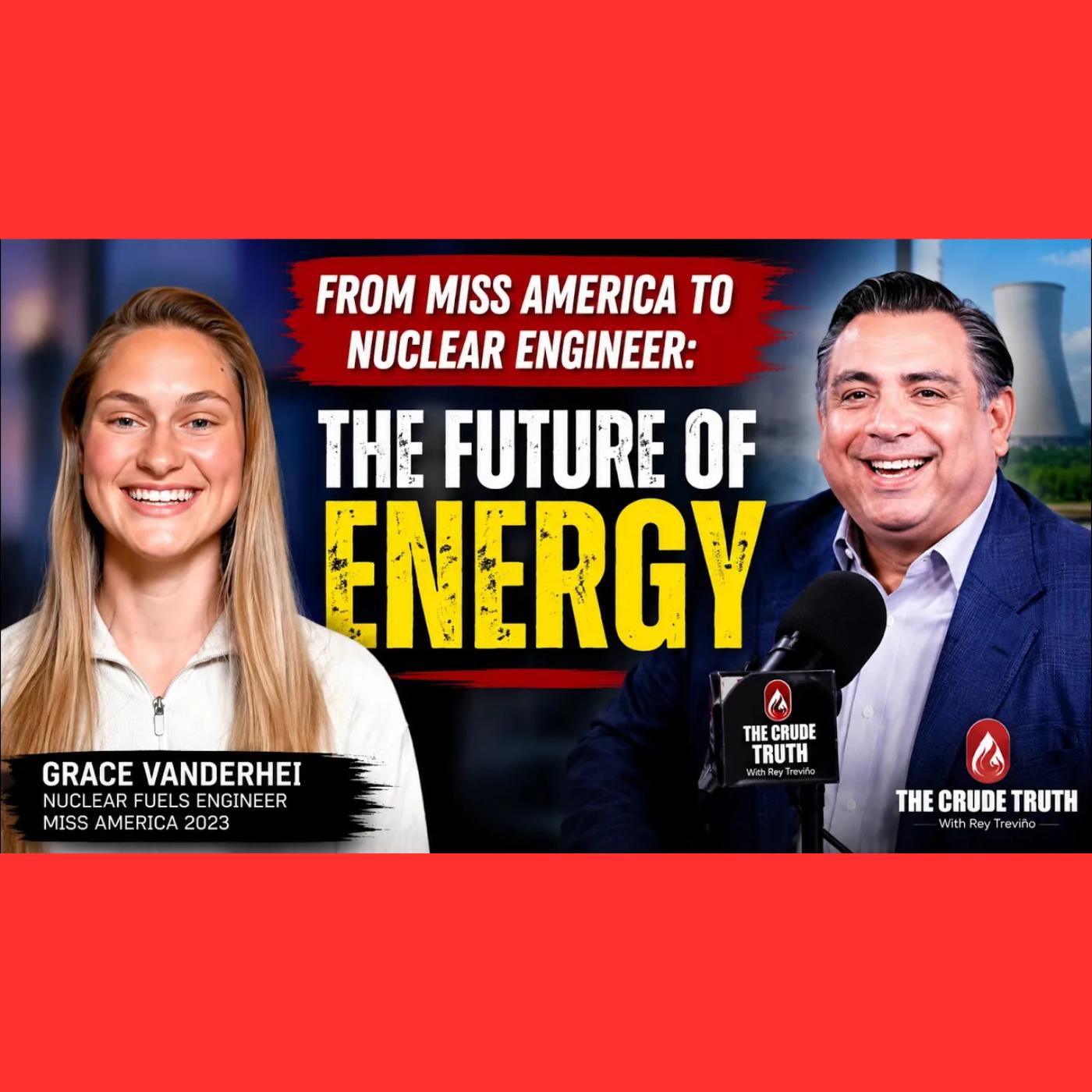 From Miss America to Nuclear Engineer: Grace Vanderhei on the Future of EnergyThe Crude Truth · on Constellation Energy80 / 100
 GE Vernova Teaches Us About Real Energy TransitionThe Shift Code · on GE Vernova76 / 100
 Rethink Energy Talks Ep. 18: Nuclear Power with Ed Ho, Part 2Rethink Energy Podcast · on Oklo67 / 100
 How GE Vernova Powers the GridBusiness Models Explained with Fexingo · on GE Vernova51 / 100
 Office Hours #901 | The Future of Business: Nuclear Energy, AI-Powered Growth & Eliminating Toxic WorkplacesOffice Hours with David Meltzer · on Oklo47 / 100