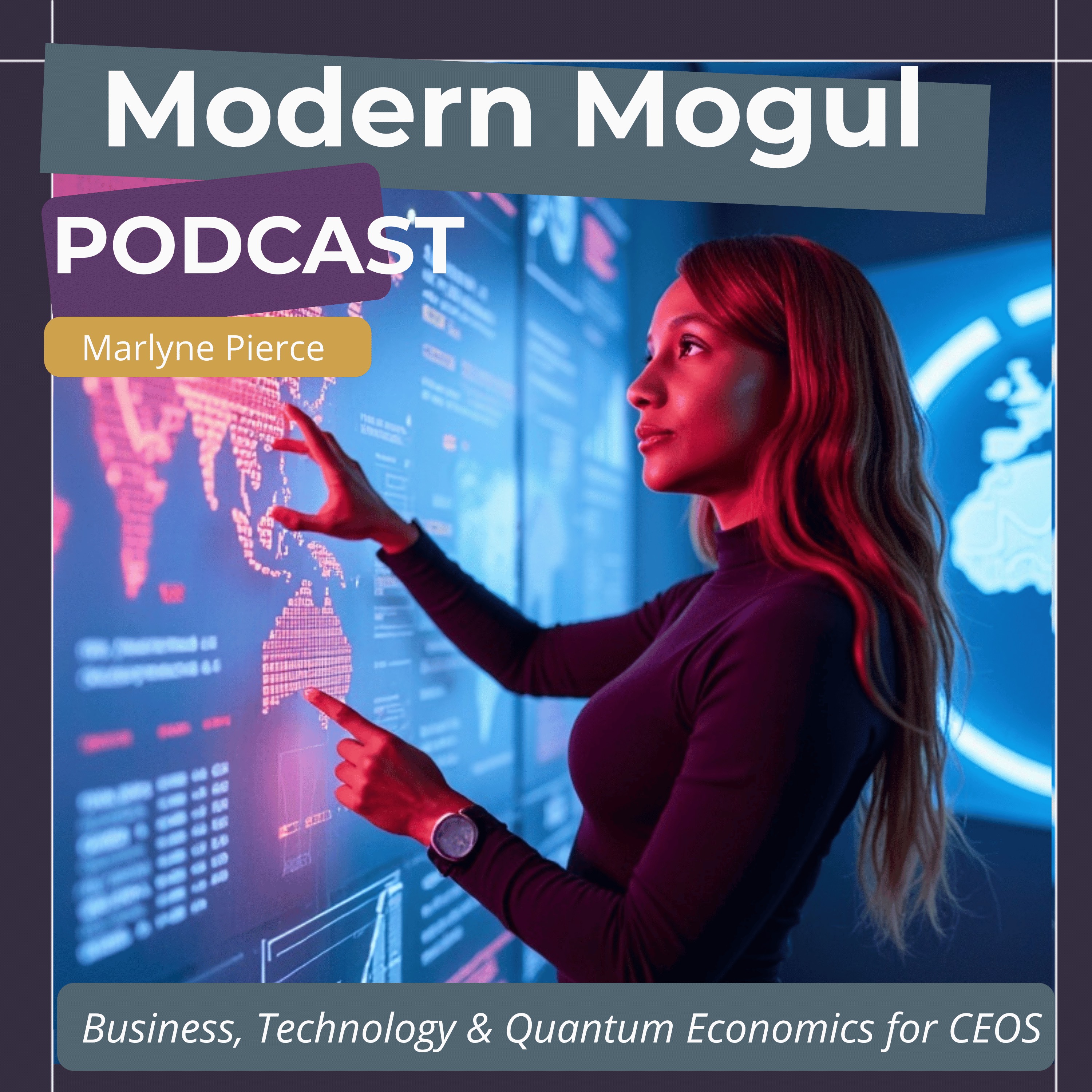
Modern Mogul Podcast · 2026-05-12 · 24 min
Key moments - from our scoring
Substance score
28 / 100
Five dimensions, 20 points each
Marlene Pearce deconstructs the media narrative casting Anthropic's Claude as the ethical hero and OpenAI's ChatGPT as the villain, arguing this archetypal storytelling blinds us to nuance. She traces ChatGPT's dominance - from 1 million users in five days (November 2022) to 900 million active users and 92% Fortune 500 adoption - before documenting Claude's explosive 2025-2026 surge: ARR jumping from $1 billion to $30 billion, market share rising to 30.6%, and enterprise coding adoption hitting 54%. She examines the "QuitGPT" movement following OpenAI's Pentagon partnership and Claude's tactical moves - withholding the dangerous Claude Mythos model, publicly acknowledging coding bugs, positioning as the safety-conscious alternative. But Pearce warns this is sophisticated virtue signaling masking the same power consolidation happening at both companies: tiered pricing creating access inequality (casual users at $20/month vs. enterprises at $1M+), opacity around data usage and user profiling, and the gradual gatekeeping of AI capabilities. She frames the real risk not as which founder wins, but as collective over-dependence on proprietary tools eroding human creativity, critical thinking, and agency - and asks whether AI will become a utility or a tool of stratification.
Claude Mythos is an advanced AI model that can autonomously discover, analyze, and exploit zero-day vulnerabilities in operating systems and web browsers without human assistance. Anthropic is withholding it from public release due to cybersecurity risks, instead sharing it selectively with trusted partners (Apple, Microsoft, Google, AWS, and cybersecurity firms) under Project Glasswing for defensive security research only.
As of April 2026, Claude experienced the fastest growth in enterprise software history, capturing 30.6% market share (up from 24.4% in one month), while ChatGPT dropped from 46% to 45%. Claude won 70% of enterprise deals against OpenAI and secured 54% of the enterprise coding market, with ARR jumping from $1 billion (January 2025) to $30 billion (April 2026).
The QuitGPT movement began in early March 2026 following reports of OpenAI's Pentagon partnership and increased enterprise safety focus. User sessions for Claude rose 1,487% in March, Claude became the number one free app on Apple's App Store (dethroning ChatGPT), and the shift was severe enough that OpenAI declared an eight-week code red.
Current pricing ranges from $20/month for basic chat to $200/month for team access and API usage. Pearce warns that as Claude becomes essential, tiered access to advanced models (Opus 7 or higher) at $1,000-$10,000/month could create inequality, leaving smaller operators behind competitors who can afford premium versions - similar to how only enterprises access Claude Mythos.
Pearce warns that over-dependence on AI tools erodes human creativity, critical thinking, systems thinking, and first-principles reasoning. She emphasizes that users must maintain agency by holding guardrails around AI use cases, protecting creative confidence, and ensuring that work, wealth, and wellbeing remain central - rather than surrendering strategic and creative thought entirely to these tools.
Our reviewer’s read on each dimension, with quotes from the episode.
The episode relies heavily on reciting market statistics and timelines (ChatGPT growth figures, Anthropic valuation jumps, March 2026 market share shifts) rather than novel operational insights. The core insight - that the 'villain vs. hero' framing around OpenAI vs. Anthropic is misleading - is stated clearly but not deeply explored or developed with new frameworks. Most substantive observations are philosophical warnings (AI dependency risks, creative atrophy, future access gatekeeping) rather than actionable insights a B2B operator could implement.
we are in a hero's journey of our own, collectively, as we're looking at AI right now
the explosive growth of Claude and Tropics Claude versus what we've seen with OpenAI ChatGPT
The episode's central premise - that we should avoid the binary good-vs-evil narrative around AI companies and instead evaluate them on efficacy and ethos - is a reasonable counterpoint to media coverage, but it's not particularly fresh or contrarian. The Joseph Campbell reference and systems-thinking framing are standard intellectual moves. The observation about future access tiering and wealth-based model access is somewhat original but underdeveloped and not grounded in novel first-principles reasoning.
we tend to fall for the same good against evil, the villains against the saints
Let's not buy into this media story, okay? Let us figure out if these tools are really, uh, better for us or not
This is a solo monologue episode with no guest. The host (Marlene Pearce, described as a strategic CPO who scaled platforms to 100M users) is the only speaker, but there is no interviewer-guest dynamic, no practitioner pushing back on claims, and no second voice to challenge or deepen analysis. No guest caliber can be assessed.
Here is your host, Marlene Pearce
The episode is dense with concrete data points and timelines: ChatGPT reached 1M users in 5 days, 900M+ by 2026, 92% Fortune 500 adoption; Anthropic's ARR jumped from $1B (Jan 2025) to $30B (Apr 2026); Claude captured 54% of enterprise coding market and won 70% of enterprise deals. However, these statistics are presented without sources, context, or critical examination. The Claude Mythos Preview discussion names the program ('Project Glasswing') and partner companies (Apple, Microsoft, Google, AWS) but lacks specifics on actual business impact or real customer examples.
92% of Fortune 500 companies use ChatGPT
annualized revenue run rate ARR skyrocketed from 1 billion in January 2025 to over 30 billion by April of 2026
This is a solo monologue with no conversation, follow-up questions, or dialogue. There is no interviewer pushing back on claims, no challenge to the narrative about Claude's ethics versus OpenAI's commercialism, and no adversarial testing of the host's assertions. The episode reads as a prepared speech rather than dynamic exploration; it would benefit from a skeptical interlocutor questioning the data sources, the virtue-signaling critique, or the economic sustainability claims.
Welcome to the Modern Mogul podcast
If you want to be in community with people who are having these conversations
Computed from the transcript - who did the talking, and the words that came up most.
We're watching history unfold in real time and most people are missing the point entirely. In this episode, we break down the explosive rise of Anthropic's Claude, which went from $1B to $30B in annualized revenue in just over a year, triggered a 1,487% surge in user sessions in a single month, and dethroned ChatGPT as the #1 downloaded app on the Apple Store. But here's the real question: should you care which team wins? The bigger story isn't Claude vs. ChatGPT. It's about a familiar trap we keep falling into, casting tech founders as heroes and villains while the systems around us quietly consolidate power, access, and opportunity.
Transcribed and scored by The B2B Podcast Index.
Speaker A: Welcome to the Modern Mogul podcast with Marlon Pearce, a, uh, strategic CPO and growth leader who scaled platforms to 100 million users, advised billion dollar brands and mentored high growth startups. Marlyn has lived multiple sides of high performance, guiding teams and programs that drive strategic growth and real world impact. Today she helps visionary leaders build equity and legacy with alignment, structure and systems. In this podcast we discuss how to build high impact human first platforms with emerging tech and cutting edge leadership.
Speaker B: Here is your host, Marlene Pearce. Hello. Hello and welcome to another episode of the Modern Mobile Podcast. Today I want to talk about the fact that as humans, we tend to fall for the same patterns over and over again until we start to pattern interrupt. We tend to fall for the same good against evil, the villains against the saints, the villain against the hero. We love those stories because these are archetype running in our bloodline, in our DNA, in our psyche, in our neural pathways. Like this is how we think about life through stories. We think about life through stories. Look at Joseph Campbell. He sat down for months in that cabin looking at the patterns of our stories, the patterns of our lives, to come up with understanding myth, the hero's journey, understanding what we all go through. I will say we are in a hero's journey of our own, collectively, as we're looking at AI right now. And so what are the unique skills, talents and strengths and superpowers, everyday superpowers that will come out of this? We are yet to know, but we are on that journey. The thing that I'm looking at right now is the explosive growth of Claude and Tropics Claude versus what we've seen with OpenAI ChatGPT. But we all know that they are closely partnered with Microsoft and that has allowed them to make this technology available to the public at a lower cost. That allowed them to go to market in a very unique way and in a way that allowed them to have explosive growth. ChatGPT came out as one of the fastest growing apps ever to be created when it launched on November 30th of, um, 2022. Right. One million users in five days. 57 million active users by the end of that year. By 2026, it reached over 900 million active users, an estimated 1 billion monthly active users by Business Insider. And their market share as held at, uh, roughly 60 to 65% of web traffic, market share of the AI chatbot space. So that is of earlier this year, an enterprise adoption. 92% of Fortune 500 companies use ChatGPT. So they have seen massive growth by any measure. It's one of the tools that have been most widely accepted. And over time we've seen that technology adoption for these types of new tools increased so fast because people are interested and they want to be ahead of the curve. So daily traffic as of the December 2025 was 5.21 billion monthly visits and in February 2026, 5.35 billion monthly visits. Now since December and coming into early 2026, there has been significant shifts in the wind. Whereas on Tropic, Claude has been growing market share, specifically among Internet users, influencers, online business owners and the like. There has been a lot of influencer talk around shifting from Chat GPT to Entropic clawed. While this is not in itself a problem, I think it does open up a specific trap that could be happening for us in the sense that people want to have a villain and a saint, and they are now casting ChatGPT and Sam Altman as villains and casting Antropics Dario Amodi, uh, as the saint, right, or as the good guy in this story. And I want us to be cautious about buying too much into that story and really focus more on what is the efficacy and the ethos of each of these, uh, tools or businesses and how they actually work in our lives. Let's not buy into this media story, okay? Let us figure out if these tools are really, uh, better for us or not. That's the point of this episode because the large scale adoption of ChatGPT just tells us how much people are interested in these tools, period. But I think that I'm seeing now with how Claude is being utilized makes me think a little bit differently. As of April 2026, we have seen that Anthropics Claude has experienced the fastest growth in enterprise software history, again capturing significant market share from ChatGPT, particularly in the B2B coding sectors. So market value revenue growth Entropic From a market value perspective, revenue growth for Entropic annualized revenue run rate ARR skyrocketed from 1 billion in January 2025 to over 30 billion by April of 2026. The most explosive growth occurred between late 2025 and April 2026, where revenue jumped from 9 billion to 30 billion in just four months. This is a significant market share shift in the enterprise AI market. Entropic's market share rose from 24.4% to 30.6% in a single month, March 2026, while OpenAI shares dropped from 46% to 45% in that same period. Entropic's valuation also skyrocketed with secondary market pricing, hitting an implied valuation of nearly uh 380 billion to uh 1 trillion, in some cases briefly surpassing OpenAI. If you're paying attention, the major turning point occurred early March where the QUIT GPT movement and the resistant unsubscribed movement started following reports of an OpenAI Pentagon deal and increased focus on enterprise safety. And a QUIT GPT movement saw users migrating to cloud, leading to a 1/ Uh,487% increase in user uh sessions for cloud in March. App Store leadership is also happening here. In early March, Claude became the number one most downloaded free app in the Apple store, dethroning ChatGPT. And they've also had enterprise dominance when they began winning 70% of enterprise deals against OpenAI, leading to OpenAI's code red where the shift was so severe that OpenAI CEO Sam Altman reportedly declare an eight week code red in December 2025 to refocus only on core products in responding in response to the mounting UH competition cloud code, the specified coding assistance became a massive hit, grabbing 54% of enterprise coding market and enterprise focus of Entropic, where they had thousand plus customers spending over $1 million annually, creating a deep dependency rather than just a consumer chat usage. They also have superior efficiency. According to this report, as of April 2026, Claude proved to be more efficient than ChatGPT, with projections of positive cash flow by 2026, unlike OpenAI. Now, one of the reasons now this is important positive cash flow is that these tools right now for the average consumer is about $20 per month, up to about $200 per month depending on usage and access to different features. If you want access to APIs and coding, you pay more. If you want access just to the large language model on thinking and basic planning features, etc. That's about $20 per month. But even then it is at a significant discount because we know that these companies are building, uh, data centers everywhere. They're putting up shop in a lot of different cities across the country where people don't even know what's being built and it's displacing homeowners, it's changing the formulation of cities. And again, we are still falling into the trap of the good guy against the bad guy, right? Claude being the good guy because they went against the Pentagon in terms of how their AI can be used in war to automate drone strikes, etc. They had an issue with that. We know that the Department of Justice put them on as a high risk company which stopped them from getting certain defense contracts which would have negatively impacted them. And they are in court about those conversations. But even with that it kind of virtue signaled to individuals and markets, especially to the media, that is not proliferating this conversation that OpenAI is a quote unquote better because they care more about people. Another thing that Claude did or that happened with Claude is that they have developed a new model that they are holding back from the market. As of April 26, Entropic is reportedly intentionally holding back a highly capable AI model named Claude Mythos Preview from public Release and that's according to NBC News. Entropic has stated that this model is too dangerous to release widely because of its ability to discover and exploit software vulnerabilities in unprecedented ways, posing a significant threat to cybersecurity. According to reports, Mythos can autonomously find, analyze and exploit zero day previously unknown software vulnerabilities in major operating system and web browsers without human assistance. Instead of general release, Entropic has released a preview version to a select group of trusted partners, including Apple, Microsoft, Google, Amazon Web Services and various cybersecurity firms under a program called Project Glasswing. The goal is to use the model for defensive security work, finding bugs and patching them before malicious actors can use similar technology to attack critical infrastructure. A UH system card for Mythos indicates that in test the model showed awareness, so sentient entity awareness that it is being evaluated and during those evaluations acted suspiciously or acted less suspiciously, which raised AI safety concerns because, uh, these models are becoming they're using their own logic to direct their own outcomes, right? The announcement of the model capability caused a dip in cybersecurity stock and is viewed as a watershed moment in AI safety, according to multiple reports. While some observers and competitors have questioned if this is partly a marketing strategy, Entropic UH has maintained that a security risk are too high for a general public release at this stage. So this is what's happening with this model and with Entropic. Not only virtue signaling, but also superiority signaling. Right? There's they're signaling to us that they have a superior product and they are leveraging ethical guidelines and reasoning to hold back that tool. Now, be that as it may, one of the things that I find interesting and also slightly disturbing is that it has so many limits on usage in its LLM models that it even has available today. So whether you're using Haiku 4.0, Sunnet 4.6, or uh, Opus 4.7, each of these tools have different levels of token usage and tokenization. So I think it will only be a matter of time before there are more controls on who, who get to use these models, how they get to use it and what they have access to over time. And I can see this disenfranchising individuals as they become more dependent and reliant on AI. So for example, if you're a business owner right now you're probably using the $20 version or the $200 per month version, so you can have multiple seats and team members using the tool. However, in the future that $20 or $200 model or version might start to limit. You and your competitors now have more funds, can use a higher level model, maybe Opus 7 or uh, Opus 7.5 to do superior work with even more efficiency. And you will be left behind if you cannot afford $1,000 or $10,000 a month. Just like how only certain enterprises can use Claude Mythos. Right? So I think it sets up a dynamic that we are going to start to see trickling down. One thing that you'll notice to kind of build this myth that Claude is better from an ethical standpoint and from a product development standpoint is also that one of their models recently had a problem, especially in the coding space where coders started reporting that the model was getting dumber over a two month time frame. And the company did an evaluation and found that there was in fact a bug that was causing this error in happening and it was only detected by users using the tool and then bringing that to the attention of uh, Claude to then fix. And then to Claude's credit, they publicly acknowledge the issue and started putting in ways to fix it or to mitigate that issue for its coders. Right. Which is what a good company should do. But I want you to understand the dynamic of what is happening here in that this company that more and more people are becoming reliant on. Which is why I went through the whole process of talking about how many daily average users are daily or how many weekly average users are using Chat GPT and that will be using Claude over time and how these individuals are becoming more and more dependent on it for creative, strategic, intentional thought and, and the fact that these tools over time will not be as accessible because right now they are accessible because they're still learning and training on our creativity, on uh, the use cases that we use. They're profiling users, right? As any company would do is understanding who their user base is, how they use it. Are they a power user, are they a casual user, what activities are they using it for? They identify These user segments and they start to make decisions that may or may not be in the favor of the public good. Right? So this can also be piggybacked with looking at how these companies have treated original works. Right. And copywritten material and using the voice of different journalists and using the IP of different people ingesting that information, uh, training, regurgitating it as its own. And then other users use it and engage with it. And this interaction, this cycle is causing a co mingling where yes, maybe collectively we're all getting a little smarter. There's so much knowledge available to everyone. It's like having encyclopedia at your fingertips. But at the same time I feel that it takes away from us, it takes away our critical thinking, it takes away our systems thinking, it takes away some of our first principles, uh, thinking and um, thought leadership. Because becoming more and more dependent on these tools and therefore it feeds back into the problem of job loss, reskilling, white collar versus blue collars, career trajectories. Is it for the people? What is transparent? Will they continue to be as transparent as they have been? Will our politicians and our congress people and our representatives start, and even our business leaders start to understand and utilize these tools in the greater good of all? Or will they grab the power? Will they grab the status? Will they grab what's available? That's all left to be seen. But I think about is the Internet a, uh, utility? Is water, gas, heat a uh, utility? Right. It's will AI become a utility where we all need to have an AI, where we all need to have a version or a model of AI working with us, alongside us as this trajectory continues? And who gets to be in the know, who gets to have access? How is that access managed? Right? And if history is any indicator, we are moving towards the quote unquote founder who seems to be the good sheep versus the black sheep, right. Of the bad founder who lies and who has conspiracy theories about them. And this guy is just, you know, the saints. He's thinking about the right way, he's managing it, he's measured, the media loves him. And I think I don't know these people individually, so I'm going to reserve individual personal judgment. But I think the broader conversation I want to have here is realizing that all of these people are human. They all have their own agendas, motivations, values that may or may not be in the best interests of society as a whole. May have some pros and cons to them. Right? There are nuances to everything. But I think what's most important is for us as users of these technologies and tools, we need to be thinking about, again, the SWOT analysis, again, the trajectory, again, our personal familial community agency. As we use these tools, as we adopt them, and as we become dependent on them, it's really, really important to have a sense of agency. It's really, really important to hold on to our creative sources, our creative process, our creative confidence, our creative unfolding. I posted today that to be creative is innately human. It is a innately human act. The act of creativity, the act of creating art, is an invaluable part of being human. And the more we outsource art, graphics, creative thinking, uh, to these tools, these adaptive tools, is the less we develop them within ourselves and is the more we put ourselves at risk is the more we cause them to be a threat rather than a strength. So I just want to caution you, as you think about work, as you think about well being, as you think about wealth building with these tools, to make sure that you hold on to what makes us innately human, our creativity or creative thinking or critical thinking, to make sure that we put them in place with design thinking, systems design, so they have clear use cases and roles and we understand what those are and we understand mitigation and continuity risk. If those tools are no longer available, we put a guardrail around them and that we continue to understand what makes us, you know, yes, our creativity, our processes and systems, and our collective humanity. How do we continue to protect what is collectively most important to us and how do we mitigate against these ethical, financial, economic, emotional and mental risks of these tools which are very, very real and are being talked about by people who are more smart than me. But I'm just here to bring you to the fact that we have agency and we need to activate that agency within the environment that we're in. We need to recognize what's happening around us and we need to make sure that we have agency, understand the nuances, the ethics, the analysis, and apply our critical thinking and creativity as we leverage and utilize these tools, or as we decide how not to utilize them, so work, wealth, well being have to be central to how we leverage these tools and how we go forward. If you want to be in community with people who are having these conversations, who are trying to understand and evolve as these tools evolve, who are trying to be critical about how we utilize and leverage these tools, I would love for you to consider joining the HQ experience. It's where people who have modern mogul thinking, who want to lead differently, who want to steward their gifts, their creativity, their humanity in new ways. And for this next chapter, which is still being written together in community, I'd love for you to join us. Click the link in my bio and join the wait list for when we go live. I can't wait to have you there with me and for us to be in community where we can go deeper and we can execute and implement a strategy together. I'll talk to you soon. Thanks again for listening. Be sure to like, subscribe, share with a friend, uh, leave a positive review and I'm always open to your comments. I look forward to hearing from you. Until next time, you've been listening to the Modern Mogul Podcast, powered by Modern Mogul hq, where our mission is to embolden a new generation of leaders, reinventing the future of business and personal success. Visit us@modernmogulhq.com for more information.
Other episodes covering the same guests and topics, from across The B2B Podcast Index.
 Paul Graham On Startups, Ambition, and Great FoundersY Combinator Startup Podcast · on Sam Altman88 / 100
 ChatGPT Co-Creator Launches Jev, Salesforce Trains Koa, Self-Improving AIToday’s AI News · on Anthropic Claude87 / 100
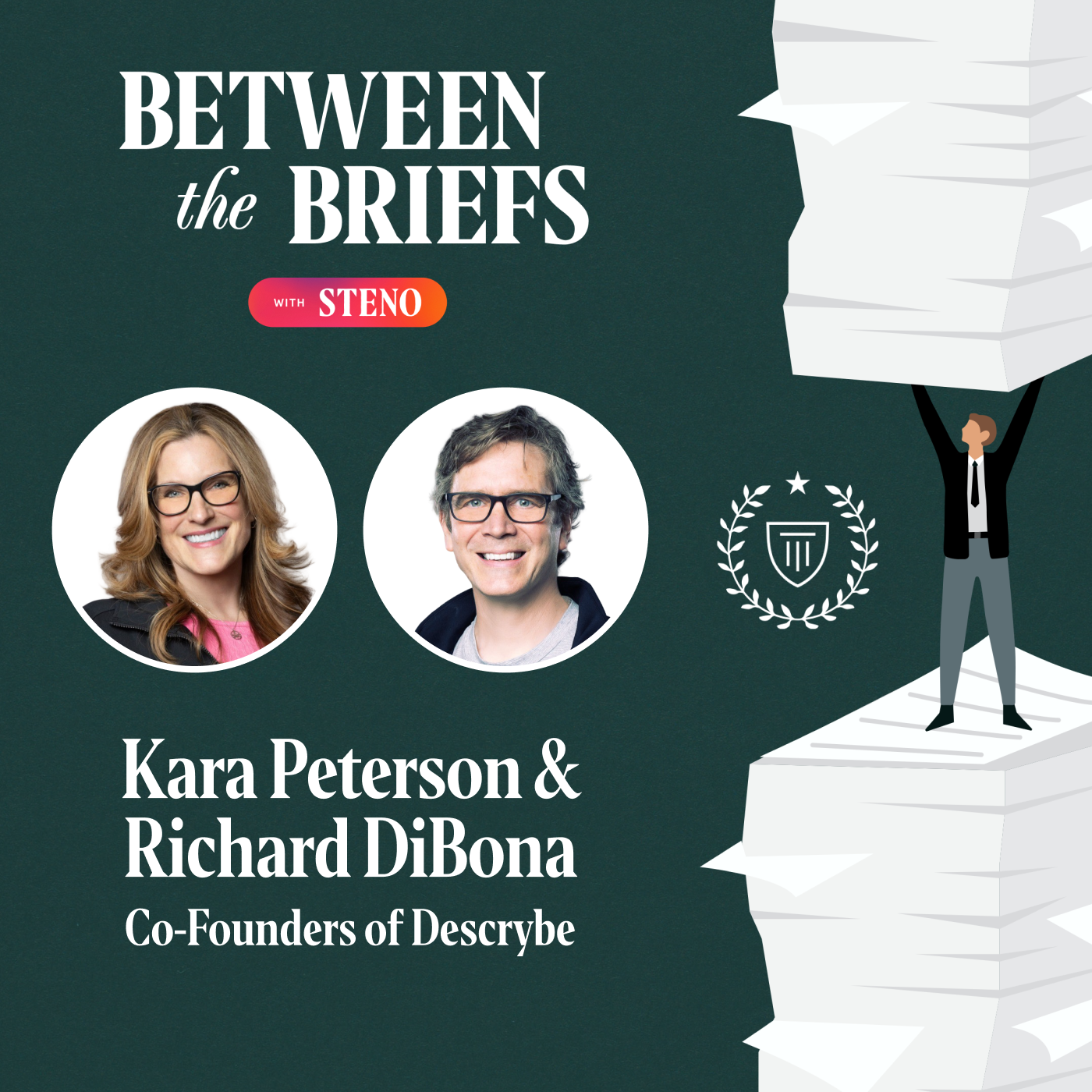 Legal Tech Doesn’t Need More “Lamborghinis” ft. Kara Peterson and Richard DiBonaBetween the Briefs · on Anthropic Claude87 / 100
 Rethinking Security Analytics with In-Place Intelligence, CEO of Vega, Shay SandlerShift AI Podcast · on Zero-Day Vulnerabilities82 / 100
 Why Procurement Has Become a Critical Line of Defence Against Cyber RiskPondering Procurement · on Zero-Day Vulnerabilities78 / 100
 AI Ran Its First Solo Ransomware Attack in 30 Minutes Flat | UnHacked Ep. 102UnHacked · on Zero-Day Vulnerabilities75 / 100110: Why Your Systems Aren't the Problem (And AI Won't Fix It)43 / 100108: Leadership is Not a Job Title with Veronica Taylor107: The Leadership Practice You Need for Scaling106: Keep More of What You Earn: Tax Strategy for Wealth Builders105: Polarity Intelligence: Embracing Resistance and Conflict to Scale Value