Mastering Engineering Leadership · 2026-06-08 · 42 min
Key moments - from our scoring
Substance score
41 / 100
Five dimensions, 20 points each
Tyler Vassar shares a compelling origin story that underscores the power of mentorship in redirecting career paths. His chance encounter with Dr. Ben Oliver in Dougherty Hall at the University of Tennessee transformed his trajectory from business student to metallurgical engineer, a moment that became a lens through which he views leadership itself. After serving five and a half years in the Navy's Combat Seabees, Vassar worked across diverse industries - environmental testing, GE Healthcare, mining equipment, hydraulics, and consumer goods - consistently in operations, supply chain, and leadership roles, ultimately serving as SVP of Operations for a 2,700-person team at an Australian manufacturer. His approach to entering new industries emphasizes curiosity, listening beyond surface-level answers, and leveraging others' expertise rather than imposing external solutions. The episode explores practical leadership applications, including his China factory visit where he resisted jumping to a metallurgical solution and instead coached his team through problem-solving, and his reflection on slowing down decision-making to develop people and generate multiple solutions before committing.
A chance hallway conversation with Dr. Ben Oliver, head of the metallurgical engineering department at the University of Tennessee, redirected him from a business major. After a two-and-a-half-hour lab tour, Vassar was captivated by tensile strength testing, Rockwell Hardness, and welding, and switched majors. Dr. Oliver became his mentor for the next three and a half years and helped him secure a Navy academic scholarship.
Vassar served five and a half years in the Navy's Combat Seabees, initially intending to be a pilot but pivoting due to vision limitations. The role emphasized teamwork and special operations with Marines, and through this experience he discovered that leading and developing people brought more reward than being a pure technical problem-solver, shifting his career focus permanently toward leadership.
He uses curiosity and humility, arriving with the mindset 'I'm new here, I don't know much about this business - can you help me?' rather than imposing external expertise. He listens actively (not just waiting for his turn to speak), takes notes, and works to reach consensus on three to four major goals before setting measures.
Rather than immediately providing answers - even when he has deep technical expertise - he slows down, asks teams to generate multiple solutions over 24-48 hours, and coaches them through the problem-solving process. This approach builds team capability, ownership, and often surfaces better solutions than the leader's first instinct.
After the Navy, Vassar worked in environmental and testing, earned an MBA while working in that field, then held leadership roles at GE Healthcare, mining equipment, hydraulics, and consumer goods/transportation industries. His capstone role was SVP of Operations, Manufacturing and Supply Chain for an Australian manufacturer with 2,700 team members.
Our reviewer’s read on each dimension, with quotes from the episode.
The episode contains a handful of genuine practitioner observations - e.g., giving team members the problem back rather than the answer, and distinguishing present facts from future beliefs - but roughly two-thirds of runtime is biographical narrative, familiar platitudes, and preamble before each point. The density of actionable ideas per minute is low for a smart B2B operator.
listening to what people are not saying
if you're going to come in two days, they're not going to be able to make a whole bunch of changes anyway
The episode leans heavily on widely circulated frameworks and names - Dale Carnegie, Simon Sinek's Start With Why, Colin Powell's 70-80% rule, and management by wandering around - with no contrarian or first-principles arguments. The distinction between 'present truth' and 'future truth' is the only mildly novel framing.
I love the book by Dale Carnegie called How to Win Friends and Influence People
Maybe people have heard of Simon Sinek. He's an outstanding speaker and lecturer around leadership
Tyler Vassar has genuine large-scale operational credentials - SVP of Operations, Manufacturing and Supply Chain for a 2,700-person team, global chief procurement officer in mining, and a GE Healthcare stint - making him a real practitioner rather than a career thought-leader. However, he is now a consultant, and the episode's substance doesn't fully surface the depth one would hope for from that background.
I was the SVP of operations, manufacturing and supply chain for a team of about 2,700
I was the chief procurement officer and the leader for the global supply chain
The China supplier story is the episode's strongest evidence - naming Baoding, identifying the water-misting heat-treatment failure mechanism, and noting parts failing under 100 hours versus thousands - providing real engineering specificity. Elsewhere, numbers are sparse (one $2,500 auction figure, team headcount) and business outcomes from the interventions are never quantified.
we had a Chinese supplier who was making parts for us in Baoding, China... some percentage of them were failing very prematurely, like less than a hundred hours versus a few thousand hours
we ended up getting $2,500 additional fundraising for those tickets
The host is organized and occasionally surfaces a genuinely useful framing (e.g., connecting the China story to 'going to the shop floor'), but her default mode is affirmation and summarisation rather than probing or challenging. No claim is pushed back on, and follow-up questions rarely extract new information beyond what the guest was already about to say.
There's several things I like about that example
I like the way you framed it where it's not only just the sort of process or content of the work
Computed from the transcript - who did the talking, and the words that came up most.
In this episode, I speak with Tyler Vassar, Managing Partner at Ascent Ridge Partners, a consulting group that focuses on helping teams and organizations improve their performance. Tyler shares how he grew up on a small farm in rural New York and became the first person in his family to attend a four-year university. Although he initially planned to study business, a chance hallway conversation with a metallurgy professor completely changed his path. That moment became a powerful example of how mentorship and encouragement can redirect someone’s future. In our leadership segment, Tyler explains how his time in the Navy shifted his focus from technical problem-solving toward leading and developing teams. Across industries ranging from healthcare to mining and manufacturing, he learned the importance of listening, humility, and walking the shop floor. He also shares how great leaders coach people through problems instead of simply giving answers. In our advice segment, Tyler discusses the reality of making decisions with incomplete information and why integrity matters in leadership.
Transcribed and scored by The B2B Podcast Index.
Speaker A: Most of the great leaders that I know have something in common is they deeply have a desire to become a better version of themselves over time. And whether that means they're a little better next week than they were last week or, uh, they're a little better next year than they were last year, it's a constant thing. And leadership skills are very learnable.
Speaker B: From the Tickle College of Engineering at the University of Tennessee. This is Mastering Engineering Leadership, where we talk to engineers about their career journeys, discuss real life leadership challenges they've tackled, and get their actionable advice on how to achieve success as a leader with an engineering background. I'm your host, Dr. Angelique Adams. In m this episode, I speak with Tyler Vassar, Managing Partner at ascentridge Partners, a consulting group that focuses on helping teams and organizations improve their performance. Tyler shares how he grew up on a small farm in rural New York and and became the first person in his family to attend a four year university. Although he initially planned to study business, a ah chance hallway conversation with a metallurgy professor completely changed his path. That moment became a powerful example of how mentorship and encouragement can redirect someone's future. In our leadership segment, Tyler explains how his time in the Navy shifted his focus from technical problem solving toward leading and developing teams across industries ranging from healthcare to mining and manufacturing. He learned the importance of listening, humility, and walking the shop floor. He also shares how great leaders coach people through problems instead of simply giving answers. In our advice segment, Tyler discusses the reality of making decisions with incomplete information and why integrity matters in leadership. He emphasizes emotional intelligence, preparation, and continuous self reflection as critical leadership skills. His advice to engineers is build strong technical skills, care deeply about people, and say yes when leadership opportunities appear. Explore the full episode summary including guest bio, key takeaways, transcript and recommended resources in the shownotes@ah drangeliqueadams.com podcast without further delay, here is my conversation with Tyler Vassar. Hi Tyler, welcome to Mastering Engineering Leadership.
Speaker A: Well, thank you for welcoming me, Angelique. I'm actually delighted to be participating on this sunny Friday afternoon.
Speaker B: Wonderful. I am thrilled to have you here. Can you start by telling us how you got into engineering as a career path?
Speaker A: Yeah, I can. And maybe even more relevant for a lot of the students. How I got into engineering at the University of Tennessee is a. Is a path. Might be. Might even be even interesting. Uh, a fun story. Although I sometimes have thought in the past of my My life is sort of a one in a million. But the more people I meet, the more I realize that there's all sorts of people who have very unusual and paths how they got to where they are, uh, to set the stage. I was raised in rural western upstate New York. Uh, I was raised on a small farm. My parents were both the son and daughter of dairy farmers and we, we did not have a dairy farm. We had a farm that wasn't particularly financially resourceful and both my parents had part time jobs. Um, from the time I was a little kid. My parents had always talked about me being the first, the first in our family on either side to ever graduate from a four year university. And this was kind of a dream for them from the time I was probably like 6 or 7 years old. And so it was kind of like where do you want to go? And um, um, what I knew is where I lived you get up on a November, you go to bed on a November evening and you'd get up on a November morning and in the evening there'd be brown grass in the front yard and you'd get up the next day and you'd have three and a half foot of snow that you'd have to wade through to go out to the barn to do your morning chores at 6am and so the idea of going somewhere south was very interesting to me. And uh, I went to the University of Tennessee. I went to a site visit and I just fell in love with the campus at that point I was planning on majoring in business. But we'll, we'll come back to that. And then the coolest thing for me is orange has always been my favorite color. In fact when I was a kid in third and fourth grades kids used to make fun of me because I had these bright orange corduroys that I just love to wear to school probably every other day I'd uh, wear my mother to wash them, I'd wear them the next day. And so I've always loved orange. So off I was uh, going to Tennessee. I'd saved up money from jobs out in the rural was countryside. It was fairly, fairly easy to find work as long as you were willing to work hard. And uh, I saved up money and I was in pretty good shape for my, for my first couple trimesters at Tennessee when I showed up and, but I didn't get great counseling around courses and uh, so I decided I would take courses that I thought I would do well in. And uh, so I took calculus, physics, biology, economics and I had to take English of course. But I took courses that a lot of people would avoid. I Think probably as first semester freshman if they could. And, uh, fortunately I did pretty well my first trimester. But was interesting is a lot of the men and women I got to knew in the dorms. We were getting to be friends and some of them were engineers and some of those people were struggling in some of the classes. And people kept asking me, why are you majoring in business? You'd be a great engineer. You're really good in math. You like science. Why, why aren't you majoring in engineering? And I was like, I don't even really know what engineering really is. I was that naive. I was raised just in a very unsophisticated family background. Great emotional support, great spiritual support, great intellectual support. There just wasn't any money. And, uh, my parents had this vision that I would go off to college, get a degree, and then I would get a great job and live a better life. But I liked the life I lived, so it wasn't, it really wasn't like that for me. But flash forward to second semester January. Um, I'm hanging around with some buddies from, from the dorm and we're over in the Dougherty hall and we're out in the hallway. They're kind of ganging up on me. They're kind of saying, you should, you should change majors. You should go into engineering. You'd be a really good engineer. And I'm, I'm just kind of taking this all on. And this, this man walks up and sort of politely inserts himself into the conversation and looks me dead in the eye and says, how would you like to become a metallurgical engineer? And I just sort of stared at him and there was an awkward silence. And he said, perhaps you don't know what metallurgical engineering is. And I jumped in pretty quickly and I said, well, I imagine it has something to do with metals and steel and welding. I actually know how to weld. Rudimentary welding. We had a welding machine on the farm and I knew how to, you know, weld. Weld a little bit. And so, uh, he. Then he introduced himself and he said, well, I'm Dr. Ben Oliver. I'm the head of the metallurgical engineering department at the University of Tennessee here. How would you boys, there's about six of us like to do a tour of the metallurgy lab. And kind of, to my surprise, the other five guys kind of looked at their shoes and shook their head. It was a Friday afternoon. And they said, well, maybe, maybe another time. And I said, well, maybe I Might like to do that with you. And, uh, Dr. Oliver spent two and a half hours with me down in the lab. It was absolutely magically influential to me. And I just want to pause here, because this is the part of the story of how one person can totally change the path of another person for the better just because they care. And they show that they care because that's a key part of leadership. True, too. But the fascination for me was tensile strength, Rockwell Hardness testing, Sharpie V Notch, Brinell Hardness microanalysis, a little welding. We did all this in about two and a half hours, and I was in. And of course, he was the department head, so it took very little. Just a stamp and a signature, and I was in the department. And for the next three and a half years, Dr. Oliver was my mentor. He was my guidance counselor. He helped me with my schedules and, in fact, helped me to be considered for a Navy academic scholarship, which is fairly rare. And for my junior and senior year, I actually had an academic scholarship, which was great because I didn't have to work as many hours. I still needed to work for spending money, but it was great. And I was really getting concerned about some student loans that had started to pile up my sophomore year. So that. That's how I got to the university. That's how I got into Engine. And I feel fortunate and blessed to have had that path. And I'm forever indebted to Dr. L.
Speaker B: Yeah, that's a great story. And I like the way you paused and said, this is an example of how impactful one person who shows interest in cares and is willing to take a little bit of time to show somebody what's possible. Right. And in your case, you decided you really enjoyed what was possible and decided to pursue metallurgical engineering. So let's talk a little bit about your career. So you get your degree, uh, from University of Tennessee in metallurgical engineering. And tell us a little bit about what you have done with that degree and what you've done in your career.
Speaker A: Well, sure. Uh, well, the first thing I did is as I attended graduation, and I left two days later to go to Officer Candidate School with the United States Navy. Because that was, you know, part of the program of winning the scholarship was the reciprocal of five years of duty. And my plan was to. Was to put in my five years serve my country. I was very proud about the opportunity to be able to do that. I felt like it was, uh, a great deal. I felt honored to get the scholarship. I didn't feel like I owed a debt. I just felt like it was just a real big opportunity for me. But my plan was that then when I got out of the Navy, maybe go back, get a master's degree in either metallurgy or maybe even mechanical engineering. I've always enjoyed mechanical engineering as well. And maybe work at Alcoa, you know, right south of, uh, Knoxville, or maybe work at a steel mill or maybe even go back and be a college professor and teach engineering. I mean these were the kinds of things I was imagining that I would do. But I went into the Navy and my first choice was to be a pilot. But my vision was not adequate and I didn't get to do that. My next choice was to be in the Combat Seabees. So I spent five and a half years in the, in the Combat Seabees. Some people think, oh, they're just like the seals. I can tell you. We were not just like the seals. We, we don't like to get drowned or any of that kind of stuff. But we spent a lot of time, you know, working with Marines on special missions. And it's a, it was a really great development of team, it's all about the team. And I got a real foundation in that. But what I found is the, I don't know, the reward and how I felt about my contributions around leading teams and helping people and developing people took a, uh, took kind of a front stage over my desire to be a technical person, a solutions person, an engineer who worked through problems and came out with the correct answers. And that evolved over that five years. And so when I got out of the Navy, I was looking for uh, an opportunity to lead teams and worked my way in my career. I worked in the environmental and testing field for three or four years while I got my mba. Then I went to work at the General Electric Company. I spent my whole tenure there in the healthcare division. Loved working in healthcare. Felt like I was helping people with tests and diagnostics and equipment to make people's lives better. It uh, was a real, real awesome opportunity for me as a leader to grow. I worked in the mining, uh, equipment industry, I worked in the hydraulics industry. All centered around this idea of kind of supply chain logistics, operations and leading teams and my kind of capstone role. I worked for an Australian company and I was the SVP of operations, manufacturing and supply chain for a team of about 2,700. And I, um, we actually worked in the consumer goods, transportation and container industry and uh, a little known industry to most people. But it was fascinating for Me and I had a fabulous team.
Speaker B: So it's interesting that you've worked across many different industries and as you said, some of the common themes are operations, supply chain. And I'm curious if you can talk a little bit about what has been your approach to immersing yourself in a new industry and coming up a learning curve and figuring out, uh, these are the things that I need to, to focus on as a leader in this industry versus maybe one that you had just come from.
Speaker A: Sure. One of the key elements is being curious and being a good listener. And by listening, not listening, to have the next answer come right out of your mouth as soon as you're done listening, but listening to hear what people are saying, listening to what people are not saying. So when you join a new company, if you go in with a kind of a humble approach, hey, I'm new here. I know a lot about inventory control and management. I know a lot about logistics, but I don't really know much about this business. Can you help me? People love to help other people. I think that's, uh, something that a lot of times people learn that too late in life, but people love to help other people. Sometimes when I was in school, if I asked for somebody for help, I always felt like I was being an inconvenience to them, really. In the world that I grew to know, people love to help people. So you count on other people to help. Be a good listener, take lots of notes and try to reach consensus. Are, uh, what are the three or four big things you need to accomplish with your team in some timeframe? Set some goals and objectives and measure those. And I found changing industries was actually fairly easy. I think the harder part in a career is when you get more responsibility, is figuring out where to spend your time and where to spend your energy. When you have greater responsibility, that can be really challenging. But changing industries for me, because I counted on others to help actually went really pretty smooth.
Speaker B: Up next, we'll dive into a leadership case study exploring a real world challenge our guest has faced and how they tackled it. Don't, um, go anywhere. We'll be back after a short break. Tyler, can you give us an example of how you use leadership skills in your work?
Speaker A: I could give you, give you hundreds. We could spend the rest of the day until it gets dark talking about examples. But one example I like is sometimes leadership is more the little things that happen that really change, change, change how you think about stuff. And a great example I have, I worked in the mining equipment industry for five years. And I was the chief procurement officer and the leader for the global supply chain. And one of the division presidents had a real passion around a charity and had asked me and some members of my team to help them put on a charity golf event. We put on this golf event, and it doesn't matter what the charity was, but it's. You can imagine the idea. We were all excited about it. And then the grand prize. We had a hundred of these raffle tickets that we sold for. I think they were like $50 a piece. It was. It was a significant, uh, amount of money. And, uh, I had the privilege of drawing the winner out of the box. Well, uh, unfortunately, when I drew the winner out of the box, the winner was actually the division president. He bought a ticket. But. But. But inside, I knew instantly that he didn't want to win. I mean, I didn't want to win. We wanted one of these guests who'd come and come all the way out for our fundraiser to be there. And, uh, Randy and I were about the same age, and, And. And some days I thought, you know, I'm. I'm a similar leader to him, but I kind of froze on the stage, and he walked up and grabbed the mic and turned around and said, hey, I've got an idea. I talked to a lot of people here today that were pretty excited because the grand prize is four awesome seats to an NFL game. And I. I know I talked to at least six or seven people that were really excited, hoping they might. Might win that. So I've got an idea. Why don't we raise more money for the charity, and Tyler here will be the auctioneer, and we'll auction off these four tickets, which was brilliant, right? Just absolutely brilliant. Everybody got excited, and we ended up getting $2,500 additional fundraising for those tickets. But I walked away from that, the situation, and I went, what a great leader. What. What a person who's doing the little stuff to make sure that he's doing the right thing. He's doing the right thing for everybody. And sure, he would have liked to probably gone to the game, or maybe he could have sold the tickets, but he rose above that. He put everybody else in the room above his own priorities and his own desires. I think that's just a terrific example.
Speaker B: There's several things I like about that example, but one of them is that it is really to show up as a leader in all the contexts in which you play. And I'm not saying you have to take the lead on everything, because I don't know if you would agree, but I would assume you'd agree. Great leaders are also great followers. Right? So I'm not saying you always have to step up and take the leadership role, but what I am saying is that I do think that leaders, once you start to really ingrain your leadership character, it starts to just show up everywhere. And that that is something that you can embrace. Can you talk a little bit about maybe other ways that you see leadership showing up? Either whether it be inside of what we consider the traditional workplace or maybe outside of it? They can give give us some more examples of that.
Speaker A: Sure. I think an interesting example I have is I spent, uh, much of my career in global roles, so I had to think about different cultures. You know, the culture in Argentina is not the same as the culture in Germany. The culture in Italy is not the same as the culture in China. And how do you navigate those roads and what do you do? Interesting. Think. We have engineers, all of us. We love to solve problems, we love to get to the answer, we love to move forward. But when you move into a leadership role, I had example where we had a Chinese supplier who was making parts for us in Baoding, China, southwest of Beijing. Sort of a rough, bumpy two and a half hour ride when I did it. And we were having some challenges with, uh, some parts that some percentage of them were failing very prematurely, like less than a hundred hours versus a few thousand hours. And it was kind of a mystery. And we'd had some people working on it. And I took the decision to just sort of, while I was in China, take a day to go visit the factory. Now naturally, the folks that were at the factory that were the supplier, they were eager to try to get me to source more parts from them. And I was more interested in trying to figure out why we had this fractions of stuff. It wasn't pervasive, but it was troubling, uh, because it just didn't make sense. And so we, we toured the factory and lo and behold, there was a challenge with the process of the cooling process of these parts. And it was, it was fairly obvious to me what the, what the challenge was. They were actually spraying a mist over a portion of these conveyors that were supposed to be tying, cooling the material leads quickly to get the opportunity for a hard surface in the top that can crack the crack can propagate through a fairly simple engineering evaluation. Um, of course, I don't think anybody on my team that was with me or at the supplier actually even knew I had a degree in metallurgical engineering because it really wasn't anything I talked about very much. But instead of jumping in with a solution, which there's a part of me that I would love to, instead I took the thing. Cause I was also a little frustrated because they had changed the process flow through the factory from the time when they started. And I was kind of disappointed in some of my team, I was disappointed in the supplier, I was jet lagged. But I had to pull myself above all that and sit down and say, hey, let's get a team together, let's relook at all of this. And then they explained that this water misting actually allowed the cooling process to be quicker and they were getting more parts production per day and they were giving us an additional discount. And of course in my mind I was saying, well, it's no sense of getting additional discount if, if we're going to have quality issues. Quality always has to come before, uh, price. That's how it works in manufacturing and business. But instead of solving the problem, I worked with the team and left them to come up with a better plan. And what's cool about that is not only did they fix the heat treatment to what I think we all believe was a better solution, they also found some other improvements through the process because they looked at the whole thing. And I played my role as a senior leader and let the engineers and the people whose responsibility day to day to produce those parts do their job. And it's a constant. Um, what, what brings me to another leadership example is it, it was so easy for me, younger that someone would come to me with an idea or a problem or a circumstance and it was always quick. I would always have a quick answer. But as I watched and observed and became more self reflective of other people, I learned that a lot of times people are bringing a potential solution or they're bringing you a challenge or a problem and you have the responsibility, maybe make the final decision, don't judge them in 10 seconds and come up with the answer that you think's the best. Instead slow yourself down and say, you know, that's interesting, it's a complicated problem. Would you, I think maybe I, uh, I need a night to sleep on. This would be okay. Maybe we talk about it tomorrow. And if you don't mind right now we got one solution. Maybe, maybe you could over the next 24 hours see if you can come up with any other solutions. They may just seem like silly solutions, but you never know because it's always better to have two or Three ideas than just one before we make a decision on this, on this, on this challenge. Now, uh, maybe from my perspective, it wasn't a big challenge and it wasn't a big deal. But from the perspective of making that person feel heard and letting them get involved and with that approach, sometimes what happens is they come back with the exact same change to the suggestion that you were going to make anyway. And then it's their idea, it's their buy in. And instead of giving someone the answer to the question you actually like we do in engineering, you taught them how to work the problem. And uh, I find I've had a lot of good success throughout my career by sometimes sitting back and waiting, uh, with a solution. Now sometimes you can't. Sometimes things are urgent and you have to decide in the moment or in the next five minutes. But most the time you just think you have to decide in a really short timeframe. But another 24 or 48 hours to allow you to develop your team and have better relationships is pretty useful.
Speaker B: Absolutely. In the, uh, first of the two examples that you mentioned, when you talked about the part that was having quality issues and you chose to sort of swing by when you were sort of in the neighborhood, took a look at the facility, there are two things that come to mind with that situation. One is the fact that a senior leader would do that. A senior leader would go onto essentially the shop floor and take a tour and try to see with their own eyes what the challenge could be. And I'm curious if that was, was something that was a pretty typical thing that your, you know, would be done in your organization or was this something that, you know, was maybe unique to you and your team? And you even said like your team didn't even know that you, they probably didn't even know you had the expertise to go and look and maybe see what you needed to see because you, they saw you as a, uh, as an executive and not somebody with an engineering background. But I just think that's something that's really important that oftentimes leaders don't do, which is to go onto whatever their version of the shop floor floor is sometimes because it one, you could potentially see things, but also it signals this level of importance that maybe just staying in your office and yelling at people to, to you know, get the job done doesn't necessarily do.
Speaker A: Absolutely. And this is just a huge passion. And you and I have not talked about this before, so this is great. I read something about management by wandering around early in my career, combined with my Military experience. I had the great pleasure of having a, uh, senior leader who spent a lot of time with, who eventually went on to become a two star admiral in the Navy. And he described his experiences in Vietnam and the difference between what was truly happening on the front line versus what was being radioed back and telephoned into Washington. And he taught me very early that you have to go and see it by yourself. Not necessarily to judge it, but to understand it fully. And by the way, it was not a pop visit, it wasn't a pop quiz. We let the folks know on Tuesday that we were going to be coming down on Thursday. And by the way, at some point in my career, I loved surprise show ups because you can learn all sorts of stuff and catch people. But what I found out is it's, it creates too much stress and anxiety most of the time. And what's funny is if you're going to come in two days, they're not, they're not going to be able to make a whole bunch of changes anyway. They're not going to hire a bunch of new people. They're, they're not going to move the building. There's nothing major is going to change. But I think going and seeing it from a point of interest and then the biggest thing is what, what additional support does that team need? Now the trade off for this is a trade off that I've made with my family. I've been married for 40 years now and uh, we have two wonderful sons and now we have four wonderful grandchildren all under the age of eight. But I had to travel. When you have a global job, you have to travel. And um, it's the difference between getting to travel and having to travel. And you got to put in that effort. And then again you need to spend enough time to be useful, but not too much time. You don't want to hang around too long because the more senior you get, you become a distraction. But going and seeing it is critical. And I also have a pretty strong background in lean manufacturing and going out to Gemba and walking the floor and seeing what can we improve incrementally today on any given area is absolutely critical. And the funny thing I find is a lot of leaders who don't like to be out in the field. It's because they're not comfortable being in the field because they haven't been there. They don't know what to expect. And when you make um, a decision that you're going to be involved and you're going to be a helicopter leader, so you're going to spend some time up in the very important strategic things, but you also have to spend time down on the little small things, the little tactical things. And there's also little small things that go on with people. I find that the strongest relationships that I've dealt with people have often been over little things. Not a big thing, not a big raise or a big bonus, but little thing. But showing caring or flexibility. When somebody's mom's got cancer or when someone's dog got hit by a car, or when someone's got a teenager who's having behavioral issues in high school and they're being suspended and they're really struggling when offering them flexibility. Maybe not ideas or advice, but just being there and showing that you care and you see them as a person versus an employee really helps. And then when you need people to step up and you've got a crisis or you've got a customer service issue, these people who are on your team, they're not your, they're your employees. Yes, but they're on your team. They're much more excited because they see you as a human and you see them as a human versus you see them as an employee and they see you as the boss. It's much better to have that team. We're all people, we're all here together.
Speaker B: I like the way you framed it where it's, it's not only just the sort of process or content of the work that you have to go be high level strategic, but also be willing to be really tactical and close to it. It's also the people. So of course you have the high level strategic, you annual performance reviews, you have all that kind of stuff and you get to know people on a human to human level, learn about their families, their interests in these and other things about them as, as individuals. And when you do that in both dimensions, you end up with a better understanding of really everything that you are charged with leading, which is both the process and whatever you're doing to get the results and the people that are making that happen. The other thing that came out in the uh, two examples that you mentioned that I, that I want to touch base on, I'll use the word coaching, you may call it something different, but this ide in the, again, the quality example you said, I went there, I walked the floor, I saw what I saw, I had some ideas and I got the team together to say these are some, these are some things I'm seeing you all take, take the accountability of coming up with potential solutions. So you didn't jump in and say, this is exactly how to fix it. You gave that to them and kind of helped coach them through maybe ways they can think about it. And then similarly, in your second example, you said, you know, if somebody comes to you with a great idea or a problem, you don't jump in and just give them the answer that you think. You kind of coach them around. Hey, maybe we can think a little bit more about this, think a little more broadly, come up with some other ideas. And I know that that is something that I also think is really important. And it's often something that, you know, that's, I would call that an intermediate to advanced leadership technique. Right. The ability to hold yourself and your own initial thoughts because you know that the coaching of your team and them working through it is going to up with better results, you know, in the medium to long term. So can you just talk a little bit about, about maybe how you came to recognizing that as important in your own leadership style?
Speaker A: Sure. And, uh, coaching's just such a great example because I, I was an athlete and I played lots of different sports and I've always enjoyed sports. And for me the, the analogy of coaching versus leading and, and a game versus, you know, the quarter of the business cycle, they really match up well. But, but I, I gotta say this out loud. At some point, I always got the feeling that everybody loved my sports analogies. And at some point somebody actually came into my office and said, can I tell you something that I don't think, you know, most of us on the team don't even really understand ice hockey. So we don't really get the analysis right. We all nod and we all smile, but we're not sure we're really getting the true thing. And I, and I, I said, wow, that's really silly. And again, a sign that you need to pause, you know, need to reflect. Something I've done for years on Saturday morning, if I didn't have a. Kids with a sport or something, I get up and I spend a couple hours and I look back at the week. How did I spend my time? How was I at a leader? How often was I impatient when I shouldn't have been? How often was I, uh, way too patient when I should have pushed somebody a little bit harder down the road? And you, you reflect under this, this vision. And this is another key takeaway. I think anybody who's listening, write this down. Most of the great leaders that I know have something in common is they deeply have a desire to become a better version of themselves over time. And whether that means they're a little better next week than they were last week, or, uh, they're a little better next year than they were last year. It's a constant thing. And leadership skills are very learnable and you learn them through life. But unfortunately, a lot of people early in their careers work for leaders that are a bit mediocre, and therefore they learn examples that may not be the best examples. Now, I'll tell you, I've learned as much from ineffective leaders as I have from effective leaders. I've learned what not to do, I learned how that doesn't work. But there's a couple things there, and here's a couple recommendations. I love the book by Dale Carnegie called How to Win Friends and Influence People. And in fact, I love that book so much in the four or five times in my career when I made a company change, I challenged myself to reread it again before my first day of work. Work and take notes, because it's such a powerful book, a podcast, and TED Talks. Maybe people have heard of Simon Sinek. He's an outstanding speaker and lecturer around, uh, leadership. And he's got a great book that's called Start with why. And it's interesting because a lot of people jump into what you want someone to do and then how you want them to do it, which is the process side. But the why is really critical. And if you can get a group of motivated people that agree on the why, it creates that synergy to allow things to m. Move forward. And, uh, that's, that's all how leadership ties together. And also, if you use the exact same approach with every single person on your team, that's probably not going to work either because people have different needs. Some people, they need feedback a lot. They need to check in every day or every couple days. Some people, they don't need feedback at all. If they get one, one email a week and a check in once a month, they're totally happy with that. And they, they perform well and they're more, more independent. People just have, have different needs. But what I want to circle back is for everybody who's an engineer, I thought that leadership would not be as important to me as the technical part of problem solving and being an engineer. And I believe that from my toes to my nose when I was 23 years old, I did. But because I had the opportunity and I got to learn more, I found there was another side of it that's worth it. So if you get an opportunity to lead A small team or a project or a program. Put your all into it. Oh, and I gave you a couple book that I'd recommend you read. Step back, say, look, I'm changing roles here. I'm not the principal engineer right now. Right now I'm trying to lead this team and I'm trying to get this team together to get this project done or this program completed, or this part approved for a manufacturing plan or whatever it is, whatever it is. But I would recommend everybody take, take the opportunity because until you try it and you give your all, you won't really know if, if it's something that you're going to learn to love. So, uh, a final example that I'd like to give is actually based on a military example. And this one I found I've told this example to several people over the last 15 or 20 years and it seems to resonate. I'll start with a baseline of. Part of being a great leader is you have to be ethical and you have to have integrity. I know we see stuff on TVs and we see CEOs doing the wrong thing and we see political leaders doing the wrong thing and we see governors doing the wrong thing. Don't be fooled. Don't, don't be fooled. In the real world, ethics matter and doing the right thing and understanding what the truth is is critical. In this next example, we're going to talk about. I'm going to talk a little bit about truth, but I want to define it because I find many people I've met in my life have never really defined what the truth is. The truth is the facts around what's happening right now and the facts around what's happened in the past. The future truth. Some people believe in a greater truth, a spiritual truth, which frankly, I do as well. But the truth is what you think will happen or what you believe will happen. And those are very different definitions that need to be clarified. And I got a, uh, very interesting example. One of the things, you know, being in the Seabees, we spent a lot of time working with the Marine Corps. And the Marine Corps is a very disciplined, strict military operation. And this example involves a small group of about 20 Marines that were overseas. And they had a specific, uh, mission that they needed to do. And they were highly prepared and trained and they had a captain, an 03 running the mission. But one of the Marines was, was a big, tall, lanky guy and he was, he was known as the clumsy guy. They kind of joked around him a little bit, the clumsy guy. But he was a competent guy, but it was late the night before and they were already in country, and it was in a situation where they were going to come in from the east and leave through the west. And late at night, this young Marine comes to ask if he can have a word with the captain. And captain says, yes. And he says, sir, I'm really concerned about all these IUDs that are. That are around here and stuff. And I'm kind of a clumsy guy, and I've never really thought about life this way, but I'm really concerned. This is very rough terrain. It's going to be dark when we start the mission. I'm just not feeling real self confident, and I don't know what to do about that. And so the captain, he paused and he thought and he said to himself, well, he is kind of a clumsy guy, but that's not going to help us. I can't leave him here because we're not coming back here. And so he needs to be a part of the mission, and I really need all 20 of us to execute this mission the way we planned it. And he said, you know, you're exceptionally well trained. You're. You're ready. I know you're ready. Maybe I know you're ready even more than you know you're ready. But this is what I believe. I believe we're going to have a successful mission, and tomorrow is going to be your best day. And you can say, well, if he believes he's kind of a clumsy Marine, is he, is he telling him the truth? And the answer is he doesn't know what the future truth is. But he's got a leader, but he's got responsibility to lead a whole team. And the team has to work together to their best and to their highest level of confidence. And trying to instill some additional confidence in that young Marine was the right decision. Some people say, well, how does this story end, Tyler? Well, the story ends they completed the mission, and everybody came back with, uh, a couple minor injuries, but they completed it and they got it done. But I have to say, without that servant leader, supportive leader side of that Marine Corps captain, I think there's a chance that things could have gone a totally different direction. But it really brings out that idea when you're talking to people, some people get lost in. But you said this would happen. And so you have to be really clear about the facts that are reality and the things that may happen or might happen or what you believe. And I think that's real critical to be able to talk about that. And by the way, it's just as applicable in a government role situation or a business as it is in the military. People have concerns, people have lack of confidence. People need to be supported.
Speaker B: Yeah, that's a great example. I think the thing that comes to mind is how this officer had to make a decision with incomplete information. And maybe that's uh, a different way of saying what you were talking about. But he knew where they needed to get to, he knew what they could do, you know, that they weren't sticking around, as you said. But he also knew that this person was well trained. Right. He got to be part of the team for a reason. But there are, uh, definitely unknowns. There are going to be unknowns whether, regardless of this person's specific concerns, there were tons of unknowns associated with that. And so in the moment, he had to make the best decision that he thought he could make with incomplete information and also convey his decision in a supportive way that I think gave this, this person hopefully some, some lift, some hope that, okay, yeah, this is, this is the best decision that, that, my, that, that, that the officer could make. And so I just. When we talk about it in an engineering context, we often talk about leaders having to make decisions with incomplete information. And so this one was a very high stakes decision with incomplete information. But the fact remains that leaders are required to do that all of the time. If you.
Speaker A: Yeah, and you're spot on. And this idea of incomplete information, I remember hearing, uh, General Colin Powell speak and I also remember reading a couple of, of things that he'd written and the idea of what percentage of the information do you need to make a decision? Because if you always wait till you have a hundred percent of the information, you won't make decisions in timely manners. But if you jump forward without enough information, you risk making poor decisions and in some case you make the exact wrong decision. And so where's that point of confidence? And he always felt it was somewhere in that 70 to 80%. It's a subjective how you could do I feel about the information I have based on my experience and my team. But I think it's always critical because I myself struggled early in my career that I wanted a higher level of confidence. I wanted more details, I wanted to check, check the math, I wanted to check the details and I wanted someone else to check my check to make sure we all agreed that we were all checked to make sure that we were all there. And it's not practical in a lot of situations because time moves Quickly. Time moves quickly. Quickly.
Speaker B: Coming up, we'll discuss actionable advice and resources to help you on your own leadership journey. Stick around. We'll be back in a moment. All right, Tyler, as we wrap up, what advice do you have for engineers who are interested in pursuing leadership roles?
Speaker A: Sure. Um, in fact, at first I probably got some advice for all engineers who are graduating from college of how to, how to focus on your career. I know at different periods of time there's been periods where engineers are, are hot commodity and a lot of them are getting jobs. And then there's been periods where lots of engineers have struggled for weeks and months after graduation to land a job that they're actually excited about and interesting in. But, you know, there's a whole bunch of stuff that you can do that doesn't require any specific talent. From my perspective, you can be honest and ethical. Tell the truth, and if you don't know the answer, say I don't know, but I can get back to you on that. Don't pretend doesn't work. Be on time. Uh, it's a real simple thing. It's amazing how many smart professional people I have seen derail their own careers because they can't stay on time. They just can't do it. Have a positive attitude. If you're not going to have a positive attitude, my dad used to say, then stay home because if you're not going to have a positive attitude, you're just going to bring everybody else. Done. Sorry. You're going to bring everyone else down. Be prepared. It's, it's so funny, some people say, oh, I think I over prepare. And I don't know if you can be over prepared or not. It depends on the situation and how much time you have. But boy, I can tell you when people aren't prepared, they know they're not prepared. And then they look back the next day and said, I should have been prepared for that. And I wished I had been. Have a trusted, capable tool set both technically and from a people EQ perspective. Emotional quotient. If you don't know what an EQ is, I recommend you look up on the Internet. But there's a, uh, there's a theory that people have an iq, which is intelligence. Most people have heard of that. And then there's an eq, which is your emotional quotient. And those two things together are critical for leaders because having this emotional empathy, caring about people, caring about how they feel, being able to interpret their non verbal, uh, communication skills and how that all fits together is really critical. Another thing I hear a lot about, I hear people talking about they're very, very focused on their brand, which I think can be useful. But as a young engineer coming out of school, I instead would recommend developing that trusted, capable skill set and know what you know and understand the things that you're. You're not as deep in. And if you want to get deep in those and understand and study those, then do that. But never, ever pretend. If your expertise is chemical engineering, don't, don't try to pretend that you're a material scientist, because there's a lot of similarities, but that's a different competency set. Tangible skills make people employable. That's what I tell so many people, especially as I'm talking to friends of mine with kids in high school, is technical skills are very, very good and they make you employable and they allow you to make greater contributions in your career. And then my final thought about leadership is, uh, if you get a chance. I touched on this earlier, but if you get a chance, throw yourself into it. Most leadership examples, the first opportunity is a very small team or it's a project or a small project that has a definitive start and end. And that's kind of the way that people are tested to see how they do. And sometimes those first examples can be difficult because sometimes you're an informal leader. You're not a direct leader. You're not responsible for their time card or their paycheck or their promotion or their valuation. You're more of an influencer. And therefore sometimes followers aren't the best followers with influence. So you have to use other tools. And that's where showing you care, that's where being out front, um, giving credit to others. Don't worry about your credit. If the project, if you're the project leader and the project gets done on time, you'll be recognized somewhere. Don't. Don't try to fly your own flag. Don't blow your own whistle. Instead, give the credit to the team and the people on the team and put your all into it.
Speaker B: Tyler, thank you so m much for sharing your insights with us.
Speaker A: I wish all of you much success in your careers and your future. Go Vols.
Speaker B: Thank you for listening to Mastering Engineering Leadership. Today's episode was packed with actionable insights. Now it's your turn to put them into practice. If you're ready to take the next step in your leadership journey, hit subscribe and share this podcast with someone who might find it valuable. Until next time, I'm Dr. Angela Gaddams. Take care and lead with impact.
Other episodes covering the same guests and topics, from across The B2B Podcast Index.
 Why AI Is Changing Jobs Before It Changes Employment with Sebastian FixsonFuture Of Work Podcast · on operations management82 / 100
 #67: CMO Strategies in a Health startup (Dexcare) by Former Microsoft & GE Healtcare (Jamie Gier)Impact Talks · on GE Healthcare71 / 100
 When Life Happens: Is Your Business Ready? Part-1Biz Help For You · on operations management70 / 100
 Three Obstacles to Delegation | 120Lean Leadership for Ops Managers · on operations management62 / 100
 Family Business Done Right: The Bear Iron Works StoryCelebrating Small Family Businesses · on operations management60 / 100
 25 Years of ‘Vested’: Crafting Effective Relationships With Supply Chain PartnersThe SupplyChainBrain Podcast · on University of Tennessee59 / 100
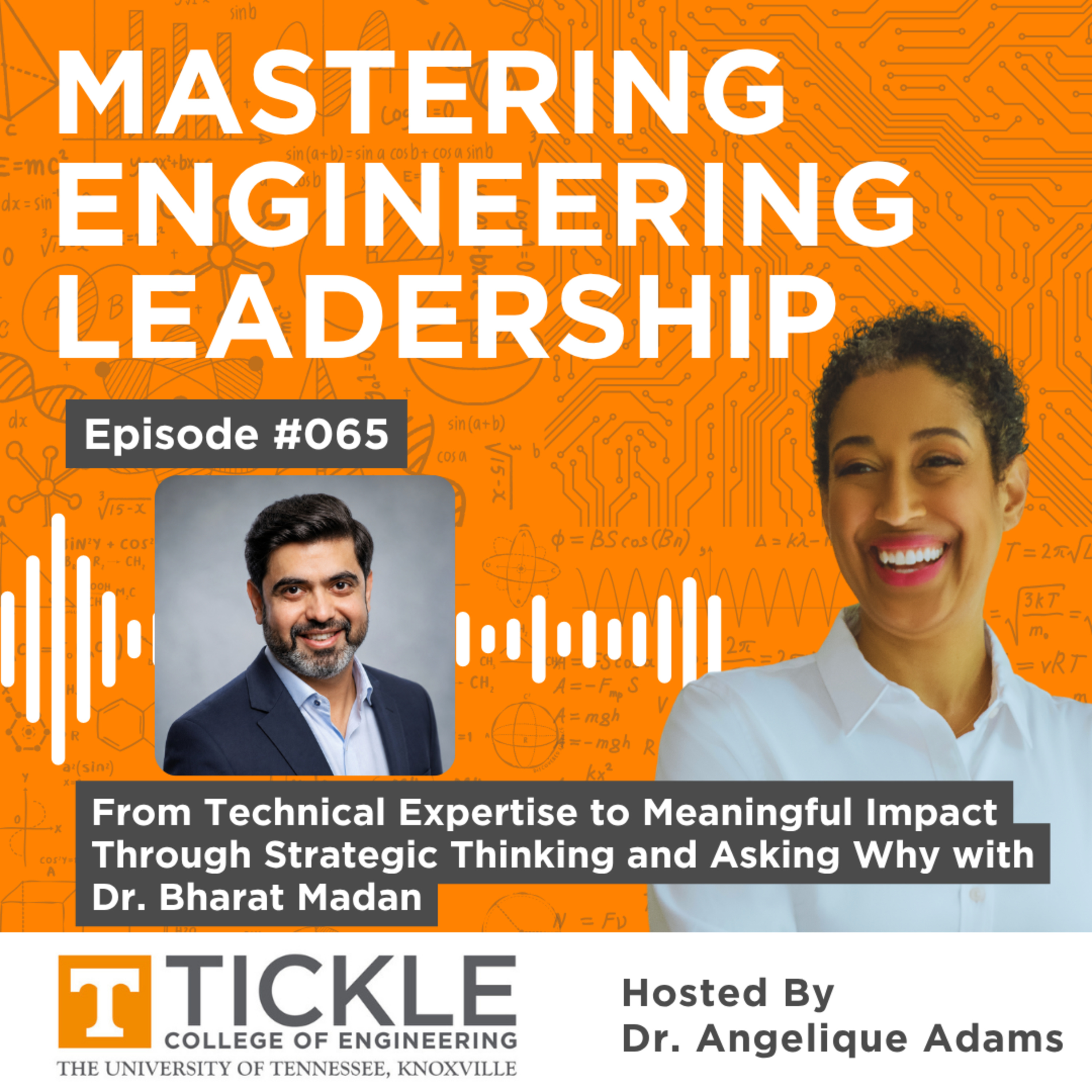 MEL #065 | From Technical Expertise to Meaningful Impact Through Strategic Thinking and Asking Why with Dr. Bharat Madan83 / 100
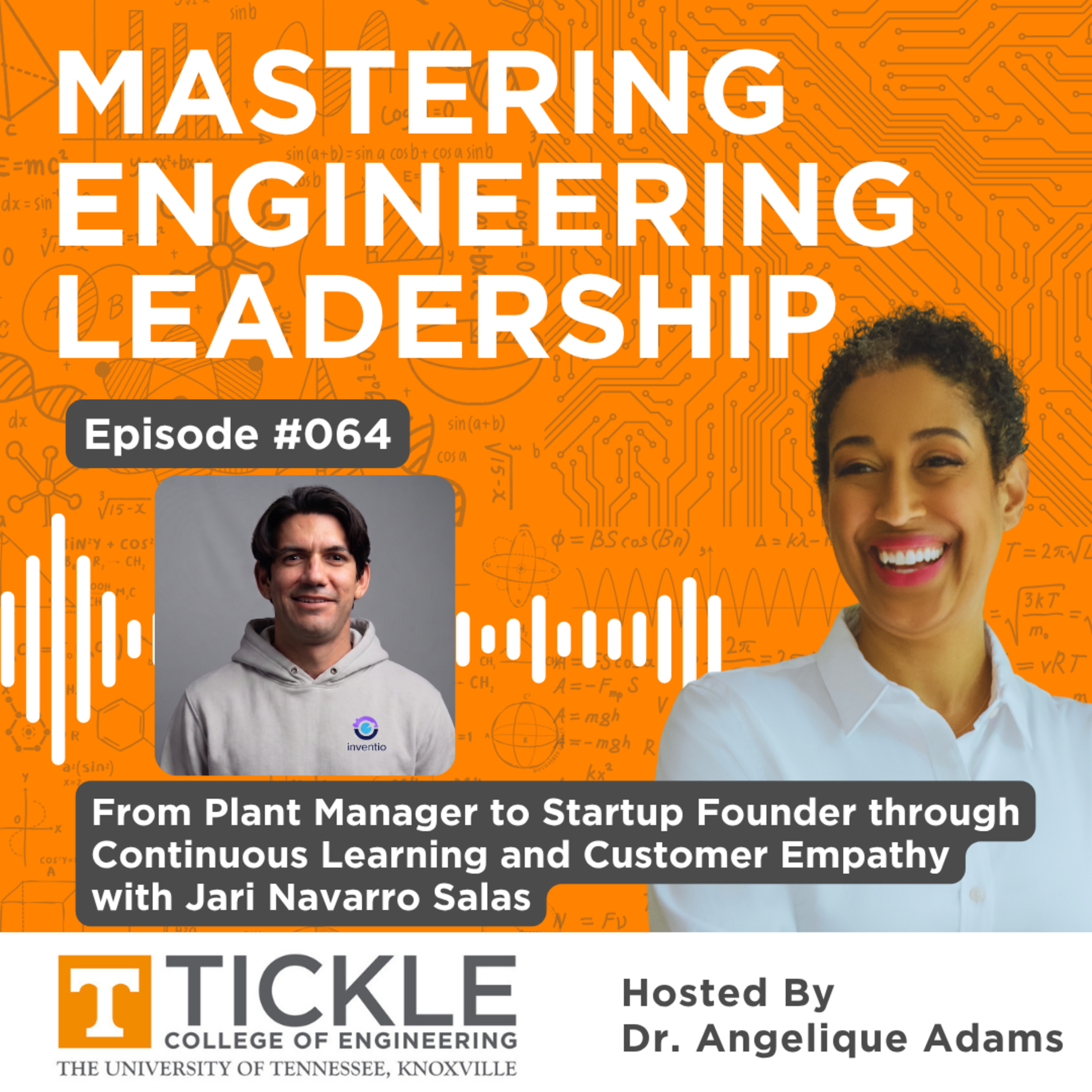 MEL #064 | From Plant Manager to Startup Founder through Continuous Learning and Customer Empathy with Jari Navarro Salas
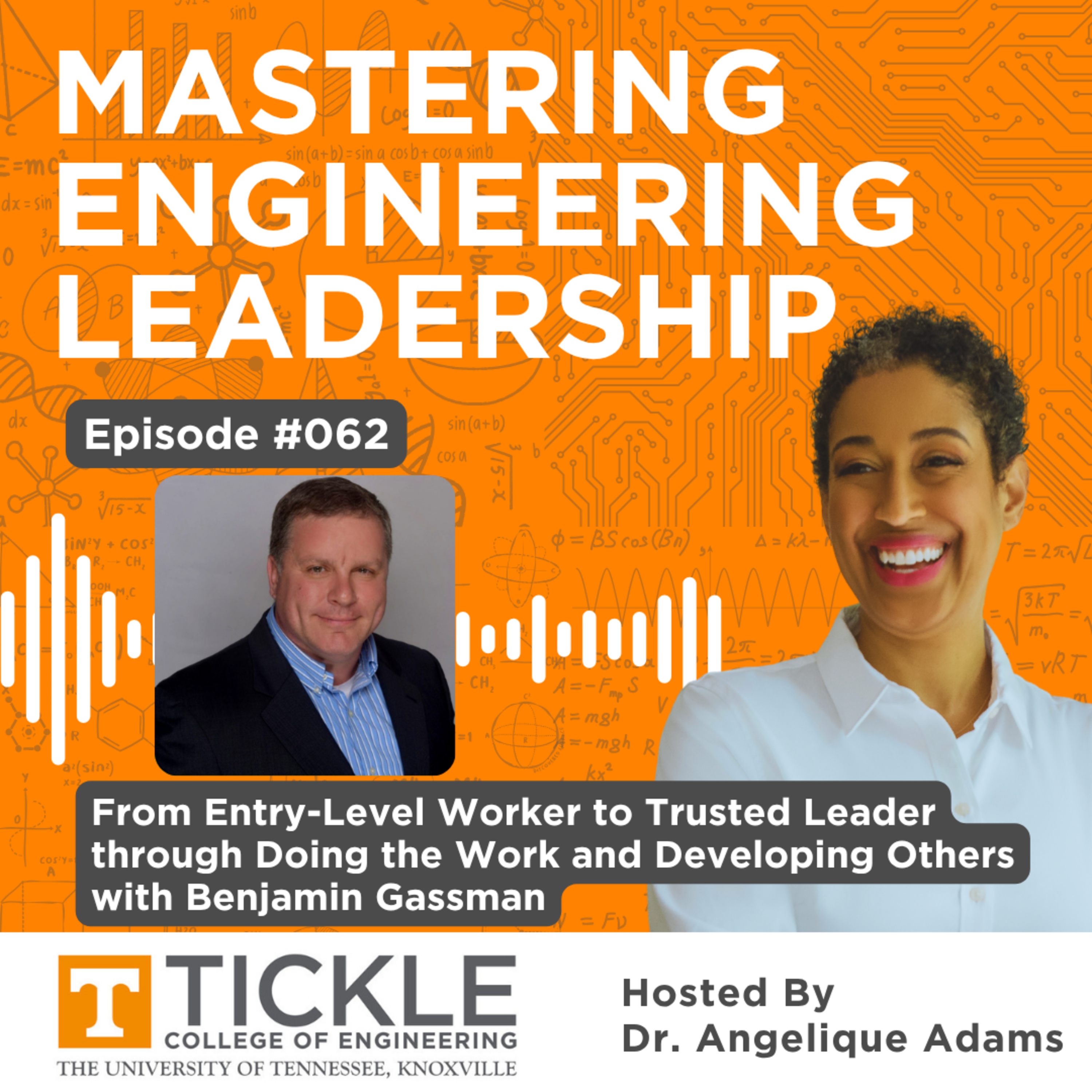 MEL #062 | From Entry-Level Worker to Trusted Leader through Doing the Work and Developing Others with Benjamin Gassman
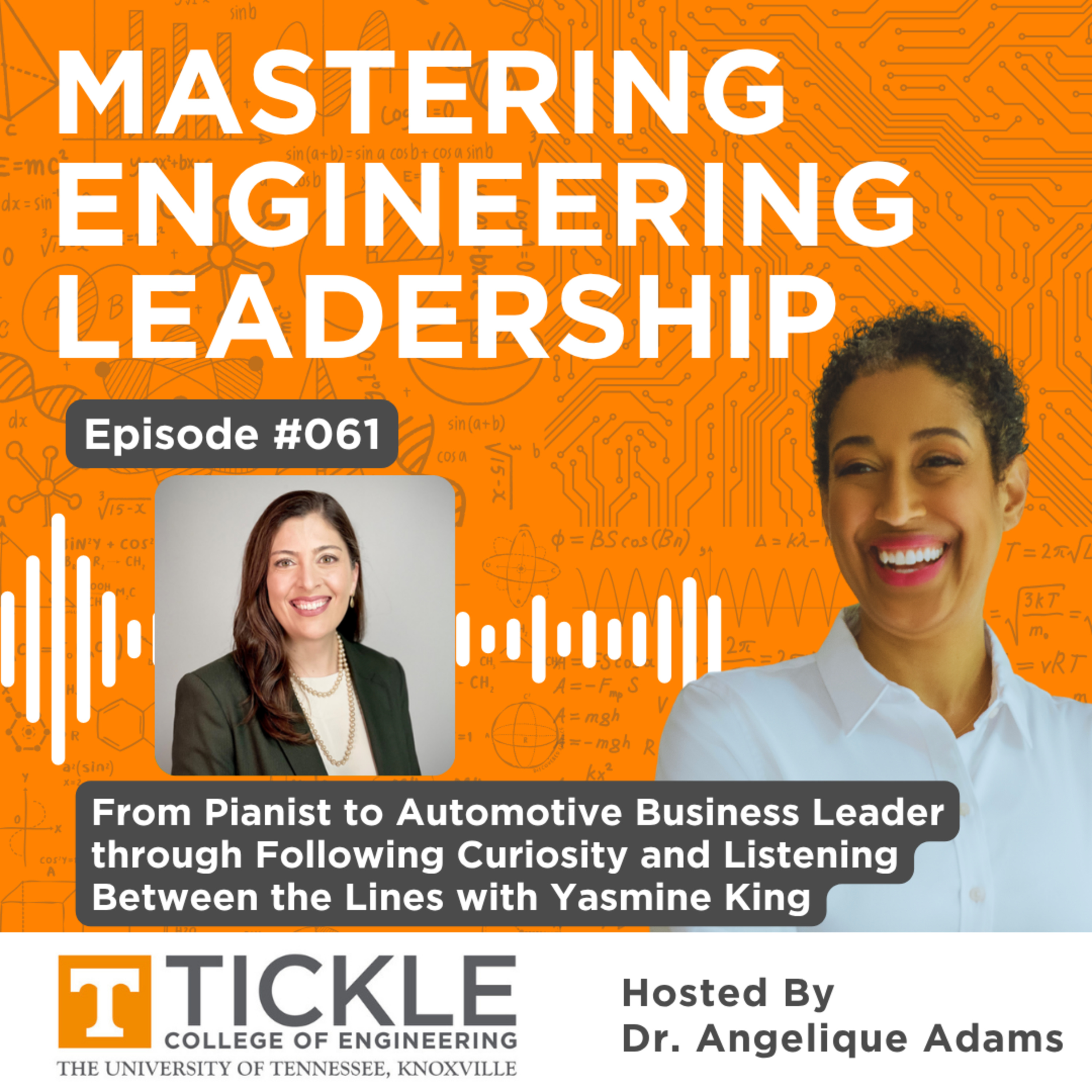 MEL #061 | From Pianist to Automotive Business Leader through Following Curiosity and Listening Between the Lines with Yasmine King
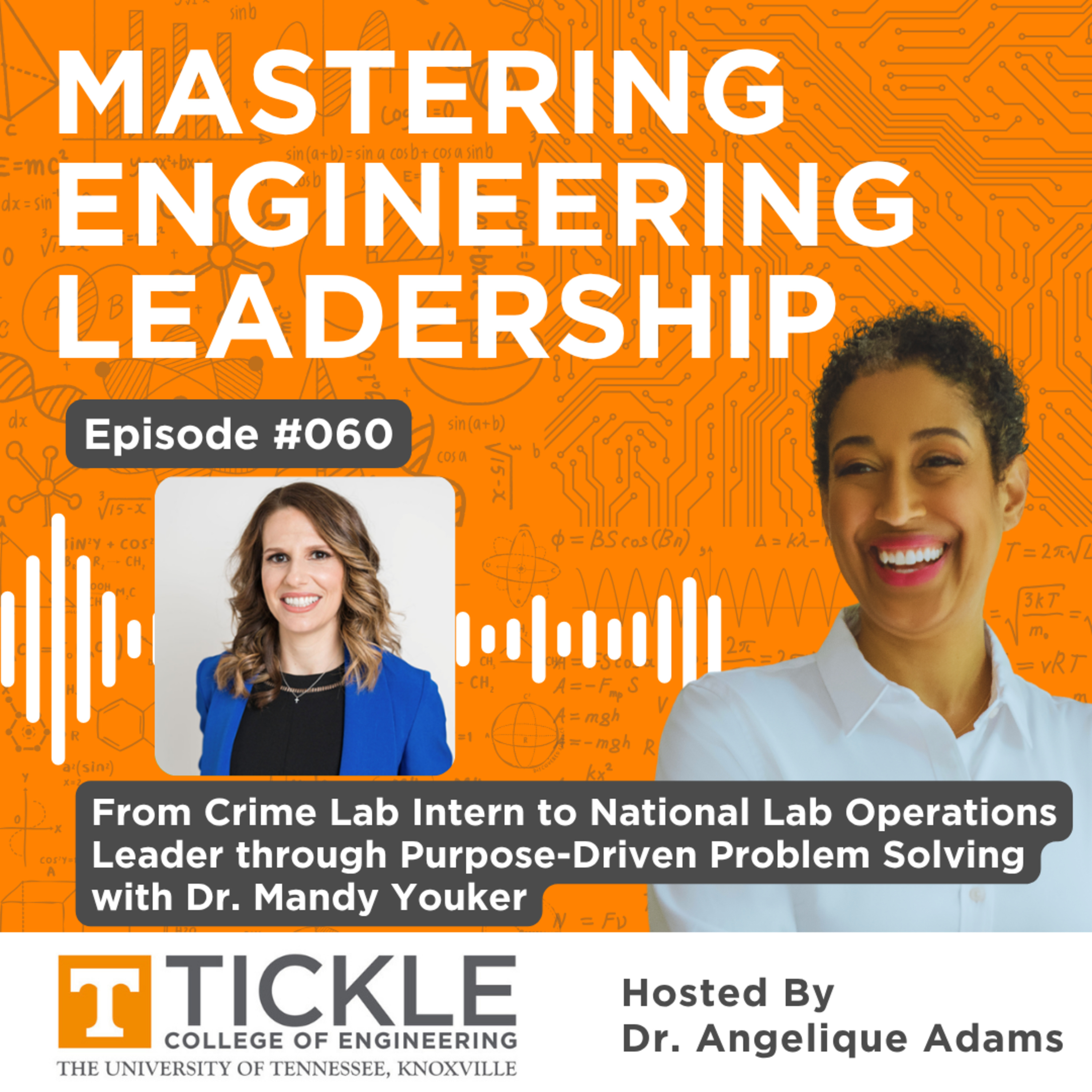 MEL #060 | From Crime Lab Intern to Operations Leader through Purpose-Driven Problem Solving with Dr. Mandy Youker