Mary Gostelow Girlahead Podcast · 2026-08-20 · 16 min
Key moments - from our scoring
Substance score
44 / 100
Five dimensions, 20 points each
Puneet Chhatwal defends the in-person, all-hands approach to IHCL's Annual Business Conference as essential for building trust, awareness, and joy - the three core values of the Taj brand. Rather than fragmenting leaders into multiple breakout sessions, Chhatwal curates high-caliber speakers whose relevance spans business awareness (entrepreneurs like Chandrika Elmo of Schloss Elvo), national thought leadership, entertainment (Bollywood figures and cricket commentators from IIM Ahmedabad), and inspiration. The 2026 event in Goa, attended by 600 general managers and corporate leaders plus external partners, deliberately avoids formal hierarchies - no separate supplier rooms, no rigid networking slots - allowing conversations to flow naturally across music, evening events, and morning sessions. Chhatwal frames this gathering philosophy as foundational to IHCL's expansion strategy, including its recent partnership with Shangri-La, Millennia, OneWorld airline alliance, Air India, and Singapore Airlines. For B2B operators managing distributed teams and stakeholder ecosystems, the episode offers a case study in how destination-based, speaker-driven convenings can communicate strategy, build culture, and activate partnerships simultaneously.
Chhatwal believes in-person gatherings enable communication through body language, celebrations, conversations, and informal moments (tea breaks, coffee breaks) that are far more powerful than emails or personalized voice messages in building trust and cultivating future business success.
IHCL selects speakers based on relevance to three core brand values: Trust (national leaders and business peers), Awareness (successful entrepreneurs and writers like Chandrika Elmo of Schloss Elvo), and Joy (Bollywood personalities and entertainment figures such as cricket commentators).
The 'power of one' refers to IHCL's partnerships with airline alliances (OneWorld, Air India, Singapore Airlines), hotel brands (Shangri-La, Millennia), and tourism sectors - combining competing entities under one collaborative ecosystem rather than fighting alone in hospitality, tourism, and aviation.
Holding the event in Goa ensures attendees remain captive for the full 2.5-day program, whereas a city-based venue like Mumbai or Delhi would allow delegates to leave early for offices; the Taj Goa beachfront setting also provides views and ambiance that enhance networking and retention.
Rather than separating suppliers into side rooms or creating formal dinners, IHCL integrates all stakeholders - internal leaders, suppliers, partners, and external speakers - into a continuous flow of work sessions, music, evening events, and casual networking that eliminates barriers between professional and social interaction.
Our reviewer’s read on each dimension, with quotes from the episode.
The episode consists primarily of the host praising the event and guest elaborating on obvious benefits of in-person gatherings (trust, awareness, joy; networking is valuable; collaboration is better than going alone). Few concrete operational insights are offered beyond generic principles about event design and stakeholder alignment. Most substance-bearing content is descriptive rather than instructive.
no matter how much you communicate and how well you communicate, the communication that happens in person, uh, and the whole, you know, feel of the body language, the celebrations, uh, the talks you have together, the conversations, the tea breaks, the coffee breaks, uh, they are far more powerful
Together in hospitality airlines, you are stronger than trying to fight it out on alone
The core thesis - in-person events build relationships, alignment happens through networking, collaboration is preferable to going solo - recycles well-worn hospitality and business clichés without fresh frameworks or counterintuitive angles. The TAJ acronym (Trust, Awareness, Joy) is presented as novel but is essentially a repackaging of standard event objectives. No contrarian or first-principles thinking is evident.
A for the awareness and J for the joy
the power of bringing under one umbrella different groups in the similar sector of hospitality, tourism and aviation, uh, to collaborate and create that culture of collaboration
Puneet Chhatwal is the MD & CEO of IHCL (Indian Hotels Company Limited), a significant Tata Group subsidiary, giving him genuine operational seniority and P&L responsibility across a major hotel portfolio. However, he spends the episode mostly discussing event curation rather than core business strategy, limiting the depth of his expertise deployment on substantive hospitality challenges.
Puneet Chatwal is MD and CEO, uh, of, uh, IHCL, which is the Bombay based hospitality army, um, of the massive Tata and Sons
the annual business conference is possibly the highlight for the top leadership, uh, the top 600, as you said, of the company
While the guest mentions concrete details (600 general managers at the conference, Goa as the venue, specific partner announcements like Shangri La and Millennia partnerships, One World alliance, Air India partnership pipeline), most claims lack supporting metrics, financial impact, or measurable outcomes. The expansion into safari sector and Europe is mentioned but never quantified or detailed. ROI is acknowledged as 'intangible' rather than measured.
We recently announced or revived our partnership with Shangri La. We added Millennia, we'll be adding many more. We have the airlines with One World. Soon we will get Air India, uh, and maybe also Singapore Airlines
the annual business conference is possibly the highlight for the top leadership, uh, the top 600, as you said, of the company
The host asks reasonable setup questions but rarely pushes back, challenges, or probes deeper. Follow-ups are softball affirmations ('That's fascinating,' 'I loved his comments') rather than critical inquiries. When Chhatwal mentions major business moves (OneWorld alliance, new geographic expansion, partnership revivals), the host pivots back to event logistics rather than pressing for business rationale, risk assessment, or competitive positioning. The conversation reads as a pleasant panel discussion rather than an investigative interview.
Oh, it's really fascinating that you also brought in the top cricket commentator
It was such a good opportunity to talk about expansion, to mention and share details of going into the safari sector, uh, of opening up in Europe
Computed from the transcript - who did the talking, and the words that came up most.
Transcribed and scored by The B2B Podcast Index.
Speaker A: Welcome to Mary Gostelow's Girl Ahead podcast your weekly insight into the world of luxury hospitality for those who know it best. Brought to you by JetX, the world's favorite private aviation company.
Speaker B: Puneet Chatwal is MD and CEO, uh, of, uh, IHCL, which is the Bombay based hospitality army, um, of the massive Tata and Sons. Pune's now got so many brands under him that it's difficult to remember how many hotel children, so to speak, he has. He believes in family gatherings and I went to go to join his annual business conference, which was a professional blast. Honestly, it was such worthwhile fun. Let's find out why he puts on this annual jamboree. Puneet, you are a great believer in getting people together, in putting people together. What is the value of this? Why do you enjoy it so much?
Speaker A: Well, you said it, of course, I do enjoy getting people together. But there's a larger, uh, purpose behind it because no matter how much you communicate and how well you communicate, the communication that happens in person, uh, and the whole, you know, feel of the body language, the celebrations, uh, the talks you have together, the conversations, the tea breaks, the coffee breaks, uh, they are far more powerful than any kind of emails or any kind of voice messages, which are also personalized these days. Um, I just feel you need to take time out, bring people together to celebrate your past, your successes, and that ultimately helps you to cultivate a better future.
Speaker B: And it was really notable at the 2026 ABC Annual Business Conference that there were so many insiders from the company, nearly 600 general managers and corporate, and then some outsiders who come a long way. How do you decide whom to bring in to add internationalism?
Speaker A: So the annual business conference is possibly the highlight for the top leadership, uh, the top 600, as you said, of the company. And each year everyone looks forward to it. And one of the ways we choose international speakers is depending on the relevance of the subject. Uh, sometimes it's important to communicate just value system. Sometimes it's important to communicate and make people aware of what's happening in and around them, which they may not be aware of. And sometimes it's important to have fun. So these three situations are also the core values of Taj, which is key for the trust of all our, uh, stakeholders. A for the awareness and J for the joy. So usually the joy element comes from all speakers, but the joy becomes immense when we as a nation are so blessed to have the Bollywood. So the Bollywood people bring in the joy part, the trust part comes from the national leaders, other businesses Leaders like we had. And the awareness comes through important, uh, writers, including people like yourself, but also people who have done business very successfully in India and no one ever knew about it. Like, we had Dkandra Elmo of Schloss Elvo. And when you hear his story, it's so fascinating. It creates a very different kind of awareness and actually addresses a very important core value. Because we think many times that awareness is limited to communities you live in and you work for. But I think your business awareness has to be as important as your community awareness.
Speaker B: Oh, it's really fascinating that you also brought in the top cricket commentator, who was not only a brilliant speaker and riveting to an audience that was obviously cricket mad, but it was so relevant. I loved his comments. Such statements as, there's no point in having a good leader, uh, if there is not a good team there. Every one of his points was relevant. And Bollywood, oh, my gosh, you're so lucky because you have Bollywood to call on. And that literal rags to riches success of, uh, Mr. M. Oberoy, mother one.
Speaker A: And also, you, uh, know Mr. Oberonoy. So both were there. And Mr. Obero is actually building the Taj Service Residences in Russell Khaimah. So he's building. Thrilling.
Speaker B: Look, he's doing three properties with you. And he started life as. I'm sure many, um, hotel owners around the world can look back and say they started from nothing. But this guy eschewed his, uh, father's offer of help. He made it himself, DJing at 16, got into radio, got into television, got into movies, and now he's made 70 movies. Goodness knows what else. We could talk about him all the time. So success stories. It's so good. And it was interesting that the very tight program, which went from one thing to another to another. There were no breakouts, there were no work sessions because everything seemed to be an education session. How do you feel about that?
Speaker A: Yeah, I think we can always do specialized breakout and workshops, but the stature of the speakers was such that it's an opportunity to have everyone hear them, um, and they don't have so much time to do three or four different breakups. So I think the way the examples that you gave, including, you know, the cricket commentator, you know, I don't know if you were aware, Barry, he's actually a graduate, um, with a master's degree from India's most important school of management called the Indian Institute of Management in Ahmedabad. Uh, and then he went into this fascinating way of, you know, addressing the nation by commentating, uh, on Cricket matches. And he's really a household name. And the lessons that how one can correlate cricket to leadership lessons is a specialty that he possesses. And cricket is almost like the religion in India. So, you know, it was very apt and it's very apt to get him to speak to all 600 people then to just do it in smaller workshops.
Speaker B: What was also relevant was that everybody in the audience not only stayed for the entire three days, they did not move out, but the speakers generally stayed. They were there throughout the whole time. And you did manage to throw in some key messages. You have now put your hotels into an airline association. You're the first hotel group to do this. What was the Reasoning behind joining OneWorld?
Speaker A: I think it's not just joining One World. We recently announced or revived our partnership with Shangri La. We added Millennia, we'll be adding many more. We have the airlines with One World. Soon we will get Air India, uh, and maybe also Singapore Airlines. So a lot is happening. And as you rightly said at the start of this conversation, the idea is to bring people together. Together in hospitality airlines, you are stronger than trying to fight it out on alone. And, uh, I think that is what we call the power of one. One World is definitely the name of the alliance, but, uh, the power of bringing under one umbrella different groups in the similar sector of hospitality, tourism and aviation, uh, to collaborate and create that culture of collaboration. That's a much stronger enabler and trying to do everything yourself.
Speaker B: Going back to this great ABC event in Goa, um, obviously the return in investment is intangible. The immediate impact to me was how many of the delegates said how they look forward to this every year. Uh, they actually look forward to the work session that it is. But as I said earlier, Puneet, it doesn't seem like work. It's not a breakup. It's not a separation between the work side and the networking. It all flows together. There are no formal dinners. Everything's casual, which allows ongoing networking.
Speaker A: Absolutely. A lot of fun. So getting the best of music, getting, uh, the best of nice long evenings. So you, you work till late in the evening and then you network and party together and you're up again in the morning. So it's a, it's a well packed two and a half days. And, uh, Goa as a destination and that property ensures that people are not just in and out. So it's a very captive, uh, audience because that's how the market is. If we were to do this in Mumbai or Delhi, people would just go back to office Do a little bit here, a little bit there, they will show up again. So I think that has also helped a lot. The destination itself, the setting, the views from the Taj, uh, you know, of the beach and of the Arabian Sea, which make it, you know, absolutely a phenomenal place to hold such an event.
Speaker B: It was so professionally produced too. The actual presentations, the work sessions, if I call them that, the stage, the changing of the stage, the AV was so professional even to the closing moments when you were, uh, competing on stage with flocks of birds that seem to be trying to push you off stage as though to say it's all over. How do you now it is all over. How do you and your colleagues reiterate to the delegates, some of whom had come almost halfway around the world, the value to remind them to keep at it?
Speaker A: I think, um, I think. Let me try to first answer on when it is how, uh, you know, you get the signal of this coming to an end is when you actually, uh, start thanking the people who actually are standing as a pillar behind the event. So all those people when they're called on the stage, and then when you give them a standing ovation for the food that was created for the evenings that were curated for the stage that was made, the materials that were, uh, created for the event, when you call all of them upstage and you have those last photographs done, um, you know, uh, this is the end. Uh, getting everybody excited till that time is obviously the quality of, uh, the event and the content, I would say so the content, the quality of speakers, the whole setting, what you rightly said, the stage, the audio visuals, uh, prepared for the event, gets a very engaged, uh, audience which is anyways very professional. So, uh, I think, uh, yes, that is something which we're very proud of, something which we really look forward to every year. Uh, and it helps you to give a message not just to your own 600 people, our own was maybe 500, 100 were other speakers or owners, partners, suppliers, you know, other people are part of a system. So I think you get the message across to all the stakeholders.
Speaker B: It was such a good opportunity to talk about expansion, to mention and share details of going into the safari sector, uh, of opening up in Europe. And the interaction with the suppliers, the supporters, was much more fluid than at most such events. Generally at industry events, the suppliers are, uh, kicked off into a little side room and people don't visit their stands. But this was welcome to all. It was a great occasion. You said at the time you were content. One week later, uh, Puni. How do you feel now?
Speaker A: Well, I'm still having very nice memories that it keeps going through my mind. What all worked well and what is something new we could do next year. So, uh, you know, the mind doesn't stop working. The event may be over, but the good thing is the friendships you make, the moments you spend together, uh, the sessions you enjoyed help you think. What could it be that you'll do different next year?
Other episodes covering the same guests and topics, from across The B2B Podcast Index.
 Kim Levenson - Director of Marketing & Sales at Hotel Rock Lititz61 / 100
 Marco Girotto - GM Dolce Vita Orient Express
  James Lamb - CEO of Andermatt
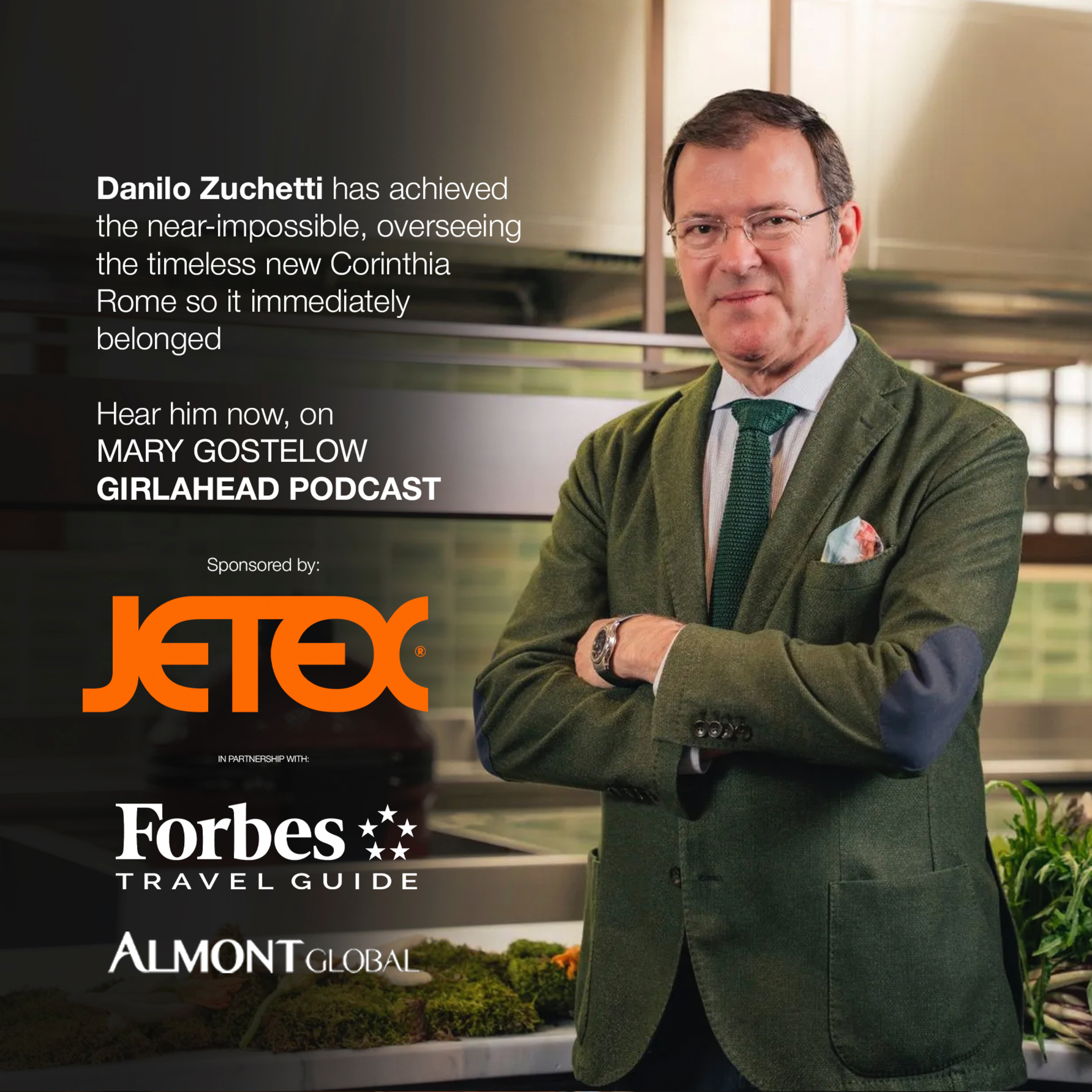 Danilo Zuchetti - Managing Director Italy presso Corinthia Hotels Limited
 Mali Carow - General Manager at Four Seasons Hotel and Residences Fort Lauderdale