
Making MarTech · 2025-08-06 · 19 min
Key moments - from our scoring
Substance score
29 / 100
Five dimensions, 20 points each
John Aufray, CEO of Growth Hackers, explains how his agency has driven over 200 million in revenue for startups and SMBs across North America, Western Europe, and Dubai by solving the core problem most founders face: they can build great products but can't acquire users. Growth Hackers pivoted from helping Taiwanese startups to focusing on product-stage companies seeking growth-focused outcomes - prioritizing users and funding over immediate revenue. Aufray discusses recent wins including $50,000 in monthly sales for a fitness influencer (95% profit margins on online coaching) and $100k in early revenue for a prop trading firm entering Web3/Crypto. The episode covers critical scaling lessons: the need for diversified lead generation channels beyond SEO and social (especially as AI reshapes algorithms), building a "bench" of pre-screened candidates before hiring needs spike, and the counterintuitive reality that retention outpaces acquisition as a growth lever. For operators scaling service businesses, Aufray emphasizes that AI should augment human relationships - not replace them - since trust-building remains AI-resistant and client retention depends on people quality, culture, and mental health. He cautions against the hype cycle around AI (Google still commands 85% search market share) and advocates testing tools thoroughly before committing, rather than constantly pivoting.
Growth Hackers has driven over 200 million in revenue for advanced startups and SMBs, though the figure varies by client type - larger figures come from medium-sized businesses focused on revenue, while startups typically prioritize user acquisition over revenue for funding purposes.
The first was insufficient customer inflow due to algorithm changes from AI and social media shifts that degraded their organic reach; the second was handling too much demand when work increased. This taught him the importance of maintaining multiple lead generation channels rather than relying on one or two.
Growth Hackers provides significantly more free value upfront than other agencies to prove competence and remove competition from consideration; they aim to always be in the top two finalists out of ten competing agencies, which increases their win probability from 10% to approximately 50%.
Define and validate what's working manually first - don't automate or integrate AI before you have a functional process. Entrepreneurs often waste six weeks integrating AI solutions that don't improve non-working processes; the order should be: test manually, find what works, then automate with AI.
Within one month of work, you can observe who delivers consistently, meets deadlines, and maintains reliability versus who misses meetings or has excuses. This real-world test reveals actual performance better than interviews alone, since confident candidates aren't always the best performers.
Our reviewer’s read on each dimension, with quotes from the episode.
The episode is thin on novel ideas per minute, cycling through familiar growth agency talking points. The 'bench' hiring analogy and the 'do things manually before automating' point are the only non-obvious moments, and neither is developed deeply.
you should have like a bench. And he gave me the energy of like American football or European football or whatever. You know, you've got like the starting players, you've got a bench of people who can commit
always do something that won't scale first. Then once you have a process that works, then you can automate
The episode recycles widely circulated advice - retention beats acquisition, diversify channels, don't replace humans with AI - without any contrarian angle or first-principles reasoning. The host and guest consistently validate each other rather than generating fresh thinking.
retention is probably the best growth strategy there is
AI isn't meant to replace humans. It's there to supercharge them
John Aufray is a real practitioner who has run a growth agency for 8+ years across multiple markets, which gives him legitimate credibility, but he is a boutique agency operator rather than a scaled company builder, and the conversation never surfaces depth that would distinguish him from thousands of similar agency founders.
from 2017 to 2024 or end of 2023 maybe, always had, uh, all of the leads that come to us as they are all inbound
we help uh, advanced startups, startups who already have like a product pretty much not just an I.D. and uh, our small and medium sized Businesses from the west
There are a handful of concrete numbers - $50K month one for a fitness influencer at 95% margin, $100K in 2-3 weeks for a prop trading firm, Google at 85% search share - but case studies lack methodology, client names are withheld, and the headline '$200M in sales' figure is self-reported and unverifiable.
the first month we worked with him we made like $50,000 in sales. And because it's online coaching it's 95% profit
in the first, like we said two to three weeks we could make like 100k in uh, revenue
The host frequently delivers long monologues agreeing with the guest, asks generic challenge/success questions, never pushes back on any claim, and at one point mispronounces the guest's name. The episode reads more like a mutual validation session than a probing interview.
And I think that's a pretty good way to go about it, right? And that's what we do as well
And I think that's a great place to leave off
Computed from the transcript - who did the talking, and the words that came up most.
Startups don’t die from a lack of ideas. They die from a lack of growth. In this episode of Making MarTech , Himnish Jindal sits down with John Aufray , CEO of Growth Hackers , to uncover why so many startups struggle to survive, and how the smartest ones scale. From lead generation traps to AI marketing myths, John shares hard-won lessons from years of helping startups find sustainable, compounding growth. We explore: Why user acquisition is still the #1 killer for startups The myth of “just needing more leads” How AI is reshaping marketing, and what actually matters most The role of storytelling and success stories in scaling faster Why people, not platforms, are the real growth engine If you’re building, scaling, or just trying to stay alive in the startup world, this episode will help you hack your growth, without burning out or breaking the bank.
Transcribed and scored by The B2B Podcast Index.
Host: Welcome to Making Martech where we spotlight innovative martech companies and leaders who are driving growth, highlighting valuable insights and actionable strategies to stay ahead in this industry. Today we're joined by John Otley, CEO of Growth Hackers. How do you get into creating growth hackers?
John Otley: So the thing is when I was traveling and working I was always working with small businesses. Then when I came to Taiwan first I was working also at a small business in Taiwan, like the same experience that I had in Spain in the time, same kind of industry. And then I joined um, a startup in Taiwan. And the difference between small business and startup, this kind of startup is growth focus, where you want like pretty much leads, users, revenue. And uh, so I kind of moved from I would say classic marketing to growth hacking. And so we were in the Taiwanese startups and then we got funded in the uk so we moved to the UK for like a few months. And when I was working in the uh, incubator in Taiwan and then the accelerator in the uk, what I found is startups are great at tech. Like the founders are ah, great at making a product but they don't know how to sell it. So they can have the best product in the world but they don't know how to actually acquire users. And so not only I was working on my startup, but I had to work at this accelerator incubator as kind of like an external consultant just to help other startups in their batch. And the thing is when you work at a startup you have two full time jobs already I would say. And then on top of it I was working at like the next consultant. So that kind of give me another full time jobs. My schedule was just completely insane. So at the time I decided with one of my coworkers to leave our startup and to create growth hikers. And the idea was to help start more than one or two startups pretty much. And at the real beginning the first idea was to help Taiwanese startups to grow globally. But that we pivoted almost right away after three months or whatever because the Taiwanese startup ecosystem is not like I know Silicon Valley or London or uh, Berlin or Paris or whatever, super small. So I knew pretty much every founders of every entrepreneurs in Taiwan, maybe not all, but like close to. So I was like, there's no way to scale uh, by doing this. So we kind of pivoted almost right away. And now the past eight plus years we help uh, advanced startups, startups who already have like a product pretty much not just an I.D. and uh, our small and medium sized Businesses from the west to group, when I say the west it's three regions. So it's North America, it's Western Europe and it's Dubai. I always call Dubai the West because the way they do business, it's not the Middle east, it's really the West.
Host: And growth hackers has achieved some awesome milestones. You guys drove over 110 million in sales.
John Otley: Yeah, actually I would say much more now. Uh, because uh, the website, we should update it. I think it's, it's probably more than more than 200 million. It's, it's for different kinds of live startup. There's, that was more for medium sized businesses because the thing is any startups, what they want is they want users, not necessarily paid users. They want users so they get, can get more funding and then they can pay for more users but they don't focus that much on revenue.
Host: Interesting. And with all that success, can you bring us to the present? What are some of the most significant successes that you've had recently?
John Otley: We worked with a fitness influencer lately and we started to work with him and him he was selling like a uh, fitness program every three months pretty much. And the first month we worked with him we made like $50,000 in sales. And because it's online coaching it's 95% profit. So that was quite, that was quite a success Lately also in the past two, three months we work with a new prop trading firm and uh, and they focus more on like uh, the Web3Crypto site. So that many firms in this industry are uh, I wouldn't say it's coming but are a bit like dodgy and they wanted to change this uh, kind of mindset or this kind of like um, scammy kind of behaviors. They launch uh, with us and like in the, in the first, like we said two to three weeks we could make like 100k in uh, revenue. So they were also really happy.
Host: That's awesome man. So for you, what have been one of the biggest challenges that you've been facing recently?
John Otley: It's really hard, honestly. It's, it's really hard. So it's like almost like one was not enough customers, one was too many. So it's kind of like uh, that was the two challenges. It's almost the opposite. One you try to get more leads and one you try to get more people. So that's what's kind of the two changes.
Host: And yeah, it can be really hard. Right. Uh, it's a lot of time, it's a lot of resources. That go into that?
John Otley: Yeah.
Host: So from that, what'd you learn?
John Otley: The thing is, from uh, 2017 to 2024 or end of 2023 maybe, always had, uh, all of the leads that come to us as they are all inbound because we've got good social media presence, we've got good SEO. So we always had the flow of leads. We never missed any. And the thing with the rise of AI, Google kept changing their algorithm. The, um, social media kept changing the algorithm. Then there was like a flow of millions of pieces of content pretty much everywhere. Ours was not performing as well, and so that, that's where we were missing leads. And so what we learned from this is kind of like we can't focus on one way to generate leads or, or two ways to generate leads. We need to have like a kind of constant flow that even if one of two channels for any kind of reason doesn't work anymore, uh, we need to have a backup or like a spare wheel or something. The second learning about hiring fast, when you grow fast. It's actually consultant I work with a couple of months ago who told me you should have like a bench. And he gave me the energy of like American football or European football or whatever. You know, you've got like the starting players, you've got a bench of people who can commit, uh, come in at any given time. If someone is injured, someone is tired, whatever can happen. So if you start to go fast and for example, you need to hire, I don't know, two graphic designers, two SEO guys, two data analysts, whatever, if you already interview candidates before and you know that of those three guys, uh, uh, will be a good fit once you, you have too much demand, you can just talk to them and say, oh, now is the time for, for you to join us. I would say second learning is having, uh, a bench that you can use at any given time.
Host: And I think that's actually a pretty good shift because I know you mentioned the whole advent of AI and we all know AI is the big buzzword right now. It's hitting everything hard. So what are your thoughts on the AI shift and how is growth hackers adapting to these challenges?
John Otley: The first lesson of marketing I've ever had, my teacher told me everything I'm going to teach you in the next two to three years. None of it will be still, still available, will still make sense when you, um, when you start your career. And it's only like marketing keeps evolving. When you work in marketing, what makes it challenging is like you need to stay, um, up to uh, the latest trends all the time. But what's interesting is you never get bored. And when AI came in, that's exactly what happened. Business in general change all the time or just the speed is a bit faster than before. Maybe before the marketing was changing every five years, now it changed every three months. It's a bit harder to find follow. But what's good is I had this mindset of anywhere. Anything that I do now in two years I will have to kind of renew my strategy. So how we stay on trend is we test so many tools, but we also stick to some. Test a lot of tools, see what works for you, but then stick to the most useful tools. And anyway, those are good. And even if you find a feature on another tools that might be a little bit better, but is that tools going to improve anyway? So don't keep pivoting or keep changing tools. Stick to, I don't know, three, five, ten tools, whatever, um, whatever you want to use, but test, see what's working for you and then stick to them. And don't make massive changing, uh, changes all the time.
Host: Yeah, and that's the thing, right, is like a lot of people sometimes make that mistake where they think AI is just another tool, right? And it's like it's not. Because what you have to think about is if I'm integrating AI into one of my processes, I need to have a process designed around that AI, right? It's not like a, uh, tool where I can have it here and have it here and have it here and maybe I'll switch this out next month, right? Because then you have to deal with the whole problem of fragmentation, right?
John Otley: There's so many entrepreneurs that are like, oh yeah, I want to integrate AI or I want to automate my process or whatever, but they don't have a process yet. The first idea is like, oh, let's put AI, but they don't have something working. So it's kind of like you're just going to waste time integrating something on something that is not working. So it's better like always do something that won't scale first. Then once you have a process that works, then you can automate. But like a lot of entrepreneurs are like, I want to automate first, I want to use AI first. But if you don't know what's working, you're just going to waste like six weeks integrating an automation or AI on something that doesn't work. So you're just going to waste time. So always stay start with defining what's Working or test a few things out. You can do things very manually, even if it's very time consuming. Then you find something, then you're like, okay, let's see how AI can replace me pretty much.
Host: And I think that's a pretty good way to go about it, right? And that's what we do as well, is we'll go and we'll tell our clients like, okay, first what we're going to do is we're going to take an end to end audit of your processes, right? Like that's the first thing we're going to do. Want AI? This is what we're going to do. First we're going to look at your process and we're going to say, okay, so here it is from this end to this end. And now here we have a gap. Here we have a gap, right? What is your biggest bottleneck? And then we'll find how AI can solve that problem.
John Otley: Exactly.
Host: But if you don't have a process, there's nothing for AI to do. And I, and I think a lot of it's because you constantly hear you have to integrate AI, you have to integrate AI, you have to integrate it, but you have to also realize like, it's not just about integrating AI through fast, it's also about integrating it. Right? And that's, I think the challenge right now is like you have to do it right and you also have to do it fast. So how are you going to do that?
John Otley: Same like lately in SEO, for example, now like some gurus or some influencers in SEO, they say, oh, SEO is dead. Now it's called. I, uh, think it's like AEO or what, what, whatever they call it. So it's like AI, SEO pretty much.
Host: I think partly one of the reasons why people are managing to get it so big is like all the AI hype, right? People think that the LLMs are about to like take over the world. And that's not true, Right. Have you seen that diagram that they did? A comparison of the market share between ChatGPT and Google. And you'll see that ChatGPT has a really small percentage.
John Otley: ChatGPT is still, uh, now Google is still like 85%. So it was 92, went to 85, but it's definitely decreasing still. People say like Google is going to die. They seem quite strong in my opinion. They have like uh, 50,000 the best engineers the world. I think they will figure it out.
Host: Exactly. And, and that's the thing, right, is like, how do you tell the difference between what's hype and what's not. And it's interesting because AI is just so big and the impact it's having is so big that it really just does become hard to differentiate between the two. Right. For example, the former CEO of Cisco, he was responsible for going and growing the company to 50 billion in annual recurring revenue. And basically what he said about AI is, he says AI is about to be like the next Internet, but three times the impact that it had. You have all this going on with AI. So with that, what's been your biggest challenge when it comes to adapting to AI?
John Otley: I would say the biggest challenge was the pace and the competition. The pace because it keeps changing. So you have to change, but not, not pivoting every week, you know, so it's kind of like, so you, you still have to learn super fast. And I would say the competition, because until ChatGPT, we were really good and we were quite advanced in, um, many of the techniques that we were using. But with AI, many other agencies could catch up with us. So it's kind of like that. The competition become much more faster, fierce. So we have to find ways, whether it's with our strategies, so that's why we keep testing new one, whether it's with the, the messaging, whether it's with other things. We don't want to be 1among 10. We want to be in the 2, first among 10. And so our, our mindset is when someone contacts us, uh, we, you have this mindset that they probably contacted nine other agencies, so 10 in total. So our goal is we want to be in the finalist every time. So we want to be in the top two every time. Sometimes they will, sometimes they will pick some others. So what we do is we, we do much more for free than pretty much all the agencies out there. We try to give as much value from start to see how, um, competent we are and what we can do for them. So this way, if we are always in the top two, top three, from the top 10, then we, we don't have 10% chance that they work with us. We have 50% chance. So that's kind of the mindset is give as much as possible at, um, the beginning to kind of remove the competition, uh, from the start.
Host: So with all that competition and kind of the fact that it's so hard to differentiate. Right. What's been your biggest challenge to scaling, to scaling.
John Otley: So there's a few challenges because I was, I was saying last year that last year was bad for, uh, bad for us. Uh, the problem with Scaling is, it goes with two things, but at the end of the day it's connected to one is people. Because you need to have the right people in your team, which is very hard to get them. It's very hard to pick them even uh, at the beginning. Because if you want to hire an engineer, if you interview two engineers, the one who is going to be very confident, et cetera. Most of the time it's not the best engineer because the best engineer are usually introverts. And sometimes when you hire it's uh, a marketer or a salesperson. A marketer knows, or a salesperson knows how to sell themselves or market themselves. So the only way to find is they are really good is to test them out. So our, our way to do it is usually when we hire, we don't hire one person. Why we hire at least two for the same position. And then after a month you can see that okay, this guy or this woman like is answering fast, is doing their job and one is like missing every meeting. Or I've always have an. With like I have an errand, I got Covid again. And it's kind uh of like you, you kind of find quickly. And the other thing about scaling is not acquiring more customers all the time because that's actually super time consuming is retaining the clients that you have. And that's why I was saying about people are so important because if I sign five customers this month, m. But the same month we look for lose five customers, I mean we just, we stagnate completely. It's useless. You know. So it's really important to keep your customers for as long as possible. One, two, three years it is. And then that how you scale and how to keep the customers, especially in the service industry, works also in the, in the product industry. It's of course they bring good services. Uh, that's, that's a given. But it's also building a relationship with the people. And building relationship is with people. It's one of the skills that AI will have a very our time to replicate. So it's kind of like building relationship and building trust is also really important. So to scale is all about the people. So hiring the right people, making sure that they deliver good services, they build a relationship with the customer. And you also want to keep the, the those same people because some companies that really don't care about the employees, so they have this very toxic culture where we use the people, we take as much of their energy as possible and when they quit, great, we are going to hire someone I think it's brilliant strategy because hiring is so hard. I think it's. You want to make sure that the mental health of the people you work with is good. So what it means is like, do they like what they are doing? Are they happy with what they're doing? Do they have like, personal problem in their personal life that somehow you can help them out whatever it is so you want. So it's all about people.
Host: A lot of the time people forget that they're so focused on just getting the next thing that they forget about what they have. And it's like, when you think about it, retention is probably the best growth strategy there is.
John Otley: Yeah. Oh, uh, by. By far.
Host: And I think that's a great place to leave off, you know, this is an absolute masterclass.
John Otley: Okay, great. Awesome. It was a great conversation.
Host: Yeah, it was really. There is one last question I have for you. Uh, same question I ask every single person that comes onto the podcast. What's the most overrated piece of advice you've encountered recently?
John Otley: Since the beginning of the year, we have been hiring quite a bit because it's going well and people told me, no, you shouldn't hire. You just find ways to, uh, to, to. To replace those new people, to replace your existing people with AI. And, uh, I think that's, um, that's wrong, especially in the service industry. Uh, because I was saying you need the people for some task or for some low level tasks. Yes, but not, don't replace all your people with AI because some, at, uh, some point, you need. You need people to work with other people.
Host: AI isn't meant to replace humans. It's there to supercharge them.
John Otley: Yeah, totally.
Host: That's a great note to leave off on. Well, uh, thank you, John. That was awesome.
John Otley: Well, thank you, Mish. Great conversation. It was really fun.
Host: Of course.
John Otley: Yeah.
Host: Thanks for coming on. As we end today's episode of Making Martech, I'd like to thank all our listeners. If you enjoyed this episode, please make sure to share this and subscribe to our show so you don't miss the next one. I'm your host, Hymnish Jindal, and I look forward to seeing you on the next episode.
Other episodes covering the same guests and topics, from across The B2B Podcast Index.
 Paul Graham On Startups, Ambition, and Great FoundersY Combinator Startup Podcast · on ChatGPT88 / 100
 The AI-Native Law Firm, with Ryan Walker of General LegalMeeting of the Minds · on ChatGPT88 / 100
 Inside the AI Hiring Pipeline: Interns, Apprentices, and Full-Time Coworkers | Vinay Gidwaney & Mike Sullivan, OneDigitalThe AI Why with Liam Lawson · on ChatGPT87 / 100
 Stop Asking What AI Can Do. Ask What Your Staff Hates to Do.Small Business Big AI · on ChatGPT84 / 100
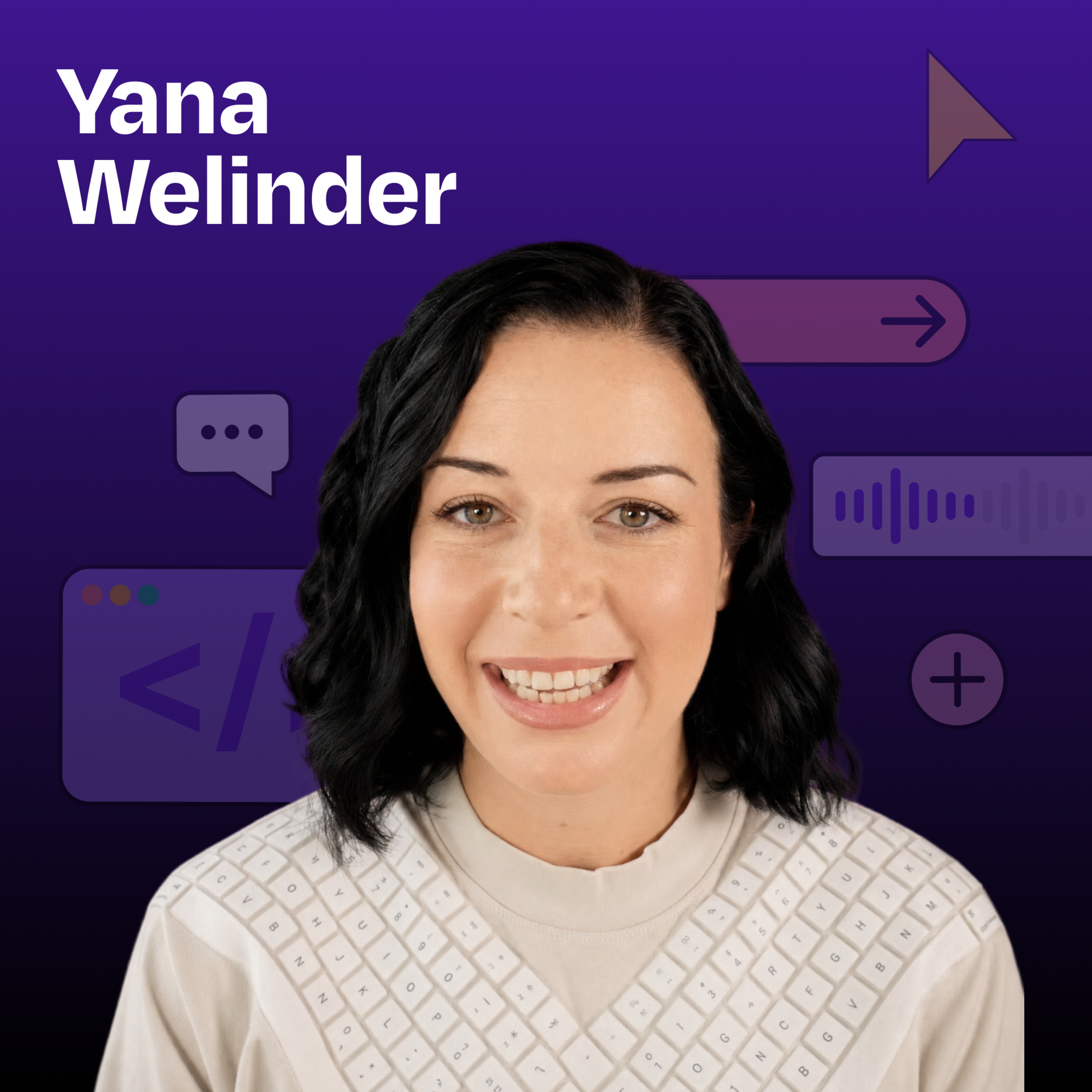 How a solo founder used Codex and ChatGPT to launch a fashion brand without engineers | Yana Welinder How I AI · on ChatGPT82 / 100
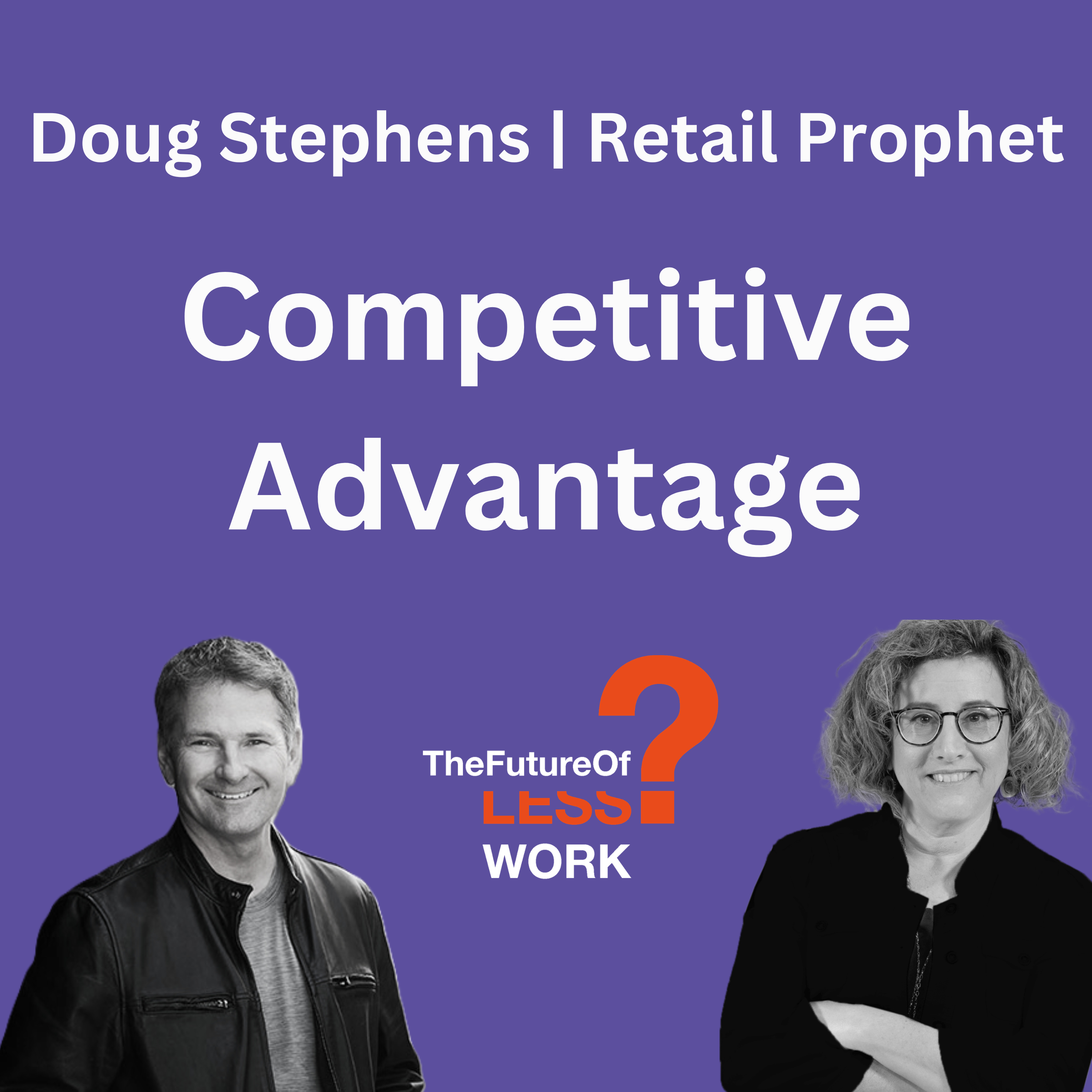 How AI Will Change Competitive Advantage with Doug StephensThe Future Of Less Work · on ChatGPT79 / 100
 What Most Founders Get Wrong About SEO and How to Fix It (ft. Pat Ahern)63 / 100Why Most Mid-Market Companies Are Missing Their Data Advantage (ft. Ed Lorenzini)57 / 100DXPs, Data, and the Death of Guesswork in Marketing Strategy (ft. Steve Herz)72 / 100Why MarTech Feels Intimidating - And Why SMBs Need It Anyway (ft. Rakesh Reddy)78 / 100Marketing That Solves Real Problems: Inside RED66 Marketing (ft. Rebecca Dutcher)65 / 100