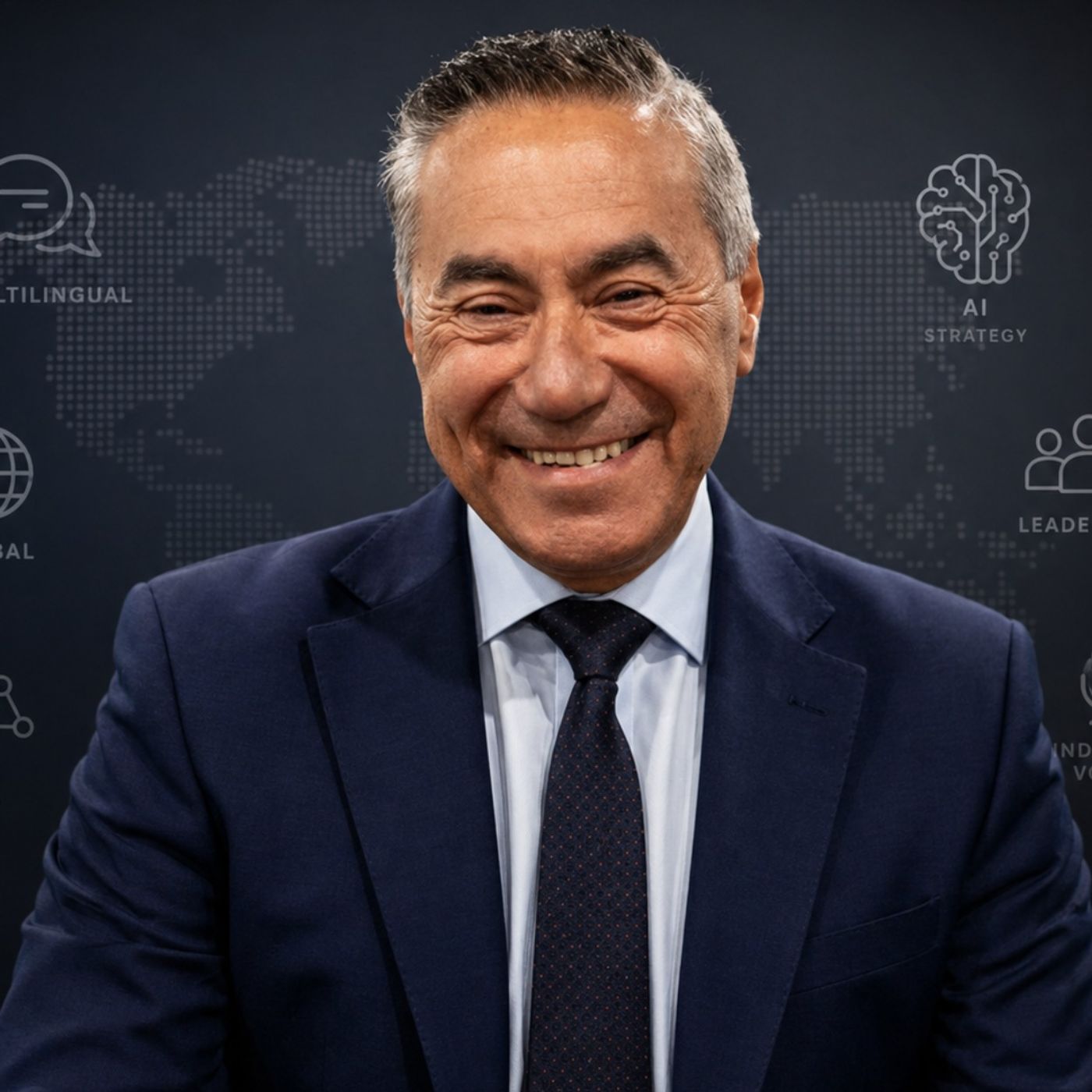
Localization Fireside Chat · 2026-10-31 · 1h 2m
Key moments - from our scoring
Substance score
44 / 100
Five dimensions, 20 points each
Charles Bernard brings two decades of sales and consulting experience to explain why many companies inadvertently create obstacles for buyers. The core thesis is simple: let buyers lead by understanding what they actually care about - solving problems, connecting solutions meaningfully, and achieving ROI (measured not just in dollars, but in time, effort, and expectation). Bernard co-runs two companies: Criteria for Success, which provides traditional sales coaching and training, and Kalavia, an AI-driven platform that generates playbooks, tracks leads, and maintains knowledge bases alongside legacy CRM systems like Salesforce. Rather than replacing enterprise systems, Bernard advocates for coexistence - using AI agents for tactical tasks while maintaining a central source of truth for organizational visibility. The episode tackles why salespeople struggle (quota pressure, urgency, lack of listening time), how to avoid commoditization traps through outcome-focused questioning, and the mechanics of effective buyer engagement through documented questions, solution libraries, and storytelling. Particularly valuable for small-to-medium B2B companies in competitive markets trying to differentiate beyond price.
Hosted by Robin Ayoub. The show scores 62.0/100 on substance across its analysed episodes. See the full show profile.
Keep asking outcome-focused questions early in the conversation - 'What are your growth goals?' 'What does success look like?' - rather than jumping to solutions. Once a buyer resonates with your approach to their specific outcome, pricing becomes less of a problem because they're solving a real need, not shopping features.
Buyers want to talk about problems, they want solutions connected meaningfully to their situation, and they want to understand ROI - which they measure as return on time, effort, energy, and expectation, not just financial return.
No - they serve different purposes. Individual AI agents work well for personal productivity, but organizations need a centralized database and central source of truth for visibility across marketing, sales, and management, especially in regulated industries where data security and scalability matter.
Salespeople operate under quota pressure and urgency, rushing through 20 meetings with whoever will take them to show activity to their manager, rather than qualifying conversations and taking time to genuinely understand buyer needs.
Use storytelling with client examples - 'We had a client just like yours with the same problem, here's what we did and the ROI they got' - rather than generic promises. Stories help buyers visualize the solution and its relevance to their situation.
Our reviewer’s read on each dimension, with quotes from the episode.
There are a handful of usable frameworks - three buyer priorities (problems, solutions, ROI), a five-part audit filter, and the question-reframe at the end - but they are buried under extended personal anecdotes, tangential small-talk, and host monologues. The ideas that do surface are not particularly novel for a practising B2B operator.
buyers care about three particular things... problems, solving problems... connecting your solutions... and the third very simple return on investment
switch your perspective... what's needed to make a sale right now... to what's needed for the buyer to buy right now
A few reframes add mild freshness - expanding ROI beyond dollars and the 'speak as the buyer' account-review exercise - but the backbone of the conversation is standard consultative-selling doctrine (let the buyer lead, tell stories, ask open questions) that has circulated in sales training for decades.
ROI isn't just dollars and cents. It could be return on expectation, return on effort, return on time, return on energy
I'm not going to talk about the account, I'm going to be the account. So he asked his salespeople to speak from the buyer's perspective
Charles Bernard is a genuine long-tenure practitioner who built and runs a sales consultancy, giving him credible operator experience; however, he is primarily a career consultant and coach rather than a revenue leader who scaled a sizeable B2B business himself, which caps his score.
I got into sales by accident... I was fortunate enough to find somebody at a major oil company, Mobil Oil
we believe in the office of the CRO in a couple of ways... we do fractional
Named tools (Salesforce, HubSpot, Gong, Claude) and rough illustrative figures (10 million dollar A-player, thousand dials for a C-player) provide some grounding, but client case studies are anonymised and metrics are anecdotal estimates rather than documented results.
I see Salesforce, HubSpot, Gong. Those are the three big ones... sometimes Zoho and a few others, you know, dynamics
I bring in $10 million. I ain't dialing anybody. I go to lunch and I get a, uh, million dollar order. Your C player has to make a thousand dials
The host frequently supplants the guest with extended personal stories (the $3.5 million fax-machine order alone consumes several minutes), questions are typically soft and open-ended without follow-up pressure, and no claim is substantively challenged throughout the episode.
what's your thoughts on that entire, you know, commodity thing?
I called you competitors. Here's, here's how the process work. We have to book the lab, we have to show you the demo. That would take about a couple of months
Computed from the transcript - who did the talking, and the words that came up most.
What if the real sales problem isn't your pitch - it's your process? Charles Bernard has spent over two decades helping companies stop making it hard for buyers to buy, and the insight is simpler and more uncomfortable than most sales leaders want to admit. In this episode: • Why buyers care about three things - problems, solutions, and ROI - and why most sellers address none of them in the right order • The five-part filter Charles uses to audit any sales organization: prospecting, selling, support, system, and team • What actually breaks first when a company tries to sell across borders - and why the conflict is often internal before it's ever cultural • Why data-driven sales metrics can punish your best performers and reward the wrong behavior • How AI is reshaping the sales stack - and why methodology is still the one thing it hasn't replaced Charles Bernard is the CEO of Criteria for Success, a sales consultancy and Office of the CRO practice he founded in the early 2000s after discovering - without any formal sales training - what it actually takes to become a top performer.
Transcribed and scored by The B2B Podcast Index.
Speaker A: Good afternoon, everyone. Robin Ayub here from the Localization Fireside Chat. And welcome to another episode recording with this episode this afternoon here, uh, we are recording episode 293, believe it or not. And it's Halloween. And I've got someone on the show today that who has spent over two decades helping companies stop scaring their buyers away. Ah, I am Robin Ayub and this is the Localization Fireside Channel. As I mentioned earlier, my guest is Charles Bernard, CEO of Criteria, uh, for Success, a consultancy built on one counterintuitive idea. The job isn't to close harder, it is to make it easier for buy for people to buy from you, for buyers to buy. And that's what I like to dig into today because I've worked with so many companies in my life and I find some company differ from others. Obviously not all of them are the same. And I'm not painting everybody in the same brush here, but some companies, they go out of the way to make it difficult for customers to buy from them. It's like running an obstacle course in some cases. And when I say this coming from me personally, having spent over four decades in customer service, um, selling in a variety of industries, tech, software, hardware, services, et cetera, I think I know what I'm talking about when I say that. And I don't want to refer anybody to the judge of the opinions out there. I won't do that for you guys. But at the same time, it's worth talking about it. It's worth talking about the topic of how do we make it easy for people to buy from companies? Specifically, when my previous podcast, I just finished recording 60% of salespeople in North America. It's just not me saying that. There's just statistics came out in the past few days. 60% of salespeople in North America have not yet in 2026 met their targets. Therefore, I'm assuming the company that they work for, they have not met the revenue objective. Before we get into it, Charles, welcome to the conversation. I really appreciate having you with.
Speaker B: My pleasure, Robin. Thank you for having me.
Speaker A: Now, the first question is, before we get into the core topic of the hour, today is the story and the path and the origin. Uh, question, what got you here? What's your story?
Speaker B: Well, I started as a software engineer in the uk. I'm sure the accent probably gave you a clue. And I was on a one year contract and I'm here 40 years later, family, citizen. I live in New York City with my partner Laura. We love it here. We're in the financial district. For anyone who knows, that's at the tip of Manhattan. And through various happenstances while I was at General Electric, because that's where I was hired from the uk, um, I got into sales by accident. Uh, it wasn't my first choice, I guess, but my story really, in terms, Robin, of how I got into sales and where I am today and running two companies is a buyer made that choice for me. And so I was fortunate enough to find somebody at a major oil company, Mobil Oil, before they merged with Exxon, which is now Exxon Mobilized, and a, uh, gentleman by the name of Irv K, who ran their sales and supply division, was bidding out a very large contract. And ge, the company I was working for, that was in house doing consulting with a bunch of tech people, um, was considered on the bid list because I had literally no sales training and knocked on his door and said I'd heard something through the grapevine, and he invited me in. It's, It's a whole story. I've actually written a book where I start the book with that story. But fast forward. It took me, Robin, the best part of my entire career to figure out what I did without any sales training to become the number one performer at GE at the time. So, um, that's really what a lot of my methodology is based on.
Speaker A: It's, um, funny how life, you know, brings the best of us, in some cases the most, you know, under probably undervaluated, uh, uh, characteristic of our life and it sits inside of us and nobody knows about it until an incident that happened or something happened in the, in the world. And when you call it the universe, I don't know what you want to call it, but it brings it to the forefront and that becomes, you know, who you are and you become known for that. I have a very similar, uh, trajectory in my career. I was started as a computer science grad and I started programming and working with, in a variety of tech space industry. And I was on the doing side, I was on the developing side. And I told the story earlier like I was sitting at my desk one day and I was working on my visio, uh, working for a telecom company, working on my visio diagram, building this fancy network. And um, a gentleman came into my, um, my cubicle and says, you Robin? I said, yep. He said, uh, what do you do here? And I'm asking, you know, I'm showing him what, what I'm doing. And that's before the Internet and intranet. And then you can Go and check on who these people are. Then they're going to talk to you. I assume he passed security, so must be somebody. He turned out to be the CEO of the company. And later on he tells me, like during the conversation, he said, okay, this is good. Today you are a sales manager. I said, excuse me, I don't do that. I only tell salespeople what to do and what to say and how to say it. I build the systems and they go sell it. I said, no, look, I mean, the manager is gone. Uh, he's, uh, not feeling well today, and we have a presentation for a customer to do, and you got to go do it. Now. I happen to be, uh, the one who developed the presentation for the sales manager. So I went and did it and, uh, won a multimillion dollar contract and the first order business, according to the CEO at that day, and I still remember very well, uh, he said, uh, from now on, you're a salesperson, first order business. We're going to show you how to drink beer. I was not in my. In my vocabulary at the time. That was m. The best sales training. I guess in the early 90s, that's how I got into it. And I became the best performing salesperson in the company a few years later. So you're right. I mean, you'd be doing one thing and life presents you with something else. And then you jump onto that and you try it. And the key, key here is if you were shy about it and you did not want to try it, you wouldn't have had the experience, but you did. Now in 2000, there must be, like, a specific problem that you saw that the market made you think, uh, there was a company here to build, and I'm going to go out and build it. What was. Did you notice that, or is that how.
Speaker B: Yeah. So to your point, we have a very similar outlook, I think, which is probably why we met and why we're doing this. Um, around that time, I had read a book that really, uh, motivated me to develop sales playbooks. And, um, it was. It was a. It was a simple book, quick book, some people may know it, it's called E. Myth. And, uh, it basically was written to illustrate that process, in a way, is more important than employees, which I know is very controversial to say. But the point the author was making, Michael Gerber, was that people come and go, but processes stay. So it got me thinking about salespeople. And you're probably aware, I'm sure, that you'd agree, there are tens or at Least back then there was a lot of turnover. Salespeople, turnover, you know, you're up or you're out, you perform. What have you done for me lately? So holding onto knowledge was really important. And we saw this need to develop sales playbooks. Fast forward to today. Uh, back then people would read things. Nowadays no one reads things, especially a salesperson. Don't ask a salesperson to read something. So even if they're a prolific reader, they're probably so stressed and got so much on their plate they're not going to stop. So we morphed uh, around Covid and that's when AI was beginning to come out slowly. Now it's explosive. And we transformed reading and writing and generating sales playbooks into a AI knowledge base. So we still think we're competitive because we bring a methodology. AI can bring all the ins, you know, all the education, all the information to your fingertips. You can ask any questions like I'm down on my quota, what should I do? I need to find prospects, where do I go? I mean just any question goes to the playbook, gives you an answer. It will also find the leads for you. It will actually help you nurture those leads. But the one thing so far it hasn't done is develop a sales methodology. And that's where we feel we still have a bit of an edge. So that's kind of the evolution from that time when we started and try to fill a need to hopefully continue to be relevant. Because I think that's the basic principle of any business. You gotta be relevant. If you're not relevant, you're gonna find it very difficult to continue
Speaker A: part of that whole evolution. Right. So I mean uh, you have to evolve with time, you have to evolve with technology available at the time and you have to, you know, you mentioned people don't read. I mean people, people used to read before because they were forced to read, they didn't have any distractions. Today there's their life is full of distractions. And one of the fastest growing company here in. I live in Toronto, so it's in Waterloo, like not far away from me, about an hour drive from here. It's a company that delivers micro learning and those snippets of learnings, ah, that they're don't extend beyond like the minute of learning because they figured the attention span of an individual nowadays and the time they have, it doesn't go beyond a minute. I don't know.
Speaker B: Well, I think a lot of people, I think you're right. I think the attention span's low. But I think when, because we have something similar, we have video libraries that are between one and three minutes. They were written, Robin, intentionally for a multitasking mindset. Because even if you ask someone to stop and focus for a minute, I'm noticing that people are distracted. So they're looking at their computer, email, you get on a zoom. It's very hard to hold someone's attention because they're doing so many things that they're trying to keep up with. So we develop these videos and these one minute videos, like you said, because we know someone's walking their dog or they're on the treadmill or they're doing something else. Very rarely is someone going to say, you know what, I'm, um, even for three minutes going to stop. Look at this thing. Push everything aside. I think we need to be aware that whatever information we give people, we are already providing that information in a very noisy, what I call soup environment. It's like a soup of information. It's like a cocktail of information. So, yeah, it's very hard to break through that.
Speaker A: Charles, is this through the company criteria for success? What's the relationship between that and Kalavia, which I noticed that on your uh, LinkedIn.
Speaker B: Yeah, thank you for asking. So Kalaviya is the software side of the business. It's really two separate companies. The ownership is one. But the criteria for success companies, the traditional sales, coaching, consulting, uh, training, believe it or not, there's still a very human element to selling. So people need that accountability that they get from a person versus an AI. Uh, people sometimes find it easier to um, connect with somebody who isn't necessarily part of the organization. Like an outside coach sometimes is more of a safe space. Uh, so I would argue that we still see a lot of need for that human to human contact. And that's what the criteria for success side of the business is. The Colabia side is the platform I mentioned. It's a playbook, AI driven, AI created, AI maintained. And then we have a lead generation module, we have a nurturing module and we live in, you know, we coincide with or coexist rather with Salesforce, Gong or all these other big platforms that have been what I call legacy implemented. Um, we work alongside them as opposed to try to compete against them.
Speaker A: Since we're talking about Legacy CRM, I have just a curious question. I've been talking, a lot of people on the podcast have been talking about, um, on demand, uh, software, and I was wondering what's your thoughts on the idea that says we don't need to have those heavy duty, expensive legacy CRMs anymore. We can just with the help of AI, you know, basically build what we need versus the entire library of what these platform brings us. I think it's an overkill in some cases. Um, I don't know what your thoughts on the software on demand versus legacy software?
Speaker B: Well, there's a couple of ways I look at it, Robin. Software on demand, if it's created like vibe coding, like individual people in a company getting their CLAUDE and their CLAUDE agents to do things for them, you know, um, have at it. I have no problem with that. Uh, I use CLAUDE agents myself. I wake up every morning, I have a list of things that I have to reply to from email, et cetera. Sometimes it'll put the draft in there for me. When we're talking about things like CRM and we're talking about tracking people, customers, uh, prospects, I still think we need a database. We need a central source of truth. And having individual agents working for different people oftentimes isolates them to a very small universe. And it's very hard for marketing, um, sales teams, management to really see that data across the entire enterprise. So, so that's one aspect, right? It's like individual on demand versus having an organizational approach. The other thing I see is that you need to make sure that whatever it is you have, if you're a, especially if you're a healthcare company, especially if in a regulated business a lot of uh, that information that's flying around needs to be secure, needs to be scalable. Like if you have a system where you're tracking 10,000 prospects or customers, there's a whole different way that a database needs to be implemented that uh, even CLAUDE can't track and scale. So um, I rather, you know, my response is they're mutually exclusive. I don't think one out perform, you know, there's a reason to have one versus the other. We just have to find a reason for both to coexist. Like for example, I have in my own system in that software as a service, a beginning and end of day routine. Now for me this is just me personally, but I've shared this with many, many, many salespeople and even non salespeople. The idea of kind of starting your day with a routine, ending your day with a routine like check email, check calendar, check my goals, um, what do I need to focus on today? Maybe all of that information that I need to focus on today came from Claude. Fine, who am I? Who, what are my commitments to my clients? What are they committing to me, things like that are my beginning of day routines. My end of day routines are similar. Check all my work in progress, my email, my calendar, et cetera, my customers and commitments. And then I have two things I do at the end of the day. I like to take the time to acknowledge who am I grateful for and who did I help. And that's part of my daily routine. So I find that having something in one place that organizes a myriad of information, um, is helpful. So I can use big systems and small systems.
Speaker A: True? Yeah, absolutely. I mean there is a quite the distance between. Yeah, because I see a lot of, you know, you know, like in the US it's more than in Canada, I guess the economy is built from small to medium enterprise. Anyway, in the U.S. right, you got the 80, 20 rules, right. So you got 20% of the economy is at the top. And then you got a myriad of small, you know, medium sized organizations. I take an example, like the industry that I work in, the localization industry, where you got literally, uh, 19,000 companies globally. I guess that number is shifting. So let's say 18 and a half. But you got like, I don't know, maybe 10, 20 companies that they're sizable at the top and the rest of them are like in the five to ten million dollar size companies. I mean they're not that big. They require go to market, they still require sales, they still require figure out how to get their services to market now. And when we started this conversation, we talk about how to make it easier for the buyers to buy. What's your thesis there?
Speaker B: Well, I think there's a couple of things. I'll give you two answers. One is a philosophical answer, one's a mechanical answer. So the philosophical answer is let your buyer lead. Easy to say, hard to do. And I think part of the reason it's hard to do, Robin, especially if you're on a sales team, is because you're especially on um, the stuff we just talked about. There's so much tech, there's so much pressure to perform, there's so much sales enablement that there's this transaction mindset when you arrive at a call. And I think that can be intimidating to a buyer who simply isn't as organized. Like you're all prepared as a salesperson because you have an outcome which is to get a sale, a buyer is kind of measuring you, figuring out a lot of things that maybe you're unaware of. Like, do I trust you? Uh, can I assimilate all this wonderful information you've been trained to deliver. Um, people, I think aren't aware that just because they're giving out all this wonderful information that me as a buyer has a, um, what I would call a capacity to understand and absorb that information. So that's kind of the philosophy piece, the mechanics. Very simply, I think buyers care about three things. I think buyers care about three particular things that salespeople should match. One, buyers want to talk about problems, solving problems. Two, I think buyers want to be able to connect your solutions. What I said before about my capacity, or uh, is what's coming out of your mouth relevant and how do you know it's relevant? If I don't respond to you as a buyer and you're just overwhelming me with data, I don't think as a salesperson you're doing a good enough job to keep checking in and making sure that it's being absorbed. So connecting your Solution is the second and the third very simple return on investment. What's my ROI? I give you one, I, uh, pay you one. I want five back. But what I think a lot of people, Ms. Robin, is that ROI isn't just dollars and cents. It could be return on expectation, return on effort, return on time, return on energy. So ROI gets measured from a buyer's perspective in ways that perhaps you as a seller don't understand. So the three things, again from a buyer's perspective, is I want to talk about problems, I want to connect your solutions, and I want to understand roi. So if you're a seller, I would encourage you to match those. That's what I try to do. I try to find out as soon as possible how I can help you talk about your problems. The second is find a good way to connect my solution in a way you understand. And third, be able to relate and prove my solution so that it comes as an ROI to you. So, for example, I love storytelling, so I think salespeople need to tell stories. Not long winded stories, but examples like, uh, we have a client just like yours, same problem. This is what we did. This is the ROI they got, et cetera. Rather than say, yes, I can solve that problem for you, every salesperson is going to say that. But when you tell a story, you have like the ability for the other person to kind of paint a picture. So I leave people thinking. If you believe that, then when was the last time you documented the 20 best questions to ask? Like literally wrote them down. When was the last time you wrote down the solutions? And when was the last time you, you wrote down a library of stories that you could, um, tell. So I think those two philosophically understanding how to relate to your buyer and let your buyer lead and have a structure so that you can help buyers get to um, talk about problems. And I think the takeaway out of this exercise, once you write those 20 things down, pick five to seven of those problems that you've already inventoried, figure out who you're talking to, and put up a list of common problems. Even on a zoom call, these are the common problems we solve. 1, 2, 3, 4, 5. And ask your buyer, any of these resonate? Yes. 3, 5, 7. You stop the conversation for yourself. You're not talking, you're letting them talk. And all you do is let them describe what it is. So that's kind of like my long winded approach to, to uh, helping people buy, if you will.
Speaker A: You know what I noticed? I don't know if you agree with this, but I noticed is there's a pattern out there where um, you go in into a specific market where people, many people are selling pretty much the same thing and they're having a hard time differentiating themselves. And um, then it becomes, oh, my competitors does this. I do it too. And then it becomes a commodity. And then you're talking about a price versus what problem are you solving? What's your thoughts on that entire, you know, commodity thing? Which people fail, I guess, at that point of characterizing the value that they bring in and then it becomes a margin degradation issue.
Speaker B: Yeah, that's a really good point. I think if the outcome is that you are being measured on a price basis, what got you there? Like, why are we having this conversation? Right? And I think a lot of what I have, I can only talk about myself. So. And you know, I'm like anybody, I have, I'm, I'm just as human as the next person. And I find I'm in a conversation where all of a sudden, for some reason that I've maybe missed wearing a price discussion. And I think the answer to that, to avoid that trap, because I do think it's a trap. I think it's a very. It's a box, right? It's a box. Once you're in a pricing discussion, it's very hard to get out of
Speaker A: narrow exit
Speaker B: and you run for the exits if you can. But I, but I think the, my view is the more I can keep asking, what's the outcome you're looking for? Tell me more. Like for example, rather than talk about sales training, sales process, playbooks, all the stuff we deliver I love questions like what are your growth goals? You know, what are you trying to do with your business? What's your value proposition? Not what training are you looking for. What kind of coaching? I think letting people tell me what success looks like as early as possible from an outcome perspective helps me narrow down what I think the conversation is. And if the buyer at that point has resonated with something that means something to them, then I don't know that pricing is that big of a problem. Because I think at the end of the day they want to solve a problem. Now if you're buying not to solve a problem, that's a different sale.
Speaker A: Well, the problem, Charles, I find sometimes, many times, is that we are selling in an urgent mode. You know, uh, the salesperson's got an emergency here where I gotta hit my quarterly and I have my yearly targets on my back and I'm running 100 miles an hour and they probably don't take the time to even sit down and listen to a customer. Ask those open ended question that you Learned in sales 101. Um, you know, not a close ended question. You want yes or no kind of thing that doesn't lead you anywhere. Be curious, try uh, to figure out what is, as you mentioned in the issues nobody has, I don't think people have the time. So I think it's more people that I talk to from us People are the sellers themselves. They're in a desperate situation. Uh, and what I mean by desperate situation is they're rushing out there having like 20 meetings with different people. And some people that probably they shouldn't be meeting with to begin with, they're just putting the meetings on the calendar to show the activity list to their sales manager. Um, that act of desperation reduces the conversation to a yes or no and move to the next one versus building a relationship with somebody that you really genuinely and um, generally you want to build a relationship with. Um, and because you want to build those relationships, eventually people buy through trust in relationships. What's your thoughts on that? Emergency selling versus building relationship, Charles?
Speaker B: Uh, I think if you're talking about a sales team, a lot of that urgency is coming from management, to be honest. So you arrive at a meeting, uh, yes, it's your quota and you feel the pressure. But what, what's the manager's view of that? Like how are you getting coached from your sales manager such that you don't show up desperate? Does the sales manager care if you show up desperate? Is the sales manager concerned about you hitting quota at all costs? I Think we as, uh, sales leaders have to look ourselves in the mirror and ask, what are we encouraging? Because I think a lot of that, I'm not saying it's all sales management, but I think that's one part. Um, I think the other part is, is, you know, some of the best salespeople I found, Robin, are subject matter experts. They're not there just to get the order and close the deal. If the manager, ah, is forcing you, get the order, close the deal at all costs. Whether you know what you're talking about or not is immaterial based on how many outreaches you make. And it's a numbers game that's going to show up in my mind as terrible for a buyer like that already smells like you're desperate, right? But if you're really a good subject matter expert and you know how to apply your expertise, which is what I was saying earlier, I always like to say, if you're a really good salesperson and I'm a buyer, tell me something I don't know, that I don't know. Like, I didn't even know that. I didn't know that. And you've given me such a valuable insight. Um, and then, and I think lastly, if you become a subject matter expert, you have to get excited about what you do, and then you've got to be able to face the reality. Look, if you're down on your quota, there's a, you know, uh, uh, I'm not going to give you pie in the sky advice and say, you know, just be relaxed. And of course there's a sense of urgency, but you can measure that. You have to just learn to be able to, um, manage that effectively so that you don't lose the sense of urgency. But you do lose the sense of desperation. And I think being a subject matter expert, loving what it is that you sell, being enthusiastic about your value proposition, that shines through to a buyer.
Speaker A: Charles, let's talk a little bit about how you describe, uh, cfs, um, as an office of the CRO consultancy. How embedded are you inside of that environment? You have staff. How does that work?
Speaker B: Sure. So we, we, we believe in the office of the CRO in a couple of ways. So there is that title, Chief Revenue Officer. We do fractional. We've, we love doing that kind of work because we get to work firsthand with a, uh, company's organization. But I think people have to step back even today, even though that title has been around for a long time, understand what a Chief Revenue Officer is, because I think There is this impression, Robin, that people think it's just a glorified VP of sales. And I would argue they've really missed the whole purpose of a CRO. If you look at a small company, and I work with a lot of small companies, mid sized companies, there isn't like tons of layers of management. Um, I believe it's a good CRO, is bringing revenue across the entire organization. Meaning how's operations contributing to revenue? How is marketing contributing to revenue? How is sales contributing to revenue? And I know you've done some of this work yourself, but I'll tell you, my experience is when I go in as a fractional CRO and some of my team has done that almost always, one of the first things we have to account for is conflict resolution. Because sales, marketing and operations are just not playing well together. Uh, and when I'm in a small company and I see a CEO and I'm working with a CEO, and I say, do you have a CRO? No, you are the CRO. That's your role. Right? And they're like, oh my God, you're right. It's like I'm trying to keep all parts of the business working together. So that's, that's a, you know, so we look at, the way we describe it is we look at CRO as a cross functional revenue generation effort.
Speaker A: So, okay, so now that you're working with the uh, CRO, what's the formula there? Is it like you, is you take a long term approach? Is it a project base? Uh, are you in just to provide the sort of the prescription to solve the problem?
Speaker B: No, most of the time we're firefighting.
Speaker A: Firefighting?
Speaker B: Yeah. There's not a lot of long term it seems, uh, I guess it depends on where the company's at, but people want to see results fairly quickly. I think you'd be amazed when you can get people within the organization, um, players, salespeople, marketing people, operations people really working together that oftentimes gets immediate results because it shows up with the buyer. Right. The buyer is seeing a consistent, uh, approach across the entire company. And it doesn't have to be a big company, like I said. So, uh, yeah, we get asked to do some triage, but oftentimes we're asked to help develop a sales strategy. Like one of something that's very relevant for people right now is what you were asking, how am I using AI in sales? How is AI helping me? How do I help, um, use AI with my existing systems? I think that's the biggest conflict there's just a lot of tech in companies and people are very um, confused about where everything fits. So a lot of. And that I think is good to have a tech background to be able to go in and look at uh, what is in your tech stack. What are the systems? We have a whole approach to looking at an organization. It's pretty simple, but we have uh, an approach that gets us to get a snapshot of what's going on pretty quickly that we can do fast.
Speaker A: Let's talk a little bit about the amount of tools that they're out there right now. And as you know there's like every, every, every function. I uh, was looking at a site called there's an AI for that or some, I can't remember the name of the, the website now. There's tons of these tools out there and available. Like some of them are free, some of them you have to pay a little bit of money for. But how do you cut through the noise? I mean I, you know, not everybody has somebody like Charles out there, you know, deciphering all this and filtering all this. Is there any advice that you can give to people who are listening to this in the audience that they're sharing this uh, with us right now? And uh, what do you advise, what do you advise them on? How do you tell them to figure out what works and what doesn't work? Of course it depends on their business, on their environment. And you got to look at what you know. Is there a signal out there to cut through immediately?
Speaker B: I think there's a template I'm happy to give to people that we use. And we've been using this for years. And even with all this AI and everything that we've talked
Speaker A: about,
Speaker B: uh, it's not once failed us, not once. And it's. So I think you're right in. First thing you should do is take stock, audit what you have. Okay, how do you do that? Well, I think the key is to apply a filter. If you can audit things through this filter, you're good to go. Our filter is a five part system and that's what our playbook is built on. Five parts, prospecting, selling. I'll come back to them, I'll define them first. Prospecting, selling, support system, team. And I'll uh, define them and then I'll say how do you match what you have to each of those areas? Prospecting is anything, remember from an organizational point of view, not just an individual salesperson's point of view. What's in your tech stack? What are your processes how are people aligning the prospecting function in an organization to hit target, you know, find targets and find prospects. Selling is getting those prospects through your pipeline to a close, support. And I always see the first two, the third is almost never talked about as a formal discipline, and that is support. So you've got prospecting, selling, support. Support is what's the rest of the organization doing to support the revenue generation and what tools are they using? Like, for example, marketing, generated marketing, qualified leads, MQLs. What's marketing doing to support sales? Is sales having to generate the leads on their own? Um, and then system is all your tech stack. That's just the tech stack. And how is that working? And then team is what is your value proposition across your team? Is it consistent? And how is that being supported? So if you can apply that filter to the technology tools you have, the processes you have, the people you have, I think you're good to go. And I would argue the value proposition is probably the most important and the least talked about. Like, what is your value proposition? Do you understand it? How do you communicate it? And does everything support it?
Speaker A: And what's your ICP too? Like, I mean, a lot of people, I tell them, like, do you know, do you know who your, do you know who your ideal customer profile is? And, well, it's convoluted. You get many answers, a thousand answers. If you go ask operation, who's your ideal customer profile? The company needs to agree on a customer id icp, right? And marketing has one ICP operation. Uh, if you ask if, like, let's say you have a large operation team you have, right? And if you go to each individual, they give you a completely different definition. You know, I work in the localization industry and operation consists of translators, desktop publisher, reviser, uh, editor, subject matter expert in certain areas. Each one of those, they want a different custom profile altogether. Um, and then when you boil all this down, and then you say, okay, well, how do I accommodate all this? As a sales organization, I need at least one or two, maybe three ICPs. I can't handle a thousand. How do I bring it all together into one ideal customer that can come into the organization? And then when it comes into the organization, as you were mentioning earlier, can operation deliver this service that I just sold, sustain it and render the customer happy. The last thing you want to do after all the struggle, close the deal, bring the customer in, customer's unhappy, then everybody looks bad. Am I correct in that thesis there, or did I just go on a tirade for nothing?
Speaker B: You absolutely didn't go on a tirade. I was just quiet because I agree with everything you said. It's very insightful. I also think we overcomplicate things, to be honest. We're reinventing the wheel a lot of the time. And back to your point about the tech stack, now that I think about it, one of the things we find is, is I don't know how it happened. Maybe it was someone's pet project or they fell in love with something. But people have tools that are either not being used or they don't even know exist, or they're being used at a fraction of. I'll give you an example. So I see Salesforce, HubSpot, Gong. Those are the three big ones that I see a lot and sometimes Zoho and a few others, you know, dynamics. But the overlaps are incredible. The issue is, why do you have all four? Why? Well, we tried this and then we something, it wasn't quite right. So we went out and got this other platform. And so some of that that was missing is in the other thing. And then. But if you configured the one platform in a better way, you might actually have been able to achieve all those other things that you got in the other platform by simply making what you have better. Um, some people just prefer like the interface of one platform versus another. So I think there is a lot of stuff that's kind of like spaghetti
Speaker A: lazy, I think, in my opinion.
Speaker B: Yeah, yeah. I think there's just a lot of stuff that's in the tech stack that doesn't necessarily belong.
Speaker A: Now, does the industry matter though, Charles, for cfs, uh, business, like do you work in a specific industry versus others? Is there an expertise that relates to the, uh, industry? I know you mentioned the product earlier, but does the product knowledge matter when we're talking about a sales process? And which brings me to CFS and how you handle different industry. Healthcare, manufacturing, uh, construction, engineering, you name it. There's many industries out there in sub industries in some cases.
Speaker B: Yeah. So we get to ask this question a lot. We've been around for so long that we've got deep knowledge in pretty much all the main industries. So I don't tend to say we specialize in an industry, but we specialize in a type of selling. So first, easy to say B2B. B2B that, you know, that's our first thing. You know, if you're a B2C, we're not really good retail. That's not our field. Um, so B2B. And then the next Thing I say, which is probably the most important for your question, Robin, is a consultative sell. And my definition, which I think is easy for me at least, is a consultative sell is one way you're problem solving. And there's lots of sales where I don't want to solve problems. I don't even want to talk to my customers. It's an order taking. Here's the price, here are the conditions. Go buy it. Anything that has complexity to it. So, you know, we do have some favorites. I mean, we like tech because that's complex. Uh, healthcare, biopharma, uh, that's complex. Um, staffing. We love staffing. Staffing is more complex than a lot of people realize. There's a lot.
Speaker A: I've seen some horror stories there, Charles. Some people like, tell me, oh, you know, uh, we've got somebody here who seems to be outgoing. Let's put him in sales. That's it. That's the entire definition of the hiring process.
Speaker B: I was just having a conversation today with a, with a, with a prospect, actually a new client. And they're talking about, you know, we want our sales people to have more confidence and be more energetic and outgoing. And I wasn't doing the talking. Thankfully. My lead, my lead coach was, was saying, actually, you may find this interesting and counterintuitive, but a lot of, um, clients and prospects and buyers actually like introverted salespeople. They don't need someone who is a child ahead, who doesn't know when to shut up and is very outgoing and all. I think if you have inner confidence and it's, uh, a quiet inner confidence, that's no different than someone who obviously is very effusive and bubbly. So I don't think, think that's really an important metric that, you know, that's important. I don't know how we got on that tangent, but,
Speaker A: but I do, I do like the idea of getting to know your audience, getting to know your customer, getting to know your market, and then redesign and re engineer around it. Because one of the question I have for you is sales transformation. Do you support your customers in their sales? I'm assuming every transaction for you is a sales transformation here.
Speaker B: Not always. Someone was very wise and told me one day years ago, because you're right, we were walking around going, we're here to transform and we're here to make a game changer. And this consultant, one of my business coaches, because I'm in a business coach network called Vistage, and I respect a lot of these people that, uh, give me advice he said, not everyone wants to transform. If you can make a 10% difference to their bottom line, that's good enough. They're not looking to have transformations. They actually want stability. So it was a real lesson that in a way, made me think, by us walking around trying to transform everybody, that's possibly our agenda, not always our, uh, client's agenda.
Speaker A: You're absolutely correct, because we don't, you know, back to the original theory, uh, of selling. What problem are we trying to solve? If we're trying to solve a problem that doesn't exist, why are we having this conversation? They don't believe there is a problem unless you. Unless there is a problem, they don't know about it. And then you show it to them. Now, revenue strategy in single. Like I. For me, like, when you're working in a, um, in North America, for instance, you're working with a company in New York, or you're working with company in the US in general, that's one thing. But when you're working with global companies. Have you ever worked with global companies, Charles? How does that work? Transfer across multiple countries, jurisdictions, et cetera? How does that, how does that impact?
Speaker B: That's really, really good. We, um. So back in the day, we had a very large client in the minerals business. And I remember vividly that we were dealing with people in Asia, in all the continents, people in Asia, even Africa and Europe and the US and what I found interesting was, I think it's easy, Robin, to say, okay, Asian, uh, you know, people from Asia, uh, have a different communication style, and we're sensitive to that. So if we're doing training, we need to, you know, factor that in. What surprised me, actually, and this I've seen in several global companies, is not how they relate to me or my company, how they relate to each other. That was an eye opener. Um, for example, Americans love the term playbook. English people hate the term. At least in this company. They're like, we don't use things. We don't use that name. Playbook. That sounds like a sport. It turns a lot of people off. We had no idea that people within the organization were arguing about terminology, approaches, methods, styles, culture, like you said. And so we had to kind of factor in how are we able to empower leadership. Not us, because we could pivot, but we felt there was one of our mandates was helping leadership who are having a hard time trying to apply the same KPIs and selling approach to everybody. And that. That, to me, was kind of interesting, you know, and that happens in many companies
Speaker A: it does. And which brings me to the next one which is related to this one. Data driven decision making. Um, because in order for you to move forward in some of these cases, you need to have a foundational data of some sort, some sort of a metric. But when you're going across, uh, multiple divisions in multiple countries, I think in my experience, data get a little thin. Um, have you encountered that?
Speaker B: Well, I'm not sure if this is going to give you a good answer, Robin, but I was smiling because I'm thinking of another company that taught us a gigantic lesson that we applied every single company thereafter.
Speaker A: You learned from it, eh?
Speaker B: We learned. We learned from our buyers. That's kind of like my whole motto, right? My buyers, my clients, we had this company and they had significant investment. This is actually in my book. And the investors were, uh, you know, like every investor, we put money in, we buy you, we invest, and if you do great, we leave you alone. And the moment you don't hit your targets, we start coming in and telling you what to do. So these investors were trying to solve a problem. That's kind of how we came in. And sales were down. They'd missed a few quarters in a row. And the investors had somewhere gotten this piece of advice from maybe another consultant that we needed to hit metrics, like, literally drive all these KPIs. Like you said, data driven sales. Um, the gigantic discovery was that their top A players on the sales team did not follow one single, well, maybe one or two of the metrics dials. I bring in $10 million. I ain't dialing anybody. I go to lunch and I get a, uh, million dollar order. Your C player has to make a thousand dials to even get a customer. And, and they won't go to lunch with you. Right? So what we realized, and I'm very passionate, as you can see, because it really opened my eyes completely. But
Speaker A: it is true, though. It's absolutely true.
Speaker B: You can't measure everybody the same way. And that's what everyone was trying to do. So A players have. So maybe there's some common metrics, but A players have their statistics that they, they need to understand and management needs to understand. My partner who just took a new job, you know, they want you doing dials, they want you doing all this activity, huh? Her selling style is completely different. It's all relationships. And then you ask yourself, okay, you're going to make $400 a month, what's the outcome? Meetings. I don't need to do dials to get meetings. I have a big network. Guess what? She's on top of the leaderboard. And she probably does 20% of the dials that everyone else on the team does. So you tell me, do you really want me to do dials or do you want me to get meetings? So that's, that's this data driven, I think has gotten in many cases, not always because I think it's valuable, but I do think some of it is kind of like data for data sake, activity for activity sake. It's all motion. What. What's the outcome? That's what I think.
Speaker A: And. And people focus on the wrong thing. I remember this sko. I went to a sales kickoff meeting they do at the beginning of the fiscal year. Um, and there was like close to about 300 people in the room. And they're all seasoned. I mean, nobody got that to that job unless they know a few things about selling. And the first, when they separate them into groups and they give them exercises to do and you know, here's what you should be working on in your group is develop the, um, cold call pitch. I still laugh about this one. I was just actually talking to somebody who was in the room at that time when this. This has actually happened. M. I'm not. That's not fictional. And 300 people sitting in groups working on their teaching, teaching each other how to do cold calling. And I was just like, you know, 300 people, there's a lot of investment in that route. You know, if you're to take 15 minutes to do this or 30 minutes to do this exercise, you already wasted thousands of dollars on something so stupid, in my opinion. Because otherwise why do. Why these people are in the room and the outcome that you are going to get there. Back to your point, Charles, the outcome is not measurable at that point. Like, even if you go through this exercise, what are you getting out of it?
Speaker B: We. I, uh, love that you brought that up because we. I just tried something new in a. In a situation I was in, and it. It's an experiment, so I'd be curious what you think. I can't tell you. This is something we've been doing forever, but in. In this quest to make buying easier and being the buyer, that's. That's really what. What this comes down to, like, walk in the buyer's shoes. I was delivering this talk to a group of CEOs, and one of them told me that they had implemented a new exercise with the sales team that was really, um, transformative, at least for them. And it Made me sit up and think, wow, I gotta try this. And what it is is that, you know, you, you have these account reviews. You've probably seen them. Salesperson.
Speaker A: Yeah. Oh yeah, we do. I used to do that. Yeah.
Speaker B: And, and there's, you know, there's some value to having a salesperson do an account review with their peers in the room. Doesn't have to be a big group. Let's say it's five, six, whatever. The manager is there and they're saying, here's my account, here's my buyer, here's where the account's going, here's how I won the account, et cetera. And what I realized is, um, this guy came up with a completely different viewpoint. He said, I'm not going to talk about the account, I'm going to be the account. So he asked his salespeople to speak from the buyer's perspective, from the customer's perspective. I'm the customer. Why did I buy from you? Why do I continue? It was a much different conversation.
Speaker A: Absolutely. Uh, you just reminded me, why did I buy from you? Um, years ago, the company don't exist anymore. Big, uh, telco company, like, similar to Cisco, but doesn't exist anymore. I'm not going to name it. And um, the headquarter was here in Canada, uh, and I, uh, got a call, uh, in the afternoon, uh, from uh, a buyer who would like to, who's contemplating, to buying a, what used to sell test bed systems, like it's very large, uh, in laboratories kind of test systems. And the guy goes, um, I'm interested in buying and what's the process? I said, where are you? He gave me his address. I said I'll be there in 10 minutes. I got in my car, took my laptop and drove down to see him. We didn't, he didn't even have a chance to take, go to his office. So I sat down in the cafeteria with him. I had, because of my tech background, I have written, uh, the first, the only quoting system. I've written it in Visual Basic, I remember at the time. And my laptop had a, uh, CD burner. But now nowadays computers don't have that. You can just email things. And he was talking to me about his wish list and I was inputting the product numbers inside of the order that I, the order that I built, the order form that I built. By the time he finished his conversation, I'm up to 3.5 million US dollar order. And so I said, um, I said here's what I'm going to do. He said, what? Here's a copy of the order of the, of the, what you just told me. Here it is. If you want to issue a purchase order, feel free to do that. And uh, we can deliver this like in, you know, in few weeks. We can just ship the product to you. By the time I got to my office in my, and this is just 10 minute drive, I had a purchase order on, um, the fax machine. Now people don't receive them on fax machine anymore. $3.5 million US now when the company that normally m. That manufactured the stuff saw the order, their head blew because they never see an order for $3.5 million. It was the largest order ever that they ever received. The CEO, which is headquartered in Honolulu, got on the, got on the phone with me, said, I want to meet the guy, I want to know why he bought. He. A week later he was in Ottawa sitting with me and the customer. First question, why did you buy from us? You know what the answer was? I called you. Robin showed up in 10 minutes. I called you competitors. Here's, here's how the process work. We have to book the lab, we have to show you the demo. That would take about a couple of months for us to. And I was competing with HP Agilent at the time for us to, you know, line up the demo and you see the product and you approve the product with me. No, ten minutes. I showed up, I showed him how the product worked. I had the, I had all the equipment in my trunk, in the trunk of my car, took the order
Speaker B: service.
Speaker A: Why do you buy from us and make it easy for people to buy? That's a sensitive issue with me because I always had a, uh, trouble with that in my career. And I'm being honest with everybody who's listening. I had an issue with that because not, you know, when here in the crease in the recent memory, you sell something and you go to deploy it, and it will take forever to deploy. The customer gets frustrated, they don't want. We get into the product maturity. Is it ready to be sold? Can you deliver it? Those are all good questions.
Speaker B: Absolutely. Uh,
Speaker A: question for you. Uh, and I know we're running out of time, so I got a couple of things for you. Um, if a sales leader listening right now, uh, to us, uh, Charles, debating this, I don't know, maybe they're taking some notes, maybe they're thinking like, these two guys are crazy, but whatever. Uh, I think most, most, most of the audience appreciate this. If a sales leader listening right now and you Know nothing else. If they take nothing else out of this conversation, what is the shift that you want them to do tomorrow or Monday when they get back to the office?
Speaker B: Um, one of my favorite questions to ask salespeople and sales managers is why don't we switch the one question everybody is asking and just ask it slightly different and we'd be amazed at maybe getting different results. The question is that uh, most people are asking is what's needed to make a sale right now. And if we shift that question to what's needed for the buyer to buy right now, I would argue you'd get a whole bunch of different results and you don't have to do too much. Just switch your perspective.
Speaker A: Absolutely. Just keep things the way they are by. Switch the way you think about them.
Speaker B: Yeah. Or look at the. Through your buyer's perspective.
Speaker A: Absolutely. From a different lens. Where should people go to find you, Charles? Uh, uh, follow your work, start a conversation with you and uh, criteria for success team.
Speaker B: I'd usually give you the long email, but I'll give you the short email because it's a little easier. Cbernard. My name, uh, Alavia C-O-L L A V I A.com and Kilavia by the way is a mashup of two words, collaborate and via and collaborate and via go together because via is the way to collaborate. It's a uh, Latin name. And you can get me on LinkedIn, you can just go charles Barnard, criteria for success or Charles Bernard Calabia. You'll find me
Speaker A: absolutely. Anything else before we wrap it up. Any other comments?
Speaker B: Just a pleasure. It's nice to have uh, great heart to heart. You know I think we said at the beginning that we would just, we didn't have to do a lot of rehearsing. This was a very natural, easy conversation. I really appreciate your um, your questions and your approach and it's a pleasure to have been a, ah, guest on your show.
Speaker A: Thank you Charles and I really appreciate you being on the show and uh, for the audience. I want to thank you so much for following us along here as we record the episode two, uh, hundred ninety three. And if you are watching us on YouTube, thanks for watching us. Thanks for subscribing to the channel. We appreciate it. And also if you are listening to our audio channels also thank you so much for that. And where I uh, also make sure you keep an eye on the blog post where I summarize all these conversations in archival form where people can read them in a very short um, ah, I uh, want to say samples. You don't have to listen to an hour conversation. You can just read for two, three minutes. And you know what Charles and I talked about. There's a few lessons we'll include in that blog post. We'll include also the links, uh, for Charles, emails, etc. Where you can reach out and get in touch with, uh, him. Also one more item. The app now is ready on the, uh, App Store. That's the iPhone now. We had it on Android for a while. Apple just approved the app a few days ago and now it's available for you. So you can download the app where you have all the content under one specific app. You don't have to go search for them on Spotify, etc. It's all in one app. Look for it the localization Fireside Chat in the app Store. Thank you so much everybody from me and um, Charles Bernard, thank you and enjoy the weekend and happy Halloween, everybody. Well, take care. Be safe out there. Take care.
Other episodes covering the same guests and topics, from across The B2B Podcast Index.
 Ep. 280: Mid-Year Marketing Check In - Same Tactics, New SteroidsOut of the Hourglass · on Lead generation80 / 100
 How B2B Marketers Use Sales Playbooks to Accelerate Enterprise DealsB2B Marketing with Fexingo · on Sales enablement79 / 100
 CELab - Ep 185 - The Four Faces of AI Resistance: Eve Kedar on Why Customer Education Should Own the AI RolloutCELab: The Customer Education Lab · on Sales enablement77 / 100
 Episode 77: Temitope Adelanwa - Making Sales Enablement Work as a Solo PMMThis is Product Marketing · on Sales enablement77 / 100
 Starting over in fintech with Safak Erkol, YapilyProduct Marketing Maestros: Tales from the Front Lines · on Sales enablement75 / 100
 Stage Before Strategy: How PMM and AI Priorities Shift as B2B Companies ScaleA Go-To-Market Perspective · on Sales enablement71 / 100