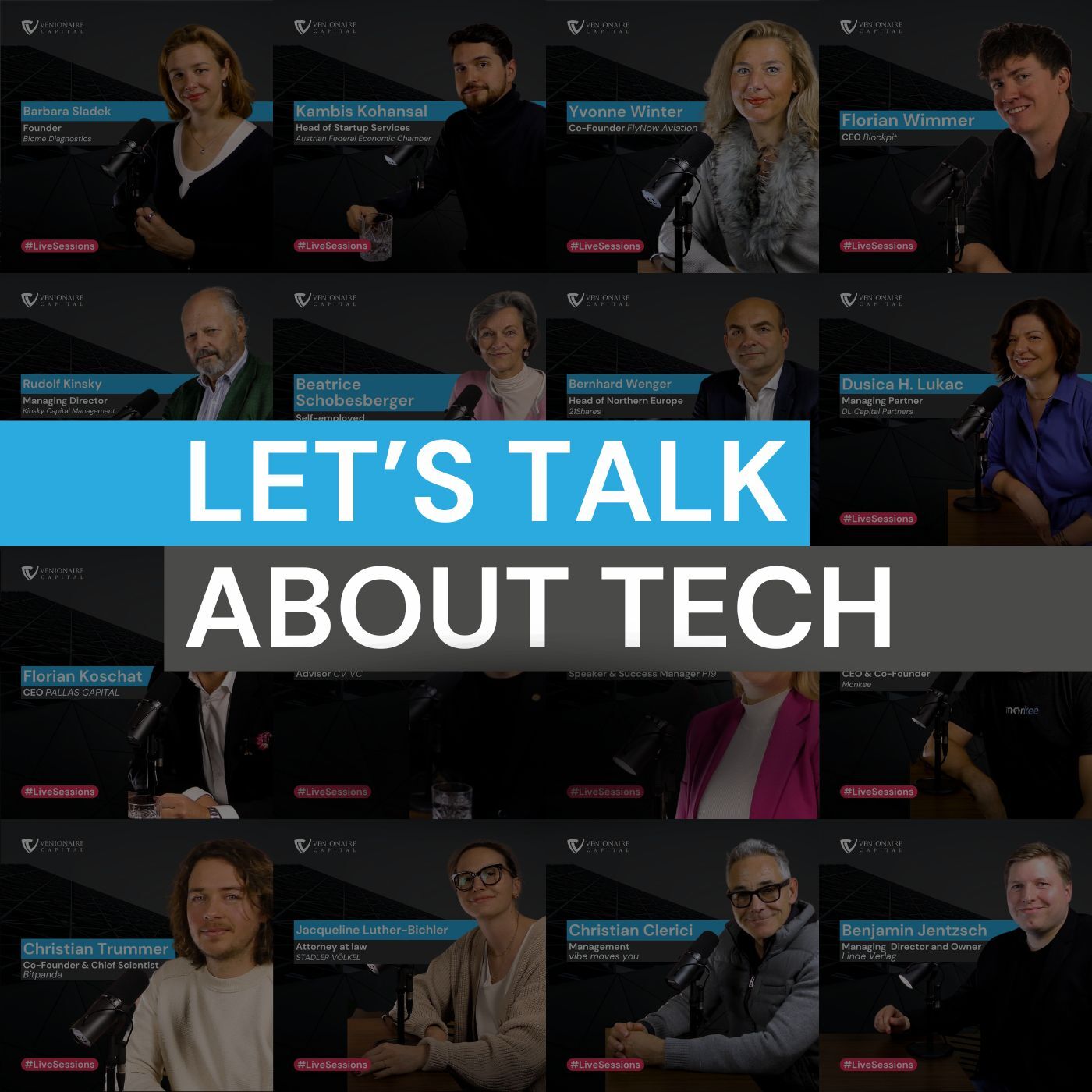
Let’s Talk About Tech · 2026-10-30 · 20 min
Key moments - from our scoring
Substance score
41 / 100
Five dimensions, 20 points each
OWNITNOW is tackling one of Web3's most practical applications: bringing real-world real estate assets onto blockchain through tokenization. Hadil Kren, who spent over a decade in fintech infrastructure starting with CBNK and FinCity, explains why real estate and tokenization are a natural fit - particularly for addressing the liquidity crisis facing European real estate developers and institutional investors. Rather than tokenizing the property itself, OWNITNOW tokenizes the security (bond) backed by the property, operating within strict regulatory frameworks like Austrian law. The process involves business valuation, prospectus creation (the heavy legal work taking 3-9 months), and then technical tokenization in just five minutes. The company is partnering with players like JP Immobilien to tokenize hotel and residential projects. The critical breakthrough announced at Vienna Blockchain Week is a partnership with CoinW to create liquid secondary markets for security tokens focused on real estate - addressing the fundamental friction point preventing tokenized property from trading freely like stocks. For B2B real estate operators, developers, and investors, this represents a new way to access fractional ownership and unlock capital without traditional bank loan constraints.
Hosted by Venionaire Capital. The show scores 64.5/100 on substance across its analysed episodes. See the full show profile.
The process involves business valuation to determine if the property can offer fixed 4% interest returns, creating a structured financial product (bond), completing 3-9 months of legal work including prospectus and financial authority approval, then the actual technical tokenization takes just five minutes on their platform.
Under Austrian law, a trustee (Kuratwar Gazettes model) holds the property in the first-rank land register representing all token holders, so if OWNITNOW files bankruptcy, the building cannot be seized and the trustee must sell it on the market to protect investors.
The lack of liquid secondary markets where security tokens can be freely traded; OWNITNOW announced a partnership with CoinW to create the first major liquid secondary market specifically for real-estate-focused security tokens.
They tokenize the security (bond) backed by the property, not the property itself, because direct property tokenization would require different legal structures; this approach allows them to operate within established regulatory frameworks in Austria and the DACH region.
A platform with wallet management, KYC/AML systems, payment gateways, smart contract developers, and critically, good lawyers experienced in securities law and financial regulatory frameworks.
Our reviewer’s read on each dimension, with quotes from the episode.
A handful of operationally useful details emerge - tokenizing the bond/security rather than the property itself, the 3 - 9 month regulatory prospectus process, and the Austrian trustee mechanism - but the episode is padded heavily with 'mhm' back-channelling, vague aspirational statements, and basic crypto-democratization boilerplate that dilutes the signal-to-noise ratio significantly.
we don't tokenize the real estate or the building itself. We are tokenizing the security of the bond.
that's a process, uh, between three and nine months
The Kuratwar/trustee mechanism rooted in an 1874 Austrian law is a genuinely specific and non-obvious structural detail, and the CBDC skepticism has a concrete rationale rather than being reflexive contrarianism; however, the broader narrative - real estate is illiquid, tokenization fixes it, regulation is the barrier, democratization is the goal - is exactly the recycled playbook circulating at every blockchain conference.
Everyone is talking uh, at the moment about CBDCs or tokenized asset and stable tokens and stable coins. Uh, for me it's a useless discussion.
I don't believe that the euro stablecoin will make a big impact in the trading market. As long as we uh, not have a law or such a regulation
Hadil Kren is a genuine practitioner with blockchain infrastructure experience dating to 2013, has shipped real products (wallet management, white-label exchange, FinCity), and is actively navigating Austrian regulatory frameworks - credible operational depth - but OwnItNow is a small startup and there is no evidence of material scale, revenue, or assets under management discussed in the transcript.
since 2013 I'm in this, let's say blockchain business
we created a kind of wallet management service and uh, a white label exchange which uh, we sold to corporates
There are a handful of concrete anchors - 4% fixed interest benchmark, 3 - 9 month prospectus timeline, a named real-estate partner (JP Immobilien), a named exchange partner (CoinW), and citation of an 1874 Austrian trust law - but no volume figures, AUM, number of tokens issued, investor counts, or market-size data are offered, leaving most macro claims entirely unsupported.
fixed interest or interest, uh which is around 4%. That's our benchmark for all our uh, products
It's from 18, uh, 74. Uh, uh, this law. And there is a trustee.
The host covers the logical topic sequence (tokenization process, liquidity friction, infrastructure, legal ownership, future outlook) but questions are frequently over-telegraphed or vague enough that the guest had to ask for clarification; there is no meaningful pushback, no probing of unverified claims, and the interviewer fills silence almost exclusively with 'mhm' rather than substantive follow-ups.
What do you mean with open and closed in general? Can you define the.
So that definitely sounds like you are pushing a door that's opening
Computed from the transcript - who did the talking, and the words that came up most.
In this episode of Let's Talk About Tech, recorded during Vienna Blockchain Week 2026, host Philipp Sakuler sits down with Hadil Krenn, CTO of Ownitnow, to explore how real estate moves on-chain, from the legal frameworks that make tokenization possible to the secondary markets that could finally make property liquid. They discuss why Own It Now tokenizes bonds and securities rather than the buildings themselves, what it takes to get a prospectus through the Financial Market Authority, and why tokenized assets stay illiquid without a functioning secondary market. Krenn also breaks down how an Austrian trustee law from 1874 represents token holders in the land register and shares a perspective on gold and money market fund tokenization, the euro stablecoin debate, and what Europe's tokenized real estate market could look like in five years. Guest Speaker: Hadil Krenn ️ LinkedIn: / hadil-krenn-a9342086 Moderator: Philipp Sakuler ️ / philipp-sakuler Venionaire Capital: Website: LinkedIn: / venionaire Facebook: / venionaire ️ Disclaimer This episode is provided for general information and entertainment purposes only.
Transcribed and scored by The B2B Podcast Index.
Speaker A: Welcome back
Speaker B: to
Speaker A: let's Talk About Tech provided to you by Benina Capital, the entrepreneurial partner for venture capital and private equity. Last but not least, our last podcast recording, uh, for the blockchain Vienna Blockchain week edition of uh, let's Talk About Tech is now with Hadil Kren, actually cto, Correct. Of ownit now. Very nice to have you Hadil.
Speaker C: Thank you so much.
Speaker A: Hadil, you have spent over a decade building fintech infrastructure and now you're focused on the most, one of the most tangible applications of Web3. You're now uh, bridging real estate and real world assets on chain. Um, you have been at CBNK, FinCity and now open Own it Now. So what was the moment you realized real estate and blockchain were a natural pair?
Speaker C: Yeah, uh, that blockchain and real estate, or in general, uh, tokenization, uh, is uh, binded together. I realized in year 2016 because uh, this time I uh, get a uh, lot of males from the Asian market.
Speaker A: Mhm.
Speaker C: To make such tokenization platforms.
Speaker A: Mhm.
Speaker C: You have to know uh, since 2013 I'm in this, let's say blockchain business.
Speaker A: M.
Speaker C: Uh, and I learned a lot, I traveled a lot and I decided to be a bitcoiner in this time. But in year 2016 I decided with my whole team. Okay, we have to think about uh, the market and we have to create let's say usable products.
Speaker A: M
Speaker C: and usable product at this time uh, was uh, we created a kind of wallet management service and uh, a white label exchange which uh, we sold to corporates. This time we run our own uh, exchange as well. And we found out that the corporates and also a uh, small niche needs payment gateways and bank accounts combined with cryptocurrency payments. And this is where we started Fincity and we delivered this in the European market.
Speaker A: Mhm. Okay, very interesting. I mean now as a CTO profile builder, um, it is the question how do you balance blockchain's engineering reality with the very non technical world of property law and land registries? I mean we're talking about tokenization of real estate.
Speaker C: Uh. Correct. The most valuable use case in my field, uh, is to tokenize real estate. Um, uh, we did a uh, let's say small market research, uh the last three years in the market and we found out that there's a big need of liquidity.
Speaker A: Mhm.
Speaker C: And liquidity is needed, uh, because banks have some troubles to give out loans to their real estate developers. They are searching for investors. There are no let's say new safe and secure product on the market. And that's the way uh, we thought about it. And this is how own it now uh, begins to run. Because uh, we said okay, if you take a look uh, on the uh, end consumer side, they are willing to invest into some vehicle.
Speaker A: Mhm.
Speaker C: Okay. Uh, they just have two rules. It should be legal and someone has to be legal liable.
Speaker A: Mhm.
Speaker C: So uh, a lot of people told me, okay, then you are not decentralized. Then you are uh, a centralized uh, asset. Asset. It's not about decentralization or it's not about uh, the technology or the chain behind. It's about the legal law frame.
Speaker A: Mhm.
Speaker C: If I want to offer a safe and stable product, I have to think about, okay, which law frame I'm using it, I have to use.
Speaker A: Mhm.
Speaker C: And in Austria or I think uh, in the whole uh, Dach area, uh, you have to tokenize the bonds or a security.
Speaker A: Mhm.
Speaker C: Because if you make a deep dive in it, we don't tokenize the real estate or the building itself.
Speaker A: Mhm.
Speaker C: We are tokenizing the security of the bond. This is
Speaker A: what
Speaker C: you're doing.
Speaker A: Okay. Um, I mean, so walk us through what happens when a real estate asset gets tokenized on your platform. Like from property all the way to the investor holding a token. What exactly is the process here?
Speaker C: Uh, the process is first uh, to make a business ah calculation of the property itself, uh, has the property a specific value. Is it possible uh to give an investor uh, uh, fixed interest or interest, uh which is around 4%. That's our benchmark for all our uh, products. And uh, the next step, uh, which kind of ah, structured financial product, uh, you will decide or we decide to have, have the base. So we are, have to look.
Speaker A: Mhm.
Speaker C: That we are able to find uh, building which is, which already exist.
Speaker A: Mhm.
Speaker C: Which is profitable and where we able uh to make a bond out of it. That's the first process. The second process is uh, to make the legal work. So you have to do the prospectus. That's the, let's say uh, heavy work.
Speaker A: Mhm.
Speaker C: Okay. You have to sit down with the lawyers, make the whole uh, prospectus structure. Then you have to talk to the financial market authority. Then thousand questions are coming back and that's a process, uh, between three and nine months. It depends to
Speaker A: the
Speaker C: product itself, the chain or the tokenization itself is very easy.
Speaker A: Mhm.
Speaker C: If this is ready then uh, the merchant or the real uh estate developer, uh can easily in our platform do the Token in five minutes.
Speaker A: Okay. So from a technical standpoint it is very easy. Um, I mean let's move on to something which you already mentioned. But I mean real estate is one of the most illiquid asset uh, classes in the world and tokenization promises to fix that. Um, let's talk about the friction points that are there. So uh, which friction points to prevent the tokenized property from trading as freely as a stock.
Speaker C: Uh, at the moment there's a big lack in this uh, industry. We do not have, uh, so called secondary markets or markets which are uh, liquid.
Speaker A: Yeah.
Speaker C: And I don't know if you was here yesterday. Uh, in my case I uh, announced that we uh, will open with coinW, a uh, big liquid secondary uh, market for security tokens and they will focus on real uh, estate.
Speaker A: Okay. Actually a very great and big announcement.
Speaker C: Yes. And this I guess is the most important thing because uh, to make a token or a real estate illiquid asset liquid, you have to have a liquid market. Without a liquid market it will not work.
Speaker A: Yeah, definitely, definitely. Um, if we now look at uh, infrastructure. What infrastructure does a real estate firm actually need to plug into to make tokenization work?
Speaker C: Infrastructure, uh, a platform like we have, uh, uh, wallet management system, uh, KYC and AML Gateway payment gateway. And smart contract developers. And good lawyers.
Speaker A: And good lawyers. Which is probably the most important part here. Um, I mean as I have heard, one of the hardest problems in real estate tokenization is the legal link between the on chain token and the off chain property. So who actually owns what and what happens in a dispute. So
Speaker C: in our model we are tokenizing the security. So the ownership is with the emitt, with the SVP or with us. If it's our building, uh then we are the owner of the building. But uh, regarding the security, regarding the safety or regarding uh, the uh, safe uh, insolvency or bankruptcy mechanism, uh, we found a solution. Under the Austrian law it's called uh, in German it's called Kuratwar Gazettes.
Speaker A: Okay.
Speaker C: In English I think it's trusty, uh, model or stuff like this. Uh,
Speaker A: I think I actually overheard it in a conversation you had quite recently.
Speaker C: It's from 18, uh, 74. Uh, uh, this law. And there is a trustee.
Speaker A: Mhm.
Speaker C: Which represent all token holders and all shares in the first rank land register. Uh, all token holders are represented by the trustee.
Speaker A: Mhm.
Speaker C: So if we. I don't wish. But uh, you never know. If we go bankruptcy then we are not able to touch the building.
Speaker A: Mhm.
Speaker C: And the trustee has to sell it on the market. So the possibility to lose all your money is very very low. In this. Mhm case.
Speaker A: Mhm.
Speaker C: In Austria it's not possible uh, to put a token direct into the land register because we are not digital enough.
Speaker A: That was very nicely put. We are not digital enough. Um, I mean uh, let's talk about the general topic tokenization. I've heard uh, from a lot of podcast guests here actually that I've interviewed today that this is one of the hot topics. And uh, I mean you're spot on um, with your product, um, and it is being applied to everything right now. But uh, other than real estate, which asset class do you think will generally reach scale first and which ones do people keep over promising on?
Speaker C: I uh, think the next uh, uh, tokenization models for end user, uh, will be precious metal because I'm working on some products right now and I already did one year ago, uh, kind of tokenization or gold tokenization, uh, product. But uh, from the uh, perspective of the let's say financial industry or banking industry, I uh, know a lot of banks are also a lot of financial uh, service companies. The next thing is uh, we're in progress to token as money market funds. Everything uh, what is related to uh, the financial industry or to the stock exchange
Speaker A: market.
Speaker C: Everyone is talking uh, at the moment about CBDCs or tokenized asset and stable tokens and stable coins. Uh, for me it's a useless discussion.
Speaker A: Mhm. Okay.
Speaker C: Uh, because why?
Speaker A: Why?
Speaker C: Yes, uh, why uh at the moment in Europe, uh, if you compare to the global exchange market, I don't believe that the euro stablecoin will make a big impact in the trading market. As long as we uh, not have a law or such a regulation that we say okay, all European people on license trading, uh, on a licensed trading exchange, uh, just has to use Euro based stable tokens.
Speaker A: Mhm.
Speaker C: As long this will not happen.
Speaker A: Mhm. Okay, so
Speaker C: I don't get that why I do not should use USDC for example.
Speaker A: M. Yeah, okay. Yeah, makes sense. You know regulation has to move first in this. Uh, uh
Speaker C: but I also have to say something, uh, in my case because we are talking with uh, Kibalis a lot.
Speaker A: Mhm.
Speaker C: In my case to make all payments and settlements in a Euro uh stable token. In my ecosystem if someone is paying with Euro, uh with Bitcoin or Ethereum, uh to make an auto exchange into a stable uh Euro coin and then make the payouts or all other settlements
Speaker A: M
Speaker C: With uh, let's say banking regulated fast stable token.
Speaker A: M
Speaker C: that making my world and my ecosystem sense.
Speaker A: Mhm. Okay. I mean very interesting uh, to hear that from your side. Um, if we look now at the Austria and the Duck region and talk about Own it Now, I mean this is a very traditional real estate market. I would say. Do you think you're pushing a door that's opening or still pushing against the closed one?
Speaker C: That's a very good question. Uh, what do you mean with open and closed in general? Can you define the.
Speaker A: I mean regarding, um, if we talk in a general perspective about Own it now, do uh, you think uh, there is like a lot of acceptance or a lot of developments in this uh, space or do you think that because Austria is very traditional and maybe it's not open to real estate tokenization? That's what I'm referring to.
Speaker C: What I can tell you, there are a lot of big real estate developer which want to tokenize their existing buildings because why they also need liquidity. Uh, they also have the same uh, problems. Like maybe you and me, if we want to buy a house and
Speaker A: move
Speaker C: to the bank, okay. Our own capital has uh, to be, I don't know, 30 or 40% and then maybe uh, we get the credit
Speaker A: M.
Speaker C: Maybe uh, we never know. And uh, ah, the same issue, the same problems, uh, they have. And uh, for example uh, JP Immobilian Yelitzkahn partner from Vienna, uh, we partnered with them and uh, we will tokenize for them. The first project is a uh, hotel project in the first district, uh, to prove, okay, it's possible also to tokenize, uh, hotel.
Speaker A: Mhm.
Speaker C: And they are very happy and they talk to me and we also in some other discussions, uh, the whole market situation, uh, will not become better.
Speaker A: Mhm.
Speaker C: Worse. So they are happy to have a solution which will work. And also on the other side, uh, the investors are waiting for uh, let's say new digital fast possibility, uh, where they are able to have the possibility to buy fractional ownership. So our uh, big goal or our big vision is uh, we want to democratize really uh, real uh, estate investments. And this is possible.
Speaker A: So that definitely sounds like you are pushing a door that's opening. So there are a lot of opportunities and there is need, need in the market, as you were saying. Yes. So now let's look into the future. Uh, which brings me to my last question now. Five years from now, what do you think, uh, will the tokenized real estate market in Europe actually look like? And I mean what has to happen to you know, uh, get this uh, ball really rolling,
Speaker C: Uh I think there will be a lot of more bigger volumes on the European, um, market, especially in Germany, uh, Spain and Austria. Because in Austria I'm here, and our partners, our, uh, partners, and we also step into the German market. And then, uh, I have some colleagues which are doing the same now, uh, in Spain. But what will happen, Uh, a lot of secondary markets will open the gates or trade it. Because why? Uh, classical exchange need new products. They need, let's say, uh, a new story for their users and for their customers. And if you find a solution to make the onboarding process very easy, and that's possible with, uh, security tokens and the perspective of, uh, an classical investment. So my grandma is able to log in into the website.
Speaker A: Uh-huh.
Speaker C: Make a payment process, has no idea that with the payment process she's opening a wallet. Uh, she has no idea, uh, that there is a token. But what she get is all parts.
Speaker A: Uh-huh.
Speaker C: What we are offering, wallet invoice, the token,
Speaker A: the
Speaker C: possibility to sell it on the same easy way.
Speaker A: And m.
Speaker C: This will happen.
Speaker A: So you're saying all the opportunities and all the advantages of, uh, blockchain infrastructure without actually knowing, or basically a seamless transition into that space. So, uh, we will see, uh, what will happen, uh, let's talk in five years, I would say, and then we can, uh, look back at this interview and, uh, you know, uh, grasp the developments. It was very nice, uh, talking to you, Hadil. Uh, thank you guys for watching. Like, comment, subscribe, of course, and tune, uh, in to the other podcasts that we did today for Vienna Blockchain Week 2026, I would say. Uh, also, let's go to the afterparty. It would be a very nice. Thank you.
Speaker B: Let's talk about tech. Let's talk about tech, baby. Let's talk about your ip. Let's talk about still, baby. Let's talk about vc.
Other episodes covering the same guests and topics, from across The B2B Podcast Index.
 Real Estate’s Data Problem: Why Tokenization Keeps Failing | Matthew Schneider, Building Inc.Colors of Web3 & Entrepreneurship · on Real estate tokenization80 / 100
 Unlocking Private Markets and Tokenization with Brian Aznar of RepublicThe Stack with Ilan Gitter · on Security tokens68 / 100
 S11 E8: You are the Opportunity with Michelle LillyWinHers United · on Fractional ownership63 / 100
 Can AI Become a True Equalizer or Will It Only Deepen Global Wealth Gaps?FinTech Bites · on Fractional ownership57 / 100
 #93 - Building institutional grade tokenisation infrastructureBuilding And Growing · on Real estate tokenization

