
Lenny's Podcast · 2026-06-21 · 1h 39m
Key moments - from our scoring
Substance score
62 / 100
Five dimensions, 20 points each
Fiona Fung, who leads Claude Code and Cowork at Anthropic, walks through the fundamental shift in software engineering as AI removes coding as the bottleneck. Anthropic engineers now ship 8x more code per quarter compared to 2025, fundamentally changing what leadership, hiring, and quality assurance look like. She shares concrete practices: using Claude with automated routines to synthesize feedback from Slack, emails, and social channels; embedding specs in repos to enable Claude code review; and shifting from hiring generalists to recruiting creative builders with product sense alongside deep systems experts for areas requiring human verification. The conversation explores how the best engineers are becoming more ambitious - no longer asking "can we build this?" but "how ambitious can we be?" - while others struggle with fear and resistance. Fiona emphasizes growth mindset, agency with accountability, and the new reality that verification, not coding, is now the constraint. For engineering leaders, PMs, and builders wondering how to operate in this new world, this episode offers specific tactical approaches and insights into hiring, code review automation, and keeping teams motivated as the nature of engineering work transforms.
Anthropic engineers on average ship 8 times as much code per quarter as they did compared to 2025, representing a dramatic increase in throughput across the organization.
Fiona hires creative builders with product sense who can dream big and iterate based on feedback, and deep systems experts with specialized subject matter expertise for areas requiring human verification and trust.
She uses Claude with automated routines to monitor feedback channels across Slack, email, LinkedIn, and social platforms, generates daily summaries of themes and issues, and leverages Claude sessions to have substantive conversations with team members about impact and quality rather than just shipping velocity.
Coding is no longer the bottleneck; verification and quality assurance became the constraint. Fiona recommends embedding specs and frameworks into repos so Claude can validate code against clear definitions of "what good looks like."
The best engineers adopt a growth mindset, lean in with curiosity, and shift their thinking from "can we build this?" to "how ambitious can we be?" Engineers who resist or fear the change struggle, while those taking initiative and agency are thriving.
Our reviewer’s read on each dimension, with quotes from the episode.
The episode contains genuine operational gems - using Claude Code as a management instrument across repos, the Bad/Sad quality framework, pairwise programming lunches to fight agent-induced loneliness, and JIT monthly planning - but these insights are buried in extensive personal narrative (bank teller origin story, grandma, high school), generic growth-mindset advice, and meandering tangents that dilute the density considerably.
I actually have a cloud code remote session that I enlist in all of our repos. And so this way I have full visibility into the work that everybody's doing. And this instance also has access to all our Slack channels
I started this. Hey, let's have a concept of uh, what's bad versus what's sad. And bad is a very bad irrecoverable error. And sad is something that's kind of like a pain point recoverable. But it's interesting when you stack up SADs, it could generally go to bad.
There are genuinely fresh practitioner observations - using routines to asynchronously spawn agents that deliver morning PRs, spec-driven code review as evolved TDD, and the Bad/Sad UX taxonomy - but the episode leans heavily on recycled frameworks: growth mindset, high-agency-plus-accountability, latent demand, and the fear-as-compass metaphor that circulates everywhere.
I call it JIT planning now. Like just in time planning. So it is like around like because, yeah, I think six months was too long.
along with hi, because, like, we really. It's about like, hey, here's a problem... we say, with high agency, it's also high accountability.
Fiona Fung is an exceptional practitioner guest: she founded Facebook Marketplace (now $100B+ GMV), shipped Orion AR glasses, ran a 500-person Meta org, and now directly oversees the teams building Claude Code and Cowork - she has done the thing at massive scale across multiple paradigm shifts and speaks from lived operational experience throughout.
Facebook Marketplace team, which she took from idea to launch today. Facebook Marketplace generates over $100 billion in GMV every year
the last time I shipped production software at Meta was probably 2017... I remember that first week on um, cloud, I'm like, at first I almost again went, did my usual, let me go meet all the engineers
There are solid concrete data points - the 8x code output metric, $100B Marketplace GMV, the Chile/LTE Marketplace war story, crash-rate as a 'Bad' metric example, swear-word dashboard - but the episode frequently retreats into abstraction when more detail would be most valuable, particularly around verification approaches, hiring criteria, and planning specifics.
Anthropic engineers on average ship eight times as much code per quarter as they did compared to 21 to 20, 25
on cli, could be crash rates. Like a crash is pretty bad, you lost work. Um, and for example, a sav might be, hey, is it flickering?
Lenny makes genuine connections ('Basically, it's the evolution of test driven development'), asks the under-covered question about what engineers lose in this new world, and follows up on planning effectively at the end; however, he allows very long personal tangents to run unchecked (bank teller story, grandma narrative), doesn't challenge the 8x metric's validity, and misses chances to push on how verification actually works in practice.
Basically, it's the evolution of test driven development.
I'm curious what is lost in this new world of software engineering?
Computed from the transcript - who did the talking, and the words that came up most.
Fiona Fung leads the teams behind Claude Code and Cowork at Anthropic (overseeing Boris Cherny and the entire engineering and PM team). Before Anthropic, she spent 11 years at Microsoft building Visual Studio and TypeScript and then moved to Meta, where she started Facebook Marketplace (now generating over $100 billion in GMV annually), worked on Meta’s first smart glasses and AR glasses, and led infrastructure, growth, integrity, and safety teams at Instagram. She’s been an engineer for over 25 years and has a unique perspective on how the role of building software is changing. In our in-depth conversation, we discuss: 1. What she’s learned about running a team that’s shipping 8x more code than before 2. Which roles AI will transform next 3. Specific ways her team uses AI 4. How Claude “routines” have changed how she operates as a manager 5. The context-switching problem no one has solved yet 6. The biggest unsolved problem in AI 7. What keeps her up at night -
Transcribed and scored by The B2B Podcast Index.
Lenny Rachitsky: Anthropic engineers on average have eight times as much code per quarter as they did compared to 2025.
Fiona Fung: Coding is no longer the bottleneck. It's lifted the ceiling of what anyone is able to do.
Lenny Rachitsky: Everything is now possible in theory. Now it's about, how ambitious can you be?
Fiona Fung: It's always something we ask ourselves, what's better than me doing it? Having thought, uh, David.
Lenny Rachitsky: The people that seem to be doing best are taking the most initiative, getting the most proactive, have the most agency.
Fiona Fung: We say with high agency, it's also high accountability. So it's all about making sure folks have that freedom to cook. But then it's also like, okay, what's the accountability for it? What's the hypothes, what you're trying to solve?
Lenny Rachitsky: I'm curious what is lost in this new world of software engineering?
Fiona Fung: It could start being a lonely experience because we all started just working with our agents so much and on the cloud. Co team. Recently we started a pairwise programming lunch.
Lenny Rachitsky: Something you think about is this gap forming between people that are leaning into AI, uh, killing it, and then people that are not super frustrated, fighting, resisting.
Fiona Fung: In terms of frustration, I think sometimes I also see a little bit of fear for anything that there is a fear. My advice is lean in and ask, what can I do about it? What is within my control?
Lenny Rachitsky: Today, my guest is Fiona Fung. Fiona leads the teams behind Claude Code and Cowork. At Anthropic, she oversees both Boris Czerny and Kat Wu, both of whom who have been on the podcast and whose episodes are in the top 10 most listened to episodes of all time. Before Anthropic, at Microsoft, Fiona ran the teams that built Typescript and Visual Studio. After that she went to Facebook where she started the Facebook Marketplace team, which she took from idea to launch today. Facebook Marketplace generates over $100 billion in GMV every year. Also while at Meta, she oversaw work on Meta's first Smart Glasses product and then she helped build Orion, their first AR Glasses product. Then she went to Instagram where she led infrastructure, growth, integrity and safety teams. While at Instagram and at Meta, she oversaw an org of over 500 people. Fiona has been an engineer for over 255 years and as a longtime engineering leader, especially now at Anthropic, she has such a unique lens into where things are heading, what's worth paying attention to, and what teams should be thinking about right now as AI transforms the world of building. A huge thank you to Kat Wu, Morris Cherney and Mohammed Higazi for suggesting topics and questions for this conversation. Before we get into it, don't forget to check out lennysproductpass.com for. For a free year of the hottest and most well crafted AI products in the world, Available exclusively to Lenny's newsletter subscribers. With that, I bring you Fiona Fung. Fiona, thank you so much for being here. Welcome to the podcast.
Fiona Fung: Thanks so much for having me, Lenny.
Lenny Rachitsky: So I was at the Claude, uh, Code with Claude event, uh, I don't know, a month ago at this point, and I went to your talk and I was just like, holy shit, I got to get Theon on this podcast. She's thinking so far ahead of where everybody else is going and what. Where people are at with AI. So you've been an engineer for 25 years. I was browsing your LinkedIn. Uh, you started at IBM, of all places. Such a different place to be these days. And it's just insane how much the job of an engineer has changed over the past just like two years. It's like a completely different job. Like, people may forget, 100% of code was written by humans not long ago. And now it's getting to 100% of code written by AI. Uh, as Boris, uh, famously said, coding assault. Along these lines, there's just this tweet that you guys put out yesterday where you showed, uh, here's the tweet. Anthropic engineers, on average ship eight times as much code per quarter as they did compared to 21 to 20, 25. We'll show this chart on the screen. It's just like, stable, stable, stable, stable, shooting off into the moon. So it's just insane how much this role has changed. I'm, um, curious about your kind of path as an engineer going, living through this, having been an engineer for a long time, what have been kind of like the big moments along the way where it's shifted your way of thinking and operating that have led you to what you do now and how you operate now.
Fiona Fung: Oh, I love this kind of walk back in time. Yeah, Like IBM working on DB2, the operating system services team. Like, back then I was thinking, oh, how can I, how can I be like the, uh, like, what's a hard area of the stack? And I really thought the lower level, you go closer to the os, then it's more hardcore and you'll learn more. So that was, uh, I was really fortunate to go into the IBM internship. Um, but the funny thing was, I think there's even a big shift from IBM to Microsoft. So at IBM, it Was I think Vim. Like I didn't have an IDE that we used. I think there might have been an Eclipse license, but for some reasons most of us didn't use it. So I remembered it was mainly like Vim and uh, you know, like terminal debugging. And then when I joined Microsoft, I mean this is how naive I was. I didn't even know about IDEs and such. And back then you didn't really get to pick teams. Like this was early 2000s actually. First off, I should say I was so grateful that I landed the internship and the role because, uh, to take us all the way back in time, the dot com bubble burst in 2000. And so for my graduating class, like a lot of the companies weren't hiring or were having freezes. So I was so fortunate when Microsoft sent me an offer. And so they're like, you're going to work on Visual Studio. I did not even know what Visual Studio was because I came from a UNIX school. So I remembered asking because I was thinking about the name Visual Studio. I'm like, oh, is this like a better paint program? And I could tell the look of my manager's face, like what is going on? But then it ended up becoming like the love of my life for the first time. Eleven years of my career, but that was the first time I used an ide. So joining the Visual Studio team, seeing, oh wow, here's an IDE with debuggers and you can set breakpoints and do multi threaded debugging, that was also always mind blowing for me to think about the stepwise change. Um, that was uh, the story going from IBM to Visual Studio. And then what I really loved actually about Visual Studio is I uh, was on the Visual Studio editor team. So I use a VS editor to build the VS editor. And that's where my whole love of dog feeding comes from. Like I, I remembered I wanted to first and foremost create a delightful experience not only for myself but for my teammates. Because also if we go back in that time, if you remember, I mean, when did Twitter come out? Like, was it 2, 2006?
Lenny Rachitsky: Feels like it's been around my whole life.
Fiona Fung: But back then, like before social media, it was also harder for most engineers to um, hear fast customer feedback. Like for sure there you would be user research sessions or we would have customers visit us, um, but you didn't get the rapid feedback that you do nowadays. But back then I was so lucky because I was on vs. We ourselves gave each other so much rapid feedback because we were ALL HEAVY VS. USERS
Lenny Rachitsky: ON THE TEAM this episode is brought to you by our season's presenting sponsor, Work OS. What do OpenAI, Anthropic, Cursor, Vercel, Replit, Sierra, Clay and hundreds of other winning companies all have in common? They are all powered by Work os. If you're building a product for the enterprise, you've felt the pain of integrating single sign on SCIM, RBAC, audit logs and other features required by large companies. WorkOS turns those deal blockers into drop in APIs with a modern developer platform built specifically for B2B SaaS. Literally every startup that I'm an investor in that starts to expand upmarket ends up working with workos. And that's because they are the best. Whether you are a seed stage startup trying to land your first enterprise customer or a unicorn expanding globally, WorkOS is the fastest path to becoming enterprise ready and unblocking growth. It's essentially stripe for enterprise features. Visit workos.com to get started or just hit up their slack where they have actual engineers waiting to answer your questions. WorkOS allows you to build faster with delightful APIs, comprehensive docs and a smooth developer experience. Go to workos.com to make your app Enterprise ready today. People think about these milestones along the way of an engineer's journey and we forget there's also, there's been like a lot of transformation over the years. Not quite what we're living through, but just like ides, Visual Studio, uh, so I love that you're reminding us of these moments in uh, the history of software engineering that have changed the work in a big way.
Fiona Fung: Yeah, when I worked on Visual Studio back then, we also shipped software on CDs, I mean before like, and that's why there were really hard deadlines because you had to make sure the software was ready for us to give to manufacturing to then, you know, put on the CDs for us to then put on the shelves. And uh, and then so once that was another shift when we actually started to be able to, you know, ship software online. And I think that's an interesting thing and I kind of mentioned this in my talk. It's before when you like engineering time was a really precious resource, but you also have these really hard deadlines, for example, like printing software and CDs. And so back then you would do a lot more planning because you just wanted to make sure given the time you have, you make the best of it. And that's a shift that we're seeing with uh, cloud code and cowork Is coding is no longer the bottleneck. And so you showed the tweet and that graphic, but now it's all about where has that shift happened? Now not only engineers with, we also have designers, PMs, everybody on the clock, code team checks in code. So like, when not only more people checking in code, but like kind of different disciplines, but also the throughput is so high, how do we think about verification? Like that's kind of this other shift that I'm seeing.
Lenny Rachitsky: Maybe just kind of set this theme that I want to have for this conversation. A lot of people are just wondering what is, what does software engineering, managing software engineers, managing software and product teams look like in the future? And you are living through that right now. So you mentioned this, um, point about a more focus on verification, making sure the quality of the code being uh, 8x is actually high and something uh, that will work. So just like, let me ask this broad question, let's kind of see where this conversation goes. What does an AI pilled software team look like in 2026?
Fiona Fung: Because the rows are blowing. It's shifting more to this builder. Um, like everybody starts being a builder. I would say the other shift that I've recently done is I actually have a cloud code remote session that I enlist in all of our repos. And so this way I have full visibility into the work that everybody's doing. And this instance also has access to all our Slack channels and I'll have access to like, how are the metrics of everything we track? And so every month when I be like, hey, you know what's fun? Let's, let's take a look back like, and so we'll actually do it together. I'll share my, you know, like cloud code, uh, you know, I've shared my screen. Then we do our code session and it's just about, hey, what were the focus areas? Like, what were some of the products that got shipped? How did it do? Oh, what were the feedback channels? And so I, even though like before I would have just used these sessions to like generate PRs and bug fixes, I actually have these sessions to uh, enable me to have conversations with folks that I support.
Lenny Rachitsky: Say more about that. So this is, this is uh, like a management technique, let's say, to help people. Not, uh, just ship, but actually ship. Better understand if they're shipping things that have impact. Is that kind of the idea here? Just like use claw to keep on top of all the things people are shipping and then make that a conversation with them.
Fiona Fung: Exactly. So outside of just you know, the action of shipping is how to do in market, or hey, did we have, you know, like, did we cause some bugs? And it's okay to, uh. Like, I have the saying, make new mistakes. Like, it's okay to make mistakes. Just make new ones. So that we're always learning. Because if you aim to make zero mistakes, like, that probably means you're not, you know, moving fast enough or being a little bit too cautious. And so, yeah, by having Claude, like, so then it can also look at, like, some, like, for example. Actually, yeah, we were. I was just looking at. Oh, you know, given some of the, you know, incidents that we have. Like, let's look across all of this. Can we generate a theme? Like, what's a good area investment for us? Next, especially we think about, like, quality. Like, are we seeing any hotspots of where there could be a gap? I think that used to be just a much more manual, uh, process, I would say. Like, if I look back a year ago, I don't think I would have been able to, you know, have some of these insights with Claude.
Lenny Rachitsky: Yeah, well, partly is because, like, there's that. And also people weren't shipping as much, so you could just make a little bullet list. Here's the things I shipped last quarter. This feature, that feature, this feature, that feature. So that's right. What, um, I'm hearing here is this is like, one of the only ways to stay on top of all the things a teammate is shipping. So this is a really cool thread of just, like, how you found ways to stay on top of this 8x increase in code. What else has worked in helping you and your team stay on top of and maintain quality of all the stuff that y' all are shipping? Because that's obviously a challenge, a bigger challenge.
Fiona Fung: Yeah. And so definitely, like, the feedback channels are really important to us, but then we also get a lot of feedback. And like, for example, even I myself usually what my m. My morning ritual would be. You know, I get my morning cup of coffee and then I look at the feedback channels and then I try to pick, oh, what are. You know, if I have some maker time, what's something that maybe I would be able to help out or what. I could, like, see some gaps. Like, that just used to be something I would do every morning. And, uh, yeah, I think maybe a month or two ago we. We launched routines. And that's also completely changed. Like now I just have a routine that automates all this for me. And then there's also. It's almost like Before I would, you know, be able to kind of like, you know, generate some prompts, but now with routines, it's almost like I'm, you know, having an agent help me, like, generate the prompts and the pr. So, for example, one is, hey, keep a look on this feedback channel. You know, what are some of the themes? And then, like, when I wake up, then, you know, I have a really good summary of that. And then Even some, like, PRs that I'll be able to take a look and review.
Lenny Rachitsky: And, um, the feedback channel, where's that feedback coming from? Is that like, like emails, Twitter or to combo everything?
Fiona Fung: Uh, our feedback channels are definitely like, we have a lot from internal ads, but also like emails channels. Actually, everybody, uh, like when we all get feedback on, even like when friends ping us or on LinkedIn or socials, we'll all actually like post all of that in Slack as well. And so. And we also have, like, of course, partnerships. And so we have different channels, uh, for all the various sources. But that's what I mean. I need Claude's help to help me stay on top because there is so much incoming feedback.
Lenny Rachitsky: Got it. Okay, so this is cool. So this is, uh, like a way of working that you've built to stay on top of all the stuff shipping, which is this kind of daily ritual slash, routine where you as a manager, look at what people are saying about the current state of, uh, cloud code and cowork and used to just like, okay, someone go fix this, go fix that now. It's like, here's the PR that'll fix this thing. Check it out, we're ready to ship it if you want. Awesome. Okay. Like, obviously a big challenge for people is also just code review. I imagine Claude is also doing a lot of its own code review. Is there anything there you've recently figured out that allows your teams to ship faster stuff that they are confident is great?
Fiona Fung: Yeah. And honestly, it's crazy when you think we didn't even have Claude code reviews last year and so speak of bottlenecks. That was a really, really big bottleneck of, you know, the human reviewers. So we definitely, for the important, like, like areas that need deep subject matter expertise, we definitely want to make sure we have the proper, uh, you know, like, humans still reviewing. I would say what helps us though is the more that we can automate to almost, uh, check in the framework for what good looks like. Claude is very good when you give it a framework to validate against those frameworks. So I had mentioned, like, you know, like, recently we just updated a content design to have a skill in it like my. Like I. And this is why, like, um, I think if you have specs or check those into the repo and then make sure the spec also keeps up to date with the code frequently. But that's what I found. Works really well. Of any time you have a statement of what good looks like, get that into the repo and then code review can make sure it's still matching what you set up to do.
Lenny Rachitsky: Basically, it's the evolution of test driven development.
Fiona Fung: Yes. For tdd, because I remember that was like a big thing. My gosh, Maybe like in the 2000s of Write the test first and then, and then you can like make sure the test fails. Then you do. Actually, the code in principle is really good, but I think I know I remembered I myself struggling a bit because it was almost like you have to eat the broccoli first because I was like, oh, you have to write this test first. And I just get so much thrill out of shipping and building product. So it's funny actually, the first bug I fixed on Claude code, I remember asking Claude, hey, I want to do test driven development. Help me write the test first, make sure it fails, and then we'll actually do the fix. And then now the test pass. And the fact that that used to be. That test generation used to just be this tax that I remember having to pay, the fact that that's now automated and you can even revisit all these principles that have been around for a while, but now they actually might be even more efficient just because you have the models that can do more of the work for you.
Lenny Rachitsky: Yeah, that's so unfair. It's just writes the test for you first. So on this point of builders, one of my favorite slides from your talk that, um, I want to ask about is who you are hiring and what you look for in people. And so I'll read what you said there and I want to hear more here. So the two profiles that you now look for when you're hiring are creative builders with product sense and deep systems experts for the hard parts.
Fiona Fung: Yeah, the deep subject matter expertise. Like for example, when I first run cloud code, we had really great, um, kind of like product generalists. Then I realized, oh, we were missing folks with, uh, systems background. And so that was definitely an area that we needed more folks with kind of like systems and distributed systems expertise. Um, and so I would say whatever are the parts that it's all about. Trust but verify. The models are really good, but there are definitely a lot of areas that still need the verification. And so wherever you need the deep, ah, subject matter expertise, I would say that's know an area to definitely still invest in. Um, and the other one is kind of like the product, uh, the product sense folks almost like the dreamers. Like these are folks that usually will be like, my gosh, you're really passionate about a product and they have an idea, they build it, and then it's always like looking at the feedback and then iterating and polishing and making sure that the product is a delightful experience. Like owning that product end to end. Uh, that's like another skill set that served us really well on cloud code.
Lenny Rachitsky: This super resonates. There's this word ambition. I don't know if you used it, but that's what I thought of as you were talking. That's been coming up a bunch recently. Um, in the podcast and other work I've been doing, there's this 10 XC engineer I was talking to the other day and he was just like, I used to like, I heard about a feature idea. Like someone's like, hey, we should build this. And I was like, no, that's really hard and complicated. And he's like, but now I'm like, no, no, that's so possible. I just ask Claude Code to do it and it just does it. And it's this whole mindset shift. And he's just realizing now it's about how ambitious can you be? Like, everything is now possible in theory. Now it's about how ambitious and how big can you think versus just like, okay, it's all these stupid little features and things they have to unblock. Does that resonate? Is that something that you think about?
Fiona Fung: Yes, actually, I was just catching up with an engineer, uh, yesterday, and he actually is not a mobile engineer by trade, but we really needed to uh, update this feature to also have a mobile footprint. And it was just amazing. Like, he's like, you know what? Because it. And it's common because you might think, wait, but I don't. I'm not like an Android expert. But now thanks to Claude actually I can actually have a partner and actually also do this on the mobile surfaces. And so that definitely resonates. It's like it's lifted the ceiling of what anyone is able to do.
Lenny Rachitsky: So let me follow that thread. As the role has transformed in such a crazy way, some people are thriving, some people super frustrated, unhappy, fighting, resisting. What do you see common across the people that are doing really well? The engineers that have adapted and are thriving versus the engineers and even outside engineering that are just frustrated and having a bad time.
Fiona Fung: I would say a growth mindset really, really helps. Actually. Even before, um, AI tooling, I found that has been just so valuable and I, I learned that a lot. Actually. It was the shift from M M, um, Microsoft to Meta. That was where I first real. That first year I'm like, oh, this is what having a growth mindset really means. It's really this concept of always be learning. Also, what served you to get you to this point may not, uh, we serve you no longer, but it's really hard because of course, everybody, like, we all, you know, we've all gotten to the state by acting or, you know, like operating in a certain way. And so sometimes it is a little bit scary to think, wait, you're ask like, but I've been successful so far. You're asking me to change what has made me successful. And so I, I would say, like, the growth mindset is, is really, really has, has really served me well. And I think it's also served others well. Um, that, that I notice like, always leaning in with curiosity and always being able to learn. Um, and then in terms of like, the frustration, I think sometimes I also see a little bit of fear. And so my advice there is at least this is how just in life I've. Because we all have. And fear is of course an evolutionary. Like, um, I didn't study anthropology, but I think it, you know, it makes sense, right? It helps us make sure we were able to survive and not get eaten and, you know, uh, by larger predators. But for anything that you know that there is a fear, my advice is kind of lean in and ask, okay, is there some. What can I do about it? What is within my control? Because sometimes the frustration comes from fear and feeling like. But everything is outside of my control. And so it's happening to me. And so if you think about, okay, what is in your control, um, instead of happening to you, is it happening for you? And then what's, what's something that you might be able to kind of like, do and change? Like, I felt that's been helpful because if not, it is super frustrating to have the fear and then feeling like everything's outside of your control. Like, I actually remembered, um, when I was in, actually when I was in high. It's funny, when we were going back to IBM, uh, when I was in high school, I actually didn't, uh, go into computer science or engineering. Like, I really wanted to be a Visual artist. And this is how far back we go back then computers were really expensive, so actually didn't even have access to a computer. My first computer, uh, access to computer was grade nine, I think in high school. I don't even know if this happens in high school anymore. My high school had a typing class where you took class just to learn how to type on the keyboard and learn to be really proficient. And that was my first time. And then, you know, the next class was maybe like um, some HTML programming. So anyways, but the reason why I fell in love with it was while what I love about art is creating and being able, if you have an idea, you can go ahead and create and tell a story. And then I realized, oh, computers and programming, you know, that um, enables me to do that. So anyways, I tried to really fast try to make up for all the science classes for me to get into university. But I had this fear of, oh, but how will I afford to get into an engineering school? And it was this big unknown. Uh, I grew up in Ontario, so I was very grateful. I knew there was an Ontario School Assistance program, OSAP I think it's called, which I'm very grateful for. But I didn't know how much of that would cover my tuition or like expenses. And it was just this unknown and it would be like a year, a year out. And I remember thinking, okay, what can I, what can I do about it? And then as, as luck would have it, the national bank of Canada just posted this flyer in our high school saying, hey, we're hiring high school interns to be a bank teller. And I remember, oh, that like I, and of course it was going to be minimum wage, but I, I, I, I thought that that could be a lifeline. But it was funny because the class I hated the most in high school was accounting. So I don't know if I'll be any good at it at all. But I signed up to be a bank teller and that ended up being such a great decision because I worked all summer, saved up, and then actually I was able to work as a bank teller on the weekends. So like, yeah, well, I would went to, I would go to school Monday through Friday and then I'm tired to be a bank teller. And that ended up being this lifeline that enabled me to, you know, like, pay for all my school expenses. Um, and you know, we talked about the, the year 2000.com crash then when folks weren't hiring as much interns. Actually I continued being a bank teller for, for 22 years. Uh, and, and so, but, but like, that was the one action I felt I could take that was within my control to try to counter this fear I have of if I'm really going to go down this path. I don't even know if I could have, afford to go to school. So that's probably my other advice of like, growth, mindset and the source of, you know, frustration or anxiety, if it's coming from, you know, the like. See, is there some, is there one action that's within your control that you can take? Um, to, you know, so it, like, because I think there's, you know, there was a saying, like, do something. What would you do if you're not afraid? Actually, those were my two favorite things before. Like, what would you do if you're not afraid? And do something scary once in a while. Because that's also usually how we grow. Um, I found that when you're, when you're really good and professional, what you do, you're kind of at peak, you know, like maximum efficiency. But then how do you keep growing is you then do something scary that you might not have done before. And yeah, you will have a dip because you need to learn, but that's kind of how you, um, keep pushing yourself to learn.
Lenny Rachitsky: The quote that I have probably used the most on this podcast of all quotes is the cave you fear contains the treasure you seek.
Fiona Fung: Oh, I love that.
Lenny Rachitsky: Yeah. And it's so true. Just like, like, I forget who put this. But just the thing that is scariest is like, that's a compass towards. That's what you should be doing.
Fiona Fung: Uh, I kind of steal your quote.
Lenny Rachitsky: Yeah, they please do like, you know, there's like, don't do all the scary things. Like maybe don't drip off a cliff, but maybe in career, in career moves, it's probably a good, a good choice. So kind of following this path, something that I know that is important to you, something you think about, that I also think about is this kind of gap that is forming between people that are just like leaning into AI, killing it, doing super well, and then people that are just like, not. And this is like a scary time for people that may be left behind in this new, uh, world that is emerging. I, uh, know you spend a lot of time with small businesses. That's a big passion of yours to help people learn how to use AI in their work. Talk about just like how you think about that and what maybe we should be thinking about to help folks stay, not fall behind, basically.
Fiona Fung: Oh, I love this. Yeah. It's one of my passion topics because, uh, I kind of mentioned growing up in Canada. Um, and I moved there when I was a kid. Uh, I was born in Hong Kong, so I didn't speak any English, and my parents had to work all the time. So my grandma, who is the best grandmother anyone could have ever asked for. I know everybody thinks her grandma's the best, but I really was so lucky. I had the best grandma. She moved with us, uh, just to take care of me while my parents were working, but neither of us spoke English. But I was able to learn how to speak English by, you know, going to school and speaking with classmates. And when I think about my grandma, it was very alienating for her to be, you know, in a country, new country, where. And, you know, back then, it wasn't as walkable. Um, but one summer, I remembered we just happened to find this little yarn shop, uh, that was owned by a lady that also spoke Cantonese. And so that became every week we would go to this yarn shop. This summer, my grandma found her knitting circle. And then I think I learned how to do, like, macrame, which I think is having a comeback, by the way. It's. It's always funny to see coming back macrame. I think.
Lenny Rachitsky: Yeah.
Fiona Fung: Heard it here first on Lenny's podcast. I think macrame is coming up. All right. Um, but. But that was probably where my love came from. I'm like, oh, wow. This little small business created this wonderful sense of community, and I've been really fortunate to, you know, become friends with all the small businesses that. That I love. So that. That's kind of like where the passion comes from. And then, um, what. How it happened was I was using Cowork for my own, uh, business, uh, expensing travel. I don't know what it is. I really don't like doing business expensing. And when I was using Cowork, it was magic. I'm like, all these things that I don't like to do, like Cowork is doing for me, and I'm like, wait a minute. All my friends, and honestly, small business owners, they really bust their butt. Like, they work incredibly hard, um, and they're usually, you know, like, sometimes might be operating on really small margins. And so I thought, if it's. If Claude Cowork is so good at helping me do my little, you know, business travel expense, this would be huge for it. Because I see my friends sometimes sitting at the bar with stacks of bills, and all they're doing is invoicing and expensing. And I think nobody actually really likes to do it. So that's kind of, uh, where it came from. And then, so, yeah, I remembered, uh, helping a couple of them on board. And uh, it was also very humbling to see them go through our onboarding flow. Actually. They found some really good bugs, so it was really like a win win. But it was also delightful for me because they also use Cowork in, in ways that I, I wouldn't have thought about because I was all fixated on. Look at how it is amazing with PDFs and invoice. And then, um, you know, one of my friends who, who runs two restaurants, she's like, oh my gosh, this folder I have is like a drunk drawer of like it. It's basically our, you know, documents folder. It just becomes this junk drawer of every. Or downloads, like just, you know, like the kitchen junk drawer.
Lenny Rachitsky: And.
Fiona Fung: And she's like, I know I have a few menus in here and I can't find it. And I'm like, well, let's ask Cowork. So we gave Cowork access to the directory, found the menus, and then she's in a really unique way, she goes, like, I want to make sure I keep my prices reasonable for locals and tourists. So she goes, hey, Claude, look across my style of cuisine in this area. Is it comparable? And it came back with really cool, almost like market analysis. And she goes, hey, I actually just went to that restaurant in Seattle and that was pretty good. Um, so I learned something every time. And uh, yeah, they've been giving me great feedback as well as well.
Lenny Rachitsky: So the question then is just like, how do we, how do we spread this to everybody? Because as you, you know, there's like, like a lot of people are just like, I don't have time for this, or I hate AI. It's just like I want to ignore it. Is it like talking. Is it just talking about these, sharing examples? What do you think? What's like a way to make a dent in this, uh, in this problem
Fiona Fung: for all of us, especially to your listeners are probably very AI pilled. If there's anyone either in their community or their family that, that has, like. I would start with what has something that really you felt, um, has. That you really have felt has made a meaningful life change, uh, for you with, with the AI tools and then seeing if that is a conversation starter for. Because for me, AI is a tool again. It's the whole light in the dark. I totally understand the frustrating part as well. But for me, I'm also felt like knowledge is power. Like, have to learn how to use the tools, because it could actually, you know, be the light part of that light and dark equation. So I think that that would. That's something that I would love everybody's help with of. If there's. Whether it's a community member or even if there's a business you really like, you think, hey, have you ever. It's. It's. It's a little awkward to start. Like, I remember when I first reach out my friends, I'm like. Because I don't talk about what I do, uh, with them a lot, but I'm like, hey, uh, kind of, you know, working. Uh, can I. Can I. It sounds. It's even unnatural for me to do because I'm, you know, like, I'm like, hey, can I show you what, you know, Cowork is possible. Uh, um, but we ended up having a lot of fun, so, yeah, I would love for, like, that conversation starter. Um, would be great. Yeah. Because I just want to make sure we keep sharing the knowledge and making the tool equitable. Because if not, I'm concerned that the device grows larger and larger.
Lenny Rachitsky: Me too. I find that sharing use cases, as you said, is so powerful. I was just using Cowork the other day to fill up my son's camp forums and just sharing that on, um, Twitter. Just like, a lot of people are like, oh, wow, I didn't think about that. It's just like, these little things you don't think about that Cowork and Claudio can do kind of along those lines. Speaking of Cowork, if you think about it, Anthropic has been super early on, uncovering these really big opportunities ahead of everyone else. For example, coding so far ahead, like, realizing this is a huge market, whether it was intentional or not, uh, is just like, whoa, that's maybe the biggest new business opportunity in history. Uh, and then Cowork is a great example. Just leaning into knowledge work. Let's just make. Let's just solve all knowledge work. Why not so far ahead of everyone else? Another element is it feels like a focus on the personality of the model, something you all were very early on just how important that is, not just for the experience, but just also the intelligence and success of the model. What is it that you think Anthropic and the teams do differently that allows you to uncover these opportunities and then just go big on them before other labs, let's say, well, I haven't worked
Fiona Fung: in any other labs, so I'm not sure how labs operate but I will share like yeah with um, and like actually on the cloud code team as well and cowork. Like we also keep an eye on like latent demand. Now we're very fortunate with coding as a use case because so many ants that we were you know like our own first customers customers and we're able to do like really rapid feedback and and so I think um, but latent demand has, has been like a ah, like for example like cowork. We noticed saying a lot of folks that were not necessarily coders were, were using cloud code. Can we make that experience better? I think that's actually even outside of anthropic, that served me well in, in all the different products I've worked on. Um, but uh, and, and actually it's funny you mentioned like you know the, the cloud for uh, you know, my passion with small business. After I know at a few of this visits we ended up now launching cloud for small business which is really cool because I, and, and it totally didn't come for me so I'm not taking credit but I noticed it too of like when I was working with and they, because they were asking me oh does it have this plugin or this plugin? I'm like I think it does. And then we have to you know, go and search for it. So actually now cloud business bundles it all up. So inside code work you just have this little toggle and there uh, were, there were. There was a wonderful team that's been kind of like uh, you know, doing cowork sessions with small businesses that probably found hey, we could have like an efficiency gain here, um, or like make the experience better. And so I would say like always, uh, not only for products that you're on, like making sure you're always listening to feedback and always iterating trying to make a delightful, reliable, high quality experience but then also keeping an eye out for oh what are these other use cases that, that are popping up and can we also make that experience better? Um, it's interesting after like you know, in software I've learned that customers will use your product in ways that you did not intend for good or for bad. And so the best way um, is really like it's all about that iteration, learn and keep um, close to the
Lenny Rachitsky: feedback, wait and demand. That's a, that term's come up a bunch on this podcast. There's some, there might be some there. So essentially it's just watching closely for behavior that you may not have expected or that is just kind of emerging and then just going big on that, essentially exploring it, building something awesome and
Fiona Fung: having a hypothesis for. Hey, like, because actually when you see people jumping through hoops to make something work, can you actually make that an even like a, uh, smoother and better experience?
Lenny Rachitsky: Yeah. Coming back to the way that your teams operate, you guys are so at the edge of what's possible. And the role of just engineering has changed so much. I'm curious what you think is the next kind of frontier of how engineering in particular is going to change. Is it like fleets of agents? Is it uh, something else? Just like what's the next big shift to how engineers operate that either you're already working on, uh, or implementing or just it's starting to happen.
Fiona Fung: I would say we're shifting more towards async, like asynchronous. And so to your point, the fleets of agent. That's why routines is so interesting because almost like I used to be like, you know, doing a prompt and synchronously and then uh, I would like maybe like kick off different props asynchronous, asynchronously. But now I can actually have a routine that actually generates, you know, these, these prompts for me. So it's almost like the level of abstraction keeps pulling up a little bit. And so I would. Yeah, I wish I have a crystal ball to see what this is going to look like. It'll be fun actually for you and me to revisit a year from now.
Lenny Rachitsky: No, I want to hear more about this. This is so help us understand what is, what is routines and then what is. When you say synchronous, you're writing a prompt and it just kind of goes off and isn't writing it immediately. Talk about what this actually looks like.
Fiona Fung: Ah, uh, yeah. So uh, routines is like how you can like some. If you remember, I was shy about my. What I used to do is always like, you know, wake up with my morning cup of coffee and hey, look at through this Slack channel for me. But then now like I have a routine, uh, that I set to run every morning at a certain time. Mhm, that's right. Um, but then it's able to actually go and kick off agents on your behalf. And so that's because like, that's what like in, you know, even you know, before it would be, oh, you could like, yeah, do a cron job to automate. Like, but now it's hey, look at these feedback. And then if you're seeing some of these bugs that what are Some polish fixes that you might be able to knock out. And then it would let go of kickoff. And then I wake up and I ended up having PRs that I could review versus before, which is still more of a, I can have different agents. And then it's still, I'm still thinking about, okay, now what do I do with this information? So it's like that higher level abstraction of, okay, now how can I actually write a routine that also basically does prompts for me for spawning different agents? Uh, so I think we'll move more towards that kind of like asynchronous style of working.
Lenny Rachitsky: So. Interesting. So like, in a sense as a manager you have these kind of things you do daily. And what you're saying here is you can set up these prompts that kind of check in every day on the things you would be doing. Like, how are the projects going? What's falling behind, what should I unblock, who is, uh, who's struggling? Uh, what's, how do I fix them? Improve some, some polish. And so the idea here, what you're describing here is kind of write these things that you almost do as a manager daily and have Claude essentially do them for you and then show you, here's what I'm doing, here's what, here's what there's to review.
Fiona Fung: And then it's, it's even like, then giving even more autonomy at some point of it. You know what, like, go for it. Like for example, if verification is really good.
Lenny Rachitsky: Yeah, go. I see. So you give it like a little bit of freedom to do more of this.
Fiona Fung: Yeah.
Lenny Rachitsky: Okay, that is so interesting. That reminds me, speaking on this idea of go for it, I don't, like, I wasn't planning to talk about this, but I just watched Tyler Cohen had this awesome talk about just like what's happening. I don't know if you know, Tyler Cohen is really smart dude, economist, as a podcast, uh, and he just had like, there's so much talk of the people that are doing best in this world. His uh, term is, um, initiative. They have initiative. Uh, another term people use agency. Is that something just like, you know, people hear this a lot. Just like the people that seem to be doing best are taking the most initiative, getting the most proactive, have the most agency. Does that, does that kind of spark any thoughts to you? Just what people may need to, I don't know, think about or improve on actually.
Fiona Fung: That's, ah, agent. It's, I love that word, agency. That's what we really hold important on the cloud. Code and cowork team. Um, but it's interesting, I say, along with hi, because, like, we really. It's about like, hey, here's a problem. And then it's really. Everybody, uh, on the team has ideas for how to address the problem. So it's really high agency. And then we say, with high agency, it's also high accountability. So it's all about, like, making sure folks have that freedom to cook. You know, they. And. But then it's also like, okay, what's the accountability for it as well? And that's where. And again, it goes back to, like, what's a hypothesis of what you're, you know, like, trying to solve? So I think, yeah, the balance, like, or, you know, almost like two sides of the same kind of agency. And then accountability, I think, has served our team really well.
Lenny Rachitsky: Such an important element. I have a agency. Okay, cool. Everyone's off doing stuff. But, okay, what have you actually. What have you busted up? What have you done? So kind of along those lines, it feels like there's this vibe shift recently from token maxing. Just go crazy. Spend as much as possible. Just see what's possible to, like, wait, what are we actually getting out of this? How much is it costing? What's the roi? Uh, interestingly, Boris was actually like, head of productivity productivity at Meta that was like, his job is measuring edge productivity. And, uh, and then also just this, like, tweet of lines per code, like, code ship. Like, there's this, like, interesting discussion of just how do you actually measure productivity increase and ROI of AI tools in spend. How do you, like, you know, you guys have the unfair advantage of getting free, free tokens working in anthropic. With that in mind, what. What have you learned about just how to measure, say, ROI of engineers in today's world?
Fiona Fung: This end productivity is such a fascinating topic. Um, yeah, because I remember, you know, like. Like, even Boris mentioned, like, you know, we'll first start with, like, lines of code, and then that's throughput. And then I remembered once. Then there was a debate of, well, lines of code. This engineer had this crazy lines of code, but they just took some library and then just was porting it. So they checked it in. And then I was like, well, maybe it's significant lines of code. And then it's, well, but what if we're updating our frameworks and now we're generating less code, but the output's still the same? So now I was like, okay, maybe it's like, time to land pr, but it's Very interesting. If it's always been whichever metric, um, if you're really focused on the out. My advice here is one is output. Is the output really going towards the outcome? Because yeah, like the token maxing, it's kind of like a, it's almost like the lines of code that we used to have, but I'm really much more about a, um, what is it that we're trying to do? Like all of this? You know, there was another saying I really like, don't forsake motion for progress. Um, because if you're measuring like, you know, like tool user usage, then you're measuring the action. But is it really making whatever the end outcome of yours, like, important? Um, and so I really uh, try to zoom out and focus on what is the problem we're trying to solve, what's a good way to measure that. And then that's what we focus mostly on versus the productivity measurement. Um, I would say though outside of metrics, especially if on teams, as you're having more people adopt AI tooling, I would say definitely go um, on a listening tour for the, for the leaders. Listening to a podcast especially, you know, I love to focus on the senior engineers as well. Like hear from them on what's working, what's not, how can we actually make it better. Because they will also help you multiply and scale that out across a full engineering team. And sometimes it's those conversations where you might get spark an idea that comes up. And also really good shared learning versus um, you know, like metric dashboards. It's very interesting. I've learned some good lessons for metrics. I'm all about like, it's really great when you have a metric that you can actually hill climb on. But always keep in mind of is kind of my whole growth mindset of is it still serving you always keep in mind, is that metric really still, uh, serving the outcome that you were aiming for? Um, a fun example I have of this is in the early Facebook marketplace days we were kind of launching by region and we really want to make sure we're building a delightful product before we expand. And I remember in the early days one thing we would keep an eye on is kind of like number of sellers. And I remembered after launching to our first region, I'm like, huh? In this area the number of sellers is low. But actually people are like, people are finding items that they're looking for, which is what we're aiming for, like helping people find items that, that they need. And then I realized in that region it wasn't a large ah, number of sellers, but there were power sellers. But our first gate before we expand would have just been like, you know, factoring heavily number of sellers. And I remember that quick conversation of hey, and this goes back to that whole people use things in ways you may not expect and shift, iterate, learn. And so uh, so then we updated the metric to go, oh, you know, like it's not number of sellers because it didn't factor in power sellers. And so that's the advice I have too. Like whatever metric, whether for productivity or even for product, always keep an eye and make sure that you're not just having blinders on. That's blindly following a metric that used to make sense because sometimes the landscape can change so fast. Uh, even the metrics themselves might need to be adjusted.
Lenny Rachitsky: And this comes back to your process that you shared of having Claude watch all the PRs shipping per engineer, let's say. And then not focusing on the metrics but focusing on that, leading to a conversation about what impact this have. Uh, what was maybe some bugs that happened and that being a really powerful way of understanding how what's going on with this engineer. Awesome. Let me come back to this. Just this question of speed and quality and just like impact, uh, is there anything else you've learned about just how to balance those things? Just like this crazy velocity of code that's being generated and just staying on top of quality and impact. Is there anything else there that might be helpful to other teams that are trying to wrangle all this? All these PRs being shipped every day?
Fiona Fung: I would say and this is what uh, honestly we want to keep doing more of and being better at it too. Like the proactive quality. So especially for quality, making sure that what are the experiences that are key and uh, making sure you actually, actually speaking of metrics, those are really good things that you make sure you can kind of like see trends over time. Um, and so like on the quality front we found like, um, and this is like the more proactive we can be of like making sure we can get an earlier detection into uh, quality. And so like um, that's been one thing that we've been paying a lot of attention to. I started this. Hey, let's have a concept of uh, what's bad versus what's sad. And bad is a very bad irrecoverable error. And sad is something that's kind of like a pain point recoverable. But it's interesting when you stack up SADs, it could generally go to bad. But Even having starting with a high level framework like that. Because if not, I think sometimes with dashboards, you can have time, uh, to load or all these other. But when you're dealing with a lot of different product surfaces, it's harder to go, wait, is that a good number or not a good number? And so one thing that's helped us is versus just raw, you know, like performance or, uh, you know, like reliability numbers. Also having some framework of what we think is, you know, like a, a bad experience and making sure we're focused on addressing those and then also keeping an eye on where we're seeing in terms of the sad.
Lenny Rachitsky: I like that. Yeah, I like the bat and sat. So these are kind of like thresholds of this is bad. Okay, this is serious. And this is in terms of like performance or failures or what sort of things are you measuring here?
Fiona Fung: Uh, so for example, like, we allow each team, like speaking of agency, so knowing that bad is like a really bad irrecoverable error, we enable each team of further surface areas. Or it could be services that, you know, they lead what is like. So for example, on cli, could be crash rates. Like a crash is pretty bad, you lost work. Um, and for example, a sav might be, hey, is it flickering? Like, it might be recoverable. But we have each team and that's why it's been interesting because before each, because surface areas are different, we would have all these dashboards, but it's harder to zoom out and go, okay, what's the overall theme of the experience? So to your point, we give high agency to each team of what we think constitutes a bad and what's a sad. And then what's the goal that, um, each team wants to take One of
Lenny Rachitsky: the, like, the main takeaway I'm hearing here is, uh, one of the best tools for staying on top of quality is just monitoring, uh, and tests versus spending more time reviewing, which makes sense because the speed is just impossible to stay on top of. And it almost speaks to this idea of closing the loop for agents to be able to kind of figure things out themselves. They know what success looks like. Cool, we'll fix it ourselves. So that's a really interesting takeaway is just invest more in the tests, uh, evals, I imagine is part of this. And then just like monitoring failures and speed and things like that.
Fiona Fung: That's right.
Lenny Rachitsky: Something. I think this is public. I know that you guys have this dashboard that tracks just like F words, like how often people are like F because they're so pissed and frustrated. There's like a funny term for it. I think I forget what it's called.
Fiona Fung: Yes, actually, I remember. Yeah, that was last September because we were all seeing some frustrations. And uh, yeah, that was an engineer on the team of, hey, we should maybe track square words. I'm like, oh, that's a great idea. I remembered I had just, you know, joy when we were having that really fun conversation. Um, yeah, so it's, it's again like, it's very interesting to kind of like look at. Um, and that's why like evals is hard too, because it's going back to like that user experience and how we can make sure it's a delightful experience and less frustrating. But yeah, the swear word dashboard is a fun one.
Lenny Rachitsky: This episode is brought to you by Mercury. Radically different banking loved by over 300,000 entrepreneurs. And now with Command. I've been a customer of Mercury's for over six years. I have never once thought about leaving. Mercury is basically what happens when banking is built by product people, not by bankers. They make it so easy, dare I say fun, to send invoices, move money around, set up virtual cards for folks on my team. Does your bank have an API, a terminal, native CLI or an AI ready MCP server? I don't think so. And just recently they launched Command, a conversational interface built directly into Mercury, which acts as your financial operator. I've been using Command to transfer money around to figure out what categories I've been spending the most money in, analyze my cash flows and just today I used it to find out how much I've made from a specific sponsor over the past year. I just ask how much have I made from X over the past year? 10 seconds later I have an answer. It is so freaking cool. Visit mercury.com to learn more and apply online in minutes. Mercury is a fintech company, not an FDIC insured bank. Banking services provided through Choice Financial Group and Column NA members. Fdic. Kind of going back to the way you operate and ways that you've figured out to work in this crazy new world that we're in. Um, I've heard about a couple things that you've implemented that are pretty unique I think to uh, how teams operate and I think is something that has worked really well for you. One is making every manager start as NIC and then just every manager has to continue being NIC part time. Kind of this player coach approach. Talk about that, why that's so important in today's world.
Fiona Fung: I love it. Um, it's funny, when I first Joined because I, and I have amazing recruiting partners and I noticed we were, you know, this whole theme of um, kind of growth mindset. It's just because the landscape is changing so fast. Like what worked well before, like, may not make sense and even what makes sense today may need to change tomorrow. Right? Like, that's what I have to keep reminding myself. So yeah, when I first joined recruiters, like, okay, yeah, we have these um, couple like manager postings. And I'm like, you know, because actually how it came from like a listening tour I did with like all the, all the um, members on the team and I heard a lot of these. Hey, I really appreciate the agency, but how can I make sure. Prioritization. And, and so I kind of through that I um, I realized. And then there was some really good feedback too of making sure that um, it's not too many layers of reviews. Like there was good feedback. Some folks might m have joined from other companies. They're like, you know, and then I'm like, hm. When I actually think as a, as a leader, if you actually start as IC first without the like worry of supporting people, because that's a very heavy responsibility that, you know, I think like magis, but like that. But before you have to take on that full responsibility, give yourself that maker time to actually dive deep into the code and learn, uh, the code base or the product, whatever it is. It doesn't have to honestly the PRs I do, but it's more about for me it's important because it keeps me in the flow. Because we're making so many changes to cowork and code. So Even me doing PRs is less about what it is I'm fixing, it's more about me using the product every day just to keep that touch. Because as amazing as metrics and everything are, and I do look at those dashboards, if you as a leader, if, if you're not, you know, like living and breathing your, your product every day, you, you sometimes kind of like lose touch of um, the touch and feel of the product. But anyways, on the manager front, I think giving time for managers that join to be able to go deep into, do that before supporting people and then they actually like end up um, building really great rapport with the team. Like, because if not, I think sometimes as managers, you know, you might come and join a new team and you instantly think, I have to manage, let me dig into my manager toolbox and do managery things. But if you actually give yourself time to not have to worry about that first and actually learn what it's like to be an engineer and teammate on the team. That also goes really far, um, to building rapport. And in terms of like using the product, I think that's important. It's interesting. Every team I've join one of the first actually across all the different products, it could be VR, it could be smart glasses. It was like Instagram. Usually when I first joined, one comment that comes back to me is, hey, you know what? I really love how you're actually using what we build. It's refreshing to see you giving user feedback. And so I think as leaders too, it's also a way for us to experience the work, uh, personally that the
Lenny Rachitsky: team does something that people may not realize. Uh, you were overseeing uh, an org of 500 people at Beta before you moved to Anthropic and you moved to ic. IC Engineer basically at Anthropic.
Fiona Fung: From that I started out like it was for a very short, short amount of time. But um, actually this was my journey between Microsoft and Meta. So at Meta I interviewed as a manager. But I think at least for the first quarter I was also an ic, um, because I really wanted to learn what it's like to be a Meta Engineer. Because before then I was at Microsoft, kind of like cut my teeth on engineering at Microsoft. So I knew all the code bases, the tools, the languages and uh, yeah, but it was so valuable to have those first months like actually learn what it's like to ship ah, as a Meta Engineer. Plus it was also fun. Like I think sometimes we forget if we like. But that's by the way what I love about cloud code because, um, the last time I shipped production software at Meta was probably 2017. And every year I might like, I do a lot of dog fooding and a lot of, you know, like I also use dogfooding to help me like vet the quality of product as well. Um, but it's been a very long time since I shipped production software. It's because part of it is I don't, I don't want to screw something up. Like I'm always, I'm always so scared of what if I do something and then I cause a bug and then am I verifying everything properly or am I wasting someone's time? Because you know, like also the, the, the tool flows would change. But I remember that first week on um, cloud, I'm like, at first I almost again went, did my usual, let me go meet all the engineers and treat them so to coffee. And then I'm like oh wait, wait, wait, let me ask Claude. And so Claude was this really good onboarding buddy of mine because I was like, uh, curious about the co base, asking questions and, and then it also really um, you know, helped uh, me like you know, do the automated test, but I also want to still do some manual testing. And I, I asked Claude, hey, help me come up with like, what's the way for me to manually test this to make sure I cover all the case. But all that then gives me confidence that okay, I can ship Pierre's again. And then I got kind of more comfortable with again. And so, um, I've actually had a lot of friends reach out to me that have been manager for a while. That's like, hey, I'm shipping code again thanks to Claude. Um, but in general it's just important to me as leaders to make sure you're kind of like using the product that your team builds.
Lenny Rachitsky: It's so interesting that you are overseeing the team as an ENG leader that is most changing the role of an engineer, it's such a meta role. Like the work of an engineer is transforming because of the software that you're building. One question along these lines is just do you worry about uh, engineers skills to code atrophying from not actually writing code anymore and does it even matter? Is this like something you think about? Is it a big deal?
Fiona Fung: It's, it's interesting because we actually have this uh, discussion on the team a bit like they're like, are there things that we miss? Or like actually to your point, I'm always like thinking about like when someone's onboarding and ramping. Like you have Boris who hand rolled the code in the early days and of course now does anymore. But he gained that knowledge from before because he was in the code base. So for especially all the engineers that join ML. So like make sure you're like taking the time too to all the work that you do still get that understanding of the architecture or the change because it goes back to that trust but verify. Maybe one day it won't matter anymore, but at the, at the pace that we're going, I actually still think, understand like it's always double clicking on that layer that you depend on. Like maybe that to me is a meta, like is um, it's always take that time to learn about your dependencies because this way when your dependencies change, like you're kind of like more aware or you might not be taking advantage of changes to, you know, dependencies. So I think it's always about kind of like uh, doing that double click. But the other thing that we found interesting on the cloud code team is after a while we felt uh, it could start being a lonely experience because we all started just working with our agents so much. So recently we started uh, maybe a pairwise programming lunch. Because what we also learned was on cloud code, everybody uses cloud code code. Everybody uses the flow so differently. And so we found that, wow, when we do pairwise programming, we actually learn so much from each other. Um, uh, and then the other thing too is we make sure that we also uh, have the maker time together too. So for example, hackathons is another thing we really like to do just to make sure we're kind of interacting together as a team.
Lenny Rachitsky: That is such a good point. Just the loneliness that emerges because used to be edge teams building code together. Someone's doing back end, someone's doing front end, someone's doing iOS app, uh, probably a bunch of people on the back end. And I was like, uh, well, we have 10 clods running in parallel doing all these things. That is such a good idea of just like finding ways to connect engineers. So the idea here is like almost pair programming, but not it's like parallel, it's like parallel play when kids are growing up. Like you're kind of working next to each other but building your own things. But even just watching how other people build is you're finding is really valuable.
Fiona Fung: Yeah. And it's because our own tool chain is changing so fast as well. But yeah, it's very interesting to me. I like everybody on, on our team just uses cloud code and cowork in different ways. And so every time I watch someone work, then I learned something myself as well.
Lenny Rachitsky: How do you manage people getting over obsessed with optimizing their workflows? Is there anything you're just like, okay, it's fine, just keep going.
Fiona Fung: You know, I haven't seen too many folks on our team. I think as everybody is just really excited about either, uh, an architecture update that we think will be higher reliability or some product experience. So most folks like that's what we talk about a lot. Like yeah, um, we don't over, it's fun lunchtime conversations, but I don't think we over optimize because there's no perfect answer.
Lenny Rachitsky: Actually there's too much to do. Is there anything. These are really interesting insights. Just like as the role transformed things come, things go. So I'm curious what else is kind of lost in this new world of software engineering? I used to be an Engineer. I don't know if you know this. I was an engineer for 10 years, uh, and it was like, so fun just to sit there in flow coding. You know, this feeling just like, oh, wow, it's working. Look at it compile. It's amazing. I'm making progress. And now it's like, you don't do that anymore. You just sit there and kind of wait for agents to build the thing. What else is kind of lost in this new world for engineers?
Fiona Fung: It's so funny, I just had that conversation with an, uh, engineer on the team of talking about flow. Like, remember the old days, you have this really gnarly problem and you pop the music soundtrack in and then you're just in the zone. And uh. So, yeah, there is a little. And then there was always that big aha moment at the end. I would remember, like, is it. Yeah, you remember, like, you finally cracked it. You know that. Yay. So what we do, uh, but it's like, I think now we get a lot of joy from, like, the product. But I do think there was because I hear from other engineers as well, of Will, I, uh, some of the hardest parts is what I used to enjoy. Um, and like, yeah, I heard that from another engineer as well. And so I think we're all just kind of like shifting. Um, uh, but I do see the thing most. And that's why I was talking about the pairwise programming in the hackathon that did recently come up. More folks were starting to feel like it's starting to be a lonely experience.
Lenny Rachitsky: So interesting within Anthropic, I'm curious, so engineering the most transformed, I think, of any role right now. What's the second most transformed role so far, would you say, within Anthropic? That's most different from how it was like, a couple years ago.
Fiona Fung: Let's say it's all the coding adjacent roles are shifting like PM is. I know, like, you were chatting with Kat. I think PM is also transformed quite a bit because PM are no longer bottlenecked of if they have an idea waiting on engineering bandwidth. Um, so that's kind of like the next row that I saw and shift. Like, actually our PMs have also helped us roll up sleeves and help shift, you know, like some features when we. When we were, um, you know, like when. When there wasn't, ah, when there was a, you know, something we want to do and an engineer wasn't able to. So I think, um, it's all the coding adjacent roles are starting to shift. Um, but I think that's where again the verification is important because when you have more different disciplines checking in, how do we make sure everybody has higher confidence? I also think we need to do more to keep automating these other portions of the workflows. Like for sure we focus a lot on coding. But next, when you think about like design or data science, like those are starting to be the next areas I think are good opportunities for us to see how we can um, uh, start improving the experiences there as well.
Lenny Rachitsky: Yeah, speaking of data science, I have a data science friend and he was just saying how data science is so different now, where now most of their job is people doing their own not amazing data science work using AI and uh, and then just like showing it to the data scientist here, here's the analysis I did. Can you just make sure it's right and half uh, the time it's not right. And so the job is just like a whole different job now instead of doing the work that they thought they wanted to do. And that's like all right, I'm just reviewing all this AI data science all the time.
Fiona Fung: What the hell?
Lenny Rachitsky: Kind of along the lines, coming back to just how your team operates and how things are changing. Let uh, me see if something comes with this question. What should an engineering manager expect from their team now versus like a couple years ago? What's like a normal, I don't know, baseline expectation of how things should work? Is it other than just you know, we're shipping faster? Is there anything else?
Fiona Fung: Oh, interesting. Well definitely I think most commits are cloud assisted. Uh, and so that was a shift. I um, think you know, I kind of like mentioned we have like slack channels with all the feedback and also our dashboards that we have um, give to Claude. I think having engineers build and keep building that stronger product sense muscle is I think also like another and I think that in general helps kind of um, be these really trauma minded product engineers, I would say more of these roles that were traditionally non engineering. You do now see engineers being like, and sometimes you're just blocked by you know, waiting for ah, you know, a cross functional partner. I think there's, there's less of those blocks now just because uh, the models are able to augment additional capabilities that you may not have um, ah, as an engineer.
Lenny Rachitsky: So it's kind of interesting. It's both directions. Engineers becoming more product minded and responsible for the quality and success of a product and then everybody becoming an engineer more and more.
Fiona Fung: Yeah, that's right. It's all blurring.
Lenny Rachitsky: Yeah, I Forget who said this, but there's this like, what is a role anymore? And this, this guy said that it's like, what's the average of what you do? What's like the highest percentage of what you do? And that's kind of your role now, whatever it is. Yeah. Oh man. I want to come back to your point about obsession, uh, with the, uh, the product, living, breathing the product, doc voting. I talked to a bunch of people that work with you about you and that's the thing that came up most. Just like your obsession with living and breathing the product, using the product constantly, whatever it is you're building, uh, this idea of dogfooding. Talk about just like why that is so important, why that's something you instill within your teams and reports.
Fiona Fung: Oh, love it. Um, yeah, I think it's really. And this has worked for me. Um, it's just been a really good way for me to keep a pulse on, you know, anytime you build product, there's a dream like you're really hoping to enable an experience or make an experience better. So I think, um, being able, that helps me keep really close to the pulse. I also think, and maybe for sure on Visual Studio that was where I got this love of it. Um, but it's interesting because even Marketplace, I remembered every once in a while I'll do even after I left the team. Actually, um, one time I had a MacBook Air I wanted to sell. Like, oh, I haven't sold anything on Marketplace. And I could not believe it the minute I put it up for sale, a seller or buyer tried to sell Scammy and it was an interesting like new scam vector I didn't detect. And so, but that goes to again, like people will use uh, your products in ways that, that you may not expect. And so especially as leaders or even like anyone on the team, we all have different like life. Like actually it's, it's funny when, when I was, you know, supporting the VR and AR teams, somehow how I used VR, the setup, I would always be able to find these really weird, uh, floor height issues. So that ended up being a. Oh, I took a, you know, like I'm going to help us, you know, like, because somehow I got a good repro environment. Um, and so I think it's number one, like making. That's how you keep uh, your post on the product that you're building. And don't get too lost in metrics and dashboards only or presentations.
Lenny Rachitsky: I think that's such an important point. You're Saying there, that I just want to make sure people hear is just like, like there's always this idea of anecdotal evidence and just like examples versus the data. And what you're saying here is as a product leader, as an engine leader, uh, you found a lot of success in the anecdotes, the specific uh, little one offs that you experience as a user versus obsessing with the data only.
Fiona Fung: Yeah, and actually sometimes it's also how I've been able to most effectively help the team. So for example, the last team I was on, I was uh, leading a VR team. And because back then I, it would have been, I was, I have not checked in any code into that code base just because I was really worried about like messing up the operating system. But what was a gap, we were doing a lot of polish fixes and uh, I was, I wanted to, I'm like, hey, you know what, I'll use my dog feeding time to actually vet how the experience looks. And so that was also probably a way that I felt I could still meaningfully contribute to help hold the quality bar for the team. And uh, then like I say, like every team member usually always really appreciates uh, because I think um, as a lead, like you know, leader, you're supporting folks on team that outside of metrics and everything, everybody really wants to make sure their work matters. And uh, yeah, just making sure that, you know, leaders use your product. I think folks feel, um, the leaders then remain like really engaged and not too um, distanced.
Lenny Rachitsky: And this connects a lot with your point that engineers need to become more product minded, that engineers need to become more PME, PMs need to become more. But this is like as an engineer, this is one way to do it. Use the product constantly and that'll help you understand what is missing in the product as a user. Because you're just using it.
Fiona Fung: That's right. And I would say if you're leading a team where it's really hard for you to use a product, then meet with customers like whatever that other avenue is. That kind of um, like I think that's also been really important to you. Every time I've done customer visits, I always learn something new. Like actually I remember that was Facebook Marketplace we're trying to launch to uh, Latin America. And so we had, you know, we were testing in Chile and I remembered it, it just wasn't doing as well as the other regions we've done. But everything else we've, we've tried. And then I remember, I'm like Oh yeah, and we had a really small research trip where I went to Chile. I remember getting a whole bunch of Android phones for us. It was very small crew, like just three of us. And upon landing and upon me opening up these Android phones and I'm like, ah, you know, the LTE connection was real, was much slower than what we were used to in the US and so I'm like, oh, the marketplace feed didn't even load very well on these low LTE situations. What a growth block are you using? You can't even load. But again, that's why it's so important to always, uh, um, listen to customer feedback and get that fast feedback loop.
Lenny Rachitsky: I think it was Jeff Bezos that said, if you have data and you have an anecdote, trust anecdote over the data, surprisingly. And that's a great example. Okay, uh, just a couple more questions. One is in your talk you had this really interesting slide at the end of what questions you're kind of thinking about right now that you haven't figured out how to solve with how much is changing. Uh, I'm going to read the three. I'm curious just like if it's still these three, if there's anything else, like current problems we need to figure out that we haven't solved in how we operate. What you shared in your talk was, do we still need separate iOS and Android orgs? How far do you push fully automated reviews and which role with role blurring, how do you ensure everyone's equally productive? Still problems. Is there anything else that you're thinking about, like, okay, we need to crack this. We haven't figured this out.
Fiona Fung: You know, the iOS Android one, like I think we're still actually, it's funny because speaking of like the deep expertise, we definitely feel that um, it's really important, like it's really important to still bring on folks with those expertise. But we probably don't need like as large because people are flexing. So it's again, making sure we have um, like the Android and iOS experts, but then less of the larger kind of like mobile org1per. But again that's still a balance that we're trying to figure out if do we have ah, the right and enough expertise? Um, the second one was. Sorry, what was the second one?
Lenny Rachitsky: Oh yeah, uh, it is, uh, how far do you push Fullia automated review?
Fiona Fung: Yes, actually. Well, this is a fun one. Like with the content design check I think we're looking for across all of it, how do you actually get what good looks like? Um, and so I have actually the verification is still one that we. I think and that's kind of like the second and the third that I think there's a lot more opportunities there for us. Um, but the how far to push? I think, uh, looking at where we think an expert still matters and then also again have to keep asking ourselves, okay, is there a way to leverage that expertise to also automate like, I think um, like looking across the whole end to end experience, like making sure we're not missing in like, I think we, we come at it from like an engineering standpoint, but making sure on um, experiences how we think about those other areas. Um, I think there's definitely still more that we can do there.
Lenny Rachitsky: Basically how do you solve, how do you set up a verification that the experience is what you wanted it to be?
Fiona Fung: Exactly that. And I think that one is still a hard one to crack because you kind of like mentioned evals because it's, it's. Some of it for sure is accuracy, but it's also that experience. Um, so that's something that, yeah, uh, we're still kind of thinking through.
Lenny Rachitsky: Awesome. Is there anything else that's like this uh, has changed recently. We got to figure out how to rethink the way we operate or is this kind of the big ones?
Fiona Fung: You know, I think because with routines and everything being more async, I think there is starting to be a high load on our context switching. Because I even remember I myself was like, oh, I kicked like, I kicked off like. And so I think that's probably another thing we have to think about of how do we uh, you know, whether for our team members or users, like how can we actually make that experience better to reduce that load? Because I do see the context switching.
Lenny Rachitsky: I can like if you have 20 agents running, there's just endless checking in and reviewing and you have to remember what you were doing there. It's like such an interesting world where like the idea flow we talked about before, like engineers and most people, like there's less of the just hours of flow. But now the agents can kind of just remind you here's where you're at. Uh, like the reset to switch almost is easier because you don't have to like re learn everything. You don't have to like re understand the code base and the architecture. You can kind of just like, okay, but here's what we're trying to do. It's kind of like both got better, got worse.
Fiona Fung: Well, it's interesting because I used to do book out like Focus time for like, you know, the focus time for coding, because you want that dedicated and then the whole context switching. And then it's interesting now that because I can't context switch more with more async agents, I'm noticing I do actually have to go back and block like a focus time for me to catch up on all the, you know, different async work that I've kicked off.
Lenny Rachitsky: Yeah. Do you have any thoughts on the solution there? Because that's hard. Just like, there's like, people just want to do more and more and just how do you do that without constantly context switching? It's really hard and annoying.
Fiona Fung: Yes, I agree.
Lenny Rachitsky: All right.
Fiona Fung: Definitely. I haven't cracked it yet,
Lenny Rachitsky: so. Interesting. Okay. There's a question I thought of as we were talking that I'm like, so excited to hear your answer on. I wasn't even planning to ask this, but it's so, uh, important these days, which is just like end jobs and hiring. So interesting that you would think AI would, uh, make engineers less necessary. On the other hand, it feels like you guys are hiring engineers like crazy. OpenAI's hiring engineer like crazy. Just like there's so much demand for engineers. Where do you think this goes? What do you think about just the future of the end role? This big question, but just thoughts.
Fiona Fung: Actually, I'll share some vulnerability here. One, um, speaking of big open questions, I really do think how we grow the next generation just because how you and me got to our engineering path is just so different. It's almost like, okay, now when you graduate from school, it's like, how do you kind of fast forward but. But the important thing to me, but still understand kind of like, you know, that double click I talk about to the layer of a need. Um, but that is a big question I have, and I wish I had the answers. But I wonder if it's, um, for software engineering, it's almost like you go more towards a fellowship or apprenticeship program. I know it's odd because technically we have like, internships that would. But those were like kind of like three months and, and little projects. But I do wonder if, um. And I wish I have a crystal ball here, but it's. Yeah, like, how do you almost like cram in some of the. And maybe it won't matter, but you know, some of the life experiences that we all got. How do you actually enable, um, us to kind of like teach that to, you know, the next generation of builders?
Lenny Rachitsky: Right. Like, if you don't have to ever look at code, what's the incentive for a new software engineer to truly understand how infrastructure works and memory allocation, all these things that are kind of foundational.
Fiona Fung: And it's interesting, maybe the models will get good enough that it doesn't matter about it. But I do think there's something about that double click, because I think that's where there might be an opportunity to improve the product or the system. But figuring out how to learn that, not necessarily by year. Years of, uh, of typing code.
Lenny Rachitsky: Yeah, yeah. Like, somebody's gotta have to understand code at some level. Like, it's like some COBOL engineer, they have to like, pull out of the retirement one day. Like, do you remember how to write Python?
Fiona Fung: You know, actually what's really fun, one of my, uh, you know, previous managers, I mean, he started Software Engineer when it was punch cards. And it's so fabulous. Like, he's been messaging me everything he's been building with cloud code. And I'm like, wow, what a career that you go from. Like, he's really like, he's, you know, he's really kind of like seeing this whole change. So maybe I think for us to think about is like, when I think about his career, how he got started with punch cards was also totally, totally different than, than now. And so it, it might be that, um, I, I think it'll be interesting for us to see what remains important and then what changes in terms of importance. And then it's like, how do you, um, gain. Like, I have a theory, maybe, maybe that's the, the what is important will shift over time. And then how do you kind of, uh, kind of build the proficiency in doing it?
Lenny Rachitsky: Um. Oh, yeah, just learn the things that really matter. Like, the argument that I constantly hear is just like, it's a new level of abstraction, just like assembly and binary. Like it just keeps going up and up. And now, okay, we don't need to actually look at the code. It's like a new layer of abstraction prompts and Claude's thinking, uh, you know, messages.
Fiona Fung: Yeah. And it's maybe like, okay, what is an interesting problem and what's the prioritization for experience to build? Like, it's interesting. Maybe we're kind of. Yeah. And then when you build things, how do you know it's actually resonating and, and, and uh, it's kind of like doing what you intended and it's good.
Lenny Rachitsky: Yeah. Like, is this gonna, are we just building a bunch of slop here or is this actually architecture that will work? I think the advantage though, for young people is they Are So it's so much easier to just lean in and work in this new way versus being stuck in the way that things used to be. It's, like, rare. It's like, amazing how many longtime engineers like yourself have adapted and embraced this. It's like, so hard to just change everything. Okay, let's do it. Everything.
Fiona Fung: Well, because the rate of change is also so fast, actually, that. That was the one thing of, um. I remember the first time I. It was probably sonnet three five or three six. Like, and I remembered it was still, like, making some mistakes when I was doing things on the side. I'm like, what m. Are you doing? And then what I noticed was some of the engineers that were resisting AI Tooling, they're like, ah, but see, it's, you know, like, look at all of these. But then I think it was hard to understand of how kind of like the exponential rate of improvements. And so, um, always. And maybe that's another interesting thing that I, myself, I'm learning too. Like, there might have been something I tried to automate that Claude wasn't quite good enough. And then actually, in the next model. Oh, well, now it is good enough. So it's always also thinking about what may have not worked. Like, it might be worth the time to revisit because, you know, that now might be a new capability.
Lenny Rachitsky: Yeah, that comes up a lot in this podcast. Just build something that is almost working, that is at the edge, because once the model gets there, you'll be so far ahead of everybody else. Okay, uh, final question. You may have already answered this with what you just said, but what keeps you up at night?
Fiona Fung: You know, the thing that keeps me up at night is probably, um, is how we. So, you know, we talked about kind of like cloud code and cowork team culture. Uh, and the team culture is really important to me. Like, it's the one team mentality. And, uh, I, I, you know, I share with folks. And, and by the way, culture is like a living, breathing thing. It's not just a poster you slap on a wall. And it changes over time. And it's. It shows up in how we treat each other, how we, how we're there for each other. And so the culture of the team is important to me because we are. We are growing. And, and, uh, and since the culture shifts, like, making sure that maintaining the things are important that we are, we still really, uh, like, it's really important for me to have, like, diverse perspectives, so then we can have, you know, like, good, healthy, open, honest debates. Out in the open, and we kind of like, welcome those and kind of what I call that one team mentality that when you get close to that finish line, look behind you and see is there some of everything to help because we kind of finish as a team. That's probably the thing that keeps me up at night. And it's. It's like, you know, there's so many other hard problems. Right. But I think maybe a lot of the other ones are product or engineering challenges that, yes, we have, you know, like dashboards or theories or hypothesis. Like. But, uh, the culture is like a human aspect that is, um, like, like, I think that's the one that I, I always want to make sure that we're, as we grow, we're still kind of like, maintain that culture because it is kind of like the fiber, um, of the team. And it, like when it starts drifting, uh, I'm always worried of it, you know, like, if it, if it drifts, are we catching it and having conversations as a team together to make sure we're kind of all wanting the culture to grow in the right direction.
Lenny Rachitsky: Yeah. I imagine everybody is struggling with this, considering the pace of change in the pace of hiring. Just, like, especially at a company like Anthropic that's in this crazy, like the most unprecedented growth trajectory in history. I could see how that could be, uh, a challenge, uh, with so much change. So, uh, it makes sense. Like, even, you know, at Airbnb when I was there, like, that was quite a growth trajectory, and that was nothing like what you guys are going through. And that was a constant topic of conversation. How do we maintain the culture?
Fiona Fung: Actually, I'm curious, what was your experience at B B to maintain the culture as growing?
Lenny Rachitsky: There's a couple things. One is just the. What worked well is the founders being obsessed with it. Like, every con, every. All hands, every. Every big meeting is just like, reminding of, like, the culture and the value of the culture and what the values are. Just the founders, top down, being obsessed with it was a big part of it. You just, like, couldn't have a meeting without that, uh, coming up as a, As a thing. The other is a memory I always come back to is we had Sheryl Sandberg, speaking of meta, come to come do a fireside chat, and somebody asked her, just, how do you maintain culture as you scale? Because we're just growing so fast and it's so, uh, hard to deal with all this change and culture and all these new people. And her advice was, this is actually the problem you want to have. Because this means you're growing and doing well. And this is normal versus you can. Nothing will change if you're doing badly. Like, that's. That's the. That's a much worse situation when you're not growing and you're not hiring like crazy. That's a much worse situation that will cause even more pain and suffering. So this is what. This is a good problem you're dealing with is her advice, which has always stuck with me.
Fiona Fung: Oh, that's great. It's interesting, like, hearing you talk. I think one of the important things to kind of cloud code and cowork team is, um, whether, uh, ICs or managers. But this is a thing I especially ask for managers on the team. It's really important that we all talk about for sure what's going out, but also just be open about what's not going well, because then if we can actually have the conversation of what's not going well, that's how we can actually go ahead and address it. Like, my, my, my. Speaking of what keeps me up at night, m. My nightmare is, especially if someone's in a manager position and. And I'm like, hey, how are things going? Everything's fine. I'm like, oh, my gosh, I'm not doing fine. I know this thing's like. Like, it's that. That whole, like, you know how there was this meme of the dog, Trukaya, cup of coffee in her room that's on fire. This is like that. That is my. My nightmare. So that's actually, um, a discussion I have with a lot of, uh, folks on the team, but especially managers, especially when they first joined up. Hey, let's always have these open conversations so that we can solve problems together.
Lenny Rachitsky: I imagine this is something a lot of people struggle with, seeing so many people around them doing super well, at least seemingly doing well. Everything's going great. I'm growing this awesome company. Or just like everything, it's hard to. It's like hard to actually be honest and say it's not going great. I'm struggling here. I'm falling behind. Because everyone around you is just, like, on the surface, feeling like they're killing it. Before we get to our very exciting lightning round, is there anything else that you either want to leave listeners with? Anything else that we didn't cover? Anything else that's important that you wanted to share?
Fiona Fung: Maybe one thing is, like, just a suggestion, uh, because, you know, we talked about how. How can caud, like, automate. Like one other thing that's really um, big on cloud code and cowork. Team culture is explicit permission to kill processes that no longer serve us. And so maybe a suggestion is for anyone working on a team or leading teams, what's one process that you either dread doing or is really highly noisy or is really expensive in terms of just a lot of. Or something that's just very manual. Like pick one thing and um, first ask, is it still having its purpose? Like for example, when, like even our planning, like actually that was my own big first learning when I first joined clockcode. I'm like, hey, maybe we should you know, do a six month roadmap doc. But we're going to do it super lightweight because I don't want to waste a lot of time planning. And I felt we did a really lightweight process. But that was such a good learning for me because uh, the exercise was good to kickstart conversations and as you're in line to. But like three months into it I'm like, wait, have we still referenced? Because so much has changed. So that was also something I like. And so that was also something I changed that I myself brought in thinking, hey, maybe this will, this will help. So always be open to learning and always ask yourself, whatever process you have, is it still serving its purpose just because the field is changing so fast?
Lenny Rachitsky: I love that advice. I gotta follow up on this real quick. So what is it? How do you think about planning now? Do you do any planning? Is it just like a month long roadmap? What's kind of like the simple way to explain where you're at with that?
Fiona Fung: Yeah, I call it JIT planning now. Like just in time planning. So it is like around like because, yeah, I think six months was too long. So now for sure, some projects will take more than a month, but we try to do like a uh, month, uh, planning like really lightweight. Actually there's not even dots. It's really just us aligning on a little spreadsheet of what we think's important. But even that one I'm kind of thinking through, hey, like every week we should probably still keep a. Like what we're trying is here are the month's priorities and we're gonna try it out. But I have a feeling like every week we'll probably want to do really quick. Like, hey, just to check. Yep, this is the still this month's priorities. Good. Um, but yeah, like, but now we've, we've shrunk it to jit monthly planning.
Lenny Rachitsky: So it's monthly meaning for the next month here's a little, uh, sheet, slash Excel spreadsheet of what we're planning to do for the next month, and then every week, check in. Is this still what we're planning to do for the next month?
Fiona Fung: Yeah, it's, like, very, very weird. But even that one I'm also still feeling. How can we even automate this more? Because I never want it to be feeling like, attacks when someone has to update the spreadsheet. So this is actually. Yeah, like, just yesterday, we're chatting. Hey, how can we actually, uh, automate this? Speaking to that question, always ask yourselves, can we actually automate this better?
Lenny Rachitsky: Like, my PM brain is like, that's so. Like, how can you not do something like that? Okay, here's what we're thinking for the next month. Let's just check it once a week, make sure this is, like, it's hard to imagine that not happening. Um, and you don't have a lot of items on this spreadsheet, is what I'm hearing also.
Fiona Fung: Yeah, like, we really try focus. So, like, we will. We'll share out, like, here's what we think are the highest priorities. And again, for that agency of given the priorities, then, like, everybody's like, they're kind of like, item for how they think, uh, addresses those priorities.
Lenny Rachitsky: Is there anything that's like, here's for the next, like, six months, bigger bets kind of stuff, or is it just, like, let's just think one month ahead?
Fiona Fung: I like so. Well, usually, definitely there's themes of where we think the work. And so we'll definitely, like, um. And actually, the whole team will bring everyone together, uh, like, every. Every six months. So there will usually kick off, like, some themes, but then it's really the making sure we keep the pulse of what. Because, again, like, even those themes change, you know, so fast when, uh, the landscape changes.
Lenny Rachitsky: All right, let's pull out the spreadsheet. Let's take a look. Oh, man. Man, this. This whole podcast could have been just talking about this planning stuff that you do. Okay, I'm gonna have to find someone else to talk about this because it's so interesting. Just how y' all plan? Uh, yeah. Okay. Well, Fiona, with that, we reached our very exciting lightning round. I've got five questions for you. Are you ready?
Fiona Fung: Ready.
Lenny Rachitsky: Okay, first question. What are two or three books that you find yourself recommending most to other people?
Fiona Fung: Ooh, I will say for fiction. Uh, actually, two authors I recommend to everyone. Margaret Atwood and, uh, um, Haruki Murakami. Um, those are just two, like, Like, I mean I grew up in Canada, so, so I read a lot of Atwood growing up. But her books are fascinating because it's almost like speculative fiction of, you can kind of squint and say, okay, could this actually, you know, like happen to a society? So I love her take on speculative fiction and Murakami, I love his, um, magical realism style. Um, but then the one book authors. But the one book I always recommend to everyone to read at least once a year or, you know, um, the Little Prince I like. I think, I'm sure we've probably all read it at some point in our lives, but I think it's a, I read it at least once a year just, you know, to remind me to think about like, kind of like what's truly important.
Lenny Rachitsky: Wow, that hasn't come up a bunch. Okay. I love it. Favorite, uh, recent movie or TV show you've really enjoyed?
Fiona Fung: I haven't watched TV shows.
Lenny Rachitsky: That's very common across anthropic people. I have on the podcast Common Theme.
Fiona Fung: But I will share with you what I always have downloaded on my phone so that if I'm on, on the airplane. Um, so there's three movies I'll always have on my phone because I think they're just so, so fun to, to, to watch if I have time. One is Emily is this French, ah, movie that, oh my gosh, all of these movies are gonna be very old, by the way. It's gonna be like vintage movies. But I, I, I loved Emily. Super whimsical. So really highly recommend it to, um. And even though I haven't seen it, it's uh, you know, if I, if you remember, I told you I was, you know, going on a, I thought I was gonna be a visual artist. So when I was 16, my high school, we took a trip, a high school trip to Paris. And that, that just, I, I have so many memories of that. And Emily really captures the magic I felt at ah, Paris. And the other two are Ghibli films. I, uh, love Spirited Away. That's um, it's just such a, like, just such a fab. I just love that story. I love the, yeah, like, I just love every, everything about Spirited Away. It's probably one of my favorite Ghibli films. And then the third was another Ghibli film, um, Nausicaa, Valley of the Wind. And I, I think about this one quite a bit because if anyone asked me, hey, how did you kind of think about, you know, all these leadership traits? I think I watched that movie probably when I was 8 or 9. And the, the heroine Nausicaa and how she, seeing how she leads, just left such a, like, um, just left such a thumbprint in my heart. I guess you could say that probably. Nausicaa has inspired me to a lot in a lot of my different leadership principles.
Lenny Rachitsky: Wow. What is that book called again?
Fiona Fung: Uh, the movie's called like Nausicaa, Valley of the Wind, but it was actually based on a, on a manga.
Lenny Rachitsky: Valley of the Wind. So it's like high output management. Andy Grove, Valley of the Wind. Nausicaa.
Fiona Fung: That's right.
Lenny Rachitsky: Two top management buckets. So cool. Okay. Uh, do you have a favorite product you've recently discovered that you really love? Could be an app, clothing, could be a gadget, could be kitchen equipment.
Fiona Fung: I'll, I'll share the product that I'm reminded of how much has made a difference in my life recently. Uh, because I've been just traveling a little bit and so I don't. And I like to travel really light. So I, I use whatever shampoo and conditioner, you know, that the hotel gives. And I forgot that. Um, so the, the, the product that I actually have one of their hand. I promise this is not an infomercial, but Sweet Sisters Body Care, it's, you know, a local business on, on Whitby Island. Um, but the reason why their product has made such a big difference in my life, uh, it's a full line of organic hair body skin care. But a few years ago, I started getting this rash on my nose right here that was really painful, like actually bleeding. And I could not for the life of me figure out how to stop it. Like, I tried not using any lotions. Like, I cut everything on my face and it was still really hurting. And then somebody says, what's the shampoo you're using? I'm like, it's the same shampoo I've used since I was, you know, like a teenager. And they're like, maybe your body has now. Um, and it's, you know, like generic, you know, brand shampoo. They could get anywhere. And they said maybe your body's just start developing an allergy to, to it because of the chemicals, uh, in it that.
Lenny Rachitsky: Wow.
Fiona Fung: I'm like, what? And so anyways, this was an organic shampoo that I found. Lo and behold, I use our shampoo. And then because you don't think that when you wash your hair it actually then, you know, like goes, goes over to the, to the rest of your body. But so since then I'VE switched everything that I used to be. Sweet sisters. Um, but I'm recently reminded of how important this is because after a week of uh, yeah, hotel shampoo, I actually started having some skin reactions again. I'm like, ah, maybe I should get like travel sized bottles that I could bring with me.
Lenny Rachitsky: This is an awesome pick. I love local, local business picks, even big bonus points for that. Uh, and by the way, this travel you're doing, just for folks that may not know this, there's a, there's these code with Claude events that are happening all over the world. I went to the one in sf. There's one in London you're going to want in Tokyo. Is that the end of it or is there more after that?
Fiona Fung: Uh, Tokyo is. So yeah, that's next week and that's the last leg of the trip.
Lenny Rachitsky: Okay. And then you're probably, probably more in the future. Uh, so cool. I love that that's happening. Okay, two more questions. Do you have a favorite life motto that you find yourself coming back to often in work or in life?
Fiona Fung: Oh, um, so in work, I really love to remind folks, keep it simple. Like what is the, the thing that you're really trying to do well and focus on that. Do you know, like keep it simple. Because I think sometimes we could overthink. Um, so it's always a good mantra to think about that. Uh, an end in life. Um, you know, probably in a world where you can be anything, be kind.
Lenny Rachitsky: I love that one. We were at a, at a Montessori school, uh, tour and that's what the teacher had up on the wall. Oh.
Fiona Fung: Like it's, you know, we have so many things going on that you never know what's going on in someone else's life. And that one small act of kindness can make the biggest difference. Like um, for, for me actually that was when do you remember Covid? We were all like working from home during, you know, how could I forget? Um, I, it's just always really stuck. Struck with me because I was in these, you know, back to back meetings and I, and I always one on ones are really important to me because you know that actually that time is usually also really important for the other person. It's something that, you know, they've been looking to. They might have things discuss. So I always try, like I always really prioritize one on ones. Uh, but during that time my, my grandmother wasn't doing well and she was in a home in Canada and because of COVID I couldn't go visit and actually Even my, you know, aunt and mom couldn't go visit and it was just very rare of if, if they have a helper that can help, we could do FaceTime. But you never know what time that is going to be because, you know, there's so many people that take care. And all of a sudden I get a message from my aunt going, grandma can FaceTime at like 12pm today. I'm like, oh no, there's this one on one that I, I've been meaning to have and I just messaged, uh, you know, my report to say I'm really, really sorry. It's so last minute. Is it, it okay to. And I know it now. It's. When I say it, it doesn't seem like it's a big thing because it's like. But to me it's always really important to keep. But he was like, yeah, totally, no problem at all. And for me that was just a small act of kindness. He doesn't, he totally didn't make into a big deal. But that made the biggest difference to me that I got to, you know, say hi to my grandmother on Facebook.
Lenny Rachitsky: I love that. Okay, uh, final question. Uh, so Boris Cherney, when I asked him about you, when he had this, this interesting insight where he said in very important meetings you can often hear Fiona. You can hear the click clack of Fiona knitting in the background. Uh, maybe talk about just what's going on there and what's, what are a couple things you knitted recently?
Fiona Fung: Oh my gosh. Well, I, I knitted this top, uh, uh, recently.
Lenny Rachitsky: You make your own clothing? Unreal. This is Javeri Meta for Claude code building itself.
Fiona Fung: You know, we're always actually, this is whole fun thing I, I think between knitting and programming because it's kind of like two stitches knit and a purl. So 0 and 1. And anyway, so many concepts of stacks and cues you actually could rep. Like I'm kind of like a compiler. I'm kind of like, you know, generating an executable when I knit. Yeah, actually it was my, my grandma that taught me to, to knit when I was 8. I kind of mentioned her and I, um, going to that yarn shop and so every time I, I, I kn. Um, but I, I always like to multitask as you can see. Like yeah. Kick off multiple agents and so anytime I'm sitting and because I practice enough and got proficient, I have to, I don't have to look at what I'm doing. So it's almost, almost like how, you know, sometimes people have like Fidget spinners and such. Knitting, uh, is just so. Anytime I'm sitting still, I'm like, oh, this is time to, you know, like, generate more knitting executable. Because I got so much yarn that if I don't do this, uh, yeah, my. My yarn. I. I might have a slight yarn addiction.
Lenny Rachitsky: I love this. When I, uh, when I asked Boris what he would do when AGI hits, when we don't have to work, he, uh, said he's gonna make me. So I'm guessing your answer would be just knit and make beautiful clothing.
Fiona Fung: Oh, my gosh. My dream is to actually open up a yarn store in my grandmother's home and create that community.
Lenny Rachitsky: Oh, wow. And then cowork would help out. You automate everything.
Fiona Fung: That's right. Especially invoicing.
Lenny Rachitsky: Oh, my God, Fiona, you're awesome. Uh, it's. It's just incredible, the work that you and your team are doing, just changing the world in such profound ways. Uh, and there's no, uh, it's clear why it's growing so fast. Uh, so good job. Good job over there.
Fiona Fung: Uh, thank you for making. Well, I'm just really, honestly lucky and humbled that I get to work with such an amazing team. Like, I know how lucky I am, and I'm so grateful, but thanks a lot for having me on the podcast as well. This was a lot of fun.
Lenny Rachitsky: Uh, two follow questions. Where can folks find you online, if you are online, if they want to follow up on anything? And how can listeners be useful to you?
Fiona Fung: Oh, uh, so definitely. Uh, so I'm on LinkedIn and I'm sure most people have shared this already, but would love feedback of what's going well, what's not going well. Also, any latent demand that you are all using that might be interesting use cases. You know, I had a friend message me recently to go, oh, I'm using Claude to help me generate, uh, a building plan for my shed. And he actually showed me his. His whole shed, which was cool. So would love to hear about that. And then, um, yeah, maybe also, you know, we talked about reaching out across. So there's someone, whether a small business that you love or. Or someone that you feel like hasn't. You know, assuming all the listeners are super AI pilled. Uh, yeah, maybe take a time to hold somebody's hand to show what, um, AI might be able to help him with.
Lenny Rachitsky: Such a good one. That is such a good answer to this question, especially coming from you, Fiona. This was awesome. Thank you so much for being here.
Fiona Fung: Thanks so much for having me Lenny.
Lenny Rachitsky: Bye everyone. Thank you so much for listening. If you found this valuable, you can subscribe to the show on Apple Podcasts, Spotify or your favorite podcast app. Also, please consider giving us a rating or leaving a review as uh, that really helps other listeners find the podcast. You can can find all past episodes or learn more about the show@ah, lennyspodcast.com See you in the next episode.
Other episodes covering the same guests and topics, from across The B2B Podcast Index.
 How SSW turned AI into ½ their pipeline - Ulysses Maclaren, COO of SSWSaaS Stories · on Anthropic86 / 100
 Unscripted with Victor: Agentic AI, Fintech's Future, and the Death of the App EconomyVentures from The Valley · on Anthropic83 / 100
 Fighting Fire with Fire: How CyberProof Is Automating Cyber Defense with Edy AlmerCyber Sentries: AI Insight to Cloud Security · on Anthropic80 / 100
 John Suarez on How Businesses Should Actually Use AI Without Losing Human JudgementMarketing for SMEs · on Anthropic78 / 100
 MicroConf Tactics: Start a SaaS From $0 in 2026MicroConf On Air · on Claude Code77 / 100
 Iran Hacks the US Water Supply - The 443 Podcast - Episode 382The 443 · on Anthropic77 / 100
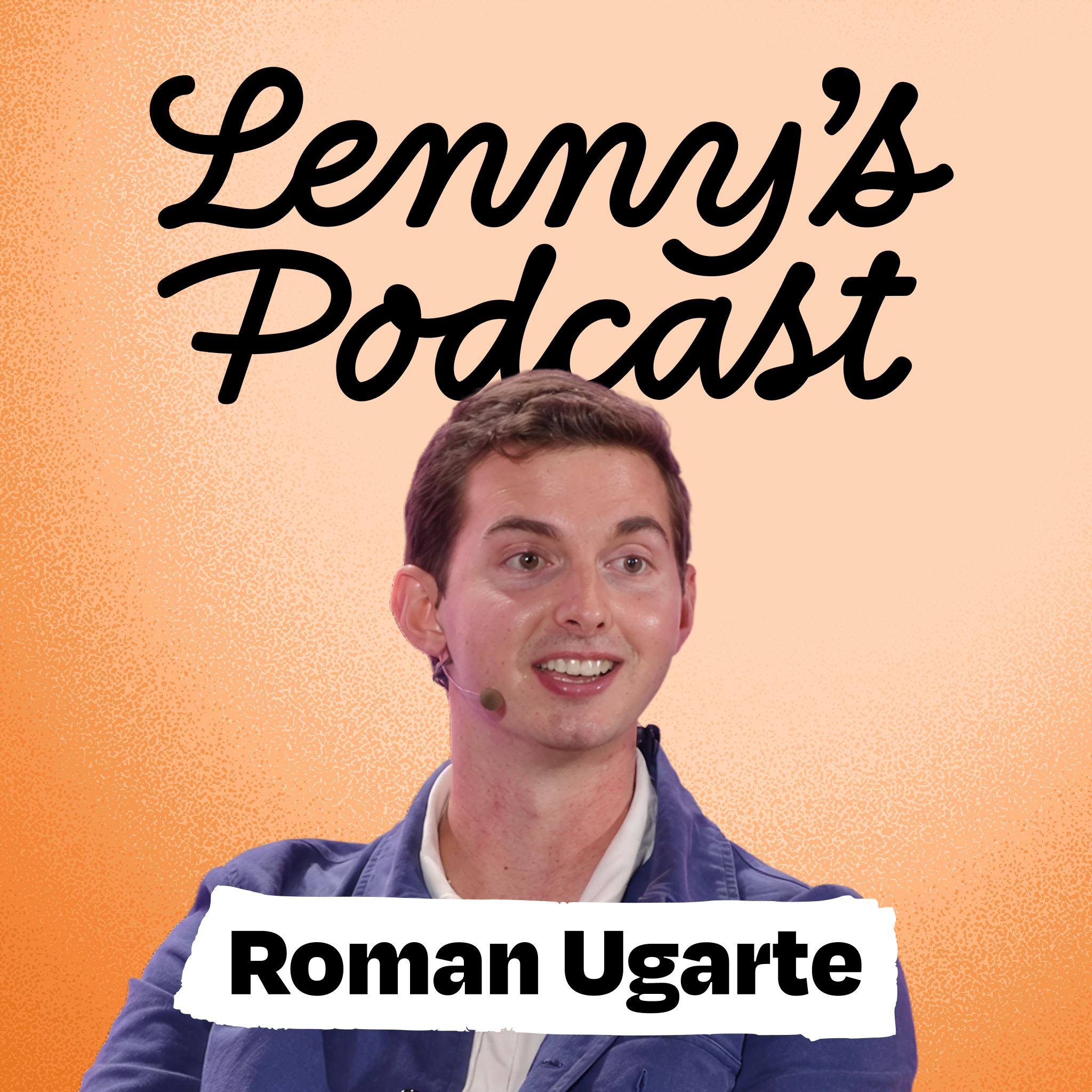 How we built Grok Bot in a month | Roman Ugarte (SpaceXAI)90 / 100
 This CPO regrets that product management exists | Tom Verrilli (CPO of Whatnot)100 / 100
 Adam Mosseri: AI is a tailwind for authenticity80 / 100
 Why companies are becoming a series of loops | Anish Acharya (a16z)
 AI’s third era: the rise of persistent AI coworkers | Tara Seshan (Product Lead ChatGPT Work)