
Lead with Heart · 2025-12-02 · 43 min
Key moments - from our scoring
Substance score
55 / 100
Five dimensions, 20 points each
Javan Van Gronigen draws on 15 years of experience at the intersection of digital technology and nonprofit work - including his role as digital art director at Invisible Children during the Kony 2012 campaign - to break down what actually drives fundraising success online. Rather than chasing viral moments, he emphasizes consistent, high-quality content creation paired with rigorous data tracking. The episode covers how to identify which channels and messaging actually convert donors (not just followers), starting with free tools like Google Analytics and CRM data to understand donor acquisition sources. Van Gronigen addresses the real concern many nonprofit leaders have: that technology adoption will distract from mission. He reframes the challenge as change management rather than technical complexity, pointing to easier integrations (Salesforce, HubSpot, Bloomerang) and platform transitions than existed years ago. For fundraising leaders struggling with content strategy, attribution, and technology selection, this conversation offers concrete starting points - from tracking key events and understanding ICPs (ideal customer profiles) to avoiding "random acts of marketing" and focusing on channels that actually produce donors, not just engagement metrics.
Use Google Analytics to track backwards from donation events (key events with dollar amounts) to see which channels, keywords, and sources brought actual donors. Compare this against vanity metrics like follower counts to focus on content and platforms that convert to revenue, not just engagement.
Post consistently with good cadence to stay visible in algorithms, but prioritize quality and data-driven content targeting specific donor audiences over pure volume; test different posting approaches and channels, then double down on what actually generates donors from the data you collect.
The real challenge is change management, not technology; modern platforms integrate more easily with existing tools like Salesforce and HubSpot, and data migrations are simpler than before. Choose simple, low-training tools and focus on processes your team can adopt without hiring outside developers.
Success came from clear messaging (make him famous), consistent effort in high-quality content production, strategic influencer outreach, and maintaining credibility by ensuring raised funds translated to real on-the-ground impact. However, the campaign also highlighted the challenges of sustaining credibility and managing public perception once content goes viral.
Begin with Google Analytics to track donor sources, set up key donation events in your CRM, then pressure-test against M+R benchmarks; once data is clean, build ideal donor profiles and consider wealth screening tools, but avoid overwhelming data rabbit holes before mastering basic attribution.
Our reviewer’s read on each dimension, with quotes from the episode.
The episode contains practical guidance on digital fundraising, particularly around data tracking, content strategy, and donor acquisition. However, much of the advice is relatively standard (mobile optimization, consistent posting, storytelling) and the guest frequently hedges with phrases like 'I don't think there's a silver bullet' or 'it depends,' reducing the density of novel claims. Several segments devolve into general marketing wisdom without nonprofit-specific depth.
if you're not posting enough and with good cadence, you're dinged in the algorithms
What content created the people that I want to be talking to and the engagement that I wanted, and then start to make more of that
The episode rehashes well-known concepts: data-driven marketing, storytelling, mobile optimization, and the importance of tracking donor sources. The 'composable architecture' framing is somewhat fresh, but the underlying ideas about integrating tools are not new. The Kony 2012 retrospective, while interesting, is a historical case study rather than forward-thinking analysis. Limited contrarian or first-principles thinking.
break that story down into a lot of pieces
the tech is one of those pieces in that, uh, larger story arc for a donor
Javan Van Gronigen is a legitimate operator with credibility: founder of Donately (raised $180M+ for nonprofits since 2013), prior experience at Invisible Children during the Kony 2012 campaign, and background in digital strategy. However, he is primarily a SaaS vendor with commercial interests in the solutions he recommends, which creates inherent bias. He's relevant but not neutral; a nonprofit CFO or development director with multi-year hands-on fundraising would provide more objective insights.
founder of Donately, a non profit technology platform that's helped organizations raise over 180 million since 2013
head of the everything web and digital for Invisible children for about four years up through the Kony 2012 campaign
The episode lacks concrete metrics, dollar figures, and named case studies beyond Kony 2012 (which is decades old). The guest mentions 'United Way, water.org, harley for the Oceans and thousands of others' as Donately clients but provides no specific results. References to M&R benchmarks and Edelman studies are vague without data cited. Donor advised fund discussion is illustrative but unsourced. Most advice is presented generically without specific numbers or examples.
he's also founded 1550, a, uh, creative agency serving mission driven brands around the world
organizations like United Way, water.org, harley for the Oceans and thousands of others
The host asks solid foundational questions (mobile optimization, technology fear, storytelling, 2026 trends, trust). However, there are limited follow-ups to push back on the guest's assertions or explore trade-offs. When the guest makes sweeping claims (e.g., 'corporations are now more trusted than nonprofits'), the host doesn't probe for evidence or nuance. The interview reads more as a friendly product narrative than critical inquiry. Several softball transitions and minimal challenge to vendor-promoted solutions.
So trust me, the ups and downs of that journey are worth the read
I think that's so important. And when it comes to data like what specifically should people be tracking?
Computed from the transcript - who did the talking, and the words that came up most.
On this episode of the Lead with Heart podcast, I’m joined by Javan Van Gronigen, the founder of the creative agency Fifty & Fifty and the nonprofit fundraising platform Donately, which has helped organizations raise more than $180 million since 2013. Javan has spent his career at the intersection of design, technology, and social impact. His work blends intuitive tech, storytelling, and data-driven fundraising strategies to help nonprofits raise more with less friction. In this conversation, we explore why consistent storytelling, not just technology, continues to drive real donor engagement, how nonprofits can track the right data without getting overwhelmed by dashboards, what digital giving trends to expect as we head into 2026, and more. Whether you’re a nonprofit CEO, fundraiser, or marketer, this episode gives you practical tools to strengthen your digital strategy, deepen donor trust, and streamline your tech stack without burning out your team.
Transcribed and scored by The B2B Podcast Index.
Speaker A: Hello, Podcast fam.
Speaker B: Um, I am thrilled to share some exciting news. My book, so Grow Lead is officially live on Amazon. This book is more than just my story of starting a nonprofit and building a peanut butter factory in Malawi.
Speaker A: So trust me, the ups and downs
Speaker C: of that journey are worth the read.
Speaker A: It's also packed with practical strategies to help nonprofit leaders like you tackle challenges
Speaker B: with clarity, Clarity, courage and a whole lot of heart.
Speaker A: If you've ever wondered how to turn
Speaker B: your vision into reality, navigate the inevitable
Speaker A: hurdles, and build something meaningful, um, whether
Speaker B: in your organization or in your own
Speaker A: life, this book is for you. I'd be so grateful for your support
Speaker B: in spreading the word.
Speaker A: Grab your copy of Sow Grow Lead
Speaker B: in the show notes and on Amazon today. Let's keep sowing seeds of impact together.
Speaker A: Welcome to the Lead With Heart podcast, which is dedicated to nonprofit leaders who are passionate about making a difference. I'm your host, Hayley Cooper, and I'm thrilled to have you join us on a journey of growth, inspiration and transformation. At UH Lead With Heart, we believe that leading with heart means embracing empathy, compassion and authenticity in every aspect aspect of our work. It's about putting people first, fostering genuine connections and creating a positive impact that goes beyond numbers and metrics. In the non profit world, it can often feel like we're carrying the weight of the world on our shoulders. The challenges are immense and the road can be lonely. But here, you're not alone. This podcast is a community where we support each other, share our stories and learn together. Each episode, we'll dive into personal and professional development topics tailored specifically for non profit leaders. From innovative fundraising strategies and effective team management, self care practices and leadership insights, we're here to provide you with practical strategies that you can apply to your life and work. My goal is to empower you, elevate your leadership and engage your heart in all that you do. I want to help you navigate the unique challenges of the nonprofit sector with confidence and resilience so you can continue to create meaningful change in the world. So whether you're driving to a meeting, taking a break, or winding down for the day, tune in and join us on this journey. Together, we'll discover what it truly means means to lead with heart. Thank you for being here. Let's dive in.
Speaker B: Welcome back to the Lead with Heart podcast. This is your host, Haley Cooper and I am joined by Javin, the founder of Donately, a non profit technology platform that's helped organizations raise over 180 million since 2013. The fundraising platform helps nonprofits raise More with less friction. And through Donately, he's leading the charge in rethinking how organizations like United Way, water.org, harley for the Oceans and thousands of others connect with donors by pairing intuitive technology with data driven strategy. He's also founded 1550, a, uh, creative agency serving mission driven brands around the world. With a background as the digital art director at Invisible Children, Davin has spent his career at the intersection of design, technology and social impact, building tools and stories that, uh, fuel generosity and lasting change. Well, welcome to the podcast.
Speaker C: Thank you for having me, Haley. It's going to be fun.
Speaker B: So in your bio, when I read this, I was like, invisible Children, that was a huge movement back in 2012 and I remember that playing out. Tell me a little bit more about how you got into the social impact space.
Speaker C: Yeah, so I was at the time at, uh, an organization here in San Diego called Digitaria, a big agency. They eventually emerged and became Miriam and grew into the larger agency world as part of the JWT agency space. But I knew the individuals that had started Invisible Children. I think at the time they'd come back just having filmed the first kind of rough cut of what they had gone to Africa to film. It was children being abducted and turning into child soldiers and this whole conflict that was happening there. And so I just started as a friend, just pro bono and getting some work together for them, and then quickly realized how fast that movement was going to grow and I started to involve the agency that I was at and I really fell in love with the work that we were doing there. Right. How can we do digital media and web and creative and that kind of the, the dawn of social media where Facebook was taking off and how do we build these movements and use technology for good? It was inspiring enough that I jumped ship. And I was head of the everything web and digital for Invisible children for about four years up through the Kony 2012 campaign and everything they did to kind of go viral in that campaign you had mentioned. And then I sought to just go back to the basics of what if we had an agency and a technology that did the best of both of those worlds. Right. But, uh, we really worked solely on nonprofit projects on social causes and really focused on what we were good at, which was building digital products and technology and been doing that ever since. So that was started back in 2009 and yeah, been about 15 years as blending the agency and technology services.
Speaker B: Yeah, that's amazing. And thinking about the Kony movement or we've saw the ALS Ice Bucket challenge These movements that have really taken off because of digital strategy and digital fundraising. So can you talk a little bit more about how your involvement that, uh, Kony 2012 campaign taught you about the power and the pitfalls of digital fundraising?
Speaker C: Yeah, yeah. So that was definitely one of the largest campaigns that we've worked on even to this day, in terms of movement, in terms of the number of organizations that hopped on the money it raised, the credibility it had with the UN and Oprah, and it got everywhere it needed to go. And it's interesting because so many people think, well, how do you do that? And I think from a digital perspective, oftentimes it's not like you know how to go viral so much as you know how to play the game of putting a lot of content out there, knowing all the components of what it takes to become a digital campaign or a, a movement online. And you keep at it. Right. So I think what we learned with that one is getting the right message out, getting the right story out. We focused a lot with Kony 12 on the focus being how do we make him famous? How do we take an individual who is doing terrible things, this world, and just plaster that, uh, face everywhere? Because our hypothesis was if people knew, they wouldn't settle for it, they would do something about it. Right? And so it was a clear message and it was a clear call to action, right? It was to go and attend and watch the film and then from there it was to make him famous. That was the constant push. Buy the kit, buy the shirt, let's make this face known to everybody. Because then we're going to be disgusted by it and we're going to do something about it. And then, yeah, the quality, the work that we put together, I think that was another big piece of it, is this doesn't just happen overnight. It's typically certain degree of effort that you're putting in quality, it's reaching out to influencers, it's making sure the message is getting out there, it's investing in continuing to push that message out there. And I think that was something Invisible Children did. A lot that was countercultural at the time is the amount of effort we put into the content we were creating. Most organizations just wouldn't spend money on it. But that's if it's not at that quality that engages people, especially for that organization, it was young people, right? If it's not going to engage high school and college age people, then it wasn't really going to get the traction we needed. So we invested heavily in storytelling and in sending people out to Uganda to film. And we had a whole office full of creatives and writers and art, uh, directors and editors, because, uh, it required that level of quality to break through the noise. And then that's something that has to be maintained over time. Right. So once that's out there, there's just so much blowback. And once it's viral, there's so much going on, and there's a lot to. I think there's classes that still cover what we did there with that campaign and how much traction it got. There's a lot to it. But then, yeah, maintaining that credibility and that source of. And ensuring that what you raise gets put on the ground and creates a difference. It's. It was definitely a lot. I don't know if I summed it up as what we learned, but those are definitely the things that we went through in that campaign. And just the technology. It's not easy to keep websites up. When Oprah mentions it, they call it the Oprah effect for a reason. Like when she tells everybody on live TV to go to something. There are some technical challenges you got to go through. And so, yeah, we learned a ton. And the world's come a long ways since then in terms of what you can do virally.
Speaker B: Well, yeah, and I think that's important, too. Like, I've worked for international organizations, and it's also helping connect people across the pond. Right. Like, to what's happening on the ground. And you mentioned, like, consistently posting and making sure your message was in front of people. And I think a lot of people get hesitant about posting constantly. They don't want to bombard people. They think, oh, like, more is not better. So could you talk about, is it like, continually posting five times a day, or is it really. Or posting just to post, or is it really being intentional about the type of posts that are. You're putting out there?
Speaker C: Yeah, I don't think there's a silver bullet here. And hopefully I'll give this good, like, gloss over, because there's a lot of detail to that. But the long and short is if you're not posting enough and with good cadence, you're dinged in the algorithms. Right. So you can't just expect to put something out there and have it gain traction. Like, you're gaining traction because you're consistently putting out content, and that content is getting a certain amount of engagement. And because of that positive engagement, the algorithms will expand that reach to more and more people. So when you're finally seeing somebody, it's Typically there will be breakthroughs where all of a sudden somebody comes out of nowhere. But typically when you look into it, it's an evolving of the content that you're creating and the reach is growing and scaling. Unless it's an event that takes place, right? If something happens, a national event or a disaster or whatever, then a lot of those things can change and you can surface really quickly. But you have to realize that the content creation is critical now. Quality versus quantity. It's the level of effort, right? You can put five hours into one post, or you can put five hours into 20 posts. And I think different markets and different industries will get different results from. From different tactics. I think it really just weighs in that you've got to put stuff out there and see what's engaging and then just keep following the data, right? What is resonating and who is it resonating with, and then continue down that route. And again, for organizations, if we're talking about nonprofits, like what's resonating with people who actually donate. So being able to have data all the way down to the ground of, hey, this is the content that actually brought donors, not just content that brought engagement. You can grow a huge Instagram following or huge TikTok following, but if they're not actually becoming donors, maybe it's not quite the donor audience that you want to be reaching. So I think there's maybe a magical fit there where you have to put some content out there and then go to the end of the line and work your way backwards, right? What content created the people that I want to be talking to and the engagement that I wanted, and then start to make more of that and even find what channels work, right? Maybe your Instagram channel is just not the right type of following. But all of a sudden, over here on LinkedIn, you're engaging in this more. More educated or more female or more youthful, whatever. It ends up being this audience that is turning into donors. And you have to find those little pockets and lean into that. So it's a lot of testing, especially with AI and all the content getting out there. Now you can put so much out there so quickly that you kind of got to find the pockets where you're getting traction and then lean into those. Otherwise, we like to call it random acts of marketing, right? Otherwise you're just. You're putting a lot of effort in. You're throwing a lot of things at the wall. We canceled, as an agency even, we canceled a couple of our channels because Instagram wants videos of us Having fun and culture stuff that's a lot harder when you're a hybrid agency is we couldn't keep up. And nobody, none of that was for donors and none of that was for people who are going to be potential clients of ours. And so there's times when you make pivots like that and you say, hey, let's just focus totally on LinkedIn. These are good conversations. These are clients that want to engage with us and have good conversation and our content's converting and let's, you know, focus in there. So some of the thought process for what we've been doing over the last
Speaker B: few years, yeah, I think that's really important and I ah, love the idea of engagement like you said, or like I want a bunch of people in my donor database. But that doesn't necessarily lead to revenue generation. Right. Especially if you don't know who, like you're saying, get really clear on who is engaging, who is responding and then tailor more posts and content to that ideal person and that will lead to engagement rather than just posting to the masses. Right. And so I think that's just really important across marketing and across fundraising specifically, really understanding and approaching it from a data driven perspective.
Speaker C: Yeah, yeah, it's exactly it, I think. And there's a little push and pull, right. Sometimes you have a market and you're saying, hey, uh, I want to get over here, I want to be able to engage this market. And so you push yourself there versus being pulled into that space. But I think overall just making sure you recognize who those audiences are and then making sure that your content aligns to what it is those groups are looking at or the problems you're solving. It's easy to see an SEO, right. If you've, if you're an organization leaning into international work, you're just, that's a different audience you're going to want to target and different blog posts you're going to want to write to attract those types of people. So you're going to want to land on the right keywords that draw on the people interested in those type of affairs and that's going to have a better chance that those people are going to convert. So it's a lot being a, uh, creative. It's hard for me to talk this way because for years I love back in Invisible Children we would just make beautiful stuff. And the Internet worked very differently then it was. If you built it, they would come. It really did feel that way. Like you just had to put it on Facebook and put on a couple Things and the movements would gather and grow. But the exponential amount of content that's out there now, you can't just be creative without that data. And that's where tools like donately can help too. Because you put that form on your website or you use those landing pages, you have all that data to then track backwards from and understand better what the marketing is that's creating those donors. Are they coming from email, are they coming from organic? And if they're coming from organic, what keywords are they searching? So you know to kind of focus in on that type of work. So it's even from a, uh, creative these days, like I'm being forcibly advising everybody that it's, it is so much about the data. And if it's not you, it's somebody, somebody on your team needs to have a handle on what the data is telling you. Otherwise you just go back to that random acts of marketing, which is, it's hard to be profitable when you do that.
Speaker B: Yeah, and I think that's so important. And when it comes to data like what specifically should people be tracking? Because obviously if you're like a business or professional on meta, you have like you or LinkedIn too, you can track certain metrics. Right. But like specifically if someone's listening to this and they're like, well, we haven't really put together like a uh, data plan or really know what to track, to report to know that our campaigns are effective, where would they start?
Speaker C: Yeah, maybe I can stack, start with the basics and then, and grow from there. So having my background in digital, I always want to caveat that because there's probably some bias that I have. But for me, what's really critical first and foremost is focusing on digital, because digital can give you data. So if you have donors online, my first question is where are they coming from? So utilizing even free tools, Google Analytics can give you plenty of this data. If your form converts is what they call like a key event, then what, what Google Analytics will do is track backwards all of the information from that event. So if that key event also has a dollar amount, what you have from day one is how much of your online revenue is coming from different sources. Now attribution is getting a little bit of a, of a, um, scarlet letter right now because of all of the CCPA and gdpr like privacy. Right. So it's getting a little bit harder to track all the way down to the ground where all that comes from. But you're still getting a large swath of data from those tools to tell you, hey, that person, the first thing they saw was this. They came from an email or they searched you on Google or hey, they found you on chat GPT because they were searching what are great causes in Uganda or in Chicago. So knowing where they came from solves that very first thing, which is like what's actually working for us to generate new uh, donors and donor acquisition. Then I think you can start to look a little bit deeper. Then you can start to look at your website and your web tools and what type of traction you're getting there. You can start to look at. I think the M and R benchmarks are still a great place to kind of pressure test how you're doing against others. And it's also a great place to just get metrics, right, like they're gonna advertise in their annual reports, open rates and amount of revenue through email. And how many organizations are putting money into paid and how much is in grants. And so even just seeing how other organizations are fundraising and seeing how you're doing, I think that data is really valuable. I think if your data is clean and you have it in a CRM, I think then you can also start to look at what does define our, uh, what you call an ICP or your donor profile, right, like our ideal customer profile. Those tools either can utilize AI to get to a lot more data than they used to three or four years ago, maybe two years ago to be honest. Or like wealth screening tools that can get you a little more data. You can start to build these little profiles of your donors, of the wealth, income levels, their propensity to give. And so that data, as you get more and more complex, starts to be valuable too because then you know more about who they are and you can communicate in your messaging to them more and more. And then there's just this wide open world of data that you can get to with, uh, tools like Trey and Apollo, where you can go after brand new people or you can input data and have that data get enriched. And that's almost the wild west, right? There's just so much more data out there. We can get in there and it's almost dangerous. You can go down so many data rabbit holes. That's where I feel like I'd prefer people do the things I had said earlier. Make sure your key events are tracked and you know where people are coming from, then understand who they are better before you get into this deep water of you can look up anything and find out anything about anyone, but then you have to worry about how clean Is that data? How accurate is that data? Is it hallucinating at all? There's some complexity there. So, yeah.
Speaker B: Yeah, I love that. I love. Thank you for breaking that down. And nonprofits often hesitate to embrace new technology. So what would you say to leaders who fear that digital transformation will distract them rather than strengthen their mission? Imagine a fundraising partner that not only helps you raise more money, but also supports you in retaining your donors. A partner that helps you raise funds both online and on location so you can grow your impact faster. That's Donor Box, a comprehensive suite of tools, services, and resources that give fundraisers just like you a custom solution to tackle your unique challenges. Helping you achieve the growth and sustainability your organization needs. Helping you help others. Visit donorbox.org to learn more.
Speaker C: Well, I can understand, first off, uh, coming from a place where you gotta do a tech transition or you gotta do a software transition, totally get it. Been there as a business owner a handful of times, going from, say, intercom to HubSpot, going from a WordPress site to a webflow site. Like, it's never fun and there's always risks involved. You know, what is our, you know, what type of hit is our SEO going to get if we redo our website? Like, those are valid concerns. And I think that I want to at least recognize that and validate that. Technology changes are tricky, and I would say even the technology shift, I think, is less of an issue these days than managing change. And I'll try to explain that a little bit like the technology. If you want to switch donation platforms, it's actually way easier than it ever was. Our team can move all of your recurring giving from one platform to another. Something that, you know, five or 10 years ago was a nightmare. You just had to let them all run their course because none of the processors would open up the back door to move that stuff over. That's all become easier. You're authenticating with single sign on, so your accounts are easier. Adding people to platforms integrations much easier. Like our platform integrates to. You can use Salesforce, you can use HubSpot, um, you can use Virtuous or Bloomerang or any of those tools, because it's become a lot easier for us to make those integrations. So I would say the tech side is not quite as hard to change, but it is change management that's become harder because it's easier to change. We're now changing things on our teams all the time. So I would say the biggest challenge is really, what does it take for your whole team to change their process to use this. Instead of using Tech Tool A, you're using Tech Tool B. Like we can put you on Tech Tool B really easily, but now your team's got to learn it. And so I would say I really love simple tools. I love tools that kind of can promote no training, no proprietary developers, no programmers needed. That's a huge value. I think on the donately side of things is it's a pretty simple tool. You don't need to be hiring any agencies to do that work. And I also think integrations are really critical. So there's a term I, uh, probably won't dive into. It's a little technical. It's called composable architecture. And just think of your tech stack as like Legos, right? You either have one big monolithic tool, something like Salesforce that does everything, or what's the future of development? I think is composable architecture where if you don't like mailchimp, you can pull it out and you can put in constant contact. Or maybe you evolve past both of those and you want to install HubSpot or HubSpot becomes too expensive and you need to shift Salesforce. A, uh, composable architecture allows you to keep the tools you love and kind of get rid of the tools you don't. And I think that's where a lot of these tools have gone, is they play nice together now to allow people to do that. And there's always business growth. I mean, you always want to have more and more of your product used. But I think there's a lot of groups that are recognizing that value. And so I would encourage organizations not feel like they have to rip apart one big monolithic tool and put another big monolithic tool in its place, but break it all apart. And that's a big ethos for way we build donately. We don't want to build things that already exist. Right. We're not going to do email automation because there's already 20 great tools out there that do email automation and in either in your CRM or in your email service provider. And so we just want to glue it all together. And I think that's maybe it takes the barrier down a bit where you don't feel like you have to replace everything, but you can be making strides towards better and better tech versus, uh, kind of a growing technical debt, which is we're going to drive this car until the wheels fall off. Well, that's a lot of value you're losing when you do that, versus being able to gradually Invest in something that gets better over time because it can be broken apart.
Speaker B: Yeah, I think that's important. And I appreciate that Donately takes out the technical aspect of the technology because I've worked with different CRMs or donation platforms where I've had to like, try to learn how to code and that's not how my brain works, you know, and then that coding to get it to be what I want is taking away from my ability to build relationships with my donors. So I think that's so important that you provide like a simple, streamlined solution where people can really focus on building those relationships with their donors. And I was laughing when you said Legos because I have a three and five year old boys and they love Legos and I currently have a bunch of them over there. So that analogy worked in my brain because I, um, am deep in LEGO building now.
Speaker C: I'm jealous. I just had to box all our Legos. Uh, my boys are 10 and 12 and they were just collecting dust, so. Saving those in the attic.
Speaker A: Yeah.
Speaker B: So, you know, a little bit earlier and Obviously with the Kony 2012 campaign, storytelling was such a critical part of that and it's storytelling is such a critical part of fundraising. So from your perspective, how can nonprofits use technology to not just collect donations, but also build emotional connection with their donors?
Speaker C: Yeah, fun. I, um, think where I would start with that is that the Internet and the new digital era just provides so many more channels and touch points for you to have with your audience. So I think the best thing organizations can do is break that story down into a lot of pieces. And again, uh, going back to that idea of being consistent, constantly get out there and tell that story. The way you can do that is to understand you have a brand foundation, which really is that story. What is that core story of our organization and what we do. And then you have key messages inside that that you constantly need to be feeding out into the market. And that's where the technology gives you a million opportunities to do that. Your newsletter, your one off emails, your campaigns, breaking into events and galas. Like, you have so many touch points. And so I think it's really important that organizations understand what's our big story, what's that brand foundation of who we are. And then what is that like those five bullets that we constantly need to be talking about in terms of what we're doing, how it's making you different, why we're different, why we're unique, when nobody else can do what we do. And you keep hammering back at those through stories, through proof points, through quotes, through stats. And I think that's fun. That's what drew me to digital when I first got into it is just that, ah, there's so many different ways to do it. It isn't a book, it's we can ping them in social, we can ping them on their drive, we can ping them when they're sitting down at their inbox. Like we can put stuff on the radio and on Spotify or on whatever podcast tool you're listening to. And so I think that's a big part of it. I think there's also this trend for shorter form content. So being able to take a bigger story and break it down, make it episodic, make it bite size, because it's really all you're going to get from people. Very rarely are people going to sit down and spend 20 minutes with you. So recognize what things you can fit into 5, 10, 15 seconds or into somebody doom scrolling through Instagram, right? What do you want to say really quickly? But that's it. It's all these little, these little shots across the bow that get them to see an adorable photo and then see an amazing quote and then see who's behind your organization and what motivates you. All of those little bits and pieces drive them closer and closer. And as a product, one thing that we pride ourselves on is the support that we provide our clients. And to me, the technology is great, but the technology is one of those pieces in that, uh, larger story arc for a donor. Right. We always say we're donor first from a technology that's really just the pages and the design and can they engage in that story. But the story's still on the side of the nonprofit to craft and to build and to put out there. But as a product, we do that, we do that a lot. We work with a lot of organizations and just make sure is the story right, is the messaging right, is the campaign resonating? And so I think that's a sweet spot for us too is people who don't just, don't just want the platform that converts, but they need help telling that story, putting brand campaigns together and then getting out in market with it. Uh, so we kind of like to say that we do a lot more on the acquisition side than just the conversion side when it comes to the other tools that are out there. So yeah, running back to the question, I think it's breaking down your content, being able to tell that story in bite sized pieces and then you've just got so many Places to put those little bite sized nuggets of that story out into the market. So make sure you've got that guiding principle of what you're drawing back to, who you are at the core, and what your key messages are.
Speaker D: Hey there podcast family. If you're like me and deeply committed to improving your leadership skills and fostering better connections with your team, I've got something truly amazing to share with you. I'm proud to introduce the EMC Masterclass, something I talk about often as a certified trainer. It's an incredible program developed by the renowned Dr. Lola Gershfeld, an organizational psychologist and corporate emotional connection expert. You might remember her from a podcast episode where she shared invaluable insights into the world of emotional connection. Dr. Gershfeld's EMC leaders courses are designed for anyone working with people. Whether you're a manager, supervisor, team leader, educator, coach, mentor, or a team member. This program is truly for everyone looking to enhance their communication and collaboration skills to raise more revenue for their mission. Now let me tell you why the EMT masterclass is a game changer. Dr. Gershfeld's groundbreaking emotional Connection process has been integrated into top universities curriculum and recognized by international organizations like icf, HRCI and SHRM M. Humans are wired to seek emotional safety, and when we feel safe, we're more likely to take risks, share innovative ideas and collaborate effectively. The EMC process is the catalyst for creating that emotional safety within your team. The virtual EMC masterclass consists of eight modules with four hours of expertly recorded material, 13 quizzes to reinforce your learning, and a workbook filled with activities for offline practice, and something I still refer to daily. Ready to become an emotional connection master? Dr. Gershfeld is offering an exclusive detail for our, uh, podcast listeners. Use the coat LeadWitHeart to enjoy a, uh, generous 10% discount on the EMC Masterclass. Head over to emcleaders.com and enroll in the EMC Masterclass today.
Speaker B: Yeah, I love that. And for anyone listening, I know that as a fundraiser I've or in charge of both fundraising and marketing. Usually my board's like we want to acquire more donors. So listen to this episode because you were just talking about acquisition and conversion. So these tips are super helpful for capturing new people. Uh, and as we look Toward Almost in 2026, in a few months, what digital engagement or giving trend should nonprofit leaders be paying close attention to?
Speaker C: I'm thinking of all the ones that have been going through for the last couple years. I'm trying to feel like which ones are really like screaming at us. For 2026 donor advised funds, the first one that came to mind, I think that trend has continued to grow. That idea that people can put money into a uh, fund tax deductible, but not decide where it's going right now, that has become one of the biggest charitable vehicles. So I forget if it was Schwab or Fidelity, like technically became the largest nonprofit a few years back because it's just, it's people putting money into a savings account and then deciding later where that money goes. Right. Well, there's been a few products that have come out that allow that transition from those funds to organizations. I think that's pretty critical that uh, you recognize that as a stream it's just a larger and larger stockpile of money that has to go out to charitable causes. That's just not, I mean it's a little disheartening. I, uh, wish individuals would give to causes so that money can get put to work versus just sitting in a bank account. But I think organizations need to recognize there's a lot of money in those and you need to be finding the people that have money locked up in them and try to convince them to get involved in your cause. There's a lot of hype about crypto and hype about different payment methods and things, but I don't see any of those others outside of the donor advised funds really moving all that quickly. We've implemented all those with donately and you don't see this massive growing like, oh my gosh, all this stuff's going through crypto or all this money is going through these Apple wallets and integrations. Like the tech I think has superseded the storytelling to where I don't think it's necessarily tech that needs to be focused on at this point. I think it's more around going back to what you'd said around the importance of story and targeting the right people with the right message. I think the tech is there. If people want to give, they can give. They can easily double click on their phone or use Apple pay or whatever, whatever else. I think we're at a place where that, that might continue to grow, but maybe one to not skirt away from. Mobile is obviously continuing to grow as well. Feels like old news to me. But if you're in a space where you still are providing roadblocks for giving online, Big Ten, 1015 form donation forms, like this is not something you want to go through on a mobile device. So if you're hearing this Pull out your phone and go to your causes donation page and try to do it on a mobile device. Because mobile giving has continued to grow, mobile usage has continued to grow. Nobody's going to social platforms on their desktop anymore. So if you're going to put effort into social posts, realize that's all mobile traffic and that's going to be highly important that you get that mobile donation experience really optimized. So does it fit on the screen? Is it easy to click on a touch device? Very. The less fields the better. Can they just double click on Apple Pay or Google Wallet? That's another trend that I think is there. And giving, individual giving, at least from the reports that came out this year, it's back on the rise a little bit. I think that depends on the sector you're in. But we are starting to see signs of giving is back up and so just continue to keep an eye on what the trends are. We'll see what grants and funding looks like in 2026. It was a pretty bad hit in 2025, at least with the clients that we work with in terms of the reliability of federal grants and even private funding was tricky this past year as things were just volatile. Hopefully that'll start to level off a bit. But again, I'm no economist so I probably should stay out of that uh, that lane in terms of the trends. I have no idea what's going to happen in 2026 with that.
Speaker B: But yeah, it'll be interesting with the laws changing around deductibles and all of that, especially with individuals, corporations. So I know Giving USA gives out a report every May or June and like you said, individual giving makes up at least 75% of the giving and that includes bequests, that includes the donor advised funds. And I think also one thing when you're talking about mobile friendly, like making it accessible. So like on your website or on your donation page, making it clear and accessible, how someone wants to give her a donor advice fund can give to your organization and then like you said, test your campaign before it goes out, make sure that it works, give a dollar or whatever, right? Check the whole process. Because it's not just necessarily like you said, the tech stack itself, it's the experience. It's making sure that the person understands from their first impression to the end, they're reminded why they gave. They understand the storyline and how they're playing a part and becoming a partner with the organization to be able to give. So yes, you do need the tech stack, you do need that to Be seamless. But you also need that story aspect there to help make people make that decision.
Speaker A: Right.
Speaker B: Because they make it from an emotional brain and then rational. And so I think that's definitely important, uh, an important part to pay attention to. And, uh, my last question for you. You've talked about transparency and cutting out hidden costs in an industry where trust is everything. And from reports that I've heard, it spawned the decline. How can nonprofits align, uh, their branding, fundraising tools and donor experience to build lasting confidence and loyalty?
Speaker C: Well, I think go towards what we are doing to build trust and reliability with SEO. And this is a weird. I'll come back to this. But in essence, that's been a big shift with all the chat tools and the way AI search has taken over is its ability to go farm that much more data that quickly and provide you information. M has now been like, we can go get the data, but is it credible data? And so now organizations are needing to prove themselves credible, but in new ways. Right. So Wikipedia is still heavily relied on by those tools, external reviews. There's a lot of things that bots are now doing to validate you. And so that's where my brain goes, is we've now lost that ability to just talk about ourselves and then win donors over because we can shut out everything else. Right. At this point, the web can cross connect so quickly that what you need to do is show that credibility in a multitude of places. So what does that look like? That is testimonials and public conversation. That is your website, but that is also articles being written about you. It's to spread that, uh, content out there that shows that you are credible because it's necessary. So stories from the ground, AMAs, open conversations with key founders, like, we are being forced out from behind our desks quite a bit more than we used to. Even a conversation like this is a great opportunity for people to understand how. I think as a business owner and as a founder of companies that hopefully going to work with more and more nonprofit organizations in the future, it's putting the people, both the people you're supporting and the people running the business out in front of the camera. It's getting honest feedback out there. It's trusting that when you ask for reviews, you get information back that you're open to have that out there and be publicly accessible, because that's where it's all going to start to come together. As this is a company and a culture that I can trust, the transparency is big. I think we tried to lean into Just being open and clear about transaction fees or here's our administrative costs and nonprofits, um, are forced into being really open and honest about that. But I think it's less about that data because realistically I don't know how many people, unless you're a large donor, is like going to go download your 990form. That's not transaction transparency. Transparency is this. It's human faces, it's human interactions. It's a response to AI and data that says, yeah, that's all really important, but this is also like the guts and bones of who we are as an organization and people being willing to put their face behind it and talk about it and put it on social media and put it on emails and keeping people up to date. So hopefully that helps. You're right, we're in a bit of a decline. There's been enough turmoil in the nonprofit world that uh, yeah, it's getting harder and harder for us to go to a donor and say, hey, we've got this really beautiful clause, trust us with your money. There's not a lot of trust out there. Honestly, highest, I think the Edelman, the last Edelman study I saw, trust was highest with corporations. So faith based organizations have dropped, non profits have dropped, brands are back to being trusted. So you look at maybe a brand like Patagonia or somebody who's doing good in the world, even though they're a for profit, they're more trusted than the nonprofits who are just trying to get out there and do good in the world. And we gotta wrestle with that. Why is that? And also look at it as an opportunity. Right. Co aligning with companies that have a really good trust with their customers, lean into that. If you can get an amazing brand to partner with you, they've got higher trust than you do. And maybe that's something to lean into from a marketing opportunity because that's where consumers are unfortunately right now for nonprofits, that's where their trust is. So maybe ponying up next to those organizations that are willing to run cause campaigns with us, uh, that might be a great place to go in 26.
Speaker B: I love that. And I'll have to do some research and link to that report in the show notes because I think it's important for people to understand. But like you said, like, I think reporting and making sure that people understand where their dollars are going is important and having that credibility and accountability and it sounds like your platform does a lot of that. So if people want to learn more about you and donately and the work that you do, where can they find you?
Speaker C: Yeah, so I, uh, most of my content goes up on LinkedIn. If I'm doing any podcasts or I run a podcast as well, you can find me on LinkedIn donately.com for the product. And then we have a, uh, year off for the Donately product. So if you want to make that technology transition, we know it's hard, and so we try to make that a little easier for you to do. So we give a big discount and great customer support to help people make that transition. So donately.com podcast, and that'll get you some really good discounts and motivate you to move into that kind of composable tech stack we were talking about earlier.
Speaker A: Awesome.
Speaker B: Um, we will make sure to link to all of that. Well, thank you so much for this conversation. I have truly learned a lot and I know that our listeners have too. So thank you, Haley.
Speaker C: Thanks for having me. That was a lot of fun.
Speaker B: Hey, before you go, want to watch? Yes. Watch the best moments from the Lead with Heart episodes. We're sharing the most powerful highlights and takeaways over on our brand new YouTube channel. Yes, we are on YouTube.
Speaker A: Just search for the savvy fundraiser on
Speaker B: YouTube and hit subscribe so you never miss a moment of insight and inspiration. The link is in the show notes as well. Thanks for listening and as always, keep leading with Heart.
Other episodes covering the same guests and topics, from across The B2B Podcast Index.
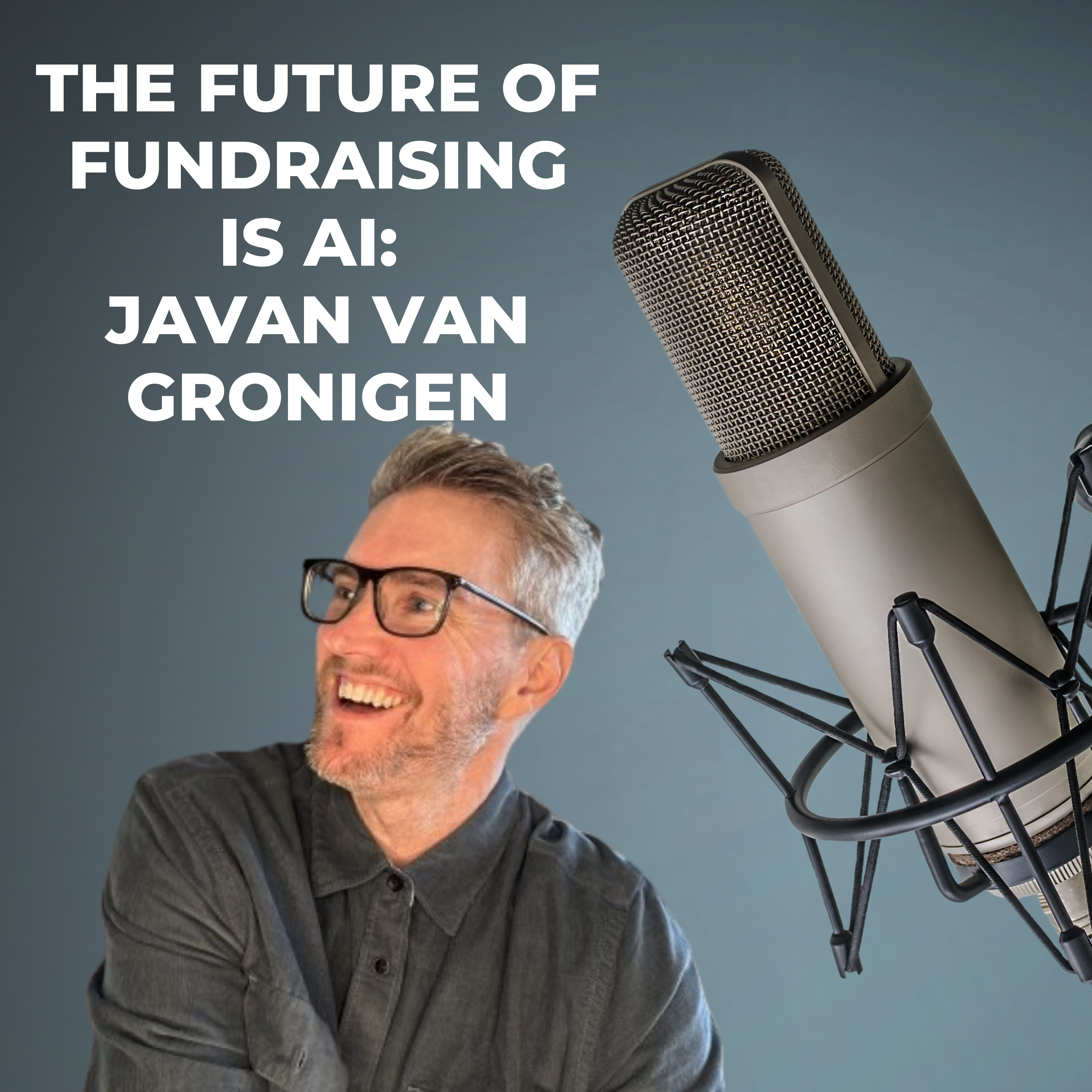 How Donate.ly Helped Raise Millions and What AI Means for Nonprofit Fundraising | Javan Van GronigenMarketing Spark · features Javan Van Gronigen75 / 100
 How a Solopreneur Automated Client Reports with One Google SheetSolopreneur Sessions with Fexingo · on Google Analytics85 / 100
 How Smaller Businesses Beat Bigger Competitors with Gareth LockwoodSpotlight on B2B Marketing · on Ideal customer profile (ICP)84 / 100
 How Private Equity CMOs Build Revenue That Increases Enterprise ValueDemand Revenue · on Ideal customer profile (ICP)84 / 100
 Episode #30: Building on Fundamentals: Why GTM Strategy Drives PE Returns w/ George de los ReyesThe LAB: Value Creation in Private Equity · on Ideal customer profile (ICP)82 / 100
 The Creative Testing Gap: Why Most B2B & B2C Lead Gen Campaigns Fail to ScaleThe Revenue Room · on Ideal customer profile (ICP)80 / 100E123: Choosing Clarity Over Burnout: Why I’m Pausing the Podcast35 / 100E122: Leading Through Trauma, Burnout & Transformational Philanthropy with Laura Bode65 / 100E121: Breaking the Cycle of “I’m Too Busy” - Intentional Leadership & Sustainable Energy with Jen Recla48 / 100E119: Decolonizing Nonprofit Leadership: Redefining Risk, Safety & Imagination with Pierre Berastain70 / 100E118: The Evolving Landscape of Generosity: Key Insights from the 2025 Bank of America Study of Philanthropy with William Jarvis