Lead with Culture · 2026-01-27 · 25 min
Key moments - from our scoring
Substance score
46 / 100
Five dimensions, 20 points each
Character functions as a mosaic of virtues and vices that directly shapes outcomes in both life and business. Tony Ferraro breaks down the mechanics: habits form virtues, virtues comprise character, and character determines destiny. Rather than abstract philosophy, this has concrete business applications - dishonesty damages the bottom line, impatience loses customers in service businesses, and punctuality affects operations. The episode explores how one service-based company implemented a character-focused workshop where employees identified virtues in peers, shared personal stories of growth and recovery, and recognized that organizational values live through leadership actions, not mission statements. Ferraro emphasizes that leaders set the tone through their habits and actions, which employees watch constantly to determine what's actually valued. The framework applies across hiring (assessing candidates' self-awareness and character), retention (high-character employees naturally repel poor performers), and day-to-day culture. For B2B operators, the key insight is that investing in people's character development - treating them as humans rather than production units - directly supports both employee fulfillment and business profitability, while leaders who preach values but model different habits create organizational death spirals.
Habits form virtues, virtues compose character, and character determines destiny - both personal and professional. Dishonest employees damage the bottom line; impatient service staff lose customers; lacking diligence costs productivity. Business outcomes depend on the character of people in the organization.
Leaders must assess their own habits and virtues honestly, then change habits that create vices. Employees watch leaders' actions constantly to determine what's truly valued in the organization; misalignment between stated values and leader behavior creates an organizational death spiral.
Organizations are made up of people, and people only perform at their best when they're the best versions of themselves. Character virtues - honesty, patience, diligence, punctuality - directly affect business outcomes, profitability, and team dynamics.
Frame it as recognizing and acknowledging virtues already present in the team, asking employees to identify which virtues matter most to them, and having them track daily actions that align with those virtues - treating people as whole humans, not just production units.
High-character employees attract similar people, and when someone with low character and unwillingness to change enters that group, they naturally stand out and get managed by peer accountability rather than requiring constant leader intervention.
Our reviewer’s read on each dimension, with quotes from the episode.
The episode presents a coherent framework linking habits → virtues → character → destiny, but the core insight is relatively straightforward and familiar to B2B leaders already invested in personal development. While the virtue-identification exercises and the mosaic metaphor are useful, the conversation lacks novel data, surprising counterarguments, or actionable detail that would surprise a practiced operator. Most points are restatements of the same thesis without building unexpected depth.
character is your destiny. It's going to either increase or decrease the likelihood of you moving in the direction you want your life to move to
those actually are a result and the product of our habits. So if you want to start from that base, you start with the right habits. You do those enough, those form the virtues
The framing of character as a mosaic of virtues/vices is accessible but not particularly fresh in leadership circles. The connection between personal character and business outcomes is established thinking. The celebrity apology critique is relatable but anecdotal rather than novel. The episode mostly recycles virtue ethics in modern workplace language without introducing contrarian views or first-principles challenges to conventional character-building wisdom.
character is your destiny
the company is treating people like people
Tony Ferraro is presented as a coach and workshop facilitator with experience in culture development, but the transcript provides no credential depth, scale of impact, or evidence of operational experience building or scaling businesses. He appears to be a service provider/consultant rather than a practitioner who has built something at scale. Kate Volman is the host/partner in the consulting firm. Neither demonstrates the battle-tested seniority of someone who has operated at high volume or navigated real P&L consequences.
Tony Ferraro: back in black. Yes, I'm back
we do some of these little niche workshops too of, uh, that are part of whether it's personality or this one on character
The episode relies heavily on anecdotal examples (a young man's recovery story, a single client company using character workshops) and abstract virtue lists without data, metrics, or concrete business outcomes. No numbers on retention, productivity, revenue impact, or hiring conversion are provided. The advice boils down to generic prompts (ask yourself what virtues you lack, seek feedback) rather than specific methodologies, timelines, or measurable interventions. The client example is touching but not substantiated.
The virtue I admire most about Tim here is how diligent he is with the work
he stood up and talked about his journey from addiction and owned every piece of it
Kate's questions are generally soft and supportive rather than probing. She rarely pushes back, challenge assumptions, or dig into contradictions (e.g., when Tony claims character-building affects bottom line, she doesn't ask for evidence or nuance). The conversation flows warmly but lacks the intellectual rigor of tough follow-ups. When Tony hints at offering a real-time exercise, Kate deflects ('We're gonna take this offline. We're outta time') rather than pushing for depth. The tone is more peer affirmation than investigative journalism.
We gotta go and, uh. Oh my gosh, Tony. Well thank you so much. This was so fun
Can you give the listeners maybe a little activity to just help them identify maybe some of the virtues that they really wanna work on
Computed from the transcript - who did the talking, and the words that came up most.
“Start with the right habits to build virtue. Those virtues shape our character - and our character shapes the destiny of our lives and our companies.” In this episode, Tony Ferraro , Director of Training Services at Floyd Consulting , joins Kate Volman for a powerful conversation about character: what it is, why it matters, and how it influences culture more than most leaders realize. Drawing from a recent workshop he delivered, Tony explains how virtues form the “mosaic” of our character, how habits build those virtues, and why high-character teams perform better. Kate and Tony discuss the roles of self-awareness, intentionality, and accountability in personal and professional growth, sharing real stories from organizations embracing this work and the transformative impact it’s having on their people.
Transcribed and scored by The B2B Podcast Index.
Tony Ferraro: All of us have this mosaic that's made up of these little pieces called virtues or vices. The other way, if it's good or bad, we like to say your character is your destiny. It's going to either increase or decrease the likelihood of you moving in the direction you want your life to move to. Kate Volman: Welcome to another episode of Lead With Culture.
We are so excited about this episode because we are digging into a topic that is probably not discussed enough among teams and people when it comes to not only building a culture, but just helping. Your team become the best version of themselves. I'm joined by Tony Ferraro. Kate Volman: You're, you're back for another episode, Tony, Tony Ferraro: back in black.
Yes, I'm back. Kate Volman: So excited to be able to have this conversation because today we are talking all about. Character, Tony Ferraro: how to have character, not be a character. Kate Volman: Yes, not, not to be a character, but to have character.
And this is such a great topic and the, and the reason why we decided to do this episode is because, you know, fortunately we get to work with a lot of really wonderful leaders. Kate Volman: They have great cultures. They care about their team and their people. And so we're working with someone who has not only invested in coaching.
One-on-one coaching to help them become a better leader. Also, some culture solution training. So bringing us in, that's one of our favorite things to do, is to come into an organization and to help them identify which of the six principles of a dynamic culture they really need to focus on to really help them go from a good to a great culture, and then to keep that great culture going and moving. Kate Volman: And then also they have Dream Managers.
So we're doing lots of different things with them, and we really love partnering with organizations to really be that culture partner, that culture coaching partner for them. And so Tony, you've been working with them for a while now, and they came to you and said, all right, so we've done a lot of work and we've seen all this progress. Kate Volman: Great things are happening and things are moving. And now what?
Like what are some other things that are really important for us to consider and think about as we not only are growing the business? But always putting people first and making sure that their people are being fed and that, because obviously if they're feeding their people and growing their people, their organization is gonna do the same thing. Kate Volman: So, um, so this topic of character came up and you did this really wonderful day workshop around character and it ended up being such a success and we're doing it more and more now with other organizations.
And so we thought, hey, let's make this a podcast episode and talk all about character. So Tony, why? Kate Volman: Why does this even matter? Why does character matter?
It was Tony Ferraro: interesting with this client because as you said, they really invested in the, the services that we were able to partner with them. And what we see happen is in this client and other clients is that this idea that we know that your company, your organization can only be the best version of itself to the extent. Tony Ferraro: The people in the organization are the best versions of themselves. When people really slow down and think about that and then do something about it through, through coaching and training, what happens is that idea starts to marinate throughout the organization.
It involves how they make decisions, how they think about strategy, and so this, this particular company, it's a service based company. Tony Ferraro: So, you know, I work with the managers. They also have a lot of frontline people that are doing home services for people, and they decided from this training that they were gonna regularly. Have times when they brought the whole company together and do something for the people to make the people better, better versions of themselves.
Tony Ferraro: And so we talked a little bit about that. This is the owner and some ideas came up. Someone had suggested kinda loosely this idea character. So the owner and I kind of honed in on that and I told 'em that's, you know, something we actually do.
And it kinda went from there. So it was a natural extension of trying to improve the lives of their people. Tony Ferraro: So that obviously the company then is, is gonna, is gonna benefit from that and that's where, that's where it came from. And so the more we discussed it and, and this idea of character, I guess we should probably talk about what are we actually talking about?
When we talk about character, you know, character, it is a term for the, the way I like to say it is the mosaic, if you will, that all of us have this mosaic that's made up of these little pieces of these things that we have called virtues or vices the other way, if it's good or bad. Tony Ferraro: But we all have that. We all have our, you know, our characters made up of that. And that's obviously going to, we like to say your character is your destiny.
It's going to either increase or decrease the likelihood. Of you moving in the direction you want your life to move to. So, so kind of working backwards, if, if that's your destiny to become the best version of yourself, then the character is gonna determine that. Tony Ferraro: So how do you build your character, improve your character, change your character?
Will you do that by increasing the virtues that you have? And we're talking about things like trustworthiness. Patience, diligence, fortitude. This is a tiny list of sense of humor, is actually a virtue prudence.
All it goes on and on. Tony Ferraro: This idea of all. So we wanna increase those and we do that. How do you do that?
Well, those actually are a result and the product of our habits. So if you want to start from that base, you start with the right habits. You do those enough, those form the virtues. Those virtues then get placed into this wall that makes the mosaic of our, of our character and then our, that determines the destiny of ourselves and our company.
Tony Ferraro: So, you know, our, our character is what it is at its current time. It's fluid. It can change and. I'll say this, if you want to, uh, see my head explode, it usually happens when I see some, you know, some sports star or a celebrity or something and they do something incredibly stupid.
And then of course it gets discovered and then the kind of typical apology comes on and the person comes on, they say, this one line that just drives me crazy. Tony Ferraro: They say, look, that that's really not me. I find myself screaming at the TV or my laptop going, it is you. I mean, we all saw the video.
It is actually you, right? But, but I think what the person really means is that's not the the person I want to be. And I think the better apology would be, look, we all know and saw what happened. Tony Ferraro: I've examined my life and what I've realized is that the habits that I've gotten into have really formed some deficiencies in my character, and I'm gonna work hard to change that.
I just need your patience as I work through that. You know, that's an acknowledgement of who you are instead of this nebulous. Tony Ferraro: It's not who I am. It's not, no, just acknowledge it.
I'm in some habits right now that are either denying me some virtues that, that I need to form, form the character. You know, that's the, that's kind of the overview of what we're talking about. You know, when we talk about character, it's, it's the makeup of who someone is based on the virtues that they possess, which are derived from the habits that the person has. Tony Ferraro: And, and it is, it is wherever you are right now, you need to take a good look in the mirror.
What's going well, what's not going well, and what do I need to change? Oh wow. That's a lot. Kate Volman: I like the stomach.
You get. I know. Well, it's, you know, the, the two words that that came up as you were talking was self-awareness and intentionality. Kate Volman: When you use that example of, and when someone says, that's just not me, first of all, I think that is a huge defense mechanism of, because obviously they are.
Can you imagine like that's to be, to have to admit. Again, self-awareness. Like to have to admit that you did something that, you know, like looking back, you knew it was wrong while you were doing it, you probably knew that it was wrong, but what do they say? Kate Volman: You know, of course, of course people apologize, but are you apologizing because, because you really care or because you got caught?
So it's, we have to be thinking about this. And so self-awareness is okay, and then the, the intentionality is als it, it comes into play with. Are people really thinking about character and building their character and what their character is and, and really sitting down and saying, these are the characteristics, these are the habits, these are the virtues that are really important to me, and this is how I live my life with those virtues. Kate Volman: These are the things that I do every day to almost, it's like I am proving to myself every day that I am living out these virtues, but most people are probably not doing that, right?
We go about our day saying, oh, we are good people and we, you know, we care. And but when you have to really dig into, but what are those virtues, you know, we get into that with, with Dream Manager, right? Kate Volman: What are the virtues that you really wanna be focused and work on? You have to really think through what that looks like.
And going back to what you were talking about with people wanting to track stuff, we can track these things like what virtue do you want to be known for, recognized for, or just be proud of yourself for. Kate Volman: And then every day, what did you do? What action did you take that you can say. Is directly correlated with this virtue that I'm working towards.
Yeah. And Tony Ferraro: you know, like for the audience of this podcast, most, I'm making an assumption here, but most the folks that listen to this are, are like, yeah, I get this in my life. Tony Ferraro: And most of 'em are probably really working hard to build their character. But you know, the next, take the next step and say, okay, but you know, I own a company.
I'm a manager of a team. Or, or, you know. Is this really something that belongs in the workplace? I mean, it's got some connotations there of is this, you know, spiritual in nature?
Tony Ferraro: Is this just too personal? Is it too philosophical or, you know, or fluffy? Well, you know, what we know is that the world loves virtue and the business world loves virtue, whether it says it or not. And you, you, you know that you ask some simple questions.
Do you want your coworker to be patient or impatient? Tony Ferraro: Do you want your controller to be honest or dishonest? Do you want your service people to be punctual or not really care about time? Do you want people to be strategic that work for you or, or people that just can't synthesize things into a, into a plan or those, so it obviously, it always works better when people have better character, when they possess more virtues and it's good.
Tony Ferraro: Business sense going back to that, you know, uh, somebody that's dishonest working for you is, is bad for business. Someone who's not patient. If you're in a service business and someone's not patient with a customer, you've lost that customer. So this really does have a business application, and it really did with this, the client that we're working with, they said, we wanna keep making our people better because it's gonna make their lives better, but, but that we know we're a company, we're trying to make a profit here.
Tony Ferraro: That's why we're in business. It's gonna help our bottom line also. So it's got a real world application and everybody prefers virtue. Kate Volman: Yes.
So let's talk about what were some of the responses from the group When you brought up this topic of character, what were some things that maybe surprised you a little bit around the conversations or were people a little surprised that maybe some about how they were thinking about their own character? Tony Ferraro: Right. No, so, so we did a couple exercises in some small groups, and one of the things, they had to identify a virtue in the, I think they were like groups of three in the, in the group that they were in.
And then they had to tell, you know, when we came together then they said, you know, the virtue I admire most about Tim here is how diligent he is with the work. Tony Ferraro: So, so everybody's doing that for everybody else. And I think some people either were proud, not in the pride way, but they were proud that, that people recognize that virtue of things, they work hard on it, or they had never really thought about. Wow, that's really a virtue that I have, and someone else noticed it.
Tony Ferraro: So you know, number one, kind of the admiration and the acknowledgement from the whole group went up towards each other. Now that's gonna go beyond that day. It was nice that day, but it's gonna go beyond that day. The other thing you could look at and say, it also kind of put people, like if somebody, this guy works so hard.
Tony Ferraro: Now that guy's gonna keep working hard because somebody just acknowledged it across there, so, oh no, they noticed Kate Volman: that now I gotta keep doing it. Tony Ferraro: Exactly right. Uh, or, or keep, you know, fooling them, whatever that, that might be. But I'll tell you it as people, one of the things you talked about, you know, what was a virtue growing up that was really emphasized in your family?
Tony Ferraro: Was it ever emphasized too much? And I was touched in the way that they, they. Examine their own lives. And I have to tell you at one point, and this was a, uh, a young man who I guess had been working at the company about six months, and he stood up and talked about his journey from addiction and owned every piece of it.
Tony Ferraro: I was this, I acted this way, I was doing this, I was, and then talked about. You know, his turn, and this is the neat part, how the company, how them taking a chance on him in his recovery and how proud he felt and how grateful he was, which is a virtue to the company and people are crying and they stood up and cheered for him. Tony Ferraro: It was just amazing. I don't know if everybody knew his story.
I mean he was comfortable sharing it and you know, it really just. Drove home the idea that this company is about their people and they want the people to be the best versions of themselves. And then for this person to, to feel comfortable in that group to stand up. Tony Ferraro: Well, you know, and there's some tough, it's a service, some tough to stand up and do that and give that, that, uh, testimony was, it was pretty powerful.
Kate Volman: You know, one of, one of the reasons why it's so incredible to get it. Team together to do workshops like this is that they hear stories like that, which obviously shifts the way you think about that human and interact with that person, that person, that people in that room are gonna share that story with others. Kate Volman: And it also starts highlighting these conversations that most people aren't having. And now they're gonna have these conversations.
When you're not in the room with Tony, right? Like when you're, when you are gone and left and they're gonna say, oh, remember when we did that? Or, Hey, remember when we went around and talked about virtue? Kate Volman: And they could, they could do that on another team meeting.
Or you're gonna start to see the interactions with people differently. They're gonna start noticing the virtues and other people that they took for granted or they didn't really real recognize as a virtue. And some of those folks are gonna say, wow, I, I don't think I realize how much I value that in. Kate Volman: John, but I really think I can learn something from this person because of that.
It brings people together and it helps people wanna grow in all different areas. And again, it, it, it changes the conversation well after that day. Tony Ferraro: And, you know, just the acknowledgement that this is part of who we are as, as humans. Tony Ferraro: It does what we, we talk about all the time.
The company is treating people like people. This is diving in and saying, we're interested in you as human beings, not just cogs in this machine that, you know, we're trying to make money through. So that has dividends far beyond the workshop. It starts to shape the modus operandi, the way we do things here, and what's valued at the company, which is huge because people are always looking for what's valued at the company.
Tony Ferraro: And so now you can take that a step further and say, okay, if, if that's really clear, then we're gonna attract the right people to the company. Because they're gonna see that it's valued, which along those lines, now that also becomes a piece of, you know, are we hiring the right people? Does this person share? Tony Ferraro: Let's look at their character.
And let's figure out from their past, from what they've told us, from what we know from references, is this a person who we think is concerned, that is aware in their own life of where they're strong and where they need to work on. So it just starts affecting everything. It affects who you attract, it affects, you know, there are companies where. Tony Ferraro: You're just amazed that of the people that work there, and that's because you hire somebody of high character.
You know they're going to people that of other high character are gonna be attracted to that, and you put a few of those people together. Then when you have someone who may be deficient in character. Tony Ferraro: And it's not willing to change. Now they start standing out like a sore thumb, and the organization will take care of that.
They'll take care of that person either, you know, getting that person to change or doing whatever's necessary to move that person outta the organization. Leaders think they have to do that all. Tony Ferraro: If you have that climate built, it'll stand out and people will take care of it internally. But you know, it does beg that question there kind of at the end here that.
If you're listening to this and you are a manager, or if you are a business owner or those things, you know, look at your own character. Tony Ferraro: You know, people are gonna look at your actions, not what you say. They're gonna look at your actions to see what's valued in the company. So.
If you are an owner, if you're a manager of those things, you know, taking good assessment of what are the habits that I'm in right now that are leading to virtues or vices? Tony Ferraro: What do I need to change? What do I need to do more of? Because it's gonna make your life better.
And people are watching and they're gonna make their own decisions about what's valued in the company. No matter what. No matter how great your poster is, that's up there about what's values, our company values. Tony Ferraro: You know, talk about a double whammy.
You know, if you have one, one thing on the poster and then you treat someone differently. In opposition to that. That's a death spiral. You're not coming out of that one.
Kate Volman: People are watching. I love that. Like that's, yes, because I think about some of the conversations that you hear from people that work at a place that maybe doesn't have the greatest of cultures, and they often talk about the leader. Kate Volman: They talk about the leadership and, oh, the leader.
Oh, the leader doesn't care about me of like, they're just in it for the, like, you hear all of these, the way that they, the employee is experiencing it is not great. Then there's other leaders that you can just tell how much they care about their people because of the programs they implement, the way they treat their people, the way they talk about their people. Kate Volman: It's just incredible. And even thinking back, I mean, I know we say this a lot, think about.
Think about the leaders that you've worked for in the past and what have you seen in them and what did you appreciate about them? I've mentioned before, I used to work with this woman who actually a big part of the reason I took the role was because I wanted to work with her. Kate Volman: I was like, I am going to learn so much from this woman, and she is an incredible leader. She.
Absolutely says what she means to say. She's such an incredible communicator. She cares about her people. She cares about the community.
She cares about her work. Her work ethic is amazing, and she just. She's just someone who I have always admired and, and still to this day. Kate Volman: Like she just, even in very challenging conversations, she keeps her poise and she's just so respectful, but she is not scared to say what needs to be said, you know, talk about.
Difficult conversations and being able to have those and oh, and she's the best at having difficult conversations and it doesn't even look like it bothers her at all, but she stays, but she's just done it so much. Kate Volman: But she also recognizes and realizes that those things need to happen in order for people to grow and for us to get. The job done for us to fulfill the mission of whatever it is that we're working on. So I feel very blessed to be able to work with her.
And I think about the leaders that, that we get to work with, and that is who they are. Kate Volman: All of the leaders that we work with, look, if they're hiring us, they obviously care about their people. Their character is, they have incredible character, and I would say all of them. Share many of those virtues in common because we see it time and time again.
Tony Ferraro: Yeah, that's a great point. A great way to wrap this in terms of, you know, because what this particularly this company did is, is, you know, not only is, I know from the coaching that he's working on himself, but it's not just about the leader. Tony Ferraro: He also putting that out there that here's something we're, we're spending the day talking about this. It was very clear that it was everyone's individual responsibility to work on their own character.
'cause both those things have to be in place. You know, it's not just a leader and the leader has to model, but then they also have to hold people accountable. Tony Ferraro: And this is where it all gets t. Like I said, it's a great way to wrap this up because just as you said with the woman you work for, you know, somebody I can care a great deal about you.
I also need you to hold you accountable for the job you're supposed to be doing because actually not, is really not caring. Tony Ferraro: So all these things tie together. It's not, you know, we're gonna be touchy feely about this, or we're gonna be really hard about these metrics. This all works together because you know, ultimately that's who we are as people.
We're complicated. We have to do a job, but we also have other lives. All that stuff comes together and, you know, treating people like people allows you to really forge those relationships with the people that work for you that will keep them working for you. Tony Ferraro: That will get them to bring more people, like them to work for your company.
That will drive your bottom line, uh, up, up, up because of the great work that they do. So there is no one single answer is focusing just on this, you know, you still have to do the business part well, but all these things are just. Tony Ferraro: What it means to be human. And if you grow your people, your company's gonna grow.
Kate Volman: Yes, yes, yes. All right. So is there, Tony, can you give the listeners maybe a little activity to just help them identify maybe some of the virtues that they really wanna work on, or how would they kind of rate their own character? Kate Volman: Just kind of like to put it more in the forefront of people's minds.
Right. Tony Ferraro: No, I think you hit on it that that awareness piece of ask yourself the question, what are my strongest virtues? What are those virtues that I may be lacking right now? And think about that, then seek some validation of that.
Yeah. Tony Ferraro: I've heard people say this before. I look back at this situation that validates that. Ask someone, what's my number one virtue?
If you, you know, and then is there something you think I could work on? Then take that step back and say, okay, what are the habits that I have to build? Or what are the habits that I have to grow in to do over and over and over again that'll eventually build this, you know, to, to build the virtues and make this mosaic of my character, which are ultimately. Tony Ferraro: Affect my destiny.
So, you know, being aware is really important. So be aware, take a good look at yourself, as unpleasant as it might be at times. But take it easy on yourself. This is who I am right now.
I wanna be this, this is where I am. I, this at least gives you a roadmap to get there and maybe Kate Volman: ask the person you don't think you should ask. Kate Volman: Maybe push yourself to ask someone who, uh. Is going to be brutally honest with you, Tony Ferraro: and we can do that exercise right now.
Kate, if you'd like, I could give you a little run. Kate Volman: We're gonna take this offline. We're outta time. And that's a wrap.
All right. We gotta go and, uh. Oh my gosh, Tony. Well thank you so much.
Kate Volman: This was so fun. And um, I know, you know, this is just, it, it is an interesting topic and I think it's one to just kind of come back to, you know, every quarter or just something to focus on, to just make sure that we're, we're always working on these virtues that, that we might say we care about, but maybe we just need a little, a little, little refresher. Tony Ferraro: And if anybody is interested, like I said, this is a great, we do some of these little niche.
Workshops too of, uh, that are part of whether it's personality or this one on character. It really is a great way to get your, your team thinking in, in a way that maybe they aren't. So, Kate Volman: yeah, so if you're interested at all, of course we would love to chat with you about that. Kate Volman: We would love to come into your organization and work with you on.
We have lots of different things. No matter, Hey, you know what people have. People have people problems. We, we've got people problems.
And so this is what we are here for. We're here to come in and to help you with some of those challenges. Kate Volman: So that's what we do. Tony, thank you so much for joining us today and, uh, thank you so much for listening.
We appreciate you. And, um, until next time, Lead With Culture.
Other episodes covering the same guests and topics, from across The B2B Podcast Index.
 Burnout: Why Thought Load, Not Workload, Is Draining You with Liane DaveyBeyond the To-Do List · on organizational culture95 / 100
 190: The Education Revolution - Jeff DavisLearning Uncut · on character development85 / 100
 6 M&As Later: What this CPO has Learned (Nichole Viviani, Chief People, Culture & Change Officer at Global Payments)The Modern People Leader: Forward-Thinking HR · on organizational culture80 / 100
 #49 | Key Elements of a High-Performance Culture: What HR Needs To KnowThe HR Dialogues · on organizational culture78 / 100
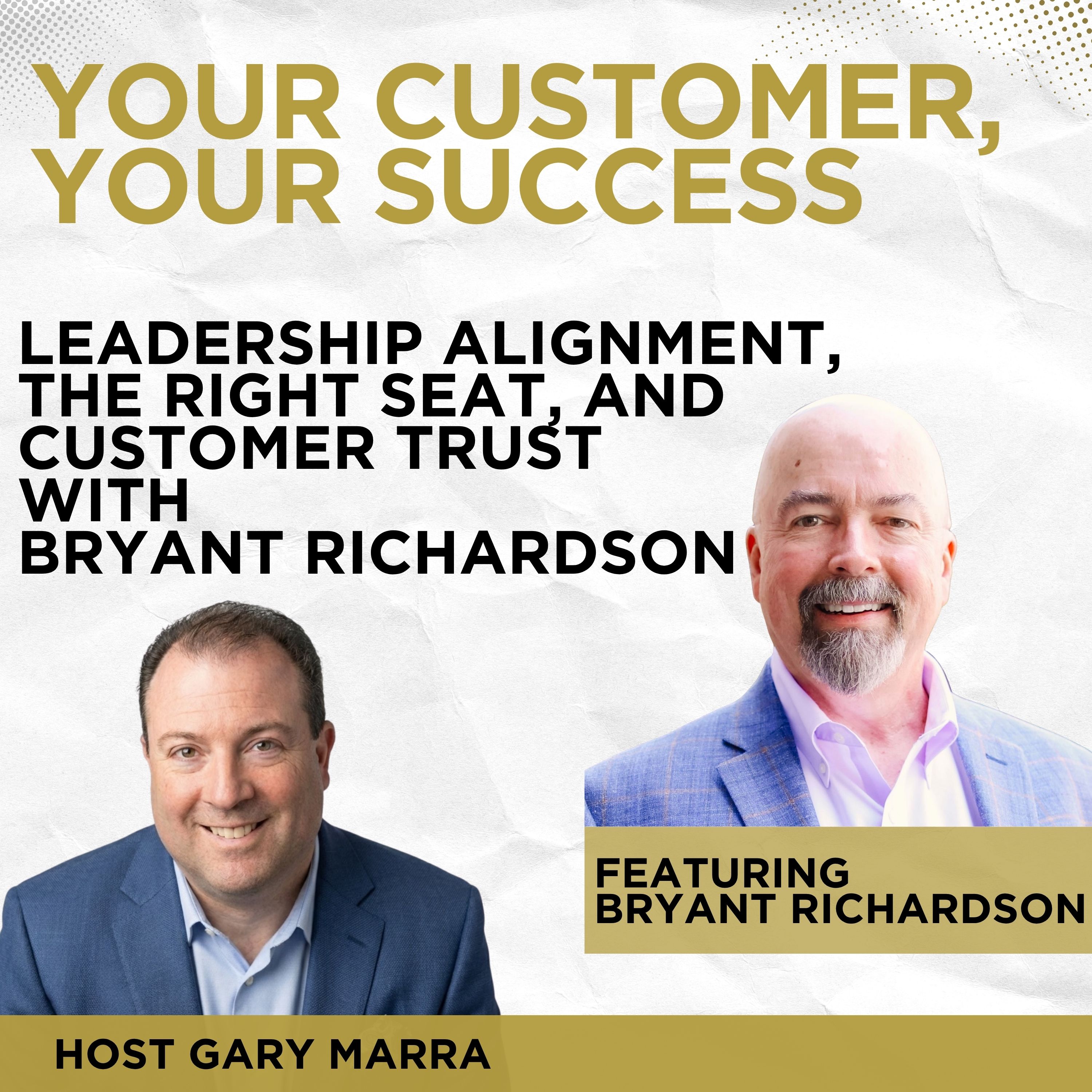 Leadership Alignment, the Right Seat, and Customer Trust with Bryant RichardsonYour Customer, Your Success · on organizational culture78 / 100
 In conversation with...Binna KandolaFuture of Work Hub Podcast Series · on organizational culture73 / 100Overcoming Fear and Embracing Your Light featuring Jenelle Robers57 / 100The Secrets to Successful Team Development featuring James Terry77 / 100Developing People Beyond The Job featuring Toni Young69 / 100How To Make 2026 Your Best Year featuring Tony Ferraro66 / 100Building Sales Through Authentic Relationships featuring Larry Levine65 / 100