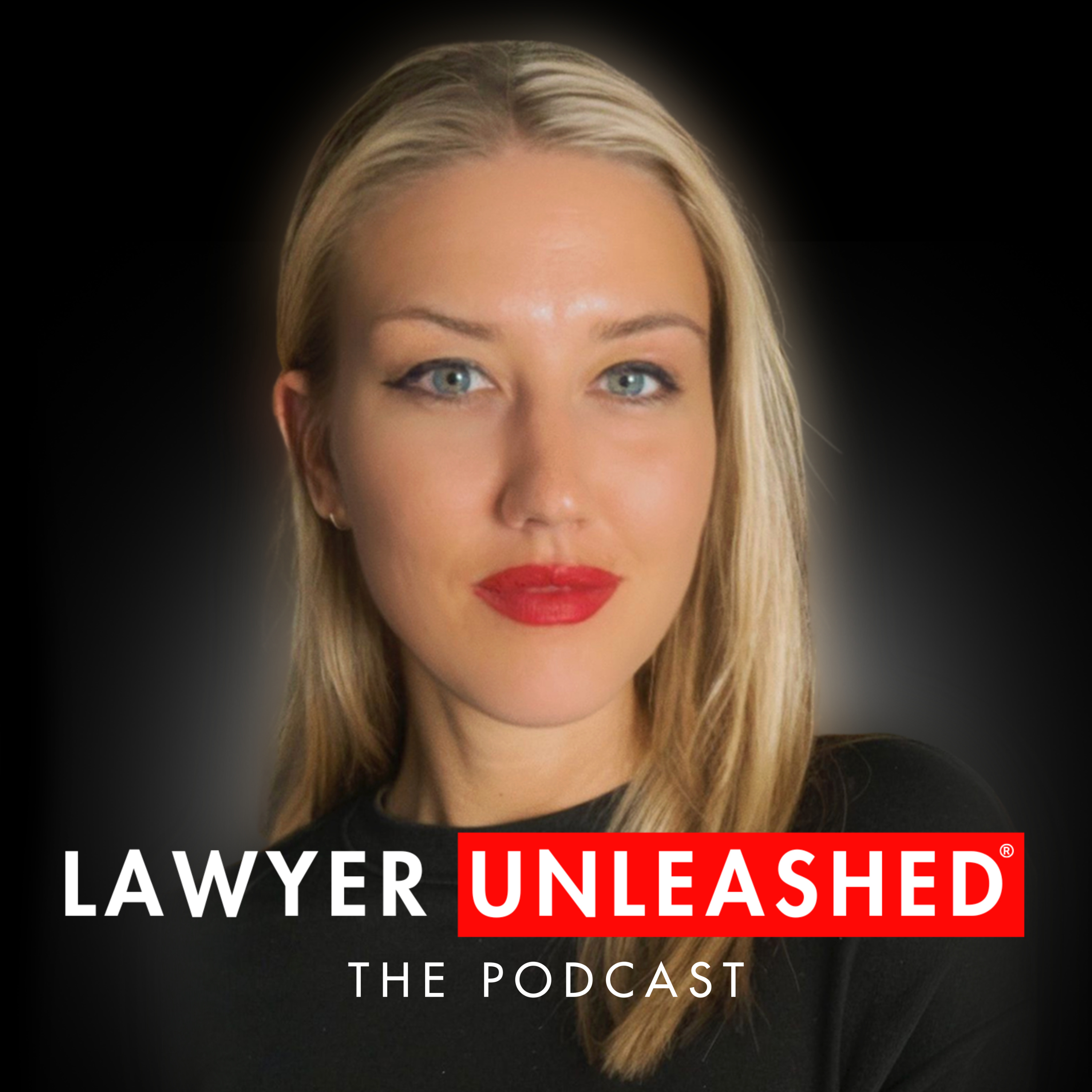
Lawyer Unleashed · 2026-07-14 · 44 min
Key moments - from our scoring
Substance score
40 / 100
Five dimensions, 20 points each
Helen Pamely's departure from law was not sudden - it stemmed from witnessing and experiencing burnout, mental breakdowns, and broken leadership at Magic Circle and other elite firms. After leaving law for the first time with nothing, she found herself studying psychotherapy, eventually returning to practice and making partner within two years, before ultimately leaving for good. She then built a personal brand on LinkedIn by speaking candidly about industry dysfunction, which led to the creation of Lawyer Unleashed. The podcast gained 1 million views and 10,000 subscribers in its first month by featuring candid conversations with industry leaders - Patrick Moloney (CEO of City of London Law Society), Sahar Faruki, Jasmine Chowdhury, and others - discussing systemic issues like racism, sexism, trauma, and broken leadership structures. Unlike typical coaching or consulting platforms, Lawyer Unleashed positions itself as an "off the record" space where powerful conversations happen without sanitization. The show resonates because it names what corporate LinkedIn politely ignores: the human cost of law firm culture. Helen's credibility comes from lived experience in the trenches, not external authority, which gives her unique standing to facilitate these vulnerable conversations with senior leaders who share her mission to reform the legal profession.
She left because she witnessed and experienced toxic culture, mental health crises, and systemic dysfunction that couldn't be fixed by changing departments or firms. After working part-time as a therapist-in-training and becoming a partner quickly, she realized partnership had never been her true dream and it was time to try a different approach to creating change in the industry.
The podcast resonated because it addressed topics - trauma, racism, sexism, leadership dysfunction - that the legal profession doesn't openly discuss, making people feel seen and heard. Helen's credibility as a former partner and her ability to draw high-profile guests who share her reform mission also drove rapid adoption.
She built relationships over years with leaders who share her mission to reform law, not by pitching them but by genuinely appreciating their work and connecting on shared values. Guests like Patrick Moloney and Sahar Faruki believe in her mission and want to help change the system, making them willing to have vulnerable conversations.
Lawyer Unleashed is not encouraging people to leave law or start businesses; instead, it aims to surface systemic issues, give people courage to be themselves, and help leaders understand the broken structures they're working within so they can drive change from inside.
A viral post about why lawyers don't make partner revealed widespread demand for honest conversations about law firm dysfunction. Hundreds of lawyers messaged her asking her to tell their stories, which led her to launch the podcast as a platform for on-camera conversations with industry leaders about real experiences and systemic change.
Our reviewer’s read on each dimension, with quotes from the episode.
The episode is heavily weighted toward personal memoir and motivational narrative rather than actionable insights for B2B operators. While Helen discusses toxic law firm culture and the importance of authenticity, these observations lack specificity, frameworks, or novel claims. Most insights are intuitive platitudes (e.g., 'show up as yourself,' 'speak your truth') that would not materially change how a founder, marketer, or operator approaches their work.
I think it's not something I talk about very publicly at all. In fact, I don't talk about this. Not sure I've ever talked about this before. I'm a deeply, deeply spiritual person.
anything that actually matters in life can't be measured
The core premise - that law firm culture is toxic and people should be authentic - is well-trodden terrain in career/culture commentary. Helen's personal story of leaving a partnership is compelling narratively but not contrarian or first-principles in nature. The spiritual wellness angle adds marginal freshness, but the episode largely recycles existing talking points about toxic corporate cultures and the importance of purpose-driven work.
the toxic cultures, the broken structures, the devastating human cost
I saw people having mental breakdowns. I saw friends in floods of tears at 3:00am
This episode is primarily Helen's solo narrative with a low-friction co-host (Dan Hobson from Clio), who functions more as an interviewer than a co-equal guest. Helen herself is a practitioner who left law to build a media/coaching business around legal culture reform, giving her some operating credibility. However, the episode lacks substantive guest expertise in a specific domain - it's personal memoir rather than expert testimony. The claim that Helen has booked high-caliber guests (managing partners, CEOs) is asserted but not demonstrated in this episode.
You worked at a Magic Circle firm for over five years. You then made it to partner at another reputable firm.
I made partner within two and a half years, working part time, training as a therapist on the side.
The episode is almost entirely devoid of concrete data, metrics, and named examples. Helen claims the podcast reached '10,000 subscribers and a million views in a month' but provides no breakdown, no timeline detail, no comparable benchmarks. She cites vague numbers of LinkedIn messages received but not a single specific example of client outcome, business metric, or measurable impact from her coaching. Anecdotes replace evidence throughout.
In its first month, Lawyer Unleashed gained a million views on social media and over 10,000 subscribers.
I got flooded in my inbox with letters of lawyers pouring their hearts out to me. We've still got a lot of very powerful people who want to make money at uh, all costs.
Dan's interview approach is gentle and largely affirming. While he asks some setup questions, he rarely pushes back, challenges assertions, or probes for specifics. His questions function as open invitations for Helen to expand on her narrative rather than incisive tools to test claims or extract data. The conversation drifts into mutual admiration and personal reflection rather than rigorous exploration. Helen even takes the interviewer role midway through, which signals a lack of structural interviewing discipline.
So you worked at uh, a Magic Circle firm for over five years. You then made it to partner at another reputable firm. Uh, and at the point where most people would think I've made it, uh, here we are. You leave law and you start all over again. Are you nuts?
I'm just really curious because we obviously, we hadn't scripted or even thought deeply about what this conversation would involve.
Computed from the transcript - who did the talking, and the words that came up most.
She made law firm partner at a London City firm at six years qualified. Then she quit her law career. In the Season 1 finale, Helen Pamely turns the microphone on herself for the first time. She reveals the 3am breakdowns she witnessed in law firms, the phone call to her dad that gave her the courage to quit law, and the launch of the Lawyer Unleashed podcast, which grew to 10,000 subscribers and over a million views in its first month. Helen Pamely is a former Magic Circle litigator and law firm partner who retrained as a psychotherapist and executive coach before founding Lawyer Unleashed: the podcast taking lawyers behind closed doors on innovation, culture, leadership and mental health in the legal profession. For the first time ever, she shares her journey, unfiltered , and the mission she's on to change the legal profession for the better. She reveals: How a letter she wrote in German launched her legal career. Why she walked away from law with nothing but an old Nissan Micra. The letter from her uncle warning she was making the biggest mistake of her life. How a Buddhist nun changed her definition of success.
Transcribed and scored by The B2B Podcast Index.
Speaker A: I saw friends in floods of tears at 3:00am um, completely exhausted, not having slept for two weeks. I saw behavior and dynamics that you can't unsee. I just said to him, dad, I can't do this anymore. And he said, then you'll have to leave. I left with nothing. It's either a massive mistake or it's going to be your breakthrough.
Speaker B: You had something crazy like 10,000 subscribers and a million views. In a, uh, month since launching, I
Speaker A: got five flooded in my inbox with letters of lawyers pouring their hearts out to me. We've still got a lot of very powerful people who want to make money at, uh, all costs. Make money, Be rich, be abundant. But don't do it at the expense of, uh, breaking people. Don't do it at the expense of crushing their mental health. That's not okay. In its first month, Lawyer Unleashed gained a million views on social media and over 10,000 subscribers. It blew my mind, but also it confirmed something I already knew. Deep down, law has been waiting to break open for a very long time. The toxic cultures, the broken structures, the devastating human cost. In this episode, for the very first time, I share my personal journey, how Lawyer Unleashed came to be, and how, together, we're stepping into a new era of leadership. A big thank you to my friend Dan Hobson, head of Asia at Clio, for having this conversation with me.
Speaker B: So you worked at, uh, a Magic Circle firm for over five years. You then made it to partner at another reputable firm. Uh, and at the point where most people would think I've made it, uh, here we are. You leave law and you start all over again. Are you nuts?
Speaker A: Am I nuts? Possibly. Possibly. And I think. You know what, that was a really. It was a really hard time for me leaving LAW because I think it was one of the moments where I had to dig so deep. I had partners, people I really respected coming to me, saying, what the hell are you doing? You're making the biggest mistake of your life. And my uncle even wrote to me, someone I deeply, deeply respect, and he sent me this letter. And in it, he just said, look, I get that you're doing all this other stuff, you know, and I get that you're interested in other things aside from law, but you can do that in your free time. You've achieved so much. And, um, if I didn't tell you this, if I didn't tell you not to do this, I would be doing you a disservice. But when I received that email, I heard it, and I appreciated the love with which it was sent. But I also Knew it was 100% the right decision for me in the end. There wasn't a choice.
Speaker B: Yeah. And why do you think that was what got you to that point?
Speaker A: I think the honest answer is we see people who make these big, pivotal life decisions, and you think it happens overnight. It doesn't. It never happens overnight. There is always a journey and there's always a buildup. And I suppose to explain my journey, if I rewind back to 2007, um, when I started my law degree, I was the keenest person there. Like anyone who wanted to be a lawyer. There was no person who wanted to be a lawyer more than me. I loved my law degree. I loved the cases, I loved the learning. I loved everything it was about. And then it got to the point where I had to apply to law firms and I was like, oh, shit, I don't really know how to do this. I didn't come from money. I didn't come from anyone who knew anyone who had a job like this, who even worked in the city of London. This was this foreign world, and that was a place of struggle because I was applying for vacation schemes, then I was applying for training contracts, and I just wasn't getting anywhere. And initially, the way that I got there was because I had done my year abroad in Germany, and I wrote a letter in German years before ChatGPT, and I just wrote it to all these major law firms saying, hey, I'm this English girl, and I just did a year in Germany and could I do an internship in the summer? Because I wasn't getting anything in London, and I made a couple of quite cute grammatical mistakes in my letter. And funnily enough, those played to my advantage because these partners and some of these firms thought, oh, that's really sweet. She's really trying, and this is interesting. And I had to really put myself out there, send letters to these firms in Germany. And somehow I got this internship at Meyer Brown in Berlin. And that was when I started to break into the profession, because suddenly I have Mayor, uh, Brown on my cv. You know, I had to work really hard for that. And then I was applying to London firms. I got rejected. I got rejected. I got rejected, like, 50 applications. And then it came to the last interview of the summer, and that was with Linknators. And at that point, I'd had enough. I'd cried so many tears. I'd broken down over so many rejections. I just thought, fuck it, you know, I'm going into that interview and If I get it, I get it. If I don't, I don't. I went in there and that's when I got the job. But there was blood, sweat and tears involved in that. I cannot tell you the amount of tenacity. I cannot tell you how much I wanted it. And I thought that was it. I thought I was made for life. I was starting out in the magic circle. I was going to be this incredible lawyer. All I wanted more than anything, anything, was to be a partner one day. That was my dream. M. And I got there. And from day one, it was nothing like I expected. I think I tried to convince myself for a long time that it was me. I just had to find the right department, the right place. And that never came. Because the reality of law is that there's so much in the system that needs to change. Over the course of my career, I saw people having mental breakdowns. I saw friends in floods of tears at 3:00am um, completely exhausted, not having slept for two weeks. I saw behavior and dynamics that you can't unsee. I saw it happen with other people. I suffered it myself. And I just thought, what is this world where, on the one hand, you've got this incredible career, you're working on the biggest deals in the world, you're intellectually challenged, you're inspired by so many of the people around you, but the system is broken. And that was something that was hard to live through from a personal perspective. It was also something just really hard to witness. And through that journey, through having had some really challenging experiences, I then went to another firm thinking, this is all going to be better. And it just wasn't. It just wasn't. And I left within a few weeks of joining that firm. And that was really hard. I had this incredible career. I had everything on paper. And I remember walking up towards the Strand, it was a really cold January morning, and I don't know why I didn't have earphones, but I didn't, because my hand was, like, freezing and shaking next to my ear. And I was on the phone to my dad. I was probably quite depressed at the time, in retrospect, looking back. And I just said to him, dad, I can't do this anymore. And he said, then you'll have to leave. And at that point, it was like a huge weight lifted from me because on some level, I think I needed that permission from him. I wanted to make my parents proud. I wanted to make me proud. And that was the first time I left law. The story does go on, but that was the first time. And I left with nothing. Like, you think you're Magic Circle, right? You're this top litigator, uh, you go to another US firm and then you leave into nothing. I remember my mum saying, don't leave a job without a job. That was when I first stepped into the abyss. And that was where I went to find myself. You know, I went to this meditation and yoga retreat in Scotland. There was this old farmhouse and it was freezing cold. And I just remember being there and thinking, I've got to find a way forward. And I don't know what that way forward is. Long story short, that led me to find the psychotherapy institute where I actually ended up studying psychotherapy. And I met the woman who changed my life. She was a Buddhist nun. She had founded this incredible institute based on meditation, Buddhist beliefs, Eastern philosophies, and fused that with Western psychodynamic practice. And so for me, that became a spiritual journey. It wasn't about becoming a therapist, it was about knowing myself better, finding my own purpose. And so I signed up immediately after doing a week introductory course with them for this Masters. But The Masters was three years long, had 13 weeks residential, and it was really expensive. So the realities of this was I went back into law. In the meantime, I've been temping at a US firm. But then I got the job where eventually I made partner. I went in as an associate at Roslyn King and I didn't care anymore. And ironically, that's where I became powerful because I became confident. I dropped the imposter syndrome. And, um, within two and a half years, working part time, training as a therapist on the side, I was made a partner.
Speaker B: Wow.
Speaker A: But that was never my dream. And at that point then I knew it was time to try coaching, if that's the label you want to give it.
Speaker B: Mhm.
Speaker A: This idea of coming back to the industry, offering something different and really trying to bring about the change that we need in law. Wow.
Speaker B: Uh, it's a hell of a journey.
Speaker A: It is, it is, yeah.
Speaker B: So tell us a little bit about that because that's an interesting part of your journey that got you to where you are today. And we'll talk about the podcast a little bit more in a minute. But those years post being in law, what did that look like? And what did your years through practice, uh, allow you to bring to the people that you were working with?
Speaker A: I think fundamentally it's about understanding exactly where people are at. I think what most lawyers complain about a lot of the time is you're not a lawyer, so you don't get me. It's a bit like you were in the trenches. You get it. I know the issues the industry is facing. I've lived them. I've lived those experiences. And so, you know, somebody can sit opposite you and they don't need to explain all the stories. They don't need to tell you everything. You just know. And I think it's almost in a way, that kind of trauma bond, you know, I don't want to paint it all as negative because I think our ministry comes from our misery. That's where we learn how to help. I think it's that sense that people have of where you really, really understand them and what the industry needs. And actually, it was interesting. So when I left law, I had 400 connections on LinkedIn. I had very little money coming in. I'd gone from this partner role where I earned good money, I had all the status to. At that point, it felt like nothing. I went back to Brighton. I moved into the spare room at my friend's house. I was driving my 2010 Nissan Micra. Even my dad wouldn't have my car on his drive. Or he, like, he hated it. And, uh, my dad does not care about cars. Like, I can't tell you how much I had to shed in terms of status, in terms of attachment to money, attachment to things, how I was perceived. And I was there with 400 connections just wondering how to get this coaching business off the ground. And I did get it off the ground, and I was doing okay after about six months, but it was actually a year later when I realized I wasn't speaking in my true voice on LinkedIn or generally. I was still this kind of shackled beige version of myself. And I hated that. But equally, I was scared because what happens if I really show up as me? What happens if I really have an opinion? What happens if I start to call things out that are really bothering me? But there was this day when I was coaching a client and he had been strung along in a magic circle firm for partnership. He had relocated, relocated his family. And it suddenly became completely clear there was no intention of him ever becoming a partner. And it really pissed me off. I'd seen this too many times. So I did this post on LinkedIn where I just said in the title, the number one reason you're not making law firm partner is what they don't want you to hear. No one had ever said this, right? Yeah, okay, this is back in, like, June 2023, where no one's posting on LinkedIn. Apart from, oh, I got this amazing job and I'm so great and I'm humble. Whatever. Um, I came out with. And I remember the night before, I was really worried. I called my marketing guy and I was like, am I making a huge mistake? And he just said, it's either a massive mistake or it's going to be your breakthrough. He was like, I think you should post it. So I posted this. And I remember I just. I couldn't look at my phone for four hours. Yeah, I was doing some workshops in London and I was nervous and I checked it at lunchtime. This post had gone off the wall. I'd gained, like, thousands of followers. Like, the number of comments, the number of likes. It was insane. And that was where I first realized, oh, my gosh, this is the power of showing up with your true voice. And from then, I never looked back. I started to really call things out, speak up for the mental health crisis in law, cool out bad leadership, talk about how we should do leadership differently. And what happened was I got flooded in my inbox with not just messages, they were almost letters of lawyers pouring their hearts out to me. Like, hundreds. I couldn't even respond to them all. There was guilt there. Uh, for me, it's like, I can't even. I haven't got the capacity to even be with the number of messages I'm receiving. Um, and what came through to me as well was people were saying, I can't speak up because I'll lose my job, but please tell my story for me. Please tell my story. Or you could create a book and you could tell people's stories. And at that point I was like, what do I do with this? Because I don't want my LinkedIn to be a, uh, let's smash law and just tell all these anonymous stories. And I think also, that doesn't necessarily have power because they're anonymous. Right. Maybe there's power in it, but eventually, you fast forward, I build this brand up until 2026. I become very deeply interwoven, deeply interconnected with law. I have a brand that people respect. And I was like, let's get some really big names on camera. Um, let's get people who are brave enough to name the game to talk about their experiences, to talk about what the future of law should look like. And let's start rolling. Honestly, the week before, I was almost a bit of a mess. I was like, I can't. I can't launch this. Yeah, this is like, oh, my God, like I knew what was in those files. And I think you know as well, you were the first person I actually recorded with here in Bali. And I went in with some questions where even you were like, what are you asking me? You know? But what's come out of that in the first month has been insane and to me unimaginable in terms of how much it's resonated. And so I think for me it's just about how can I bring more of myself, more of my understanding and help other people show up more as them? Because then I think together that's how we make change. Just pausing for a second to ask a small favourite. This is a brand new podcast and every follow, review or share helps more than you know. It means I can create more episodes, bring on more top guests and thought leaders, and share the secret lessons and tools that help you build influence, find purpose, and create a career and life you actually jump out of bed for. If that speaks to you, please hit subscribe. It really does make a difference. Now back to the episode.
Speaker B: It's really interesting and there's two kind of questions around the podcast that I have as a listener and I'm sure other people want to know too. One that you slightly touched on there is your roster, uh, of guests has been remarkable. Some of these people coming on to your to have a conversation with you, they're probably asked to go on podcasts every day. They're big names in the industry. And I was kind of shocked that these people are stepping into these conversations, giving you their time and choosing your platform to have these conversations. And what is it about you and what have you been doing these last few years to earn that right and have that credibility where people want to sit with you and squirm under the first question that you asked them, the curveball that comes in in the first 10 seconds.
Speaker A: Well, really I should ask you that because I hadn't known you very long in Bali and you agreed and you hadn't even my podcast. How did I convince you?
Speaker B: Good question, good question. Well, we obviously have the, uh, perks and benefits of living nearby, similar industry, uh, in a country far from home. But some of these guys are managing partners, CEO, uh, of City of London and things like that. So what do you think helped them choose that this conversation's worth having?
Speaker A: So there are a few things over the last few years of me building my brand, my personal brand that's been extremely powerful. M. Because it's meant I've created a space where people are listening and I'm showing up as me now, what does that mean? It means that I'm drawing towards me the people who resonate. And the people who resonate resonate deeply. Now, a lot of these are, uh, big, big names. They're big players. They are supportive of everything I stand for and they stand for the same things. So for me, it's not just, oh, let's have a nice podcast conversation and let's promote my podcast. They believe in my mission and they also believe in my ability to tell a story and share a message. And so, for example, if I think of Patrick, who's CEO of the City of London Law Society, I've known Patrick a few years now. I first started seeing him posting on LinkedIn in his early days and I just loved how he was showing up. So I was like, oh, uh, he's a really cool guy. At the time, he was head of L and D, I think, at Linklators. And I just thought, I really want to have a chat with him. No agenda, no agenda. I just thought he was so cool and I loved everything he was about. And that's the thing. For me, it's about intuition. Where can I find real connection? I'm not looking for something from you. I'm just really drawn to do we have a connection here. What in you is so exciting and I'd love to know more. So I messaged him on LinkedIn and I said, hey, Patrick, I love your posts and I just love what you're about. Bit of a girl fan here. Um, maybe we could have a call sometime. And I remember him saying, yeah, sure, we could have a call, etc. I think he'd seen a few of my posts. He said, oh, you know, we're not looking for more coaches at Linklators. And I said, no, no, I'm not looking for that. Jumped on a call with him and we just hit it off and that was it.
Speaker B: Yeah.
Speaker A: And then that. That relationship built over years. You know, I've walked his dogs with him. I've met him in London and he believes in my mission deeply.
Speaker B: Yeah.
Speaker A: Now he is CEO of the City of London Law Society and he believes in what I'm doing. And he said, yes, because we're on the same mission. The same with Sahar Faruki. Everything about him is about integrity. It's about changing the system. He's been a barrister, he's been a law firm partner. He's now CEO of his own company, which is all about bringing about change and transformation in the legal sector. He's also now managing partner of Arbol, or these are big names, but we all share a mission. And I could go on and on with the guests, but because of my brand, because of who I am, I believe there's both ways of magnetism in that, where you find people who share your mission and you join together.
Speaker B: And it's interesting because beyond the names that are actually guests on the podcast, your finger's clearly on the pulse of what people want to hear. Because you had something crazy like 10,000 subscribers and a million views in a month since launching, which, well, firstly, congrats, that's awesome. But there's clearly something that these people are hearing that they want to hear and maybe haven't been hearing. So why do you think it's resonating with so many people?
Speaker A: It's a really interesting question. And the thing for me has never been about, oh, I want all these views or all these followers or anything like that. For me, it's about the mission. M that's what lights my fire. And I think because this podcast is driven from such a strong why, the whole idea is it's the off the record conversations you never get to hear. Let's empower you. Let's help you understand this game of law that actually you're playing, whether you know it or not. M let's help leaders understand the system inside which they're working. Let's help people explore and understand how can we lead differently. Let's be honest about the trauma that so many lawyers have gone through, are going through. Let's get really honest about that. Let's not sugarcoat it. Um, let's talk about the racism, the sexism, the misogyny, the inequality. I'm not saying it's all bad, but these things exist and nobody is naming it head on. And when you start talking to those topics and, um, people feel it deeply and suddenly they feel seen. That's powerful. And one thing I found really interesting is I've come to realize LinkedIn is a nicely curated, educated echo chamber where I can post on LinkedIn and pretty much I'll get positive feedback. I'm thinking of the reels I just released with Jasmine Chowdhury, where she spoke about being asked in a job interview if she was planning on having kids, being told by her law firm that it wasn't a good look to decline an invite to a boozy summer boat party during Ramadan. And she's upfront about these things. And on LinkedIn, everyone's like, this is terrible. Can't believe this happens. Oh, it can't happen that much in law firms. It's all equal now, Whatever. But it's all kind of toeing the party line now. Before Lawyer Unleashed, I never really had any following on Instagram and TikTok. Okay, that's changing. It's starting to skyrocket because Jasmine's reels have gone through the roof. Hundreds of thousands of views. But I'll tell you one thing. The amount of hate, the amount of racism, the amount of sexism, people telling her to go back to Pakistan, telling her that, actually, she's in the uk. You're a Muslim, so, you know, like, you need to do whatever your job wants you to do. I mean, I cannot tell you these comments are deeply disturbing, cutting, but in a way, I'm, um, pleased to see them because it shows what we're working with. I'm not saying every law firm's like that, but we still have a lot of unhelpful, insidious, hidden belief systems which are not coming to light. And there's still a lot of prejudice. M. So it's interesting to start to bring these issues into the open and see that not everyone's on the same page. Why do these things still exist? And, um, why is it hitting people so hard?
Speaker B: Yeah, it was a very powerful episode. And I think I always come back to. You've talked about it a few times. Your mission. You're not encouraging people that they need to leave law and go and start a new business like you in Bali. You're actually looking at the systems and trying to help fix it. So what is the goal? What is the mission that this podcast brings for you and your work? Everything you're about? What is the mission?
Speaker A: On its highest level, I would say it's to make law a better place. Place. But it's not just law. It can be extended to all areas of life. And I think the whole corporate sphere probably is to bring more awareness, to speak the truth, to help give people the courage to be themselves and to actually stand up and question things that aren't right and to start coming together to do things in a better way. And for me, yeah, okay, I left law, I started. Started a few businesses. Now I started different businesses. I live in Bali. That's me personally being unleashed. To take my tagline. That's just me living in a way that's deeply aligned, uh, and true to myself. What I would love is for people to feel that they can be deeply aligned, uh, and true to themselves. Because if we are all coming from that place, from the heart space from a place of compassion, from a place of wanting to do better and be better. The world's going to be a better place. Law firms are going to be a better place. We're going to be better leaders. It's just going to be better all round. So I'm not asking anyone to be anything like me. I'm actually asking them to be more like themselves and to have the courage to show up as themselves. And I think if we can all do that a bit more, that's actually enough.
Speaker B: Very powerful. And I love how you weave spiritual elements into, uh, what is potentially a very corporate world. And I think there's a lot of things that you say that are resonating with people on a very deep level. Uh, and that's why they're showing up every week to listen to these conversations.
Speaker A: And I think it's not something I talk about very publicly at all. In fact, I don't talk about this. Not sure I've ever talked about this before. I'm a deeply, deeply spiritual person. And for me, everything on the outside of me that I bring into this world comes from that spiritual core. So it's not about money, it's not about numbers, it's not about vanity, it's not about metrics. Everything comes from this deeper place. Without that, I wouldn't be who I am. I wouldn't be showing up as I am. And it's not something I talk about because I think, and maybe I should more. But I think in the corporate world that gets met with maybe by some people, a bit of resistance. The really interesting thing is the more honest I am and show up more as me. I get leaders at the top, big, big leaders coming to me and saying, I see what you're about. And I resonate. I've had people who are like CEO, coo, managing partners, I kid you not, of law firms come to me and just jump on a call and the first thing they start telling me about is their near death experience and how actually they want to bring more love and compassion into the world and they see how broken the system is and how they want to do things differently and be different people and lead differently. And they say, I've seen your podcast and I know we're on the same page. So I actually think it's almost like a bit of a misnomer that we think the corporate world is this. And it's all superficial. You start going deeper, you'll find some people who are deeply, um, spiritual, deeply religious perhaps, but they have a Higher purpose. They're not there just pushing paper. And have a goal to only make money at all costs. And that's the big problem in law. We've still got a lot of very powerful people who want to make money at all costs. I'm not saying don't make money. I'm happy for you. Make money, Be rich, be abundant, have a full life, but don't do it at the expense of breaking people. Don't do it at the expense of crushing their mental health. That's not okay. I can feel that really hit you, M. What's happening for you?
Speaker B: No, I've been aware of what you're doing for a little while. Uh, as you said, I came on your to record the first episode six or 12 months ago, whenever it first was, as you've taken the time to build this properly. But you've always been putting the spotlight on other people. So that's the first time I've heard the mission and the message with that level of rawness from you. And it's real. You can feel it.
Speaker A: I think the word raw is right. And I think that's, for me, what's so powerful about the heart space. Just gonna talk about it in these terms now because you come from a real place of why M of purpose. That's raw. It's also contagious. And I think that's what I mean when I talk about the magnetism, because it's almost like a spark lighting fires. If you can stand in your truth, you're going to attract other people who are standing in their truth M. And you're going to help others ignite that truth in themselves. And I know from our conversations, Dan, that you're somebody who you deeply, deeply care about people. Yes. You're this really successful corporate guy, and I love that for you, and I love that about you. But you deeply care. You know, you help homeless children here in Bali. Actually, you told me about when there was some flood in Bali and they all lost their homes and they had nowhere to sleep. You were at some big event in Singapore and you just came up with this incredible idea to say, you know, throw your business cards in here and you know, your company's going to donate whatever it was to the children, and you raised thousands of pounds overnight. A lot of people would have just thought, oh, that's really sad. What can I do? You're galvanized to do something different. I don't think it's coincidence that we met M or that we connect, because I think that's what it's about. It's like we end up meeting the right people who come into our lives, and we galvanize each other.
Speaker B: It's really powerful. And I agree. I've always seen the corporate world as something that can be wielded to do good. And there's a huge amount of power and influence that comes with the money, the size of the organizations, the kind of people that are in that system. And you can do a lot of good with it. And you can tell from the guests that come onto your podcast that they agree with that, too. They're all people. I don't know any of the other people on the podcast, never met any of them, but they're all people that I would sit and have a coffee with and know I would leave that conversation invigorated. And, like, there was more people in the world like me. And I think that's there's a real power to bring in those voices to the world publicly.
Speaker A: 100%. It's like Bradley Collins, who's the CEO of legal tech Talk. He really, really inspires me. Not because he's the CEO of Legal Tech Talk, to be honest, I don't really care what title anyone has. Like, you know, I'm happy for them. Great, you've achieved that. Uh, like, uh, genuinely happy. I want to know who you really are. You know, he came from a counselor state. He never went to uni. And he believes in manifestation. He believes in getting clear on what you want and then making it happen. He's read the book the Secret. I met him here in Bali. We had this incredible afternoon where we're having these really deep talks. That's who I'm interested in, because it's the man behind that, uh, CEO badge who's going to inspire the world. I'm not interested in superficial people. I'm not interested in people who tow the party line. I'm not interested in people who aren't at the point yet where they're ready to be honest with themselves or anyone else. The really interesting bit, as you say, gets to when you have those conversations and you find out the depth of the person in front of you. Um, and we do have some incredible people in the legal space, the corporate space and beyond who are willing to speak up. It's going to make a difference.
Speaker B: What next? Where does it go from here?
Speaker A: I think it's really interesting, isn't it? Because in our society, we have this idea of build, build, build, scale, scale, scale. Where are you going next? For me, it's almost like this is a fire and the fire is burning more strongly. M. And all I know right now is I have to keep leaning into that fire.
Speaker B: Yep.
Speaker A: Keep building, See where it goes. Not be too tied to any outcome. Yeah, yeah, I know. I always knew in my heart of hearts doing this podcast would change everything. By that, what do I mean? I mean, it would change me as a person, it would help me grow. And I just had a sense of purpose and something impactful beyond that for the world. Where that's going, I can't tell you. What I can tell you is I know it's the right place to be. I can only be in the now. And it feels like my purpose with it right now is to just do everything, everything I can to help it grow.
Speaker B: Mhm.
Speaker A: It's like probably having a baby, you know, when they're a toddler and it's like you've got to look after them and one day they're going to be this incredible adult and they're going to do great things in the world, but you've got to nurture them and you've got to look after them. And also you've got to let them be free to become the person they're meant to be. And so what I mean by that with this is I don't want to make this about ego, me being attached to an outcome. Oh, I want this many followers. I m want this much money. No, it's. Let's keep fueling, let's keep exploring and almost make this a co creation. It's not just mine. It's everybody who comes on. It's everybody who's part of it. It's you for being here now and being generous enough to have this conversation with me. It's like, where can this co creation go? And that excites me.
Speaker B: It's beautiful. It's magic as well. Because the beauty of speaking your truth and pursuing your mission, it's not tied to outcomes. If you're doing it every day, you're doing the right thing. If you're doing the things the way that you feel they need to be done, you already win.
Speaker A: And someone said to me something, actually, it was just this morning, it was an incredible conversation on the phone and they said to me, anything that actually matters in life can't be measured. And so it's like, what metric do you want? Actually, if you think about it, of course, if you're coming from your heart and it's resonating with people and it feels like it's the right direction, it's going to grow, it's going to do well. But actually, what matters behind all of that, if it makes an impact on even just one person and helps them, that's amazing.
Speaker B: Yeah. And that's such a. You can see how there's parts of episodes that have already happened that people will have listened to and they will apply that to their own life. And the ripple effect of that is limitless. And I think that's really powerful.
Speaker A: And I'm just curious to put the hat on me for a moment, Dan,
Speaker B: but you can't not be the interviewer.
Speaker A: I know. It's like, oh, give it back. No, I'm just really curious because we obviously, we hadn't scripted or even thought deeply about what this conversation would involve. We actually wanted to see what would emerge in the moment. And I guess I'm just almost. It feels like it's had an impact on you. And I guess I'm just curious about that because I don't see it from the other side of the table.
Speaker B: Uh, yeah, it's an interesting question. And the. The job of the person asking questions is to be paying attention to the answers. And my brain has the tendency to wander off and think about, where does that apply to me? And there's been a kind of running vein of this conversation where I have maybe become more aware of points in my career where people fanned the flame of my authenticity and how that's led to me being in a much nicer place as a person and in my career because of it. Uh, a few people along the way who gave me a bit of strength to go, yeah, I know you operate in this corporate sphere, and there's strict guidelines of how to get to the next stage, etc. But I believe if you do things your way, you'll get there anyway. And there's been a few things that you've said that have landed and I've just kind of gone, yeah, okay, maybe those things were more impactful than I even realized they were at the time. I sent my previous director a letter about a month ago because after our recent acquisition, he stopped being my direct manager.
Speaker A: Um,
Speaker B: and I didn't thank him for helping me make money. I didn't thank him for educating me in corporate career. I thanked him for creating a space big enough to put all of myself into and bring my character and my identity into my career and get him the same outputs. But in the way that made me feel happy and authentic as a person and just the power of that and giving people that strength, I love something that you're about is not about encouraging people to, to leave law. You're not slamming law or saying it's a bad place. You're trying to do that. You're trying to create a bit more space in the guidelines that are there on how to be a lawyer for people to go right. I can be a lawyer and I can do it my way, and I can be really good at it while I do it. And I've seen that as a pattern. Even with some of your guests, they've gone. I knew I was going to get there. I knew I might even take a little bit longer because I was going to walk my path. And I think if that's an impact that comes out of these conversations, I think it's one of the most powerful things in the world to let people bring their identities into their passions and their work, where we spend so much of our time. So, yeah, I think that was a bit of a running train of thought, listening to your answers that maybe I hadn't shone a light on or drawn as much consciousness to until I heard you really speaking about your mission today. M
Speaker A: this episode brings us to the end of season one of Lawyer Unleashed. It's been an incredible journey and thank you for being a part of it. We've had over 1.5 million views across social media and more than 10,000 of you have subscribed to the Lawyer Unleash newsletter community. You can join in the link in the show notes. I can't wait to see you in season two starting in September. And as always, please keep this to yourself because this conversation is off the record.
Other episodes covering the same guests and topics, from across The B2B Podcast Index.
 F*ck the brand guidelines: Do this instead (w/ Lewis Kemp) | S3 EP1The paid media lab · on LinkedIn personal branding89 / 100
 How To Build A Million Dollar Biller. Danny Cahill.The Elite Recruiter Podcast · on LinkedIn personal branding78 / 100
 Using Content Pillars to Build Your Personal BrandContent Logistics · on LinkedIn personal branding75 / 100
 Jess Cook: Brand Beats Demand GenDemand Geniuses: Revenue-Driven B2B Marketing · on LinkedIn personal branding72 / 100
 Turning Brand and Visibility Into Revenue GrowthWinsDay · on LinkedIn personal branding72 / 100
 62 | Sam Browne on Building Personal Brands and Businesses with AIThe AI Marketer's Playbook · on LinkedIn personal branding72 / 100
 "The SQE Is a Disaster" - Inside Law's Most Hated Exam - James Richardson
  How to Pivot or Quit Your Law Career (Without Self-Destruction) - Kirsty Waite
  How To Make Law Firm Partner - David Hardy
 The Rainmaker Secrets Your Law Firm Won't Teach You - Steve Fretzin
 Law’s Future: The AI Advantage Separating Top Lawyers - Dan Hobson