
LawNext · 2026-07-01 · 44 min
Key moments - from our scoring
Substance score
49 / 100
Five dimensions, 20 points each
Anthropic's partnership with the Free Law Project marks a significant shift in AI-driven legal research, combining Claude with CourtListener via Model Context Protocol (MCP) connectors. Mike Lissner (Free Law Project executive director) and Nathan Dahlberg (AI developer) discuss how the MCP connector allows users to pose legal questions in natural language to Claude, which automatically searches CourtListener's verified case law database, checks citations, and sets case alerts - all grounded in public legal data rather than AI hallucinations. The partnership explicitly targets access to justice: anyone with a legal problem can now access verified legal materials without expensive Westlaw or Lexis subscriptions. This addresses a fundamental gap where self-represented litigants and low-income individuals lack access to legal research tools, fundamentally different from previous attempts to make legal data free. The discussion covers how this erodes traditional legal research moats (case law, statutes, dockets) for established players like Thomson Reuters and LexisNexis, shifts the conversation about the free law movement into a new phase powered by AI agents, and raises questions about user sophistication, privacy implications, and whether people will even know this tool exists.
Claude automatically invokes the MCP connector when it detects a legal question and has the connector installed. It chains together CourtListener tools behind the scenes - searching case databases, verifying citations against the database to catch hallucinations, and setting up email alerts for specific cases or search results - without requiring explicit user commands, though users can prompt it if needed.
The connector enables search across CourtListener's entire database, citation verification to identify hallucinations in AI-generated briefs or memos, and automatic alert creation for case filings or new decisions matching specific searches. Claude can chain these tools together to handle sophisticated queries that would be challenging for humans to navigate manually.
Yes, according to Mike Lissner, the moat around case law is shallowing significantly as CourtListener has scanned over 2 million pages and continues collecting case law; while statutes and dockets remain harder to access comprehensively, the combination of free data and AI agents erodes the historical advantage of expensive legal research subscriptions.
It allows anyone with a legal problem to access verified, authoritative legal materials through a chat interface without expensive subscriptions, enabling lay terminology searches in natural language and providing direction on legal options - though concerns remain about whether self-represented litigants understand the limitations and whether they'll discover this tool exists.
Mike Lissner argues this doesn't move self-represented litigants into a worse position than they're already in, since people are already asking ChatGPT legal questions; grounding responses in verified CourtListener data provides better legal research and access to justice than foundation models alone offer.
Our reviewer’s read on each dimension, with quotes from the episode.
The episode has scattered genuine substance - the data-moat decomposition, citation verification that 'fails safe,' the subpoena risk for self-represented chatbot users, and the nonprofit funding-model threat from AI-mediated web traffic - but these insights are spaced apart by significant filler, sponsor breaks, and repetitive framing. A smart operator will leave with a handful of useful points but will have sat through a lot of meandering conversation to get them.
we got a subpoena earlier this year and we're like, we don't want to respond to those ever again. So that's on our roadmap.
the data moat is getting a lot shallower. Um, and so it's, it's, there's a bit of a goalpost thing happening there where people are looking at the data we do have and they're like, ah, you don't have this little thing. And I'm like, nobody cared about that six months ago.
Most of the AI-in-legal-tech framing is familiar, but two genuinely underexplored angles surface: the structural threat that chatbot mediation poses specifically to nonprofit funding models reliant on website visibility, and the expanded subpoena surface created when unrepresented people narrate their legal problems to AI rather than issuing terse search queries. These are fresh, not recycled.
your donors learn that we are a nonprofit by seeing the please donate button on our website
somebody writing like you know, I, I just did X, Y, Z, uh, what are my defenses in a way that they might just do a more generic query otherwise. So you know, there's some of that and certainly as you know if you, you have attorney client privilege, if you had an attorney, but if you don't and more people don't, then more is going into the subpoena bull zone.
Mike Lissner is a genuine long-tenure practitioner who has been building in the legal data space since 2009 and speaks with real authority about the data landscape, business model tradeoffs, and privacy infrastructure; Nathan Dahlberg is the actual developer of the connector but is only eight months in and contributes minimally, pulling the overall caliber down somewhat.
we've been collecting case law since our first, first thing we ever do did back in 2009
I'd say about eight months.
The episode offers a handful of concrete figures - 2 million pages being scanned, the five most populous states for dockets, the live MCP endpoint URL, the subpoena this year - but the claimed access-to-justice impact is entirely asserted without user data, and the business model discussion never reaches dollar figures, user counts, or conversion metrics.
we're currently scanning about 2 million pages of case law. And once we have that scanned, we will be up to date
working on Texas and the other four most populous states right now as well
Host Bob Ambrogi asks a few genuinely sharp questions - the data-moat decomposition, the privacy-and-subpoena probe, and the marketing challenge - but lets Nathan coast through most of the episode with near-silence, never presses for evidence behind access-to-justice impact claims, and closes with a classic open-ended 'is there anything more you wanted to point out' invitation rather than a substantive challenge.
Does this take the water out of that moat?
are there privacy concerns here at all for people using this to get, to get answers to legal questions?
Computed from the transcript - who did the talking, and the words that came up most.
Last month, when Anthropic, developer of the popular AI assistant Claude, announced a major push into legal , much of the coverage in the media and the buzz on social media focused on what the announcement meant for law firms, in-house legal teams, and the legal tech ecosystem. But the less talked about side of the story was potentially the more impactful - Anthropic's explicit commitment to access to justice, highlighted by a direct partnership with the Free Law Project and its CourtListener free legal research platform. Suddenly, anyone with a legal problem and a chat window could access verified, authoritative legal materials, significantly reducing the risk of using a general AI assistant to answer legal questions. As the Free Law Project itself put it: "A response built on verified CourtListener data is categorically different from one built on even the best model alone." In today's episode, host Bob Ambrogi sits down with Mike Lissner , executive director and co-founder of the Free Law Project, the nonprofit behind CourtListener, and Nathan Dahlberg, the Free Law Project's AI developer who actually built the CourtListener connector.
Transcribed and scored by The B2B Podcast Index.
Speaker A: Welcome to lawnext.
Speaker B: Last month, when Anthropic, developer of the popular AI assistant Claude, announced a major push into legal, a lot of the attention focused on what the announcement meant for law firms in house, legal teams and the legal tech ecosystem. The less talked about side of the story was, to my mind, the potentially more impactful Anthropic's explicit commitment to access to justice, highlighted by a direct partnership with the Free Law Project and its Court Listener platform. Suddenly, anyone with a legal problem and a chat window could access verified authoritative legal materials. As the Free Law Project itself put it, a ah response built on verified Court Listener data is categorically different from one built on even the best model alone. My guests today are, uh, Mike Lissner, executive director and co founder of the Freelaw Project, the nonprofit that's behind CourtListener, and Nathan Dahlberg, the Freelaw Project's AI developer who actually built the Court Listener connector. We'll get into what was announced, why it matters, how the technology works under the hood, and most importantly, the bigger questions it raises about the potential impact
Speaker A: on access to justice.
Speaker B: I am Bob Ambrogi and this is lawnext, the podcast that features the innovators and entrepreneurs who are driving what's next in law. But first, before we get to any of that, please take a moment to hear from the sponsors whose generosity supports this podcast.
Speaker A: Every time admin taps your shoulder, legal work has to wait. Cosmolex is the end to end legal practice management software that takes the admin out of practicing law matters. Billing, payments and accounting work together so your firm can manage the full flow of work with fewer manual steps. Details stay connected, next steps stay on track and your team stays focused on practicing law. Try it free@cosmolex.com
Speaker B: immigration attorneys are you tired of constantly searching for the most updated forms? Lolli Law is the one rated immigration case management software that delivers the most expansive set of immigration forms in the industry. Updated within an hour of release. With client intake questionnaires in over 20 languages and and the most comprehensive immigration questionnaire database available. Client onboarding has never been simpler. Create and process payments in under 30 seconds with flexible payment options, including SMS, QR codes and multilingual payment portals. Experience the platform that's revolutionizing immigration case management@, uh, lolilaw.com that's l o l l y la w com. Now let's get to that conversation with Mike and Nathan.
Speaker A: Mike and Nathan, welcome to lawnext.
Speaker C: Thanks Bob. It's great to be here.
Speaker A: Happy to have you here. Before we launch into any of this stuff, let me just ask Mike. First of all, why don't you give a little bit of introduction of who you are and what the Free Law Project is all about?
Speaker C: Yeah, um, I could probably go on for a long time, so I'll try not to.
Speaker A: You could.
Speaker B: Well, we have another.
Speaker A: You recorded another episode with us two years ago, so.
Speaker C: True.
Speaker A: I'll send people back to that one. And we went to a lot of the history in the background of the Free Law Project.
Speaker C: I think we did go deeper there. But, um, I guess the short version is I'm the executive director of Freelaw, uh, project, one of the co founders. Um, and we try to make the legal sector better. Um, we're a nonprofit. We host courtlistener.com, um, you may have seen in the news or you may have used as a legal research platform. We host recap Extension and, uh, we have a new Justice Initiative division that's working directly with indigent litigants and directly with courts and federal defenders. So we do a lot of things. That's the short version.
Speaker A: Okay, sounds good. And, Nathan, what. What about yourself? What are you. What's your background? What do you do?
Speaker D: And I'm an AI developer, uh, working at the Free Law Project on a, uh, handful of our projects.
Speaker C: Cool.
Speaker A: How long have you been. Been there?
Speaker D: Uh, I'd say about eight months.
Speaker C: Oh, okay.
Speaker A: Relatively on the new side. So what I want to talk about today is the. The recent announcements with Anthropic and Claude involving, uh, mcp, Conn. Their kind of new commitment or focus on access to justice, and all of which very, uh, explicitly and directly involve the Free Law Project and specifically the Free Law Project's court listener, Mike. Um, I guess maybe you could kind of give us an introduction to exactly what it was that was announced that you announced and that Anthropic announced with regard to how your organizations are working together here.
Speaker C: Yeah, it's really interesting because, um, you know, when Anthropic makes these announcements, um, economies move and shift. Right. Um, and then you look at the thing underneath it and you're like, that doesn't look like, you know, that shouldn't shift an entire economy. But that's kind of where we're at with all this AI stuff. So I think what it amounts to is that they announced sort of a collection of connectors for clothing and for folks that don't know what collectors are, connectors are. They're also known as mcps. You know, it doesn't matter what that stands for. But um, it means that you can pull from another source and take particular actions um, from that source. The example I like to give is that a connector, um, might make it so you could type into claude, I want a flight to Taipei in a couple of weeks. And it would go and reach out using the connector to a flight database. So what Cloud announces a collection of those that allow you to connect CLAUDE to a bunch of different places, including Court Listener, which is our platform. Um, Nathan was a developer for our connector and it allows you to do a bunch of different things, right? It allows you to type your legal questions into claude, allows um, you to get alerts for particular cases in the federal system that you want to get updates on lots of different things. You can ask for a memo, you can paste in a link to a news article and tell it to give you the complaint from that know is associated with that news article. It's really fascinating because kind of anything you can dream up that you could do with a legal database, you can probably just type in your demand and CLAUDE will reach out to our system and figure it out.
Speaker A: So it, it was, you know, this was uh, a big deal when it happened or at least it made big news. It made made waves as, as you suggested uh, in the legal community in particular. Uh, I think because there's been uh, this sort of curiosity concern, whatever you want to call it, over the extent to which the sort of original frontier models are going to make inroads into the legal field. And CLAUDE had previously announced uh, uh, one of its own add ons that was uh, a legal, uh, legal add on for contract review back in January or something. And then this seemed like a great leap forward from what it had previously announced insofar as there were a number of connectors and also this sort of stated, explicitly stated commitment to access to justice, uh, directly partnering with you and with the Justice Technology association and some of the uh, companies, uh, startups that are associated with that association. Um, so what's that part of it other than the MCP connectors? What does this relationship mean on a deeper level that you now apparently have with Anthropic?
Speaker C: Yeah, I mean I think what I appreciated about that was that they framed a lot of their own thinking around this and I actually really have been very impressed working with them. Um, because you know there's one way they could have approached the market is be like, all right, we're going to go after all the attorneys. We're going to go, uh, you know, make the most money we can here and Sure. I think there was a Thompson Reuters or a Lexus connector in there, which then very quickly got a few big.
Speaker A: A few big.
Speaker C: There's some big ones in there. Right. But, like, um, But I think I, I really appreciated the way they looked at this and they said, like, look, the impact this is going to make on the access to justice community, on people who, like, don't have big access to big expensive tools is going to be big, you know, because if you try and if you're someone who's using lay terminology now and, um, you say you subscribe to Westlaw, uh, good. Good luck. Right. Um, you're going to have a real hard time unless you've been trained on it, you're a trained lawyer, et cetera. But, um, I think this shifts that, and I think they recognize that, um, and they wanted to sort of like, square their framing around that.
Speaker A: I assume that this wasn't. This didn't just come out of them in a vacuum. I mean, were there, Were there conversations between Free Law and Anthropic in advance of this about, again, not just about the MCP connector, but about what this looks like going forward, what this might mean going forward?
Speaker C: Yeah, well, we talk with them a lot, um, and with other frontier companies. And part of what we do when we talk to any organization is try to sort of spread the gospel and try to think about, like, what are the impacts, you know, directly to your market goal, um, whatever that may be, um, but also, like, let's think about the larger legal system, um, and like, what does it take to make that better? So I think that, yeah, I think they were persuaded by that, and I think that that weighed into, you know, how. How they approached this whole thing.
Speaker A: Yeah. Nathan, could you maybe, you know, Mike said maybe it doesn't really matter what MCP stands for, but could you kind of maybe explain a little bit more the, at least the concept of. Of what this means and, and how it would be used with regard to Court Listener? What kind of, uh, you know, capabilities does it provide for somebody who's working in Claude? Sure.
Speaker D: Um, so MCP just stands for Model Context Protocol. And what this is is really just a sort of standardization of how we can create tools that, um, AI models can then use to interact with the world. So I think we're moving from, you know, AI models being chatbots, things that chat with you, to things that actually take actions and act as agents on our behalf. And so rmtp, um, allows AI models to connect to, uh, all of the Court Listener API and all of the tool, tooling that we've previously exposed to developers, but, uh, directly through AI agents. And they can actually sort of chain these together to make, you know, much more sophisticated queries and navigate our databases in ways that would, uh, be a lot more challenging for a human.
Speaker A: A lot of the focus, I think of the framing around this has been on the implications for access to justice. Obviously, as we've already been talking, I think the court listener put out a statement at the time saying this has genuine potential to support access to justice. Work requirements committed to building toward that. Could you kind of expand on that? I mean, what, what does this, what is the potential of this in the access to justice area?
Speaker C: Yeah, well, first of all, um, as part of launching this, we also sort of, we expanded our membership system and we are going to be launching, um, free memberships for legal services organizations in a day or two. So, um, probably by the time people are listening to this, I would guess, uh, that'll be launched. It was an opportunity for us to take fresh eyes to, you know, how people are using our systems. That I think was one thing, but I think the, the more immediate. And then I'll also. I also have thoughts about sort of like what's the longer. But I, I think the other more immediate thing is that anybody who's dealing with a legal issue can now access, using lay terminology, really good legal, uh, research. It's really just astounding to put in whatever question crosses your mind, like, oh, my neighbor's mad at me about whatever. Um, and it'll be like, okay, your neighbor's mad. What jurisdiction are you in? Tell it, okay, I'm in California. Why is he mad? And it can, you know, walk you from this almost like emotional response pretty quickly to issue spotting, writing a memo, your options for dealing with it. Um, and that'll be grounded in good legal research. And we have a citation checker as well, so that can make sure you don't have hallucinations. And yeah, it's, it's very powerful. The longer range piece that is also on my mind is like, are we going to have websites at all, uh, in five or ten years? Right. Um, is Google going to be the one place where you do everything you type in your whatever. And now you're in a chat interface and it reaches out to databases. Um, maybe people don't leave the chatbot interface. And so like, I have these sorts of, like, where is this going? Kinds of questions. But, um, but I think for us that was one of the big factors that played in is like going to a legal research website is not something people think to do, um, necessarily. And I think that's going to become even, you know, less likely for people to do as AI ascends.
Speaker A: Well, the, the more established legal research players and other, other AI companies that are developed specifically for the legal market. You know, that we keep hearing this, this expression that their grounding in legal data is their moat. It's what separates them from, from the frontier models, from, from other, other AI, uh, products that are out there in the world. Does this take the water out of that moat? Or what does this mean in terms of, uh, you know, what so many of these established players continue to see as their key differentiator?
Speaker C: Yeah, I mean the moat's really an interesting question. So what data are they talking about? Right. I think a big one is case law. Uh, obviously. Um, and that's a, that's a powerful moat. We are working on that. We've been collecting case law since our first, first thing we ever do did back in 2009. And we're currently scanning about 2 million pages of case law. And once we have that scanned, we will be up to date and we will continue scanning books as needed to stay up to date. So I think the case law moat is getting shallower. Right. Um, and you can, if I can extend the metaphor, start waiting across it. The castle. So what else is there? Right. They've still got the statutes. I think those are still a piece of the moat. Um, federal code is widely available from the federal government. That's an easy one, Dave. Statutes are hard. And you know, what was the statute in 1972 when the crime was committed? That's hard stuff. And there's treatises, right. Like they've got a lot of different content in these established systems. But I do think that um, docket.
Speaker A: Dave, another one in a sense, I mean it's public, it's publicly available, but it's not easily accessible.
Speaker C: That's right, yeah. Yeah. And you know, we've made inroads on that too. We've got, um, an incredible amount of federal docket content, um, working on Texas and the other four most populous states right now as well. Um, so, you know, we're trying to fix the data moat so that we can have that data and also the whole community can.
Speaker A: Yeah, yeah. I mean, I kind of wonder, you know, there's that the sort of. Obviously I've been, I've been around for a while and I've been hearing, you know, this sort of talk about the so called Free law movement for a long time. And there have been organizations going back, the Legal Information Institute and others that have kind of strove to make this data available free and online. Uh, and, and yours has, uh, been, uh, a significant leader in that area. But is this just, Is this just a new phase for the same conversation or is something really different right now?
Speaker C: I think something's different. I, I think that the data is getting there. Um, and I think AI changes the game. I really do.
Speaker A: Nathan, Mike was just talking about, you know, examples of a woman in California with a legal problem hopping, uh, on Claude and getting, uh, not just an answer, but kind of a direction and a process. One of the things, I played around with it only a little bit. Uh, I think even before it was formally announced, I was able to do it. And I haven't gone back. I need to go back and play with it some more. Uh, but one of the things that's not clear to me is sort of what's happening when someone asks Claude a legal research question and they've got Court Listener. Is Claude deciding when to call on Court Listener, or does the user have to somehow be explicit about that? I mean, can you kind of talk through how this really works from the user perspective?
Speaker D: Yeah, in terms of actually invoking our mcp, um, it'll usually be automatic. Sometimes you might have to prod it. Um, but, uh, typically if you're asking a legal question, you have the MCP installed, it'll, when it can and that's relevant, it'll go ahead and use the mcp. And, um, it'll typically chain together our tools that we provide it, and those kind of fall into sort of the buckets of search. Being able to sort of search anything that you could search manually on the Court Listener API. Claude can do that behind the scenes, get those search results, um, you know, verifying citations. So if you're working on a memo or brief, it can take that text, uh, come back with, uh, you know, compare, extract the citations, compare it to our database, let you know what it didn't find. This is particularly useful for, you know, identifying hallucinations if you're using AI generated content and then also setting alerts. So, uh, we have like an alert system where users can either track the filings in a certain case, um, or track updates to new cases that fall within the scope of a certain search. And so Claude can create those for you. You'll get email alerts automatically when new results appear. And so, uh, sort of behind the scenes, Claude is kind of chaining Together those different tools to accomplish, you know, whatever fits your use case.
Speaker A: And is it chaining together tools unrelated to CourtListener as well? My, my sense from some of the, some of the things I did with it were, were that it was answering or, or providing responses that included uh, results from CourtListener but also from other sources.
Speaker D: Absolutely. Yeah. So yeah, if you install other plugins or you know, Claude has some built in ones like web search, um, it'll sort of fall back to the, whichever tools it thinks are appropriate. So if there's something that you can't find from the Cort Listener database and Claude just wants to search the Internet, it can sort of take that as an intermediary step while it's solving your problem.
Speaker C: If I can throw in a pro tip here, something I found really um, useful while developing this is you can just ask it what it did. Um, right. So after it finishes doing the thing, you can say like give me an analysis of the tools you used and how it went. Um, and it's usually pretty frank and it'll tell you, you know, we did this and that and I didn't get good results here. And um, that was a productive approach. So I think I'll do that more in the future. And the um, other thing, if it doesn't call the tool, you can just tell it to um, you know, rather than saying my neighbor is mad at me, you can say like use Court listener to analyze why my neighbor is mad at me. Right, um, right. Things like that. Right, right.
Speaker A: You know, I think that uh, but I mean there's a, I was going to say there's, there's maybe even a level of sophistication to even think to ask it to do something like that. I mean if, if, if you're, when you're talking about this as an access to justice tool, there's, there's certainly the possibility that some of those people who would be, some people who would be using it in that sense are highly sophisticated users and others might be less, less sophisticated users. And you know, of course there's all, all the critics out there in the world who are worried that uh, any kind of self help legal tool, uh, even one as sophisticated as this, uh, has potential dangers for unrepresented people, uh, and might somehow give them a false sense of confidence about the results that they're getting. I don't know if that's a statement or a question. I guess the question is, is that a valid concern? I mean, should we be worried about self, uh, represented litigants uh, maybe not having the capacity to fully evaluate, um, or even query or probe the results that they're getting.
Speaker C: Yeah, I mean, there's a general awareness, right? Like, um, right now people are using, um, foundation models. They are going into ChatGPT and typing in their legal questions. They might not even realize it's a legal question, but they're going to type in their problems. So, so people are doing that. Um, let's just like set our, our, our floor here, right? Um, um, that's where we're at. Is it bad that people don't have lawyers when they need them? Yes. Do we have a super complicated legal system where you can totally make mistakes and not get the justice you, you deserve? Absolutely. I don't think this moves us into a worse place, though. I think to the extent people know this exists, I think is a challenge. Um, and they, they install the connector, they will get better legal research and more access to the justice that they're entitled.
Speaker B: When we come back, the marketing problem of getting this tool to the people who need it most, what the Free Law Project can and can't see about how it's being used, and a frank conversation about privacy, subpoenas and the future of legal research itself. All that and more in just a moment. But first, please take this opportunity to learn about the sponsors who so generously support this podcast.
Speaker A: Deadlines don't care how many documents you need to review.
Speaker B: Brief points. Autodoc keeps you ahead of them. Autodoc automatically generates responses to your opposing counsel's requests for documents, complete with tailored objections, baited production packages, and substantive responses. Citing to responsive documents by Bates Numbers all done at the rate of 2 to 10 seconds per request.
Speaker A: No setup required. Stress less about discovery deadlines.
Speaker B: Head to briefpoint AI and take the pain out of your practice. Maintaining a healthy cash flow is important for any immigration firm's success. Lollilaw is the 1 rated immigration case management software that enables your firm to create invoices in seconds, accept digital payments, and offer your clients the flexibility they need with custom payment plans. Plus Lollylaw's multilingual client questionnaires in over 20 languages. Ensure seamless client communication, increase your firm's efficiency today, and discover why leading firms choose lollylaw@lollylaw.com that's L-O-L-L-Y-L A W.com welcome back to Lawnext. I'm here with Mike Lisner and Nathan Dahlberg of the Free Law Project, talking through Anthropic's new court listener Connector and what it means for access to justice. Before the break, we were weighing the risks for self represented litigants. I want to pick up on a related challenge, a marketing one really because it may be that none of this matters if people don't know the tool exists or understand why they'd want it.
Speaker A: Let's get back to that conversation. One of the um, issues that I raised, uh, in something I wrote about this was, was just kind of the question, kind of the marketing question I guess you might call it, which is, I mean people have to elect to use this MCP connector and they, to do that they have to have some knowledge about why they would want to, that it exists, you know, uh, some of those other issues. So how do you make people aware of this or how do you get people to understand that they're. If they, as you just said, they don't even know they have a legal question. So they might not be thinking I need to get core listener connected because this is a legal question and I've heard about hallucinations and I don't want to worry about that. So I mean, you know, how do you build awareness around not just that this exists, but that there's a need for using something like this?
Speaker C: Yeah, I don't know. Brelot project has been around now for 16 years and we haven't figured out marketing yet. Um, that's one of our weak areas. So I'm not the right person. Getting better. Um, we are planning a promotion for this. You know, there's some classic sort of marketing things where we'll, you know, 30 days free or whatever. Right. Things to just draw attention. I think getting it into the hands of legal service organizations helps because they are on the front lines and they will, they do tell people at present, like I don't have time, I can't take your case. But here's a tool. Um, so I think that'll help. I think that's, that's kind of word of mouth approach to it. But yeah, the, the uh, scope of that problem is really big. Right. Um, the number of people who um, have a legal issue is massive. And um, raising awareness is a hard and expensive thing to do.
Speaker A: Yeah. Nathan, I don't even know whether this is something that's possible, but are you able to get any insights so far as to how people are using this connector and what the kind of use cases might be?
Speaker D: We are working on having more observability. We're, we're logging a lot of data. I don't know that We've, uh, parsed through it enough to give a deep answer to that question.
Speaker A: All right, but that's. So that's something you're. You would like to do.
Speaker C: Yeah. Well, it's interesting too, because as I understand it, and Nathan, correct me if I'm wrong, um, we don't see the things that people type into the AI tool, the indiclaud. Right. All we see are API requests flowing through. Um, and so we don't know what their question was. And honestly, for the most part, we don't want to know that kind of thing. Um, we're pretty aggressive about, um, deleting logs and storing as little as possible about people. But, um. So, yeah, it's. I think it's tricky unless Nathan's got a trick up his sleeve.
Speaker D: Yeah, no, I think that's right.
Speaker A: Well, is there, but is there a way to apply any kind of sort of metrics or whatever you might call them to, as you go forward, to just to be able to evaluate whether this is in fact helping people or whether people are in fact putting this to good use?
Speaker C: I think it might be a qualitative thing like surveys, um, sending emails, asking people for feedback, testimonials. More expensive stuff. Bob?
Speaker A: Yeah. As you're offering these kind of free, uh, access to legal services organizations, um, what are you anticipating there? I mean, how are you expecting those organizations to use this?
Speaker C: I expect them to type in the kinds of queries they've got. Right. Um, I think a lot of.
Speaker A: But, uh, lawyers for the lawyers using it or legal professionals with an organization, not for the clients.
Speaker C: Yeah. I think a lot of what legal services orgs do, um, they're very good at. To the point where it's become, um, systematized. Um, so I don't think they're doing a lot of like, novel intellectual property law at the edge of, you know, what's happening, you know, but there's still plenty of that where something new comes in. And um, and I think that's where this will really come in, come in handy.
Speaker A: I feel like we're. We should be past the past. Any questions involving hallucinations? But it's still something where people are still talking about, still concerned about and you know, it. It certainly seems that one of the arguments in favor of connecting Claude to Court Listener is, as you said earlier, that ability to ground results in actual legal data. Nathan, maybe you can speak to this. But how much does that grounding, does that connecting, uh, actually reduce the risk to the end user, uh, who's putting an Illegal question to claude.
Speaker D: I think, uh, pretty tremendously when you use our citation analysis tool, uh, uh, the response it gives back is sort of overly conservative in the sense that it uh, will you know, give you very confident positive matches. Yes, we match this citation to this uh, this opinion and in the case name matched correctly, it'll also take into account other factors. So, so you're, you're more likely to uh, get a response that says that the sort of errors are going to come in the sense of oh, we weren't sure, we weren't able to match this citation. So, So I think the idea is that you can verify citations in a way that's um. I don't know whether to say over under inclusive but maybe, you know what I mean, in the sense that you'll be prompted to you know, manually check on anything that we weren't able to confidently say is a valid citation.
Speaker C: When it fails, it fails in a safe way. Yeah, right.
Speaker A: Is the end user uh, given any kind of a um, warning or caution, uh, or whatever about, about the possibilities of hallucinated results or, or anything like that?
Speaker D: Yeah, our uh, the, that tool, the response to CLAUDE is um, you know, full of caution and warnings that sort of then encourages, you know, Claude or any AI model to um, sort of flag those results.
Speaker A: Kind of like maybe wanting. Mike, jump back to that, that mode question because it was uh. The day I wrote about this, it was kind of funny because you told me the mcp, I sort of knew the MCP connector was coming with Court Listener and uh, like the same dad Thompson, Reuters reach out and say oh, we've got this MCP connector coming. And like others were all reaching out and like started to put 2 and 2 and 2 and 2 and 2 together and realized there's something bigger happening here because like everybody was announcing an MCP connector at exactly the same time and exactly the same day. That doesn't happen, uh, very often. Uh, just that coordinate. I mean did you understand, did you
Speaker B: know what was going on at that
Speaker A: point in terms of a broader level of uh, what the announcements were or what was coming down?
Speaker C: I should not say what I know. Uh, um, but I think what obviously
Speaker A: you do something more that was known
Speaker C: publicly is that anthropic does these sorts of CLAUDE for X uh, when they drop these sorts of things? Um, yeah. And, and so yeah, you, you can kind of put the pieces together.
Speaker A: So I guess so as I was starting to say to kind of go back to that, that moat issue, but um, I, I, I'm Curious. And, and you know, this sort, it was to me, it struck me as contrast that that both Thomson Reuters is, you know, huge, long established legal publishing, legal research company is announcing this on the same day that um, Cortless and Free Law Project, you know, sort of an upstart, much uh, more focused on providing free access, non commercial access. Announcing it. Does this tell us anything about where, where the future of legal research is
Speaker B: and, and is MCP really going to
Speaker A: be kind of a, ultimately an ultimate sort of leveling force in, in the world of legal research?
Speaker C: I can't, no one knows the future. Um, but MCP certainly got a lot of momentum. Yeah, I mean MCP's got a lot of momentum and um, like I say, the, the data moat is getting a lot shallower. Um, and so it's, it's, there's a bit of a goalpost thing happening there where people are looking at the data we do have and they're like, ah, you don't have this little thing. And I'm like, nobody cared about that six months ago. So we'll be, you know, dealing with the goalpost issue. Um, but yeah, I do, I mean, I think it's kind of a wild time when, you know, a small nonprofit is able to build a legal research tool. Um, and beyond that, we're talking every day to other organizations that are building legal tools. And it's getting harder to tell which of those organizations are well funded and which one is heavily motivated. A couple of people building things with AI. The legal research is a software as a service thing, um, backed by the data. The data is getting less, the software as a service is getting less. I think it's changing.
Speaker A: Yeah, well, you talked about that future you've thought about where there are no websites anymore and we're all just kind of going somewhere. Google or maybe cloud or somewhere else.
Speaker C: There's only one website remaining. I don't know, five websites.
Speaker A: There's only one. Yeah. And does that, if we kind of move away from those destination legal research databases and into these more and more, um, I don't know, agentic workflows or whatever you want to call them, does that still include a commercial or a subscription, uh, tier for the providers that are out there or does that mean for that to function we'd have to be in a commerce free, uh, for all Internet environment?
Speaker C: No, there's still plenty of opportunities for money to go around. You could imagine a space where you go to quad and you say tell me the news. Um, and it says no problem. Uh, here's New York Times, and it charges you 50 cents. Uh, right. And, you know, 49 of those cents go to the New York Times, and Anthropic gets one. I don't know, whatever the breakdown is. So, like, you could totally imagine these tools grabbing up and becoming financial intermediaries for subscriptions. You could imagine the subscriptions are still held by New York Times and by, um, the legal research platforms. Um, and the AI tools are just sort of, you know, allowing you to connect your subscription there like it is now. I don't know. It's hard to. Hard to see where it's going. But certainly when I'm in conversation with different, um, AI companies, I do share with them my concern that, you know, the web is getting less popular as a browsing destination. Um, and what does that mean for an organization like ours where, you know, our donors learn that we are a nonprofit by seeing the please donate button on our website? Um, yeah, you know, it's. It's a shift. And, um, yeah, it's worth thinking about, I think. Yeah. Nathan probably has some future casting he can do here too.
Speaker A: Yeah, Nathan.
Speaker D: M. I, um, really don't.
Speaker A: I have.
Speaker D: I'm curious as anyone.
Speaker A: Yeah, it's challenging to see how this plays out. I mean, I did some of my legal work. I represent the news industry. Uh, and, uh, already we're seeing that news websites are seeing significant decreases in traffic because where once people would, uh, get the Google result, uh, that was a story on a news website, and they'd click through and read the story. Now they're just getting the summary of the story right there and not bothering to click through. And it's having a significant, uh, impact on. On those organizations. So where this all leads, uh, who could only know? Um, I mean, you also have, you know, you're a nonprofit, you focus, uh, a lot on providing free access to the law, but you also have products, uh, APIs that you sell to commercial entities to get bulk access to your data. Do MCPS kind of change that equation at all, or what does this mean for. For the kind of commercial organizations that you work with?
Speaker C: Yeah, this is what we're grappling with a lot right now is, um, we always center ourselves on our mission and then try to build up, you know, you. You can't have a mission and no money or else your mission has failed. So how do you align your mission with the money so that, you know, you. You can maximize, um, the mission. Right. And so I think the way this is shaking out and things are a Little topsy turvy these days. But I think the way it shakes out is it's kind of like another product line, um, if you want to put it in more commercial terms. And so we do make lots of deals with folks who need access to the data to build um, you know, whatever component of the legal ecosystem they want. So we make those deals and I think where this is headed is individuals um, get free access to MCP M, get free access to our system just like they always have. Um, and if you're using it a lot, um, which is something that MCP enables, right? Like you make one little query in quad and it goes and makes you know, does 10 searches on your behalf. Right. Um, or a hundred. Uh, so if you're doing that kind of thing then that impacts our infrastructure and um, you're probably a more sophisticated user. So we're trying to align that with like okay, maybe contribute by becoming a member and you get extra access to you know, doing more mcp. And I think that's kind of how it's shaking out. The other piece we're sort of grappling with is organizations are wanting access. So if you're a law uh, firm with a thousand attorneys, do we approach that in the same sort of way that we approach an individual that can't afford an attorney? Right? Probably not. We want to maximize our mission. Um, we need to figure out more sliding scale approach to our uh, revenue. So it's a little topsy turvy I having conversations about this every day right now, um, to sort of like align like okay, let's make legal services organizations, let's give them greater access so they can do more okay, rich law firms. Let's talk about that. Right? And um, think through what we want that to future to be like.
Speaker A: So it's tricky going back I guess for a second to that. Uh, do you need websites anymore question or will we eventually need websites any more question right now for uh, say a self represented litigate, a non lawyer, whatever you want to call them. I know we don't like to say non lawyer, but somebody who is not a legal professional who uh, is using Claude or who has a legal question. Is there, is there a, is there a better way? Uh, is the experience going to be roughly the same if they go to Claude and they ask a question and then pull the results out of court listener or if they went right to court listener and tried to do more or less the same thing, Is there a better or worse way to go at that for somebody like that?
Speaker C: I mean I think going to Claude is much more intuitive honestly. You know we have our website, it's got user experience challenges, they all do. Um, I think ours are worse than a lot. Uh, we have work to do there. But if you use Claude, you don't have to know the difference between a filing and case law necessarily. It is going to do that for you. So I think if you're self represented it's a great way to start and being able to fall back to the real. Like once you get a little more experienced, you start being more sophisticated. You're probably going to write want to do your own search queries yourself. You're going to want to study the Boolean search query we've got. Then I think you're going to find value in both ultimately.
Speaker A: Yeah. Occurs me, I never, I meant something I meant to ask earlier when I was talking about what you know, about the queries being entered or any of that. Um, are there privacy concerns here at all for people using this to get, to get answers to legal questions? Um, if so, what are they? Nathan, maybe you could talk to that
Speaker D: or um, I mean there's certainly, you know, you have to consider the terms of your AI provider. Uh, and those are going to be different. It is. So you're uh, you know, anything you're typing into those chat boxes, you know, sometimes, often if you're on a free plan, uh, that's going to be or can be used in training data and you know it goes provider by provider. Um, on our end, I don't know. Mike, could you speak to our, like do. The extent to which I don't.
Speaker C: Yeah, I don't think it shifts a whole lot on our end. You know, we're going to get search queries that um, the AI systems are making on your behalf. Otherwise you would be putting those directly into our system when we get them that way. Um, um, I do think people are more inclined to describe the things in greater length uh, when talking to a chat bot. I think you get sucked in a little bit more than you would just doing searches. So um, you know all of that is subpoena, uh, and you could entirely imagine um, somebody writing like you know, I, I just did X, Y, Z, uh, what are my defenses in a way that they might just do a more generic query otherwise. So you know, there's some of that and certainly as you know if you, you have attorney client privilege, if you had an attorney, but if you don't and more people don't, then more is going into the subpoena bull zone. We are working on making, uh, our user data, um, cryptographically secure so that it can't be subpoenaed. That's on our roadmap. We've done the research to complete that. Um, we got a subpoena earlier this year and we're like, we don't want to respond to those ever again. So that's on our roadmap. It'll get done eventually.
Speaker A: So, um, I've been asking you a bunch of questions about it, but, uh, Mike or Nathan, is there anything more that you wanted to kind of point out about this or emphasize, uh, that's, uh, jumping out at you?
Speaker C: I think the big thing, um, is go try, um, takes all of 30 seconds to get it up and running. Hop into Claude, set up a connector, search for court listener. That's really what it takes. Um, and then try it out and let us know how it goes. Because as we mentioned earlier, um, we're gonna have a hard time knowing how it goes for you unless we. You tell us or we do a survey. But, yeah, I think. I think that's my. My main point is go play with it and see what it can do and tell us what it can't. And it'll keep growing and getting better.
Speaker D: And if you use another platform, you can add it to that too. Most platforms have an option for connector. Just add the URL mcp.courtlistor.com and you can connect to that from pretty much any provider.
Speaker A: Yeah. Are you hopeful that this could have a meaningful impact on access to justice in, in this country?
Speaker C: I absolutely am, yeah. I think the more people that can do legal research, um, the better. Ah, I think it's as simple as that.
Speaker A: Well, Mike and Nathan, thanks so much for coming on the show.
Speaker C: Absolute pleasure, Bob. Thanks for having us. Thanks.
Speaker D: Yeah.
Speaker A: Good to talk to you both. Good to meet you, Nathan. And, uh, be interested to see how this develops, uh, over the next, you know, I don't know, year or so, see. See what happens with it. Maybe we can. Maybe we can come back in a while and get an update on how it's all going.
Speaker C: Yeah, things are shifting fast and it's, uh, it's a wild time to be in the space.
Speaker A: All right, well, uh, thanks a lot again. Keep up the good work. See you guys.
Speaker C: Thanks, Bob.
Speaker B: Thanks for joining us for today's show. I hope you enjoyed it. If you'd like to share your own thoughts or comments, please do so by just messaging me on LinkedIn or social media or shoot me an email@ambrogimail.com that's a M M B R O G I gmail.com. if you're a fan of the show, please leave us a review wherever you get your podcasts. Lawnext is a production of lawnext Media. I'm your host, Bob Ambrogi. Hope you'll join us again next time for another episode of Lawnext.
Other episodes covering the same guests and topics, from across The B2B Podcast Index.
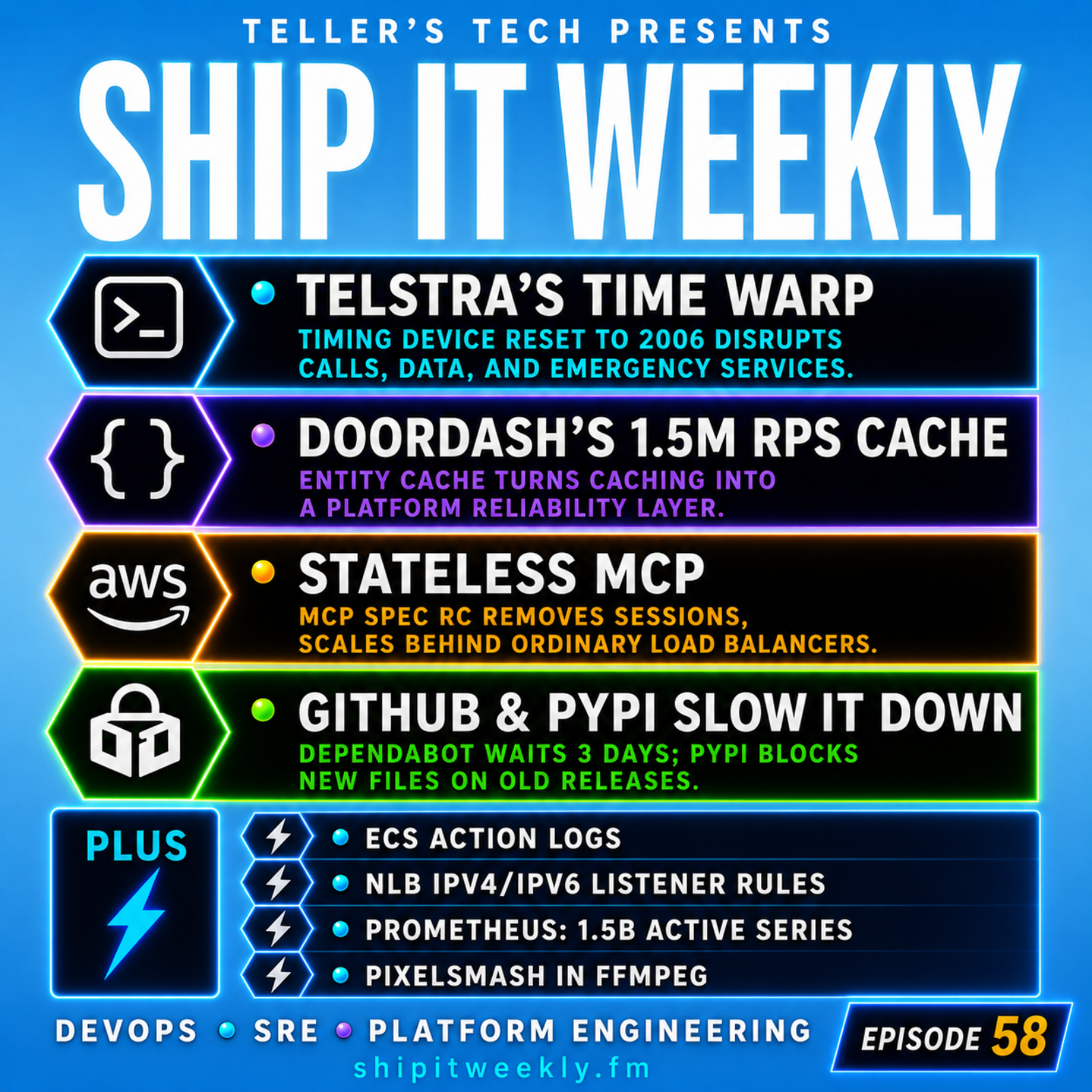 Telstra’s Time Sync Outage, DoorDash’s 1.5M RPS Cache, Stateless MCP, GitHub and PyPI Supply Chain Delays, and Why the Quietest Infrastructure Often Has the Biggest Blast RadiusShip It Weekly · on Model Context Protocol (MCP)97 / 100
 ChatGPT Co-Creator Launches Jev, Salesforce Trains Koa, Self-Improving AIToday’s AI News · on Anthropic Claude87 / 100
 Legal Tech Doesn’t Need More “Lamborghinis” ft. Kara Peterson and Richard DiBonaBetween the Briefs · on Anthropic Claude87 / 100
 Superjustice: Ben Alarie on AI, Abundant Legal Help and the Future of LawyersFuture Ready Lawyer · on access to justice82 / 100
 The End of Software as We Know It: How AI Agents Are Rewriting HR, SaaS, and Organizational DesignAI First with Adam and Andy · on Model Context Protocol (MCP)81 / 100
 Boilerplate in Seconds: AI Handles Setup, Engineers Handle Logic - Klaudia Dussa ZiegerSoftware Testing Unleashed · on Model Context Protocol (MCP)80 / 100Amy Juers and Valerie Chan on Marketing Legal Tech in the Age of AI SearchNew Casepoint CEO Paul Colangelo on AI, GovTech and the Road AheadContext Is Everything: CEO Neil Araujo on iManage's AI StrategyHow AI Is Transforming the Way Law Firms Win Business, with Ikaun President Jason NobleLegal Marketing Association President Rachel Shields Williams On AI, Innovation, and Why People Still Come First