
Kev Talks · 2026-06-05 · 1h 13m
Key moments - from our scoring
Substance score
27 / 100
Five dimensions, 20 points each
Dr. Stephanie Thomas shares her path from logistics work at IBM and Lowe's through a PhD at Georgia Southern to her current role at the University of Arkansas's J.B. Hunt Department of Supply Chain Management. She emphasizes teaching critical thinking and understanding the ripple effects of business decisions rather than just technical skills, particularly as AI eliminates entry-level positions. Thomas discusses her research on buyer-supplier negotiations, focusing on long-term relational approaches versus transactional interactions. The episode centers on WISE (initially Women Impacting Supply Chain Excellence, now We Impact Supply Chain Excellence), a student organization she founded that has grown from a single university initiative to a multi-university symposium with over 30 participating institutions. WISE focuses on networking, professional development, leadership skills, and exposing students to the breadth of supply chain careers - from retail to transportation to procurement - helping students understand there are many paths beyond warehouse or truck driving roles. Thomas notes that connecting students across universities through the annual WISE Future Leaders Symposium creates lasting professional relationships and helps prevent attrition from the industry after graduation.
WISE (We Impact Supply Chain Excellence) is a student organization founded at the University of Arkansas that helps students build networks, develop leadership skills, and explore diverse supply chain career paths across retail, transportation, procurement, and other sectors through speakers, events, and peer connections.
Dr. Thomas created the WISE Future Leaders Symposium in 2019, which grew from 12 participating universities in the first year to over 30 universities by the most recent event, creating a multi-campus network for students.
Thomas researches buyer-supplier negotiations, specifically comparing competitive versus collaborative negotiation strategies and their impact on long-term buyer-supplier relationships, moving beyond transactional one-time interaction models.
AI and automation are eliminating entry-level positions where students traditionally learned business fundamentals, so universities must now teach data interpretation, decision-making under trade-offs, and systems thinking at higher levels.
The four main focuses are making professional connections and building networks, personal and professional development, building leadership skills, and providing industry knowledge about the diverse range of supply chain careers.
Our reviewer’s read on each dimension, with quotes from the episode.
The episode is dominated by student introductions, small talk about Northwest Arkansas, and generic career platitudes. A few genuinely useful observations surface - AI eliminating the entry-level roles where critical thinking is developed, and the paralyzing effect of perfectionism - but they are brief and surrounded by enormous amounts of filler.
In the new age of AI, that's taking away a lot of entry level positions where you learn a little bit about the business and maybe start learning how to think a little more critically
There's students that might on paper be really good because they have exceptional grades. That doesn't mean they also have...the critical thinking skills
The episode recycles standard career-advice tropes - network early, be curious, AI is like Excel, join clubs. The one genuinely fresher angle, Dr. Thomas's research on long-term relational versus transactional negotiation strategy, is mentioned but barely developed before the conversation moves on.
When Excel came out, people were scared of it and now it's just normal that everyone uses it
I specifically started looking at negotiation strategies and then your choice of say a more competitive or aggressive strategy versus a more collaborative or kind of problem solving, strategic kind of approach
Dr. Thomas has real practitioner credentials (IBM, Lowe's 2000-2005, PhD, nine years building supply chain curricula) and has grown WISE to a genuine multi-university footprint, but she is an academic practitioner rather than a scaling operator. The five undergraduate students, while personable, contribute essentially zero actionable B2B operator insight.
I spent some time in industry with some companies like IBM and most of it at Lowe's in logistics and merchandising roles
I started the first Wise Future Leaders symposium. And it was in 2019. And we had, I think 12 universities that participated in it the first year. Last year we had over 30
A handful of concrete data points appear - WISE growing from 12 to 30-plus universities since 2019, Lowe's tenure circa 2000-2005, named companies where students intern - but no metrics, dollar figures, research findings, or supply chain KPIs are ever cited, and most claims are anecdotal and vague.
the first Wise Future Leaders symposium...was in 2019. And we had, I think 12 universities that participated in it the first year. Last year we had over 30
I'm somewhere in 15 to 20 different universities that have it
The hosts ask broad, generic questions and respond to nearly every answer with uncritical praise ('that is gold,' 'masterclass,' 'love that'). There is no pushback, no probing follow-up, and no productive disagreement across the full 73 minutes; the student segment in particular devolves into an extended testimonial for the WISE brand.
that is gold. I hope one. That is. That is a promotional snippet right there
Y' all are giving a master class. I love, I love that
Computed from the transcript - who did the talking, and the words that came up most.
In this special episode of Kev Talks: Real World Global Logistics, the focus turns to the future of supply chain leadership, the next generation of talent entering the industry, and the unique ecosystem helping shape them in Northwest Arkansas. The conversation opens with Dr. Stephanie P. Thomas, Associate Professor of Practice in the J.B. Hunt Transport Department of Supply Chain Management at the University of Arkansas Sam M. Walton College of Business. Dr. Thomas brings a rare blend of academic depth and real-world industry experience, built on her early career roles with IBM and Lowe's, and strengthened through her Ph.D. in Logistics/Supply Chain Management from Georgia Southern University, along with an MBA and BA from University of Tennessee. Her work centers on behavioral and relational dynamics in supply chain management, with a strong focus on buyer-supplier negotiations, relationship management, and workforce challenges in transportation and logistics.
Transcribed and scored by The B2B Podcast Index.
Speaker A: Hey, kp, what's going on?
Speaker B: Hey, Higgins. I was, uh, just given instructions not to move very much, so I'm going to be very. I'm okay. Don't hurt anybody. Panic if you're watching. I'm all right. I don't have back issues. Well, I do, but, um, anyway, episode 82, uh, summer hiatus. We will be taking some time off, Higgins, uh, to enjoy the summer. Um, but, uh, I hope everyone enjoys their summer. We'll be back in the fall in September, post Labor Day, um, as. As soon as we can. Um, but, uh, there will be reruns for everyone, some of our favorites on tour episodes and promoted, um, each Friday, but, uh, no new episodes until the fall of 2026.
Speaker A: Yeah. So we appreciate everybody letting us take a little bit of time off, uh, even though you didn't have a choice, because we were going to do it anyway, so. But, uh, it's. It's summertime and it. It got hot in a hurry, man. We went from 70 degrees to 90 degrees. And uh, it's. It's. It's gorgeous. I'm. I'm digging this time of year right now.
Speaker B: Well, also this time of year. I agree, Higgins. This time of year. And, uh, the day that this episode will be released is actually a pretty important day in Northwest Arkansas in regards to Walmart Shareholders Associate Appreciation Week, etc. Heavy, heavy traffic. Locals try to stay off the road if at all possible. I did not do a good job of that earlier today. Um, but it's a really, ah, really important, uh, day in Northwest Arkansas for the Walmart family.
Speaker A: Yep. The associates are out in the stores. The stores are greeting them and they're going to be all over town. So this. Watch for, Watch for buses. Watch for all of the, um, you know, all the visitors from around the world. So, uh, it is a big time.
Speaker C: So shareholders.
Speaker A: Shareholders Week, Associate week, shareholders meeting on, On Friday.
Speaker D: Yep.
Speaker B: So again, this is. This is part of our Northwest Arkansas series. Um, I want to get straight to our guest, uh, because we've got a long episode and I think, Higgins, this is our episode where we've had the most amount of people on at one time. Um, we do have, uh, uh, some students from the University of Arkansas. Um, but we're going to start the episode off with Dr. Stephanie Thomas. So today on Kev Talks, we're excited to welcome Stephanie Thomas. Dr. Thomas is an associate professor of, uh, practice in the J.B. hunt Department of Supply Chain Management at the University of Arkansas, where she combines academic excellence with. With real world industry experience. Gained through roles with IBM and Lowe's. She holds a PhD in logistics and Supply chain Management from Georgia Southern University and has become a leading voice in areas such as buyer, supplier negotiations, relationship management, transportation workforce challenges and supply chain leadership.
Speaker A: Yeah. And uh, beyond the classroom and her research. Dr. Thomas serves as the executive director of WISE. Uh, we impact supply chain excellence at the University of Arkansas. It's helping connect students and industry professionals through a meaningful development opportunities that strengthen the future of the supply chain profession. Her work has been featured in leading academic journals as well as respected publications including Harvard Business Review and A Supply Chain Management Review. We're also pleased to be joined by five outstanding current University of Arkansas students who are active members of WISE. So William Lovell, L.A. palombo, Taryn Pittman, Hannah Yong and Rodney Thomas, name may sound familiar. Um, their perspectives provide a unique look at the next generation of supply chain talent, offering insights into student engagement, professional development and the skills needed to succeed in today's rapidly evolving logistics industry. So please join us in welcoming Dr. Stephanie Thomas and our wise student guests to Kev Talks Real World Global Logistics.
Speaker B: All right, welcome back. And we've got another great guest. Part uh, of Northwest Arkansas. You know, we'll say this is our, another part of our Northwest Arkansas series. We're not going to have her call the hogs, but she is part of the University of Arkansas as you heard earlier in the intro. But welcome Stephanie and tell us a little bit about uh, you, where you're from and why Northwest Arkansas. How'd you get here?
Speaker D: Oh, awesome. I, and thank you guys for having me. I'm so excited to be uh, here today. And my gosh, you're asking for a long journey. If you're gonna say where from another,
Speaker B: give us a little, give us the
Speaker A: highlight reel, the Cliff Notes version.
Speaker D: So, um, I'm a Tennessee girl at heart. I grew up in a small town in um, Tennessee and ended up going to the University of Tennessee for my undergraduate uh, and that's where as I was transitioning from an undergraduate degree into a master's degree when I kind of first got this sniff of this thing that we called logistics and transportation because I'm dating myself. We were barely using the term supply chain management at the time, but they had a really great program and I thought my odds of getting a job were more for something that they're known for as opposed to something that they weren't known for. And then along the way I fell in love with the field. I love the problem solving side of it. I love Working with other people to collaborate, to make things happen. And so after I finished my degree, I spent some time in industry with some companies like IBM and most of it at Lowe's in logistics and merchandising roles. And then, um, along the way had some kids, and my husband decided to go back and become a college professor. And when the kids got a little bit older and I started looking at, do I want to go back in the workforce and what do I want to do? I think I'd gotten to a point in industry that, you know, saving money or, you know, doing things just didn't have the same feel for it. I was looking for something that I felt like made more of a, in an impact. And, um, that's where kind of after watching my husband's journey and stuff, I thought, well, maybe academia is where I want to take my next, uh, part of the career. And so, um, started at Georgia, uh, Southern University to get my doctorate, and then was at Texas Tech for a few years building their supply chain major. And if I say we sometimes, my husband is also a supply chain professor. So we're a lot of times both in the middle of all of it, uh, together. And then we came to the University of Arkansas, uh, nine years ago, and we both had retail experience being at Lowe's and lots of love for supply chain. And when you start looking around at universities where in the area people know about supply chain and retail, like, can you really do any better than the. The University of Arkansas, Arkansas? And we said, you know, what brought us here? We knew some people here, but we also, um, knew there was a heavy focus on retail, uh, as well as supply chain. And for two recovering retailers, that seemed like a great place to be.
Speaker A: That's awesome. What years were you at Lowe's?
Speaker D: Oh, lordy. Um, I'm trying to think what.
Speaker A: Let me ask, Let me, let me ask you this.
Speaker D: You don't have to give 2000 to 2005 ish.
Speaker A: Okay. So Mike Mabry was there when you were there?
Speaker D: Yeah.
Speaker A: Okay.
Speaker D: Yeah, Yeah. A lot of great people at, ah, Lowe's, um, loved the home improvement, uh, industry space. Lot of, lot of fun. A lot of great people. So, um, I think, um, Kevin, we had talked with some of our pre. Questions in advance. How you got into stuff, how you got interested in things. Um, lot of great people in retail. A lot of, A lot of fast pace. A lot of fun. And I was very fortunate to have some amazing bosses that believed in me and encouragement and stuff early in my career that I think also Helped with my love for the field.
Speaker A: Yeah, that's awesome.
Speaker B: Love m for the field. And your husband is in the field as well. So ask your children, are they in the industry as well? We'll get to that. I know a little bit well.
Speaker D: So I believe in like middle school and high school we had the standard parental child. I will never do anything that you want me to do. And so my uh, daughter ended up graduating from the University of Arkansas last year, uh, with a data science degree that was focused in supply chain. She's currently working at General Mills on the, on the Walmart business. And so I won't know that, say that her title is always supply chain but she full well knows that a lot of the understanding of supply chain and concepts are very important to the, the day to day decisions that uh, she's making. And then my son is, he is trying to stay the, he's the product of. I know a number of students that come into the university have a lot of credits from high school and so sometimes they could finish a little earlier than they want. And he's trying to stay his full four years. And so he's doing information systems, supply chain and I believe marketing. So they're both kind of in it. Um, and he's actually going to be doing a uh, merchandising internship with Walmart this summer. So some of my merchandising background kind of influencing. I don't know that he would admit that, but that's, I'm, you know, I, I'm proud, proud mom of both of them and they've kind of figured out that maybe mom and dad weren't wrong.
Speaker A: Yeah, that's awesome.
Speaker B: Right? Well, I think, you know, I mean in any shape, form or fashion, just about any, any career, almost any career, there's some component of supply chain, you know, logistics, moving stuff and all of that. So um, we'll give our audience and listeners a little bit. Uh, so what classes, if they go to the U of A, what classes are you teaching? Give them and what level, who and how are you engaging? What level of students?
Speaker D: So uh, the good news is a lot of times in academia you get to bounce around and teach different things if you want to. So for the first, I'll say eight years and this being my ninth year, I pretty much exclusively taught our intro to supply chain class. So that is part of the business core. So any student that comes into Walton College of Business is going to take at least one class on supply chain management. So I.
Speaker B: So you're vetting them? They're the first ones, kind of like
Speaker D: I'm trying to recruit.
Speaker B: Okay.
Speaker D: All right. Okay.
Speaker A: That's a great way to put it.
Speaker B: Yeah.
Speaker D: And motivate, you know, and this is not to offend my accounting friends, but I do say, you know, isn't this so much better than accounting depending on how your brain works? You know, it can be. But that's what I would call the sampler platter of supply chain. We try to cover a lot without going very deep, but it really is meant to get them interested. Excited questions. But I also try to do a lot of, you know, I don't care if you are going to major in something else to the point that was just made earlier. Every supply chain touches everything. So understanding a little bit of this big picture and the critical thinking and stuff that has to go in and the ripple effect and trade offs of any decision you make anywhere in business doesn't just affect you, it affects a lot broader thing. And I think we can teach them that in supply chain. So whether or not they say this is my career or major, they're going to be a better professional because they have that understanding. So that's where I've spent most of my time. I recently started teaching, uh, a supply chain kind of strategy class in our full time MBA program. And so that's been a lot of fun. And this past semester I started teaching a sourcing class. So we try to kind of COVID the score model as with our majors. So they have a plan, a source, a make a, uh, deliver kind of class and then some other classes to round out the education.
Speaker B: Those are all great classes. Go ahead, Higgins.
Speaker A: Yeah, I was just going to say I'm glad you mentioned there's two things that you mentioned in there. That's the critical thinking and then the ripple effect. Right. Because I think having that understanding, whether it's accounting or whether it's data science or whether it's anything else. Right. Getting those, you know, developing those skills and those traits. Because any decision that you do make, a merchant makes or you make in, in your supply chain role has that ripple effect. And being able to see down the road is a trait that I think sometimes it's hard to teach. So I'm glad that you mentioned that as part of, you know, your curriculum with your students.
Speaker D: And I think that is just going to become increasingly important. I've spent some time recently talking to some academic friends at a variety of different universities. You know, in the new age of AI, that's taking away a lot of entry level positions where you learn a little bit about the business and maybe start learning how to think a little more critically. We have got to, on the academic side, figure out how are we not just teaching them. Here's how you do a spreadsheet, but like how do you interpret numbers, how do you make decisions based on data? And how do you weigh those trade offs within those decisions? And those are higher order levels, uh, of thinking that I think as academics we have got to challenge ourselves to make sure we're continuing to raise the bar. Because the roles that students have been going into are evolving and changing. And a lot of times what's going away is what we've been doing the best to prepare them in. And so we're going to have to start elevating so that they're ready for, um, to bring an elevated kind of mindset to the roles that they're going into.
Speaker B: Well, Stephanie, part of the research, uh, and looking at some of your background in preparation for this episode, I saw where your research interests include an emphasis on negotiations. You haven't talked about that. I want to hear. That's a huge piece of what Higgins and I have done and continue to do in our career. A critical skill. Talk a little bit about that, but also incorporate you as a parent in negotiations as well. Um, it's so interesting to me, uh, that you have, have a research interest in that specific side of supply chain.
Speaker D: So a great question. I, uh, may dark out a little bit on the academic researcher nerd side of things. So go with me. So as part of a PhD program, you have to figure out something that you want to study to do this massive book report called a dissertation. And when I came into my doctoral program, I had all this industry experience with me and I was really struggling looking at a lot of the research that was very conceptual or theoretical or even when I started reading a little bit about research done on negotiations to me. And you guys know this from having been in industry, you don't always just negotiate one time with one person in isolation over, you know, the price of a car or something like that. It's an ongoing long term type of thing. And a lot of the research that I was finding was uh, very transactional one, one kind of interaction. And I was like, this just doesn't feel right to me. And so I felt like that's where we'll, we'll call it a gap in the literature of where's a place that we don't feel like the, the field has kind of tackled. And so that's When I looked at negotiations, I specifically started looking at negotiation strategies and then your choice of say a, um, more competitive or aggressive strategy versus a more collaborative or kind of problem solving, strategic kind of approach. What's the impact on the relationship between the buyer and the supplier in that type of, um, situation? To try to have more of a long term relational, uh, feel to it and that. So that's kind of how I got started, um, in it and have enjoyed it a lot. My husband, I think, made the mistake of teaching our kids to negotiate way too young because, thank God. So as they got into middle school and high school, I had to kind of go, okay, this, we're not negotiating this one. So we can negotiate other things. But, but this is not. But I, you know, we also raised the kids that if they wanted, you know, I don't know, uh, some technology or an email address back in the day or something, we got the PowerPoint presentation on why they should get it.
Speaker A: Yep. I love that my daughter grew up. I mean, I've been doing this for a long time. I've been doing it since before she was born. And my daughter grew up thinking that way as well. And I remember when she was turning 16 years old, she found a car that she wanted and it was a British imported standard Mini Cooper. Two things. So it's a right hand drive and it's a stick shift. She knew not how to drive and not how to drive a stick shift. And I came home and she had written a paper, I mean, a, uh, whole paper with a PowerPoint presentation on why I should buy her this car.
Speaker E: Did it work?
Speaker A: Yeah.
Speaker B: Did it work?
Speaker A: And I didn't. It worked enough for me to call and I missed the car by five minutes.
Speaker F: Oh.
Speaker A: So she didn't get her car. But she convinced me that I should go get the car for her.
Speaker B: So it worked.
Speaker A: So it did work for her.
Speaker D: That's awesome. I love that. I love that.
Speaker A: That's awesome. So, but I could, I love what you're saying on, on that, you know, that type of negotiation. And I could nerd out with you for a long time on this because that's exactly how I have lived in my career. Um, so this, I call it a checkbook kind of relationship with my. We're always going to deposit. I'm depositing your account because I know one day I'm going to withdraw. I'm going to need a withdrawal from a supplier perspective. So not to, not to spend all our time on that. But I just tell you I could appreciate and have Some conversations around that too.
Speaker D: If you can't sleep, I have some papers that I can send you to read.
Speaker B: Sleep? No, I love to read.
Speaker A: Yes.
Speaker B: All right. I want to get to, um, uh, sort of a main topic. Uh, we've got, uh, some other guests a little bit later in this episode. Um, and they're all members of an organization, a group called wise. Stephanie, tell our audience, uh, what WISE is, what inspired the creation, um, and we'll kind of go from there. But what is wise?
Speaker D: So WISE is a student organization that started the University of Arkansas. Originally. WISE stood for Women Impacting Supply Chain Excellence. And it has evolved now into We Impact Supply Chain Excellence. Because it. It's an open organization to anybody who finds that it might be beneficial. There's kind of four main focuses of it. And think about this from a student perspective. You know, making connections, so building your network, Personal and professional development. I used to only kind of say professional development, but we bring your all of ourselves to work, and we bring all of ourselves to class. And there's. There's a lot going on personally that sometimes we need to need some little help with as well. Building leadership skills and then what I call industry knowledge. One of the big challenges for most supply chain students is, unlike maybe some other majors, that career path, it isn't just kind of set out for you. It could go a bazillion different, uh, directions. And so one of the things WISE has tried to do is bring in a variety of different speakers and different roles and different industries, parts of the industry, different things to show there isn't just one path. Because what I've done some kind of informal research with students, and a lot of times if they don't know the variety of options, they have a very narrow focus and they might go, I don't want to major in supply chain because I don't want to drive a truck or I don't want to have to work in a warehouse. And there's nothing wrong. We need truck drivers would need warehouses. But maybe that's not for everybody, when in reality there's, you know, that whole big beautiful world out there of, uh, working into pychant in so many unique, fun, interesting, exciting ways. And we're trying to help students find those opportunities so that the first job, hopefully that they get coming out of college is a good fit so that we keep them in the industry because there's some research to support that. You know, if that first job isn't a really good fit, a lot of times we lose them and they never Come back to the industry. And so WISE as an organization is trying to, you know, create community, be open and welcoming, but also help you work to be a better future professional and also maybe find a better fit for where you can start and hopefully take your career. And so it started here at the University of Arkansas and over the last several years has expanded beyond that.
Speaker B: That's what I was going to ask. So it definitely has expanded beyond University of Arkansas. What drove that and what impact are you seeing?
Speaker D: Sure. I've got to tell you, I have had a lot of fun working with this and doing it. And it has, um, I will say exploded beyond anything I could have eight or nine years ago ever thought about or planned. But I would say, um, I guess a year or so in working with the WISE group here at Arkansas, I had, I'm involved in an organization called awesome, which has traditionally been for senior women in supply chain. And I had gone to one of their conferences and events and thought, you know, this is really great, making connections and stuff like that. What if we could do this for students from different universities? Because as we know, you don't just go work somewhere with people from your college or university. There's a whole sporious board of options out there. What if we could help make a community or a network of college, um, students? And so, uh, that's when I started the first Wise Future Leaders symposium. And it was in 2019. And we had, I think 12 universities that participated in it the first year. Last year we had over 30. And with some interest in other universities that I've had the last year, I think we'll probably hit 35 or 40, uh, this coming year. It's usually a day and a half event. Amazing speakers. I, I try to say it's like inspirational, aspirational, educational kind of thing. So we'll talk retail, for example, students from some other supply chain programs, maybe they're more transportation based or more logistics based or something. And uh, they might hear from speakers from Walmart or Sam's Club and they go, oh, I didn't know supply chain was in retail. And I want to go, how did we not know this? But if nobody's ever connected those dots, they don't know. And they're like, oh, um, I never thought I could go work, you know, for whatever my favorite clothing brand is or whatever. And to me that's uh, a like, you know, those light bulbs can go up and you're like, okay, now I care about this in a way that maybe I didn't before. This. And by the way, I've met some really awesome people other places. So now I'm even more excited about this, this major that I have in this industry. And what we're finding is a lot of these students that will come to the WISE symposium may um, run into the same students at a conference or at a case competition or something and they're keeping those connections. I know cases where students from a couple different universities, let's say they all ended up in Dallas at internships for the summer and none of them are from Dallas. Well, that means they've kind of got a built in group to hang out with while you're trying to start. Does this place feel okay? Because you know it can be kind of lonely when you uh, are in an internship and you go somewhere and you don't know anybody and you're not going to put down those routes because you know you're leaving in three months kind of thing. I think it can help companies, their interns have a better experience and accept maybe a new location better because they've got kind of a community there. And students that have come to this event have found out, oh hey, Arkansas actually has this group as a student organization at their university and they meet monthly and stuff. Let's go do that at our university. And I think we're somewhere in 15 to 20 different universities that have it. And then as students have graduated, um, I've kind of built what's called Wise beyond and that's kind of been more early to mid career focused of hey, let's continue to try to create community, create connections, learn more about opportunities. Some of the pieces of feedback I've gotten are, you know, when you're in school, you feel like you're getting all the cutting edge information about technology and ideas and all these different things. Well, you get in your company and you're in your little, your little tunnel focus and you're just in your group and you're like, I don't know what's going on anymore out there. And so if I can hear from speakers other places and stuff. And so we've been in the process of trying to grow some regional groups of that. And so the first one of those regional groups was here in northwest Arkansas.
Speaker A: That's, that's, that's awesome because KP and I have talked about a lot, a lot about the, the lack of, the lack of community events, the older that we've gotten in our profession. So we, you know, we attempted to do something about that a couple of years ago and um, but I think that's incredibly important as you go into your career to start to have that community and so you can lean on people from a supply chain perspective.
Speaker D: Absolutely. It's been awesome to see people, you know, two different people from different companies find out, oh, you're putting this new technology and, oh, so are we. Let's go get coffee sometime and just kind of talk about what are you guys seeing the same things we are or whatever. And those organic connections, man, they're so powerful.
Speaker A: Yeah.
Speaker D: And then when you can kind of help facilitate that, it's such a huge win. And I'm still also in the. I want to keep people in the field and I want to help them be their best self so that they can grow in their career and achieve their goals. And if this is, can be part of that journey, I feel like it's a, it's a great place to be.
Speaker B: So along those lines, Stephanie, obviously you and the Wise Organization and other organizations that you are, uh, developing. Talk a little bit about developing future leaders and from your perspective, what separates a good student from someone truly ready for the industry? And then also, what are some common gaps that you see and students entering the workforce.
Speaker D: Great question. I think one of the things that I struggle with on the professor side sometimes is you gotta step back and look at the, uh, grades versus the mindset. Because there's students that might on paper be really good because they have exceptional grades. That doesn't mean they also have, as we were talking about earlier, the critical, uh, thinking skills. Maybe they, they know how to. They're really good at executing and getting the textbook answers and putting together a project to meet a rubric or something like that. But they're not really creative thinkers. They're not really outside the box. They don't deal well with ambiguity. And so. And a lot of my students that have really high grades hate when I say this, but I'm just like, you know, I was like, the real world is not your, Your manager is not going to give you a rubric and tell you exactly what to do because they don't need to pay you money. They're gon say, here's a problem, Figure it out. So when you say, what are good students? There's some really great students that have done really well academically, but they really, um, in the face of adversity, they struggle and they kind of, they can't handle that. Where there's some students that, they're a little more entrepreneurial in their thinking, they're a little more out of the box and creative. And maybe they don't have the same grades because they're gonna go a little bit outside the rubric and maybe that's not always rewarded or whatever. Those are the ones that I'm like, okay, you're gonna be good. You're gonna be fine, because you, you're thinking on your own, you're asking questions. You want to know why, but you're not handcuffing yourself, trying to be perfect. Because that's where I think we have a problem with a lot of students is it's this quest for perfection. And sometimes perfection can be paralyzing. So you see students, uh, in research about companies as, as they're hiring, some of this, this generation of. The fear of failure keeps them from acting, and so they just kind of sit in their job and don't do anything because they're afraid to mess up. And, uh, that's the reason I try to talk a lot about failure. Let me tell you, when I did this wrong or. Well, let me tell you when somebody else did this, this wrong and realized most managers would rather you not make the same mistakes 14 times but are going to give you some grace for, for, for trying and go, hey, yeah, we screwed that one up. Guess what? Executives make decisions, big decisions. Sometimes they're right, sometimes they're totally wrong. And that's, that's okay. You get up and try, try again. That's, that's a really hard thing. Um, for, for a lot of students is, is that learning to fail and, and confidence is, is a big thing too, that we're constantly. I feel like I'm trying to help people believe in themselves that, you know, even if you're a great student, you may never interview well to have an opportunity because you don't believe enough in yourself and what you're bringing to the table that you can't convince somebody else to believe in you either. Which is, is sad because I feel like some great people, um, sometimes miss out on awesome opportunities.
Speaker B: Yeah. All of what you just said, like the last three minutes, that is gold. I hope one. That is. That is a promotional snippet right there.
Speaker A: That is masterclass.
Speaker B: Yes, that's a masterclass. Thank you. That's exactly what. But along those lines, if you could give one piece of advice to every supply chain student, what would it be? You've already given tons of things, but if there's one more, one piece of advice, what is that?
Speaker D: Oh, that. I'm trying to. I'm trying to. This is the problem. When you ask an academic to do one thing and be very succinct in it. We liked it to give you the 5,000 word response. Be curious. I think it's the, you've got to, um, just ask why, Dig deeper. Want to know more? Um, you can overcome a lot of other things with that in that kind of growth mindset. People can work with that. Managers and leaders, ah, can work with that. And usually those are the people that are fun to work with too.
Speaker A: Yeah, I love that, the, the be curious part. And I, I would add to that if I could not only ask why, but ask why not?
Speaker D: No. Great. Yep, yep, yep. Both sides of the coin. Yep. Yeah, absolutely.
Speaker B: Y' all are giving a master class. I love, I love that. All right, we're, we're getting toward the end of our time, but I want to give our audience, uh, an opportunity to hear from you about how can companies engage with student organizations? Likewise, how do they get in contact with you? In what ways would you like for them to engage and participate?
Speaker D: Sure. And I'll throw out there, uh, there's a lot of their student organizations, especially supply chain student organizations and a lot of universities. And they're doing a great, great job. And usually I've rarely come across any because I know a lot of faculty at a lot of universities. But we're always looking for speakers and people that want to come in and talk, whether it's in classes and stuff that if you have a heart and a passion to give back or just want to help develop or mentor or something, I promise you somebody out there is willing to take you up on it. For me, there's opportunities for individuals as well as companies. Companies can help sponsor things like the Wise Future Leaders Symposium, which means then you get to come and be part of the event. You get access to resumes of all these students from all these different universities, which could potentially be great for internship or full time hiring. But one of the, I guess, challenges that companies sometimes have is they bring a mindset when they come and engage with students through student organizations or say classes is they kind of do the old school info session. Let me tell you about our leave or our, uh, vacation or our insurance or whatever. If you want to make an impact, you come in and you talk about a problem and you give them time to kind of wrestle with and discuss and think about how they would attack or handle that problem or if they have ideas with it, and then kind of tell them the outcome when you put them in a role so they can kind of see what their position or what that, ah, what it would be like to make decisions for that organization. That's a much better hook than just talking. We're going to tell you how great our culture is. Well, we're going to show you by putting you in to having a discussion with us, uh, on what life looks like in our organization or the problems that are coming. I think if you could come up with good ideas to come in and put those in front of students, that's a huge win and it will pay off in students being interested in coming to you for internships or full time opportunities.
Speaker A: That's great, great advice.
Speaker B: We've really enjoyed having you on. One last question and then we're going to get, actually we're going to speak with some students but before we do that, what do you think they would say about how Wise has impacted them?
Speaker D: Great question. And I think depending on the student that impact could be very different. One of the main keys that I feel like I hear a lot is they feel welcome and accepted. And to me that is huge on student organization side of things because once somebody walks in and feels welcome and accepted, they're likely to stay like if you don't, if they don't feel like anybody wants them there or cares if they're there, even if the content's great, even if speakers are great experience, they're not going to come back. And so one of the things that I've constantly worked with the student leaders and stuff is we want to make this a place that people feel welcome and accepted. So even if they don't, they decide it's not my cup of tea, I'm going to go do something else, they're still going to walk away and tell other people. But you know what, People came up and talked to me. People were friendly, people were glad that, that I was there. Because I think sometimes, especially with college students showing up somewhere where maybe they don't know anybody, like we all, when we go to a networking event and don't know people, you know, sometimes you may feel a little kind of uncomfortable. If you can make it a positive experience, I think that increases the likelihood that they push themselves to do that again and again in their career, which is only going to benefit. So we're trying to kind of set that, that stage early on. So I would hope, um, and that's some of the feedback that I've gotten as well.
Speaker B: That's great. Well, listen, thanks for joining us today. Thanks for your leadership, thanks for the work that you're doing with these Students. Uh, we're really excited to hear from the students. And me, too.
Speaker A: Yeah.
Speaker B: Audience, stay with us. We're gonna have five U of A students that are part of the WISE organization share their story and their experiences as well. So stay tuned. We've got some University of Arkansas students that, uh, we're really excited to have. We're gonna do some introductions, but, uh, first of all, let's start everything off with the cheer. No, I'm kidding. I'm kidding.
Speaker D: We're not.
Speaker B: We're not gonna do a cheer.
Speaker A: I'm gonna call the Hogs.
Speaker B: I do want to, uh, maybe just have a. Get an opportunity from everybody to just kind of give, uh, who you are, what your, uh, major is, and maybe what part of the state or out of state. Where are you from? And let's start. Rodney with you.
Speaker G: Yeah. So my name is Rodney Thomas. I'm a, uh, junior from Bentonville, Arkansas, majoring in supply chain and information systems and minoring and marketing. Anything else? There's that. That good?
Speaker B: That's good. Long away, long way.
Speaker G: I know.
Speaker E: Okay.
Speaker G: It's a trek back and forth, right?
Speaker B: All right.
Speaker E: Taryn.
Speaker H: Yes, um, my name is Taryn Pittman. I am a sophomore from. Studying supply chain management from Dallas, Texas, or Van Alstein, Texas, is what I should say.
Speaker F: Excellent.
Speaker B: Ah, I think there's a lot of Texans at the University of Arkansas, right?
Speaker C: Yeah.
Speaker H: Yes, there is.
Speaker B: There is. All right. Hannah.
Speaker F: Hi, my name is Hannah. Uh, um, I'm a junior studying supply chain, and I am from Connecticut.
Speaker D: Oh, my God.
Speaker B: Connecticut. Okay, so you get the, uh. So far, you're the furthest. Connecticut. We'll get into that in a little bit. How and why you showed up in Arkansas, but we'll get there. All right. All right. Ellie.
Speaker E: Okay. Can you hear me? Yeah, sorry. Um, my name is Ellie Palumbo. I am a senior graduating next week in supply chain management. And then I'm from St. Louis, Missouri.
Speaker B: Right on.
Speaker C: Congratulations on graduation coming up.
Speaker B: Yes, exactly. We'll get into that. Yes. All right, last but not least, William.
Speaker I: All right, so my name is William Level. I'm, um, studying supply chain management. I'm graduating this upcoming Saturday. I'm from one of the few natives. I go to Arkansas.
Speaker B: Where did you say you were from? In Brook. Up. Oh, okay.
Speaker C: Yeah. Well, congratulations to you as well.
Speaker B: Central Arkansas. All right, well, good. Well, again, all of you have, you know, um, similar backgrounds or, you know, uh, studies. But I really want to, you know, this is for everybody. What drew each of you into supply chain? What made you pick supply chain over accounting or a medical field. And anybody can answer this, but I want, I want to hear kind of your thought process. What did you think of supply chain when you decided and what do you think? What do you think of it?
Speaker H: Now I can start on that question. Speaking of accounting, I was an accounting major when I first came to Arkansas.
Speaker E: Yeah.
Speaker H: And change that real quick. Um, not that the accounting department isn't great, but I just really, uh, fell in love with the supply chain department. The people, the professors, and just everything the industry, industry stands for, just how they want to help people. I think was what drew me in the most. And it's my perspective on it. Originally, what I didn't realize how big it was, and now I'm like, holy cow. It touches every single aspect of our world. Yeah. And so that, that's something that's been really, really cool to get to realize as I've gotten deeper into the industry and my knowledge.
Speaker B: Yep. I was an accounting major as well. First semester in, said no way. But I didn't go in supply chain. I ended up going to marketing. But anyway, um. Yeah. What about you, Ellie?
Speaker E: I actually, I think I applied to the University of Arkansas as a finance major because I. It was something that was on the list and easy to apply. Then I got to school, started taking some supply chain classes. Kind of knew that's what I wanted to do. Since University of Arkansas is so high in supply chain. Number one undergraduate program, I was like, might as well. And then I did actually have a stint in accounting. Was, uh, going to get a minor. And then one of the last classes realized that wasn't for me, but I think it was just, there's a lot to do within supply chain. And so I thought I could work in transportation or I could work in the customer service side. So you get to see all those parts. So that's what, uh, kind of drew me, man.
Speaker B: Yeah, I, I don't want, I don't want to knock accounting too bad, because there's probably a lot of our listeners and audience that are CPAs and love accounting, love YouTube, but it's just not my thing. But I will tell you and Higgins, you probably back me up in every role that I ever had. I definitely needed and used accounting. I'm not sure I used algebra or geometry, but I used accounting.
Speaker C: Yeah, you definitely used algebra. You just didn't know it. But accounting, that accounting background is going to come in handy. I promise you it will. I promise you it'll be incredibly important for you to understand that.
Speaker B: Yeah. All right. Rodney, William, Hannah, either one of you want to share a little bit of how and why you chose Supply Chain?
Speaker G: Mine's a little different. Um, I grew up around Supply Chain parents, but. Meaning. I mean, I'm not sure if you're aware, but Stephanie is my mom, so her and my father are both Supply Chain professors. And coming into college, I said, I want absolutely nothing to do with Supply Chain. I've grown up with it. So I came in as data Science, and then as I got in some courses and switched back into business, I was like, okay, I actually kind of like this and decided to stick with it.
Speaker B: That's good. Yes. A little birdie told me that somebody would be related to Stephanie, and I had to pick who it was. So I'm glad you called that out. That's awesome. William, what about you?
Speaker I: Yeah, so I originally came into college, uh, studying social work. I wanted to actually be a therapist and to create connections with people. But I soon realized, Supply Chain, you
Speaker B: will be a therapist, that's for sure.
Speaker A: Yes.
Speaker I: Well, I mean, that's, that's, that's why I switched. So my sophomore year, I switched to business and had no idea what I wanted to do, but I thought I wanted to. I just knew I wanted to be with people. So I was consistent considering, like, HR management, but I was. It felt a bit too technical. And then I looked, uh, into the Supply chain, and it was a lot more informal in terms of the people skills, which I prefer. And so.
Speaker B: Oh, nice. Okay.
Speaker I: I find a lot of fulfillment, uh, from it this far.
Speaker B: Interesting. That's great. Yeah. All right, Anna.
Speaker F: So I kind of knew I wanted to go to Supply Chain before I came to college because I do run a small handmade jewelry business, and I found myself gravitating towards the behind the scenes aspects. And I looked into Supply Chain as a major, and the undergraduate program here at the University of Arkansas was number one. So I decided to come here for that.
Speaker B: Right. Okay. And what did you think about coming from Connecticut to Arkansas?
Speaker F: I thought, um, it'd be a lot different, the culture differences. But it actually turned out to be quite similar here in northwest Arkansas, at least. But it wasn't much of a change, to be honest.
Speaker B: Well, good. That's good. That's awesome. All right, let's. Let's talk a little bit about, uh, Wise and how each of you maybe got involved. How did you hear about it, Rodney? I think I know, but, uh, tell us how you heard about it and give our audience just a little bit of Your involvement and what it is. I'll let anybody pick and go first.
Speaker I: I can start us off. Um, so when I switched to the supply chain, I knew I had to have at least, like, one extracurricular activity on my resume before I graduated. And so I had a friend who worked on campus as an RA with me, and he was part of wise. And so he finally got me to go to a meeting, show up, and then I slowly, uh, just kept on showing up. People kept on telling me what to do. I said, yeah, uh, yes, ma'. Am. Yes, sir. And then I kept on getting more and more involved. And so now I'm here.
Speaker C: And how's that experience, William? How's that experience been? Has it been what you already told you it was? I mean, how has it impacted you as a student, in your thought process about going into the workforce now, being a, uh, graduating senior?
Speaker I: Yeah, it's giving me a lot more of, like, realistic expectations for what to expect and what, you know, the difference between studying it as a theory versus the practical application of it in the workplace. Um, it's.
Speaker B: It.
Speaker I: It.
Speaker A: Yeah.
Speaker I: Uh, it bridges the gap between studying it and actually performing it.
Speaker C: Yeah. For me, I. I see. I see a lot of you. You not nodding your heads. You guys agree with that? Taryn, I saw you kind of. Yeah.
Speaker E: You and la, I for sure agree with that.
Speaker H: We get a lot of super cool opportunities with being in wise, like, going to company visits. So we just went to Hannah's Candles, um, this past semester, as well as Sheepdog Assistance, and got, like, tour of their facilities and what they stand for and what they do. And that was just really cool to see, like, as a student studying that, what that looks like in the real application of it. And so that's when William says, like, that is what we get from wise. Like, it's actually for sure what we get. And I know, like, I got just pulled in, roped in from a friend who was actually the president of wise, of the Bella Chavez, from a. I was doing a shadow day with Coca Cola as a freshman, and she was like, hey, you need to come and join this super cool organization if you want to get more knowledge and application of, uh, supply chain. And so I joined, and now I'm, um, vice president of membership for wise, and then we'll be president next semester.
Speaker C: Awesome. Congratulations.
Speaker B: All right, Ellie, I want to hear a little bit maybe how WISE has helped you. You're a senior, you're graduating, so how has it helped you prepare for job opportunities? And maybe, you know, while you Were in it. Did it help with networking, internships, things of that nature?
Speaker E: Yeah. So kind of a backstory on even me joining Wise freshman year. I did not go the um, sorority route and especially in Arkansas, U of A. It's a very big thing. And so I was like let me find a club or organization that I can fit in that I would really like. And so I was someone that first week at those club things, joining every single one, getting into all those meetings and emails um, that they were sending out to see. Oh, this sounds interesting. But Wise I knew would be um, sorry, um, I knew would give me kind of the most um, valuable experience. And I also knew how many blood could talk to. So coming into lies, um, I became a membership director and then kind of bringing people in and then all the network throughout the meetings. Um, we have so many industry partners and industry people that come in and talk and so heard people that worked at Walmart or people that worked at Tyson, um, all those big companies. So you get to hear what's happening with them and um, kind of even their trajectory from high school to college to then what they started doing versus what they're doing now. So it was kind of gave me a good idea that there's not a perfect timeline, a perfect roadmap. And so that's what kind of kept me in and um, kind of understood what was happening. And then talking to everyone and hearing about there's possibilities that those companies, that was a big thing that um, it is not just Tyson and Walmart here but there are so many other companies that you can look at.
Speaker B: Oh yeah.
Speaker E: I think that's what really kind of solidified everything with it. And it's also a great talking point in interviews and um, just when going through everything.
Speaker B: So. So to the group of all of the, you know, you have the opportunity, opportunity like Ellie was stating, you have people from the real world come in and speak and share a little bit of their journey, their story, their day to day. Was there anything any of those that stood out that surprised you, that um, inspired you but maybe surprised you about what they were sharing about their day to day or what they actually do or their journey and how they decided. Do any of you have any of those stories or any of those aha moments like wow, I didn't realize and understand that.
Speaker G: I think some things that surprised me most is the backgrounds of a lot of people in supply chain. I would say a very large portion of the people we talk to never started in supply chain, didn't study supply chain, came from other concentrations and have ended up in supply chain. So it's kind of cool to hear that and see that and almost inspiring to understand that maybe even if you get into it and it's not for you, then you can go somewhere else or whatever. Also then you get to meet a lot of people with different backgrounds, which helps your understanding develop further. So that was something that was surprising to me.
Speaker C: Yeah, that's interest. About to say something I want.
Speaker F: Um, so last year around this time M. Um, me and Taran mentioned Bella. Um, we went to a conference up in Chicago at ULTA headquarters. Um, and that really gave me a view about the real life supply chain. And um, instead of just classes, we were able to go through a walkthrough, a DC and automated DC with all the robots and everything. Um, I guess it was really surprising to see how much goes into supply chain and all the different parts, all the moving parts and um, invaluable experience,
Speaker B: let me tell you.
Speaker C: How about, how about networking? How do you guys find now, Ellie and William, especially for you two since you're graduating, but how has wise implanted on you the importance of networking?
Speaker E: I can even start with networking, kind of realize how big of a thing it is. Um, everything. It's not just about saying, oh, let's network. It's about actually hearing about people's background and similarities. And so. And it's also nice, oh, I network at someone at this event. Let me message them. Even those like weak Ties, that there's this book that Stephanie, um, and doctor, Dr. Thomas, um, she had us read as like a senior thing. And it's um, the 10 decades, or it's a. Whatever the decades is. And so one of the chapters is about weak ties. And so talking about those networking things and how valuable those are. Because now I know someone at Ferreira that I can go message. Oh, I see a job application there. Let me reach out to them and see if I can get a referral even for that one. Um, or just even hear about what they do in a different industry. And I don't know about chocolate as much as I know about, um, toothpaste or something like that. So I think those are kind of even like a little good snippets to uh, understand and talk to people about.
Speaker B: So what advice would any of you give to other students about networking? Do it outside of just do it.
Speaker I: Yeah, I mean, I, I always get, you know, anxious at a wise menu where there's a bunch of people there. But it's always, I don't know I've never had a time where I regretted meeting new people and adding them to, like, either my, you know, digital network or to my. Just my personal, uh, network. So it's all. I mean, I view it. It's like investing in people, you know.
Speaker B: Yeah.
Speaker I: And.
Speaker B: And never stop doing that in your career. You know, you may evolve and be, you know, in a different format, but never stop doing that. That's for sure. That would be my one advice.
Speaker C: Taryn, you were about to say something. I saw you lean in there for a second.
Speaker H: I just think people are always so in their own head about. I'm nervous about talking to this person. The other person's going through the exact same feelings. You just talk to them. M. You have a conversation and you never know what could come out of it. Something super duper cool, like a crazy opportunity. If I hadn't gone up to Bella at the Coca Cola thing, I wouldn't be a part of wise. I wouldn't be able to be here. And so it's just like super cool just how one conversation can spiral. Spiral into something super amazing.
Speaker G: Yeah, kind of.
Speaker C: Well, I think it, I think is incredible. Rodney, Sorry to interrupt, but.
Speaker B: Oh, good.
Speaker C: I think it's incredible that you guys
Speaker A: being a part of, you know, that
Speaker C: organization and the fact that the school is bringing you guys together. Because there will be a point in the next three to four years where all five of you work at different places potentially. You may be, uh, end up in the same place, but you can always lean on each other at that point because the school brought you together through wise, and you'd be faced with different, different circumstances. And then you'll be able to lean on your, um, your colleagues at different companies to kind of help solve problems of the day. So I, I think it's incredibly important as you continue that. Just my two cents.
Speaker G: I like that call out. Because my advice would be put yourself in a position where you're able to network, meaning go to events, join programs and whatnot. Because if it wasn't for a program like wise, I would almost be completely disconnected from the professional world. Right. I would be purely a college student going to class and doing all that. Whereas WISE provides you with opportunities just outside of wise, different events you can, can go to, and all that stuff actually puts you in a position where you are able to network. And so that would be mine. Because if you're never in a position to network, then you're never going to expand or grow your network.
Speaker B: Yeah, I think that's a phenomenal point. And just so pleased that the university has something like this and that Dr. Uh, Thomas has put something together like this, started this, that you all chose to be a part of it and that you see the value in it. I can, I can tell you you very likely will not realize the full implications and the value of it until later in your career. Pulling, you know, being able to come together with like minded people at this age and at this early in your, your career is ultra important. So with that, maybe let's talk a little bit about career goals. What would uh, uh, what are your career goals and what kind of companies and roles excite you the most? Those that you are graduating. You probably need to speak first.
Speaker I: Okay, I can, I can go first. So what was the first question you wanted to ask?
Speaker B: Yeah, like, like, like what are your career goals right now and what kind of companies or roles excite you the most?
Speaker I: Uh, for me I'm really, I'm a big fan of leadership development slash the leadership rotational programs. Um, I know a lot of companies offer them for uh, post grad college entry level positions. Right now I'm doing a second internship with HEB down in Texas. Uh, last summer I did a supply operations internship in a warehouse. And so this summer I'm going to be doing a store side leadership internship. So I'm super excited about that. But that's, I get very excited with leadership development.
Speaker B: That's awesome. Those internships, how do you get visibility to those? Is the university helping you with those?
Speaker I: Yeah, it's just one of the websites handshake I think. For my supply chain internship I was actively not paying attention in a uh, marketing class, class of mine, playing on my computer, just applying to a lot of job postings. And then I got emails like whoa, whoa.
Speaker B: Nice.
Speaker I: It worked.
Speaker C: That's awesome.
Speaker B: It worked.
Speaker C: Ellie, how about you?
Speaker E: Yeah, so I've, I've been very grateful for the internship opportunities I've had. Um, and I utilize the University of Arkansas the whole time. So with their career fairs, um, I've gotten all my jobs and internships from them. So that was a time where I was putting myself out, uh, as a sophomore going to an all careers fair. Not sure what I was doing. I was talking to teachers like at a school, um, and they were like, maybe supply chain isn't for you. How about you could be a teacher? And I'm like, we'll see. But so I was able to utilize those and um, talked to a company that I never heard of and then ended up spending my summer in a, ah, Factory where they built planes, where they built private planes for Cessna. So that experience and then working now as an intern at Colgate Palm Olive. So we're switching it up a little bit, but I was able to get the experience in kind of different industries and trying to figure out. The main thing I'm looking for and finding within companies are the growth opportunities that there are. Seeing if I can spend more than just one year at a company, see if there's actually a growth trajectory where, oh, I could see myself going to a leadership position even if it's not through the rotational or maybe like set in stone leadership, but if I can just grow there. So I'm actually going to be starting to work at, at a company called Innovis in Dallas, Texas in about a month. And so that I'm seeing, um, already looking at the people that are working there now and kind of seeing their like stepping stones and seeing that. Oh, I could see myself staying with that company and understanding how the culture is. So that's kind of a big thing I've been looking for.
Speaker B: That is awesome. Congratulations for that.
Speaker D: That.
Speaker B: What about the other three? Any ideas on career goals and companies roles that excite you?
Speaker G: Yeah. So the retail landscape is very attractive to me. I'll be interning with Walmart and merchandising this summer and I just kind of like the direct impact that you get to see. Right. If you walk into a Walmart and you can see product that you put there on the shelves. Um, and there also is a large supply chain component in that as well. I don't know exactly what I'll be doing within that yet. They haven't sent us category or functional area or anything. But I'm looking forward to that. And as of now, that's kind of the path that I, I'm thinking I would want to go down. They have a merchandising development program that would follow the internship. And so that's, that's the goal for now, but we'll see how the summer goes and looking forward to that.
Speaker C: Painter Taryn.
Speaker F: I can speak a little bit. Um, I, I don't really know what kind of role I want to go into. I've done a lot in telecommunications up in Indianapolis. Teleman and I'm currently at Tyson Foods right now. Two totally different categories, so. And then the summer I have an internship with Lockheed Martin. So I guess I'm kind of just jumping around seeing what company I'm a good fit in and what category I kind of want to go into.
Speaker B: Great approach. Yeah. Jump around. That's okay. What about you, Tara?
Speaker H: Yeah, so as a sophomore, I haven't gotten to my upper level courses yet, so I'm still getting to learn all about the different areas of supply chain. Obviously I've gotten to get super involved with Wise and gotten to go to a lot of different companies and see what they do. Right now I'm interning with JB Hy and we'll and doing that for the full year. And so that's been super cool to get into the transportation aspect of things, but I'm super excited to get to know other aspects of the industry as well. So just kind of learning everything and just trying to get as much as I can right now.
Speaker C: That's great.
Speaker B: Be a sponge.
Speaker C: Absolutely.
Speaker B: Well, listen, I. The one topic we haven't talked about, I'd love just get your take on this and we can go in a thousand different directions on how it's been part of your curriculum. What you're most excited about it? Are you scared about it? AI. What, what, what are you, what are, how are you incorporating that in your studies today? How do you feel about that? How are you using it?
Speaker C: Um.
Speaker B: Ready? Anybody?
Speaker G: Personally, I'm excited for it and I think a lot of people are almost fearful of it. Right. I don't see it as any form of replacement and maybe that's because I've kind of grown up with it, but I see it as a tool that people are just going to have to learn how to use. When Excel came out, people were scared of it and now it's just normal that everyone uses it. Um, the one thing that I think is you just have to stay up to date with it. Right. It's constantly changing and evolving and develops new capabilities. And so I think us being in the position that we're in, if we haven't started working yet, we haven't kind of gotten that rhythm, that flow and we have grown up with AI and seen it evolve, evolve and develop. That that's almost a strength for us as students about to join the real world. But I see it as an opportunity personally. But that's just, that's just my take.
Speaker B: That's a great take. Anybody else, thoughts? How are you using it today? Are you using it today? Are you using it every day?
Speaker H: Yeah, go ahead.
Speaker I: Okay, thank you, Taryn. Uh, I use it more and more increasingly over time. I was sort of, I chose not to use it because I was very resistant at first. But now I've leaned more on to. I kind of treat it almost like an older sibling with, uh, a lot of knowledge, you know, advice for stuff, help me explain topics in a very simplified manner. I, um, still try to keep, you know, there's a phrase of being close to the grindstone and I try to keep myself as close to the grindstone as possible when it comes to studying and being actually, you know, face to face with my course material. But I use it as a tool to learn.
Speaker H: Yeah, um, I'm definitely super excited for what AI is going to do. I've had a lot of conversations just with, because of wise with it. Um, we've had a lot of industry professionals come in and talk on, oh, how are they using it in their companies? I'm really excited for it because I think it's going to up our industry like crazy. Like how the capacity of what we will be able to do once AI is fully like, implicated, like, sorry, once AI is fully into the industry and every company is using it in the best way that they can, like, it's going to get rid of those entry level positions, but it's going to make it to where those upper level positions can do even more. Those entry level positions will level up even more. So us as students, we're in an amazing spot because we get to learn that. And then those entry level positions that we're in right now, those won't exist anymore. And those people are just going to have to level up. Our knowledge is just going to have to grow. We're going to have to get better. And it's just. Which is super cool because that means that we don't have as much work that we don't need to be doing. We can do stuff and be innovative and work on optimization and everything that we really, really want to work on in the industry, we will finally have time to focus on, I guess.
Speaker B: Hear, hear. Yep, great answer. Love that. Love that. Hannah, what are your thoughts on AI?
Speaker F: Uh, I feel like as students we hear about it a lot. Everything's about AI, AI, AI and kind of getting a little sick of it. But we do have to understand that it is the future. And like Taryn said and Rodney also said, we do have to learn to develop with it and learn and grow.
Speaker B: Yeah, I agree with you. I'm sick of it as well. I'm sick of maybe I'm sick of it is, uh, it's the hot topic. Everyone just kind of, you know, wants to make it the topic and uh, over analyze it. All right, well listen, okay, we're gonna do a little bit of uh, uh, Higgins And I are, we're gonna dial the clock way back. Oh, my gosh, we're freshmen. Um, and we're walking on, on campus and there we see a, uh, booth and it says Wise. And the five of you are there. What are you gonna tell us? You know, that gets us to, you know, Taryn, I think you, one of you said you were the membership, uh, coordinator. So what would you, what would each of you say to the two dorky looking freshmen who already know they want to be in supply chain? They're all in on supply chain. But what would you say to them to get them to join Wise?
Speaker H: I mean, I've done a lot of tabling this last semester as well as gone to a lot of classrooms. So I feel like I should have this little speech deck down, right? But, um, I feel like when I talk to any student, it's like, okay, what do you want out of your life? Like, what's your life goals? Um, and a lot of times they're like, well, I don't know, like, I, I just want to enjoy what I'm doing. And I'm like, well, do you like people? Do you like connections? Do you like helping others? And so that's one thing that drew me. And so I'm like, okay, what's your passion? And how can I connect that to Wise? Is a lot of time, the conversation that I'll route, that I'll go. And so for y', all, I think both of y' all are super interested in knowledge and helping share that to others about the industry and about, like, how to get connected. So I would say you just get, you get more knowledge the more involved you are. And Wise helps you get more involved with both industry connections, doing company visits, you get opportunities like going to New York, Chicago, doing different things to go see national retailers. And so as a freshman, that's super appealing. So join. You know, that'd be my little spiel.
Speaker B: I'd sign up, um, I'd sign up anybody else. What would be your spiel? What would be your 30 second, uh, one minute, uh, elevator speech? William, I'll call on you. How would you sell Wise?
Speaker I: Well, I've been trying to think of an elegant way to say it, but I mean, if I was to be myself or like, you know, freshman Albie, I would just ask, like, do you want a job by the time you graduate? You know, most, I'm assuming most people would say yes. Um, and I guess I treat or I view WISE as almost the stepping stones between university classes and the being Able to interview and to be like, to show yourself in a professional manner, to have knowledge in the interview. That's what WISE has really provided for me. I know this is like a weird example, but I know one meeting we had had like an internship prep meeting and it was a bunch of advice from Dr. Thomas. But one of the pieces that stuck with me was to buy like a professional portfolio with a notepad in it. So when you're at your job or doing whatever, you're always taking notes, you have everything written down. It's not just like you, you have a meeting and then the meeting ends and then your memory's, you know, wiped and you have no idea what to ask or what to follow through. So when I did mine and um, bought mine, it, it allowed me to be so much more successful with my internship and just retaining all the knowledge.
Speaker C: I, that that is such beautiful, classic advice. Because I have notebooks from the 90s, I hand write everything. I love technology, I'm, I'm a nerd at heart, but when it comes to notes, I have to handwrite them. And I have moved from, moved from a traditional notebook to my iPad with a note taking app on it that I can still search and find those notes as I get older. It makes it easier for me to find stuff I can't find. But I love that advice. Handwriting. There's something magical about how it embeds in your brain when you actually write it with your hand versus typing it with the keyboard. So I love that advice from Dr. Thomas.
Speaker B: Anybody else have any, uh, parting words on the value that Wise organization has for to, to uh, freshmen looking for advice?
Speaker E: Uh, I almost would say something as it is my time to leave the, leave the nest but still stay in the nest because there's a wise beyond and everything. But I think the value of this organization and the people that I've met, even just these four other people in wise and uh, all the people that I've met and that have graduated and everything. Um, it's just another community. It's just another place that you can talk to anyone there. And we're all going through college. We're all taking those classes that we can talk about. Uh, what assignment are you doing? Have you been doing this project? It's just another community that is focused on more supply chain, but students still are data science or some engineering or maybe switching into supply chain. I think it's just a great way to talk to other college students and know that we're all through this all in this together. Um, that we can talk to each other about anything. And it's just kind of an open, open discussion about everything.
Speaker B: Yeah. That's so good. I love you. Use the word community. Don't ever lose sight the value of community. You know, when you're in your career, when you're at school, when you're with friends, when you're with family, the value of that community is invaluable.
Speaker C: Um, and I would say that that community includes Kevin Parkerson and I. So, you know, we, we've done a lot of things over our careers, and, you know, we always want to be a resource for all of you as you go into your careers. And I would say never, never hesitate to reach out to one of us. We may not have the answer, but we may know somebody through our community who does. So please, please don't hesitate to reach out to either one of us in the future.
Speaker B: Absolutely. And again, that's the value of networking, right? I mean, Higgins and I have been networking for decades, so we tap into the, that network every day for resources because we don't have, have all the answers. But I guarantee you I can get to somebody that does. And you'll be building your network and consider us part of that as well. Any other parting thoughts? We're, we're getting ready to wrap up. Any parting thoughts from anyone on the value of wise?
Speaker D: I did want to.
Speaker F: Yeah, sorry, you go ahead. Okay. Um, I did want to mention the leadership aspect of it. As a first freshman, I had no leadership experience, no idea of what I wanted to do. WISE really helped guide me with that. There is also a place for everyone, whether it be more hands on, on the operations team, face to face, talking with people, membership, or behind the scenes on social media. There's a place for everyone and space to grow.
Speaker C: Taryn, you had something you wanted to say?
Speaker B: Yeah.
Speaker H: Oh, no, I was just like. Just join wise. It's worth it.
Speaker C: There you go.
Speaker B: Yeah, exactly. Well, listen, uh, you know, Higgins, this is one of these conversations that remind us, you know, that investing in people early really matters. So I want to thank all the students for your time, your honesty, your energy. And a special thank you to wise and Dr. Thomas for helping shape not just students, but future professionals who are already thinking like real leaders. So we're excited to watch all of you and where all of you end up and where you go from here.
Speaker C: Absolutely.
Speaker B: Um, thanks to all of you for joining us and, uh, thanks to our listeners, uh, for listening. And that's a wrap.
Speaker H: Thanks for having us.
Speaker B: This episode of Kev Talks
Speaker A: we hope you enjoyed this episode of Kev Talks. Real World Global Logistics if today's discussion inspired you, don't forget to follow, subscribe, rate and share our podcast.
Speaker B: Remember, every great journey in logistics starts with a single step forward. Let's continue working together to transform the industry.
Other episodes covering the same guests and topics, from across The B2B Podcast Index.
 Kelly Mahoney (Ulta Beauty) | Trust, Creativity, and the Superpowers of BeautyThe CMO Podcast · on Walmart78 / 100
 Retail’s Mid-Year Report Card With Ethan Chernofsky of Placer.ai | Ask An ExpertOmni Talk Retail · on Walmart75 / 100
 EP 125: Less Traffic, More Sales: Wyze's Counterintuitive Paid Media Playbook | Logan DunnAlways Be Testing · on Walmart74 / 100
 Scaling Financial Operations and AI Innovation with Rohini JainSecrets of Rockstar CFOs · on Walmart73 / 100
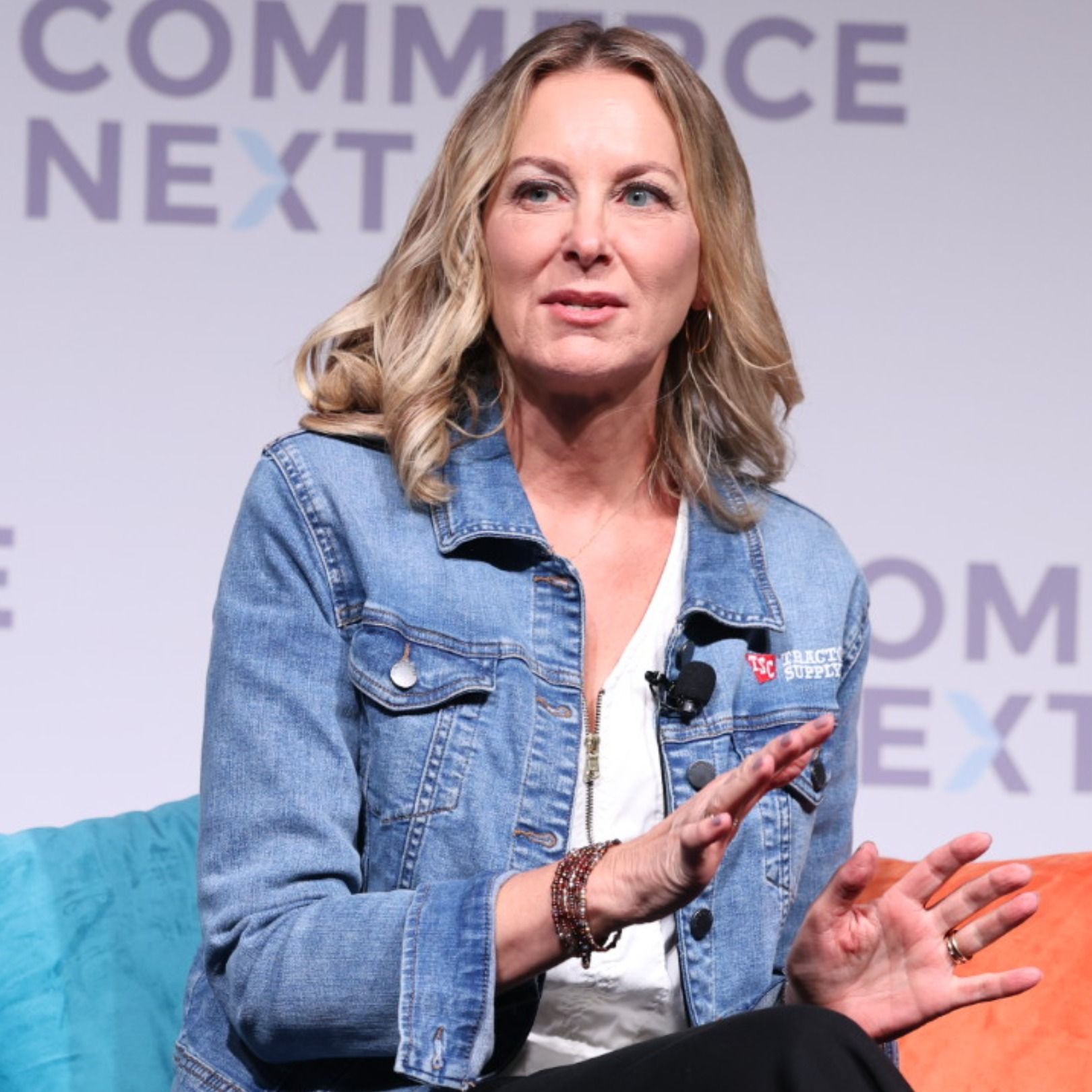 Tractor Supply CMO Kimberley Gardiner on the Power of "Life Out Here." PLUS The K-shaped Economy and Grocery's Shaky MiddleRemarkable Retail Podcast · on Walmart71 / 100
 The Hidden Funding Problem Keeping CPG Brands Out of RetailCPG Insiders · on Walmart68 / 100Chasing Storms and Supply Chains: Process, Discipline, and Scaling From the Bridge to the Boardroom: Leadership, Transformation, and the Future of AI in Supply ChainFrom Gigafactories to Warehouses: The High-Stakes Future of Industrial LogisticsFrom Port Operator to CEO: Supply Chain Volatility, AI, and Winning Market ShareFlexible Storage, Real-World Leadership, and Solving Supply Chain Chaos