
Insurance Intelligence Daily · 2026-06-09 · 33 min
Key moments - from our scoring
Substance score
31 / 100
Five dimensions, 20 points each
The insurance market is experiencing a dramatic inflection point marked by three converging trends. First, reinsurance rates are falling sharply - down by double-digit percentages in mid-year renewals - as global capacity swells to nearly $800 billion through reinvested profits and catastrophe bond issuance, while insured losses remain moderate. This creates a 'softer' market that is filtering relief through to commercial insurers and their customers. Second, consolidation is accelerating, exemplified by Howard Hughes Holdings' all-cash acquisition of Bermuda-based Vantage Group for $2.1 billion, signaling investor confidence and a broader trend of non-traditional players entering insurance. Third, the InsurTech landscape is maturing beyond hype into tangible AI and automation deployments across underwriting, claims, and distribution, with InsurTech Insights USA 2026 drawing 6,000 professionals and highlighting that data quality and governance are prerequisites for AI success. High-impact examples include TikTok's partnership with ErgoNext to embed commercial insurance directly into its e-commerce marketplace and a wave of embedded insurance experiments blurring lines between commerce and coverage. Simultaneously, RegTech solutions are becoming mission-critical as enterprises navigate complex compliance demands, though a surprising gap exists: 92% of RegTech vendors expect AI to dominate investment while only 44% of financial institutions prioritize it over foundational data architecture improvements. For actuaries and risk managers, advanced analytics platforms are enabling scenario modeling at unprecedented granularity, but research from the UK Institute and Faculty of Actuaries warns that climate change is accelerating faster than current models anticipate, calling for dynamic catastrophe modeling updates. Cyber insurance is evolving from payout-focused products toward holistic resilience consulting bundled with incident response and risk engineering services.
Global reinsurance capacity has swelled to nearly $800 billion through reinvested profits and record catastrophe bond issuance, while insured losses remained moderate in 2025 with no Atlantic hurricane landfalls on the US coast, allowing reinsurers to rebuild balance sheets and intensifying competition for deployment of capital.
Howard Hughes is acquiring Bermuda-based Vantage Group Holdings for $2.1 billion in an all-cash deal to absorb its specialty insurance and reinsurance portfolio, transforming into a diversified investment entity with a significant insurance arm similar to Berkshire Hathaway's model.
TikTok partnered with InsurTech firm ErgoNext to offer embedded commercial insurance - such as liability and cargo coverage - directly within its e-commerce marketplace, allowing micro-entrepreneurs to purchase policies seamlessly while setting up shop.
While 92% of RegTech vendors expect AI and automation to attract most investment, only 44% of banks and insurers share that view; the majority of financial institutions prioritize foundational improvements like data architecture, integration, and encryption over AI deployments.
Research from the UK Institute and Faculty of Actuaries and University of Exeter found that climate change is accelerating faster than insurers' risk models anticipated, with factors like loss of pollution-related atmospheric cooling potentially pushing global temperatures to critical thresholds before 2050, requiring updated catastrophe modeling.
Our reviewer’s read on each dimension, with quotes from the episode.
The transcript covers multiple insurance topics but relies heavily on broad macro trends and industry narratives rather than specific, actionable insights. While there are interesting observations (e.g., reinsurance capital at $800B, AI adoption rates, RegTech survey findings), much of the content consists of predictable commentary, extended metaphors (spacecraft analogies), and generalized statements about digital transformation that lack concrete operational lessons for B2B practitioners.
The age of AI-driven insurance is no longer on the horizon. It's here and now.
Fix your data, then AI can truly fly, one industry analyst quipped, likening data preparation to building a launch pad for insurance's AI rocket.
The episode recycles standard InsurTech talking points (AI will transform insurance, data quality matters, embedded insurance is the future, cyber risk is strategic) without presenting contrarian or deeply original perspectives. The frameworks presented - legacy companies partnering with startups, digital transformation enabling new coverage types, compliance becoming a business value driver - are well-worn industry narratives. There is minimal first-principles thinking or challenge to conventional wisdom.
The marriage of technology startups and traditional insurers has entered a more mature phase, moving past early hype and into tangible results for customers and companies alike.
The debate has shifted from whether to use cutting-edge compliance tech to how to maximize its value responsibly.
This is a news summary/aggregation format with no named guests, no in-depth interviews, and no direct practitioner testimony. The content references generic "industry experts," "actuarial experts," "thought leaders," and panelists at conferences without naming individuals or providing context about their specific accomplishments or track records. This is substantially weaker than a B2B podcast featuring practitioners who have actually built or scaled specific initiatives.
Industry experts interpret these results as an indicator of a maturing market.
Actuarial experts warn that if extreme losses consistently exceed forecasts, simply hiking premiums or tightening terms won't suffice.
The transcript includes some concrete data points (e.g., $2.1B Howard Hughes - Vantage acquisition, $800B global reinsurance capacity, 92% of RegTech vendors expect AI investment vs. 44% of financial institutions, 64% of organizations view RegTech as core, cyber insurance premiums at $15 - 20B), but much of the content remains vague about implementation details, actual underwriting outcomes, specific client case studies, or measurable business impact. Most examples are illustrative rather than evidential, lacking precise metrics on ROI or adoption curves.
Global reinsurance capacity has swelled to nearly $800 billion as existing players reinvest earnings and alternative capital flows.
While 92% of vendors expect AI investment, only 44% of financial institutions share that view.
This is a pre-recorded news digest, not a conversational podcast with host-guest dialogue. There are no follow-up questions, no productive disagreement, no exploration of competing viewpoints, and no probing into nuance or assumptions. The format is declarative narrative with sweeping statements that go unchallenged. While thematically coherent, the absence of interactive interrogation makes it impossible to assess conversational craft in the traditional podcast sense.
At InsurTech Insights USA 2026, over 6,000 industry professionals, from global insurers to startup founders, convened to share breakthroughs and strategies for embedding AI across underwriting, claims, and distribution.
The result is a compliance landscape focused on simplification and threat anticipation from continuous anti-fraud AI that flags suspicious activity across global operations to real-time scenario stress tests that simulate economic or geopolitical shocks.
Computed from the transcript - who did the talking, and the words that came up most.
Disclaimer: The content of this report is for informational purposes only and does not constitute legal, medical, financial, or official advice. The news stories and commentary presented are not to be taken as guidance or recommendations, and any anecdotal scenarios discussed should be understood as illustrative examples, not professional advice.
Transcribed and scored by The B2B Podcast Index.
Insurance Intelligence Daily Risk, RegTech, and Enterprise Market Insights. Daily AI -powered insights for insurance professionals, risk managers, and enterprise innovators. Commercial Insurance and Reinsurance. Surplus Capital Sparks Global Price Relief.
Commercial insurers and reinsurers are witnessing a dramatic market shift as of early June 2026 with a wave of rate relief sweeping across mid -year reinsurance renewals. After multiple years of hard market conditions marked by rising premiums and tight capacity, property catastrophe reinsurance rates are falling sharply, down by double -digit percentages on many renewals, in what industry experts describe as the steepest decline in over a decade. This reversal is providing a welcome breather for risk managers and insurance companies that have been grappling with escalating reinsurance costs since the major natural catastrophes of the early 2020s.
The catalyst behind the softening cycle is an unprecedented surge in global reinsurance capital and a recent period of moderate insured catastrophe losses, which together have tilted negotiating power back toward buyers. Insurers are securing more coverage for less cost, a remarkable contrast to just a few years ago when reinsurance was a scarce and pricey commodity. The newfound ease in risk transfer is now poised to filter through to the broader commercial insurance market, potentially easing premium pressures for businesses and policyholders over time.
The forces enabling this reinsurance price relief are rooted in a confluence of favorable conditions. By late 2025, reinsurers around the world were riding high on some of their strongest profits in years, boosting capital reserves to record levels. Global reinsurance capacity has swelled to nearly $800 billion as existing players reinvest earnings and alternative capital flows, such as a flood of catastrophe bond issuance reaching all -time highs, pour into the sector. Crucially, last year's catastrophe season proved relatively mild in major markets.
For the first time in over a decade, no Atlantic hurricane made landfall on the US coastline and other large losses were manageable. This respite has allowed reinsurers to rebuild their balance sheets and increased competition as more capital seeks to be deployed. Even Florida's once -pressured property insurance market, buoyed by legal reforms and improved building resilience, saw reinsurers return enthusiastically at the June 1st renewals with abundant capacity and more flexible terms.
For primary insurers and corporate risk managers, it's as if the industry suddenly moved from a storm into gentler skies, a striking turnaround that is renewing confidence in protection strategies and encouraging more risk -taking within stable bounds. Industry observers believe this softening phase could usher in a new era of innovation and resilience for the insurance ecosystem, provided discipline holds. Freed from relentless cost pressures, insurers are using the reinsurance savings to invest in emerging risk solutions and potentially pass along more affordable coverage to clients where feasible, helping narrow protection gaps in disaster -prone areas.
The mood is increasingly optimistic and forward -looking. Some insurers are exploring new coverage frontiers like climate adaptation projects and even nascent risks in the space economy, ensuring satellite networks or early space travel ventures, with the support of ample reinsurance safety nets. At the same time, cautious voices remind the market that the cycle could turn quickly if a major disaster strikes or if global economic turbulence depletes available capital. For now, though, commercial insurance leaders are navigating this phase of stability with a mix of relief and vigilance, determined to use this window to strengthen their portfolios and prepare for whatever storms may loom on the horizon, much as an adept mission crew uses calm space between asteroid fields to fortify their vessel for the journey ahead.
In a headline -grabbing transaction this week, diversified holding company Howard Hughes Holdings completed its $2 .1 billion acquisition of Bermuda -based Vantage Group Holdings, a specialty insurance and reinsurance firm. The all -cash deal, finalized on June 4, 2026, marks one of the largest insurance acquisitions of the year and reflects a growing consolidation trend in the industry. By absorbing Vantage's niche underwriting portfolio, Howard Hughes is transforming into a broader investment entity with a significant insurance arm, a model drawing comparisons to the diversified conglomerate approach of Berkshire Hathaway.
Analysts see this and similar deals as part of a strategic wave where non -traditional investors and larger incumbents alike are eager to scale through acquisitions, seeking to capitalize on the insurance sector's strong recent performance. With abundant capital and a more favorable pricing environment, industry leaders expect further consolidation in both primary and reinsurance markets. While the integration of operations will be complex, this mega -deal underscores the insurance sector's continued evolution and the growing confidence of investors ready to bet big on the future of risk and resilience.
In Surtech and automation platforms, AI and data reinvent insurance in a digital transformation era. The InsurTech and automation landscape is buzzing with a futuristic energy as artificial intelligence and digital platforms rapidly reshape the centuries -old insurance business. This week, one of the world's largest InsurTech conferences concluded in New York with a clear message. The age of AI -driven insurance is no longer on the horizon.
It's here and now. At InsurTech Insights USA 2026, over 6 ,000 industry professionals, from global insurers to startup founders, convened to share breakthroughs and strategies for embedding AI across underwriting, claims, and distribution. Keynotes hammered home that the question is no longer if insurers will adopt AI, but how fast they can implement it, highlighting that forward -looking carriers are racing to integrate advanced machine learning and generative AI into their core operations.
However, panelists also emphasized that AI's transformative promise will only be realized if built on solid foundations, data quality, and trust. From pricing risk more accurately to automating claims triage, the consensus is that AI can be a game -changer, but only for organizations that have invested in modern data platforms and governance. Fix your data, then AI can truly fly, one industry analyst quipped, likening data preparation to building a launch pad for insurance's AI rocket.
The marriage of technology startups and traditional insurers has entered a more mature phase, moving past early hype and into tangible results for customers and companies alike. Today's insert tech innovators are focusing not just on flashy disruption, but on solving real pain points, streamlining processes, slashing costs, and delivering seamless customer experiences. From policy sales to claims servicing, automation platforms are eliminating tedious manual tasks and freeing human experts for higher value work, enabling, for instance, claims adjusters to become superhuman, problem solvers rather than paper pushers.
Some insurers are even pilot testing virtual assistants powered by large language models to guide customers through quoting and policy questions in natural conversation, bringing the ease of a chat app to the insurance buying journey. The result is a re -energized industry where legacy companies are partnering with, investing in, or even acquiring tech startups at record pace to accelerate digitization. With major insurers reporting strong returns on their tech investments, venture capital flowing back into the sector after a period of correction, and regulators encouraging innovation alongside consumer protections.
The InsurTech ecosystem has gained renewed momentum. Importantly, a human -centric approach remains at the heart of these developments. Advanced tools are being used to enhance trust and personalization, not replace the vital empathy and expertise that define insurance at its best. Looking ahead, the insurance industry's digital transformation is poised to push boundaries that once seemed like science fiction.
Imagine a world where getting the right coverage is as easy as a few taps in your favorite app or social media marketplace. That is rapidly becoming reality. The lines separating insurance, technology, and everyday life are blurring as exemplified by recent partnerships that embed business insurance directly into online retail platforms and financial super apps. These experiments in invisible insurance offer a glimpse of a future where risk management and protection are seamlessly woven into the fabric of commerce and daily activities.
much like autopilot systems quietly guiding a spacecraft through the starry expanse. As INSERTEC pioneers explore these frontiers, they do so with a dual commitment, embracing bold technological leaps while ensuring that people and trust remain the North Star. The next chapter of insurance promises to be an inspiring journey, one where automation and AI amplify human insight and compassion, carrying the industry into a new orbit of innovation and resilience. Embedded insurance innovation, TikTok's bold foray into SME coverage.
A striking example of insurance's digital evolution emerged as social media giant TikTok announced a new partnership to offer embedded commercial insurance to small business users on its platform. Through a tie -up with Insertech firm ErgoNext, retailers on TikTok's e -commerce marketplace can now seamlessly purchase tailored business insurance policies while setting up shop. An unprecedented move that integrates coverage directly into the social selling experience. Analysts note that while embedded insurance thus far has mainly focused on personal lines, like travel or gadget insurance bundled into online purchases, this push into commercial lines signals a broader trend.
The ease and immediacy of obtaining, say, liability or cargo insurance at the moment of listing a product could be transformative for micro -entrepreneurs, lowering barriers to doing business and boosting trust among buyers. TikTok's foray into insurance reflects a larger narrative. Tech platforms across the globe are eyeing ways to incorporate protection solutions into their ecosystems, seeing insurance not just as an upsell, but as essential to user success and loyalty. It's a dramatic example of how innovation often leaps beyond traditional industry borders and showcases a positive vision where advanced technology meets the timeless need for security.
Helping businesses flourish securely in the connected marketplace of the future. This collaboration not only helps digital entrepreneurs manage their risks more easily, but also points to a new era of frictionless insurance distribution. Risk and compliance technology is fast becoming the silent engine behind enterprise resilience and market confidence as companies navigate an increasingly complex regulatory landscape with the help of advanced software. In 2026, the stakes for robust compliance have never been higher, from global banks to insurers and large corporates.
Organizations face a web of evolving rules on everything from financial reporting and anti -money laundering to data privacy and AI governance. This is driving a surge in demand for integrated governance, risk and compliance, GRC, platforms, often dubbed regtech solutions, that can centralize oversight and streamline the heavy lift of compliance. Large firms are no longer content to manage risk in silos or with manual spreadsheets. Instead, they're investing in sophisticated tools that provide a unified, real -time view of exposures across the enterprise.
By automating routine tasks such as fraud monitoring, vendor screening, and regulatory reporting, these platforms free up compliance officers to focus on strategic risk mitigation. Importantly, The push for better compliance technology is not about ticking boxes. It's about building trust and competitive advantage. C -suites and boards increasingly see operational resilience as a core business value, recognizing that demonstrating disciplined compliance and risk management can be as important to investors and clients as quarterly earnings.
This year has also seen regulators encouraging innovation and cooperation in the compliance arena as they seek to modernize oversight without stifling progress. In Europe, the new anti -money laundering authority and a push for a single digital omnibus of streamlined rules are pressing financial institutions to overhaul legacy systems and adopt data -driven compliance platforms that can adapt swiftly to updated standards. In the United States, Various states have introduced guidelines on responsible use of AI, prompting insurers and banks to ensure their new machine learning models are fair and transparent, and to leverage compliance software that can monitor algorithms for bias or unintended risks.
These developments underscore a shift in approach. Rather than adding more red tape, regulators want companies to leverage technology to make compliance smarter and more effective. Many firms are heeding this call, forging partnerships with regtech startups or expanding internal risk tech teams. The result is a compliance landscape focused on simplification and threat anticipation from continuous anti -fraud AI that flags suspicious activity across global operations to real -time scenario stress tests that simulate economic or geopolitical shocks.
It's a proactive stance that positions compliance tools not merely as shields, but as navigational instruments, helping enterprises steer confidently through increasingly unpredictable economic and regulatory galaxies. As risk and compliance software becomes mission critical, it is evolving with a distinct futurist flavor. Forward -looking risk leaders envision a near future where an organization's digital risk dashboard might resemble a space station's mission control, monitoring every moving part of the business in orbit, anticipating hazards, and charting safe courses.
The merging of advanced analytics and user -friendly design means these platforms are increasingly accessible to all levels of management. turning compliance from an isolated chore into a shared organizational discipline and a driver of strategic insight. Machine learning, natural language processing, and secure cloud infrastructure are being woven into these systems, promising predictive capabilities that can flag emerging risks before they escalate into crises. Yet, even as automation takes on more of the heavy lifting, the human element remains vital.
Regulatory compliance is ultimately about values, ethics, and sound judgment. Companies that balance high -tech tools with a culture of integrity will be best positioned to thrive in the long term. The trajectory of RegDeck is clear. Those who succeed will be the ones who fuse innovation with pragmatism, simplifying the complex and harnessing technology with a human touch.
proving that even in a world of accelerating digital change, trust and transparency are the ultimate compasses for navigating risk. A new global state of RegTech 2026 report out this week provides a revealing snapshot of how companies and technology vendors view the future of compliance innovation, and the findings highlight a surprising gap. While a vast majority of risk and compliance tech vendors, nearly 92%, expect artificial intelligence and automation to attract the most investment this year, only about 44 % of financial institutions share that view.
According to the survey, this disparity suggests that even as AI dominates conversation in the compliance world, many banks and insurers are prioritizing fundamental improvements such as data architecture. integration, and advanced encryption over flashy AI deployments. In fact, the report finds 64 % of organizations now consider RegTech a core element of their control environment, showing that adoption is mainstream, but the emphasis is on effective, practical implementation.
Industry experts interpret these results as an indicator of a maturing market. The debate has shifted from whether to use cutting -edge compliance tech to how to maximize its value responsibly. Vendors are racing to infuse AI into their solutions, but their clients appear keen to ensure the basics. Quality data, interoperability, and human oversight are firmly in place.
In this new phase, bridging the gap between the innovation push and real -world readiness will likely determine which compliance solutions thrive, as enterprises demand tools that deliver not just promised intelligence, but tangible, trustworthy results. Actuarial and data analytics solutions. AI expands the actuaries toolkit for a new risk horizon. In the realm of actuarial science and insurance data analytics, the future has arrived, bringing transformative tools to a profession long known for its mastery of risk and uncertainty.
Three years after a sweeping new international accounting standard appended how insurers measure their liabilities, actuarial teams find themselves at the center of an analytics revolution. To comply with frameworks like IFRS 17, insurers worldwide poured tens of billions of dollars into overhauling their financial models, data systems, and reporting processes. Investments that are now paying off in richer insights and more agile decision making. With these modern data architectures in place, actuaries are leveraging next -generation analytics platforms and cloud computing power to analyze scenarios far quicker and more granularly than ever before.
Predictive modeling, once confined to traditional tools and general linear models, has evolved into a dynamic collaboration with artificial intelligence. The old stereotype of actuaries buried in spreadsheets is giving way to a new reality, an emerging breed of tech savvy actuaries operating as strategic risk navigators, harnessing machine learning algorithms, real -time data streams, and intuitive dashboards to guide their companies through complex market terrain. This transformation couldn't come at a more critical time as the risk landscape grows more turbulent and multifaceted.
Actuaries are tasked with quantifying uncertainties that span everything from changing climate patterns to cyber attack probabilities, requiring creative new modeling methodologies and interdisciplinary collaboration. Data analytics solutions in 2026 enable actuaries to simulate the financial impact of unprecedented scenarios, such as a cluster of severe weather events hitting multiple continents in quick succession. or mass litigation waves spurred by social trends, with far more accuracy than in the past.
Using artificial intelligence as a powerful telescope to scan the risk horizon, actuaries are uncovering subtle correlations and early warning signals that might otherwise remain invisible. This new capability is aiding underwriters in fine -tuning pricing, helping risk managers anticipate emerging exposures, and giving regulators more confidence in insurers' capital adequacy. Crucially, as AI takes on more analytical heavy lifting, the role of the human actuary becomes even more focused on judgment and ethics, validating models, injecting experience -based insights, and ensuring the outputs make sense in the context of human behavior and societal values.
It's a vivid illustration of the symbiosis between human expertise and technology, forging more reliable maps of the uncertain future. From an enterprise and market perspective, advanced actuarial analytics are fast becoming a competitive differentiator. Insurers that invest in these solutions are better equipped to identify profitable niches, optimize their portfolios, and innovate coverage for novel risks that accompany technological and social progress. For example, as autonomous vehicles proliferate and space tourism edges closer to viability, actuarial teams are already exploring how to measure and price these new categories of risk, ensuring that protection keeps pace with human ingenuity.
Industry thought leaders emphasize a people -centric and futurist mindset. Actuaries are not just crunching numbers. They're helping build a resilient world by embedding foresight into the products and policies that underpin modern society. By blending statistical rigor with imaginative scenario planning, today's actuarial function acts like a mission control center for the insurance enterprise, scanning the horizon for threats and opportunities, calibrating financial safeguards, and guiding the industry's voyage into new frontiers with optimism and caution in equal measure.
Climate risk calculations. Actuaries urge action as warming out paces models. A new analysis by leading actuaries and climate scientists is raising alarms that climate change is accelerating faster than insurers' risk models anticipated, underscoring the urgency for updated data analytics in the industry. Researchers from the UK's Institute and Faculty of Actuaries and the University of Exeter found that certain underappreciated factors, such as the loss of pollution -related atmospheric cooling, may lead to global temperatures hitting the critical 2 degrees Celsius rise well before 2050, bringing severe storms and wildfires more frequently than expected.
These conclusions highlight a potential scenario where insurers face extreme weather losses mounting at a pace that could strain reinsurance capacity and push parts of the world toward uninsurability sooner than previously projected. Actuarial experts warn that if extreme losses consistently exceed forecasts, simply hiking premiums or tightening terms won't suffice and could lead to widely unaffordable coverage in high -risk regions. Instead, they're calling for a two -fold response, more dynamic catastrophe modeling that incorporates emerging climate science and proactive resilience measures by insurers and governments to mitigate risk.
The message carries a note of cautious hope that by updating their models and championing adaptation efforts, actuaries and insurers can help steer society away from a worst -case spiral of escalating costs and coverage gaps. The insurance industry, often dubbed a financial canary in the coal mine for global risk, is being called on to evolve its analytics rapidly so that it can continue fulfilling its role as the economy's safety net in a changing climate. Cyber insurance and resilience consulting, securing the digital frontier as threats intensify.
As cyber threats escalate in scale and sophistication, the cyber insurance and resilience consulting sector is rising to the challenge with a wave of innovative solutions and partnerships designed to keep businesses safe in an increasingly digital world. In recent days, insurers have rolled out comprehensive cyber risk offerings that go well beyond policy payouts, emphasizing proactive support to help clients prevent and respond to attacks. One global insurer, for instance, launched a cyber resolution, product line that bundles robust insurance coverage with 24 -7 incident response, risk engineering services, and even reputational harm protection.
All signs that the industry recognizes cyber risk management must be holistic. Meanwhile, the frequency of high -profile ransomware and data breach incidents continues to spur demand for cybersecurity consulting across the enterprise landscape. In boardrooms and C -suites from Silicon Valley to Singapore, cyber resilience is now seen as a strategic priority tied directly to trust and competitiveness. Companies seeking partnerships or acquisitions routinely require prospective partners to demonstrate strong cybersecurity controls and often proof of cyber insurance, treating digital security preparedness as an essential marker of operational trustworthiness, much like a financial audit.
As the global cyber insurance market surpasses 15 to 20 billion dollars in premiums, it is undergoing its own maturation and stabilization. After a period of rapid growth and premium spikes fueled by surging ransomware claims, 2025 saw insurers imposing stricter underwriting and clients improving their cybersecurity postures, measures that helped moderate loss ratios and gradually temper the skyrocketing rates of earlier years. Today, more insurers are venturing into the cyberspace, expanding capacity and bringing specialized expertise, which in turn fosters a healthier, more competitive market with a focus on value -added services.
The narrative has shifted from fear of the unknown to building resilience. How can companies not only transfer risk through a policy, but also reduce the chance of needing to claim in the first place? This has given rise to partnerships between insurers, cybersecurity firms, and risk consultants that provide insurers with tools like continuous network monitoring, breach simulations, and employee training as part of coverage packages. The approach sees cyber insurance evolving from a reactive safety net into a dynamic partnership aimed at preventing losses and ensuring rapid recovery.
A model that resonates strongly with enterprises that must maintain customer trust in an era of daily cyber onslaughts. Looking forward, the cyber insurance and resilience field is set to become even more indispensable as organizations push into new frontiers of technology. The proliferation of artificial intelligence, Internet of Things devices and even nascent quantum computing creates vast new opportunities and parallel vulnerabilities. Insurers and risk advisors are keenly aware that yesterday's policy templates will not suffice for tomorrow's hazards.
We're already seeing glimpses of future challenges. From AI -generated deepfake scams that could outweet traditional controls to the need for insuring satellites and space -based assets against cyber interference as humanity's digital footprint extends beyond Earth. In response, the industry is cultivating a proactive, futurist stance. scenario planning for extreme events, closely collaborating with cybersecurity experts to refine coverage triggers and exclusions, and advocating for baseline cyber hygiene practices across the global business community.
This optimistic, forward -leaning approach frames cybersecurity not as a cost center, but as an enabler of innovation and growth, akin to the reinforced hull of a starship that allows explorers to venture into the unknown with confidence. By investing in both cutting -edge risk transfer products and the human expertise of resilience consulting, the cyber insurance sector is helping businesses large and small navigate the digital cosmos with greater assurance, proving that with preparation and partnership, even the darkest void of cyber threats can be faced with hope and strength.
In a pioneering move blending cybersecurity technology with insurance, a leading cyber risk firm has introduced a novel program to help private equity investors manage digital threats across their entire portfolio of companies. The program, launched this week, connects a cutting -edge cyber risk analytics platform, offering real -time, portfolio -level visibility into each subsidiary's security posture. with bespoke insurance coverage that automatically responds to changes in those underlying businesses.
This integrated solution addresses a critical gap for private equity firms which often oversee dozens of companies with distinct cyber security capabilities. It ensures that new acquisitions instantly receive appropriate cyber insurance protections while giving security leaders a continuous bird's -eye view of evolving cyber exposures across all investments. By bridging the traditional divide between risk prevention and risk transfer, the offering reflects a broader trend in cyber resilience.
Clients increasingly demand that insurers provide insight and assistance up front, not just financial compensation after a breach. Industry experts hail this as a template for the future, where insurers and tech innovators collaborate closely to create products that reduce uncertainty and instill confidence in tackling even the most complex cyber risk environments. The message is clear. Success will favor those who integrate advanced analytics and proactive risk mitigation with the safety net of insurance.
In the coming years, such portfolio -level solutions could become standard practice for complex organizations further uniting data -driven security oversight with financial protection. Disclaimer. The content of this report is for informational purposes only and does not constitute legal, medical, financial or official advice. The news stories and commentary presented are not to be taken as guidance or recommendations, and any anecdotal scenarios discussed should be understood as illustrative examples, not professional advice.
Video Description In today's Insurance Intelligence Daily News Report, we dive deep into five dynamic areas of the insurance and risk management sector. From commercial insurance and reinsurance experiencing a dramatic softening of rates due to surging capital and fewer catastrophes to the latest Insertech innovations integrating AI and automation, each segment provides detailed analysis and forward -looking implications. We cover breaking developments in risk and compliance technology, regtech, and the ways enterprises are unifying their risk oversight.
as well as how actuaries and data -driven analytics solutions are transforming the insurance industry through advanced modeling and predictive analytics. Finally, we explore the evolving cyber insurance landscape and resilience consulting, highlighting new strategies to combat escalating cybersecurity threats and the human -centric innovation driving the future of enterprise risk management. This 20 -minute report offers a positivist, futurist perspective on the day's top insurance market trends, emphasizing how technology, trust, and innovation are shaping a more resilient future.
Other episodes covering the same guests and topics, from across The B2B Podcast Index.
 OUT OF SCOPE, Ep. 1: Hot Takes Roundtable with Tori Pastore (Soup) and Austin Campbell (Zero Knowledge)Validated · on Catastrophe bonds80 / 100
 From £3k to £80m: The Bootstrapped Must Have Ideas Growth Story with Amy KnighteCommerce MasterPlan · on TikTok78 / 100
 A Former Spy Chief on How AI Really Manipulates YouFUTR.tv Podcast · on TikTok76 / 100
 The Global Innovation Sandbox: Why Global Insurers Are Scaling the Future Out of IrelandTech People · on Embedded insurance75 / 100
 [Greatest Hits] TikTok to Town Hall: Jeff Harmon on Reinventing University MarketingGetting to Aha! with Darshan Mehta · on TikTok67 / 100
 Generational Marketing: Episode 21Almost Productive: A podcast mostly about marketing · on TikTok66 / 100
 “INSURANCE MARKET SHOCK - New Risk Rules Hit Hard (Aug 30, 2026) | Not Advice”64 / 100
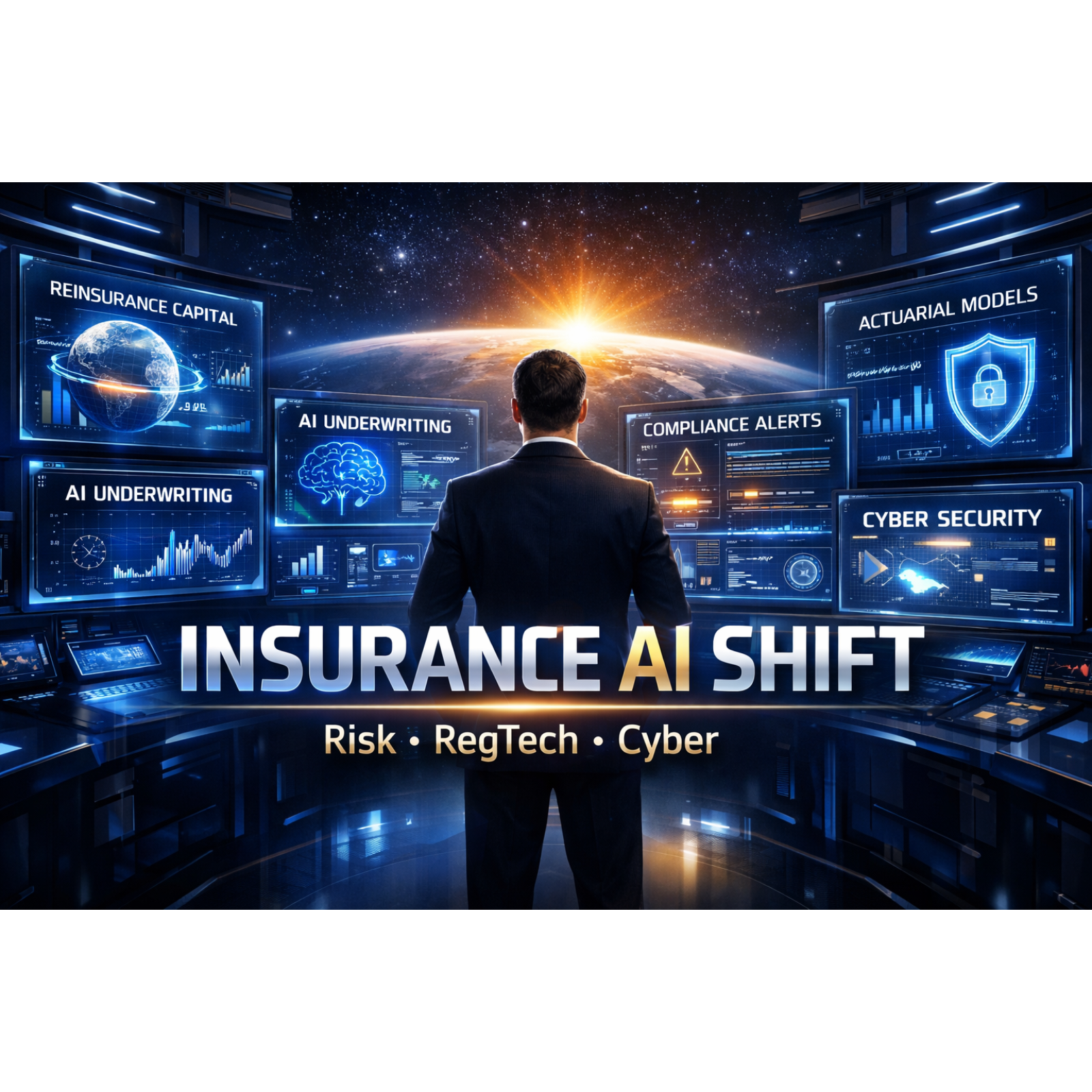 Insurance Intelligence Daily: AI, Reinsurance & Cyber Risk Shift July 10, 202639 / 100
 Insurance Intelligence Daily - Risk, RegTech & Enterprise Market Insights46 / 100
 Insurance Intelligence Daily - Risk, RegTech & Enterprise Market Insights40 / 100
 “Soft Market Surge: Capital Floods In as Risk Industry Eyes New Frontiers”39 / 100