Inspiring Women PodCast with Betty Collins · 2023-09-13
Key moments - from our scoring
Substance score
35 / 100
Five dimensions, 20 points each
Sandy Doyle-Ahern's journey to the presidency of EMH&T - one of Ohio's largest professional engineering and survey firms - began unexpectedly through internships and graduate school at Miami University. Starting in environmental consulting in the late 1990s, she became the company's first female manager and shareholder, navigating a traditionally male-dominated field by bringing reliability, risk-taking, and consistent communication to her work. She discusses the evolution of her leadership role through the 2008 financial crisis and her philosophy on taking manageable risks. Beyond her corporate leadership, Doyle-Ahern is deeply involved with the Affordable Housing Trust for Columbus, serving on boards including Columbus Metropolitan Library and Franklin County Rise. The conversation centers on central Ohio's critical housing shortage - the region is thousands of units behind due to population growth outpacing construction since 2008. She emphasizes that addressing this requires regional coordination across municipalities rather than siloed municipal decisions, overcoming NIMBY opposition, and recognizing that housing shortage affects all price points through cascading supply-and-demand effects. Wage stagnation against rising costs compounds the crisis for lower-income residents facing homelessness.
She joined EMH&T in 1997 to open the environmental division, grew that business over nine years while becoming the first female manager and shareholder, and was positioned for leadership during the 2008 recession when she, her partner, and the current president managed tough decisions together and prioritized transparent employee communication.
Central Ohio is thousands of units behind in housing due to population growth significantly outpacing construction since 2008; the shortage worsens when accounting for the gap between population growth rates and units built.
When housing is scarce, buyers with higher budgets purchase lower-priced units, cascading scarcity down the market and making affordable housing even scarcer for those who can only afford lower price points.
Ohio's home rule model allows each municipality to set its own zoning and housing rules independently, making it difficult to coordinate regional housing strategy across different towns and suburbs.
She urges residents to have an open mind about different types of housing, neighbors, and how communities grow together, and to recognize that regional coordination on housing, transportation, and wage issues is necessary to prevent the inequality seen in other major U.S. cities.
Our reviewer’s read on each dimension, with quotes from the episode.
The episode is dominated by biographical storytelling and generic inspirational advice - show up, take small risks, be reliable, be grateful - with almost no actionable density for a B2B operator. The affordable housing segment offers a brief, real supply-demand observation but never deepens into anything non-obvious.
Who shows up, wins. Who shows up, who is in the room?
you have to be the person other people count on. You have to be reliable.
The sole mildly fresh angle is reframing 'risk' as small incremental steps rather than cliff-jumping; every other idea - gratitude, showing up, reliability - is stock women-in-leadership content that circulates everywhere with no contrarian or first-principles argument in sight.
I think the problem with the word is to even say it. People assume it means throw myself off the bridge.
try to come from a place of gratitude
Sandy is a genuine practitioner who opened and scaled a new division, became the first female shareholder, and led a major engineering firm through the Great Recession - real operator credentials. However, the interview extracts almost none of the operational or strategic depth her seniority would warrant.
I eventually ended up joining emh, UM and T to open up their environmental division. And I think that was 1997.
we had the Great Recession...I am a really big believer in talking to the employees, telling them what's going on, the good, the bad, the otherwise.
There are situational anchors - Great Recession, housing crisis 2008, Robin DiAngelo event, Intel arrival, named Columbus-area municipalities - but virtually no hard metrics: no unit counts for the housing shortfall, no revenue or headcount figures for EMH&T, and no outcome data for any initiative mentioned.
we brought Robin Diangelo to town to talk about race issues
our population growth is happening much quicker than the number of units we're building
The host asks exclusively broad, flattering questions, inserts lengthy personal anecdotes that consume guest airtime, and never pushes back on a single claim; the result is a pure PR conversation with no intellectual friction or meaningful follow-up.
I could just sit and listen to you. I'm totally engrossed in what you're saying.
She's already laughing, but it's true.
Computed from the transcript - who did the talking, and the words that came up most.
Breaking the Glass Ceiling with Sandy Doyle-Ahern: From Environmental Leader to Affordable Housing Advocate (Inspiring Women, Episode 60) On this episode of Inspiring Women, host Betty Collins welcomed a genuine trailblazer in her field, Sandy Doyle-Ahern. Sandy discussed her journey as a female in the male-dominated construction industry, her role as president of one of […]
Transcribed and scored by The B2B Podcast Index.
Speaker A: Has anyone ever inspired you to change your life that made you more fulfilled? Well, as a leader in your business and in your community, what are those questions that you ask yourself on a daily basis? It's these questions that we explore on Inspiring Women. I am your host, Betty Collins, and I'm a certified public accountant, a business owner, and a community leader who partners with others who want to achieve remarkable results for themselves and their organizations. I am here to, to help inspire you to a positive step forward for a better life. Well, today on, uh, Inspiring Women, we have a guest that in central Ohio is somewhat of a legend. She's a big deal. She's already laughing, but it's true. Um, Sidney, DWA is. She's.
Speaker B: She.
Speaker A: I've heard her speak at NABO events. She's all over, she's everywhere. And she's a champion for women, that's for sure. So today you're gonna get to hear just some great things that she's doing and great things that can help as a, as a woman that is trying to be inspired.
Speaker B: Right.
Speaker A: So, Cindy, she's the president of EMH&T. Uh, that's one of the Ohio's largest professional engineering and survey firms. And she lends her talent and leadership skills to a range of organizations to beyond who she or what she works with. But such as, like Affordable Housing Trust for Columbus in Central Ohio, the Columbus Metropolitan Library, Columbus State Community College, and Franklin County Rise together in the innovation institution or institute. I'm sorry. And among the many awards she has received, she's been twice been named the most admired CEO and a member of the Power 100, a progressive women honoree and named CEO of the Year. But she is truly a legend and she's a woman in a man's industry, um, that is becoming more women. But she's definitely been a trailblazer. So, Sandy, welcome to, uh, the program today. Welcome to my podcast and thank you for the time that, um, you're gonna give us today and give us some great insight. We really appreciate it.
Speaker B: Well, thank you for having me. That's part of the day.
Speaker A: Yeah. There we go. There we go. Well, I love that. I love it. So before we get started, though, I always, like, just take 30 seconds, 45 seconds and tell us something fun. Tell us something fun about you. Something maybe that, that, you know, is not all your awards and your, you know, all this stuff.
Speaker B: Um, gee, let's see. Um, I was actually born in Canada, so that maybe is a little different outside Philadelphia, but became a US citizen when I was 21, I think awes. And I'm a huge hockey fan, so it's my favorite sport by far and the only one I actually really understand.
Speaker A: Yeah. Yes. Columbus, uh, Blue Jackets, then. I assume you're a big, uh, you go to those games.
Speaker B: I do.
Speaker A: You know, it's one of the fastest paced games, which I've gone to several, but not a lot. But it's fun stuff. So. Well, I want to get down to kind of a little bit of background on you. Thank you for sharing about. Love hockey too. Um, but as a biology major from the east coast, um, how did you end up in Columbus? Um, how did you end up Ohio as the president of your company? This, um, big, you know, huge, huge impact to the Columbus area for sure.
Speaker B: Uh, so, um, I'll start by saying if you had told me that I was going to be the President of EMH&T someday, I would have laughed. You know, life is funny. But, uh, I actually ended up in Ohio for graduate school. And, uh, that was a little bit of a coincidental thing, but it came from an internship opportunity that I had. I had started working for an environmental consulting company every summer between college semesters when I was 18. Um, I went back there every year. And when I graduated college, I was ready to go to grad school. And they were all east coast schools that I looked at, except there happened to be a gentleman I worked with who went to Miami University for his, uh, environmental science program. And, um, I applied. And that was back in the day when you couldn't look anything up on the Internet, so you had to actually go and see the place. Um, and I did. And I remember driving out for my interview thinking this wasn't going to be where I ended up. And then I did.
Speaker A: You did.
Speaker B: And, um, it, you know, it ended up being a great grad program for me. But what led me then to Columbus was actually a, an internship I needed to complete for the master's degree. And it was going to be temporary and I was going to be here just for about a 6 month to maybe 12 month period to do the work for that degree. Yeah. And, um, I loved it. So the long story short is, uh, my husband also went through the same graduate program and he ended up in Columbus. And we kind of always thought we would see how it went. We had no family out here. We didn't really know that many people, um, thought we would go back to the Philadelphia area if it turned out that either one of us just weren't happy here or whatever. And that never Happened. And that was over 30 years ago. We're clearly not going anywhere now. But, yeah, it was internships in school.
Speaker A: Yeah, I know. I'm like you. It's like if you, if, if you would have said to me, you know, when you're almost 60 years old, this is going to be your life. Right. And I'd be going, not a chance. I don't see that happening. But, um, we're glad you're in central Ohio. We're glad. I mean. And Oxford. Did you like Oxford, though? Where, Where? I mean, I just think it's such a quaint town. That's for sure.
Speaker B: Yeah. Yeah. No, it was great. And it led me to such a huge opportunity here, so, um, it just, it all was circumstantial.
Speaker A: Yeah. Well, one of the great things, um, about your resume, beyond many things, but I mean, is that you are the president of this company and you became the president, um, and with a career path that really is predominantly male, and male's going to dominate that position for sure. And the leadership, you know, what challenges did you face throughout the year? Tell us a little bit about how that all came to be.
Speaker B: Yeah, so, um, when I first came to Columbus, uh, my background's in environmental work, and I was around engineers all the time, though. So a lot of what I was doing was regulatory compliance. It was restoration of natural habitats, and it interfaces a lot with engineers. And so I started getting involved in projects really that EMH&T was a part of. Um, and I eventually ended up joining emh, UM and T to open up their environmental division. And I think that was 1997. And, um, you know, honestly, it was a great opportunity because the owners of the company at the time said, you know, we don't really understand what you do, but we know our clients need your help, so we're going to let you just do what you do and do it here. And that's literally what happened. So, um, they're very gracious about that and kind of gave me the opportunity to figure out how to fit within the realm of this engineering firm. But at the time, uh, gosh, almost all of my work was out in the field. So I was out a lot with our survey crews, I was out with other engineering, um, people. I was out with the clients, literally in the field doing the work. And so, uh, over time, I just got the opportunity to work on this environmental division for the company and it grew. So there's more to it. But I'll stop there for a second and just talk about that first really? Nine, ten years of my career with the mhm. T was doing that work. Um, and I loved it. Yeah.
Speaker A: Yeah. So with you probably being one of the few females and then you do something very, very different that they aren't too sure yet, you become the president of the company. And you've told this story a little bit at Nava where you were in the room with all the pictures on the wall and they were all men. Right. So tell us about the time that, hey, we're gonna become the president, or I became the president. You know, I mean, now I'm not just climbing up the hill for nine to 10 years. I'm actually going to be in this leadership role.
Speaker B: Yeah, I think, um, it was a lot of things coming together. You know, obviously, I didn't go into working at EMHT having any idea this was going to happen. But the reality is, um, there's a couple things. I had both of my children when I was young here at EMHT running the environmental group, and that was kind of an early time when there were almost no women here. So at first, I don't think they knew what to do with me because I was the first female manager, first project manager. They weren't really sure I wanted to keep working. Um, I was not interested in being at home with my kids for very long. So I actually ended up bringing them to the office with me when they were really little. Um, and, you know, I think back on that now, and it's funny because that first time I did that, when my first daughter was quite young, I walk into a room with a project meeting, and I've got my briefcase and I've got a baby carrier. Got all the stuff I'm walking into the meeting with. And the first couple of times with a couple clients, they were like, what. What are you doing? Like, it'll be fine. She's sleeping. The meetings after that, they're all like, can we hold the baby? It's really funny. But, you know, I think early. All I know early in my career, um, it was really challenging. I had. I was around a lot of people who, um. Not at emht. The company has always been amazing, but kind of out in the field with some of the guys that like to make comments about what I was wearing. Make, um, like to make comments about, uh, you know, a lot of different things that were really sexist, but I wasn't, um. It didn't really intimidate me all that much. It was just more. I guess I was naive. I was more like, why would they do that or say that. And it didn't happen a lot.
Speaker A: Yeah.
Speaker B: Uh, but it happened once in a while. And there, there are a few memorable moments that I think about, um, when I look back and think, man, there's some stuff that happened that should never really have happened. The truth is now no one does that to me anymore. I think I'm too old. Um, but what really ended up happening with the leadership opportunity really came about probably around 2005, 2006, when I had been running the environmental group. And what that did is put me in front of a lot of other divisions in our company, um, because that group tends to kind of service some internal clients you're working with in transportation, you're working with them in development, whatever the case is. So I got to interface with a lot of different people. Um, and I've always kind of had a mindset around people, around the employees and what it, you know, what we need to be doing as a leadership team. So I think early in my career I had the opportunity to become a shareholder, which was a big deal. First female shareholder. It hadn't happened before. Um, a company that was doing really well, um, had a strong reputation. I learned a lot in the process. And then, frankly, what occurred was a few years later, we had the Great Recession. And, um, my current partner and I, who run the company together today, were running the company then with the current president. And it was, I mean, it was, you know, all of a sudden you're getting, you get thrown into a situation where you have to make decisions quickly and you have to do what's best for everybody as much as possible. And so, um, I think really it evolved out of that partly that we, we were running things together and trying to make some tough decisions and, you know, watching the world around us really change. A lot of our clients struggled because we did a lot of home building work. So, you know, as we all know, the housing crisis happened. And so I think, um, part of what emerged from that is I am a really big believer in talking to the employees, telling them what's going on, the good, the bad, the otherwise. And so when all that occurred, um, I did a lot of writing to the company at the time, and I wasn't the president, um, but the president and myself and my other partner were all on the same page about the need for that kind of communication. So we started to push a lot of it out very quick. Um, and I've never changed that. So I fast forward to today running the company starting at the end of 2011. Into 2012, um, we're still very much like that. Lots of communication with employees, lots of employee update meetings on the status of the company, that kind of thing. So I'm getting a little ahead, and we can come back to that if you want, but that's kind of how things evolved.
Speaker A: Yeah. Well, it's interesting, you know, you have no idea how courageous you were bringing that child to work. I mean, at that time today, nobody would think a thing about it. And I think Covid finally has fixed that whole stigma right where this is the way it is. There's nothing wrong with it. Women don't have to be exceptional to bring their kid to work or whatever it is. They just need to do their job. And raising kids is parental, by the way, not just maternal. So I look at that and go, that's huge that they would allow you to do that at that time. But, you know, for me, I know that a, uh, lot of times, your opportunity, your nevers are your opportunity. You would never see you doing this, or you would say, I would never do this. But women that were able to be confident and courageous enough to say, my kid is really important, but I'm gonna make this company a priority as well. We just have no idea, like, right now what that means to us in today's world.
Speaker B: And.
Speaker A: But Covid really kind of helped put that all to rest, Right? Hopefully.
Speaker B: So. Yeah. Yeah, we'll see.
Speaker A: We'll see, we'll see. Let's hope it does. Let's hope it does. Because I know we could probably talk a lot about professional services and what we've got to do right now.
Speaker B: Right.
Speaker A: Um, but in an article I recently read, you were quoted saying, I've learned to take risks and operate outside of my comfort zone. And you did that very earlier in your career. Uh, for young women listening, for any woman listening, for older women, whoever it is that isn't comfortable taking risks, they're not comfortable getting out of there. Um, what suggestions would you have for them as they've started their journey or starting it or ending it or in between, on risk and operate outside that comfort zone? Let's talk about that for a little bit.
Speaker B: Yeah. No, it's a great question. And I think you have to start by talking about the definition of risk. So I think the problem with the word is to even say it. People assume it means throw myself off the bridge. Right. Something really risky. And that's not what it means to me. It's not what I'm talking about. I actually get this question a lot and it kind of fascinates me because it's a question that a 25 year old will ask and a 65 year old person will ask. And I think it's partly because women kind of tend to not see themselves as taking risk all the time when in fact they may be doing more of it than they realize. Mhm. What I mean by risk is it can be a small thing, it can be, you know, take the assignment that no one else wants. Yeah, that's a risk. Or me showing up to work and saying I'm going to work on a project I've never done before because I'm going to tap the people I know that are talented. The risk on me is to do something I haven't tried before. Uh, and so I think what it does is when you take small chances and you have a victory, it sort of develops your um, confidence, I guess, around the fact that you can do the next thing that's a little harder and the next thing that's a little harder and you might fail in the process. And that's okay. Um, but you know, I did take risk early on, but again, it was small things. It was like getting put in a room where I don't know any of these people. I'm being asked to weigh in on some major decisions that they have to make as a client. Um, so my job in that moment, moment is to know what I'm talking about. And so kind of back to your comment a second ago about how did things evolve and how do they change? Well, for me, um, it wasn't just about taking the risk. It's I'm going to show up, I'm going to do what I said I was going to do. And if I fail at that or don't know how to do it, then I'm going to go tap the resources I need. But you have to be the person other people count on. You have to be reliable. And so if you're willing to take some small risks and you follow through, I think what happens eventually is you will take bigger chances in life. And it's for me how I ended up in this role. I mean I honest to goodness would never have thought as the gal walking around in the field with muddle over my boots, that this is what I would be doing. But I believe in it also. So I come here every day thinking about the people that are here taking the risks themselves and what I can do to support. So a little bit of a long answer to your question, but I it all kind of interrelates for me.
Speaker A: No, I love it. And I hope my audience heard the one thing from that comment that I'm still thinking about. I showed up. And a lot of times who shows up, wins. Who shows up, who is in the room? Um, I deal with it with my own company. When I first came into Bradyware in 2012, I would. There were two shareholders. We had. I think at that time we had 26. And there are different levels of shareholders. There's 26 people in the room, two women. So I didn't think a thing about being in that room. And then as we were trying to encourage other women to come to the room, they didn't think it was for them because it was mostly men. And I said, get in the room. You know, show up, be there, go. Uh, I mean, I'm totally different than most people in my company and I do things completely different. Kind of maybe like you in the terms they didn't know really what to do with me at that time. But showing up and then it shows others. I am in the room. You can be here. You don't need to not be here. So I love that in your answer. So, um, gonna shift gears a little bit because this is something you're passionate about. Um, you become a strong advocate for affordable housing. I don't know that there is affordable housing anymore. Right. But you are an advocate for it. And what challenges are you facing? Um, and what can we do to help and assist you with this? It's a big issue. And, you know, we've got a thing called intel coming as well. We've got all kinds of things happening around our city and there will be people left behind.
Speaker B: So, um, I appreciate the question for a lot of reasons. Uh, and let me give you a little context to how I'm going to answer. I think you have to take a step back for just a second and look at the central Ohio region. You know, Columbus is a great place to be. There's no question about it. We're still operating in some ways like a smaller city than we really are. And if you look around the country, it does not take much to understand what we don't want to do. So if you look at some of the major metropolitan areas across the United States, we have a playbook right in front of us that says, unless you want to become like city xyz, don't do these things. Mhm. So I think Columbus is in a place, and I say that meaning the greater outer belt area, multiple counties, where we still have some time to do Something about the housing situation, but not a lot. And so let me, let me frame it a little bit better than that. Um, you know, the situation really does stem, um, from what happened during the housing crisis in 2008, because we were building here at a pace, was generally keeping up with population growth. But since that time, we are nowhere close to that. Our population growth is happening much quicker than the number of units we're building. And understanding affordable housing, it's a tough term because it means different things to different people, but we're talking about everything from single family to multifamily to senior housing to even residential housing for students, et cetera. Um, so where we sit today is we need all housing. It's not just one price point or another, because what's been commonly understood is that when you have a shortage, it's just like anything with a supply and demand model. When you have a shortage of something, all of the sudden someone who could afford to buy something a little higher price point doesn't necessarily do that. They'll buy down because they're going to use that money that they didn't spend on the house for something else. And what happens is it affect, affects the supply even more for someone that only could be in that price point, if you follow what I mean.
Speaker A: I do, I get it.
Speaker B: So that situation is what's happening right now in central Ohio. It does put us thousands of units behind. And so if we level set that issue, um, behind what's happening with population growth, the number of units we're behind is even more staggering. So there's a lot of challenges here. And without making this into an affordable housing podcast, because it could.
Speaker A: It's okay, it's okay.
Speaker B: Um, you know, one of the things that we have to really pay attention to is what happens when we make decisions in individual municipalities. And so when we live in a state like we do, where, where every municipality sort of makes their own rules around what housing is going to look, look like, what transportation looks like, etc. That home rule model that we have does make it difficult to cross over municipal boundaries to try and do collective work together. So what you're hearing more and more now is you'll hear a lot of conversation more about a regional housing strategy, a regional housing goal. Instead of, what's Columbus doing, what's Westerville doing, what's Grove City doing?
Speaker A: What?
Speaker B: You know, pick, whatever. Yeah, um, the challenge is significant and often it is the NIMBY syndrome. And there's no question about it, you understand it to some degree. But on another hand, it's probably the most depressing part about trying to build housing is when you have neighbors that say, we don't want that person here. We don't want that type of housing here. So I do think, um, when you ask the question about what can people do, I think have an open mind to neighbors, have an open mind to how we live together, have an open mind to how we grow and do all the things right for everybody. So it's not just improving housing opportunity for people. It's also transportation changes that need to occur over time. Here we have so much good stuff going on. We really do. We're lucky to be in a region that is generally very positive, but these real challenges that we're going to have are going to begin to affect us pretty significantly if we're not careful. There's a whole other aspect of this around homelessness that I want. I mean, I won't go down that path, but I just have to mention it because the aspect around what it takes for somebody who's not earning, uh, a true living wage to survive right now is getting more and more difficult.
Speaker A: It is. It absolutely is. I mean, we were talking today about just the cost of everything is like this and wages just are not following it. And so it creates other crisis. And that's just real. I appreciate your boldness and your tenacity about the issue. And I think, just give your thought on this. Do you think having we got intel on this side of town and we got, uh, Marysville right now, and they're both doing major things right that are going to take housing for everybody, it's going to take infrastructure for everyone. Do you think the word region will become more about instead of Gahanna there and Dublin here? Because Intel's here. You know, the stuff going on in Marysville, it's all encompassing. So maybe that will help us be more about a Regent.
Speaker B: Yeah, I think time will tell. Uh, you what I worry about the most is the window to make those decisions gets m smaller every year goes by. But I do think that there's more conversation now than I've ever seen about thinking about a regional strategy. The, uh, one comment I would make, though, I think it's something really important for people listening to think about. In order for all of the regional success to go on, we have got to keep a strong core downtown. We need strong core neighborhoods. We have got to talk about redlining. We have to understand the effects of redlining and how we have to do what we can to reverse it. Because it's easy for us to say we're going to build housing units in Union county and Licking county and northern Delaware county or whatever without understanding that the impact on the core, what I would call City of Columbus really is incredibly critical to all of this happening. So as much as we want to look outward and think about impacts in housing and transportation, we also have to look inward. And all of it needs to be successful. So that means reconciling with some really difficult situations to do that.
Speaker A: What's great is you're so beyond emht. And what I love is, I see that is probably, hey, this is what I do. This is my platform, this is my venue that I can now have impact in something like this. It kind of relates, obviously, with, you know, you build things, building communities, but I mean, at the same time, there's a lot of passion behind it. And to my audience, women, you know, this is part of the role. When you play the roles that. That Sandy place that we all covered, that we all look at and go, this is a legend. There's other sides to it besides Em, H and T. Um, but this is probably the coolest thing about you. Uh, there's tons of it. But this I love. Uh, a few years ago, you formed, um, what is now dubbed as the Edge Sisters. Um, it's a group of women in leadership positions, um, to lift up the community and push equal equity and drive change. Just talk to me about how that started and how you, you know, what are you going to accomplish out of that? Because it's pretty cool. I'm. And I really want viewers to look into this and see it because it's neat, it's cool.
Speaker B: So, um, well, thanks for asking. And I would start by saying anybody can do this. This is not. It's not a club, it's not an organization. Really. What it stemmed from was all of us are in some way shape or form in, not only in our professional lives, but in our personal lives involved in community work. So we each other all the time. This philanthropic event, that event, you know, whatever. And so every single time that I would see one of these women at one of these events, uh, when you get past the, hey, how's the family doing? We're all quickly in our conversations going to what's happening in the community. Are we comfortable with the pace of change? Are we confident? The things that need to happen to lift up other people, this is never going to be about us. This is always going to be about other people. Um, are we confident that that change is happening. Are we confident that we doing what we can to kind of help push along a community that really looks at equity through the lens of opportunity and not just a buzzword, um, which it can be. And so what ended up happening was, um. I guess it was right. It was right before the pandemic. I just sent a dinner invitation out to a bunch of these women and said, you know, I don't know if there's something here, but it just feels like we're all talking about the same things all the time, so let's go talk about it. And, um, you really can't get a group of 13 type A women together and not be like, yep, we're doing something.
Speaker A: Exactly.
Speaker B: Um, you know, we ended up having a great dinner. We talked for a long time about kind of what we all were seeing and, um, what our concerns were and how could we help. So it ended up that, um, we started down the path of meeting, uh, frequently for dinner, and then the pandemic happened. And it was just the most bizarre and fortuitous thing because what actually ended up happening with all of us is we're now all in these positions where we're trying to figure out what the heck is happening and what we need to do to lead our organizations. So we ended up on weekly calls, and it was unbelievable. Uh, some weeks, you know, you might be laughing about other things. Sometimes everybody was crying. I mean, it was just. Just so much. But what we basically did is, um, we brought Robin Diangelo to town to talk about race issues, which was controversial and we knew it would be, and that's okay. But we purposefully wanted to try to bring people into a setting where they could just listen and learn and do with the information what they wanted. Uh, we also wanted to reach into the community to talk to some other women who had come into Columbus or Central Ohio during, During the pandemic. So I guess it was about a year and a half ago or so, we just sent an invitation out to all these women. We didn't really know a lot of them, but we knew that they'd either moved here to take a job of some kind or had moved in their role in their organization. Didn't know anybody. So we hosted an event basically and just said, why don't you come and we'll get to know each other. And we're actually getting ready to do the same thing here. In about two or three weeks, we're going to do it again. You know, we have all together, the group of us, done some work around racism the 13 of us and, um, been very honest with each other about it and, um, learned together. Um, you know, it's been an incredible journey, really. Just to have them as trusted sisters really is kind of how it is. Um, so, you know, what are we going to do? We're going to continue to. In all the hats we all wear, and we're all in lots of different rooms around the community. Um, we're going to continue to push for doing what's best for other people. I mean, it's. That is really how simple this is. Um, I don't think you're going to see some big list of events we're going to do. That's not it. We're just going to continue to kind of drive and push for change, especially with. With a region that's really going through tremendous transition now. You can see shifting power structures, you can see shifting dynamics about how to think of ourselves again as a region much bigger than we used to be. We're competing now with cities across the world, not just in Ohio. I mean, the whole situation is very different. And that's the space we're going to continue to be. Um, we're really kind of about that next generation and really, truly providing opportunity for everyone, not just certain people.
Speaker A: Right.
Speaker B: Yeah.
Speaker A: I could just sit and listen to you. I'm totally engrossed in what you're saying. I truly love it. But to me, what I like to have on my podcast is women who inspire other women. And you've certainly done that today. And it's not just about, I made it to the top in this company. Uh, I've made it to the top. Okay. But these are all the other things that play into. And women need to be courageous. They need to show a lot of courage by touching and bringing your kid to work, coming together for racism, whatever it is. I mean, these are bold things. And it takes someone of courage to be that courageous. So I appreciate you coming on today and just talking and telling your story. I've heard it before. I always love it. Um, I heard it pre pandemic, but I had not really heard. Heard much about, um, the Edge sisters. And when I saw it, I thought, I gotta know more about that. So I really, really, really loved it. But thank you again for coming on today. And I would just ask you to do one last thing. Um, what is it, um, that you would wanna say to the audience today for women who have. They don't need to be, you know, Betty Collins is a shareholder here, and Sandra does this, and Jane gordier I mean. I mean, women, every day, ordinary, everyday activities. What do we need? You know, what's the word?
Speaker B: You.
Speaker A: What's what? How do you want to encourage them? How do you want to inspire them as the last thing on the podcast?
Speaker B: Uh, well, I appreciate you asking. Um, I guess I'd say two things. I think, to the extent that you can do it, try to come from a place of gratitude. And that's not easy for everybody. Some people have much, much more difficult situations they have to deal with every day. But finding gratitude, I think, makes really begin to understand how impactful you can be because you're not looking for what's. What's going to be better for me. You're looking for what's going to be better for somebody else. Um, so I think being grateful really matters a lot. And then I'm going to go back to the beginning risk. I think, um, women need to be okay with taking chances. Women need to put themselves out there more. They have to be willing to take the assignment, be the person that shows up and does something that, that no one else has done, or do the assignment better. Because what happens is when you become that person who's taken the chance and you become someone who delivers on what they say they're gonna do, you're known as the reliable person then. And so this is what people forget. When a colleague or a client or whatever says, I've got this assignment, who do I wanna work with? They're gonna think of you because you were the reliable one. You're the one who showed up. You're the one who admitted if you made the. A mistake, all the things that come with being reliable. And it evolves, you know, it's not like you have to kick in every single door all the time. Sometimes you do, but not always. Just be the person who shows up. And I do think risk taking gets easier for women when they try little things at a time. Do it, ladies.
Speaker A: You got this.
Speaker B: Do it.
Speaker A: This is why I started the podcast with She's a Legend. So, again, thank you so much. Again, again. And, um, I know my audience is going to love the, Love the, um, time that they can spend with you. So thank you.
Speaker B: Well, thanks for your time. It was good to see you.
Speaker A: Yes. As your career advances continue, your financial opportunities will continue to grow. Be prepared. Visit bradywear.com resources to find everything about inspiring women this episode plus an outline of Bradyware and company accounting services can be found in the episode show notes.
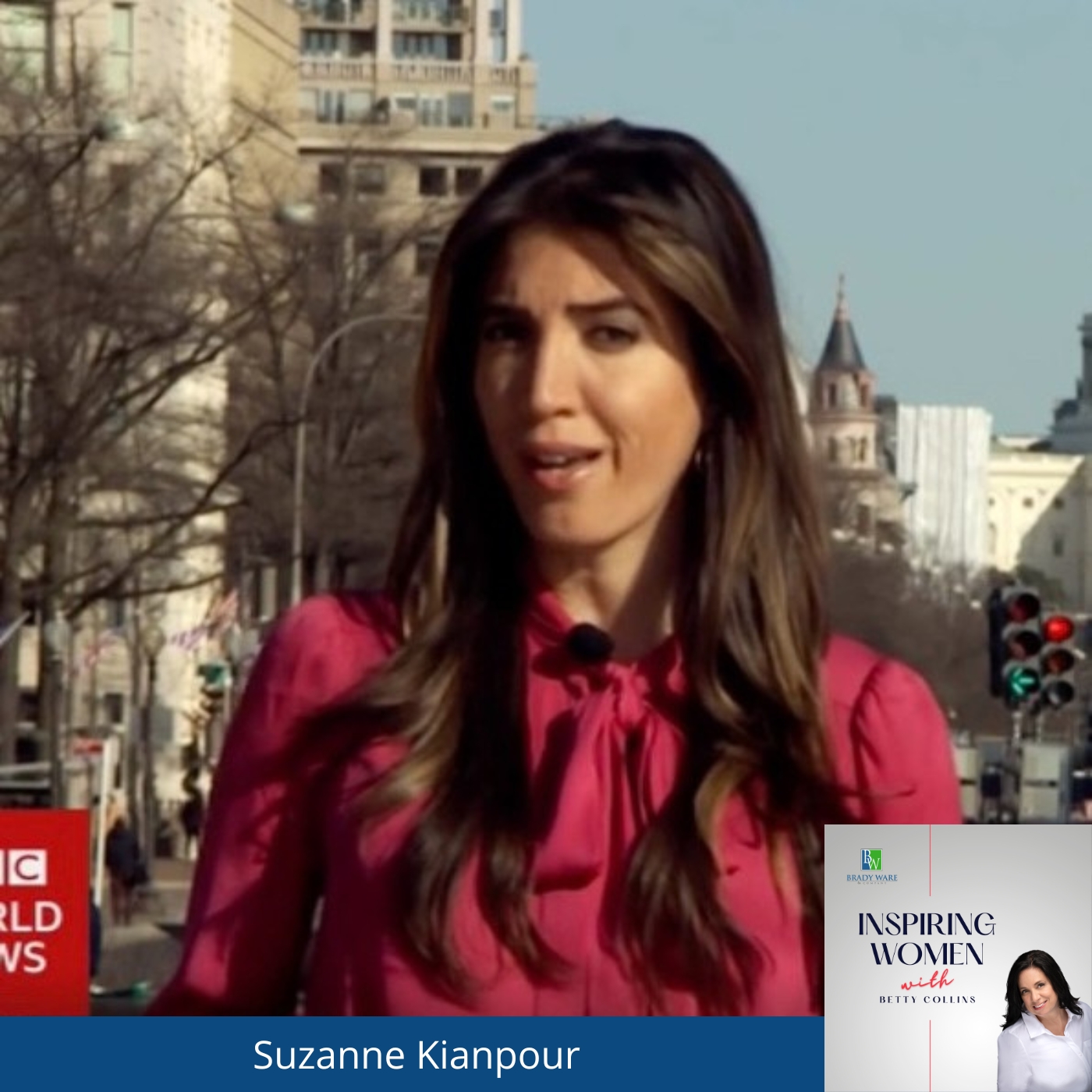 Beyond the Headlines: Unveiling the Hidden Power of Women with BBC’s Suzanne Kianpour60 / 100
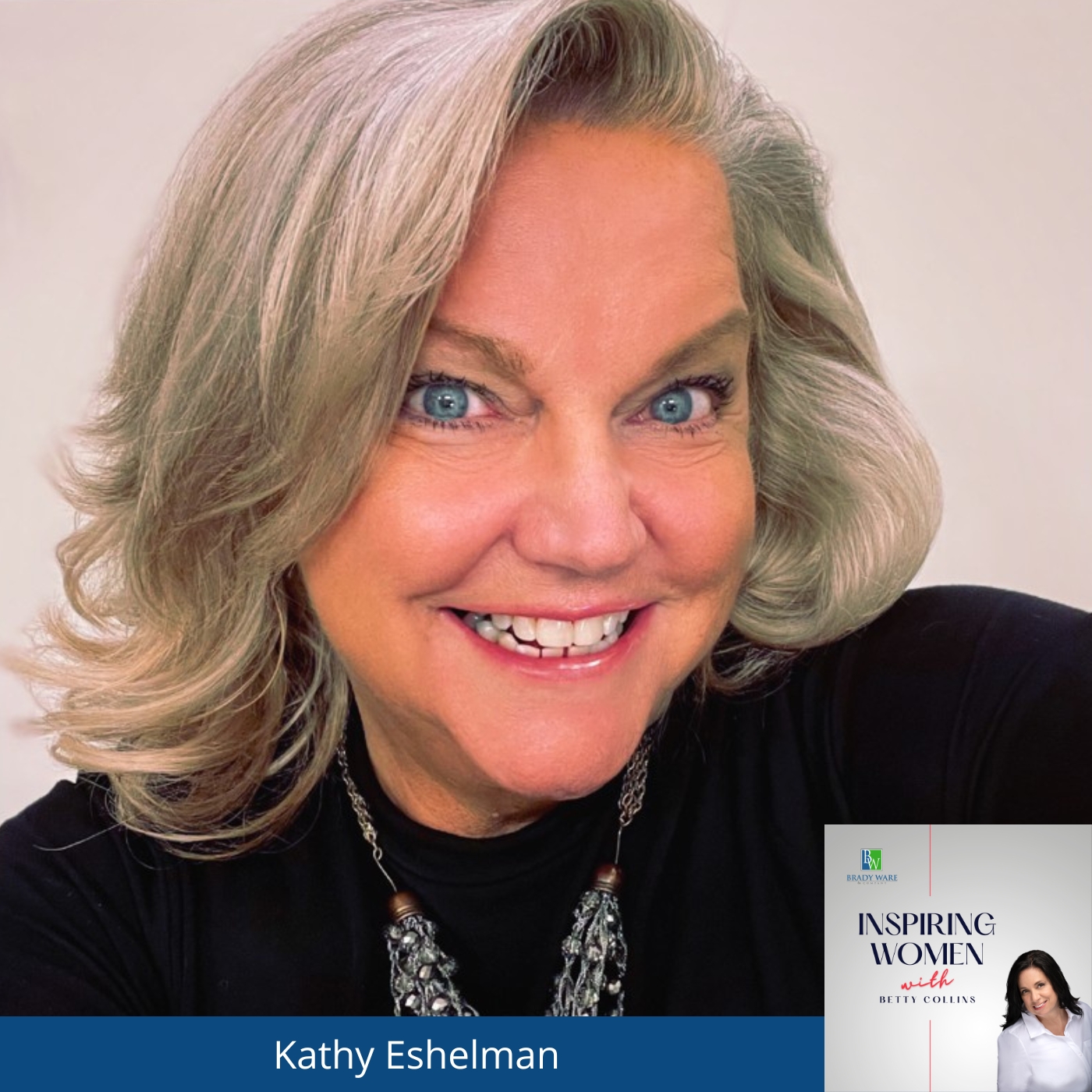 Marching Band, Entrepreneurship and Politics: The Inspiring Journey of Kathy Eshelman
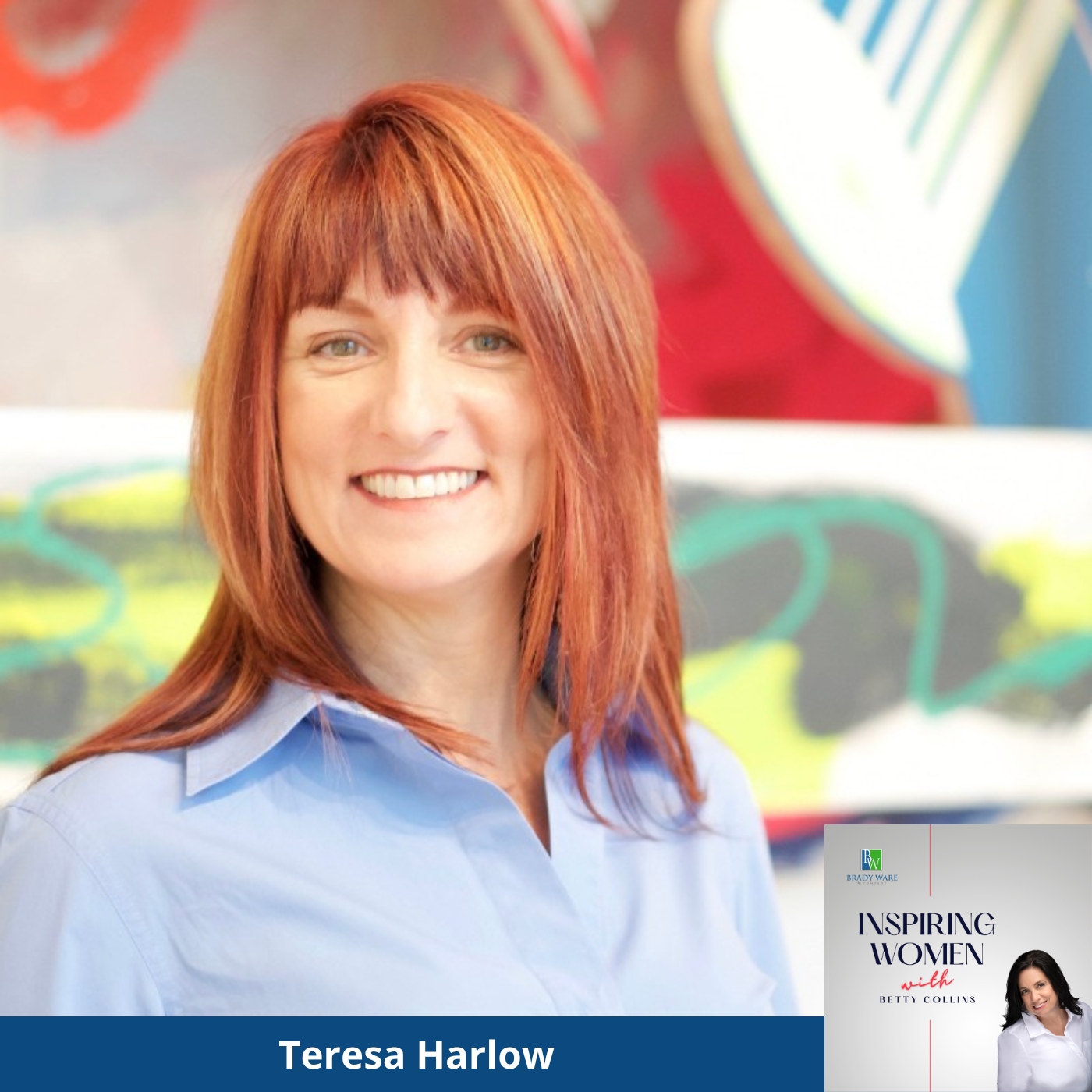 The 3 Cs of Collaboration: From Combative to Collaborative with Teresa Harlow
 Forgiveness, Improv, and the Art of Being Present, with Andrea Flack-Wetherald, Part 2
 Forgiveness and the Art of Improv: How to Laugh and Let Go