Industrial AI Podcast · 2026-05-06 · 28 min
Key moments - from our scoring
Substance score
45 / 100
Five dimensions, 20 points each
Christian Heining brings practical experience from seven years building AI software for CNC operations and current work leading digital product development at a machine builder. He cuts through the CAD AI hype by comparing current capabilities to early image generation (which produced six-fingered hands) and emphasizes that while Anthropic's model context protocol (MCP) integration with Autodesk Fusion represents genuine progress in democratizing CAD-LLM connection, the models lack true 3D understanding. The core blocker: existing LLMs are trained on text and images, not 3D geometry. He references a recent Autodesk research paper benchmarking CAD task performance across models including Gemini, GPT-4, and Claude - results showed AI completing only ~30% of realistic design modification tasks correctly. Heining highlights emerging opportunities in engineering drawing interpretation (especially with GPT-4o's improved image resolution), Anthropic's Cloud Code for context-rich development, and André Kapathy's "AutoResearch" concept for autonomous optimization loops. For machine builders and software teams, his main insight is that AI tool proliferation creates organizational and leadership challenges: teams need permission to experiment, clear standards to prevent bad outputs shipping to production, and realistic acknowledgment that the landscape shifts weekly.
Yes, but with major limitations: it can handle simple parts like motor brackets with screw holes, but struggles with complex designs involving manufacturability constraints, assemblies, and real-world design tradeoffs. The models don't truly understand 3D geometry - they translate text to API calls and iterate based on system feedback.
Startups focusing only on API connections to CAD systems are being destroyed by releases from OpenAI, Anthropic, and Autodesk. Survival requires a specific niche strategy, though the rapid development speed makes identifying defensible niches extremely difficult.
A recent Autodesk paper compared different models (Gemini, GPT-4, GPT-4.5, Claude) on real-world designer tasks like modifying motor mounts, and found AI completed only ~30% of tasks correctly - far below human designer performance.
Recent improvements in image resolution (GPT-4o can now handle 4K images) enable accurate interpretation of complex engineering drawings, even detailed technical plans like fire safety diagrams for German train stations.
Beyond tool accessibility, the main challenge is people and process adaptation: teams need clear standards and guardrails to prevent bad outputs (especially in software development), permission to experiment, and leadership willing to accept uncertainty as the landscape changes weekly.
Our reviewer’s read on each dimension, with quotes from the episode.
The episode touches on several relevant topics (MCP, Claude's CAD integration, topology optimization, Opus 4.7's image recognition) but often circles around the same points without developing them deeply. The conversation frequently retreats into vague generalities ('there's a lot of potential', 'it's exciting') rather than drilling into specifics that would help a builder understand what to actually do.
I think when people combine or speak about CAT and AI most of them thing the classical topology optimization
I think that in this concept is... He described it when he wanted to train a model at LLM but people picked up the concept and used it for completely different stuff
The episode rehashes widely discussed frameworks: LLMs as text-to-API translators, the six-fingers analogy for early model immaturity, and the 'tools in the center of workflow' argument. While the Auto-Research concept gets some airtime, most analysis is derivative from existing discourse. The comparison of CAD automation to code automation is sensible but not novel.
I would really compare with six finger image generation two years ago
Anthropics set a standard for all the AI tools out there to communicate with the outside word
Christian Heining has relevant experience building CAD/CAM AI software for seven years and now leads a digital product development team at a machine builder. However, his expertise appears primarily in CAD/CAM automation rather than cutting-edge foundation models or large-scale industrial deployments. He is a solid practitioner but not a heavyweight who has shipped major infrastructure or made high-stakes decisions at scale.
I have a background in math long time ago when studying mathematics and transition more into engineering, into software development
The last seven years or so I spent lot time on building software for CNC business AI based software for the CNC business
The episode mentions a few named examples (Autodesk Fusion, On-shape, Opus 4.7, the Autodesk research paper comparing CAD model performance) but rarely anchors claims in concrete numbers, timelines, or outcomes. The discussion of the Autodesk benchmark is one of the stronger concrete moments ('thirty percent of other tasks are good or very bad') but it is not deeply unpacked. Most claims lack supporting data.
Autodesk Fusion connector designers and engineers can create now free demodels through conversation
The image reading capability of OPPOs. for a four-point seven A they increase that resolution off Image recognition and to i think four K
The host (Robert) asks reasonable setup questions but rarely pushes back, challenge assumptions, or dig into contradictions. When Christian makes vague claims ('lots of potential'), Robert accepts them without follow-up. There are few sharp pivots or productive disagreements. The interview feels more like a guided tour of topics than a rigorous interrogation of claims.
We are not here today to talk about your day-to-day work. We invited you because we want to discuss Claude cut and euro
what doesn't mean for the cam discussion at the end do you see the same trend there?
Computed from the transcript - who did the talking, and the words that came up most.
Can generative AI finally democratize industrial design? We explore with Dr. Christian Heining breakthroughs, challenges, and the future of CAD with AI. We have a new podcast partner - please welcome NXAI! In this episode, I dive deep into the evolving world of AI-driven CAD and CAM with Dr. Christian Heining. We unpack why generative AI is capturing the attention of industrial designers and whether the latest integrations - like Anthropic’s connector for Autodesk Fusion - are truly game-changing or just another step on a long journey. Dr. Heining shares real-world experiments, candid takes on current limitations, and what it means for both startups and big players in the industrial AI space. We discuss the speed of change, the challenges of adapting teams to new tools, and what’s still missing before AI can fully transform the machine-building industry. If you’re curious about the intersection of AI, engineering, and the future of design, this episode is a must-listen. NXAI CAD Paper Anthropic Autodesk Fusion Onshape Dassault Systèmes OpenAI Gemini (Google AI) Opus 4.7 (OpenAI Model) Andrej Karpathy
Transcribed and scored by The B2B Podcast Index.
This podcast is presented by NXAI, your partner for time series foundation models and physical AI. has been your favorite episode so far? That's a good question, Robert. Maybe it is not such an old episode after all!
The interview with Jonas von Neuerer was interesting to me because memory and temporal dependencies are also the topics we're focusing on. Okay, that's interesting. It's a quite new episode. I'm a bit surprised but interesting.
the whole topic temporal dependency and memory is so crucial for you. well But why? Is your company such a good fit forward For The Industrial AI podcast? because we are building on the best models for industrial AI And they're fully focused on bringing AI into industrial applications and this from the very first moment On an xis built in the foundation of Zepp Hohites research these one-of-the worlds leading AI scientists.
So I think that's a very good fit, it's absolutely good for it is always a good fit to have Zepp in the podcast too because he explains us the whole world when it comes to AI. so what on the NX AI agenda? For you and the coming weeks? let say four or six weeks.
It's a fast business As you can imagine, we are working intensively on our new model Tyrex II which will be out within the next some days and Okay. That sounds very, very interesting but it's a pleasure to have you as a partner and I think we need to make short transparency disclosure here because i support you guys on certain topics But You Have No Influence Over The Topics Covered In The Podcast And As Always Our Dear Peter in Munich Will Handle Any Potential NX AI Topics In The Future.
So We Have Their Chinese Wall Or Peters always talks about the Chinese wall. And I'm really looking forward to our cooperation. thanks a lot and greetings to Linz Albert, and we are really looking for what tweets too? Thanks Robert!
Thanks bye-bye. my guest today is Dr Christian Heining. Christian welcome to the podcast. hi robot nice to be here.
yes it's a pleasure to have you with us. before we start talking about CAD please introduce yourself briefly two listeners. Yeah, I'm Christian. Um i have a background in math long time ago when studying mathematics and transition more into engineering, into software development.
And spend some years in the CE simulation always at a focus of building my own automation tools with this software. The last seven years or so I spent lot time on building software for CNC business AI based software for the CNC business. Cat Cam right? You are cat cam expert!
And now the last year I'm heading a digital product development team as a machine builder building basically digital tools for shop floors. Okay, we are not here today to talk about your day-to-day work. We invited you because we want to discuss Claude cut and euro. As i mentioned a cat come expert.
Generally speaking, CAT has always been I think an exciting market for AI. What's happening right now Christian? I think when people combine or speak about CAT and AI most of them thing the classical topology optimization. so that means you have a set And then you throw that into a design optimization and like, You get those by your nickel shapes out of that which are perfectly matched for additive manufacturing.
This is what people think about when they combine the words cat end AI but I think there's more okay. so we're always waiting For new domains for entropic right? So i had bad on tabular data But now it's cat. why Is cat so interesting From your point of view, for Anthropic?
I don't know if Anthropic is really stepping into the CAD market now. What Anthropic... I mean, it's always surprising me basically every day that they're releasing like everyday new things and one of their key advances was two years ago where they launched this model context protocol. This is basically all the LLMS we have out there which are just text predictors.
They are basically blind to the outside world. and with this model context protocol, Anthropics set a standard for all the AI tools out there to communicate with the outside word And the outside. what could be? everything like it would be an industrial context Could be in ERP system?
It could be a robot or whatever Or also could be cat systems. So I don't think that Anthropic is going into being new Autodesk or something like that. This is just one small release on the whole journey. to really put clots, yeah there are tools in the center of a workflow completely different domains.
I mean for coding. it's cloud code For regular office worker and cloud co-work. And with all those connectors they're putting clots tools in middle of the work flow of different industries. One of them Yeah, but why is it so interesting?
Why do they have Autodesk? Fusion connector designers and engineers can create now free demodels through conversation. This was the holy grail I think. what's happening to the whole cat business from your point of view if you see all the machine builders out there, and it's also for software development.
Software development is a very expensive task in the same way as CAD engineering. You start with drawing, you extrude your MacBoolena expressions so that you spend a lot of time designing back-and forth. I think there are lots potential to automating this boring work away from the cat design. The same, by the way is also happening in software development.
I compare those two very closely to each other. so on software development writing just typing it's considered nowadays that boring work and people in a software development they transition more into architects someone who was just supervising their process. And i think the saying could happen in the cat world. Where can entropic do what many startups have been struggling with?
for so long, because I think since ten years we are talking about cat and AI. And why can't entropic do now what many startups have been struggling? This release from Anthubix is really groundbreaking. I mean, for many people it seems well that's...
Anthubic knows don't care That's a big surprise. Connecting a CAD system with LNM Is already possible since Since MCP was released. You could all already do that Like connecting an API For example From Autodesk Or on-shape manually. But now they shipped into their system, which make it really easy.
Which we democratize the whole process. I'm not very surprised and i don't think that's big of a step. It is interesting for many people but this was already possible before. But now everybody can do it from just in five minutes, you're ready to go.
But this will change I think the whole way we do cat or am i'm wrong? Or because you said is cat now being democratized? so would everybody everyone be able to use cat In The Future? are Is It Only A Dream ?
I think I made a reality check already tried it out and yeah please. And To Be Honest We Are Still Very At The Beginning. Maybe remember the early days when those first GNI image models came out? What did you see, people with six fingers and two heads.
And then whatever all kind of funny stuff which is not by way it's gone... So I tried that out for very simple prompts and very simple parts. You have a motor bracket to screw holes so it works. But if it's more complex, very complex design and you have for example manufactability limitations.
You have a complex assembly where your part has to fit in is still could struggle and get stuck. And I think what making cats so difficult not just building apart but also having many things in mind when you design a part that you need to think about For example What are my design constraints? from manufacturability side. What's the purpose of that part?
Do we have, for example, a manufacturablity in mind? do you have to see C-Machine apart or do I have to inject more depart and so on?" And putting all this into just simple prompt is definitely need more context. maybe in future systems like Cloud Code also in Cat where the cat system knows about you The context now there are one million tokens could be possible where you feed a lot of information into the system.
And then, the CAD system follows those rules. what you've put them in there but just prompting and hoping that you get very complex part out of it is still a dream. So its not industrial grade? No definitely not!
I mean for hobbyists on playing around... It's okay i would really compare with six finger image generation two years ago. this is why we are currently at it my opinion. But it's a path, right?
So we are on the path now that the big players going into cat cam maybe in the future also. so We see potential Rising there. and what about all the startups in the market. Now yeah All this thought up depends upon their approach.
they're tackling I mean other start-ups just focusing on connecting the land to a cash system They definitely get good. That's by the way what we very often see from those big players, from Unabit Open AI and Topic. Each and every release they destroy dozens of business models. if you focus only on APIs just connecting to a cat system you're gonna be destroyed.
I mean If You Have A Specific Niche Then you could potentially survive and this is what he should focus on from your point of view. What does a niche when it comes to cat? And AI? that's very really hard question because The speed of development.
It is incredible. if here If we had asked me A year ago my answer would be completely different, then I wouldn't have predicted what was happening right now. Also the big players going going for AI so on shape is releasing a chatbot all these the salt system, you name it. They all have platforms where they integrate for example chat or they add assistance which is for example a system drawing generation in assisting design from manufacturing etc.
so there's so much happening right now So I can't give your clear answer. Okay okay maybe There's no niche anymore when It comes to cat. Yeah In general AI Is so quick and especially with The ability To build software. SO QUICK RIGHT NOW It's, it's really unpredictable right now.
What does that mean? Now we had the cat discussion. what doesn't mean for the cam discussion at the end do you see the same trend there? I sees is very similar to classical AI automation in canvas.
until two years ago was a traditional machine learning. so you combine typical classification regression models with rule brace approaches and predict tool paths predict features whatever have the possibility to interact with a calm system, both natural language. You can for example predict and seek code like G-code directly within an M. so huge potential right now from combining different technologies from say old school technology with new possibilities form large language models.
So that's similar paths you would definitely. how much time does it take? from six fingers now to a real good picture. And what does it mean for cat?
So I think, From Six Fingers To Real Good Picture in the past five-six months. or am i wrong? Yeah and don't have exact numbers. but of course you can't really compare that because image generation is a problem which is easier.
It's much easier, it is a problem which has much more training data. So you know all those models are trained with billions of tokens and millions of images that have a lot of training data. All these large language models have this massive data set beyond. And if we're talking now about the anthropic plug-in to Autodesk This hasn't been trained on threed data.
so they still talk about Generating what accessing a CAD tool through an mcp. So none of these models has really been trained on Unreal. I mean there's a little bit of an approach, i think from Gemini. they take into account some three-d data from images but this is way off compared to real work at that.
so...to the best of my knowledge it already working right? That's interesting! It's already working yeah but entropic is just translating text to api calls and it's not really understanding what is happening in the CAD tool or other tools as their armor, as their hammer.
It doesn't understand what they are doing! They're getting feedback to do this and that... and then maybe if a CAD tool says something like ''this doesnt work'' Then you could iterate and spawn another agent and try an new approach. So its used with the CAD Tool as their tool As their hammer or saw but not really understating what he was doing.
None of none of those models can really understand cat and, uh in three because they are trained on image. And then toll India text. what else has fascinated you? In the recent weeks?
What's a must see when it comes to gen AI mcp connection LLM industrial applications. but what else? Because you try a lot. How much time do we have?
You can share five examples, but playing around with lots of different applications and tools I already enjoy your LinkedIn post. when it comes to new ideas Please share what fascinated you most. I think the latest releases of the latest models have been very interesting. Of OpenAI, also OPPOS.
four point seven. one interesting thing is The image reading capability of OPPOs. for a four-point seven A they increase that resolution off Image recognition and to i think four K. so there means They can really Very accurately predict what's were described?
And then take it into their context. was what's with an innovation? I'm thinking For example about I'll be talking about CAD, of course also what comes into my mind is engineering drawings which are still around and we will have engineering drawings that are the next twenty years. And for example in inter-threatening engineering drawings it just made a post this morning to feed opus.
four point seven an engineering drawing. It's very accurate, it is not that I present so still off but really interpreting very complicated drawings could be also possible with Opus. a four point seven. I saw something similar about fire safety planning and what based on plans from the German train stations, I think it was also very interesting.
And two weeks ago or something where you really see that AI is capable to do some planning and technical drawings when it comes to fire safety? That was very interesting because of the training data Because they use real plans for German train stations! Now go very deep into all the details, really small and then finicate lines. This was impossible before because the previous models they are decreased resolution to five hundred pixels and everything is just pixel-smashy And you don't see anything blurry.
I released also a paper research paper from Ovidus Autodesk. A very interesting paper was released. It's called I think New York Cat. it's the first time where They compared cat performance of different models Different AI models By the way, not the latest approach from Atopic.
It wasn't included or included. it was too early I think two weeks ago. They compared different CAD approaches From native models like... I think Gemini OpenAI model is also OPPOS.
four point five and compare The performance to a human head designer And result was devastating for AI. So they gave AI a task which is a real world task, typical real-world task of the designer. You have a certain design let's stick to the motor mount example and they gave BAI the AIs at tasks. hey do this and that modify there and then you need to do this.
on that please modify make this modification like it's really in real work like for some manufacturing guys talking to your designer and requesting They led the same task to a URN, they saved tasks for an AI. The AI was performed with not that real connection to a CAD system but generated code like code and this code wasn't executed in generative design. And their results were very bad for the AI. so just I think thirty percent of other tasks are good or very bad.
But it's first time we're really Benchmark was published and I think that this benchmark could be updated soon, very soon with the latest results from Anthropic because they had taken a completely different approach. Not letting the LLN generator go... Is it free available to paper? Yeah sure!
It's on ArcSci. if you can.. I will share in the show notes. What else?
three more? I have two. yeah okay what i think is very interesting general is the whole concept of cloud code And what this enables. Cloud Code, it enables me to bring a lot of context into my daily business.
So contexts in the form of product requirements and my business goals, my customers' users... I think also having agents sub-agents on my computer is just controlling that with CLI. Having a CLI or work with a computer, with the CLI is becoming interesting again. I thought five years ago everything was getting clicky and having a front-end.
now people are going back to CLI. maybe this also will go into in future catwork where people are communicating with their computer with a CLI And having that context markdown files and having super engines working for them. That's a very interesting concept. Okay, that's an interesting concept and the last one at The Last One I think you have to mention Andre Capati today.
It is always coming up with new ideas And one concept Is Very Interesting for me in. this could also be Transitioned To The Different Domains and he He Published A Concept. He Called it Outer Research. i don't know if You Read That.
Its Two Months ago Where I published the Concert. This concept is basically very simple. You have a certain task to solve, for example in optimization. you describe the within some cloud code.
so everything happens with end-to-end C line without your software development tool. that's really interesting. So everyone can... Everything goes down into an IDE where developers work and you have a target function.
you want do make an optimization And then give the freedom to solve that problem within a certain domain. And then this auto-research concept is just described in Markdown files, and it's so crazy thing! You basically describe your problem space... your boundary conditions how much you want to spend with a Markdown file.
Then the auto research starts doing experiments. So it's doing its experiment. for example, if you go back to the initial example of topology optimization. It is taking mass away here and then make an experiment.
Let us see what about my target function? Is this improving yet? or yes maybe that a good direction? Maybe I should take another approach.
You can basically describe an optimization problem just within a text file assistive of agents, completely autonomously doing work for you and exploring new spaces which we haven't even followed. That's really an interesting concept. I think that in this concept is... He described it when he wanted to train a model at LLM but people picked up the concept and used it for completely different stuff.
You could use it for Robert's robot automation. One guy uses it for optimizing the conversion rate on his home page. So he gave CloudCode access to this marketing campaign, The metric was the conversion grade and then cloud code. but there's also research started doing experiments trying to modify ads trying to verify different conversion follows And every time the KPI has been monitored into if it were successfully continued.
If not you took a decision direction. so that is very interesting concept Absolutely. We can talk longer about that, but I want to come back to your daily work. what is missing when it comes to you work for a machine building company in Bavaria?
What Is from Your point of view missing When It Comes To AI? and Maybe Not Only Talk About LLMs But What Would Help You Guys In Your Daily Work With Your Customers Or Your Customer? or What Is The Idea? A challenge and a courage is that we have access to so many tools.
The possibilities are endless, And the organizations still need to be adapted. That means people thinking about working with AI. So it's not just... I mean if you're single person working as a solopreneur for example using different tools It has no brainer.
You've got the same source of truth. That's not a big deal, so you define the pace. But if your for example working in that team everybody has for example access to cope for like just a co-op. Everybody is using it differently.
If you think about a team of software developers even product manager Maybe he works with cloud code maybe not. we have two developers So really working together and I think those new tools also requires that people change at this. currently more they different difficult a different topic compared to the tool accessibility and possibilities. So it's more people changing processes, changing compare to they are I trust quick?
Yeah And to make the right decision into stay at your decision Right. so not to change every two weeks. we go with this or We go was that Or we go now This past because there is A new tool coming up an i think That difficult also for team leaders To decide which path to go now, maybe it's the wrong pass. Maybe It's the older part and there is something new coming in the next four months or I'm on the wrong path.
so i think that very difficult also for machine building companies definitely And a very important growth transformation. as you said about leadership The leaders should have to talk about AI. they need to give their teams possibilities AIR, whatever it is. It's a Microsoft co-pilot or Outlook or Claude and they have to give the team the possibilities of making experiments to learn.
I also had to admit that they might not know what isn't within a year. And be honest with all this speed we currently are seeing. So you don´t now what your doing next week on LinkedIn? Next week again predict on my database, one week is okay.
So what will we see next week? Give us a spoiler no big deal. I definitely would make more experiments with with opus four point seven um especially in and then extracting data from from images for from engineering drawings that also from the cat uh to when he works. small experience.
but coming back too to leadership and change i think the worst thing we just can do be quiet and deciding. They have to teach the possibility of experience, to talk by their ear or also set standards. that's very important because especially in software development you could produce very quickly a very bad code and ship it into production which would really harm your product. so setting right guardrails and standard is also very important.
I keep my fingers crossed for you and your team, Christian.
Other episodes covering the same guests and topics, from across The B2B Podcast Index.
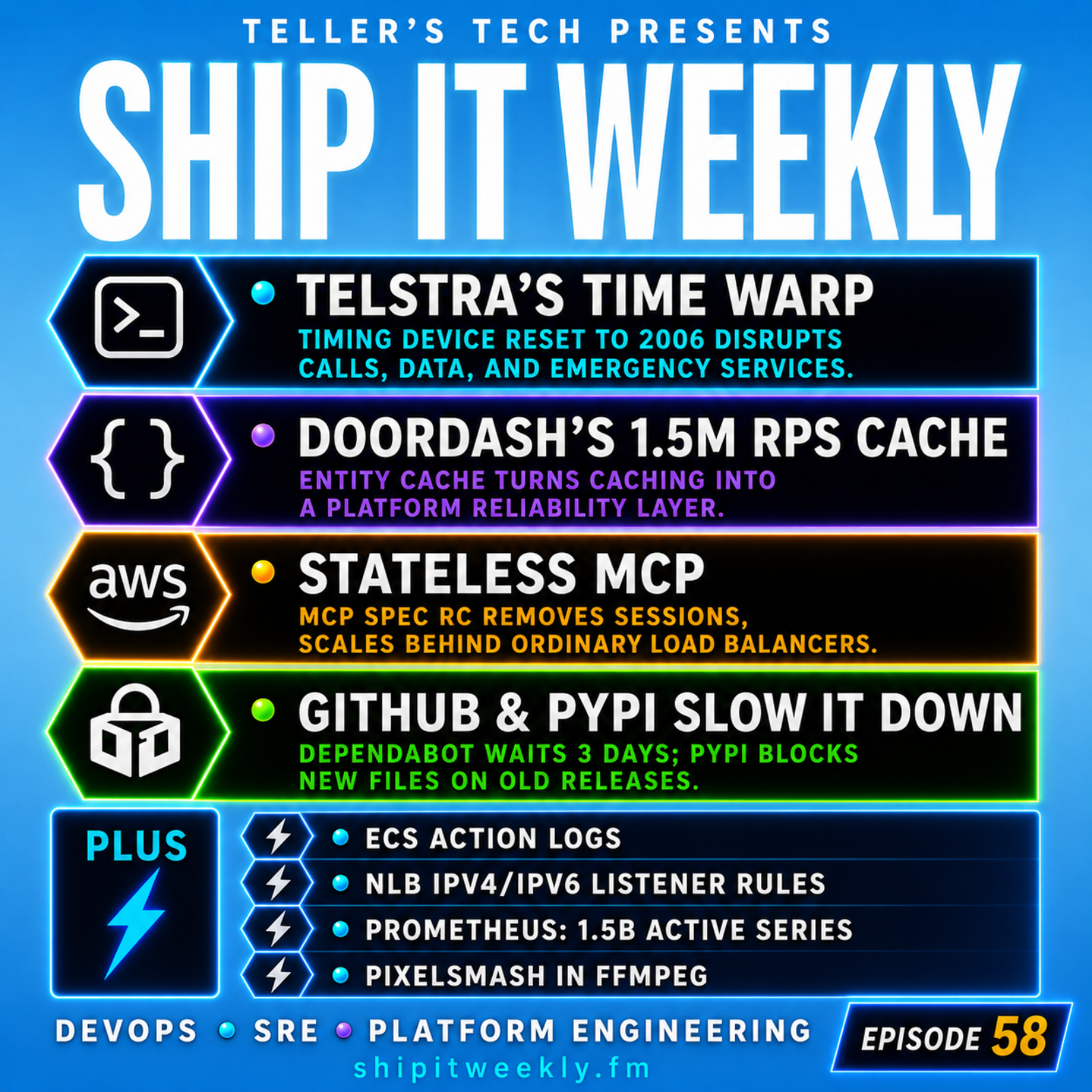 Telstra’s Time Sync Outage, DoorDash’s 1.5M RPS Cache, Stateless MCP, GitHub and PyPI Supply Chain Delays, and Why the Quietest Infrastructure Often Has the Biggest Blast RadiusShip It Weekly · on Model Context Protocol (MCP)97 / 100
 ChatGPT Co-Creator Launches Jev, Salesforce Trains Koa, Self-Improving AIToday’s AI News · on Anthropic Claude87 / 100
 Legal Tech Doesn’t Need More “Lamborghinis” ft. Kara Peterson and Richard DiBonaBetween the Briefs · on Anthropic Claude87 / 100
 The End of Software as We Know It: How AI Agents Are Rewriting HR, SaaS, and Organizational DesignAI First with Adam and Andy · on Model Context Protocol (MCP)81 / 100
 Boilerplate in Seconds: AI Handles Setup, Engineers Handle Logic - Klaudia Dussa ZiegerSoftware Testing Unleashed · on Model Context Protocol (MCP)80 / 100
 How airfocus Is Rebuilding Product Ops Around AI AgentsProduct Team Success · on Model Context Protocol (MCP)80 / 100
 TiRex-2 - a multivariate time series foundation model64 / 100
 From Sales to Spare Parts - Festo´s AI solutions80 / 100
 Industrial AI: From Pilot to Profit81 / 100
 AI for the Glass Industry76 / 100
 NVIDIA´s Safety Initiative / The unique Volkswagen-Siemens joint venture80 / 100