
In Other Words · 2026-06-25 · 45 min
Key moments - from our scoring
Substance score
48 / 100
Five dimensions, 20 points each
Scott Kinker, CSO at Bridgepoint Technology and advisor to 12,000+ technology decision makers, challenges two critical fallacies that derail enterprise tech decisions: the belief that every business is uniquely positioned and the "tinkerer syndrome" that drives unnecessary custom builds. Drawing from 30 years in technology, his experience scaling Evolve IP from startup to private equity exit (70-75% through indirect distribution), and his current advisory model serving Fortune 25 companies, Kinker argues that non-technology businesses should almost never start with build decisions. Instead, he advocates for IT leaders to choose between being "plumbers" (cost centers managing infrastructure) or "general contractors" (strategic partners driving business value) - and if choosing the latter, outsource commodity plumbing to ecosystems. The independent advisory model Bridgepoint uses, where advisors earn recurring residuals from 300+ suppliers (AT&T to Zoom) rather than hours-based fees, realigns incentives so advisors stay invested in customer outcomes. For operators scaling globally, Kinker exposes how supplier contracts, regulatory frameworks, and billing structures limit the portability of proven US go-to-market models, creating friction when Fortune 500 companies expand internationally.
Building creates permanent technical debt, ongoing support costs, and uptime responsibilities - what Kinker calls "the hamster wheel" you can't dismount. Combined with the fallacy that every business is unique, build-first thinking locks organizations into expensive, never-ending maintenance cycles when partner ecosystems could deliver outcomes faster and cheaper.
Plumbers focus narrowly on keeping infrastructure lights on, reporting to CFO/COO as a cost center, while general contractors sit at the C-level post-Covid, architect strategic IT roadmaps, and outsource commodity plumbing to partners. IT leaders must consciously choose their role - both are valid, but the decision determines vendor partnerships, buying behavior, and how they measure value.
VARs are margin-driven and confined to certified platforms they resell; consulting firms charge hourly rates disconnected from outcomes. Bridgepoint's model involves no upfront customer fees, earns recurring residuals from 300+ suppliers, and remains on the hook for customer satisfaction monthly - aligning advisor and customer incentives like insurance or financial advisory.
Supplier contracts, regulatory frameworks, currency billing, and divisional structures are region-locked. Suppliers operating globally face the same complexities as buyers, and local markets often lack infrastructure for commission-based advisory models, forcing Bridgepoint to repeatedly educate and renegotiate supplier agreements in each geography.
First, the belief that a business is uniquely positioned with problems no one else has faced, and second, "tinkerer syndrome" - the tendency for IT teams to custom-build solutions. Both lead organizations away from proven ecosystem partners and toward expensive, unsustainable custom development.
Our reviewer’s read on each dimension, with quotes from the episode.
The episode contains a handful of serviceable frameworks (build→customize→buy hierarchy, plumber vs general contractor, AI governance-before-literacy sequencing) but packs them around substantial filler: a lengthy musician origin story, an 'inbox confession' segment, and extended rapport-building. The density of genuinely non-obvious ideas per minute is modest.
I think businesses that are not themselves tech businesses should never start from a build idea.
I have a tendency to consider it a hamster wheel. That's the analogy that I'll give to customers. When you get on, there is no getting. You can't dismount.
The advisory model (supplier-funded, residual, outcome-aligned) is a genuinely underexplained distribution structure worth hearing about, and the 'don't suck on your own carbon dioxide' framing is memorable. But the build vs buy advice, the AI governance sequencing, and the 'everyone's a decision maker' closing are standard practitioner wisdom with thin differentiation.
Don't suck on your own carbon dioxide side. And what I mean by that, if you are on the tech side, don't be so enamored with your product that you forgot why you started building it in the first place.
I think the first fallacy here that business leaders and IT leaders need to ask themselves or need to think about is this idea that they're the most unique business in the world and no one's ever had the same problem as them.
Scott Kinker is a legitimate practitioner - founding operator who scaled Evolve IP through 15 acquisitions to a PE exit in 2017, now running partner strategy across a portfolio touching 12,000 businesses including Fortune 25 accounts. He has genuinely done the thing at scale, though his domain is relatively niche (channel/advisory model) and he is not a widely recognised figure outside that world.
by the time we saw that business to private equity in 2017, about 70% of the business, maybe between 70, 75% of the business was coming through indirect distribution.
Fortune 25 customers of ours lean on us to make decisions for them.
A small number of concrete data points exist - the 70-75% indirect distribution figure from Evolve IP, the Infotech CIO survey stat, and the 300+ supplier count - but the majority of examples are deliberately anonymised ('a global brand in media, entertainment') or purely anecdotal with no measurable outcomes attached.
there was some data that basically said 70% of CIOs prefer AI features that are embedded in their existing SaaS platforms
by the time we saw that business to private equity in 2017, about 70% of the business, maybe between 70, 75% of the business was coming through indirect distribution
The host prepares reasonably - he references prior podcast episodes and frames transitions - but consistently affirms rather than probes, never challenges the advisory model's structural conflicts, and introduces a dead-weight 'inbox confession' segment mid-episode. Questions are leading and setup-oriented rather than genuinely interrogative.
I love it. I think that's good.
Let's take a little pause. We always have this mid show moment where we ask our guests what we call the inbox confession.
Computed from the transcript - who did the talking, and the words that came up most.
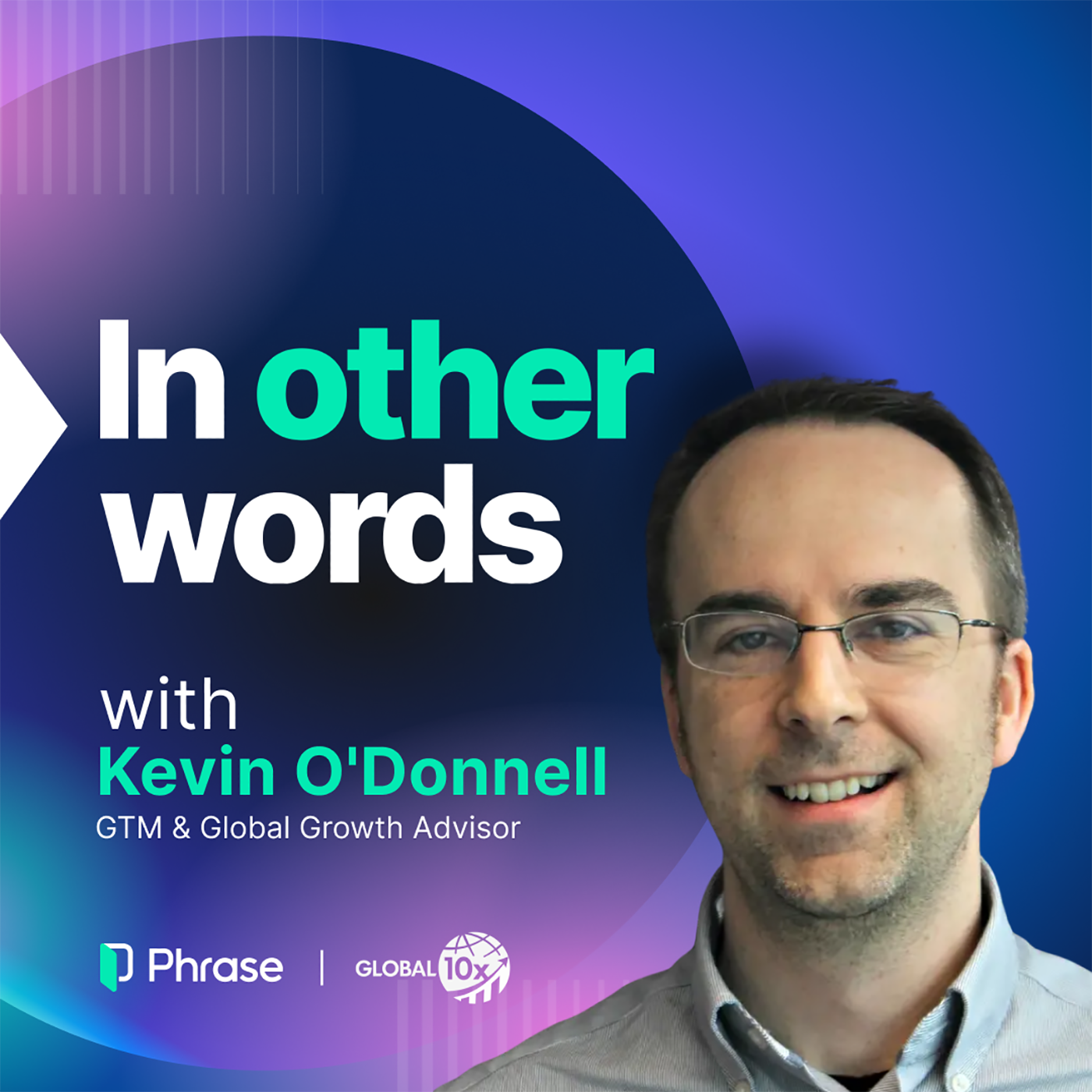
Scott Kinka has advised over 12,000 businesses on technology decisions. As Chief Strategy Officer at Bridgepointe Technologies, he manages one of the largest independent partner ecosystems in the U.S., with a supplier network that extends into Europe, the UK, and Latin America. On this episode of In Other Words , Scott examines with host Jason Hemingway where build vs. buy decisions go wrong when businesses expand across markets and languages, how the organizations getting the most from AI are the ones investing in platforms they can build on, and what global consistency means when your customers expect the same experience everywhere. Scott argues that companies which are not themselves in the business of building tech should never start from a build idea, comparing internal builds to a hamster wheel you can never get off. He explains why IT leaders need to decide whether they're "plumbers or general contractors," and shares a vivid example of a global brand that refused to let its AI-powered customer experience fail from Arabic into English.
Transcribed and scored by The B2B Podcast Index.
I think the first fallacy here that business leaders and IT leaders need to ask themselves or need to think about is this idea that they're the most unique business in the world and no one's ever had the same problem as them. That and the tinkerer syndrome that IT people have are the two fallacies that are just consistently in the way of good decision making. On this topic. I'll tie it back in a minute, but let me get to a second reason real quick.
I think the other challenge that businesses have is believing that building is a one time event because it just never is. There's tech debt, there's ongoing support, there's uptime. All of these things are expensive. I have a tendency to consider it a hamster wheel.
That's the analogy that I'll give to customers. When you get on, there is no getting. You can't dismount. So when you put those two things together, I think businesses that are not themselves tech businesses should never start from a build idea.
Welcome to In Other Words, the podcast from Frase where we speak with leaders shaping how global businesses grow, scale and operate. Today's guest is Scott Kinker, Chief strategy Officer at Bridgepoint Technology and host of his own podcast, the Bridgecast. Scott is a 30 year technology veteran, former startup founder turned private equity exit, and the person responsible for the partner ecosystem that over something like 12,000 businesses rely on to make technology decisions.
Impressive. He also started his career as working musician, but much more on that later. So in this episode we'll examine and explore how technology choices shape global growth, why build vs buy decisions carry more long term consequences than most leaders expect. And our partner ecosystems determine whether technology investments create value or just more complexity as businesses expand across markets.
And finally, we will cover, because we have to, in today's world, how AI is reshaping advisory relationships. In this case. Scott, it's great to have you on the show. I'm thrilled.
Thanks for having me. Brilliant. Well, let's get going. And Scott, you've been a founder, a CEO, chief strategy officer, and a podcast host of a very successful podcast.
But before all of that, you were a working musician. And so for listeners who don't know your background and how did you get from that playing seven nights a week to running strategy for a large independent tech advisory firm? How I got started as a musician is it was the best college job you could possibly have. That's really what it was.
I was in high school, in a bar, underage, playing music, and some guy walked up and said if you do everything I tell you to do. I can have you working all summer. And all I'm thinking about is how I was going to pay for college starting that September. So we just said yes and listened and followed instructions and did the things and ultimately got creative control back.
But it was an interesting message and surrender where follow, listen, learn. We were a bunch of kids who had no idea what we were doing. And you know, ultimately that became something that took me through college, took me through graduate school. I was still playing early in my career.
It was never my intended path to be a full time musician, but again, my friends were flipping burgers and I was playing music and getting free beer. So it was awesome. But a lot of business lessons, you know, learned in that and I'm sure we'll get into those over the course of day to day. I studied marketing actually in college.
It was a early, early 2000s and how I landed here, frankly is I was trying to market my band. I was working at a small advertising agency. It's 2005. I'm like, these web pages sound like a cool thing.
Let me go be the one person who knows how to build them in my firm. And then that became a consulting company which bec a stint working for a CLEC. As if you remember those days in the mid 2000s, nobody knew who was supposed to build their webpage, whether it was their marketing company or their isp. We built a big business up there that led into over years, evolve IP and dealing with everything that goes along with that.
So just be open to saying yes, I think at the end of the day. And that's how I landed where I am now. I think that's fantastic. Career advice for anyone is to be open to saying yes.
I remember those days where everyone was trying to learn Dreamweaver at one point when I was doing completely different job. But we were trying to learn all the web tools on the side. It's not unreflective of today's market, but we'll get to that a little bit, no question, a little bit later. So let's delve into a little bit more about Evolve IP.
And you took that from startup through something like 15 acquisitions into private equity. What did that experience teach you about the relationship between building the technology but also building an ecosystem that kind of sells and supports that technology? I had been working for a CLEC before that. I'm building new tech into telco and I was there during the dot bomb, right?
So 2000 bankruptcy, bring it out, fix it up, sell it to private Equity leverage, that experience to build friends and family investment group along with partners. I mean I was a founding partner there and we got the product stood up and we started moving into it from there. And now we're like, okay, awesome. We got through all that.
Guess what it is now it's 2008 when we're raising money. So from one disaster into the next disaster. The plan there was to grow faster and all the things that were happening in 2008 then obviously we were able to do. But we looked to alternative distribution originally just as a means to scale faster.
We could train, we could try to get sales reps open and ready to go within 18 months. Maybe they do, maybe they don't. So very early on we just started looking at alternative methods of distribution. And by the time we saw that business to private equity in 2017, about 70% of the business, maybe between 70, 75% of the business was coming through indirect distribution.
And I can tell you what was. It was not a popular proposition with investors at first. Well, you don't control your own destiny and you're waiting on others to help you get there. But I think what's happened in the ensuing years is that organizations realize that the economics actually work.
Right. The investment community has learned these multiple types of distribution have themselves become target for outside investment. You can go to the public filings of any of the big providers, you name them, and they're talking about, well, yeah, you know, next year we would love to cross the 50% mark in indirect distribution. Is it just a matter of scale?
Is it expensive on a dollar of revenue? Yes. And of course you'd have that there, but you're also not losing a dollar because it's purely success based at the end of the day. So I think over time those economic been accepted by the investment community and it's been really a way of changing the way people are buying technology.
At the end of the day and frankly away from the technology side, having spent most of my career kind of in your seat, it's a way to scale fast. You just can't get that kind of engagement without an ecosystem. We're not here to talk about necessarily phrase, but we definitely invest very heavily in ecosystem, making sure the technology is open enough to benefit to an ecosystem. But also that channel distribution is really, really important rather than constantly relying on those direct costs of having teams.
I get the balance. Balance is interesting for every business, but it can be a really, really effective channel. Let's talk a little bit about Bridgepoint and you that the business Works with some of the biggest names in tech. You know those 12,000 companies I mentioned earlier in the intro, you're not really tied to sort of any of them.
So for businesses trying to get the most out of their tech ecosystem, why does that sort of independence layer matter? I think this may be a controversial opinion, so, but we might as well just get it out now. Let's have some fun. We think that the way people have to buy technology is intrinsically broken.
Like period, full stop. At the end of the day, there's too much information, there's not enough time to evaluate it. Ideally, the C level cio, the IT director now has a seat next to the CEO post Covid. It's not a job they want to seed at this point, but they still have to keep the lights on.
And that's a lot of work. And we think that buying in that category is better. You think about it. VARs are beholden largely to margin and to a capacity around the platforms that they are entrenched in.
Those they've certified, they're carrying that. So they sell both services and an OEM product, which is great, but no business can know everything. So your engagement there is. I can show you a few things.
If you go to the consulting firms, that's an hours, not outcomes cost model. And that's really where the method that we go to market was formed in the us And I know we're going to talk international a little bit and this is a model I've got some experience trying to build into Europe and people were like, I don't really understand how this works. But you know, in the advisory model in the US we effectively have a portfolio of 300 plus suppliers. I say from AT&T to Zoom and that covers cloud, data center network infrastructure, ucas, CCAS security.
Managed it, but still think of it largely on the plumbing side, not the application side. You know, these providers pay us residually. Frankly, we don't hide that fact because we also don't charge for our time. It's a model where the customer and the advisor, much like you see in insurance and you see in financial products, are beholden to each other.
If you're not satisfied with the supplier, I don't get paid next month either. So it's definitely a different model. It spawned out of kind of the divestiture of local and long distance to the baby bills in the U.S.
one that's since grown kind of into multiple categories. That's really where we have our success. We recommend products that we hope they stay in the journey on if they're unhappy, we help them solve what that is. It's not a resale motion.
The customer is ultimately signing an agreement with the end supplier. But if you're not happy, you know, we don't get paid for effort that we've already put in at the end of the day. So for us, it's a model that it's accepted largely in the U.S.
i think there's the challenge. Obviously, that's a model that's not as well known internationally, but I think that it should be. And as platforms like bridgepoint are growing in the US it's impinging, I would say, into other geographies and becoming an opportunity, you know, as our customers in particular, you know, we've gone significantly upmarket over the last handful of years, and there are Fortune 25 customers of ours lean on us to make decisions for them. Well, they have international technology decisions that they have to make.
So very often we're going to suppliers and saying, yes, this is how we're having to educate on our model. Help them build an ecosystem if they want to do business with this large company in the US who's choosing to transact this way. So very different. But in our world, that's really where the independence kicks in and where it's important.
No, I love it. I think it's very interesting. I think let's explore the sort of global connection in a minute because I think it's curious to me why that feels difficult. But let's come back to that later.
But when you think of ecosystems are no different. Executives tend to think of list of vendors or suppliers. Where do you see people getting it wrong? Because that feels like just a list of things that's kind of not deeply strategic in terms of the way you think about it.
So what do you think people like me or executives get wrong about the strategic value of their partner relationships? I think independence and focus are not mutually exclusive. And what I mean by that. I made the point earlier.
Hey, VAR needs to certify on two or three competing products and have their people be willing to deliver it because they're reselling it ultimately. And sure, we have a broader reach. The counter argument to that would be, well, you're not a specialist in any of them, and that's a fair argument that you can make. I think the key, though, is focus.
So of course, we have those whom we are certified to implement. We have those with whom we have better economic terms. We have those with whom we have, frankly, more success in the field. But if I gave you the whole cadre of suppliers in a particular category, and I pointed to who was more successful than not.
You'd probably come up with the same list that I would. Not sitting in my seat, because it's really more of an indication of how successful they are competitively, frankly, in the market. Right. As you go there, the flip side to what we have to focus on, and this is something that I caution our teams about all the time.
I'm constantly saying, listen, when you are in the deal, you are not being paid to back the truck up, if you'll take the euphemism, right? We're not backing up to the front door, opening up the truck and saying, I have it all. Just what do you want? Come hop in with me.
You need to be purposeful in your approach. And honestly, it's something that I can agree, frankly, the deal killer are coming my way. You know, the objection handler for our emotion. Yes, we struggle with that every day.
How do you make sure that you maintain independence, but also no specialism, that you are providing value to the client? You know, not saying, hey, I've got three quotes. Which one are you, you know, what are you actually recommending for us? Because, again, we have to stay in the journey.
And I think, though, that the recurring portion of the way that we're compensated is a way for us to ensure to the customer that we are making the right recommend. At the end of the day, that's it. Because you're basically thinking about outcomes and you're on the hook. You're on the hook for future.
It's a good way of balancing out that focus versus independence. Let's talk about your customer base a little bit. With the IT leaders predominantly, I would imagine, and you've said before, I've listened to some of the things you've talked about in your podcast and with the interviews you've done, IT leaders need to kind of decide whether they're plumbers or general contractors. Can you just go into that kind of distinction?
What does that mean for how organizations structure, particularly their technology partnerships? First off, let me explain the topic, because this one comes up a lot. File that away in the controversial statement category. Right.
It's working, apparently. Thank you for noticing it. Listen, the history of being somebody who's worn that hat for a lot of my career, the history of it is that at first it was the job of keeping the lights on, and it reported to the CFO and the coo and there wasn't value being derived from that function seen as a cost. Portion of the business.
Right. And that's what I mean by plumber. Right. Focused on infrastructure, network security, empowering underlying technologies to some other function that the business supplies or supports for their end customers.
I think that role's changed. I sort of mentioned my feelings around the post Covid opportunity, which is it has been brought forward in many cases to have the opportunity to be the general contractor. And I think that decision makers need to decide which one they want to be. And by the way, that's okay.
You may be in a business where maybe you can't really be driving value to the bottom line. I don't, you know, maybe a business where TIA is truly just keeping the lights on. But most of your customers. And now I'll get to the ecosystem portion of this kind of the advice for here is most of your customers don't really want to see that new seat they got and they've proven value post Covid.
So the plumbing becomes just that. Right. That's the part where you outsource. The GC comes up with the plan.
GC builds the documentation. The GC decides how the house is going to look and in this case how the business is going to use their, their IT functions, assets and investments to grow the business. And then that general contractor outsources the plumbing because it is just that it's got to work and it has to be there and you want to turn the faucet on and it needs to be there when it's there. But ultimately that's the place to bring in partner ecosystems.
So the advice, I think to anybody that's trying to figure that out is figure out who your ICP is and this will get into your buy versus build, I'm sure too. Right. Which is, is your customer the person who's still sitting in the boardroom CIO or the person who's keeping the lights on. And both still exist and both have a significant place in all of our IT distribution, no question.
But I think it's understanding because the way they'll buy and the things that they'll want to accomplish, whether you're the person selling something to them or you are, that person is going to depend on whether they're a general contractor or a plumber. Interesting. But if we back up a little bit to one thing that really caught my attention when we were talking about clients being global brands operating, you engage with them primarily in North America, but they operate across all those multiple countries and the languages and the customer expectations and the cultures that involves as those businesses.
If we get into it a little bit as those businesses expand into new markets. You said it's been tricky to kind of work on the same system in those other markets. Let's dive into that. How do you make sure that partner ecosystem is helping rather than sort of that old way of thinking or a different way of thinking, let's not call it old, is getting in the way.
The fault agreement that we have with our suppliers is for a regional distribution and it's usually, you know, North America or the Western Hemisphere right at the end of the day. And that's partly because of regulatory and cultural issues and how they recognize revenue between countries, how the divisional structure of a service provider or a customer is structured, how they can buy, whether the bill's paid in the US or whether the bill's paid in the country where the assets actually sit.
These are the things you've got to consider at the front end of how if you're the buyer, if you're the IT person, how you're transacting across borders at the end of the day. And much of it is it's currency, billing, it's regulatory, it's things of that nature. And that also, by the way, the thing to think about it is if you have those complexities as an IT buyer, the supplier with whom you are trying to do a global implementation has the exact same challenges. So the first part is, I think what I would ask of the IT decision makers is a little bit of empathy there, right?
In that the provider who is telling you they're global is contending with the same issues. So that's the first piece. I think the second piece is we have a tendency to sitting now from my seat, working with very large US based organizations who have infrastructure in other parts of the world. Now you've got a challenge.
I mentioned earlier about kind of our feelings around how we think IT purchasing is maybe intrinsically broken. The people who are working with us are enjoying our model, right? And they want to be able to use that model, or at least they've structured their IT operation to leverage our model. Now you go someplace else where the supplier, the local environment, the currency, the culture, whatever, won't support that methodology.
Same kind of thing. So we do find ourselves very often, and I mean, I was recently working on a global data center project. We do quite a bit of what I would consider to be real estate work. It's very hard right now if you are a Fortune 25, you know, 50, 100, to buy data center space because you're competing with the hyperscalers first and the AI companies second.
Right. And in fact some of them, including some of the AI companies use us for this because they're trying to take down large swaths of power and physical space at the same time. But if you're a company who needs six select markets across the world, this isn't a matter of picking the right price. This is a matter of finding a parcel large enough with enough power in it in the place that you want to be that hasn't already been bought frankly by an AI company or a hyperscaler.
So we do quite a bit of that work. But then we get to the supplier and they're like, this is awesome. I now have an opportunity with insert iconic US brand name here, right? What are we going to do to do that?
They're like, well this is how we transact. We're not going to charge you anything up front. We don't resell you. You will contract directly with effort is being paid for by the suppliers effectively, you know, like, well, we don't have a model for that and we, and we end up having to get into education on that.
But the client is now all of a sudden not going to go, well, I didn't pay for help in the us, I'm not paying for help in Brazil. We could do a whole different model there. No, they've chosen way and they've architected the way they spend around the specific way to go to market. So that's really where our challenge is.
A little bit of education and sort of pushing this model out into other regions. But I think we've really just, just gotten to ubiquitous acceptance across almost all technology categories in the US after 20 some odd years. So I think that's coming. That's good.
I think that's opportunity, right? That's what you want. You want opportunity because you build up the business global opportunity is where you're at. Brilliant.
Let's take a little pause. We always have this mid show moment where we ask our guests what we call the inbox confession. So we ask you Scott, and what is the one task, professional, personal that you wish you could autom. Wow, you already said it in the, in the intro, which is my inbox, which is an absolute disaster.
You know we're Microsoft internally shop and you know, the promise of copilot is not exactly yet there if we're all being honest with ourselves. And you know, due to compliance reasons we don't allow sort of third party clean up my inbox type thing. So I have my important inbox and My not important inbox. And neither of them are important because I want to answer all of my emails else.
So my personal AI assistant whom I've named Jarvis and my wife says is my unhealthy best friend and my in work co pilot are used very frequently. I'm burning tokens like madman, but I have yet to figure out how to use either of them to make my, my, you know, eliminate the one and a half hours in the morning I have blocked out to try to catch up on email. Haven't gotten there yet. No, no, but keep going because I think there is a much better chance of solving that these days.
Right. We're going to get there, I'm sure. Yeah. Okay.
And I think that has changed since I started asking that question. There's much more people using the tools that are available now to clean up things like inboxes or calendars or all that, which is really interesting shift. And that's not long, that's in a year's year. So imagine what it'd be like.
Exactly. Okay. Right. Well, let's get back to it.
And I know we promised to talk about the build versus buy kind of dilemma I call it, but it's not necessarily a dilemma, it's just choice. And you advise those thousands or so businesses on technology decisions and no secret AI has made it feel easier than ever to kind of feel like you can build things, everything internally. It strikes me that lots of successful businesses are kind of building upon a platform rather than just saying we're going to build everything ourselves.
But that's my perspective. From what you're seeing, where does firstly that approach I'll just build. We can just build it ourselves. Fall into trouble because that's not a new.
It's resurfaced, but it's not a new concept. Right. Anyone who's been working in tech for. It's an age old return, Jason, to the same question.
I think the first fallacy here that business leaders and IT leaders need to ask themselves or need to think about is this idea that they're the most unique business in the world and no one's ever had the same problem as them. That's really the. That and like Tinkerer syndrome that IT people have are the two fallacies that are just consistently in the way of good decision making on this topic. I think that.
And I'll tie it back in a minute. But let me get to a second reason real quick. I think the other challenge that businesses have is believing that building is a one time event because it Just never is. There's tech debt, there's ongoing support, there's uptime.
All of these things are expensive. I have a tendency to consider it a hamster wheel. That's the analogy that I'll give to customers. When you get on, there is no getting.
You can't dismount. So when you put those two things together, I think, I think businesses that are not themselves tech businesses should never start from a build idea. I mean, if you have to land there, because maybe you did find out you were the most unique business in the world or there literally was no place to go get the thing that you want to get, sure, you may land there, but I think don't start there. Be my word of advice.
Start from the idea of, can I commercially buy this? Number one, Yes, I can, but it's not close enough. Okay. Second, can I customize or build upon something that I can commercially buy?
Yes. Great, go there. No, I can't. Okay.
Am I starting from scratch? But the advice there on scratch is you really need to have an understanding of your ongoing expenses. Treating build like a project will only end in frustration between the CIO or our director of IT and the cfo, frankly, because the costs never come off the board. Yeah, that TCO total cost of ownership is the thing you need to be be thinking about at the beginning.
Right. So let's flip that and sort of talk about, okay, I've bought a platform. And another thing that I hear a lot from, you know, business leaders is, you know, we bought a big platform, but we struggle to use it all. So what, what are the things that people that do it differently or actually build on it?
What are they doing that's different? Before I answer that, I want to hit you with something that we say a lot when we're talking to customers. And my guys always say, like, we've got these kink isms we use. This is one of them.
Every tool that does everything doesn't do anything particularly well. Very good, very good. The reason I bring that up at this point is because I want to answer the question that way, which is the ones that do it well understand what they're hoping to get out of it. It's really a use case development strategy.
I'd posit the idea that if the reason you bought the software was just to use 25% of it, then the outcome's just fine because you had the costs. It was built in there to solve the 25%. Right. So that would be one.
I think the second thing is that I want to mention here is this is a responsibility of both IT and the business. If we get back to that plumber analogy that we used earlier, right, I bought the CRM, I stood it up, I made sure you could log in, I uploaded all the data to get the legacy data in there and when, by the way, when you can't log in, call me back. That's the plumber methodology on that. The general contractor methodology on that would be that there is an ongoing relationship between the line of business and IT on their use of the application.
We could say the same thing about how people are thinking about AI. We've got these board level edicts we had on cloud 10 years ago, like go get some. Because if we have some AI, we're worth more or our investors will be happy or our bankers will make sure we're doing the right thing and then we go, we're going to IT with that. It doesn't have the business problems, the business has the business problems.
Right. So it's, it's. So the ones that are successful are the ones who are starting from a use case perspective and have a, an ongoing, not a one time getting back to the build once. Right?
An ongoing relationship with the business on the use of the platforms. Yeah, I love that because it's, it's, it might start with 1, 2, maybe 3 use cases, but the real platform joy, as opposed to being the solving every single problem that anyone could ever possibly think of is that you can actually grow. If you're taking it from an enterprise application level, there are other applications of IT around the business that you might do. So from an IT perspective, the platform does have a lot of answers.
But the other factor is that you do want to build on top of it. So whatever you have as the plumbing or whatever else it is, think about how you build on top of it. So let's go back into that build versus buy and tie the two thoughts that we've been talking about together a bit. So you've got the build versus Buy.
You've also got this global nature which you've talked about. How do we take this kind of philosophy to it? So when you're serving customers in your business or your customers are serving their customers across different languages, different markets, how does the build versus buy conversation evolve? Change?
How does it go? How is it received globally given what we talked about before? And have you got any examples? Second part of the question, if anyone who's got that bit right in your experience, I think one of the things that having had experience where I was operating a US focused technology business and then acquired international assets to grow the brand and then in the same way experience that with customers who are a US business with international assets, an EU business with some assets here in the United States.
Folks in the United States are coming to us. The best practice answer behind all this, or at least say the warning I would give is that very often it's we have an IT strategy for the core and a customer focused, customer focused strategy for the core. And then the other assets are a fend for themselves or the other assets are, well, you know, that's the redheaded stepchild. So if they get 80% of what we have have in the core of the business, then that's okay.
And I would say like that is 100%. That spells disaster at the end of the day, both in customer relationships and in employee satisfaction at the end of the day. So if you're in either one of those spots, you know, EU business looking to get some assets in the US or vice versa as you're expanding, start from a perspective of can we support this business the exact same way? Maintain the exact same customer standards in the other market?
If the answer is no, I'd advise none doing it because you'll never get the same return as whatever brilliance you came up with in your underwriting right when you were thinking about building that or buying some business or what have you. An example would be a global brand headquartered in the US in media, entertainment, et cetera. I'll leave it at that as I'm unable to talk about their name legally, but they have a stance that basically the way they answer a customer interaction is going going to be the same wherever they are and in whatever language they choose to communicate.
So what I have seen happen is these quick, we're going to enter market because AI will help us put an agent in place to be able to answer phone calls or to handle chat or something along those lines. And every one of these kinds of customer experience environments always fails out to a human. So don't take a phone call in Arabic and fail to an English speaking agent, you know what I mean at the end of the day. And this was an organization that coupled a technology product to a BPO strategy that we help them with.
And they didn't have to staff every language full time. They didn't have to. We enable them a process, you know, to basically have fail to fractional agents in a series of languages that we were able to set up in a way. So yeah, that seems very people centric at the end of an AI project.
But they didn't want to end the AI project with a, okay, you know, we're going to fail out to sending an email because they don't do that in the United States. And I think it's really important to think about it that like, what's the holistic customer and or employee experience? I think that's right. And we see, we see it as well, is that one of the ideas that lots of businesses we talk to is that you've got to try and design global at the beginning in the.
Before doing things. Design for the global. If you're a global business, design for IT at the beginning. When you're thinking, I don't know, for a marketing campaign point of view or a IT selection point of view from your side of the fence, let's sort of move a little bit of the conversation onto sort of AI.
Because we're usually contractually obliged to mention AI in everything we talk about at the moment. You're right. I thought it was a really interesting thing that you did with G2's Tim Sanders around this idea of a butter analogy. The idea is that AI isn't a silver bullet with just one use case, but it's something that kind of spreads across or enriches every workflow.
Where are you sort of seeing being today AI deliver the most immeasurable value for global businesses rather than just saying value, which is kind of amorphous but measurable. Where are you seeing it from your side of things? It's a complicated topic within a lot of ways. An easy answer, right?
Because I think everybody's running out and doing AI. Let me take one step back and just say, like if, when I'm. When we meet with a customer, we have sort of have a context that we run through around AI. They're like, we're going to go do some AI.
Like, okay, if that's where we are, we're going to start from scratch. Number one one, what's the plan from a corporate perspective? And I don't mean what to do. I mean how does business feel about AI?
How does it feel about equity? How does it feel about bias? How does it feel about hallucinations? What business risk are we willing to take if we adopt it?
What does the business hope to accomplish culturally over some period of time? And then that ultimately leads to a governance statement that the business agrees on? All right, so now we know what we can start thinking about. The second thing is, is we always advise to move to literacy first.
If you have COPILOT decide you want to turn it on. If you want to support ChatGPT, okay? Because your employees are doing it on their own. And by the way, don't slap them on the wrist.
That's not the way to do this because the people who are experimenting are experimenting on use cases that you don't know about in their job. And that is ultimately. Then that's why I was stepping you through is the answer to the question, right? Which is if you do the good diligence work of saying this is our plan, here's how the company thinks about AI, and then you go, we're going to figure out some way to support experimentation.
And that can be super informal, provided you've got policy around it. And then you've got to suck out of those users who are trying to solve the needling small problems in the business the opportunity to find what I would say to you find a boring single data set easy to solve problem that you can build agent and process around around. Because the literacy portion is hard to get an ROI on. Hey, all of our employees are more productive.
Well, the CFO only cares if that means there's more revenue or less employees, neither of which is likely to happen right at the end of that you're just going to expect more. So yeah, you can say this widget, this thing took me this less amount of time again, I have a balance sheet. It's not showing up there. There's not something there.
But you still need the literacy across the business business to surface the 40, 50, 100 small boring single data set things you can automate from an agent perspective. And that's really where we're seeing, you know, high value coming out of that are not complicated things. It's almost like you're using the AI carrot to find the things you can go solve. Yeah, it's interesting, isn't it?
So you've got almost the rising tide. You've got to get that rising tide because you will get. It's almost like you have to philosophically accept that you will get productivity gains like you've never had before, but it's going to be difficult to measure. But you also need those kind of things at the bottom going, okay, well here's some things that we can measure and we can prove value.
So that means that we keep doubling down on how we're going to do this 100%. I love it. I love that idea of risk and governance because that's always the thing that I think comes up, right? No, totally.
And before you move on I'll give you an analogy. I was just speaking at an event in Dallas yesterday, actually, where we had a roundtable discussion about this with CIO lead. We were going through this entire conversation and they were arriving at this like, yeah, you're right. Like, right now, AI is a cost center until it produces roi.
And I said, think back. Do you feel like your cost per employee is more or less now than it was pre Covid? And they're like, less, okay, fine. Because not everybody's at home and you have less office space and you have all those things.
But there was a period of time at which you had three communication solutions, an entire network in the office that you weren't using. It cost you more to get to the transformation where we are today, which is largely settled around some kind of variance of hybrid work. So you need to think about AI the exact same way. Your costs will increase for a period of time to get at eventually a demonstrable roi.
But the other choice is not an acceptable one. Sorry, I didn't mean for it to hit you with that aside. I love it. I think that's good.
I think one of the other things that you sort of see, and it's the. That experimentation versus chaos idea, as in your experience, how do you avoid the fragmented AI tools and where every supplier brings all of their different models and none of them talk to each other? Some of them are embedded in the platforms. You've got one in marketing, you've got one in sales, you've got one in cs.
How do leaders avoid that fragmentation? Also, I guess to be pertinent to your previous point is. But you've got to allow for a bit of experimentation. Patient.
It's totally a balance. If you get back to that framework we were talking about earlier, there's some great data from Infotech, who is a niche or research firm you're probably familiar with. They're our research partner. They do a CIO survey every year, and in this last year's one, and there was some data that basically said 70% of CIOs prefer AI features that are embedded in their existing SaaS platforms.
We're always like, let's start with a turn on what you got rather than go by and look, maybe they're even less powerful platforms. We could easily make that argument. We all know that at the end of the day, Copilot is chatgpt with handcuffs on it from a model perspective. But at least it's a way to get started.
And at least there, you know, that is domiciled in with the data on which it's going to be interacting. Like that's a simple first step as you go. Finance wants to use Claude because it's super great at spreadsheets. And then over here we have this data lake that we want to build, et cetera.
So I would say start there, evaluate your wins in the platforms that you already have. But I think one thing that people are definitely there are different AI tools that are better at different jobs. Recommendation one is don't let groups go off and do it outside of the pay wall. Always the paid version.
And then really think about orchestration. I think one thing that people have a tendency to get concerned about where maybe they shouldn't be be where if you've ever tried to build some kind of agent in any AI, agents across AIs are pretty friendly. AI does a really good job of talking to AI. That's one thing to consider.
The second thing is really, you know, we're starting to see are these platforms emerge that really act like orchestrators that it sits in the middle. They buy tokens on all of the models you. It's still a per seat price, but it now has the ability to say over here I'm orchestrating the data sources that you are allowed to inspect. And over here I'm giving you access to tokens and multiple models to do some things in really a single conversational ui.
And that's a way to kind of keep it inside the walls. If all you're doing is interacting with the same data set with guardrails, then hopefully you can control some of that craziness. But make no bones about it, your AI will be an AI of AIs over time and that will be something that it will be responsible for contending with. It's definitely still shaping up, isn't it?
I think that's the interesting part, the exciting bit. Right, so let's get sort of towards the end now, I guess. But you talk about this idea of noise and you close every episode of the Bridgecast with the line, there's a lot more noise out there in business and in life. Do what you can to be the signal.
I think. So after all those episodes and conversations you've had with people in enterprise tech, what's the most important signal you've picked up that most leaders are kind of missing at the moment? Do you think it's funny? I just used this on a call today and I hadn't pulled it out in a long time, but the gentleman that I was with was somebody that I had worked with in a previous life and just started cracking up as soon as I said it.
Because he's like, you've been saying that for a long time. Don't suck on your own carbon dioxide side. And what I mean by that, if you are on the tech side, don't be so enamored with your product that you forgot why you started building it in the first place. If you're in it, don't be so excited about the mousetrap that you built, that you know it works for your end users.
You know that. And. And again, the euphemism is just don't sit there and breathe in the air that you just breathed out. You need to understand who your customers are, whether you're an internal, internal IT department or whether you're creating technology at the end of the day.
But that's generally the thing that's missing. We get off, shot off with a great premise and then somehow five steps down the line, we forgot why we were doing it in the first place. That would be the main thing, I think, I would say, I think that's, that's brilliant. So let's look at thinking about operations, global operations.
Where do you think the biggest opportunity is right now for businesses that are willing to rethink, think that way, that they operate globally? I think we may have already gotten to it. I think part of it is really around consistency. I think you need to look for any area where you've accepted some lower level of service or some lower level of automation or what have you, because it was hard, you know what I mean?
And then say to yourself a, can I solve that? And if it's unsolvable, does this market or this offer or this thing really makes sense to the bottom line of the business? I mean, I look at sometimes international expansion in the 90s and the early 2000s. In the same way I look at Internet and cloud, right?
Where like we did. I think a lot of businesses did it because it was the first time that the world got small enough that they could, but they didn't necessarily ask themselves whether they should. Right. It became the thing that investors got enamored with.
And, you know, we'll go do Internet, then we'll go do cloud, then we'll go do international. Now we're going to go do AI. There needs to be a good business reason for it at the end of the day. So I hope it is.
Like, I'm answering your question, like, hey, how do we standardize international? I'm saying don't do it. That's not what I mean. But I think the place to go is to really look at don't accept good enough as it relates to standards across international operations.
I think it's now, now doing it substandard is a disadvantage, a competitive disadvantage. You can do it well, you can do it well. And if you can't do it well, then there's a fundamental reason to not be in that market. As I say, if I'm paraphras.
Amazing. So we're on the Quickfire last home stretch, and I was going to ask you about global growth in one word, but I think I've got the word and you tell me if I'm wrong. This is a different way of doing it. Consistency.
I think you would say global growth in one word is consistency. Right. I have been listening. Don't worry.
So just two more. Right. Build by partner. Which strategy wins most often?
Oh, wow. I would say partner and customize where appropriate. Appropriate. Good.
Love it. And what's the biggest lesson you've learned in your career? I might have spilled the popcorn earlier by saying, be someone who says yes. I'll give you a slightly different one because I promised you a couple lessons from being a musician earlier.
So I'll end that way. Which is the business lesson I took from that experience is that everyone's the decision maker. And what I mean by that is, you know, my first manager, when he was in the do everything I say category, we're a bunch of kids, you know, just do what we say. I'll keep you working.
And he was very prescriptive about what to do with the staff when you walk in and knowing everybody's names and writing them all down and making sure that you interact with the first five people in the bar, not the last 500, because they'll anchor interaction. It was very much along the lines of that everyone's a decision maker. And I think that that ties to most of what we talked about. The consistency statement you just made.
That office, that service, those people in that country, they are also a decision maker. I think that's probably it. Just make sure that in every interaction that you have, it's consistent. Right.
And you recognize that it might be this large, but that person has influence over your success in that account or your success with that supplier. I think that's valuable advice to end today's session on Scott, Look, I just want to say a big thank you to you for coming today. What fascinating, interesting conversation and I wish you very well with that global expansion. You're already dominating North America, but.
But let's see you do better elsewhere. Fingers crossed. Super excited. Thank you for the opportunity and looking forward to having a conversation again.
It's a pleasure. Thanks again. Thank you. Scott, thanks again for a brilliant conversation.
You've shared a massively clear and compelling view of how technology success depends on the strength of the ecosystem behind it. Really, as businesses scale globally, getting those decisions right matter more than ever. And that's it for another episode of In Other Words, a podcast from friends Frase. I've been your host, Jason Hemingway, and a big thanks again to Scott Kinker for joining us today.
If this episode made you think about what your technology ecosystem needs to look like as your business expands into new markets, we'd love to continue that conversation. Head to frase.com to find out more. And for more conversations on leadership growth and what it takes to scale globally, subscribe to In Other Words on Spotify, Apple Podcasts, or your favorite podcast platform.
Thanks for listening and I'll see you next time.
Other episodes covering the same guests and topics, from across The B2B Podcast Index.
 Your Marketing Is Sending Buyers Straight to Your COMPETITORS (Here's Why)Demand Decoded: Demand Generation & Business Growth · on partner ecosystems80 / 100
 ambush on air: Stop Marketing to Markets. Start Talking to People.ambush on air · on VARs (value-added resellers)77 / 100
 Dorian Kominek - Riding the Partner RainbowPartnerships Unraveled · on partner ecosystems65 / 100
 Why Your MarTech Stack Is Broken - And How to Fix It Without Starting Over with Rebecca NacksonHow I Grew This: Real Stories of Digital Growth · on build vs. buy decisions52 / 100
 Best of LinkedIn: Channel Marketing & Partner Ecosystem CW 33/ 34Best of LinkedIn: Strategic B2B Marketing · on partner ecosystems
 Kathy Bui on Building Partner Programs That Drive RevenueNever GTM Alone · on partner ecosystems
 When a billion users don't think as one audience84 / 100
 The cost of being misunderstood92 / 100
 What Fortnite taught Fortune 100 CEOs about their global customers59 / 100
 Buy or build? The decision you can't afford to get wrong70 / 100
 Bolt-On or Built-In? Rethinking International Growth86 / 100