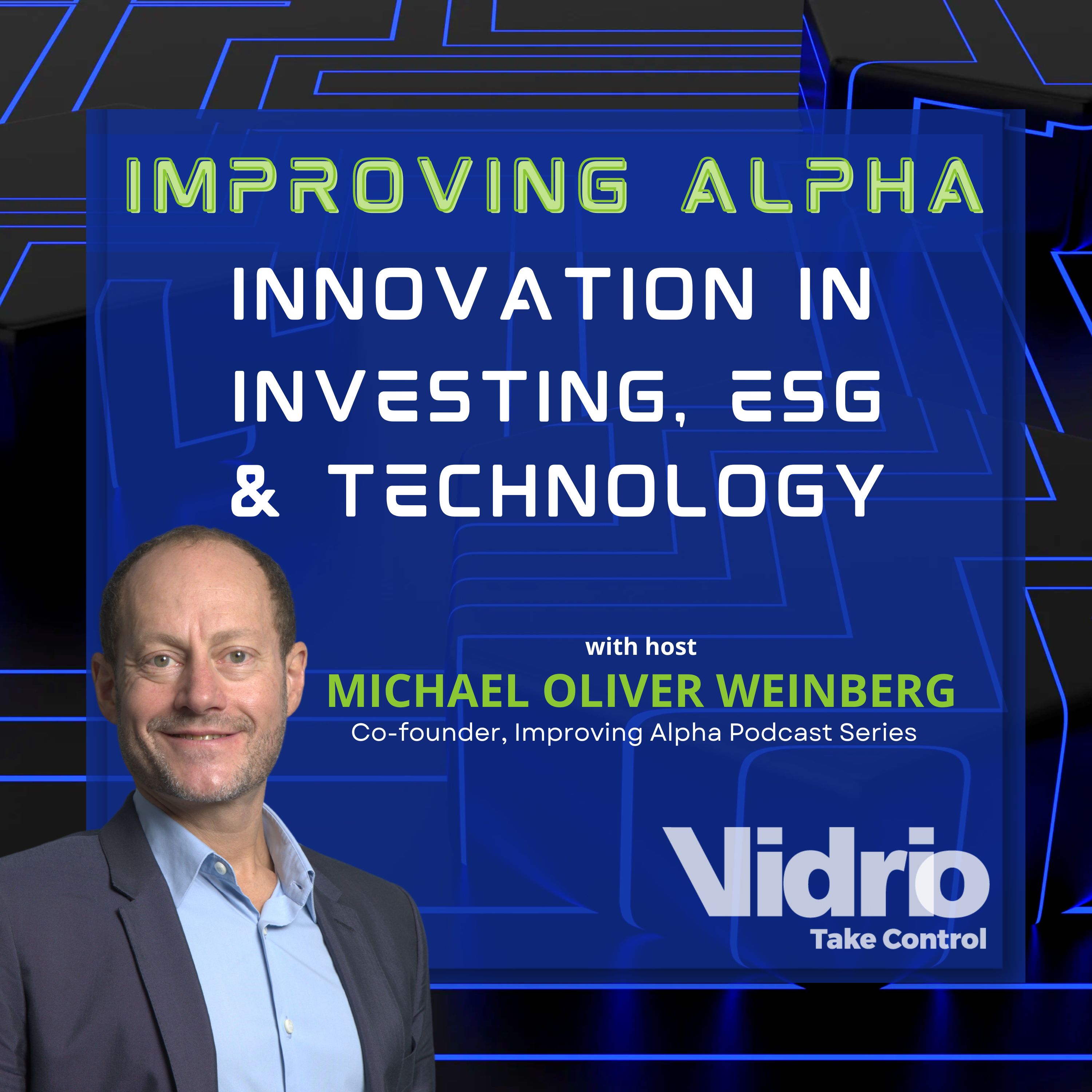
Hosted by Michael Oliver Weinberg
The Improving Alpha: Innovation in Investing, ESG and Technology podcast with host Michael Oliver Weinberg, is built to engage with innovative allocators on forward thinking investment management business strategies and the challenges across alternative investment sectors.
46 episodes · publishes monthly · latest 2026-09-14 · ~41 min/episode
Rank
#237
Substance
81.0
/ 100
Breakdown
Scored 2026-07
Updated monthly
Across the index
#237 of 6203
Substance
Top 4%
outscores 96% of the index
Improving Alpha ranks #237 on The B2B Podcast Index with a substance score of 81.0 out of 100, scored across 1 recent episode. It scores highest on guest caliber and specificity & evidence. Josh Lerner is arguably the foremost academic researcher in PE and VC globally, and the transcript bears this out: he references multiple proprietary datasets (State Street custodian, US Census/IRS microdata, Burgess deal database) and peer-reviewed work, not just opinions. Minor deduction because he is a scholar rather than a capital-deploying practitioner.
Averaged across 1 recently scored episode, with cited evidence.
The episode contains several genuinely substantive research findings - co-investment net returns equalling fund returns despite lower fees implying adverse selection, the Census/IRS microdata on minority workers at impact-backed firms, and the structural secondaries shift analogy to public markets - but these are diluted by an unfocused AI section that offers little beyond 'there will be a correction eventually' and considerable host throat-clearing.
“the CO investments did essentially the same as the fund investment. In other words, even though the fees and the haircut associated with fees was much less, at the end of the day, the net returns were actually just at par with that of the very high fee, uh, fund investments”
“the largest co investment they'd done on the buyout side was TXU. The largest co investment on the venture side was WeWork”
The public-market secondary trading analogy to frame the structural PE secondaries shift is a clean, non-obvious framing, and the adverse-selection explanation for co-investment underperformance is a genuinely counterintuitive finding. However, the corporate-innovation-vs-startups section recycles Bell Labs nostalgia and the AI bubble-as-dot-com comparison is now ubiquitous.
“in public markets, you know, almost all the trading is secondary...While in private equity, unusually we've had a situation where typically the shares have only been bought initially at the time that they're offered, never really traded again”
“killing a drug development project is harder than it was firing a tenured professor at Harvard”
Josh Lerner is arguably the foremost academic researcher in PE and VC globally, and the transcript bears this out: he references multiple proprietary datasets (State Street custodian, US Census/IRS microdata, Burgess deal database) and peer-reviewed work, not just opinions. Minor deduction because he is a scholar rather than a capital-deploying practitioner.
“When we looked at the, um, information from State street and State Street's custodian for many of the largest institutional investors in the world”
“we took essentially um, all the impact funds we could identify who would invest in the United States, figured out which companies they'd put their money with and then match that to the data that had been assembled by the U.S. census and the Internal Revenue Service”
Named datasets, named researchers, specific deal examples (TXU, WeWork), and cohort sizes ('10 of the largest investors…each done somewhere on the order of a billion dollars') give the episode solid evidentiary grounding. The main gap is an absence of actual IRR figures, multiples, or fund-vintage data that would make the performance claims fully checkable.
“we got essentially 10 of the largest investors in the world who had each done somewhere on the order of a billion dollars of co investments for a decade or more to all throw their data into a pot”
“Mike Jensen did an analysis where he looked at the net present value of uh, R and D spending by large US Corporations and compared it to their market capitalization. And for many of the companies, if you looked at that capitalized R and D stock, it was actually greater than their market cap”
The host demonstrates genuine domain knowledge and lands a few sharp follow-ups - pressing on selection bias in co-investment data and pushing back on the net-returns conclusion - but questions are frequently long, self-referential, and cluttered with 'um/uh', often pre-answering themselves before the guest can respond. No real pushback on any claim.
“But I guess for that's my level hacket at what's going on uh for listeners where do you come out on it all and what did your research Find”
“could it be though a um, selection bias? Because generally, right, institutional um, investors have an opt in, opt out of co investments. So could it be a selection bias issue that, that do, you know, have you researched that?”
First period on the Index - history builds from here.
1 scored on substance · 41 tracked in total.
Add this badge to your site - it links back here and updates automatically as you rank.

<a href="https://index.fame.so/show/improving-alpha-innovation-in-investing-esg-and-technology" target="_blank" rel="noopener">
  <img src="https://index.fame.so/badge/improving-alpha-innovation-in-investing-esg-and-technology/badge.svg" alt="Ranked #43 on The B2B Podcast Index" width="360" height="136" />
</a>Track Improving Alpha's rank
Get an email whenever this show moves up or down the Index. Monthly at most, no spam.
Companies, products and tools that come up most across this show's episodes.
The themes that come up most across this show's episodes.

Behind the Balance Sheet
Stephen Clapham's Podcast on Value Investing | Stockmarket Analysis | Equities

Acquiring Minds
Will Smith

Fund Shack Private Equity Podcast
Fund Shack

Capital Allocators
Ted Seides - Allocator and Asset Management Expert

The Acquirers Podcast
Tobias Carlisle

Founder Thesis
ThePodium.in
Podcasts that dig into the same topics.



