
Ignite · 2026-07-27 · 38 min
Key moments - from our scoring
Substance score
49 / 100
Five dimensions, 20 points each
Arlo Industries is developing a decentralized mesh of passive sensors - acoustic, optical, and passive RF - to track small drones and aircraft with higher accuracy than traditional radar systems while dramatically reducing cost through network effects. Deo Arlo's background spans six years in Israel during conflicts, time in Ukraine observing modern warfare, and robotics research that taught him to prioritize simple hardware with sophisticated software. The core insight is that defensive sensing, not the interceptors themselves, is the bottleneck limiting counter-UAS effectiveness. Current radar systems, over 100 years old in principle, struggle with small RCS (radio cross-section) threats and low-altitude attacks, while hundreds of marginally-improved drone interceptors sit underutilized due to poor targeting data. Arlo's man-portable sensors (head-sized units) deploy on buildings and towers, auto-calibrating into a mesh network that delivers real-time 3D tracking data to existing air traffic control, C2 systems, or interceptor batteries. The company aims to expand beyond counter-drone applications into hypersonic missile tracking, low-earth orbit surveillance, and eventually multi-layered air defense architecture. Deo emphasizes speed, scrappiness learned from Ukrainian rapid development cycles, and the notion that smaller, decentralized conflicts require distributed sensing rather than single large radars - a philosophy rooted in network effects where accuracy compounds exponentially as sensor nodes increase.
Radar struggles with small radio cross-section (RCS) targets and low-altitude threats because radar technology is 100+ years old and hasn't innovated at the pace attacks have evolved. Passive optical, acoustic, and RF sensing modalities can track smaller drones more effectively than traditional radar, especially when distributed across multiple nodes that share data.
When sensors operate as a decentralized mesh network, accuracy compounds through probabilistic fusion - each new sensor adds more data points that mathematically increase precision. This is similar to Metcalfe's law: the value and accuracy improve geometrically with each additional node rather than just adding cost linearly.
Arlo sells man-portable sensors (about head-sized) that mount on buildings or cell towers, auto-calibrate into a mesh network, and continuously track all flying objects in 3D space (XYZ position and ID). The tracking data feeds into existing air traffic control systems, command-and-control platforms, or interceptor batteries.
Hundreds of modern interceptor companies exist, each marginally improving speed or payload, but all rely on archaic radar targeting data. If you can provide better, real-time 3D tracking accuracy to these interceptors, they instantly become more effective - sensing is the multiplier that amplifies all downstream defense capabilities.
Ukraine's speed and scrappiness showed that deploying imperfect working solutions immediately beats perfecting systems in the lab, because conflict evolves faster than procurement cycles. A solution deployed to the frontline tomorrow is more valuable than a perfect system deployed months later after the battlefield has changed.
Our reviewer’s read on each dimension, with quotes from the episode.
There are genuine technical insights about passive sensing modalities, distributed sensor networks, and the sensing gap in counter-UAS, but they are buried under extended personal philosophy, life-story digressions, and speculative AI musings that consume a large portion of the 38 minutes. The insight-to-filler ratio is low for a B2B operator trying to learn about defense tech.
There's this compounding effect because the math behind it is probabilistic. Right. With probability, the more points you have, the more data you have, the higher accuracy you get.
you're a high tech, new technology interceptor, but you're relying on these archaic 100-year-old radars. So are you really new technology? You're not.
The conflict-miniaturization thesis and the immune-system biomimicry framing for distributed defense architecture are genuinely fresh angles, and the caution against over-generalizing Ukraine's battlefield lessons is a useful contrarian point. However, the AI-amplification argument and the sensing-over-shooting claim are increasingly common in defense tech discourse.
conflict is going to be miniaturized
You'll have all these T cells across your body, decentralized, working together as a hive mind to tackle every single infiltration through your skin
Deo Arlo is a genuine practitioner who spent six years in Israel under fire, traveled to Ukraine, and holds robotics patents - real-world bona fides that underpin his claims. However, Arlo Industries appears to be a very early-stage company with no disclosed deployments or revenue scale, limiting the depth of operational insight he can draw on.
I came to actually Israel and spent six years there. Got more actual violence and rockets above my head during the six years, um, and during the wars and learned how we can improve aerial defense and spent some time in Ukraine
I am the first ever Indonesian in my university, which is in Israel, which is in a country with. With have. With no diplomatic ties with. With Indonesia.
Almost no hard numbers are offered: one competitor accuracy figure ('300 meters') is unverified and vague, the company explicitly refuses to release its own performance metrics, and there are no customer names, deployment counts, unit economics, or cost comparisons. The product description stays at the level of form-factor and concept.
Most interceptor companies, they have about 300 meters of inaccuracy or about that range when tracking very small RCS, radio cross section UAS
We cannot get released the numbers on how much performance we improve, but it's by a lot
The host asks several genuinely sharp questions - on wrong lessons from Ukraine, on what radar specialists misunderstand, and on popular defense-tech beliefs that might be wrong - but consistently fails to follow up or challenge vague claims, lets the guest drift into personal philosophy without redirecting, and closes with a series of generic rapid-fire questions that add little substance.
What did, what in particular, what did Ukraine teach you that no lab or US procurement process could have taught you?
Is there a wrong lesson people are taking from Ukraine?
Computed from the transcript - who did the talking, and the words that came up most.
Arlo Industries is replacing 100-year-old radar assumptions with a passive sensor mesh built to track small drones in real time. Deo Arlo is the founder and CEO of YC-backed Arlo Industries. Born during violent riots in Indonesia, he later spent six years in Israel, experienced rockets overhead, and spent time in Ukraine studying how aerial defense performs under real battlefield conditions. His background also includes robotics research and patents, where he learned that better software can reduce hardware complexity and eliminate unnecessary points of failure. The central argument of this episode is that interceptors are not the real bottleneck in counter-drone defense. Deo argues that shooting down drones is already crowded with companies making marginal improvements, while sensing remains neglected. Better awareness, not simply a bigger weapon, determines whether an interceptor can identify, classify, and engage a threat accurately.
Transcribed and scored by The B2B Podcast Index.
Speaker A: I think most achievements are they turned out to be less than what you thought of them to be. Because I think this is a quote I made up in my mind, but it sounds so poetic. The sweetness of victory is quickly subsided by the weight of responsibility. Once you gain that new level, once you earn that new title, it's now just your day to day and it's not your new burden. Right. Victory turns into burden, something you have to carry. It's good because now you have this new, uh, responsibility that you can create influence and you can do a lot of things you can control. But also it's more stuff to think about. Like the most successful people in world, the most influential people, the most powerful people in the world are probably not the most happy. They have a lot of stuff on their plate. And so the more you rise, more you gain responsibility.
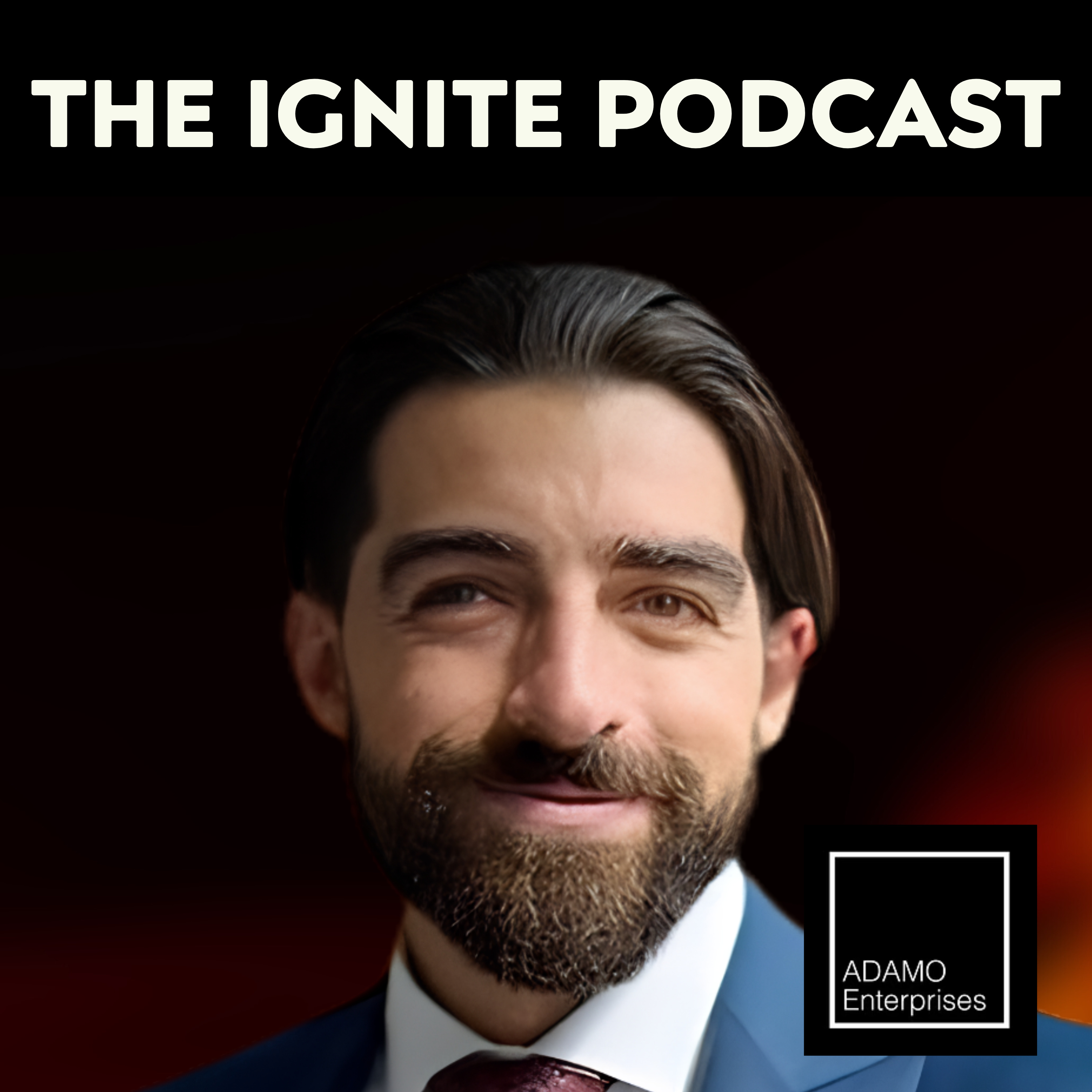
Speaker B: Everyone. Welcome back to the Ignite podcast. Today we are delighted to have Dio Arlo on the program. He is the founder and CEO of Arlo Industries, a YC backed company building a passive sensing mesh to track drones and missiles without radar. Very exciting to have. Imani is such an incredible background, but I'll let you hear from him. Thanks for coming on Dio.
Speaker A: Thank you, Brian. Thanks for having us.
Speaker B: Yeah. Well, I'd love to start with your origin story. What's your, what's your background and how'd you get into doing what you're doing?
Speaker A: It's a big question when people ask about, why do I want to build a defense? I first came into the thought of building a defense when I was born. So quite early. I was born during riots. People were chasing us around. So it was very violent time back then. I was born in Indonesia. There's a lot of riots against immigrants, which my family were. And so I just had this vivid experience growing up with a lot of, uh, violence. And so I wanted to protect people and I went into a rabbit hole of, you know, how can I build tools to protect people? Went into the rabbit hole of defense and just thought of where should I put position myself in a role to learn more about this stuff. So I came to actually Israel and spent six years there. Got more actual violence and rockets above my head during the six years, um, and during the wars and learned how we can improve aerial defense and spent some time in Ukraine and long story short, I built a company in America. And here I am solving it for the rest of the world.
Speaker B: It's really amazing. I mean, you've kind of lived and breathed the violence overseas that Americans, uh, take so Much for granted we live in such a serene, peaceful country. Right? But you've seen it firsthand in Indonesia and Israel and now Ukraine. It has to have a profound impact on you and how you see the world. Like, how do you see the world and through that lens of what you've seen versus how you think Americans kind of generally see the world.
Speaker A: First of all, it made me grateful to be in a place where I finally can sleep in peace. Whenever I leave Israel or Ukraine, to Finland, to Poland, to America, obviously, or east or Western Europe, I feel alarmed when I hear my phone ringing or something. Oh, shit, that's something. Okay, it's not. I'm in a safe place. I can sleep tight, don't have to run to the bunker. But sometimes I realize people take that for granted. Like you said, people don't understand how much different it is in the rest of the world. So I'm very grateful now that I'm in America and be able to build something for real in a place that's safe and also supportive. And I'm just very happy to be able to build in this space.
Speaker B: So you describe Arlo as coming from a philosophy that conflict should be concise and precise. What does that mean in practice?
Speaker A: Came from the understanding that conflict will always happen. First of all, I think a lot of people wish for world peace, and I do too. I think people who are not familiar with the world of defense, they view weapons or defense manufacturers as this warmongers. No, no, nobody wants wars. Everybody wants peace. But are we going to have it tomorrow? Probably not. So the first thing we can do to take this first step is to make it concise. The fact is, humans are animals. We have disagreements and we will always quarrel. Either it's in our heads or sometimes it turns physical. But what we can do is whenever it does turn physical, we should make it concise, make it quick, reduce collateral damage. And that's what we're trying to solve with first aerial defense. Right. Because civilians, they're the ones that are paying the price. Mostly when you have, ah, sharp mills from rockets exploding up in the sky. That's what I saw when I was in Israel. We have sharpened lining around my apartment. And aerial defense is the one thing we can, uh, work on to start solving this problem.
Speaker B: Yeah, I love that. Uh, so you've lived around systems like Iron Dome. I mean, you're, I think your professor and one of the advisors, uh, lived around this as well. And you decided the world still needed a very different sensing architecture. What did those world class Systems still miss that you're solving with Arlo?
Speaker A: Well first of all they're great at uh, tackling against ICBMs and big missiles. I'm not going to discount them, they're amazing. But then again they're also built, you know from, from hundreds of years ago. Radars are more than 100 year old and they're not being innovated by much compared to the attacks themselves. So the offensive has developed very rapidly. I mean there's new technologies in the eastern Ukrainian uh, front heads, we've seen them all over the place now and newer technologies like loitering munitions. But we haven't seen much change in radars and so, or sensing in general because radars is, is now a uh, misnomer. Everything that senses sky is a radar. No they're not. There's a lot of other modalities that we should explore. Acoustics, optical. And that is why I think we can improve especially when tracking smaller drones, which radars don't do quite well yet. And so we should explore other modalities to, to solve this gap.
Speaker B: And in between university you also did uh, robotics research and actually have some patents there. What did kind of robotics teach you uh, that you still carry over to, to what you're building now?
Speaker A: Robotics teaches me to make things as simple as possible. I am a mechanical background and so the philosophy there is that more moving parts is more points of error. And so whenever possible if the software is amazing, the hardware can be simple. It's almost the Elon Musk sort of tough mentality with self driving cars. You know, you don't want all these sensors and expensive hardware around the car if you can just have very good computer vision. And so what we are trying to solve as well in defense is why spend billions of dollars on radars and billions of dollars on all these expensive systems when you can have very good software running on you would say off the shelf and cheaper hardware but do the same amount of value and deliver even better solutions and tracking and sensing for aerial defense. So that's, that's the philosophy that I carry on from robotics.
Speaker B: Yeah. So was there a point where you realized this wasn't going to be a
Speaker A: normal startup from the beginning? I realized I'm not going to live a normal life. Now that I, I've been all over the world and all these uh, violent places, I, I realize probably not going to be living a simple simple life. It's going to be quite unique and I have to figure out stuff that maybe most people haven't Figured out just a very unique life story, but I enjoy it. I think being able to carve uh, a new path in, in the woods and, and see if people follow you and see if people would be interested to, to do the same and open new paths to people who want to try to do the same. I think that's very interesting. Startups in general is very uncommon, it's very rare. A lot of people are now being more pushed to building startups. But in general compared to other careers, entrepreneurship is by definition making a new path. And so it's a very roaring journey I would say.
Speaker B: So explain Arlo. Like imagine you're talking to a skeptical defense operator, right? They've heard every counter drone pitch already. Like what's different about what you guys are doing now?
Speaker A: Most interceptor companies, they have about 300 meters of inaccuracy or about that range when tracking very small RCS, radio cross section UAS. Right. What we are doing is providing real time 3D tracking with a higher accuracy. We cannot get released the numbers on how much performance we improve, but it's by a lot. And imagine being able to track everything in the sky at any given moment, any size. That's the goal. And that is a huge capability not just for defense folks, operators, but also for general uh, people. You would want to know everything flying in your airspace if it could pose a threat. Especially if you are a high net worth individuals living in your yacht. Maybe there's drones flying above your head you don't even know. Embassies, power plants, even in space. In the future when we expand to low earth orbit, there's a lot of debris and satellites that we don't even know we have on orbit because we're sending so much stuff to space now with these new uh, space race. So there's a lot of concern beyond defense.
Speaker B: Yeah. So I mean the public argument here is that uh, radar is expensive, emitting targetable leaves gaps against low altitude threats. Right?
Speaker A: Mhm.
Speaker B: What's the, what's the biggest opening for you among these? These four things.
Speaker A: Yeah. First of all we were going to focus on Class 1, Class 2 or Group 1, Group 2 drones which are small FPVs, optical fiber drones, up to the larger kamikaze drones like the Shahed or the Garan, which the radars do track. Although not as good as what we're doing and what we're trying to solve is to provide better, easier tracking for more interceptors to work with. Because there's millions, maybe hundreds of just a bunch of interceptor companies out there. Drone companies. And they are still relying on these archaic tracking to provide them their targeting for their interception, which is, for me, it's mind boggling. Look, you're a high tech, new technology interceptor, but you're relying on these archaic 100-year-old radars. So are you really new technology? You're not. So we should improve the sensing so that these interceptors too can be the futuristic technologies they claim to be.
Speaker B: Yeah. And you've said that adding sensors grows cost linearly, uh, while tracking accuracy improves exponentially, which is a powerful claim. What has been true technically for that? What has to be true technically for that to hold?
Speaker A: Yeah, it's a critical mass question. When we talk about decentralized sensing, which is the route we're going, instead of having one giant radar, we distribute hundreds of sensors around an area, a city, thousands in a country. The goal is for all of them to work together in unison and have a exponentially increasing spec sheet, not just like a radar, who have a singular range and singular accuracy from the get go. With increasing number of sensors, you're just adding one more sensor. That's what we mean by linear cost. But the accuracy will build on top of each other. There's this compounding effect because the math behind it is probabilistic. Right. With probability, the more points you have, the more data you have, the higher accuracy you get.
Speaker B: Yeah, it's kind of like a Metcalfe's law and network.
Speaker A: Exactly.
Speaker B: Yeah. Your accuracy is going to expand geometrically to the number of nodes. That totally makes sense. So encounter UAS there. You mentioned some of these, but there's acoustic, optical, passive RF radar, and there's fused approaches. What do most investors misunderstand when they hear about passive sensing?
Speaker A: What they think immediately, it's. Well, I think most investors don't think about sensing at all. I think most investors think about how to take down drones. And you're not most investors, which is great. But most investors think about counter U s as just drones. Oh, what are, what drones are you making? How. And it shut it down. Look, shooting is an easy solved solution. And there's a lot of new interceptors out there. That's always my stance and what I've been seeing and what people can see online. There's hundreds of interceptor companies. Each one is just marginally faster, marginally longer lasting, marginally large payloads. So it's like a new iPhone. It's never really a, uh, huge improvement. It's just step by step. But really what we can change by a whole lot is in the sensing. And it too will augment the capabilities of drones. And to answer your question in terms of acoustic, optical, passive, a lot of these misunderstanding comes to just how much effect it will give. And people don't understand that. If you can solve how good you track objects in the sky, shooting them down will, will change by a whole lot, which most investors don't understand because they see the final result, which is the punch, which is the explosions. But really if you, if you have better eyes, you do everything better, right?
Speaker B: Yeah. So drone detection here is the wedge. Obviously it's not the ceiling. You know, what is the ceiling for Arlo M?
Speaker A: The sky's the limit. But we are planning to put our sensors in on Earth to start on stratosphere, to continue to. And then we're going to expand to, to space. Right. We're going to put our sensors on constellations in low earth orbit. We're going to track not just drones from bottom up, but hypersonic missiles, glide vehicles, spy planes from adversarial countries and threats. There are so many things in the sky that we don't even know. UFOs, I know it's getting sort of science fiction now, but UFOs scientifically speaking are just things that we don't understand. They're falling out there like UAPs. We need to understand everything that's above our heads. I think in order to ensure world peace and ensure safety, we need to first understand what might cause us to lose those safety and peace. And so that is the direction that we're going. And who knows, maybe we'll set up iron domes in Mars.
Speaker B: So the hard version of this is, you know, Anduril Helsing. All these other companies are all going to want a piece of this market. How do you kind of, you know, win, win this market?
Speaker A: I think speed is a, uh, is a big, big deal. And that is what we have as a smaller company. When I move to different countries, to different sort of testing fields, I come as a person, it's very easy to get access to and we have to play it well. Execution is a big part. Again, I believe that ideas are cheap. Execution is everything and you have to do it well. But, but we're confident. We have a great team, we have great talent and we have a great list of investors with great connections and great support that will help us achieve all these things. And obviously we will build the mode which aims uh, to protect us against the bigger primes when they have interested, when they gain interest in the pipe. But by then we're going to be already miles ahead because we're going to build a mode of network, mode of data, mode of infrastructure. So, uh, we have plans underway.
Speaker B: Yeah, love that. One of the things that struck me when we originally met is how much, uh, you've been on the front lines, right. And your own launch says that, you know, you have, you've been there in Ukraine and Israel. What did, what in particular, what did Ukraine teach you that no lab or US procurement process could have taught you?
Speaker A: Being scrappy, I think that's the whole point. Uh, Ukraine, they don't have as much capital as Americans do, so they have to solve everything cleverly. And I think that's what I learned. You know, as long as it works, let's start delivering it out there. You know, Americans tend to wait too long until the park is perfect, but by then it's too, too late because the conflict has shifted, the demands have changed. You know, if you wait a week, the war has changed by a week. War changes very quickly. So if you want to try something, go try tomorrow, bring it to the front lines. And that's, I think, the benefit of being there, actually. Yeah, a lot of companies like to be in the comfort of the air conditionings in El Segundo, but I think if you want to really learn something, you got to go to the front lines and talk to people who face the problems daily.
Speaker B: Yeah. Uh, so imagine I'm trying to protect some vital infrastructure or my citizens. What am I actually buying from Arlo?
Speaker A: So we're buying, we're selling a network of sensors which is man portable. They're about the size of my head. You put it on top of buildings, cell phone towers. They connect together via, uh, their own mesh network and they perform from the get go. It's a turnkey operation. You turn it on, they connect the auto calibrate, they track everything in the sky, they send you the data. So that's what you get, the data. The data of every single flying object in the sky. Their XYZ tracking, their id. And you can use this data to feed it into your own existing air traffic systems, air traffic control or radar dashboard control centers, C2 systems, C4 systems, uh, your own intelligent softwares. Or if you want to take action, you can also feed it to your own interceptor batteries that will actually shoot down a threat if they are classified to be a threat.
Speaker B: Yeah. Amazing. What, what's a popular idea in defense tech that you think is wrong?
Speaker A: I love that. And I have to be careful healer because I might change my mind. But I think a lot of people do have their own interesting ideas which might be wrong. But what I would hypothesize right now is that, you know, there's this big push in El Segundo and in general the defense world of strength, peace through, through strength and just willing to the bigger, badder technology out there. I do believe in strength through peace through strength. But I don't know if building the bigger gun is going to solve the problem because I think conflict is going to be miniaturized. That's, that's my whole hypothesis.
Speaker B: As Ukraine is kind of proving on the field against Russia, you know, in every like vector Russia is out, you know, has more resources and people and money and equipment. But Ukraine yet is still kind of, you know, slightly turning the tide now by, with new, new tech, new uh, technologies and new methods.
Speaker A: Yes, conflict will be concise. That's the first part of my sort of tagline. The second one is conflict. It will be concise and precise as in it'll uh, look more like your immune system. You're not going to have like one giant organ in your body that destroys all the bacterias or viruses. You'll have all these T cells across your body, decentralized, working together as a hive mind to tackle every single infiltration through your skin if there's bacteria coming in. So that's, that's how it works. And that's what I see will happen in the future. You'll have smaller and smaller technologies fighting the battles for us. I think that's good because you'll have less collateral damage. It's like playing chess with robots and decide the tide of war that way.
Speaker B: That's really interesting. Uh, you said something that kind of made me think of another question which is about ideas, right? And is there something that you've changed your mind on, uh, about defense tech in the last five years?
Speaker A: Let's see. That's a good question. I think what's interesting is that a lot of people think Ukraine is the, the only place to build defense now. But I believe it's getting more accessible to learn and build something useful actually all over the world. Although I believe Ukraine is still giving a lot of value for a lot of companies to learn and experience from the front lines where it's happening. But uae, the Gulf, Europe at large and America and even Latin America and Asia, they're all ramping up. I just had calls with people in Japan, people in Taiwan, people in Singapore, Singapore. They're all increasing their defense budgets and increasing their defense capabilities. Research So I believe that's changing. I thought if you want to learn about defense, you only have to be in the front lines. And again, as I said, although it's going to be still a lot of value, the rest of the world is catching up. And that is something I changed my mind on.
Speaker B: Yeah, yeah. Now you mentioned radar. Um, right. What do radar people misunderstand about drones? Uh, or do people commonly misunderstand about using radar to detect drones? And why is it not working the way it does for detecting planes?
Speaker A: Mhm. Well, first of all, radar people are smart. I'm not going to discount that. People who, anyone who work on radar are smart folks. Radars are, are complicated things. Electrical engineering, a lot of smart people in that area. I would say that I'm not discounting radar. What I'm saying is that it's worthwhile to explore other modalities. It's like we've been walking down this road in the forest for quite a while, might as well make a new track. Let's see what's up in there. Maybe we'll discover something new. And that's what I'm betting on optics. And what I'm thinking about radar is that they've been in the market for so long that the counter to radars are also quite developed. And so now it's almost like an end m game, like you can make one better investment in radars. And now the solution, the counter is already there or it's already been developed. So if you try to build something new before the counter exists, then you'll get a leverage. That's how you win wars, with leverage. And so you have to have new innovations. Radars still exist 50 years from now, 10 years, 100 years from now. But I would say there will be new modalities that's going to be explored. Quantum sensing. Imagine this. And ah, you've heard the rumors about Ghost Murmur, like all these new American technology that the crowd doesn't even know. So there's these new modalities that we haven't even explored and we should in order to gain leverage.
Speaker B: Is there a wrong lesson people are taking from Ukraine?
Speaker A: Yes, I think there is. I think people think that solving what works for Ukraine will solve it for the rest of the world. No, Ukraine has its own unique battlefront that you just won't replicate in worlds in the world. They have a unique set of circumstance, terrain, enemy. I would imagine wars in different parts of the world to require different things. So take the essential lessons in terms of how do you rapidly develop Capabilities. How do you build something that's attritable? How do you quickly train people to use newer technologies that include AI or semi autonomous tools, but don't just duplicate everything and try to deploy it in Middle east, deployed in Asia? Won't work. And so that uniqueness requires this level of specialization and localization for each battlefront.
Speaker B: Yeah, let's talk a little bit about the future. You know, five years from now, uh, what does a competent air defense architecture look like?
Speaker A: Things still going to be layered. I think there's still going to be different, uh, capabilities on different altitudes to tackle different types of threats and different types of attacks like swarms or single huge missiles or. There are many kinds of attacks. And I think, you know, in the future, what will definitely occur is that war is going to be more decentralized, or at least the response to it. You know, I spent some time in Israel, and I think the reason why their defense forces are very great and very efficient is that the edge units can make their own decisions quite fast. It's like an octopus. It's like an octopus. Each arm can make their own judgment. And unlike most larger nations where you have to return it back, back, back, back up to the base and up to the command chain and return it back, back, back down before you have a decision, you need to have each edge unit able to decide on their own again. Immune system, immune system. I do believe in biomimicry. I believe everything will generally look like what evolution has developed over thousands of years. And so response units will look like the immune system. You don't have to have everything report to the brain, my pinky, my toenail, everything can repair themselves independently and have their own defense system. So that is what I see coming in the future.
Speaker B: So is the future about better weapons or better awareness?
Speaker A: I think it's both. But what would definitely be interesting is better cooperation, better hive mind, better understanding of what you're up against. So in some ways, I would put a lot of emphasis on awareness. And again, I'm biased because I'm building a company based on sensing. But I do believe we have enough punch out there. We've been spending years and so much money on explosives and payloads and guns and interceptors, but very few on sensing and seeing what to fight out there. I think information is power, and the more you know, the better you can strike. And maybe you can strike less. It's like the, uh, Tai chi type of way or the kung fu type of way. It's not boxing that where you just punch everything it's also trying to reuse your enemy's, uh, strength against themselves, understand where they're going, understand their interest and where. What, what their thumb screw is. And I think that comes from sensing, from intelligence. So companies like Palantir, um, I've become that. Companies like us, ourselves, focusing on understanding where physical intelligence, uh, physically understanding where things are in space. That's very important.
Speaker B: So it feels like every battlefield's getting saturated with cheap aerial threats. If that is the case, what becomes scarce?
Speaker A: That's a very good question. I want to answer. Personnel. I think the less, the more autonomy you put in the front lines, the less people want to go into the front lines for the better because we have less casualties. But what we have to also keep in mind is we might have less, uh, control responsibility on what actually happens. The same way we start to code with, or, you know, AI companies start to code with AI. They don't exactly understand what happens in the code themselves. Like a black box. What if we start sending a lot of autonomous systems to the front lines and the front lines become a black box. We don't know exactly what's going on in there. Maybe the, the robots just sit down and, and drink beer like they decide, you know, what the, the humans don't know what we're doing. Let's just do whatever we want. And why. We need to make sure that we just know every step of the way what's happening. Such that we maintain that accountability because essentially that's what we still want to hold on in this age of autonomy, is that accountability comes back to humans. The humans caused the war, not. Not the machines. Machines probably won't fight each other if they. The whole world is just a one hive mind. Terminator. Right? Nobody will fight. Skynet will not fight skynet. Humans will fight humans. So have that accountability. Because that's the whole point of finding a solution to a disagreement between humans.
Speaker B: Accountability.
Speaker A: So that's what will be lacking in the future, and I hope we can maintain it.
Speaker B: Yeah, and I think you just touched on something. You breezed right by a point that I want to tease out because it's something I've been thinking about a lot, which is does super intelligent AI that we're kind of heading into, or at least AGI, kind of ubiquitous across the world. Does it become a force for peace or more conflict? Right? Like in the 20, like put yourself forward. You know, we're talking about the future here. 5, 10 years in the future. Fable 10 is out, right? ChatGPT 10 point. You know, 6 is out. These are super intelligent, 180, 200 IQ that are omniscient, omnipresent, know everything. Does it, does it help us settle our disagreements faster and better and more efficiently between these human animals? Or, or do we have more conflict?
Speaker A: I think it's on black and white. What I think it will do is just amplify m whatever we're already doing right now. Like power doesn't corrupt, power amplifies. And I think that's what agents and AIs will do. One thing to distinguish between AI and humans is that AI doesn't have any desire. We give them the mission and AKA the desire to do whatever, but humans come up with those things. Unless AI have their own desires to do whatever they want, then it's dangerous because now they have interest, they have something they want to do in their quote unquote life. But as far as I know, we're not going to have that and humans have that. And so AI are simply going to be just the agents of whatever we want to do, do it much faster, do it on larger scale, do it in higher complexity and just more involved. But I wouldn't say it's going to be immediately an agent for good or bad. It's just going to be an agent of scale. We are fighting maybe in the scale of countries in the history of humankind and now in the 21st century, in the scale of nations. Maybe in the future we're going to fight in the scale of planets, planetary warfare, galaxy warfare. I mean, AI is just scale. It allows us to scale up everything we're already doing physically and also intellectually. Philosophically, everything's going to be enlarged by AI. So that is what I see will happen.
Speaker B: Yeah. How do you draw the line between defense infrastructure and more like civilian infrastructure? Is there a demarcation there?
Speaker A: I mean, definitions are mostly for bureaucracy, but if you think about it philosophically, there's no differentiation between private and civilian. Legally, there's a lot of differentiation for the sake of bureaucracy. And not, not just bureaucracy, but also obviously regulations. Very important. But in terms of what I'd like to answer the question philosophy, because that's what, that's what interests me is that I mean, there's no, there's no distinguishing between protecting your family, protecting a base. I think everyone wants to be protected in some ways. And so the problem with drones is that it blurs the line with, with front lines and behind the lines. Drone warfare is now becoming drone terrorism. I've been seeing Colombian and Latin American gangs in Ukraine learning drone warfare. And now you've. You can Google yourself. There's a lot of news online in Bloomberg or whatnot about drones being used to spread contraband in France and French prisons, or drones being used to, uh, attack enemy gangs in different territorial warfare. So it blurs the line. And so now protection has to be decentralized and privatized. That's what I'm trying to solve. And I believe there's a lot of need in private security. You would want an iron dome in your home in a few years maybe. Now it's just the embassies and the presidents and high net worth individuals. But in the future, everybody would want protection.
Speaker B: Yeah. Well, I think of, uh, you know, when I visited South Africa and I remember driving around in Jo' Burg and you know, everybody had, you know, huge fences with barbed wire on them, like every single house. Right. Just because that's the reality there. Right. I guess the riff raff and criminals out. Maybe in the future you'll need Arlo in every city. Right. To keep domestic terrorists from sending drone swarms into neighborhoods and terrorizing people.
Speaker A: Exactly. And I think it's just a matter of maturation. If people hear this and think you're creating a future where people don't trust each other and you need to have high protection against your own neighbors. You need to have high walls and high protection and all these air defense systems against your own in your own city. No. It's like back then you live in huts. Anybody can come to your home, well, hut. And rape your wife and kill your children. But now we have walls. We have. It's not about the world being more distrustful. It's about the world maturing and understanding that each individual have more capability, not just for harm, but for good, but also for harm. And so we need to protect ourselves from each other. And that's fine. That's just a matter of humans and the human race evolving into something more complex.
Speaker B: Yeah. And this is something I worry about a lot as a student of history. I was a history major before I switched to finance and became a business guy. And I was really interested in kind of these arcs of history. And it seems to me that we seem to have a war every time there's a new technological paradigm. You could almost argue that every industrial revolution kind of drove new conflict. And this is, this is where I was coming to with the, with the AI I hope. AI is like a force for peace, not a force for war. Right. And drones and everything else. But this is like, what do you think about that, like, if you look at the arcs of history and you think about kind of where we sit here in 2026 as we record this, and we definitely feel like this new industrial, like maybe the fifth industrial revolution is coming with AI and robotics. I'm just hoping in the 2000-30s it doesn't lead to more conflict. But maybe, maybe it does because we're just human animals that have our primal needs and instincts, right?
Speaker A: Yeah. Yeah. I'm glad you're a historian. I love history, and I think there's a lot of stuff we need to learn about our history, especially as defense funders, to understand how this will play out or how this has played out in the past. It is true. I think a lot of quarrels happen when humans discover something new. And, you know, in the microcosm, you can think of it as two kids discovering a new toy, and now they start to fight over it. After a time they realize it's not that fun, and, uh, they move on with their lives. But then they find a new toy and they start quarreling over it again. Again. Humans are always trying to find leverage against death, but because of that, also against each other. And because of that, we fight. But I think in the long run, I'm trying to be optimistic about the future, but also skeptical. I think always being cautious is important, but. But still have that optimism that humans will take care of itself and that we won't bring ourselves to extinction with new technologies that we're developing that is getting more and more powerful. And so we should just pace things out. I think. This is why I want conflict to be concise, meaning we can get back to shaking hands after we perhaps slap each other in the face, which will happen in the future always, because humans are humans and we're just animals. But that speed into reconciliation is paramount, which is why, uh, like in, like in a marriage, you know what, what defines a good marriage? Not that they don't have any fight, but that the reconciliation is fast after the fight. And that's what I wish humans can achieve. Fight, fight, go ahead, but reconcile. And this is why the fights themselves must be concise. I'm repeating myself, but it's something I truly, truly believe is very important.
Speaker B: Yeah, so you're, uh, building a company, uh, around defense, you know, conflict detection. How do you keep moral clarity without becoming performative about it?
Speaker A: Go to, I think a lot of people in la, people and Silicon Valley, who are now pretentiously being Tony Stark, and, oh, I'm solving this war for Ukraine, um, I'm pro peace or. You don't know peep, Right. Because they, they don't know the reality of war. They grew up, and I grew up in the streets. You grew up in the streets of Belgium. You know, you have like stroopwafel and, and ice creams. Come to the front lines, understand death, understand war, understand what it means to lose a friend. I'm not saying people who hasn't been sort of in conflict don't have that rough and tough life to be able to provide value and uh, and the effort. No, I'm saying if you do want to seriously work on this, don't stay in your high and mighty towers, ivory towers, you know, far away from, from where the conflicts are. Try to understand how do people feel in the front lines, how, how it plays out. And like yourselves, learn history. History is just the, the cheat code to understanding what's going to happen in future, because that's a repetition of what happens in the past. And, and that is my recommendations, I think. Understand the reality of it. Don't just stay in la, don't just stay in California pretending like you're Tony Stark. We are not trying to privatize world peace like Tony Stark said. We're trying to solve war from first principles.
Speaker B: Yeah. It strikes me as you've had to sacrifice to work on this problem. Was there a version of your life that would have been easier and more
Speaker A: peaceful, you know, if I always thought about this every time I wake up, what am I doing with my life? I'm not, I'm not dissatisfied. I'm very happy. I'm working on something.
Speaker B: You could be riding your bike in San Francisco to your little software startup, you know, instead you're flying to Ukraine and putting yourself in harm's way.
Speaker A: There's always an easier way of living life. Uh, I approach life as a, as an author and almost seeing my life as a third person sort of a, you know, I'm J.K. rowling and what would this Potter guy do to make an interesting life story? Because I'm almost optimizing life for a great story sort of thing. You know, I want my tombstone to have a great sort of, uh, summary of what I've been able to do and contribute to humanity. And I think I don't optimize life for happiness. Which is, which is, which sounds depressing, but if you think about it, happiness is quite cheap. It's just a means to an end. Like happiness by definition is just a stream of dopamine that your brain Feed into the body or produce in the brain to reward yourself for doing stuff that prevents death or keep you living. If you eat, you get dopamine. If you work for another day, for next month's paycheck, you get dopamine. But it will end. It's just a means to an end. But an, uh, interesting life story, an interesting, uh, life's journey that might not be easy, might be sacrificial to a lot of things that might be easier and better. It's worth it. It's worth it. So that is how I live my life.
Speaker B: Yeah, I love that. Let's wrap up with some m. Rapid fire questions. I mean, you stole one of them that I often ask, which is like, what do you want on your tombstone? I love that. And we've kind of asked a variation of this, but, like, what is something you believed with total conviction five years ago that you would now argue against?
Speaker A: Rapid question, but very hard question. I'm going to take my time. There's what do I believe five years ago that I completely changed my view on now?
Speaker B: And you would argue against thinking which.
Speaker A: Which sounds weird. Or I'll give context. Thinking too much is sick cunning. I believe intuition is very powerful. Back then, I wouldn't believe this. Um, I'm a very sort of rational person. I want to think my way through everything, rationalizing everything. But now I realize you got to move fast as our founder, and sometimes your intuition already knows what you really, really want, and sometimes what you really, really need. And you got to learn to build your trust on your intuition, your gut feeling. Yes.
Speaker B: Yeah, I love that. Perfect segue into the next question, which is, what's a decision you made that looked irrational to others but made complete sense to you?
Speaker A: I am the first ever Indonesian in my university, which is in Israel, which is in a country with. With have. With no diplomatic ties with. With Indonesia. Why would you go into a war zone that doesn't have any sort of simple pathway for you to even be there? Right. That's. That's the questions my friends ask. But intuitively I wanted to learn defense. And I know that they are good at what they're doing. And now it's a perfect life story. Now, I'm quite interesting because I'm just one of me who have done this before, and I gained so much unique insight that not many people have gathered because I carved this new, unique path in the forest.
Speaker B: What's the worst piece of advice you hear smart people repeat that, uh, you'd like to correct.
Speaker A: Ask for advice from successful people. I think that is the worst advice ever. My advice would be to not listen to any advice, which is like a paradox. But the point is you want to build your own scar tissue. The point is you want to build your own confidence in what you decide. If you live your life based on whatever people decide, or what people tell you to, or what people think is good, you'll never have that decision. You have you made yourself that you feel fully confident on that you can take pride in. You'll never live your own life. Right. So I wouldn't say never listen to anyone, but listen to people, but, uh, do whatever you want.
Speaker B: Listening to the Ignite podcast, I mean, it's full of good advice.
Speaker A: Exactly. No, it's gather data. It's not to not listen to an advice. Gather data, listen to podcasts, listen to. I still listen to tons of podcasts, including yours. But make your own decision. Come, come, come to it yourself. And sometimes decide to do something that's unpopular. Maybe do a mistake for the sake of making a mistake and learn what it cost and learn how to get back up.
Speaker B: Yeah, yeah. This is something I deal with as a vc, right, Because I came into the industry, I was an operator working startups and led a lot of teams at, you know, Amazon and Microsoft. So I, I'm an outsider to vc and so nobody really taught me how to do it. And so a lot of the ways that I do it, other VCs disagree with me and LPs disagree with me too. And I'm like, no, this is how I do it. This, this is how I've learned to do it. Because I, uh, I just approach it from first principles. And, you know, maybe I'm making mistakes, but I'm making my own mistakes. And yeah, I love that. Did you ever achieve anything that felt less satisfying than you expected?
Speaker A: I think most achievements are they turned out to be less than what you thought of them to be. Because I think this is a quote I made up in my mind, but it sounds so poetic. The weight, the sweetness of victory is quickly subsided by the weight of responsibility. Once you gain that new level, once you earn that new title, it's now just your day to day and it's now your new burden. Right? Victory turns into burden, something you have to carry. It's good because now you have this new, uh, responsibility that you can create influence and you can do a lot of things you can control. But also it's more stuff to think about, like the most successful people in the world, the most influential people the most powerful people in the world are probably not the most happy. They have a lot of stuff on their plate. And so the more you rise, the more you gain responsibility. Uh, also, it's just more stuff to care about.
Speaker B: Yeah, yeah. More money, more problems, as they say.
Speaker A: Simple as that.
Speaker B: Exactly. If everything you built disappeared tomorrow, what would you rebuild first?
Speaker A: M. Very good question. My. If everything includes relationships, then probably, number one, relationships, I believe, connecting with people. Humans are social creatures, foundations of societies. Well, societies, human connection. Right. So build first my connection with my network. Build allies. I mean, I do it all the time, right. I move to countries and build life from zero. I don't know what, six times at this point, like, built a new. Yeah, final.
Speaker B: Really good experience. If anybody listening hasn't done that, move somewhere and just restart your life just for a year or two and just. And just see what it frees up. It frees up all that energy. I've done it five times, but not as many as you, but yeah, five times. I've just, like, reinvented where I live and who I am, you know, it's freeing.
Speaker A: It's so powerful. I'm glad you can relate to this because first of all, it teaches you a lot about human nature and what is really important. And second of all, you feel like James Bond just going around different countries and like, making a new life. Yeah.
Speaker B: Like 007. Like, here I am, like in a new place.
Speaker A: The answer will be cliche. I think everyone wants the same thing in this world, which is to leave a positive outlook and a positive impact. You want humanity's ROI to be positive with your existence. I guess that's the Silicon Valley way to answer it. But my way of answering it is, you know, there's millions of people, billions of people that has existed in human history. There's millions of lives that are exactly the same. Maybe there's, you know, John Doe, there's. There's millions of John does throughout different times in human history that has lived the exam, same life, did the same exact profession, married the same kind of woman, lived in the same kind of place, and have the same kind of children, the same number of children, and that's it. Just a repetition in history. That ROI for humanity is zero. You learn humanity, learn nothing new. If you think of humanity as a hive mind, which benefits in new neurons doing new things, then you would want in humanity's interest to do just everything differently. And, uh, there's a limit to this because doing everything differently might not be the best interest for you, but I think what I want people to remember is that I have done a lot of things that have never been done before in my life, and that is my contribution to humanity.
Speaker B: Yeah. Love it. Um, well, really enjoy the conversation. Where can folks find you online and find out more about you and Arlo?
Speaker A: Well, the website is arlo1.com 1numerical arlo1.com and my LinkedIn is my name Dao Arlo. And you should find everything about me there.
Speaker B: Well, really enjoyed it. Thanks for coming on.
Speaker A: Thank you, Brian. Thank you very much.
 Ignite Psychology: How to Win High-Stakes Negotiations and Close Better Deals with Alex Adamo | Ep29273 / 100
 Ignite Startups: How Adam Nash Built Daffy Into a $1B Donor-Advised Fund Platform | Ep28187 / 100
 Ignite VC: How Jeffrey Becker Bets on Founders Before Product, Revenue, or Traction | Ep28071 / 100
 Ignite VC: The Capital Markets Hack Founders Are Missing with Jonathan David Nelson | Ep27986 / 100
 Ignite AI: Dennis Mortensen on Startup Failure, AI Agents, and Why Boring SaaS Problems Win | Ep27880 / 100