Hosted by LSEG (London Stock Exchange Group)
Listed under Business
★5.0on Apple Podcasts · 2 recent reviews
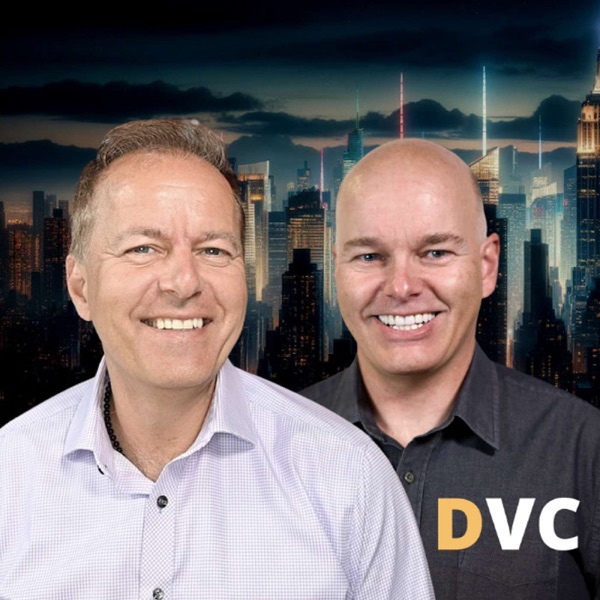
Host Jamie McDonald, former portfolio manager at one of the world’s top hedge funds, teams up with LSEG for this new award winning podcast series, to take a deep, open and honest look at what the world of hedge funds is all about.
25 episodes · publishes occasionally · latest 2026-08-05 · ~38 min/episode
Rank
#310
Substance
75.5
/ 100
Breakdown
Scored 2026-08
Updated monthly
Across the index
#310 of 1878
Substance
Top 16%
outscores 84% of the index
Hedge Fund Huddle ranks #310 on The B2B Podcast Index with a substance score of 75.5 out of 100, scored across 2 recent episodes. It scores highest on guest caliber and specificity & evidence. Vic Bansal is a systematic portfolio manager at a real hedge fund with hands-on experience building and validating data pipelines; David Tatten and Alex Hardouin work at LSEG in operational/product roles with client-facing exposure. All three are practitioners rather than pure analysts, but none are household names or stand-out operators at mega-funds. The caliber is solid mid-market professional, not exceptional.
Averaged across 2 recently scored episodes, with cited evidence.
The episode covers practical topics relevant to hedge funds - data validation, AI use cases, and source evaluation - but relies heavily on restatement of obvious principles (trust requires transparency, humans should validate AI, data has costs). While Vic provides concrete tactical examples (emoji analysis, detecting bottlenecks, finding network conflicts), much of the dialogue repeats frameworks without novel insight. The discussion of speed vs. accuracy is sensible but not particularly dense with actionable takeaways.
“If you're someone who trades very quickly and doesn't mind holding things for minutes or seconds or even two hours, then you need the speed. But if I'm somebody who holds for two weeks, I'm better off not actually having the speed in that sense.”
“we nearly had a trading outage at one point in the last couple of months, and we got AI to inspect logs and it worked out that there'd been one particular program on the whole network that had been updating at exactly the same moment that we wanted to run one of our systems”
The core thesis - that trustworthy data requires transparency, that humans must validate AI outputs, that alternative data sources matter - are well-established industry positions. The emoji example from social media is mildly fresh, and the satellite/shipping imagery discussion touches on real practices, but the overall framing echoes standard hedge fund and fintech discourse. No contrarian arguments or first-principles rethinking emerges.
“what was alternative yesterday is traditional today”
“technology doesn't always mean truth, but it can help with trust”
Vic Bansal is a systematic portfolio manager at a real hedge fund with hands-on experience building and validating data pipelines; David Tatten and Alex Hardouin work at LSEG in operational/product roles with client-facing exposure. All three are practitioners rather than pure analysts, but none are household names or stand-out operators at mega-funds. The caliber is solid mid-market professional, not exceptional.
“I lead a team of eight people. We are responsible for trading equities and futures strategies, which are all systematically, and been there about five years.”
“I run the European business for execution solutions. We have a team focusing on working with asset managers and hedge funds”
The episode includes some specific references (Reuters, Wall Street Journal, Dow Jones, Iran-US peace deal confusion, Strait of Hormuz vessel tracking, emoji sentiment signals) but lacks hard numbers, P&L impact, or quantified outcomes. Vic mentions speeding up a process by 40% and a network update conflict, but no dollar figures, strategy returns, or data cost breakdowns are provided. David mentions 40 million records in equity derivatives but without context on value impact.
“we managed to speed up one of our live trading processes by about 40%”
“we have 40 million wrecks and we report tick by tick back tick”
Elizabeth Kaur asks logical setup questions and occasionally probes deeper (e.g., 'Do you always have a human in the loop?'), but rarely challenges claims or pushes back. Guests largely confirm each other's points without tension or disagreement. The conversation flows smoothly but lacks the sharpness of genuine investigative follow-ups. Few moments where the host digs into an uncomfortable gray area or exposes trade-offs.
“So interesting to hear the human side of the validation. David, I want to go to you now about the technical side using technology.”
“It's interesting the discussion about grouping data sets in relevant categories like objective authoritative news sources being one”
2 periods tracked.
2 scored on substance · 26 tracked in total.
This has turned into a wonderful series and you learn a lot of different areas of the hedge fund business.
- Tanney9
Listening to this podcast was worth it. I liked the well thought questions asked. Time and content was perfect.
- LailaArolkar
Add this badge to your site - it links back here and updates automatically as you rank.

<a href="https://index.fame.so/show/hedge-fund-huddle" target="_blank" rel="noopener">
  <img src="https://index.fame.so/badge/hedge-fund-huddle/badge.svg" alt="Ranked #59 on The B2B Podcast Index" width="360" height="136" />
</a>Track Hedge Fund Huddle's rank
Get an email whenever this show moves up or down the Index. Monthly at most, no spam.
Companies, products and tools that come up most across this show's episodes.
The themes that come up most across this show's episodes.
Podcasts that dig into the same topics.