
Growth Activated · 2026-03-03 · 38 min
Key moments - from our scoring
Substance score
60 / 100
Five dimensions, 20 points each
Tom Hunt brings six years of experience scaling B2B podcasts at Fame, a leading podcast agency, and shares a framework for podcasts that actually move the needle on pipeline and relationships. The conversation covers three core failure points: weak positioning (needing both a narrow niche and an attractive "edge" that makes listeners share), poor guest strategy (mixing short-term relationship ROI with long-term audience building), and lack of consistency past the six-month mark when CFO scrutiny is highest. Hunt argues that podcast positioning should be far narrower than most companies attempt - not "sales leadership" but something like "open rates" for an email company - and that the best hosts combine subject matter expertise, availability, and communication skills. The discussion includes practical metrics to watch (5-10% month-over-month download growth, increasing average consumption, non-employee validation), investment levels ($3,000-$5,000 monthly across host time, marketing coordinator, and creative roles), and how AI tools like Famer.AI now automate written assets though human review remains essential. Hunt also challenges conventional wisdom by arguing podcasts should be the last channel launched, not the first, and emphasizes that becoming a guest on other shows first is a lower-risk way to test whether podcasting fits your business before building your own infrastructure.
The niche is your topic area (narrow as possible), while the edge is the distinctive angle that makes listeners want to share the show with others - like using 'confessions' to get guests to share things they wouldn't normally reveal. Together, they make your show stand out in a crowded market.
Focus on strategic guest selection: bring on existing customers (to secure renewals), prospects, and partners to build relationships that drive pipeline. This generates measurable short-term ROI - like 'podcast generated one partnership that drove five leads' - while you build long-term audience trust simultaneously.
Green flags include: non-employee validation (comments or reviews in month one), 5-10% month-over-month download growth, increasing average consumption per episode, and ideally someone citing 'podcast' as their source when filling out your website form.
Start as a guest on 10+ relevant shows to practice communication skills, validate audience interest, and test whether podcasting drives inbound interest - all with minimal cost. Only if that succeeds should you invest in building your own show infrastructure.
The host (1-2 hours per episode, typically expensive time), a marketing manager/coordinator responsible for guests and promotion (roughly one day per week), and a creative producer building written assets, design, and video clips (6-8 hours per week).
Our reviewer’s read on each dimension, with quotes from the episode.
The episode contains several actionable frameworks (niche vs. edge positioning, three-month guest strategy, host skill metrics like 20-30% speaking ratio, download growth benchmarks of 10% monthly), but spends considerable time on basic setup advice and personal background that operators may already know. The specific metrics and host coaching details add substance, but the pacing includes filler and soft transitions that dilute insight density.
The first is guests. The thing that has the biggest impact on episode quality is choosing guests that can add value to the audience, but within the framework of your podcast positioning.
We want to track the ratio of the host speaking versus the guest. We want it to be between 20 and 30% for the host. We want to track the host's filler words.
The core positioning framework (niche + edge) and the phased funnel approach (social → email → podcast) offer some fresh structure, but the overall advice relies on well-established B2B podcast orthodoxy. The suggestion to audit best-of lists for LLM credibility is mildly novel, but most recommendations (guest strategy, video optimization, snippet repurposing) reflect common industry practice rather than contrarian thinking.
The first we've already covered, which is the niche. It needs to be as narrow as possible. The second is what we call the 'edge.' This is the thing a listener would tell their friends about.
I would say - if you're trying to grow a podcast, that's the last thing you should build. The first thing you should grow is an organic social audience.
Tom Hunt is the CEO of Fame with six years of direct B2B podcast operating experience, having started with a real client (from his demand gen role) and scaled to multiple clients. He has credible practitioner expertise rather than pure thought-leadership. However, the episode doesn't deeply test his knowledge against skeptical pushback, and some claims (like the 10% monthly growth benchmark) go unchallenged, limiting the caliber signal.
Tom Hunt, CEO of Fame, one of the leading B2B podcast agencies. Tom has spent the last six years helping companies turn their podcasts into real pipeline and relationship engines.
In 2018 or 2019, I was head of demand gen at a B2B SaaS company. We started a podcast. It went really well. So I left, they became the first client, and then were a client for five years.
The episode includes concrete metrics (20-30% host speaking ratio, 10% monthly growth, 5-10% monthly after month two, $3,000-$5,000 monthly investment, specific platforms like YouTube Shorts and LinkedIn), and one named case study (CFO Weekly). However, most examples remain abstract or high-level. The best-of lists discussion and the root cause medicine show example lack granular details on actual outcomes, and many claims lack supporting data.
We want it to be between 20 and 30% for the host.
For the first six months, we typically like to see 10% a month growth rate.
Mandy asks well-structured questions that follow a logical progression (background → market evolution → prerequisites for success → metrics), but rarely pushes back or challenges Tom's assertions. She accepts claims like the 10% monthly growth benchmark and the podcast-last strategy without probing edge cases or disagreement. The conversation feels collaborative but lacks the tension that would deepen insight; most follow-ups invite elaboration rather than critique.
Do you typically see long-term success - I actually have a few clients that have run podcasts for the sole purpose of lead generation by bringing on their guests.
One of the things that stuck out to me is with the host being such a critical part of the podcast success.
Computed from the transcript - who did the talking, and the words that came up most.
# 42 - Most B2B podcasts plateau or quietly fade out. The difference between shows that stall and shows that build pipeline often comes down to three strategic decisions made before you ever hit record. Tom Hunt, CEO of Fame and one of the most experienced B2B podcast strategists in the space, joins the show to break down what actually separates the top-performing B2B podcasts from everyone else. After six years of building and running shows for B2B companies, Tom has seen the patterns - and the mistakes - up close.
Transcribed and scored by The B2B Podcast Index.
GROWTH ACTIVATED - Clean Verbatim Transcript Episode: The B2B Podcast Playbook: Positioning, Guest Strategy, and Growth with Tom Hunt Host: Mandy Walker | Guest: Tom Hunt, CEO of Fame - Mandy Walker: Welcome to Growth Activated. I'm Mandy Walker, your host with 15 years of experience leading marketing teams ranging from small startups to large service organizations. I've built high-performing teams of all sizes and have seen firsthand how fast the landscape is evolving, making marketing leadership more complex than ever.
Today, I help marketing leaders elevate their strategies, lead with confidence, and build careers they love. If you're ready to drive and unlock growth for yourself and your company, you're in the right place. Let's get started. Mandy Walker: If you're a marketing leader thinking about launching a B2B podcast, or you already have one and it's not delivering the results you expected, this episode is going to give you a much clearer picture of what actually works.
Welcome back to Growth Activated. I'm Mandy Walker, and today I'm sitting down with Tom Hunt, CEO of Fame, one of the leading B2B podcast agencies. Tom has spent the last six years helping companies turn their podcasts into real pipeline and relationship engines. And he's got a refreshingly practical take on what separates the shows that gain traction from the ones that quietly fade out.
Mandy Walker: We get into podcast positioning, why most shows aren't niche enough, and what Tom calls the "edge" that makes listeners actually tell their friends about your show. We talk about how to be strategic with your guest strategy so you can show ROI to your CFO in the first six months. And Tom shares the growth playbook his team uses, from vertical video snippets to getting placed on best-of lists that compound LLM discoverability. He also challenges something I found really interesting - the order most of us build in.
Tom makes the case that a podcast should actually be the last thing you launch, not the first. So whether you're evaluating podcasting as a channel, trying to improve a show that's already running, or thinking about how to pitch this investment to leadership, there's a lot here. Let's get into it. Mandy Walker: Hey Tom, welcome to the Growth Activated podcast.
I'm so excited to have you here today. Tom Hunt: My pleasure, Mandy. I'm excited. Mandy Walker: I'm excited for the discussion.
Tom Hunt: Yeah, me too. Mandy Walker: I discovered you through one of our podcast guests a few weeks ago, Gabe Lulow. His team actually works with you and Fame and had reached out to coordinate him as a guest. And he spoke so highly of you.
Ever since then, I've been following you on LinkedIn and really appreciate your entrepreneurial and founder wisdom as a solopreneur over here. It's been really fun to watch. Tom Hunt: First, shout out to Gabe. It's been a pleasure working with him.
Expert podcast guest and host now. But yeah, thank you for the kind words as well. Mandy Walker: Absolutely. So Tom, I'd love to learn a little bit more about your background.
I know from following your story on LinkedIn that you started a lot of different companies in your time and certainly landed on Fame, which is a B2B podcasting company. We'd love to hear a little bit about that journey and how you ultimately made it stick with podcasting, and why that was a space you were interested in. Tom Hunt: Yeah, I think my approach was just to throw loads of stuff at the wall and see what sticks. I'm not very good at being strategic, but I'm quite good at taking action.
So ever since I realized that I wanted to leave my job in 2014, I set myself the goal of replacing my salary in 12 months in the calendar year of 2014. And I did it. But ever since then - so that's now been 12 years - it's been doing loads of stuff. Even now at Fame, just doing loads of stuff, even if I should maybe sit back and be more strategic.
Now the downside of that is sometimes it can get you in trouble, sometimes it confuses people, but the upside is that you learn. Tom Hunt: And so over the past 12 years, I have learned quite a lot, mainly just about selling stuff online. This is really what I am - a marketer. So if we follow that story forward, the thing that became the baby that made the most money early on was this podcast agency.
I think that's because of two things. First, as I mentioned, I just got really good at online marketing because I did it so much for eight years before starting Fame. The other thing I learned is I spent four years in management consulting. So I learned how to run meetings, send emails - really, management.
And so if you're good at marketing, you're good at management, then starting a marketing agency is the logical step. Tom Hunt: So there were really eight years of prepping for starting Fame, which started in 2019. And it started because I spent six years trying and failing so much that I ran out of money. So in 2018 or 2019, I was head of demand gen at a B2B SaaS company.
We started a podcast. It went really well. So I left, they became the first client, and then were a client for five years - churned recently. And that's essentially Fame.
Tom Hunt: I think it's quite a good way to start a B2B company, if anyone's listening. Get really good at running a process inside your business. Being employed, you're both getting paid to do R&D. And then if you can skillfully navigate out of the company and get them to be your first client - bonus points.
And then just copy and paste it to other clients. Mandy Walker: I love that. I'm a fractional CMO. I was a VP of marketing and ran growth strategy at a few different companies and became a fractional CMO.
And I totally view it as my playground. It's really fun to test new strategies, learn, build a strong point of view across different clients, and then apply it to my own business, which is fun. Tom Hunt: I think you followed a similar path to me then. But an interesting question that I like to ask - obviously you could have stayed being the VP of marketing or CMO for one brand for decades.
What was it that made you want to be fractional and have multiple clients? Mandy Walker: The freedom. I say that with the caveat that there's some freedom that opens up with being fractional, and then there's some freedom that is almost taken away that people don't always think about. But the freedom of being - we love to travel and work abroad.
So being in control of my own schedule - I don't work Fridays. I get to set my own schedule. I choose my own clients, and if they don't follow the same methodology or how they think about marketing, I get to leave. And of course, the ultimate idea of working from wherever I want has been a game changer.
I've thought about going back in-house because there would be loads of things that would be easier. But I think for me, the opportunity and the freedom it opens up has just been a game changer. Tom Hunt: But then through the added challenge, you have to find the clients, right? That's not something you'd have to do if you're in-house.
Mandy Walker: Totally. I actually took a different approach. I am on the bench of a marketing agency who finds and places fractional CMOs. So I have the benefit of not having to do my own business development.
Now I do work with clients outside of them, but those clients have come to me through my presence on LinkedIn, through my previous network, and referrals. Tom Hunt: And that's like a safety net to have the marketing agency there placing you. Presumably you don't get paid as much when they place you because they have to take a cut, but it's good to have that safety net. Mandy Walker: Yep, absolutely.
So Tom, I would love to hear your perspective. You landed on podcasting. Obviously there was a huge need in the market for it. Clients saw the value.
You leaned into it. How has it evolved in the last six years? And is it still something you're going all in on, or are you expanding based on how the industry is evolving? I'd love your perspective on what's happening in the podcasting space.
Tom Hunt: Maybe more because of luck, I think we did nail the timing for B2B podcasts in 2019. Especially as COVID happened, more marketing budget shifted to online stuff. So we nailed the timing. What's happening in the market - more and more companies, when we started, it would be rare for a B2B company to have a podcast.
And now it's rare almost for a B2B company not to have a podcast. Tom Hunt: So I would say there's more competition, which essentially means that your show has to be better for a more specific person in order to get their attention. We've had to narrow - when we do strategy for podcasts, we've had to try to force clients to narrow the niche, get as narrow as possible early on, because that makes it easier to make it better for someone to listen to your show than someone else's.
And that's how you get the early audience. Tom Hunt: Slight change in strategy at the start - if we had a company in the sales niche, we could probably start a sales leadership podcast and it would get listeners. But now we might have to focus on something even more niche. In terms of what Fame does, 90% of our revenue is just through running podcasts for B2B clients.
That's always been our focus - the one thing that we try to tweak and improve almost every day. We do have some ancillary service lines that we've added on either through acquisition or through me developing new things. And that accounts for about 10% of revenue. It's essentially a service where we just do the viral social clips, a service that is much more stripped down where we just do the editing - unlimited, lower cost - and then a service where we book clients on other podcasts.
Those are three additional pieces, only 10% of the revenue. Mandy Walker: I'm curious - with it almost feeling like everyone has a B2B podcast these days, what in your mind are the prerequisites for having one? When will a podcast fail for one of your clients because they don't have a strong point of view, or maybe they don't have executive buy-in? Where should marketing leaders stop and think - is this actually the right strategy for me?
Tom Hunt: Three things. The first is not getting the positioning right. Podcast positioning is broken up into two areas. The first we've already covered, which is the niche.
It needs to be as narrow as possible. The second is what we call the "edge." This is the thing a listener would tell their friends about. I'll give a quick example.
My show used to be called Confessions of a B2B Entrepreneur. B2B entrepreneurship - very clear on the niche. Probably just about narrow enough. And then the edge with the "confessions" piece, where I tried to get guests to share things they wouldn't normally share.
So a niche and an edge. Tom Hunt: A client may come to us and want to do a show - if they have sales software, they might want to do a show about sales. We would advise them heavily against that. An email marketing software company might want to do a podcast about email marketing.
We'd advise them to do a podcast about open rates, for example, especially to start with. Just go as narrow as possible. And if you layer the edge over a nice narrow niche, then it's very easy to get the early listeners. So that's the first thing.
Tom Hunt: Second thing is being strategic about guests. ROI from podcasts can come in the short term, typically through relationships with guests, and long-term through building an audience that knows, likes, and trusts you. With most clients, the CFO wants to see some benefit in the first six months. And it's very hard to get listener ROI in the first six months.
Tom Hunt: So what we like to do is work with our clients to be strategic about guests. You bring on guests that are an existing customer - not to talk about the work you do, but to build a relationship to secure the renewal. Or potential customers, or potential partners. So that we can show the CFO in the first six months that the podcast has generated one partnership which has driven five leads.
And then that enables the business to double down to build the audience, which is where the long-term, more valuable ROI comes from. Tom Hunt: And the third is being consistent. If you start without a cadence, or you don't have the budget to get past six months, then it's almost wasted because you never get to the point where you can cultivate this group of ideal buyers that know, like, and trust you. They come to you when they actually need to buy the thing.
Those are the three things we see when clients fail. Mandy Walker: Do you typically see long-term success - I actually have a few clients that have run podcasts for the sole purpose of lead generation by bringing on their guests. They actually don't care about the audience. They don't care if they're building anything beyond having a conversation with the guest and then being able to sell to them.
That's actually happened to me too, with a few podcasts I've been on, where it was very obvious that was the ultimate goal. Do you see benefit and long-term success from that strategy, or is that really short-sighted? Tom Hunt: The holy grail is building the audience and the know, like, and trust. That's a much more scalable version of ROI.
Because if you're just trying to pitch guests, then you're obviously limited by the amount of guests you interview. And to be fair, you could interview a guest every day and then interview 20 a month and bring them into your pipeline, which I think is a valid strategy. But you just have to ensure the guests have a good experience. If they don't, and they think they're just on there to be pitched, then they're not going to convert.
And the word of mouth is going to be bad about your business. Tom Hunt: So I think the best approach is to focus on the longer-term ROI - don't jeopardize the audience growth because you're just bringing on someone to sell to them. But if someone is genuinely going to be good for audience growth as a guest and they are an existing customer, potential customer, or partner, then that's just upside, right? Because you're going to build a relationship with them, and that could lead to something down the line.
Mandy Walker: So we talked about what people get wrong. What is on the flip side - the top 1%, 5%, 10% of clients that really get it right? What are they doing? Tom Hunt: Let's go with skill of the host.
Let's do a top three and we'll put skill of the host as second. So, success modes. Basically, the best clients end up building the audience and the know, like, and trust, right? And the way you do that is by creating great episodes.
So I'll explain how you make great episodes. Tom Hunt: First is guests. The thing that has the biggest impact on episode quality is choosing guests that can add value to the audience, but within the framework of your podcast positioning. You could bring on the best guest that exists, but if they're not creating content through the structure that you believe is going to be the most valuable for the listener, then it's almost a waste of time.
Your podcast positioning is basically a thesis that this content type with this type of guest is going to be valuable to your ideal listener. So you just have to keep executing on that, reviewing the metrics, and then learning and improving. Tom Hunt: First is getting the guest that can add value within the content structure that we think is going to be valuable for the customer. Second is the skill of the host.
There are small things you can do. We want to track the ratio of the host speaking versus the guest. We want it to be between 20 and 30% for the host. We want to track the host's filler words.
Are they using "so" too much? Are they using "like"? Are they genuinely interested and engaged in the subject matter? Tom Hunt: So we get the right guest that's going to create content within that structure.
We improve our host skill. And then if we do that, we should start seeing the numbers go up. And once we start seeing the numbers go up, we want to work out what's the next step in the funnel that's going to take a listener who likes the show and bring them one step closer to becoming a customer of the business. That's typically some kind of piece of information or offer that doesn't cost any money, often in exchange for an email address, that will then get them into the CRM.
Because you can't retarget someone or get someone into the CRM who listens to your show on Apple Podcasts. So we want to create those great episodes, and then we want to have a seamless next step down the funnel to bring them into the CRM. If we see a client doing that, it typically ends up being a success. Mandy Walker: I love that.
Now I'm - you'll have to rate me at the end or give me some feedback. But that's really helpful. One of the things that stuck out to me is with the host being such a critical part of the podcast success. Do you typically find that when people are starting - let's say I work for a B2B SaaS security company - if I'm a marketing leader or CMO creating a podcast, should my host be my CISO, my cybersecurity expert?
Or would you choose someone that could have those conversations but maybe isn't in that seat? How do you typically help organizations identify who the right host is, since it's such a factor? Tom Hunt: Three things. First, availability - do they have the time to record?
Second, do they have the subject matter expertise and interest? In that case, if you're a cybersecurity VP of marketing starting a podcast, your CISO or your chief evangelist or co-founder could be a good option. And then finally, do they have the communication skills? Some chief evangelists, especially at technical companies, may not have the communication skills we need.
And so then it could fall onto someone in sales, CS, or even the CEO. So it's communication skills, subject matter expertise and interest, and availability. Mandy Walker: Now let's say people are listening to this and starting a podcast sounds overwhelming. At what point would you suggest someone goes all in on being a featured guest on other podcasts rather than building the infrastructure for their own show?
How do those two strategies play together or separate in your mind? Tom Hunt: If the goal is to explore podcasting, the much easier route into this is to become a guest on shows. Especially if that person could eventually become the host of the show, because it's good to practice your online communication skills. It's very easy to set up, much lower cost, and you'll start to see whether you can potentially reach ideal buyers.
If you go on 10 guest spots on 10 shows and you don't have anybody coming inbound saying they heard about you from a show, that could mean maybe it isn't worth creating your own show. Tom Hunt: That said, one good promotional strategy for your own show is to be a guest on other shows and then direct people back to your show. Because those people are listening - by definition, they like podcasts and should be listening to yours as well. Mandy Walker: On that note, if we talk about the investment - you shared early on that CFOs and a lot of your clients want to see the return on investment within six months.
Obviously audience and follower growth takes probably a lot longer than that. But what do you recommend to CMOs and VPs who are considering launching? What type of investment - people, resourcing, spend - and what are the green flags along the way that they should be looking out for and communicating back to their team? Tom Hunt: Let's talk about the green flags first.
The first thing you want to see is people that are not your employees saying they like the podcast. Could be comments on a LinkedIn post, could be reviews on Apple Podcasts. That's the first signal that you're going in the right direction. Ideally you get that in the first month.
Tom Hunt: The second signal, which comes from month two to six, is the metric of total downloads. That includes plays on Spotify, plays on Apple Podcasts, views on YouTube. Is that increasing by 5 to 10% a month? Because then the theory is that people are coming back and more people are listening to the show.
At the same time, the other metric we like to look at is average consumption on Apple Podcasts, or on YouTube it's average view duration. Is that metric longer for episode six than for episode two? Is the content getting better every episode? Tom Hunt: And then the holy grail from the listener side is having somebody come to your website, and in the form where you ask them how they found out about you, they say "podcast."
If that happens in the first six months, amazing. And the other thing - if we are being strategic about guests - would be some kind of pipeline built through either a guest becoming a customer or a partner. Tom Hunt: In terms of investment, there are typically three roles. First is the host.
Their investment is anywhere between one and two hours per episode. Second is what we call the main contact - typically a marketing assistant or marketing manager - who's essentially responsible for the show. They're probably finding guests, prepping the host, managing the third role, and doing promotion. The third role could be one person or multiple.
We call it the creative role - the person creating the written assets, the visual design, the audio, the video, and the video clips. Tom Hunt: So one to two hours of the host, whose time is typically quite expensive. Let's say one day a week from the marketing manager. And then six to eight hours perhaps for the creative person.
You can assign costs to those, and it would maybe come out to $5,000 - maybe less, maybe between $3,000 and $5,000 a month - depending on the cost of the host's time, which is probably the biggest variable. Mandy Walker: That really hits home because I solo do this alone. When I started, I had no idea how much of a time commitment it would be. It's a lot of work, but AI has made things a lot easier for me.
I'm actually exploring with Claude Code right now how to automate a lot of the post-production workflow, which has been interesting. I haven't gotten it to work totally yet, so I can't speak to the quality of the output. How is your team either leveraging or finding AI to make some of this easier - or harder? Because I'm sure it's also creating more saturation and noise.
Tom Hunt: We built an application called Famer.AI in 2022, I think, when ChatGPT came out. You upload the audio of an episode and then it produces the written assets and also host coaching - like talk percentage, filler words. Back then, the written assets weren't good enough, but now they're getting much closer.
So we have a lot of the written content automated, but obviously we have the writers and producers review that because you can't put anything out in a client's name if it hasn't been reviewed by a human. Tom Hunt: We haven't yet been able to bring AI into the actual editing process in terms of manipulating the audio and video files, but that's probably coming. It is quite good at telling you what clips could be good, for example. So it can help with the post-production in that way.
Mandy Walker: One of the things that came to mind - because video, I think, personally I'm moving towards video. I was an audio-only podcast, and it seems like such a miss because of course I'm doing guest interviews like with yourself on video. Do you recommend that when clients are starting a podcast, they always go video first and optimize for YouTube these days? How do you view video versus audio?
Tom Hunt: Yeah, absolutely. The discovery on YouTube is better than Apple Podcasts and Spotify. It's easier to get organic views for free with YouTube. So having long-form video - ideally in-person as well, obviously it's a lot more expensive to hire a crew or a studio - but we do see live recordings perform better.
And then we also get better shorts. So YouTube Shorts, TikTok, Reels is the other best way to get free attention for a show. Typically, in-person recording performs better than remote recording, which performs better than just audio. Mandy Walker: Any other growth tips or growth hacks while we're thinking about it?
Video is a must for sure, and it sounds like doing reels and things also helps grow visibility. What else would you suggest to people who want to grow their show? Tom Hunt: I would say posting high volumes of snippets. Because you can always have your theory on what's going to perform, but it's quite unpredictable what will pop up organically.
So you're posting high volumes of snippets on all places that will allow you to post vertical video, and then just waiting for something to pop. And then as it does, that's when you would add a bit of ad spend - just like $50. Because if it's popping already, then you're going to get a lot more mileage from that $50. So this can be done on LinkedIn, YouTube Shorts.
That's probably the most effective way to use ad spend if you're looking to promote a show. Tom Hunt: Let me do an organic one. There are essentially thousands of articles in various niches that list top podcasts in that space. And they're relatively easy to get into.
You can do some kind of deal by bringing someone from their business on your show. You can exchange backlinks. You can pay them a little bit. It's a lot of upfront work to find the 20 and then do outreach.
But if you get placed ideally high up in those lists, ideally with a link to the show in Apple or Spotify or YouTube, then you will just get a stream of listeners into the show. Tom Hunt: And the final organic one that people don't fully understand - which is important when you are in the positioning process for the show, meaning what's the name of the show, what's the description - it's really basic SEO stuff. If there's a core keyword for your niche, you just want it to be at the start of the name.
The first word of the podcast is the highest SEO signal in Apple and Spotify and YouTube. So if your podcast is about SEO, just have the word SEO at the start, and then have the word SEO in the description. That's quite basic, but it's a paid one and two organic strategies. Mandy Walker: I've always thought about going after the best-of lists, but I guess I didn't realize it's as easy as it actually might be.
I'll definitely think about prioritizing that. And certainly, in the research I've done, the LLMs are referencing a lot of those lists for credibility as well. Tom Hunt: Exactly right. Especially if the list ranks well on Google and was published five years ago.
An LLM is just going to look at that as trustworthy. So getting a show in there will definitely help. Mandy Walker: Even if it was published five years ago, they're open and willing to adding new shows? Tom Hunt: A lot of people you find are open and willing.
You just have to hustle. You have to make the deal good enough. Some of them, you don't even have to do anything - just say, "Hey, this is a podcast, got this many downloads, this many reviews, I feel like it deserves to be on the list." And that might work one in 20 times.
But then if you offer to pay someone $500, that'll work one in two times. So you have to hustle. Mandy Walker: What is a good download rate for B2B podcasting? Because it seems like the viewership isn't nearly as high as true crime or consumer podcasts.
What is a good benchmark? Tom Hunt: I think it depends on what the company is trying to achieve, and also the niche of the show. If we have a show in the governance space for cybersecurity - so they're targeting cybersecurity professionals responsible for governance - maybe there are a thousand people with that role in the US. If they get to a hundred downloads per episode, that's pretty amazing.
10% of their audience. But then we have some clients where the show is about sales, and there are probably 5 million salespeople in the US. If they only had a hundred downloads per episode, that might not be as good. Tom Hunt: Instead of the absolute number, what we like to look at is the growth rate.
For the first six months, we typically like to see 10% a month. Assuming that in month one with the launch, there are a thousand downloads. Then in month two, eleven hundred, and then it compounds from there. I think if you launch with 2,000 and grow at 10% a month for the first year, you get to around 5,000 downloads a month.
If the niche is relatively broad, that's what we'd expect. But if it was the cybersecurity governance professionals show, the launch might be a hundred, and by 12 months it might be around 500. Mandy Walker: This has been fascinating. I've learned so much personally.
I'm excited to try these strategies, and for my clients too. I'd love to hear - what is one of your favorite case studies with your clients? Where has podcasting really exploded or provided a lot of opportunity, or been best in class? Tom Hunt: Our biggest growth story in terms of downloads was actually a B2B-to-C show, so it's a little bit cheating - I won't choose that one.
But eventually, over about nine months we got to 240,000 downloads a month, largely because of a Facebook ad strategy. It was in the root cause medicine space. We were bringing on doctors who were experts in different types of root cause medicine. The promotion strategy was focusing on one or two quotes from each episode - very uplifting and motivational - putting those quote images on Instagram, and then running Meta ads to those images with a CTA to listen to the episode.
We spent quite a lot on ads to get to that level. Tom Hunt: In terms of B2B, I would probably say CFO Weekly, which we've been running for about four years. The downloads are decent for a relatively large niche, but the probably best outcome has been the business impact the show has had. The business does outsourced CFO functions and outsourced accounting functions.
So CFOs are their ideal customers. Once you get to a critical mass of high-name guests in a niche like the CFO world, it becomes relatively easy to find more - actually, they start coming inbound to you. So they've had many big CFO names, and it's now just a stream of CFOs they get to build relationships with. They're not directly trying to close deals with guests, but every week they get to build a relationship with a new CFO, which is obviously great for their business.
Mandy Walker: Amazing. Well, thank you so much, Tom, for your time today. To close us up, I know you've got so many great tips for entrepreneurs, founders, and marketing leaders. What would be something you'd leave us with that you wish more CMOs either paid attention to or did in their daily work?
Tom Hunt: I would say - if you're trying to grow a podcast, that's the last thing you should build. The first thing you should grow is an organic social audience. If you're the CMO, you either do it for yourself or for someone in leadership. And you grow that without trying to send people off to your email list or to your podcast.
Do that for a year, maybe. Build the audience. Tom Hunt: And then I would move down the funnel to email. Spend a year or six months building an email list.
Again, value only - just adding value on specific topics. You can drive people there from the social audience now that you've added enough value on that platform. Tom Hunt: And then only then would I start a podcast. It's going to be very easy to grow the podcast if you have an active social audience and email list.
The podcast is the hardest to grow, but will have the biggest impact on that audience once you've created it. So you'd actually not start with the podcast - start with organic social, build an email list, and then start the podcast. Mandy Walker: Wow. I have not done it in that way, but I'm going to start thinking about how I can continue building.
That's awesome. Well, thank you, Tom. I so appreciate your time today. If people want to get in contact with you, is LinkedIn the best way?
Should they go to Fame? Where would you encourage people? Tom Hunt: Feel free to DM me on LinkedIn, and then I can direct you to the best place. Mandy Walker: Awesome.
Well, thank you so much. Appreciate your time today. Tom Hunt: Amazing. Thank you, Mandy.
Mandy Walker: Thanks so much for tuning into this episode of Growth Activated. I hope this conversation sparked new ideas, challenged your thinking, and gave you practical tools to help elevate your impact as a marketing leader. If it did, I would love for you to pass it along to a friend or colleague in B2B marketing. The more we grow together, the more we raise the bar for what marketing leadership can look like.
And as always, in the meantime, keep activating growth for yourself and your company. See you next time.
Other episodes covering the same guests and topics, from across The B2B Podcast Index.
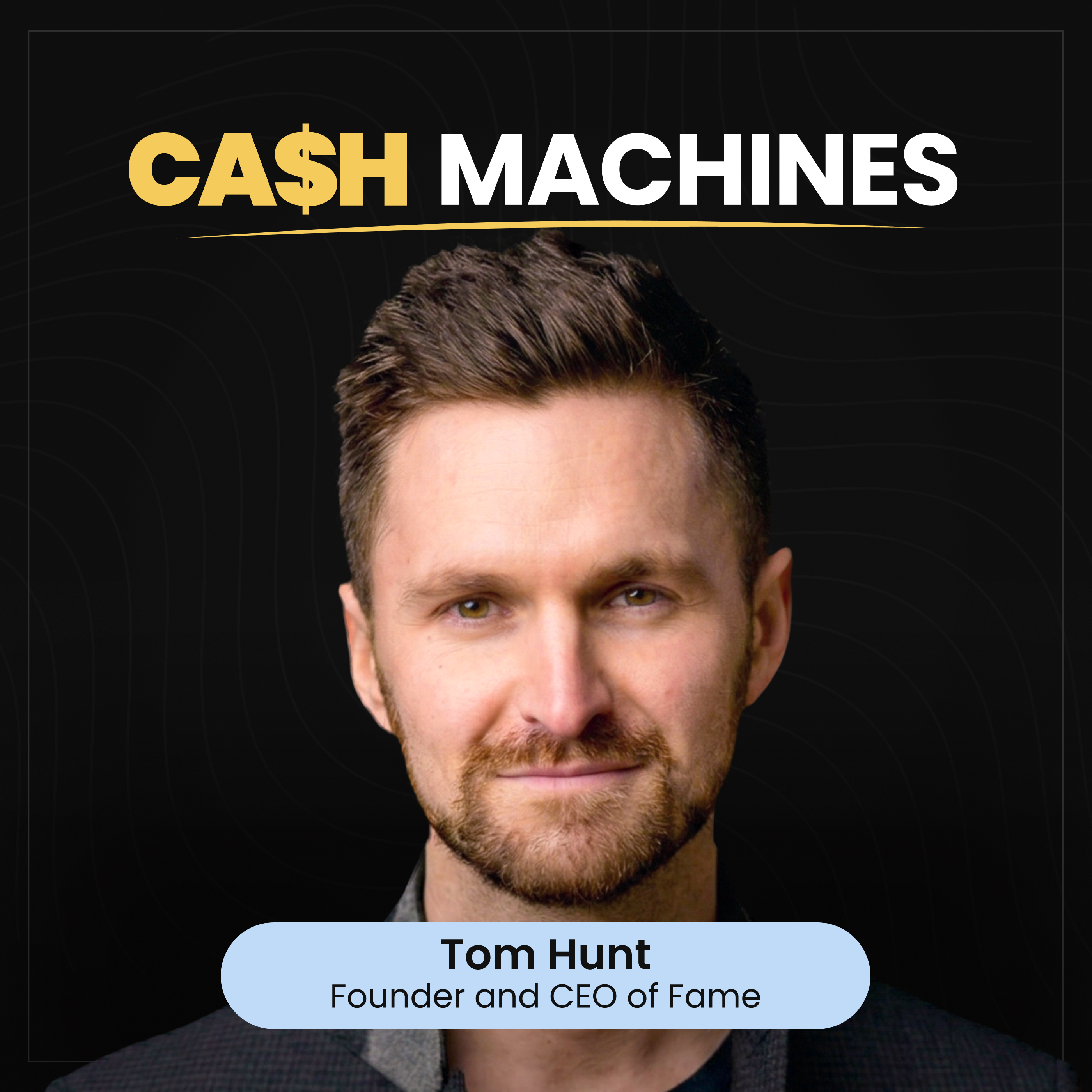 How to Build a B2B Podcast That Drives Pipeline with Tom Hunt (Growth Activated)Cash Machines · features Tom Hunt82 / 100
 Maisa Fernandez on Transforming Partner Marketing into a Revenue EngineNever GTM Alone · on B2B marketing74 / 100
 Why Great Marketing Is Built on Honesty, Not Hacks with Emma Davies & Ruta SudmantaiteSpotlight on B2B Marketing · on B2B marketing65 / 100
 #191 - Battling AI Fear: Storytelling, Technology, and Disruptive Change with Paul Roehrig, Chief Strategy and Marketing Officer at AscendionFinite By Clarity · on B2B marketing60 / 100
 How B2B Marketers Use White Space Analysis to Map Enterprise Account GrowthB2B Marketing with Fexingo · on B2B marketing57 / 100
 It's The "Finale" for The LinkedIn Branding Show - The Backstory + Even A Few Branding TipsThe LinkedIn™ Branding Show · on B2B marketing40 / 100A CMO's AI Partner: How I Unblocked My Team and Got 10 Hours a Week Back59 / 100
 Work Is Not Finite: Staying Irreplaceable as AI Raises the Bar with Heidi Darling63 / 100The 4 Mindset Shifts CMOs Need for AI Transformation - with Liza Adams70 / 100Stop Running ABM Like It's Demand Gen: How to Build the Real Motion with Brandon Redlinger79 / 100YouTube for B2B: From Zero to Results in 90 Days with Samu Kovacs83 / 100