
FYI - For Your Innovation · 2026-08-26 · 27 min
Key moments - from our scoring
Substance score
42 / 100
Five dimensions, 20 points each
This episode examines Moderna's breakthrough personalized cancer vaccine technology and its commercial pathway, alongside a practical deep-dive into Grokbot as an agentic AI interface. The cancer vaccine works by sequencing a patient's removed tumor, identifying its unique neoantigens, and manufacturing a custom mRNA vaccine to prime the immune system against those specific cancer cells. The Phase 3 melanoma trial showed roughly 50% mortality reduction versus Keytruda alone, with commercialization expected within 6-12 months post-FDA approval, though current manufacturing costs of $200-300k per patient limit deployment to advanced cases initially. Brett shares hands-on Grokbot usage including recovering a $75 California escrow claim, migrating 22,000 iCloud files to Google Drive with automatic categorization, and pulling real-time venue utilization data for Cosm immersive entertainment venues across multiple cities. The conversation highlights Grokbot's computer-use capabilities - its ability to spawn browsers and navigate websites - as differentiated versus Claude and Codex, while acknowledging subsidized token pricing and enterprise deployment uncertainties. A broader discussion emerges around how agent-based communication channels could reshape Microsoft and Slack's enterprise moat if collaborative, multi-human-and-agent group chats become standard work environments.
The vaccine is personalized: after tumor surgery, doctors sequence the cancer's RNA, identify which tumor-specific neoantigens (proteins) are visible on cancer cells, and manufacture a custom mRNA vaccine that trains the patient's immune system to recognize and attack those specific cells if cancer recurs.
Brett estimates a couple of weeks turnaround, though he notes uncertainty; the process requires cultivating the mRNA treatment, preventing contamination of patient samples, and coordinating sample collection, manufacturing, and shipment.
Full Phase 3 data will be presented in fall 2024 with commercialization expected 6-12 months after, pending FDA approval; current manufacturing costs are estimated at $200-300k per patient, limiting initial deployment to advanced metastatic cancers.
Grokbot is an agentic AI interface that operates in a chat-based task management system; its key differentiator is computer-use capability - it can spawn browsers and navigate websites to complete tasks - which competitors like Claude and Codex cannot reliably do.
Cosm is a smaller-scale immersive venue (versus The Sphere) with wall-to-wall screens, dynamic camera angles for sports events, and integrated environmental visuals that create social, luxury-box-like experiences; it's securing exclusive NFL camera angles and achieving high utilization on niche content like college volleyball.
Our reviewer’s read on each dimension, with quotes from the episode.
The cancer vaccine segment offers a competent lay explanation with a few useful data points (cost, mortality reduction, mechanism), but the back half dissolves into anecdotal Grokbot use cases and a headphones complaint that contribute nothing to a B2B operator. The ratio of signal to filler is mediocre.
Developing a custom drug for a specific patient is, you know, hundreds of thousands of dollars type expense, maybe 200, $300,000 right now at current scale
just compared to the standard of care which was keytruda alone, this uh, reduces mortality by roughly 50% from advanced stage melanoma
The 'aspirin for cancer' analogy is a genuinely vivid framing for personalized medicine, and the observation that Grokbot's grit matters more than raw intelligence is a decent take, but the episode does not challenge consensus or argue from first principles on either topic.
I can't believe you were taking basically the equivalent of like aspirin for every cancer. Like, you were taking something that was just, you know, just a random thing. You're throwing at a very customized disease that your own body had generated.
Agents are learning the same lessons that humans have, which is it's not about raw intelligence. Sometimes it's about grit.
The speakers are ARK Investment analysts commenting as informed observers, not operators, scientists, or builders who have done any of these things at scale; the frequent hedges ('I'm not totally sure,' 'I don't know') confirm they are synthesizing public information rather than speaking from direct experience.
I think it's like a, a couple of weeks turn, but I'm not totally sure
full disclosure, we're you, uh, know, uh, investor in this company. I asked it to look at kosm's inventory
There are a handful of real numbers - 50% mortality reduction (though correctly attributed to phase 2b, not phase 3), $200-300K cost estimate, 22,000 files migrated - but they are routinely undercut by hedging and the Grokbot section relies entirely on a $75 unclaimed-property anecdote and unverified utilization scrapes.
maybe 200, $300,000 right now at current scale
it's through 22,000 files, which is like 2/3 of the way
The host asks structurally sound follow-ups on the cancer segment (cost, timeline, melanoma specificity) but never pushes back on hedged claims, lets the conversation drift into personal tech complaints with no substantive return, and closes with an entirely off-topic headphones question.
And does. Is there anything about melanoma specifically that makes it amenable to this?
You just said phase three. What does that mean? How long then after a positive result from phase three to it being, you know, available to people
Computed from the transcript - who did the talking, and the words that came up most.
In this episode of The Brainstorm, Sam, Nick, and Brett break down Merck and Moderna’s positive Phase 3 results for a personalized mRNA cancer vaccine, a treatment custom-built from each patient’s own tumor that cut mortality from advanced melanoma by roughly 50% versus the standard of care. The team digs into cost, manufacturing scale, and why the capital poured into mRNA during COVID may be paying off in oncology. Then Brett reports back from a weekend with Grok Bot, which recovered $75 of his wife’s forgotten escrow money on its first task, and the team debates why multiplayer agents could be the real threat to Microsoft’s enterprise moat. Key Points From This Episode: How a custom mRNA vaccine trains the immune system against a patient’s own tumor, and what Phase 3 melanoma results could mean for other cancers Why $200K - $300K per treatment limits early use, and what we believe has to change for personalized oncology to scale Why agents that live inside team chat, not one-on-one, may be the real disruption to Microsoft and Slack If you know ARK, you know we focus on long-term innovation. But that doesn’t mean we ignore breaking news.
Transcribed and scored by The B2B Podcast Index.
Speaker A: Agents are learning the same lessons that humans have, which is it's not about raw intelligence. Sometimes it's about grit.
Speaker B: Sometime in the future, we could look back and be like, I can't believe you were taking basically the equivalent of like aspirin for every cancer. Like, you were taking something that was just a random thing. You're throwing at a very customized disease that your own body had generated. And so it does seem like this is kind of a pathway towards customized cancer treatments for everybody.
Speaker A: Welcome to the Brainstorm. Today we are talking cancer vaccines from Merck and Moderna. And Brett has finally subscribed and has Grokbot paying for itself already. So Brett, uh, let's dive in a non AI topic for change here, but just as life changing, uh, and as big an opportunity, maybe, uh, Merck and Moderna. What was announced with the cancer vaccine? Why is it notable? Where do we go from here?
Speaker B: Yeah, so, I mean, it's a cancer. I think of a vaccine as something you take before you get a disease. This is a vaccine, but it's a vaccine that you take after you get the disease. The reason it's called a vaccine is because if you've gotten a cancer, uh, and they, uh, do surgery on the cancer to take it out, um, then they can take a sample of that cancer and they can compare it to a sample of your own blood and they can say, well, what are the, um, kind of RNAs being expressed in this cancer? And can we, um, guess which ones are then, um, going to be visible on the outside of a cell? Uh, and so then, um, the patient who's had this cancer resected then gets a custom designed, um, RNA treatment that causes, um, those things on the outside of the cell to be expressed inside the body, which causes the patient's immune system to be activated against those, um, proteins, um, neoantigens they're called, so that when the cancer comes back, the immune system is already charged up and ready to go and to attack those specific cells. So it is a vaccine in that you are basically charging up your immune system to go after a specific disease. But in this case, it's the specific custom cancer that your body has generated. Uh, and so over the past week they indicated that, um, in melanoma, their phase three trial had come out. Moderna's phase three trial come out very positive. Um, and so that's both exciting for, um, aggressive melanoma patients, but it's also exciting because they have a number of these trials against different cancer types, um, on the offer, uh, and they are all using basically the same technique. It's not a drug in that. It's a drug that you buy off the shelf. It's a drug that's custom designed for each patient's cancer. So it means that, you know, one of the ones in trial is for stage one aggressive lung cancer, where you've done a surgery on it at stage one, it was localized to the lung. Um, but then you can, um, kind of provide a custom treatment for this patient. And so it promises to potentially, you know, mean that every cancer over time is actually treated with a custom treatment by patients, assuming they can scale up the manufacturer of these, uh, therapies.
Speaker A: All right, so let's start with a few things. You just said phase three. What does that mean? How long then after a positive result from phase three to it being, you know, available to people and custom. Custom. Sounds expensive. Ah. So what is it on the cost side of things?
Speaker B: Yeah, generally a phase three trial takes a long time. Um, here they've. They've actually gotten the results out of the phase three. So they're going to present the full data sometime this fall. And then, you know, you should expect that commercialization could happen relatively quickly. After that, you have to go through a licensing step. But it could be, I don't know, six or 12 months. I'm not sure what the estimates are particularly specific to this moderna drug, but it's from there, it's kind of like a slam dunk process. Assuming, uh, it commercially looks good on the expensiveness, yes, these are. Developing a custom drug for a specific patient is, you know, hundreds of thousands of dollars type expense, maybe 200, $300,000 right now at current scale. Um, you can imagine that there are ways that you want to scale up the manufacturing so you can take in lots of patient samples, keep them segregated, grow the particulars, treatments for all of the patients, and then ship them back. Um, but as long as it remains at that sort of price point, these treatments will be reserved for, you know, the most severe cases, not because they wouldn't be useful in earlier stage, you know, cancers or cancers that, you know, might not prove as, um, high a risk of mortality, but because of that expense. Um, but I do think that, you know, in some ways we could, sometime in the future, we could look back and be like, I can't believe you were taking basically the equivalent of like, aspirin for every cancer. Like you, you were taking something that was just, you know, just a random thing. You're throwing at a very customized disease that your own body had generated. And so it does seem like this is kind of a pathway towards, um, customized cancer treatments for everybody.
Speaker A: And does. Is there anything about melanoma specifically that makes it amenable to this? Uh, it's obviously they chose it as the starting point, but like, how confident are they we that this actually can, uh, be applied to other cancer types?
Speaker B: Uh, well, metastatic melanoma is a really dangerous disease, which is one of the reasons to go after it. But there's not anything intrinsic to melanoma that would mean that it's a cancer that this necessarily works on. Now, um, they are try. This trial was in combination with actually one of the best selling cancer drugs of all time, maybe the best Keytruda, which is a specific. One of the things that cancers evolve the ability to do is to restrict the ability of your immune system to kind of like operate against them. And keytruda, um, interjects um, against that particular, um, um, restriction. Uh, and so you can imagine this is um, customizing your immune system to go after the cancer. And they're doing it in combination with another drug that reduces the cancer's ability to kind of suppress your immune system's response. And so, um, they're also trying it by itself, uh, and we'll see what those results look like. Uh, you know, I think that just compared to the standard of care which was key keytruda alone, this uh, reduces mortality by roughly 50% from advanced stage melanoma. So it really is, you know, potentially life extending, life saving, um, for people with that disease. And you know, they're starting out going after more aggressive cancers because that's where you can get the highest commercial value.
Speaker C: How long does it take to customize the drug for the individual?
Speaker B: That's a good question. I think it's like a, a couple of weeks turn, but I'm not totally sure. I mean that would, you know, and that's another. It takes that long because you have to cultivate the treatment. You have to ship back and forth. You have to be very careful about not contaminating kind of, um, patient samples and stuff. But as they try to scale, um, they will I think, try to improve the turn time. And one way to interpret this is we threw so much capital@ uh, mRNA vaccines because of COVID uh, we scaled up the ability to generate like MRNA at scale. Uh, and uh, hey, this is a, uh, beneficial byproduct. The reason moderna has funded all of these is because they had this huge surplus of capital from kind, um, of demand for the COVID vaccine. Uh, and since up until last week, stock price performance has been pretty, um, challenged, um, because all of the COVID cash flow fell off. Well, here we might be, you know, as society reaping the benefits of kind of the COVID development effort.
Speaker A: Wow. Pretty. Pretty interesting. And it's also interesting because I feel like the US Somewhat lagged here. Right. I know that there are some, there are cancer vaccines that are being distributed, uh, in other countries. Uh, so it's good, good to see that this is FDA approved and I think there's a lot in the pipeline.
Speaker B: Well, it's not, it's not approved yet. Just to, you know, they are soon to be approved, I think. Yes, I think it's highly likely to be approved. And it sounds, the data is really good. And we haven't seen the underlying data yet. So the 50%, um, mortality reduction is from the phase 2b trial, and that took five years to run. I mean, that's the other. Developing drugs takes a long time because you're really having to do something like, I'm going to wait till enough of the patients die to know how good this thing is, you know, uh, and so that's the. Both the challenge of drug development. But it also means that, um, as you go through it, you have a lot of certainty that something is very efficacious if, if it works.
Speaker A: All right, Grokbot a. A hard pivot here. Grokbot away, away from. Is it life saving? Has, has Grokbot saved people?
Speaker B: I don't think Grokbot is. I mean, I, I could imagine circumstances where somebody would somehow save their life with Grockbot, but it's kind of like a bank shot, I would say. Grockbot's amazing. I. That's my top line. Okay, so one of. We had a, uh, you know, friend of the firm say the first thing you should do with Grokbot is see if it can pay for itself. As it turns out, my wife had, um, somehow had $75 in escrow with Bally's Fitness from like 2014. And it found it. And this was being held by the state of California. Uh, and so now State of California is going to mail me a check for $75. So it almost paid for its first month of use right there. Just right off the bat on the first thing I asked it to do. Um, and, uh, so I'm using. I played with Grokbot over the weekend. It's basically. I do think it's probably the next iteration of how the user interface for these Systems will work. You spin up a series of basically bots that you can chat with and you ask them to do stuff and they're like on max try hard goal mode to try to do the thing and just figure their way through roadblocks to get it done. Including if they run into a roadblock, they'll spin up a browser for you. So for State of California, it did not want me to like stick her Social Security number in chat. So it spun up the browser and then had me key in the Social Security number and then it kept working to get the confirmation done and kind of get me the confirmation email. Um, so.
Speaker A: So who's on your roster? Who's. Who's on your roster? What have, what have you done?
Speaker B: Well, I don't know if I. So who's on my roster? I mean, I don't have it open on my desktop.
Speaker C: How many sub bots do you have?
Speaker B: I have spun up like five or six, but I'm using them just as kind of like the equivalent of tasks and codecs or something. So um, the next thing I did is I have a huge rat's nest of files in icloud and I'm sick of Apple, so I'm slowly migrating off of it. Hence no AirPods anymore. I asked it, but it's like systematically extracting data out of icloud is actually kind of hard. Um, so um, I have asked it to shift it all over into Google Drive so that I can actually use LLMs to naturally search kind of my file inventory and along the way categorize all the files. And um, so there are, it's through 22,000 files, which is like 2/3 of the way, having worked on it overnight. Uh, and um, you know, and it's slowly building the directory structure in Google Drive. And then I was like, well, I'll try it on a work task. So I asked it to um, you know, full disclosure, we're you, uh, know, uh, investor in this company. I asked it to look at kosm's inventory in la, uh, and to see utilization rate of kind of the dome in LA M because I'd noticed like Harry Potter at 9:30am on a Friday is sold out. I'm like, my gosh, who's going to Harry Potter at 9:30am on a Friday? But apparently the immersive experience is amazing. And it like went and basically pulled utilization across all events for the next few months. Um, and then offered to do Dallas and Atlanta as well, which I said, go ahead, it's very quick produce like A nice CSV that we'll produce visualizations out of. Uh, and I asked Codex to do the same. I was like well let's do a head to head bake off here. And Codex just didn't do it. Like it couldn't. And so I think that you know, the underlying model Grokbot is using is um, at least on a benchmark basis, not as performant. But I think the computer use ability of it is differentiated as in it's able to go through and get to information via the browser that you know, another um, kind of bot might not be able to get to agents.
Speaker A: I'm not sure learning agents are learning the same lessons that humans have, which is it's not about raw intelligence sometimes it's about grit.
Speaker B: Yes, well that's, I mean I think there's an open question as to like am I using a lot of subsidized tokens here? And if I paid the full cost of this I'd be like I can't believe this. But I could also imagine, you know, um, the, you know, there's all these alternative data vendors on Wall street, like we're going to give you credit card data from this stuff and you know, some of that data, like how many tickets is a company selling, um, is data that you know, with enough perseverance and grit you could just pull off the open web. Um, and you could imagine doing this, you know, every two weeks doing a poll to see kind of like the tracking of inventory percent sold out levels by venue for specific companies and that developing, kind of developing your own data stream in that way. Um, absolutely. You could imagine this being used via
Speaker A: Flock, via Flock cameras
Speaker B: and, and also the way it's set up, it's really hard for me to imagine enterprises kind of like letting this in, yet it occludes everything that's going on in the back end in a way that means that you're not kind of retaining kind of the underlying call it audit in a way that you'd get if you use Codex or Claude, um, incorrectly. Um, I'm not sure that's if that's a kind of like a setup issue for me and I could certainly query it to ask. But um, I think that this is, it's almost set up more consumer facing um, than the others in a friendly way. But uh, you know, I'm not sure that at the full price it's friendly enough for me to bear it, notwithstanding the fact that it's already making money for me. So you know, I'm all good that's right.
Speaker C: I think this is.
Speaker A: Each month you find a new lost asset.
Speaker C: I've been sitting with this idea that, you know, the enterprise communication channels that we use teams for us, everyone else seems to be using Slack. Um, you know, there's a variety of different services out there, but I think this is like, more disruptive to Microsoft's moat. Because if you have to work with agents on a daily basis, which is what Grokbot is pointing towards, most work is collaborative to a certain extent. Maybe it's not like in the moment collaborative, but eventually you're going to have to pull different team members in. The idea that you are going to have group chats where half of everyone in the group chat is a human, the other half are agents, and you're all working together, to me, makes a ton of sense. Like, I think that's the future of what work will look like in five years. And Grokbot is seemingly pointing the way. And that, to me, I think, is like how you unseat Microsoft, Slack, whatever these, you know, enterprise stacks look like, like if you can replace the comms channel for an enterprise, you can replace everything else off of that because that's where all of the data lives. That's like, you know, the body of work of which a company operates off of is mostly in those, those channels. And so I think.
Speaker A: Well, that's like, that's what an organization. An organization is, uh, held together by what, by teams. And that's it. Yeah, exactly.
Speaker C: But I think this is how, you
Speaker B: know, I do know. I mean, Claude. Claude has set up, or Anthropic has said that's what they're going for to some degree. As in, you can have Claude, like live in a Slack channel. I think it is. And also people are often like, shut up, Claude. Like you're, you're interjecting and stuff you don't know anything about. So I do think there's some kind of, um, call it nuancing of how that should and would work.
Speaker C: Uh, I guess, like, there's definitely nuance and I agree, like, it doesn't mean teams or Microsoft can't introduce this type of feature. Or Slack, you know, with Claude can't also have this. But I think this is a more competitive vector to go after the enterprise stack than, you know, we used to talk about. Well, you're going to use ChatGPT and it will create Excel files for you. Like, yes, you might. But if it doesn't live in this type of environment, it's hard to imagine. You also not working in those solutions and then that disrupting the entire stack of Microsoft's business for the enterprise. Like m, you know, Office 365 versus this. If you can sell this into an enterprise and everything starts to live off this and branch and you know, you communicate with the Excel file and then your whole team is right there in that same chat to be able to query Grokbot, Claude, whoever, to pull information out of that database it created for you. Like, to me, that is significantly more disruptive than the tools we've been using for the past. And you're right to call it like it's a new UI more than it is like maybe a performance boost.
Speaker A: Well, and Nick, to what you're saying, it's like right now, all the whole UI and agent, everything that's happened so far is one on one, right?
Speaker C: Yeah, uh, single player versus but it's
Speaker A: like if you have a Grokbot that actually sits across 10 people and it's like, hey, I'm the coordinator of this team. Well, that becomes interesting.
Speaker B: Yeah, I do think that's, that's like an angle they're taking here that I haven't seen the others take. As in I can use Codex and I can create projects, um, and tasks within projects and the project serves as a bucket where everything in that has like shared kind of context, where it's kind of like I'm calling up instances of a project person that's inside it. Um, but I can't share that. I can't have somebody else, can't ask that project, project person, that's mine, something. Whereas with Grokbot, it's explicitly set up as like this portable personality. Uh, and that does seem like it's more, um, intuitive. And you know, frankly it's also. And again, I don't know how much of this is subsidized use, but it is quick. Um, or at least on the COSM project, it like, you know, spit it out and was like, yeah, give me the next thing. While Louis Vuitton, I was just churning, churning, churning. I mean, did I verify? Yeah, I mean I had manually looked at some of the things. It's definitely consistent with what I'd seen. As in, um, you know, only accessible seats, only available for this event and stuff. But I didn't, I obviously didn't go all the way through. Also, it turns out, you know, like, um, college volleyball is selling out in the Dallas venue. So, um, COSM as an immersive entertainment experience space, seems like they're finding like good pockets of demand for things that you would never imagine you could sell out like a, ah, you know, immersive venue for. So yeah, I would say this is
Speaker C: a good plug for Cosm.
Speaker B: Yeah. Yes. Yeah. Everybody should try Cosm in school. They should. Or like
Speaker C: in Detroit, September.
Speaker A: Give a description. What do they do?
Speaker C: It's an immersive entertainment venue. So, uh, the way that I would describe it, like extremely high level. Imagine the sphere but trunk down such that it's not for thousands of people, but it's for hundreds or tens of people. Um, and it's call it wall to wall screens. Fully immersive. They have dynamic camera angles for sporting events. So for the NFL, you can get end zone views that only Kosm has because they've struck a deal with the nf, be able to look, you know, through the end zone essentially like their cameras in the goalpost. And so you get, you know, a wildly more immersive experience than food, drink, you know, everything you, you'd want at an entertainment venue. And not only do they do sports, but they also, as Brett mentioned, they'll do movies. And then, you know, it's a, call it a traditional screen, but blown up on theirs. And then the rest of the environment around that, call it rectangular screen, is matched to make the, you know, Harry Potter, uh, experience feel more immersive. So like I, There's a scene in Harry Potter where like they tap the wall and the wall separates. So like the movie's showing the walls separate and then the rest of the screen around is also the bricks, you know, they've, they've integrated more immersive visuals around the screen itself. You can just type in Cosm m on, uh, Instagram and you'll, you'll, you'll get it immediately.
Speaker B: Yeah, it's very cool. But for like NFL, it's like going to a game, but you have amazing seats. But you're also still in a venue with all people who are watching that game and you have tableside service. So it's kind of like a, um, like a luxury box experience. But, um, you know, for a typical, ah, ticket price or even discounted, like
Speaker C: visually it's everything VR promised to be. But not on your face, but not on your face. And like a social experience as well, I think. Like, I remember Brett and I used to do this work together and it's like the one hang up on VR. It's like a very lonely experience. And gaming should be, or, you know, entertainment is mostly a social, uh, experience.
Speaker A: All right, Brett, everyone wants to know what headphones did you switch to
Speaker D: techniques?
Speaker B: Uh, something. I don't know. These. You can use your chat GPT to figure it out. I, uh, yes, I asked for. Actually. I have no regrets leaving AirPods. I'm not going to buy the AirPods with the little cameras in them. Um, given up on Apple. It's over. It's over between me and Apple. I'll keep the watch. We'll see if they're foldable. You can't say it's over unless you
Speaker C: just be like, I'm going to keep
Speaker B: the watch in the phone. Well, I don't know if the. I don't know if I'm gonna upgrade the phone anymore. I was. Do you know what? I was so sick of the fact that my AirPods would randomly like one wouldn't work. Sometimes one wouldn't charge. Which like you can solve by cleaning using cleaning solution on the inside. Sometimes like it would just refuse to acknowledge that it wasn't charging and wouldn't work. And that happened like, I don't know, twice a month. And so then you're trying to work out or you're trying to watch a movie and you only get one audio input sucked. I was like, I'm done with this. I'm done. Like they need to improve their products.
Speaker C: Yeah, I made this move six months ago and I'll never go back and what I did originally so I didn't like the AirPods. I would run with them. I um, thought it was maybe the sweat. I had the same problem as you. One would charge, one wouldn't charge. So I was like, okay, let me try Beats. These are supposed to be more sports sweat friendly but it was the same thing where one just wouldn't charge. Same manufacturer, Same manufacturer, same technology. Obviously they look different, but now I've switched. I'm a shocks shocks guy. They're great.
Speaker B: I'm m just telling you.
Speaker C: Magical experience. When the wall, when you take your headphones out and they're automatically already connected to your phone and you know both of them are going to work, it feels like an Apple product where you're like, wow, it just works. After years of being like, oh, which one's not going to work today? It's my right or my left earbud.
Speaker A: All right, we'll see everyone next week.
Speaker D: Ark Investment Management LLC is an SEO SEC registered investment advisor. Ark Wolff Financial and Public are separate, unaffiliated entities and do not have a relationship with respect to any company marketing or selling the products or services of the others. Ark Wolf Financial and public make no representation or warranties regarding and expressly disclaim any responsibility or liability for any acts, omissions, losses or damages of the other entities or their affiliates, officers, employees or agents. No Company shall be liable for any indirect, incidental, consequential, or special damages arising out of or in connection with this podcast or its contents. The information provided in this show is for informational purposes only and should not be used as the basis for any investment decision and is subject to change without notice. It does not constitute, either explicitly or implicitly, any provision of services or products by ark and an investor should determine for themselves whether a particular investment management service is suitable for their investment needs. All statements made regarding companies or securities are strictly beliefs and points of view held by ARK and or show guests and are not endorsements by ARK of any company or security or recommendations by ARK to buy, sell or hold any security. Historical Results are not Indications of Future Results Certain of the of the statements contained in this show may be statements of future expectations and other forward looking statements that are based on ARC's current views and assumptions and involve known and unknown risks and uncertainties that could cause actual results, performance or events to differ materially from those expressed or implied in such statement. ARC assumes no obligation to update any forward looking information. ARC and its clients, as well as its related personal persons may but do not necessarily have financial interests, insecurities or issuers that are discussed. Certain information was obtained from sources that ARK believes to be reliable. However, ARK does not guarantee the accuracy or completeness of any information obtained from any third party.
Other episodes covering the same guests and topics, from across The B2B Podcast Index.
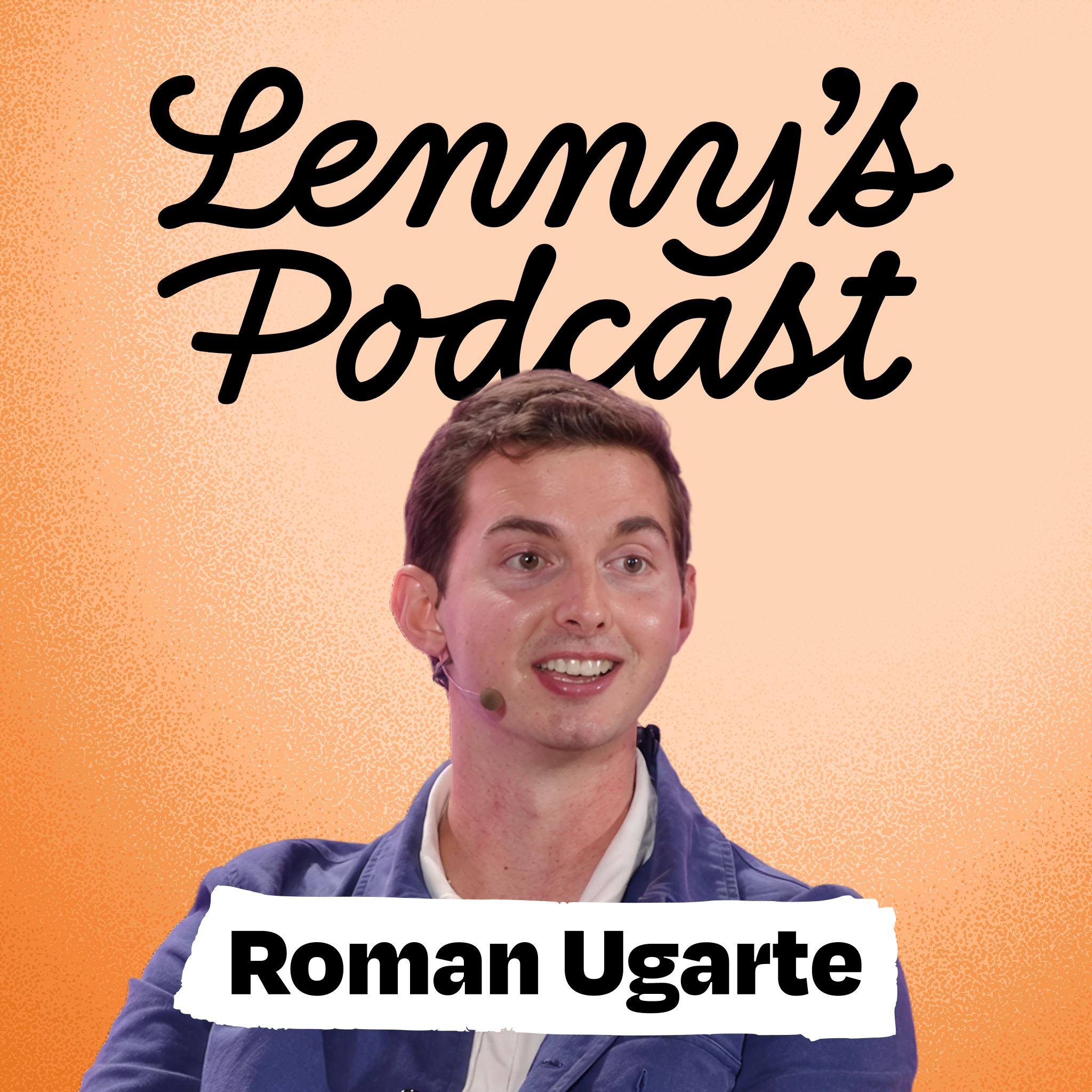 How we built Grok Bot in a month | Roman Ugarte (SpaceXAI)Lenny's Podcast · on Grokbot90 / 100
 Lessons from Ron Alfa, Co-Founder and CEO of Noetik, on Bringing AI-Native Precision Oncology to Every Cancer PatientPear Healthcare Playbook · on Keytruda (pembrolizumab)80 / 100
 S2. Ep33 - Which AI Agent Is Right for You? A Beginner to Expert BreakdownAI Automations for Business · on Grokbot
 The Age Of Free Food Delivery: Manna Air Delivery With Bobby Healy88 / 100
 SpaceX Starfall And Apple Price Hikes | The Brainstorm 13880 / 100
 Some Of The Smartest World Cup Bets Weren't In Sportsbooks | The Brainstorm 13766 / 100
 SpaceX IPO, Anthropic Fable 5, And Roku | The Brainstorm EP 13675 / 100
 Betting On The Unconventional With Draper Associates’ Andy Tang78 / 100