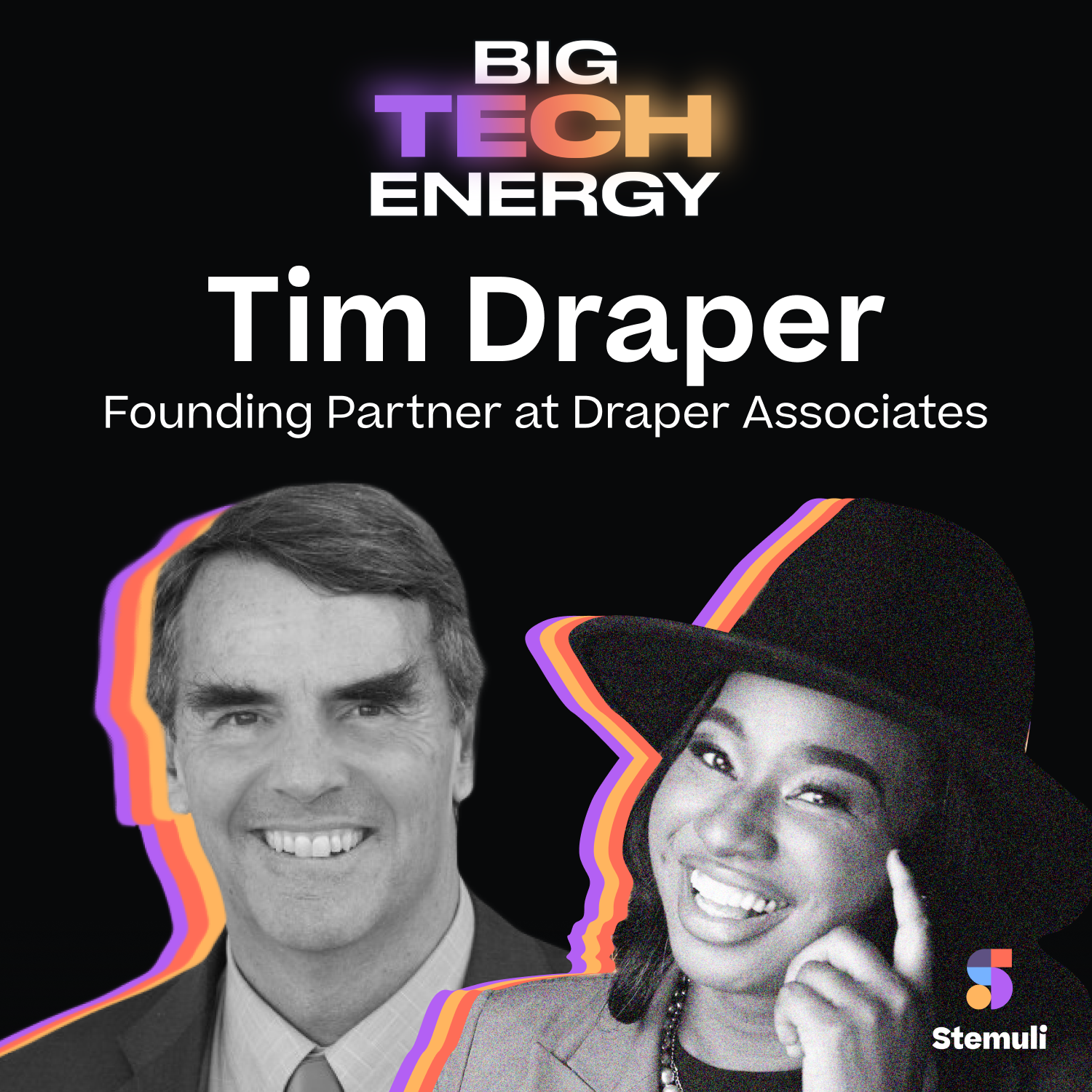
FYI - For Your Innovation · 2026-06-18 · 10h 1m
Key moments - from our scoring
Substance score
58 / 100
Five dimensions, 20 points each
Andy Tang of Draper Associates discusses how venture capital is fundamentally shifting as the cost of execution plummets, particularly in AI-enabled deep tech. With 25 years in VC and semiconductor engineering experience at Intel, Tang explains why he's now bullish on hardware, biotech, and unconventional ventures - areas previously considered too capital-intensive for venture backing. He advocates for 'convergence' between AI and other sectors (biology, robotics, manufacturing) as the next major breakthrough driver, and reveals Draper's evolution from 20-30 company portfolios to 150+ per fund, requiring his team to become 'AI-native' while maintaining the discipline that any investment must theoretically return the entire $300M fund. For B2B operators and venture investors, this is essential context on portfolio concentration, the rebirth of hardware, how pivots are the norm (even for OpenAI portfolio companies missing milestones), and why late-stage capital availability affects seed funding dynamics.
The cost of execution for hardware and AI is declining dramatically, making it more financially viable for venture capital. Additionally, U.S. manufacturing is positioned to automate at scale without labor transition challenges, and semiconductors are driving broader industrial automation - reversing the 30-year cycle where hardware was considered too capital-intensive for VC.
Every investment must theoretically have the ability to return the entire $300M fund. This means Draper targets at least 10x returns (decacorns) rather than unicorns, reflecting the scale required for venture backing at that fund size.
Tang states he has been on private company boards for 25 years and has never seen a company hit their milestones - most companies pivot. He views this as normal and sees private market flexibility as an advantage; if companies hit projections exactly, he suspects they may have sandbagged their targets.
Draper Associates operates three main businesses: the $300M venture fund (seed to Series A), Draper University (a 13-year-old human accelerator with ~10,000 graduates in 50-person cohorts), and Meet the Drapers (a Season 9 TV show featuring venture-backed founders globally).
Before starting a business, cool off and ask yourself three separate times (over days/weeks) if you truly want to start it - only proceed on the third affirmative answer. Apply the same rule before quitting: only quit on the third time you're certain. This filters for genuine conviction versus impulse decisions.
Our reviewer’s read on each dimension, with quotes from the episode.
The episode has a handful of genuinely interesting ideas - the C-student portfolio thesis, the three-pitch rule for sector conviction, and the N-of-1 clinical trial model - but large stretches are standard VC platitudes and mutual admiration. The signal-to-noise ratio is dragged down by meandering meta-conversation about ecosystems and economic growth theory.
if I'm getting pitched three times, four times, I start thinking there is a movement, something is right. So I don't have to be a technical expert in the space, but there are enough technical experts coming to me
80% of our distribution came from maybe 10% of the companies. And those companies, they were getting average grade from the investment company like a C
The founderless AI agent startup factory and the N-of-1 personalised cancer trial model are genuinely fresh framings not commonly heard in VC podcasts, and the 'highest standard deviation = best bets' inversion on the C-student thesis is a crisp contrarian insight. The rest - convergence, power law, manufacturing 2.0 - is well-worn territory.
They have the highest standard deviation as well. Right, right, right. So what you have is a group of die hard GPs who want to get the deal done. And a group of die hard GP just says oh my gosh, Tesla's too capital intensive
you could essentially just create AI agent factory and you feed it the latest Y Combinator companies of 300, maybe pick out the 150 of them that you could just create in the virtual land. And you don't need a founder
Andy Tang is a legitimate 20-year practitioner at a marquee seed fund with a verifiable track record across named unicorns and decacorns, a technical engineering background, and direct board-level experience - not a career podcast guest. He loses points for occasionally defaulting to VC storytelling mode rather than hard-won operational insight.
our vintage 2015 fund, that was a $200 million fund and we had a few fund returners. So that's oklo, that's Coinbase, that's ISI, that's Xanadu, the quantum computing company
Tesla's too capital intensive. Baidu is in a communist country. You know, Skype, the founders wanted by DOJ, Coinbase. This is a criminal activity. Money laundering, you hear it all
The episode does supply real fund sizes, named portfolio companies, and a concrete cost curve estimate for personalised clinical trials, which is more than most VC podcasts offer. However, many interesting claims - on adoption timelines, competitive dynamics, AI cost curves - are asserted without data, and the numbers provided are often round and illustrative rather than precise.
currently it takes about $2 million per clinical trial for yourself...I have a feeling it's going to be a year, two years before it comes down to $200,000
Chemotherapy is $200,000. Why not cure the person? You could collect more insurance premium
Brett Winton occasionally produces a sharp follow-up - notably pressing on whether contrarian valuations were themselves causally responsible for good returns - but the episode largely meanders through friendly topic-hopping with little sustained probing. Most provocative claims (artificial wombs, founderless startups) are accepted without any challenge to mechanism or evidence.
Was the good result partly a byproduct of the good valuation? As in if you that like as you're describing it, like basically the highest variance in the opinion was like a better selection
Isn't that what you're supposed to be doing? Isn't that your job to be systematically applying code?
Computed from the transcript - who did the talking, and the words that came up most.
In this episode of FYI, Brett Winton and Chase Prather host Andy Tang, partner at Draper Associates, to discuss how venture capital is evolving alongside AI, deep tech, and shifting market dynamics. Andy reflects on his 20-year investing career, the growing importance of AI-native companies, and why the cost of execution is rapidly declining for startups. The conversation explores founder psychology, the role of contrarian investing, and how Draper approaches unconventional ideas ranging from artificial wombs to AI-generated companies and personalized cancer therapies. Andy also shares insights on venture ecosystems, market cycles, and the characteristics that separate enduring founders from everyone else. Key Points From This Episode: 00:00:00 Introduction 00:06:09 How AI-native startups are reshaping venture capital strategies. 00:20:47 Why the cost of building companies is falling dramatically. 00:28:18 How venture ecosystems evolve through successful Initial Public Offering (IPO) cycles. 00:42:11 How venture investors evaluate founder ambition and long-term outcomes. 00:50:02 How AI could enable single-person or founderless companies.
Transcribed and scored by The B2B Podcast Index.
On this episode of FYI, we talked to Andy Tang, who's a partner at Draper and Associates. We talk about body parts and bags, artificial wombs, and all of the unconventional ideas that Draper is investing in. It's a great listen and a lot of fun, so enjoy. Welcome to FYI, the Four Year Innovation Podcast.
This show offers an intellectual discussion on technologically enabled disruption because investing in innovation starts with understanding it. To learn more, visit ark-invest.com Ark Invest is a registered investment advisor focused on investing in disruptive innovation. This podcast is for informational purposes only and should not be relied upon as a basis for investment decisions.
It does not constitute, either explicitly or implicitly, any provision of services or products by ark. All statements made regarding companies or securities are strictly beliefs and points of view held by ARK or podcast guests and are not endorsed or recommendations by ARK to buy, sell or hold any security. Clients of ARK Investment Management may maintain positions in the securities discussed in this podcast from ARK Invest. This is FYI the four Year Innovation Podcast.
I'm Brett Winton. We have a great show for you today. It's Andy Tang of Draper and Associates. Andy, you've been a VC investor for 20 years.
Before that, you're an MIT guy like me, you're in semiconductors. You've, you know, invested in, I mean, according to the bio, like 15 unicorns. You're also the host of the podcast post Money. Welcome to the show.
How are you? Good. Thank you for inviting me. Let's see if we can do the high five.
Yeah, yeah, yeah. And Chase. All right. Yes.
And then Chase, he works on our venture team. Chase is helping with the venture fund for us. Andy, Andy. Okay, you have this technical background.
You ended up in investing, but you worked at intel at some point, right? I'm a recovery engineer, as some would call. Yeah. And at this moment in history, I think investing in semiconductors in startup land has historically been a good way to incinerate money.
Now suddenly, semiconductors are a place that you can apparently make money. How do you think about the overall state of play of seed investing investing with technical fluency? And what are you looking at in the landscape of investing today? It feels like the table has turned again.
That cycle is a 30 year cycle. When I first started my career, as you mentioned, I was a semiconductor engineer. And we were all worried the Japanese were going to take our jobs. I don't know, maybe dating you, Brad, but that was a scare.
But it turns out that was. I think we were probably too pessimistic, right? And I think the world is actually more abundant than that. Right.
So I'm very optimistic about semiconductor coming back. It being a source of innovation, a lot of the reshoring activities. I think America is actually pretty lucky. I think we're very lucky in that our manufacturing base, while it was interrupted by globalization, but it's in the perfect place to automate.
You don't have to worry about getting rid of assembly line workers, they're gone. Right. They already moved to China. So it's our perfect chance to reinvest in the Americas.
Manufacturing 2.0 and semiconductor I think is in the heart of that. Semiconductor industry itself is a highly automated industry and then the product itself is going to help us automate the rest of our hardware manufacturing in the U.S.
yeah. And so within the context of. So Draper typically does seed and all the way through Series A investing. Right.
And so it sees a lot of early stage opportunities. As you look across all the opportunities you've looked at, you know, over the last year has there been a notable like change in the flavor of things that you are interested in and that are coming to you? Measured over at least the last couple of years for sure. Right.
These hardware deep tech companies used to be oh too capital intensive. Why would you do that? It's not VC's asset class to suddenly oh my gosh, let's look at that. Of course we want to look at deep tech companies.
Of course it's going to be $100 million seed round. Right. So it's coming back. Right?
It's coming back. We as a seed firm, we see the index of the market. We definitely see more deep tech founders really coming out of woodwork and I think it's good. I think it's good.
I see more truly innovative companies that could disrupt the tech landscape in the next 10, 20 years. I was talking to another person who does early stage today and he was complaining about all of the companies he's invested in or having trouble raising follow on rounds because they're not AI companies and that basically, you know, there are and we've seen them on our side, you know, companies coming with like here's a PDF and we're raising a billion at 5 billion post or you know, these.
Right. You know they have seed stage traction but I don't know, series C type financial. Our ambitions for what they're going to raise. Maybe even pre seed traction.
Yeah, precede traction and then oversubscribe. Yeah. Y. And they're over cutting.
You're cutting. Yeah, yeah, yeah. They're doing you a favor to talk to you. Yeah.
How do you, are you seeing that and how do you think about that as you're thinking about allocation or assessing these pitches and kind of like the, the variance and even kind of like the fundability of these businesses downstream from when you make investments. Yeah. So our business model is we're in the seed series A round and we will continue to invest if they continue to perform. So we are in some of these larger later stage investments, but selectively the way we look at it is that I think it's a market dislocation and it actually comes at a very interesting time is what you mentioned about AI and the intersection of AI with other sectors.
And I think at arc you guys call it the convergence, which is a term that I also have been using independently. And so you copied from us. It's okay, you definitely came to market first. But I think that is, it goes to say about this idea of AI you're going to find in different sectors.
Right. As an engineer, I often joke that it is very difficult to create the next breakthrough in semiconductor or biology or whatnot. But it's a lot easier if I just take electronics and biology and I find lots of low hanging fruit by combining these two. Suddenly we got this gift of major breakthrough in AI.
Why not marry that to the various technology platforms and you could create a new technology breakthrough in whatever sector. So the guy you were talking to, the VC complaining, not having a hard time, their portfolio having a hard time raising without mentioning AI to a certain extent, it's a reflection of a tectonic shift in the technology landscape. Yeah. You cannot ignore it.
Even as a venture capitalist, I'm looking at how am I going to use AI to make myself a better venture capitalist. In fact, at our firm, I actually tell our team members we have to be an AI native fund. Right. Whatever that means.
I don't even know what that means. I think we need to discover what that is. Right, Right. So I do think while not every startup needs to be an AI startup, but every startup needs to have a revised strategy by taking AI into account so you are not inadvertently left in the, in the dust.
Yeah. So like the landscape has shifted so dynamically that if you're not incorporating it in some profound way. Right. There's this concept in macroeconomics, and I don't remember the semantic term for it, but basically in economic growth terms, innovation is what yields you your economic growth.
And there are two competing theories of how this happens. One theory is, well, there's so many like profound key Innovations out there to be discovered. Yeah. And you randomly, as like a species come across them.
It's like, here's fire and here's the wheel, you know, and. But there's just so many of them and, or even there's an infinite number, but they're of equal transformative size. And so you randomly come across them, but then your growth naturally planes off because like the marginal next one you discover is, you know, as valuable as electricity or whatever. But you've already, you know, built on the back of electricity.
So the, the percentage increase you can get from it, productivity wise, is just diminishing. Diminishing, Diminishing. Right. The competing idea is that there are kind of like these seed technologies you can discover, and then you can combine two technologies to create another potential technology.
And that's kind of the way I believe it works. And that actually pattern matches to what's going on right now and to kind of like an episode where you can have these huge productivity transformations as you are combining these things together to figure out what works. And being like this works. And then that put together creates another puzzle piece I can plug into something else that works.
And I do think that tech, or AI in particular is uniquely interesting because it applies across so many different domains. Right. And I agree with you. I think those two competing theories could coexist.
Right. So we've been sort of chugging along. Right. I think we've gone through three industrial revolutions.
Right. First is the mechanizing labor. Right. And then you use electricity to mechanized labor, mass production, and then digitization of economy.
Right. So in between these large, large tectonic shifts, you have sort of steady growth. And then I think we're embarking on the fourth, which is that, you know, the AI revolution, it's about knowledge work, automating that. And I think that cuts across all industries.
Well, right. And the way we model, it's like, yes, on the knowledge work side, you can underwrite, you know, the entire cycle. So people are worried about it. This is a bubble.
I think that there's plenty of ways to kind of like diminish that worry. And you know, I. There's a fair argument to be made, and we believe in it, that following on the back of it, you'll have basically AI implied, applied to embodied and out of space, where it's like humanoid robots. And I mean, certainly robotaxis are going to become commercially viable at scale, we think, you know, next year in a really profound way.
So that can lead to its own set of unlocks within kind of the biology space following it some distance behind since it's impossible to commercialize and slow. But Chase, you've been with us on the venture side for a while. Yeah. How do you think about kind of like venture investing kind of within this context and kind of more we're focused on later stage stuff.
How do you think about the marrying of late stage to early stage opportunities? I think it really starts with partners, establishing partners like we have with Draper Associates, making sure that we have good connections to early stage investors that we trust. So we're seeing these deals early enough. I often like to take calls with founders maybe one or two rounds earlier than I plan to invest, just so I can get to know the founding team, I can get to know the ideas and I can track to see where they're building towards and if they actually accomplish the goals that they've set out to achieve over time.
Even if they set out and they don't achieve the goals that they're intending to, but they pivot in a way that makes a lot of sense and is in the best fortune of the business itself. I think that that is the way that I often try to. It's so simple, but it is really differentiating because oftentimes VCs are so protective of their time, they don't want to take calls with people. It's too early.
I'm not even going to take a second to look at this. Yeah, but those are the people that are missing out on deals because, you know, I can't think of how many times I've said, oh, it's probably too early for us. I'm not going to take this call right now. Definitely follow up with me on the next round.
Out of, you know, a hundred of those emails that I've sent throughout my career, maybe one of them comes back and says, hey, we're raising another round now. And I know that we were too early for you at that stage. So establishing the relationship and truly understanding the business is very crucial. And it's a huge investment ecosystem.
Huge. How often is it, have you seen in your successes that it's basically there's a major pivot between the initial push and the actual success. I want to say it almost always happens because we're in the seed round. In fact, I was with Sarah Fryer at OpenAI and I said, sarah, I feel so bad these people are giving you a hard time about private company Target.
I said, I've been on private company boards for the last 25 years. I don't think I've Ever had a company hit their milestones. So I don't know what the big deal is. In fact, I mentioned to Sarah, I said if they hit their milestone, I would secretly wonder, did you sandbag this projection?
The whole point of being private is you can really have the flexibility of dream a little bit bigger. Once you're public, suddenly you're on the hook every quarter. Help me understand, because I know that Draper is a massive ecosystem in the startup community where you guys do Draper Startup House, you guys have Draper Associates, and then you also have a growth fund. Could you maybe.
Exactly the way the firm operates. Absolutely, Absolutely. So Draper Associates started 40 years ago and over time Tim had built into Draper, Fisher, Jervis and DFJ Venture Fund. And about 15, 20 years ago, Tim and I restarted Draper Associates.
So we left EFJ and started Draper Associates again. And that was sort of the Draper Associates 2.0. So that's our venture business.
And right around the time when we restarted Draper Associates, we also created Draper University. And that's a human accelerator, as we called it. It's a way to train founders, helps founders start business. And we were targeting founders 18 to 28 years old, essentially people who never had founding experience.
And we're just really trying to help people discover their passion for starting business. Is this someone with an idea that they want to start, an idea that they want to build into a business, or it's someone that has the idea that maybe I want to be a founder. So it's both. So over time, it started as anybody who has an idea will help you.
And now we have people like that as well as people who actually have a tangible business. So the second group of people look more like an accelerator founder, if you will. Right. So that's our education business.
And then we also have a TV show called Meet the Drapers. And it's a shark tank for venture backed founders. So the difference is shark tank tends to focus on the product. We actually set up a platform for founders to pitch their business.
So today the university has about 10,000 graduates. So we started doing this in 2012 and it's a live in program. So there's actually dorm rooms. So it's a one stop shop in Silicon Valley.
How big is like a cohort? Typically each Cohort is about 50 people and we run it three times a year. Wow. So been doing that for 13 years and it's been great.
And then Meet the Drapers. We're on season nine and we typically meet people around the world. We go to different cities around the world and just meet local entrepreneurs. So we believe venture capital is global, but the network is local.
People talk about like a venture outcome and like Shark Tank is clearly not targeting venture outcomes. It's a little different category. But is that a right way to think about the market from an entrepreneur? Like, is it okay if an entrepreneur is like, I'm going after this thing and it's going to be, well, this could be $100 million business, is that an outcome?
That's like, great question. So in fact, at Draper University, when we work with early stage founders, I coach them to think about starting a business because it's a mission to you first. Just think about a venture funding. Venture funding is only in my mind, a very small sliver of type of venture.
You could have a lifestyle business. You could have a cash flow business. Right. You could have a nonprofit.
You should do what you like to do. In fact, what you should never do is to start a business because you think you could raise venture money. Because once you raise venture money, that's when the challenge starts. Right?
Right. So make sure you really want to do it. So I have a rule of three. The rule of three is this.
If you want to start a business, you should not start a business. You should cool off for a few days. And then you should ask yourself in a few days, if not a few weeks, do I want to start a business? The second time, and you could guess where this is going.
Don't start the business. The third time, do I want to start a business? Then you start the business. Right.
By the same token, on the way out, once you start the business, before you want to quit, guess what? Cool off, don't quit. You do that three times. The third time, if you really want to quit, you should quit.
So the rule of three, my advice to entrepreneurs is to really think hard before you start a venture. Not every venture needs to be venture outcome. But if you truly are looking for something revolutionary, world changing, that requires lots of partners along the way, that requires capital. That's a venture backable business.
Other than that, you could do things on your own. You could start a perfectly rewarding consulting business. That's a service based business that makes you happy, makes the world a better place. You don't need venture, it's great.
But for Draper, for you to fund a business, you need, oh yeah, it's a venture. Yeah. For us, we got required IRR return. In fact, our fund is a $300 million venture fund.
The way we look at it is that every investment, if successful, has Ability to pay back the entire fund. Got it. That's our metric. What that turns out to in real terms is that we're shooting for at least a deck of corn.
Ten years ago when I first started the business, it was really awesome to have a unicorn. But these days it's not, it's not big enough. Right. We need to be shooting for decacorns.
I want to touch back on the way that the venture landscape is evolving in parallel to that because you've been in this career for a long time and over the last 10 years or so venture has evolved so dramatically not to focus on the past and where we are today more. So where do you see it going in 10 years? What's going to change that? No one's seeing right now.
Over the course of the next 10 years? Yeah, I think in the course next 10 years. And I'll use fundamental shifts in marketplace. I think a big shift is the cost of execution is coming down.
The cost of execution specifically for AI. It's going to reduce the capital intensity and what that does is it's going to allow more ideas to come to fruition. What that means for venture is that we already have a portfolio of 1 to 150 companies per fund. We compared to other venture firms, we really democratize capital access to founders.
But I think in the next 10 years you're going to see that even accelerate further because it may not take as much money to start a new business. And we as an industry will have to make sure we cover that long tail. That long tail is getting longer in my opinion. And do you think your portfolio will grow?
You'd mentioned to me earlier, originally you were doing say 27 to 35 investments per fund. Now you're doing 150. You project in the future it'll be 400, 200. Yeah.
Maybe growing over time. Right. So we started when I started my career 25 years ago. Our funds were 20 to 30 companies each.
And it was constrained by the number of board seats we could take. So you take the number of partners you have, multiply by 7 to 10. That's the portfolio size. And that turned out to be the law of large numbers.
That's a bare minimum of having a portfolio that would give you a chance of diverse away the statistical risks. But now I think we're on the other spectrum where there are going to be so many more founders, entrepreneurs coming to the market and you can't afford to not talk to that long tail because our job is to minimize the false negative investment Error as an early stage investor. Late stage will be the opposite, minimizing the false positive investment error. So if you're investing in 400 companies, then do you still need to hold the precondition that any one company could or an investment is asked to be in a company that can return the fund?
It's a good question. We may still need to. Right. Because the number of outcome, I don't think the number of the blockbuster because you could argue cost of execution falls.
And so then actually there'll be more competition. There'll be more competition. But it also maybe means you face less dilution to get to some equilibrium value. So you could accept kind of, oh, we were searching only for decacorns, now we're back to unicorns are fine.
And you know. Right. But the thing you have me thinking is, is the market going to be as concentrated as now? Right.
Right. You're still going to have two to three players that just dominate. And I can afford to not be in those two to three players if that's the case. We still have to make sure we get those winners.
Right. So the number of players to start, start the race is the same. You're going to have the same number of winners. Those winners are just going to be obscenely more valuable.
Yes. Yeah, yeah. I think that I have to think about it. But that's a great question.
I don't know the answer. But I think right now my fair if my safe assumption is that the winner pool may not be as fragmented as we would like it to be. Right. I would like to be less concentrated because it makes my job easier.
But to be on the safe side, I have to assume my job became more difficult because there are more people entering the race. But you're still. My job is to still find the top three. Right.
It seems to me statistically intuitive that the power law would just steepen and flatten where you have much longer tail you're funding, but then the actual winner actually gets much, much more valuable. Also it's even more concentrated. Right? Yes, yes, yes.
Right. That would make my job even more difficult or our job more difficult. That's why we have to rely on teamwork. You had mentioned the concentration in private markets and you know, not to speculate, but we can anticipate that a good number of very late stage private companies are going to IPO over the course of the next 18 months, say, and that's going to flood the capital or the private markets with liquidity.
That's been tied up for a number of Years. I hope so. No, just kidding. I hope they're coming back.
And you know, Ark, because we do public and private. I know there's the conversations of what does this do to the public markets? Oftentimes lately, but what does it. And we've also been having the conversations like what does it do to the private markets?
If that much liquidity opens up, do you think that it cycles right back into people wanting to deploy in companies and reinvest their, their gains or I mean, selfishly, I hope, I hope the capital comes back. Right. Because I do think as a seed fund our companies are typically capital constrained. Right.
In other words, I think, Brett, you mentioned in humanity there are so many different innovations. Which one do we pick? We're still randomly picking stuff. I would like we as a civilization or humanity systematically apply capital to where the most.
Isn't that what you're supposed to be doing? Isn't that your job to be systematically applying code? Exactly. But there aren't enough.
You just need more capital to. We need more and we need more people to back our series A series. And I'm elated to find ARK Invest coming from the public side, applying both your education, research, awareness to bring more investors into the pre ipo, the growth stage, which is we do need capital. And then hopefully over time with the Spark Lab, you bring capital into even the early stage because there is a real shortage of capital in that valley of that chasm.
Because that chasm is difficult for public investors to play directly. It's difficult for early stage investors to fully understand. So there is a gap. And I do hope Chase, as you mentioned, the capital coming back and that would replenish that chasm.
And you've been through a few cycles at least when you, as the IPO window has opened up, typically it results in kind of just More assuming the IPOs that are potentially forthcoming actually come off and do well in the market. Usually people can't spend all of the money by themselves. A knife standard. But then it's like I have to do something with that money.
Usually it feeds back into at least the geographies they're in. Right. I mean, that's what I hope so. I mean speaking of geographies, we're in St.
Pete, right. So I was asked what about this as a new innovation center? And I said that we have been involved in many different innovation centers geographically. Typically it requires time and it specifically requires time for the, for the capital to really graduate the venture ecosystem.
And then coming back, it serves as a witness to young engineers Venture is a good place to invest your career in. As importantly for angels to reinvest in early stage companies. Yeah, I was talking to someone who was saying that Los Angeles, which was like a backwater for venture for a long time, that actually the snap at the time, Snapchat arising and then being a big win for Los Angeles, actually it just made a little ecosystem begin to arise there. Whereas previously I think the people who would deploy capital there were approaching things in a very risk averse way, which is a challenging way to operate in venture.
I fully agree. I have the stereotypical view of VCs in LA pre snap versus post snap. There's a lot of protection, cutting, burn versus how big can it get these days you see a marked difference in the transformation. I think it's one thing reading about big outcome on TechCrunch.
It's another to live through it either yourself, which is great, if you got a big distribution event or somebody within one degree of separation that made life changing, either career or wealth. Right. And that really allows people to think bigger. Yeah, I think it would be a great thing for ecosystems worldwide.
I think, you know, SpaceX for Austin. Right. A lot of, you know, and of course a lot of AI companies revitalize San Francisco. Yes, yes.
We have our own backwater in our backyard. Right. That need a lot of fixing. Yeah.
How we understand like the deployment cycles for a typical Draper fund. How many investments are you guys making out of? You said about 150 of each fund today. But how long does it take you to deploy that capital?
Is it like the timeline? So we have an investment period of three to four years. Let's call it three years. So it's about, you know, call it 30 to 40 companies per year.
And so per fund. So we're on our fund 8. You mentioned we're our late stage vehicle. So our vision is to stay with our founders.
Right. Early stage, late stage. And that's where we actually would team up with a firm like ark. You guys coming from the public side.
And really where we meet is in that late stage venture. And I think from a founder's perspective, they much rather staying with a investor and a board member they know and kind of continue on. And we would love to bring in value add investor thematic investors who really understand the space like ark to kind of take them. It's almost like a relay, hand the baton over so they start the next part of the journey.
And is Draper known to double down on its winners? You had mentioned, you said to me at one point, most of your most successful outcomes were often C students, I think is the way that you phrased it. That's right. Our most successful students are the C students or the founders because we used to run a consensus investment committee and it turns out 80% of our distribution came from maybe 10% of the companies.
And those companies, they were getting average grade from the investment company like a C. But what's really interesting is that they there must have been one A plus to actually have the investment go through, right? Yes. Well, so what happened is that they have the highest standard deviation as well.
Right, right, right. So what you have is a group of die hard gps who want to get the deal done. And a group of die hard GP just says oh my gosh, Tesla's too capital intensive. Baidu is in a communist country.
You know, Skype, the founders wanted by doj, Coinbase. This is a criminal activity. Money laundering, you hear it at all. Or oklo this nuclear.
Oh my gosh. When was the last time you have a nuclear reactor being certified to operate in the us? You can name a million reasons not do these deals. Right?
But it turns out all these companies, they were founder led and their public still founder led because they were mission driven and they were highly controversial at the time. And it's precisely those reasons we make these contrarian early bet and we got very good valuation because nobody wanted to bet on them. Was the good result partly a byproduct of the good valuation? As in if you that like as you're describing it, like basically the highest variance in the opinion was like a better selection by.
It was an indication that like there was something there and maybe also means you got it at a cheaper price than you otherwise would. Or so it's both. Yeah, it's because you're a contrarian. You get a discount on valuation because it's a liquid market.
Right. There are no, basically there were no bids. Robinhood is another one. Baiju and Valad were turned down by all the Sand Hill VCs until they came to us.
And I think we were. Now we may appear smart, but at the time they probably thought well these guys. Why would you bet on two young people with no experience going after Wall Street? This is a highly regulated industry, financial services.
By the way, there's no such a thing as fintech. Back then it was just financial service. Internet, bring Internet to the financial service, bring mobile Internet and you're not charging people. How crazy and irrational could you be?
But it turns out you have two mission driven founders who just thought, well we want to bring mobile trading to the millennials. And if it's an app, it's a God given right. Apps got to be free. So those two things.
And that was their business model. And it turned out it was what the market wanted. You know, it's interesting thinking about like contrarianism or it's as you described Robinhood. It's almost like the art of winning in business is partly the art of operating under unconventional constraints in some way, as in kind of like that framing of how.
And you know, I remember Robinhood when it was like, you know, getting raked over the rocks of the controversy of Gamestop and stuff. And look at it now, like, you know, it's like this incredible kind of entrepreneurial story driven by a founder, but also like you said, started with almost an anti pitch for what it was doing. We're not going to charge money. And like, you know, millennials who don't have any money.
Why would you go that market? Yeah, yeah, yeah, absolutely. There are a million reasons why they shouldn't have succeeded. But there is simple thesis of just democratizing investment access that turned out to be that one reason.
It's that long tail of why it's precisely the C student. Right? Right. We often hear about the positive contrarian views that people have.
But I feel like it's easy. It's how often are you contrarian? And then be wrong and wrong on the other side of things. I told people that as an early stage vc, I'm really wrong.
I'm just not right in the expected time frame. It took a little bit longer for me to write than expected. Jokes aside, I find it it's very easy to make a prediction of what may happen 10, 20 years. Right.
But it's a lot more difficult to say, I got a 10 year fund, this company's got 18 month Runway, then I got to be right. Then I'm often wrong. I'm often wrong. In fact, that's one of the reasons why we have to have 150 portfolio companies.
Because we're often wrong. But we're not wrong in the way that you might expect. We are just too optimistic in our adoption timeline. But I'm also often wrong in underestimating the outcome of my winners.
So I'm wrong in two ends. A lot of companies I thought would have taken off by now, they didn't and they ran out of money. We had to shut them down. And it's very sad.
But I'm also often wrong. I never expected Robinhood to be so big. Coinbase to be so big, we have another portfolio company, isi to be so big or oklo to be so big. So I think those are the kind of errors I, as a venture investor, I'm still learning to kind of fine tune the craft and I think it's a lifetime learning.
Are the failure cases more often basically just a market dynamic that's impossible to pierce through, or is it more often a founder who flounders or can't figure out how? Or can you tell? Obviously we as an investor, we never pull the plug. We may stop funding them.
A company only dies when the founder gives up. That's my definition of company dying. Oftentimes what I have seen is it's a miscalculation of that cost curve coming down and the adoption rate going up. Many times in my career I bet on a technology solving a real life problem, such as AI based drug discovery companies.
So I joined Draper Associates 20 years ago. Before I joined our fund had invested in what is that? Computational based drug discovery companies. Of course it didn't work even when after I joined, I backed two companies, one sort of going sideways, the other one's now finally taking off.
It's really a judgment of when do you think that technology costs are coming down fast enough versus the commercial value? Yeah. So we have learned to just continue to make small bets even when it doesn't happen. And you just never know.
Based on desktop research, you have to be in the company to figure out if the cost curves have crossed. Right. And what separates the founders that are relentless. Never give up when you're first meeting with a founder, it's a good signal that this is going to be an exceptional founder.
Yeah, maybe a little question. I mean, one way I think about it is like you have to be a little crazy to be a founder. A little. You have to be.
And you have to be pretty crazy to be a successful one because you have to be so resilient. Yeah, absolutely. I think it has to be. It has to be a mission.
There has to be a little bit of irrationality. In fact, at Draper University oftentimes try to convince people to not. I said, hey, and I really try to genuinely, I try to help the founders. And it's not a sort of a selfish, oh, I don't want to invest my money and lose my money.
I don't want to see people stuck in things they don't like, enjoy doing. So I tell people very openly, if your goal is to make a lot of money in life, there's no shame in that. Go Work for Google, go work for Facebook, go work for OpenAI. It's a much more deterministic way of making money.
Right. Don't mix up the idea of starting a business and making a lot of money. You will make a lot of money, right? But as an individual, you can't build a portfolio as I do.
Right? Because it's your career. If you have one shot in your career and you want to make money, don't do a startup. Because doing startup, the risk of failing so high, it's actually not a good way to create wealth for an individual.
Now if you are a founder, you see something you wanted to change, you see there is an opportunity. Opportunity. You see something is wrong in society. Right?
Go do that. And I could tell you if it's a good investable business, right? Because if we team up, you'll probably make money. So we look for that kind of founder who sees something is wrong and I really want to fix it.
And my job is to help you figure out there's a business case. There's sometimes this like conflict between investors and founders where it's basically like the founder gets an acquisition offer that for the founder becomes a life changing amount of money. But from the investor side it's like, well, why would you take that when this could 10x from here? If you keep pushing, how does Draper approach that or how do you think about kind of that conflicted incentive structure?
What we try to do is we figure that out in the front end. Is this somebody who's going to walk away at say $100 million exit because it doesn't work for our business model. Right. We actually encourage those people, raise money from somebody else.
It's perfectly fine. Venture backable business at 100, it's just not venture backable by this venture. Right. So we try to do that in the front end.
Right. But let's just say that I somehow didn't do a good job of filtering that out. I'm in the cap table and there is an opportunity for the founders to sell. I absolutely respect the founder and let them do their thing.
I might give them a. I like to think I'm more of an uncle than a dad. We're not going to tell you what not to do, but we'll give you our share of advice. We'll tell you, hey, and we'll be very straight up, hey, this is your first venture.
Take the win. Great. And we'll do this again together at the same time. I'll tell you, I've seen many cases where founders that's their biggest outcome.
It's very hard to find a good business you could keep building. The fact that you got an offer, it tells you you're on the right track. Don't give up. If you try another 18 months and it's not what you wanted, most likely the offer is still going to be there.
Right, Right. So we're very supportive of founder taking the acquisition offer if we're in the cap table, because we understand that what percentage of your guys returns come from singles and doubles, not, you know, the homerun fund returning profile. 10%. 10%?
Yeah, 90%. Our vintage 2015 fund, that was a $200 million fund and we had a few fund returners. So that's oklo, that's Coinbase, that's isi, that's Xanadu, the quantum computing company. So all these are fund returners.
And then we have one more otter and there's a bunch of other ones that I think will make money. But each one of these are, I think they're all seed level investments. So we definitely look for that long tail. And each one has the ability to return the whole fund.
And even when you're not, we would expect a meaningful part of fund, let's say half the fund or a third. So that's the business model. So Draper, I mean, Tim himself prides himself in investing in unconventional ideas. Can you give us, I don't know, three unconventional things that you're invested in right now?
Sure. The first one I would mention is an artificial womb company. Right. So in the way we think about unconventional ideas, so we're not just completely crazy where we back these things that are just halfway crazy.
Just halfway crazy? Yeah. Halfway crazy turns out to be a good strike the balance with the normies and the crazies. We're the ambassadors to the.
So I use this simple rule. So Draper has this brand of backing unconventional ideas. So we get pitched by sort of the long tail. Right.
If I'm hearing about an idea one or two times a year, I was like, okay, so this is probably a little bit too far on the spectrum. If I'm getting pitched three times, four times, I start thinking there is a movement, something is right. So I don't have to be a technical expert in the space, but there are enough technical experts coming to me to tell me perhaps the technology is mature enough for startup, not for the hospital, but for startup. Perhaps a customer base is intrigued enough, there is enough demand.
Artificial womb will be that sort of that category. Because I was pitched once or twice a year, seven or 10 years ago. And I kind of chalked that up as thank you for educating me. By the way, when I talk to founders, I'm really thankful they spend their life learning about something and they spend one hour to bring me up to speed.
Right. I'm an electrical engineer. I got nothing to do with artificial womb, but I now understand enough to be dangerous. So if I hear that once or twice a year for seven years, and then now I'm hearing it three, four times, that's when we as a firm will start thinking about making an investment.
So then it's like now we're picking between these three or four, or it's kind of like you've heard it three or four times and then the fifth person comes in and it's also the compelling entrepreneur. And then it's like you place your chip. It is all of the above. Right.
We could do one or two, or we might do. We probably won't do three to four, because to us, it's a speculative sector bet is what I would call it. And we oftentimes fail in the speculative sector bet. But when it does work out, it becomes, for instance, nuclear.
Ten years ago, when Oklo was starting, Jake and Caroline, I don't think not many people gave them the time of day. Right. But we just thought, hey, big market, smart founders, let's see what happens. Of course, the government said you can't build nuclear power plants, so we'll place these bets in certain sectors.
Crypto is the same way. Right. Kind of goes against the idea that Peter Tail often presses, which is competitions for losers. You're waiting for the competition to develop and then deciding to enter the market.
Yeah, that's right. In fact, When we see startup companies with too many investors oversubscribed, the early stage, the late stage is different. Right. Early stage, somewhat of a red flag because I feel like then perhaps it's somewhat saturated.
I want to find things that haven't been uncovered by other investors. So there's a fine balance of. Yeah, I think it's a fine balance. Very competitive or.
And, oh, this is just starting to be something that's viable and investable. It's a complete crazy versus it's too efficient of a market. Right, Right. To a certain extent.
If it's too efficient, people are probably overpaying. And also, as a society, is there a lot, a lot of capital serving those entrepreneurs and the innovation. The idea. I'm going to go somewhere else.
As you mentioned, the society's got lots of ideas that can Be serviced. Why don't I go look there? The grass is always greener on your side. You know what, I'll go somewhere else and look.
Yeah, I mean there's also, I think that often those circumstances of like capital chasing seed round. It's kind of. Or I used to in the public markets. It happens too.
It's like a company that is going from zero to one. People say this is a zero, this is a zero, this is impossible. Suddenly it crosses to one and then the markets turn around like lots of other zeros and say they're all worth 0.5, but they're actually.
It's incredibly hard to do the 0 to 1. So then capital kind of like pattern matches and overpays for all of these really probably zeros. 4.5.
Yeah, absolutely. And there's another one. You want to hear another one? So artificial wombs.
There's another one. The other side of the spectrum, we've invested in a company that essentially is a AI agent factory of founders. Right. So the idea is that you could create a founderless startup by using an agent.
Yeah, a zero person company. Zero person company, right. For a while. I've not for a while.
For the last maybe 18 months, 24 months I talked about this idea of single person unicorn companies. Right now we're talking about a founderless unicorn companies created by a. Created by a startup itself of an AI agent factory. It's a seed funded company by the way.
Both are seed funded companies. So they could fail. But the idea is you could have for certain industries more bits than atoms, but certain industries. You could essentially just create AI agent factory and you feed it the latest Y Combinator companies of 300, maybe pick out the 150 of them that you could just create in the virtual land.
And you don't need a founder, you don't need a CEO, you don't need a cto, you don't need a salesperson, you don't need customer support, you don't need chief revenue officer. It's all done by agents. Yes. And see what happens.
You need budget for tokens and that's it. That's right, that's right. That's right. And in that model you actually don't think about this idea of Venturescale.
A $10 million company is perfectly fine because it's just one of the agents. Yeah. It's almost like the startup studio model. Without humans.
Without humans. And then they actually did a funny study. They said they'd send out surveys to humans. Would you rather work for A human or an AI agent.
And guess what? They'd rather work for the agents. Yeah, humans rather work for agents. Imagine.
But yeah, it's kind of like probably more predictable and you have like, better. I mean, always nice to you. Yeah, humanity is pretty messy. I mean, it is funny to think about kind of.
I mean, clearly people prefer Waymos to Ubers because, like, waymos are. I think mostly because Waymos are just like spot on the average is in terms of experience. Whereas with Uber you just have much more all like, you can have plenty of nice Uber drivers who like provide you with breath mints or whatever. Or no, to not talk to you or whatever your preference is.
But with. But you sometimes don't. And so kind of like the. The fact that AI can provide a consistently average experience to people, I think can make it like very, very attractive in some circles.
Reduce the volatility in your supervisor manager interaction. There's value in that. We all have great bosses. I mean, Kathy, awesome person, right?
Of course, 100%. But looking back, I'm sure not everybody is a Cathie Wood. Quality of firm culture and managerial mentorship. Right, Right.
All right, third unconventional idea to finish this off here. The third one, a bag of body parts. So instead of. Okay, so the first one.
The first one was a bag with a emerging body. The third is a smaller. It's a smaller idea. Okay.
Yeah, it barely made it as a big idea. So the third one is. It's also biology. I was trying to think of maybe a different sector, but we spend a lot of time in biology these days with gene engineering and curing cancer.
But a bag of body parts, meaning that instead of trying to cure an organ, you could grow an organ outside of the body and then you could replace it when you need it. And along that line, there are a few other ideas sort of qualify for that third category. Another one would be the end of one trials. So the extreme of personalized medicine.
Right. So I'm a 14 year cancer survivor. Right. Cancer is something that comes from your own body.
So the idea of taking a tumor, sequencing it, Sequencing cost is low. And then if you could create clinical trials cheap enough just for me, you actually knock down all the FDA costs. You're not trying to find a cancer drug for a million people. Not even like 100,001.
And then if you find that one drug for one person, suddenly I bet you could find another 99 people. Right. So it's a different kind of approach. Oh, interesting.
So it's like actually you target the specific disease for the specific one person who needs the. And then post haste you say, hey, we've just developed this thing. There's no work. Why don't you try it?
Let's find other people who it might work for. Right. You do just. You spend $50 sequence your tumor against mine and this could be done in the cloud.
And now you have a database of all these long tail drugs. So it's a different approach. It is controversial. Yes.
The people who started this. And he's actually a great podcast guest. I would plug for him. His name is Sid.
He's a founder of gidlab Billionaire. So I joke that, hey, we could cure cancer in billionaires. All right, I'm going to catch some flack for that. But the billionaires also started, or at least Wall street started these big satellite phones.
We all appreciate having a cell phone. So I have no problem in curing cancer in billionaires first if that provides a footprint and drive the cost down for the rest of us. So I think that's that third controversial idea, curing cancer in billionaires. It's a dramatic.
Well, it's really curing cancer for one billionaire. One billionaire. But they all could cure themselves. Let's all encourage them to cure themselves and then the rest of us will be cured.
Yeah, I mean it is. I do think that there's a. In a world of abundance, which I do think is going to happen, like universal, abundant income, real incomes are going to rise because of like AI and embodied robotics and stuff. And what are we going to do with all of this extra wealth?
I think we're all going to try to live forever. And you can already see it, the billionaires are already trying to live forever. Right. And that like the process of figuring out how to live forever, even if it takes not a billion dollars, but some fraction of a billion dollars to do it will be the process by which we figure out how everybody can do that.
Absolutely, absolutely. In fact, through this research, what I found is that currently it takes about $2 million per clinical trial for yourself. I can't afford that. Most of us cannot.
But I could see that. I'm a semiconductor engineer. I see cost curves coming down all the time. I have a feeling it's going to be a year, two years before it comes down to $200,000.
10x because fundamentally there's nothing expensive about creating some therapy biologics. It's just bacteria and cell cultures. Feed it a little bit of sugar. Yes.
Quality control, this and that. It's just current system is set up to Serve these billion dollar pharmaceutical drugs companies. So the scale is different. So they got to charge you for it.
But if you suddenly could change that economies of scale, you're serving hundreds, thousands of 10,000, a million clinical trials. You could bring down the cost to say $200,000. Suddenly. If you could cure cancer for $2,000 per person, the insurance company should get behind that.
Right? Right. Chemotherapy is $200,000. Why not cure the person?
You could collect more insurance premium. You don't even have to be altruistic or try to save me. I'll pay more insurance premium. So I think we get there.
It really, we're at the cusp. The fundamental building blocks are there. This is not a technology question anymore. This is a policy, a business model question, which is what I like to the kind of risk I'd like to take.
Sounds very small except in the health space. It's incredibly huge. It has been there for decades. Right.
Why are you so lucky that we're the ones who are going to solve that now? I agree with you. There's a. There's a tough nut to crack.
Right? Right. Yeah. Well, Andy, it's been a pleasure having you on the podcast.
Thank you for joining us and look forward to hearing about the artificial womb company or, you know, n of 1 trials in the future or whatever else comes out of Draper. So thank you. You guys have been very kind and thank you for making this podcast fun. This is one of the most fun podcasts I've been on.
I want to give you a gift. It's the Draper baseball. It says give me your best pitch. You guys get pitched a lot, so save that with you.
And the entrepreneur come pitch you or whoever, you could give him this baseball. Give me your best pitch. Nice. And if the pitch is bad, I throw it at Don.
Throw the fastball. Yeah. All right. Thank you, Andy.
Thank you for Mark Invest. This has been FYI, the four Year Innovation podcast. Please like and subscribe on whatever podcasting platform of your choice and leave us comments. We'll try to respond to them.
ARK believes that the information presented is accurate and was obtained from sources that ARK believes to be reliable. However, ARC does not guarantee the accuracy or completeness of any information and such information may be subject to change without notice from arc. Historical results are not indications of future results. Certain of the statements contained in this podcast may be statements of future expectations and other forward looking statements that are based on AHRQ's current views and assumptions and involve known and unknown risks and uncertainties that could cause actual results, performance, or events to differ materially from those expressed or implied in such statements.
Other episodes covering the same guests and topics, from across The B2B Podcast Index.
 Moderna's Cancer Vaccine May Cut Deaths In Half | The Brainstorm 14662 / 100
 The Age Of Free Food Delivery: Manna Air Delivery With Bobby Healy88 / 100
 SpaceX Starfall And Apple Price Hikes | The Brainstorm 13880 / 100
 Some Of The Smartest World Cup Bets Weren't In Sportsbooks | The Brainstorm 13766 / 100
 SpaceX IPO, Anthropic Fable 5, And Roku | The Brainstorm EP 13675 / 100