
Founder Thesis · 2026-07-29 · 1h 12m
Key moments - from our scoring
Substance score
64 / 100
Five dimensions, 20 points each
The gaming industry's revenue model operates through distinct layers: hardware platforms (Sony, Microsoft, Nintendo for consoles; Steam and Epic for PC; Apple and Google for mobile), publishers who handle commercialization and distribution, and developers who build the actual games. Roby John breaks down how games have evolved from upfront purchase models to live service monetization through in-app purchases, battle passes, and ad-driven models - particularly prevalent in emerging markets. He emphasizes that gaming now captures larger consumer wallet share than movies and music combined. The turning point in his company's trajectory came with the battle royale phenomenon around 2017, which dramatically lowered the barrier to entry for new gamers in emerging markets by offering legible, socially-driven gameplay. John highlights how companies like Valve and Epic Games dominate by controlling all three layers: game engine (Source for Valve, Unreal for Epic), content creation (CS:GO and Fortnite respectively), and distribution platforms (Steam and Epic Games Store). His journey from educational games via Y Combinator to building real-time multiplayer shooters showcases how specialized technical expertise - in Unity game engine and server architecture - enabled Super Gaming to compete in the mobile-first gaming economy.
The stack consists of platform owners (hardware like Sony/Microsoft/Nintendo for consoles, or Apple/Google for mobile), publishers who handle commercialization and distribution (like Bandai Namco, Tencent, Krafton), and developers who build the actual games. Publishers and developers are sometimes separate entities or owned by the same company.
Battle royale games achieved legibility - they're easy to understand even for non-gamers watching streams - making them effective entry points for new mobile gamers. Combined with affordable Android devices, free internet, and voice chat, they became cultural phenomena that onboarded massive numbers of casual users who wouldn't normally play shooters or midcore games.
Games have shifted from one-time purchase models (buying a boxed product) to live service models with in-app purchases, battle passes, and subscriptions like Xbox Game Pass. In price-sensitive markets like India, ad-driven monetization combined with in-app purchases is prevalent, while Western markets sustain annual spend of $150-300 per person.
Both own all three layers: a game engine (Source for Valve, Unreal for Epic), proprietary content (CS:GO and Fortnite respectively), and distribution platforms (Steam and Epic Games Store). This vertical integration gives them significantly more value than companies operating at only one layer.
Unity is a commercial game engine that handles physics, asset integration, rendering, and networking - originally designed for mobile development and platform-agnostic deployment across Apple iOS and Android simultaneously, making it the platform of choice for mobile-first studios like Super Gaming.
Our reviewer’s read on each dimension, with quotes from the episode.
The episode covers substantial ground on gaming monetization models, market dynamics, and studio structure, with concrete examples (battle royales earning ~$1B/year in India, Indus at 10M users, $20M funding). However, there's significant padding - lengthy explanations of basic concepts (what MMOs are, what Unity does) and repetitive discussion of the same ideas across different contexts dilute insight density. A B2B operator would learn meaningful information but would have to filter through considerable throat-clearing.
Battle Royale games have probably made the most money in the app stores. They make, I would say, about a billion dollars a year in a market like India.
The app stores came and changed all of that. So Super Gaming or our company would not exist, uh, if we didn't have the app stores inside of it.
The guest articulates some contrarian or fresh takes - the 30% app store tax being less painful than infrastructure/UA costs, the concept of BRX (Battle Royale Extraction) as a new genre, and viewing culturally-rooted games as a wedge in saturated markets. However, most frameworks are well-trodden (live service models, franchise IP value, distribution layers of gaming companies). The India-focused angle is somewhat original but not deeply novel - many have discussed localized gaming. The core monetization and studio structure discussions largely recycle standard industry wisdom.
Battle Royales are the soccer of shooters. They made it very legible for people to understand.
I have a slightly contrarian view to this. Uh, and if you think about it, we were three guys, a dog in a dream that did not have a way of distributing our software.
Robby John is a genuine operator - founder/CEO of Super Gaming with 15 years of hands-on game development experience, shipped multiple titles (Mask Gun with 100-120M users), raised $20M from tier-1 VCs (A16Z, Bandai Namco), and is actively building a AAA title. He has direct experience with publishing deals, live ops, and emerging market dynamics. This is a credible, battle-tested practitioner, not a consultant or talking head. His insights are grounded in real product iteration and business outcomes.
Mask Gun game or uh, the arena that you play the game in is the size of a football field. Uh but when you think about a battle royale game, it's the size of a city.
Indus launched in, um, uh, early. Late 2024. Early 2025. We're at about 10 million users
The episode includes concrete numbers: battle royale market ~$1B/year in India, Indus at 10M users, Mask Gun at 100-120M users, $20M raised, purchasing rates <1% in India vs 6-12% in Brazil, $100-300M budgets for AAA games globally, $30-50M with purchasing parity for India, 500M gamers in India, 60%+ of Roblox audience fitting their target. However, specificity is inconsistent - many claims lack hard numbers or timelines (e.g., 'mosaic of deals' with publishers, 'many success stories'), and some metrics are vague (Mask Gun at 120M is mentioned but age and current traction undefined). Named examples are present but underexplored.
Battle Royale games have probably made the most money in the app stores. They make, I would say, about a billion dollars a year in a market like India.
I would say that, you know, the accepted budget around the world was anywhere between 100 to 300 million dollar budget to build a good triple A title. Uh, if you account for GDP or like paying parity, that number would probably be 30 to $50 million.
The host (Akshay Dutt) asks relevant questions and shows genuine curiosity, but rarely presses the guest on claims or follows up aggressively. When Robby makes broad assertions (e.g., 'sequels never do well'), Akshay acknowledges them but doesn't challenge with counterexamples or push deeper. The conversation is pleasant and exploratory but lacks the friction that would test ideas. Few moments of productive disagreement or 'wait, unpack that' questions. The host sometimes plays catch-up with terminology rather than steering toward operational depth.
Help me understand, I want a little more clarity here. Epic is doing everything. It has an engine. It is itself a developer.
Do you get second chances? You released Indus. There was a muted response. Would someone come in and try again?
Computed from the transcript - who did the talking, and the words that came up most.
Most people still think gaming is entertainment, not an industry bigger than movies and music combined. This conversation is a rare look at building a gaming studio in India that reaches 200 million players, told by the founder actually doing it. Roby John was one of India's first iPhone developers, and after his edtech startup TapToLearn collapsed, he spent two years in the dark before building SuperGaming into a studio played by over 200 million people. SuperGaming makes free-to-play mobile games like Indus Battle Royale and licenses its own engine to global giants, even running the official mobile Pac-Man for Bandai Namco. Across this conversation with host Akshay Datt, Roby explains why gaming now commands a bigger wallet share than movies and music, why he launches in India where under 1% of players pay but monetizes in Brazil where 6 to 12% do, and why he is grateful for the app store tax most founders resent. With India's gaming market crossing 5 billion dollars and a new online gaming law reshaping the sector, this mobile game development story could not be more timely.
Transcribed and scored by The B2B Podcast Index.
Speaker A: AAA Game M. India has some mid core games. What does this term mid core mean?
Speaker B: The Battle Royale mobile market is maybe 5x bigger than the battle royale PC market. There are only two great gaming companies. There is Valve and there is Epic Games. The gaming industry is bigger than movies films put together.
Speaker A: Fortnite is fighting a legal case against Apple to remove that tax. Who, what's your take on that?
Speaker B: They were very inspired by this movie, uh, called Black Panther. So when people looked at our initial art style, they kind of said, hey, this is the Wakanda of India. Indus is the game Robbie John has been building at Super Gaming, his gaming studio, backed by companies like Skycatcher, A16Z and Bandai Namco. He sits down with Akshay Dutt on the Founder Thesis Podcast to break down how the game's business actually makes foreign.
Speaker A: You are, uh, the founder and CEO of Super Gaming, which is a game developer. Welcome to the Founder Thesis Podcast. And uh, let's first understand this term of being a game developer. What are the different stakeholders in the gaming industry and where is a game developer? Uh, uh, in that layering in that stack.
Speaker B: Thank you, thank you Akshay for having me on the podcast. Uh, hello everybody. My m name is Robby. I'm the founder and CEO of Super Gaming. Akshay, thank you for doing this on a Sunday. Uh, I'll quickly jump into the gaming industry and my understanding of it at the high level. You've got the platforms, uh, that could be the hardware platforms, Sony, Microsoft, Nintendo, which actually make consoles. It could be the PC platforms, uh, which is mostly Steam and Epic, or the mobile platform owners, which is really the Android EcoSystem and Apple, iOS, uh, after that you've actually got the publishers of games, um, probably the most famous one and the ones that we work with, Enamco, but also many others including Tencent, uh, very large publishers around the world. And finally you've got the game developers, which is us, uh, who are actually building the games. Uh, when we think about it, the developers are actually building the gameplay and the experience. Publishers are kind of handling the commercialization aspects of it, like the go to market scaling distribution of it. And then the consoles are providing the hardware and much more deeper reach to end consumers, basically.
Speaker A: Okay, uh, does the game, uh, publisher like a Tencent or a Bandai Namco or a Krafton? They give you money, uh, to develop a game or they give you a revenue share. How does that relationship work?
Speaker B: Correct. A distinction is that sometimes a publisher can be a developer himself and will have an in House development team. But they will also kind of do second party or third party publishing, which is, you know, some of it. What I call second party is people will actually contract a game developer to kind of make a game for them with them. Uh, or it could actually be just kind of providing distribution, which is a third party publishing deal. Like somebody's made the game, I'm just providing distribution. Um, so most publishers would actually have various flavors. There's nothing called a standard publishing deal. Uh, I've probably done 10 or 12 of these and each one of them has been very distinct from each other. Sometimes you get money, sometimes just a revenue share, sometimes you just get ip. Uh, that's the structure of all of these uh, deals. Uh, but obviously the best model is to actually be the game developer and the publisher of your own titles, which is more common on mobile platforms, which is really how we got started.
Speaker A: It sounds a lot like how Hollywood or Bollywood operates. You have the studios, you have, let's say, uh, Warner or uh, HBO or whatever and which are working with people who make movies. Sometimes they fund, sometimes they buy the movie, whatever. Uh, okay, very interesting.
Speaker B: A big distinction I would say came in, in the way that we got our start. Um, you know, like I wouldn't have started in the gaming industry, uh, unless the app stores kind of came alive, you know, and the app stores allowed us to kind of get this game distribution direct to consumer game development has moved to where you can reach a consumer directly thanks to the distribution provided by an Apple and Google. Uh, that's really how we exist. That's really how we got started. Uh, I wouldn't have dreamt of competing in the games industry, especially on PC and console because people have been on that had a head start ahead of us from 25 years. Uh, they had a lock on distribution when the app stores came out. We were on mobile from day one. Um, I was fortunate that we actually started very early on the iOS development platform. In fact we were one of the first iOS developers coming in from India. Uh, probably a sixth or seventh title went to top grossing. Um, so that's really how our story of three guys, a dog in a dream went to kind of building a whole game studio, uh, which is what we've done over the last 15 years. Today we're about 120 people and been building real time multiplayer games on the app stores for the last 10 years.
Speaker A: Okay, amazing. Um, Microsoft has purchased, I remember reading something about Microsoft purchasing a game developer or a game game studio or uh, what was that deal about?
Speaker B: So I think Microsoft has purchased a number of studios. Uh, if you're kind of talking about Activision purchase or Blizzard or any one of those, and all of these are multi billion dollar deals. Essentially what you have is, uh, larger platforms might be publishing or kind of buying these studios to get exclusive content on all of their platforms. Sometimes it's for capability like mobile. Activision was mostly, let's say, for example, King, uh, was purchased by Activision for Candy Crush, which is really a mobile game, uh, inside of the platform. So you would see these M and A opportunities in the gaming space largely from a distribution perspective.
Speaker A: And Activision is a game developer.
Speaker B: Okay, so Activision is a game developer that actually makes Call of Duty one of the most famous titles all around the world.
Speaker A: Okay, okay. So the reason to buy these game developers is you get that ip and I think just like Hollywood, uh, like say a Harry, uh, Potter IP has
Speaker B: value or a Dune IP has value, own franchise ip. So to say you've got a Call of Duty game that comes out every year or every couple of years. So that's franchise ip. Some of it could just be that, you know, there is what we call ossification in the app stores, which means, you know, hey, people have kind of gone up the ranks and it's a known name like Candy Crush, you've probably heard of it. Uh, and that's really where you're buying, you know, the distribution of the brand, which kind of becomes the default everywhere. Uh, so that's really what we've seen in the M and A space over the last few years.
Speaker A: Okay, okay, okay. Very interesting. Is the gaming industry bigger than the, uh, film industry?
Speaker B: The gaming industry is bigger than movies, films put together.
Speaker A: Okay, so like in terms of entertainment spend or entertainment wallet share, you're saying that gaming globally has a bigger.
Speaker B: Gaming globally has a larger wallet share, uh, from a consumer perspective than movies, music put together.
Speaker A: I guess maybe I'm an outlier here because I know my monthly bill has more spend on my Netflix and all these other subscriptions than what I spend on a game. I mean, I buy one game every six months. Uh, but I guess I'm an outlier here, right?
Speaker B: Correct. So I think you're an outlier. But it's also most likely you grew up like me in India, where we didn't really grow up in a gaming culture. Uh, I was lucky that I had an uncle who actually gave me a console very early. Uh, so that's really how we kind of grew up. But what we've seen around the world is that now we're on probably the second or the third generation that's grown up with a console in their hubs. I uh, actually work on uh, an IP called Pacman, which is as old as I am almost. It's a 45 year old IP, uh, and it's been there since the early days. So we kind of have seen people who played the first, uh, we actually had one of our investors who actually played the first ever game made inside of it. And that's kind of something that we kind of think is, um, it's a cultural. Gaming is a cultural phenomenon. It's been there, uh, from a number of regions and people who grew up in gaming always consider it to have the highest return of investment of their time.
Speaker A: Okay, got it, got it, got it. People who, like you're saying in the west generally like say spending hundred dollars on a game is completely acceptable, whereas $100 might be what, you know, starts
Speaker B: at about, you know, I would say $20 or $60 was kind of the number inside of it. But, but you know, an average person is spending anywhere between $150 to $300 a year, uh, on game.
Speaker A: Okay, okay, okay, got it. Okay, interesting. Uh, so now how do games monetize? What are the different strategies? Uh, and I believe not all games are games that you buy upfront. Some are monetizing through your attention also.
Speaker B: Exactly. So I'll tell you like the broadly, you know, all games initially monetize through what are called simple one, one time purchase models. You buy the game that uh, yeah,
Speaker A: this was a cd. You would pay for a seat if
Speaker B: you bought a boxed product and you never had to spend more money on it. Eventually all of these models now move towards what are called live service models. Today you might get the game for free, but it monetizes through in app purchases. You're buying a skin, you're buying an upgrade, you're buying a battle pass. Um, but there's also a new model which is called the subscription model, whether it's the Xbox game pass in which you're kind of paying a fixed monthly fee to get an access to a library of games inside of it.
Speaker A: So that's like a Netflix model. Like uh, all, ah, you can eat.
Speaker B: Uh, correct, all you can eat. So I would say that we moved away from this one time transactional model to a more ongoing engagement driven revenue model. Um, and when you think about mobile games, you also open up one more category which is really markets like India where you're not spending this Kind of money. You really have an ad driven monetization model as well. So a bunch of casual games will actually monetize really heavily with ads. Um, so combination of in app purchases and ads is probably the prevalent, um, monetization model. And then you've got the GTS which is still continuing to do the box product.
Speaker A: GTS, sorry, GTA.
Speaker B: Um, so you've probably heard of GTS 6, um, Grand Theft Auto 6, which is coming out later this year. It's going to have been delayed for a few years, but it'll probably be like a 3, $4 billion game when it comes out.
Speaker A: So there are these marquee games for
Speaker B: the marquee games, probably gts, probably the biggest marquee game name out there. Uh, and you'll hear of it when it first, when it comes out. It's been delayed a number of times, so we don't really know the date, but this holiday season is probably when it'll come up.
Speaker A: How is PUBG kind of a game monetized? I know it was very, very popular in India at one point of time.
Speaker B: It is, it is still popular. It's known as BGMI in India. Um, again, PUBG also monetizes using in app purchases. Uh, when you kind of look at the gaming market in India, uh, when you think about what's changed in India over the last five, seven years, um, what we've seen, the mobile or the Android device itself is about 12 to 14 years old. So people or kids who grew up, went to school and kind of learned to play simpler casual games inside of it as they got older, they kind of got onboarded using a battle royale game, which is what PUBG is, which is a much easier game to kind of pick up and play versus let's say a deeper, more engaging kind of game. Um, I'll take a step back, I'll try and explain this with an analogy or, uh, with a small story that I kind of, uh, went through. Um, so I've been building shooters since 2016, so battle royales became a phenomenon a year first.
Speaker A: Can you tell me these types, these terms using battle royale, shooter, what are the game types, uh, that are out there?
Speaker B: Sure. Um, so when you think about all the games, they're broken up into genres. Uh, and there could be multiple genres of games, like, you know, what I specialize in, which is making shooters or first person shooters, arcade shooters or military simulator shooters, milsim shooters. These are all one category. Then you've got RPGs, you've got strategy,
Speaker A: something Like a Doom. I don't know if you remember an
Speaker B: arcade shooter that kind of started out one of the earliest shooters ever made. In uh, fact, one of the first shooters made inside of it. Um, that's really the part that, you know, these genres were established. And I would say that if you think about the staples of the industry, I would say shooting and racing are still the staples of our industry.
Speaker A: Okay, so shooter, first person shooter is one type. And racing games. Okay, that also I understand you probably
Speaker B: played a Mario Kart, you probably played an nfs. You probably played any one of these racing games growing up.
Speaker A: Uh, what about say like a Plants versus Zombies kind of a game?
Speaker B: What is that more a casual game? I would say more in the casual game category, which is more a simpler kind of game to kind of play. But again, massive market, the casual market is as big as the midcore or the, you know, what we call the hardcore gaming.
Speaker A: Okay, okay, now sorry I interrupted you while you were talking of uh, 2017 about shooters.
Speaker B: Correct. So I'll kind of come to a point in terms of thinking a little bit about our journey. Uh, you know, so we'd gone to YC, we kind of. I went to YC in 2011, about 15 years ago. Uh, in that time I was actually building educational games. Uh, I got a lot of help from people who kind of thought that games for good is really a good way to kind of do it. Um, so I kind of went and worked with a lot of game studios. I learned really how to build a game studio from that experience. Uh, in 2013 we kind of shut down our educational games business and we kind of were transitioning over to building real games. Um, we chose to kind of say that what is one thing that we as founders did uniquely is that in my team of four founders, we actually had two of the best Unity engineers and two of the best cloud or server engineers. Uh, that's why we chose to make real time multiplayer games which requires both you to write a client as well as the server in which the game is running. Our ah, first game was a game called ninjam Dash, which is a real time platformer. Uh, and at that point of time we kind of realized that hey, it works. And Counter Strike, which is probably the most popular PC game at that point of time, would probably be a great game to bring to mobile. Everybody would laugh at us at that point of time. Uh, because to play a 2 thumb shooter or a 2 twin stick shooter on a touchscreen device, uh, was really hard to make. Uh, made it Using an auto shoot mechanic. And that's really how we got started. That's the game that we built first, called Mask Gun. Um, so building what we call a TBM or a team Deathmatch shooter is really what we did. Um, and in 2017 a large phenomenon kind of occurred called Battle Royale. Battle Royales are a phenom, um, which kind of said that 60 people or 100 people jump into an island, they scavenge for guns, weapons, uh, and they kill each other to survive. The last man standing wins. Uh, when you think about it, this concept was new and novel. Compared to two factions fighting each other, more like a war. Uh, and this phenom really took off. Uh, initially I did not get it. For me, shooting kind of was the fun part of making the game and playing the game. Um, I had this chance conversation with one of the makers of pubg, uh, and uh, one of our early investors, his only LP was Babji. And so he made that introduction and I asked him, I asked him a question that I've actually asked all game developers. I asked all game developers who've been successful, like, hey, did you know that your game was going to be a hit? And almost every time everybody said no. Uh, but here was an outlier who actually told me that, yeah, I knew it was going to be a hit. So I asked him why and he said that, uh, whenever I used to play or stream my game, my grandmother used to watch me and she got it for me. That was the number one lesson in terms of legibility. Uh, when I say legibility, what do I mean when you're playing? You know, if you're watching cricket or American football, if you don't know the sport, you can't really watch it. Uh, and that's really how some of these games are like Valorant, League of Legends, you know, these are called MOBAs. Uh, you can't really understand the sport if you don't know the sport. But when you have something like soccer, uh, everybody can watch it and understand, which is why it's the most followed game in the world. Similarly, uh, so I would say Battle Royales are the soccer of shooters. They made it very legible for people to understand. But so in a new market like India or all emerging markets, these games became the first mid core game that onboarded a ton of users. Uh, that combined with, let's say free Internet Android devices getting much better and you being able to voice chat with your friends created this cultural phenom that we kind of call PUBG today. Uh, Pubg Free Fire are all these cultural phenoms. And, uh, that's really how we started our journey as well. We kind of finally understood why these games are occupying so much of a mind share and so to say onboarding gamers or mobile gamers all over these emerging markets. And that was our trigger to also say that, hey, we should make a battle royale next, because that's really where we see the ability to bring onboard a lot of new users.
Speaker A: Okay, interesting. Um, you've gone over a lot of ground. I'm going to rewind and ask you to clarify some of the things. So, uh, what is Unity? You said you had a team in which two people knew Unity.
Speaker B: Sure. Um, so typically when you're making games, um, you actually need a game engine. Um, some of these are called commercial engines. Unity and Unreal are commercial engines. Typically, Unreal was always used for PC and console games to be made. Unity was made, so to say more for mobile games. Even within mobile games, if you want to make it for a platform like Apple and Android at the same time, then you choose a third party platform like Unity was kind of trying to make it natively on Apple, iOS or using the Android framework. Um, so Unity was really the platform of choice from our perspective, to build something that is platform agnostic. To build our first mobile game.
Speaker A: Unity would, for example, take care of the physics that, uh, if I walk off a cliff, I will fall down.
Speaker B: Unity comes in and helps you integrate your assets, your physics, your rendering pipeline, your networking pipeline. All of these components are inside of Unity itself.
Speaker A: Okay, how big is Unity as a business?
Speaker B: It sounds Unity publicly listed company went public, um, just after the pandemic. I think probably a $30 billion company.
Speaker A: M. Okay, not as big as the game studios themselves, then I would say
Speaker B: that it should be as big, but, you know, because it doesn't really make games. Like when you compare a Unity versus an Epic or an Unreal. Epic is the owner of Unreal engine. Uh, but you know, when you think about Unreal, the engine company also makes Fortnite. Uh, so you see a combination of content, which really kind of is really the secret of why I would say Epic is probably a bigger. It's not public, but probably a bigger company than Unity. I'll take a step back, Akshay, and kind of explain this from how we see what a great gaming company looks like. So when you think about the two great gaming companies, uh, I think of Valve and Epic games. When you think about breaking down the bottommost layer, it's the Game engine. In case of, um, Valve, it's source, the game engine that is used to make all the games like CS Go and the others. In case of Epic games, it's the Unreal Engine that powers all of its games. In the middle tier is content. So you've got csgo on the Valve side, you've got Fortnite on the Epic side. Uh, on top of these, once you've got the distribution of content, then you have to build a marketplace for trading of all of these assets. Uh, so you've got Steam on the side of Valve, which is the biggest third party marketplace, um, that you can actually trade in for across all of your games. Uh, and then on the Epic side, you've got the Epic Games Store. Uh, so that's really how to think about these three layers inside of it. Any company that has all these three layers is a much more valuable company.
Speaker A: Help me understand, I want a little more clarity here. Epic is doing everything. It has an engine. It is itself a developer. So they are actually creating games. It is also a distributor, uh, it's a publisher. Of course they are funding that. And it is also a distributor where they have a game store where people can buy games.
Speaker B: Yeah.
Speaker A: Okay, that's phenomenal.
Speaker B: Okay, so will you see this? Owning that customer end to end, uh, probably gives you a lot more. And a funny story is, for example, PUBG came out. PUBG was built on the Unreal engine. Uh, Fortnite was a very different game. They saw the success of PUBG of a battle royale game, and they changed Fortnite to kind of be a battle royale shooter as well. Uh, and Fortnite is probably much larger, uh, by a multiple of factors.
Speaker A: Uh, Fortnite has, uh, I remember live events and a whole lot of stuff. It sounds like a social space as well as a game.
Speaker B: Correct. So when you think about all of these games, um, especially during Pandemic, these games really, really took off. Because this is a place where we kind of say that Fortnite is not a game, it's a place, uh, it's a place where you hang out with friends. You might come in and you might not even play Fortnite, but you might come out to hang out with your friends. I see this very frequently with my kids as well. Whether it's Fortnite, whether it's Minecraft, uh, and now Roblox. I see them hanging out in the game sometimes a lot more than just playing with their friends. M same thing is true in Pubg Free Fire, but you see a lot of people hanging around inside of a game, uh, talking to their friends while playing a game sometimes. Because these games can also allow you a little bit of downtime. You know, whether it's strategy and just talking about it, school, you know, all of these conversations are things that I've actually heard in a video game while playing with strangers one of these places.
Speaker A: Okay, okay. Fascinating. Okay, okay, got it. So uh, now you said that uh, uh, you decided to in a way build the first mobile, uh, first person mobile shooter game. Uh, when uh, that business which went to yc, uh, tell me a little bit about that business which went to YC, what was it called?
Speaker B: And so I went to YC for a company called Tap2Learn. In those days we were actually building educational titles on the iPad. Uh, we mostly sold it as you know, one time purchases. Uh, subscriptions weren't invented yet. At that point of time in the app store that's really where our business died. Uh, because people would buy it once and never kind of pay us again. So that's really where we died subscription, uh, very early in the app stores. Uh, but then what we kind of learned from there was to kind of build this game called Mask Gun, which is a first person shooter, uh, on a mobile device. Our launch platform was an iPhone 4. Uh, that's how early we were in that space. We learned quite a bit of just kind of getting the shooting right, making it auto shoot, making it more accessible. Today mask is 100, 120 million users worldwide. Uh so really learned from building that. Uh, but today I would say a um, Mask Gun game or uh, the arena that you play the game in is the size of a football field. Uh but when you think about a battle royale game, it's the size of a city. Uh, so one is a, ah, 400, 400 meter kind of space. The other one is 8 kilometers by 8 kilometers. So when you think about the scale of these games, it's a much different way to kind of think about it.
Speaker A: Uh, you founded Tap2Learn, you pitched to YC on their education, uh, game concept which you realized is uh, not really scalable. Uh, because it didn't really work for
Speaker B: us for two reasons. Um, and the two reasons were clearly that you had two customers. Uh, you had to get the kids to play and the parents to pay. Both of them are equally hard. Uh, and that's really where we kind of realized that hey, uh, on the pull side of things where people are playing your game, they're coming and paying you for skins, you don't have to convince them to play. You don't have to do anything else. Um, that's really where we kind of pivoted and kind of became a, uh, true game studio.
Speaker A: Why isn't, uh, Tap to Learn a big studio that you're running today? Like what? You had YC backing, so you obviously had investors.
Speaker B: Correct. So our motto was to kind of think about educational games, uh, or games to teach people. Games to teach people, essentially. But we realized that you couldn't teach everything using games or you couldn't teach everything through the App Store. So when we thought about the scale of the opportunity, it was much smaller than, let's say, becoming a mobile game studio.
Speaker A: So, yeah, uh, again, I'm recapping what you said. So you built the first mobile and then you realized the Battle Royale format and how, uh, it is really what will work in emerging markets. Uh,
Speaker B: so to continue the story, or our theory was, okay, hey, um, Battle Royale games are, uh, probably the most emergent genre of games that will kind of dominate and be the game that kind of a distributes really well, two monetizes really well. But then what's the gap? You know, or the thesis for us
Speaker A: was very Battle Royale monetization is through in app purchases like skins, et cetera.
Speaker B: Yeah. So Battle Royale monetization is kind of the highest category of monetization in India. For example, if you look at the Indian games market between, let's say, 2022 to 2025, battle, uh, royale games have probably made the most money in the app stores. They make, I would say, about a billion dollars a year in a market like India. Uh, when you think about it again, kids who grew up on a mobile device are now in the workforce. They have both time and money. They're spending money inside of it. Uh, apart from, let's say, GDP improvement and all of that. So that's kind of one category. The second thing, um, from our perspective, like, okay, that was a great market, but what's your wedge? What's your niche? Uh, what we realized is that over a period of time, I would say India has probably got 500 million people that have played a Battle Royale shooter. Uh, probably the capital of Battle Royale shooters in the world. Uh, so when so many people are playing a game, you're looking for a differentiation. One of the key things that we looked at India and other emerging markets is that fundamentally gaming is an expression of your art and culture. And we found ourselves underrepresented in the world of gaming. So you don't hear of Indian Art culture or even emerging markets. Art and culture inside of video games, uh, it's mostly a few stereotypes that you kind of see. And we thought that as people kind of saw or kind of played this a lot more, there would be a demand for locally relevant, culturally rooted games, uh, inside of all of these formats versus just playing an imported game. Uh, that's really when we kind of came up with the idea of building Indus, which is an Indo futuristic shooter. Uh, when I say Indo futuristic shooter, uh, we thought that the west didn't see Indian art and culture in a positive. I had no expression of Indian art and culture. Instead of a video game especially, uh, they were very inspired by this movie, um, called Black Panther, in which they actually showcased Wakanda to be the most futuristic city in the world. But at the same time, it was, uh, a showcase of African art and culture, uh, combination of doing that. So when people looked at our initial art style, they kind of said, hey, this is the Wakanda of India. Uh, that was really a good way to kind of think a little bit about it. Uh, when you think about our stories of mythology and whether it's the Mahabharata and the Ramayana, we've not put that instead of a video game because we feel like there is too much of religious and political kind of intolerance towards these themes. Uh, we chose the word Indus because that's a chapter that every kid in India studies. Uh, the lesson was mostly in China. When we saw that, hey, the way the Chinese MMOs kind of dominate, kind of taught their audience was to kind of take a book called Journey to the west and kind of adapt it into a video game.
Speaker A: What is MMO? Chinese MMOs.
Speaker B: China plays a lot of, uh, large PC games. Uh, and these PC games are much harder for people to understand how to play them. So think of it. It's 2002, 2004, it's China. The PC revolution is happening. Um, and people are kind of mostly playing games made in Japan or Korea at that point of time. A company called NetEase kind of adapts a, uh, Korean MMO or a massively multiplayer online game. These are games where people all play together, they go on quest together, they roam around places together. But to kind of.
Speaker A: What's a name I would have heard of in MMO space?
Speaker B: Journey to the west is really the game that I'm talking about. Blizzard. World of Warcraft is probably a large mmo.
Speaker A: Okay. World of Warcraft. Yeah, I've heard of World of warcraft. Yeah.
Speaker B: So MMOs, you know, again there's categories like MMOs, MMO, RPGs. So World of Warcraft is more an MMORPG. Uh, Runescape, Final Fantasy, Elder Scrolls Guild
Speaker A: Wars, Final Fantasy also I've heard of.
Speaker B: Okay, correct, you've got Shiba MMOs, Destiny Division, Warframe, Uh, and then today you've got these mobile MMOs like you know, Genshin Impact, probably the most famous of all of these. Uh, so that's kind of something that you know, we've kind of seen everywhere. Um, but I would say that the story that inspired us was the story of uh, you know, NetEase kind of culturally adaptive, uh, an M MMO or a Japanese Korean MMO to kind of playing really well in the Chinese market and onboarding everybody through a book that every Chinese kid reads called Journey to the West. Um, that's really our inspiration for calling it Indus and kind of teaching people, um, and telling people of imagining a world where the Indus Valley civilization doesn't die. Uh, but kind of we say that hey, the Indus Valley civilization was so advanced that it flew off to a distant galaxy and you're now discovering this galaxy in the year 2500. That's the premise or that's really the art design, uh, for Indus and that's really how we got started.
Speaker A: Okay, so you are uh, aspiring to make Indus as a AAA game. Just help me understand what is a AAA game.
Speaker B: Um, so typically when we kind of say aaa, it mostly means a large budget production, uh, but it also stands for the fidelity, quality or being on all platforms, consoles. Uh, while everybody in India has wanted to kind of make a AAA game, we are not there yet. Uh, there's no Indian AAA game. There are a bunch of AA games which will be an indie double A title from an Indus perspective. We'll get there, but not quite there yet.
Speaker A: Uh, how much does it cost to make a AAA game? You already know which AAA games are out there in the world like uh, gta.
Speaker B: Correct. So I would say that, you know, the accepted budget around the world was anywhere between 100 to 300 million dollar budget to build a good triple A title. Uh, if you account for GDP or like paying parity, that number would probably be 30 to $50 million. In India as well there would be. But today the advancement of, I would say art tools, etc can probably allow you to make it for much less. Uh, it comes down to a, like, you know, we've kind of seen companies in China do this for much less. Uh, 20, $25 million. We kind of see that here but again, I would say it's not just the money, it's also the time and the experience of these teams. Uh, so if you built a AAA title before, maybe working for a large Western studio, you now building it using these tools and advancements would be a lot easier and a lot cheaper.
Speaker A: What makes you confident that you will be able to build a triple A game? Uh, how much money have you raised? Or do you have that team which has built a AAA game in the past?
Speaker B: Sure. Um, so I think, you know, two things that kind of give me confidence was, hey, I think not just the AAA game but also an understanding of the player market. We think that, you know, gaming is probably as, you know, GDP improves as we kind of see an upliftment in society. Kids grow up playing video games. Uh, we kind of see that there's a demand, there's a natural demand which kind of fuels the need to make a AAA title. The second part of it is, uh, India has always been an outsourcing nation for the rest of the outsourcing, uh, kind of market for a lot of AAA providers. So the talent has always been there. People have always been working on outsourcing art, programming, development, technical art, all of that. So that talent is already there. So when we were hiring, we kind of see this talent all there. Uh, what we kind of still feel is missing is the quality, the monetization, all of those layers. And it takes a little bit of time. I think making a great title, uh, it's like engineering a perfect storm. You got to get many things right. Art, theme, market timing, uh, engineering, marketing, distribution. Um, so that's why it's not a m wonder that most good game Studios or most AAA studios take 10 years to be successful. We've been on this journey for four years, uh, building Indus, but we think that that's one of our big reasons of saying that our team has worked together for a very long time. Um, the CTO and me at Supergame have worked together for 24 years. The rest of the founding team has been together for 15 years. Uh, that's one big aspect of it that covers large areas of development. The second part of it is this newer talent that we're getting from all over the world today. Kids grow up and they want to be a game developer from day zero. Uh, they studied that path. I would say we are an immigrant to the development ecosystem, but there will be natives inside of it, people who studied and grew up studying game development, went abroad, studied game development, and are now coming back and wanting to Build their own game. That's really the second part of why we feel confident. Third part of it is, um, there is now capital that kind of fuels the ambition. Um, we've raised $20 million um, from a combination of large studio strategic investors, uh, Skycatcher, A16Z, Bandai Namco, uh, which has given us both capital as well as insights in terms of success and failure of these models. We've learned a lot more from failures I would say. Uh, we've kind of been confident in terms of being able to build a title. Uh, but the learning has been in terms of figuring out the success parts of it. Uh, even people who've done AAA for a long time cannot guarantee success. And that's kind of been our humbling lesson in terms of saying that when you put a game out, uh, the audience reaction to it, you can't choose, uh, your audience so to say, you can't choose what kind of players come to your game. Uh, learning, adapting and delivering to them a better experience is what we've kind of been doing in our last two years.
Speaker A: How do you uh, de risk the spend on a AAA game? I'm assuming that with these big studios, uh, it's a franchise ip so spending hundred million dollars you're pretty much sure that yeah, the GTA 5 earned this much, so GTA 6 will also earn more than that or whatever. But as a young studio, how do you de risk yourself?
Speaker B: Correct. So I think one of the ways that we've kind of learned about how to de risk our studio is to kind of invest most of our time in terms of building the game engine itself. So if you go back to my understanding of Epic and Valve, what we did was to kind of think a little bit about investing everything from an engine perspective. All of the learnings of the people that work here over these decades we kind of adapted and put it inside of the engine itself. Uh, today the engine is also used by third party developers, the most famous of which is actually Bandai Namco's Pacman game, uh, which allows us to kind of make revenue from all of it. Uh, so the engine business as IP is also one of our other ways of kind of monetizing the business. It also allows us multiple shots on game, allows us to be time in market, adapt to the game. And we've also built. Every game that Super Gaming has built has been built on the same engine. So when you think about it it's a uh, it's a good flywheel like every game makes the engine better. The engine Better makes the next game better. Uh, so that's kind of how we de risk, so to say the business. Uh, but at the same time, uh, success in this space is hard. Uh, so you still have to kind of take multiple shots on goal, keep improving it. There's no silver bullet, just multiple lead bullets that you need to kind of do to kind of be successful here.
Speaker A: Very interesting. Uh, where would you rate your engine compared to Unreal Unity or uh, the third engine of Valve? I forgot the name.
Speaker B: Um, so uh, Source is the third engine that you were talking to. But today when you think about it, every large studio has their own custom engine. So when you think about the large publishers like ea, Ubisoft, all of these have their own engine. Um, what we kind of decided to understand is saying that hey, all of these engines, uh, they were not commercial engines, they're not available for you to use. Uh, so what we did was to kind of adapt our game on top of these commercial engines like Unity and Unreal. So if you think about it, there's a little bit of white space between these two engines. Unreal is really good at building PC console, but might not be very good at building it for lower end mobile devices. Uh, Unity is very good at building for lower end devices, but cannot build high end games inside of it. That's the gray space that we wanted to adapt. Uh, at the same time we didn't want to teach people a whole new game, uh, or a whole new engine. So we said that we'll build it on top of Unity, but we'll bring in all the aspects of an Unreal or a AAA game engineering, uh, and integrate it inside of our game. And that's really how we build our own engine. Uh, we won't call it an engine, we mostly call it a platform or a shooter augmentation platform, uh, which allows us to make real time shooters on a platform like Unity for lower end devices. It's a mouthful. Uh, so we just call it the Indus engine.
Speaker A: Okay, interesting. Uh, Unity is open source. You can adapt it and build on
Speaker B: top of it, but you can adapt it. Um, you can kind of write on top of it, you can customize its rendering engine, you can customize its networking layer. Uh, and that's really the parts that we've kind of run and built over a period of time.
Speaker A: No, but is it open source or do you pay royalty to Unity?
Speaker B: Um, no, you don't have to pay royalty to Unity because essentially replacing, we use Unity only for its platform, um, agnostic layer, uh, everything Else is custom code that we use on top of it.
Speaker A: Okay, so there is some part of
Speaker B: the Unity engine which is, there is the runtime engine. The Unity runtime is still part of our engine.
Speaker A: Okay, so Unity runtime engine is open source, which is what you're using.
Speaker B: It's not open source, but it's available for you to run commercially.
Speaker A: Okay. Okay.
Speaker B: We're not modifying the source, we're writing our own modules on top of it.
Speaker A: M okay, so if I understand correctly, you're selling a Unity plugin.
Speaker B: A plugin would be a very small way to put it together, but yeah, uh, I understand we're selling a framework on top of Unity that is used to build real time multiplayer games.
Speaker A: M so people who want to use your platform have to first have Unity
Speaker B: and then they, most developers already have
Speaker A: Unity, already have Unity and then they pay an additional amount for this platform.
Speaker B: We save a serious amount of time in years, um, by kind of taking something that's already proven and running. You can start from scratch. So that's the zero to one journey. But uh, rather than starting from scratch, you can just focus on what quality of game that you want to make. And we handle our framework handles the network layer, the rendering layer, making it work on lower end devices. Uh, and something that's now worked on, I would say 200 to 250 million devices.
Speaker A: Got it. Okay. Okay, understood. Uh, is that your only source of revenue today?
Speaker B: So our IP games um, are uh, so to say a platform that's licensed by other parties. But, but we also do a bunch of co development partnerships with other companies to kind of make games together with them. Uh, so we did a cricket game some time back. Kind of are working on a very new title that's coming back.
Speaker A: So these are like one off revenues
Speaker B: recurring because once you make the game you still kind of work on it over a period of time. So most of the work that we did was not work for hire, but more partnerships, uh, in which we kind of contributed our experience also as part of it. So we kind of did IP development there also. But not as first party, maybe as second party.
Speaker A: What are your games which are already out, which are already monetizing?
Speaker B: I think two games that are already out for us are. So we essentially run Indus, uh, as our primary game right now, but we also run. This is live, uh, Indus is out in India, but we also have a version of it that's for Brazil. We kind of look at emerging, other emerging markets. And so this game is called Prime Rush. It launched last Month, uh, in Brazil as well, and has been very promising from a returns perspective, uh, and doing something in the Middle east as well. So when you think about it, um, Indo futurism in India, the same story, but with Latin futurism for latam, for Arabic futurism, uh, in the Middle East. So that's kind of ways or regions that have also been underdeveloped and have been underrepresented in the world of gaming. Those are two areas that we've kind of been working in closely as well.
Speaker A: Okay, very interesting. So how, uh, long has it been since Indus, uh, launched.
Speaker B: Indus launched in, um, uh, early. Late 2024. Early 2025.
Speaker A: Okay. And what's been the traction so far? Like, is it.
Speaker B: We're at about 10 million users, you know, from a user base perspective. But what we learned from it was mostly, you know, what do people really want? Uh, so we kind of have been, like, so to say, working on improving it. So when we kind of started off, we kind of got some really good reception. But what we realized over a period of time is, is that for our market, we were kind of building something that's more a modern battle royale, um, more like Apex Mobile, which is another game that we adapted or, uh, adapted and built something for. But what we realized is the users wanted something a lot more casual. And that's mostly what we call a free fire audience. Um, Free Fire is another battle royale shooter that's really popular and played over a billion users. What we realized is a lot of our users were more free fire players. They wanted something that was a lot more casual in the market, like India. Um, that's really the adaptation of what we've kind of done, but at the same time keeping an eye in terms of what we wanted to do differently in terms of building one new layer of, like, you have battle royale games as a genre, I would say Battle royale games have been now a saturated market. There's a new genre of these games emerging, which is called Extraction shooters. Uh-huh. So extraction shooters have kind of been the story of 2025, with especially a couple of games coming out, um, you know, called Arc Raiders, um, called Delta Force as an extraction Element as well, and Marathon from Bungee. Those are three titles that kind of define the genre. Extraction shooters.
Speaker A: And what is different in an extraction shooter?
Speaker B: In an extraction shooter. So what happens in a battle royale? Um, a couple of things happen is that the loot is not persistent. Like, what happens is that you jump into an island. Uh, you kind of take. You take whatever weapons, etc. You shoot somebody, but then you come back and you start from zero all over again.
Speaker A: Okay.
Speaker B: Uh, but the way that we thought about battle royales was more in terms of, let's say a pearl diver jumping into an ocean. Every time he jumps into the ocean floor, he's searching for a pearl. He doesn't find a pearl every time, but he comes back with, let's say, lobster or maybe seed even. All of these have real world value. Extraction shooters are something like that. You go on raids, you actually bring back something valuable from that raid, which kind of makes your next jump or your next raid a lot more powerful, or you come in with a lot more resources inside of it. So the loot is persistent. From that perspective, that's a fundamental change from what a battle royale is.
Speaker A: Got it. Got it. So essentially you keep leveling up in the game.
Speaker B: Correct, Correct. You just level up with resources versus just XP or points or coins.
Speaker A: Got it. Okay. Okay.
Speaker B: And then it also offers a unique way of kind of thinking a little bit about it. Because think of it that if you're the scavenger, uh, and what we see happening in arc raider lobbies all the time, is that you might be competitive with somebody else who's coming there and kill him and loot his stuff as well, or you might be collaborative with him and say that, hey, I'm not going to kill you. Let's kind of scavenge and let's kind of defeat these PvP PvE elements also and kind of take back the loot together. So that's PvE, you know, player versus environment. So you're kind of shooting down robots, you're shooting down environmental obstacles versus PvP, which is player versus player, which is typically what a battle royale is.
Speaker A: Okay. Okay.
Speaker B: So, uh, that's kind of been a layer that we've been working on. We call this BRX or Battle Royale Extraction. Uh, so that's kind of the mode or the new mode that we've been working on for about a year, uh, since we launched Indus, and that's really coming to market now. Um, we launched something in Brazil last month and we continue to launch, uh, in the rest of Latam, Middle east, uh, later this month.
Speaker A: How does it work? So will you launch Indus 2, which will have these elements or just the Indus game itself keeps.
Speaker B: We update, you know. Um, so the beauty is that we're a live servers game. It allows to kind of keep updating the title as well.
Speaker A: Uh, sorry, a live server, Live service game. Live service.
Speaker B: Okay, so what Happens is that every week or every month or everything, we keep updating the game. Whenever we have a new mode or we've got a new update, it's very easy for us to keep updating the game so that players who invested their time and money inside of it still retain all of their old purchases, old items, still all of that.
Speaker A: So GTA is not a live service game that they're taking out GTA 6?
Speaker B: No, no, that's not a live service game. It continues to have updates for GTA 5, but GTA 6 will be a whole new game.
Speaker A: Okay, so when you're like massively revamping the game, then you give it a different number, like then it moved up in the series.
Speaker B: Correct, correct. So if you're kind of changing, like, you know, in our industry, they say sequels never do well. Uh, so that's kind of one part inside of it. So you could actually do seasonal elements. But for example, if you got a one game like Fortnite, there's no Fortnite 2. It's the same Fortnite forever. There's no Party 2, for example. So that's kind of the way to think a little bit about it. That's the change in the model, uh, from a live service game perspective.
Speaker A: Okay, okay. Uh, the sequels don't do well is directly contrasting with the franchise IP value.
Speaker B: Uh, so I think sequels in the sense that in mobile, there's no, like this two that did well, better than one. It's also true in movies that we've kind of seen. Right. You know, I always tell people that no second movie has actually been better than the first. Uh, except for maybe Terminator 2, which I think is my all time favorite movie.
Speaker A: But they make money for studios. That's why studios keep making it.
Speaker B: They make money for studios. Like Fast and Furious is a great example of it. Right? Yeah, exactly. I think the critical part, um, here is that, you know, when you think about attention, uh, you know, how do you get people's attention? How do you market to that audience over and over again? Um, I think that's really the part where, you know, if you just keep yourself as Fortnite, you've got a large market, you keep updating it, you keep retaining that interest. Every time that you create a whole new title, do you have enough interest for people to kind of come in and buy it again? So you see it in a lot of games that are not live service games, which kind of have sequels. Uh, you know, so there's not, you know, they want people to Pay again. Because people have already played for a box set, now they want people to pay again. Inside of it. It's a finite amount of content. Let's say it's three hours of content. It's so to say a campaign that you need to finish. Uh, it may take three to 40 hours. Uh, so I'll make it a second version of it and I'll charge you a small amount of money for it.
Speaker A: Okay, got it. Uh, so you said India has 500 million gamers. Uh, Indus is currently at 10 million gamers. It's a massive way forward for you. Massive gap. Um, what did you not get, right? Because of which you are only at 10 million today. Like, you would have probably wanted to be a 100 million game, right?
Speaker B: I would say that overnight getting 200 million is a pipe dream, you know, so they're competing against, so two things, right? You're competing against ossification in the market, you know, which means people have been there for the last seven to eight years. It's the same game. Uh, players have bought enough money inside of that game, they spent money inside of it them to shift from a game that they've invested time and money into your game. Suddenly, it's not going to be an overnight journey. Uh, so it's mostly trying to figure out who are the new players coming to the market. If you've been playing Fortnite for a while, there is no incentive for you to switch out of Fortnite.
Speaker A: You have your skins, you have your
Speaker B: friends, your skins, your purchases are all there. Uh, and that's why you'll see that most gaming titles, I would say 70% of the revenue earned in the app stores, uh, go. Goes to titles made before 2020 for the breakout or the new breakout of these titles. Um, you still have to keep finding your wedges, figuring out what do people like. But at the same time, it's not that you can sit on the side of the river and guess how deep the river flows. Uh, our intention with Indus and kind of launching it just in India. Um, so typically when we launch a game, um, like for example in Maskgun, I only launched it in Australia and New Zealand in 2017. By the time I launched it in India, it was three years later. Ah, so I kept launching it like India was the 37th country that I launched it in because in those days nobody in India played a shooter. So we got all of our good feedback in markets like Australia, Thailand, Vietnam before we actually bought it to India and then the West. Um, and in this case What I wanted to do with Battle Royale was to launch it in a market like India where everybody plays a Battle Royale shooter. So the feedback is very, very, very instant. That's really what we kind of learned from our launch in India. Uh, what's broken, what needs to be better at, uh, what we learned was to then partner with a partner like Laud in Brazil. Loud is probably the largest esports group in the world, but m also master of Free Fire. What we learned from them was essentially, what does their community want? What does the Free Fire community want? What do they care about? Uh, I would say that our, ah, learnings in India were little limited because India is still, I would say our gaming literacy is not very high from a player perspective. Everybody wants to make you exactly like pubg or exactly like Free Fire, which is all that they know. Uh, but to read between the lines, kind of figure out what that is. That's really why we expanded to one more market as well, so that we ensured that we were getting enough understanding of what we're trying to build or what you're pivoting against, uh, or where does the puck go from here. And, uh, that's really what we did for the last year. Um, so I would say that from a market perspective, that's probably been our toughest year. Um, we're also the most geared of learning. We learned so much more. We fixed our game so much better. Our metrics from a year ago versus now are 3x to 5x better. Uh, if in India, purchasing rates were like under 1%, uh, in Brazil, that number is 6 to 12%.
Speaker A: Okay.
Speaker B: And I think that's really the big difference in terms of learning from all of these markets and adapting your game for all of these markets.
Speaker A: Do you get second chances? You released Indus. There was a muted response. Would someone come in and try again?
Speaker B: Yeah, I would say that, you know, uh, I don't like to take no for an answer. Uh, I'm the persistent one who can go again and do it. Um, and there are many journeys or many. There are like, sufficient number of success stories of our market where people are kind of kept at it, kept at it, kept at it, and kind of became successful. Whether it's an among us or even Fortnite itself, those are all opportunities that we kind of have learned from, seen. Uh, and being in the market and having a live shooter out there allows you to understand the pulse of a user. Um, it might not be your title that's working now, but you understand where the market is headed into or what's needed to kind of build next?
Speaker A: Okay, okay, uh, when you said that you tied up with Loud, uh, in Brazil, is that like a marketing partnership? They are promoting you there or what is it like?
Speaker B: So Loud is a large esports org. Um, so what we think about differently um, today is that, you know, distribution has changed fundamentally. Influencers are not just marketers, they actually are narrative creators. They're kind of building their community. So I think of this influencer led distribution or community led distribution as the next way to make a deeper inroad. So not this one Flash ad that you saw installed my game, but kind of being in the community, talking to their players, building the community over a number of years. I believe all of these are still nascent markets. Uh, like I still think that over a period of time the next set of players in India will seek the next kind of Battle Royale shooter. M might be an extraction shooter. They might want to play one that's made locally that understands their choices and respects those, their art, uh, or their choices in terms of art. So we think that those markets will continue to exist and you'll see that everywhere, like you know, from the MacD's or the Domino's kind of starting out. But today you'll see a lot of Indian food startups, you know, whether it's Kanuki Chai or Chai Tapris versus the Starbucks kind of dominating the market. That's really how we see each one of these markets also having something that's culturally relevant and local.
Speaker A: So uh, I think you're right about influencer marketing in general. A lot of marketing dollars are now shifting towards influencer marketing. Um, are you doing that in India also? Uh, and is there a platform way to do this or is it like one influencer at a time, you go and acquire and how does it happen?
Speaker B: So what we don't think about creators as marketing channels. We think of them as distribution infrastructure. Uh, so we think of, you know, that's what we did. So what we did is we kind of said that hey, tell us what a community really needs, we'll build it exactly for them. Uh, let's kind of get more feedback from them. So now it seems like co creation versus something that you're just talking to and telling people about. So I think that's really what's different. In India also we have these partnerships. Uh, Loud is obviously, you know, when you think about, you know, the influencer, uh, so to say space in India, it's not as mature is what you kind of see in a Market like Brazil, where Loud was one of the first free fire, uh, orgs that kind of came out but built this over seven years. So there's a very well defined journey of somebody being a player wanting to play in a Loud tournament, wanting to become a Loud influencer, to kind of running his own team, to kind of creating his own agency. Uh, so that kind of so to say Tower of Want, so to say, or Tower of Desire is well defined in these markets. What we kind of learned from each one of those is something that we'll see, we'll start to see in India as well. Like, you know, you'll see a lot of like esports has not been successful in India yet. Uh, or these influencer channels have not been successful yet. But people will learn, adapt and you kind of see these breakouts coming through in the next couple of years.
Speaker A: So uh, Loud essentially runs these tournaments, uh, and people sign up for it. And then Loud also is like a talent agency where they are managing influencers,
Speaker B: but they manage something like 2, 2000 to 3000 influencers. Uh, they're not just a marketing agency. Right. Like I said, ah, they have a large collaborative kind of environment. They run some of the biggest esports teams in the world, esports rosters in the world for games like Valorant League, all of these games.
Speaker A: So that's again an opportunity in India for someone to build a Loud for India. Like an esports focus.
Speaker B: Correct. And there are, so there are companies that have kind of started out there, uh, you know, that are kind of doing it. There are esport orgs. Some of them are successful as well. Like you know, there's a Seoul, there is uh, an Orangutan, There is, you know, uh, there's an Opera, which is a talent agency. We work with a bunch of these already. Um, but we kind of see that, hey, uh, the professionalism and what we've seen in other markets is probably a maturity phase that will come to India soon.
Speaker A: So uh, the way you're monetizing, uh, uh, Indus is the in app purchases approach. Right. And what platforms are people paying it on or playing it on? Like uh, is it on an Xbox or an iPhone?
Speaker B: No, Indus is only on uh, Android and iOS devices. It's only on mobile.
Speaker A: And Battle Royale generally is mobile only.
Speaker B: Um, there's a large, There is a large. The Battle Royale mobile market is maybe 5x bigger than the battle royale PC market. Uh, PC markets are more, I would say Western markets that kind of where people play PC a lot more. But mobile is really where the distribution opportunity is. So, um, I'll kind of explain why mobile first from our perspective, the game or the product gets better with usage. Uh, so the best way to think about it is we are in a lot of these emerging markets because there we get distribution. Distribution makes our product better with real feedback. Once a mobile user is a little more tolerant towards bugs in a version that kind of comes out, but a PC user would be not so tolerant from that perspective. He would just never play your game again. A, uh, console user would be the least tolerant inside of it. So we think that there's a value chain that you grow up to that's an engineering product. Think of it as you are almost running the equivalent of a clinical trial. You kind of improve, improve, improve. Once you kind of hit product market fit, then you go to a higher platform like PC, then you go to console and from there on, um, so I think the challenges has really been monetization in markets like India, uh, where you kind of have limited spend markets inside of it. Global markets are a lot more kind of rewarding from that perspective. That's really where we kind of went there. That's really why we built for some of those markets to kind of understand what are the challenges and how do we scale. Um, what do we think comes next is, you know, while we continue to work on Indus, uh, and kind of, you know, Indus is called primerush abroad. Uh, and it's an interesting story because whenever we've taken Indus abroad, we've kind of realized that most people can't call it Indus. They say Indus, um, like, you know, and that kind of ruins our brand. Like we tried explaining it, but you know, every person that would come up to us would always call us Indus. Um, and what we noticed from a UA perspective, when people kind of see Indus, um, they don't really install it. Uh, so kind of selling that became much harder and we kind of came up with the name Prime Rush. But R in Brazilian Portuguese is H. So it's Prime Hoosh. And uh, typically when people are playing a shooter, they're always saying Rush, Rush, Rush. You know, like, so that's kind of where the name kind of has a, as a jingle that kind of resonates locally as well. Which is why our game is called Prime Rush. Also in, you know, what we've learned from emerging markets is that you got to have a name that's third grade English friendly, uh, so that everybody can write the spelling of prime and Rush. Uh, and prime generally with Amazon, prime means something good, super which is our name as well. Uh, and Rush really is a game term. So that's why the game is called Prime Rush everywhere. Um, and so we're doing something interesting which is our next platform is not PC and console, but PC and console, but through a platform called Roblox. Uh, I don't know whether you've heard of Roblox. Perfect. So you understand the, the whole story of Roblox for us is that what we think has changed in that space. I've got two kids as well, 12 and 15. Um, and one of the key things that we've seen is that earlier it was common understanding, wisdom that hey, your kid will play Roblox, which are slightly kiddyish games till they're about 12 to 15 and then they'll graduate to playing something like Fortnite after that. Uh, I think that has changed significantly over the last couple of years. Uh, you know, uh, we've been working closely with the Roblox team as well. And we saw that, hey, more than 60% of the audience on Roblox now, perfectly fitting into our audience are the kind of games that we make there. Uh, and that's an untapped market from a, uh, premium quality games like Indus on that platform, which is really what we're doing now.
Speaker A: So it'll be like an app in app. Like someone on the Roblox app can open another app inside that app, which is the industry.
Speaker B: Correct, Correct. So when you think about it, it's like the TikTok experience or it's like Reels. You don't really have to. I'm not asking you for a heavy investment of your time or money to install my app and then go through it. You see it, you click it, you play it, you experience it. Uh, but it's also, I would say further down the product maturity cycle. Your product has to be that good that it can make an impression in 15 seconds. Uh, so that's kind of the bar in terms of robot. Uh, but at the same time we think that that's an area that we feel very confident of kind of understanding and doing well in, given the fact that we're at a product maturity cycle. But we also understand the Roblox platform better now.
Speaker A: So you don't use, uh, the same Unity, uh, platform to develop it for Roblox. Like Roblox would have their own engine.
Speaker B: Roblox has its own engine that you build games on, but all the content that we built everything on because we built our own engine. All of these exist as separate discrete pieces. And it's been very easy for us to port these over to something like
Speaker A: Roblox, which also makes your platform more lucrative for developers who want to develop in Roblox.
Speaker B: Correct, correct. So you can be multi platform when you take an approach like that. But that's really something that we kind of think about as every developer at some point of time will be thinking about these things.
Speaker A: Right, right, right. Okay, interesting. Um, okay, so uh, you know there is this uh, Play, uh, Store tax or App store tax of 30% I believe for whatever uh, in app purchases are happening on games. And I believe Fortnite is uh, fighting a legal case against Apple to remove that tax. What's your take on that? Because like essentially if you're like sales is 10 million, you will get only 7 million from that. Right?
Speaker B: Correct. I'll tell you, the tax on Roblox is a lot higher as well. So in Roblox the dev experience is less than 40%, uh, because there's the
Speaker A: 30% going to Apple and another not
Speaker B: necessarily because they also have PC. But I'm saying that uh, I have a slightly contrarian view to this. Uh, and if you think about it, we were three guys, a dog in a dream that did not have a way of distributing our software. So anything that we would make, we've already been making software. So from between 2:20, 2010 we were building software but nobody was really, we weren't finding distribution for it. Uh, the app stores came and changed all of that. So Super Gaming or our company would not exist, uh, if we didn't have the app stores inside of it. The app stores bought us distribution but also bought us players and payers. It allowed us experimentation inside of it. Being early inside of it meant that we were kind of beneficiaries of getting a lot of free users. Uh, so I would say that for me that 30% has never been a pinch point over a period of time. Uh, as it gets more competitive. I would say that today what hurts more is less the 30% that App Store is taking, but the fact that now you are actually spending a lot more on the platform. You're spending UA ads on the platform to acquire users. You're spending money on infrastructure that you're also kind of paying a Google, uh, Microsoft or anyone or AWS to kind of run your infrastructure. Um, so that kind of starts to hurt your bottom line at some point of time. Uh, so that's kind of something that I'm grateful to Apple and Google to kind of reduce those taxes. I would say it's 15% for under 1 million, which covers a large portion of indie developers to start with. But they've also kind of been talking about subscriptions now are at 15%. Uh, and over a period of time, tiered purchasing kind of reduces to 20% with the EPIC suit. Uh, but those are all things that you're paying to kind of get the distribution that an Apple and Google can guarantee.
Speaker A: Uh, you said you have to run UA ads. What are UA ads?
Speaker B: So user acquisition ads. You run Google UAC meta. All of these are products.
Speaker A: Like when you search for an app, it suggests other apps to install.
Speaker B: Yeah, to install your app. So you have to run UA ads as well, which again is money that you're spending on the platform like someone
Speaker A: suggests for pubg, and they will see uh, like a prime rush ad over there or something like that. Okay, got it. And you said there is infra cost that you're paying to Google and Apple. Uh, aren't you using your own servers to host the game? What is this?
Speaker B: Yeah, so you use Google Cloud because that's infrastructure that's available. Like our Games run in 150 countries. Google Cloud and AWS probably give you the best infrastructure to run your games all over the world. That's really where you can do so. Like, you know, all of our platform runs on Google Cloud and has been running there and we also sell our platform on Google Cloud to other partners. Uh, super platform is sold on Google Cloud. So that's kind of a partnership with a cloud provider. But that's also when you spend money.
Speaker A: Okay, okay, okay. So cloud costs for gaming companies start to rack up pretty fast.
Speaker B: Correct. Uh, especially for us because we're a real time multiplayer server. Uh, everything, all the players are playing against a, uh, cloud server inside of it. Every player is connected using a cloud server. They're playing against it.
Speaker A: Okay, okay, okay, okay. Interesting. I want to kind of end with understanding, uh, how, uh, do you build a gaming studio Org? You, uh, gave me a few things. Like you said quality, you said design, you said engineering. Just help me understand what is the org structure of a gaming studio.
Speaker B: I'll kind of explain. So typically what happens is, you know, on one side like, you know, you've got the creative leadership, you know, you've got a creator who's kind of come up with the vision part of it. I was saying that, okay, we have that and that's mostly led by let's say a creative director or a game designer inside of it or a bunch of people in that Space, uh, once they kind of come down to it, then there is probably the engineering org side of things, which is the game developer. Or, um, you know, there could be both. The server side, what's running on the server, what's running on the client. Uh, both of those teams kind of work together. Uh, so that's really the game engineering piece inside of it. That's the game develop earlier. Uh, and then below that you have content layers. And that content could be multiple layers as well. The content layers could be, let's say environment art, which is, you know, the world that you play in. But it also could be character art, the characters that you play with or weapon art, the props that you play with. Like, you'll see the gun out there behind me. Uh, that's a gun from our game in Indus called a shotgun. It's called kismat. Uh, you know, and it's called Kismat because. So that's kind of, that's kind of the art that kind of goes instead of making a game. Uh, and then there is 2D concept art also. Like before a gun is made in 3D, uh, you know, as a model, it's kind of made as a sketch. And then a 3D artist kind of adapts it and makes it. Then there is technical art instead of art, which takes the 3D model, rigs it and makes it appear like a real weapon inside of it. So that's all I would say under the broad purview of art. Um, producers or project managers equivalent in gaming are called producers. They actually run the org and kind of so to say traffic signal, manage like what's coming, when, etc. And speed up and slow down certain aspects of it. And then under it you've got two more layers. One of it is the whole quality assurance layer of people QA testing it, ensuring it's all coming together, being built, ensuring that the bugs are going out to everybody. So that's quality assurance. And then the last part of it is even more m, which is, I would say marketing and LiveOps would be the two big. So once the marketing is running the GTM inside of it, it could be promo art, like who's making the video for the game, who's kind of rolling out content every day. Uh, and then the liveOps parts of it are really like every update goes out every week, like small updates, new content, new weapon, new skin. Uh, so, you know, so there's a LiveOps org also that kind of is being built over a period of time. So I would say 8 to 12 orgs, uh, operating a game is kind of what we've learned how to do. Um, earlier a lot of this would just be chaos, uh, whiteboards and chaos. But over a period of time tools have kind of been built. This integration points have gotten well defined, documentation has gotten better, communication has gotten better. But also I would say with AI, a lot of these tools are now talking to each other. So like a continuous, like somebody submits a build, it's automatically submitted and runs an automated set of test suites. Uh, something automatically fails, the QA is informed of it or the performance of a new version is compared against the previous version. As a benchmark, all of the data is now available versus it being done manually. So in our office when you come in, you'll see a bunch of these devices just running tests automatically. You'll see a bunch of servers running pieces of the game automatically. Uh, all of that is the automation layer that helps coordinate between teams. Um, getting all of these all to work together to produce something that's correctly timed for the market is probably the biggest challenge inside of it. So we've learned how to run the studio architecture, figure out like you know, concept pad needs to be three to six months ahead of what does LiveOps need. That's uh, kind of the timings that you kind of learn over a period of time. Uh, in our earlier days we scrambled through a lot of it. A lot of it was very unstructured. Today we've got a better handle across a lot of these because we've just shipped so many games. But in it, the beauty is still people. Um, in the end it's just the high quality people over a period of time uh, that learn how to manage these processes and kind of work with each other, communicate better is really the secret of running a studio.
Speaker A: Okay, fascinating. Uh, how is uh, you said a AAA game would, given India's purchasing power, parity would cost about $50 million in India. But you feel that with the help of AI it can be done in 10 to 20 million dollars. Uh, but one role of AI you told me is the quality assurance that gets automated and bugs automation in general,
Speaker B: Automation in general, automation. I would say that anything that was boring, manual, tedious, uh, and can be tested can be called out a lot faster using a bunch of AI processes.
Speaker A: What about the creative parts of it like say uh, if you want to make a gun, you can just now give a prompt. Right? So is that happening?
Speaker B: I don't think from a gaming perspective we are there yet. So I don't Think we're there yet. Um, you might be able to kind of create good concept art. Uh, it might not be the most tasteful. I think AI has not got taste yet. Uh, that's still a layer inside of it. That's still a very manual creative process inside of it. But for example, if a concept artist is using AI to kind of generate 20 more concepts inside of it, that's the better use of his time versus doing, I would say it's know, bicycle for the mind is really the way the imagination kind of layer opens out. With AI, uh, anything that he wanted to do is a prompt. Now he can actually put it all together before he stitches into what to take and what not to take from it. Uh, now somebody who takes it can kind of probably visualize his one drawing in three modes using AI and kind of figure out and solve any of his doubts versus having to call the guy and send it back and forth many times. That streamlines your production process for 3D art. Uh, integration was a manual process. Now there are tools that automatically take it, pick it up, figure out what happens, integrate it, and even come back with what issues are there and need to fix it.
Speaker A: Uh, integration into the game engine.
Speaker B: Into the game engine.
Speaker A: Like when this gun is picked up by somebody or how does it fire or stuff like that.
Speaker B: Okay, then there are a bunch of new tools now come out to animate a lot of these layers inside of it. Like, you know, anything that's standard, anything, um, that can be cloned from a. Hey, you know, Hrithik Roshan was like this in this movie. Can you clone the animation to work exactly like that? It can be possible. Earlier you would do a mocap, uh, you know, hold, you know, put somebody inside of that suit and kind of capture it. Today, AI can probably do that just from a normal phone camera.
Speaker A: M. MOCAP means motion capture. So you have an actor who's firing a gun and that is motion captured. And then, uh, it is an, or an animator.
Speaker B: Yeah. Then it's kind of played on your 3D models. Uh, so that's kind of something that now happens automatically as well. Uh, so these are the things that we kind of see as what has been the speed through every process, uh, getting better. Uh, at the same time, I would say availability of these tools earlier was not so easy. But today all of these are available to a kid out of school. Um, and then the last part of it is, why is it cheaper? Is because earlier this was the purview of a selected few who got access to these Things who were exposed to these things. But today AI is kind of my 12 year old, is as good as, is as good at 3D modeling, building a game, understanding how to ship it, uh, as somebody who's probably gone to game design college for it. Uh, and that's kind of the speed at which I think the skill improvement will kind of come in, which kind of makes me very hopeful that it will not take 10, $20 million, but maybe 3 to $5 million to build some of India's next big titles.
Speaker A: Okay, amazing. You said India has some mid core games out. Uh, what does the term mid core mean?
Speaker B: Midcore is not as hardcore. Hardcore games are. Think of it as a game, as a job. Like, you know, people just play that game all day, day in and day out. That's probably a version of a hardcore game.
Speaker A: Like super immersive.
Speaker B: Super immersive. But also maybe a job like, you know, you're an esports competitor inside of it, so you just play league or dota all day. Uh, you know, it's almost that way. But the mid core game would really be something that, you know, you can't play it on in a bus or you can't play it on a travel route. You have to kind of dedicate your time. Most likely it's a landscape game. Uh, so you're going to place it this way and kind of put your head down and just do that, uh, not do three things at the same time with it. Um, I would say the best midcore game built in India is a game called Raji, also built in Pune. Uh, so I would say that that's something that kind of, uh, was a success and kind of inspired a lot of indie developers to go and make more of it. And we have seen, I would say 10, 12 models, new games come out, uh, which have this promise of a Raji. Uh, so we'll see our first commercial success in that space. We've not had a lot of commercial success yet. From an Indian gaming industry perspective. We're still waiting for that big hit. Um, like in China they say that the black myth Wukong game, when it came out was a billion dollar game and kind of changed the way that people look at China's AAA industry. And that was 20 years in the making. Uh, India is not there yet. I would say we're still probably five, seven years in the making making. But there will be a black myth Wukong kind uh, of moment in India. There are many talented people kind of building games in that space. Uh, age of Bharat uh, you know, bunch of new. Like, that's how I know of it. Uh, a bunch of people are coming together to kind of have slightly ambitious ideas. Uh, Indus was an ambitious idea for us, and we kind of kept our head down and have gotten it out. That's been our, so to say, consolation to start with. We're not successful yet, but heads down in terms of figuring out the next thing.
Speaker A: Amazing. Amazing. Uh, I wish you all the best, and thank you so much for your time.
Speaker B: Thank you. Thank you so much.
Other episodes covering the same guests and topics, from across The B2B Podcast Index.
 NICOLE PIKE - YOU GOV, Global Head of Sport. The data behind the world of sports; the evolution of video games research; valuing the e-sports audience; using AI without smearing data provenanceInsights, Marketing & Data · on Fortnite86 / 100
 D2C Without a Tax Degree: How to Sell On a Web Shop Without Becoming a Tax ExpertGrowth Stage by FastSpring · on Live service games84 / 100
 Novakid Launches NovaPals for AI-Powered, Conversation-Based Language Learning | GSVtv PodcastASU+GSV Summit Sessions · on Fortnite78 / 100
 Rapid Response: OpenAI’s Critterz blowback - Director Nik Kleverov on year zero for HollywoodPioneers of AI · on Unreal Engine76 / 100
 HR Leadership in Gaming: Marina Jónsdóttir (Head of People at Starbreeze), Joseph Wilson (ex-VP People Experience at EA), Keith Caswell (ex-Hasbro, EA, Microsoft)The Talent Game Podcast · on Fortnite73 / 100
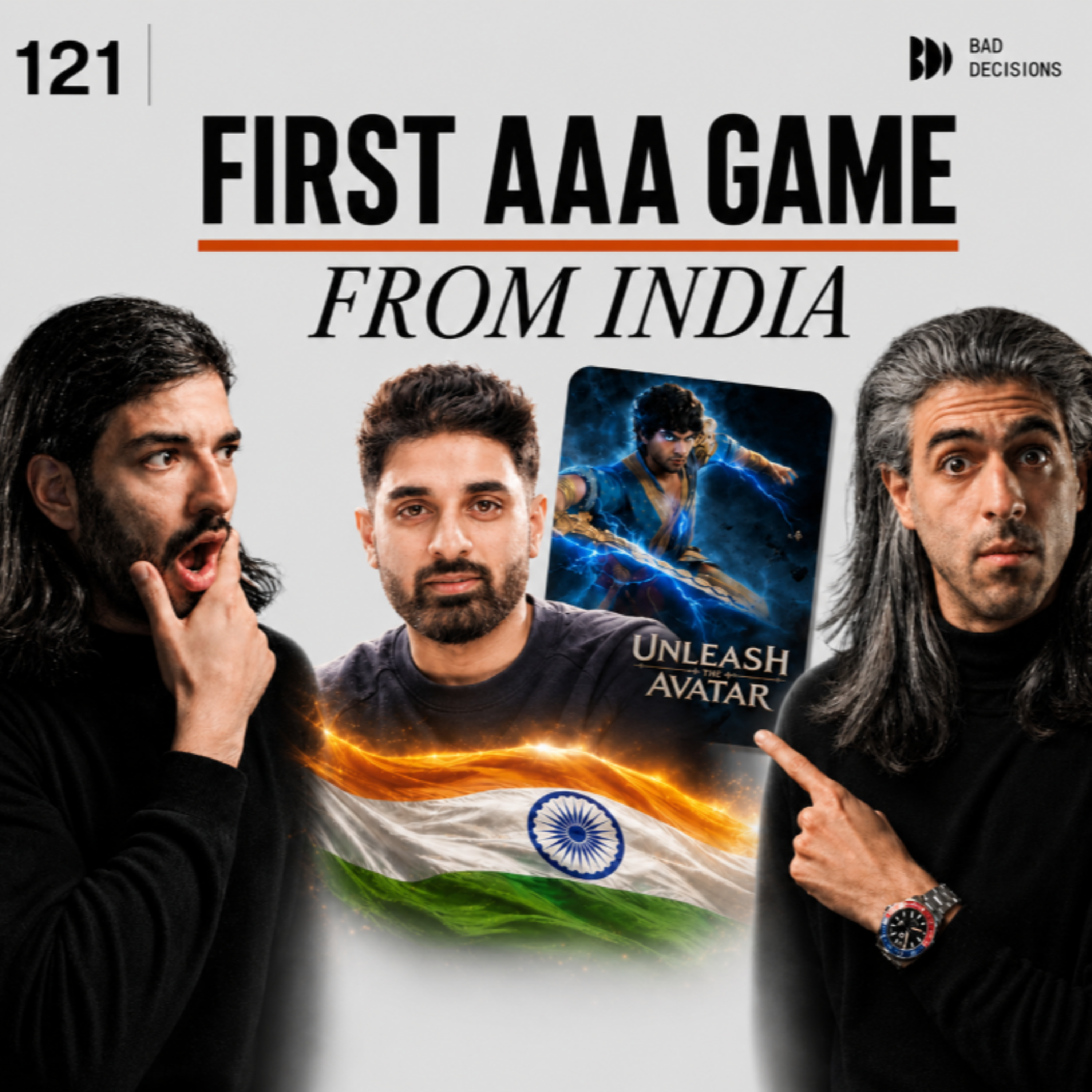 How India’s next Big Video Game is being made! with Varun MayyaBad Decisions Podcast · on Unreal Engine72 / 100
 He raised $80M from Nomura before building a single bus | Manav Bansal, Drivn88 / 100
 How to Run a Profitable Services Firm in the AI Era | Sridhar Muppidi (ello.ai)82 / 100
 Rajesh Jain (Netcore Cloud) on How to Bootstrap a SaaS Company to $100M Revenue83 / 100
 The Series A VC Reshaping Indian Startup Funding | Rajeev Kalambi @ Cactus Partners76 / 100
 Is Venture Capital Built to Break Founders - Amrit Chandan @ Lorefully71 / 100