
Forged in Fire: LGBTQ+ Leadership · 2026-07-02 · 34 min
Key moments - from our scoring
Substance score
35 / 100
Five dimensions, 20 points each
Graham Grimor, editor-in-chief of Queerty (5 million monthly readers), discusses how leadership operates behind the scenes in LGBTQ media and the evolving responsibility of queer journalists. Grimor shares his evolution from freelancer to managing a full-time team of six across news, politics, entertainment, and culture coverage, emphasizing that leadership isn't about visibility but about guiding others and understanding audience needs. He reflects on a pivotal moment following Alex Preddy's death in Minneapolis - where his position as a queer journalist with a large platform compelled him to write extensively about ICE raids and community trauma, generating tens of thousands of reads. The discussion covers how queer identity shapes editorial judgment, the shift from long-form journalism to short-form audio and visual content (including Queerty's new 'Quick and Dirty' podcast series), and the cyclical nature of representation funding post-election. Grimor advises younger journalists not to surrender despite scaling back of DEI initiatives, positioning queer voices as essential and non-negotiable.
Queerty is an LGBTQ digital media platform covering news, culture, politics, and entertainment, with approximately 5 million monthly readers. It is a queer-owned media company led by editor-in-chief Graham Grimor.
Grimor observes a significant shift from traditional long-form journalism toward short-form content including podcasts, video clips, and infographics on social media. Queerty launched a weekly podcast series called 'Quick and Dirty' that recaps major stories, which has seen strong audience engagement.
As a resident, LGBTQ journalist, and editor with a large platform, Grimor felt uniquely positioned to tell the story during a moment when ICE raids were causing chaos and few others were covering it that weekend. He describes the piece as cathartic and saw it generate tens of thousands of clicks and shares.
Grimor views his gay male identity as providing a unique perspective that naturally informs open-mindedness and outside-the-box thinking. At a queer-owned company, it gives him strength rather than presenting a hurdle, and he centers audience interest - primarily queer readers - when deciding what stories to cover and how to frame them.
Grimor observes that representation has been scaled back significantly as media companies and advertisers became nervous about DEI and queer-focused content. However, he notes the pendulum appears to be swinging back as people grow more comfortable with representation again, and he encourages younger journalists not to give up despite these cycles.
Our reviewer’s read on each dimension, with quotes from the episode.
The episode contains a few useful observations about media dynamics - advertiser retreat from LGBTQ content, the audience-first editorial approach, and the shift toward short-form - but these are sandwiched between extended career narrative, generic career platitudes, and off-topic tangents (Eurovision, dog interjections). The ratio of novel insight to filler is poor for a 34-minute runtime.
Managing people is just about inspiring them
like, you know, why not me? If somebody else can do it, why can't I do it?
The episode largely recycles well-worn career advice - pivot when necessary, embrace rejection, fake it till you make it, imposter syndrome is universal - without adding a genuinely new angle. The observation about post-election advertiser flight from LGBTQ content is the most topical and underexplored idea but receives only superficial treatment.
it makes me think of that meme. Maybe you guys have seen it. It's like carry yourself with the confidence of a mediocre straight white male
advertisers too have been shying away from media outlets that they fear are too political or have too much representation
Graham Grimor is a genuine long-tenure practitioner who has run editorial operations at a real LGBTQ media brand with ~5 million monthly readers, giving him credibility as an operator. However, the operation is small (four full-time staff), the conversation never surfaces deep operational or strategic depth, and the relevance to a B2B operator audience is limited.
QWERTY has almost 5 million monthly readers
I have a full time team that I work with every day of four full time and then two part time contributors, plus a handful of other freelancers
There are isolated concrete data points - team headcount, reader volume, the Minneapolis ICE incident, the guest's start year - but the episode is pervasively vague: the guest admits not knowing what year he became EIC, rounds metrics loosely ('tens of thousands'), and frequently speaks in abstractions without grounding claims in named data or examples.
I'd have to go back and look at what the numbers were, but it was like tens of thousands of. Of clicks and reads and shares
I should know the year, but I don't. It's like 2022, I think
The hosts ask structured, thematically relevant questions and do attempt follow-ups, but every question is open and affirming - there is no challenge, no pushback, and no redirection when the guest loses track of questions mid-answer or meanders. The conversational format produces a PR-friendly tone rather than a probing one.
That is a great question. And the answer is, actually, I was just. I wanted to be a writer
Yeah, uh, so many. I mean, it's. It's crazy.
Computed from the transcript - who did the talking, and the words that came up most.
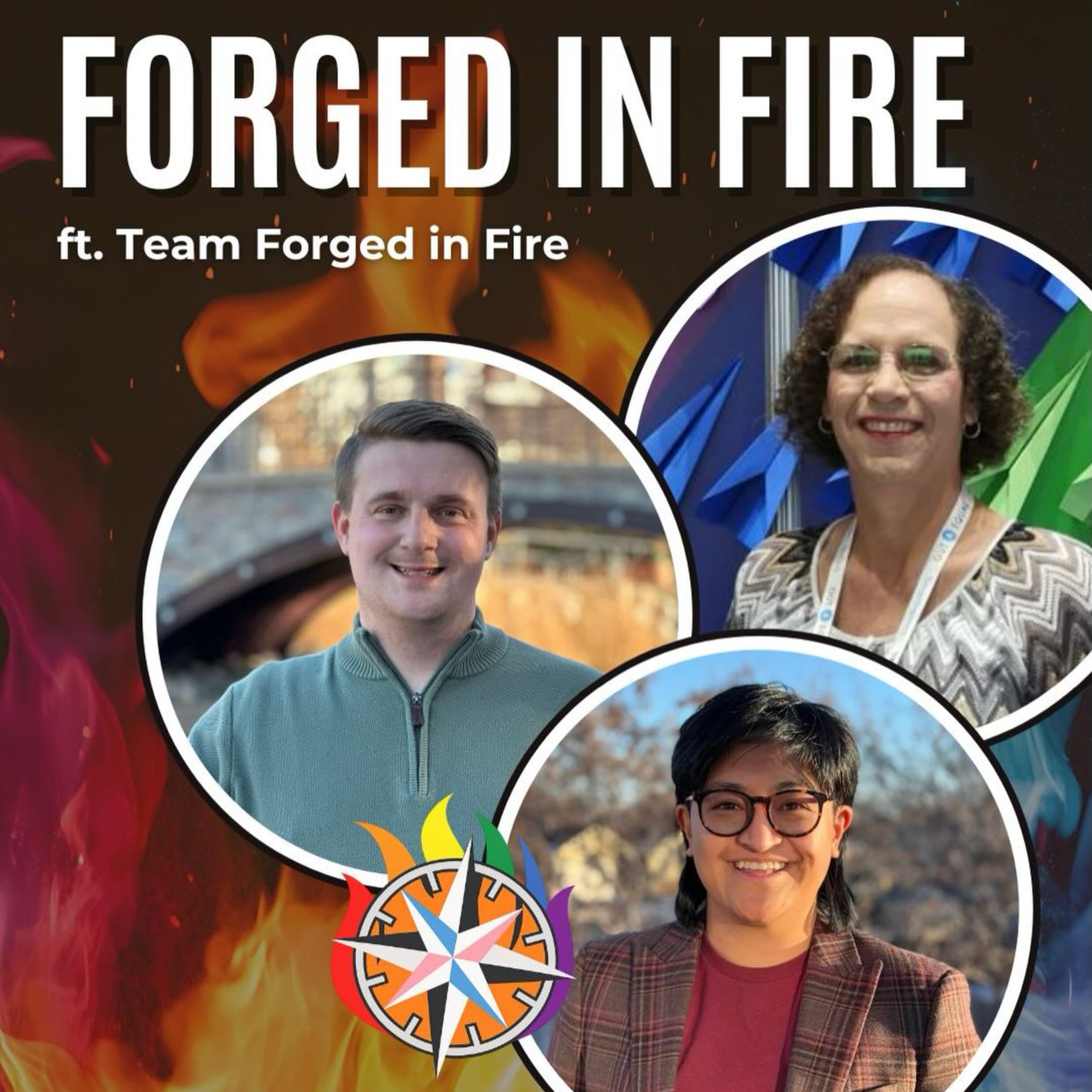
The Stories We Tell Featuring Graham Gremore Every story has the power to shape how we see ourselves and each other. In this episode of Forged in Fire , Robert Garrett and guest co-host Itai Bailey sit down with Graham Gremore , Editor-in-Chief of Queerty, to explore how journalism, media, and authentic storytelling influence LGBTQ+ leadership. Together they discuss: How leading a newsroom differs from leading in the spotlight Why representation in media still matters, even during periods of backlash The evolution of journalism in the age of podcasts, social media, and short-form content Overcoming imposter syndrome and finding the confidence to lead authentically Why the most important stories aren't always the ones with the biggest audience Throughout the conversation, Graham reflects on his journey from freelance writer to editor-in-chief, sharing lessons about resilience, adaptability, and the responsibility that comes with telling stories that help people feel seen. Because leadership isn't always about being the loudest voice in the room. Sometimes it's about deciding whose voice gets heard.
Transcribed and scored by The B2B Podcast Index.
Speaker A: Welcome to Forged in Fire. This podcast is about LGBTQ leaders and the key moments that shape them. My name is Robert. I'm a curse guard, veteran, advocate, and banker. To me, leadership is not about titles. It is about how we show up. Joining me today as co host is Itai.
Speaker B: I'm Itai Baleleli, a professional in the LGBTQ nonprofit and political space. My experience is in developing leaders to be the best version versions of themselves. And I'm excited to be part of a podcast meant to elevate the leaders
Speaker C: of today and find the leaders of tomorrow.
Speaker A: Today we are joined by Graham Grimor, editor in chief of Queerty, a leading LGBTQ digital media platform covering news, culture, politics, and entertainment. As editor in chief of Queerty, Graham helped shape one of the world's most visible voices in queer media. In this episode, we will talk with him about leadership voice and the work of shaping queer media. Welcome, Graham.
Speaker C: Thank you so much for having me. Yeah, I am the editor in chief of Queerty, which is an LGBTQ entertainment site. So we cover everything from queer film and TV to politics to pop culture. So that's my day job. Um, I'm based in Minneapolis, Minnesota, which Itay and I were just talking about earlier. It's been the epicenter of quite a bit of, uh, chaos and controversy in recent months. And I am married to my husband. I live with him and our beautiful little Chow Chow Winifred, who may be barking in the background. I apologize for that.
Speaker A: We always appreciate bonus guests on this show, especially the four legged ones.
Speaker B: Yeah, and happy to jump in here with, uh, another question. I'm so curious too, about what's happening with media in your world and the evolution of it over the last few years. But I want to start us off more with a leadership question as we're at a leadership podcast. When you look back at your career, how has your specific leadership evolved? What have you seen from when you first entered the professional world all the way up till now? What kind of lessons have you taken from that?
Speaker C: Yeah, uh, so many. I mean, it's. It's crazy. I've been at, in my current role, I should know the year, but I don't. It's like 2022, I think. So I've been about four years EIC at Queerty. Before that though, I was, ah, an editor working with different freelancers, um, and contributors. Now I manage a whole team. But before then it was kind of like a few people here and there. And before that I was just a regular staff writer and I guess my Evolution has really been one of the, a little bit of learning as I'm going. It's a small company. When I started there as a freelancer myself in 2012, I was one of like three, I think, uh, writers for the site. And then over the years we added more writers and more editors. And now, um, it's like much bigger than that. I have a full time team that I work with every day of four full time and then two part time contributors, plus a handful of other freelancers. Um, and so it's been a lot of learning as I've been going. I think I've definitely probably made some mistakes over the years, but I like to think I've gotten better at it. Um, and it's, I really enjoy what I do. I enjoy kind of being, uh, behind the scenes. I guess I'm not really necessarily forward facing. Like even doing this podcast is kind of, it's different for me. I'm not usually the one in front of the camera talking to people. I'm usually the one behind the scenes kind of guiding others and inspiring others. Um, and I really like that. I think that's where my, my strengths are. But, um, I also like this, this is, this is new for me, but I'm definitely enjoying it.
Speaker B: If I can ask, uh, a just a quick follow up question too. Part of what you do very clearly has to do with the LGBTQ community. How does your identity, how has it fit into some of the work that you're doing? Even being behind the scenes and getting, getting to elevate others stories? How have you navigated your identity in your work?
Speaker C: Yeah, I mean, I think the most obvious is that it's a queer owned media company. So we're very LGBTQ plus focused. I mean, that's all we do all day, every day is gay, gay, gay, gay, gay at my job. And I love it. I mean, I think that's. I'm so lucky that that's the case. Of course, that wasn't always the case. I've. Before working at Queer D, I worked at a number of other, um, places. I mean, media outlets. I worked at a newspaper. I worked for an ad agency, a literary agency. So I kind of worked all over. Um, and I guess my identity has never been, I think, a hurdle. I know for some people it's been a hurdle that they've had to overcome and I definitely get that. Uh, for me, I've been really fortunate in the fact that it hasn't been a much of a hurdle. For me, it's actually provided Me with some great opportunities like the current one I have, I think it being. I'm so I identify as a gay male and I think that it gives me a unique perspective. I mean, I think any queer person is going to have a unique perspective on the world because we exist in a world that is not necessarily designed for us. We're kind of all outcasts. And so just that alone forces you to have to kind of see things a little differently and look at things a little differently and I think hopefully be a little bit more open minded. And so I believe that's probably what my identity has brought to my work is just that willingness to be open minded and that willingness to think outside the box. Um, but like I said, it's never been a struggle for me. I feel very fortunate in the fact that it's always, I think, been a strength.
Speaker A: Thank you for sharing that, Graham. I want to build on something you mentioned earlier about being someone who often leads from behind the scenes in journalism. Visibility can look different. Sometimes it is being the person in front of the camera or under the byline, and sometimes it is deciding which stories get told, how they are framed, and who gets heard. When we spoke before the interview, you mentioned feeling compelled to write, uh, about what was happening in Minneapolis. Could you talk more about that moment? What made you feel that responsibility as a writer, editor, Minneapolis resident and a queer journalist?
Speaker C: Yeah, so I guess the first part of that question about, um, you had asked about that piece I wrote during the surge. That was earlier this year when ICE agents came into Minneapolis and caused a whole lot of problems. And yeah, there was a day, uh, it was actually the day, uh, I want to say it was the day after Alex Preddy was killed. Um, um, that was a really sad day here. And, um, everybody was really kind of just in shock and disturbed. I mean, it was very upsetting. And I was. It was a Sunday. Cause I think he was killed on a Saturday and it was a Sunday and. Or was he killed on Sunday? I, I, you know, I don't know. Fact check me on that. But it was. Right, it was within, like, it was very fresh. And, um, I just was kind of feeling so, like, not, not sure what to do with myself. I was like, this is, this is a really horrible situation that's happened. And I, I'm kind of processing it and I also, I, in that moment, I realized that I did have sort of a unique. I was standing in a unique spot where I was on the. Well, I wasn't on the ground, but I was in the city where this was happening, I was a. An LGBTQ plus reporter, uh, and editor with this very large platform. QWERTY has almost 5 million monthly readers. And I just felt, in that moment, really compelled on that, that Sunday to just sit down for several hours and write up, write about it, and write about what I was experiencing, what I was seeing, what was happening here. And so I did. And I think one of the. Here's. Here's one of the things about being editor in chief that I. That is sort of challenging for me sometimes is that I don't always get time to write anymore because I am always editing other people and working with other people. So I don't get that time to just do it myself. And I really love writing. And so I got that time, and it was, I think, cathartic for me as a, uh, resident of Minneapolis, but also as a queer journalist. And I also really felt a responsibility that I was able to actually tell this story of what was happening here on a day when nobody else was really covering a lot because it was a weekend. And. And then, as a result, the post, um, it did really well. It. I. I'd have to go back and look at what the numbers were, but it was like tens of thousands of. Of clicks and reads and shares. So people wanted to hear that story and hear that perspective. And so I. I felt very like I contributed something that day. And it. It made me feel like, okay, in this moment of chaos, in this moment of just absolute despair and. And upheaval, that was one thing that I could contribute and one thing that I could. Could control. And I'm glad I did. And now I forgot the second part of that question.
Speaker A: You answered a lot of that beautifully. And I want to stay with the idea of responsibility. As a writer and an editor, how does your identity shape the way you approach stories? Not just what you personally want to write about, but what you look for in a story, how you guide your team, and how you think about serving Queerity's audience.
Speaker C: Yeah. So I would say, uh, my answer is probably a little unique just because of the work that I do, but really what I'm always thinking about is because I'm leading a newsroom and I'm leading a site, but what I'm thinking about is the audience and who are the people who are going to be coming to this site and consuming what we're producing, what we're writing. And obviously, those are a lot of LGBTQ people. Primarily, I would say our readers are queer. And so that's like always, the number one question in my mind is like, what is the audience interested in? What do they want to hear about? What do they. What should they hear about? What's important to this community? And then providing, uh, that, uh. So it's. It's kind of something I've also had to learn over the years, just as an editor is separating my own interests from the audience's interests. And I think I'm pretty good at it now, but it was something I had to learn. And to also be malleable and know that sometimes the audience is going to tell you what. What they need or what they want. And so you have to be really open to listening to that. Uh, so I do feel like I'm. I'm always kind of monitoring, okay, what are people talking about, what I'm taking a temperature take, and what's on, um, people's minds, what is concerning them, what is entertaining them and exciting them. And then I also am really lucky that I've. I've built a really great team of reporters who do the same thing, and they all kind of have their little areas of expertise that they can kind of focus in on and see, like, okay, what is politically, what's the hot conversation today that everybody's talking about that our readers might want to know about? What can we say that will inform them and arm them with the information they need to go out into the world? Or it could be something a little less serious, like, you know, what is the hot new TV show that's everybody's obsessed with and streaming right now? And what can we say about that? How can we point people there and what other TV shows can we recommend? So I really look at it as my leadership role, as it's almost like a dialogue that I have with, with our readers and just being really focused on who I'm actually serving and keeping that kind of in the forefront of my mind.
Speaker B: Yeah, that's awesome. Write about Eurovision. I feel like all the. All the queer people talking about Eurovision right now. I don't know if that's, like, happening. Anyway, speaking of interests, I. I kind of want to take the question back a little bit to just ask about, what was the. The spark that drew you to the field of media and journalism? What was the thing that made you want to pursue this in your career?
Speaker C: That is a great question. And the answer is, actually, I was just. I wanted to be a writer. So I was. I got my BA in English and my MFA in Creative writing. And so my goal was to just be a writer. Uh, it didn't matter what it could either be. Could write books, I could write the news, I could write screenplays. I just wanted to write, and it's still, like, my number one passion. I love writing. And so, like I was saying earlier, I did take a lot of jobs at everywhere. Like, I wrote for websites, newspapers, ad agencies. I ghost wrote, uh, for people. Like, I was doing anything and everything I could to just kind of cobble together an income as a writer. And then it just kind of naturally, what happened was I. This opportunity for freelancing opened up at Queerty, and I took it, and I guess I just never left. I'm still there all these years later. But, like, the one thing I was thinking about this before our conversation today. Like, I think when I look back on that sort of journey to getting to where I am today in my. My leadership role, the. The one thing I did that I think was really smart of myself was to just take whatever opportunity came my way because it would lead to something else. So, like, even if I was right, I wrote some weird stuff. At one point, I was writing, like, real estate listings, and it was. The woman was crazy who I was working with, but, uh, she was paying me money, and it was a job, and I took it. And, you know, I'm not wr estate listings today anymore. But I'm still glad that I took that job because it did lead me to the next one and the next one. Um, and I think anybody in a creative field, whether it's writing or anything else, that's kind of. I think this the way to do it. You just kind of got to, like, test the waters and follow the opportunities, and they'll probably lead you to a good place. And if they don't lead you to a good place, you can always turn around and go a different route. Like, you know, nothing is final. As we were saying before this call, actually, nothing is final. There's always opportunities to change and shift and pivot. And so I think that's. That's been probably. If I look back on my career thus far, that's been. The theme of it is to, like, pivot, know when to pivot and be comfortable with pivoting.
Speaker B: Yeah, I call that the. The Slumdog Millionaire of career trajectories, where there's gonna be something you're using from anything and everything that you've ever done. And it's. It's. It's actually really nice to hear that there's. There's like, a honing in of the cr, regardless of like what you're doing and where it leads you to. And I'm curious for you if. Do you feel like you, like you found a forever home now doing this like journalism, or are you open to continue evolving as a writer in different mediums? And what does that look like?
Speaker C: Good question. Again. Um, I feel like I'm always open to new opportunities. I think that's just the nature of being a creative person, right? Is you're always kind of curious about like, hey, what's, what else is out there? What else, what else could I try? And so I think I'm always open to that. But I will say also, I love what I do. Like I have my dream job and so I don't necessarily want to give that up. The one thing I also do love about my job is that it kind of just changes on its own anyway. Media is like one of those industries that is just always evolving. How we tell stories and how we consume our news is, is different. Like if you think back to how you were reading the news five years ago, it's probably very different to how you were reading your news today. Think back even 10 years ago. I mean, it's like nothing stays the same for very. And so it's always interesting and there's always a new challenge. And maybe that's why I haven't gotten bored after all these years is that you're always kind of navigating a different path and a different road. And actually in my particular case, because I have been with this same place for decade, more than a decade, is I've now been on the journey with the same people for a long time as well. And so I'm really fortunate that me and my, uh, my manager, the uh, co founder of the company, we have a really great working relationship. And, and I can just kind of look back on all the years that we've worked together and the things we've learned from each other and it's really rewarding. So I guess that's a really long way of answering the question. But like, I'm definitely always curious and open to new things, but I'm also in love with what I do right now and I'm also excited about how things might change and evolve. Um, so again, back to that theme of pivoting. Like, I'm, I'm always kind of ready to pivot when the time comes.
Speaker B: Let me, let me ask a follow up question because I think it's kind of related to that too. You were talking about just the evolution of media and it's not the same five years ago, 10 years ago, probably not even last year. And I, I'm also curious because you were talking a little bit about an article that you wrote and you're like, I don't know how many views it has. So metrics clearly are a big part of, um, the way that we even evaluate successful media. So just from your perspective and from your time in this field, what have you seen about the evolution of media? And just a, uh, conjecture, because we're not fortune tellers. But where, where do you think it's going? What do you think needs to happen?
Speaker C: Yeah, well, I, I guess metrics are important in media because that's how we gauge what audiences are interested in and that's how we, like I was saying earlier, that's kind of part of the dialogue that we have with our audiences is looking like, okay, what are they, what are they clicking on? What are they interested in? What are they not interested in? And you kind of, over time you will kind of see these natural shifts of where people are going, where their thinking is heading. Um, and, and as me, it's. That's always been a fascinating part of. I do kind of have that inside information where I have the data that actually tells me like, oh, 50,000 people are suddenly interested in this random topic that nobody was talking about a week ago. There might be something there. And constantly reading the room and reading the data. Uh, yes, Eurovision. Um, we'll have to get back to that in a second because I had something to say about Eurovision. Um, but now I. For what was the other question? The part of that question was, um. Oh, yeah, that's how. Okay, I love that question because I could talk about that forever, but I won't bore you by talking about it forever. But I will say that there's definitely like a shift, big shift, I think happening right now. I mean, you guys are part of it actually, where, uh, long form journalism and actually articles on a page and people reading stories is. I think it's always going to be around. It's always going to be something people do, but it's happening less and less. I think these days people are really interested in short form content, whether it's podcasts, video clips, infographs on infographics, on social media, that kind of thing. But that is actually really exciting to me. And something that we've been exploring more of at QWERTY is how we can do more of that kind of work because it does seem to be what people are gravitating towards. And I mean, I Think podcasts. This is nothing new. I mean, this has been, um, podcasts, basically. It's been since like Covid, right? That's when they kind of took off. Um, yeah, so maybe a little bit before, yeah. I mean, but now it's like a category at the Golden Globes. I mean it's, it's just blown up in the past 10 years and become a, a huge market and people love them. And we've actually recently at Query started a, ah, Quick and Dirty series. It's like a podcast. We do it every week where we recap our biggest stories of the week. And basically what we're doing is narrating what we wrote earlier in the week. And we've seen a lot of success with that series and people are really into it. So my prediction, I guess, is that there's just gonna be more of that, um, more audio, visual, short form content, and less of the sort of traditional long form stuff that we might have consumed 10 or 20 years ago.
Speaker A: I love that because it makes me think about how media keeps evolving, but also how some things are cylindrical. Podcasts in some way feel like a return to radio storytelling, except now people can create and share stories without the same traditional gatekeepers. Historically, LGBTQ stories were often ignored, misunderstood, or framed negatively, especially during moments like the AIDS crisis. Where do you think representation has improved? Where does it still fall short? And why does that visibility matter?
Speaker C: Yeah, that's an interesting question and a sort of complicated one because I think it's very important, obviously. I mean, I think representation is what makes the world interesting. That said, I think at this particular moment, just given the political climate and I mean representation has been under attack for the, for a few years. We felt it, I think we've seen it. A lot of media companies, both large and small, cutting a lot of their LGBTQ plus, but really, uh, just a lot of different reporters and journalists from marginalized communities. Like, it's just been scaled back so much. And advertisers too have been shying away from media outlets that they fear are too political or have too much representation. Queer media is anything like DEI related, they, they are nervous about right now. It was really great, I would say, for a few years. Like we were seeing so much growth and so much positive excitement around what the work we were doing. Queer media and queer voices. And then this after this last election, I think that's really been scaled back, which is unfortunate. But I will say I also think that that's changing again. Um, it seems like people are, they got really scared of anything that was sort of considered, I guess, dei. And now it feels like they're kind of getting more comfortable with it again. I hate that that's the truth, that, that it comes in cycles like this, but that's been my observation. Uh, it's definitely. There's. You often hear about, like, the pendulum that swings and it's definitely swung in one direction, but I think it's swinging back. I certainly hope it is. And I think that can also be very discouraging for people. I mean, I, I actually have found myself saying this to a lot of younger, uh, reporters, journalists, people who want to work in media, like, don't. Yes, it feels like there's less opportunities. Yes, it feels like they're trying to silence queer voices, but don't fall for it. Keep going for those opportunities, keep writing, keep applying for jobs, keep looking for jobs, keep seeking out opportunities. It's. It's going to be hard. It's always going to be hard. But you just can't give up and you can't let your identity be the thing. Certainly that makes you quit. So I do say that to people a lot. It's. Even if people tell you that representation is dead or doesn't matter, it does matter. And just, just remember that. That your voice matters.
Speaker B: Uh, let's go from a piece of advice as you give to potentially a piece of advice that you've received in your leadership journey that has stuck with you, that you feel like is a mantra that you want to share with the folks that are listening that are either LGBTQ plus or allied and are looking for some inspiration for their leadership.
Speaker C: Yes. That's, like, the easiest question for me to answer because I remember it every day. So when I first was made EIC at Queerity, I reached out to a lot of different people who I knew who were in leadership roles and just asked like, hey, what did. What. Do you have any tips? Do you have any advice? What should I do? What should I not do? And person that I used to work for, Dustin, uh, he ran, I think he still runs it, an ad agency or a marketing agency that was very queer, uh, focus. I mean, it was queer owned, and everybody who worked there was queer. And I had done some freelancing for him for a few years, and I asked him like, hey, do you have any advice? And he said, don't, don't worry about it. Managing people is just about inspiring them. I've remembered that so many times over the past several years now that, like, how do I inspire people? How do I Guide them towards their strengths and the things that they're best at and how do I support them in that. And so, uh, that's really how I look at leadership and how I would encourage other people to look at leadership and hat tip to Dustin for giving that tip. But yeah, leading people, managing people is just about inspiring them.
Speaker A: I think that is excellent advice, especially the idea that leadership is about inspiring people. Looking back on your own career, what would you tell your younger self about balancing authenticity with professional risk? Were there moments when you held back, avoided an opportunity, or questioned whether being fully yourself might affect how you were perceived professionally? And how do you think about that balance now?
Speaker C: Yeah, that's a great question too. I think one of the things that I've always had is confidence. Like, I've always been confident in my skills and my abilities and my intelligence and my ideas. I know I have good ideas and I know that I'm smart and I know that I can work well with people. None of that has ever been a question in my mind. But it's weird because something that I did struggle with until probably the recent years was, I guess I would describe it like self esteem. Even though I knew I would, I was confident in my abilities and my skills, I still would question whether or not I was the right person to be doing it, whether I deserved the opportunity or the job. And I don't know, I went a long time feeling that way and it often made me feel too like, oh, I have so much to offer, but nobody will listen, so I'm not going to say anything thing. That was kind of my mantra. And I don't know why I thought that way, but I did. And then a few years ago, I actually I. It was a meme. I saw a meme that said something along the lines of, you know, if you don't take, if you don't take the opportunity, somebody else will or something like that. And I, something in that clicked and I was like, yeah, like if, if I don't do this, somebody else is just going to do it, so why not? Why not me? Why can't I be the one who does this thing? And if I'm confident in that I can do it, I should do it. And I don't know why it took me so long to learn that and to like accept that, but it did. Uh, and so now that's kind of my mantra is just like, you know, why not me? If somebody else can do it, why can't I do it? Yeah, I guess that's all I have to say about that. But it was a transformative moment for me as a professional and also as a leader. Finding my confidence or not my confidence, finding my self esteem because I had the confidence and being comfortable with that.
Speaker B: I, I think that's such important like proactive minded advice to give to folks because I think so many people get trapped in the imposter syndrome mindset. But I, I do, I, in some ways is a self fulfilling prophecy. And similar to your point, uh, piece of advice that I received once was overcoming imposter syndrome is a skill. So you're like, you're leaning into it, you're becoming active in trying to defeat it or learning on the spot is a skill. So you're trying to figure out a way to like fly by the seat of your pants sometimes that's just learning and honing something good and strengthening like something within you. So I think that that is a really, really good piece of advice for folks. As you know, we all enter environments that we're not so comfortable in all the time.
Speaker C: It makes me think of speaking of memes, it makes me think of that meme. Maybe you guys have seen it. It's like carry yourself with the confidence of a mediocre straight white male. Basically just like fake it until. But also, yeah, you might not actually be faking it. You might actually know what you're doing. And I think, I think you nailed it too. It's imposter syndrome is probably what I had was just this feeling of like, oh, I don't deserve this. I'm not worthy. I don't know what I'm doing. Even though I do know what I'm doing and I am worthy. Like overcoming that was definitely a struggle. And another thing I've learned just as I've kind of gotten older and been in my role longer is like, I think that's everybody. I think nobody really knows what they're doing. Like we're all just kind of stumbling along and figuring it out and like making mistakes and messing up. And some of us are just better at faking it than other people. And I think that applies to work in like your profession. I think it also, I think back to like my childhood, it applies to parents. Like my parents didn't know what they were doing. Like they were making it up as they were going along too. But it, it turned out just fine. Knowing that, knowing that we're all kind of in the same place of learning can be really actually very helpful.
Speaker B: 100 yeah, fake it till you make it is a skill. Like you're leaning into it. Well, I was going to ask you, um, about going back to your younger self and what you would impart on him about your profession. Um, so if there's anything else you want to say. But if not, I have another, um, one of my last questions for you about just general media. But if there's anything else you would tell your former, younger professional self about today.
Speaker C: Yes, there's one thing that I would tell my former professional self or just my young self who was trying to make it in the world of media, which is it'll work out. I've said this to a lot of people, actually, over the years. Like, it will work out. It might not work out the way that you had it planned in your mind. There might be some detours or some unexpected hiccups, but it'll work out. And you just have to trust that it's going to work out and you'll figure it out and just know that I think I spent a lot of my younger time agonizing over the things that weren't going to happen or how hard it was going to be, or what if it doesn't work out? And then, sure enough, here I, um, am like, I'm 41 now. It all worked out. Like, no, I'm not. Like, it's not exactly how I pictured it, but I'm really happy with my career and my role, and that's all I really wanted deep down, was to be happy. Remember that. It'll work out.
Speaker B: There's that leadership and practice, inspiring yourself for your younger self. Uh, and it's. It's truly that. I think sometimes people say everything happens for a reason. But we kind of talked about this earlier. There's something gained from every experience. Rejection, acceptance, good thing, bad thing, success, failure, whatever that is. So that's. It's good life advice in general and especially good professional advice for our younger selves to remember and for other folks that kind of come in on that
Speaker C: point too, on, um, the point of rejection. Because that's something that happens a lot for writers and creative people is. And I think probably any professional person, you apply for jobs and you don't get them. And it's easy to agonize over that and wonder why and feel downcast. But, like, one thing I've learned too, is every opportunity that I didn't get was it actually did. I mean, they say when one door closes, another one opens. I mean, that really is true. You'll find something else. Something else. With each rejection, there's going to be like five new opportunities that you were never even thinking about because that rejection happened. And so if you're creative and if you're going back to the idea of pivoting, if you're open to pivoting and open minded, a rejection is really not the end of the world. It's not even that big of a deal.
Speaker B: Uh, so one final question for me, but we're at a unique time right now for the LGBTQ community, and I'm curious. We talked about representation and journalism and media evolution, but how do you. What advice would you give to folks that are thinking about telling LGBTQ stories? I think that there is kind of a need, as we're talking about uplifting voices. What tips or advice or guidelines can you share about how you all do it and what a good, successful and ethical way is to tell LGBTQ story?
Speaker C: Yeah, I like that word ethical, because I think that's the key, is just do it authentically. Do it honestly. Um, if you have a story to tell, tell it. I think there's people who are going to want to hear it and you don't have to make it up. Uh, you don't have to embellish anything. You don't have to. I mean, it's even easy to question, like, oh, is, is my story important enough? I want to share with the. Is my idea good enough? I mean, you could just sit and let it live in your head and nobody hears it and gets to know it, or you could tell it and share it with the world and somebody might hear it and be inspired themselves. So I think that, like, if that's the advice, I just, like, use your voice, tell your story, be authentic. And gosh, now I'm gonna, I am gonna go on a tangent, but I'll keep it really short because I was just having, uh, a conversation today with one of the people I manage who was feeling discouraged because he feels like he spends a lot of time on some of his stories, some of his posts that he writes, and they don't get as many views as he would like. And what I, what I basically told him and what we landed on was like, it's okay if, if every post that you write for Queerty doesn't get 10,000 clicks, if it gets 500 clicks, if it gets 50 clicks, and if, if one of those people who reads it, if it changes their heart or their mind, or if it gives them some hope or some inspiration, that's still really valuable. I think we live in this world too, where we're so focused on numbers and followers and views and clicks, but that's kind of, that's just a number. Like, what really matters is how it lands with people and who it touches and who it changes. And I think if it changes one person, that's a success.
Speaker A: Graham, thank you so much for joining us and for sharing your perspective on leadership, journalism, media and queer storytelling. I really appreciate the way you talked about leading from behind the scenes, listening to your audience, and using storytelling as a way to help people feel seen. Itai, thank you as well for helping guide this conversation. This has been such a thoughtful discussion and I hope we get to continue the conversation again in the future. Thank you for listening to Forged in Fire. If this conversation meant something to you, or if there's someone we should talk to, whether they hold a big title or are just making a difference in their community, drop a comment or visit forgedinfire.org Listen. Leadership isn't always loud, and it doesn't always come with a title. Most of the time it looks like showing up. From all of us here at Forged in Fire, thanks for listening.
Other episodes covering the same guests and topics, from across The B2B Podcast Index.
 More Than a Parade: Leadership, Community, and Pride
 The Cost of Hiding, The Power of Being Seen with Tammy Smith
 Standing Your Ground: Authentic Leadership and Service with Bree Fram
 Milwaukee Leadership, Public Service & LGBTQ Representation | Alderman Peter Burgelis
 The Yes Moment: Building Leadership Without the Mic

