Fine Tune with Corby Fine · 2025-09-03 · 30 min
Key moments - from our scoring
Substance score
46 / 100
Five dimensions, 20 points each
The new generation of B2B decision-makers - 71% of whom are Gen Z or millennial according to Forrester - consume content differently and operate with shorter consideration lists, demanding a fundamental reset of traditional marketing playbooks. Derella unpacks this shift for marketers, emphasizing that buyers now expect video-first content, people-driven narratives rather than logos, and brand building integrated with demand generation as a continuum. The critical organizational step is CFO-CMO alignment: shared vocabulary around business ROI metrics (pipeline, qualified leads, conversion rates) rather than vanity metrics like CTR. Derella draws from his crucible moment at Twitter (2017 - 2021), where he served as Chief Customer Officer and helped double the platform's market cap by uncovering unique product truths and repositioning Twitter as a platform for launching products. He stresses that leaders must be willing to challenge status quo and collaborate cross-functionally. Looking forward, Derella argues that in an AI-saturated information landscape, trusted expert knowledge on platforms like LinkedIn becomes more valuable, making micro-influencers, creators, and podcasters key channels. AI will lift the baseline of creative output, but the real competitive advantage lies in raising the ceiling through craft, taste, and authentic human experience - a challenge marketers must actively solve rather than outsource entirely.
According to Forrester cited in the episode, 71% of B2B decision-makers are now Gen Z or millennial. This matters because they consume content differently - favoring video and short-form narratives over white papers, have shorter consideration lists (often just 3 companies), and require brand familiarity before making purchase decisions, forcing marketers to rethink positioning and content strategy fundamentally.
CMOs and CFOs should establish a shared mental map using business ROI metrics like pipeline and qualified lead conversion rates rather than vanity metrics like click-through rates or raw lead volume. This alignment allows both functions to understand long-term brand value, removes the "waste of money" perception around brand work, and enables joint decision-making on marketing investment mix.
Derella was Chief Customer Officer at Twitter from 2017 - 2021, tasked with turning around a platform facing negative consumer growth momentum and poor market sentiment. He led a repositioning effort positioning Twitter as a platform for launching products, which helped double the company's market cap and move it toward S&P 500 inclusion over three years.
AI will raise the baseline of creative output, meaning any marketer using AI tools can produce acceptable creative at scale. The real competitive advantage will be in raising the ceiling - defining and teaching craft, taste, human judgment, and authentic expert knowledge that differentiates work above the AI-enabled baseline.
As AI commoditizes general information through summaries and AI-generated content, trusted expert voices - creators, podcasters, and micro-influencers with genuine domain knowledge - become structurally more valuable because decision-makers will increasingly rely on knowledge from experts they trust rather than generic information sources.
Our reviewer’s read on each dimension, with quotes from the episode.
The episode contains a handful of genuinely useful B2B frameworks - CMO-CFO alignment around pipeline, the generational shift in decision-makers compressing consideration lists - but they are spread thinly across 30 minutes padded with career storytelling, AI speculation, and motivational platitudes. The insights that do land are not unpacked with enough depth to be actionable.
a basic metric that feels like a no regrets move that would force organizational alignment would be just pipeline
71 percent of B2B decision makers are now Gen Z or millennial
Most of the claims - use video, align CMO with CFO, millennials are now B2B buyers, AI is changing everything - are widely circulated takes that any attentive B2B marketer will have already encountered. The 'floor vs. ceiling' AI framing is modestly fresh, but no real contrarian or first-principles argument is advanced.
they're having less customers make the list. Their buying cycles are longer
maybe not buying spots on national television
Derella is a genuine C-suite practitioner - CCO at Twitter during a high-stakes turnaround, now leading LinkedIn's ads business - with verifiable at-scale experience. His credibility is real, but the conversation format does not fully excavate the depth of knowledge his background implies.
formerly the chief customer officer at Twitter, where he oversaw global revenue and partnerships, doubling the company's market cap between 2018 in 2021
based on a couple hundred conversations with B2B CMOs over the last seven months
There are a few concrete anchors - Forrester's 71% stat, a three-company final consideration list, a 90-day pipeline proxy, and the Twitter market-cap doubling - but many claims remain vague generalizations with no named companies, campaign data, or LinkedIn-specific metrics to substantiate them.
71 percent of B2B decision makers are now Gen Z or millennial
in a reasonable amount of time, probably 90 days, understand the value of what the interactions have been
The host telegraphs long, multi-part questions, never pushes back on any claim, and frequently derails into personal anecdotes (astrophysics podcasts, Twitter coffee mugs, free trips to Cuba) that consume time without generating insight. Questions are clearly collaborative rather than probing.
Are there any tips that you would have for the listeners around what maybe a couple of those things are that maybe aren't so obvious or are obvious and we're just missing it?
I am a bit of an astrophysics nerd. And I listened to StarTalk Radio with Neil deGrasse Tyson
Computed from the transcript - who did the talking, and the words that came up most.
Is your B2B marketing playbook built for a generation that's no longer in charge? With 71% of B2B decision-makers now being Gen Z or Millennial, the old strategies of white papers and logo-heavy content are becoming obsolete. The leaders who will win are the ones who adapt - and fast. This week, Corby sits down with Matt Derella, a pivotal leader in digital advertising who currently runs the ads business at LinkedIn and formerly served as the Chief Customer Officer at Twitter. Matt provides an insider's look at the massive shifts reshaping the industry and offers a new playbook for growth, leadership, and C-suite alignment. In this episode, you will learn: Why the rise of Millennial and Gen Z decision-makers requires a fundamental shift from logos to people and from text to video. How to get your CMO and CFO on the same page by ditching vanity metrics and focusing on what truly matters: quality pipeline. Leadership lessons on courage and challenging the status quo, forged during a crucial turnaround period at Twitter. How AI is "lifting the floor" for creative output and why human craft and trusted expertise will become more valuable than ever.
Transcribed and scored by The B2B Podcast Index.
Thank you. So as many of you know, I am a diehard lifelong fan of LinkedIn. I've always said that every other social media channel kind of in some regard incented you to not necessarily have to tell the truth. I often, if I go through maybe some of my other network profiles, find that I like or shared or was involved with things that I had absolutely nothing to do with.
maybe because I could have won a contest, a free trip to Cuba, who knows what it might have been. But LinkedIn was a little different. It's always been a little different. You're actually penalized if you're not honest and open and really showing who you are.
And from a marketer's perspective, that gives me a lot of comfort and credibility in the fact that when I'm trying to reach people or talk to people or engage with people, I kind of know who they are because they have to be honest. It's your career at stake. It's your personal reputation at stake. And so as a fan of the platform, I've also become an advertiser and a marketer using the platform, both for my corporate gigs as well as my personal gigs.
And I am so honored today to have someone who I think can represent the platform at a very senior level with a lot of knowledge and experience. Matt Dorella, who is really a leader in the space around growth, building world-class teams, world-class brands, fostering innovation and technology, currently running the LinkedIn ads business, which I'm sure most of my listeners are actively engaged in using, sitting on the board of Moneylion, formerly the chief customer officer at Twitter, where he oversaw global revenue and partnerships, doubling the company's market cap between 2018 in 2021.
We all know the story of Twitter and the escalation that they had in terms of size and growth. A top 100 digital marketer, according to The Drum. I am so honored to have you. Matt, welcome to the podcast today.
Corby, great to be here. Thanks for having me. I appreciate it. We had a chance to meet face-to-face not that long ago at a LinkedIn event.
And the energy and the passion that you brought to the room, which was both full of LinkedIn people, as well as clients and marketers and advertisers and just people in the street, was so strong. I had to reach out and say, can we have a conversation and get your opinion? So I really appreciate you being here today. I'm so glad it did.
I loved our conversation there. I love that room. I think there's something about the Canadian ad market that's unique and the realness of the authenticity. As you talk about LinkedIn, that's how I sort of think about the community of advertising in Toronto in particular.
So it was wonderful. You're certainly a leader in that space. So it's good to be here and have a conversation. Awesome.
Well, now we're here virtually, Toronto to New York, I believe. So talk a little bit to kick off market shifts and the leadership required in this B2B space of marketing and advertising. From your perspective, what are you seeing as some of the pivotal shifts as businesses try and approach how they really market themselves and drive sales and revenue on platforms like LinkedIn? And what, as leaders, should your partners and your clients and your peers be thinking about as critical decisions to navigate some of these changes?
Yeah, maybe a good place to start is just like sort of the audience or the customer that many of the B2B marketers are focused on. These are decision makers. They could be in HR or CTOs, people who are controlling budgets leading major decisions around software, for example. You know, that playbook was designed for a generation that's no longer in the decision making seats.
Right. I think Forrester is quoted as saying 71 percent of B2B decision makers are now Gen Z or millennial. And I think that is not talked about as openly as maybe it should be because it comes with a bunch of changes that are going to be required and can be a challenge for those who fall behind, but a big opportunity for those that can get ahead. And, you know, some of the things that we're observing amongst that group, it's one of the fastest growing populations on LinkedIn, which is great, but they do consume content a little bit differently.
These are people that were growing up with the feed. Video is a vocabulary they're very fluent in. They're probably not downloading white papers and reviewing them. And the research that we've done with other partners has, you know, demonstrated that they have shorter consideration lists.
So they're having less customers make the list. Their buying cycles are longer. And I think those things taking together that mosaic sort of tell you, OK, if I'm a marketer, I got to get rated video. I have to probably use less logos and more people to actually talk to them.
I have to think about brand and demand as probably a continuum as opposed to two separate things. since these decisions on like who makes the consideration list. If only three make it, which is what Forrester would say is how many companies make the final list. That means you have to be familiar.
You have to be known before they get there, which means you have to tell a story about who you are. And this opens up great opportunities for advertising to do its job better. But the old playbooks and some of the old organizational structures within B2B marketing are definitely going to be challenged with this shift. So my fine-tuned concept is ultimately about optimization, right?
Optimizing your company, your business, yourself as a leader, as a person. And you said a couple of interesting things there. You talked about the transition to the new decision maker, the Gen Z, the millennial. You talked about the mechanisms and the way and the appetite for how they want to consume content.
And I do want to deep dive into video a little bit a little later on. So when you think about what organizations need to do to fine tune the way and optimize the way that they are actually approaching marketing and advertising, knowing these things, knowing that the buyers are changing, knowing that the content types are essentially shifting and the attention span is shortening. Are there specific things that you think leaders and organizations need to do to be ready to adopt that change?
And examples are I still, you know, go through my feed and see the typical post, the typical written text. Are people just not moving fast enough or do we need some sort of cultural shift and change of awareness inside these organizations to make it happen? Yeah I mean I think you know we seeing explosive growth on the platform as it relates to video But certainly there a lot of room I think for most companies You know, I think that maybe something that people or leaders at B2B organizations might consider, and that I would say, based on a couple hundred conversations with B2B CMOs over the last seven months, I'd say that the folks that are really on the leading edge of this have already figured out is they've had the conversation with their CFO and they've got a shared mental map about what they're trying to do, how they're going to measure it.
And they got into a place where I'd almost call it like a diet, like a healthy nutritional diet. We all know that short-term results can be quite addictive. It's like a sugar rush. Like you make the quarter, you know, you've got the leaves, whatever the metric is.
And then, you know, they're not high quality and they don't convert. And then you have this big drop. And the really like leading marketers are getting on the same page and they're doing some pretty provocative things. They're like saying no to volume vanity metrics, right?
Like click-through rates or, you know, just leads as a thing. Like what's the quality, you know, what's the actual conversion? What's the actual pipeline? All of these more, I would call it, business ROI metrics that really matter.
Shockingly, many organizations actually aren't talking about the connection between marketing and sales, so to speak, in a way that gets to the heart of the matter. So if I was a CMO today, I would really lean into how I get on the same page with my CFO. Because once that happens and they understand and they have shared vocabulary, and when you say the word brand, it doesn't immediately elicit a what a waste of money. It actually, they understand there's long-term value associated with that that probably helps you get on more considerationless.
The conversations become much easier and you're not constantly behind the eight ball. But that's a pretty big shift that I think has to happen both for CFOs as well as for CMOs. And in many cases, like call it the CRO, being involved in that conversation as well. When I see it, when it's done, it's pretty remarkable because that unlocks everything.
It's like, okay, well, that's the case. Let's find out what's going to be the right mix for us. Let's move to experimentation. Let's fine tune this.
Let's stay very close on how we're measuring things across marketing to sales all the way through to customer success. And that's, you know, when I see those companies operating like that, I'm like, that's the future. I mean, that's where we should all be. Yeah, I like to call that end-to-end reporting, which is essentially being able to stitch together everything from the marketing tactic and campaign and message all the way through to ultimately what you said as I'd assume sales is the most common KPI of importance.
Just one maybe side note to what you just said, when you think about what are those aligned KPIs outside of maybe sales that a CMO and a CFO truly can both wrap their claws into and get behind, are there any tips that you would have for the listeners around what maybe a couple of those things are that maybe aren't so obvious or are obvious and we're just missing it? Yeah, well, you know, I mean, some of this comes back to like data and how you're capturing it. And I'm sure we're going to talk about AI.
And I think that this is going to become easier over time, not harder. But sometimes like data, like we'll sit in two different places, right? Well, like the marketing database over here, and we'll have the sales database over here. And the CRMs aren't always synced up and all these issues.
I think over time, the AI layer will sit on top of that, whether it's co-pilot or something else that will make this much easier for people to get a much more holistic view end to end of what's happening. But in the absence of that, I think a basic metric that feels like a no regrets move that would force organizational alignment would be just pipeline. Of course, you'll have your qualified lead, but if it doesn't convert to pipeline, does it really matter at all? And I think that that is a really good place to go where you can actually, in a reasonable amount of time, probably 90 days, understand the value of what the interactions have been.
For the actual sales, you notice with some of these larger decisions, the sales cycles can be a year or more. So there has to be some level of patience there, but Pipeline should take you along that journey and get you there. That's a good one. I appreciate that.
A lot of what you're talking about incorporates the need to be able to influence in your organization, right? Influence a CMO to influence a CFO to kind of get on board with some of the shared metrics so that they can both agree that that's going to drive the business, especially if it's not the end goal. But it's things like qualified leads and pipeline definition. Again, if the math holds true and the conversion rates hold, then yes, it makes sense.
That takes a lot of confidence, a lot of leadership, a lot of skill inside of these incredibly fast-paced, moving, technology-based or other organizations. So when you think about your own career and your own leadership principles and the practice of how you've progressed and obviously been incredibly successful now being at LinkedIn as a great culmination of career trajectory and growth, are there any things that you can think to or maybe any memorable moments, those aha moments in your career that as a leader really are the kinds of things that go, yeah, like I don't have imposter syndrome.
I can actually look back and say, that was or those were the things that really helped me get ahead that you can then, you know, help others get ahead as well. Yeah, I've been really lucky to be in some moments in time with some great people to, you know, go through something where you you learn something about yourself, maybe something that is worthy of being a principal and sort of how you move forward. But the kind of moments that we're talking about, like that, you know, going into a CFO's office and trying to get people on the same page, take that first step, be courageous, maybe challenge the status quo.
Probably the biggest aha moment for me, the crucible moment for me was back in 2017 at Twitter. I recall being put into this chief customer officer role and it was looking in the eye, a consumer platform that had dipped, a new CEO. I remember one week, I think we had three different covers of magazines with dead Twitter birds on the cover and thinking, you know, OK, this is this isn't going to be easy. but being very committed to what we were doing and where we could do it and the opportunity to maybe be the first consumer platform that went negative on consumer usage and turn that around and turn around their business along the way.
And that's what we set out to do. And it forced us to get much tighter and more committed, even overcommitted in a couple areas where I think if we stuck with the status quo if we accepted the way that the time meta and like YouTube were going to market as um as sort of the way we were being measured and judged we were going to be in a really wicked place But we were able to through a group of people collaborating sort of uncover some unique product truths about Twitter. And that, you know, led to some positioning work that really put us in a place where we wanted to help customers launch products.
Like that is one of the superpowers of the Twitter world. and it's really interesting to watch that evolve, watch that become more than a position, become actually an identity, a little bit of a challenger brand in the market and provide some separation between us and others and I feel that we could win. So strategically it ended up being this great moment where we went from this dire moment to doing some things that no one had done before over three years, doubling the mark cap.
You said, I think we went to the S&P 500. Three years ago from that time period in 2021, Like looking back, it wasn't, no one believed. But you have to be willing to have some courage, be willing to fail, you know, in doing some of those things. And once you've had some success, whether it's small little wins or bigger ones that culminate over time, hopefully that gives you confidence that you can do that more and more.
It's like any practice. I think being able to be courageous, being able to overcommit to some things, whether there's not 100% clarity and bring people along with you on that journey. That's a skill that's going to be really pertinent, I think, forever, but certainly in the next several years as we're being disrupted, whether you're an individual, professional, an executive, a business, everybody is feeling this change that's happening. And I don't think anyone knows for sure if it's, is it bigger than the internet?
Is it smaller? I don't know, but directionally, you can just sort of feel and using these tools like I know you do. There's something like something's happening here. And just accepting the way things were is not an acceptable path forward if you want to be a leader.
Yeah, you use the word collaborate there. And by the way, my Twitter bird is live on my coffee mug. So I'm an old school guy. So you said collaborate, the changing ecosystem, everything's moving forward.
It's an interesting world we live in with this massively rapid advancement in AI, in data, in privacy, economic landscapes all over the place every day. We're changing up and down and forecasting. But you said collaboration and B2B and marketing and advertising and the ecosystems that we live in are so dependent on both collaborating internally, like your CMO, CFO story, collaborating with your partners, creating value and trust and relationship. And LinkedIn's been such a great platform to facilitate that kind of an experience.
So when you look forward, what do you see as, you know, I guess the focus points and what should B2B marketers really be thinking about in this evolving landscape, considering privacy, considering data, considering collaboration, and considering the fact that we know, and my next question will obviously be an AI question, we know the AI impact that's coming. you know, there's a lot of ways to, to sort of take that one. I'll start with like principally, you know, I think getting clear on what's most important to you.
And I, I think that clarity helps you like the decision that makes a thousand decisions for you. So for companies to take the time to understand like what is most viable, you know, at LinkedIn, I think we have a conviction that in a world where AI is changing the way people are getting information, much of the information on the internet will be very commoditized. And what won't be and what will have the highest value will be knowledge from experts that you trust. And on LinkedIn, I feel like that's a structurally a place where we can really compete and deliver value in a way that distinct.
So that's one of the areas where I would put forth like that is an interesting concept and you can agree or disagree with it. But if you if you believe with the premise, like as a marketer, that might mean you're thinking more about video, about people, about creators, about influencers, about podcasters who have micro influencers who have tremendous amount of knowledge and maybe not buying spots on national television, right? Or I don't want to pick on any more medium, but you're really moving in that direction because those are the voices, those are the places that the decision makers are probably going to lean into more and more in this world where we're awash with AI summaries.
One of the things that I think about a lot is how do you actually know if you're coming back to something you said very, very early on, which was the decision makers are shifting to be millennials and Gen Z, Gen Z, Gen Z, I don't know where our audience is from. We'll go with ZZ. You know, they're growing up in an environment where AI output might be the first thing that they see as opposed to a creative director at a traditional agency doing a sketch and coming up with a storyboard.
And they're not just getting one, they're getting seven versions of something because as we know, the speed and capability of output is just massively increased. And so one of the questions that I've been thinking a lot about is, how do you help people understand what's good? Because if you haven't had the legacy training and experience of what's worked in the past through the traditional process, are we shortcoming ourselves and sort of hindering ourselves to be able to take full advantage of AI?
Or is AI just going to reshape our definition of what's good? And so we know that it's profoundly reshaping the marketing landscape. But from your experience in this B2B space, you know, the shift from, as you said, white papers to short form video with people, getting away from logos and moving to value expression through stories and conversation. Where is AI going to really change the playbook?
And how is LinkedIn trying to take advantage of that. Our chief AI officer gave a talk the other day. And one of the things he talked about sort of is really practically, how do you get started? Certainly, there's some corporate initiatives that are going to go into our products, and we're going to make it easier to buy and do creative.
But like, just at a very personal level, he's like, write down three things that you don't like about your job. And for your quarterly OKRs, like, automate them. And just do that every quarter. Like two and a half years, you're going to have 30 things that you hate about your job that you just find monotonous.
They're going to be gone. And then think about the areas where maybe you would benefit from having an assistant or, you know, a thought partner. And just make a commitment to just start experimenting with AI as part of that flow and see what happens. And I thought that was really practical.
Wasn't fancy. This is a person, you know, who's a leading expert in the field. But I was like, okay, you know, that's a great way to think about it. But let just assume everyone does that What does that mean I think that you going to have a situation where AI I almost describe it as it lifting the floor of what out there So our basic expectations of what's coming out on a creative or marketing perspective, everything should come up to this baseline because basically anyone who can use these tools will be able to get there.
The question to me is like, how do you raise the ceiling? And that gets to some of the more difficult questions around craft. and how do we teach taste, you know, or, you know, imbue experience? I don't know the answer.
I think that that's a really interesting question to think about. I know for us on our team, we're talking about and trying to codify, you know, how we redefine what's possible as it relates to craft. There's decades of people working in our business, partnering on marketing and driving growth. And I think we have an opportunity in this moment to probably rethink that.
And, you know, think about that overall relationship and partnership and how it operates and how we can make it better. And somehow it will be AI enabled. But I think just it's just a moment in time where you can sort of disrupt yourself a bit. So I'm really I'm I think I'm very optimistic about what's possible here.
I'm I'm hopeful that this leads to a whole nother level of craft. that sort of this great combination of the two, but how you translate the, the craft, you know, experience and that taste. I would love to, to continue that and tune in to this podcast to hear other people's thoughts. Cause I think it's on my mind.
Like how to, how do we make sure that that continues through? I'm a bit of an astrophysics nerd. And I listened to StarTalk Radio with Neil deGrasse Tyson. And there's an episode earlier in the year with Ray Kurzweil and as a musician too.
He's like a super interesting cat. Yes, sir. Inventing the synthesizer and being a futurist and just all over the map, super genius. Totally.
And what he talked about was that he believed in the next 10 years, the human psyche and consciousness can be uploaded into the cloud and live in an AI model. So essentially, if I tie what he said and what you were just talking about together, We could take the cumulative experience of all of the great CMOs and essentially create like the Uber CMO in the cloud where this question of, is that tasteful to your point? How do you critique and believe in things? Because it's different than building a persona, an AI driven persona and saying, will this work?
Or putting something in the market and saying, did this work? There's something powerful about this notion of taking the best minds and creating an ability to critique yourself. It's a little scary. It's a little scary, but there's something interesting.
And to your point, all we can do is sort of watch and see how things evolve. But I thought it was a great, interesting podcast. It is. I think that's happening even before we get to the super intelligent Uber CMO.
Like today, marketers are experimenting with, you know, synthetic research and being able to, in a much shorter timeframe at lower costs, get to learn about, you know, their market segmentation, how their brand, you know, appears like creative testing, optimization. It's, you know, it's, it's fascinating. Like if you, like you said, you start combining these things, the ceiling starts to go higher and higher in terms of what's actually possible. Nice.
So two very quick last questions, and this is where I'm going to ask you for a real world tip. One, as a leader, is there something that you do to motivate, get the most out of your team, a tip on your annual review, something that stands out that is a non-negotiable in how you lead your teams and get the best out of people? yeah i guess for me i i i try to role model that like i know nothing and the world knows everything you know that there's just having a growth mindset being very open i try not to follow my maybe initial instincts or intuition on something and give it space to to learn from everybody in the diverse opinions i think that's served me well and i think that um it translates into like what it looks like on a team, I hope, is that we treat everyone with equal status.
It could be someone who's helping us out in the office, you know, doing the dishes and, you know, busing them for us, or it could be a CMO that just walked in the door for a Fortune 100 company. Those people will be treated equally the same by me with just real respect. And I think that's a non-negotiable for me. When I see people not treating people fairly and equitably, you know, it's not something that we can tolerate.
Everybody is contributing. Everybody has something to give. Everybody should be open to learning from those folks. And I think that sort of sets the conditions for us to have, you know, a really collaborative workforce that cares for each other, cares for our customers and keeps all that toxicity and status mongering.
Leave that on the streets or at our competitors. Love it. I truly do know nothing. So that's, I really do like that.
And then last question, Give me your AI hack. What have you been using AI to do that you might not want to tell your boss about, but you're doing it? I don't know. Thank God my boss is all about experimentation on all this.
I didn't realize how much I enjoy conversations and talking to, whether it's Copilot or ChatGPT, and just sort of getting my thoughts out and having the assistant basically organize them and give me a starting point, and get off that clean sheet of paper, that cold start problem. It's been a game changer. We're doing reviews right now, and that's something that they sort of build up, and it takes a long time. I'm finding to be able to have conversations with the chat.
It allows me to do a better job faster and in a way that's not as mentally taxing, frankly, as maybe in the past. So if you're not messing around with the audio, I highly recommend it. You could see some pretty wild use cases if this plays out, right, as we start getting to autonomous cars and all these things. And you're going to have conversations with AI every morning as you're commuting in, if you're commuting in.
Well, this conversation is two real people, not AI. I promise and caveat that Matt Dorella, leading the LinkedIn ads business, building and transforming the next generation of decision makers who are those Gen ZZ, again, I'm really confused, and millennials. and really helping to shape the B2B marketing and advertising landscape through his experience and currently at LinkedIn. I really appreciate you being with me.
And that was a great real human non-AI driven conversation. So thank you. Thanks for the great real human non-AI conversation, Corby. It was fun.
Enjoy the day. You too. Thank you. the episodes there as well.
Keep leading and keep fine tuning.
Other episodes covering the same guests and topics, from across The B2B Podcast Index.
 EP 16 - The Ultimate LinkedIn Ads Playbook from $200M in Spend | AJ Wilcox
Velocity:
Performance Marketing Podcast · on LinkedIn Ads91 / 100
EP 16 - The Ultimate LinkedIn Ads Playbook from $200M in Spend | AJ Wilcox
Velocity:
Performance Marketing Podcast · on LinkedIn Ads91 / 100 You Don't Need an AI Strategy - You Need This Instead | AI For The C-Suite EP 64AI For the C Suite with Chad Harvey™ · on Forrester Research89 / 100
 Userpilot: Why SEO stopped being enough, and how they rebuilt acquisition with ABM in 2026The SaaS Growth podcast · on LinkedIn Ads82 / 100
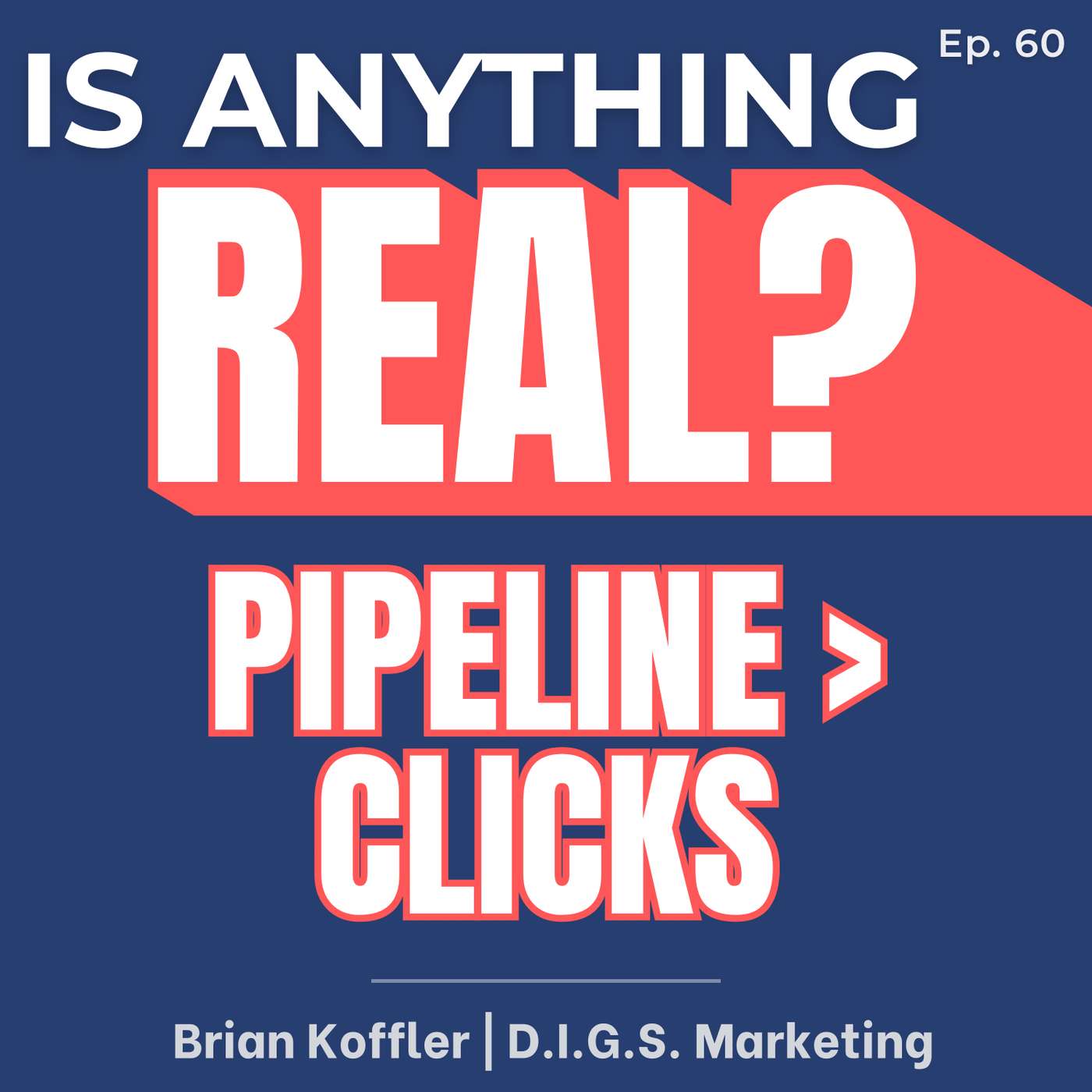 Pipeline > Clicks: The Paid Ads Mistake Killing Revenue | Ep. 60 w/ Brian Koffler (D.I.G.S. Marketing)Is Anything Real? · on LinkedIn Ads81 / 100
 The Scrappy ABM Moves Worth Stealing | Ep. 274 (Best Of)Scrappy ABM · on LinkedIn Ads80 / 100
 E150: Making LinkedIn Ads work for youB2B Marketing Futures · on LinkedIn Ads80 / 100EP51 - The Nurse, The Marketer, The Entrepreneur with David Sanchez of Digitalis MedicalEP50 - Claim Your Expert Authority with Christine BlosdaleEP49 - 2025 The Year of Choice and Control for Advertisers with Jon FinnieEP48 - Is Email Dead with Brad BettinsonEP47 - The Future of Agencies Kevin Krossing and Jeff Dack